
Research ArticleCell biologyMetabolismNephrology
Open Access |  10.1172/jci.insight.190185
Metabolite-enhanced normothermic machine perfusion improves kidney transplant viability
Jan Czogalla,1,2 Fabian Hausmann,2,3 Simon Lagies,4,5 Sydney E. Gies,1,2 Sabrina Christiansen,1,2 Nico Kaiser,1,2,3 Fabian Haas,1,2 Yusuke Okabayashi,1,2,6 Dominik Kylies,1,2 Smilla Hofmann,1,2 Rossana Franzin,7 Niklas Sabra,1,2 Sarah Bouari,8 Yitian Fang,8 Gisela Ambagtsheer,8 Ilka Edenhofer,1,2 Silvia Chilla,1,2 Anne K. Mühlig,1,2,9 Marina Zimmermann,2,3 Milagros N. Wong,1,2,10,11 Takashi Yokoo,6 Oliver Kretz,1,2 Maja Lindenmeyer,1,2 Florian Grahammer,1,2 Martin J. Hoogduijn,8 Ron de Bruin,8 Malte Kuehl,1,2,3,10,11 Sonja Hänzelmann,1,2,3 Bernd Kammerer,4,12,13,14 Loreto Gesualdo,7 Stefan Bonn,2,3 Robert C. Minnee,8 Tobias B. Huber,1,2 and Victor G. Puelles1,2,10,11
1III. Department of Medicine, University Medical Center Hamburg-Eppendorf, Hamburg, Germany.
2Hamburg Center for Kidney Health (HCKH), Hamburg, Germany.
3Institute of Medical Systems Bioinformatics, Center for Biomedical AI (bAIome), Center for Molecular Neurobiology Hamburg (ZMNH), University Medical Center Hamburg-Eppendorf, Hamburg, Germany.
4Core Competence Metabolomics, Hilde-Mangold-Haus, and
5Institute of Medical Microbiology and Hygiene, Faculty of Medicine, Medical Center, University of Freiburg, Freiburg, Germany.
6Division of Nephrology and Hypertension, Department of Internal Medicine, The Jikei University School of Medicine, Tokyo, Japan.
7Section of Nephrology, Department of Emergency and Organ Transplantation, University of Bari, Bari, Italy.
8Erasmus MC Transplant Institute, Department of Internal Medicine, Division of Nephrology and Transplantation, Erasmus University Medical Center, Rotterdam, Netherlands.
9University Children’s Hospital and University Children’s Research, University Medical Center Hamburg-Eppendorf, Hamburg, Germany.
10Department of Clinical Medicine, Aarhus University, Aarhus, Denmark.
11Department of Pathology, Aarhus University Hospital, Aarhus, Denmark.
12Institute of Organic Chemistry,
13BIOSS Centre for Biological Signalling Studies, and
14Spemann Graduate School of Biology and Medicine, University of Freiburg, Freiburg, Germany.
Address correspondence to: Jan Czogalla, Tobias B. Huber, or Victor G. Puelles, III. Department of Medicine, University Medical Center Hamburg-Eppendorf, Hamburg Center for Kidney Health (HCKH), Hamburg, Germany. Email: j.czogalla@uke.de (JC); Email: t.huber@uke.de (TBH); Email: v.puelles@uke.de or vgpuelles@clin.au.dk (VGP).
Authorship note: JC and FH contributed equally to this work and are co–first authors. RCM, TBH, and VGP contributed equally to this work and are co–senior authors.
Find articles by Czogalla, J. in: PubMed | Google Scholar
1III. Department of Medicine, University Medical Center Hamburg-Eppendorf, Hamburg, Germany.
2Hamburg Center for Kidney Health (HCKH), Hamburg, Germany.
3Institute of Medical Systems Bioinformatics, Center for Biomedical AI (bAIome), Center for Molecular Neurobiology Hamburg (ZMNH), University Medical Center Hamburg-Eppendorf, Hamburg, Germany.
4Core Competence Metabolomics, Hilde-Mangold-Haus, and
5Institute of Medical Microbiology and Hygiene, Faculty of Medicine, Medical Center, University of Freiburg, Freiburg, Germany.
6Division of Nephrology and Hypertension, Department of Internal Medicine, The Jikei University School of Medicine, Tokyo, Japan.
7Section of Nephrology, Department of Emergency and Organ Transplantation, University of Bari, Bari, Italy.
8Erasmus MC Transplant Institute, Department of Internal Medicine, Division of Nephrology and Transplantation, Erasmus University Medical Center, Rotterdam, Netherlands.
9University Children’s Hospital and University Children’s Research, University Medical Center Hamburg-Eppendorf, Hamburg, Germany.
10Department of Clinical Medicine, Aarhus University, Aarhus, Denmark.
11Department of Pathology, Aarhus University Hospital, Aarhus, Denmark.
12Institute of Organic Chemistry,
13BIOSS Centre for Biological Signalling Studies, and
14Spemann Graduate School of Biology and Medicine, University of Freiburg, Freiburg, Germany.
Address correspondence to: Jan Czogalla, Tobias B. Huber, or Victor G. Puelles, III. Department of Medicine, University Medical Center Hamburg-Eppendorf, Hamburg Center for Kidney Health (HCKH), Hamburg, Germany. Email: j.czogalla@uke.de (JC); Email: t.huber@uke.de (TBH); Email: v.puelles@uke.de or vgpuelles@clin.au.dk (VGP).
Authorship note: JC and FH contributed equally to this work and are co–first authors. RCM, TBH, and VGP contributed equally to this work and are co–senior authors.
Find articles by Hausmann, F. in: PubMed | Google Scholar
1III. Department of Medicine, University Medical Center Hamburg-Eppendorf, Hamburg, Germany.
2Hamburg Center for Kidney Health (HCKH), Hamburg, Germany.
3Institute of Medical Systems Bioinformatics, Center for Biomedical AI (bAIome), Center for Molecular Neurobiology Hamburg (ZMNH), University Medical Center Hamburg-Eppendorf, Hamburg, Germany.
4Core Competence Metabolomics, Hilde-Mangold-Haus, and
5Institute of Medical Microbiology and Hygiene, Faculty of Medicine, Medical Center, University of Freiburg, Freiburg, Germany.
6Division of Nephrology and Hypertension, Department of Internal Medicine, The Jikei University School of Medicine, Tokyo, Japan.
7Section of Nephrology, Department of Emergency and Organ Transplantation, University of Bari, Bari, Italy.
8Erasmus MC Transplant Institute, Department of Internal Medicine, Division of Nephrology and Transplantation, Erasmus University Medical Center, Rotterdam, Netherlands.
9University Children’s Hospital and University Children’s Research, University Medical Center Hamburg-Eppendorf, Hamburg, Germany.
10Department of Clinical Medicine, Aarhus University, Aarhus, Denmark.
11Department of Pathology, Aarhus University Hospital, Aarhus, Denmark.
12Institute of Organic Chemistry,
13BIOSS Centre for Biological Signalling Studies, and
14Spemann Graduate School of Biology and Medicine, University of Freiburg, Freiburg, Germany.
Address correspondence to: Jan Czogalla, Tobias B. Huber, or Victor G. Puelles, III. Department of Medicine, University Medical Center Hamburg-Eppendorf, Hamburg Center for Kidney Health (HCKH), Hamburg, Germany. Email: j.czogalla@uke.de (JC); Email: t.huber@uke.de (TBH); Email: v.puelles@uke.de or vgpuelles@clin.au.dk (VGP).
Authorship note: JC and FH contributed equally to this work and are co–first authors. RCM, TBH, and VGP contributed equally to this work and are co–senior authors.
Find articles by Lagies, S. in: PubMed | Google Scholar
1III. Department of Medicine, University Medical Center Hamburg-Eppendorf, Hamburg, Germany.
2Hamburg Center for Kidney Health (HCKH), Hamburg, Germany.
3Institute of Medical Systems Bioinformatics, Center for Biomedical AI (bAIome), Center for Molecular Neurobiology Hamburg (ZMNH), University Medical Center Hamburg-Eppendorf, Hamburg, Germany.
4Core Competence Metabolomics, Hilde-Mangold-Haus, and
5Institute of Medical Microbiology and Hygiene, Faculty of Medicine, Medical Center, University of Freiburg, Freiburg, Germany.
6Division of Nephrology and Hypertension, Department of Internal Medicine, The Jikei University School of Medicine, Tokyo, Japan.
7Section of Nephrology, Department of Emergency and Organ Transplantation, University of Bari, Bari, Italy.
8Erasmus MC Transplant Institute, Department of Internal Medicine, Division of Nephrology and Transplantation, Erasmus University Medical Center, Rotterdam, Netherlands.
9University Children’s Hospital and University Children’s Research, University Medical Center Hamburg-Eppendorf, Hamburg, Germany.
10Department of Clinical Medicine, Aarhus University, Aarhus, Denmark.
11Department of Pathology, Aarhus University Hospital, Aarhus, Denmark.
12Institute of Organic Chemistry,
13BIOSS Centre for Biological Signalling Studies, and
14Spemann Graduate School of Biology and Medicine, University of Freiburg, Freiburg, Germany.
Address correspondence to: Jan Czogalla, Tobias B. Huber, or Victor G. Puelles, III. Department of Medicine, University Medical Center Hamburg-Eppendorf, Hamburg Center for Kidney Health (HCKH), Hamburg, Germany. Email: j.czogalla@uke.de (JC); Email: t.huber@uke.de (TBH); Email: v.puelles@uke.de or vgpuelles@clin.au.dk (VGP).
Authorship note: JC and FH contributed equally to this work and are co–first authors. RCM, TBH, and VGP contributed equally to this work and are co–senior authors.
Find articles by Gies, S. in: PubMed | Google Scholar
1III. Department of Medicine, University Medical Center Hamburg-Eppendorf, Hamburg, Germany.
2Hamburg Center for Kidney Health (HCKH), Hamburg, Germany.
3Institute of Medical Systems Bioinformatics, Center for Biomedical AI (bAIome), Center for Molecular Neurobiology Hamburg (ZMNH), University Medical Center Hamburg-Eppendorf, Hamburg, Germany.
4Core Competence Metabolomics, Hilde-Mangold-Haus, and
5Institute of Medical Microbiology and Hygiene, Faculty of Medicine, Medical Center, University of Freiburg, Freiburg, Germany.
6Division of Nephrology and Hypertension, Department of Internal Medicine, The Jikei University School of Medicine, Tokyo, Japan.
7Section of Nephrology, Department of Emergency and Organ Transplantation, University of Bari, Bari, Italy.
8Erasmus MC Transplant Institute, Department of Internal Medicine, Division of Nephrology and Transplantation, Erasmus University Medical Center, Rotterdam, Netherlands.
9University Children’s Hospital and University Children’s Research, University Medical Center Hamburg-Eppendorf, Hamburg, Germany.
10Department of Clinical Medicine, Aarhus University, Aarhus, Denmark.
11Department of Pathology, Aarhus University Hospital, Aarhus, Denmark.
12Institute of Organic Chemistry,
13BIOSS Centre for Biological Signalling Studies, and
14Spemann Graduate School of Biology and Medicine, University of Freiburg, Freiburg, Germany.
Address correspondence to: Jan Czogalla, Tobias B. Huber, or Victor G. Puelles, III. Department of Medicine, University Medical Center Hamburg-Eppendorf, Hamburg Center for Kidney Health (HCKH), Hamburg, Germany. Email: j.czogalla@uke.de (JC); Email: t.huber@uke.de (TBH); Email: v.puelles@uke.de or vgpuelles@clin.au.dk (VGP).
Authorship note: JC and FH contributed equally to this work and are co–first authors. RCM, TBH, and VGP contributed equally to this work and are co–senior authors.
Find articles by Christiansen, S. in: PubMed | Google Scholar
1III. Department of Medicine, University Medical Center Hamburg-Eppendorf, Hamburg, Germany.
2Hamburg Center for Kidney Health (HCKH), Hamburg, Germany.
3Institute of Medical Systems Bioinformatics, Center for Biomedical AI (bAIome), Center for Molecular Neurobiology Hamburg (ZMNH), University Medical Center Hamburg-Eppendorf, Hamburg, Germany.
4Core Competence Metabolomics, Hilde-Mangold-Haus, and
5Institute of Medical Microbiology and Hygiene, Faculty of Medicine, Medical Center, University of Freiburg, Freiburg, Germany.
6Division of Nephrology and Hypertension, Department of Internal Medicine, The Jikei University School of Medicine, Tokyo, Japan.
7Section of Nephrology, Department of Emergency and Organ Transplantation, University of Bari, Bari, Italy.
8Erasmus MC Transplant Institute, Department of Internal Medicine, Division of Nephrology and Transplantation, Erasmus University Medical Center, Rotterdam, Netherlands.
9University Children’s Hospital and University Children’s Research, University Medical Center Hamburg-Eppendorf, Hamburg, Germany.
10Department of Clinical Medicine, Aarhus University, Aarhus, Denmark.
11Department of Pathology, Aarhus University Hospital, Aarhus, Denmark.
12Institute of Organic Chemistry,
13BIOSS Centre for Biological Signalling Studies, and
14Spemann Graduate School of Biology and Medicine, University of Freiburg, Freiburg, Germany.
Address correspondence to: Jan Czogalla, Tobias B. Huber, or Victor G. Puelles, III. Department of Medicine, University Medical Center Hamburg-Eppendorf, Hamburg Center for Kidney Health (HCKH), Hamburg, Germany. Email: j.czogalla@uke.de (JC); Email: t.huber@uke.de (TBH); Email: v.puelles@uke.de or vgpuelles@clin.au.dk (VGP).
Authorship note: JC and FH contributed equally to this work and are co–first authors. RCM, TBH, and VGP contributed equally to this work and are co–senior authors.
Find articles by Kaiser, N. in: PubMed | Google Scholar
1III. Department of Medicine, University Medical Center Hamburg-Eppendorf, Hamburg, Germany.
2Hamburg Center for Kidney Health (HCKH), Hamburg, Germany.
3Institute of Medical Systems Bioinformatics, Center for Biomedical AI (bAIome), Center for Molecular Neurobiology Hamburg (ZMNH), University Medical Center Hamburg-Eppendorf, Hamburg, Germany.
4Core Competence Metabolomics, Hilde-Mangold-Haus, and
5Institute of Medical Microbiology and Hygiene, Faculty of Medicine, Medical Center, University of Freiburg, Freiburg, Germany.
6Division of Nephrology and Hypertension, Department of Internal Medicine, The Jikei University School of Medicine, Tokyo, Japan.
7Section of Nephrology, Department of Emergency and Organ Transplantation, University of Bari, Bari, Italy.
8Erasmus MC Transplant Institute, Department of Internal Medicine, Division of Nephrology and Transplantation, Erasmus University Medical Center, Rotterdam, Netherlands.
9University Children’s Hospital and University Children’s Research, University Medical Center Hamburg-Eppendorf, Hamburg, Germany.
10Department of Clinical Medicine, Aarhus University, Aarhus, Denmark.
11Department of Pathology, Aarhus University Hospital, Aarhus, Denmark.
12Institute of Organic Chemistry,
13BIOSS Centre for Biological Signalling Studies, and
14Spemann Graduate School of Biology and Medicine, University of Freiburg, Freiburg, Germany.
Address correspondence to: Jan Czogalla, Tobias B. Huber, or Victor G. Puelles, III. Department of Medicine, University Medical Center Hamburg-Eppendorf, Hamburg Center for Kidney Health (HCKH), Hamburg, Germany. Email: j.czogalla@uke.de (JC); Email: t.huber@uke.de (TBH); Email: v.puelles@uke.de or vgpuelles@clin.au.dk (VGP).
Authorship note: JC and FH contributed equally to this work and are co–first authors. RCM, TBH, and VGP contributed equally to this work and are co–senior authors.
Find articles by
Haas, F.
in:
PubMed
|
Google Scholar
|

1III. Department of Medicine, University Medical Center Hamburg-Eppendorf, Hamburg, Germany.
2Hamburg Center for Kidney Health (HCKH), Hamburg, Germany.
3Institute of Medical Systems Bioinformatics, Center for Biomedical AI (bAIome), Center for Molecular Neurobiology Hamburg (ZMNH), University Medical Center Hamburg-Eppendorf, Hamburg, Germany.
4Core Competence Metabolomics, Hilde-Mangold-Haus, and
5Institute of Medical Microbiology and Hygiene, Faculty of Medicine, Medical Center, University of Freiburg, Freiburg, Germany.
6Division of Nephrology and Hypertension, Department of Internal Medicine, The Jikei University School of Medicine, Tokyo, Japan.
7Section of Nephrology, Department of Emergency and Organ Transplantation, University of Bari, Bari, Italy.
8Erasmus MC Transplant Institute, Department of Internal Medicine, Division of Nephrology and Transplantation, Erasmus University Medical Center, Rotterdam, Netherlands.
9University Children’s Hospital and University Children’s Research, University Medical Center Hamburg-Eppendorf, Hamburg, Germany.
10Department of Clinical Medicine, Aarhus University, Aarhus, Denmark.
11Department of Pathology, Aarhus University Hospital, Aarhus, Denmark.
12Institute of Organic Chemistry,
13BIOSS Centre for Biological Signalling Studies, and
14Spemann Graduate School of Biology and Medicine, University of Freiburg, Freiburg, Germany.
Address correspondence to: Jan Czogalla, Tobias B. Huber, or Victor G. Puelles, III. Department of Medicine, University Medical Center Hamburg-Eppendorf, Hamburg Center for Kidney Health (HCKH), Hamburg, Germany. Email: j.czogalla@uke.de (JC); Email: t.huber@uke.de (TBH); Email: v.puelles@uke.de or vgpuelles@clin.au.dk (VGP).
Authorship note: JC and FH contributed equally to this work and are co–first authors. RCM, TBH, and VGP contributed equally to this work and are co–senior authors.
Find articles by Okabayashi, Y. in: PubMed | Google Scholar
1III. Department of Medicine, University Medical Center Hamburg-Eppendorf, Hamburg, Germany.
2Hamburg Center for Kidney Health (HCKH), Hamburg, Germany.
3Institute of Medical Systems Bioinformatics, Center for Biomedical AI (bAIome), Center for Molecular Neurobiology Hamburg (ZMNH), University Medical Center Hamburg-Eppendorf, Hamburg, Germany.
4Core Competence Metabolomics, Hilde-Mangold-Haus, and
5Institute of Medical Microbiology and Hygiene, Faculty of Medicine, Medical Center, University of Freiburg, Freiburg, Germany.
6Division of Nephrology and Hypertension, Department of Internal Medicine, The Jikei University School of Medicine, Tokyo, Japan.
7Section of Nephrology, Department of Emergency and Organ Transplantation, University of Bari, Bari, Italy.
8Erasmus MC Transplant Institute, Department of Internal Medicine, Division of Nephrology and Transplantation, Erasmus University Medical Center, Rotterdam, Netherlands.
9University Children’s Hospital and University Children’s Research, University Medical Center Hamburg-Eppendorf, Hamburg, Germany.
10Department of Clinical Medicine, Aarhus University, Aarhus, Denmark.
11Department of Pathology, Aarhus University Hospital, Aarhus, Denmark.
12Institute of Organic Chemistry,
13BIOSS Centre for Biological Signalling Studies, and
14Spemann Graduate School of Biology and Medicine, University of Freiburg, Freiburg, Germany.
Address correspondence to: Jan Czogalla, Tobias B. Huber, or Victor G. Puelles, III. Department of Medicine, University Medical Center Hamburg-Eppendorf, Hamburg Center for Kidney Health (HCKH), Hamburg, Germany. Email: j.czogalla@uke.de (JC); Email: t.huber@uke.de (TBH); Email: v.puelles@uke.de or vgpuelles@clin.au.dk (VGP).
Authorship note: JC and FH contributed equally to this work and are co–first authors. RCM, TBH, and VGP contributed equally to this work and are co–senior authors.
Find articles by Kylies, D. in: PubMed | Google Scholar
1III. Department of Medicine, University Medical Center Hamburg-Eppendorf, Hamburg, Germany.
2Hamburg Center for Kidney Health (HCKH), Hamburg, Germany.
3Institute of Medical Systems Bioinformatics, Center for Biomedical AI (bAIome), Center for Molecular Neurobiology Hamburg (ZMNH), University Medical Center Hamburg-Eppendorf, Hamburg, Germany.
4Core Competence Metabolomics, Hilde-Mangold-Haus, and
5Institute of Medical Microbiology and Hygiene, Faculty of Medicine, Medical Center, University of Freiburg, Freiburg, Germany.
6Division of Nephrology and Hypertension, Department of Internal Medicine, The Jikei University School of Medicine, Tokyo, Japan.
7Section of Nephrology, Department of Emergency and Organ Transplantation, University of Bari, Bari, Italy.
8Erasmus MC Transplant Institute, Department of Internal Medicine, Division of Nephrology and Transplantation, Erasmus University Medical Center, Rotterdam, Netherlands.
9University Children’s Hospital and University Children’s Research, University Medical Center Hamburg-Eppendorf, Hamburg, Germany.
10Department of Clinical Medicine, Aarhus University, Aarhus, Denmark.
11Department of Pathology, Aarhus University Hospital, Aarhus, Denmark.
12Institute of Organic Chemistry,
13BIOSS Centre for Biological Signalling Studies, and
14Spemann Graduate School of Biology and Medicine, University of Freiburg, Freiburg, Germany.
Address correspondence to: Jan Czogalla, Tobias B. Huber, or Victor G. Puelles, III. Department of Medicine, University Medical Center Hamburg-Eppendorf, Hamburg Center for Kidney Health (HCKH), Hamburg, Germany. Email: j.czogalla@uke.de (JC); Email: t.huber@uke.de (TBH); Email: v.puelles@uke.de or vgpuelles@clin.au.dk (VGP).
Authorship note: JC and FH contributed equally to this work and are co–first authors. RCM, TBH, and VGP contributed equally to this work and are co–senior authors.
Find articles by Hofmann, S. in: PubMed | Google Scholar
1III. Department of Medicine, University Medical Center Hamburg-Eppendorf, Hamburg, Germany.
2Hamburg Center for Kidney Health (HCKH), Hamburg, Germany.
3Institute of Medical Systems Bioinformatics, Center for Biomedical AI (bAIome), Center for Molecular Neurobiology Hamburg (ZMNH), University Medical Center Hamburg-Eppendorf, Hamburg, Germany.
4Core Competence Metabolomics, Hilde-Mangold-Haus, and
5Institute of Medical Microbiology and Hygiene, Faculty of Medicine, Medical Center, University of Freiburg, Freiburg, Germany.
6Division of Nephrology and Hypertension, Department of Internal Medicine, The Jikei University School of Medicine, Tokyo, Japan.
7Section of Nephrology, Department of Emergency and Organ Transplantation, University of Bari, Bari, Italy.
8Erasmus MC Transplant Institute, Department of Internal Medicine, Division of Nephrology and Transplantation, Erasmus University Medical Center, Rotterdam, Netherlands.
9University Children’s Hospital and University Children’s Research, University Medical Center Hamburg-Eppendorf, Hamburg, Germany.
10Department of Clinical Medicine, Aarhus University, Aarhus, Denmark.
11Department of Pathology, Aarhus University Hospital, Aarhus, Denmark.
12Institute of Organic Chemistry,
13BIOSS Centre for Biological Signalling Studies, and
14Spemann Graduate School of Biology and Medicine, University of Freiburg, Freiburg, Germany.
Address correspondence to: Jan Czogalla, Tobias B. Huber, or Victor G. Puelles, III. Department of Medicine, University Medical Center Hamburg-Eppendorf, Hamburg Center for Kidney Health (HCKH), Hamburg, Germany. Email: j.czogalla@uke.de (JC); Email: t.huber@uke.de (TBH); Email: v.puelles@uke.de or vgpuelles@clin.au.dk (VGP).
Authorship note: JC and FH contributed equally to this work and are co–first authors. RCM, TBH, and VGP contributed equally to this work and are co–senior authors.
Find articles by
Franzin, R.
in:
PubMed
|
Google Scholar
|
1III. Department of Medicine, University Medical Center Hamburg-Eppendorf, Hamburg, Germany.
2Hamburg Center for Kidney Health (HCKH), Hamburg, Germany.
3Institute of Medical Systems Bioinformatics, Center for Biomedical AI (bAIome), Center for Molecular Neurobiology Hamburg (ZMNH), University Medical Center Hamburg-Eppendorf, Hamburg, Germany.
4Core Competence Metabolomics, Hilde-Mangold-Haus, and
5Institute of Medical Microbiology and Hygiene, Faculty of Medicine, Medical Center, University of Freiburg, Freiburg, Germany.
6Division of Nephrology and Hypertension, Department of Internal Medicine, The Jikei University School of Medicine, Tokyo, Japan.
7Section of Nephrology, Department of Emergency and Organ Transplantation, University of Bari, Bari, Italy.
8Erasmus MC Transplant Institute, Department of Internal Medicine, Division of Nephrology and Transplantation, Erasmus University Medical Center, Rotterdam, Netherlands.
9University Children’s Hospital and University Children’s Research, University Medical Center Hamburg-Eppendorf, Hamburg, Germany.
10Department of Clinical Medicine, Aarhus University, Aarhus, Denmark.
11Department of Pathology, Aarhus University Hospital, Aarhus, Denmark.
12Institute of Organic Chemistry,
13BIOSS Centre for Biological Signalling Studies, and
14Spemann Graduate School of Biology and Medicine, University of Freiburg, Freiburg, Germany.
Address correspondence to: Jan Czogalla, Tobias B. Huber, or Victor G. Puelles, III. Department of Medicine, University Medical Center Hamburg-Eppendorf, Hamburg Center for Kidney Health (HCKH), Hamburg, Germany. Email: j.czogalla@uke.de (JC); Email: t.huber@uke.de (TBH); Email: v.puelles@uke.de or vgpuelles@clin.au.dk (VGP).
Authorship note: JC and FH contributed equally to this work and are co–first authors. RCM, TBH, and VGP contributed equally to this work and are co–senior authors.
Find articles by Sabra, N. in: PubMed | Google Scholar
1III. Department of Medicine, University Medical Center Hamburg-Eppendorf, Hamburg, Germany.
2Hamburg Center for Kidney Health (HCKH), Hamburg, Germany.
3Institute of Medical Systems Bioinformatics, Center for Biomedical AI (bAIome), Center for Molecular Neurobiology Hamburg (ZMNH), University Medical Center Hamburg-Eppendorf, Hamburg, Germany.
4Core Competence Metabolomics, Hilde-Mangold-Haus, and
5Institute of Medical Microbiology and Hygiene, Faculty of Medicine, Medical Center, University of Freiburg, Freiburg, Germany.
6Division of Nephrology and Hypertension, Department of Internal Medicine, The Jikei University School of Medicine, Tokyo, Japan.
7Section of Nephrology, Department of Emergency and Organ Transplantation, University of Bari, Bari, Italy.
8Erasmus MC Transplant Institute, Department of Internal Medicine, Division of Nephrology and Transplantation, Erasmus University Medical Center, Rotterdam, Netherlands.
9University Children’s Hospital and University Children’s Research, University Medical Center Hamburg-Eppendorf, Hamburg, Germany.
10Department of Clinical Medicine, Aarhus University, Aarhus, Denmark.
11Department of Pathology, Aarhus University Hospital, Aarhus, Denmark.
12Institute of Organic Chemistry,
13BIOSS Centre for Biological Signalling Studies, and
14Spemann Graduate School of Biology and Medicine, University of Freiburg, Freiburg, Germany.
Address correspondence to: Jan Czogalla, Tobias B. Huber, or Victor G. Puelles, III. Department of Medicine, University Medical Center Hamburg-Eppendorf, Hamburg Center for Kidney Health (HCKH), Hamburg, Germany. Email: j.czogalla@uke.de (JC); Email: t.huber@uke.de (TBH); Email: v.puelles@uke.de or vgpuelles@clin.au.dk (VGP).
Authorship note: JC and FH contributed equally to this work and are co–first authors. RCM, TBH, and VGP contributed equally to this work and are co–senior authors.
Find articles by Bouari, S. in: PubMed | Google Scholar
1III. Department of Medicine, University Medical Center Hamburg-Eppendorf, Hamburg, Germany.
2Hamburg Center for Kidney Health (HCKH), Hamburg, Germany.
3Institute of Medical Systems Bioinformatics, Center for Biomedical AI (bAIome), Center for Molecular Neurobiology Hamburg (ZMNH), University Medical Center Hamburg-Eppendorf, Hamburg, Germany.
4Core Competence Metabolomics, Hilde-Mangold-Haus, and
5Institute of Medical Microbiology and Hygiene, Faculty of Medicine, Medical Center, University of Freiburg, Freiburg, Germany.
6Division of Nephrology and Hypertension, Department of Internal Medicine, The Jikei University School of Medicine, Tokyo, Japan.
7Section of Nephrology, Department of Emergency and Organ Transplantation, University of Bari, Bari, Italy.
8Erasmus MC Transplant Institute, Department of Internal Medicine, Division of Nephrology and Transplantation, Erasmus University Medical Center, Rotterdam, Netherlands.
9University Children’s Hospital and University Children’s Research, University Medical Center Hamburg-Eppendorf, Hamburg, Germany.
10Department of Clinical Medicine, Aarhus University, Aarhus, Denmark.
11Department of Pathology, Aarhus University Hospital, Aarhus, Denmark.
12Institute of Organic Chemistry,
13BIOSS Centre for Biological Signalling Studies, and
14Spemann Graduate School of Biology and Medicine, University of Freiburg, Freiburg, Germany.
Address correspondence to: Jan Czogalla, Tobias B. Huber, or Victor G. Puelles, III. Department of Medicine, University Medical Center Hamburg-Eppendorf, Hamburg Center for Kidney Health (HCKH), Hamburg, Germany. Email: j.czogalla@uke.de (JC); Email: t.huber@uke.de (TBH); Email: v.puelles@uke.de or vgpuelles@clin.au.dk (VGP).
Authorship note: JC and FH contributed equally to this work and are co–first authors. RCM, TBH, and VGP contributed equally to this work and are co–senior authors.
Find articles by Fang, Y. in: PubMed | Google Scholar
1III. Department of Medicine, University Medical Center Hamburg-Eppendorf, Hamburg, Germany.
2Hamburg Center for Kidney Health (HCKH), Hamburg, Germany.
3Institute of Medical Systems Bioinformatics, Center for Biomedical AI (bAIome), Center for Molecular Neurobiology Hamburg (ZMNH), University Medical Center Hamburg-Eppendorf, Hamburg, Germany.
4Core Competence Metabolomics, Hilde-Mangold-Haus, and
5Institute of Medical Microbiology and Hygiene, Faculty of Medicine, Medical Center, University of Freiburg, Freiburg, Germany.
6Division of Nephrology and Hypertension, Department of Internal Medicine, The Jikei University School of Medicine, Tokyo, Japan.
7Section of Nephrology, Department of Emergency and Organ Transplantation, University of Bari, Bari, Italy.
8Erasmus MC Transplant Institute, Department of Internal Medicine, Division of Nephrology and Transplantation, Erasmus University Medical Center, Rotterdam, Netherlands.
9University Children’s Hospital and University Children’s Research, University Medical Center Hamburg-Eppendorf, Hamburg, Germany.
10Department of Clinical Medicine, Aarhus University, Aarhus, Denmark.
11Department of Pathology, Aarhus University Hospital, Aarhus, Denmark.
12Institute of Organic Chemistry,
13BIOSS Centre for Biological Signalling Studies, and
14Spemann Graduate School of Biology and Medicine, University of Freiburg, Freiburg, Germany.
Address correspondence to: Jan Czogalla, Tobias B. Huber, or Victor G. Puelles, III. Department of Medicine, University Medical Center Hamburg-Eppendorf, Hamburg Center for Kidney Health (HCKH), Hamburg, Germany. Email: j.czogalla@uke.de (JC); Email: t.huber@uke.de (TBH); Email: v.puelles@uke.de or vgpuelles@clin.au.dk (VGP).
Authorship note: JC and FH contributed equally to this work and are co–first authors. RCM, TBH, and VGP contributed equally to this work and are co–senior authors.
Find articles by Ambagtsheer, G. in: PubMed | Google Scholar
1III. Department of Medicine, University Medical Center Hamburg-Eppendorf, Hamburg, Germany.
2Hamburg Center for Kidney Health (HCKH), Hamburg, Germany.
3Institute of Medical Systems Bioinformatics, Center for Biomedical AI (bAIome), Center for Molecular Neurobiology Hamburg (ZMNH), University Medical Center Hamburg-Eppendorf, Hamburg, Germany.
4Core Competence Metabolomics, Hilde-Mangold-Haus, and
5Institute of Medical Microbiology and Hygiene, Faculty of Medicine, Medical Center, University of Freiburg, Freiburg, Germany.
6Division of Nephrology and Hypertension, Department of Internal Medicine, The Jikei University School of Medicine, Tokyo, Japan.
7Section of Nephrology, Department of Emergency and Organ Transplantation, University of Bari, Bari, Italy.
8Erasmus MC Transplant Institute, Department of Internal Medicine, Division of Nephrology and Transplantation, Erasmus University Medical Center, Rotterdam, Netherlands.
9University Children’s Hospital and University Children’s Research, University Medical Center Hamburg-Eppendorf, Hamburg, Germany.
10Department of Clinical Medicine, Aarhus University, Aarhus, Denmark.
11Department of Pathology, Aarhus University Hospital, Aarhus, Denmark.
12Institute of Organic Chemistry,
13BIOSS Centre for Biological Signalling Studies, and
14Spemann Graduate School of Biology and Medicine, University of Freiburg, Freiburg, Germany.
Address correspondence to: Jan Czogalla, Tobias B. Huber, or Victor G. Puelles, III. Department of Medicine, University Medical Center Hamburg-Eppendorf, Hamburg Center for Kidney Health (HCKH), Hamburg, Germany. Email: j.czogalla@uke.de (JC); Email: t.huber@uke.de (TBH); Email: v.puelles@uke.de or vgpuelles@clin.au.dk (VGP).
Authorship note: JC and FH contributed equally to this work and are co–first authors. RCM, TBH, and VGP contributed equally to this work and are co–senior authors.
Find articles by Edenhofer, I. in: PubMed | Google Scholar
1III. Department of Medicine, University Medical Center Hamburg-Eppendorf, Hamburg, Germany.
2Hamburg Center for Kidney Health (HCKH), Hamburg, Germany.
3Institute of Medical Systems Bioinformatics, Center for Biomedical AI (bAIome), Center for Molecular Neurobiology Hamburg (ZMNH), University Medical Center Hamburg-Eppendorf, Hamburg, Germany.
4Core Competence Metabolomics, Hilde-Mangold-Haus, and
5Institute of Medical Microbiology and Hygiene, Faculty of Medicine, Medical Center, University of Freiburg, Freiburg, Germany.
6Division of Nephrology and Hypertension, Department of Internal Medicine, The Jikei University School of Medicine, Tokyo, Japan.
7Section of Nephrology, Department of Emergency and Organ Transplantation, University of Bari, Bari, Italy.
8Erasmus MC Transplant Institute, Department of Internal Medicine, Division of Nephrology and Transplantation, Erasmus University Medical Center, Rotterdam, Netherlands.
9University Children’s Hospital and University Children’s Research, University Medical Center Hamburg-Eppendorf, Hamburg, Germany.
10Department of Clinical Medicine, Aarhus University, Aarhus, Denmark.
11Department of Pathology, Aarhus University Hospital, Aarhus, Denmark.
12Institute of Organic Chemistry,
13BIOSS Centre for Biological Signalling Studies, and
14Spemann Graduate School of Biology and Medicine, University of Freiburg, Freiburg, Germany.
Address correspondence to: Jan Czogalla, Tobias B. Huber, or Victor G. Puelles, III. Department of Medicine, University Medical Center Hamburg-Eppendorf, Hamburg Center for Kidney Health (HCKH), Hamburg, Germany. Email: j.czogalla@uke.de (JC); Email: t.huber@uke.de (TBH); Email: v.puelles@uke.de or vgpuelles@clin.au.dk (VGP).
Authorship note: JC and FH contributed equally to this work and are co–first authors. RCM, TBH, and VGP contributed equally to this work and are co–senior authors.
Find articles by Chilla, S. in: PubMed | Google Scholar
1III. Department of Medicine, University Medical Center Hamburg-Eppendorf, Hamburg, Germany.
2Hamburg Center for Kidney Health (HCKH), Hamburg, Germany.
3Institute of Medical Systems Bioinformatics, Center for Biomedical AI (bAIome), Center for Molecular Neurobiology Hamburg (ZMNH), University Medical Center Hamburg-Eppendorf, Hamburg, Germany.
4Core Competence Metabolomics, Hilde-Mangold-Haus, and
5Institute of Medical Microbiology and Hygiene, Faculty of Medicine, Medical Center, University of Freiburg, Freiburg, Germany.
6Division of Nephrology and Hypertension, Department of Internal Medicine, The Jikei University School of Medicine, Tokyo, Japan.
7Section of Nephrology, Department of Emergency and Organ Transplantation, University of Bari, Bari, Italy.
8Erasmus MC Transplant Institute, Department of Internal Medicine, Division of Nephrology and Transplantation, Erasmus University Medical Center, Rotterdam, Netherlands.
9University Children’s Hospital and University Children’s Research, University Medical Center Hamburg-Eppendorf, Hamburg, Germany.
10Department of Clinical Medicine, Aarhus University, Aarhus, Denmark.
11Department of Pathology, Aarhus University Hospital, Aarhus, Denmark.
12Institute of Organic Chemistry,
13BIOSS Centre for Biological Signalling Studies, and
14Spemann Graduate School of Biology and Medicine, University of Freiburg, Freiburg, Germany.
Address correspondence to: Jan Czogalla, Tobias B. Huber, or Victor G. Puelles, III. Department of Medicine, University Medical Center Hamburg-Eppendorf, Hamburg Center for Kidney Health (HCKH), Hamburg, Germany. Email: j.czogalla@uke.de (JC); Email: t.huber@uke.de (TBH); Email: v.puelles@uke.de or vgpuelles@clin.au.dk (VGP).
Authorship note: JC and FH contributed equally to this work and are co–first authors. RCM, TBH, and VGP contributed equally to this work and are co–senior authors.
Find articles by Mühlig, A. in: PubMed | Google Scholar
1III. Department of Medicine, University Medical Center Hamburg-Eppendorf, Hamburg, Germany.
2Hamburg Center for Kidney Health (HCKH), Hamburg, Germany.
3Institute of Medical Systems Bioinformatics, Center for Biomedical AI (bAIome), Center for Molecular Neurobiology Hamburg (ZMNH), University Medical Center Hamburg-Eppendorf, Hamburg, Germany.
4Core Competence Metabolomics, Hilde-Mangold-Haus, and
5Institute of Medical Microbiology and Hygiene, Faculty of Medicine, Medical Center, University of Freiburg, Freiburg, Germany.
6Division of Nephrology and Hypertension, Department of Internal Medicine, The Jikei University School of Medicine, Tokyo, Japan.
7Section of Nephrology, Department of Emergency and Organ Transplantation, University of Bari, Bari, Italy.
8Erasmus MC Transplant Institute, Department of Internal Medicine, Division of Nephrology and Transplantation, Erasmus University Medical Center, Rotterdam, Netherlands.
9University Children’s Hospital and University Children’s Research, University Medical Center Hamburg-Eppendorf, Hamburg, Germany.
10Department of Clinical Medicine, Aarhus University, Aarhus, Denmark.
11Department of Pathology, Aarhus University Hospital, Aarhus, Denmark.
12Institute of Organic Chemistry,
13BIOSS Centre for Biological Signalling Studies, and
14Spemann Graduate School of Biology and Medicine, University of Freiburg, Freiburg, Germany.
Address correspondence to: Jan Czogalla, Tobias B. Huber, or Victor G. Puelles, III. Department of Medicine, University Medical Center Hamburg-Eppendorf, Hamburg Center for Kidney Health (HCKH), Hamburg, Germany. Email: j.czogalla@uke.de (JC); Email: t.huber@uke.de (TBH); Email: v.puelles@uke.de or vgpuelles@clin.au.dk (VGP).
Authorship note: JC and FH contributed equally to this work and are co–first authors. RCM, TBH, and VGP contributed equally to this work and are co–senior authors.
Find articles by
Zimmermann, M.
in:
PubMed
|
Google Scholar
|
1III. Department of Medicine, University Medical Center Hamburg-Eppendorf, Hamburg, Germany.
2Hamburg Center for Kidney Health (HCKH), Hamburg, Germany.
3Institute of Medical Systems Bioinformatics, Center for Biomedical AI (bAIome), Center for Molecular Neurobiology Hamburg (ZMNH), University Medical Center Hamburg-Eppendorf, Hamburg, Germany.
4Core Competence Metabolomics, Hilde-Mangold-Haus, and
5Institute of Medical Microbiology and Hygiene, Faculty of Medicine, Medical Center, University of Freiburg, Freiburg, Germany.
6Division of Nephrology and Hypertension, Department of Internal Medicine, The Jikei University School of Medicine, Tokyo, Japan.
7Section of Nephrology, Department of Emergency and Organ Transplantation, University of Bari, Bari, Italy.
8Erasmus MC Transplant Institute, Department of Internal Medicine, Division of Nephrology and Transplantation, Erasmus University Medical Center, Rotterdam, Netherlands.
9University Children’s Hospital and University Children’s Research, University Medical Center Hamburg-Eppendorf, Hamburg, Germany.
10Department of Clinical Medicine, Aarhus University, Aarhus, Denmark.
11Department of Pathology, Aarhus University Hospital, Aarhus, Denmark.
12Institute of Organic Chemistry,
13BIOSS Centre for Biological Signalling Studies, and
14Spemann Graduate School of Biology and Medicine, University of Freiburg, Freiburg, Germany.
Address correspondence to: Jan Czogalla, Tobias B. Huber, or Victor G. Puelles, III. Department of Medicine, University Medical Center Hamburg-Eppendorf, Hamburg Center for Kidney Health (HCKH), Hamburg, Germany. Email: j.czogalla@uke.de (JC); Email: t.huber@uke.de (TBH); Email: v.puelles@uke.de or vgpuelles@clin.au.dk (VGP).
Authorship note: JC and FH contributed equally to this work and are co–first authors. RCM, TBH, and VGP contributed equally to this work and are co–senior authors.
Find articles by Wong, M. in: PubMed | Google Scholar
1III. Department of Medicine, University Medical Center Hamburg-Eppendorf, Hamburg, Germany.
2Hamburg Center for Kidney Health (HCKH), Hamburg, Germany.
3Institute of Medical Systems Bioinformatics, Center for Biomedical AI (bAIome), Center for Molecular Neurobiology Hamburg (ZMNH), University Medical Center Hamburg-Eppendorf, Hamburg, Germany.
4Core Competence Metabolomics, Hilde-Mangold-Haus, and
5Institute of Medical Microbiology and Hygiene, Faculty of Medicine, Medical Center, University of Freiburg, Freiburg, Germany.
6Division of Nephrology and Hypertension, Department of Internal Medicine, The Jikei University School of Medicine, Tokyo, Japan.
7Section of Nephrology, Department of Emergency and Organ Transplantation, University of Bari, Bari, Italy.
8Erasmus MC Transplant Institute, Department of Internal Medicine, Division of Nephrology and Transplantation, Erasmus University Medical Center, Rotterdam, Netherlands.
9University Children’s Hospital and University Children’s Research, University Medical Center Hamburg-Eppendorf, Hamburg, Germany.
10Department of Clinical Medicine, Aarhus University, Aarhus, Denmark.
11Department of Pathology, Aarhus University Hospital, Aarhus, Denmark.
12Institute of Organic Chemistry,
13BIOSS Centre for Biological Signalling Studies, and
14Spemann Graduate School of Biology and Medicine, University of Freiburg, Freiburg, Germany.
Address correspondence to: Jan Czogalla, Tobias B. Huber, or Victor G. Puelles, III. Department of Medicine, University Medical Center Hamburg-Eppendorf, Hamburg Center for Kidney Health (HCKH), Hamburg, Germany. Email: j.czogalla@uke.de (JC); Email: t.huber@uke.de (TBH); Email: v.puelles@uke.de or vgpuelles@clin.au.dk (VGP).
Authorship note: JC and FH contributed equally to this work and are co–first authors. RCM, TBH, and VGP contributed equally to this work and are co–senior authors.
Find articles by Yokoo, T. in: PubMed | Google Scholar
1III. Department of Medicine, University Medical Center Hamburg-Eppendorf, Hamburg, Germany.
2Hamburg Center for Kidney Health (HCKH), Hamburg, Germany.
3Institute of Medical Systems Bioinformatics, Center for Biomedical AI (bAIome), Center for Molecular Neurobiology Hamburg (ZMNH), University Medical Center Hamburg-Eppendorf, Hamburg, Germany.
4Core Competence Metabolomics, Hilde-Mangold-Haus, and
5Institute of Medical Microbiology and Hygiene, Faculty of Medicine, Medical Center, University of Freiburg, Freiburg, Germany.
6Division of Nephrology and Hypertension, Department of Internal Medicine, The Jikei University School of Medicine, Tokyo, Japan.
7Section of Nephrology, Department of Emergency and Organ Transplantation, University of Bari, Bari, Italy.
8Erasmus MC Transplant Institute, Department of Internal Medicine, Division of Nephrology and Transplantation, Erasmus University Medical Center, Rotterdam, Netherlands.
9University Children’s Hospital and University Children’s Research, University Medical Center Hamburg-Eppendorf, Hamburg, Germany.
10Department of Clinical Medicine, Aarhus University, Aarhus, Denmark.
11Department of Pathology, Aarhus University Hospital, Aarhus, Denmark.
12Institute of Organic Chemistry,
13BIOSS Centre for Biological Signalling Studies, and
14Spemann Graduate School of Biology and Medicine, University of Freiburg, Freiburg, Germany.
Address correspondence to: Jan Czogalla, Tobias B. Huber, or Victor G. Puelles, III. Department of Medicine, University Medical Center Hamburg-Eppendorf, Hamburg Center for Kidney Health (HCKH), Hamburg, Germany. Email: j.czogalla@uke.de (JC); Email: t.huber@uke.de (TBH); Email: v.puelles@uke.de or vgpuelles@clin.au.dk (VGP).
Authorship note: JC and FH contributed equally to this work and are co–first authors. RCM, TBH, and VGP contributed equally to this work and are co–senior authors.
Find articles by Kretz, O. in: PubMed | Google Scholar
1III. Department of Medicine, University Medical Center Hamburg-Eppendorf, Hamburg, Germany.
2Hamburg Center for Kidney Health (HCKH), Hamburg, Germany.
3Institute of Medical Systems Bioinformatics, Center for Biomedical AI (bAIome), Center for Molecular Neurobiology Hamburg (ZMNH), University Medical Center Hamburg-Eppendorf, Hamburg, Germany.
4Core Competence Metabolomics, Hilde-Mangold-Haus, and
5Institute of Medical Microbiology and Hygiene, Faculty of Medicine, Medical Center, University of Freiburg, Freiburg, Germany.
6Division of Nephrology and Hypertension, Department of Internal Medicine, The Jikei University School of Medicine, Tokyo, Japan.
7Section of Nephrology, Department of Emergency and Organ Transplantation, University of Bari, Bari, Italy.
8Erasmus MC Transplant Institute, Department of Internal Medicine, Division of Nephrology and Transplantation, Erasmus University Medical Center, Rotterdam, Netherlands.
9University Children’s Hospital and University Children’s Research, University Medical Center Hamburg-Eppendorf, Hamburg, Germany.
10Department of Clinical Medicine, Aarhus University, Aarhus, Denmark.
11Department of Pathology, Aarhus University Hospital, Aarhus, Denmark.
12Institute of Organic Chemistry,
13BIOSS Centre for Biological Signalling Studies, and
14Spemann Graduate School of Biology and Medicine, University of Freiburg, Freiburg, Germany.
Address correspondence to: Jan Czogalla, Tobias B. Huber, or Victor G. Puelles, III. Department of Medicine, University Medical Center Hamburg-Eppendorf, Hamburg Center for Kidney Health (HCKH), Hamburg, Germany. Email: j.czogalla@uke.de (JC); Email: t.huber@uke.de (TBH); Email: v.puelles@uke.de or vgpuelles@clin.au.dk (VGP).
Authorship note: JC and FH contributed equally to this work and are co–first authors. RCM, TBH, and VGP contributed equally to this work and are co–senior authors.
Find articles by Lindenmeyer, M. in: PubMed | Google Scholar
1III. Department of Medicine, University Medical Center Hamburg-Eppendorf, Hamburg, Germany.
2Hamburg Center for Kidney Health (HCKH), Hamburg, Germany.
3Institute of Medical Systems Bioinformatics, Center for Biomedical AI (bAIome), Center for Molecular Neurobiology Hamburg (ZMNH), University Medical Center Hamburg-Eppendorf, Hamburg, Germany.
4Core Competence Metabolomics, Hilde-Mangold-Haus, and
5Institute of Medical Microbiology and Hygiene, Faculty of Medicine, Medical Center, University of Freiburg, Freiburg, Germany.
6Division of Nephrology and Hypertension, Department of Internal Medicine, The Jikei University School of Medicine, Tokyo, Japan.
7Section of Nephrology, Department of Emergency and Organ Transplantation, University of Bari, Bari, Italy.
8Erasmus MC Transplant Institute, Department of Internal Medicine, Division of Nephrology and Transplantation, Erasmus University Medical Center, Rotterdam, Netherlands.
9University Children’s Hospital and University Children’s Research, University Medical Center Hamburg-Eppendorf, Hamburg, Germany.
10Department of Clinical Medicine, Aarhus University, Aarhus, Denmark.
11Department of Pathology, Aarhus University Hospital, Aarhus, Denmark.
12Institute of Organic Chemistry,
13BIOSS Centre for Biological Signalling Studies, and
14Spemann Graduate School of Biology and Medicine, University of Freiburg, Freiburg, Germany.
Address correspondence to: Jan Czogalla, Tobias B. Huber, or Victor G. Puelles, III. Department of Medicine, University Medical Center Hamburg-Eppendorf, Hamburg Center for Kidney Health (HCKH), Hamburg, Germany. Email: j.czogalla@uke.de (JC); Email: t.huber@uke.de (TBH); Email: v.puelles@uke.de or vgpuelles@clin.au.dk (VGP).
Authorship note: JC and FH contributed equally to this work and are co–first authors. RCM, TBH, and VGP contributed equally to this work and are co–senior authors.
Find articles by Grahammer, F. in: PubMed | Google Scholar
1III. Department of Medicine, University Medical Center Hamburg-Eppendorf, Hamburg, Germany.
2Hamburg Center for Kidney Health (HCKH), Hamburg, Germany.
3Institute of Medical Systems Bioinformatics, Center for Biomedical AI (bAIome), Center for Molecular Neurobiology Hamburg (ZMNH), University Medical Center Hamburg-Eppendorf, Hamburg, Germany.
4Core Competence Metabolomics, Hilde-Mangold-Haus, and
5Institute of Medical Microbiology and Hygiene, Faculty of Medicine, Medical Center, University of Freiburg, Freiburg, Germany.
6Division of Nephrology and Hypertension, Department of Internal Medicine, The Jikei University School of Medicine, Tokyo, Japan.
7Section of Nephrology, Department of Emergency and Organ Transplantation, University of Bari, Bari, Italy.
8Erasmus MC Transplant Institute, Department of Internal Medicine, Division of Nephrology and Transplantation, Erasmus University Medical Center, Rotterdam, Netherlands.
9University Children’s Hospital and University Children’s Research, University Medical Center Hamburg-Eppendorf, Hamburg, Germany.
10Department of Clinical Medicine, Aarhus University, Aarhus, Denmark.
11Department of Pathology, Aarhus University Hospital, Aarhus, Denmark.
12Institute of Organic Chemistry,
13BIOSS Centre for Biological Signalling Studies, and
14Spemann Graduate School of Biology and Medicine, University of Freiburg, Freiburg, Germany.
Address correspondence to: Jan Czogalla, Tobias B. Huber, or Victor G. Puelles, III. Department of Medicine, University Medical Center Hamburg-Eppendorf, Hamburg Center for Kidney Health (HCKH), Hamburg, Germany. Email: j.czogalla@uke.de (JC); Email: t.huber@uke.de (TBH); Email: v.puelles@uke.de or vgpuelles@clin.au.dk (VGP).
Authorship note: JC and FH contributed equally to this work and are co–first authors. RCM, TBH, and VGP contributed equally to this work and are co–senior authors.
Find articles by Hoogduijn, M. in: PubMed | Google Scholar
1III. Department of Medicine, University Medical Center Hamburg-Eppendorf, Hamburg, Germany.
2Hamburg Center for Kidney Health (HCKH), Hamburg, Germany.
3Institute of Medical Systems Bioinformatics, Center for Biomedical AI (bAIome), Center for Molecular Neurobiology Hamburg (ZMNH), University Medical Center Hamburg-Eppendorf, Hamburg, Germany.
4Core Competence Metabolomics, Hilde-Mangold-Haus, and
5Institute of Medical Microbiology and Hygiene, Faculty of Medicine, Medical Center, University of Freiburg, Freiburg, Germany.
6Division of Nephrology and Hypertension, Department of Internal Medicine, The Jikei University School of Medicine, Tokyo, Japan.
7Section of Nephrology, Department of Emergency and Organ Transplantation, University of Bari, Bari, Italy.
8Erasmus MC Transplant Institute, Department of Internal Medicine, Division of Nephrology and Transplantation, Erasmus University Medical Center, Rotterdam, Netherlands.
9University Children’s Hospital and University Children’s Research, University Medical Center Hamburg-Eppendorf, Hamburg, Germany.
10Department of Clinical Medicine, Aarhus University, Aarhus, Denmark.
11Department of Pathology, Aarhus University Hospital, Aarhus, Denmark.
12Institute of Organic Chemistry,
13BIOSS Centre for Biological Signalling Studies, and
14Spemann Graduate School of Biology and Medicine, University of Freiburg, Freiburg, Germany.
Address correspondence to: Jan Czogalla, Tobias B. Huber, or Victor G. Puelles, III. Department of Medicine, University Medical Center Hamburg-Eppendorf, Hamburg Center for Kidney Health (HCKH), Hamburg, Germany. Email: j.czogalla@uke.de (JC); Email: t.huber@uke.de (TBH); Email: v.puelles@uke.de or vgpuelles@clin.au.dk (VGP).
Authorship note: JC and FH contributed equally to this work and are co–first authors. RCM, TBH, and VGP contributed equally to this work and are co–senior authors.
Find articles by de Bruin, R. in: PubMed | Google Scholar
1III. Department of Medicine, University Medical Center Hamburg-Eppendorf, Hamburg, Germany.
2Hamburg Center for Kidney Health (HCKH), Hamburg, Germany.
3Institute of Medical Systems Bioinformatics, Center for Biomedical AI (bAIome), Center for Molecular Neurobiology Hamburg (ZMNH), University Medical Center Hamburg-Eppendorf, Hamburg, Germany.
4Core Competence Metabolomics, Hilde-Mangold-Haus, and
5Institute of Medical Microbiology and Hygiene, Faculty of Medicine, Medical Center, University of Freiburg, Freiburg, Germany.
6Division of Nephrology and Hypertension, Department of Internal Medicine, The Jikei University School of Medicine, Tokyo, Japan.
7Section of Nephrology, Department of Emergency and Organ Transplantation, University of Bari, Bari, Italy.
8Erasmus MC Transplant Institute, Department of Internal Medicine, Division of Nephrology and Transplantation, Erasmus University Medical Center, Rotterdam, Netherlands.
9University Children’s Hospital and University Children’s Research, University Medical Center Hamburg-Eppendorf, Hamburg, Germany.
10Department of Clinical Medicine, Aarhus University, Aarhus, Denmark.
11Department of Pathology, Aarhus University Hospital, Aarhus, Denmark.
12Institute of Organic Chemistry,
13BIOSS Centre for Biological Signalling Studies, and
14Spemann Graduate School of Biology and Medicine, University of Freiburg, Freiburg, Germany.
Address correspondence to: Jan Czogalla, Tobias B. Huber, or Victor G. Puelles, III. Department of Medicine, University Medical Center Hamburg-Eppendorf, Hamburg Center for Kidney Health (HCKH), Hamburg, Germany. Email: j.czogalla@uke.de (JC); Email: t.huber@uke.de (TBH); Email: v.puelles@uke.de or vgpuelles@clin.au.dk (VGP).
Authorship note: JC and FH contributed equally to this work and are co–first authors. RCM, TBH, and VGP contributed equally to this work and are co–senior authors.
Find articles by Kuehl, M. in: PubMed | Google Scholar
1III. Department of Medicine, University Medical Center Hamburg-Eppendorf, Hamburg, Germany.
2Hamburg Center for Kidney Health (HCKH), Hamburg, Germany.
3Institute of Medical Systems Bioinformatics, Center for Biomedical AI (bAIome), Center for Molecular Neurobiology Hamburg (ZMNH), University Medical Center Hamburg-Eppendorf, Hamburg, Germany.
4Core Competence Metabolomics, Hilde-Mangold-Haus, and
5Institute of Medical Microbiology and Hygiene, Faculty of Medicine, Medical Center, University of Freiburg, Freiburg, Germany.
6Division of Nephrology and Hypertension, Department of Internal Medicine, The Jikei University School of Medicine, Tokyo, Japan.
7Section of Nephrology, Department of Emergency and Organ Transplantation, University of Bari, Bari, Italy.
8Erasmus MC Transplant Institute, Department of Internal Medicine, Division of Nephrology and Transplantation, Erasmus University Medical Center, Rotterdam, Netherlands.
9University Children’s Hospital and University Children’s Research, University Medical Center Hamburg-Eppendorf, Hamburg, Germany.
10Department of Clinical Medicine, Aarhus University, Aarhus, Denmark.
11Department of Pathology, Aarhus University Hospital, Aarhus, Denmark.
12Institute of Organic Chemistry,
13BIOSS Centre for Biological Signalling Studies, and
14Spemann Graduate School of Biology and Medicine, University of Freiburg, Freiburg, Germany.
Address correspondence to: Jan Czogalla, Tobias B. Huber, or Victor G. Puelles, III. Department of Medicine, University Medical Center Hamburg-Eppendorf, Hamburg Center for Kidney Health (HCKH), Hamburg, Germany. Email: j.czogalla@uke.de (JC); Email: t.huber@uke.de (TBH); Email: v.puelles@uke.de or vgpuelles@clin.au.dk (VGP).
Authorship note: JC and FH contributed equally to this work and are co–first authors. RCM, TBH, and VGP contributed equally to this work and are co–senior authors.
Find articles by Hänzelmann, S. in: PubMed | Google Scholar
1III. Department of Medicine, University Medical Center Hamburg-Eppendorf, Hamburg, Germany.
2Hamburg Center for Kidney Health (HCKH), Hamburg, Germany.
3Institute of Medical Systems Bioinformatics, Center for Biomedical AI (bAIome), Center for Molecular Neurobiology Hamburg (ZMNH), University Medical Center Hamburg-Eppendorf, Hamburg, Germany.
4Core Competence Metabolomics, Hilde-Mangold-Haus, and
5Institute of Medical Microbiology and Hygiene, Faculty of Medicine, Medical Center, University of Freiburg, Freiburg, Germany.
6Division of Nephrology and Hypertension, Department of Internal Medicine, The Jikei University School of Medicine, Tokyo, Japan.
7Section of Nephrology, Department of Emergency and Organ Transplantation, University of Bari, Bari, Italy.
8Erasmus MC Transplant Institute, Department of Internal Medicine, Division of Nephrology and Transplantation, Erasmus University Medical Center, Rotterdam, Netherlands.
9University Children’s Hospital and University Children’s Research, University Medical Center Hamburg-Eppendorf, Hamburg, Germany.
10Department of Clinical Medicine, Aarhus University, Aarhus, Denmark.
11Department of Pathology, Aarhus University Hospital, Aarhus, Denmark.
12Institute of Organic Chemistry,
13BIOSS Centre for Biological Signalling Studies, and
14Spemann Graduate School of Biology and Medicine, University of Freiburg, Freiburg, Germany.
Address correspondence to: Jan Czogalla, Tobias B. Huber, or Victor G. Puelles, III. Department of Medicine, University Medical Center Hamburg-Eppendorf, Hamburg Center for Kidney Health (HCKH), Hamburg, Germany. Email: j.czogalla@uke.de (JC); Email: t.huber@uke.de (TBH); Email: v.puelles@uke.de or vgpuelles@clin.au.dk (VGP).
Authorship note: JC and FH contributed equally to this work and are co–first authors. RCM, TBH, and VGP contributed equally to this work and are co–senior authors.
Find articles by Kammerer, B. in: PubMed | Google Scholar
1III. Department of Medicine, University Medical Center Hamburg-Eppendorf, Hamburg, Germany.
2Hamburg Center for Kidney Health (HCKH), Hamburg, Germany.
3Institute of Medical Systems Bioinformatics, Center for Biomedical AI (bAIome), Center for Molecular Neurobiology Hamburg (ZMNH), University Medical Center Hamburg-Eppendorf, Hamburg, Germany.
4Core Competence Metabolomics, Hilde-Mangold-Haus, and
5Institute of Medical Microbiology and Hygiene, Faculty of Medicine, Medical Center, University of Freiburg, Freiburg, Germany.
6Division of Nephrology and Hypertension, Department of Internal Medicine, The Jikei University School of Medicine, Tokyo, Japan.
7Section of Nephrology, Department of Emergency and Organ Transplantation, University of Bari, Bari, Italy.
8Erasmus MC Transplant Institute, Department of Internal Medicine, Division of Nephrology and Transplantation, Erasmus University Medical Center, Rotterdam, Netherlands.
9University Children’s Hospital and University Children’s Research, University Medical Center Hamburg-Eppendorf, Hamburg, Germany.
10Department of Clinical Medicine, Aarhus University, Aarhus, Denmark.
11Department of Pathology, Aarhus University Hospital, Aarhus, Denmark.
12Institute of Organic Chemistry,
13BIOSS Centre for Biological Signalling Studies, and
14Spemann Graduate School of Biology and Medicine, University of Freiburg, Freiburg, Germany.
Address correspondence to: Jan Czogalla, Tobias B. Huber, or Victor G. Puelles, III. Department of Medicine, University Medical Center Hamburg-Eppendorf, Hamburg Center for Kidney Health (HCKH), Hamburg, Germany. Email: j.czogalla@uke.de (JC); Email: t.huber@uke.de (TBH); Email: v.puelles@uke.de or vgpuelles@clin.au.dk (VGP).
Authorship note: JC and FH contributed equally to this work and are co–first authors. RCM, TBH, and VGP contributed equally to this work and are co–senior authors.
Find articles by Gesualdo, L. in: PubMed | Google Scholar
1III. Department of Medicine, University Medical Center Hamburg-Eppendorf, Hamburg, Germany.
2Hamburg Center for Kidney Health (HCKH), Hamburg, Germany.
3Institute of Medical Systems Bioinformatics, Center for Biomedical AI (bAIome), Center for Molecular Neurobiology Hamburg (ZMNH), University Medical Center Hamburg-Eppendorf, Hamburg, Germany.
4Core Competence Metabolomics, Hilde-Mangold-Haus, and
5Institute of Medical Microbiology and Hygiene, Faculty of Medicine, Medical Center, University of Freiburg, Freiburg, Germany.
6Division of Nephrology and Hypertension, Department of Internal Medicine, The Jikei University School of Medicine, Tokyo, Japan.
7Section of Nephrology, Department of Emergency and Organ Transplantation, University of Bari, Bari, Italy.
8Erasmus MC Transplant Institute, Department of Internal Medicine, Division of Nephrology and Transplantation, Erasmus University Medical Center, Rotterdam, Netherlands.
9University Children’s Hospital and University Children’s Research, University Medical Center Hamburg-Eppendorf, Hamburg, Germany.
10Department of Clinical Medicine, Aarhus University, Aarhus, Denmark.
11Department of Pathology, Aarhus University Hospital, Aarhus, Denmark.
12Institute of Organic Chemistry,
13BIOSS Centre for Biological Signalling Studies, and
14Spemann Graduate School of Biology and Medicine, University of Freiburg, Freiburg, Germany.
Address correspondence to: Jan Czogalla, Tobias B. Huber, or Victor G. Puelles, III. Department of Medicine, University Medical Center Hamburg-Eppendorf, Hamburg Center for Kidney Health (HCKH), Hamburg, Germany. Email: j.czogalla@uke.de (JC); Email: t.huber@uke.de (TBH); Email: v.puelles@uke.de or vgpuelles@clin.au.dk (VGP).
Authorship note: JC and FH contributed equally to this work and are co–first authors. RCM, TBH, and VGP contributed equally to this work and are co–senior authors.
Find articles by
Bonn, S.
in:
PubMed
|
Google Scholar
|
1III. Department of Medicine, University Medical Center Hamburg-Eppendorf, Hamburg, Germany.
2Hamburg Center for Kidney Health (HCKH), Hamburg, Germany.
3Institute of Medical Systems Bioinformatics, Center for Biomedical AI (bAIome), Center for Molecular Neurobiology Hamburg (ZMNH), University Medical Center Hamburg-Eppendorf, Hamburg, Germany.
4Core Competence Metabolomics, Hilde-Mangold-Haus, and
5Institute of Medical Microbiology and Hygiene, Faculty of Medicine, Medical Center, University of Freiburg, Freiburg, Germany.
6Division of Nephrology and Hypertension, Department of Internal Medicine, The Jikei University School of Medicine, Tokyo, Japan.
7Section of Nephrology, Department of Emergency and Organ Transplantation, University of Bari, Bari, Italy.
8Erasmus MC Transplant Institute, Department of Internal Medicine, Division of Nephrology and Transplantation, Erasmus University Medical Center, Rotterdam, Netherlands.
9University Children’s Hospital and University Children’s Research, University Medical Center Hamburg-Eppendorf, Hamburg, Germany.
10Department of Clinical Medicine, Aarhus University, Aarhus, Denmark.
11Department of Pathology, Aarhus University Hospital, Aarhus, Denmark.
12Institute of Organic Chemistry,
13BIOSS Centre for Biological Signalling Studies, and
14Spemann Graduate School of Biology and Medicine, University of Freiburg, Freiburg, Germany.
Address correspondence to: Jan Czogalla, Tobias B. Huber, or Victor G. Puelles, III. Department of Medicine, University Medical Center Hamburg-Eppendorf, Hamburg Center for Kidney Health (HCKH), Hamburg, Germany. Email: j.czogalla@uke.de (JC); Email: t.huber@uke.de (TBH); Email: v.puelles@uke.de or vgpuelles@clin.au.dk (VGP).
Authorship note: JC and FH contributed equally to this work and are co–first authors. RCM, TBH, and VGP contributed equally to this work and are co–senior authors.
Find articles by Minnee, R. in: PubMed | Google Scholar
1III. Department of Medicine, University Medical Center Hamburg-Eppendorf, Hamburg, Germany.
2Hamburg Center for Kidney Health (HCKH), Hamburg, Germany.
3Institute of Medical Systems Bioinformatics, Center for Biomedical AI (bAIome), Center for Molecular Neurobiology Hamburg (ZMNH), University Medical Center Hamburg-Eppendorf, Hamburg, Germany.
4Core Competence Metabolomics, Hilde-Mangold-Haus, and
5Institute of Medical Microbiology and Hygiene, Faculty of Medicine, Medical Center, University of Freiburg, Freiburg, Germany.
6Division of Nephrology and Hypertension, Department of Internal Medicine, The Jikei University School of Medicine, Tokyo, Japan.
7Section of Nephrology, Department of Emergency and Organ Transplantation, University of Bari, Bari, Italy.
8Erasmus MC Transplant Institute, Department of Internal Medicine, Division of Nephrology and Transplantation, Erasmus University Medical Center, Rotterdam, Netherlands.
9University Children’s Hospital and University Children’s Research, University Medical Center Hamburg-Eppendorf, Hamburg, Germany.
10Department of Clinical Medicine, Aarhus University, Aarhus, Denmark.
11Department of Pathology, Aarhus University Hospital, Aarhus, Denmark.
12Institute of Organic Chemistry,
13BIOSS Centre for Biological Signalling Studies, and
14Spemann Graduate School of Biology and Medicine, University of Freiburg, Freiburg, Germany.
Address correspondence to: Jan Czogalla, Tobias B. Huber, or Victor G. Puelles, III. Department of Medicine, University Medical Center Hamburg-Eppendorf, Hamburg Center for Kidney Health (HCKH), Hamburg, Germany. Email: j.czogalla@uke.de (JC); Email: t.huber@uke.de (TBH); Email: v.puelles@uke.de or vgpuelles@clin.au.dk (VGP).
Authorship note: JC and FH contributed equally to this work and are co–first authors. RCM, TBH, and VGP contributed equally to this work and are co–senior authors.
Find articles by
Huber, T.
in:
PubMed
|
Google Scholar
|
1III. Department of Medicine, University Medical Center Hamburg-Eppendorf, Hamburg, Germany.
2Hamburg Center for Kidney Health (HCKH), Hamburg, Germany.
3Institute of Medical Systems Bioinformatics, Center for Biomedical AI (bAIome), Center for Molecular Neurobiology Hamburg (ZMNH), University Medical Center Hamburg-Eppendorf, Hamburg, Germany.
4Core Competence Metabolomics, Hilde-Mangold-Haus, and
5Institute of Medical Microbiology and Hygiene, Faculty of Medicine, Medical Center, University of Freiburg, Freiburg, Germany.
6Division of Nephrology and Hypertension, Department of Internal Medicine, The Jikei University School of Medicine, Tokyo, Japan.
7Section of Nephrology, Department of Emergency and Organ Transplantation, University of Bari, Bari, Italy.
8Erasmus MC Transplant Institute, Department of Internal Medicine, Division of Nephrology and Transplantation, Erasmus University Medical Center, Rotterdam, Netherlands.
9University Children’s Hospital and University Children’s Research, University Medical Center Hamburg-Eppendorf, Hamburg, Germany.
10Department of Clinical Medicine, Aarhus University, Aarhus, Denmark.
11Department of Pathology, Aarhus University Hospital, Aarhus, Denmark.
12Institute of Organic Chemistry,
13BIOSS Centre for Biological Signalling Studies, and
14Spemann Graduate School of Biology and Medicine, University of Freiburg, Freiburg, Germany.
Address correspondence to: Jan Czogalla, Tobias B. Huber, or Victor G. Puelles, III. Department of Medicine, University Medical Center Hamburg-Eppendorf, Hamburg Center for Kidney Health (HCKH), Hamburg, Germany. Email: j.czogalla@uke.de (JC); Email: t.huber@uke.de (TBH); Email: v.puelles@uke.de or vgpuelles@clin.au.dk (VGP).
Authorship note: JC and FH contributed equally to this work and are co–first authors. RCM, TBH, and VGP contributed equally to this work and are co–senior authors.
Find articles by
Puelles, V.
in:
PubMed
|
Google Scholar
|
Published September 23, 2025 - More info
JCI Insight. 2025;10(18):e190185. https://doi.org/10.1172/jci.insight.190185.
© 2025 Czogalla et al. This work is licensed under the Creative Commons Attribution 4.0 International License. To view a copy of this license, visit http://creativecommons.org/licenses/by/4.0/.


-
Results
Consensus buffer leads to metabolic injury.
The main source of heterogeneity during NMP is the composition of the perfusion solution (13). Compared with liver NMP, kidney NMP shows surprisingly little beneficial effects (Figure 1A). We performed a systematic literature analysis and located the relevant studies on human kidney NMP. We identified a total of 11 studies (7, 8, 10, 14–21), analyzed buffer compositions, identified common ingredients, and defined a baseline consensus-based buffer formulation (Figure 1B), which we used to establish a murine model of kidney NMP toward a systematic dissection of molecular processes (Figure 1C).
 Figure 1
Overview over multilayered analysis of a cross-species approach to understand the shortcomings of kidney NMP. (A) Compared with standard organ preservation, liver NMP shows great potential, while kidney NMP does not deliver the same promise. (B) A PubMed review of previously published perfusion buffers in human kidney NMP identified shared ingredients and lead to a “minimal consensus” buffer. (C) A mouse model of kidney NMP was established using the consensus buffer and resulting tissue analyzed using a multi-layered systems biology approach combining advanced microscopy, single nucleus RNA-Seq (snRNA-Seq) and metabolomics.
Next, we used a multilevel histopathological approach to define cellular and organelle injury (Figure 2A). We identified generalized cell swelling and apoptosis (Figure 2B). Ultrastructural analyses using classical transmission electron microscopy and super-resolution microscopy (22, 23) revealed peroxisome induction, as well as endoplasmic reticulum (ER) dilation and mitochondrial swelling (Figure 2C) in association with increased transcriptomic and posttranslational modifications, marking mitochondrial and ER stress (Supplemental Figure 1; supplemental material available online with this article; https://doi.org/10.1172/jci.insight.190185DS1), which were most prominent in the proximal tubules (PTs) (Figure 2D). Together, these findings show that the fundamental consensus composition of the buffers currently used for kidney NMP is insufficient to prevent metabolic stress and cell injury.
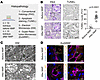 Figure 2
Histopathological injury and increased apoptosis during NMP. (A) Histopathology analysis overview. (B) Histopathology demonstrated swollen and apoptotic cells in proximal tubules (PTs) after perfusion. Scale bar: 10 μm. TUNEL staining returned significantly increased apoptosis after NMP. Scale bar: 5 μm. Data are shown as a median with 95% CI, using unpaired student’s t test. (C) Transmission electron microscopy showed damaged mitochondria (arrows) and dilated ER (stars). Scale bar: 500 nm. (D) Expansion enhanced super-resolution radial fluctuations (ExSRRF) revealed that swollen and damaged mitochondria and ER were mainly localized in proximal tubules. Scale bar: 5 μm, 1 μm (inserts). LTL, Lotus Tetragonolobus Lectin; AIF, Apoptosis Inducing Factor Mitochondria Associated 1; CalR, Calreticulin.
Transcriptional origins of metabolic stress.
To understand the underlying cell type–specific transcriptomic mechanisms of injury, we performed single-nucleus RNA-Seq (snRNA-Seq; n = 72,035 cells from n = 6 mice) (Figure 3A). Nine main cell types were identified and used for differential gene transcription within the individual clusters (Figure 3B and Supplemental Figure 2). Next, the Human Molecular Signatures Database (24) was used to select gene sets associated with the main structural changes at a single-cell level (i.e., oxidative phosphorylation [OxPhos], peroxisome, and the unfolded protein response), confirming that PTs represent the primary injured cell type (Figure 3C). Furthermore, we observed an enrichment in cytokine and nucleotide transcription signaling (Supplemental Figure 3), both of which have been associated with increased susceptibility to kidney graft rejection (25–27).
 Figure 3
Transcriptomic origins of cellular injury patterns during NMP on single-nuclear level point toward mitochondrial and ER injury in PT subclusters. (A) Cell number analyzed using snRNA-Seq of kidneys before and after consensus buffer perfusion. (B) Cluster identity. (C) An enrichment score of the curated gene sets of the molecular signatures database (MsigDB) applied toward cell types returned PTs as the main affected cell type. (D) The top 5 up- and downregulated pathways in PTs show mitochondrial and ER stress. (E) Top 10 GO:term analysis of cellular components predicted to be involved in PTs solely returned mitochondrial or ER signals. cc, cellular components. (F) Pseudotime analysis in PTs returned 1 lineage significantly altered during NMP with consensus buffer. (G) Analysis of the one top signal for 5 different means of analysis (GO:biological process, GO:molecular function, GO:cellular component, pathway and gene family) in subclusters of the affected lineage showed mitochondrial injury in subcluster 2 and ER injury in subcluster 4. Volcano plots of the main individual results for clusters 2 and 4.
Next, we focused on the top 5 regulated pathways in PTs and discovered an upregulation of OxPhos and eukaryotic Initiation Factor 2 (eIF2) signaling, along with the downregulation of Granzyme A and Sirtuin signaling (Figure 3D). These findings support patterns of mitochondrial injury and ER stress in PTs at a transcriptional level (Figure 3E). In addition, we identified multiple dynamic cell states associated with NMP using consensus buffer (Figure 3F and Supplemental Figure 3), showcasing a biphasic process that is first triggered by mitochondrial injury and followed by ER stress (Figure 3G). Together, our data reveal a profound transcriptional disruption of metabolic processes in PTs after NMP with consensus buffer.
Metabolite deficiencies induce cell injury.
As structural and transcriptional changes suggested metabolic stress as a common injury path, we performed unsupervised metabolomic profiling, which detected 24 upregulated and 55 downregulated metabolites during NMP using consensus buffer (Figure 4A). These data predict subcellular injury targets (Figure 4B) and altered cellular processes, namely upregulation of transfer RNA (tRNA) charging and ferroptosis, and downregulation of nicotinamide-adenine-dinucleotide (NAD) signaling and NAD biosynthesis (Figure 4C). This metabolite deficiency was directly represented in the citric acid cycle (Figure 4D). We did not detect a change in citric acid cycle component enrichment in the fluids collected during perfusion, suggesting increased tissue metabolic dysregulation rather than excretion into the urine or the buffer (Supplemental Figure 4).
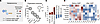 Figure 4
Loss of citric acid cycle metabolites leads to cellular injury during NMP. (A) Metabolomics of tissue before vs. after NMP with consensus buffer showed 24 significantly upregulated and 55 significantly downregulated metabolites. (B) Metabolite organelle mapping identified mitochondria, peroxisomes and ER as the 3 top organelles predicted to be affected by NMP with consensus buffer. (C) Pathway analysis on metabolomics results returned mainly downregulation of citric acid cycle products. (D) Metabolites from the citric acid cycle showed global downregulation by perfusion. Multiple unpaired t tests were used for statistical analysis.
Together, these findings provide a mechanistic explanation to structural and transcriptomic alterations after NMP with consensus buffer, featuring PTs as key contributors to organ dysfunction, and identifying mitochondria as the primary target (28–31). Furthermore, this completes our murine atlas for kidney injury after NMP with consensus buffer, providing a valuable resource to systematically propose modifications that may improve buffer performance.
Conserved injury patterns across species.
To increase translational value, we conducted a cross-species validation comparing rat and pig kidneys perfused with consensus buffer under the same condition as in mice. The patterns of renal cell injury in the rat (Supplemental Figure 5) and pig (Supplemental Figure 6) confirmed what we observed in mice. Briefly, ultrastructural analysis revealed swollen mitochondria in rat PTs. We also observed a high level of transcriptional congruence in altered molecular pathways in rat and pig PTs compared with mice. Remarkably, eIF2 signaling, ferroptosis, and Sirtuin signaling were consistently regulated in the same direction across all 3 species.
Metabolomic profiling further reinforced our findings, showing substantial overlap between species in pathways such as glutathione synthesis, tRNA charging, NAD signaling, and urea cycle signaling, as well as affected organelles (e.g., mitochondria, peroxisomes, and ER). Notably, interspecies integration of snRNA-Seq and metabolomics data reveal a remarkable overlap of 243 pathways (of 515 total; 47%) and 265 pathways (of 320 total; 82%) in the context of comparable physiologic parameters during perfusion (Supplemental Figure 7). Together, our data demonstrate a high level of interspecies overlap in functional and cellular responses after NMP with consensus buffer.
MEPS.
Next, our consensus buffer was reengineered supplementing metabolites to compensate for the deficiencies detected in the citric acid cycle (Figure 5, A–C). This process led to the development of a MEPS. First, we tested MEPS in an ex-vivo kidney slice model, which provided a rapid and reductionist approach to assess the effect of different buffer formulations on renal tissues (32). We observed global decreases in mitochondrial injury markers (i.e., IDH1), ER stress (i.e., ATF4), apoptosis (i.e., CHOP), and necroptosis (i.e., RIPK3) (Supplemental Figure 8, A and B).
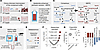 Figure 5
Metabolic reprogramming with citric acid cycle metabolites improves kidney viability after NMP. (A) We hypothesized that replenishment of the citric acid cycle intermediates lost during NMP would lead to improved mitochondrial health, leading to better tissue integrity. (B) We named the buffer containing these additions MEPS. (C) Mapping of downregulated metabolites onto the citric acid cycle showed both input- and output of the cycle were downregulated. Therefore, we replenished the main input and output metabolites of the citric acid cycle to generate MEPS. (D) MEPS was tested during mouse NMP. (E) Metabolomics of kidneys after perfusion with MEPS showed 17 significantly upregulated metabolites. Multiple unpaired t test was used for analysis of significance. (F) Main upregulated metabolites were closely related to mitochondrial processes. (G) Metabolite organelle mapping returned mitochondria as the sole organelle predicted to be improved by MEPS. Multiple unpaired t tests were used for statistical analysis. (H) Pathway analysis showed partial reversal of deleterious changes seen with consensus buffer.
Then, the effects of MEPS and consensus buffer were compared in mice after NMP (Figure 5D). We identified 17 metabolites that were upregulated and no downregulated metabolites (Figure 5E), confirming that our supplementation strategy was successful. Notably, the upregulated signals predominantly consisted of constituents or products associated with the citric acid cycle (Figure 5F). As expected, in silico organelle prediction based on regulated metabolites identified mitochondria as the most affected organelle (Figure 5G). Furthermore, MEPS mitigated the adverse effects of the consensus buffer, specifically counteracting the overactivation of tRNA charging and ferroptosis, while effectively increasing NAD signaling (Figure 5H). Quantitative PCR (qPCR) analysis of perfused tissues demonstrated reduced expression of mitochondrial, ER, apoptosis, and necroptosis mRNA signals with a corresponding improvement in posttranslational mitochondrial and ER stress markers (e.g., reduced ERK and eIF2α phosphorylation) and preserved cellular and ultrastructural integrity (Supplemental Figure 8, C–F). It is worth noting that MEPS induced mild increases in vascular resistance during perfusion while urine volume remained unchanged (Supplemental Figure 8, G–I), suggesting minimal impact on perfusion conditions. Together, our data show that MEPS substantially enhanced kidney structural and transcriptional integrity during NMP.
MEPS prevents protein dysregulation.
As a validation strategy, we used histopathology and pathology-oriented multiplexing (PathoPlex) (33) to investigate the expression and regulation of 25 protein targets selected to determine cell identity, subcellular organelles, cell state, and pathway activation in the same specimen (Figure 6, A–C, and Supplemental Table 2). Histopathology showed significant improvement with MEPS (Figure 6B). Unsupervised pixel-based analysis generated 27 different biologically relevant clusters (Supplemental Table 3). MEPS successfully prevented the development of pathogenic cluster signatures induced by NMP with consensus buffer (Figure 6D). For example, cluster 14 (C14) featured PT and ER stress–specific signals as top contributors and showed a significant increase in abundance during NMP with consensus buffer but remained unchanged with MEPS (Figure 6E). Cluster proximity was used to generate an interaction network, confirming that MEPS perfusion increased mitochondrial metabolism, enhanced mitochondrial signaling toward the ER, and reduced cell death; this provided an independent validation of metabolomic and transcriptomic changes at the protein level at subcellular resolution (Figure 6F). Thus, these data confirm that MEPS preserves ER and mitochondrial integrity (Figure 6G), suggesting that MEPS may increase graft viability.
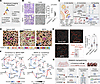 Figure 6
Pathology-oriented multiplexing reveals mechanisms of metabolic reprogramming via MEPS. (A) Tissue analysis after MEPS perfusion was performed using histopathology and pathology-oriented multiplexed imaging. (B) Histopathology showed partial reversal of deleterious effects seen with consensus buffer. Scale bar: 10 μm. TUNEL staining revealed significantly reduced apoptosis after MEPS perfusion. Scale bar: 30 μm. Data are shown as median with 95% CI. Unpaired student’s t test was used for statistical analysis. (C) Overview over the targets for multiplexed imaging. (D) Pixel-based cluster analysis identified 27 individual clusters. Scale bar: 50 μm. (E) Cluster 14 was defined by its top contributors, including Megalin, p62 (ubiquitin-binding protein 62), CalR, and LTL and provides a clear example of cellular processes preserved by MEPS. Data are presented as median with 95% CI. Scale bar: 50 μm. Brown-Forsythe and Welch ANOVA were used for statistical analysis. (F) Using the clusters, immediate proximity analysis predicted deleterious mitochondrial signals to negatively affect metabolism in PTs after NMP with consensus buffer but not with MEPS. (G) In summary, MEPS perfusion improved metabolite supply, reduced ER-and mitochondrial stress, and led to transcriptional regulation and spatial protein modulation, which in turn resulted in preserved organ viability. AP-1, Activating protein-1; BM, Basement membrane; CD, Collecting duct; CD41, Cluster of differentiation 41; ER met, Metabolism of the ER; Fib, Fibroblast; Leuk, Leucocyte; Mito, Mitochondria; Nuc, Nucleus; Podo, Podocyte; Prolif, Proliferation; PT, Proximal tubule; STAT3, Signal transducer and activator of transcription 3; TAL, Thick ascending limb of the Loop of Henle.
MEPS improves transplantation in vivo.
Next, we performed kidney transplantation in rats after NMP using either consensus buffer or MEPS (34). Rat kidneys were perfused for 2 hours before transplantation, which would be equivalent to about 54 hours in humans (35). Animals were closely monitored for 14 days. If signs of distress were identified, animals were removed from experiments as per legal protocol. The maximal follow-up time of our approved protocol was 14 days, after which all animals were sacrificed regardless of their overall health status (Figure 7A).
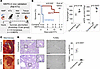 Figure 7
MEPS improves survival in a rat model of kidney transplantation after NMP (A) In a rat model of NMP followed by transplantation, MEPS was compared with consensus buffer and animals followed for 14 days after surgery. (B) Survival of animals was significantly improved after MEPS perfusion. One day before death or sacrifice, bodyweight was significantly higher in MEPS perfused animals. In addition, estimated glomerular filtration rate (eGFR) was significantly improved after MEPS. Data are shown as median with 95% CI. Log-rank test and unpaired student’s t test has been used for statistical analysis. (C) There was an evident macroscopic improvement in the kidneys at time of sacrifice with MEPS compared with consensus buffer after NMP. (D) Histopathology showed reduced tissue injury after MEPS. Scale bar: 20 μm. TUNEL staining returned significantly less apoptotic nuclei with MEPS compared with consensus buffer after NMP. Scale bar: 30 μm. Data are shown as median with 95% CI, unpaired student’s t test has been used for statistics.
Rats that received kidneys perfused with MEPS showed a substantially higher survival rate during the experimental period compared with those that received kidneys perfused with consensus buffer, reflecting preserved bodyweight and renal function (Figure 7B). Urinalysis performed 1 day prior to death or sacrifice demonstrated a decrease in casts, WBCs, erythrocytes, and protein in urine following MEPS compared with consensus buffer (Supplemental Figure 9, A and B). At the time of sacrifice, MEPS-perfused kidneys largely resembled a healthy organ, but consensus-perfused kidneys appeared swollen and inflamed (Figure 7C). Importantly, we observed a significant prevention of apoptosis in MEPS-perfused kidneys compared with consensus buffer (Figure 7D). We identified healthier mitochondria in PTs and enhanced cellular survival in MEPS-perfused kidneys compared with consensus buffer (Supplemental Figure 9, C and D). It is worth noting that the cause of premature death of the 2 animals in the MEPS group was postrenal failure and thus most likely surgical error (Supplemental Figure 9E). Together, our data suggest that MEPS enhances cellular and organ viability, improving survival after transplantation.
MEPS preserves pig and human kidneys.
To extend our findings to larger organs, we evaluated MEPS in pig kidneys after NMP. Experimental organs were delivered from the abattoir and subjected to 30 minutes warm and 3–5 hours cold ischemia to mimic a clinical scenario (Figure 8A). Structural integrity and apoptosis were used as surrogate markers of organ viability. While MEPS preserved cellular structure and prevented apoptosis in PTs, consensus buffer led to swollen, damaged, and apoptotic PTs (Figure 8A).
 Figure 8
MEPS improves kidney cellular viability in pigs and humans. (A) Pig kidneys were stored at 4°C for 3–5 hours and were afterward perfused, comparing MEPS to consensus buffer. Histopathology demonstrated improved cellular structures. Scale bar: 20 μm. TUNEL staining showed significantly less apoptotic nuclei. Scale bar: 30 μm. Data are shown as median with 95% CI, using unpaired student’s t test for statistical analysis. (B) Human kidneys discarded for regular transplantation were stored at 4°C for up to 42 hours and then randomized to either MEPS or consensus buffer NMP. Histopathology showed improved tissue viability after MEPS. Scale bar: 20 μm. TUNEL staining confirmed significantly less apoptotic nuclei after MEPS. Scale bar: 30 μm. Data are shown as median with 95% CI, using unpaired student’s t test for statistical analysis.
To evaluate the potential clinical translation of our findings, we assessed MEPS during NMP of discarded human kidneys. Following donation after cardiac death, 6 kidneys were stored at 4°C for a maximum of 42 hours and subsequently subjected to NMP for 2 hours, with randomization into 2 groups: consensus buffer or MEPS (Figure 8B). Among the donors, sex, creatinine levels, urine output, and kidney weight were similar before randomization (Supplemental Figure 10, A–C). Prior to NMP, kidneys already exhibited varying degrees of tissue damage that may be explained by warm and cold ischemic times (average, 15.0 minutes and 28.87 hours, respectively) but was not statistically significant between experimental groups (Supplemental Figure 10D).
While MEPS-perfused kidneys showed improved tissue integrity and stable levels of apoptosis, consensus-perfused kidneys presented increases in apoptosis and marked deterioration of cellular integrity (Figure 8B). During NMP, we observed a nonsignificant trend toward increased vascular resistance with MEPS (Supplemental Figure 10E). This final experiment confirms the clinical potential of MEPS to extend organ viability and even suggests a potential for organ regeneration.


