
Research ArticleHematologyNephrology
Open Access |  10.1172/jci.insight.190018
Transgenic augmentation of erythroferrone in mice ameliorates anemia in adenine-induced chronic kidney disease
Brian Czaya,1 Joseph D. Olivera,1 Moya Zhang,1 Amber Lundin,1 Christian D. Castro,1 Grace Jung,1 Mark R. Hanudel,1,2 Elizabeta Nemeth,1 and Tomas Ganz1
1Center for Iron Disorders, Department of Medicine, and
2Department of Pediatrics, David Geffen School of Medicine at UCLA, Los Angeles, California, USA.
Address correspondence to: Tomas Ganz, Center for Iron Disorders, Department of Medicine, David Geffen School of Medicine at UCLA, 10833 Le Conte Ave., Los Angeles, California 90095-1690, USA. Email: tganz@mednet.ucla.edu.
Find articles by
Czaya, B.
in:
PubMed
|
Google Scholar
|

1Center for Iron Disorders, Department of Medicine, and
2Department of Pediatrics, David Geffen School of Medicine at UCLA, Los Angeles, California, USA.
Address correspondence to: Tomas Ganz, Center for Iron Disorders, Department of Medicine, David Geffen School of Medicine at UCLA, 10833 Le Conte Ave., Los Angeles, California 90095-1690, USA. Email: tganz@mednet.ucla.edu.
Find articles by Olivera, J. in: PubMed | Google Scholar
1Center for Iron Disorders, Department of Medicine, and
2Department of Pediatrics, David Geffen School of Medicine at UCLA, Los Angeles, California, USA.
Address correspondence to: Tomas Ganz, Center for Iron Disorders, Department of Medicine, David Geffen School of Medicine at UCLA, 10833 Le Conte Ave., Los Angeles, California 90095-1690, USA. Email: tganz@mednet.ucla.edu.
Find articles by Zhang, M. in: PubMed | Google Scholar
1Center for Iron Disorders, Department of Medicine, and
2Department of Pediatrics, David Geffen School of Medicine at UCLA, Los Angeles, California, USA.
Address correspondence to: Tomas Ganz, Center for Iron Disorders, Department of Medicine, David Geffen School of Medicine at UCLA, 10833 Le Conte Ave., Los Angeles, California 90095-1690, USA. Email: tganz@mednet.ucla.edu.
Find articles by Lundin, A. in: PubMed | Google Scholar
1Center for Iron Disorders, Department of Medicine, and
2Department of Pediatrics, David Geffen School of Medicine at UCLA, Los Angeles, California, USA.
Address correspondence to: Tomas Ganz, Center for Iron Disorders, Department of Medicine, David Geffen School of Medicine at UCLA, 10833 Le Conte Ave., Los Angeles, California 90095-1690, USA. Email: tganz@mednet.ucla.edu.
Find articles by Castro, C. in: PubMed | Google Scholar
1Center for Iron Disorders, Department of Medicine, and
2Department of Pediatrics, David Geffen School of Medicine at UCLA, Los Angeles, California, USA.
Address correspondence to: Tomas Ganz, Center for Iron Disorders, Department of Medicine, David Geffen School of Medicine at UCLA, 10833 Le Conte Ave., Los Angeles, California 90095-1690, USA. Email: tganz@mednet.ucla.edu.
Find articles by Jung, G. in: PubMed | Google Scholar
1Center for Iron Disorders, Department of Medicine, and
2Department of Pediatrics, David Geffen School of Medicine at UCLA, Los Angeles, California, USA.
Address correspondence to: Tomas Ganz, Center for Iron Disorders, Department of Medicine, David Geffen School of Medicine at UCLA, 10833 Le Conte Ave., Los Angeles, California 90095-1690, USA. Email: tganz@mednet.ucla.edu.
Find articles by Hanudel, M. in: PubMed | Google Scholar
1Center for Iron Disorders, Department of Medicine, and
2Department of Pediatrics, David Geffen School of Medicine at UCLA, Los Angeles, California, USA.
Address correspondence to: Tomas Ganz, Center for Iron Disorders, Department of Medicine, David Geffen School of Medicine at UCLA, 10833 Le Conte Ave., Los Angeles, California 90095-1690, USA. Email: tganz@mednet.ucla.edu.
Find articles by
Nemeth, E.
in:
PubMed
|
Google Scholar
|
1Center for Iron Disorders, Department of Medicine, and
2Department of Pediatrics, David Geffen School of Medicine at UCLA, Los Angeles, California, USA.
Address correspondence to: Tomas Ganz, Center for Iron Disorders, Department of Medicine, David Geffen School of Medicine at UCLA, 10833 Le Conte Ave., Los Angeles, California 90095-1690, USA. Email: tganz@mednet.ucla.edu.
Find articles by
Ganz, T.
in:
PubMed
|
Google Scholar
|
Published August 7, 2025 - More info
JCI Insight. 2025;10(18):e190018. https://doi.org/10.1172/jci.insight.190018.
© 2025 Czaya et al. This work is licensed under the Creative Commons Attribution 4.0 International License. To view a copy of this license, visit http://creativecommons.org/licenses/by/4.0/.
Received: December 6, 2024; Accepted: August 6, 2025


-
Results
In an initial pilot experiment, we exposed line-H (high-expressing) Erfe-transgenic (TG) mice (8) and their wild-type (WT) littermates to a 0.2% adenine diet containing 100 ppm iron for 8 weeks (Figure 1A). As expected, both WT and TG mice developed anemia, appeared ill, and lost weight. Despite CKD-impaired erythropoiesis, TG mice exhibited markedly higher Erfe transcript levels in bone marrow compared with WT (mean –ΔCt: +2 vs. –8). Notably, TG mice maintained higher Hb levels (~2 g/dL), along with increased RBC count and mean corpuscular Hb (MCH), compared with WT controls (Figure 1, B–E). Moreover, despite TG mice starting with slightly lower body weights, weights remained relatively similar between genotypes throughout the course of disease, including at the time of harvest (Figure 1F). Although these findings are informative, we cannot differentiate the contribution of preexisting iron excess and higher Hb in TG mice at the start of adenine diet versus improved iron availability during the course of disease in this model, as TG mice have liver iron concentrations (LICs) 4.2-times higher than WT, and have 1 g/dL higher Hb concentrations by the age of 6 weeks (8).
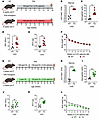 Figure 1
ERFE augmentation ameliorates CKD-associated anemia. (A) Pilot experimental design: 8-week-old WT littermate (n = 4) and ERFE-overexpressing transgenic (TG; n = 7) mice were fed 100 ppm iron (Fe) diet with 0.2% adenine for 8 weeks and then analyzed. (G) Final experimental design: Mice were weaned at 3 weeks, then WT (n = 7) mice placed on 100 ppm Fe diet and TG (n = 6) placed on 4 ppm Fe diet to prevent systemic iron loading prior to the initiation of adenine diet. At 7 weeks of age, WT and TG mice were placed on 0.2% adenine diet with 100 ppm Fe for 8 weeks and then analyzed. For both experiments, quantitative PCR (qPCR) analysis of (B and H) Erfe expression in bone marrow tissue (C and I), blood hemoglobin concentration, (D and J) RBC count, and (E and K) mean corpuscular hemoglobin (MCH) were determined. (F and L) Mice were weighed weekly. Data are mean ± SEM, analyzed by unpaired t test with Welch’s correction (2-tailed). *P < 0.05, **P < 0.01, ***P < 0.001, ****P < 0.0001. NS, not significant.
To develop a more clinically relevant model, we noted that at weaning at 3 weeks of age TG mice had not yet developed iron overload, so that TG compared with WT mice had similar body weights, erythrocyte parameters, and slightly lower LICs (Supplemental Figure 1, A–F; supplemental material available online with this article; https://doi.org/10.1172/jci.insight.190018DS1). We observed that placing 3-week-old TG mice on an essentially iron-free (4 ppm) diet for 4 weeks (until the intended start of adenine diet) prevented iron accumulation, and these 7-week-old TG mice had even lower Hb concentrations, RBC count, MCH, LIC, and serum iron than their littermate WT mice (Supplemental Figure 1, G–L).
To induce CKD, parallel cohorts of 7-week-old iron-depleted TG mice and their 7-week-old WT littermates were placed on 0.2% adenine diet containing 100 ppm iron (Figure 1G). Despite more severe anemia and iron deficiency at the onset of adenine diet due to the iron depletion regimen, TG mice exhibited significantly higher Hb (~2 g/dL) and MCH compared with WT after 8 weeks on an adenine diet (Figure 1, H–K). This was accompanied by markedly elevated Erfe transcript levels in bone marrow of TG mice (mean –ΔCt: +1 vs. –11 in WT). Remarkably, the change in Hb between the pre- and postadenine groups was –4.7 g/dL for WT mice and +2.8 g/dL for TG mice (compare Supplemental Figure 1H and Figure 1I). Furthermore, despite starting at a lower body weight, TG mice ended up weighing the same as WT mice (Figure 1L, Figure 2A, and Supplemental Table 1).
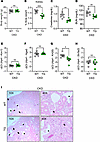 Figure 2
ERFE augmentation improves kidney function but does not alter injury markers in adenine-induced CKD. WT and TG mice from Figure 1G (n = 6–7 mice/group) were analyzed after 8 weeks on adenine diet. (A) Body weight, (B) kidney weight, (C) serum creatinine, (D) blood urea nitrogen (BUN). qPCR analysis of (E) Kim1, (F) Ngal, (G) Krt20 and (H) Slc5a2 expression in kidney tissue. (I) Representative H&E-stained kidney sections from WT and TG mice after 8 weeks on adenine diet (black asterisks, dilated tubule; black arrows, glomerular atrophy). Original magnification, ×10 (left) and ×40 (right). Data are mean ± SEM, analyzed by unpaired t test with Welch’s correction (2-tailed). *P < 0.05, **P < 0.01, ***P < 0.001. NS, not significant.
As we previously reported (8), developmental exposure to elevated ERFE leads to mildly elevated blood urea nitrogen (BUN) levels in TG mice, falling within the upper physiological range for mice, potentially reflecting reduced nephron number and/or impaired nephron development. However, normal kidney morphology and absence of baseline proteinuria indicate preserved glomerular filtration barrier integrity despite reduced kidney function. After 8 weeks of adenine diet, TG mice still exhibited smaller kidneys than WT mice (Figure 2B). However, while renal function was impaired in both WT and TG mice (higher BUN compared with normal [~20–30 mg/dL]; ref. 8), both BUN and creatinine were lower in TG than WT mice, indicating significant amelioration of CKD by transgenic ERFE (Figure 2, C and D). The expression levels of certain renal injury markers (Kim1, Ngal, and Slc5a2 [SGLT2]) were similar in WT and TG mice, whereas Krt20 was lower in TG, consistent with some degree of protection from kidney injury (Figure 2, E–H). The histological appearance of kidney tissue sections was comparable between WT and TG mice, with similar frequencies of tubular dilation and glomerular atrophy, consistent with adenine-induced tubulointerstitial injury (Figure 2I).
To investigate the mechanism of anemia amelioration by transgenic ERFE, we examined systemic iron parameters (Figure 3). After 8 weeks of adenine diet, TG mice had higher LICs (reflective of iron stores), higher serum iron, and nonsignificantly lower splenic iron than WT mice (Figure 3, A–C). This indicates that TG mice had increased iron absorption (reflected by LIC) and possibly increased iron mobilization from red pulp macrophages (reflected by spleen iron). Kidney iron did not significantly differ between TG and WT mice (Figure 3D). Serum hepcidin and hepatic hepcidin expression were lower in TG than in WT mice, despite higher LIC, and the ratio of hepatic hepcidin expression to LIC was markedly lower in TG versus WT mice (Figure 3, E–G), consistent with the documented hepcidin-suppressive effect of ERFE (7, 8). Lower hepcidin concentrations and improved iron availability for erythropoiesis in TG compared with WT mice would be expected to increase Hb concentrations and RBC hemoglobinization, as was observed (Figure 1).
 Figure 3
ERFE augmentation lowers hepcidin levels to enhance iron mobilization in adenine-induced CKD. WT and TG mice from Figure 1G (n = 6–7 mice/group) were analyzed. (A) Liver iron concentration (LIC). (B) Serum iron. (C and D) Tissue iron concentrations in (C) spleen and (D) kidney. (E) Serum hepcidin levels. (F) Liver hepcidin mRNA expression. (G) Liver hepcidin mRNA/LIC. Data are mean ± SEM, analyzed by unpaired t test with Welch’s correction (2-tailed). *P < 0.05, **P < 0.01, ****P < 0.0001. NS, not significant.
The effects of ERFE on kidney injury could be complex. On one hand, amelioration of anemia would be expected to improve oxygen delivery and benefit the energy-intensive functional and repair processes in the kidney. On the other hand, ERFE’s mechanism of action depends on inhibition of BMP signaling involved not only in the regulation of hepcidin transcription (13–15) but also in kidney development and repair (16–18).
We first examined the effects of transgenic ERFE on hypoxia-sensitive processes in adenine-induced CKD mice (Figure 4). Serum VEGF was lower in TG than in WT mice, indicative of improved tissue oxygenation in TG mice (Figure 4A). In the kidney at this advanced disease stage, the expression of Vegfa, Gapdh, Angptl1, and Epo all trended lower in TG than in WT mice but the differences were small and not statistically significant (Figure 4, B–E).
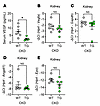 Figure 4
ERFE augmentation enhances systemic oxygenation without significantly impacting kidney oxygenation in adenine-induced CKD. WT and TG mice from Figure 1G (n = 6–7 mice/group) were analyzed. (A) Serum VEGF levels. (B–E) Kidney mRNA concentrations by qPCR for (B) Vegfa, (C) Gapdh, (D) Angptl1, and (E) Epo. Data are mean ± SEM, analyzed by unpaired t test with Welch’s correction (2-tailed). *P < 0.05. NS, not significant.
We next analyzed the expression of kidney and liver BMP-regulated genes (Supplemental Figures 2 and 3). In the kidney, expression of Id1, Id2, Id4, Bmp2, and Bmp7 was similar between TG and WT mice, while Smad7 was significantly lower in TG mice (Supplemental Figure 2, A–F). In the liver, despite increased hepatic iron in TG mice on an adenine diet (Figure 3A), expression of BMP target genes (Id1, Id2, Atoh8, and Smad7) remained unchanged (Supplemental Figure 3, A–D), indicating that liver BMP/SMAD signaling was inappropriately low relative to iron loading. This likely reflects disrupted iron sensing driven by CKD-associated inflammation (19). Supporting this notion, normalization of gene expression to LICs revealed reduced Smad7 expression in TG mice compared with WT (Supplemental Figure 3E), consistent with ERFE-mediated suppression of liver BMP signaling.
The expression of renal fibrosis markers could potentially be affected by BMP signaling, but levels of Acta2 (α-smooth muscle actin), Col1a1 and Col3a1 (type I and III collagen α1 chains), Tgfb (TGF-β1), and Fn1 (fibronectin) were not significantly changed (Figure 5, A–E). Masson’s trichrome staining revealed comparable degrees of interstitial fibrosis and glomerulosclerosis in WT and TG mice, with kidney sections displaying similar overall histopathological features (Figure 5F). In the aggregate, although there was a detectable suppression of a sensitive BMP signaling–related marker in the kidney (Supplemental Figure 2D), there was no appreciable effect on renal fibrosis.
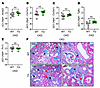 Figure 5
ERFE augmentation does not affect kidney fibrosis in adenine-induced CKD. In WT and TG mice from Figure 1G (n = 6–7 mice/group), kidney tissues were analyzed by qPCR for (A) Acta2, (B) Col1a1, (C) Col3a1, (D) Tgfb1, and (E) Fn1. (F) Representative Masson’s trichrome–stained kidney sections from WT and TG mice after 8 weeks on adenine diet (black arrows, interstitial fibrosis; red arrows, glomerulosclerosis). Original magnification, ×10 (left) and ×40 (right). Data are mean ± SEM, analyzed by unpaired t test with Welch’s correction (2-tailed). NS, not significant.
Inflammation is an important driver of both anemia (20) and kidney injury (21). We therefore examined whether transgenic ERFE affected systemic and organ inflammation elicited by 2,8-dihydroxyadenine crystals in the kidney and by the subsequent impairment of renal function. We found no significant differences between WT and TG mice in plasma concentrations of key inflammatory cytokines TNF-α, IL-1β, IL-6, IL-1α, IFN-γ, or IL-10 (Supplemental Figure 4, A–F). The expression of the acute-phase reactant and hepatic inflammatory marker Saa1 and that of renal cytokines Il6 and Il1b was similar between WT and TG mice with adenine-induced CKD, while renal expression of Tnfa was mildly increased in TG compared with WT mice (Figure 6, A–D). Overall, ERFE overexpression did not have a substantial effect on systemic or renal inflammation.
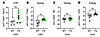 Figure 6
ERFE augmentation does not substantially change mRNA markers of liver or kidney inflammation in adenine-induced CKD. WT and TG mice from Figure 1G (n = 6–7 mice/group) were analyzed by qPCR for (A) Saa1 expression in liver tissue and (B–D) Tnfa, Il6, and Il1b expression in kidney tissue. Data are mean ± SEM, analyzed by unpaired t test with Welch’s correction (2-tailed). **P < 0.01. NS, not significant.
Dysregulated mineral metabolism in CKD is closely linked to iron dyshomeostasis and contributes to adverse patient outcomes, including bone diseases and cardiovascular disease, in part through greatly increased FGF23 levels (22, 23). Linked to FGF23 excess, left ventricular hypertrophy is a common and serious complication of CKD (24, 25). Accordingly, we analyzed (Supplemental Figure 5) the effect of ERFE overexpression on serum phosphate and iFGF23 (biologically active form) concentrations, as well as markers of mineral metabolism, including Slc34a1 and Slc34a3 (encoding sodium-dependent phosphate transporters 2A and 2C, also known as NaPi-2a and -2c), Cyp27b1 and Cyp24a1 (encoding the enzymes that respectively generate and break down the active form of vitamin D, 1,25-dihydroxyvitamin D3), and Kl (encoding Klotho, the renal coreceptor for iFGF23). No significant effects of transgenic ERFE overexpression were observed (Supplemental Figure 5, A–G), except for a small increase in the expression of the phosphate transporter Slc34a1 that mediates phosphate reabsorption in the renal tubular brush border. This increased expression may reflect the improved kidney function in TG mice (Figure 2).


