
Research ArticleMetabolismVascular biology
Open Access |  10.1172/jci.insight.188637
Site-1 protease–mediated cholesterol metabolism is essential for lymphatic development in mice
Yuji Kondo,1,2 Yizhi Jiang,1 Xin Geng,1 Jianhua Song,1 Summer Simeroth,1,3 J. Michael McDaniel,1 Pengchun Yu,1,3 R. Sathish Srinivasan,1 and Lijun Xia1,4
1Cardiovascular Biology Research Program, Oklahoma Medical Research Foundation, Oklahoma City, Oklahoma, USA.
2Institute for Glyco-core Research (iGCORE), Nagoya University, Furo-cho, Chikusa-ku, Nagoya, Japan.
3Department of Cell Biology and
4Department of Biochemistry and Physiology, University of Oklahoma Health Sciences Center, Oklahoma City, Oklahoma, USA.
Address correspondence to: Lijun Xia, 825 NE 13th Street, Oklahoma City, Oklahoma 73104, USA. Phone: 405.271.7892; Email: Lijun-xia@omrf.org.
Authorship note: YK, YJ, and XG are co–first authors.
Find articles by Kondo, Y. in: PubMed | Google Scholar
1Cardiovascular Biology Research Program, Oklahoma Medical Research Foundation, Oklahoma City, Oklahoma, USA.
2Institute for Glyco-core Research (iGCORE), Nagoya University, Furo-cho, Chikusa-ku, Nagoya, Japan.
3Department of Cell Biology and
4Department of Biochemistry and Physiology, University of Oklahoma Health Sciences Center, Oklahoma City, Oklahoma, USA.
Address correspondence to: Lijun Xia, 825 NE 13th Street, Oklahoma City, Oklahoma 73104, USA. Phone: 405.271.7892; Email: Lijun-xia@omrf.org.
Authorship note: YK, YJ, and XG are co–first authors.
Find articles by Jiang, Y. in: PubMed | Google Scholar
1Cardiovascular Biology Research Program, Oklahoma Medical Research Foundation, Oklahoma City, Oklahoma, USA.
2Institute for Glyco-core Research (iGCORE), Nagoya University, Furo-cho, Chikusa-ku, Nagoya, Japan.
3Department of Cell Biology and
4Department of Biochemistry and Physiology, University of Oklahoma Health Sciences Center, Oklahoma City, Oklahoma, USA.
Address correspondence to: Lijun Xia, 825 NE 13th Street, Oklahoma City, Oklahoma 73104, USA. Phone: 405.271.7892; Email: Lijun-xia@omrf.org.
Authorship note: YK, YJ, and XG are co–first authors.
Find articles by Geng, X. in: PubMed | Google Scholar
1Cardiovascular Biology Research Program, Oklahoma Medical Research Foundation, Oklahoma City, Oklahoma, USA.
2Institute for Glyco-core Research (iGCORE), Nagoya University, Furo-cho, Chikusa-ku, Nagoya, Japan.
3Department of Cell Biology and
4Department of Biochemistry and Physiology, University of Oklahoma Health Sciences Center, Oklahoma City, Oklahoma, USA.
Address correspondence to: Lijun Xia, 825 NE 13th Street, Oklahoma City, Oklahoma 73104, USA. Phone: 405.271.7892; Email: Lijun-xia@omrf.org.
Authorship note: YK, YJ, and XG are co–first authors.
Find articles by Song, J. in: PubMed | Google Scholar
1Cardiovascular Biology Research Program, Oklahoma Medical Research Foundation, Oklahoma City, Oklahoma, USA.
2Institute for Glyco-core Research (iGCORE), Nagoya University, Furo-cho, Chikusa-ku, Nagoya, Japan.
3Department of Cell Biology and
4Department of Biochemistry and Physiology, University of Oklahoma Health Sciences Center, Oklahoma City, Oklahoma, USA.
Address correspondence to: Lijun Xia, 825 NE 13th Street, Oklahoma City, Oklahoma 73104, USA. Phone: 405.271.7892; Email: Lijun-xia@omrf.org.
Authorship note: YK, YJ, and XG are co–first authors.
Find articles by Simeroth, S. in: PubMed | Google Scholar
1Cardiovascular Biology Research Program, Oklahoma Medical Research Foundation, Oklahoma City, Oklahoma, USA.
2Institute for Glyco-core Research (iGCORE), Nagoya University, Furo-cho, Chikusa-ku, Nagoya, Japan.
3Department of Cell Biology and
4Department of Biochemistry and Physiology, University of Oklahoma Health Sciences Center, Oklahoma City, Oklahoma, USA.
Address correspondence to: Lijun Xia, 825 NE 13th Street, Oklahoma City, Oklahoma 73104, USA. Phone: 405.271.7892; Email: Lijun-xia@omrf.org.
Authorship note: YK, YJ, and XG are co–first authors.
Find articles by McDaniel, J. in: PubMed | Google Scholar
1Cardiovascular Biology Research Program, Oklahoma Medical Research Foundation, Oklahoma City, Oklahoma, USA.
2Institute for Glyco-core Research (iGCORE), Nagoya University, Furo-cho, Chikusa-ku, Nagoya, Japan.
3Department of Cell Biology and
4Department of Biochemistry and Physiology, University of Oklahoma Health Sciences Center, Oklahoma City, Oklahoma, USA.
Address correspondence to: Lijun Xia, 825 NE 13th Street, Oklahoma City, Oklahoma 73104, USA. Phone: 405.271.7892; Email: Lijun-xia@omrf.org.
Authorship note: YK, YJ, and XG are co–first authors.
Find articles by Yu, P. in: PubMed | Google Scholar
1Cardiovascular Biology Research Program, Oklahoma Medical Research Foundation, Oklahoma City, Oklahoma, USA.
2Institute for Glyco-core Research (iGCORE), Nagoya University, Furo-cho, Chikusa-ku, Nagoya, Japan.
3Department of Cell Biology and
4Department of Biochemistry and Physiology, University of Oklahoma Health Sciences Center, Oklahoma City, Oklahoma, USA.
Address correspondence to: Lijun Xia, 825 NE 13th Street, Oklahoma City, Oklahoma 73104, USA. Phone: 405.271.7892; Email: Lijun-xia@omrf.org.
Authorship note: YK, YJ, and XG are co–first authors.
Find articles by Srinivasan, R. in: PubMed | Google Scholar
1Cardiovascular Biology Research Program, Oklahoma Medical Research Foundation, Oklahoma City, Oklahoma, USA.
2Institute for Glyco-core Research (iGCORE), Nagoya University, Furo-cho, Chikusa-ku, Nagoya, Japan.
3Department of Cell Biology and
4Department of Biochemistry and Physiology, University of Oklahoma Health Sciences Center, Oklahoma City, Oklahoma, USA.
Address correspondence to: Lijun Xia, 825 NE 13th Street, Oklahoma City, Oklahoma 73104, USA. Phone: 405.271.7892; Email: Lijun-xia@omrf.org.
Authorship note: YK, YJ, and XG are co–first authors.
Find articles by
Xia, L.
in:
PubMed
|
Google Scholar
|

Published October 22, 2025 - More info
JCI Insight. 2025;10(20):e188637. https://doi.org/10.1172/jci.insight.188637.
© 2025 Kondo et al. This work is licensed under the Creative Commons Attribution 4.0 International License. To view a copy of this license, visit http://creativecommons.org/licenses/by/4.0/.
Received: November 5, 2024; Accepted: August 29, 2025


-
Results
Mice lacking S1P in LECs show defective lymphatic vascular development. Prior studies revealed the vital role of S1P in embryonic development by analyzing constitutive global S1P-deficient mice (23). To gain insights into the function of S1P in the vascular system, we generated mice with constitutive deletion of S1P in endothelium (Mbtps1fl/fl Tie2Cre, EC Mbtps1–/–) using the well-established Tie2Cre-transgenic mice (24), which also mediates deletion in the hematopoietic lineage. We found that EC Mbtps1–/– mice showed embryonic lethality at embryonic day 9.5 (E9.5) (Supplemental Figure 1; supplemental material available online with this article; https://doi.org/10.1172/jci.insight.188637DS1). As EC Mbtps1–/– mice had S1P deficiency in both endothelial and hematopoietic cells, we generated mice with hematopoietic deletion of S1P (Mbtps1fl/fl VavCre, HC Mbtps1–/–) by breeding Mbtps1fl/fl female mice with Mbtps1fl/wt VavCre male mice, which mediates deletion specifically in hematopoietic cells. HC Mbtps1–/– mice exhibited no substantial abnormal phenotypes, indicating that S1P has no critical role in the development and function of hematopoietic cells. This result also demonstrates the essential role of endothelial S1P in embryonic development.
To bypass the early embryonic lethality of the EC Mbtps1–/– mice, we generated mice with tamoxifen-inducible deletion of S1P (Mbtps1fl/fl Cdh5CreERT2+, iEC Mbtps1–/–). Cdh5CreERT2 is known to mediate the deletion of a floxed gene primarily in vascular endothelial cells. Blood vasculature formation during E10.5 to E12.5 in the hindbrain is a well-studied model for angiogenesis (25). We treated the Mbtps1fl/fl Cdh5CreERT2 pregnant dam with tamoxifen starting at E8.5, and the embryos were dissected at E12.5 (Supplemental Figure 2, A–C). We found relatively normal directional blood vasculature formation toward the subventricular zone (Supplemental Figure 2, D and E), indicating that S1P is not critical for angiogenesis in the hindbrain during this stage of development.
To further determine the vascular development of iEC Mbtps1–/– embryos, we induced the S1P deletion by tamoxifen injection into the pregnant dam at E9.5, E11.5, and E13.5 (Figure 1A). This time point allowed us to examine the development of both blood and lymphatic vascular systems in the dorsal skin of E14.5 embryos (Figure 1B). At E14.5, we noticed that approximately 30% of iEC Mbtps1–/– embryos had edema at the dorsal side (Figure 1A), a sign of defective lymphatic function, relative to wild-type littermate controls (mice with floxed alleles, hereafter, littermate or WT). Immunostaining of CD31 (pan-endothelial marker) and VEGFR3 (lymphatic endothelial marker) of the dorsal skin revealed that, compared with that of blood capillaries (defined as CD31+), migration of lymphatic capillaries (defined as CD31+VEGFR3+) to midline was severely impaired, supporting a primary role of S1P in lymphangiogenesis (Figure 1, B and C).
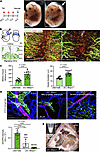 Figure 1
Mice lacking S1P in LECs show defective lymphatic phenotypes. (A) The diagram on the left depicts the tamoxifen-induced deletion of S1P to generate iEC Mbtps1–/– mice. Gross images on the right show embryos at E14.5 (N > 25 embryos in each genotype). Arrow shows lymphedema. (B) Left: Diagrams showing the collection of fetal anterior dorsal skin for whole-mount immunostaining and the migration of LECs to the midline of the dorsal skin at different developmental stages. Right: Images of immunostained anterior dorsal skin of WT and iEC Mbtps1–/– mice at E14.5. Data represent at least 3 experiments. SMA, smooth muscle actin. (C) Quantification of the distance to the midline covered by lymphatic vessels (left) and the vessels’ diameters (right). Based on the blood vascular patterning, comparable regions among samples (n > 5 images in each genotype) were selected as regions of interest for quantification. Midline closure and vessel diameter were measured using ImageJ (NIH). Littermates, WT. Data represent mean ± SD; unpaired t test with Welch’s correction was performed for the statistical analysis. ****P < 0.0001. (D) Immunostaining of dermal lymphatic vessels (green), arterioles (red), and blood capillaries (blue) in WT and LEC Mbtps1–/– mice at E15.5 (top). Quantification of VEGFR3 intensity normalized to the vessel area (bottom, n > 5 images in each genotype) using ImageJ. Data represent mean ± SD. One-way ANOVA was performed for the statistical analysis. ****P < 0.0001. (E) Chylous ascites in LEC Mbtps1–/– mice (N > 10 mice). Littermates, WT.
To study the intrinsic role of S1P in LECs, we generated mice with LEC-specific deletion of S1P (Mbtps1fl/fl Lyve1Cre+, hereafter, LEC Mbtps1–/–). The mice showed defective lymphatic phenotypes characterized by a substantial reduction of VEGFR3-expressed LECs in the skin (Figure 1D) and chylous ascites (Figure 1E). Of note, most of the mice succumbed by 8 weeks of age. These data suggest that S1P is essential for the development of the lymphatic vascular system in mice and vital for their survival.
LEC-specific SREBP2 deletion in mice causes postnatal lethality. S1P proteolytically activates latent membrane-bound transcription factors at Golgi. Thus, lymphatic developmental defect in S1P-deficient mice is most likely caused by the defective cleavage of its substrates in LECs, such as SREBP2, the master transcription factor for cholesterol biosynthesis. Recent growing evidence regarding the importance of endothelial metabolism in lymphatic development and function motivated us to test if the cholesterol biogenesis pathway in LECs is involved in lymphatic development (Figure 2A). We generated mice with LEC-specific deletion of SREBP2 (Srebf2fl/fl Lyve1Cre+, hereafter, LEC Srebf2–/–). LEC Srebf2–/– mice died postnatally by 8 weeks of age, resembling LEC Mbtps1–/– mice, indicating that the S1P/SREBP2 axis is essential for LECs and vital for survival (Figure 2B). Both male and female mutant mice showed growth retardation, characterized by smaller gain of body weight (Figure 2C). Because global deletion of SREBP2 in mice was reported to cause embryonic lethality (19), the postnatal lethality of LEC Mbtps1–/– mice and LEC Srebf2–/– mice is likely to be caused by loss of function of S1P or SREBP2 in LECs. To validate our observation, we used another LEC-specific Cre mouse, Prox1Cre. We found that Srebf2fl/fl Prox1Cre mice phenocopied LEC Srebf2–/– mice by showing postnatal death (Figure 2D). These data demonstrate that the phenotype of LEC Srebf2–/– mice is caused by intrinsic loss of SREBP2 in LECs.
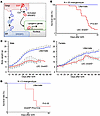 Figure 2
LEC-specific SREBP2 deletion in mice causes postnatal lethality. (A) Diagram depicting the role of S1P/SREBP2 axis in cholesterol biosynthesis. S1P proteolytically activates SREBP2, which in turn enters the nucleus to turn on the transcription of lipogenic genes. (B) Survival rate of LEC Srebf2–/– mice and littermate control (N = 25 mice in each group). (C) Changes in body weight of both male and female LEC Srebf2–/– mice (N > 10 mice in each group). (D) Survival rate of Srebf2fl/fl Prox1Cre mice (N = 5 mice in each group). Kaplan-Meier curves were calculated for day-to-event endpoints, with differences tested by log-rank test. Body weight curves were created until day 60, with differences tested by unpaired t test on each time point. Data represent mean ± SD. *P < 0.05, **P < 0.01.
Mice with LEC-specific SREBP2 deletion show dilated lacteals and low plasma triglyceride. To study the role of the S1P/SREBP2 axis in the postnatal lymphatic vascular system, we analyzed the structures of lymphatic capillaries in intestinal villi, called lacteals, in the jejunum and ileum of the surviving LEC Srebf2–/– mice by hematoxylin and eosin staining and found abnormally dilated lacteals in these mice (Figure 3A). This dilation of lacteals was also verified by immunostaining of CD31 (pan-endothelial marker) and Lyve1 (lymphatic endothelial marker) of the same tissues (Figure 3B). These data demonstrate that the S1P/SREBP2 axis is indispensable for normal lymphatic vascular development in embryonic and adult stages. We did not observe inflammatory cell infiltrates near the dilated lacteals in the small intestine (Figure 3A), suggesting LEC intrinsic defect caused the abnormal lacteal structure. Chylous ascites were a prominent feature of abnormal leakiness of lymphatic vasculature in the intestine in LEC Srebf2–/– mice. As expected, we observed lower plasma triglyceride levels in LEC Srebf2–/– mice than in littermate control mice (Figure 3C). Interestingly, although LEC Mbtps1–/– mice also exhibited chylous ascites (Figure 1E), they had normal plasma triglyceride levels. Plasma cholesterol levels in both mutant mice were comparable to control mice (Figure 3D). Like LEC Mbtps1–/– mice (Figure 1D), we observed a considerable reduction of VEGFR3 expression in Prox1+ lymphatic vasculature in the embryonic dorsal skin of LEC Srebf2–/– mice at E15.5 (Figure 3, E and F).
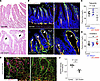 Figure 3
Mice with LEC-specific SREBP2 deletion show dilated lacteals. (A) Representative images of hematoxylin and eosin–stained sections of the ileum from littermate control and LEC Srebf2–/– mice (6 weeks of age). Arrows mark dilated lacteals. (B) Representative images of immunostaining of endothelial cells (green) and lymphatic vessels (red) in littermate control and LEC Srebf2–/– mice. Topro is a nucleus marker. Arrows indicate dilated lacteals. (C and D) Levels of plasma cholesterol and triglyceride. Each dot represents an individual mouse (N = 5–7). Gray areas mark the normal range. Data represent mean ± SD. One-way ANOVA was performed for the statistical analysis. *P < 0.05. (E) Whole-mount immunostaining of dermal lymphatics (blue), blood vessels (green), and VEGFR3 (red) in WT and LEC Srebf2–/– mice at E15.5. (F) Quantification of VEGFR3 intensity of E (n = 5 images/genotypes). Data represent mean ± SD. An unpaired t test was performed for the statistical analysis. ***P < 0.01.
Mice with LEC-specific S1P or SREBP2 deletion show dilated lacteals before weaning. To address whether the intestinal lymphatic defects occurred when mice were fed on milk, we examined both LEC Mbtps1–/– mice and LEC Srebf2–/– mice at postnatal day 20, right before weaning. Representative whole-mount immunofluorescence confocal images of jejunum samples showed substantially dilated lacteals of both LEC Mbtps1–/– and LEC Srebf2–/– mice relative to littermate controls (floxed alleles, Cre negative) (Figure 4, A and B, and Supplemental Videos 1 and 2). Immunostaining of jejunum lacteals with anti-VEGFR3 revealed substantially reduced fluorescence intensity of VEGFR3 in mutant lacteals after normalization to the average intensity of littermate control lacteals (Figure 4C). In addition, LEC Mbtps1–/– and LEC Srebf2–/– mice exhibited enlarged mesenteric collecting lymphatic vessels, as demonstrated by representative whole-mount images of mesenteric lymphatic vessels, in comparison with littermates (Supplemental Figure 3). Furthermore, we detected increased Oil Red O staining in the lacteals of LEC Srebf2–/– mice compared with littermates, suggesting abnormal accumulation of lipids in the mutant intestinal lymphatic system (Figure 4D).
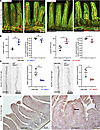 Figure 4
Mice with LEC-specific deletion of MBTPS1 or SREBP2 show dilated lacteals. (A) Representative whole-mount IF images of endothelial cells (green) and lymphatic vessels (red) in sections of jejunum from littermate control and LEC Mbtps1–/– mice (20 days of age). (B) Quantification of the length and width of the lacteal of littermate controls and LEC Mbtps1–/– mice. (C) Whole-mount IF images of VEGFR3 of lacteals of jejunum from WT littermates and LEC Mbtps1–/– or LEC Srebf2–/– mice (20 days of age). Fluorescence intensity of VEGFR3 was quantified using ImageJ and normalized to the average intensity of control lacteals. (D) Representative images of Oil Red O staining of jejunum section of LEC Srebf2–/– mice and littermates (20 days of age). Arrow marks Oil Red O–positive lacteals. N = 3 for control littermates; N = 4 for each mutant genotype respectively. A total of 12 lacteals from each animal were analyzed. Each dot represents 1 animal on the graph. The graphs were plotted as mean ± SD. An unpaired t test was performed for the statistical analysis. *P < 0.05; **P < 0.01.
To check if lymphatic vessels in other organs were affected at this age, we examined the dorsal ear skin dissected from both LEC Mbtps1–/– and LEC Srebf2–/– mice and wild-type littermates. Our analyses revealed only a modest reduction of lymphatic microvascular density in the LEC Mbtps1–/– dorsal ear relative to the littermates (Supplemental Figure 4A). However, collective lymphatic vessels in both LEC Mbtps1–/– and LEC Srebf2–/– dorsal ear had no substantial abnormalities (Supplemental Figure 4B). These data indicate that the lymphatic defects are mainly present in the small intestine of LEC Mbtps1–/– and LEC Srebf2–/– mice.
Mice with deletion of SREBP2 in LECs show hypotriglyceridemic and wasting syndrome. Poor absorption of dietary lipids via lacteal into blood circulation causes growth retardation and malnutrition (26). As expected, quantitative reverse transcription PCR (qPCR) results showed reduced gene expression of lipid carrier proteins (Apob and Fabp4) in the small intestine from LEC Srebf2–/– mice (Figure 5A). As an indication of malnutrition and resultant wasting syndrome, elevated asparagine synthetase (Asns) and reduced insulin growth factor 1 (Igf1) expression in livers from LEC Srebf2–/– mice were found (Figure 5B), which resemble Plagl2-knockout mice in which lacteals in jejunum are also dilated (26). These data suggest that lack of SREBP2 in LECs causes defective lymphatics, poor lipid bioavailability, and lethal malnutrition. Both the LEC Mbtps1–/– and the LEC Srebf2–/– mice died postnatally around 8 weeks of age. This postnatal lethality is presumably caused by poor absorption of triglyceride from the intestine and resultant wasting syndrome. The reason plasma triglyceride in LEC Mbtps1–/– mice was comparable to that of control mice is not apparent (Figure 3C). qRT-PCR with RNAs isolated from sorted LECs from the small intestine using flow cytometry verified a global reduction of lipogenic gene expression in LEC Mbtps1–/– mice (Supplemental Figure 5).
 Figure 5
Mice with deletion of SREBP2 in LECs show hypotriglyceridemic and wasting syndrome. (A) qPCR results of Srebf2, Hmgcr, Apob, and Fabp4 in the small intestine from control and LEC Srebf2–/– mice (4–6 weeks of age, N = 3 mice/genotype). (B) qPCR of Srebf2, Hmgcr, Asns, and Igf1 in the livers from control and LEC Srebf2–/– mice (4–6 weeks of age, N = 3 mice/genotype). The graphs were plotted as mean ± SD. An unpaired t test was performed for the statistical analysis. *P < 0.05.
VEGF-C/VEGFR3 signaling is S1P dependent. VEGFR3 and its cognate ligand VEGF-C transduce mitogenic signaling in LECs (27–29). Of note, LEC migration and proliferation were severely affected, and expression of VEGFR3 was downregulated in S1P-deficient LECs (Figure 1, B–E, and Figure 4C). Thus, we hypothesized that the S1P/SREBP2 axis was required for mitogenic VEGFR3 signaling. To test this, we stimulated primary cultured human dermal LECs (hLECs) with VEGF-C. We found that VEGF-C stimulation induced cleavage of SREBP2 within 30 minutes with a concomitant increase in phosphorylated Akt in hLECs (Figure 6A). As expected, the expression of genes for cholesterol synthesis, such as HMGCR, FASN, and LDLR, was upregulated upon VEGF-C stimulation, suggesting that VEGF-C/VEGFR3 signaling induced S1P-SREBP2–dependent cholesterol biogenesis in LECs (Figure 6B). Importantly, VEGF-C–mediated phosphorylation of Akt and ERK1/2 was impaired in the presence of PF-429242, an S1P inhibitor, and fatostatin, an SREBP inhibitor, respectively (Figure 6, C and D). We also observed that SREBP inhibition greatly reduced VEGFR3 expression in hLECs, albeit with little effect by S1P inhibition (Figure 6E). Next, to test the reliability of the SREBP inhibitor, we tested if forced expression of the N-terminal myc3-tagged mature form of SREBP2, a constitutively active (hereafter, CA) nuclear form, normalized SREBP inhibition–mediated VEGFR3 reduction (Figure 6, F and G). Normalization of altered LDLR expression mediated by either S1P or SREBP inhibition was verified by forced expression of CA form compared with empty vector (Figure 6H). As expected, forced expression of CA form maintained VEGFR3 levels even in the presence of SREBP inhibitor in a dose-dependent manner (Figure 6I). Together, these data indicate that the S1P/SREBP2 axis plays a critical role in LEC mitogenic signaling, which could explain the observed lymphatic malformation in the S1P-SREBP2–defective mice. We found reduced intensity of VEGFR3 immunostaining in hLECs treated with methyl-β-cyclodextrin. This compound limits the availability of cellular cholesterol (Supplemental Figure 6).
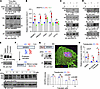 Figure 6
VEGF-C/VEGFR3 signaling is S1P dependent. (A) Western blotting of phosphorylated Akt and SREBP2 in cultured human dermal LECs stimulated with 10 ng/mL VEGF-C. P, precursor; M, matured (i.e., cleaved). (B) Quantitative reverse transcription PCR (qRT-PCR) of lipogenic genes in the cultured cells treated with VEGF-C. The RNAs were isolated at 0, 3 and 12 hours after VEGF-C stimulation. Data represent mean ± SD. One-way ANOVA was performed for the statistical analysis. *P < 0.05. N = 3. (C) Western blotting of Akt and ERK1/2 in the cultured cells stimulated with VEGF-C (V) with the pretreatment of S1P inhibitor (PF; 5 μM PF-429242, 30 minutes) in C or SREBP inhibitor (Fa; 5 μM fatostatin, overnight) in D. (E) Western blotting of VEGFR3 when treated with S1P inhibitor or SREBP inhibitor (5 μM, overnight). Hprt is a loading control. (F) Schematic illustration of proteolytic activation of SREBP2 by sequential actions of S1P and S2P. Numbers denote amino acids. (G) Protein structure of constitutive active SREBP2 (CA) (top). CA is detected by Western blotting (bottom, left) and immunofluorescence using anti-Myc antibody (bottom, right). (H) LDLR gene expression was monitored by qRT-PCR as an indicator of SREBP2 activity. The graph was plotted as mean ± SD. Two-way ANOVA was performed for the statistical analysis. *P < 0.05. N = 3. (I) Western blotting of VEGFR3 expression when treated with S1P inhibitor or SREBP inhibitor (1, 5, 10 μM, overnight) with concomitant expression of constitutive active SREBP2 (CA) (left). Empty vector (EV) was used as a control. Quantification of VEGFR3 intensity of blots (right). The graph was plotted as mean ± SD. Two-way ANOVA was performed for the statistical analysis. N = 3. Data represent at least 3 experiments. Numbers underneath each blot indicate quantification of band intensity.


