
Research ArticleCardiologyClinical Research
Open Access |  10.1172/jci.insight.188562
Epigenetic dysregulation of energy homeostasis drives aortic valve stenosis that is treatable with metformin
Timothy J. Cashman,1 Sherin Saheera,1 Ashley E. Blau,1 Edith Mensah Otabil,1 Nouran Y. Nagy,1 Thomas D. Samenuk,1 Timothy P. Fitzgibbons,1 David D. McManus,1,2 and Chinmay M. Trivedi1,3
1Division of Cardiovascular Medicine, Department of Medicine;
2Program in Digital Medicine, Department of Medicine; and
3Department of Molecular, Cell, and Cancer Biology, University of Massachusetts Chan Medical School, Worcester, Massachusetts, USA.
Address correspondence to: Chinmay M. Trivedi, The Albert Sherman Center, AS7-1047, 368 Plantation St., Worcester, Massachusetts, 01605, USA. Phone: 508.856.6947; Email: chinmay.trivedi@umassmed.edu.
Find articles by Cashman, T. in: PubMed | Google Scholar
1Division of Cardiovascular Medicine, Department of Medicine;
2Program in Digital Medicine, Department of Medicine; and
3Department of Molecular, Cell, and Cancer Biology, University of Massachusetts Chan Medical School, Worcester, Massachusetts, USA.
Address correspondence to: Chinmay M. Trivedi, The Albert Sherman Center, AS7-1047, 368 Plantation St., Worcester, Massachusetts, 01605, USA. Phone: 508.856.6947; Email: chinmay.trivedi@umassmed.edu.
Find articles by Saheera, S. in: PubMed | Google Scholar
1Division of Cardiovascular Medicine, Department of Medicine;
2Program in Digital Medicine, Department of Medicine; and
3Department of Molecular, Cell, and Cancer Biology, University of Massachusetts Chan Medical School, Worcester, Massachusetts, USA.
Address correspondence to: Chinmay M. Trivedi, The Albert Sherman Center, AS7-1047, 368 Plantation St., Worcester, Massachusetts, 01605, USA. Phone: 508.856.6947; Email: chinmay.trivedi@umassmed.edu.
Find articles by Blau, A. in: PubMed | Google Scholar
1Division of Cardiovascular Medicine, Department of Medicine;
2Program in Digital Medicine, Department of Medicine; and
3Department of Molecular, Cell, and Cancer Biology, University of Massachusetts Chan Medical School, Worcester, Massachusetts, USA.
Address correspondence to: Chinmay M. Trivedi, The Albert Sherman Center, AS7-1047, 368 Plantation St., Worcester, Massachusetts, 01605, USA. Phone: 508.856.6947; Email: chinmay.trivedi@umassmed.edu.
Find articles by Mensah Otabil, E. in: PubMed | Google Scholar
1Division of Cardiovascular Medicine, Department of Medicine;
2Program in Digital Medicine, Department of Medicine; and
3Department of Molecular, Cell, and Cancer Biology, University of Massachusetts Chan Medical School, Worcester, Massachusetts, USA.
Address correspondence to: Chinmay M. Trivedi, The Albert Sherman Center, AS7-1047, 368 Plantation St., Worcester, Massachusetts, 01605, USA. Phone: 508.856.6947; Email: chinmay.trivedi@umassmed.edu.
Find articles by Nagy, N. in: PubMed | Google Scholar
1Division of Cardiovascular Medicine, Department of Medicine;
2Program in Digital Medicine, Department of Medicine; and
3Department of Molecular, Cell, and Cancer Biology, University of Massachusetts Chan Medical School, Worcester, Massachusetts, USA.
Address correspondence to: Chinmay M. Trivedi, The Albert Sherman Center, AS7-1047, 368 Plantation St., Worcester, Massachusetts, 01605, USA. Phone: 508.856.6947; Email: chinmay.trivedi@umassmed.edu.
Find articles by Samenuk, T. in: PubMed | Google Scholar
1Division of Cardiovascular Medicine, Department of Medicine;
2Program in Digital Medicine, Department of Medicine; and
3Department of Molecular, Cell, and Cancer Biology, University of Massachusetts Chan Medical School, Worcester, Massachusetts, USA.
Address correspondence to: Chinmay M. Trivedi, The Albert Sherman Center, AS7-1047, 368 Plantation St., Worcester, Massachusetts, 01605, USA. Phone: 508.856.6947; Email: chinmay.trivedi@umassmed.edu.
Find articles by
Fitzgibbons, T.
in:
PubMed
|
Google Scholar
|

1Division of Cardiovascular Medicine, Department of Medicine;
2Program in Digital Medicine, Department of Medicine; and
3Department of Molecular, Cell, and Cancer Biology, University of Massachusetts Chan Medical School, Worcester, Massachusetts, USA.
Address correspondence to: Chinmay M. Trivedi, The Albert Sherman Center, AS7-1047, 368 Plantation St., Worcester, Massachusetts, 01605, USA. Phone: 508.856.6947; Email: chinmay.trivedi@umassmed.edu.
Find articles by McManus, D. in: PubMed | Google Scholar
1Division of Cardiovascular Medicine, Department of Medicine;
2Program in Digital Medicine, Department of Medicine; and
3Department of Molecular, Cell, and Cancer Biology, University of Massachusetts Chan Medical School, Worcester, Massachusetts, USA.
Address correspondence to: Chinmay M. Trivedi, The Albert Sherman Center, AS7-1047, 368 Plantation St., Worcester, Massachusetts, 01605, USA. Phone: 508.856.6947; Email: chinmay.trivedi@umassmed.edu.
Find articles by
Trivedi, C.
in:
PubMed
|
Google Scholar
|
Published September 9, 2025 - More info
JCI Insight. 2025;10(17):e188562. https://doi.org/10.1172/jci.insight.188562.
© 2025 Cashman et al. This work is licensed under the Creative Commons Attribution 4.0 International License. To view a copy of this license, visit http://creativecommons.org/licenses/by/4.0/.
Received: October 28, 2024; Accepted: July 23, 2025


-
Results
Conserved clinical traits in patients undergoing aortic valve replacement for severe stenosis. We analyzed 8 human tricuspid aortic valves surgically excised from patients with severe, symptomatic disease to investigate the pathophysiology and underlying mechanisms of aortic stenosis. All patients met hemodynamic criteria for severe aortic stenosis, defined by an aortic valve area < 1.0 cm² and a mean transvalvular gradient ≥ 40 mmHg, as confirmed by echocardiography (Supplemental Figure 1; supplemental material available online with this article; https://doi.org/10.1172/jci.insight.188562DS1). The cohort included both men (62.5%) and women (37.5%), with ages ranging from 54 to 78 years (median 71.5), and most patients were classified as overweight based on BMI (Tables 1 and 2). Despite advanced valvular disease, none of the patients exhibited systolic heart failure, with preserved left ventricular ejection fractions averaging 60%–65%. Common comorbidities included hyperlipidemia and hypertension (87.5% each), often managed with ACEi, ARBs, or beta blockers. Coronary artery disease was present in 50% of patients, the majority were nonsmokers (87.5%), and 62.5% were on low-dose aspirin therapy. This clinically well-characterized patient cohort provided the basis for downstream tissue analysis and molecular profiling to explore disease mechanisms in human aortic valve stenosis.
Focal epigenetic dysregulation of the HDAC3/H3K27ac axis in diseased human aortic valves. The study revealed that human aortic valves affected by stenosis exhibited distinct focal structural abnormalities. Pathological regions exhibited disrupted parallel alignment of interstitial Vimentin-positive fibroblasts, reduced collagen content, and fibroblasts with round or oval nuclei, in contrast with adjacent structurally preserved areas where fibroblasts displayed organized alignment and spindle-shaped nuclei (Figure 1, A and B). To assess epigenetic alterations, we performed immunostaining to evaluate histone H3 modifications at lysine residues 9 and 27, including acetylation, crotonylation, and methylation — key marks known to regulate gene transcription. Notably, interstitial fibroblasts within diseased regions showed an increase in H3K27ac compared with adjacent unaffected areas, while other histone modifications remained unchanged (Figure 1, B and C; data not shown). These findings suggest elevated H3K27ac is spatially associated with fibrotic remodeling in human aortic stenosis. Given that HDAC3, a class I HDAC, is a principal regulator of H3K27ac, we next examined its activity. Phosphorylation at serine 424 (Ser424) is required for HDAC3 deacetylase function (9). Immunostaining showed that while total HDAC3 expression remained unchanged, phosphorylation at Ser424 was lost in fibroblasts within diseased regions, indicating a localized impairment of HDAC3 enzymatic activity (Figure 1, D–F). These results collectively implicate epigenetic dysregulation, specifically via altered HDAC3-mediated H3K27 deacetylation, in the pathogenic regions of human aortic valve stenosis.
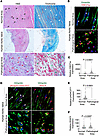 Figure 1
Histological and epigenetic alterations in human aortic valve stenosis. (A) Hematoxylin and eosin–stained (H&E; left) and trichrome-stained (right) sections of human aortic valves (n = 8) show organized collagen bundles with interspersed, parallel-aligned fibroblasts in normal regions (black and white arrows), in contrast with disrupted cellular alignment (red arrows) and reduced collagen content (green arrows) observed in pathological areas. Scale bar 50 μm (top and bottom row), 1,000 μm (middle row). (B and C) Coimmunofluorescence staining (B) and quantification (C) show increased H3K27ac expression (red, yellow arrows) in Vimentin+ valvular interstitial fibroblasts (green) in diseased regions compared with normal areas (white arrows). Hoechst nuclear counterstain (blue) of Vimentin+ valvular interstitial fibroblasts (green) shows spindle-shaped nuclei (white arrows) in normal areas compared with round or oval nuclei (yellow arrows) in pathological regions (yellow arrows). Unpaired t test with Welch’s correction. Scale bar 10 μm. (D–F) Coimmunofluorescence staining with Hoechst nuclear counterstain (D, blue) and quantification (E and F) show decreased phosphorylation of Hdac3 at Ser424 (green, E) in Vimentin+ valvular interstitial cells (yellow arrows) in pathological regions compared with normal areas (white arrows). Total Hdac3 (red) expression is similar between normal and pathological areas (red arrows, F). Unpaired t test with Welch’s correction. Scale bar 10 μm. Data represent median with interquartile range.
Hdac3 prevents aortic valve stenosis by maintaining epigenetic and structural homeostasis in valve fibroblasts. Given that HDAC3 plays a unique role among class I HDACs in regulating H3K27ac, a histone mark critical for enhancer activity and gene transcription, it is important to develop a mouse model to mechanistically investigate its function in aortic valve stenosis and associated epigenetic remodeling. To this end, we generated a fibroblast-specific Hdac3-knockout model (Hdac3fl/fl Postn-Cre ROSAmTmG+/–) to selectively ablate Hdac3 in valvular fibroblasts (Figure 2A). Mice with targeted Hdac3 deletion exhibited normal body size compared to controls (Supplemental Figure 2, A and B) but showed spontaneous lethality between 60 and 80 weeks of age (Supplemental Figure 2C). Histological analysis revealed a reduction in collagen deposition and increased valve thickness in Hdac3-knockout aortic valves (Figure 2, B and C). Interstitial fibroblasts within these valves displayed elevated H3K27ac, recapitulating the epigenetic profile observed in human stenotic aortic valves (Figure 2, D and E). Functional assessment via echocardiography demonstrated increased peak velocity across the aortic valve by 40 weeks of age in Hdac3-knockout mice, consistent with the development of aortic valve stenosis (Figure 2, F and G), while left ventricular ejection fraction remained comparable to controls (Supplemental Figure 2D). These findings establish Hdac3 as a critical regulator of valvular fibroblast epigenetic homeostasis and identify its loss as a driver of fibrotic remodeling and aortic valve stenosis.
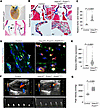 Figure 2
Genetic loss of Hdac3 in aortic valvular interstitial fibroblasts leads to aortic valve thickening, collagen disorganization, increased H3K27ac, and impaired valve function in mice. (A) LacZ-stained heart and frontal sections show Postn-Cre expression within outflow tract and aortic valves (black arrows). (B and C) Trichrome-stained sections of murine aortic valves (B, n = 6) and quantification (C) lacking Hdac3 display disorganized and reduced collagen deposition (B, green arrows), and valve thickening (C), compared with controls (black and blue arrows). Unpaired t test with Welch’s correction. Scale bar 500 μm (top row), 50 μm (bottom row). (D and E) Coimmunofluorescence staining with Hoechst nuclear counterstain (D, blue) and quantification (E) reveal increased H3K27ac expression (red) within Vimentin+ valvular interstitial cells (green, red arrows) of Hdac3-deficient aortic valves, compared with controls (white arrows). Hoechst nuclear counterstain (blue) of Vimentin+ valvular interstitial fibroblasts (green) shows spindle-shaped nuclei (white arrows) in control murine aortic valves compared with round or oval nuclei (red arrows) in Hdac3-deficient aortic valves (red arrows). Unpaired t test with Welch’s correction. Scale bar 10 μm. (F and G) Color doppler echocardiography (F) showing an increase in the peak velocity across the aortic valve in Hdac3fl/fl Postn-Cre mice (red arrow) compared with controls (white arrow). Echocardiographic assessment (G) of aortic valve function demonstrates elevated peak velocity across the aortic valve in Hdac3fl/fl Postn-Cre mice compared with controls. Unpaired t test. Data represent median with interquartile range. Ao, aorta; AV, aortic valve; LV, left ventrical.
Hdac3 suppresses aberrant mitochondrial biogenesis in valve fibroblasts to maintain aortic valve function. To investigate the molecular mechanisms underlying aortic valve stenosis following Hdac3 deletion, we performed bulk RNA-sequencing on aortic valves from control and Hdac3-knockout mice. Transcriptomic profiling revealed significant shifts in gene expression, with gene set enrichment analysis (GSEA) and Reactome pathway analysis identifying upregulation of pathways involved in mitochondrial energy production, including respiratory electron transport and oxidative phosphorylation (Figure 3, A–E, and Supplemental Figure 3, A–D). Conversely, pathways related to ECM organization were significantly downregulated, suggesting impaired structural integrity (Supplemental Figure 3A). Cytoscape-based network visualization further highlighted the interconnectivity among enriched mitochondrial pathways, including respiratory electron transport, energy metabolism, and mitochondrial biogenesis (Supplemental Figure 3, B and C). Functional validation using enzymatic assays verified increased mitochondrial activity in Hdac3-deficient valves compared with controls (Figure 3F). Consistent with these findings, immunofluorescence analysis revealed increased expression of ATP synthase F1 subunit alpha (ATP5A), a marker of elevated mitochondrial mass and metabolic activity, within Vimentin+ fibroblasts in both Hdac3-knockout murine valves and human stenotic aortic valves, suggesting enhanced mitochondrial biogenesis and a shift toward increased energy production in the stenotic valve microenvironment (Figure 3, G–J). These results suggest that loss of Hdac3 leads to metabolic reprogramming in valve fibroblasts, characterized by increased mitochondrial function and altered ECM gene expression, contributing to the pathogenesis of aortic valve stenosis.
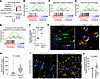 Figure 3
Loss of Hdac3 enhances mitochondrial biogenesis and activity in murine and human aortic valves. (A) Reactome pathway analysis reveals enrichment in the energy generation and mitochondrial biogenesis categories (n = 3). (B–E) GSEA of differentially regulated transcripts in murine aortic valves lacking Hdac3 compared with control (n = 3). P < 0.05. (F) Hdac3-knockout aortic valves exhibit an increase in mitochondrial complex I activity compared with control (n = 3). (G–J) Coimmunofluorescence staining with Hoechst nuclear counterstain (G and I; blue) and corresponding quantification (H and J) demonstrate increased mitochondrial density, indicated by elevated ATP5A expression (red; yellow arrows), in Vimentin+ valvular interstitial cells (green) in Hdac3-knockout murine aortic valves (G) and in pathological regions of human aortic valves (I), compared with control murine valves and normal human valve regions (G and I; white arrows). Unpaired t test with Welch’s correction. Data represent median with interquartile range. Scale bar 50 μm.
HDAC3 occupancy at mitochondrial biogenesis gene promoters restricts epigenetic activation in aortic valves. We performed Cleavage Under Targets and Tagmentation (CUT&Tag) to assess genome-wide occupancy of p-HDAC3 and total HDAC3 in adult murine aortic valves. Strikingly, the highest levels of HDAC3 and p-HDAC3 enrichment were observed at promoter regions of genes involved in mitochondrial biogenesis and oxidative phosphorylation, suggesting direct transcriptional repression of these energy-regulating pathways by HDAC3 (Figure 4, A–C, and Supplemental Figure 4). Notably, we did not observe significant enrichment of HDAC3 or p-HDAC3 at the promoters of genes involved in ECM organization despite their downregulation in Hdac3-deficient valves (data not shown). The lack of direct HDAC3 occupancy at these loci supports the interpretation that ECM gene expression changes are a secondary response to upstream metabolic or oxidative alterations. Reactome pathway analysis of H3K27ac CUT&Tag datasets from Hdac3-deficient aortic valves further supported this relationship, with the most significantly enriched pathways corresponding to mitochondrial biogenesis and oxidative phosphorylation (Figure 4, D and E, and Supplemental Figure 4). These findings indicate that HDAC3 deletion results in epigenetic activation of energy metabolism programs. To further elucidate the regulatory elements driving this activation, genome-wide motif analysis of H3K27ac-enriched promoter regions in Hdac3-knockout valves compared with controls revealed a strong enrichment of nuclear hormone receptor binding motifs, including Esrrg, Ppara, Thrb, and Esrra, which are known transcriptional activators of mitochondrial biogenesis (21–25) (Figure 4F). Together, these data demonstrate that HDAC3 and its phosphorylated form are preferentially enriched at mitochondrial gene promoters and that HDAC3 loss drives H3K27ac-dependent activation of mitochondrial biogenesis and oxidative metabolism pathways in the aortic valve.
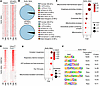 Figure 4
Hdac3 and phospho-Hdac3 localize to mitochondrial gene promoters to restrict H3K27ac enrichment in energy metabolism pathways. (A) Heatmaps display the enrichment of Hdac3 (left) and phospho-Hdac3S424 (right) at transcriptional start sites in murine aortic valves (n = 3). (B) Pie charts illustrate genome-wide occupancy of Hdac3 (top) and phospho-Hdac3S424 (bottom), showing enrichment at promoter regions in murine aortic valves. (C) Top enriched pathways from PANTHER cellular component analysis reveal Hdac3 and phospho-Hdac3S424 enrichment in mitochondrial categories within murine aortic valves. (D) Heatmaps show increased H3K27ac enrichment at transcriptional start sites in Hdac3-deficient murine aortic valves (right) compared with controls (left). (E) Top enriched pathways from Reactome pathway analysis of Hdac3-deficient murine aortic valves show increased H3K27ac enrichment in pathways related to energy production and mitochondrial biogenesis. (F) HOMER motif analysis identifies enrichment of nuclear receptor transcription factors at sites with increased H3K27ac enrichment in Hdac3-deficient murine aortic valves.
Hdac3 loss triggers ROS-dependent DNA damage and ECM-remodeling defects, which are mitigated by metformin. Building on our prior observation of aberrant mitochondrial biogenesis in Hdac3-knockout valvular interstitial fibroblasts, we hypothesized that elevated mitochondrial activity contributes to excessive ROS production, leading to oxidative DNA damage and subsequent fibrotic remodeling of the aortic valve. Coimmunofluorescence staining in human aortic valve specimens revealed elevated 8-hydroxy-2′-deoxyguanosine (8-OHdG) levels, a biomarker of oxidative stress, in Vimentin+ valvular interstitial fibroblasts within pathological regions compared with adjacent normal tissue, consistent with localized oxidative stress (Figure 5, A and B). Similarly, 8-OHdG expression was significantly increased in Vimentin+ valvular interstitial fibroblasts of Hdac3-knockout murine aortic valves, suggesting Hdac3 prevents mitochondrial ROS-mediated DNA damage (Figure 5, C and D). To test whether reducing mitochondrial ROS could mitigate this effect, we treated mice with metformin, a known inhibitor of mitochondrial complex I that suppresses ROS production (26, 27). Metformin treatment reduced 8-OHdG expression in valvular interstitial fibroblasts of both Hdac3-knockout and control valves (Figure 5, C and D). Furthermore, trichrome staining showed preservation of collagen architecture, and echocardiographic analysis demonstrated improved valve gradients in metformin-treated Hdac3-knockout mice (Figure 5, E–G, and Supplemental Figure 5). These findings support a model in which Hdac3 deficiency promotes mitochondrial oxidative stress and DNA damage in valvular interstitial fibroblasts, contributing to fibrotic valve remodeling, and identify metformin as a potential therapeutic agent to interrupt this pathogenic cascade.
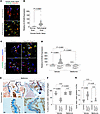 Figure 5
Metformin reduces oxidative DNA damage, preserves collagen structure, and improves aortic valve function in Hdac3-deficient stenotic valves. (A and B) Coimmunofluorescence staining (A) and quantification (B) reveal increased oxidative DNA damage, indicated by elevated 8-OHdG (green), in Vimentin+ valvular interstitial cells within pathological regions of human aortic valves (yellow arrows), compared with normal areas (white arrows). Unpaired t test with Welch’s correction. Scale bar 10 μm. (C and D) Coimmunofluorescence staining (C) and quantification (D) show increased 8-OHdG (green) in Vimentin+ valvular interstitial cells (red) of Hdac3-knockout aortic valves (yellow arrows) compared with controls (white arrows). Metformin treatment reduced 8-OHdG levels in Vimentin+ cells in both control (white arrows) and Hdac3-knockout valves (green arrows). Unpaired t test. Scale bar 10 μm. (E and F) Trichrome-stained sections of metformin-treated murine aortic valves and quantification (F) lacking Hdac3 display normal collagen deposition (red arrows) compared with controls (black arrows). Mann-Whitney test. Scale bar 500 μm (top row), 50 μm (bottom row). (G) The echocardiographic assessment shows improved mean gradient across the aortic valve in Hdac3fl/fl Postn-Cre mice treated with metformin, compared with untreated Hdac3fl/fl Postn-Cre mice. Ordinary 1-way ANOVA. Data represent median with interquartile range.
Reduced prevalence and attenuated progression of aortic valve stenosis in patients treated with metformin. Metformin’s widespread clinical use and well-established safety profile, combined with our preclinical findings, provided a compelling rationale for conducting a retrospective clinical analysis to assess whether metformin use is associated with delayed onset or slowed progression of aortic valve stenosis in patients. A retrospective cohort analysis was conducted using patient data from October 1, 2017, to February 28, 2024, to assess whether metformin use is associated with a reduced prevalence of aortic valve stenosis (Figure 6A). The study included patients diagnosed with prediabetes or type 2 diabetes; those on long-term oral hypoglycemic agents, NSAIDs, or other antihyperglycemics; and those diagnosed with aortic valve stenosis. Patients with type 1 diabetes were excluded. Two groups were analyzed from a total cohort of 152,586 individuals: a control group of 34,310 patients not taking metformin or insulin and a metformin-only group of 20,513 patients. Compared with nonusers, metformin users were younger (mean age 59 vs. 65 years, P < 0.001) and had a higher average BMI (30.7 vs. 28.9, P < 0.001) (Table 3). Metformin users also had a higher mean HbA1c (6.3% vs. 5.8%, P < 0.001), reflecting more advanced glycemic dysregulation (Table 3). A greater proportion of metformin users had a diagnosis of type 2 diabetes (34.7% vs. 26.8%) (Table 3). These demographic and clinical differences were accounted for in adjusted analyses.
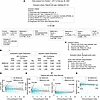 Figure 6
Metformin use is associated with reduced prevalence and slower progression of aortic valve stenosis in a retrospective clinical cohort. (A) Retrospective cohort analysis of 152,586 patients from October 1, 2017, to February 28, 2024, assessing the prevalence of aortic valve stenosis across medication groups. Comparative analysis of metformin-only users (n = 20,513) and nonmetformin controls (n = 34,310) was performed in a subset of 54,823 patients meeting inclusion criteria. (B) Patients taking metformin have lower odds of developing aortic valve stenosis compared with those not exposed. Categorical variables were analyzed using χ2 tests to examine associations, while continuous variables were assessed using t tests for mean comparisons between groups. (C–G) Longitudinal analysis of aortic valve function in patients with aortic valve stenosis and at least 2 echocardiograms, comparing those treated with metformin only versus those not on metformin (C). A linear mixed effects model was used to assess changes in peak velocity (D) (n = 1,063 from 262 patients), velocity time integral (E) (n = 1,054 from 260 patients), valve area (F) (n = 961 from 257 patients), and ejection fraction (G) (n = 810 from 250 patients) over time. The fixed effect results with interaction effect P values are shown. Patients with bicuspid aortic valves were excluded.
The prevalence of aortic valve stenosis was compared between these 2 groups to determine whether metformin use alone is associated with a lower rate of valve disease. Metformin users had a significantly lower prevalence of aortic valve stenosis (0.8% vs. 9.6%, P < 0.001) despite higher statin use and similar aspirin exposure (Table 3). Patients taking metformin exhibited significantly lower odds of developing aortic valve stenosis compared with those not taking it, with an odds ratio of 0.073 (95% CI: 0.062–0.085), after adjusting for potential risk factors, including aspirin and statin use (Figure 6B). In contrast, aspirin and statin intake were associated with significantly higher odds of aortic valve stenosis, with odds ratios of 3.242 (95% CI: 2.988–3.518) and 1.704 (95% CI: 1.566–1.854), respectively (Figure 6B).
Aortic valve stenosis is a progressive condition associated with significant morbidity and mortality, and there is a critical need to identify therapies that may slow its progression. To evaluate whether metformin use is associated with slower progression of aortic valve stenosis, we conducted a retrospective analysis of patients diagnosed with aortic valve stenosis who underwent at least 2 echocardiograms between October 1, 2017, and February 28, 2024 (Figure 6C). Patients were included if they were treated with metformin only or had no history of metformin use; those with bicuspid aortic valves were excluded. Serial echocardiographic parameters — including aortic valve area, peak velocity, velocity time integral, and left ventricular ejection fraction — were analyzed to assess disease progression over time (Figure 6C). A linear mixed model (LMM) revealed that patients treated with metformin had higher initial peak velocity and velocity time integral, but both declined significantly over time, whereas no significant changes were observed in the untreated group (Figure 6, D and E). Valve area, initially lower in the metformin group, increased significantly over time (Figure 6F). Ejection fraction was slightly lower at baseline in the metformin group, with no significant change during follow-up (Figure 6G). These results suggest that metformin use may be associated with a slower rate of aortic valve stenosis progression.


