
Research ArticleImmunologyOncology
Open Access |  10.1172/jci.insight.187921
Sequential JAK inhibition enhances antitumor immunity after combined anti–PD-1 and anti-CTLA4
Marcel Arias-Badia,1 PeiXi Chen,1 Yee May Lwin,1 Aahir Srinath,1 Aram Lyu,1,2 Zenghua Fan,1 Serena S. Kwek,1 Diamond N. Luong,1 Ali Setayesh,1 Mason Sakamoto,1 Matthew Clark,1 Averey Lea,1 Rachel M. Wolters,1 Andrew Goodearl,3 Fiona A. Harding,4 Jacob V. Gorman,5 Wendy Ritacco,3 and Lawrence Fong1,2,6
1Division of Hematology/Oncology, Department of Medicine, University of California, San Francisco, San Francisco, California, USA.
2Immunotherapy Integrated Research Center, Fred Hutchinson Cancer Center, Seattle, Washington, USA.
3AbbVie Bioresearch Center, Worcester, Massachusetts, USA.
4AbbVie Redwood City, Redwood City, California, USA.
5Research and Development, AbbVie, North Chicago, Illinois, USA.
6Helen Diller Family Comprehensive Cancer Center, University of California, San Francisco, San Francisco, California, USA.
Address correspondence to: Lawrence Fong, Fred Hutchison Cancer Center, 1100 Fairview Ave. N, Mail Stop D5-277, Seattle, Washington 98109, USA. Phone: 206.667.5398; Email: lawrence.fong@fredhutch.org.
Find articles by Arias-Badia, M. in: PubMed | Google Scholar
1Division of Hematology/Oncology, Department of Medicine, University of California, San Francisco, San Francisco, California, USA.
2Immunotherapy Integrated Research Center, Fred Hutchinson Cancer Center, Seattle, Washington, USA.
3AbbVie Bioresearch Center, Worcester, Massachusetts, USA.
4AbbVie Redwood City, Redwood City, California, USA.
5Research and Development, AbbVie, North Chicago, Illinois, USA.
6Helen Diller Family Comprehensive Cancer Center, University of California, San Francisco, San Francisco, California, USA.
Address correspondence to: Lawrence Fong, Fred Hutchison Cancer Center, 1100 Fairview Ave. N, Mail Stop D5-277, Seattle, Washington 98109, USA. Phone: 206.667.5398; Email: lawrence.fong@fredhutch.org.
Find articles by Chen, P. in: PubMed | Google Scholar
1Division of Hematology/Oncology, Department of Medicine, University of California, San Francisco, San Francisco, California, USA.
2Immunotherapy Integrated Research Center, Fred Hutchinson Cancer Center, Seattle, Washington, USA.
3AbbVie Bioresearch Center, Worcester, Massachusetts, USA.
4AbbVie Redwood City, Redwood City, California, USA.
5Research and Development, AbbVie, North Chicago, Illinois, USA.
6Helen Diller Family Comprehensive Cancer Center, University of California, San Francisco, San Francisco, California, USA.
Address correspondence to: Lawrence Fong, Fred Hutchison Cancer Center, 1100 Fairview Ave. N, Mail Stop D5-277, Seattle, Washington 98109, USA. Phone: 206.667.5398; Email: lawrence.fong@fredhutch.org.
Find articles by Lwin, Y. in: PubMed | Google Scholar
1Division of Hematology/Oncology, Department of Medicine, University of California, San Francisco, San Francisco, California, USA.
2Immunotherapy Integrated Research Center, Fred Hutchinson Cancer Center, Seattle, Washington, USA.
3AbbVie Bioresearch Center, Worcester, Massachusetts, USA.
4AbbVie Redwood City, Redwood City, California, USA.
5Research and Development, AbbVie, North Chicago, Illinois, USA.
6Helen Diller Family Comprehensive Cancer Center, University of California, San Francisco, San Francisco, California, USA.
Address correspondence to: Lawrence Fong, Fred Hutchison Cancer Center, 1100 Fairview Ave. N, Mail Stop D5-277, Seattle, Washington 98109, USA. Phone: 206.667.5398; Email: lawrence.fong@fredhutch.org.
Find articles by Srinath, A. in: PubMed | Google Scholar
1Division of Hematology/Oncology, Department of Medicine, University of California, San Francisco, San Francisco, California, USA.
2Immunotherapy Integrated Research Center, Fred Hutchinson Cancer Center, Seattle, Washington, USA.
3AbbVie Bioresearch Center, Worcester, Massachusetts, USA.
4AbbVie Redwood City, Redwood City, California, USA.
5Research and Development, AbbVie, North Chicago, Illinois, USA.
6Helen Diller Family Comprehensive Cancer Center, University of California, San Francisco, San Francisco, California, USA.
Address correspondence to: Lawrence Fong, Fred Hutchison Cancer Center, 1100 Fairview Ave. N, Mail Stop D5-277, Seattle, Washington 98109, USA. Phone: 206.667.5398; Email: lawrence.fong@fredhutch.org.
Find articles by
Lyu, A.
in:
PubMed
|
Google Scholar
|

1Division of Hematology/Oncology, Department of Medicine, University of California, San Francisco, San Francisco, California, USA.
2Immunotherapy Integrated Research Center, Fred Hutchinson Cancer Center, Seattle, Washington, USA.
3AbbVie Bioresearch Center, Worcester, Massachusetts, USA.
4AbbVie Redwood City, Redwood City, California, USA.
5Research and Development, AbbVie, North Chicago, Illinois, USA.
6Helen Diller Family Comprehensive Cancer Center, University of California, San Francisco, San Francisco, California, USA.
Address correspondence to: Lawrence Fong, Fred Hutchison Cancer Center, 1100 Fairview Ave. N, Mail Stop D5-277, Seattle, Washington 98109, USA. Phone: 206.667.5398; Email: lawrence.fong@fredhutch.org.
Find articles by Fan, Z. in: PubMed | Google Scholar
1Division of Hematology/Oncology, Department of Medicine, University of California, San Francisco, San Francisco, California, USA.
2Immunotherapy Integrated Research Center, Fred Hutchinson Cancer Center, Seattle, Washington, USA.
3AbbVie Bioresearch Center, Worcester, Massachusetts, USA.
4AbbVie Redwood City, Redwood City, California, USA.
5Research and Development, AbbVie, North Chicago, Illinois, USA.
6Helen Diller Family Comprehensive Cancer Center, University of California, San Francisco, San Francisco, California, USA.
Address correspondence to: Lawrence Fong, Fred Hutchison Cancer Center, 1100 Fairview Ave. N, Mail Stop D5-277, Seattle, Washington 98109, USA. Phone: 206.667.5398; Email: lawrence.fong@fredhutch.org.
Find articles by Kwek, S. in: PubMed | Google Scholar
1Division of Hematology/Oncology, Department of Medicine, University of California, San Francisco, San Francisco, California, USA.
2Immunotherapy Integrated Research Center, Fred Hutchinson Cancer Center, Seattle, Washington, USA.
3AbbVie Bioresearch Center, Worcester, Massachusetts, USA.
4AbbVie Redwood City, Redwood City, California, USA.
5Research and Development, AbbVie, North Chicago, Illinois, USA.
6Helen Diller Family Comprehensive Cancer Center, University of California, San Francisco, San Francisco, California, USA.
Address correspondence to: Lawrence Fong, Fred Hutchison Cancer Center, 1100 Fairview Ave. N, Mail Stop D5-277, Seattle, Washington 98109, USA. Phone: 206.667.5398; Email: lawrence.fong@fredhutch.org.
Find articles by Luong, D. in: PubMed | Google Scholar
1Division of Hematology/Oncology, Department of Medicine, University of California, San Francisco, San Francisco, California, USA.
2Immunotherapy Integrated Research Center, Fred Hutchinson Cancer Center, Seattle, Washington, USA.
3AbbVie Bioresearch Center, Worcester, Massachusetts, USA.
4AbbVie Redwood City, Redwood City, California, USA.
5Research and Development, AbbVie, North Chicago, Illinois, USA.
6Helen Diller Family Comprehensive Cancer Center, University of California, San Francisco, San Francisco, California, USA.
Address correspondence to: Lawrence Fong, Fred Hutchison Cancer Center, 1100 Fairview Ave. N, Mail Stop D5-277, Seattle, Washington 98109, USA. Phone: 206.667.5398; Email: lawrence.fong@fredhutch.org.
Find articles by Setayesh, A. in: PubMed | Google Scholar
1Division of Hematology/Oncology, Department of Medicine, University of California, San Francisco, San Francisco, California, USA.
2Immunotherapy Integrated Research Center, Fred Hutchinson Cancer Center, Seattle, Washington, USA.
3AbbVie Bioresearch Center, Worcester, Massachusetts, USA.
4AbbVie Redwood City, Redwood City, California, USA.
5Research and Development, AbbVie, North Chicago, Illinois, USA.
6Helen Diller Family Comprehensive Cancer Center, University of California, San Francisco, San Francisco, California, USA.
Address correspondence to: Lawrence Fong, Fred Hutchison Cancer Center, 1100 Fairview Ave. N, Mail Stop D5-277, Seattle, Washington 98109, USA. Phone: 206.667.5398; Email: lawrence.fong@fredhutch.org.
Find articles by Sakamoto, M. in: PubMed | Google Scholar
1Division of Hematology/Oncology, Department of Medicine, University of California, San Francisco, San Francisco, California, USA.
2Immunotherapy Integrated Research Center, Fred Hutchinson Cancer Center, Seattle, Washington, USA.
3AbbVie Bioresearch Center, Worcester, Massachusetts, USA.
4AbbVie Redwood City, Redwood City, California, USA.
5Research and Development, AbbVie, North Chicago, Illinois, USA.
6Helen Diller Family Comprehensive Cancer Center, University of California, San Francisco, San Francisco, California, USA.
Address correspondence to: Lawrence Fong, Fred Hutchison Cancer Center, 1100 Fairview Ave. N, Mail Stop D5-277, Seattle, Washington 98109, USA. Phone: 206.667.5398; Email: lawrence.fong@fredhutch.org.
Find articles by Clark, M. in: PubMed | Google Scholar
1Division of Hematology/Oncology, Department of Medicine, University of California, San Francisco, San Francisco, California, USA.
2Immunotherapy Integrated Research Center, Fred Hutchinson Cancer Center, Seattle, Washington, USA.
3AbbVie Bioresearch Center, Worcester, Massachusetts, USA.
4AbbVie Redwood City, Redwood City, California, USA.
5Research and Development, AbbVie, North Chicago, Illinois, USA.
6Helen Diller Family Comprehensive Cancer Center, University of California, San Francisco, San Francisco, California, USA.
Address correspondence to: Lawrence Fong, Fred Hutchison Cancer Center, 1100 Fairview Ave. N, Mail Stop D5-277, Seattle, Washington 98109, USA. Phone: 206.667.5398; Email: lawrence.fong@fredhutch.org.
Find articles by Lea, A. in: PubMed | Google Scholar
1Division of Hematology/Oncology, Department of Medicine, University of California, San Francisco, San Francisco, California, USA.
2Immunotherapy Integrated Research Center, Fred Hutchinson Cancer Center, Seattle, Washington, USA.
3AbbVie Bioresearch Center, Worcester, Massachusetts, USA.
4AbbVie Redwood City, Redwood City, California, USA.
5Research and Development, AbbVie, North Chicago, Illinois, USA.
6Helen Diller Family Comprehensive Cancer Center, University of California, San Francisco, San Francisco, California, USA.
Address correspondence to: Lawrence Fong, Fred Hutchison Cancer Center, 1100 Fairview Ave. N, Mail Stop D5-277, Seattle, Washington 98109, USA. Phone: 206.667.5398; Email: lawrence.fong@fredhutch.org.
Find articles by Wolters, R. in: PubMed | Google Scholar
1Division of Hematology/Oncology, Department of Medicine, University of California, San Francisco, San Francisco, California, USA.
2Immunotherapy Integrated Research Center, Fred Hutchinson Cancer Center, Seattle, Washington, USA.
3AbbVie Bioresearch Center, Worcester, Massachusetts, USA.
4AbbVie Redwood City, Redwood City, California, USA.
5Research and Development, AbbVie, North Chicago, Illinois, USA.
6Helen Diller Family Comprehensive Cancer Center, University of California, San Francisco, San Francisco, California, USA.
Address correspondence to: Lawrence Fong, Fred Hutchison Cancer Center, 1100 Fairview Ave. N, Mail Stop D5-277, Seattle, Washington 98109, USA. Phone: 206.667.5398; Email: lawrence.fong@fredhutch.org.
Find articles by Goodearl, A. in: PubMed | Google Scholar
1Division of Hematology/Oncology, Department of Medicine, University of California, San Francisco, San Francisco, California, USA.
2Immunotherapy Integrated Research Center, Fred Hutchinson Cancer Center, Seattle, Washington, USA.
3AbbVie Bioresearch Center, Worcester, Massachusetts, USA.
4AbbVie Redwood City, Redwood City, California, USA.
5Research and Development, AbbVie, North Chicago, Illinois, USA.
6Helen Diller Family Comprehensive Cancer Center, University of California, San Francisco, San Francisco, California, USA.
Address correspondence to: Lawrence Fong, Fred Hutchison Cancer Center, 1100 Fairview Ave. N, Mail Stop D5-277, Seattle, Washington 98109, USA. Phone: 206.667.5398; Email: lawrence.fong@fredhutch.org.
Find articles by Harding, F. in: PubMed | Google Scholar
1Division of Hematology/Oncology, Department of Medicine, University of California, San Francisco, San Francisco, California, USA.
2Immunotherapy Integrated Research Center, Fred Hutchinson Cancer Center, Seattle, Washington, USA.
3AbbVie Bioresearch Center, Worcester, Massachusetts, USA.
4AbbVie Redwood City, Redwood City, California, USA.
5Research and Development, AbbVie, North Chicago, Illinois, USA.
6Helen Diller Family Comprehensive Cancer Center, University of California, San Francisco, San Francisco, California, USA.
Address correspondence to: Lawrence Fong, Fred Hutchison Cancer Center, 1100 Fairview Ave. N, Mail Stop D5-277, Seattle, Washington 98109, USA. Phone: 206.667.5398; Email: lawrence.fong@fredhutch.org.
Find articles by Gorman, J. in: PubMed | Google Scholar
1Division of Hematology/Oncology, Department of Medicine, University of California, San Francisco, San Francisco, California, USA.
2Immunotherapy Integrated Research Center, Fred Hutchinson Cancer Center, Seattle, Washington, USA.
3AbbVie Bioresearch Center, Worcester, Massachusetts, USA.
4AbbVie Redwood City, Redwood City, California, USA.
5Research and Development, AbbVie, North Chicago, Illinois, USA.
6Helen Diller Family Comprehensive Cancer Center, University of California, San Francisco, San Francisco, California, USA.
Address correspondence to: Lawrence Fong, Fred Hutchison Cancer Center, 1100 Fairview Ave. N, Mail Stop D5-277, Seattle, Washington 98109, USA. Phone: 206.667.5398; Email: lawrence.fong@fredhutch.org.
Find articles by Ritacco, W. in: PubMed | Google Scholar
1Division of Hematology/Oncology, Department of Medicine, University of California, San Francisco, San Francisco, California, USA.
2Immunotherapy Integrated Research Center, Fred Hutchinson Cancer Center, Seattle, Washington, USA.
3AbbVie Bioresearch Center, Worcester, Massachusetts, USA.
4AbbVie Redwood City, Redwood City, California, USA.
5Research and Development, AbbVie, North Chicago, Illinois, USA.
6Helen Diller Family Comprehensive Cancer Center, University of California, San Francisco, San Francisco, California, USA.
Address correspondence to: Lawrence Fong, Fred Hutchison Cancer Center, 1100 Fairview Ave. N, Mail Stop D5-277, Seattle, Washington 98109, USA. Phone: 206.667.5398; Email: lawrence.fong@fredhutch.org.
Find articles by Fong, L. in: PubMed | Google Scholar
Published February 27, 2025 - More info
JCI Insight. 2025;10(7):e187921. https://doi.org/10.1172/jci.insight.187921.
© 2025 Arias-Badia et al. This work is licensed under the Creative Commons Attribution 4.0 International License. To view a copy of this license, visit http://creativecommons.org/licenses/by/4.0/.
Received: October 24, 2024; Accepted: February 21, 2025


-
Results
JAK inhibition synergizes with dual CPI only in sequential regime. We have previously shown that dual CPI treatment with anti–PD-1 and anti-CTLA4 compromises antitumor immunity in the murine prostate cancer model TRAMP-C2 by inducing activation-induced cell death (AICD) in an IFN-γ–dependent fashion (3). We interrogated the ability of the JAK1 inhibitor ABT-317 to modulate the immune responses driven by dual CPI anti-CTLA4 and anti–PD-1 therapy. When added to in vitro PMA/ionomycin-stimulated naive C57BL/6J mouse splenocytes, ABT-317 was able to substantially decrease CD69 upregulation and IFN-γ release at a concentration of 0.125 μg/μL (Figure 1A). To study the immune-intrinsic component of ABT-317, we compared sequentially starting JAK inhibition 3 days after the last CPI dose versus concomitantly starting JAK inhibition simultaneously to CPI ABT-317 dosing schedules in the ETB setting of prostate TRAMP-C2 tumors in mice (Figure 1B). While sequential ABT-317 after CPI significantly controlled tumor growth and increased survival, concomitant ABT-317 and CPI did not provide any advantage in controlling tumor growth compared to CPI, with a nonsignificant survival improvement (Figure 1, C and D). We immunophenotyped TDLNs from these mice on day 22 after implantation. While relative CD8+ T cell counts were highest in CPI, followed by sequential CPI + ABT-317, we observed a reduction in TDLN overall CD4+ T cells and Tregs in sequential ABT-317 (Supplemental Figure 1A; supplemental material available online with this article; https://doi.org/10.1172/jci.insight.187921DS1), leading to significantly increased CD8/CD4 ratios in the sequential ABT-317 regime, together with higher levels of proliferating Ki67+, effector perforin 1–positive (PRF1+), and tumor-reactive CD39+ CD8+ T cells, as well as higher TRAMP-C2 antigen-specific CD8+SPAS-1+ T cells (Figure 1E and Supplemental Figure 1B). SPAS-1+ T cells from CPI + ABT-317–treated mice also showed significantly higher levels of Ki67 and PRF1, while SPAS-1+ T cells from CPI-treated mice showed significantly higher levels of PD-1 and a moderate increase in LAG-3 (Supplemental Figure 1C), both associated with T cell dysfunction and recently found to synergize in the maintenance of T cell exhaustion programs (23). These data highlight the time-sensitive, immune-intrinsic implications of disrupting the JAK signaling pathway in cancer immunotherapy.
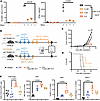 Figure 1
Sequential, but not concomitant, ABT-317 synergizes with CPI for improved antitumor efficacy. (A) A total of 105 naive mouse splenocytes were stimulated with PMA-ionomycin for 4 hours in the presence of 0, 0.125, 0.25, or 0.5 μg/μL ABT-317. Plots show CD69+ T cells by flow cytometry and IFN-γ concentration in culture supernatants by ELISA. Significant P values by Kruskal-Wallis are shown. (B) Experiment design for sequential versus concomitant ABT-317 regimes in an early tumor burden (ETB) scenario. C57BL/6J mice implanted with 1 million (1M) mouse prostate adenocarcinoma TRAMP-C2 cells were treated with CPI (anti–PD-1 and anti-CTLA4) on days 3, 6, and 9 after implantation. In the sequential (seq) regime, mice were treated with ABT-317 on days 12, 15, and 21. In the concomitant (conc), mice were treated with ABT-317 on days 3, 6, and 12. While most mice were assessed for tumor growth, TDLNs from n = 3 animals from n = 2 experiments were harvested and immunophenotyped by flow cytometry. (C) Tumor volume curves for mice involved in B until day 66 after implantation. *, P < 0.05 CPI + ABT-317 (seq) vs. isotype by 1-way ANOVA applying Kruskal-Wallis; #, P < 0.05 CPI + ABT-317 (seq) vs. all other groups by 1-way ANOVA applying Kruskal-Wallis. Error bars represent SEM. (D) Kaplan-Meier survival curves for all mice involved in B. *, P < 0.05 CPI + ABT-317 (seq) vs. CPI + ABT-317 (conc) by log-rank Mantel-Cox test. (E) Scatterplots showing flow cytometry parameters from TDLNs harvested on day 22 from the studies described in B. From left to right, CD8+/CD4+FoxP3+ (Treg) ratio, Ki67 MFI in gated CD8+ T cells, percentage of PRF1+ effector cells within CD8+ T cells, and percentage of TRAMP-C2 antigen-specific CD8+SPAS-1+ T cells within the CD45+ compartment. Significant P values obtained by Kruskal-Wallis are shown.
JAK1 inhibition ablates early IFN-γ–driven antitumor responses without compromising efficacy of CPI. When administered to mice challenged with TRAMP-C2 tumors receiving dual CPI, ABT-317 showed a significant dose-dependent improvement in tumor control and survival compared with dual CPI alone (Figure 2, A–C), rendering up to 75% of mice free of tumors at the higher dose of 20 mg/kg ABT-317 (Figure 2D). ABT-317 was also able to neutralize body weight loss observed in mice treated with CPI alone (Figure 2E). Notably, ABT-317 alone did not have any impact on tumor growth. To characterize early immune events leading to the observed tumor protection, we immunophenotyped TDLNs from mice on day 15 after implantation by single-cell RNA sequencing (scRNA-Seq) (Figure 2F). Though it was populated mainly by B cells (Supplemental Figure 2, A–C), we isolated the T cell compartment and identified 9 phenotypic clusters, including naive, regulatory, exhausted, and effector CD4+ and/or CD8+ T cell populations (Supplemental Figure 2, D–F). To identify the main downstream effects of JAK1 inhibition by ABT-317, we scored T cells for their normalized expression of a set of 26 previously published genes associated with IFN-γ signaling (24), including Isg15, Ifngr1, Ccl5, Icos, or Stat1, among others, and found a significantly increased “IFN-γ score” associated with treatment with CPI that was neutralized by the addition of ABT-317 at a pan-T cell level (Supplemental Figure 2, G and H). We found clusters 1, 3, and 5, composed by CD8+ effector T cells, CD4+ Tregs, and CD8+ exhausted T cells, respectively, to have significantly increased IFN-γ scores (Figure 2G). We performed differential gene expression (DGE) followed by gene set enrichment analysis (GSEA) between CPI and CPI + ABT-317 T cells from these clusters and found up to 7 enriched inflammatory pathways in all 3 clusters: IFN-γ, STAT5, IFN-α, JAK/STAT3, TNF-α, apoptosis, and hypoxia (Figure 2H). We consequently found significantly enriched IFN-γ scores in effector and exhausted CD8+ T cells (cl. 1 and 5) from CPI-treated mice and a nonsignificant trend (P = 0.0643) in CD4+ Tregs (cl. 3) (Figure 2I). Further analysis of the myeloid compartment revealed several DC subpopulations, including conventional DC1s (cDC1s), cDC2s, mature DCs enriched in immunoregulatory molecules (mreg DCs), and plasmacytoid DCs (Supplemental Figure 2, I–L). Given the role of mreg DCs in enhancing T cell antitumor activity in the tumor microenvironment (25, 26), we hypothesized that JAK1 inhibition might influence gene expression in these cells. We verified the presence of mreg DCs in TDLNs by immunofluorescence (Figure 2J), which showed decreased expression of DC maturation genes Cd80 and Cd86 in mice treated with CPI without ABT-317 (Figure 2K), suggesting impaired antigen presentation occurring in TDLNs from mice treated with CPI alone. These data demonstrate the multicellular effects of JAK inhibition in early antitumor responses.
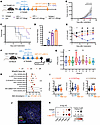 Figure 2
JAK inhibitor ABT-317 synergizes with CPI to achieve long-lasting antitumor efficacy in a dose-dependent fashion. (A) Treatment with CPI and ABT-317 in the ETB TRAMP-C2 model. TRAMP-C2 cells (1M) were implanted in the right flank of C57BL/6J mice. Antibodies were injected i.p. on days 3, 6, and 9. ABT-317 (20 or 5 mg/kg) was injected i.p. on days 12, 15, and 21. (B) Tumor volume curves for n = 1 of 3 experiments. *, P < 0.05 isotype vs. CPI + ABT-317 (20 and 5 mg) by Kruskal-Wallis; #, P < CPI vs. CPI + ABT-317 (20 and 5 mg) by Kruskal-Wallis. Error bars represent SEM. (C) Kaplan-Meier survival curves. *, P < 0.05 CPI + ABT-317 vs. all by Mantel-Cox. (D) Percentage of tumor-free mice (n = 3 experiments). (E) Percentage body weight variation. *, P < 0.05 isotype and isotype + ABT-317 vs. CPI and CPI + ABT-317 (20 and 5 mg) by Kruskal-Wallis; #, P < CPI vs. CPI + ABT-317 (20 mg) by Kruskal-Wallis. (F) TDLN immunophenotyping strategy (n = 3 mice per group, n = 2 experiments) by scRNA-Seq. (G) IFN-γ scores in TDLN T cells split by Leiden phenotypic clusters 0–8. Boxes cover interquartile interval, split by the median. Whiskers represent min to max values. Tukey outliers are shown. **, P < 0.05 vs. 0, 2, 4, 6, 7 by Tukey; ***, P < 0.0001 vs. all. (H) Enriched pathways in CPI vs. CPI + ABT-317 TDLN T cells from clusters 1, 3, and 5 by preranked GSEA from upregulated genes by differentially expressed genes (DEGs) precut by P < 0.05. NES, normalized enrichment score. (I) IFN-γ scores in scRNA-Seq TDLN T cell clusters 1, 3, and 5, split by treatment. Significant P values by Tukey are shown. Boxes cover interquartile interval, split by the median. Whiskers represent min to max values. (J) Representative immunofluorescence staining of TDLNs showing the presence of CD11c+CD86+DC-LAMP+ mreg DCs. (K) Dot plot matrix showing log-transformed gene expression of Cd40, Cd80, Cd86, Relb, and Cd83 in TDLN mreg DCs.
JAK1 inhibition after CPI leads to delayed antigen-specific T cell expansion with improved fitness. Because improved tumor control in the context of IFN-γ signaling inhibition is relatively counterintuitive, we aimed to dissect the underlying T cell dynamics behind the therapeutic efficacy of sequential ABT-317 after CPI. Thus, we immunophenotyped the T cell compartment in TDLNs from IFN-γ–reporter (yellow fluorescent protein, YFP) GREAT/Smart mice treated with dual CPI alone or in combination with ABT-317 on days 15, 21, and 25 after tumor implantation (Figure 3A). Overall CD4+ and CD8+ IFN-γ+ frequencies showed a declining trend in CPI-treated animals after an early significant increase, reaching down to isotype levels by day 25 (Figure 3, B and C). Notably, while CPI + ABT-317 treatment showed moderate early increases in both CD4+ and CD8+ IFN-γ+ T cell frequencies compared with isotype-treated animals, there was no apparent drop in CD8+IFN-γ+ T cells by day 25. We observed a similar declining pattern for CD4+ Tregs in CPI-treated mice, with more moderate early increases in the presence of ABT-317 (Figure 3D). CPI-treated TDLNs also showed a drastic early increase in CD8+ T cell frequencies, apparently blunted by the addition of ABT-317, which led to inverse frequencies by day 25, showing significantly CD8+-enriched TDLNs in CPI + ABT-317–treated animals (Figure 3E). We observed a very similar pattern when looking at tumor-reactive CD39+ or proliferating activated CD44+Ki67+CD8+ T cells, suggesting a shift in the timing of CPI-induced T cell expansion dependent of ABT-317 (Figure 3, F and G). We interrogated TDLN-derived T cells obtained by scRNA-Seq with a T cell exhaustion (Texh) score comprising known immune checkpoint genes like Pdcd1, Tigit, Lag3, Tox, among others (Supplemental Figure 3B). The resulting Texh score, led by elevated expression of Pdcd1 and Tox, a reported orchestrator of terminal T cell exhaustion (27, 28), was significantly higher in CPI treatment alone, while addition of ABT-317 notably kept exhaustion in TDLN T cells at the isotype level (Supplemental Figure 3, B and C). According to our scRNA-Seq data, this CPI-specific effect seemed to be particularly affecting CD4+ Tregs by day 15, with subtle differences in CD8+ T cells (Supplemental Figure 3B), though we did not detect consequences on the effector T cell gene expression between groups (Supplemental Figure 3D). To better capture tumor antigen-driven T cell responses, we stained TDLN T cells reactive to the MHC class I TRAMP-C2 immunodominant antigen SPAS-1 (29). We found a very similar time course trend in the frequency of TDLN SPAS-1–reactive CD8+ T cells to overall CD8+ T cells and CD4+ Tregs, with an early CPI-induced boost, detectable prior to the treatment with ABT-317 by day 12 (Supplemental Figure 3E) that declined with time, and a delayed boost in CPI + ABT-317–treated animals. Strikingly, SPAS-1–reactive T cells accounted for up to 24.2% of CD8+ T cells and up to 12.5% of all immune cells in TDLNs in these mice by day 25 (Figure 3, H and I), demonstrating a delayed antigen-driven T cell expansion. Consequently, CPI-ABT-317 SPAS-1+ T cells from day 25 showed significantly increased PRF1 and reduced exhaustion markers PD-1 and LAG-3 compared with CPI alone (Figure 3J). Immune infiltrates from endpoint TRAMP-C2 tumors involved in these experiments did not show significant reminiscences of the early events occurring in the TDLNs from these mice involving the boost in CD4+ Tregs, overall CD8+ T cells, or SPAS-1+ T cells (Supplemental Figure 3, F–H). To validate the tumor-killing fitness of TDLN-derived T cells upon treatment with CPI alone or with ABT-317, we set up ex vivo tumor rechallenge assays after pulsing day 25 TDLN T cells with the MHC class I TRAMP-C2 tumor antigen SPAS-1 and coculturing them with target TRAMP-C2 cells. Interestingly, T cells from mice treated with CPI in combination with ABT-317 were able to kill target cells at significantly higher rates after 2-day cultures than T cells from CPI alone (Figure 3K). These observations reinforce the notion that, while minimal IFN-γ signaling is mandatory for an effective response against tumors, preventing its overwhelming activation can provide improved efficacy and CPI-induced antitumor T cell fitness.
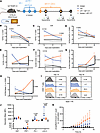 Figure 3
ABT-317 attenuates early IFN-γ–driven responses elicited by CPI to provide delayed expansion of tumor-reactive T cells. (A) Time course immunophenotyping of T cell responses in the ETB TRAMP-C2 model. IFN-γ–YFP reporter GREAT/Smart mice implanted s.c. with 1M TRAMP-C2 cells were treated i.p. with CPI alone or in combination with ABT-317 (20 mg/kg). TDLNs (n = 3 per group) were harvested on days 12, 15, 21, and 25. (B) Percentage of YFP+ (IFN-γ+) CD4+ T cells. Significant P values between groups in each time point by Kruskal-Wallis. (C) Percentage of YFP+CD8+ T cells. Significant P values between groups in each time point by Kruskal-Wallis. (D) Percentage of CD4+FoxP3+ Tregs within CD45+ cells. Significant P values between groups in each time point by Kruskal-Wallis. (E) Percentage of overall CD8+ T cells within the CD45+ compartment. Significant P values between groups in each time point by Kruskal-Wallis. (F) Percentage of tumor-reactive CD8+CD39+ T cells within CD45+ cells. Significant P values between groups in each time point by Kruskal-Wallis. (G) Percentage of proliferating and activated CD8+CD44+Ki67+ T cells within the CD45+ compartment. Significant P values between groups in each time point by Kruskal-Wallis. (H) Percentage of TRAMP-C2 antigen-specific CD8+SPAS-1+ T cells within the CD45+ compartment. Significant P values between groups in each time point by Kruskal-Wallis. (I) Representative mode-normalized histograms showing MFI of SPAS-1+ staining in gated CD8+ T cells from TDLNs on days 15 and 25. Values represent percentages of SPAS-1+ cells. (J) Geometric mean fluorescence intensity (MFI) of Ki67, PRF1, PD-1, and LAG3 in CD8+SPAS-1+ T cells from day 25 TDLNs. Significant P values by Kruskal-Wallis. (K) TRAMP-C2 cell death by total counts versus time (hours) (n = 2 experiments) (see Methods), normalized vs. unstimulated controls. *, P < 0.05 CPI + ABT-317 (orange) vs. isotype (black) by Kruskal-Wallis.
JAK1 inhibition prevents CPI-induced early T cell death. To assess how much the drop in T cell frequencies observed in mice treated with CPI alone could be explained by previously reported clonal deletion (3), we interrogated day 15 TDLN T cells for cell death–associated gene expression, including members of the caspase family, with a 45-gene “cell death” set (Supplemental Figure 4, A and B). CD4+ Tregs (cluster 3) showed the highest death score, followed by effector T cells (cluster 1) (Supplemental Figure 4C). When compared by treatment, both CPI-treated CD4+ and CD8+ T cells showed a significantly higher cell death score, which correlated with higher IFN-γ score rates in TDLN T cells, with bigger differences in the CD8+ compartment (Figure 4, A and B, and Supplemental Figure 4D). We assessed apoptosis rates in T cells from day 15 TDLNs by flow cytometry staining of annexin V (early apoptotic) and 7-AAD (late apoptotic) (Supplemental Figure 4E). Concordant with our scRNA-Seq data, we found a significant increase in late apoptotic CD4+ T (up to 21.4% of all immune cells) and CD8+ T cells (up to 16.07% of all immune cells) in mice treated with CPI alone, while treatment with ABT-317 was able to keep T cell apoptosis rates — both CD4 and CD8 — at isotype control levels (Figure 4, C and D). We hypothesized that the increase in early cell death in CPI alone would render those T cell populations differentially sensitive to subsequent stimulations. To test this, we isolated equal numbers of viable T cells from day 15 TDLNs of mice, restimulated them ex vivo with PMA-ionomycin, and assessed annexin V expression by flow cytometry after 4 hours. Strikingly, only T cells from TDLNs of mice treated with CPI alone showed significantly increased apoptotic levels after indiscriminate PMA-ionomycin restimulation, which was in turn prevented by exogenous addition of ABT-317 to the cultures (Figure 4E). To test the long-term impact on T cell fitness, we tested the ability of day 25 TDLN-derived T cells to express IFN-γ after CD3/CD28 ex vivo restimulation. T cells from mice treated with CPI alone showed a significant defect in IFN-γ levels after CD3/CD28 ex vivo restimulation compared with T cells from mice treated with CPI + ABT-317 (Figure 4F). These findings underscore the detrimental effects derived from excessive T cell activation in this ETB model, and importantly, demonstrate the possibility to identify those events systemically by analyzing lymphoid organs when there is no accessible or practicable tumor material.
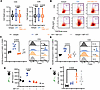 Figure 4
ABT-317 prevents early T cell death and leads to delayed, improved T cell fitness. (A) Cell death scores by scRNA-Seq in TDLN CD4+ and CD8+ T cells, split by treatment. Significant P values by Tukey are shown. Boxes cover interquartile interval, split by the median. Whiskers represent min to max values. (B) Representative density plots showing scRNA-Seq cell death scores (x axis) versus IFN-γ scores (y axis) in TDLN CD4+ and CD8+ T cells, by treatment. Gates (purple) contain all cells with scores > 0.0 for both gene sets. Values represent percentage. (C) Left, percentage of apoptotic annexin V+7-AAD+CD4+ T cells within the CD45+ compartment for TDLN T cells harvested on day 15 as pictured in Figure 3A. Significant P values by Kruskal-Wallis are shown; right, representative histograms showing 7-AAD MFI in gated CD4+ T cells. Values represent percentages. (D) Same as C, for CD8+ TDLN T cells. (E) Day 15 TDLN-derived T cells from the study shown in Figure 3A were stimulated with PMA-ionomycin in the presence or absence of ABT-317 in 96-well plates for 4 hours, after which wells were stained for annexin V and analyzed by flow cytometry. Scatterplot showing annexin V MFI. Significant P values by Kruskal-Wallis are shown. (F) Day 25 TDLN-derived T cells were stimulated with CD3/CD28 beads in 96-well plates for 48 hours and then analyzed by flow cytometry. Scatterplot showing YFP (IFN-γ) MFI within CD8+ T cells. Significant P values by Kruskal-Wallis are shown. Error bars represent SD.
JAK1 inhibition after CPI confers long-lasting immunological memory. After the striking 75% tumor-free mice upon CPI + ABT-317 treatment (Figure 2D), we wondered if and how much JAK inhibition contributed to the reshaping of the immune system, so we assessed tumor outcomes and T cell responses against related (TRAMP-C2) or unrelated (MC38) tumor rechallenges in these mice without additional treatments (Figure 5A). Expectedly, no effect in tumor growth was observed in MC38-challenged mice. However, there was a dose-dependent ABT-317–related protection against TRAMP-C2 rechallenges, with mice previously treated with high-dose ABT-317 not developing TRAMP-C2 tumors at all compared with mice treated with CPI alone or in combination with low-dose ABT-317, suggesting long-lasting immunological memory by JAK inhibition (Figure 5B). We performed multiparameter flow cytometry on T cells from the TDLNs of the rechallenged mice and quantified CD44hiCD62L– effector memory T cell (Tem) frequencies, which were clearly increased in TRAMP-C2–rechallenged TDLNs (Supplemental Figure 5, A and B). In these, we observed significantly higher Tem frequencies in rechallenged mice originally treated with CPI + high-dose ABT-317, in correlation with response (Figure 5C), though these differences could not be observed in day 15 TDLN scRNA-Seq (Supplemental Figure 5C), likely owing to delayed contraction of Tems in CPI-treated animals. We also observed a notable increase in TDLN CD8+SPAS-1+ T cell frequencies in CPI + high-dose ABT-317 rechallenged mice (Figure 5D). These antigen-specific cells also showed significantly higher levels of CD44 and trends for lower CD62L, as well as elevated proliferation Ki67, compared with the other 2 groups, suggesting reinforced memory against the TRAMP-C2 antigen SPAS-1 (Supplemental Figure 5D). These observations highlight the potential long-term impact of early IFN-γ modulation in the outcome of tumors and sustained surveillance after immune checkpoint inhibition.
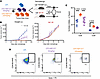 Figure 5
ABT-317 provides protective immunological memory against tumor rechallenge in mice treated with CPI. (A) Tumor rechallenge experiment design. Briefly, tumor-free animals from n = 2 studies (see Methods) described in Figure 2A were challenged with a second round of either 1M related TRAMP-C2 or 1M unrelated mouse colorectal MC38 tumor cells on their left flanks. TDLNs were harvested and analyzed by flow cytometry on day 40 (MC38) or day 85 (TRAMP-C2). (B) Tumor volume curves for implantations described in A: second challenge of TRAMP-C2 (left) or unrelated MC38 (right). *, P < 0.05 CPI vs. CPI + ABT-317 (20 mg) by 1-way ANOVA applying Kruskal-Wallis; #, P < 0.05 CPI vs. CPI + ABT-317 (20 and 5 mg) by 1-way ANOVA applying Kruskal-Wallis. Error bars represent SEM. (C) Percentage of CD44+CD62L– TDLN T cells by flow cytometry from TRAMP-C2 rechallenged mice involved in the study described in A, split into CD4+ and CD8+ compartments. Significant P values obtained by 1-way ANOVA applying Kruskal-Wallis are shown. Error bars represent SD. (D) Representative flow cytometry dot plots showing CD8+SPAS-1+ T cells from TDLNs of TRAMP-C2 rechallenged mice involved in A. Values represent percentages.
JAK1 inhibition negates the CPI-associated IFN-γ program in tumors. To capture events taking place during CPI and ABT-317 treatments in the tumor microenvironment, we implanted MC38 tumors in mice and enrolled them into treatments after a minimal tumor burden of 50 mm3 was achieved (Supplemental Figure 6A). We then evaluated tumor outcomes and immunophenotyped MC38 tumors obtained on day 15 after implantation by flow cytometry and scRNA-Seq (n = 3 per group) (Figure 6A). In this setting, CPI + ABT-317 provided nonsignificant higher antitumor efficacy and overall survival to CPI alone (Figure 6B and Supplemental Figure 6A). Our scRNA-Seq analysis on tumors identified 6 major cell populations, including MC38, fibroblast, endothelial, cycling CD45–, myeloid, and T cells (Supplemental Figure 6B). T cell unsupervised subclustering resulted in 6 phenotypic T cell clusters comprising Cd4+ Tregs, Cd8a+Ifnghi exhausted and nonexhausted T cells, and effector T and Tem cells, as well as a mixed cluster of cycling T cells (Figure 6C and Supplemental Figure 6, C and D). ABT-317 target Jak1 showed increased expression in T cells upon CPI treatment, though addition of ABT-317 brought it to isotype levels. Jak2 upregulation observed in CPI-ABT-317–treated mice might suggest ongoing compensation mechanisms (Figure 6D). We observed significantly enriched proportions of exhausted CD8+ T cells and decreased cycling T cells in CPI-treated tumors by scRNA-Seq, in line with previous characterization of T cell dynamics in TDLNs (Figure 6E). Moreover, DGE between CPI and CPI + ABT-317 CD8+ T cells revealed upregulation of Ifng itself plus several IFN-γ–associated genes reportedly implicated in antitumor CD8+ and CAR T cell dysfunction like Pdcd1, Dennd4a (30), Tnfaip3 (31, 32), and Nr4a3 (33, 34) or the hypoxia-related transcription factor Hif1a, also associated with T cell exhaustion (35) and in line with the enriched pathways found in TDLNs (Figure 6F). Accordingly, IFN-γ score was significantly higher in T cells from CPI-treated tumors (Figure 6G), particularly both in CD8+ exhausted (cluster 0) and CD8+ effector (cluster 3) T cells, followed by CD4+ Tregs (Supplemental Figure 6E). Interestingly, we also found elevated cell death scores in CD8+ cluster 0, though no significant differences were reached when compared by treatment (Supplemental Figure 6F). Parallel flow cytometry analysis revealed significantly increased CD4+ Tregs in CPI-treated tumors (Supplemental Figure 6G), with isotype showing the highest frequency by scRNA-Seq, followed again by CPI. Although overall CD8+ T cell tissue-specific counts were highest and did not differ between CPI- and CPI + ABT-317–treated groups by flow cytometry (Figure 6H), we captured antigen-specific T cell responses by flow cytometry staining with a tetramer against the MC38-specific MHC class I antigen ADPGK (36), and we found increased tissue-specific CD8+ADPGK+ counts in tumors from CPI + ABT-317–treated mice (Figure 6, I and J). Notably, ADPGK+ T cells from these mice showed significantly greater proliferation (Ki67), cytotoxicity (PRF1), and self-renewal potential (TCF1) than tumor-infiltrating ADPGK+ T cells from CPI-treated animals, suggesting sustained antigen-specific T cell expansion favored by ABT-317 (Figure 6K). In fact, overall CD8+PD-1+TCF1+ Tpex cells were depleted in CPI-treated tumors (Figure 6, L and M), thereby potentially affecting additional T cell populations. Our tumor-infiltrating myeloid scRNA-Seq analysis revealed improved DC maturation and antigen presentation potential in tumors treated with CPI + ABT-317 in the form of upregulated Cd80, Cd83, and Cd86, in line with our observations in the TDLNs of TRAMP-C2–challenged mice (Supplemental Figure 6, H–L). Overall, these findings underscore the time-sensitive benefits of IFN-γ modulation in boosting antigen-driven T cell responses against tumors.
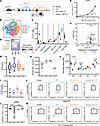 Figure 6
JAK inhibition attenuates IFN-γ–responsive signatures in the tumor microenvironment. (A) Study of CPI and ABT-317 in a minimal-burden tumor model. Briefly, 1M MC38 cells were implanted in the right flank of C57BL/6J mice. Mice were enrolled into treatment groups when tumors reached 50 mm3 (day 0). Antibodies were injected i.p. on days 3, 6, and 9. ABT-317 (20 mg/kg) was injected i.p. on days 12, 15, and 21. Tumors (n = 3 per group) were harvested on day 15 for scRNA-Seq, while n = 5 mice were assessed for tumor growth. (B) Tumor volume curves for mice involved in n = 1 of 2 experiments. Error bars represent SEM. (C) Uniform manifold approximation and projection showing 2,432 MC38 tumor-infiltrating T cells, distributed in 6 phenotypic clusters by Leiden (res. 0.5). (D) Heatmap showing log-transformed expression of Jak1, Jak2, and Jak3 in MC38-infiltrating T cells. (E) T cell phenotypic cluster frequencies by treatment group. *, P < 0.05 vs. rest by Kruskal-Wallis. (F) Volcano plot showing DEGs in tumor-infiltrating CD8+ T cells from CPI-treated mice. Significantly enriched genes in blue. (G) IFN-γ score in tumor-infiltrating T cells. ***, P = 0.0409 by 1-way ANOVA. (H) CD8+ T cell counts/mg of tumor. (I) CD8+ADPGK+ T cell counts/mg of tumor. (J) Representative flow cytometry dot plots showing MC38 antigen-reactive CD8+ADPGK+ T cells from MC38 tumors. Values represent percentages. (K) MFI of Ki67, PRF1, PD-1, and TCF1 in tumor-infiltrating CD8+ADPGK+ T cells. Significant P values by Kruskal-Wallis are shown. (L) CD8+PD-1+TCF1+ (Tpex) cell counts/mg of tumor. ***, P < 0.001 by Kruskal-Wallis; ****, P < 0.0001 by Kruskal-Wallis. (M) Representative flow cytometry dot plots showing tumor-infiltrating Tpex cells. Values represent percentages.


