
Research ArticleCardiologyInflammation
Open Access |  10.1172/jci.insight.187072
Klf9 promotes the repair of myocardial infarction by regulating macrophage recruitment and polarization
Sheng Xu,1 Hao Li,1 Jun Han,1 Yawei Xu,1 Niannian Li,2 Wenliang Che,1 Feng Liu,2 and Wenhui Yue1
1Department of Cardiology, Shanghai Tenth People’s Hospital, Tongji University School of Medicine, Shanghai, China.
2Department of Otolaryngology Head and Neck Surgery, Shanghai Key Laboratory of Sleep Disordered Breathing, Shanghai Jiao Tong University School of Medicine Affiliated Sixth People’s Hospital, Shanghai, China.
Address correspondence to: Wenhui Yue or Wenliang Che, Shanghai Tenth People’s Hospital, Tongji University School of Medicine, 301 Middle Yanchang Road, Shanghai, 200072, China. Phone: 86.18917689582; Email: yuewenhui@tongji.edu.cn (WY); Email: chewenliang@tongji.edu.cn (WC). Or to: Feng Liu, Shanghai Jiao Tong University School of Medicine Affiliated Sixth People’s Hospital, 600 Yishan Road, Shanghai, 200233, China. Phone: 86.13818823526; Email: liufeng@sibs.ac.cn.
Find articles by Xu, S. in: PubMed | Google Scholar
1Department of Cardiology, Shanghai Tenth People’s Hospital, Tongji University School of Medicine, Shanghai, China.
2Department of Otolaryngology Head and Neck Surgery, Shanghai Key Laboratory of Sleep Disordered Breathing, Shanghai Jiao Tong University School of Medicine Affiliated Sixth People’s Hospital, Shanghai, China.
Address correspondence to: Wenhui Yue or Wenliang Che, Shanghai Tenth People’s Hospital, Tongji University School of Medicine, 301 Middle Yanchang Road, Shanghai, 200072, China. Phone: 86.18917689582; Email: yuewenhui@tongji.edu.cn (WY); Email: chewenliang@tongji.edu.cn (WC). Or to: Feng Liu, Shanghai Jiao Tong University School of Medicine Affiliated Sixth People’s Hospital, 600 Yishan Road, Shanghai, 200233, China. Phone: 86.13818823526; Email: liufeng@sibs.ac.cn.
Find articles by Li, H. in: PubMed | Google Scholar
1Department of Cardiology, Shanghai Tenth People’s Hospital, Tongji University School of Medicine, Shanghai, China.
2Department of Otolaryngology Head and Neck Surgery, Shanghai Key Laboratory of Sleep Disordered Breathing, Shanghai Jiao Tong University School of Medicine Affiliated Sixth People’s Hospital, Shanghai, China.
Address correspondence to: Wenhui Yue or Wenliang Che, Shanghai Tenth People’s Hospital, Tongji University School of Medicine, 301 Middle Yanchang Road, Shanghai, 200072, China. Phone: 86.18917689582; Email: yuewenhui@tongji.edu.cn (WY); Email: chewenliang@tongji.edu.cn (WC). Or to: Feng Liu, Shanghai Jiao Tong University School of Medicine Affiliated Sixth People’s Hospital, 600 Yishan Road, Shanghai, 200233, China. Phone: 86.13818823526; Email: liufeng@sibs.ac.cn.
Find articles by Han, J. in: PubMed | Google Scholar
1Department of Cardiology, Shanghai Tenth People’s Hospital, Tongji University School of Medicine, Shanghai, China.
2Department of Otolaryngology Head and Neck Surgery, Shanghai Key Laboratory of Sleep Disordered Breathing, Shanghai Jiao Tong University School of Medicine Affiliated Sixth People’s Hospital, Shanghai, China.
Address correspondence to: Wenhui Yue or Wenliang Che, Shanghai Tenth People’s Hospital, Tongji University School of Medicine, 301 Middle Yanchang Road, Shanghai, 200072, China. Phone: 86.18917689582; Email: yuewenhui@tongji.edu.cn (WY); Email: chewenliang@tongji.edu.cn (WC). Or to: Feng Liu, Shanghai Jiao Tong University School of Medicine Affiliated Sixth People’s Hospital, 600 Yishan Road, Shanghai, 200233, China. Phone: 86.13818823526; Email: liufeng@sibs.ac.cn.
Find articles by Xu, Y. in: PubMed | Google Scholar
1Department of Cardiology, Shanghai Tenth People’s Hospital, Tongji University School of Medicine, Shanghai, China.
2Department of Otolaryngology Head and Neck Surgery, Shanghai Key Laboratory of Sleep Disordered Breathing, Shanghai Jiao Tong University School of Medicine Affiliated Sixth People’s Hospital, Shanghai, China.
Address correspondence to: Wenhui Yue or Wenliang Che, Shanghai Tenth People’s Hospital, Tongji University School of Medicine, 301 Middle Yanchang Road, Shanghai, 200072, China. Phone: 86.18917689582; Email: yuewenhui@tongji.edu.cn (WY); Email: chewenliang@tongji.edu.cn (WC). Or to: Feng Liu, Shanghai Jiao Tong University School of Medicine Affiliated Sixth People’s Hospital, 600 Yishan Road, Shanghai, 200233, China. Phone: 86.13818823526; Email: liufeng@sibs.ac.cn.
Find articles by Li, N. in: PubMed | Google Scholar
1Department of Cardiology, Shanghai Tenth People’s Hospital, Tongji University School of Medicine, Shanghai, China.
2Department of Otolaryngology Head and Neck Surgery, Shanghai Key Laboratory of Sleep Disordered Breathing, Shanghai Jiao Tong University School of Medicine Affiliated Sixth People’s Hospital, Shanghai, China.
Address correspondence to: Wenhui Yue or Wenliang Che, Shanghai Tenth People’s Hospital, Tongji University School of Medicine, 301 Middle Yanchang Road, Shanghai, 200072, China. Phone: 86.18917689582; Email: yuewenhui@tongji.edu.cn (WY); Email: chewenliang@tongji.edu.cn (WC). Or to: Feng Liu, Shanghai Jiao Tong University School of Medicine Affiliated Sixth People’s Hospital, 600 Yishan Road, Shanghai, 200233, China. Phone: 86.13818823526; Email: liufeng@sibs.ac.cn.
Find articles by Che, W. in: PubMed | Google Scholar
1Department of Cardiology, Shanghai Tenth People’s Hospital, Tongji University School of Medicine, Shanghai, China.
2Department of Otolaryngology Head and Neck Surgery, Shanghai Key Laboratory of Sleep Disordered Breathing, Shanghai Jiao Tong University School of Medicine Affiliated Sixth People’s Hospital, Shanghai, China.
Address correspondence to: Wenhui Yue or Wenliang Che, Shanghai Tenth People’s Hospital, Tongji University School of Medicine, 301 Middle Yanchang Road, Shanghai, 200072, China. Phone: 86.18917689582; Email: yuewenhui@tongji.edu.cn (WY); Email: chewenliang@tongji.edu.cn (WC). Or to: Feng Liu, Shanghai Jiao Tong University School of Medicine Affiliated Sixth People’s Hospital, 600 Yishan Road, Shanghai, 200233, China. Phone: 86.13818823526; Email: liufeng@sibs.ac.cn.
Find articles by Liu, F. in: PubMed | Google Scholar
1Department of Cardiology, Shanghai Tenth People’s Hospital, Tongji University School of Medicine, Shanghai, China.
2Department of Otolaryngology Head and Neck Surgery, Shanghai Key Laboratory of Sleep Disordered Breathing, Shanghai Jiao Tong University School of Medicine Affiliated Sixth People’s Hospital, Shanghai, China.
Address correspondence to: Wenhui Yue or Wenliang Che, Shanghai Tenth People’s Hospital, Tongji University School of Medicine, 301 Middle Yanchang Road, Shanghai, 200072, China. Phone: 86.18917689582; Email: yuewenhui@tongji.edu.cn (WY); Email: chewenliang@tongji.edu.cn (WC). Or to: Feng Liu, Shanghai Jiao Tong University School of Medicine Affiliated Sixth People’s Hospital, 600 Yishan Road, Shanghai, 200233, China. Phone: 86.13818823526; Email: liufeng@sibs.ac.cn.
Find articles by Yue, W. in: PubMed | Google Scholar
Published April 8, 2025 - More info
JCI Insight. 2025;10(9):e187072. https://doi.org/10.1172/jci.insight.187072.
© 2025 Xu et al. This work is licensed under the Creative Commons Attribution 4.0 International License. To view a copy of this license, visit http://creativecommons.org/licenses/by/4.0/.
Received: September 13, 2024; Accepted: March 27, 2025


-
Results
KLF9 deficiency inhibits post-MI repair and leads to increased mortality. To explore whether KLF9 is involved in the pathological process of MI, we analyzed the published single-cell sequencing data of human MI (22), which included normal heart and heart tissues from different regions during the acute phase of MI (within 15 days). The results showed that the proportion of cells expressing KLF9 decreased in the infarct and border zone after MI (Figure 1A), and the expression level of KLF9 decreased in various cell types (Figure 1A), suggesting that KLF9 is involved in MI, especially in the infarct zone. Subsequently, we constructed an MI model in C57BL/6J mice and monitored the KLF9 expression in the injured zone (infarct zone + border zone). The results showed that KLF9 increased significantly 1 day post-MI and then gradually declined, and KLF9 significantly decreased 5 days post-MI (Figure 1B), indicating that the effect of KLF9 on MI may be time dependent. To further characterize the functional role of KLF9 in MI, we constructed Klf9-knockout (Klf9–/–) mice and constructed an MI model in WT and Klf9–/– mice. The results showed that the survival of Klf9–/– mice was significantly decreased (Figure 1C), and among the dead mice, the proportion of heart rupture in Klf9–/– mice was higher compared with the WT controls (Figure 1D). Echocardiography results showed that Klf9–/– mice had worse cardiac function and more severe ventricular dilation (Figure 1, F and G).
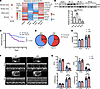 Figure 1
KLF9 deficiency leads to increased mortality. (A) Expression of KLF9 in normal heart and different zones of MI heart in human single-cell RNA-Seq data (22) (left) and the expression of KLF9 in different cell types (right). (B) KLF9 protein levels in the injured zone (infarct zone + border zone) of hearts (n = 3–4). (C) Survival curve (log-rank [Mantel-Cox] test) of WT and Klf9–/– mice subjected to MI (WT n = 33, Klf9–/– n = 37). (D) The percentage of ruptured and nonruptured hearts in dead mice in C (WT n = 12, Klf9–/– n = 21). (E) Ratio of heart weight (HW) to body weight (BW) in WT and Klf9–/– groups 1 week post-MI (n = 10–15). (F and G) Representative M-mode images of WT and Klf9–/– mice 1 week post-MI and the measurement of left ventricular ejection fraction (EF), fractional shortening (FS), left ventricular internal diameter at end-systole (LVIDs), and left ventricular internal diameter at end-diastole (LVIDd) (n = 10–16). Each point represents a mouse sample, and all data are expressed as means ± SEM. Unpaired 2-tailed Student’s t test (E and G), 1-way ANOVA (B) was used for statistical analyses. *P < 0.05, **P < 0.01, ***P < 0.001.
However, there were no significant differences in HW/BW ratio (Figure 1E) and cross-sectional area of cardiomyocytes (Supplemental Figure 2A; supplemental material available online with this article; https://doi.org/10.1172/jci.insight.187072DS1) 1 week post-MI. Masson’s staining showed that by 3 days post-MI, there was no significant difference in the infarct zone between WT and Klf9–/– mice (the blue area indicates fibrotic tissue and necrotic cells), but the ventricular wall of the infarcted zone of Klf9–/– mice was thinner (Figure 2, A and B); 1-week post-MI, the scar size of Klf9–/– heart was smaller (the blue area indicates fibrotic tissue), and the ventricular wall of the infarcted zone was also thinner (Figure 2, C and D).
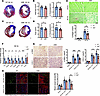 Figure 2
KLF9 is involved in the early repair process post-MI. (A–D) Representative photographs of Masson’s trichrome staining and quantitative data of infarcted/scar size% and left ventricular (LV) thickness at 3 days (A and B) and 1 week (C and D) post-MI (n = 11–13, scale bar = 0.5 mm). (E) Representative images of Sirius red staining and quantification of collagen area% in cardiac tissue 4 days post-MI (sham n = 8, MI4d n = 13, scale bars = 50 μm). (F) Real-time quantitative PCR (RT-qPCR) of myofibroblast activation marker genes was performed in cardiac tissues from the injured zone 3 days post-MI. The gene expression was analyzed using the ΔΔCt method (WT n = 7, Klf9–/– n = 6). (G) Representative images and quantification of α-SMA and collagen 1 (COL1) IHC staining in heart tissues 4 days post-MI (Sham n = 5, MI4d n = 6, Scale bars = 50 μm). (H) Representative immunofluorescence staining and quantification of vWF+ endothelial cells in the hearts 4 days post-MI (n = 5–6, scale bars = 50 μm). Each point represents a mouse sample, and all data are expressed as means ± SEM. Unpaired 2-tailed Student’s t test (B and D–H) was used for statistical analyses. *P < 0.05, **P < 0.01, ***P < 0.001.
In addition, we observed the long-term outcomes post-MI. At 4 weeks post-MI, the cardiac function of Klf9–/– mice was further reduced (Supplemental Figure 1, A–C), and the pathological results were similar to those from 1 week post-MI (Supplemental Figure 1, D and F). However, there was no significant difference in scar area (Supplemental Figure 1E), and Klf9–/– mice had larger HW/BW ratio, suggesting the development of cardiac hypertrophy (Supplemental Figure 1G). Taken together, these results suggested that expression of Klf9 is protective against MI, and knockout leads to increased mortality, greater likelihood of heart rupture, worsened cardiac function, and aggravated ventricular remodeling. These phenotypes were not caused by enlargement of infarct area in Klf9–/– mice but were more likely due to abnormal repair.
At 3–5 days after MI in mice, fibroblasts enter a proliferation phase characterized by activation, differentiation into myofibroblasts, and expression of high concentrations of α–smooth muscle actin (α-SMA), which confers high contractility (23). To investigate whether Klf9 regulates the initiation of fibrosis post-MI, we examined the marker genes of activated fibroblasts in the injured zone. The mRNA levels of Postn, Acta2, Col1a1, and Fn1 were significantly decreased in Klf9–/– heart tissue 3 days post-MI (Figure 2F), and there were no significant differences in sham groups (Supplemental Figure 1H), suggesting that Klf9 deficiency reduces the activation of fibroblasts post-MI. Additionally, collagen deposition in the injured zone of Klf9–/– mice was reduced on day 4 post-MI (Figure 2E), and the expression of α-SMA and COL1 proteins was also decreased (Figure 2G). During the second to fourth days post-MI, the capillary network in the border zone of mice began to expand, and a large number of branches and blood vessels grew toward the infarct center (24). We used vWF as a marker of endothelial cells and observed that the microvascular density in the infarct zone of Klf9–/– mice was significantly lower than that of WT mice 4 days post-MI, while no significant difference was found in the border zone (Figure 2H). These results indicated that Klf9 contributes to the initiation of repair post-MI, which may be why Klf9–/– mice are more prone to cardiac rupture.
Single-cell RNA sequencing reveals abnormal proportion and functions of Klf9–/– macrophages. Given that Klf9 is widely expressed in various cells, and the downstream target of KLF9, peroxisome proliferator–activated receptor γ coactivator 1-α (PGC-1α), plays an important role in cardiomyocytes (17, 25, 26), we cannot exclude the potential role of Klf9 in cardiomyocyte death post-MI. We found there was no significant difference in myocardial injury markers, such as plasma cardiac troponin I (cTnI) and lactate dehydrogenase (LDH), between WT and Klf9–/– mice 3 days post-MI (Supplemental Figure 2, B and C). These results suggest that KLF9 deficiency does not increase early cardiomyocyte death post-MI. Moreover, we isolated and cultured rat neonatal cardiomyocytes; treated them with oxygen deprivation, glucose-serum deprivation (GD), and oxygen-glucose deprivation to simulate MI conditions; and found that KLF9 was upregulated during GD and oxygen-glucose deprivation, but there was no significant change during oxygen deprivation (Supplemental Figure 2D), indicating that KLF9 responds to glucose deficiency rather than hypoxia in cardiomyocytes. We also isolated cardiomyocytes of neonatal WT and Klf9–/– mice and observed lower autophagy levels in Klf9–/– cardiomyocytes compared with WT controls, whether under normal conditions or GD treatment (Supplemental Figure 2E), which may be due to the role of KLF9 in mitophagy (26). However, KLF9 deficiency did not affect survival of cardiomyocytes after glucose deprivation (Supplemental Figure 2F). These results indicated that KLF9 may be involved in glucose metabolism and autophagy in cardiomyocytes but has no obvious protective effect on GD-induced cell death. The specific role of Klf9 in cardiomyocytes may need to be further revealed in other models.
Given the above results, we isolated noncardiomyocytes from WT and Klf9–/– mice 3 days post-MI and sent them for single-cell RNA sequencing (scRNA-Seq), with each group of samples consisting of cells from 2 mice. After quality control filtering, we identified 23,296 unique cells, including 10,680 cells from WT samples and 12,616 cells from Klf9–/– samples. Based on the characteristic gene expression profiles of cells, we separated 9 cell clusters (Figure 3A). By counting the proportions of each cell type, we found that the proportion of macrophages in Klf9–/– mice was markedly decreased, accompanied by a higher proportion of neutrophils, while other cell types showed no marked difference between the 2 groups (Figure 3B). Given the low expression of Klf9 in neutrophils in our scRNA-Seq data, we focused on macrophages.
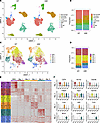 Figure 3
scRNA-Seq reveals the effect of KLF9 on macrophages post-MI. (A) Uniform manifold approximation and projection (UMAP) of 9 noncardiomyocyte clusters identified via scRNA-Seq analysis of cardiac tissue 3 days post-MI. (B) The proportion of cell clusters in WT and Klf9–/– groups. (C) UMAP of monocyte/macrophage clusters separated from A. UMAP shows 5,024 WT cells and 3,097 Klf9–/– cells. (D) The proportion of each subcluster in the monocytes/macrophages in the WT and Klf9–/– groups. (E) Expression heatmap of marker genes in different monocyte/macrophage subclusters. (F) Violin plots of some marker genes in macrophage subsets 1–4 (Mφ_1-4).
Monocytes/macrophages were then sent for further clustering and subdivided into 1 monocyte (MNC) subset and 5 macrophage (Mφ) subsets (Figure 3C), with the Mφ_2 subset exhibiting the largest difference in proportion between the WT and Klf9–/– groups (Figure 3D). The heatmap of the top 10 marker genes’ expression of each macrophage subset showed the rationality of the clustering (Figure 3E). By analyzing the expression of marker genes, we further defined the functional characteristics of each subset (Figure 3F). Mφ_1 was primarily differentiated from monocytes and expressed high levels of antigen presentation–related genes (H2-Aa, H2-Ab1, and Cd74), as well as immune response–related genes (Clec4e, Il1b, and Ptgs2). Mφ_2, which highly expressed Fabp5, Spp1, and Gpnmb, was previously identified as a pro-fibrosis Mφ subset in human liver and lung (27). Mφ_2 was markedly reduced in Klf9–/– mice, which may be related to the reduction of fibrosis observed in Klf9–/– mice post-MI. Mφ_3 was defined as a pro-chemotaxis Mφ subset owing to the high expression of chemotaxis-related genes, including Ccl4, Atf3, Ccl3, and so on. Moreover, Mφ_4 consisted of cardiac resident macrophages with proliferative ability, expressing high levels of cell cycle–related genes, including Birc5, Ccna2, and Mki67, and low levels of Ccr2. Although important in MI (28), the Mφ_4 subset exhibited no obvious difference between WT and Klf9–/– groups. Finally, Mφ_5 was a group of mature macrophages, which highly expressed the pro-inflammatory gene Malat1 (29) and RNA metabolism regulation–related genes, including Ep400, Thoc2, and Tcerg1.
Functional enrichment of Gene Ontology (GO) analysis of differentially expressed genes (DEGs) in monocytes/macrophages revealed that compared with WT controls, Klf9–/– macrophages had the most significant downregulation in chemotaxis-related pathways (Figure 4A), with the representative genes including Ccr2, Ccl8, and Trem2 (Figure 4B). Conversely, most of the genes upregulated in the Klf9–/– group were enriched in pathways related to oxidative stress, cell adhesion, and interferon (Figure 4C), with the representative genes including Nos2, Saa3, and Gbp2 (Figure 4D). These results indicated that Klf9 deficiency impairs macrophage chemotaxis and exacerbates macrophage inflammation post-MI. Pseudotime trajectory analysis of monocytes/macrophages revealed that macrophages had 2 main sources: monocytes and proliferative resident macrophages (Figure 4E). UMAP plotting results suggested that the macrophage subpopulations (Mφ_1 and part of Mφ_2) derived from monocytes were markedly reduced in the Klf9–/– group (Figure 4E). Therefore, we reasonably speculated that the lack of monocyte-derived macrophage chemotaxis was the primary cause of the macrophage reduction post-MI in Klf9–/– mice, rather than the absence of resident macrophage proliferation.
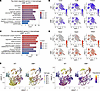 Figure 4
KLF9-deficient macrophages have reduced chemotaxis but increased inflammation. Enrichment GO analysis of the most significantly downregulated genes (A) and upregulated genes (C) in macrophages (Klf9–/– vs. WT). Differential gene: log2(FC) < –0.5 or > 0.5, GO domains: Biological Process. (B and D) UMAP visualization of differential expression of some chemotaxis pathway genes (B) and inflammatory pathway genes (D). (E) Pseudotime trajectory analysis in monocyte/macrophage subsets; cells were colored by pseudotime or subcluster labels.
Fibroblasts, the main executors of fibrosis, were analyzed for the differences between WT and Klf9–/– groups. Clustering and pseudotime trajectory analysis delineated 3 subsets of fibroblasts, with developmental trajectories from FB_3 to FB_1 (Supplemental Figure 3A). We analyzed the marker genes and developmental trajectories of each subset: FB_1 is the activated myofibroblast subset, FB_3 is the progenitor cells of myofibroblasts, and FB_2 is a transitional subset between the 2 subsets (Supplemental Figure 3, A and B). The proportions of the 3 subsets in the 2 groups showed that the proportion of myofibroblasts in the Klf9–/– group was markedly decreased compared with that in the WT group, and most of the cells in the Klf9–/– group were still in an inactivated or transitional state (Supplemental Figure 3C). Therefore, the expression levels of many activation-related genes in Klf9–/– fibroblasts were lower (Supplemental Figure 3D). The most significantly downregulated genes in the Klf9–/– group compared with the WT group also showed enrichment in the extracellular matrix pathway (Supplemental Figure 3E). To investigate whether fibroblast activation is different between Klf9–/– and WT groups, we isolated mouse neonatal cardiac fibroblasts and seeded them at low density (5 cells per mm2). Since fibroblasts will spontaneously activate when cultured in high-glucose DMEM containing 10% FBS and standard plastic plates (30), we detected myofibroblast markers 1 week after culture and found there was no significant difference in the 2 groups of genes except for Sfrp2 expression (Supplemental Figure 3F).
Taken together, these results suggested that Klf9 deficiency led to impaired number and function of macrophages 3 days post-MI and further inhibited fibroblasts’ activation, which may eventually lead to slow initiation of repair post-MI.
KLF9 regulates macrophage chemotaxis and polarization in a temporal manner. To verify that KLF9 affects the healing of MI by regulating bone marrow–derived monocytes/macrophages, we performed bone marrow transplantation (BMT) experiments (Figure 5A and Supplemental Figure 3G). Similar to Klf9–/– mice, mice transplanted with Klf9–/– bone marrow had increased mortality (Figure 5B) and decreased cardiac function 1 week post-MI (Figure 5, C and D). Correspondingly, KLF9 deficiency in bone marrow cells resulted in thinner ventricular walls, more severe ventricular dilation, and insufficient collagen deposition 1 week post-MI (Figure 5, E and F), though fibrosis and collagen deposition were slowed in bone marrow–transplanted mice compared with normal mice (Figure 2C).
 Figure 5
KLF9-deficient bone marrow–derived myeloid cells increased mortality post-MI. (A) Schematic diagram of the strategy of the bone marrow transplantation (BMT) experiment. (B) Survival curve (log-rank [Mantel-Cox] test) of WT → WT mice (n = 14) and Klf9–/–→ WT mice (n = 13) subjected to MI. (C and D) Representative M-mode images of WT → WT and Klf9–/–→ WT mice 1 week post-MI and the measurement of EF%, FS%, LVIDs, and LVIDd (n = 7–8). (E) Representative photographs of Masson’s trichrome staining and quantitative data of scar size% and LV thickness 1 week post-MI (n = 7–8, scale bar = 0.5 mm). (F) Representative images of Sirius red staining and quantification of collagen area% in cardiac tissue 1 week post-MI (n = 7–8, scale bars = 50 μm). Each point represents a mouse sample, and unpaired 2-tailed Student’s t test (D–F) was used for statistical analyses. *P < 0.05.
Therefore, we focused on the monocytes/macrophages infiltrating the heart post-MI. A few hours to 1 day post-MI, pro-inflammatory monocytes and macrophages are recruited to the injured zone (31). The proportion of M1 macrophages peaks 1 day post-MI, and M2 macrophages become predominant 3 days post-MI (32). To investigate the differences in immune cell infiltration in the early stages of MI, we performed flow cytometric analysis of cardiac immune cells 1 and 3 days post-MI. There was no difference in the proportion of cardiac monocytes and macrophages between groups 1 day post-MI (Supplemental Figure 4A and Figure 6B) or in the number of infiltrating neutrophils (Figure 6B and Supplemental Figure 5, B and C). However, 3 days post-MI, the proportion of monocytes and macrophages infiltrating the Klf9–/– hearts was significantly decreased, while the proportion of LY6G+ granulocytes was relatively increased (Figure 6, A and C). These differences were not due to the ratio of monocytes and granulocytes in the blood (Supplemental Figure 4, E and G). These results suggest that Klf9 deficiency does not affect the infiltration of macrophages 1 day post-MI but reduces the infiltration of macrophages 3 days post-MI.
 Figure 6
KLF9 regulates the function of monocyte-derived macrophages post-MI. (A) Flow cytometry gating strategy and representative flow cytometric analysis of macrophages, granulocytes, and monocytes in WT and Klf9–/– hearts 3 days post-MI; 20,000 CD45+ cells were collected from each mouse sample. (B and C) Quantification of F4/80+LY6G- macrophages, F4/80–LY6G– monocytes, and F4/80–LY6G+ granulocytes in the hearts by flow cytometry at day 1 and day 3 post-MI (n = 9–11). (D and E) Quantification of CD206+LY6C+ M2 macrophages and CD206+LY6C– M2 macrophages in the hearts by flow cytometry at day 1 and day 3 post-MI (n = 7–9). (F and G) Representative immunofluorescence images and quantification of CD68+ macrophages and CD68+CD206+ M2 macrophages 3 days post-MI (WT n = 12, Klf9–/– n = 11, scale bars = 100 μm). Each point represents a mouse sample and all data are expressed as means ± SEM. Unpaired 2-tailed Student’s t test (B–E and G) was used for statistical analyses. *P < 0.05, **P < 0.01.
We then assessed the polarization of macrophages and found no difference between groups 1 day post-MI (Supplemental Figure 4A and Figure 6D). However, 3 days post-MI, the proportion of CD206+ macrophages in the Klf9–/– group decreased within LY6C+ macrophages, with no difference in LY6C– macrophages (Figure 6, A and E). These results suggest that KLF9 deficiency predominantly inhibits M2 polarization of monocyte-derived (LY6C+) macrophages but not resident macrophages 3 days post-MI. Immunofluorescence staining of the heart tissues 3 days post-MI also verified reduced macrophage infiltration and CD206+ macrophage ratio in Klf9–/– mice (Figure 6, F and G), with no significant difference observed in the sham group (Supplemental Figure 5A).
These results seem to indicate Klf9 has no effect on macrophages 1 day post-MI. Notably, there were changes in monocytes and myeloid cells in the blood of the Klf9–/– group 1 day post-MI, which may be related to the subsequent differences in macrophage infiltration in the heart. The blood CD45+CD11b+ myeloid cells in the Klf9–/– group were significantly lower than those in the WT group 1 day post-MI (Supplemental Figure 4, B and C), but higher 3 days post-MI (Supplemental Figure 4, E and F), indicating that the blood myeloid cells of Klf9–/– mice reacted slowly to MI but then compensated.
Interestingly, LY6C expression in cardiac and blood monocytes of Klf9–/– mice was lower than that of WT mice 1 day post-MI (Supplemental Figure 5, D, E, G, and H), while there was no difference between the 2 groups 3 days post-MI (Supplemental Figure 5, F and I). Previous studies have shown that Ly6Chi monocytes express higher CCR2 than Ly6Clo monocytes and infiltrate more in the MI site (33, 34). However, the difference in LY6C expression in our study is not the difference in the cell populations of LY6Chi and LY6Clo. Whether the expression of LY6C is related to the chemotaxis of monocytes requires further investigation.
KLF9 promotes repair after MI by regulating the macrophage STAT1 signaling pathway. To explore how Klf9 affects macrophage polarization, we isolated bone marrow–derived macrophages (BMDMs) from WT and Klf9–/– mice and stimulated them with LPS or IL-13. Upon LPS treatment, Klf9–/– BMDMs exhibited significantly higher expression of inflammation-related genes, such as Il1b, Tnf, and Nos2, compared with WT controls (Figure 7A). However, after IL-13 treatment, there was no significant difference of M2 polarization–related genes, such as Arg1 and Csf1r, between the WT and Klf9–/– BMDMs (Figure 7B). These results indicate that Klf9 deficiency does not affect M2 polarization of macrophages, but promotes M1 polarization, leading to increased inflammation. We then focused on STAT1, a key transcription factor in macrophage M1 polarization (35). Our scRNA-Seq data revealed Stat1 and its related Irf1 and Irf8 expressions were increased in Klf9–/– macrophages compared with the WT group 3 days post-MI (Supplemental Figure 6A). By analyzing the mRNA expression in the injured zone of mouse hearts, we found that the expression of Stat1 and downstream genes in the Klf9–/– group was significantly decreased compared with the WT group 1 day post-MI, except for the macrophage marker CD68 (Figure 7C), whereas the expression of these genes was partially decreased in the sham group (Supplemental Figure 6B). However, 3 days post-MI, the expression of Stat1 and its downstream Cxcl9 and Cxcl10 in the Klf9–/– group increased compared with the WT group (Figure 7D). These results indicates that Klf9 has a regulatory effect on the STAT1 pathway, which is temporally dependent post-MI. To verify the effect of Klf9 on STAT1 protein, we also measured the protein expression in the injured zone of the hearts after sham and MI treatment. At 1 day post-MI, the STAT1 level in the Klf9–/– group was lower (Figure 7E), and it was higher 3 days post-MI than that in the WT group (Figure 7F). In addition, the increase of iNOS and the decrease of ARG1 in the Klf9–/– heart further verified the reduction of M2 macrophages in this group (Figure 7F). There was no significant difference in STAT1 protein in the sham group (Supplemental Figure 6C).
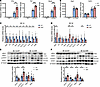 Figure 7
KLF9 regulates STAT1 expression in cardiac tissue post-MI. (A) Quantification of inflammation-related mRNAs in BMDMs after LPS treatment (n = 6, LPS 50 ng/mL). (B) Quantification of macrophage M2 polarization marker genes in BMDMs after IL-13 treatment (n = 6, IL-13 10 ng/mL). (C and D) Relative mRNA expression levels of STAT1 pathway–related genes, Ccr2, and Cd68 in the injured zone of the hearts at day 1 and day 3 post-MI (MI1d n = 7–8, MI3d n = 6–7). (E and F) STAT1, phosphorylated STAT1 (p-STAT1), iNOS, and ARG1 expression and quantification in the injured zone day 1 and day 3 post-MI (n = 6–7). Each point represents a cell sample (A and B) or a mouse sample (C–F), and all data are expressed as means ± SEM. Unpaired 2-tailed Student’s t test (A–F) was used for statistical analyses. *P < 0.05, **P < 0.01, ***P < 0.001.
Since STAT1 is widely expressed in various cells, we used MAC-2 as a macrophage marker to detect the expression of STAT1 and found that STAT1 was highly expressed in cardiac macrophages after MI, and the expression of STAT1 in Klf9–/– macrophages was lower 1 day post-MI and higher 3 days post-MI compared with the WT group (Figure 8, A and B, and Supplemental Figure 6D). We thus speculated that insufficient STAT1 expression in Klf9–/– macrophages 1 day post-MI affects the release of multiple downstream chemokines, which may be one of the reasons for insufficient macrophage infiltration, and that high STAT1 expression in Klf9–/– macrophages 3 days post-MI enhances the inflammatory response of macrophages and inhibits M2 polarization.
 Figure 8
KLF9 regulates STAT1 signaling in macrophages. (A and B) Immunofluorescence images and quantification of percentage of STAT1+MAC-2+ macrophages to total macrophages area in the hearts 1 and 3 days post-MI (n = 6, scale bars = 20 μm). (C) Expression of STAT1, p-STAT1, and iNOS in BMDMs at different time points after LPS treatment. (LPS 50 ng/mL). (D and E) BMDMs pretreated with DMSO or 50 μM fludarabine for 6 hours, then stimulated with LPS (D) or IFN-γ (E) for 3 hours, followed by analysis of Stat1 expression by RT-qPCR. (n = 6, LPS 50 ng/mL, IFN-γ 50 ng/mL). (F and G) Quantification of Stat1 target gene mRNA expression in BMDMs after 3 hours of LPS (F) or IFN-γ (G) treatment (n = 4, LPS 50 ng/mL, IFN-γ 50 ng/mL). Each point represents a mouse sample (B) or a cell sample (D–G), and all data are expressed as means ± SEM. Unpaired 2-tailed Student’s t test (B and D–G) was used for statistical analyses. *P < 0.05, **P < 0.01, ***P < 0.001.
Klf9 can directly bind to the promoter of Stat1 and regulate its transcription. To study the regulation of KLF9 on STAT1 in macrophages, we stimulated WT and Klf9–/– BMDMs with LPS and detected the levels of total STAT1, p-STAT1, and iNOS at different time points (Figure 8C). The phosphorylation of STAT1 peaked at 3 hours after LPS stimulation and was higher in the Klf9–/– BMDMs than WT controls. STAT1 protein levels began to increase 12–24 hours after LPS stimulation and were higher in the Klf9–/– BMDMs than WT controls. Correspondingly, similar changes were observed in downstream iNOS levels (Figure 8C). Therefore, we examined the mRNA changes of Stat1 and its downstream genes at 3 hours after LPS and IFN-γ treatment. After LPS treatment, the expression of Stat1 and its downstream genes in Klf9−/− BMDMs increased more rapidly than that in WT controls (Figure 8, D and F). Stimulation of BMDMs with IFN-γ yielded the same results as LPS (Figure 8, E and G). Furthermore, excessive expression of Stat1 and its downstream genes caused by KLF9 deficiency was abolished by treatment with the STAT1 inhibitor fludarabine (Figure 8, D and E, and Supplemental Figure 6, E and F). The STAT1 protein and p-STAT1 levels in Klf9–/– BMDMs were also higher than those in the WT group after 12 hours and 24 hours of LPS treatment or IFN-γ treatment (Figure 9, A and B). We then overexpressed human KLF9 in HeLa cells and observed no significant change in STAT1 expression under normal conditions, but after LPS stimulation, KLF9 significantly downregulated the STAT1 levels (Figure 9C). These results indicated that KLF9 can suppress the expression of STAT1 in BMDMs, resulting in a more intense and persistent inflammatory response in Klf9–/– BMDMs.
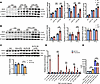 Figure 9
KLF9 regulates macrophage inflammatory response by binding to the Stat1 promoter. (A) STAT1, p-STAT1, and iNOS protein levels and quantification in BMDMs at 12 hours and 24 hours after LPS treatment (n = 4, LPS 50 ng/mL). (B) STAT1, p-STAT1, and iNOS protein levels and quantification in BMDMs at 24 hours after IFN-γ treatment (n = 6, IFN-γ 50 ng/mL). (C) STAT1 protein levels and quantification in HeLa cells transfected with pCDNA3.1 vector or pCDNA3.1-KLF9 after 24 hours of LPS treatment (n = 3, LPS 100 ng/mL). OE, overexpression. (D) ChIP was performed against KLF9 on FLAG-KLF9–overexpressing RAW264.7 cells followed by RT-qPCR with primers specific for Stat1’s 2 promoter regions (transcription start site and −6 kb upstream regions) (n = 3). (E) Relative firefly luciferase (LUC) luminescence in HEK293T cells transiently transfected with pCDNA3.1 vector or pCDNA3.1-KLF9 cotransfected with PGL3 reporter vector (n = 4). Each point represents a cell sample, and all data are expressed as means ± SEM. Unpaired 2-tailed Student’s t test (A–D), 1-way ANOVA (E) used for statistical analyses. *P < 0.05, **P < 0.01, ***P < 0.001.
To further explore the specific molecular mechanism by which KLF9 regulates STAT1, we investigated a public ChIP-Seq database (Cistrome DB) and found that KLF9 binds to 2 promoter regions of STAT1 in several human cell types (Supplemental Figure 7A). Similarly, we identified 2 promoter regions upstream of the mouse Stat1 gene using the Ensembl database. We chose 2 promoter regions of mouse (GRCm39) Stat1: promoter 1 (chromosome 1: 52152400-52153401) (P1) and promoter 2 (chromosome 1: 52157800-52159182) (P2) for the further investigation. We performed ChIP experiments in RAW264.7 cells overexpressing Flag-KLF9, followed by RT-qPCR and PCR experiments to examine the binding of KLF9 to different positions of P1 and P2. The results showed that KLF9 binds to multiple positions in the Stat1 promoter (Figure 9D and Supplemental Figure 7B). We applied the firefly fluorescent luciferase reporter assay to analyze the binding of KLF9 to these 2 promoter regions (Figure 9E). Our results showed that P2 had a stronger transcriptional activation ability, while KLF9 exerted transcriptional inhibition on P2 but a transcriptional activation effect on P1. Therefore, we speculated that KLF9 can directly bind to the 2 promoter regions of Stat1 and regulate its transcription. This regulation of Stat1 expression subsequently influences its protein levels and phosphorylation status, thereby regulating the expression of pro-inflammatory genes downstream of Stat1 and affecting the recruitment and polarization of macrophages.
KLF9 regulates the temporal expression of STAT1 post-MI, and the early high expression and subsequent decrease of STAT1 in macrophages underlie their transition from pro-inflammatory to antiinflammatory phenotype. Dysregulation of STAT1 expression will delay the initiation of fibrosis and repair, thereby increasing the risk of cardiac rupture.


