
Research ArticleGeneticsOncology
Open Access |  10.1172/jci.insight.186680
Diagnosis of head and neck cancer by AI-based tumor-educated platelet RNA profiling of liquid biopsies
Niels E. Wondergem,1,2 Jos B. Poell,1,2 Sjors G.J.G. In ‘t Veld,3,4,5 Edward Post,4,6,7 Steven W. Mes,1,2 Myron G. Best,4,6,7 Wessel N. van Wieringen,8,9 Thomas Klausch,8 Robert J. Baatenburg de Jong,10 Chris H.J. Terhaard,11 Robert P. Takes,12 Johannes A. Langendijk,13 Irma M. Verdonck-de Leeuw,1,14 Femke Lamers,15 C. René Leemans,1,2 Elisabeth Bloemena,16,15,17 Thomas Würdinger,4,6,7 and Ruud H. Brakenhoff1,2
1Amsterdam UMC location Vrije Universiteit Amsterdam, Otolaryngology/Head and Neck Surgery, Amsterdam, Netherlands.
2Cancer Center Amsterdam, Head & Neck Cancer Biology & Immunology Laboratory, Amsterdam, Netherlands.
3Translational AI in Laboratory Medicine, Department of Laboratory Medicine, Amsterdam UMC, Amsterdam, Netherlands.
4Cancer Center Amsterdam, Amsterdam, Netherlands.
5Amsterdam Public Health, Amsterdam UMC, Vrije Universiteit, University of Amsterdam, Amsterdam, Netherlands.
6Amsterdam UMC location Vrije Universiteit Amsterdam, Neurosurgery, Amsterdam, Netherlands.
7Brain Tumor Center Amsterdam, Amsterdam, Netherlands.
8Amsterdam UMC location Vrije Universiteit Amsterdam, Epidemiology and Data Science, Amsterdam Public Health Research Institute, Amsterdam, Netherlands.
9Department of Mathematics, Vrije Universiteit Amsterdam, Amsterdam, Netherlands.
10Department of Otolaryngology and Head and Neck Surgery, Erasmus University Medical Center, Rotterdam, Rotterdam, Netherlands.
11Department of Radiotherapy, University Medical Center Utrecht, Utrecht, Netherlands.
12Department of Otolaryngology and Head and Neck Surgery, Radboud University Medical Center, Nijmegen, Netherlands.
13Department of Radiation Oncology, University Medical Center Groningen, Groningen, Netherlands.
14Department of Clinical, Neuro- and Developmental Psychology, Amsterdam Public Health Research Institute, Vrije Universiteit Amsterdam, Netherlands.
15Amsterdam UMC location Vrije Universiteit Amsterdam, Psychiatry, Neuroscience Campus Amsterdam and Amsterdam Public Health Research Institute, Amsterdam, Netherlands.
16Amsterdam UMC location Vrije Universiteit Amsterdam, Pathology, Amsterdam, Netherlands.
17Amsterdam UMC and Academic Centre for Dentistry Amsterdam (ACTA), Vrije Universiteit Amsterdam, Department of Oral and Maxillofacial Surgery/Pathology, Cancer Center Amsterdam, Amsterdam, Netherlands.
Address correspondence to: R.H. Brakenhoff, De Boelelaan 1117, 1081HV, Amsterdam, Netherlands. Phone: 31.20.4440953; Email: rh.brakenhoff@amsterdamumc.nl.
Authorship note: TW and RHB contributed equally to this work.
Find articles by Wondergem, N. in: PubMed | Google Scholar
1Amsterdam UMC location Vrije Universiteit Amsterdam, Otolaryngology/Head and Neck Surgery, Amsterdam, Netherlands.
2Cancer Center Amsterdam, Head & Neck Cancer Biology & Immunology Laboratory, Amsterdam, Netherlands.
3Translational AI in Laboratory Medicine, Department of Laboratory Medicine, Amsterdam UMC, Amsterdam, Netherlands.
4Cancer Center Amsterdam, Amsterdam, Netherlands.
5Amsterdam Public Health, Amsterdam UMC, Vrije Universiteit, University of Amsterdam, Amsterdam, Netherlands.
6Amsterdam UMC location Vrije Universiteit Amsterdam, Neurosurgery, Amsterdam, Netherlands.
7Brain Tumor Center Amsterdam, Amsterdam, Netherlands.
8Amsterdam UMC location Vrije Universiteit Amsterdam, Epidemiology and Data Science, Amsterdam Public Health Research Institute, Amsterdam, Netherlands.
9Department of Mathematics, Vrije Universiteit Amsterdam, Amsterdam, Netherlands.
10Department of Otolaryngology and Head and Neck Surgery, Erasmus University Medical Center, Rotterdam, Rotterdam, Netherlands.
11Department of Radiotherapy, University Medical Center Utrecht, Utrecht, Netherlands.
12Department of Otolaryngology and Head and Neck Surgery, Radboud University Medical Center, Nijmegen, Netherlands.
13Department of Radiation Oncology, University Medical Center Groningen, Groningen, Netherlands.
14Department of Clinical, Neuro- and Developmental Psychology, Amsterdam Public Health Research Institute, Vrije Universiteit Amsterdam, Netherlands.
15Amsterdam UMC location Vrije Universiteit Amsterdam, Psychiatry, Neuroscience Campus Amsterdam and Amsterdam Public Health Research Institute, Amsterdam, Netherlands.
16Amsterdam UMC location Vrije Universiteit Amsterdam, Pathology, Amsterdam, Netherlands.
17Amsterdam UMC and Academic Centre for Dentistry Amsterdam (ACTA), Vrije Universiteit Amsterdam, Department of Oral and Maxillofacial Surgery/Pathology, Cancer Center Amsterdam, Amsterdam, Netherlands.
Address correspondence to: R.H. Brakenhoff, De Boelelaan 1117, 1081HV, Amsterdam, Netherlands. Phone: 31.20.4440953; Email: rh.brakenhoff@amsterdamumc.nl.
Authorship note: TW and RHB contributed equally to this work.
Find articles by Poell, J. in: PubMed | Google Scholar
1Amsterdam UMC location Vrije Universiteit Amsterdam, Otolaryngology/Head and Neck Surgery, Amsterdam, Netherlands.
2Cancer Center Amsterdam, Head & Neck Cancer Biology & Immunology Laboratory, Amsterdam, Netherlands.
3Translational AI in Laboratory Medicine, Department of Laboratory Medicine, Amsterdam UMC, Amsterdam, Netherlands.
4Cancer Center Amsterdam, Amsterdam, Netherlands.
5Amsterdam Public Health, Amsterdam UMC, Vrije Universiteit, University of Amsterdam, Amsterdam, Netherlands.
6Amsterdam UMC location Vrije Universiteit Amsterdam, Neurosurgery, Amsterdam, Netherlands.
7Brain Tumor Center Amsterdam, Amsterdam, Netherlands.
8Amsterdam UMC location Vrije Universiteit Amsterdam, Epidemiology and Data Science, Amsterdam Public Health Research Institute, Amsterdam, Netherlands.
9Department of Mathematics, Vrije Universiteit Amsterdam, Amsterdam, Netherlands.
10Department of Otolaryngology and Head and Neck Surgery, Erasmus University Medical Center, Rotterdam, Rotterdam, Netherlands.
11Department of Radiotherapy, University Medical Center Utrecht, Utrecht, Netherlands.
12Department of Otolaryngology and Head and Neck Surgery, Radboud University Medical Center, Nijmegen, Netherlands.
13Department of Radiation Oncology, University Medical Center Groningen, Groningen, Netherlands.
14Department of Clinical, Neuro- and Developmental Psychology, Amsterdam Public Health Research Institute, Vrije Universiteit Amsterdam, Netherlands.
15Amsterdam UMC location Vrije Universiteit Amsterdam, Psychiatry, Neuroscience Campus Amsterdam and Amsterdam Public Health Research Institute, Amsterdam, Netherlands.
16Amsterdam UMC location Vrije Universiteit Amsterdam, Pathology, Amsterdam, Netherlands.
17Amsterdam UMC and Academic Centre for Dentistry Amsterdam (ACTA), Vrije Universiteit Amsterdam, Department of Oral and Maxillofacial Surgery/Pathology, Cancer Center Amsterdam, Amsterdam, Netherlands.
Address correspondence to: R.H. Brakenhoff, De Boelelaan 1117, 1081HV, Amsterdam, Netherlands. Phone: 31.20.4440953; Email: rh.brakenhoff@amsterdamumc.nl.
Authorship note: TW and RHB contributed equally to this work.
Find articles by Veld, S. in: PubMed | Google Scholar
1Amsterdam UMC location Vrije Universiteit Amsterdam, Otolaryngology/Head and Neck Surgery, Amsterdam, Netherlands.
2Cancer Center Amsterdam, Head & Neck Cancer Biology & Immunology Laboratory, Amsterdam, Netherlands.
3Translational AI in Laboratory Medicine, Department of Laboratory Medicine, Amsterdam UMC, Amsterdam, Netherlands.
4Cancer Center Amsterdam, Amsterdam, Netherlands.
5Amsterdam Public Health, Amsterdam UMC, Vrije Universiteit, University of Amsterdam, Amsterdam, Netherlands.
6Amsterdam UMC location Vrije Universiteit Amsterdam, Neurosurgery, Amsterdam, Netherlands.
7Brain Tumor Center Amsterdam, Amsterdam, Netherlands.
8Amsterdam UMC location Vrije Universiteit Amsterdam, Epidemiology and Data Science, Amsterdam Public Health Research Institute, Amsterdam, Netherlands.
9Department of Mathematics, Vrije Universiteit Amsterdam, Amsterdam, Netherlands.
10Department of Otolaryngology and Head and Neck Surgery, Erasmus University Medical Center, Rotterdam, Rotterdam, Netherlands.
11Department of Radiotherapy, University Medical Center Utrecht, Utrecht, Netherlands.
12Department of Otolaryngology and Head and Neck Surgery, Radboud University Medical Center, Nijmegen, Netherlands.
13Department of Radiation Oncology, University Medical Center Groningen, Groningen, Netherlands.
14Department of Clinical, Neuro- and Developmental Psychology, Amsterdam Public Health Research Institute, Vrije Universiteit Amsterdam, Netherlands.
15Amsterdam UMC location Vrije Universiteit Amsterdam, Psychiatry, Neuroscience Campus Amsterdam and Amsterdam Public Health Research Institute, Amsterdam, Netherlands.
16Amsterdam UMC location Vrije Universiteit Amsterdam, Pathology, Amsterdam, Netherlands.
17Amsterdam UMC and Academic Centre for Dentistry Amsterdam (ACTA), Vrije Universiteit Amsterdam, Department of Oral and Maxillofacial Surgery/Pathology, Cancer Center Amsterdam, Amsterdam, Netherlands.
Address correspondence to: R.H. Brakenhoff, De Boelelaan 1117, 1081HV, Amsterdam, Netherlands. Phone: 31.20.4440953; Email: rh.brakenhoff@amsterdamumc.nl.
Authorship note: TW and RHB contributed equally to this work.
Find articles by Post, E. in: PubMed | Google Scholar
1Amsterdam UMC location Vrije Universiteit Amsterdam, Otolaryngology/Head and Neck Surgery, Amsterdam, Netherlands.
2Cancer Center Amsterdam, Head & Neck Cancer Biology & Immunology Laboratory, Amsterdam, Netherlands.
3Translational AI in Laboratory Medicine, Department of Laboratory Medicine, Amsterdam UMC, Amsterdam, Netherlands.
4Cancer Center Amsterdam, Amsterdam, Netherlands.
5Amsterdam Public Health, Amsterdam UMC, Vrije Universiteit, University of Amsterdam, Amsterdam, Netherlands.
6Amsterdam UMC location Vrije Universiteit Amsterdam, Neurosurgery, Amsterdam, Netherlands.
7Brain Tumor Center Amsterdam, Amsterdam, Netherlands.
8Amsterdam UMC location Vrije Universiteit Amsterdam, Epidemiology and Data Science, Amsterdam Public Health Research Institute, Amsterdam, Netherlands.
9Department of Mathematics, Vrije Universiteit Amsterdam, Amsterdam, Netherlands.
10Department of Otolaryngology and Head and Neck Surgery, Erasmus University Medical Center, Rotterdam, Rotterdam, Netherlands.
11Department of Radiotherapy, University Medical Center Utrecht, Utrecht, Netherlands.
12Department of Otolaryngology and Head and Neck Surgery, Radboud University Medical Center, Nijmegen, Netherlands.
13Department of Radiation Oncology, University Medical Center Groningen, Groningen, Netherlands.
14Department of Clinical, Neuro- and Developmental Psychology, Amsterdam Public Health Research Institute, Vrije Universiteit Amsterdam, Netherlands.
15Amsterdam UMC location Vrije Universiteit Amsterdam, Psychiatry, Neuroscience Campus Amsterdam and Amsterdam Public Health Research Institute, Amsterdam, Netherlands.
16Amsterdam UMC location Vrije Universiteit Amsterdam, Pathology, Amsterdam, Netherlands.
17Amsterdam UMC and Academic Centre for Dentistry Amsterdam (ACTA), Vrije Universiteit Amsterdam, Department of Oral and Maxillofacial Surgery/Pathology, Cancer Center Amsterdam, Amsterdam, Netherlands.
Address correspondence to: R.H. Brakenhoff, De Boelelaan 1117, 1081HV, Amsterdam, Netherlands. Phone: 31.20.4440953; Email: rh.brakenhoff@amsterdamumc.nl.
Authorship note: TW and RHB contributed equally to this work.
Find articles by Mes, S. in: PubMed | Google Scholar
1Amsterdam UMC location Vrije Universiteit Amsterdam, Otolaryngology/Head and Neck Surgery, Amsterdam, Netherlands.
2Cancer Center Amsterdam, Head & Neck Cancer Biology & Immunology Laboratory, Amsterdam, Netherlands.
3Translational AI in Laboratory Medicine, Department of Laboratory Medicine, Amsterdam UMC, Amsterdam, Netherlands.
4Cancer Center Amsterdam, Amsterdam, Netherlands.
5Amsterdam Public Health, Amsterdam UMC, Vrije Universiteit, University of Amsterdam, Amsterdam, Netherlands.
6Amsterdam UMC location Vrije Universiteit Amsterdam, Neurosurgery, Amsterdam, Netherlands.
7Brain Tumor Center Amsterdam, Amsterdam, Netherlands.
8Amsterdam UMC location Vrije Universiteit Amsterdam, Epidemiology and Data Science, Amsterdam Public Health Research Institute, Amsterdam, Netherlands.
9Department of Mathematics, Vrije Universiteit Amsterdam, Amsterdam, Netherlands.
10Department of Otolaryngology and Head and Neck Surgery, Erasmus University Medical Center, Rotterdam, Rotterdam, Netherlands.
11Department of Radiotherapy, University Medical Center Utrecht, Utrecht, Netherlands.
12Department of Otolaryngology and Head and Neck Surgery, Radboud University Medical Center, Nijmegen, Netherlands.
13Department of Radiation Oncology, University Medical Center Groningen, Groningen, Netherlands.
14Department of Clinical, Neuro- and Developmental Psychology, Amsterdam Public Health Research Institute, Vrije Universiteit Amsterdam, Netherlands.
15Amsterdam UMC location Vrije Universiteit Amsterdam, Psychiatry, Neuroscience Campus Amsterdam and Amsterdam Public Health Research Institute, Amsterdam, Netherlands.
16Amsterdam UMC location Vrije Universiteit Amsterdam, Pathology, Amsterdam, Netherlands.
17Amsterdam UMC and Academic Centre for Dentistry Amsterdam (ACTA), Vrije Universiteit Amsterdam, Department of Oral and Maxillofacial Surgery/Pathology, Cancer Center Amsterdam, Amsterdam, Netherlands.
Address correspondence to: R.H. Brakenhoff, De Boelelaan 1117, 1081HV, Amsterdam, Netherlands. Phone: 31.20.4440953; Email: rh.brakenhoff@amsterdamumc.nl.
Authorship note: TW and RHB contributed equally to this work.
Find articles by Best, M. in: PubMed | Google Scholar
1Amsterdam UMC location Vrije Universiteit Amsterdam, Otolaryngology/Head and Neck Surgery, Amsterdam, Netherlands.
2Cancer Center Amsterdam, Head & Neck Cancer Biology & Immunology Laboratory, Amsterdam, Netherlands.
3Translational AI in Laboratory Medicine, Department of Laboratory Medicine, Amsterdam UMC, Amsterdam, Netherlands.
4Cancer Center Amsterdam, Amsterdam, Netherlands.
5Amsterdam Public Health, Amsterdam UMC, Vrije Universiteit, University of Amsterdam, Amsterdam, Netherlands.
6Amsterdam UMC location Vrije Universiteit Amsterdam, Neurosurgery, Amsterdam, Netherlands.
7Brain Tumor Center Amsterdam, Amsterdam, Netherlands.
8Amsterdam UMC location Vrije Universiteit Amsterdam, Epidemiology and Data Science, Amsterdam Public Health Research Institute, Amsterdam, Netherlands.
9Department of Mathematics, Vrije Universiteit Amsterdam, Amsterdam, Netherlands.
10Department of Otolaryngology and Head and Neck Surgery, Erasmus University Medical Center, Rotterdam, Rotterdam, Netherlands.
11Department of Radiotherapy, University Medical Center Utrecht, Utrecht, Netherlands.
12Department of Otolaryngology and Head and Neck Surgery, Radboud University Medical Center, Nijmegen, Netherlands.
13Department of Radiation Oncology, University Medical Center Groningen, Groningen, Netherlands.
14Department of Clinical, Neuro- and Developmental Psychology, Amsterdam Public Health Research Institute, Vrije Universiteit Amsterdam, Netherlands.
15Amsterdam UMC location Vrije Universiteit Amsterdam, Psychiatry, Neuroscience Campus Amsterdam and Amsterdam Public Health Research Institute, Amsterdam, Netherlands.
16Amsterdam UMC location Vrije Universiteit Amsterdam, Pathology, Amsterdam, Netherlands.
17Amsterdam UMC and Academic Centre for Dentistry Amsterdam (ACTA), Vrije Universiteit Amsterdam, Department of Oral and Maxillofacial Surgery/Pathology, Cancer Center Amsterdam, Amsterdam, Netherlands.
Address correspondence to: R.H. Brakenhoff, De Boelelaan 1117, 1081HV, Amsterdam, Netherlands. Phone: 31.20.4440953; Email: rh.brakenhoff@amsterdamumc.nl.
Authorship note: TW and RHB contributed equally to this work.
Find articles by van Wieringen, W. in: PubMed | Google Scholar
1Amsterdam UMC location Vrije Universiteit Amsterdam, Otolaryngology/Head and Neck Surgery, Amsterdam, Netherlands.
2Cancer Center Amsterdam, Head & Neck Cancer Biology & Immunology Laboratory, Amsterdam, Netherlands.
3Translational AI in Laboratory Medicine, Department of Laboratory Medicine, Amsterdam UMC, Amsterdam, Netherlands.
4Cancer Center Amsterdam, Amsterdam, Netherlands.
5Amsterdam Public Health, Amsterdam UMC, Vrije Universiteit, University of Amsterdam, Amsterdam, Netherlands.
6Amsterdam UMC location Vrije Universiteit Amsterdam, Neurosurgery, Amsterdam, Netherlands.
7Brain Tumor Center Amsterdam, Amsterdam, Netherlands.
8Amsterdam UMC location Vrije Universiteit Amsterdam, Epidemiology and Data Science, Amsterdam Public Health Research Institute, Amsterdam, Netherlands.
9Department of Mathematics, Vrije Universiteit Amsterdam, Amsterdam, Netherlands.
10Department of Otolaryngology and Head and Neck Surgery, Erasmus University Medical Center, Rotterdam, Rotterdam, Netherlands.
11Department of Radiotherapy, University Medical Center Utrecht, Utrecht, Netherlands.
12Department of Otolaryngology and Head and Neck Surgery, Radboud University Medical Center, Nijmegen, Netherlands.
13Department of Radiation Oncology, University Medical Center Groningen, Groningen, Netherlands.
14Department of Clinical, Neuro- and Developmental Psychology, Amsterdam Public Health Research Institute, Vrije Universiteit Amsterdam, Netherlands.
15Amsterdam UMC location Vrije Universiteit Amsterdam, Psychiatry, Neuroscience Campus Amsterdam and Amsterdam Public Health Research Institute, Amsterdam, Netherlands.
16Amsterdam UMC location Vrije Universiteit Amsterdam, Pathology, Amsterdam, Netherlands.
17Amsterdam UMC and Academic Centre for Dentistry Amsterdam (ACTA), Vrije Universiteit Amsterdam, Department of Oral and Maxillofacial Surgery/Pathology, Cancer Center Amsterdam, Amsterdam, Netherlands.
Address correspondence to: R.H. Brakenhoff, De Boelelaan 1117, 1081HV, Amsterdam, Netherlands. Phone: 31.20.4440953; Email: rh.brakenhoff@amsterdamumc.nl.
Authorship note: TW and RHB contributed equally to this work.
Find articles by Klausch, T. in: PubMed | Google Scholar
1Amsterdam UMC location Vrije Universiteit Amsterdam, Otolaryngology/Head and Neck Surgery, Amsterdam, Netherlands.
2Cancer Center Amsterdam, Head & Neck Cancer Biology & Immunology Laboratory, Amsterdam, Netherlands.
3Translational AI in Laboratory Medicine, Department of Laboratory Medicine, Amsterdam UMC, Amsterdam, Netherlands.
4Cancer Center Amsterdam, Amsterdam, Netherlands.
5Amsterdam Public Health, Amsterdam UMC, Vrije Universiteit, University of Amsterdam, Amsterdam, Netherlands.
6Amsterdam UMC location Vrije Universiteit Amsterdam, Neurosurgery, Amsterdam, Netherlands.
7Brain Tumor Center Amsterdam, Amsterdam, Netherlands.
8Amsterdam UMC location Vrije Universiteit Amsterdam, Epidemiology and Data Science, Amsterdam Public Health Research Institute, Amsterdam, Netherlands.
9Department of Mathematics, Vrije Universiteit Amsterdam, Amsterdam, Netherlands.
10Department of Otolaryngology and Head and Neck Surgery, Erasmus University Medical Center, Rotterdam, Rotterdam, Netherlands.
11Department of Radiotherapy, University Medical Center Utrecht, Utrecht, Netherlands.
12Department of Otolaryngology and Head and Neck Surgery, Radboud University Medical Center, Nijmegen, Netherlands.
13Department of Radiation Oncology, University Medical Center Groningen, Groningen, Netherlands.
14Department of Clinical, Neuro- and Developmental Psychology, Amsterdam Public Health Research Institute, Vrije Universiteit Amsterdam, Netherlands.
15Amsterdam UMC location Vrije Universiteit Amsterdam, Psychiatry, Neuroscience Campus Amsterdam and Amsterdam Public Health Research Institute, Amsterdam, Netherlands.
16Amsterdam UMC location Vrije Universiteit Amsterdam, Pathology, Amsterdam, Netherlands.
17Amsterdam UMC and Academic Centre for Dentistry Amsterdam (ACTA), Vrije Universiteit Amsterdam, Department of Oral and Maxillofacial Surgery/Pathology, Cancer Center Amsterdam, Amsterdam, Netherlands.
Address correspondence to: R.H. Brakenhoff, De Boelelaan 1117, 1081HV, Amsterdam, Netherlands. Phone: 31.20.4440953; Email: rh.brakenhoff@amsterdamumc.nl.
Authorship note: TW and RHB contributed equally to this work.
Find articles by de Jong, R. in: PubMed | Google Scholar
1Amsterdam UMC location Vrije Universiteit Amsterdam, Otolaryngology/Head and Neck Surgery, Amsterdam, Netherlands.
2Cancer Center Amsterdam, Head & Neck Cancer Biology & Immunology Laboratory, Amsterdam, Netherlands.
3Translational AI in Laboratory Medicine, Department of Laboratory Medicine, Amsterdam UMC, Amsterdam, Netherlands.
4Cancer Center Amsterdam, Amsterdam, Netherlands.
5Amsterdam Public Health, Amsterdam UMC, Vrije Universiteit, University of Amsterdam, Amsterdam, Netherlands.
6Amsterdam UMC location Vrije Universiteit Amsterdam, Neurosurgery, Amsterdam, Netherlands.
7Brain Tumor Center Amsterdam, Amsterdam, Netherlands.
8Amsterdam UMC location Vrije Universiteit Amsterdam, Epidemiology and Data Science, Amsterdam Public Health Research Institute, Amsterdam, Netherlands.
9Department of Mathematics, Vrije Universiteit Amsterdam, Amsterdam, Netherlands.
10Department of Otolaryngology and Head and Neck Surgery, Erasmus University Medical Center, Rotterdam, Rotterdam, Netherlands.
11Department of Radiotherapy, University Medical Center Utrecht, Utrecht, Netherlands.
12Department of Otolaryngology and Head and Neck Surgery, Radboud University Medical Center, Nijmegen, Netherlands.
13Department of Radiation Oncology, University Medical Center Groningen, Groningen, Netherlands.
14Department of Clinical, Neuro- and Developmental Psychology, Amsterdam Public Health Research Institute, Vrije Universiteit Amsterdam, Netherlands.
15Amsterdam UMC location Vrije Universiteit Amsterdam, Psychiatry, Neuroscience Campus Amsterdam and Amsterdam Public Health Research Institute, Amsterdam, Netherlands.
16Amsterdam UMC location Vrije Universiteit Amsterdam, Pathology, Amsterdam, Netherlands.
17Amsterdam UMC and Academic Centre for Dentistry Amsterdam (ACTA), Vrije Universiteit Amsterdam, Department of Oral and Maxillofacial Surgery/Pathology, Cancer Center Amsterdam, Amsterdam, Netherlands.
Address correspondence to: R.H. Brakenhoff, De Boelelaan 1117, 1081HV, Amsterdam, Netherlands. Phone: 31.20.4440953; Email: rh.brakenhoff@amsterdamumc.nl.
Authorship note: TW and RHB contributed equally to this work.
Find articles by Terhaard, C. in: PubMed | Google Scholar
1Amsterdam UMC location Vrije Universiteit Amsterdam, Otolaryngology/Head and Neck Surgery, Amsterdam, Netherlands.
2Cancer Center Amsterdam, Head & Neck Cancer Biology & Immunology Laboratory, Amsterdam, Netherlands.
3Translational AI in Laboratory Medicine, Department of Laboratory Medicine, Amsterdam UMC, Amsterdam, Netherlands.
4Cancer Center Amsterdam, Amsterdam, Netherlands.
5Amsterdam Public Health, Amsterdam UMC, Vrije Universiteit, University of Amsterdam, Amsterdam, Netherlands.
6Amsterdam UMC location Vrije Universiteit Amsterdam, Neurosurgery, Amsterdam, Netherlands.
7Brain Tumor Center Amsterdam, Amsterdam, Netherlands.
8Amsterdam UMC location Vrije Universiteit Amsterdam, Epidemiology and Data Science, Amsterdam Public Health Research Institute, Amsterdam, Netherlands.
9Department of Mathematics, Vrije Universiteit Amsterdam, Amsterdam, Netherlands.
10Department of Otolaryngology and Head and Neck Surgery, Erasmus University Medical Center, Rotterdam, Rotterdam, Netherlands.
11Department of Radiotherapy, University Medical Center Utrecht, Utrecht, Netherlands.
12Department of Otolaryngology and Head and Neck Surgery, Radboud University Medical Center, Nijmegen, Netherlands.
13Department of Radiation Oncology, University Medical Center Groningen, Groningen, Netherlands.
14Department of Clinical, Neuro- and Developmental Psychology, Amsterdam Public Health Research Institute, Vrije Universiteit Amsterdam, Netherlands.
15Amsterdam UMC location Vrije Universiteit Amsterdam, Psychiatry, Neuroscience Campus Amsterdam and Amsterdam Public Health Research Institute, Amsterdam, Netherlands.
16Amsterdam UMC location Vrije Universiteit Amsterdam, Pathology, Amsterdam, Netherlands.
17Amsterdam UMC and Academic Centre for Dentistry Amsterdam (ACTA), Vrije Universiteit Amsterdam, Department of Oral and Maxillofacial Surgery/Pathology, Cancer Center Amsterdam, Amsterdam, Netherlands.
Address correspondence to: R.H. Brakenhoff, De Boelelaan 1117, 1081HV, Amsterdam, Netherlands. Phone: 31.20.4440953; Email: rh.brakenhoff@amsterdamumc.nl.
Authorship note: TW and RHB contributed equally to this work.
Find articles by Takes, R. in: PubMed | Google Scholar
1Amsterdam UMC location Vrije Universiteit Amsterdam, Otolaryngology/Head and Neck Surgery, Amsterdam, Netherlands.
2Cancer Center Amsterdam, Head & Neck Cancer Biology & Immunology Laboratory, Amsterdam, Netherlands.
3Translational AI in Laboratory Medicine, Department of Laboratory Medicine, Amsterdam UMC, Amsterdam, Netherlands.
4Cancer Center Amsterdam, Amsterdam, Netherlands.
5Amsterdam Public Health, Amsterdam UMC, Vrije Universiteit, University of Amsterdam, Amsterdam, Netherlands.
6Amsterdam UMC location Vrije Universiteit Amsterdam, Neurosurgery, Amsterdam, Netherlands.
7Brain Tumor Center Amsterdam, Amsterdam, Netherlands.
8Amsterdam UMC location Vrije Universiteit Amsterdam, Epidemiology and Data Science, Amsterdam Public Health Research Institute, Amsterdam, Netherlands.
9Department of Mathematics, Vrije Universiteit Amsterdam, Amsterdam, Netherlands.
10Department of Otolaryngology and Head and Neck Surgery, Erasmus University Medical Center, Rotterdam, Rotterdam, Netherlands.
11Department of Radiotherapy, University Medical Center Utrecht, Utrecht, Netherlands.
12Department of Otolaryngology and Head and Neck Surgery, Radboud University Medical Center, Nijmegen, Netherlands.
13Department of Radiation Oncology, University Medical Center Groningen, Groningen, Netherlands.
14Department of Clinical, Neuro- and Developmental Psychology, Amsterdam Public Health Research Institute, Vrije Universiteit Amsterdam, Netherlands.
15Amsterdam UMC location Vrije Universiteit Amsterdam, Psychiatry, Neuroscience Campus Amsterdam and Amsterdam Public Health Research Institute, Amsterdam, Netherlands.
16Amsterdam UMC location Vrije Universiteit Amsterdam, Pathology, Amsterdam, Netherlands.
17Amsterdam UMC and Academic Centre for Dentistry Amsterdam (ACTA), Vrije Universiteit Amsterdam, Department of Oral and Maxillofacial Surgery/Pathology, Cancer Center Amsterdam, Amsterdam, Netherlands.
Address correspondence to: R.H. Brakenhoff, De Boelelaan 1117, 1081HV, Amsterdam, Netherlands. Phone: 31.20.4440953; Email: rh.brakenhoff@amsterdamumc.nl.
Authorship note: TW and RHB contributed equally to this work.
Find articles by Langendijk, J. in: PubMed | Google Scholar
1Amsterdam UMC location Vrije Universiteit Amsterdam, Otolaryngology/Head and Neck Surgery, Amsterdam, Netherlands.
2Cancer Center Amsterdam, Head & Neck Cancer Biology & Immunology Laboratory, Amsterdam, Netherlands.
3Translational AI in Laboratory Medicine, Department of Laboratory Medicine, Amsterdam UMC, Amsterdam, Netherlands.
4Cancer Center Amsterdam, Amsterdam, Netherlands.
5Amsterdam Public Health, Amsterdam UMC, Vrije Universiteit, University of Amsterdam, Amsterdam, Netherlands.
6Amsterdam UMC location Vrije Universiteit Amsterdam, Neurosurgery, Amsterdam, Netherlands.
7Brain Tumor Center Amsterdam, Amsterdam, Netherlands.
8Amsterdam UMC location Vrije Universiteit Amsterdam, Epidemiology and Data Science, Amsterdam Public Health Research Institute, Amsterdam, Netherlands.
9Department of Mathematics, Vrije Universiteit Amsterdam, Amsterdam, Netherlands.
10Department of Otolaryngology and Head and Neck Surgery, Erasmus University Medical Center, Rotterdam, Rotterdam, Netherlands.
11Department of Radiotherapy, University Medical Center Utrecht, Utrecht, Netherlands.
12Department of Otolaryngology and Head and Neck Surgery, Radboud University Medical Center, Nijmegen, Netherlands.
13Department of Radiation Oncology, University Medical Center Groningen, Groningen, Netherlands.
14Department of Clinical, Neuro- and Developmental Psychology, Amsterdam Public Health Research Institute, Vrije Universiteit Amsterdam, Netherlands.
15Amsterdam UMC location Vrije Universiteit Amsterdam, Psychiatry, Neuroscience Campus Amsterdam and Amsterdam Public Health Research Institute, Amsterdam, Netherlands.
16Amsterdam UMC location Vrije Universiteit Amsterdam, Pathology, Amsterdam, Netherlands.
17Amsterdam UMC and Academic Centre for Dentistry Amsterdam (ACTA), Vrije Universiteit Amsterdam, Department of Oral and Maxillofacial Surgery/Pathology, Cancer Center Amsterdam, Amsterdam, Netherlands.
Address correspondence to: R.H. Brakenhoff, De Boelelaan 1117, 1081HV, Amsterdam, Netherlands. Phone: 31.20.4440953; Email: rh.brakenhoff@amsterdamumc.nl.
Authorship note: TW and RHB contributed equally to this work.
Find articles by Leeuw, I. in: PubMed | Google Scholar
1Amsterdam UMC location Vrije Universiteit Amsterdam, Otolaryngology/Head and Neck Surgery, Amsterdam, Netherlands.
2Cancer Center Amsterdam, Head & Neck Cancer Biology & Immunology Laboratory, Amsterdam, Netherlands.
3Translational AI in Laboratory Medicine, Department of Laboratory Medicine, Amsterdam UMC, Amsterdam, Netherlands.
4Cancer Center Amsterdam, Amsterdam, Netherlands.
5Amsterdam Public Health, Amsterdam UMC, Vrije Universiteit, University of Amsterdam, Amsterdam, Netherlands.
6Amsterdam UMC location Vrije Universiteit Amsterdam, Neurosurgery, Amsterdam, Netherlands.
7Brain Tumor Center Amsterdam, Amsterdam, Netherlands.
8Amsterdam UMC location Vrije Universiteit Amsterdam, Epidemiology and Data Science, Amsterdam Public Health Research Institute, Amsterdam, Netherlands.
9Department of Mathematics, Vrije Universiteit Amsterdam, Amsterdam, Netherlands.
10Department of Otolaryngology and Head and Neck Surgery, Erasmus University Medical Center, Rotterdam, Rotterdam, Netherlands.
11Department of Radiotherapy, University Medical Center Utrecht, Utrecht, Netherlands.
12Department of Otolaryngology and Head and Neck Surgery, Radboud University Medical Center, Nijmegen, Netherlands.
13Department of Radiation Oncology, University Medical Center Groningen, Groningen, Netherlands.
14Department of Clinical, Neuro- and Developmental Psychology, Amsterdam Public Health Research Institute, Vrije Universiteit Amsterdam, Netherlands.
15Amsterdam UMC location Vrije Universiteit Amsterdam, Psychiatry, Neuroscience Campus Amsterdam and Amsterdam Public Health Research Institute, Amsterdam, Netherlands.
16Amsterdam UMC location Vrije Universiteit Amsterdam, Pathology, Amsterdam, Netherlands.
17Amsterdam UMC and Academic Centre for Dentistry Amsterdam (ACTA), Vrije Universiteit Amsterdam, Department of Oral and Maxillofacial Surgery/Pathology, Cancer Center Amsterdam, Amsterdam, Netherlands.
Address correspondence to: R.H. Brakenhoff, De Boelelaan 1117, 1081HV, Amsterdam, Netherlands. Phone: 31.20.4440953; Email: rh.brakenhoff@amsterdamumc.nl.
Authorship note: TW and RHB contributed equally to this work.
Find articles by Lamers, F. in: PubMed | Google Scholar
1Amsterdam UMC location Vrije Universiteit Amsterdam, Otolaryngology/Head and Neck Surgery, Amsterdam, Netherlands.
2Cancer Center Amsterdam, Head & Neck Cancer Biology & Immunology Laboratory, Amsterdam, Netherlands.
3Translational AI in Laboratory Medicine, Department of Laboratory Medicine, Amsterdam UMC, Amsterdam, Netherlands.
4Cancer Center Amsterdam, Amsterdam, Netherlands.
5Amsterdam Public Health, Amsterdam UMC, Vrije Universiteit, University of Amsterdam, Amsterdam, Netherlands.
6Amsterdam UMC location Vrije Universiteit Amsterdam, Neurosurgery, Amsterdam, Netherlands.
7Brain Tumor Center Amsterdam, Amsterdam, Netherlands.
8Amsterdam UMC location Vrije Universiteit Amsterdam, Epidemiology and Data Science, Amsterdam Public Health Research Institute, Amsterdam, Netherlands.
9Department of Mathematics, Vrije Universiteit Amsterdam, Amsterdam, Netherlands.
10Department of Otolaryngology and Head and Neck Surgery, Erasmus University Medical Center, Rotterdam, Rotterdam, Netherlands.
11Department of Radiotherapy, University Medical Center Utrecht, Utrecht, Netherlands.
12Department of Otolaryngology and Head and Neck Surgery, Radboud University Medical Center, Nijmegen, Netherlands.
13Department of Radiation Oncology, University Medical Center Groningen, Groningen, Netherlands.
14Department of Clinical, Neuro- and Developmental Psychology, Amsterdam Public Health Research Institute, Vrije Universiteit Amsterdam, Netherlands.
15Amsterdam UMC location Vrije Universiteit Amsterdam, Psychiatry, Neuroscience Campus Amsterdam and Amsterdam Public Health Research Institute, Amsterdam, Netherlands.
16Amsterdam UMC location Vrije Universiteit Amsterdam, Pathology, Amsterdam, Netherlands.
17Amsterdam UMC and Academic Centre for Dentistry Amsterdam (ACTA), Vrije Universiteit Amsterdam, Department of Oral and Maxillofacial Surgery/Pathology, Cancer Center Amsterdam, Amsterdam, Netherlands.
Address correspondence to: R.H. Brakenhoff, De Boelelaan 1117, 1081HV, Amsterdam, Netherlands. Phone: 31.20.4440953; Email: rh.brakenhoff@amsterdamumc.nl.
Authorship note: TW and RHB contributed equally to this work.
Find articles by Leemans, C. in: PubMed | Google Scholar
1Amsterdam UMC location Vrije Universiteit Amsterdam, Otolaryngology/Head and Neck Surgery, Amsterdam, Netherlands.
2Cancer Center Amsterdam, Head & Neck Cancer Biology & Immunology Laboratory, Amsterdam, Netherlands.
3Translational AI in Laboratory Medicine, Department of Laboratory Medicine, Amsterdam UMC, Amsterdam, Netherlands.
4Cancer Center Amsterdam, Amsterdam, Netherlands.
5Amsterdam Public Health, Amsterdam UMC, Vrije Universiteit, University of Amsterdam, Amsterdam, Netherlands.
6Amsterdam UMC location Vrije Universiteit Amsterdam, Neurosurgery, Amsterdam, Netherlands.
7Brain Tumor Center Amsterdam, Amsterdam, Netherlands.
8Amsterdam UMC location Vrije Universiteit Amsterdam, Epidemiology and Data Science, Amsterdam Public Health Research Institute, Amsterdam, Netherlands.
9Department of Mathematics, Vrije Universiteit Amsterdam, Amsterdam, Netherlands.
10Department of Otolaryngology and Head and Neck Surgery, Erasmus University Medical Center, Rotterdam, Rotterdam, Netherlands.
11Department of Radiotherapy, University Medical Center Utrecht, Utrecht, Netherlands.
12Department of Otolaryngology and Head and Neck Surgery, Radboud University Medical Center, Nijmegen, Netherlands.
13Department of Radiation Oncology, University Medical Center Groningen, Groningen, Netherlands.
14Department of Clinical, Neuro- and Developmental Psychology, Amsterdam Public Health Research Institute, Vrije Universiteit Amsterdam, Netherlands.
15Amsterdam UMC location Vrije Universiteit Amsterdam, Psychiatry, Neuroscience Campus Amsterdam and Amsterdam Public Health Research Institute, Amsterdam, Netherlands.
16Amsterdam UMC location Vrije Universiteit Amsterdam, Pathology, Amsterdam, Netherlands.
17Amsterdam UMC and Academic Centre for Dentistry Amsterdam (ACTA), Vrije Universiteit Amsterdam, Department of Oral and Maxillofacial Surgery/Pathology, Cancer Center Amsterdam, Amsterdam, Netherlands.
Address correspondence to: R.H. Brakenhoff, De Boelelaan 1117, 1081HV, Amsterdam, Netherlands. Phone: 31.20.4440953; Email: rh.brakenhoff@amsterdamumc.nl.
Authorship note: TW and RHB contributed equally to this work.
Find articles by Bloemena, E. in: PubMed | Google Scholar
1Amsterdam UMC location Vrije Universiteit Amsterdam, Otolaryngology/Head and Neck Surgery, Amsterdam, Netherlands.
2Cancer Center Amsterdam, Head & Neck Cancer Biology & Immunology Laboratory, Amsterdam, Netherlands.
3Translational AI in Laboratory Medicine, Department of Laboratory Medicine, Amsterdam UMC, Amsterdam, Netherlands.
4Cancer Center Amsterdam, Amsterdam, Netherlands.
5Amsterdam Public Health, Amsterdam UMC, Vrije Universiteit, University of Amsterdam, Amsterdam, Netherlands.
6Amsterdam UMC location Vrije Universiteit Amsterdam, Neurosurgery, Amsterdam, Netherlands.
7Brain Tumor Center Amsterdam, Amsterdam, Netherlands.
8Amsterdam UMC location Vrije Universiteit Amsterdam, Epidemiology and Data Science, Amsterdam Public Health Research Institute, Amsterdam, Netherlands.
9Department of Mathematics, Vrije Universiteit Amsterdam, Amsterdam, Netherlands.
10Department of Otolaryngology and Head and Neck Surgery, Erasmus University Medical Center, Rotterdam, Rotterdam, Netherlands.
11Department of Radiotherapy, University Medical Center Utrecht, Utrecht, Netherlands.
12Department of Otolaryngology and Head and Neck Surgery, Radboud University Medical Center, Nijmegen, Netherlands.
13Department of Radiation Oncology, University Medical Center Groningen, Groningen, Netherlands.
14Department of Clinical, Neuro- and Developmental Psychology, Amsterdam Public Health Research Institute, Vrije Universiteit Amsterdam, Netherlands.
15Amsterdam UMC location Vrije Universiteit Amsterdam, Psychiatry, Neuroscience Campus Amsterdam and Amsterdam Public Health Research Institute, Amsterdam, Netherlands.
16Amsterdam UMC location Vrije Universiteit Amsterdam, Pathology, Amsterdam, Netherlands.
17Amsterdam UMC and Academic Centre for Dentistry Amsterdam (ACTA), Vrije Universiteit Amsterdam, Department of Oral and Maxillofacial Surgery/Pathology, Cancer Center Amsterdam, Amsterdam, Netherlands.
Address correspondence to: R.H. Brakenhoff, De Boelelaan 1117, 1081HV, Amsterdam, Netherlands. Phone: 31.20.4440953; Email: rh.brakenhoff@amsterdamumc.nl.
Authorship note: TW and RHB contributed equally to this work.
Find articles by Würdinger, T. in: PubMed | Google Scholar
1Amsterdam UMC location Vrije Universiteit Amsterdam, Otolaryngology/Head and Neck Surgery, Amsterdam, Netherlands.
2Cancer Center Amsterdam, Head & Neck Cancer Biology & Immunology Laboratory, Amsterdam, Netherlands.
3Translational AI in Laboratory Medicine, Department of Laboratory Medicine, Amsterdam UMC, Amsterdam, Netherlands.
4Cancer Center Amsterdam, Amsterdam, Netherlands.
5Amsterdam Public Health, Amsterdam UMC, Vrije Universiteit, University of Amsterdam, Amsterdam, Netherlands.
6Amsterdam UMC location Vrije Universiteit Amsterdam, Neurosurgery, Amsterdam, Netherlands.
7Brain Tumor Center Amsterdam, Amsterdam, Netherlands.
8Amsterdam UMC location Vrije Universiteit Amsterdam, Epidemiology and Data Science, Amsterdam Public Health Research Institute, Amsterdam, Netherlands.
9Department of Mathematics, Vrije Universiteit Amsterdam, Amsterdam, Netherlands.
10Department of Otolaryngology and Head and Neck Surgery, Erasmus University Medical Center, Rotterdam, Rotterdam, Netherlands.
11Department of Radiotherapy, University Medical Center Utrecht, Utrecht, Netherlands.
12Department of Otolaryngology and Head and Neck Surgery, Radboud University Medical Center, Nijmegen, Netherlands.
13Department of Radiation Oncology, University Medical Center Groningen, Groningen, Netherlands.
14Department of Clinical, Neuro- and Developmental Psychology, Amsterdam Public Health Research Institute, Vrije Universiteit Amsterdam, Netherlands.
15Amsterdam UMC location Vrije Universiteit Amsterdam, Psychiatry, Neuroscience Campus Amsterdam and Amsterdam Public Health Research Institute, Amsterdam, Netherlands.
16Amsterdam UMC location Vrije Universiteit Amsterdam, Pathology, Amsterdam, Netherlands.
17Amsterdam UMC and Academic Centre for Dentistry Amsterdam (ACTA), Vrije Universiteit Amsterdam, Department of Oral and Maxillofacial Surgery/Pathology, Cancer Center Amsterdam, Amsterdam, Netherlands.
Address correspondence to: R.H. Brakenhoff, De Boelelaan 1117, 1081HV, Amsterdam, Netherlands. Phone: 31.20.4440953; Email: rh.brakenhoff@amsterdamumc.nl.
Authorship note: TW and RHB contributed equally to this work.
Find articles by Brakenhoff, R. in: PubMed | Google Scholar
Published November 27, 2025 - More info
JCI Insight. 2026;11(2):e186680. https://doi.org/10.1172/jci.insight.186680.
© 2026 Wondergem et al. This work is licensed under the Creative Commons Attribution 4.0 International License. To view a copy of this license, visit http://creativecommons.org/licenses/by/4.0/.
Received: September 3, 2024; Accepted: November 25, 2025

-
Results
RNA of all 214 samples was sequenced with a mean read count of ~10 million reads per sample. After data quality control steps filtering out low-abundance reads (22), 5,546 of 57,736 annotated RNA transcripts remained, which were used for subsequent classification model development. In total, 6 samples had to be excluded because of poor data quality, indicating that 208 of 214 (97%) were diagnostic. To maintain a propensity-score matched 1:1 dataset, the corresponding matched sample for each sample excluded during quality control had to be excluded as well, resulting in a cohort of 202 samples containing 101 patients with HNSCC and 101 matched cancer-free controls (Supplemental Figure 1; supplemental material available online with this article; https://doi.org/10.1172/jci.insight.186680DS1). The clinical characteristics are depicted in Table 1. Variables — age, smoking status, packyears, and alcohol consumption — were evenly distributed among groups as a result of matching. Cases included 70% males compared with 35% in the control group (P < 0.001). This was a consequence of the design of the NET-QUBIC study where patients’ spouses were included as cancer-free controls. Since most patients with HNSCC are males, most controls were female. As we could not correct this by matching, it was corrected for by the Remove Unwanted Variation (RUV) function as described in the Methods section.
PSO-SVM classification. First, we identified the most predictive TEP RNA transcripts, using particle swarm optimization (PSO) to identify the RNAs resulting in the best unsupervised hierarchical clustering. Out of 5,546 differentially expressed transcripts, 941 transcripts identified by a PSO threshold of FDR < 0.0018 were found to be particularly useful for the discrimination between cases and controls (Fisher exact test P < 0.0001; Supplemental Figure 2). These 941 transcripts were forwarded to the SVM algorithm. For training of the SVM, paired samples were randomly divided into a training set (40%, n = 41 HNSCC cases and n = 41 matched controls), evaluation set (30%, n = 30 HNSCC cases and n = 30 matched controls), and validation set (30%, n = 30 HNSCC cases and n = 30 matched controls). A general caveat in machine learning algorithms is that results are highly dependent on the composition of the training, evaluation, and validation sets. To evaluate the effect of sample distribution on model performance and selected biomarker panels, 3 SVM classification models were developed with 3 different, random distributions. Subsets were checked for significant differences in age, smoking, smoking pack years, and alcohol use to ensure that no bias was introduced by chance (Supplemental Figure 3). The first analysis (SVM-1) had 245 transcripts in the predictor and resulted in an area under the curve (AUC) of 0.87 (95% CI, 0.81–0.97) and 87% accuracy. The second analysis (SVM-2) resulted in 200 transcripts with an AUC of 0.84 (95% CI, 0.74–0.94) and 78% accuracy. The third SVM analysis (SVM-3) resulted in 200 transcripts with an AUC of 0.85 (95% CI, 0.75–0.95) and 82% accuracy (Figure 1, A–C). A Venn diagram of the selected transcripts for SVM-1, SVM-2, and SVM-3 showed an overlap of 48 RNA transcripts between the 3 analyses (Figure 1D and Supplemental Table 1).
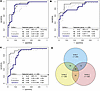 Figure 1
Performance of learned SVMs. (A–C) ROC curves and summary of performance of training, evaluation, and validation series for learned SVMs 1–3 on the dataset of HNSCC (n = 101) and matched controls (n = 101). (D) Venn diagram showing overlap between selected biomarker panels of learned SVMs 1–3. Training set is indicated by a dashed light grey line, evaluation set by a solid grey line and validation set by a solid blue line. ROC, receiver operator characteristic; SVM, support vector machine; AUC, area under the curve; CI, confidence interval.
LASSO classification. The 3 SVM models indicated that TEP profiling was highly accurate to distinguish patients with HNSCC from matched controls. Still, the considerable variation in selected transcripts affects extrapolation to the clinical setting and prompted an alternative analysis method using a least absolute shrinkage and selection operator (LASSO). For LASSO classification, samples were randomly divided into a set for training and internal validation (66%, n = 67 HNSCC cases and n = 67 matched controls) and a set for external validation (34%, n = 34 HNSCC cases and n = 34 matched controls). Sample selection for the training and validation sets and subsequent classifier development was iterated 1,000 times, resulting in 1,000 classification models. These models reached a median AUC of 0.84 (95% CI, 0.69–0.94) and a median accuracy of 76% (Figure 2). Accuracy was dependent of disease stage: samples of early stage (TNM disease stage I/II) and advanced stage (TNM disease stage III/IV) tumors showed an detection accuracy of 68% and 86%, respectively (Table 2).
 Figure 2
Performance of LASSO models. (A) ROC curve and summary of performance of validation series for 1,000 LASSO models on the dataset of HNSCC (n = 101) and matched controls (n = 101). In total, 1,198 genes were selected and used for the prediction models. (B) Box plot of the mean prediction scores of matched controls and HNSCC samples in 1,000 LASSO models. ROC, receiver operator characteristic; LASSO, least absolute shrinkage and selection operator; HNSCC, head and neck squamous cell carcinoma; AUC, area under the curve; CI, confidence interval; Acc., accuracy.
A total of 1,198 transcripts had a nonzero coefficient in at least 1 LASSO regression model. To investigate which of the 1,198 RNA transcripts were most contributing to HNSCC classification, we compared the observed frequency of transcripts with a nonzero coefficient in all selected 1,000 transcript panels to the frequency expected by random selection. In total, 316 transcripts were significantly overrepresented and are determining the prediction (FDR < 0.001, corresponding to observed frequency of ≥ 16; Supplemental Figure 4). The most predictive transcript was AKT1, which was selected in 950 of 1,000 iterations. Overexpression of AKT1 in HNSCC has been reported, and mutational activation of the PI3K/AKT/mTOR pathway is known to increase tumor cell survival (23–25). STRING analysis of all 316 transcripts showed enrichment for 41 biological processes (FDR < 0.05; Supplemental Table 2), which mainly comprised metabolic processes.
Evaluation of HPV infection on TEP RNA signatures. Oropharyngeal SCC (OPSCC) is either caused by exogenous carcinogens or HPV infection. It has been shown that platelets can take up genetic material from other cells, including mutation-harboring fragments from tumor cells (26). We hypothesized that transcripts originating from HPV could contribute to the discriminative power of TEP RNA between cases and controls. Therefore, the sequenced reads of all patients with OPSCC were mapped against the HPV genome, which yielded no hits in both the HPV+ and HPV– groups, indicating that HPV-derived RNA transcripts could not be detected in TEP samples of OPSCC patients, at least not with this sequencing coverage. Of note, like human RNA, HPV RNA has a poly-A tail and is expected to be amplified during sample work-up, if present. To evaluate the potential effect of HPV infection on TEP RNA signatures in OPSCC, we compared the LASSO classification accuracy and found that HPV+ and HPV– patients with OPSCC were classified with fairly comparable accuracies of 80% and 86%, respectively (Table 2), suggesting that HPV status is not of key relevance in the current study design. A LASSO based model trained to predict HPV-status resulted in a median AUC of 0.62 (95% CI, 0.35–0.89) and median accuracy of 58% after 1,000 iterations (Supplemental Figure 5), confirming that TEP profiles are not HPV specific. To assess the possibility that this poor prediction was due to the limited sample size, we developed a LASSO model on the primary cohort, randomly downsized to a sample size comparable with the OPSCC subcohort (n = 60; 30 HNSCC and 30 matched controls). We were still able to reach a median AUC of 0.78 (95% CI, 0.53–0.89) with a median accuracy of 72%. These results indicate that an HPV-specific effect on TEP signatures, if any, is limited when compared with the presence or absence of HNSCC and undetectable with our current classification methods.


