
Research ArticleImmunologyOncology
Open Access |  10.1172/jci.insight.186461
Differential effects of HDAC8 targeting on Foxp3+ Tregs and effector T cells promote antitumor immunity
Fanhua Kong,1,2 Yan Xiong,1 Liqing Wang,3 Rongxiang Han,3 Hossein Fazelinia,4 Jennifer Roof,4 Lynn Spruce,4 Aaron B. Beeler,5 and Wayne W. Hancock3,6
1Zhongnan Hospital of Wuhan University, Institute of Hepatobiliary Diseases of Wuhan University, Transplant Center of Wuhan University, Wuhan University, Wuhan, China.
2Department of Kidney Transplantation, Center of Organ Transplantation, The Second Xiangya Hospital of Central South University, Changsha, Hunan, China.
3Department of Pathology and Laboratory Medicine, Children’s Hospital of Philadelphia, Philadelphia, Pennsylvania, USA.
4Proteomics Core, Abramson Research Center, Philadelphia, Pennsylvania, USA.
5Department of Chemistry, Boston University, Boston, Massachusetts, USA.
6Department of Pathology and Laboratory Medicine, University of Pennsylvania, Philadelphia, Pennsylvania, USA.
Address correspondence to: Wayne W. Hancock, 916B ARC, 3615 Civic Ctr Blvd, Philadelphia, Pennsylvania 19104, USA. Phone: 215.590.8709; Email: whancock@pennmedicine.upenn.edu.
Authorship note: FK and YX contributed equally to this work.
Find articles by Kong, F. in: PubMed | Google Scholar
1Zhongnan Hospital of Wuhan University, Institute of Hepatobiliary Diseases of Wuhan University, Transplant Center of Wuhan University, Wuhan University, Wuhan, China.
2Department of Kidney Transplantation, Center of Organ Transplantation, The Second Xiangya Hospital of Central South University, Changsha, Hunan, China.
3Department of Pathology and Laboratory Medicine, Children’s Hospital of Philadelphia, Philadelphia, Pennsylvania, USA.
4Proteomics Core, Abramson Research Center, Philadelphia, Pennsylvania, USA.
5Department of Chemistry, Boston University, Boston, Massachusetts, USA.
6Department of Pathology and Laboratory Medicine, University of Pennsylvania, Philadelphia, Pennsylvania, USA.
Address correspondence to: Wayne W. Hancock, 916B ARC, 3615 Civic Ctr Blvd, Philadelphia, Pennsylvania 19104, USA. Phone: 215.590.8709; Email: whancock@pennmedicine.upenn.edu.
Authorship note: FK and YX contributed equally to this work.
Find articles by Xiong, Y. in: PubMed | Google Scholar
1Zhongnan Hospital of Wuhan University, Institute of Hepatobiliary Diseases of Wuhan University, Transplant Center of Wuhan University, Wuhan University, Wuhan, China.
2Department of Kidney Transplantation, Center of Organ Transplantation, The Second Xiangya Hospital of Central South University, Changsha, Hunan, China.
3Department of Pathology and Laboratory Medicine, Children’s Hospital of Philadelphia, Philadelphia, Pennsylvania, USA.
4Proteomics Core, Abramson Research Center, Philadelphia, Pennsylvania, USA.
5Department of Chemistry, Boston University, Boston, Massachusetts, USA.
6Department of Pathology and Laboratory Medicine, University of Pennsylvania, Philadelphia, Pennsylvania, USA.
Address correspondence to: Wayne W. Hancock, 916B ARC, 3615 Civic Ctr Blvd, Philadelphia, Pennsylvania 19104, USA. Phone: 215.590.8709; Email: whancock@pennmedicine.upenn.edu.
Authorship note: FK and YX contributed equally to this work.
Find articles by Wang, L. in: PubMed | Google Scholar
1Zhongnan Hospital of Wuhan University, Institute of Hepatobiliary Diseases of Wuhan University, Transplant Center of Wuhan University, Wuhan University, Wuhan, China.
2Department of Kidney Transplantation, Center of Organ Transplantation, The Second Xiangya Hospital of Central South University, Changsha, Hunan, China.
3Department of Pathology and Laboratory Medicine, Children’s Hospital of Philadelphia, Philadelphia, Pennsylvania, USA.
4Proteomics Core, Abramson Research Center, Philadelphia, Pennsylvania, USA.
5Department of Chemistry, Boston University, Boston, Massachusetts, USA.
6Department of Pathology and Laboratory Medicine, University of Pennsylvania, Philadelphia, Pennsylvania, USA.
Address correspondence to: Wayne W. Hancock, 916B ARC, 3615 Civic Ctr Blvd, Philadelphia, Pennsylvania 19104, USA. Phone: 215.590.8709; Email: whancock@pennmedicine.upenn.edu.
Authorship note: FK and YX contributed equally to this work.
Find articles by Han, R. in: PubMed | Google Scholar
1Zhongnan Hospital of Wuhan University, Institute of Hepatobiliary Diseases of Wuhan University, Transplant Center of Wuhan University, Wuhan University, Wuhan, China.
2Department of Kidney Transplantation, Center of Organ Transplantation, The Second Xiangya Hospital of Central South University, Changsha, Hunan, China.
3Department of Pathology and Laboratory Medicine, Children’s Hospital of Philadelphia, Philadelphia, Pennsylvania, USA.
4Proteomics Core, Abramson Research Center, Philadelphia, Pennsylvania, USA.
5Department of Chemistry, Boston University, Boston, Massachusetts, USA.
6Department of Pathology and Laboratory Medicine, University of Pennsylvania, Philadelphia, Pennsylvania, USA.
Address correspondence to: Wayne W. Hancock, 916B ARC, 3615 Civic Ctr Blvd, Philadelphia, Pennsylvania 19104, USA. Phone: 215.590.8709; Email: whancock@pennmedicine.upenn.edu.
Authorship note: FK and YX contributed equally to this work.
Find articles by Fazelinia, H. in: PubMed | Google Scholar
1Zhongnan Hospital of Wuhan University, Institute of Hepatobiliary Diseases of Wuhan University, Transplant Center of Wuhan University, Wuhan University, Wuhan, China.
2Department of Kidney Transplantation, Center of Organ Transplantation, The Second Xiangya Hospital of Central South University, Changsha, Hunan, China.
3Department of Pathology and Laboratory Medicine, Children’s Hospital of Philadelphia, Philadelphia, Pennsylvania, USA.
4Proteomics Core, Abramson Research Center, Philadelphia, Pennsylvania, USA.
5Department of Chemistry, Boston University, Boston, Massachusetts, USA.
6Department of Pathology and Laboratory Medicine, University of Pennsylvania, Philadelphia, Pennsylvania, USA.
Address correspondence to: Wayne W. Hancock, 916B ARC, 3615 Civic Ctr Blvd, Philadelphia, Pennsylvania 19104, USA. Phone: 215.590.8709; Email: whancock@pennmedicine.upenn.edu.
Authorship note: FK and YX contributed equally to this work.
Find articles by Roof, J. in: PubMed | Google Scholar
1Zhongnan Hospital of Wuhan University, Institute of Hepatobiliary Diseases of Wuhan University, Transplant Center of Wuhan University, Wuhan University, Wuhan, China.
2Department of Kidney Transplantation, Center of Organ Transplantation, The Second Xiangya Hospital of Central South University, Changsha, Hunan, China.
3Department of Pathology and Laboratory Medicine, Children’s Hospital of Philadelphia, Philadelphia, Pennsylvania, USA.
4Proteomics Core, Abramson Research Center, Philadelphia, Pennsylvania, USA.
5Department of Chemistry, Boston University, Boston, Massachusetts, USA.
6Department of Pathology and Laboratory Medicine, University of Pennsylvania, Philadelphia, Pennsylvania, USA.
Address correspondence to: Wayne W. Hancock, 916B ARC, 3615 Civic Ctr Blvd, Philadelphia, Pennsylvania 19104, USA. Phone: 215.590.8709; Email: whancock@pennmedicine.upenn.edu.
Authorship note: FK and YX contributed equally to this work.
Find articles by Spruce, L. in: PubMed | Google Scholar
1Zhongnan Hospital of Wuhan University, Institute of Hepatobiliary Diseases of Wuhan University, Transplant Center of Wuhan University, Wuhan University, Wuhan, China.
2Department of Kidney Transplantation, Center of Organ Transplantation, The Second Xiangya Hospital of Central South University, Changsha, Hunan, China.
3Department of Pathology and Laboratory Medicine, Children’s Hospital of Philadelphia, Philadelphia, Pennsylvania, USA.
4Proteomics Core, Abramson Research Center, Philadelphia, Pennsylvania, USA.
5Department of Chemistry, Boston University, Boston, Massachusetts, USA.
6Department of Pathology and Laboratory Medicine, University of Pennsylvania, Philadelphia, Pennsylvania, USA.
Address correspondence to: Wayne W. Hancock, 916B ARC, 3615 Civic Ctr Blvd, Philadelphia, Pennsylvania 19104, USA. Phone: 215.590.8709; Email: whancock@pennmedicine.upenn.edu.
Authorship note: FK and YX contributed equally to this work.
Find articles by Beeler, A. in: PubMed | Google Scholar
1Zhongnan Hospital of Wuhan University, Institute of Hepatobiliary Diseases of Wuhan University, Transplant Center of Wuhan University, Wuhan University, Wuhan, China.
2Department of Kidney Transplantation, Center of Organ Transplantation, The Second Xiangya Hospital of Central South University, Changsha, Hunan, China.
3Department of Pathology and Laboratory Medicine, Children’s Hospital of Philadelphia, Philadelphia, Pennsylvania, USA.
4Proteomics Core, Abramson Research Center, Philadelphia, Pennsylvania, USA.
5Department of Chemistry, Boston University, Boston, Massachusetts, USA.
6Department of Pathology and Laboratory Medicine, University of Pennsylvania, Philadelphia, Pennsylvania, USA.
Address correspondence to: Wayne W. Hancock, 916B ARC, 3615 Civic Ctr Blvd, Philadelphia, Pennsylvania 19104, USA. Phone: 215.590.8709; Email: whancock@pennmedicine.upenn.edu.
Authorship note: FK and YX contributed equally to this work.
Find articles by
Hancock, W.
in:
PubMed
|
Google Scholar
|

Published December 11, 2025 - More info
JCI Insight. 2026;11(3):e186461. https://doi.org/10.1172/jci.insight.186461.
© 2025 Kong et al. This work is licensed under the Creative Commons Attribution 4.0 International License. To view a copy of this license, visit http://creativecommons.org/licenses/by/4.0/.
Received: August 28, 2024; Accepted: December 9, 2025


-
Results
Prior studies delineated oncogenic signaling cascades induced by aberrant HDAC8 expression in cancer cells (22), but no role for HDAC8 in antitumor immune responses was identified. Using The Cancer Genome Atlas (TCGA), tumor immune estimation resource, version 2 (TIMER2), and other databases, we found that HDCA8 was upregulated in most human solid tumors (Supplemental Figure 1; supplemental material available online with this article; https://doi.org/10.1172/jci.insight.186461DS1) and promoted Treg infiltration in tumors (Supplemental Figure 2).This led us to undertake conditional targeting of HDAC8 in T cells, by mating CD4-Cre and HDAC8fl/fl mice to produce what are hereafter termed HDAC8–/– mice, as well as to test the effects of selective HDAC8is on T cell–dependent immune responses in WT mice. Mice bred at normal Mendelian rates, had normal lymphoid development, and under standard lab conditions displayed a normal phenotype and lifespan, without evidence of autoimmunity. To assess the effect of HDAC8 knockdown on T cell proliferation, we analyzed the proliferation of T cells in the thymus, spleen, and lymph nodes of CD4-Cre and HDAC8–/– mice by flow cytometry. As shown in Supplemental Figure 3, genetic deletion of HDAC8 in T cells did not affect the proliferation of CD4+ or CD8+ T cells (Supplemental Figure 3A), activated CD4+CD25+ T cells (Supplemental Figure 3B), or CD4+Foxp3+ Tregs (Supplemental Figure 3C). Moreover, deletion of HDAC8 did not affect the expression of Ki-67 by CD4+ T cells (Supplemental Figure 3D). Hence, mice with conditional T cell deletion of HDAC8 are unremarkable.
Conditional HDAC8 deletion or pharmacologic inhibition of HDAC8 promotes antitumor immunity. We tested tumor growth by s.c. injection of control CD4-Cre and HDAC8–/– mice with TC-1 lung adenocarcinoma cells (23). Deletion of HDAC8 inhibited TC-1 tumor proliferation (P < 0.01, Figure 1A), and when TC-1 tumors were established in WT C57BL/6 and Rag1–/– C57BL/6 mice and treated from day 7 after inoculation with an HDAC8i (OJ-1) (24), HDAC8i therapy inhibited tumor proliferation in immunocompetent (P < 0.01, Figure 1B) but not immunodeficient Rag1–/– C57BL/6 mice (Figure 1C). Similar results were observed in the AE-17.ova murine mesothelioma model (25) using immunocompetent and immunodeficient mice (Figure 1, D and E). These findings indicate that the antitumor activity of HDAC8 inhibition is dependent on an adaptive immune response.
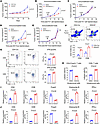 Figure 1
Conditional deletion or inhibition of HDAC8 promotes antitumor immunity in an implantable tumor model involving s.c. injection of TC-1 and AE-17.ova cells. (A) Tumor growth in CD4-Cre (n = 7) and HDAC8–/– (n = 10) mice. (B) TC-1 tumor growth in immunocompetent C57BL/6 mice treated with control (diluted DMSO, n = 10) or HDAC8i (OJI-1, n = 10) via Alzet pump. (C) TC-1 tumor growth in immunodeficient C57BL/6 mice treated with control (diluted DMSO, n = 10) or HDAC8i (OJI-1, n = 10) via Alzet pump. (D) AE-17.ova tumor growth in immunocompetent C57BL/6 mice treated with control (diluted DMSO, n = 10) or HDAC8i (OJI-1, n = 10) via Alzet pump. (E) AE-17.ova tumor growth in immunodeficient C57BL/6 mice treated with control (diluted DMSO, n = 10) or HDAC8i (OJI-1, n = 10) via Alzet pump. (F) Flow cytometric analysis of TC-1 intratumoral infiltrating CD4+ and CD8+ T cells in CD4-Cre (n = 3) and HDAC8–/– (n = 3) groups. (G) Flow cytometry was used to analyze IFN-γ expression by T cells in TC-1 tumors of CD4-Cre (n = 3) and HDAC8–/– (n = 3) mice. (H) Proportion of Foxp3+ Tregs and CD8+ T cells in TC-1 tumors of mice treated with HDAC8i (OJI-1, 5 mg/kg/d) for 14 days via Alzet pumps (n = 3/group). (I) qRT-PCR analysis of TC-1 tumor biopsies in CD4-Cre and HDAC8–/– mice (n = 3/group). (J) qRT-PCR analysis of TC-1 tumor biopsies in DMSO- and HDAC8i-treated (OJI-1, 5 mg/kg/d) mice (n = 3/group). Assays were run in triplicate and repeated at least 3 times. The results of a representative experiment are shown. Data are expressed as the mean ± SD of 3 independent experiments. NS, not significant. Comparisons between 2 groups utilized a 2-tailed Student’s t test for normally distributed data.
Flow cytometric analysis revealed that conditional knockout of HDAC8 resulted in increased infiltration of CD4+ and CD8+ T cells in TC-1 tumors (P < 0.01, Figure 1F), and upregulation of IFN-γ expression in intratumoral CD4+ and CD8+ T cells (P < 0.01, Figure 1G). In addition, the proportion of Foxp3+ Tregs was decreased (P < 0.01, Figure 1H), and the proportion of CD8+ T cells was increased (P < 0.01, Figure 1H). Quantitative PCR (qPCR) analysis of TC-1 tumor samples showed that inhibition of HDAC8 deletion led to upregulation of CD4 (P < 0.01), CD8 (P < 0.01), granzyme B (P < 0.01), and IFN-γ (P < 0.01) mRNAs, while Foxp3 mRNA was downregulated (P < 0.05, Figure 1I). Treatment of TC-1–bearing mice with an HDAC8i produced results consistent with those observed after HDAC8 deletion (Figure 1J). Therefore, HDAC8 targeting increased the infiltration in 2 thoracic tumor models by conventional T cells and diminished accumulation of Foxp3+ Tregs.
To assess the effect of conditional deletion or inhibition of HDAC8 in an orthotopic third tumor model, we established an orthotopic hepatocellular carcinoma (HCC) tumor model in WT BALB/c mice, followed by treatment with the HDAC8i (OJI-1, 5 mg/kg/d), or by comparing HCC growth in CD4-Cre versus HDAC8–/– mice. Inhibition of HDAC8 inhibited HCC proliferation (P < 0.05, Figure 2A). Flow cytometric analysis was performed 10 and 21 days after implantation of HCC cells, and inhibition of HDAC8 increased the proportion of CD8+ T cells in tumor tissue (P < 0.05, Figure 2, B and C), but did not affect CD4+CD25+ T cells or CD4+Foxp3+ T cells (Figure 2, B and C). Ki-67 is an important marker of cell proliferation and is widely expressed in proliferating cells. Its expression level in T cells is often used to evaluate the proliferative activity of T cells (26). As cytokines such as IL-2 and IFN-γ are crucial for T cell activation, proliferation, and function, and can disrupt the immunosuppressive functions of Tregs (27), their expression levels were assessed within tumors and lymphoid tissues. No statistically significant differences were observed in the expression of Ki-67, IL-2, and IFN-γ by T cells within the tumor 10 days after implantation of HCC cells (Figure 3A). However, inhibition of HDAC8 increased Ki-67 expression in CD4+ and CD8+ T cells 21 days after implantation of HCC cells (P < 0.05, Figure 3B), in conjunction with increased of expression of IL-2 and IFN-γ in CD4+ T cells (P < 0.05, Figure 3B); additional flow cytometry for infiltrating lymphocytes in the spleen and lymph nodes of HCC-bearing mice receiving HDAC8i are shown in Supplemental Figures 4–7.
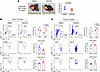 Figure 2
Inhibition of HDAC8 promotes antitumor immunity in an orthotopic HCC model. (A) Tumor/body weight ratios of DMSO (n = 6) and HDAC8i mice (n = 8) at 21 days. (B and C) Flow cytometry was used to analyze the expression of CD4+ T cells (gate: CD4+), CD8+ T cells (gate: CD8+), and Tregs (gate: CD4+Foxp3+, CD4+CD25+) in HCC tumors 10 and 21 days after implantation of H22 cells (n = 3). Assays were run in triplicate and repeated at least 3 times. The results of a representative experiment are shown. Data were expressed as the mean ± SD of 3 independent experiments. NS, not significant. Comparisons between 2 groups utilized a 2-tailed Student’s t test for normally distributed data.
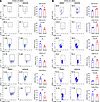 Figure 3
Inhibition of HDAC8 promotes T cell–mediated antitumor immunity. (A) Flow cytometry was used to analyze the expression of Ki-67, IL-2, and IFN-γ in HCC tumors 10 days after implantation of H22 cells (n = 3). (B) Flow cytometry was used to analyze the expression of Ki-67, IL-2, and IFN-γ in HCC tumors 21 days after implantation of H22 cells (n = 3). Assays were run in triplicate and repeated at least 3 times. The results of a representative experiment are shown. Data are expressed as the mean ± SD of 3 independent experiments., NS, not significant. Comparisons between 2 groups utilized a 2-tailed Student’s t test for normally distributed data.
In CD4-Cre and HDAC8–/– mice, conditional deletion of HDAC8 inhibited HCC proliferation (P < 0.05, Supplemental Figure 8A). Flow cytometric analysis showed deletion of HDAC8 increased the proportion of CD4+ and CD8+ T cells in tumors and spleens (P < 0.05, Supplemental Figure 8B) but decreased corresponding Foxp3+ T cell proportions (P < 0.05, Supplemental Figure 8C). Tregs promote immune homeostasis and play a crucial role in anticancer immunity by inhibiting the activation and differentiation of CD4+ helper T cells and CD8+ cytotoxic T cells (28), as well as in some cases by inducing their differentiation into Tregs, thus promoting tumor immune evasion (29, 30). The expression of Ki-67 was upregulated in the infiltrating CD4+ and CD8+ T cells and Tregs in HCC (P < 0.05, Supplemental Figure 9). In addition, IL-2 and IFN-γ were upregulated in the infiltrating CD4+ and CD8+ T cells and Tregs in HCC (P < 0.05, Supplemental Figures 10 and 11). Hence, in this third tumor model, HDAC8 deletion and inhibition increased CD4+ and CD8+ T cell infiltration and effector cytokine production, and was associated with Treg dysfunction as indicated by increased IL-2 and IFN-γ expression by infiltrating Foxp3+ cells.
Conditional deletion of HDAC8 impairs Treg suppressive functions. Next, in a parent→F1 model (31), lymphocytes from the spleen and lymph nodes of CD4-Cre and HDAC8–/– C57BL/6 mice were labeled with CFSE and injected into B6D2F1/J mice to analyze the effect of HDAC8 deletion on the activation, proliferation, and cytokine production of alloreactive T cells in vivo. Compared with CD4-Cre controls, HDAC8 deletion impaired the proliferation of Tregs (P < 0.05) but enhanced the proliferation of CD8+CD25+ conventional T cells (n = 3, P < 0.01) (Figure 4A). The ability of Tregs to inhibit CD4+ (P < 0.01) and CD8+ T cell proliferation (P < 0.01) in vivo was also impaired by HDAC8 deletion (Figure 4B) and HDAC8–/– CD4+ T cells produced more IL-2 (P < 0.05) (Figure 4C). HDAC8 deletion also increased IFN-γ expression by Tregs (P < 0.01), effector T cells (Teffs) (P < 0.01), and CD8+ T cells (P < 0.01) (Figure 4, D and E). These findings, using an orthogonal approach to the tumor studies, again show that HDAC8 deletion promotes T cell proliferation and cytokine production while disrupting Treg homeostasis, as reflected by their ability to now produce IL-2 and IFN-γ cytokines.
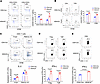 Figure 4
HDAC8 deletion enhances the proliferation and function of CD4+ and CD8+ T cells in vivo and in vitro. (A–C) CFSE-labeled splenocytes and lymph node cells (CD4-Cre and HDAC8–/– mice, n = 3/group) were adoptively transferred into B6D2F1/J recipient mice (allogeneic parent→F1 model). CFSE fluorescence histograms (B) and flow scatter plot (A and C) of live CD4-Cre and HDAC8–/– (donor) cells recovered 72 hours after adoptive transfer. The numbers above each figure denote division populations, with the undivided T cells forming the rightmost peak, and the T cells that divided several times residing in the leftmost peak. (D) Flow cytometric analysis of IFN-γ production using pooled (n = 3/group) Tregs and Teffs from lymph nodes and spleens of CD4-Cre versus HDAC8–/– mice, following anti-CD3/anti-CD28 stimulation (24 hours) and PMA/ionomycin (4 hours). (E) Flow cytometric analysis of IFN-γ production using pooled (n = 3 /group) CD8+ T cells from lymph nodes and spleens of CD4-Cre and HDAC8–/– mice, following anti-CD3/anti-CD28 stimulation (24 hours) and PMA/ionomycin (4 hopurs). Assays were run in triplicate and repeated at least 3 times. The results of a representative experiment are shown. Data are expressed as the mean ± SD of 3 independent experiments. NS, not significant. Comparisons between 2 groups utilized a 2-tailed Student’s t test for normally distributed data.
Focusing directly on the effects of HDAC8 targeting on Tregs, in vitro assays showed that the suppressive function of Tregs was only very modestly impaired in HDAC8–/– mice (Figure 5A) and by HDAC8i therapy (Figure 5, B and C), whereas this effect was more obvious from in vivo assays. Thus, in cardiac allograft recipients (BALB/c→Rag1–/– C57BL/6) adoptively transferred with HDAC8–/– conventional T cells and WT Tregs (2:1 ratio), treatment with HDAC8i (OJI-1, 5 mg/kg/d) but not DMSO control for 14 days after transplantation blocked Treg-induced long-term allograft survival (P < 0.01, Figure 5D). Similarly, in homeostatic proliferation assays, when immunodeficient Rag1–/– mice were injected i.p. with conventional Teffs with and without Tregs and treated with HDAC8i (OJI-1, 5 mg/kg/day) for 7 days, HDAC8i use impaired the immunosuppressive function of Tregs and restored Teff cell numbers (P < 0.01, Figure 5E). In the in vitro Treg suppression assay, deletion of HDAC8 in Tregs impaired the immunosuppressive function of Tregs, while deletion of HDAC8 in Teffs showed no statistically significant difference (Supplemental Figure 12). Thus, conditional deletion or inhibition of HDAC8 impaired the immunosuppressive functions of Tregs.
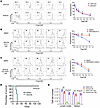 Figure 5
Conditional deletion or inhibition of HDAC8 impaired Treg suppressive function in vivo and in vitro. (A) Treg suppression assays using pooled Tregs and Teffs (n = 3/group) from lymph nodes and spleens of mice (CD4-Cre and HDAC8–/–), as indicated. (B and C) Treg suppression assays using pooled Tregs and Teffs (3 mice/ group) from lymph nodes and spleens of treated mice (DMSO and HDAC8i, n = 3/group), as indicated. (D) Immunodeficient Rag1–/– C57BL/6 murine recipients of BALB/c cardiac allografts were injected with conventional HDAC8–/– T effector cells (Teffs) plus Tregs (2:1 ratio), and treated with HDAC8i (OJI-1) 5 mg/kg/d for 14 days via Alzet pumps (n = 4/group). (E) Immunodeficient Rag1–/– mice were injected with conventional Teffs with and without Tregs and treated with HDAC8i (OJI-1, 5 mg/kg/d) for 7 days (n = 3/group). Assays were run in triplicate and repeated at least 3 times. The results of a representative experiment are shown. Data expressed as the mean ± SD of 3 independent experiments. *P < 0.05, **P < 0.01. NS, not significant. Comparisons between 2 groups utilized a 2-tailed Student’s t test for normally distributed data.
Conditional deletion and inhibition of HDAC8 decreased Foxp3 expression. Multiple transcription factors regulate the stability, differentiation, and suppressive function of Foxp3+ Tregs (9). Since our data suggested that HDAC8 deletion downregulated Foxp3 expression and impaired the suppressive function of Tregs, we tested whether HDAC8 regulates Foxp3 stability. CD4-Cre and HDAC8–/– Tregs were injected into immunodeficient Rag1–/– mice, and Foxp3 expression was assessed 10 days later, and the proportion of Foxp3+ Tregs was downregulated in HDAC8–/– compared with CD4-Cre controls (P < 0.05, Figure 6A). In parallel, Tregs from CD4-Cre and HDAC8–/– mice were analyzed after 24 hours of stimulation with anti-CD3/anti-CD28. Foxp3 expression in both groups decreased over time, but HDAC8–/– Tregs showed lower expression levels at 24 hours (P < 0.01, Figure 6B), whereas HDAC8 deletion did not alter induced-Treg stability or function (Supplemental Figure 13A). Western blot results showed that deletion of HDAC8 downregulated Foxp3 expression in the presence or absence of anti-CD3/anti-CD28 stimulation compared with the control group (Figure 6C), consistent with the results of qPCR experiments (Figure 6D). Thus, HDAC8 deletion leads to a loss of Foxp3 expression. In addition, Foxp3 is a Treg-specific transcription factor, and its methylation level plays an important role in regulating the development and function of Tregs (32). To assess the effect of HDAC8 depletion on the methylation of Foxp3 DNA, we analyzed the Foxp3 CNS2 region by EpiTYPER DNA methylation. In contrast to CD4-Cre, deletion of HDAC8 did not alter the methylation level of Foxp3 CNS2 in Tregs (Supplemental Figure 13B and Supplemental Table 1). Thus, HDAC8 targeting suppresses Foxp3 expression in Tregs independently of changes in Foxp3 methylation.
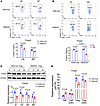 Figure 6
HDAC8 deletion decreased Foxp3 expression in vivo and in vitro. (A) The stability of Foxp3 in lymph nodes and spleen was analyzed by flow cytometry 10 days after CD4-Cre and HDAC8–/– Tregs were injected into immunodeficient Rag1–/– mice (n = 3/group). (B) Flow cytometry was used to analyze Foxp3 within pooled (n = 3/group) Tregs from lymph nodes and spleens of CD4-Cre and HDAC8–/– mice, as indicated (anti-CD3/anti-CD28 stimulation for 24 hours). (C) Western blot analysis of Foxp3 in CD4-Cre and HDAC8–/– Tregs stimulated with anti-CD3/anti-CD28 beads (1:1) for indicated times. (D) qRT-PCR analysis of Foxp3 mRNA in CD4-Cre and HDAC8–/– Teffs and Tregs were stimulated with anti-CD3/anti-CD28 beads (1:1) for indicated times. Assays were run in triplicate and repeated at least 3 times. The results of 1 representative experiment are shown. Data are expressed as the mean ± SD of 3 independent experiments. NS, not significant. Comparisons between 2 groups utilized a 2-tailed Student’s t test for normally distributed data. For multiple comparisons, we used 1-way ANOVA followed by Tukey’s post hoc test.
HDAC8 deletion enhances substrate acetylation and expression. In genomic studies, CD4-Cre and HDAC8–/– Tregs/Teffs were compared by RNA-seq; Supplemental Table 2 shows differentially expressed genes in Tregs and Supplemental Table 3 shows differentially expressed genes in Teffs after deletion of HDAC8. The volcano plot of differentially expressed genes (Supplemental Figure 14) showed upregulation of Socs3 in HDAC8–/– Tregs and Teffs. Immunoblotting and qPCR confirmed this finding, with markedly increased Socs3 expression in HDAC8–/– Tregs compared with CD4-Cre Tregs (Figure 7, A and B), and no statistically significant difference observed in Teffs (Figure 7, A and B). Cotransfection experiments also showed that overexpression of Socs3 inhibited HDAC8-mediated regulation of Foxp3 expression (Supplemental Figure 15). Socs3 expression is negatively correlated with Treg function, including reduced Treg proliferation and lower expression of Foxp3 and CTLA-4 (33). Thus, upregulating Socs3 may contribute to decreased Treg suppressive function.
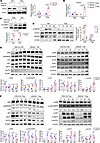 Figure 7
HDAC8 deletion enhances substrate acetylation and promotes its expression. (A) Western blot analysis was used to detect the expression of Socs3 in Teffs and Tregs. (B) qRT-PCR analysis was used to detect the expression of Socs3 in Teffs and Tregs. (C) Western blot analysis was used to detect the expression of acetyl-SMC3 (Ace-SMC3) in Teffs and Tregs. (D) Western blot analysis was used to detect the expression of p-HDAC8 in Teffs and Tregs stimulated with anti-CD3/anti-CD28 beads (1:1) for indicated times. (E and F) Western blot analysis of CD4-Cre Teffs and Tregs and HDAC8–/– Teffs and Tregs were stimulated with anti-CD3/anti-CD28 beads (1:1) for indicated times. Assays were run in triplicate and repeated at least 3 times. The results of a representative experiment are shown. Data are expressed as the mean ± SD of 3 independent experiments. NS, not significant. Comparisons between 2 groups utilized a 2-tailed Student’s t test for normally distributed data. For multiple comparisons, we used 1-way ANOVA followed by Tukey’s post hoc test.
HDAC8 deletion also enhanced substrate acetylation levels, promoting substrate expression. For example, cohesin, a protein complex involved in chromosome organization, is frequently mutated or abnormally expressed in cancer. The diverse functions of cohesin in cell division and gene expression make it a promising therapeutic target (16). The deacetylation of SMC3 is crucial for cohesin recycling during the cell cycle (34). HDAC8 mutation or deletion leads to the accumulation of acetyl-SMC3, reduced chromatin-bound cohesin, and widespread cohesin-mediated transcriptional dysregulation (35). Immunoblotting demonstrated upregulation of acetyl-SMC3 in HDAC8–/– Tregs and Teffs (Figure 7C). Therefore, HDAC8 deletion in Tregs promotes acetyl-SMC3 expression, and likely delays cell cycle progression, inhibits proliferation, and induces apoptosis. Furthermore, phosphorylated HDAC8 (p-HDAC8) expression was upregulated in Teffs after anti-CD3/anti-CD28 stimulation, with the most pronounced difference observed after 10 minutes (Figure 7D), but was downregulated in Tregs (Figure 7D). HDAC8 is phosphorylated within the conserved deacetylase domain at serine 39, reducing its catalytic activity and deacetylation capacity (36). Thus, HDAC8 catalytic activity is inhibited in activated Teffs, while the opposite occurs in Tregs. Immunoblotting showed that p-ERK and p-p38/MAPK levels were upregulated in HDAC8–/– Teffs compared with CD4-Cre cells after stimulation (Figure 7E); however, p-ERK and p-p38/MAPK levels were downregulated in HDAC8–/– Tregs (Figure 7F). Conversely, p-AKT and p-ZAP70 levels were downregulated in HDAC8–/– Tregs after 10 minutes of stimulation (Figure 7F), while no changes were observed in HDAC8–/– Teffs (Figure 7E). Subsequently, p38 and ERK inhibitors were administered following anti-CD3/anti-CD28 stimulation to suppress the activation of p38 and ERK. Immunoblotting results showed that inhibition of p38 and ERK reduced p-HDAC8 expression in Teffs, while no changes were observed in Tregs (Supplemental Figure 16). qRT-PCR results showed that inhibition of p38 and ERK reduced the expression of IL-2, IFN-γ, and granzyme B in Teffs and Tregs, and interestingly, the difference in IL-2 expression was particularly striking in Teffs, implying an important role of HDAC8-mediated ERK/p38 signaling in Teffs (Supplemental Figure 17). Thus, it is possible HDAC8 deletion is modulating Teff/Treg function via differential effects on p38 and ERK signaling pathways.
To further analyze the regulatory mechanism by which HDAC8 deletion affects substrate expression levels, HDAC8 ChIP-seq analysis was performed on mouse Teffs and Tregs. Gene Ontology (GO) and Kyoto Encyclopedia of Genes and Genomes (KEGG) analyses revealed that differentially expressed genes in Teffs were enriched in the MAPK signaling pathway, apoptosis, and cell cycle pathways (Supplemental Figure 18), while in Tregs, these genes were enriched in the MAPK, cAMP, and chemokine signaling pathways (Supplemental Figure 18). Previous analyses identified that HDAC8 deletion upregulates the expression of IL-2, IFN-γ, and other cytokines. The HDAC8 ChIP-seq analysis showed that Fas, Fasl, IL-2, IL-6, and IL-17 could be pulled down by HDAC8 (Supplemental Tables 4–9). Further ChIP-PCR assays confirmed HDAC8 binding to the promoter regions of Fas, Fasl, IL-2, IL-6, and IL-17 (Figure 8A). Additionally, qPCR results indicated that the expression of Fas, Fasl, and IL-2 was upregulated after HDAC8 deletion in Teffs (Figure 8B), and the expression of Fas, Fasl, IL-2, and IL-6 was upregulated in Tregs (Figure 8B). HDAC8 selectively targets H3K27ac, typically present at active enhancers (37, 38). H3K27ac ChIP-PCR results demonstrated that HDAC8 deletion enhanced the acetylation level of H3K27 and promoted the expression of Fas, Fasl, IL-2, and IL-6 (Figure 8C). Therefore, HDAC8 deletion enhances the acetylation level of its substrate, boosts T cell–mediated antitumor immunity by increasing the expression of Fas, Fasl, IL-2, and IL-6, and further impairs the immunosuppressive function of Tregs.
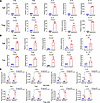 Figure 8
ChIP-PCR and qRT-PCR analyses using pooled Tregs and Teffs from lymph nodes and spleens of CD4-Cre and HDAC8–/– mice. (A) ChIP-PCR analysis of HDAC8 IP in Tregs and Teffs. (B) qRT-PCR analysis of Fas, Fasl, IL-2, IL-6, and IL-17f in Tregs and Teffs from lymph nodes and spleens of CD4-Cre and HDAC8–/– mice. (C) ChIP-PCR analysis of H3K27ac IP in Tregs and Teffs from lymph nodes and spleens of CD4-Cre and HDAC8–/– mice. Assays were run in triplicate and repeated at least 3 times. The results of a representative experiment are shown. Data are expressed as the mean ± SD of 3 independent experiments. NS, not significant. Comparisons between 2 groups utilized a 2-tailed Student’s t test for normally distributed data. For multiple comparisons, we used 1-way ANOVA followed by Tukey’s post hoc test.
In addition, mass spectrometry was used to analyze the protein binding levels of HDAC8 within Teffs and Tregs. Volcanic dot plots and heatmaps showed that Hipk2, Lkzf5, Nfat5, Crtc3, and Znf639 proteins coprecipitated with HDAC8 in Teffs with the pull-down of HDAC8 (Supplemental Figure 19 and Supplemental Table 10). In Tregs, Hipk2, Nfat5, Pkn1, Fastkd3, Rfc2, Gstt3, Rif1, and Znf639 coprecipitated with HDAC8 (Supplemental Figure 19 and Supplemental Table 11). Interestingly, we found through protein interaction strength analysis that in Teffs, proteins coprecipitated with HDAC8 were enriched in DNA metabolic process, histone deacetylation and modification, and positive regulation of histone methylation (Supplemental Figure 20A). In Tregs, proteins coprecipitated with HDAC8 were enriched in peptidyl–amino acid modification, and phosphorylation (Supplemental Figure 20B). Meanwhile, KEGG enrichment analysis showed that the proteins coprecipitated with HDAC8 were enriched in cell cycle, ATP-dependent chromatin remodeling, and endocytosis (Supplemental Figure 20B). HDAC8, as a classical histone deacetylase, affects epigenetic gene silencing and cancer progression. In this mass spectrometry analysis, we provide the potential target proteins that interact with HDAC8, although whether HDAC8 may affect these proteins through epigenetic or non-epigenetic modifications remains to determined.


