
Research ArticleDermatologyImmunologyInflammation
Open Access |  10.1172/jci.insight.185380
An oral lichen planus–like mouse model driven by IFN-γ signaling and cytotoxic CD8+ T cells
Zhenlai Zhu,1,2,3,4 Tinglan Yang,1 Peng Peng,5 Kang Li,2 Wen Qin,1 Chen Zhang,2 Shuyan Wang,1 Yuanyuan Wang,1 Minghui Wei,1 Erle Dang,2 Meng Fu,2 Hao Guo,5 Wen Yin,3,4 Shuai Shao,2 and Qing Liu1
1State Key Laboratory of Oral & Maxillofacial Reconstruction and Regeneration, National Clinical Research Center for Oral Diseases, Shaanxi Clinical Research Center for Oral Disease, Department of Oral medicine, School of Stomatology,
2Department of Dermatology, Xijing Hospital,
3Department of Microbiology & Pathogen Biology, School of Basic Medical Sciences,
4Department of Transfusion Medicine, Xijing Hospital, and
5State Key Laboratory of Oral & Maxillofacial Reconstruction and Regeneration, National Clinical Research Center for Oral Diseases, Shaanxi Clinical Research Center for Oral Diseases, Department of Preventive Dentistry, School of Stomatology, Fourth Military Medical University, Xi’an, Shaanxi, China.
Address correspondence to: Shuai Shao, Department of Dermatology, Xijing Hospital, Fourth Military Medical University, Xi’an, Shaanxi 710032, China. Email: shaoshuai19900728@qq.com. Or to: Qing Liu, Department of Oral medicine, School of Stomatology, the Fourth Military Medical University, Xi’an, Shaanxi, 710032, China. Email: liuqing@fmmu.edu.cn.
Authorship note: ZZ, TY, and PP contributed equally to this work and are co–first authors.
Find articles by
Zhu, Z.
in:
PubMed
|
Google Scholar
|

1State Key Laboratory of Oral & Maxillofacial Reconstruction and Regeneration, National Clinical Research Center for Oral Diseases, Shaanxi Clinical Research Center for Oral Disease, Department of Oral medicine, School of Stomatology,
2Department of Dermatology, Xijing Hospital,
3Department of Microbiology & Pathogen Biology, School of Basic Medical Sciences,
4Department of Transfusion Medicine, Xijing Hospital, and
5State Key Laboratory of Oral & Maxillofacial Reconstruction and Regeneration, National Clinical Research Center for Oral Diseases, Shaanxi Clinical Research Center for Oral Diseases, Department of Preventive Dentistry, School of Stomatology, Fourth Military Medical University, Xi’an, Shaanxi, China.
Address correspondence to: Shuai Shao, Department of Dermatology, Xijing Hospital, Fourth Military Medical University, Xi’an, Shaanxi 710032, China. Email: shaoshuai19900728@qq.com. Or to: Qing Liu, Department of Oral medicine, School of Stomatology, the Fourth Military Medical University, Xi’an, Shaanxi, 710032, China. Email: liuqing@fmmu.edu.cn.
Authorship note: ZZ, TY, and PP contributed equally to this work and are co–first authors.
Find articles by Yang, T. in: PubMed | Google Scholar
1State Key Laboratory of Oral & Maxillofacial Reconstruction and Regeneration, National Clinical Research Center for Oral Diseases, Shaanxi Clinical Research Center for Oral Disease, Department of Oral medicine, School of Stomatology,
2Department of Dermatology, Xijing Hospital,
3Department of Microbiology & Pathogen Biology, School of Basic Medical Sciences,
4Department of Transfusion Medicine, Xijing Hospital, and
5State Key Laboratory of Oral & Maxillofacial Reconstruction and Regeneration, National Clinical Research Center for Oral Diseases, Shaanxi Clinical Research Center for Oral Diseases, Department of Preventive Dentistry, School of Stomatology, Fourth Military Medical University, Xi’an, Shaanxi, China.
Address correspondence to: Shuai Shao, Department of Dermatology, Xijing Hospital, Fourth Military Medical University, Xi’an, Shaanxi 710032, China. Email: shaoshuai19900728@qq.com. Or to: Qing Liu, Department of Oral medicine, School of Stomatology, the Fourth Military Medical University, Xi’an, Shaanxi, 710032, China. Email: liuqing@fmmu.edu.cn.
Authorship note: ZZ, TY, and PP contributed equally to this work and are co–first authors.
Find articles by Peng, P. in: PubMed | Google Scholar
1State Key Laboratory of Oral & Maxillofacial Reconstruction and Regeneration, National Clinical Research Center for Oral Diseases, Shaanxi Clinical Research Center for Oral Disease, Department of Oral medicine, School of Stomatology,
2Department of Dermatology, Xijing Hospital,
3Department of Microbiology & Pathogen Biology, School of Basic Medical Sciences,
4Department of Transfusion Medicine, Xijing Hospital, and
5State Key Laboratory of Oral & Maxillofacial Reconstruction and Regeneration, National Clinical Research Center for Oral Diseases, Shaanxi Clinical Research Center for Oral Diseases, Department of Preventive Dentistry, School of Stomatology, Fourth Military Medical University, Xi’an, Shaanxi, China.
Address correspondence to: Shuai Shao, Department of Dermatology, Xijing Hospital, Fourth Military Medical University, Xi’an, Shaanxi 710032, China. Email: shaoshuai19900728@qq.com. Or to: Qing Liu, Department of Oral medicine, School of Stomatology, the Fourth Military Medical University, Xi’an, Shaanxi, 710032, China. Email: liuqing@fmmu.edu.cn.
Authorship note: ZZ, TY, and PP contributed equally to this work and are co–first authors.
Find articles by Li, K. in: PubMed | Google Scholar
1State Key Laboratory of Oral & Maxillofacial Reconstruction and Regeneration, National Clinical Research Center for Oral Diseases, Shaanxi Clinical Research Center for Oral Disease, Department of Oral medicine, School of Stomatology,
2Department of Dermatology, Xijing Hospital,
3Department of Microbiology & Pathogen Biology, School of Basic Medical Sciences,
4Department of Transfusion Medicine, Xijing Hospital, and
5State Key Laboratory of Oral & Maxillofacial Reconstruction and Regeneration, National Clinical Research Center for Oral Diseases, Shaanxi Clinical Research Center for Oral Diseases, Department of Preventive Dentistry, School of Stomatology, Fourth Military Medical University, Xi’an, Shaanxi, China.
Address correspondence to: Shuai Shao, Department of Dermatology, Xijing Hospital, Fourth Military Medical University, Xi’an, Shaanxi 710032, China. Email: shaoshuai19900728@qq.com. Or to: Qing Liu, Department of Oral medicine, School of Stomatology, the Fourth Military Medical University, Xi’an, Shaanxi, 710032, China. Email: liuqing@fmmu.edu.cn.
Authorship note: ZZ, TY, and PP contributed equally to this work and are co–first authors.
Find articles by Qin, W. in: PubMed | Google Scholar
1State Key Laboratory of Oral & Maxillofacial Reconstruction and Regeneration, National Clinical Research Center for Oral Diseases, Shaanxi Clinical Research Center for Oral Disease, Department of Oral medicine, School of Stomatology,
2Department of Dermatology, Xijing Hospital,
3Department of Microbiology & Pathogen Biology, School of Basic Medical Sciences,
4Department of Transfusion Medicine, Xijing Hospital, and
5State Key Laboratory of Oral & Maxillofacial Reconstruction and Regeneration, National Clinical Research Center for Oral Diseases, Shaanxi Clinical Research Center for Oral Diseases, Department of Preventive Dentistry, School of Stomatology, Fourth Military Medical University, Xi’an, Shaanxi, China.
Address correspondence to: Shuai Shao, Department of Dermatology, Xijing Hospital, Fourth Military Medical University, Xi’an, Shaanxi 710032, China. Email: shaoshuai19900728@qq.com. Or to: Qing Liu, Department of Oral medicine, School of Stomatology, the Fourth Military Medical University, Xi’an, Shaanxi, 710032, China. Email: liuqing@fmmu.edu.cn.
Authorship note: ZZ, TY, and PP contributed equally to this work and are co–first authors.
Find articles by Zhang, C. in: PubMed | Google Scholar
1State Key Laboratory of Oral & Maxillofacial Reconstruction and Regeneration, National Clinical Research Center for Oral Diseases, Shaanxi Clinical Research Center for Oral Disease, Department of Oral medicine, School of Stomatology,
2Department of Dermatology, Xijing Hospital,
3Department of Microbiology & Pathogen Biology, School of Basic Medical Sciences,
4Department of Transfusion Medicine, Xijing Hospital, and
5State Key Laboratory of Oral & Maxillofacial Reconstruction and Regeneration, National Clinical Research Center for Oral Diseases, Shaanxi Clinical Research Center for Oral Diseases, Department of Preventive Dentistry, School of Stomatology, Fourth Military Medical University, Xi’an, Shaanxi, China.
Address correspondence to: Shuai Shao, Department of Dermatology, Xijing Hospital, Fourth Military Medical University, Xi’an, Shaanxi 710032, China. Email: shaoshuai19900728@qq.com. Or to: Qing Liu, Department of Oral medicine, School of Stomatology, the Fourth Military Medical University, Xi’an, Shaanxi, 710032, China. Email: liuqing@fmmu.edu.cn.
Authorship note: ZZ, TY, and PP contributed equally to this work and are co–first authors.
Find articles by Wang, S. in: PubMed | Google Scholar
1State Key Laboratory of Oral & Maxillofacial Reconstruction and Regeneration, National Clinical Research Center for Oral Diseases, Shaanxi Clinical Research Center for Oral Disease, Department of Oral medicine, School of Stomatology,
2Department of Dermatology, Xijing Hospital,
3Department of Microbiology & Pathogen Biology, School of Basic Medical Sciences,
4Department of Transfusion Medicine, Xijing Hospital, and
5State Key Laboratory of Oral & Maxillofacial Reconstruction and Regeneration, National Clinical Research Center for Oral Diseases, Shaanxi Clinical Research Center for Oral Diseases, Department of Preventive Dentistry, School of Stomatology, Fourth Military Medical University, Xi’an, Shaanxi, China.
Address correspondence to: Shuai Shao, Department of Dermatology, Xijing Hospital, Fourth Military Medical University, Xi’an, Shaanxi 710032, China. Email: shaoshuai19900728@qq.com. Or to: Qing Liu, Department of Oral medicine, School of Stomatology, the Fourth Military Medical University, Xi’an, Shaanxi, 710032, China. Email: liuqing@fmmu.edu.cn.
Authorship note: ZZ, TY, and PP contributed equally to this work and are co–first authors.
Find articles by Wang, Y. in: PubMed | Google Scholar
1State Key Laboratory of Oral & Maxillofacial Reconstruction and Regeneration, National Clinical Research Center for Oral Diseases, Shaanxi Clinical Research Center for Oral Disease, Department of Oral medicine, School of Stomatology,
2Department of Dermatology, Xijing Hospital,
3Department of Microbiology & Pathogen Biology, School of Basic Medical Sciences,
4Department of Transfusion Medicine, Xijing Hospital, and
5State Key Laboratory of Oral & Maxillofacial Reconstruction and Regeneration, National Clinical Research Center for Oral Diseases, Shaanxi Clinical Research Center for Oral Diseases, Department of Preventive Dentistry, School of Stomatology, Fourth Military Medical University, Xi’an, Shaanxi, China.
Address correspondence to: Shuai Shao, Department of Dermatology, Xijing Hospital, Fourth Military Medical University, Xi’an, Shaanxi 710032, China. Email: shaoshuai19900728@qq.com. Or to: Qing Liu, Department of Oral medicine, School of Stomatology, the Fourth Military Medical University, Xi’an, Shaanxi, 710032, China. Email: liuqing@fmmu.edu.cn.
Authorship note: ZZ, TY, and PP contributed equally to this work and are co–first authors.
Find articles by Wei, M. in: PubMed | Google Scholar
1State Key Laboratory of Oral & Maxillofacial Reconstruction and Regeneration, National Clinical Research Center for Oral Diseases, Shaanxi Clinical Research Center for Oral Disease, Department of Oral medicine, School of Stomatology,
2Department of Dermatology, Xijing Hospital,
3Department of Microbiology & Pathogen Biology, School of Basic Medical Sciences,
4Department of Transfusion Medicine, Xijing Hospital, and
5State Key Laboratory of Oral & Maxillofacial Reconstruction and Regeneration, National Clinical Research Center for Oral Diseases, Shaanxi Clinical Research Center for Oral Diseases, Department of Preventive Dentistry, School of Stomatology, Fourth Military Medical University, Xi’an, Shaanxi, China.
Address correspondence to: Shuai Shao, Department of Dermatology, Xijing Hospital, Fourth Military Medical University, Xi’an, Shaanxi 710032, China. Email: shaoshuai19900728@qq.com. Or to: Qing Liu, Department of Oral medicine, School of Stomatology, the Fourth Military Medical University, Xi’an, Shaanxi, 710032, China. Email: liuqing@fmmu.edu.cn.
Authorship note: ZZ, TY, and PP contributed equally to this work and are co–first authors.
Find articles by
Dang, E.
in:
PubMed
|
Google Scholar
|
1State Key Laboratory of Oral & Maxillofacial Reconstruction and Regeneration, National Clinical Research Center for Oral Diseases, Shaanxi Clinical Research Center for Oral Disease, Department of Oral medicine, School of Stomatology,
2Department of Dermatology, Xijing Hospital,
3Department of Microbiology & Pathogen Biology, School of Basic Medical Sciences,
4Department of Transfusion Medicine, Xijing Hospital, and
5State Key Laboratory of Oral & Maxillofacial Reconstruction and Regeneration, National Clinical Research Center for Oral Diseases, Shaanxi Clinical Research Center for Oral Diseases, Department of Preventive Dentistry, School of Stomatology, Fourth Military Medical University, Xi’an, Shaanxi, China.
Address correspondence to: Shuai Shao, Department of Dermatology, Xijing Hospital, Fourth Military Medical University, Xi’an, Shaanxi 710032, China. Email: shaoshuai19900728@qq.com. Or to: Qing Liu, Department of Oral medicine, School of Stomatology, the Fourth Military Medical University, Xi’an, Shaanxi, 710032, China. Email: liuqing@fmmu.edu.cn.
Authorship note: ZZ, TY, and PP contributed equally to this work and are co–first authors.
Find articles by Fu, M. in: PubMed | Google Scholar
1State Key Laboratory of Oral & Maxillofacial Reconstruction and Regeneration, National Clinical Research Center for Oral Diseases, Shaanxi Clinical Research Center for Oral Disease, Department of Oral medicine, School of Stomatology,
2Department of Dermatology, Xijing Hospital,
3Department of Microbiology & Pathogen Biology, School of Basic Medical Sciences,
4Department of Transfusion Medicine, Xijing Hospital, and
5State Key Laboratory of Oral & Maxillofacial Reconstruction and Regeneration, National Clinical Research Center for Oral Diseases, Shaanxi Clinical Research Center for Oral Diseases, Department of Preventive Dentistry, School of Stomatology, Fourth Military Medical University, Xi’an, Shaanxi, China.
Address correspondence to: Shuai Shao, Department of Dermatology, Xijing Hospital, Fourth Military Medical University, Xi’an, Shaanxi 710032, China. Email: shaoshuai19900728@qq.com. Or to: Qing Liu, Department of Oral medicine, School of Stomatology, the Fourth Military Medical University, Xi’an, Shaanxi, 710032, China. Email: liuqing@fmmu.edu.cn.
Authorship note: ZZ, TY, and PP contributed equally to this work and are co–first authors.
Find articles by Guo, H. in: PubMed | Google Scholar
1State Key Laboratory of Oral & Maxillofacial Reconstruction and Regeneration, National Clinical Research Center for Oral Diseases, Shaanxi Clinical Research Center for Oral Disease, Department of Oral medicine, School of Stomatology,
2Department of Dermatology, Xijing Hospital,
3Department of Microbiology & Pathogen Biology, School of Basic Medical Sciences,
4Department of Transfusion Medicine, Xijing Hospital, and
5State Key Laboratory of Oral & Maxillofacial Reconstruction and Regeneration, National Clinical Research Center for Oral Diseases, Shaanxi Clinical Research Center for Oral Diseases, Department of Preventive Dentistry, School of Stomatology, Fourth Military Medical University, Xi’an, Shaanxi, China.
Address correspondence to: Shuai Shao, Department of Dermatology, Xijing Hospital, Fourth Military Medical University, Xi’an, Shaanxi 710032, China. Email: shaoshuai19900728@qq.com. Or to: Qing Liu, Department of Oral medicine, School of Stomatology, the Fourth Military Medical University, Xi’an, Shaanxi, 710032, China. Email: liuqing@fmmu.edu.cn.
Authorship note: ZZ, TY, and PP contributed equally to this work and are co–first authors.
Find articles by Yin, W. in: PubMed | Google Scholar
1State Key Laboratory of Oral & Maxillofacial Reconstruction and Regeneration, National Clinical Research Center for Oral Diseases, Shaanxi Clinical Research Center for Oral Disease, Department of Oral medicine, School of Stomatology,
2Department of Dermatology, Xijing Hospital,
3Department of Microbiology & Pathogen Biology, School of Basic Medical Sciences,
4Department of Transfusion Medicine, Xijing Hospital, and
5State Key Laboratory of Oral & Maxillofacial Reconstruction and Regeneration, National Clinical Research Center for Oral Diseases, Shaanxi Clinical Research Center for Oral Diseases, Department of Preventive Dentistry, School of Stomatology, Fourth Military Medical University, Xi’an, Shaanxi, China.
Address correspondence to: Shuai Shao, Department of Dermatology, Xijing Hospital, Fourth Military Medical University, Xi’an, Shaanxi 710032, China. Email: shaoshuai19900728@qq.com. Or to: Qing Liu, Department of Oral medicine, School of Stomatology, the Fourth Military Medical University, Xi’an, Shaanxi, 710032, China. Email: liuqing@fmmu.edu.cn.
Authorship note: ZZ, TY, and PP contributed equally to this work and are co–first authors.
Find articles by Shao, S. in: PubMed | Google Scholar
1State Key Laboratory of Oral & Maxillofacial Reconstruction and Regeneration, National Clinical Research Center for Oral Diseases, Shaanxi Clinical Research Center for Oral Disease, Department of Oral medicine, School of Stomatology,
2Department of Dermatology, Xijing Hospital,
3Department of Microbiology & Pathogen Biology, School of Basic Medical Sciences,
4Department of Transfusion Medicine, Xijing Hospital, and
5State Key Laboratory of Oral & Maxillofacial Reconstruction and Regeneration, National Clinical Research Center for Oral Diseases, Shaanxi Clinical Research Center for Oral Diseases, Department of Preventive Dentistry, School of Stomatology, Fourth Military Medical University, Xi’an, Shaanxi, China.
Address correspondence to: Shuai Shao, Department of Dermatology, Xijing Hospital, Fourth Military Medical University, Xi’an, Shaanxi 710032, China. Email: shaoshuai19900728@qq.com. Or to: Qing Liu, Department of Oral medicine, School of Stomatology, the Fourth Military Medical University, Xi’an, Shaanxi, 710032, China. Email: liuqing@fmmu.edu.cn.
Authorship note: ZZ, TY, and PP contributed equally to this work and are co–first authors.
Find articles by Liu, Q. in: PubMed | Google Scholar
Published December 11, 2025 - More info
JCI Insight. 2026;11(3):e185380. https://doi.org/10.1172/jci.insight.185380.
© 2025 Zhu et al. This work is licensed under the Creative Commons Attribution 4.0 International License. To view a copy of this license, visit http://creativecommons.org/licenses/by/4.0/.


-
Results
OLP-like mouse model is established by topical OXA application. To model OLP in mice, mice were first sensitized with 3.0% OXA applied to the skin, followed by a topical challenge to the labial mucosa with either OXA or vehicle (ethanol) (Supplemental Figure 1A; supplemental material available online with this article; https://doi.org/10.1172/jci.insight.185380DS1). Five days after challenge, dermoscopic examination of the OXA-treated group revealed labial erythema, swelling, submucosal vascular dilation, and significantly increased lip thickness compared with controls (Figure 1A and Supplemental Figure 1, B and C). Histological analysis confirmed dense lymphocytic infiltration at the epithelium-lamina propria interface in OXA-treated mice, along with basal cell vacuolization (Figure 1B). Civatte bodies were observed in H&E-stained sections (Figure 1C). Transmission electron microscopy further identified Civatte bodies in the basal layer containing keratin filaments and swollen mitochondria, consistent with apoptotic keratinocyte remnants (Figure 1D). Additional ultrastructural changes included intracellular edema of basal keratinocytes, mitochondrial swelling, and basement membrane alterations (Supplemental Figure 2). IHC revealed accumulation of CD3+, CD4+, and CD8+ T cells at the epithelium–lamina propria junction in OXA-treated mice, a pattern absent in vehicle controls. Representative high-power images of CD8+ T cell infiltration are shown in Figure 1E, with both low- and high-power images of CD3+ and CD4+ T cells presented in Supplemental Figure 3. Quantification confirmed a significant increase in CD8+ T cells per high-power field in OLP-like lesions (Figure 1F). Increased apoptotic activity was evidenced by TUNEL and cleaved-caspase 3 staining (Figure 1, G and H, and Supplemental Figure 4), which demonstrated a higher number of apoptotic cells at the epithelium-lamina propria interface in OXA-treated mice. In addition, vessel dilation within OLP-like lesions was confirmed by CD31 immunofluorescence, reflecting local vascular remodeling and inflammatory activation, with quantification showing a significantly larger vascular area in OXA-treated mice compared with controls (Figure 1, I and J). Collectively, these findings establish an OXA-induced mouse model that replicates key histopathological features of human OLP.
 Figure 1
Establishment of an OLP-like mouse model. (A) Measurement of lip thickness on the fifth day in mice treated with vehicle or OXA. (B) Representative H&E-stained sections showing band-like lymphocytic infiltration around the basal membrane in OXA-treated mice (original magnification, ×100; scale bar: 100 μm). (C) Representative Civatte body in OLP-like lesions after OXA application (original magnification, ×400; scale bar: 25 μm). Blue arrow indicates Civatte body near the base membrane. (D) The ultrastructural view of Civatte body. The low magnification image is at 2,500× magnification. Scale bar: 5 μm. The localized magnified images are at 1,0000× magnification. Scale bar: 1 μm. A, apoptotic keratinocyte; KC, keratinocyte; C, Civatte body; Orange star, keratin filament; Blue arrow, mitochondria. (E) Immunohistochemical images of CD8+ T cell staining (original magnification, ×400; scale bar: 25 μm). (F) Quantification of CD8+ T cells per high-power field (HPF). (G) Immunofluorescence staining for keratin 5 (KRT5, red) and TUNEL (green) (original magnification, ×200; scale bar: 50 μm). (H) Quantification of KRT5+TUNEL+ cells in lower epithelium per HPF. (I) Immunostaining of vehicle or OXA-treated mice for CD31 (red) and DAPI (blue; original magnification, ×200; scale bar: 50 μm). (J) Quantification of the vascular area in the vehicle or OXA-treated mice (n = 5/group); the area in the vehicle groups was set as “1”. White dashed lines indicate the epithelium-lamina propria junction in panels (E and G). N= 5 each group. Results are representative of 3 independent experiments. Statistical significance: **P < 0.01. A 2-tailed Student’s t test was used.
Transcriptome analysis reveals similarities between OXA-induced OLP lesions and human OLP. To explore the transcriptomic changes in OLP-like lesions, we performed bulk RNA-Seq of OXA-treated labial mucosa and vehicle-applied labial mucosa (n = 4). Differential expression analysis revealed significant upregulation of genes such as Ifng, Cxcl9, Cxcl10, Cd8a, Gzmb, S100a9, Mki67, Nlrp3, and Stat1 in OXA-induced OLP-like lesions compared with controls, as shown in volcano plots (Figure 2A). To corroborate these findings, immunofluorescence staining demonstrated a significant increase in Ki67+ basal layer keratinocytes in OLP-like lesions, supporting enhanced epithelial cell proliferation (Supplemental Figure 6). qPCR further confirmed elevated expression of proinflammatory cytokines and chemokines, including Ifng, Il1b, Il6, Cxcl9, Cxcl10, Cxcl16, S100a8, and S100a9 in OXA-treated mice compared with controls (Supplemental Figure 7). To characterize the biological functions of these upregulated genes, Gene Ontology (GO) and Kyoto Encyclopedia of Genes and Genomes (KEGG) pathway enrichment analyses were conducted. The upregulated genes were predominantly enriched in interferon-mediated signaling pathways, CD8+, α-β T cell activation, cell killing, intrinsic apoptotic signaling pathway, IL-17 signaling pathway, and JAK/STAT signaling pathways, consistent with immune activation in OXA-induced lesions (Figure 2, B and C).
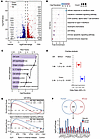 Figure 2
Comparative transcriptome analysis reveals similarities between mouse OLP-like lesions and human OLP lesions. (A) Volcano plots comparing gene expression in ethanol-treated control mice and OXA-induced OLP-like lesions (n = 6 for vehicle control group, n = 5 for OXA group per group). Representative significantly upregulated and downregulated genes are labeled. Dashed lines indicate thresholds for log2 fold change and adjusted P value. Genes not meeting these criteria are marked as “none.” (B) GO enrichment analysis of upregulated genes, highlighting IFN responses and immune-related pathways. Bubble size reflects the number of genes associated with each GO category, while bubble color represents the –log10(P value). (C) KEGG pathway enrichment analysis of upregulated genes, showing involvement in JAK/STAT signaling and immune pathways. The rich factor is represented by horizontal bars, while the –log10(P value) is depicted as connected points. (D) Overlap analysis of differentially expressed genes between mouse and human OLP datasets. Fisher’s exact test indicates significant concordance in both upregulated and downregulated genes; odds ratios (OR), 95% CI, and P values are shown. (E) Gene Set Enrichment Analysis (GSEA) demonstrating enrichment of “cell killing” and “type II interferon-mediated signaling pathway” in both human OLP lesions and OLP-like mouse lesions (left), compared with the control group (right). (F) Venn diagram showing overlapping upregulated genes between human and mouse datasets, with corresponding expression levels of representative genes displayed in a bar plot.
To assess the translational relevance of the OXA-induced model, we compared its transcriptomic profile with human OLP lesions. Fisher’s exact test demonstrated significant concordance between mouse and human datasets, both for upregulated genes (OR = 1.86, 95% CI = 1.57–2.18, P < 0.001) and downregulated genes (OR = 2.39, 95% CI = 2.11–2.72, P < 0.001) (Figure 2D). Gene set enrichment analysis (GSEA) further revealed shared enrichment of critical immune pathways, including “cell killing” and “type II interferon-mediated signaling pathway,” in both datasets (Figure 2E). Notably, central inflammatory genes such as GZMB, CD8A, CD8B, IFNG, CXCL10, and CXCL9 were consistently upregulated across species (Figure 2F). Together, these data demonstrate a high degree of transcriptomic similarity between OXA-induced OLP-like lesions and human OLP, supporting the validity of this model in capturing shared immunopathogenic mechanisms.
CD8+ T cells are essential for the development of OLP-like lesions. To investigate the role of CD8+ T cells in the development of OLP-like lesions, we depleted these cells in vivo using neutralizing antibodies administered i.p. on days –1, 2, and 4 of the elicitation phase. CD8+ T cell depletion significantly reduced their frequency in peripheral blood and cervical draining lymph nodes (Supplemental Figure 8). On day 5, dermoscopic examination revealed reduced erythema in the CD8+ T cell–depleted group compared with the isotype control group (Figure 3A). Measurements of lip thickness showed a significant reduction in the depletion group, further supporting the attenuated lesion severity (Figure 3B). Histological analysis with H&E staining showed diminished lymphocytic infiltration at the epithelium-lamina propria junction in CD8+ T cell–depleted mice (Figure 3C). IHC staining confirmed a significantly decrease in CD8+ T cells at the lesion site in the depletion group (Figure 3, D and E). qPCR analysis of the lesion tissue revealed lower mRNA expression levels of proinflammatory cytokines Ifng, Il1b, cxcl9, and cxcl10 in CD8+ T cell–depleted mice compared with controls (Figure 3, F and G, and Supplemental Figure 9A). Consistently, KRT5 and TUNEL costaining indicated fewer apoptotic keratinocytes in the CD8+ T cell–depleted group, correlating with reduced tissue damage (Supplemental Figure 9B). These results collectively highlight the indispensable role of CD8+ T cells in driving the development of OLP-like lesions in this mouse model.
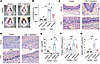 Figure 3
CD8+ T cells are essential for the development of an OLP-like model. CD8+ T cells were depleted in vivo through i.p. injections of neutralizing antibodies on days –1, 2, and 4 during the elicitation phase. (A) Dermoscopic images of lesions on Day 5 in ethanol-treated controls, OXA-treated isotype control mice, and CD8+ T cell–depleted mice. (B) Lip thickness measurements on Day 5 across the groups. (C) Representative H&E-stained sections of lesions from all groups (original magnification, ×400; scale bar: 25 μm). (D) IHC staining for CD8+ T cells (original magnification, ×400; scale bar: 25 μm). (E) Quantification of CD8+ T cells per high-power field (HPF). (F and G) Relative mRNA expression levels of Ifng and Il1b as determined by qPCR. White dashed lines indicate the epithelium-lamina propria junction in D. Data are presented as mean ± SD (n = 5/group). Results are representative of 3 independent experiments. *P < 0.05; **P < 0.01. A 1-way ANOVA with a Tukey post hoc test was used.
IFN-γ is crucial for the development and severity of OLP-like lesions. To evaluate the role of IFN-γ in the development of OLP-like lesions, we administered neutralizing antibodies targeting IFN-γ every third day during the elicitation phase. By day 5, dermoscopic imaging revealed significant improvements in lesion appearance in the IFN-γ–depleted group compared with the isotype control group (Figure 4A). Lip thickness measurements confirmed a significantly reduction in the IFN-γ–depleted group (Figure 4B). Histological analysis demonstrated decreased lymphocytic infiltration in these mice (Figure 4C). IHC staining for CD8+ T cells showed no significant difference in the number of these cells between the 2 groups (Figure 4, D and E). qPCR analysis indicated reduced mRNA expression of the proinflammatory cytokine Il1b in IFN-γ–depleted mice compared with controls (Figure 4F). The expression levels of Cxcl9 and Cxcl10 were not significantly affected by IFN-γ depletion (Supplemental Figure 10A). KRT5 and TUNEL costaining further revealed a significant reduction in the number of apoptotic keratinocytes in the IFN-γ–depleted group (Supplemental Figure 10B). Together with previous in vitro findings (8), these results demonstrate that IFN-γ plays a pivotal role in the development of OLP-like lesions, and its neutralization effectively mitigates disease pathology.
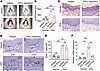 Figure 4
Neutralization of IFN-γ ameliorates OLP-like lesions. IFN-γ was neutralized in vivo by administering neutralizing antibodies every third day during the elicitation phase. (A) Dermoscopic images of lesions on day 5 in the isotype control group and the IFN-γ–neutralized group. (B) Lip thickness measurements on day 5 in both groups. (C) Representative H&E-stained sections of lesions (original magnification, ×400; scale bar: 25 μm). (D) Immunohistochemical staining for CD8+ T cells (original magnification, ×400; scale bar: 25 μm). (E) Quantification of CD8+ T cells per high-power field (HPF). (F) Relative mRNA expression of Il1b as determined by qPCR. White dashed lines indicate the epithelium-lamina propria junction in D. Data are presented as mean ± SD (n = 5/group). Results are representative of 2 independent experiments. Statistical significance: ns, not significant; **P < 0.01. A 1-way ANOVA with a Tukey post hoc test was used.
To investigate the effect of IFN-γ priming on disease severity, recombinant IFN-γ was locally injected into the inner labial mucosa on days –1, 2, and 4 of the elicitation phase. By day 5, dermoscopic images showed exacerbated lesion severity in OXA-treated mice primed with IFN-γ compared with PBS-treated controls (Figure 5A). Lip thickness measurements further confirmed significant increases in lesion severity in the IFN-γ–primed group (Figure 5B). qPCR analysis revealed upregulation of MHC I–related genes H2-d1 and H2-q4 in IFN-γ–primed OXA-treated mice compared with those without priming; however, these levels did not exceed those observed in IFN-γ–primed, vehicle-treated mice (Figure 5C). Histological analysis showed increased lymphocytic infiltration and basal cell vacuolization in the OXA-treated, IFN-γ–primed group (Figure 5D). qPCR analysis showed a significant upregulation of Cxcl9 and Cxcl10 in the IFN-γ–primed group (Supplemental Figure 11A). IHC staining further demonstrated significantly higher CD8+ T cell infiltration in IFN-γ–primed mice (Figure 5, E and F). Additionally, KRT5 and TUNEL costaining revealed an increased number of apoptotic keratinocytes in IFN-γ–primed mice (Supplemental Figure 11B). These findings suggest that IFN-γ priming exacerbates OLP-like lesions by upregulating MHC I expression, which intensifies CD8+ T cell–mediated pathology.
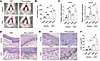 Figure 5
Local IFN-γ priming exacerbates OLP-like lesions by upregulating MHC I expression. (A) Dermoscopic images of lesions on day 5 in the OXA and vehicle groups, with or without IFN-γ priming. (B) Lip thickness measurements on day 5 across the groups (n = 4–5/group). (C) qPCR analysis of relative expression levels of H2-d1 and H2-q4 (n = 4–5/group). (D) Representative H&E-stained sections of lesions (original magnification, ×400; scale bar: 25 μm). (E) Representative images of IHC staining for CD8+ T cells (original magnification, ×400; scale bar: 25 μm). (F) Quantification of CD8+ T cells per high-power field (HPF, n = 4–5 each group). White dashed lines indicate the epithelium-lamina propria junction in E. Data are presented as mean ± SD. Results are representative of 2 independent experiments. *P < 0.05; **P < 0.01. A 1-way ANOVA with a Tukey post hoc test was used.
Absence of Langerhans cells exacerbates OLP-like lesions. Langerhans cells (LCs) are known to function as antigen-presenting cells and negative regulators of local immune responses (24), but their role in OLP pathogenesis remains unclear. To investigate their involvement in OLP-like lesions, we compared WT mice to hLangerin-DTA mice, which lack LCs. By day 5, dermoscopic imaging showed more severe lesions in hLangerin-DTA mice compared with WT controls (Figure 6A). Lip thickness measurements confirmed significantly greater inflammation in the LC-deficient group (Figure 6B). Histological analysis with H&E staining revealed increased interface inflammation in hLangerin-DTA mice (Figure 6C). IHC staining demonstrated significantly higher CD8+ T cell infiltration in the absence of LCs (Figure 6, D and E). qPCR analysis indicated elevated mRNA expression levels of Ifng, Il1b, Il6, Cxcl9, and Cxcl10 in hLangerin-DTA mice compared with WT controls (Figure 6F). Moreover, KRT5 and TUNEL costaining showed increased apoptotic cell counts in the LC-deficient group (Supplemental Figure 12). These findings suggest that the absence of LCs exacerbates OLP-like lesions, underscoring their potential protective role in modulating immune responses in this model.
 Figure 6
Absence of Langerhans cells exacerbates OLP-like lesions. (A) Dermoscopic images of lesions on day 5 in WT and hLangerin-DTA mice. (B) Lip thickness measurements on day 5 in both groups. (C) Representative H&E-stained sections of lesions (original magnification, ×400; scale bar: 25 μm). (D) IHC staining for CD8+ T cells, with representative images (original magnification, ×400; scale bar: 25 μm). (E) Quantification of CD8+ T cells per high-power field (HPF). (F) Relative mRNA expression of Ifng, Il1b, Il6, Cxcl9, and Cxcl10 as determined by qPCR. White dashed lines indicate the epithelium-lamina propria junction in D. Data are presented as mean ± SD (n = 6–7/group). Results are representative of 2 independent experiments. *P < 0.05; **P < 0.01. A 2-tailed Student’s t test was used.
Systematic or topical JAK inhibitor ameliorates the OLP-like lesions. The JAK pathway has been implicated in the pathogenesis of lichen planus (10). To explore its role in the OLP-like mouse model, we performed immunofluorescence staining for phosphorylated STAT1 (pSTAT1) on tissue sections from normal mucosa and OLP-like lesions, which showed significantly elevated pSTAT1 expression in keratinocytes within OLP-like lesions (Figure 7A), suggesting JAK pathway activation in the disease process. To evaluate the therapeutic potential of JAK inhibition, mice were treated with baricitinib phosphate (5 mg/kg) via daily oral gavage during the elicitation phase. By day 5, dermoscopic imaging revealed improvement in lesion severity in baricitinib-treated mice compared with controls (Figure 7B). Lip thickness measurements confirmed a significant reduction in the treated group (Figure 7C). Histological analysis demonstrated reduced lymphocytic infiltration (Figure 7D), while IHC staining showed a significant decrease in CD8+ T cell infiltration in baricitinib-treated lesions (Figure 7, E and F). qPCR analysis further revealed lower mRNA expression levels of proinflammatory cytokines Ifng, Il1b, and Il6 in baricitinib-treated mice compared with controls (Figure 7G). Topical application of the JAK inhibitor ruxolitinib also alleviated the OLP-like inflammatory phenotype (Supplemental Figure 13, A and B). However, unlike baricitinib, ruxolitinib did not significantly reduce CD8+ T cell infiltration in the lesions, as shown by IHC staining (Supplemental Figure 13, C and D). qPCR analysis indicated reduced mRNA expression of Ifng and Il1b in the ruxolitinib-treated group (Supplemental Figure 14, E and F). These findings demonstrate that both systemic or topical administration of JAK inhibitors could effectively ameliorate OLP-like lesions.
 Figure 7
The JAK inhibitor baricitinib ameliorates OLP-like lesions. (A) Representative immunofluorescence images showing costaining of phosphorylated STAT1 (pSTAT1) and keratin 5 (KRT5) in vehicle-treated and OXA-treated mice (original magnification, ×400; scale bar: 10 μm). (B) Dermoscopic images of lesions on day 5 in the corn oil control group and the baricitinib-treated group. (C) Lip thickness measurements on day 5 across the groups. (D) Representative H&E-stained sections of lesions (original magnification, ×400; scale bar: 25 μm). (E) IHC staining for CD8+ T cells, with representative images (original magnification, ×400; scale bar: 25 μm). (F) Quantification of CD8+ T cells per high-power field (HPF). (G) Relative mRNA expression levels of Ifng, Il1b, Il6, Cxcl9, and Cxcl10 as determined by qPCR. White dashed lines indicate the epithelium-lamina propria junction in A and E. Data are presented as mean ± SD (n = 5–6/group). Results are representative of 2 independent experiments. *P < 0.05; **P < 0.01. A 2-tailed Student’s t test was used.


