
Research ArticleImmunologyOphthalmology
Open Access |  10.1172/jci.insight.184465
Immunomodulation of inflammatory responses preserves retinal integrity in murine models of pericyte-depletion retinopathy
Urbanus Muthai Kinuthia,1,2 Christoph Moehle,3 Ralf H. Adams,4 and Thomas Langmann1,2
1Laboratory for Experimental Immunology of the Eye, Department of Ophthalmology, University of Cologne, Faculty of Medicine and University Hospital Cologne, Cologne, Germany.
2Centre for Molecular Medicine Cologne (CMMC), University of Cologne, Cologne, Germany.
3Center of Excellence for Fluorescent Bioanalytics, University of Regensburg, Regensburg, Germany.
4Department of Tissue Morphogenesis, Max Planck Institute for Molecular Biomedicine and University of Münster, Faculty of Medicine, Münster, Germany.
Address correspondence to: Thomas Langmann, Laboratory of Experimental Immunology of the Eye, University Hospital Cologne, Joseph-Stelzmann-Str. 9, 50931 Cologne, Germany. Phone: 49.221.478.7324; Email: thomas.langmann@uk-koeln.de.
Find articles by Kinuthia, U. in: PubMed | Google Scholar
1Laboratory for Experimental Immunology of the Eye, Department of Ophthalmology, University of Cologne, Faculty of Medicine and University Hospital Cologne, Cologne, Germany.
2Centre for Molecular Medicine Cologne (CMMC), University of Cologne, Cologne, Germany.
3Center of Excellence for Fluorescent Bioanalytics, University of Regensburg, Regensburg, Germany.
4Department of Tissue Morphogenesis, Max Planck Institute for Molecular Biomedicine and University of Münster, Faculty of Medicine, Münster, Germany.
Address correspondence to: Thomas Langmann, Laboratory of Experimental Immunology of the Eye, University Hospital Cologne, Joseph-Stelzmann-Str. 9, 50931 Cologne, Germany. Phone: 49.221.478.7324; Email: thomas.langmann@uk-koeln.de.
Find articles by Moehle, C. in: PubMed | Google Scholar
1Laboratory for Experimental Immunology of the Eye, Department of Ophthalmology, University of Cologne, Faculty of Medicine and University Hospital Cologne, Cologne, Germany.
2Centre for Molecular Medicine Cologne (CMMC), University of Cologne, Cologne, Germany.
3Center of Excellence for Fluorescent Bioanalytics, University of Regensburg, Regensburg, Germany.
4Department of Tissue Morphogenesis, Max Planck Institute for Molecular Biomedicine and University of Münster, Faculty of Medicine, Münster, Germany.
Address correspondence to: Thomas Langmann, Laboratory of Experimental Immunology of the Eye, University Hospital Cologne, Joseph-Stelzmann-Str. 9, 50931 Cologne, Germany. Phone: 49.221.478.7324; Email: thomas.langmann@uk-koeln.de.
Find articles by
Adams, R.
in:
PubMed
|
Google Scholar
|

1Laboratory for Experimental Immunology of the Eye, Department of Ophthalmology, University of Cologne, Faculty of Medicine and University Hospital Cologne, Cologne, Germany.
2Centre for Molecular Medicine Cologne (CMMC), University of Cologne, Cologne, Germany.
3Center of Excellence for Fluorescent Bioanalytics, University of Regensburg, Regensburg, Germany.
4Department of Tissue Morphogenesis, Max Planck Institute for Molecular Biomedicine and University of Münster, Faculty of Medicine, Münster, Germany.
Address correspondence to: Thomas Langmann, Laboratory of Experimental Immunology of the Eye, University Hospital Cologne, Joseph-Stelzmann-Str. 9, 50931 Cologne, Germany. Phone: 49.221.478.7324; Email: thomas.langmann@uk-koeln.de.
Find articles by Langmann, T. in: PubMed | Google Scholar
Published July 1, 2025 - More info
JCI Insight. 2025;10(15):e184465. https://doi.org/10.1172/jci.insight.184465.
© 2025 Kinuthia et al. This work is licensed under the Creative Commons Attribution 4.0 International License. To view a copy of this license, visit http://creativecommons.org/licenses/by/4.0/.
Received: July 3, 2024; Accepted: June 25, 2025


-
Results
Inhibition of pericyte recruitment alters the structural composition of inner blood retina barrier in P10 mice. In mice, unlike in humans, the development of the retinal vasculature occurs in postnatal life beginning at P1 with the formation of the superficial vascular plexus, which starts to sprout vertically at P7–P8 to form the deeper plexus by P10 and intermediate plexus by P12–P15 (26). PDGFRβ expressing pericytes are recruited to PDGFB expressing ECs via PDGFB/PDGFRB signaling, which is indispensable for maintenance of vascular integrity and function in postnatal murine retina (18, 27). Here, we investigated the cellular changes of the inner BRB and resident immune cells upon impairment of pericyte recruitment to growing ECs, and we assessed the therapeutic effect of minocycline the vasculature and microglia in postnatal life.
In retinas of WT mice treated with IgG, pericytes were adequately present on the ECs in the capillary plexus at P10. In contrast, pericyte coverage of the superficial capillary plexus was impaired in the retinas of mouse pups treated with 30 μg of the rat anti–mouse PDGFRβ mAb (clone APB5) via s.c. administration at P1, and this change did not differ appreciably upon daily treatment with minocycline (P5–P9) via i.p. injection (Figure 1, A and B). Since inadequate pericyte coverage exposes ECs to inflammatory stress, we tested whether apoptosis of ECs was an early feature of the APB5-induced retinopathy. Our IHC results revealed an increase in expression of cleaved caspase-3 by ECs in APB5 retinas, which were reduced in minocycline-treated mice at P10 (Figure 1, C and D, and Supplemental Figure 1, A–C; supplemental material available online with this article; https://doi.org/10.1172/jci.insight.184465DS1). Furthermore, we sought to investigate the association of microglia cells and capillaries in the deep vascular plexus. IHC analysis of ECs and Iba1+ cells in the deep vascular plexus showed that a significant proportion of Iba1+ cell bodies aligned with the vasculature in the deeper plexus of APB5-treated mice. These microglia cells, termed as capillary-associated microglia (CAM), were significantly lower in the IgG- and minocycline-treated mice (Figure 1, E and F). Consistent with the changes in pericyte coverage and inflammation, we investigated the vascular phenotype of main vessels in the P10 retinas. Besides destabilization of the superficial vasculature network leading to increased vascular density and branching index (Figure 1, G–I), APB5 induced dilation of the arteries, veins, and capillaries in the central retina at P10, which were rescued in response to minocycline treatment (Figure 1, J–L). In addition, treatment with minocycline restored the vascular density of the deep plexus to levels similar to those of control mice (Figure 1M). Since pericyte-free ECs may acquire inflammatory properties, we examined the expression levels of genes encoding smooth muscle cell contractile factors, Acta2 and Actg2. Whereas the mRNA levels of Acta2 and Actg2 were significantly upregulated in APB5 retinas compared with control retinas, treatment with minocycline significantly reduced these levels in P10 retinas (Figure 1, N and O). Since loss of BRB integrity can trigger recruitment of circulating monocytes, we used the F4/80 macrophage marker to detect the presence of macrophages in the P10 retinas. Our analyses revealed that F4/80+ macrophages were present in the retinas of all mice but with a higher presence in retinas of APB-treated mice (Supplemental Figure 1, D–G). Surprisingly, the F4/80+ macrophages aligned the vasculature of APB5 retinas, a feature that was abrogated upon treatment with minocycline (Supplemental Figure 1H). Taken together, these findings suggest that minocycline regulated vascular remodeling and modulated macrophage infiltration in the developing murine retina upon depletion of pericytes to restore vascular integrity and function.
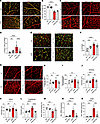 Figure 1
Changes in the structural components of the inner blood retina barrier during postnatal retinal vascular development at P10 following treatment with IgG or APB5 at P1 via s.c injection and daily administration of minocycline via i.p (P5–P9). (A and B) IHC for CD31 and NG2 in the capillary plexus and quantification of pericyte coverage (n = 4–6 retinas). (C and D) IHC and quantification of CD31 and cleaved caspase-3+ cells in the superficial plexus (n = 11). (E and F) IHC of CD31 and Iba1 in the deep vascular plexus and quantification of capillary-associated microglia (CAM) (n = 7-9 retinas). (G and H) Representative images IHC for CD31 on the superficial vascular plexus with the arteries and veins — labeled as A and V, respectively — and quantification of superficial vascular density (n = 9–12 retinas). (I–L) Quantification of the branching index of superficial vasculature (I) and diameters for arteries (J), veins (K), capillaries (L), and deep vascular density (M) (n = 6–8 retinas). (N and O) Quantification of relative mRNA expression levels of smooth muscle genes Acta2 (N) and Actg2 (O) in the retina (n = 4–6 retinas). Scale bar: 50 μm. *P < 0.05, **P < 0.01, ***P < 0.001, ****P < 0.0001. Data are shown as mean ± SD. One-way ANOVA.
Microglia reactivity is an early feature of pericyte-depletion retinopathy. To gain insights into the cellular changes of microglia in the early stage of APB5-induced retinopathy, we used immunocytochemistry with Iba1 to stain microglia cells in P10 retinas. In contrast to control retinas, Iba1+ cells clustered in the inner plexiform layer (IPL) and outer plexiform layer (OPL) of APB5 retinas (Figure 2, A and B). Quantification of the number of Iba1+ cells in the IPL and OPL showed that minocycline decreased the number of activated microglia in the APB5-treated mice (Figure 2, C and D). Since microglia activation involves a morphological transformation from a ramified to an amoeboid form, we analyzed the morphometric attributes of microglia in the OPL. In contrast to the morphometric attributes of microglia in control retinas, microglia in retinas of APB5-treated mice showed a significant reduction in the ramification index, total area, spanned area, number of branches, number of junctions, and tree length, which improved to the homeostatic state upon treatment with minocycline (Figure 2, E–J). These findings suggest that, within the BRB, minocycline preserved the morphological features of homeostatic microglia at an early stage of retinal inflammation. Additional immunocytochemistry with Iba1 on retinal sections from P10 mice corroborated our findings of increased Iba1+ cells in the retinal layers of APB5-treated mice and the immunosuppressive role of minocycline (Figure 2K). Because Müller cell gliosis is a common feature of retinal pathologies, we also investigated the expression of GFAP by Müller glia in P10 retinas. The results from staining of retinal sections showed that GFAP stress fibers were developing in the APB5 retinas but not in the control or minocycline-treated groups (Figure 2L).
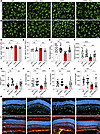 Figure 2
Microglia reactivity is an early event of APB5-induced retinopathy. (A and B) Representative images of Iba1+ cells in the IPL (A) and OPL (B) from retinal whole mounts. (C and D) Quantification of the number of Iba1+ cells in the IPL (C) and OPL (D) (n = 7–8 retinas). (E–J) Morphological analyses of retinal microglia showed that APB5 affected all analyzed parameters; ramification index (E), spanned area (F), area (G), number of branches (H), number of junctions (I), and total tree length (J) (n = 19 Iba1+ cells per group). Treatment of APB5 mice with minocycline restored the homeostatic state of microglia as indicated by all analyzed morphometric attributes. (K) IHC for Iba1 and DAPI on retinal sections showing the migration of Iba1+ cells across the INL in the APB5 retinas. (L) IHC for GS and GFAP on retinal sections highlighting the Müller glia reactivity in the APB5-treated retinas. Scale bar: 50 μm. *P < 0.05, ** P < 0.01, *** P < 0.001, ****P < 0.0001. Data represent mean ± SD. One way ANOVA. IPL; inner plexiform layer, OPL; outer plexiform layer; ONL, outer nuclear layer; INL, inner nuclear layer; GCL, ganglion cell layer; GS, glutamine synthetase; GFAP, glial fibrillary acid protein.
Minocycline limits inflammatory and angiogenic responses in the postnatal retina. Besides the morphological transformation, microglia reactivity entails the secretion of a repertoire of inflammatory factors in the pathogenesis of DR (28). Since microglia activation was prominent in retinas of APB5-treated mice at P10, we sought to investigate the expression of disease-relevant proinflammatory and angiogenic factors and their response to minocycline. The mRNA levels of chemokines and cytokines such as Ccl2, Inos, Il1b, and Tnf-α (Figure 3, A–D) and proangiogenic factors, Icam1, Vegfa, Pgf, and Sema3g were elevated in APB5 retinas (Figure 3, E–H) in contrast to control retinas. However, the transcript levels of Angpt2 did not differ significantly among treatment groups (Figure 3I). Also, key transcripts that denote activated microglia including Tspo, Aif1, and Lgals3 were significantly upregulated in the APB5 retinas (Figure 3, J–L). Treatment with minocycline significantly reduced the transcript levels of Ccl2, Inos, Icam1, Vegfa, Pgf, Tspo, and Lgals3, whereas the levels of Il1b, Tnf-α, Sema3g, and Aif1 did not differ appreciably between the APB5 and minocycline-treated APB5 mice. Since both VEGF and PIGF are potent angiogenic factors that aggravate disease outcome during the progression of retinal vascular pathologies, we sought to investigate their cellular sources within the retina by RNAscope in situ hybridization (ISH) on retinal sections. Our findings show that Vegf mRNA was expressed within the INL and in the GCL of minocycline-treated groups (Supplemental Figure 2, A and B), whereas Pgf mRNA was distributed across the GCL and INL (Supplemental Figure 1, C and D). Notably, the signal intensity of both the Vegf and Pgf mRNAs within the INL was higher in the APB5-treated retinas when compared controls and APB5 retinas treated with minocycline. This observation implies that VEGF and PIGF are secreted by cells within the INL and GCL, suggesting a role of Müller cells in DR pathogenesis. Notably, minocycline-treated APB5 retinas exhibited a low signal intensity of both Vegf and Pgf mRNAs. Taken together, these findings suggest that, at a molecular level, minocycline functions by resolving microglia-related inflammatory responses and limits harmful angiogenic responses in pericyte depletion retinopathy.
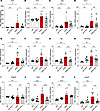 Figure 3
qPCR analyses of inflammatory and proangiogenic factors in P10 retinas. (A–D) APB5 induced the expression of proinflammatory genes. Ccl2, Inos, Il1β, and Tnfa. Minocycline suppressed the mRNA levels of Ccl2 and Inos but not Il1β or Tnf-α. (E–I) Proangiogenic genes; Icam1, Vegfa, Pgf, and Sema3g were upregulated in APB5 retinas, but the mRNA level of Angpt2 was not significantly different from control groups. (J–L) The mRNA levels for markers of activated microglia. Tspo, Aif1, and Lgals3 were significantly upregulated in APB5 retinas and downregulated by minocycline with the exception of Aif1 (n = 9–13). *P < 0.05, **P < 0.01, ***P < 0.001, ****P < 0.0001. One-way ANOVA.
Sustained inflammation after postnatal pericyte loss causes visual deficits in adult mice. In 4-week-old APB5-treated mice, the visual acuity as analyzed with an OptoDrum was reduced when compared with control mice (Figure 4A). Notably, APB5-treated mice showed a decrease in visual acuity (mean of 0.32 cycles/degree) compared with the control group (mean of 0.41 cycles/degree). In addition, minocycline slightly enhanced the visual acuity of APB5 mice (mean of 0.38 cycles/degree), but this change was not significantly different compared with the APB5-only group (Figure 4B). Next, we analyzed the structural integrity of the neural retina and vasculature in vivo by spectral-domain optical coherence tomography (SD-OCT) and fluorescein angiography (FA). The SD-OCT scans showed preserved retinal structure in control mice, but alteration of the retina was observed in the APB5-treated mice, which was also manifested by the blue color of the corresponding OCT heatmap (Figure 4, C and D). Automated quantification of the central (3 mm region) and peripheral (6 mm region) retina thickness using the HEYEX software of SD-OCT showed that minocycline preserved retinal structural integrity and limited retina thinning at the peripheral region but not the central region (Figure 4, E and F). Moreover, FA showed fluorescein leakage in retinal capillaries of APB5 mice (Figure 4G), which is consistent with the clinical observation in patients with DR, but this leakage was diminished in minocycline-treated mice, thereby indicating preservation of retinal capillaries from damage (Figure 4H). Next, we examined the patterning of retinal vasculature in 4-week-old mice. In the superficial plexus, we observed dilated capillaries in the APB5 retinas, but no significant changes were detected in the vascular density of the superficial vasculature (Figure 4I). Treatment with minocycline rescued capillary diameter and decreased the levels of ICAM1 in the APB5-treated mice (Figure 4, J and K).
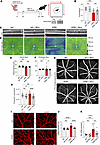 Figure 4
APB5-induced retinopathy triggers changes in retinal visual function and structural integrity in 4-week-old mice. (A) Schematic representation of treatment paradigm and analysis of visual acuity testing with the OptoDrum. (B) Quantification of scores of contrast sensitivity (cycles per degree) as a test of visual acuity (n = 15 mice). (C and D) Representative images of automated SD-OCT scans of mice retinas (C) and corresponding SD-OCT heatmaps (D); green indicates the average retina thickness in adult mice while blue indicates retina thinning. (E and F) Quantification of retina thickness within the central (E) and peripheral regions (F), which correspond to 3 mm and 6 mm, respectively, from the optic nerve head (n = 34–39 eyes). (G and H) Representative images of fluorescein angiography showing vessel permeability in the retina (n = 26 eyes per group). (I) IHC for CD31 on retinal capillary plexus. (J and K) Analyses of retinal capillary diameter (n = 8–10 retinas) and quantitative analysis of the transcript levels of Icam1 in whole retina lysates (n = 8–10 retinas). *P < 0.05, **P < 0.01, ***P < 0.001, ****P < 0.0001. Data show mean ± SD. Scale bar: 200 μm (G), 50 μm (H). One-way ANOVA.
Minocycline dampens microglia activation in the mature mouse retina. Besides the vascular patterning, we investigated the phenotype of microglia in mature retinas. Consistent with the observation in P10 retinas, APB5 induced and sustained the activation of microglia within the IPL and OPL of mature retinas. Notably, microglia portrayed a migratory phenotype where they migrated across the ONL into the SRS (Figure 5, A–C). Prolonged treatment with minocycline reduced the migratory capacity of microglia and, hence, the number of Iba1+ cells in the ONL, SRS, and in the IPL as well as OPL (Figure 5, D–G). Next, we analyzed the key morphometric attributes of microglia in the OPL as an indicator of microglia activation. Here, we chose to analyze Iba1+ cells in the OPL because we recorded a high degree of visible microglia activation in this region. Microglia in APB5 retinas had a significantly reduced ramification index, spanned area, number of branches, number of junctions, and tree length (Figure 5, H–M) than did IgG control mice. Although treatment with minocycline significantly increased the spanned area and tree length of microglia in APB5 retinas, it did not restore the ramification index, number of branches and junctions to the homeostatic state. Further analyses of retinal lysates detected a significant upregulation of CCL2, an important chemokine for recruitment of phagocytes, but the levels of TSPO did not differ significantly among the experimental groups (Figure 5, N and O). Thus, minocycline reduced the recruitment of microglia, likely via downregulating of CCL2 in APB5 retinas. Since astrocytic stress is also a common feature of retinal pathologies, we investigated the expression GFAP in astrocytes and Müller glia in APB5 mice with or without minocycline treatment. IHC clearly revealed the presence of GFAP stress fibers in retinal Müller cells of APB5-treated mice, which was abrogated in minocycline-treated retinas (Supplemental Figure 2, E–G).
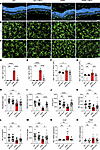 Figure 5
Minocycline limits APB5-triggered microglia reactivity in mature retinas. (A) IHC for Iba1 on retina cross-sections showing microglia localization and migration across retinal layers of APB5-treated mice and modulation by minocycline. (B and C) IHC for Iba1 on retinal whole mounts showing microglia morphology in the IPL (B) and OPL (C). (D and E) Quantification of Iba1+ cells within the ONL (D) and SRS (E) in retina sections (n = 6 retinas). (F and G) Quantification of Iba1+ cells within an area of 0.15mm2 in the IPL (F) and OPL (G) (n = 9–10 retinas). (H–M) Analysis of the morphometric attributes of microglia within the OPL, ramification index (H), spanned area (I), area (J), number of branches (K), number of junctions (L), and tree length (M) (n = 20 Iba1+ cells across all experimental groups). (N and O) qPCR analyses of the mRNA expression levels of chemokine CCL2 (N) and translocator protein (18Kda) TSPO (O) (n = 8–10 retinas). *P < 0.05, **P < 0.01, ***P < 0.001, ****P < 0.0001. Data show mean ± SD. One-way ANOVA.
Anti-PDGFRβ mAb and minocycline induced global transcriptomic changes in the retina. We then investigated the effect of APB5 and minocycline on the retinal transcriptome by performing RNA-Seq of retinal tissues of 4 weeks of age. Comparative analyses of the gene expression profile between the APB5 and IgG retinas identified 116 differentially expressed genes (DEGs), out of which 102 were upregulated, whereas 5 were downregulated at a cut-off set to log2 fold change ± 1 and P ≤ 0.05. Among the top DEGs were genes related to complement system such as C4b, Cfi, C3, and C1qa and inflammation-related genes including Lyz2, Glycam1, Fgf2, Edn2, and Icam1, some of which are represented on the volcano plot (Figure 6A). To identify pathway enrichment in these retinas, we performed gene set enrichment analyses of all DEGs using the Kyoto Encyclopedia of Genes and Genomes (KEGG) and Gene Ontology (GO) database. The top enriched KEGG pathways in APB5 retinas were involved in inflammation and diseases such as cancer, HIF-1 signaling, complement and coagulation cascades, and cellular senescence that mirror the pathogenesis of proliferative DR (Figure 6B). Furthermore, the GO domain biological processes revealed inflammation as well as hypoxic and vascular remodeling among the top APB5-induced processes (Figure 6C). Similarly, we investigated the effects of minocycline relative to APB5 on the retinal transcriptome. Differential gene expression analyses identified 981 downregulated and 304 upregulated genes at a cut-off set to log2 fold change ± 1 and P ≤ 0.05. Among the DEGs upregulated in the APB5 retinas, minocycline downregulated Fgf2, Glycam1, Ndufa4l2, and Edn2 as illustrated in the volcano plot (Figure 6D). Next, we performed gene set enrichment analysis of all the 1,285 DEGs (both upregulated and downregulated) to identify enriched pathways. The KEGG analysis identified inflammation-associated pathways (P13k/Akt signaling, phagosome, cytokine-cytokine interaction, complement and coagulation cascades, c-type lectin receptor signaling), vascular remodeling pathways (cell-adhesion molecules, regulation of actin cytoskeleton, leukocyte transendothelial migration), and cell death and senescence pathways as key pathways regulated by minocycline (Figure 6E). The GO domain biological processes identified angiogenesis, response to hypoxia, regulation of genes expression, and response to drug as pathways sustained by minocycline (Figure 6F).
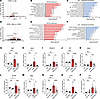 Figure 6
APB5 and minocycline exert global changes in retinal transcriptome of 4-week-old retinas. (A) A volcano plot showing comparison of DEGs between IgG and APB5 retinas. (B) KEGG pathway analysis showing the top 10 enriched pathways in APB5 retinas. (C) GO domain biological processes showing key processes enriched by APB5. (D) A volcano plot showing comparison of DEGs between APB5 and APB5 with minocycline retinas. (E) KEGG pathway analysis shows the top 10 pathways enriched by minocycline. (F) GO domain biological processes showing key processes enriched by minocycline in APB5 retinas. The green dots on the volcano plots label some of the DEGs. The set cut-off for the DEGs shown on the volcano plot is log2 FC of ± 1 and FDR of < 0.05; n = 3 mice in each group. (G–P) Verification of DEGs by qPCR in whole retinal lysates; FgF2, Edn2, Glycam1, Aif1, Casp1, Tyrobp, Gfap, Actg2, Lyz2, and Cfb. The mRNA levels of these factors were significantly reduced in retinas of minocycline treated mice (n = 6 retinas). *P < 0.05, **P < 0.01, ***P < 0.001, ****P < 0.0001. Data show mean ± SD. One-way ANOVA.
Consequently, we performed gene expression analyses by qPCR to validate the RNA-Seq transcriptome data with disease-relevant marker genes. We detected a strong upregulation of mRNA levels of Fgf2, Edn2, Glycam1, Aif1, Casp-1, Tyrobp, Gfap, Actg2, Lyz2, and Cfb in the APB5-treated retina, which were significantly reduced in minocycline treated retinas (Figure 6, G–P). The expression of genes encoding angiogenic factors (Fgf2 and Edn2), mediators of inflammatory leukocyte trafficking (Glycam-1), and immune cell inflammatory factors (Aif1, Casp-1, Lyz2, and Tyrobp) and their suppression by minocycline aptly reflects the role of inflammatory responses in disease progression and the immunomodulatory effect of minocycline.
Although FGF2 is an angiogenic factor with secretion dynamics that remain unresolved, it is expressed by necroptotic microglia in hypoxia-induced retinopathy (29). Therefore, we sought to investigate whether APB5-induced retinopathy triggered the expression of FGF2 by microglia in the IPL, OPL, and SRS. Our findings showed a minimal coexpression of FGF2 and Iba1 in cells within the IPL and OPL of the control groups, whereas a high coexpression was observed in the APB5 groups (Supplemental Figure 3, A–C). Quantification of FGF2+Iba1+ cells established that the APB5-treated retinas had a high number of these cells, which was reduced in the minocycline-treated group (Supplemental Figure 3D).
Surprisingly, Vegf was not among the DEGs in the APB5 retinas relative to control retinas. Our ISH analyses detected Vegf mRNA in the INL of retinal sections but without notable difference in its distribution across treatment groups (Supplemental Figure 3, E–G), thereby validating the results of RNA-Seq. In addition, the analysis of gene counts of Vegf mRNA showed no significant differences in the expression profile of Vegf isoforms (Supplemental Figure 3, H–K).
As microglia reactivity was prevalent in the pericyte-depleted retinas by 4 weeks of age, we sought to investigate the progression of disease by depleting CSF-1R–expressing cells. Using this approach, we aimed at studying the effect of systemic macrophage depletion in the retina. Here, we show that CSF-1R inhibition by PLX3397 effectively depleted Iba1+ cells within the retina but without diminishing GFAP expression (Supplemental Figure 4, A–C). Although the depletion of CSF-1R–expressing cells reduced vascular permeability as a measure of fluorescein intensity (Supplemental Figure 4, D and E), the loss of these cells was not sufficient to reverse capillary APB5-induced capillary dilation (Supplemental Figure 4F). Further analysis of the mRNA levels of markers of microglia reactivity and angiogenesis revealed that pharmacological depletion of CSF-1R+ cells remarkably reduced the expression of Aif1, CCl2, and Icam1 but not Pgf (Supplemental Figure 4, G–J). Collectively, depletion of microglia and other mononuclear phagocytes, including infiltrating peripheral monocytes and leukocytes, modulates inflammatory gene expression and reduces vascular permeability but without absolute rescue of capillary size.
Endothelial deletion of PDGFB impairs BRB integrity. The retention of sufficient PDGFB in the vascular endothelium is indispensable for proper recruitment and investment of pericytes to ECs (30). A significant reduction of pericyte density in retinal vasculature during development leads to a phenotype reminiscent of human DR in mice (31). In order to gain deeper insights into pathogenesis of DR upon genetic attenuation of PDGFB/PDGFRβ signaling, we depleted PDGFB in retinal endothelium in a tamoxifen-inducible manner by crossing the Pdgfbfl/fl (31) with the VE-Cadherin-CreERT2 (32) to generate conditional EC PDGFB-KO mice, PdgfbiECKO (Figure 7A). Quantitative PCR (qPCR) analyses of Pdgfb transcripts in whole retina lysates revealed that Pdgfb mRNA levels were significantly reduced by almost 50% in the PdgfbiECKO retinas compared with WT mice (Figure 7B). The transcript levels of Cdh5 and Pdgfrβ did not vary among the groups (Figure 7, C and D).
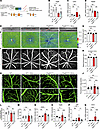 Figure 7
Depletion of PDGFB in retinal vascular endothelium. (A) Schematic representation of tamoxifen inducible depletion of PDGFB in retinal endothelium under the control of Ve-Cdh5 promoter. (B–D) qPCR analysis of mRNA expression levels of Pdgfb (B), Cdh5 (C), and Pdgfrβ (D). (E and F) Representative images of automated SD-OCT scans of mice retinas (E) and the corresponding SD-OCT heat maps (F). (G and H) Quantification of retina thickness within the central (G) and peripheral regions (H), corresponding to 3 mm and 6 mm, respectively, from the optic nerve head (n = 20 eyes per group). (I and J) Representative images of fluorescein angiography showing vessel engorgement and permeability (J, n = 20 eye per group). (K–N) IHC with Isolectin B4 showing vascular network in the capillary and superficial plexus (K), and analyses of vascular density (L), number of junctions (M) (n = 5–8 retinas), and capillary diameters (N) (n = 5–6 retinas). (O–Q) qPCR analyses of angiogenic factors Vegfa (O), Pgf (P), and Edn2 (Q) in whole retina lysates of 4-week-old mice (n = 8–10 retinas). Scale bar: 200 μm (E, F, and I) and 50 μm (K). *P < 0.05, **P < 0.01, ***P < 0.001, ****P < 0.0001. Data show mean ± SD. One-way ANOVA.
Next, we investigated the retinal structure and vessel integrity in vivo in the 4-week-old mice. SD-OCT analyses revealed thinning of the retina in the central and peripheral regions of the PdgfbiECKO mice (Figure 7, E and F). Treatment of PdgfbiECKO mice with minocycline restored retinal thickness of the central retina but not the peripheral retina (Figure 7, G and H). Vascular permeability as measured by FA showed that the enlarged capillaries visible in PdgfbiECKO retinas were diminished in minocycline-treated mice (Figure 7, I and J). IHC with Isolectin B4 on retinal whole mounts, and subsequent analysis of the superficial vasculature revealed no significant differences in the vascular density or branching index but did reveal significant differences in capillary diameter between WT and PdgfbiECKO mice retinas; these differences marked by dilated capillaries were rescued with minocycline (Figure 7, K–N). Subsequent analyses by qRT-PCR showed that the levels of key EC inflammatory and vascular destabilization factors VEGF, PIGF, and EDN2 were significantly upregulated in PDGFB-depleted retinas, but significantly reduced in retinas of minocycline-treated mice (Figure 7, O–Q). Taken together, these findings imply that minocycline exerted a modulatory effect on capillary ECs either directly or indirectly by dampening the proangiogenic responses of ECs to preserve capillary structure.
Loss of PDGFB in ECs leads to inter- and intraindividual variation in disease outcome. Even though we used an inducible genetic method to deplete PDGFB in retinal endothelium, we observed intraindividual variation in the disease outcome. For instance, FA showed retinal vascular engorgement in one eye but not the other eye in the same PDGFB-depleted mouse (Supplemental Figure 5). In addition, angiographic analyses of PdgfbiECKO retinas revealed that the vascular abnormalities and leakage were more likely to occur in both eyes of males than females (Supplemental Table 1). Among the male mice, the likelihood of the phenotype occurring in the left and right eye was 80% and 50%, respectively. In retinas of PdgfbiECKO female mice, the likelihood of the vascular phenotype occurring in the left and right eye was 50% and 50%, respectively. Previously, Enge and colleagues reported the intra- and interindividual variation in disease phenotype in endothelium-restricted PDGFB loss in the CNS but with a focus on pericyte coverage (31). Moreover, the intraindividual variation in disease progression in the PDGFB-depleted retinas is reminiscent of the clinical progression of human DR, where retinal microvasculopathy first manifests in one of the eyes of a DR patient during the progression of the disease.
Minocycline limits adverse microglia activation in PDGFB-depleted retinas. We next asked whether impaired vascular patterning in PDGFB-depleted retinas was associated with microglia activation. To answer this question, we performed IHC with Iba1 on retina sections and whole mounts. In the WT mice, with or without minocycline, Iba1+ cells occupied the IPL and OPL, where they exhibited a homeostatic ramified morphology. In contrast, Iba1+ cells in the PDGFB-depleted retinas exhibited an activated morphology indicated by clamping together in the OPL, which was reversed in minocycline-treated retinas (Figure 8, A–C). In contrast to WT and minocycline-treated mice, microglia within the OPL of PDGFB-depleted retinas portrayed a decrease in ramification index, spanned area, area, number of junctions, number of branches, and tree length as analyzed with micromorphometry (Figure 8, D–I).
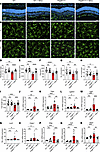 Figure 8
Endothelium-specific conditional deletion of Pdgfb triggers microglia reactivity in adult mice retina. (A) IHC for Iba1 on retina cross sections showing microglia localization and migration across retinal layers of Pdgfb-depleted and WT retinas with or without minocycline. (B and C) IHC for Iba1 on retinal whole mounts showing microglia morphology in the IPL (B) and OPL (C). (D–I) Quantification of morphometric attributes of Iba1+ microglia within the OPL, ramification index (D), spanned area (E), area (F), number of branches (G), number of junctions (H), and tree length (I) (n = 15 Iba1+ cells across all experimental groups). (J–R) qPCR analyses of the mRNA expression levels of inflammatory factors, Aif1 (J), Tspo (K), Lgals3 (L), Fgf2 (M), Lyz2 (N), Casp1 (O), Gfap (P), Vwf (Q), and Stat3 (R) (n = 8–10 retinas). Scale bar: 50 μm. *P < 0.05, **P < 0.01, ***P < 0.001, ****P < 0.0001. Data show mean ± SD. One-way ANOVA.
Minocycline treatment also downregulated several transcripts associated with activated microglia including Aif1, Tspo, Lgals3, Fgf2, and Lyz2 in the PDGFB-depleted retinas (Figure 8, J–N). Furthermore, minocycline downregulated activators of cellular inflammation and EC dissociation such as Casp1, Gfap, Vwf, and Stat3 in the diseased retinas (Figure 8, O–R). Thus, inhibiting microglia reactivity with minocycline not only suppressed secretion of inflammatory factors but also downregulated Fgf2, Stat3, and Vwf transcripts, which sustain inflammation of ECs and breakdown of tight junctions in retinal endothelium.
Depletion of PDGFB in retinal ECs leads to secretion of proangiogenic factors and Müller cell gliosis. Since the expression of FGF2 and VEGF was abundant in PDGFB-depleted retinas, we investigated their cellular sources in situ using RNAscope hybridization technology. We detected an intense signal of Vegf mRNA within the cell bodies of Müller glia, marked by glutamine synthetase, within the INL of PDGFB-depleted retinas, which was suppressed in minocycline-treated retinas (Supplemental Figure 6, A–D). In the retinas of WT mice, Fgf2 mRNA was localized within the INL but was detected in the ONL of PDGFB-depleted mice (Supplemental Figure 6E). In addition, Fgf2 mRNA did not colocalize with Aif1 mRNA or Iba1 (Supplemental Figure 6, F–H).
Furthermore, we investigated reactive gliosis — specifically, whether Müller cells exhibited increased expression of GFAP in the PDGFB-depleted retinas. IHC with GFAP and glutamine synthetase revealed that loss of PDGFB in retinal ECs was associated with reactive gliosis of Müller cells, which was suppressed by minocycline (Supplemental Figure 7, A–C). Taken together, minocycline limits Müller cell gliosis within the retina, thereby modulating disease progression and protecting the retina from glia reactivity.


