
Research ArticleAgingNeuroscience
Open Access |  10.1172/jci.insight.184041
Ryanodine receptor 2–mediated calcium leak is associated with increased glyoxalase I in the aging brain
Elizabeth Woo,1 Dibyadeep Datta,2 Shveta Bathla,2 Hannah Beatty,3 Pinar Caglayan,4 Ashley Kristant Albizu,5 TuKiet T. Lam,6,7 Jean Kanyo,6 Mary Kate Joyce,8 Shannon Leslie,9 Stacy Uchendu,1 Jonathan DeLong,10 Qinyue Stacy Guan,11 Jiaxin Li,10 Efrat Abramson,1 Alison L. Herman,12 Dawson Cooper,13 Pawel Licznerski,14 Tamas L. Horvath,5 Elizabeth A. Jonas,14,15,16 Angus C. Nairn,2 Amy F.T. Arnsten,16 and Lauren H. Sansing10
1Interdepartmental Neuroscience Program, and
2Department of Psychiatry, Yale University School of Medicine, New Haven, Connecticut, USA.
3University of Colorado School of Medicine, Aurora, Colorado, USA.
4University of Rochester School of Medicine and Dentistry, Rochester, New York, USA.
5Department of Comparative Medicine,
6Keck MS & Proteomics Resource, and
7Department of Molecular Biophysics and Biochemistry, Yale University School of Medicine, New Haven, Connecticut, USA.
8Boston University, Boston, Massachusetts, USA.
9Johnson & Johnson Innovative Medicine, San Diego, California, USA.
10Departments of Neurology and Immunobiology, Yale University School of Medicine, New Haven, Connecticut, USA.
11Geisel School of Medicine at Dartmouth, Hanover, New Hampshire, USA.
12University of Michigan Medical School, Ann Arbor, Michigan, USA.
13University of Minnesota Medical School, Minneapolis, Minnesota, USA.
14Department of Internal Medicine, Section of Endocrinology, Yale University School of Medicine, New Haven, Connecticut, USA.
15Marine Biological Laboratory, Woods Hole, Massachusetts, USA.
16Department of Neuroscience, Yale University School of Medicine, New Haven, Connecticut, USA.
Address correspondence to: Amy F.T. Arnsten, Department of Neuroscience, 333 Cedar St., New Haven, Connecticut 06510, USA. Email: amy.arnsten@yale.edu. Or to: Lauren H. Sansing, 300 George St., Suite 353, New Haven, Connecticut 06511, USA. Email: lauren.sansing@yale.edu.
Find articles by Woo, E. in: PubMed | Google Scholar
1Interdepartmental Neuroscience Program, and
2Department of Psychiatry, Yale University School of Medicine, New Haven, Connecticut, USA.
3University of Colorado School of Medicine, Aurora, Colorado, USA.
4University of Rochester School of Medicine and Dentistry, Rochester, New York, USA.
5Department of Comparative Medicine,
6Keck MS & Proteomics Resource, and
7Department of Molecular Biophysics and Biochemistry, Yale University School of Medicine, New Haven, Connecticut, USA.
8Boston University, Boston, Massachusetts, USA.
9Johnson & Johnson Innovative Medicine, San Diego, California, USA.
10Departments of Neurology and Immunobiology, Yale University School of Medicine, New Haven, Connecticut, USA.
11Geisel School of Medicine at Dartmouth, Hanover, New Hampshire, USA.
12University of Michigan Medical School, Ann Arbor, Michigan, USA.
13University of Minnesota Medical School, Minneapolis, Minnesota, USA.
14Department of Internal Medicine, Section of Endocrinology, Yale University School of Medicine, New Haven, Connecticut, USA.
15Marine Biological Laboratory, Woods Hole, Massachusetts, USA.
16Department of Neuroscience, Yale University School of Medicine, New Haven, Connecticut, USA.
Address correspondence to: Amy F.T. Arnsten, Department of Neuroscience, 333 Cedar St., New Haven, Connecticut 06510, USA. Email: amy.arnsten@yale.edu. Or to: Lauren H. Sansing, 300 George St., Suite 353, New Haven, Connecticut 06511, USA. Email: lauren.sansing@yale.edu.
Find articles by Datta, D. in: PubMed | Google Scholar
1Interdepartmental Neuroscience Program, and
2Department of Psychiatry, Yale University School of Medicine, New Haven, Connecticut, USA.
3University of Colorado School of Medicine, Aurora, Colorado, USA.
4University of Rochester School of Medicine and Dentistry, Rochester, New York, USA.
5Department of Comparative Medicine,
6Keck MS & Proteomics Resource, and
7Department of Molecular Biophysics and Biochemistry, Yale University School of Medicine, New Haven, Connecticut, USA.
8Boston University, Boston, Massachusetts, USA.
9Johnson & Johnson Innovative Medicine, San Diego, California, USA.
10Departments of Neurology and Immunobiology, Yale University School of Medicine, New Haven, Connecticut, USA.
11Geisel School of Medicine at Dartmouth, Hanover, New Hampshire, USA.
12University of Michigan Medical School, Ann Arbor, Michigan, USA.
13University of Minnesota Medical School, Minneapolis, Minnesota, USA.
14Department of Internal Medicine, Section of Endocrinology, Yale University School of Medicine, New Haven, Connecticut, USA.
15Marine Biological Laboratory, Woods Hole, Massachusetts, USA.
16Department of Neuroscience, Yale University School of Medicine, New Haven, Connecticut, USA.
Address correspondence to: Amy F.T. Arnsten, Department of Neuroscience, 333 Cedar St., New Haven, Connecticut 06510, USA. Email: amy.arnsten@yale.edu. Or to: Lauren H. Sansing, 300 George St., Suite 353, New Haven, Connecticut 06511, USA. Email: lauren.sansing@yale.edu.
Find articles by Bathla, S. in: PubMed | Google Scholar
1Interdepartmental Neuroscience Program, and
2Department of Psychiatry, Yale University School of Medicine, New Haven, Connecticut, USA.
3University of Colorado School of Medicine, Aurora, Colorado, USA.
4University of Rochester School of Medicine and Dentistry, Rochester, New York, USA.
5Department of Comparative Medicine,
6Keck MS & Proteomics Resource, and
7Department of Molecular Biophysics and Biochemistry, Yale University School of Medicine, New Haven, Connecticut, USA.
8Boston University, Boston, Massachusetts, USA.
9Johnson & Johnson Innovative Medicine, San Diego, California, USA.
10Departments of Neurology and Immunobiology, Yale University School of Medicine, New Haven, Connecticut, USA.
11Geisel School of Medicine at Dartmouth, Hanover, New Hampshire, USA.
12University of Michigan Medical School, Ann Arbor, Michigan, USA.
13University of Minnesota Medical School, Minneapolis, Minnesota, USA.
14Department of Internal Medicine, Section of Endocrinology, Yale University School of Medicine, New Haven, Connecticut, USA.
15Marine Biological Laboratory, Woods Hole, Massachusetts, USA.
16Department of Neuroscience, Yale University School of Medicine, New Haven, Connecticut, USA.
Address correspondence to: Amy F.T. Arnsten, Department of Neuroscience, 333 Cedar St., New Haven, Connecticut 06510, USA. Email: amy.arnsten@yale.edu. Or to: Lauren H. Sansing, 300 George St., Suite 353, New Haven, Connecticut 06511, USA. Email: lauren.sansing@yale.edu.
Find articles by Beatty, H. in: PubMed | Google Scholar
1Interdepartmental Neuroscience Program, and
2Department of Psychiatry, Yale University School of Medicine, New Haven, Connecticut, USA.
3University of Colorado School of Medicine, Aurora, Colorado, USA.
4University of Rochester School of Medicine and Dentistry, Rochester, New York, USA.
5Department of Comparative Medicine,
6Keck MS & Proteomics Resource, and
7Department of Molecular Biophysics and Biochemistry, Yale University School of Medicine, New Haven, Connecticut, USA.
8Boston University, Boston, Massachusetts, USA.
9Johnson & Johnson Innovative Medicine, San Diego, California, USA.
10Departments of Neurology and Immunobiology, Yale University School of Medicine, New Haven, Connecticut, USA.
11Geisel School of Medicine at Dartmouth, Hanover, New Hampshire, USA.
12University of Michigan Medical School, Ann Arbor, Michigan, USA.
13University of Minnesota Medical School, Minneapolis, Minnesota, USA.
14Department of Internal Medicine, Section of Endocrinology, Yale University School of Medicine, New Haven, Connecticut, USA.
15Marine Biological Laboratory, Woods Hole, Massachusetts, USA.
16Department of Neuroscience, Yale University School of Medicine, New Haven, Connecticut, USA.
Address correspondence to: Amy F.T. Arnsten, Department of Neuroscience, 333 Cedar St., New Haven, Connecticut 06510, USA. Email: amy.arnsten@yale.edu. Or to: Lauren H. Sansing, 300 George St., Suite 353, New Haven, Connecticut 06511, USA. Email: lauren.sansing@yale.edu.
Find articles by Caglayan, P. in: PubMed | Google Scholar
1Interdepartmental Neuroscience Program, and
2Department of Psychiatry, Yale University School of Medicine, New Haven, Connecticut, USA.
3University of Colorado School of Medicine, Aurora, Colorado, USA.
4University of Rochester School of Medicine and Dentistry, Rochester, New York, USA.
5Department of Comparative Medicine,
6Keck MS & Proteomics Resource, and
7Department of Molecular Biophysics and Biochemistry, Yale University School of Medicine, New Haven, Connecticut, USA.
8Boston University, Boston, Massachusetts, USA.
9Johnson & Johnson Innovative Medicine, San Diego, California, USA.
10Departments of Neurology and Immunobiology, Yale University School of Medicine, New Haven, Connecticut, USA.
11Geisel School of Medicine at Dartmouth, Hanover, New Hampshire, USA.
12University of Michigan Medical School, Ann Arbor, Michigan, USA.
13University of Minnesota Medical School, Minneapolis, Minnesota, USA.
14Department of Internal Medicine, Section of Endocrinology, Yale University School of Medicine, New Haven, Connecticut, USA.
15Marine Biological Laboratory, Woods Hole, Massachusetts, USA.
16Department of Neuroscience, Yale University School of Medicine, New Haven, Connecticut, USA.
Address correspondence to: Amy F.T. Arnsten, Department of Neuroscience, 333 Cedar St., New Haven, Connecticut 06510, USA. Email: amy.arnsten@yale.edu. Or to: Lauren H. Sansing, 300 George St., Suite 353, New Haven, Connecticut 06511, USA. Email: lauren.sansing@yale.edu.
Find articles by Albizu, A. in: PubMed | Google Scholar
1Interdepartmental Neuroscience Program, and
2Department of Psychiatry, Yale University School of Medicine, New Haven, Connecticut, USA.
3University of Colorado School of Medicine, Aurora, Colorado, USA.
4University of Rochester School of Medicine and Dentistry, Rochester, New York, USA.
5Department of Comparative Medicine,
6Keck MS & Proteomics Resource, and
7Department of Molecular Biophysics and Biochemistry, Yale University School of Medicine, New Haven, Connecticut, USA.
8Boston University, Boston, Massachusetts, USA.
9Johnson & Johnson Innovative Medicine, San Diego, California, USA.
10Departments of Neurology and Immunobiology, Yale University School of Medicine, New Haven, Connecticut, USA.
11Geisel School of Medicine at Dartmouth, Hanover, New Hampshire, USA.
12University of Michigan Medical School, Ann Arbor, Michigan, USA.
13University of Minnesota Medical School, Minneapolis, Minnesota, USA.
14Department of Internal Medicine, Section of Endocrinology, Yale University School of Medicine, New Haven, Connecticut, USA.
15Marine Biological Laboratory, Woods Hole, Massachusetts, USA.
16Department of Neuroscience, Yale University School of Medicine, New Haven, Connecticut, USA.
Address correspondence to: Amy F.T. Arnsten, Department of Neuroscience, 333 Cedar St., New Haven, Connecticut 06510, USA. Email: amy.arnsten@yale.edu. Or to: Lauren H. Sansing, 300 George St., Suite 353, New Haven, Connecticut 06511, USA. Email: lauren.sansing@yale.edu.
Find articles by
Lam, T.
in:
PubMed
|
Google Scholar
|

1Interdepartmental Neuroscience Program, and
2Department of Psychiatry, Yale University School of Medicine, New Haven, Connecticut, USA.
3University of Colorado School of Medicine, Aurora, Colorado, USA.
4University of Rochester School of Medicine and Dentistry, Rochester, New York, USA.
5Department of Comparative Medicine,
6Keck MS & Proteomics Resource, and
7Department of Molecular Biophysics and Biochemistry, Yale University School of Medicine, New Haven, Connecticut, USA.
8Boston University, Boston, Massachusetts, USA.
9Johnson & Johnson Innovative Medicine, San Diego, California, USA.
10Departments of Neurology and Immunobiology, Yale University School of Medicine, New Haven, Connecticut, USA.
11Geisel School of Medicine at Dartmouth, Hanover, New Hampshire, USA.
12University of Michigan Medical School, Ann Arbor, Michigan, USA.
13University of Minnesota Medical School, Minneapolis, Minnesota, USA.
14Department of Internal Medicine, Section of Endocrinology, Yale University School of Medicine, New Haven, Connecticut, USA.
15Marine Biological Laboratory, Woods Hole, Massachusetts, USA.
16Department of Neuroscience, Yale University School of Medicine, New Haven, Connecticut, USA.
Address correspondence to: Amy F.T. Arnsten, Department of Neuroscience, 333 Cedar St., New Haven, Connecticut 06510, USA. Email: amy.arnsten@yale.edu. Or to: Lauren H. Sansing, 300 George St., Suite 353, New Haven, Connecticut 06511, USA. Email: lauren.sansing@yale.edu.
Find articles by Kanyo, J. in: PubMed | Google Scholar
1Interdepartmental Neuroscience Program, and
2Department of Psychiatry, Yale University School of Medicine, New Haven, Connecticut, USA.
3University of Colorado School of Medicine, Aurora, Colorado, USA.
4University of Rochester School of Medicine and Dentistry, Rochester, New York, USA.
5Department of Comparative Medicine,
6Keck MS & Proteomics Resource, and
7Department of Molecular Biophysics and Biochemistry, Yale University School of Medicine, New Haven, Connecticut, USA.
8Boston University, Boston, Massachusetts, USA.
9Johnson & Johnson Innovative Medicine, San Diego, California, USA.
10Departments of Neurology and Immunobiology, Yale University School of Medicine, New Haven, Connecticut, USA.
11Geisel School of Medicine at Dartmouth, Hanover, New Hampshire, USA.
12University of Michigan Medical School, Ann Arbor, Michigan, USA.
13University of Minnesota Medical School, Minneapolis, Minnesota, USA.
14Department of Internal Medicine, Section of Endocrinology, Yale University School of Medicine, New Haven, Connecticut, USA.
15Marine Biological Laboratory, Woods Hole, Massachusetts, USA.
16Department of Neuroscience, Yale University School of Medicine, New Haven, Connecticut, USA.
Address correspondence to: Amy F.T. Arnsten, Department of Neuroscience, 333 Cedar St., New Haven, Connecticut 06510, USA. Email: amy.arnsten@yale.edu. Or to: Lauren H. Sansing, 300 George St., Suite 353, New Haven, Connecticut 06511, USA. Email: lauren.sansing@yale.edu.
Find articles by Joyce, M. in: PubMed | Google Scholar
1Interdepartmental Neuroscience Program, and
2Department of Psychiatry, Yale University School of Medicine, New Haven, Connecticut, USA.
3University of Colorado School of Medicine, Aurora, Colorado, USA.
4University of Rochester School of Medicine and Dentistry, Rochester, New York, USA.
5Department of Comparative Medicine,
6Keck MS & Proteomics Resource, and
7Department of Molecular Biophysics and Biochemistry, Yale University School of Medicine, New Haven, Connecticut, USA.
8Boston University, Boston, Massachusetts, USA.
9Johnson & Johnson Innovative Medicine, San Diego, California, USA.
10Departments of Neurology and Immunobiology, Yale University School of Medicine, New Haven, Connecticut, USA.
11Geisel School of Medicine at Dartmouth, Hanover, New Hampshire, USA.
12University of Michigan Medical School, Ann Arbor, Michigan, USA.
13University of Minnesota Medical School, Minneapolis, Minnesota, USA.
14Department of Internal Medicine, Section of Endocrinology, Yale University School of Medicine, New Haven, Connecticut, USA.
15Marine Biological Laboratory, Woods Hole, Massachusetts, USA.
16Department of Neuroscience, Yale University School of Medicine, New Haven, Connecticut, USA.
Address correspondence to: Amy F.T. Arnsten, Department of Neuroscience, 333 Cedar St., New Haven, Connecticut 06510, USA. Email: amy.arnsten@yale.edu. Or to: Lauren H. Sansing, 300 George St., Suite 353, New Haven, Connecticut 06511, USA. Email: lauren.sansing@yale.edu.
Find articles by Leslie, S. in: PubMed | Google Scholar
1Interdepartmental Neuroscience Program, and
2Department of Psychiatry, Yale University School of Medicine, New Haven, Connecticut, USA.
3University of Colorado School of Medicine, Aurora, Colorado, USA.
4University of Rochester School of Medicine and Dentistry, Rochester, New York, USA.
5Department of Comparative Medicine,
6Keck MS & Proteomics Resource, and
7Department of Molecular Biophysics and Biochemistry, Yale University School of Medicine, New Haven, Connecticut, USA.
8Boston University, Boston, Massachusetts, USA.
9Johnson & Johnson Innovative Medicine, San Diego, California, USA.
10Departments of Neurology and Immunobiology, Yale University School of Medicine, New Haven, Connecticut, USA.
11Geisel School of Medicine at Dartmouth, Hanover, New Hampshire, USA.
12University of Michigan Medical School, Ann Arbor, Michigan, USA.
13University of Minnesota Medical School, Minneapolis, Minnesota, USA.
14Department of Internal Medicine, Section of Endocrinology, Yale University School of Medicine, New Haven, Connecticut, USA.
15Marine Biological Laboratory, Woods Hole, Massachusetts, USA.
16Department of Neuroscience, Yale University School of Medicine, New Haven, Connecticut, USA.
Address correspondence to: Amy F.T. Arnsten, Department of Neuroscience, 333 Cedar St., New Haven, Connecticut 06510, USA. Email: amy.arnsten@yale.edu. Or to: Lauren H. Sansing, 300 George St., Suite 353, New Haven, Connecticut 06511, USA. Email: lauren.sansing@yale.edu.
Find articles by Uchendu, S. in: PubMed | Google Scholar
1Interdepartmental Neuroscience Program, and
2Department of Psychiatry, Yale University School of Medicine, New Haven, Connecticut, USA.
3University of Colorado School of Medicine, Aurora, Colorado, USA.
4University of Rochester School of Medicine and Dentistry, Rochester, New York, USA.
5Department of Comparative Medicine,
6Keck MS & Proteomics Resource, and
7Department of Molecular Biophysics and Biochemistry, Yale University School of Medicine, New Haven, Connecticut, USA.
8Boston University, Boston, Massachusetts, USA.
9Johnson & Johnson Innovative Medicine, San Diego, California, USA.
10Departments of Neurology and Immunobiology, Yale University School of Medicine, New Haven, Connecticut, USA.
11Geisel School of Medicine at Dartmouth, Hanover, New Hampshire, USA.
12University of Michigan Medical School, Ann Arbor, Michigan, USA.
13University of Minnesota Medical School, Minneapolis, Minnesota, USA.
14Department of Internal Medicine, Section of Endocrinology, Yale University School of Medicine, New Haven, Connecticut, USA.
15Marine Biological Laboratory, Woods Hole, Massachusetts, USA.
16Department of Neuroscience, Yale University School of Medicine, New Haven, Connecticut, USA.
Address correspondence to: Amy F.T. Arnsten, Department of Neuroscience, 333 Cedar St., New Haven, Connecticut 06510, USA. Email: amy.arnsten@yale.edu. Or to: Lauren H. Sansing, 300 George St., Suite 353, New Haven, Connecticut 06511, USA. Email: lauren.sansing@yale.edu.
Find articles by DeLong, J. in: PubMed | Google Scholar
1Interdepartmental Neuroscience Program, and
2Department of Psychiatry, Yale University School of Medicine, New Haven, Connecticut, USA.
3University of Colorado School of Medicine, Aurora, Colorado, USA.
4University of Rochester School of Medicine and Dentistry, Rochester, New York, USA.
5Department of Comparative Medicine,
6Keck MS & Proteomics Resource, and
7Department of Molecular Biophysics and Biochemistry, Yale University School of Medicine, New Haven, Connecticut, USA.
8Boston University, Boston, Massachusetts, USA.
9Johnson & Johnson Innovative Medicine, San Diego, California, USA.
10Departments of Neurology and Immunobiology, Yale University School of Medicine, New Haven, Connecticut, USA.
11Geisel School of Medicine at Dartmouth, Hanover, New Hampshire, USA.
12University of Michigan Medical School, Ann Arbor, Michigan, USA.
13University of Minnesota Medical School, Minneapolis, Minnesota, USA.
14Department of Internal Medicine, Section of Endocrinology, Yale University School of Medicine, New Haven, Connecticut, USA.
15Marine Biological Laboratory, Woods Hole, Massachusetts, USA.
16Department of Neuroscience, Yale University School of Medicine, New Haven, Connecticut, USA.
Address correspondence to: Amy F.T. Arnsten, Department of Neuroscience, 333 Cedar St., New Haven, Connecticut 06510, USA. Email: amy.arnsten@yale.edu. Or to: Lauren H. Sansing, 300 George St., Suite 353, New Haven, Connecticut 06511, USA. Email: lauren.sansing@yale.edu.
Find articles by Guan, Q. in: PubMed | Google Scholar
1Interdepartmental Neuroscience Program, and
2Department of Psychiatry, Yale University School of Medicine, New Haven, Connecticut, USA.
3University of Colorado School of Medicine, Aurora, Colorado, USA.
4University of Rochester School of Medicine and Dentistry, Rochester, New York, USA.
5Department of Comparative Medicine,
6Keck MS & Proteomics Resource, and
7Department of Molecular Biophysics and Biochemistry, Yale University School of Medicine, New Haven, Connecticut, USA.
8Boston University, Boston, Massachusetts, USA.
9Johnson & Johnson Innovative Medicine, San Diego, California, USA.
10Departments of Neurology and Immunobiology, Yale University School of Medicine, New Haven, Connecticut, USA.
11Geisel School of Medicine at Dartmouth, Hanover, New Hampshire, USA.
12University of Michigan Medical School, Ann Arbor, Michigan, USA.
13University of Minnesota Medical School, Minneapolis, Minnesota, USA.
14Department of Internal Medicine, Section of Endocrinology, Yale University School of Medicine, New Haven, Connecticut, USA.
15Marine Biological Laboratory, Woods Hole, Massachusetts, USA.
16Department of Neuroscience, Yale University School of Medicine, New Haven, Connecticut, USA.
Address correspondence to: Amy F.T. Arnsten, Department of Neuroscience, 333 Cedar St., New Haven, Connecticut 06510, USA. Email: amy.arnsten@yale.edu. Or to: Lauren H. Sansing, 300 George St., Suite 353, New Haven, Connecticut 06511, USA. Email: lauren.sansing@yale.edu.
Find articles by Li, J. in: PubMed | Google Scholar
1Interdepartmental Neuroscience Program, and
2Department of Psychiatry, Yale University School of Medicine, New Haven, Connecticut, USA.
3University of Colorado School of Medicine, Aurora, Colorado, USA.
4University of Rochester School of Medicine and Dentistry, Rochester, New York, USA.
5Department of Comparative Medicine,
6Keck MS & Proteomics Resource, and
7Department of Molecular Biophysics and Biochemistry, Yale University School of Medicine, New Haven, Connecticut, USA.
8Boston University, Boston, Massachusetts, USA.
9Johnson & Johnson Innovative Medicine, San Diego, California, USA.
10Departments of Neurology and Immunobiology, Yale University School of Medicine, New Haven, Connecticut, USA.
11Geisel School of Medicine at Dartmouth, Hanover, New Hampshire, USA.
12University of Michigan Medical School, Ann Arbor, Michigan, USA.
13University of Minnesota Medical School, Minneapolis, Minnesota, USA.
14Department of Internal Medicine, Section of Endocrinology, Yale University School of Medicine, New Haven, Connecticut, USA.
15Marine Biological Laboratory, Woods Hole, Massachusetts, USA.
16Department of Neuroscience, Yale University School of Medicine, New Haven, Connecticut, USA.
Address correspondence to: Amy F.T. Arnsten, Department of Neuroscience, 333 Cedar St., New Haven, Connecticut 06510, USA. Email: amy.arnsten@yale.edu. Or to: Lauren H. Sansing, 300 George St., Suite 353, New Haven, Connecticut 06511, USA. Email: lauren.sansing@yale.edu.
Find articles by Abramson, E. in: PubMed | Google Scholar
1Interdepartmental Neuroscience Program, and
2Department of Psychiatry, Yale University School of Medicine, New Haven, Connecticut, USA.
3University of Colorado School of Medicine, Aurora, Colorado, USA.
4University of Rochester School of Medicine and Dentistry, Rochester, New York, USA.
5Department of Comparative Medicine,
6Keck MS & Proteomics Resource, and
7Department of Molecular Biophysics and Biochemistry, Yale University School of Medicine, New Haven, Connecticut, USA.
8Boston University, Boston, Massachusetts, USA.
9Johnson & Johnson Innovative Medicine, San Diego, California, USA.
10Departments of Neurology and Immunobiology, Yale University School of Medicine, New Haven, Connecticut, USA.
11Geisel School of Medicine at Dartmouth, Hanover, New Hampshire, USA.
12University of Michigan Medical School, Ann Arbor, Michigan, USA.
13University of Minnesota Medical School, Minneapolis, Minnesota, USA.
14Department of Internal Medicine, Section of Endocrinology, Yale University School of Medicine, New Haven, Connecticut, USA.
15Marine Biological Laboratory, Woods Hole, Massachusetts, USA.
16Department of Neuroscience, Yale University School of Medicine, New Haven, Connecticut, USA.
Address correspondence to: Amy F.T. Arnsten, Department of Neuroscience, 333 Cedar St., New Haven, Connecticut 06510, USA. Email: amy.arnsten@yale.edu. Or to: Lauren H. Sansing, 300 George St., Suite 353, New Haven, Connecticut 06511, USA. Email: lauren.sansing@yale.edu.
Find articles by Herman, A. in: PubMed | Google Scholar
1Interdepartmental Neuroscience Program, and
2Department of Psychiatry, Yale University School of Medicine, New Haven, Connecticut, USA.
3University of Colorado School of Medicine, Aurora, Colorado, USA.
4University of Rochester School of Medicine and Dentistry, Rochester, New York, USA.
5Department of Comparative Medicine,
6Keck MS & Proteomics Resource, and
7Department of Molecular Biophysics and Biochemistry, Yale University School of Medicine, New Haven, Connecticut, USA.
8Boston University, Boston, Massachusetts, USA.
9Johnson & Johnson Innovative Medicine, San Diego, California, USA.
10Departments of Neurology and Immunobiology, Yale University School of Medicine, New Haven, Connecticut, USA.
11Geisel School of Medicine at Dartmouth, Hanover, New Hampshire, USA.
12University of Michigan Medical School, Ann Arbor, Michigan, USA.
13University of Minnesota Medical School, Minneapolis, Minnesota, USA.
14Department of Internal Medicine, Section of Endocrinology, Yale University School of Medicine, New Haven, Connecticut, USA.
15Marine Biological Laboratory, Woods Hole, Massachusetts, USA.
16Department of Neuroscience, Yale University School of Medicine, New Haven, Connecticut, USA.
Address correspondence to: Amy F.T. Arnsten, Department of Neuroscience, 333 Cedar St., New Haven, Connecticut 06510, USA. Email: amy.arnsten@yale.edu. Or to: Lauren H. Sansing, 300 George St., Suite 353, New Haven, Connecticut 06511, USA. Email: lauren.sansing@yale.edu.
Find articles by Cooper, D. in: PubMed | Google Scholar
1Interdepartmental Neuroscience Program, and
2Department of Psychiatry, Yale University School of Medicine, New Haven, Connecticut, USA.
3University of Colorado School of Medicine, Aurora, Colorado, USA.
4University of Rochester School of Medicine and Dentistry, Rochester, New York, USA.
5Department of Comparative Medicine,
6Keck MS & Proteomics Resource, and
7Department of Molecular Biophysics and Biochemistry, Yale University School of Medicine, New Haven, Connecticut, USA.
8Boston University, Boston, Massachusetts, USA.
9Johnson & Johnson Innovative Medicine, San Diego, California, USA.
10Departments of Neurology and Immunobiology, Yale University School of Medicine, New Haven, Connecticut, USA.
11Geisel School of Medicine at Dartmouth, Hanover, New Hampshire, USA.
12University of Michigan Medical School, Ann Arbor, Michigan, USA.
13University of Minnesota Medical School, Minneapolis, Minnesota, USA.
14Department of Internal Medicine, Section of Endocrinology, Yale University School of Medicine, New Haven, Connecticut, USA.
15Marine Biological Laboratory, Woods Hole, Massachusetts, USA.
16Department of Neuroscience, Yale University School of Medicine, New Haven, Connecticut, USA.
Address correspondence to: Amy F.T. Arnsten, Department of Neuroscience, 333 Cedar St., New Haven, Connecticut 06510, USA. Email: amy.arnsten@yale.edu. Or to: Lauren H. Sansing, 300 George St., Suite 353, New Haven, Connecticut 06511, USA. Email: lauren.sansing@yale.edu.
Find articles by Licznerski, P. in: PubMed | Google Scholar
1Interdepartmental Neuroscience Program, and
2Department of Psychiatry, Yale University School of Medicine, New Haven, Connecticut, USA.
3University of Colorado School of Medicine, Aurora, Colorado, USA.
4University of Rochester School of Medicine and Dentistry, Rochester, New York, USA.
5Department of Comparative Medicine,
6Keck MS & Proteomics Resource, and
7Department of Molecular Biophysics and Biochemistry, Yale University School of Medicine, New Haven, Connecticut, USA.
8Boston University, Boston, Massachusetts, USA.
9Johnson & Johnson Innovative Medicine, San Diego, California, USA.
10Departments of Neurology and Immunobiology, Yale University School of Medicine, New Haven, Connecticut, USA.
11Geisel School of Medicine at Dartmouth, Hanover, New Hampshire, USA.
12University of Michigan Medical School, Ann Arbor, Michigan, USA.
13University of Minnesota Medical School, Minneapolis, Minnesota, USA.
14Department of Internal Medicine, Section of Endocrinology, Yale University School of Medicine, New Haven, Connecticut, USA.
15Marine Biological Laboratory, Woods Hole, Massachusetts, USA.
16Department of Neuroscience, Yale University School of Medicine, New Haven, Connecticut, USA.
Address correspondence to: Amy F.T. Arnsten, Department of Neuroscience, 333 Cedar St., New Haven, Connecticut 06510, USA. Email: amy.arnsten@yale.edu. Or to: Lauren H. Sansing, 300 George St., Suite 353, New Haven, Connecticut 06511, USA. Email: lauren.sansing@yale.edu.
Find articles by
Horvath, T.
in:
PubMed
|
Google Scholar
|
1Interdepartmental Neuroscience Program, and
2Department of Psychiatry, Yale University School of Medicine, New Haven, Connecticut, USA.
3University of Colorado School of Medicine, Aurora, Colorado, USA.
4University of Rochester School of Medicine and Dentistry, Rochester, New York, USA.
5Department of Comparative Medicine,
6Keck MS & Proteomics Resource, and
7Department of Molecular Biophysics and Biochemistry, Yale University School of Medicine, New Haven, Connecticut, USA.
8Boston University, Boston, Massachusetts, USA.
9Johnson & Johnson Innovative Medicine, San Diego, California, USA.
10Departments of Neurology and Immunobiology, Yale University School of Medicine, New Haven, Connecticut, USA.
11Geisel School of Medicine at Dartmouth, Hanover, New Hampshire, USA.
12University of Michigan Medical School, Ann Arbor, Michigan, USA.
13University of Minnesota Medical School, Minneapolis, Minnesota, USA.
14Department of Internal Medicine, Section of Endocrinology, Yale University School of Medicine, New Haven, Connecticut, USA.
15Marine Biological Laboratory, Woods Hole, Massachusetts, USA.
16Department of Neuroscience, Yale University School of Medicine, New Haven, Connecticut, USA.
Address correspondence to: Amy F.T. Arnsten, Department of Neuroscience, 333 Cedar St., New Haven, Connecticut 06510, USA. Email: amy.arnsten@yale.edu. Or to: Lauren H. Sansing, 300 George St., Suite 353, New Haven, Connecticut 06511, USA. Email: lauren.sansing@yale.edu.
Find articles by Jonas, E. in: PubMed | Google Scholar
1Interdepartmental Neuroscience Program, and
2Department of Psychiatry, Yale University School of Medicine, New Haven, Connecticut, USA.
3University of Colorado School of Medicine, Aurora, Colorado, USA.
4University of Rochester School of Medicine and Dentistry, Rochester, New York, USA.
5Department of Comparative Medicine,
6Keck MS & Proteomics Resource, and
7Department of Molecular Biophysics and Biochemistry, Yale University School of Medicine, New Haven, Connecticut, USA.
8Boston University, Boston, Massachusetts, USA.
9Johnson & Johnson Innovative Medicine, San Diego, California, USA.
10Departments of Neurology and Immunobiology, Yale University School of Medicine, New Haven, Connecticut, USA.
11Geisel School of Medicine at Dartmouth, Hanover, New Hampshire, USA.
12University of Michigan Medical School, Ann Arbor, Michigan, USA.
13University of Minnesota Medical School, Minneapolis, Minnesota, USA.
14Department of Internal Medicine, Section of Endocrinology, Yale University School of Medicine, New Haven, Connecticut, USA.
15Marine Biological Laboratory, Woods Hole, Massachusetts, USA.
16Department of Neuroscience, Yale University School of Medicine, New Haven, Connecticut, USA.
Address correspondence to: Amy F.T. Arnsten, Department of Neuroscience, 333 Cedar St., New Haven, Connecticut 06510, USA. Email: amy.arnsten@yale.edu. Or to: Lauren H. Sansing, 300 George St., Suite 353, New Haven, Connecticut 06511, USA. Email: lauren.sansing@yale.edu.
Find articles by Nairn, A. in: PubMed | Google Scholar
1Interdepartmental Neuroscience Program, and
2Department of Psychiatry, Yale University School of Medicine, New Haven, Connecticut, USA.
3University of Colorado School of Medicine, Aurora, Colorado, USA.
4University of Rochester School of Medicine and Dentistry, Rochester, New York, USA.
5Department of Comparative Medicine,
6Keck MS & Proteomics Resource, and
7Department of Molecular Biophysics and Biochemistry, Yale University School of Medicine, New Haven, Connecticut, USA.
8Boston University, Boston, Massachusetts, USA.
9Johnson & Johnson Innovative Medicine, San Diego, California, USA.
10Departments of Neurology and Immunobiology, Yale University School of Medicine, New Haven, Connecticut, USA.
11Geisel School of Medicine at Dartmouth, Hanover, New Hampshire, USA.
12University of Michigan Medical School, Ann Arbor, Michigan, USA.
13University of Minnesota Medical School, Minneapolis, Minnesota, USA.
14Department of Internal Medicine, Section of Endocrinology, Yale University School of Medicine, New Haven, Connecticut, USA.
15Marine Biological Laboratory, Woods Hole, Massachusetts, USA.
16Department of Neuroscience, Yale University School of Medicine, New Haven, Connecticut, USA.
Address correspondence to: Amy F.T. Arnsten, Department of Neuroscience, 333 Cedar St., New Haven, Connecticut 06510, USA. Email: amy.arnsten@yale.edu. Or to: Lauren H. Sansing, 300 George St., Suite 353, New Haven, Connecticut 06511, USA. Email: lauren.sansing@yale.edu.
Find articles by Arnsten, A. in: PubMed | Google Scholar
1Interdepartmental Neuroscience Program, and
2Department of Psychiatry, Yale University School of Medicine, New Haven, Connecticut, USA.
3University of Colorado School of Medicine, Aurora, Colorado, USA.
4University of Rochester School of Medicine and Dentistry, Rochester, New York, USA.
5Department of Comparative Medicine,
6Keck MS & Proteomics Resource, and
7Department of Molecular Biophysics and Biochemistry, Yale University School of Medicine, New Haven, Connecticut, USA.
8Boston University, Boston, Massachusetts, USA.
9Johnson & Johnson Innovative Medicine, San Diego, California, USA.
10Departments of Neurology and Immunobiology, Yale University School of Medicine, New Haven, Connecticut, USA.
11Geisel School of Medicine at Dartmouth, Hanover, New Hampshire, USA.
12University of Michigan Medical School, Ann Arbor, Michigan, USA.
13University of Minnesota Medical School, Minneapolis, Minnesota, USA.
14Department of Internal Medicine, Section of Endocrinology, Yale University School of Medicine, New Haven, Connecticut, USA.
15Marine Biological Laboratory, Woods Hole, Massachusetts, USA.
16Department of Neuroscience, Yale University School of Medicine, New Haven, Connecticut, USA.
Address correspondence to: Amy F.T. Arnsten, Department of Neuroscience, 333 Cedar St., New Haven, Connecticut 06510, USA. Email: amy.arnsten@yale.edu. Or to: Lauren H. Sansing, 300 George St., Suite 353, New Haven, Connecticut 06511, USA. Email: lauren.sansing@yale.edu.
Find articles by Sansing, L. in: PubMed | Google Scholar
Published October 16, 2025 - More info
JCI Insight. 2025;10(22):e184041. https://doi.org/10.1172/jci.insight.184041.
© 2025 Woo et al. This work is licensed under the Creative Commons Attribution 4.0 International License. To view a copy of this license, visit http://creativecommons.org/licenses/by/4.0/.
Received: June 21, 2024; Accepted: October 10, 2025

-
Results
GLO1 expression is increased with age in rhesus macaque dlPFC and correlates with levels of p-RyR2. We immunoblotted for GLO1 across 10 monkeys from 8 years to 28.6 years (Figure 1A). From 10 to 20 years (middle age), the levels of GLO1 remained constant, followed by a dramatic increase in the older animals (Figure 1B). We did not observe a clear bell-shaped curve as observed in humans, where there is a loss of GLO1 at the oldest ages (16). It is possible that GLO1 would show decreases in macaques at still older ages, but this tissue is exceedingly rare. We observed a similar trend in the ERC, another region with early age–related pathology (Supplemental Figure 1).
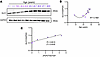 Figure 1
GLO1 expression increases with age and correlates with p-S2808-RyR2 in the rhesus macaque brain. (A) Immunoblot image of GLO1 and GAPDH in macaque cortical tissue across the age span (8.3–28.6 years). Age groups are color-coded (young, middle, aged). Numbers show the age of the macaque. (B) Age plotted against GLO1 expression with best fit regression cubic polynomial line; R2 is shown. (C) Quantification of p-S2808-RyR2 normalized to total RyR is plotted against GLO1 expression. A linear regression is shown, with the Pearson’s correlation coefficient and corresponding P value.
To further characterize the relationship between altered RyR2 and GLO1, we examined the levels of p-RyR2 in a subset of monkeys and correlated it with their GLO1 expression levels. We hypothesized that there would be a positive correlation between the levels of p-RyR2 and GLO1, based on the potential role for GLO1 as a compensatory mechanism for calcium leak. We confirmed this positive correlation between the proportion of normalized p-RyR2 and normalized GLO1 (Figure 1C).
GLO1 is highly expressed in dendrites and astrocytes in the aged macaque dlPFC. Transcriptionally, GLO1 is highly expressed by oligodendrocytes, astrocytes, and endothelial cells, and less abundantly expressed by neurons (41). Notably, GLO1 mRNA is minimally present in microglia (42). Given the increase in GLO1 with age, we examined its cellular expression patterns in LIII dlPFC using multiple-label immunofluorescence (MLIF) to differentiate pyramidal cells (MAP2), astrocytes (GFAP), and microglia (IBA1). We observed robust GLO1 expression in pyramidal cells, which was especially evident in dendrites (Figure 2A, white arrowheads, and Supplemental Figure 2A), but less visible in cell bodies. GLO1 was abundantly expressed in the soma of astrocytes and their processes (Figure 2B and Supplemental Figure 2B). We did not observe GLO1 colocalization with IBA1-expressing microglia in the aged macaque brain (Figure 2C and Supplemental Figure 2C).
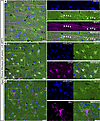 Figure 2
GLO1 cellular localization in the aged macaque LIII dlPFC. Representative confocal images of LIII dlPFC of an aged macaque (28 years) labeled with GLO1 (green) and (A) excitatory neuronal markers MAP2 (magenta) and NeuN (blue), (B) astrocytic marker GFAP (magenta) and nuclei marker (blue), and (C) microglial marker IBA1 (magenta) and nuclei marker (blue). The white arrowheads indicate colocalization of GLO1 within dendrites of excitatory neurons. Magnified images correspond to the dashed yellow boxes. Scale bars: 25 μm.
Ultrastructural localization of GLO1 in the aged macaque LIII dlPFC. ImmunoEM was used to determine the ultrastructural localization of GLO1 in the aged macaque LIII dlPFC. We analyzed 210 GLO1-immunopositive photomicrographs (total of 4144 GLO1 deposit sites). Consistent with MLIF data, the dendritic (approximately 34% of total sites) and glial compartments (approximately 24% of total sites) accounted for the majority of GLO1-positive sites, aside from the not determined (ND) category (approximately 37.5% of total sites) (Figure 3A). Further analyses of the micrographs showed that GLO1 expression was approximately 5.5% in presynaptic terminals and 2.0% within dendritic spines.
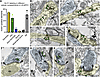 Figure 3
GLO1 immunoEM localization in neuronal compartments in LIII dlPFC of aged macaque. (A) Quantitative distribution of GLO1 across different cellular elements in aged macaque LIII dlPFC. Percentage of immunoperoxidase labeling (mean ± SEM) for GLO1 in glia, dendritic shafts, dendritic spines, axon terminals, and not determined structures (ND), n = 2 aged macaques. (B–E) GLO1 (green arrowheads) is observed along microtubule tracks within dendritic shafts. (F–H) GLO1 is also observed on mitochondria membranes in the presynaptic axon terminus as well as the perisynaptic membrane. (I) GLO1 labeling is also seen in the postsynaptic spine head and neck. Synapses are between black arrows. Profiles are pseudocolored for clarity and not all specific labeling is highlighted by arrowheads. Den, dendrites (yellow); Mit, mitochondria; Ax, axon (blue); Sp, spine (yellow). Scale bars: 500 nm.
More in-depth analyses showed that the prominent postsynaptic localization of GLO1 in the dendritic shafts was targeted to microtubules (Figure 3, B–E, and Supplemental Figure 3, A and B) and the SER (Figure 3C). This finding was consistent with the correlation between p-S2808-RyR2 and GLO1 levels described above and the age-related expression of p-S2808-RyR2 in dendrites (Supplemental Figure 4, A and B). A closer examination of synapses showed GLO1 expression in both pre- and postsynaptic compartments (Figure 3, F–I). In glutamatergic-like axon terminals, we found GLO1 to be closely associated with the mitochondrial membrane as well as clustering around synaptic vesicles adjacent to the mitochondria (Figure 3, F–H, and Supplemental Figure 3B). We also observed GLO1 labeling within dendritic spines with potential localization near the SER spine apparatus (Figure 3I and Supplemental Figure 3C).
GLO1 localization was also prominent in aged LIII dlPFC glial processes, likely astrocytic end feet (Figure 4 and Supplemental Figure 3, D–F). GLO1 was present within the intracellular space (Figure 4A and Supplemental Figure 3E), but was predominantly associated with the glial plasma membrane (Figure 4, B–F, and Supplemental Figure 3, D and F). We observed GLO1 labeling especially in glial leaflets ensheathing axospinous inputs, receiving glutamatergic-like asymmetric synapses (Figure 4, A–D). We observed similar patterns of expression of p-S2808-RyR2 in glia (Supplemental Figure 4, C–F).
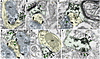 Figure 4
GLO1 immunoEM localization in glial processes in aged macaque LIII dlPFC. GLO1 immunoperoxidase labeling is abundant in glial leaflets within the neuropil. (A–C) GLO1 labeling can be seen filling the glial leaflet (A) as well as along the glial plasma membrane (B–F). GLO1 is observed in glial leaflets ensheathing glutamatergic-like synapses (A–D). Profiles are pseudocolored for clarity and not all specific labeling is highlighted by arrowheads. Den, dendrites (yellow); Mit, mitochondria; Ax, axon (blue); Sp, spine (yellow); As, astroglia (green). Scale bars: 500 nm.
In sum, the ultrastructural localization of GLO1 in the aged macaque dlPFC revealed a predominantly glial (likely astrocytic) and dendritic distribution (especially on microtubules), which is consistent with the MLIF data. The data also demonstrated robust labeling in axon terminals next to mitochondrial membranes and some labeling in postsynaptic spines.
Proteomic profiling of S2808D-RyR2 synaptosomes from frontal cortex and hippocampus. The macaque model demonstrated a correlative relationship between RyR2 and GLO1. Thus, we decided to examine the relationship by using a mouse model with genetically induced calcium leak through RyR2. The S2808D-RyR2 model replaces S2808 with an aspartic acid, leading to chronic calcium leak through the receptor from the SER. We harvested synaptosomes from the frontal cortex and hippocampus from 3-month-old male WT and S2808D-RyR2 mice to compare proteomic differences caused by chronic calcium leak, in an unbiased approach. Synaptic proteins were enriched from the brain tissue and processed for analysis by liquid chromatography–tandem mass spectrometry (LC-MS/MS) (Figure 5A). The enrichment of synaptic proteins of the synaptosomal fractions was verified using immunoblotting for specific synaptic proteins (e.g., PSD95, synaptophysin, NMDAR2B) (Figure 5B) and EM (Supplemental Figure 5). In both the hippocampus and frontal cortex samples, 3270 unique proteins were identified (where each identified protein had at least 1 unique peptide with a Mascot score of >35). Among these uniquely identified proteins, 190 and 132 were differentially abundant in S2808D-RyR2 versus WT synaptosomes in the hippocampus and frontal cortex, respectively (Figure 5, C and D, and Supplemental Dataset 1).
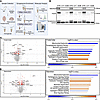 Figure 5
S2808D-RyR2–mediated calcium leak alters proteins in synaptosomes. (A) Schematic paradigm of experimental design. Synaptosomes from the frontal cortex and hippocampus were enriched from 3-month-old male WT and S2808D-RyR2 mice (n = 3 per group) and analyzed using LC-MS/MS. (B) Immunoblot image validating enrichment for synaptic proteins in the synaptosome suspension using Syn-PER reagent. NMDAR2B and PSD95 are postsynaptic proteins, while synaptophysin is a presynaptic protein. GAPDH is a cytosolic protein. (C and D) Volcano plots highlighting the proteins most enriched (red circles) in WT (negative log2[fold change]) and S2808D-RyR2 (positive log2[fold change]) synaptosomes in frontal cortex (C) and hippocampus (D) compared with WT. The horizontal dotted lines on the volcano plots signify an α of 1.3, or a P value of 0.05. The top 10 altered canonical pathways using the proteomic data sets as derived by Ingenuity Pathway Analysis (IPA) are represented by bar charts adjacent to each volcano plot. SYN, synaptosome; CYT, cytosol fraction; HOM, homogenate.
Many of the proteins that were more abundant in S2808D-RyR2 frontal cortex and hippocampus are implicated in mitochondria function and structure (e.g., MIGA2, TOMM7) (43–45). The most enriched protein in S2808D-RyR2 frontal cortex synaptosomes (8-fold higher than WT) was fibrinogen C domain–containing protein 1 (FIBCD1), which is a transmembrane receptor for chitin and glycosaminoglycans (46) (Table 1). In the hippocampus, the most enriched protein (5-fold higher than WT) was eukaryotic translation elongation factor 1 ε1 (MCA3), which is thought to respond to DNA damage (47, 48) (Table 1). GLO1, which is also known as lactoylglutathione lyase (LGUL), was among the most enriched proteins, and was higher (2-fold) in both frontal cortex and hippocampus of S2808D-RyR2 mice (Table 1). Among the proteins least abundant in S2808D-RyR2 mice compared with WT were hemoglobin subunits and complement protein C1QA (Supplemental Table 1).
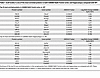 Table 1
GLO1 (LGUL) is one of the most enriched proteins in both S2808D-RyR2 frontal cortex and hippocampus compared with WT
Next, we conducted Ingenuity Pathway Analysis (IPA) to determine the most altered pathways. Both regions shared the top 10 most altered canonical pathways, suggesting that S2808-RyR2–mediated changes are targeting the same pathways in these 2 regions (Figure 5, C and D). IPA revealed changes in synaptogenesis signaling and mitochondrial dysfunction, as well as neurodegenerative disease pathways (Figure 5, C and D). Although most of the pathways were altered in the same direction in both regions, there were several that were altered in opposing directions, e.g., synaptogenesis and EIF2 signaling (Figure 5, C and D). One of the most upregulated pathways in both S2808D-RyR2 frontal cortex and hippocampus was oxidative phosphorylation, which is consistent with increased GLO1 expression (49). As expected, calcium signaling and calcium-related pathways were significantly upregulated in the S2808D-RyR2 mice compared with WT (Supplemental Table 2).
GLO1 expression and activity are increased in 3-month-old and 12-month-old hippocampus and frontal cortex in the context of calcium dysregulation. To validate our proteomics findings, we immunoblotted for GLO1 from synaptosomes from the frontal cortex and hippocampus in both 3- and 12-month-old male mice (Figure 6, A–D). We found an increase compared with WT at both time points in the normalized expression of GLO1 to total protein in the S2808D-RyR2 synaptosomes from both the frontal cortex (Figure 6B) and hippocampus (Figure 6D). We found this increase in expression in female mice as well (Supplemental Figure 6). Furthermore, we observed this increase in GLO1 expression in S2808D-RyR2 synaptosomes as early as 1 month old and as late as 21 months old (Supplemental Figure 7). The increase was observed in total homogenate 3-month-old samples in hippocampus, suggesting multiple cell involvement (Supplemental Figure 8).
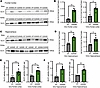 Figure 6
GLO1 expression and activity are increased in the frontal cortex and hippocampus in young and adult S2808D-RyR2 mice. (A) Immunoblot images of GLO1 expression in synaptosomes from 3-month-old and 12-month-old male S2808D-RyR2 frontal cortex. (B) Quantification of GLO1 expression normalized to total protein content based on stain-free blot (mean ± SEM). n = 5–7 per group per age. (C) Immunoblot images of GLO1 expression in synaptosomes from 3-month-old and 12-month-old S2808D-RyR2 hippocampus. (D) Quantification of GLO1 expression normalized to total protein content using stain-free blot (mean ± SEM). n = 5–7 per group per age. (E) Quantification of GLO1 activity levels (mean ± SEM). n = 5–7 per group per age. S2808D, S2808D-RyR2. *P < 0.05, **P < 0.01, ***P < 0.001 by Mann-Whitney U test.
Next, we examined GLO1 activity in both regions at the 2 different ages, as GLO1 expression and activity may be differentially regulated (50–52). To do this, GLO1-mediated production of S-D-lactoylglutathione normalized to protein concentration was measured. At 3 and 12 months, there was higher GLO1 activity in the S2808D-RyR2 frontal cortex and hippocampus synaptosomes compared with WT (Figure 6, E and F).
These results indicate that calcium dysregulation through S2808-RyR2 is associated with both an increase in GLO1 expression and activity in synaptosomes across both regions in young and adult mice.
GLO1 localization differs across cell types in the frontal cortex and hippocampus. There are limited studies mapping the localization of GLO1 across different brain regions and cell types in mice. To investigate species differences in GLO1 localization and whether the increased expression in S2808D-RyR2 mice was driven by a specific cell type, we performed MLIF.
We examined layer II/III of the medial PFC (LII/LIII mPFC) (Figure 7 and Supplemental Figure 9). We observed GLO1 localization to the soma of a subset of neurons (NeuN) in both WT (Figure 7A and Supplemental Figure 9A) and S2808D-RyR2 (Figure 7B, white arrowheads, and Supplemental Figure 9B) mPFC. Adjacent to GLO1-positive neurons, we also observed GLO1-negative neurons, suggesting a diversity in how neurons might respond to carbonyl stress. Given the robust neuropil GLO1 signal, it was challenging to appreciate clear proximal dendritic labeling, as seen in the macaque. In the S2808D-RyR2 cortex, we observed increased GLO1 intensity within the neuronal somas as compared with the somas in WT (Figure 7B and Supplemental Figure 9B).
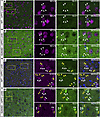 Figure 7
GLO1 localization in murine medial prefrontal cortex. Representative confocal images of layers II/III in the medial prefrontal cortex (mPFC LII/III) of 3-month-old male WT (A and C) and S2808D-RyR2 (B and D) mice. The magnified images correspond to the regions delineated by the yellow dashed boxes. (A and B) Neurons labeled with NeuN (magenta) colocalize with GLO1 (green), as identified by the white arrowheads. (C and D) Astrocytes labeled with S100 (magenta) colocalize with GLO1 (green). Processes of astrocytes are delineated by the yellow arrowheads, while the somas are indicated by the white arrowheads. S2808D, S2808D-RyR2. Scale bars: 10 μm.
We next examined colocalization of canonical astrocytic markers, S100 (Figure 7, C and D, and Supplemental Figure 9, C and D) and GFAP (Supplemental Figure 10), with GLO1. S100 was a better pan-astrocyte marker in LII/LIII mPFC than in the macaque dlPFC (53). Similar to the patterns observed in neurons, we observed GLO1 expression in the soma of astrocytes in WT (Figure 7C and Supplemental Figure 9C) and S2808D-RyR2 (Figure 7D and Supplemental Figure 9D). Furthermore, we saw robust GLO1 labeling of the fine astrocytic processes, as indicated by the yellow arrowheads. This was similar to what was observed in macaque dlPFC. We observed a qualitative increase in GLO1 intensity within the S2808D-RyR2 astrocytes, as seen in neurons, suggesting that astrocytes also likely contribute to the overall increase in GLO1 in synaptosomes, which capture astrocytic end feet. We also found GLO1 in oligodendrocytes or oligodendrocyte progenitor cells, as identified by Olig2 (Supplemental Figure 10, C and D). Interestingly, in both mouse and macaque PFC, there was no colocalization of GLO1 with IBA1-expressing microglia (Supplemental Figure 11, A and B).
We next examined GLO1 expression in the dentate gyrus (DG) of the hippocampus (Figure 8 and Supplemental Figure 12). Overall, we observed similar patterns for GLO1 localization in the DG as observed in mPFC (Figure 8, A–D). GLO1 was moderately expressed by neurons in the granule cell layer (GCL) of the DG in WT (Figure 8A), and was more robustly expressed in the S2808D-RyR2 neurons in the same region (Figure 8B). Similarly, we found GLO1 colocalization with GFAP-positive astrocytes in the molecular layer (ML) (Figure 8, C and D) and with S100-positive astrocytes across both layers (Supplemental Figure 12, A and B). As in the mPFC, we also found GLO1 in oligodendrocytes and OPCs (Supplemental Figure 12, C and D), but not in microglia (Supplemental Figure 11, C and D).
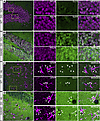 Figure 8
GLO1 localization in murine dentate gyrus. Representative confocal images of the dentate gyrus (DG) in 3-month-old male WT (A and C) and S2808D-RyR2 (B and D) mice. The magnified images correspond to the regions delineated by the yellow dashed boxes. (A and B) Neurons labeled with NeuN (magenta) colocalize with GLO1 (green) within the granule cell layer (GCL) of the DG. (C and D) Astrocytes labeled with GFAP (magenta) colocalize with GLO1 (green) within the molecular layer (ML), as identified by the white arrowheads. S2808D, S2808D-RyR2. Scale bars: 10 μm.
Together the data provide evidence that, with the notable exception of microglia, several cell types contribute to the GLO1 increase observed in S2808D-RyR2 mice and that the mPFC and hippocampus share similarities in GLO1 cellular localization.
GLO1 expression follows a bell-shaped curve with age in the S2808D-RyR2 frontal cortex. Given the age-related changes in GLO1 expression in the human brain, we compared GLO1 expression across 3-, 12-, and 21-month-old frontal cortex synaptosomes. Consistent with the literature (54), we did not see age-related changes in WT mice (Figure 9A). In contrast, GLO1 expression was higher in 12-month-old S2808D-RyR2 frontal cortex synaptosomes than in both 3-month-old and 21-month-old synaptosomes, exhibiting a bell-shaped curve across the age span (Figure 9B).
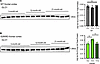 Figure 9
GLO1 expression follows a bell-shaped curve with age in S2808D-RyR2 frontal cortex. Immunoblot images of GLO1 expression in frontal cortex synaptosomes from male (A) WT and (B) S2808D-RyR2 mice at 3, 12, and 21 months old. Quantitative analysis was performed after normalizing to total protein content using stain-free blots (mean ± SEM). n = 5–6 per age per group. S2808D, S2808D-RyR2. **P < 0.005 by ordinary 1-way ANOVA with post hoc Tukey’s test.
In sum, we observe a similar bell-shaped curve in GLO1 expression in the S2808D-RyR2 frontal cortex, as seen in humans, but not in WT mice. However, we do not observe a difference in GLO1 expression between 21- and 3-month-old mice.
Aged S2808D-RyR2 mice perform worse on delayed alternating task compared with WT mice. We hypothesized that increased calcium leak chronically through RyR2 would lead to functional deficits in the PFC of aged mice (at the end of the bell-shaped curve). In order to test this, we utilized a spatial delayed alternation task in a T-maze, which requires behavioral inhibition and attentional regulation. The mice were initially adapted to the maze, food rewards, and handling procedures to minimize the potential for contamination of affective influences on cognition. Once habituated, the mice were trained on the spatial delayed alternation task in the maze. We used mice at 21–22 months old, which was when we had observed a decrease in GLO1 expression (Figure 9B). We found that aged S2808D-RyR2 mice perform significantly worse than aged WT mice on the task with a delay (Figure 10). We observed this significant difference when examining the last test session (after 5 consecutive sessions for learning) (Figure 10A) as well as averaging the last 4 sessions (Figure 10B). These findings are consistent with prior data in aging macaques where chronic calcium leak leads to working memory deficits (6).
 Figure 10
Aged S2808D-RyR2 mice perform worse on delayed alternating task compared with WT mice. Mice were trained on a spatial delayed alternation task in a T-maze, a test of working memory, behavioral inhibition, and attention regulation. After habituation (5 consecutive sessions), the last test session was analyzed for percentage correct (A) and the average of the last 4 test sessions (B). Results represent mean ± SEM percentage correct on the delayed alternation task. n = 7–8 per group. S2808D, S2808D-RyR2. *P < 0.05 by Mann-Whitney U test.


