
Research ArticleCell biologyMetabolism
Open Access |  10.1172/jci.insight.182711
HIF2α inhibits glutaminase clustering in mitochondria to sustain growth of clear cell renal cell carcinoma
Wencao Zhao,1 Sara M. Demczyszyn,2 Nathan J. Coffey,2 Yanqing Jiang,2 Boyoung Kim,3 Schuyler Bowers,3 Caitlyn Bowman,4 Michael C. Noji,2 Cholsoon Jang,5 M. Celeste Simon,2 Zoltan Arany,1 and Boa Kim6
1Department of Medicine, Cardiovascular Institute, and Institute of Diabetes Obesity and Metabolism, and
2The Abramson Family Cancer Research Institute, Department of Cell and Developmental Biology, Perelman School of Medicine, University of Pennsylvania, Philadelphia, Pennsylvania, USA.
3McAllister Heart Institute, School of Medicine, University of North Carolina, Chapel Hill, North Carolina, USA.
4Biology Department, Williams College, Williamstown, Massachusetts, USA.
5Department of Biological Chemistry, School of Medicine, University of California, Irvine, California, USA.
6Department of Pathology and Laboratory Medicine, McAllister Heart Institute, Nutrition Obesity Research Center, and Lineberger Cancer Center, University of North Carolina, Chapel Hill, North Carolina, USA.
Address correspondence to: Boa Kim, University of North Carolina, MBRB 3341C, 111 Mason Farm Road, Chapel Hill, North Carolina, 27599, USA. Phone: 919.966.0490; Email: boakim@unc.edu. Or to: Zoltan Arany, Perelman School of Medicine, University of Pennsylvania, Smilow Center for Translational Research 11th floor, 3400 Civic Blvd., Philadelphia, Pennsylvania, 19104, USA. Phone: 215.898.3482; Email: zarany@pennmedicine.upenn.edu.
Authorship note: ZA and Boa Kim contributed equally to this work.
Find articles by
Zhao, W.
in:
PubMed
|
Google Scholar
|

1Department of Medicine, Cardiovascular Institute, and Institute of Diabetes Obesity and Metabolism, and
2The Abramson Family Cancer Research Institute, Department of Cell and Developmental Biology, Perelman School of Medicine, University of Pennsylvania, Philadelphia, Pennsylvania, USA.
3McAllister Heart Institute, School of Medicine, University of North Carolina, Chapel Hill, North Carolina, USA.
4Biology Department, Williams College, Williamstown, Massachusetts, USA.
5Department of Biological Chemistry, School of Medicine, University of California, Irvine, California, USA.
6Department of Pathology and Laboratory Medicine, McAllister Heart Institute, Nutrition Obesity Research Center, and Lineberger Cancer Center, University of North Carolina, Chapel Hill, North Carolina, USA.
Address correspondence to: Boa Kim, University of North Carolina, MBRB 3341C, 111 Mason Farm Road, Chapel Hill, North Carolina, 27599, USA. Phone: 919.966.0490; Email: boakim@unc.edu. Or to: Zoltan Arany, Perelman School of Medicine, University of Pennsylvania, Smilow Center for Translational Research 11th floor, 3400 Civic Blvd., Philadelphia, Pennsylvania, 19104, USA. Phone: 215.898.3482; Email: zarany@pennmedicine.upenn.edu.
Authorship note: ZA and Boa Kim contributed equally to this work.
Find articles by Demczyszyn, S. in: PubMed | Google Scholar
1Department of Medicine, Cardiovascular Institute, and Institute of Diabetes Obesity and Metabolism, and
2The Abramson Family Cancer Research Institute, Department of Cell and Developmental Biology, Perelman School of Medicine, University of Pennsylvania, Philadelphia, Pennsylvania, USA.
3McAllister Heart Institute, School of Medicine, University of North Carolina, Chapel Hill, North Carolina, USA.
4Biology Department, Williams College, Williamstown, Massachusetts, USA.
5Department of Biological Chemistry, School of Medicine, University of California, Irvine, California, USA.
6Department of Pathology and Laboratory Medicine, McAllister Heart Institute, Nutrition Obesity Research Center, and Lineberger Cancer Center, University of North Carolina, Chapel Hill, North Carolina, USA.
Address correspondence to: Boa Kim, University of North Carolina, MBRB 3341C, 111 Mason Farm Road, Chapel Hill, North Carolina, 27599, USA. Phone: 919.966.0490; Email: boakim@unc.edu. Or to: Zoltan Arany, Perelman School of Medicine, University of Pennsylvania, Smilow Center for Translational Research 11th floor, 3400 Civic Blvd., Philadelphia, Pennsylvania, 19104, USA. Phone: 215.898.3482; Email: zarany@pennmedicine.upenn.edu.
Authorship note: ZA and Boa Kim contributed equally to this work.
Find articles by
Coffey, N.
in:
PubMed
|
Google Scholar
|
1Department of Medicine, Cardiovascular Institute, and Institute of Diabetes Obesity and Metabolism, and
2The Abramson Family Cancer Research Institute, Department of Cell and Developmental Biology, Perelman School of Medicine, University of Pennsylvania, Philadelphia, Pennsylvania, USA.
3McAllister Heart Institute, School of Medicine, University of North Carolina, Chapel Hill, North Carolina, USA.
4Biology Department, Williams College, Williamstown, Massachusetts, USA.
5Department of Biological Chemistry, School of Medicine, University of California, Irvine, California, USA.
6Department of Pathology and Laboratory Medicine, McAllister Heart Institute, Nutrition Obesity Research Center, and Lineberger Cancer Center, University of North Carolina, Chapel Hill, North Carolina, USA.
Address correspondence to: Boa Kim, University of North Carolina, MBRB 3341C, 111 Mason Farm Road, Chapel Hill, North Carolina, 27599, USA. Phone: 919.966.0490; Email: boakim@unc.edu. Or to: Zoltan Arany, Perelman School of Medicine, University of Pennsylvania, Smilow Center for Translational Research 11th floor, 3400 Civic Blvd., Philadelphia, Pennsylvania, 19104, USA. Phone: 215.898.3482; Email: zarany@pennmedicine.upenn.edu.
Authorship note: ZA and Boa Kim contributed equally to this work.
Find articles by Jiang, Y. in: PubMed | Google Scholar
1Department of Medicine, Cardiovascular Institute, and Institute of Diabetes Obesity and Metabolism, and
2The Abramson Family Cancer Research Institute, Department of Cell and Developmental Biology, Perelman School of Medicine, University of Pennsylvania, Philadelphia, Pennsylvania, USA.
3McAllister Heart Institute, School of Medicine, University of North Carolina, Chapel Hill, North Carolina, USA.
4Biology Department, Williams College, Williamstown, Massachusetts, USA.
5Department of Biological Chemistry, School of Medicine, University of California, Irvine, California, USA.
6Department of Pathology and Laboratory Medicine, McAllister Heart Institute, Nutrition Obesity Research Center, and Lineberger Cancer Center, University of North Carolina, Chapel Hill, North Carolina, USA.
Address correspondence to: Boa Kim, University of North Carolina, MBRB 3341C, 111 Mason Farm Road, Chapel Hill, North Carolina, 27599, USA. Phone: 919.966.0490; Email: boakim@unc.edu. Or to: Zoltan Arany, Perelman School of Medicine, University of Pennsylvania, Smilow Center for Translational Research 11th floor, 3400 Civic Blvd., Philadelphia, Pennsylvania, 19104, USA. Phone: 215.898.3482; Email: zarany@pennmedicine.upenn.edu.
Authorship note: ZA and Boa Kim contributed equally to this work.
Find articles by Kim, B. in: PubMed | Google Scholar
1Department of Medicine, Cardiovascular Institute, and Institute of Diabetes Obesity and Metabolism, and
2The Abramson Family Cancer Research Institute, Department of Cell and Developmental Biology, Perelman School of Medicine, University of Pennsylvania, Philadelphia, Pennsylvania, USA.
3McAllister Heart Institute, School of Medicine, University of North Carolina, Chapel Hill, North Carolina, USA.
4Biology Department, Williams College, Williamstown, Massachusetts, USA.
5Department of Biological Chemistry, School of Medicine, University of California, Irvine, California, USA.
6Department of Pathology and Laboratory Medicine, McAllister Heart Institute, Nutrition Obesity Research Center, and Lineberger Cancer Center, University of North Carolina, Chapel Hill, North Carolina, USA.
Address correspondence to: Boa Kim, University of North Carolina, MBRB 3341C, 111 Mason Farm Road, Chapel Hill, North Carolina, 27599, USA. Phone: 919.966.0490; Email: boakim@unc.edu. Or to: Zoltan Arany, Perelman School of Medicine, University of Pennsylvania, Smilow Center for Translational Research 11th floor, 3400 Civic Blvd., Philadelphia, Pennsylvania, 19104, USA. Phone: 215.898.3482; Email: zarany@pennmedicine.upenn.edu.
Authorship note: ZA and Boa Kim contributed equally to this work.
Find articles by Bowers, S. in: PubMed | Google Scholar
1Department of Medicine, Cardiovascular Institute, and Institute of Diabetes Obesity and Metabolism, and
2The Abramson Family Cancer Research Institute, Department of Cell and Developmental Biology, Perelman School of Medicine, University of Pennsylvania, Philadelphia, Pennsylvania, USA.
3McAllister Heart Institute, School of Medicine, University of North Carolina, Chapel Hill, North Carolina, USA.
4Biology Department, Williams College, Williamstown, Massachusetts, USA.
5Department of Biological Chemistry, School of Medicine, University of California, Irvine, California, USA.
6Department of Pathology and Laboratory Medicine, McAllister Heart Institute, Nutrition Obesity Research Center, and Lineberger Cancer Center, University of North Carolina, Chapel Hill, North Carolina, USA.
Address correspondence to: Boa Kim, University of North Carolina, MBRB 3341C, 111 Mason Farm Road, Chapel Hill, North Carolina, 27599, USA. Phone: 919.966.0490; Email: boakim@unc.edu. Or to: Zoltan Arany, Perelman School of Medicine, University of Pennsylvania, Smilow Center for Translational Research 11th floor, 3400 Civic Blvd., Philadelphia, Pennsylvania, 19104, USA. Phone: 215.898.3482; Email: zarany@pennmedicine.upenn.edu.
Authorship note: ZA and Boa Kim contributed equally to this work.
Find articles by Bowman, C. in: PubMed | Google Scholar
1Department of Medicine, Cardiovascular Institute, and Institute of Diabetes Obesity and Metabolism, and
2The Abramson Family Cancer Research Institute, Department of Cell and Developmental Biology, Perelman School of Medicine, University of Pennsylvania, Philadelphia, Pennsylvania, USA.
3McAllister Heart Institute, School of Medicine, University of North Carolina, Chapel Hill, North Carolina, USA.
4Biology Department, Williams College, Williamstown, Massachusetts, USA.
5Department of Biological Chemistry, School of Medicine, University of California, Irvine, California, USA.
6Department of Pathology and Laboratory Medicine, McAllister Heart Institute, Nutrition Obesity Research Center, and Lineberger Cancer Center, University of North Carolina, Chapel Hill, North Carolina, USA.
Address correspondence to: Boa Kim, University of North Carolina, MBRB 3341C, 111 Mason Farm Road, Chapel Hill, North Carolina, 27599, USA. Phone: 919.966.0490; Email: boakim@unc.edu. Or to: Zoltan Arany, Perelman School of Medicine, University of Pennsylvania, Smilow Center for Translational Research 11th floor, 3400 Civic Blvd., Philadelphia, Pennsylvania, 19104, USA. Phone: 215.898.3482; Email: zarany@pennmedicine.upenn.edu.
Authorship note: ZA and Boa Kim contributed equally to this work.
Find articles by Noji, M. in: PubMed | Google Scholar
1Department of Medicine, Cardiovascular Institute, and Institute of Diabetes Obesity and Metabolism, and
2The Abramson Family Cancer Research Institute, Department of Cell and Developmental Biology, Perelman School of Medicine, University of Pennsylvania, Philadelphia, Pennsylvania, USA.
3McAllister Heart Institute, School of Medicine, University of North Carolina, Chapel Hill, North Carolina, USA.
4Biology Department, Williams College, Williamstown, Massachusetts, USA.
5Department of Biological Chemistry, School of Medicine, University of California, Irvine, California, USA.
6Department of Pathology and Laboratory Medicine, McAllister Heart Institute, Nutrition Obesity Research Center, and Lineberger Cancer Center, University of North Carolina, Chapel Hill, North Carolina, USA.
Address correspondence to: Boa Kim, University of North Carolina, MBRB 3341C, 111 Mason Farm Road, Chapel Hill, North Carolina, 27599, USA. Phone: 919.966.0490; Email: boakim@unc.edu. Or to: Zoltan Arany, Perelman School of Medicine, University of Pennsylvania, Smilow Center for Translational Research 11th floor, 3400 Civic Blvd., Philadelphia, Pennsylvania, 19104, USA. Phone: 215.898.3482; Email: zarany@pennmedicine.upenn.edu.
Authorship note: ZA and Boa Kim contributed equally to this work.
Find articles by
Jang, C.
in:
PubMed
|
Google Scholar
|
1Department of Medicine, Cardiovascular Institute, and Institute of Diabetes Obesity and Metabolism, and
2The Abramson Family Cancer Research Institute, Department of Cell and Developmental Biology, Perelman School of Medicine, University of Pennsylvania, Philadelphia, Pennsylvania, USA.
3McAllister Heart Institute, School of Medicine, University of North Carolina, Chapel Hill, North Carolina, USA.
4Biology Department, Williams College, Williamstown, Massachusetts, USA.
5Department of Biological Chemistry, School of Medicine, University of California, Irvine, California, USA.
6Department of Pathology and Laboratory Medicine, McAllister Heart Institute, Nutrition Obesity Research Center, and Lineberger Cancer Center, University of North Carolina, Chapel Hill, North Carolina, USA.
Address correspondence to: Boa Kim, University of North Carolina, MBRB 3341C, 111 Mason Farm Road, Chapel Hill, North Carolina, 27599, USA. Phone: 919.966.0490; Email: boakim@unc.edu. Or to: Zoltan Arany, Perelman School of Medicine, University of Pennsylvania, Smilow Center for Translational Research 11th floor, 3400 Civic Blvd., Philadelphia, Pennsylvania, 19104, USA. Phone: 215.898.3482; Email: zarany@pennmedicine.upenn.edu.
Authorship note: ZA and Boa Kim contributed equally to this work.
Find articles by Simon, M. in: PubMed | Google Scholar
1Department of Medicine, Cardiovascular Institute, and Institute of Diabetes Obesity and Metabolism, and
2The Abramson Family Cancer Research Institute, Department of Cell and Developmental Biology, Perelman School of Medicine, University of Pennsylvania, Philadelphia, Pennsylvania, USA.
3McAllister Heart Institute, School of Medicine, University of North Carolina, Chapel Hill, North Carolina, USA.
4Biology Department, Williams College, Williamstown, Massachusetts, USA.
5Department of Biological Chemistry, School of Medicine, University of California, Irvine, California, USA.
6Department of Pathology and Laboratory Medicine, McAllister Heart Institute, Nutrition Obesity Research Center, and Lineberger Cancer Center, University of North Carolina, Chapel Hill, North Carolina, USA.
Address correspondence to: Boa Kim, University of North Carolina, MBRB 3341C, 111 Mason Farm Road, Chapel Hill, North Carolina, 27599, USA. Phone: 919.966.0490; Email: boakim@unc.edu. Or to: Zoltan Arany, Perelman School of Medicine, University of Pennsylvania, Smilow Center for Translational Research 11th floor, 3400 Civic Blvd., Philadelphia, Pennsylvania, 19104, USA. Phone: 215.898.3482; Email: zarany@pennmedicine.upenn.edu.
Authorship note: ZA and Boa Kim contributed equally to this work.
Find articles by
Arany, Z.
in:
PubMed
|
Google Scholar
|
1Department of Medicine, Cardiovascular Institute, and Institute of Diabetes Obesity and Metabolism, and
2The Abramson Family Cancer Research Institute, Department of Cell and Developmental Biology, Perelman School of Medicine, University of Pennsylvania, Philadelphia, Pennsylvania, USA.
3McAllister Heart Institute, School of Medicine, University of North Carolina, Chapel Hill, North Carolina, USA.
4Biology Department, Williams College, Williamstown, Massachusetts, USA.
5Department of Biological Chemistry, School of Medicine, University of California, Irvine, California, USA.
6Department of Pathology and Laboratory Medicine, McAllister Heart Institute, Nutrition Obesity Research Center, and Lineberger Cancer Center, University of North Carolina, Chapel Hill, North Carolina, USA.
Address correspondence to: Boa Kim, University of North Carolina, MBRB 3341C, 111 Mason Farm Road, Chapel Hill, North Carolina, 27599, USA. Phone: 919.966.0490; Email: boakim@unc.edu. Or to: Zoltan Arany, Perelman School of Medicine, University of Pennsylvania, Smilow Center for Translational Research 11th floor, 3400 Civic Blvd., Philadelphia, Pennsylvania, 19104, USA. Phone: 215.898.3482; Email: zarany@pennmedicine.upenn.edu.
Authorship note: ZA and Boa Kim contributed equally to this work.
Find articles by Kim, B. in: PubMed | Google Scholar
Published October 30, 2025 - More info
JCI Insight. 2025;10(23):e182711. https://doi.org/10.1172/jci.insight.182711.
© 2025 Zhao et al. This work is licensed under the Creative Commons Attribution 4.0 International License. To view a copy of this license, visit http://creativecommons.org/licenses/by/4.0/.
Received: May 7, 2024; Accepted: October 27, 2025


-
Results
Glutamine deprivation uniquely triggers the clustering of GLS within mitochondria. While studying the effects of glutamine deprivation (noQ) on human umbilical vein endothelial cells (HUVECs) (31), we incidentally noted a striking redistribution of GLS1 to discrete puncta throughout the cell, as seen by immunocytochemistry (ICC) and wide-field fluorescence microscopy imaging, 24 hours after noQ (Figure 1A). Costaining of GLS1 with markers for various intracellular organelles, including Lamp1 for lysosomes, calnexin for endoplasmic reticulum, BODIPY dye for lipid droplets, and golgin for the Golgi apparatus, during noQ revealed no colocalization of GLS1 puncta with these organelles (Supplemental Figure 1). In contrast, confocal and Airyscan imaging and costaining for cytochrome c oxidase IV (COXIV) (Figure 1B) or MitoTracker Red (Figure 1C), both markers of mitochondria, demonstrated the noQ induced GLS1 puncta to represent clustering of GLS1 within mitochondria themselves. Biochemical cellular fractionation assays, coupled with Western blot analysis, confirmed the persistent presence of GLS1 within mitochondria following noQ treatment (Figure 1D). The clustering of GLS1 represented redistribution of existing GLS1 pools, rather than de novo–synthesized GLS1, because treating cells with the protein synthesis inhibitor cycloheximide prior to removing glutamine did not prevent clustering (Supplemental Figure 2). The phenomenon was also not restricted to HUVECs and was observed in other cell lines tested, including HeLa, 293T, HCT116, and HepG2 (Supplemental Figure 3). Finally, and importantly, noQ-induced clustering of GLS1 was unique, as it did not occur with other mitochondrial proteins, including glutamate dehydrogenase (GLUD), COXIV, citrate synthase (CS), pyruvate dehydrogenase (PDH), HADHA, and COX4-I1 (Supplemental Figure 4).
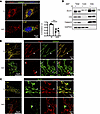 Figure 1
Glutamine deprivation induces GLS1 clustering within mitochondria. (A) Immunocytochemistry (ICC) of GLS1 (red) in HUVECs after 24-hour culture in glutamine-supplemented (Q) versus -deprived (noQ) media. GLS was costained for COXIV (green) and with DAPI (blue). Images were acquired with a wide-field fluorescence microscope using a 100× objective lens. Scale bar: 10 μm. The correlation coefficient (r) of GLS1 and COXIV staining was calculated using CellProfiler. ***P < 0.001 by 2-tailed Student’s t test. (B) ICC of GLS1 (red) and COXIV (green) after a 24-hour culture in Q versus noQ media followed by imaging using a confocal and Airyscan microscope. (C) Costaining of GLS1 (green) with MitoTracker Red dye after 24-hour culture in Q versus noQ media followed by imaging using a confocal and Airyscan microscope. Scale bars (B and C): 10 μm (left) and 1 μm (right). (D) Mitochondrial fractionation assay performed in 293T cells after 24-hour culture in Q (+) versus noQ (–) media.
GLS clustering is rapid and occurs within the physiological range of glutamine concentrations. To determine the kinetics of GLS1 clustering, we carried out a time-course study in C2C12 cells. GLS1 clustering was observed within 1 hour of glutamine deprivation and was complete by 6 hours (Figure 2A). GLS1 clustering was also reversible, with similar kinetics, as replenishing glutamine led to the redistribution of clustered GLS1 as early as 1 hour (Figure 2B). To determine the concentration of glutamine below which GLS1 clustering occurs, we performed a dose-response study in HUVECs. Treating cells with 100 μM glutamine for 6 hours promoted GLS1 clustering, while 300 μM did not (Figure 2C). Because these cells are avid consumers of glutamine (31), we measured glutamine concentration in the media at the end of the 5-hour incubation, revealing a remaining 55 μM and 223 μM, respectively (Figure 2D), indicating that GLS1 clustering occurs within this range. Normal plasma concentrations of glutamine are approximately 500 μM, but intratumor or for example brain interstitial concentrations are much lower, the latter approximately 80 μM (1). GLS1 clustering thus occurs in a range of glutamine concentration that can be found in tumors and other nutrient-poor settings.
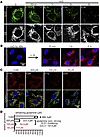 Figure 2
Time course and dose response of glutamine deprivation for GLS1 clustering. (A) noQ time-course study in C2C12 myoblasts. Costaining of GLS1 (green) with CS (gray) after noQ for the indicated time points. (B) Glutamine (2 mM) replenishment time-course study in HUVECs after 48 hours of noQ. GLS1 (red) and DAPI. (C) Glutamine dose-response study in HUVECs. Costaining of GLS1 (red) with COXIV (green) after incubation with the indicated concentrations of glutamine for 6 hours. GLS1 clustering was observed under conditions where 100 μM or 50 μM glutamine was used. (D) Concentration of the remaining glutamine (μM) measured in the media of the experimental conditions in C. Scale bars: 10 μm.
GLS clustering is triggered by sensing glutamate levels. We next investigated the mechanism by which GLS1 clustering is induced. We first sought to determine how the low-glutamine state is sensed. Upon cellular uptake, glutamine undergoes catabolism to glutamate by GLS1, followed by conversion to α-ketoglutarate (αKG) through the action of GLUD and transaminases. Subsequently, αKG serves as an anaplerotic carbon source entering the TCA cycle. Conversely, αKG can contribute to the de novo synthesis of glutamate and glutamine via GLUD, transaminases, and glutamine synthase (GLUL), as illustrated in the schematic diagram (Figure 3A). Supplementation with 2 mM dimethyl-αKG, a cell-permeable form of αKG, completely inhibited GLS1 clustering (Figure 3, B and C). Unmethylated αKG also prevented GLS1 clustering but required a higher concentration, consistent with poor cellular uptake (Supplemental Figure 5A). We have shown previously that glutamine deprivation profoundly reduces intracellular levels of TCA intermediates, and that dimethyl-αKG largely rescues this effect (31). Therefore, to dissect whether the rescue of GLS1 clustering by αKG relies on de novo synthesis of glutamate and glutamine versus its replenishment of TCA intermediates, we blocked αKG-to-glutamate conversion using EGCG and AOA, inhibitors of GLUD and transaminases, respectively (Figure 3, B and C). This treatment completely reversed the rescue of GLS1 clustering by αKG in noQ conditions, indicating that αKG-mediated rescue of GLS1 clustering is likely mediated by glutamate or glutamine, rather than replenishing TCA intermediates. Treatment with either EGCG or AOA did not fully reverse the αKG-mediated rescue of GLS1 clustering, consistent with redundancy in these pathways (Supplemental Figure 5B). αKG supplementation restored intracellular glutamate levels in noQ conditions, but did not restore glutamine levels (Figure 3D), suggesting that glutamate, rather than glutamine, likely regulates GLS1 clustering. To confirm this conclusion, we knocked down GLUL to inhibit glutamine synthesis from glutamate, which led to further enhancement of the αKG-mediated rescue of GLS1 clustering (Figure 3E), demonstrating that glutamate regulates GLS1 clustering independently of glutamine. Also consistent with this conclusion, supplementation with glutamate or monosodium glutamate (MSG) rescued GLS1 clustering (Supplemental Figure 5C), as did pharmacologically or genetically blocking the xCT antiporter, responsible for exporting glutamate out of the cell (Supplemental Figure 5D). Finally, considering the role of glutamine as a nitrogen source, we also tested whether nitrogen depletion contributes to GLS1 clustering, but supplementing cells in noQ with ammonia showed no effect on GLS1 clustering (Supplemental Figure 5E). We conclude that GLS1 clustering is triggered specifically by sensing glutamate.
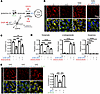 Figure 3
The level of glutamate, not glutamine, determines GLS1 clustering. (A) Schematic of the rescue study, where targeted pathways and proteins are highlighted. (B) Left: Rescue of GLS1 clustering by dimethyl-αKG (2 mM) supplementation in noQ for 6 hours. Right: Reversal of the dimethyl-αKG–mediated rescue of GLS clustering by 6-hour treatment with EGCG (100 μM) and AOA (500 μM). (C) Correlation coefficient (r) for the conditions in B. (D) Quantifications of cellular glutamate, αKG, and glutamine in HUVECs with conditions in B. (E) siRNA-mediated knockdown of GLUL promotes the rescue by dimethyl-αKG (1 mM) supplementation in noQ. **P < 0.01; ***P < 0.001; ****P < 0.0001 by 1-way ANOVA followed by Bonferroni’s post hoc testing. Scale bars: 10 μm.
Mitochondrial fusion/fission is required for GLS clustering. We next sought to determine by what process the redistribution of GLS1 within the large mitochondrial network occurs. Mitochondria are highly dynamic organelles that continually undergo fusion and fission processes. The equilibrium between fusion and fission, along with significant rearrangements in the mitochondrial network, is known to vary under different metabolic states. For example, prolonged nutrient deprivation, including glutamine deprivation, promotes mitochondrial elongation (32, 33). Strikingly, however, we observed that in the short term, glutamine deprivation caused a rapid and transient fragmentation of mitochondria; mitochondrial fission was observed within 1 hour of glutamine deprivation (Figure 4A), and the tubular-elongated mitochondrial network was restored within the subsequent hours, despite persistent deprivation of glutamine. Interestingly, the clustering of GLS1 in response to glutamine deprivation coincided with this transient mitochondrial fragmentation (Figure 4, B and C), suggesting that a fission/fusion cycle is required for the redistribution and microlocalization of GLS1 into puncta. To test this notion, we inhibited DRP1, a key effector of mitochondrial fission, either pharmacologically (mdivi-1) (Figure 4D) or by genetic knockdown of DNM1L (gene symbol for DRP1) (Figure 4, E and F). In both cases, inhibition of mitochondrial fission largely prevented GLS1 clustering. We conclude that mitochondrial fission is a requisite process for GLS1 clustering in response to glutamine deprivation, likely enabling the redistribution and segregation of GLS1 within the mitochondrial network.
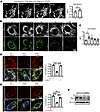 Figure 4
Mitochondrial fission is required for GLS1 clustering. (A) Time-lapse live imaging of mito-mCherry–overexpressing HUVECs during noQ. Quantification of mitochondrial fission is presented as mitochondrial fragmentation count (MFC). (B and C) ICC of CS and GLS1 during glutamine deprivation in C2C12 myoblasts. Quantification of mitochondrial fission is presented as MFC. (D) Rescue of GLS1 clustering by treatment with 20 μM mdivi-1. (E) Rescue of GLS clustering by siRNA knockdown of DNM1L. (F) Western blotting analysis of siRNA of DRP1 in HUVECs. *P < 0.05; **P < 0.01; ****P < 0.0001 by 2-tailed Student’s t test (A and C) or 1-way ANOVA followed by Bonferroni’s post hoc testing (D and E). Scale bars: 10 μm.
GLS clustering increases its enzymatic activity. Prior biochemical studies have shown that GLS1, under some conditions such as high concentrations of inorganic phosphate, can form supratetrameric filamentous oligomers, and that this oligomerization boosted GLS1 enzymatic activity (19, 22). We therefore hypothesized that GLS1 clustering in response to glutamine deprivation may similarly boost enzymatic activity, perhaps as a physiological adaptation to low substrate availability. To test this notion in intact cells, we employed a heavy isotope–tracing approach. Cells were preconditioned for 24 hours in either glutamine-containing (Q) or -deprived (noQ) media to induce GLS1 clustering, and subsequently additionally exposed to [U-13C5]glutamine for 5 or 10 minutes, followed by quantification by mass spectrometry of heavy isotope–labeled glutamate, the product of the GLS1 reaction (schematic in Figure 5A). As shown in Figure 5, B and C, after 24 hours of glutamine deprivation, and thus in the context of GLS1 clustering, the amount of 13C-labeled glutamate (M+5) produced in 5 and 10 minutes was more than 10 times that seen in cells maintained in complete media. Clustering in response to glutamine deprivation thus dramatically increases GLS1 enzymatic activity. Previous reports indicating that GLS1 can form supratetrameric oligomers with enhanced enzymatic activity identified a critical lysine at position 320 (K320), mutation of which led to constitutive oligomerization (19, 22). Consistent with this, we found that expression of this K320A GLS1 mutant (Figure 5D) in intact cells leads to constitutive clustering of GLS1, even under glutamine-rich conditions (Figure 5E), and concomitant markedly higher GLS1 activity than in cells expressing wild-type (WT) GLS1, as determined by [U-13C5]glutamine tracing (Figure 5F). In sum, intracellular GLS1 clustering induced either by glutamine deprivation or by genetic manipulation markedly increases its enzymatic activity.
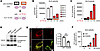 Figure 5
GLS1 clustering increases its enzymatic activity. (A) Schematic of the tracing experiment using [U-13C5]glutamine (Q) to measure enzymatic activity of GLS. (B) All glutamate that are heavy-isotope labeled by the indicated number of carbons. M+n: glutamate with n carbon atoms labeled with 13C. (C) Separate plot of 13C-glutamate that are M+5. (D) Western blotting analysis for the validation of the equivalent expression of GLS1-WT or GLS1-K320A in HeLa cells. Note: The constructs of GLS-WT and GLS-K320A were fused with mCherry and thus had a higher molecular weight than that of endogenous GLS. (E) ICC of WT versus K320A-GLS1-mCherry–overexpressing HeLa cells. Scale bar: 10 μm. **P < 0.01 by 2-tailed Student’s t test. (F) 13C-glutamate that are M+5 in WT versus K320A-GLS1-mCherry–overexpressing HeLa cells.
HIF2α suppresses GLS clustering. In further efforts to elucidate the molecular mechanisms that drive GLS1 clustering, we tested the impact of several compounds that mimic aspects of tumor biology and identified the hypoxia-mimetic dimethyloxalylglycine (DMOG) as a potent suppressor of GLS1 clustering (Figure 6A and Supplemental Figure 6, A–D). DMOG is an αKG analog that inhibits several αKG-dependent dioxygenases, including HIF prolyl hydroxylase, which mediate degradation of HIF transcription factors in the presence of oxygen (34). Consistent with this, DMOG treatment stabilized HIF1α and HIF2α proteins (Figure 6B and Supplemental Figure 6E) and induced their transcriptional activity (Figure 6C). We hypothesized that activation of HIF1α or HIF2α, the 2 predominant HIF factors, may suppress GLS1 clustering. To test this notion, we investigated whether the suppression of GLS1 clustering by DMOG requires HIF1α or HIF2α. Knockdown or knockout (KO) of HIF1α (validated in Figure 6B and Supplemental Figure 6, E and F) did not block DMOG’s suppression of GLS1 clustering (Figure 6A and Supplemental Figure 6, B and D). In contrast, knockdown or KO of HIF2α (validated in Figure 6B and Supplemental Figure 6, E and F) abrogated the effect of DMOG (Figure 6A and Supplemental Figure 6, C and D). Similarly, pharmacological inhibition of HIF2α translation (validated in Supplemental Figure 6E) also prevented DMOG’s suppression of GLS1 clustering (Supplemental Figure 6, C and D). We conclude that HIF2α, but not HIF1α, suppresses GLS1 clustering. Interestingly, we noted that inhibitors of HIF2α transcriptional activation (HIF inhibitors VII and PT2385) did not reverse DMOG’s effect (Figure 6D), despite efficient inhibition of HIF2α transcriptional activity (Figure 6C), suggesting that the effects of HIF2α are not dependent on HIF2α transcriptional activity. Further supporting this conclusion, overexpression of a constitutively stabilized ΔTAD HIF2α mutant that lacks the C-terminal transcription activation domain (C-TAD, a region required for transcriptional activation of HIF target genes) rescued GLS1 clustering as efficiently as did transcriptionally active HIF2α (Supplemental Figure 6, G–I). Finally, we also observed that DMOG treatment suppressed glutamine-deprivation-induced cell death (Figure 6E), indicating a prosurvival role of HIF2α under these conditions. Together, these findings demonstrate that HIF2α, but not HIF1α, suppresses GLS1 clustering, and does so in a transcriptional activity–independent manner.
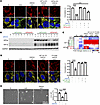 Figure 6
HIF2α prevents DMOG-induced redistribution of GLS1. (A) Rescue of GLS1 clustering by DMOG treatment is reversed by HIF2α but not HIF1α knockout (KO) in HUVECs. Correlation coefficient (r) for GLS1 (red) and COX IV (green) is shown on the right. (B) Western blotting analysis showing the validation of HIF1α KO and HIF2α KO in HUVECs. gRNAs are numbered 1–4 on top. V, vector. HIF1α gRNA1 and HIF2α gRNA2 were selected in the assays. (C) qPCR analysis showing the validation of DMOG and HIF2α transcriptional inhibitors in HUVECs. HIF1α target genes: LDHA, HK2, ENO1, and PDK1. HIF2α target genes: VEGFA and DLL4. (D) No reversal of the DMOG-induced GLS1 redistribution by inhibitors targeting the transcriptional activity of HIF2α. (E) Rescue of noQ-induced cell death by DMOG treatment in HUVECs. ***P < 0.001; ****P < 0.0001 by 1-way ANOVA followed by Bonferroni’s post hoc testing. Scale bars: 10 μm (A and D) and 100 μm (E).
GLS1 clustering in ccRCC is prevented by HIF2α. Activation of HIF2α is observed in nearly all cases of ccRCC, usually as a result of VHL inactivation, and HIF2α is required for tumor development (35–37). In contrast, HIF1α, while also activated by loss of VHL, is dispensable for tumor development (36, 37). We thus hypothesized that GLS1 clustering would be suppressed in HIF2α-positive ccRCC cells, and furthermore that the inhibition of GLS1 clustering by HIF2α in these cells may contribute to cell viability and tumorigenesis, as suggested above (Figure 6E). Indeed, in contrast with all other cells we tested (Figures 1 and 2, and Supplemental Figure 3), both UMRC2 and 769-P cell lines, derived from human ccRCCs and which exhibit constitutive HIF2α activity (38) (Figure 7, A and B, and Supplemental Figure 7A), were resistant to GLS1 clustering under glutamine-deprived conditions (Figure 7C, Supplemental Figure 7C, and Supplemental Figure 8A). Moreover, this resistance was dependent on HIF2α as demonstrated by KO and siRNA knockdown (Figure 7, A and C, Supplemental Figure 7, A–C, and Supplemental Figure 8A). Coincident with the protection from GLS1 clustering, these cells were also protected from cell death induced by glutamine deprivation (Figure 7, D and E, Supplemental Figure 7D, and Supplemental Figure 8, B and C), akin to the protection seen with DMOG in other cells (Figure 6E), and suppressing HIF2α sensitized the cells to glutamine deprivation (Figure 7, D and E, Supplemental Figure 7D, and Supplemental Figure 8, B and C). Conversely, ectopic expression of the constitutively clustering GLS1 K320A mutant was sufficient to induce cell death in glutamine-deprived ccRCC cell lines (Figure 7F and Supplemental Figure 8D). These findings demonstrate that HIF2α-driven ccRCC cells actively suppress GLS1 clustering in a HIF2α-dependent fashion. Moreover, HIF2α-driven inhibition of GLS1 clustering is required to prevent cell death in low-glutamine environments, uncovering an important liability of these tumors.
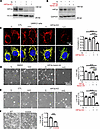 Figure 7
GLS1 clustering is prevented in UMRC2 cells in a HIF2α-dependent manner. (A and B) Western blotting analysis for the validation of HIF2α KO (A) and its translational inhibitor (B) in UMRC2 cells. (C) Resistance to noQ-induced GLS1 clustering in UMRC2 cells is reversed by HIF2α KO. (D) Resistance to noQ-induced cell death in UMRC2 cells is reversed by treatment with an inhibitor of HIF2α translation. (E) Resistance to noQ-induced cell death in UMRC2 cells is reversed by HIF2α KO. (F) Increased cell death in UMRC2 cells overexpressing the K320A mutant GLS1 compared with those overexpressing WT GLS. ***P < 0.001; ****P < 0.0001 by 1-way ANOVA followed by Bonferroni’s post hoc testing (C–E) or 2-tailed Student’s t test (F). Scale bars: 10 μm (C) and 100 μm (D–F).
To investigate HIF2α-dependent inhibition of GLS1 clustering in human RCC, we performed immunohistochemistry on primary human tissue samples, including normal kidney, ccRCC, and papillary RCC (pRCC) (Supplemental Figure 9A). We compared ccRCC and pRCC due to their distinct HIF biology; ccRCC is generally associated with VHL loss and constitutive HIF2α activation, while pRCCs generally do not have HIF2α activation, instead bearing mutations in several distinct pathways (39). Blinded immunohistochemical analyses revealed diffuse GLS1 staining seen in normal kidney samples and clear GLS1 clustering in pRCC samples (Supplemental Figure 9A), likely a response to low intratumor glutamine concentrations. In sharp contrast, almost no GLS1 clustering was seen in ccRCC samples (Supplemental Figure 9A), consistent with suppression of GLS1 clustering by activated HIF2α in the context of tumors lacking VHL. Together, these findings demonstrate that HIF2α-driven ccRCC cells actively inhibit GLS clustering, playing a key role in ccRCC biology, and uncover a potential liability in these lethal tumors.
Promoting GLS1 clustering suppresses ccRCC tumor growth. To test this potential liability of GLS1 clustering in tumors in vivo, we used a subcutaneous xenograft model of ccRCC by injecting UMRC2 cells into the dorsal flanks of immunocompromised mice. Patient-derived xenografts from VHL-mutant ccRCC retain robust glutamine metabolism (both oxidative and reductive), supporting the relevance of the model (40). Animals received UMRC2 cells overexpressing either WT or K320A GLS1 on paired dorsal flanks, and tumor growth was monitored noninvasively for 10 weeks, followed by sacrifice and histological analysis (schematic in Figure 8A). Compared with WT, K320A GLS1–expressing tumors exhibited significantly reduced growth, with lower tumor volumes and weights (Figure 8, B–E). Immunohistochemistry confirmed robust GLS1 clustering in K320A GLS1–expressing tumors (Figure 8F), while TUNEL staining revealed increased apoptosis (Figure 8G), consistent with our in vitro findings (Figure 7F and Supplemental Figure 8D). The expression of WT and K320A GLS1 in UMRC2 cells was validated by Western blotting (Supplemental Figure 9B). [U-13C5]glutamine tracing demonstrated that enforced clustering significantly increased GLS activity, as shown by elevated production of labeled glutamate and αKG (Supplemental Figure 9, C–F). Consistent with these cell-based results, K320A tumors in vivo exhibited higher glutamate levels than WT tumors (Supplemental Figure 9, G and H), confirming that forced GLS1 clustering enhances enzymatic activity in the tumor context. To test the impact of GLS inhibition in vivo, we treated mice bearing WT and K320A-expressing UMRC2 tumors with CB-839 (telaglenastat), a clinically used GLS inhibitor. CB-839 effectively suppressed GLS1 enzymatic activity in both WT and K320A cells (Supplemental Figure 10A). In vivo, CB-839 treatment produced a modest trend toward delayed growth of WT tumors, consistent with the low baseline GLS1 activity in ccRCC, and had little additional effect on K320A tumors, which were already strongly growth suppressed (Supplemental Figure 10B). Of note, in this repeat xenograft study, we injected half the number of cells used in the study shown in Figure 8 (5 million vs. 10 million), rendering the difference between WT and K320A tumor growth even more striking (Supplemental Figure 10B), suggesting a possible threshold effect of tumor cell number on the manifestation of GLS1-clustering-dependent growth differences. Together, these findings demonstrate that forced GLS1 clustering enhances enzymatic activity, increases apoptosis, and suppresses ccRCC tumor growth. They further provide a mechanistic explanation for why GLS inhibitors show limited efficacy in ccRCC clinically; baseline GLS1 clustering and activity are already low due to HIF2α-imposed inhibition, leaving little room for pharmacologic inhibition to impact tumor growth.
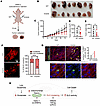 Figure 8
Promoting GLS1 clustering in UMRC2 suppresses tumorigenesis. (A) Schematic of the UMRC2 injection study. Each nude mouse received subcutaneous injections of 10 million UMRC2 cells overexpressing either WT GLS or K320A GLS1 into their left and right flanks, respectively. (B) Reduced tumor growth in K320A-overexpressing UMRC2. Photo of all dissected tumors: WT on the upper panel and K320A on the lower panel, n = 8 for each group. (C) Average tumor volume (mm3) in WT versus K320A GLS1–overexpressing UMRC2 during the 12-week monitoring period. Black circles: WT; red circles: K320A. (D) Pair-matched plot of tumor volume (mm3) in WT versus K320A GLS1–overexpressing UMRC2 in each mouse. (E) Plot of tumor weight (mg) in WT versus K320A GLS1–overexpressing UMRC2 in each mouse. (F) Confirmation of GLS1 clustering in K320A-overexpressing UMRC2 tumor. Left panel depicts the representative confocal images. Right panel shows the quantification of GLS1 clustering. *P < 0.05, **P < 0.01, ****P < 0.0001 by paired sample, 2-tailed Student’s t test. (G) Increased apoptosis in K320A-overexpressing UMRC2 tumor. Scale bars: 2 μm (F) and 50 μm (G). Inset magnification, ×6. (H) Schematic of the model.


