
Research ArticleImmunologyOncology
Open Access |  10.1172/jci.insight.155006
Dual IL-6 and CTLA-4 blockade regresses pancreatic tumors in a T cell– and CXCR3-dependent manner
Michael Brandon Ware,1,2 Maggie Phillips,1 Christopher McQuinn,3 Mohammad Y. Zaidi,2 Hannah M. Knochelmann,4 Emily Greene,1 Brian Robinson,5 Cameron J. Herting,1 Thomas A. Mace,6 Zhengjia Chen,7 Chao Zhang,7 Matthew R. Farren,1 Amanda N. Ruggieri,1 Jacob S. Bowers,4 Reena Shakya,8 Alton B. Farris,5 Gregory Young,9 William E. Carson III,3 Bassel El-Rayes,1 Chrystal M. Paulos,2 and Gregory B. Lesinski1
1Department of Hematology and Medical Oncology,
2Department of Surgery, Winship Cancer Institute of Emory University, Atlanta, Georgia, USA.
3Division of Surgical Oncology, Department of Surgery, Department of Internal Medicine, The Ohio State University, Columbus, Ohio, USA.
4Department of Microbiology and Immunology, Hollings Cancer Center, Medical University of South Carolina, Columbia, South Carolina, USA.
5Department of Pathology, Winship Cancer Institute of Emory University, Atlanta, Georgia, USA.
6Division of Gastroenterology Hepatology and Nutrition, Department of Internal Medicine, The Ohio State University, Columbus, Ohio, USA.
7Department of Biostatistics, Emory University, Atlanta, Georgia, USA.
8Comprehensive Cancer Center and
9Center for Biostatistics, The Ohio State University, Columbus, Ohio, USA.
Address correspondence to: Gregory B. Lesinski, Department of Hematology and Medical Oncology, Winship Cancer Institute of Emory University, 1365 Clifton Rd. NE, Atlanta, Georgia 30322, USA. Phone: 404.778.3072; Email: gregory.b.lesinski@emory.edu.
Find articles by
Ware, M.
in:
PubMed
|
Google Scholar
|

1Department of Hematology and Medical Oncology,
2Department of Surgery, Winship Cancer Institute of Emory University, Atlanta, Georgia, USA.
3Division of Surgical Oncology, Department of Surgery, Department of Internal Medicine, The Ohio State University, Columbus, Ohio, USA.
4Department of Microbiology and Immunology, Hollings Cancer Center, Medical University of South Carolina, Columbia, South Carolina, USA.
5Department of Pathology, Winship Cancer Institute of Emory University, Atlanta, Georgia, USA.
6Division of Gastroenterology Hepatology and Nutrition, Department of Internal Medicine, The Ohio State University, Columbus, Ohio, USA.
7Department of Biostatistics, Emory University, Atlanta, Georgia, USA.
8Comprehensive Cancer Center and
9Center for Biostatistics, The Ohio State University, Columbus, Ohio, USA.
Address correspondence to: Gregory B. Lesinski, Department of Hematology and Medical Oncology, Winship Cancer Institute of Emory University, 1365 Clifton Rd. NE, Atlanta, Georgia 30322, USA. Phone: 404.778.3072; Email: gregory.b.lesinski@emory.edu.
Find articles by Phillips, M. in: PubMed | Google Scholar
1Department of Hematology and Medical Oncology,
2Department of Surgery, Winship Cancer Institute of Emory University, Atlanta, Georgia, USA.
3Division of Surgical Oncology, Department of Surgery, Department of Internal Medicine, The Ohio State University, Columbus, Ohio, USA.
4Department of Microbiology and Immunology, Hollings Cancer Center, Medical University of South Carolina, Columbia, South Carolina, USA.
5Department of Pathology, Winship Cancer Institute of Emory University, Atlanta, Georgia, USA.
6Division of Gastroenterology Hepatology and Nutrition, Department of Internal Medicine, The Ohio State University, Columbus, Ohio, USA.
7Department of Biostatistics, Emory University, Atlanta, Georgia, USA.
8Comprehensive Cancer Center and
9Center for Biostatistics, The Ohio State University, Columbus, Ohio, USA.
Address correspondence to: Gregory B. Lesinski, Department of Hematology and Medical Oncology, Winship Cancer Institute of Emory University, 1365 Clifton Rd. NE, Atlanta, Georgia 30322, USA. Phone: 404.778.3072; Email: gregory.b.lesinski@emory.edu.
Find articles by McQuinn, C. in: PubMed | Google Scholar
1Department of Hematology and Medical Oncology,
2Department of Surgery, Winship Cancer Institute of Emory University, Atlanta, Georgia, USA.
3Division of Surgical Oncology, Department of Surgery, Department of Internal Medicine, The Ohio State University, Columbus, Ohio, USA.
4Department of Microbiology and Immunology, Hollings Cancer Center, Medical University of South Carolina, Columbia, South Carolina, USA.
5Department of Pathology, Winship Cancer Institute of Emory University, Atlanta, Georgia, USA.
6Division of Gastroenterology Hepatology and Nutrition, Department of Internal Medicine, The Ohio State University, Columbus, Ohio, USA.
7Department of Biostatistics, Emory University, Atlanta, Georgia, USA.
8Comprehensive Cancer Center and
9Center for Biostatistics, The Ohio State University, Columbus, Ohio, USA.
Address correspondence to: Gregory B. Lesinski, Department of Hematology and Medical Oncology, Winship Cancer Institute of Emory University, 1365 Clifton Rd. NE, Atlanta, Georgia 30322, USA. Phone: 404.778.3072; Email: gregory.b.lesinski@emory.edu.
Find articles by Zaidi, M. in: PubMed | Google Scholar
1Department of Hematology and Medical Oncology,
2Department of Surgery, Winship Cancer Institute of Emory University, Atlanta, Georgia, USA.
3Division of Surgical Oncology, Department of Surgery, Department of Internal Medicine, The Ohio State University, Columbus, Ohio, USA.
4Department of Microbiology and Immunology, Hollings Cancer Center, Medical University of South Carolina, Columbia, South Carolina, USA.
5Department of Pathology, Winship Cancer Institute of Emory University, Atlanta, Georgia, USA.
6Division of Gastroenterology Hepatology and Nutrition, Department of Internal Medicine, The Ohio State University, Columbus, Ohio, USA.
7Department of Biostatistics, Emory University, Atlanta, Georgia, USA.
8Comprehensive Cancer Center and
9Center for Biostatistics, The Ohio State University, Columbus, Ohio, USA.
Address correspondence to: Gregory B. Lesinski, Department of Hematology and Medical Oncology, Winship Cancer Institute of Emory University, 1365 Clifton Rd. NE, Atlanta, Georgia 30322, USA. Phone: 404.778.3072; Email: gregory.b.lesinski@emory.edu.
Find articles by
Knochelmann, H.
in:
PubMed
|
Google Scholar
|
1Department of Hematology and Medical Oncology,
2Department of Surgery, Winship Cancer Institute of Emory University, Atlanta, Georgia, USA.
3Division of Surgical Oncology, Department of Surgery, Department of Internal Medicine, The Ohio State University, Columbus, Ohio, USA.
4Department of Microbiology and Immunology, Hollings Cancer Center, Medical University of South Carolina, Columbia, South Carolina, USA.
5Department of Pathology, Winship Cancer Institute of Emory University, Atlanta, Georgia, USA.
6Division of Gastroenterology Hepatology and Nutrition, Department of Internal Medicine, The Ohio State University, Columbus, Ohio, USA.
7Department of Biostatistics, Emory University, Atlanta, Georgia, USA.
8Comprehensive Cancer Center and
9Center for Biostatistics, The Ohio State University, Columbus, Ohio, USA.
Address correspondence to: Gregory B. Lesinski, Department of Hematology and Medical Oncology, Winship Cancer Institute of Emory University, 1365 Clifton Rd. NE, Atlanta, Georgia 30322, USA. Phone: 404.778.3072; Email: gregory.b.lesinski@emory.edu.
Find articles by
Greene, E.
in:
PubMed
|
Google Scholar
|
1Department of Hematology and Medical Oncology,
2Department of Surgery, Winship Cancer Institute of Emory University, Atlanta, Georgia, USA.
3Division of Surgical Oncology, Department of Surgery, Department of Internal Medicine, The Ohio State University, Columbus, Ohio, USA.
4Department of Microbiology and Immunology, Hollings Cancer Center, Medical University of South Carolina, Columbia, South Carolina, USA.
5Department of Pathology, Winship Cancer Institute of Emory University, Atlanta, Georgia, USA.
6Division of Gastroenterology Hepatology and Nutrition, Department of Internal Medicine, The Ohio State University, Columbus, Ohio, USA.
7Department of Biostatistics, Emory University, Atlanta, Georgia, USA.
8Comprehensive Cancer Center and
9Center for Biostatistics, The Ohio State University, Columbus, Ohio, USA.
Address correspondence to: Gregory B. Lesinski, Department of Hematology and Medical Oncology, Winship Cancer Institute of Emory University, 1365 Clifton Rd. NE, Atlanta, Georgia 30322, USA. Phone: 404.778.3072; Email: gregory.b.lesinski@emory.edu.
Find articles by Robinson, B. in: PubMed | Google Scholar
1Department of Hematology and Medical Oncology,
2Department of Surgery, Winship Cancer Institute of Emory University, Atlanta, Georgia, USA.
3Division of Surgical Oncology, Department of Surgery, Department of Internal Medicine, The Ohio State University, Columbus, Ohio, USA.
4Department of Microbiology and Immunology, Hollings Cancer Center, Medical University of South Carolina, Columbia, South Carolina, USA.
5Department of Pathology, Winship Cancer Institute of Emory University, Atlanta, Georgia, USA.
6Division of Gastroenterology Hepatology and Nutrition, Department of Internal Medicine, The Ohio State University, Columbus, Ohio, USA.
7Department of Biostatistics, Emory University, Atlanta, Georgia, USA.
8Comprehensive Cancer Center and
9Center for Biostatistics, The Ohio State University, Columbus, Ohio, USA.
Address correspondence to: Gregory B. Lesinski, Department of Hematology and Medical Oncology, Winship Cancer Institute of Emory University, 1365 Clifton Rd. NE, Atlanta, Georgia 30322, USA. Phone: 404.778.3072; Email: gregory.b.lesinski@emory.edu.
Find articles by Herting, C. in: PubMed | Google Scholar
1Department of Hematology and Medical Oncology,
2Department of Surgery, Winship Cancer Institute of Emory University, Atlanta, Georgia, USA.
3Division of Surgical Oncology, Department of Surgery, Department of Internal Medicine, The Ohio State University, Columbus, Ohio, USA.
4Department of Microbiology and Immunology, Hollings Cancer Center, Medical University of South Carolina, Columbia, South Carolina, USA.
5Department of Pathology, Winship Cancer Institute of Emory University, Atlanta, Georgia, USA.
6Division of Gastroenterology Hepatology and Nutrition, Department of Internal Medicine, The Ohio State University, Columbus, Ohio, USA.
7Department of Biostatistics, Emory University, Atlanta, Georgia, USA.
8Comprehensive Cancer Center and
9Center for Biostatistics, The Ohio State University, Columbus, Ohio, USA.
Address correspondence to: Gregory B. Lesinski, Department of Hematology and Medical Oncology, Winship Cancer Institute of Emory University, 1365 Clifton Rd. NE, Atlanta, Georgia 30322, USA. Phone: 404.778.3072; Email: gregory.b.lesinski@emory.edu.
Find articles by Mace, T. in: PubMed | Google Scholar
1Department of Hematology and Medical Oncology,
2Department of Surgery, Winship Cancer Institute of Emory University, Atlanta, Georgia, USA.
3Division of Surgical Oncology, Department of Surgery, Department of Internal Medicine, The Ohio State University, Columbus, Ohio, USA.
4Department of Microbiology and Immunology, Hollings Cancer Center, Medical University of South Carolina, Columbia, South Carolina, USA.
5Department of Pathology, Winship Cancer Institute of Emory University, Atlanta, Georgia, USA.
6Division of Gastroenterology Hepatology and Nutrition, Department of Internal Medicine, The Ohio State University, Columbus, Ohio, USA.
7Department of Biostatistics, Emory University, Atlanta, Georgia, USA.
8Comprehensive Cancer Center and
9Center for Biostatistics, The Ohio State University, Columbus, Ohio, USA.
Address correspondence to: Gregory B. Lesinski, Department of Hematology and Medical Oncology, Winship Cancer Institute of Emory University, 1365 Clifton Rd. NE, Atlanta, Georgia 30322, USA. Phone: 404.778.3072; Email: gregory.b.lesinski@emory.edu.
Find articles by Chen, Z. in: PubMed | Google Scholar
1Department of Hematology and Medical Oncology,
2Department of Surgery, Winship Cancer Institute of Emory University, Atlanta, Georgia, USA.
3Division of Surgical Oncology, Department of Surgery, Department of Internal Medicine, The Ohio State University, Columbus, Ohio, USA.
4Department of Microbiology and Immunology, Hollings Cancer Center, Medical University of South Carolina, Columbia, South Carolina, USA.
5Department of Pathology, Winship Cancer Institute of Emory University, Atlanta, Georgia, USA.
6Division of Gastroenterology Hepatology and Nutrition, Department of Internal Medicine, The Ohio State University, Columbus, Ohio, USA.
7Department of Biostatistics, Emory University, Atlanta, Georgia, USA.
8Comprehensive Cancer Center and
9Center for Biostatistics, The Ohio State University, Columbus, Ohio, USA.
Address correspondence to: Gregory B. Lesinski, Department of Hematology and Medical Oncology, Winship Cancer Institute of Emory University, 1365 Clifton Rd. NE, Atlanta, Georgia 30322, USA. Phone: 404.778.3072; Email: gregory.b.lesinski@emory.edu.
Find articles by Zhang, C. in: PubMed | Google Scholar
1Department of Hematology and Medical Oncology,
2Department of Surgery, Winship Cancer Institute of Emory University, Atlanta, Georgia, USA.
3Division of Surgical Oncology, Department of Surgery, Department of Internal Medicine, The Ohio State University, Columbus, Ohio, USA.
4Department of Microbiology and Immunology, Hollings Cancer Center, Medical University of South Carolina, Columbia, South Carolina, USA.
5Department of Pathology, Winship Cancer Institute of Emory University, Atlanta, Georgia, USA.
6Division of Gastroenterology Hepatology and Nutrition, Department of Internal Medicine, The Ohio State University, Columbus, Ohio, USA.
7Department of Biostatistics, Emory University, Atlanta, Georgia, USA.
8Comprehensive Cancer Center and
9Center for Biostatistics, The Ohio State University, Columbus, Ohio, USA.
Address correspondence to: Gregory B. Lesinski, Department of Hematology and Medical Oncology, Winship Cancer Institute of Emory University, 1365 Clifton Rd. NE, Atlanta, Georgia 30322, USA. Phone: 404.778.3072; Email: gregory.b.lesinski@emory.edu.
Find articles by
Farren, M.
in:
PubMed
|
Google Scholar
|
1Department of Hematology and Medical Oncology,
2Department of Surgery, Winship Cancer Institute of Emory University, Atlanta, Georgia, USA.
3Division of Surgical Oncology, Department of Surgery, Department of Internal Medicine, The Ohio State University, Columbus, Ohio, USA.
4Department of Microbiology and Immunology, Hollings Cancer Center, Medical University of South Carolina, Columbia, South Carolina, USA.
5Department of Pathology, Winship Cancer Institute of Emory University, Atlanta, Georgia, USA.
6Division of Gastroenterology Hepatology and Nutrition, Department of Internal Medicine, The Ohio State University, Columbus, Ohio, USA.
7Department of Biostatistics, Emory University, Atlanta, Georgia, USA.
8Comprehensive Cancer Center and
9Center for Biostatistics, The Ohio State University, Columbus, Ohio, USA.
Address correspondence to: Gregory B. Lesinski, Department of Hematology and Medical Oncology, Winship Cancer Institute of Emory University, 1365 Clifton Rd. NE, Atlanta, Georgia 30322, USA. Phone: 404.778.3072; Email: gregory.b.lesinski@emory.edu.
Find articles by
Ruggieri, A.
in:
PubMed
|
Google Scholar
|
1Department of Hematology and Medical Oncology,
2Department of Surgery, Winship Cancer Institute of Emory University, Atlanta, Georgia, USA.
3Division of Surgical Oncology, Department of Surgery, Department of Internal Medicine, The Ohio State University, Columbus, Ohio, USA.
4Department of Microbiology and Immunology, Hollings Cancer Center, Medical University of South Carolina, Columbia, South Carolina, USA.
5Department of Pathology, Winship Cancer Institute of Emory University, Atlanta, Georgia, USA.
6Division of Gastroenterology Hepatology and Nutrition, Department of Internal Medicine, The Ohio State University, Columbus, Ohio, USA.
7Department of Biostatistics, Emory University, Atlanta, Georgia, USA.
8Comprehensive Cancer Center and
9Center for Biostatistics, The Ohio State University, Columbus, Ohio, USA.
Address correspondence to: Gregory B. Lesinski, Department of Hematology and Medical Oncology, Winship Cancer Institute of Emory University, 1365 Clifton Rd. NE, Atlanta, Georgia 30322, USA. Phone: 404.778.3072; Email: gregory.b.lesinski@emory.edu.
Find articles by
Bowers, J.
in:
PubMed
|
Google Scholar
|
1Department of Hematology and Medical Oncology,
2Department of Surgery, Winship Cancer Institute of Emory University, Atlanta, Georgia, USA.
3Division of Surgical Oncology, Department of Surgery, Department of Internal Medicine, The Ohio State University, Columbus, Ohio, USA.
4Department of Microbiology and Immunology, Hollings Cancer Center, Medical University of South Carolina, Columbia, South Carolina, USA.
5Department of Pathology, Winship Cancer Institute of Emory University, Atlanta, Georgia, USA.
6Division of Gastroenterology Hepatology and Nutrition, Department of Internal Medicine, The Ohio State University, Columbus, Ohio, USA.
7Department of Biostatistics, Emory University, Atlanta, Georgia, USA.
8Comprehensive Cancer Center and
9Center for Biostatistics, The Ohio State University, Columbus, Ohio, USA.
Address correspondence to: Gregory B. Lesinski, Department of Hematology and Medical Oncology, Winship Cancer Institute of Emory University, 1365 Clifton Rd. NE, Atlanta, Georgia 30322, USA. Phone: 404.778.3072; Email: gregory.b.lesinski@emory.edu.
Find articles by Shakya, R. in: PubMed | Google Scholar
1Department of Hematology and Medical Oncology,
2Department of Surgery, Winship Cancer Institute of Emory University, Atlanta, Georgia, USA.
3Division of Surgical Oncology, Department of Surgery, Department of Internal Medicine, The Ohio State University, Columbus, Ohio, USA.
4Department of Microbiology and Immunology, Hollings Cancer Center, Medical University of South Carolina, Columbia, South Carolina, USA.
5Department of Pathology, Winship Cancer Institute of Emory University, Atlanta, Georgia, USA.
6Division of Gastroenterology Hepatology and Nutrition, Department of Internal Medicine, The Ohio State University, Columbus, Ohio, USA.
7Department of Biostatistics, Emory University, Atlanta, Georgia, USA.
8Comprehensive Cancer Center and
9Center for Biostatistics, The Ohio State University, Columbus, Ohio, USA.
Address correspondence to: Gregory B. Lesinski, Department of Hematology and Medical Oncology, Winship Cancer Institute of Emory University, 1365 Clifton Rd. NE, Atlanta, Georgia 30322, USA. Phone: 404.778.3072; Email: gregory.b.lesinski@emory.edu.
Find articles by Farris, A. in: PubMed | Google Scholar
1Department of Hematology and Medical Oncology,
2Department of Surgery, Winship Cancer Institute of Emory University, Atlanta, Georgia, USA.
3Division of Surgical Oncology, Department of Surgery, Department of Internal Medicine, The Ohio State University, Columbus, Ohio, USA.
4Department of Microbiology and Immunology, Hollings Cancer Center, Medical University of South Carolina, Columbia, South Carolina, USA.
5Department of Pathology, Winship Cancer Institute of Emory University, Atlanta, Georgia, USA.
6Division of Gastroenterology Hepatology and Nutrition, Department of Internal Medicine, The Ohio State University, Columbus, Ohio, USA.
7Department of Biostatistics, Emory University, Atlanta, Georgia, USA.
8Comprehensive Cancer Center and
9Center for Biostatistics, The Ohio State University, Columbus, Ohio, USA.
Address correspondence to: Gregory B. Lesinski, Department of Hematology and Medical Oncology, Winship Cancer Institute of Emory University, 1365 Clifton Rd. NE, Atlanta, Georgia 30322, USA. Phone: 404.778.3072; Email: gregory.b.lesinski@emory.edu.
Find articles by Young, G. in: PubMed | Google Scholar
1Department of Hematology and Medical Oncology,
2Department of Surgery, Winship Cancer Institute of Emory University, Atlanta, Georgia, USA.
3Division of Surgical Oncology, Department of Surgery, Department of Internal Medicine, The Ohio State University, Columbus, Ohio, USA.
4Department of Microbiology and Immunology, Hollings Cancer Center, Medical University of South Carolina, Columbia, South Carolina, USA.
5Department of Pathology, Winship Cancer Institute of Emory University, Atlanta, Georgia, USA.
6Division of Gastroenterology Hepatology and Nutrition, Department of Internal Medicine, The Ohio State University, Columbus, Ohio, USA.
7Department of Biostatistics, Emory University, Atlanta, Georgia, USA.
8Comprehensive Cancer Center and
9Center for Biostatistics, The Ohio State University, Columbus, Ohio, USA.
Address correspondence to: Gregory B. Lesinski, Department of Hematology and Medical Oncology, Winship Cancer Institute of Emory University, 1365 Clifton Rd. NE, Atlanta, Georgia 30322, USA. Phone: 404.778.3072; Email: gregory.b.lesinski@emory.edu.
Find articles by Carson, W. in: PubMed | Google Scholar
1Department of Hematology and Medical Oncology,
2Department of Surgery, Winship Cancer Institute of Emory University, Atlanta, Georgia, USA.
3Division of Surgical Oncology, Department of Surgery, Department of Internal Medicine, The Ohio State University, Columbus, Ohio, USA.
4Department of Microbiology and Immunology, Hollings Cancer Center, Medical University of South Carolina, Columbia, South Carolina, USA.
5Department of Pathology, Winship Cancer Institute of Emory University, Atlanta, Georgia, USA.
6Division of Gastroenterology Hepatology and Nutrition, Department of Internal Medicine, The Ohio State University, Columbus, Ohio, USA.
7Department of Biostatistics, Emory University, Atlanta, Georgia, USA.
8Comprehensive Cancer Center and
9Center for Biostatistics, The Ohio State University, Columbus, Ohio, USA.
Address correspondence to: Gregory B. Lesinski, Department of Hematology and Medical Oncology, Winship Cancer Institute of Emory University, 1365 Clifton Rd. NE, Atlanta, Georgia 30322, USA. Phone: 404.778.3072; Email: gregory.b.lesinski@emory.edu.
Find articles by
El-Rayes, B.
in:
PubMed
|
Google Scholar
|
1Department of Hematology and Medical Oncology,
2Department of Surgery, Winship Cancer Institute of Emory University, Atlanta, Georgia, USA.
3Division of Surgical Oncology, Department of Surgery, Department of Internal Medicine, The Ohio State University, Columbus, Ohio, USA.
4Department of Microbiology and Immunology, Hollings Cancer Center, Medical University of South Carolina, Columbia, South Carolina, USA.
5Department of Pathology, Winship Cancer Institute of Emory University, Atlanta, Georgia, USA.
6Division of Gastroenterology Hepatology and Nutrition, Department of Internal Medicine, The Ohio State University, Columbus, Ohio, USA.
7Department of Biostatistics, Emory University, Atlanta, Georgia, USA.
8Comprehensive Cancer Center and
9Center for Biostatistics, The Ohio State University, Columbus, Ohio, USA.
Address correspondence to: Gregory B. Lesinski, Department of Hematology and Medical Oncology, Winship Cancer Institute of Emory University, 1365 Clifton Rd. NE, Atlanta, Georgia 30322, USA. Phone: 404.778.3072; Email: gregory.b.lesinski@emory.edu.
Find articles by Paulos, C. in: PubMed | Google Scholar
1Department of Hematology and Medical Oncology,
2Department of Surgery, Winship Cancer Institute of Emory University, Atlanta, Georgia, USA.
3Division of Surgical Oncology, Department of Surgery, Department of Internal Medicine, The Ohio State University, Columbus, Ohio, USA.
4Department of Microbiology and Immunology, Hollings Cancer Center, Medical University of South Carolina, Columbia, South Carolina, USA.
5Department of Pathology, Winship Cancer Institute of Emory University, Atlanta, Georgia, USA.
6Division of Gastroenterology Hepatology and Nutrition, Department of Internal Medicine, The Ohio State University, Columbus, Ohio, USA.
7Department of Biostatistics, Emory University, Atlanta, Georgia, USA.
8Comprehensive Cancer Center and
9Center for Biostatistics, The Ohio State University, Columbus, Ohio, USA.
Address correspondence to: Gregory B. Lesinski, Department of Hematology and Medical Oncology, Winship Cancer Institute of Emory University, 1365 Clifton Rd. NE, Atlanta, Georgia 30322, USA. Phone: 404.778.3072; Email: gregory.b.lesinski@emory.edu.
Find articles by
Lesinski, G.
in:
PubMed
|
Google Scholar
|
Published March 7, 2023 - More info
JCI Insight. 2023;8(8):e155006. https://doi.org/10.1172/jci.insight.155006.
© 2023 Ware et al. This work is licensed under the Creative Commons Attribution 4.0 International License. To view a copy of this license, visit http://creativecommons.org/licenses/by/4.0/.
Received: September 14, 2021; Accepted: March 1, 2023

-
Results
Combined blockade of IL-6 and CTLA-4 augments antitumor efficacy in murine PDAC models. We first tested our hypothesis that dual IL-6 and CTLA-4 blockade therapy could improve immune responses to pancreatic cancer in mice bearing s.c. MT5 tumors. PDAC tumors were established in mice and then treated with either anti–IL-6 and/or anti–CTLA-4 Abs, as shown in scheme Figure 1A. For these studies, the MT5 cell line was used, which originated from a KPC tumor, harboring G12D-mutated (Kirsten rat sarcoma viral oncogene homologue) Kras and R172H-mutated Trp53 (12). Indeed, we found that tumor growth was significantly reduced in mice treated with combined IL-6– and CTLA‑4–blocking Abs compared with mice treated with isotype control Abs (P = 0.0001), single-agent CTLA-4 blockade (P = 0.0207), or IL-6 blockade (P = 0.0002) (Figure 1B). Although anti–CTLA-4 alone inhibited tumor growth to a greater extent than mice treated with an isotype control (P = 0.0004), blockade of IL-6 alone did not delay tumor growth. Thus, our findings reveal that dual IL-6 and CTLA-4 blockade enhances anti-PDAC immune responses; however, the mechanism required further investigation.
 Figure 1
Combined blockade of IL-6 and CTLA-4 significantly inhibits tumor growth and promotes CD3 T cell infiltration of tumors in an s.c. murine model of pancreatic cancer. Study timeline is shown in (A). MT5 murine pancreatic tumor cells were s.c. injected into C57BL/6 mice with treatment beginning when tumors reached 50–100 mm3. Mice were treated with 200 mg (i.p. injection 3 times/week) of isotype control, cytokine blockade anti–IL-6 and/or anti–CTLA-4 Abs (n = 5 mice/group) until mice met prespecified IACUC-approved early removal criteria. (B) Changes in tumor volume as determined by caliper measurement throughout the course of Ab treatment. Mean ± SD; *P < 0.05 versus isotype control; ‡P < 0.05 versus anti–IL-6; and †P < 0.05 versus anti–CTLA-4 using mixed-effects regression. (C) Representative 20× images of IHC staining for CD3 in FFPE tumor tissue slices from mice in the different treatment groups. (D) Mean ± SD for percent of cells expressing CD3+ in s.c. tumors per high-powered field. Symbols represent individual mice; * indicates significance compared with isotype control-treated mice. P values for significant comparisons with ANOVA and LSD for pairwise comparisons are as follows: isotype versus α–IL-6 (0.0013); isotype versus α–CTLA-4 (0.0058); and isotype versus α–IL-6 + α–CTLA-4 (0.0058). (E) Splenocytes were isolated from the mice receiving treatment as stated in B. Flow cytometry was performed with Abs against CD4, CCR6, CXCR3, CCR4, and RORγt. CD4+CCR6–CXCR3+CCR4– were identified as suggestive of a Th1 phenotype and CD4+CCR6–CXCR3–CCR4+ as a Th2 phenotype. (F) Graph of mean percentages of CD4+ T cells that have a Th1 or Th2 phenotype. Data shown as mean ± SD; * indicates significance compared with isotype control-treated mice with ANOVA and LSD for pairwise comparisons. P values for significant comparisons are as follows: isotype versus α–CTLA-4 (< 0.0001); isotype versus α–IL-6 + α–CTLA-4 (0.0004); α–IL-6 versus α–CTLA-4 (0.0026); and α–IL-6 versus α–IL-6 + α–CTLA-4 (0.0278).
Combined IL-6 and CTLA-4 blockade increases T cells in pancreatic tumors. In light of previous research investigating the influence of IL-6 (12) and CTLA-4 (13–15) on T cells, we hypothesized that combined blockade would increase T cell infiltration into pancreatic tumors. IHC staining of MT5 tumors from mice treated with this therapy indicated increased T cells within PDAC tumors compared with mice receiving isotype control or single-agent therapies (Figure 1, C and D). Image quantification revealed both single-agent blockade of IL-6 (P = 0.0038) or CTLA-4 (P = 0.0035) increased CD3+ T cell infiltration versus isotype control-treated mice (Figure 1, D and E). Mice given combined therapy had more T cells infiltrating tumors compared with mice treated with either single-agent blockade of IL-6 (P = 0.035), CTLA-4 (P = 0.038), or isotype controls (P = 0.0001), indicating a superior effect of IL-6 and CTLA-4 blockade on T cell infiltration in this tumor model (Figure 1D).
Systemic shifts in cells with Th1 phenotypes occur following IL-6 and CTLA-4 blockade therapy. The role of IL-6 in regulating T cell differentiation has been documented (16–18), while evidence suggests CTLA-4 blockade promotes the differentiation of naive CD4+ T cells into Th2 and T follicular (Tfh) subsets (13, 19, 20). Therefore, we evaluated the impact of this combination treatment on splenic T cells from mice bearing MT5 tumors as a surrogate of systemic changes. Mice receiving combined IL-6 and CTLA-4 blockade had increased CD4+ splenocytes as compared with those treated with anti–IL-6 alone (P = 0.0255) and isotype control (P = 0.0552) (Supplemental Figure 1A; supplemental material available online with this article; https://doi.org/10.1172/jci.insight.155006DS1). Anti–CTLA‑4 alone or in combination with IL-6 blockade increased splenic cells with a Th1 phenotype (CD4+CCR6–CXCR3+CCR4–) as compared with mice treated with isotype control (P < 0.0001 and P = 0.0004, respectively) or anti–IL-6 alone (P = 0.0026 and P = 0.0268, respectively) (Figure 1, E and F). No change in cells with Th2 (CD4+CCR6–CXCR3–CCR4+) or Th17 (CD4+RORγt+) phenotypes were evident (Figure 1, E and F, and Supplemental Figure 1B, respectively). Unexpectedly, the proportion of splenocytes expressing Treg markers (CD4+CD25+FoxP3+) was higher in the combination group versus both isotype control (P = 0.0027) and anti–IL-6 (P = 0.0007) in this model (Supplemental Figure 1D). Because IL‑6 also regulates expansion of myeloid-derived suppressor cells (MDSCs) in PDAC (21), phenotypic properties of these cells were assessed. We found no change in frequency of either monocytic (CD11b+Ly6G–Ly6C+) or granulocytic (CD11b+Ly6G+Ly6Clo) populations in splenocytes across groups in this s.c. tumor model (Supplemental Figure 1, F and G). These data indicate a dual role for combined IL‑6 and CTLA-4 blockade in driving T cells to infiltrate the tumor and shifting Th phenotypes.
Dual IL-6 and CTLA-4 blockade is effective in mice with orthotopic PDAC tumors. The efficacy of dual IL-6 and CTLA-4 blockade was next assessed in a more physiologically relevant murine model in which luciferase-expressing KPC cells (KPC-luc) are implanted into the pancreas of immune-competent mice, as detailed in Figure 2A. These cells express enhanced firefly luciferase that allows longitudinal biolumiscence imaging (BLI) of tumors. Longitudinal BLI indicated significant delay of tumor growth in mice receiving combined IL-6 and CTLA-4 blockade as compared with isotype control (p=0.002) or single agent (Figure 2B; P = 0.017 versus α–IL-6; P = 0.09 versus α–CTLA-4). Changes in total pancreas weight (containing tumors) at the study endpoint mirrored the efficacy of this treatment combination detected via BLI (Figure 2C) and indicated total pancreas weight from mice receiving dual IL-6 and CTLA-4 blockade were smaller than untreated animals given isotype control Abs (P = 0.03) or α–IL-6 alone (P = 0.008). All mice had primary tumors localized to the pancreas tail, while mice with advanced disease had tumor extensions into the peritoneum. Importantly, these data were reproducible, as similar efficacy data were obtained using a second murine model, whereby mice had panc02 tumors in the pancreas (Supplemental Figure 2). Upon study completion, tumors were harvested, and tumor-infiltrating lymphocytes (TILs) analyzed by flow cytometry to survey the immune features of the PDAC tumors. There was no significant difference in frequency of CD8+ T cells among groups, but a trend toward an increased frequency of CD4+ T cells in tumors from mice treated with dual IL-6 and CTLA-4 blockade, although this did not achieve statistical significance (P = 0.06) due to variability within the model (Figure 2D). Further evaluation of myeloid populations in this model indicated that PMN-MDSCs and macrophages were decreased in response to blocking IL-6, CTLA-4, or the combination as compared with mice receiving isotype control Abs (P < 0.05; Figure 2E). In contrast, no differences in monocytic MDSCs or DCs were evident in tumors between treatment groups (Figure 2E).
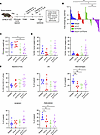 Figure 2
Combined blockade of IL-6 and CTLA-4 significantly inhibits tumor progression and modulates cell infiltration of tumors in an orthotopic murine model of pancreatic cancer. Study timeline in (A). C57BL/6 mice were orthotopically injected with 2 × 10⁵ KPC-luc cancer cells and treated 3 times a week for 2 weeks with Abs to IL-6 and CTLA-4 or isotype control Abs. (B) Tumor growth was tracked by BLI and the log2 fold change in total flux for each mouse was graphed as a bar. *P < 0.05; **P < 0.01. P values for significant comparisons using linear mixed models are as follows: isotype versus α–IL-6 + α–CTLA-4 (0.0002); α–IL-6 versus α–IL‑6 + α–CTLA-4 (0.017); and α–CTLA-4 versus α–IL-6 + α–CTLA-4 (0.009). Data are combined from 2 biologic replicates with similar results. Mouse numbers in each group were as follows: isotype, n = 15; α–IL-6, n = 12; α–CTLA-4, n = 13; and α–IL‑6 + α–CTLA-4, n = 14. (C) At the study endpoint, mice from 1 biologic replicate study were euthanized and the weight of each tumor was measured and graphed with symbols representing individual mice and mean displayed for each treatment group. P values for significant comparisons with ANOVA and LSD for pairwise comparisons are as follows: isotype versus α–IL-6 + α–CTLA-4 (P = 0.03) and α–IL-6 versus α–IL‑6 + α–CTLA-4 (0.008). (D) Flow cytometry was performed on TILs with Abs against CD8 and CD4 to assess T cells as a percentage of tumor weight. (E) TILs were also stained with a panel of Abs to delineate myeloid cells (CD11b+/CD11c+), DCs (I-A/E+ within CD11b+/CD11c+), macrophages (CD64+CD24– within CD11b+/CD11c+), monocytic MDSCs (M‑MDSCs; Ly6C+Ly6G– within CD11b+/CD11c+), and PMN-MDSCs (Ly6G+Ly6C– within CD11b+/CD11c+). For C–E, mouse numbers were as follows: isotype, n = 7; α–IL-6, n = 6; α–CTLA-4, n = 5; and α–IL‑6 + α–CTLA-4, n = 7.
Combined IL-6 and CTLA-4 blockade supports Th1 cytokines that crosstalk to facilitate chemokine production from tumor cells. As more Th1 cells were detected (based on chemokine signature phenotype) in mice following treatment with dual IL-6 and CTLA-4 blockade therapy (Figure 1F), we were prompted to consider the direct effects of our dual therapy on regulating the cytokine function in T cells. To address their capacity to secrete Th1-like cytokines, we stimulated splenic T cells from mice bearing orthotopic KPC-luc tumors in each of the 4 treatment groups with PMA/Ionomycin and assessed their intracellular cytokine production of IFN-γ, IL-2, IL-6, and IL-10 by flow cytometry. Both monotherapy CTLA‑4 blockade and dual IL-6/CTLA-4 blockade therapy mediated a predominant Th1 cytokine profile based on production of IFN-γ (Figure 3, A and B). Conversely, no changes in IL‑2 and IL-6 production were observed. Finally, we found that T cells from mice treated with anti–CTLA-4 Abs secreted IL-10 at high levels. To test if IFN-γ would be most induced with a dual blockade of IL-6 and CTLA-4 in an antigen-specific system, we next cultured these blocking Abs in the presence of transgenic CD4+ T cells, which express a T cell receptor (TCR) that recognizes a tyrosinase-related protein (TRP-1). Consistent with our findings in the MT5 model, TRP-1 CD4+ T cells treated with IL-6– and CTLA-4–blocking Abs secreted more IFN‑γ when restimulated with cognate antigen than untreated controls (Supplemental Figure 3A). This work suggests dual blockade fosters the generation of CD4+ T cells with a Th1 phenotype.
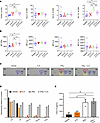 Figure 3
Combined blockade of IL-6 and CTLA-4 promotes IFN-γ production by CD4 T cells, which can elicit changes in chemokine production by pancreatic tumor cells. Splenocytes were isolated from mice bearing orthotopic KPC-luc following 2 weeks of Ab treatment as described in Figure 2. These cells were then stimulated with PMA/Ionomycin and assessed for intracellular cytokine production by flow cytometry. Mouse numbers in each group were as follows: isotype, n = 7; α–IL-6, n = 6; α–CTLA-4, n = 5; and α–IL‑6 + α–CTLA-4, n = 7. (A) The percentage of CD4+ T cells with intracellular cytokines (IFN-γ, IL-2, IL-6, and IL-10) were quantified by flow cytometry for each mouse with mean ± SD. *P < 0.05. (B) Graph shows the MFI of staining for each cytokine within the CD4+ T cells. (C) KPC-luc cells were plated at 2 × 10⁵ cells per well in 6 well plates and then stimulated with 10 ng/mL IFN-γ, 10 ng/mL IL-6, both, or vehicle control for 24 hours. Resulting supernatants were collected and analyzed using the Proteome Profiler Mouse Chemokine Array Kit as a screening tool. Shown are the resulting images of a chemokine membrane exposed to supernatants of KPC-luc cells from each treatment condition. (D) The relative densitometry to loading controls for LIX, JE, CXCL10, CXCL9, and CCL8 as detected by the chemokine array are graphed for each treatment condition. (E) Supernatants from replicates (n = 3) of the experiment described in C were quantified by ELISA and the resulting concentrations were graphed for CXCL10. Data are shown as the mean ± SD for each group. **P < 0.01 using ANOVA and LSD for pairwise comparisons.
Previous research also suggests IL-6 alters classical IFN-γ response genes, including chemokines for T cell trafficking (22). To define how IL-6 and IFN-γ induce chemokines by PDAC cells, we surveyed chemokine production by murine MT5 or KPC-luc tumor cells following in vitro stimulation with IFN-γ and/or IL-6 cytokines. Analysis of supernatants by chemokine array indicated abundant production of lipopolysaccharide-induced CXC chemokine (LIX) and JE/Monocyte chemotactic protein 1 (JE/ MCP-1), regardless of treatment condition (Figure 3, C and D). Notably, upregulation of IFN-γ–induced canonical chemokines was evident, including CXCL10 and CXCL9, which ligate the CXCR3 receptor (23–26). CCL8 (MCP-2) was also upregulated by IFN-γ (Figure 3, C and D). The upregulation of CXCL10 was further validated by ELISA as a canonical CXCR3-binding chemokine (Figure 3E and Supplemental Figure 4, A and B). However, no change in chemokines was observed after treatment of MT5 or KPC-luc cells with IL-6 alone, nor did combined stimulation with IL-6 and IFN-γ differ significantly from IFN-γ alone as quantified by ELISA (Figure 3, C–E, and Supplemental Figure 4, A and B).
CXCR3+ T cells infiltrate PDAC tumors in response to dual IL-6/CTLA-4 blockade. Based on our data in Figure 3, we hypothesized that Th1 cell trafficking into tumors via CXCR3 is a mechanism contributing to the efficacy of this therapy. To examine this question, we stained tumors for DAPI and CXCR3 and analyzed them by IHC (Figure 4A). Tumors from mice receiving combined IL-6 and CTLA-4 blockade had increased CXCR3+ T cells as a percentage of total cells compared with mice receiving isotype control Abs (Figure 4B). A subsequent study was conducted to validate whether TILs from mice expressed elevated CXCR3 in response to dual IL-6/CTLA-4 blockade. Here, CD3+ TILs were enriched by bead-based negative selection for CD3+ cells, followed by CD45+ selection to enrich CD3+CD45+ cells from established orthotopic tumors after 14 days of treatment with the combination or isotype control Abs. Endpoint tumor weight and changes in BLI are in Supplemental Figure 5, A and B. Since enzymatic digestion cleaves surface CXCR3, we evaluated RNA transcripts from TILs by PCR. These data revealed significantly greater CXCR3 on CD3+ TILs from mice treated with the combination therapy (Figure 4C). A trend toward increased IFN-γ transcripts was observed in these TILs, but this did not reach statistical significance (Figure 4D). Analysis of splenocytes from these same animals showed more circulating CD3+CD4+CXCR3+ T cells and a higher MFI for CXCR3 on these cells as well (Figure 4, E–G). In contrast, no significant difference in CXCR3 was observed on CD8+ T cells from each treatment group (Figure 4, H–J).
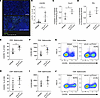 Figure 4
CXCR3+ T cells in PDAC tumors following dual IL-6/CTLA-4 blockade. C57BL/6 mice were orthotopically injected with 2 × 10⁵ KPC-luc cancer cells and treated 3 times a week for 2 weeks with Abs to IL-6 and CTLA-4 or isotype control Abs. (A) FFPE tumors (n = 6/group) were stained for DAPI (blue) and CXCR3 (green) by IHC and imaged using a Vectra Polaris immunofluorescent slide scanner (20×). Scale bars: 100 μM. (B) Whole slide scans were analyzed using Qupath and the percentage of all cells positive for CXCR3 is graphed. Each symbol represents a unique mouse. *P = 0.0371 with ANOVA and 2-tailed t test for pairwise comparisons. (C) CD3+CD45+ TILs were enriched from tumors of mice (n = 5/group) treated with Abs to IL-6 and CTLA-4 or isotype control Abs. RNA was isolated and analyzed by PCR for the expression of Cxcr3 or (D) Ifng. Median Ct values were normalized to housekeeping genes and plotted as indicated. *P = 0.0223 with ANOVA and 2-tailed t test for pairwise comparisons. (E) Splenocytes from these mice were stained for CD3, CD4, CD8, and CXCR3. The percentage of CD4+ T cells expressing CXCR3 and (F) the MFI of CXCR3 on CD4+ T cells is graphed with (G) representative flow plots of CXCR3 staining shown. (H) The percentage of CD8+ T cells expressing CXCR3 and (I) the MFI of CXCR3 on CD8+ T cells is graphed with (J) representative flow plots of CXCR3 staining shown. * indicates significance with ANOVA and 2-tailed t test for pairwise comparisons. CXCR3+ is a percentage of CD4 (P = 0.0132). CXCR3 MFI on CD4+ T cells (P = 0.0430).
CXCR3-dependent efficacy of combined IL-6 and CTLA-4 blockade. To determine if CXCR3 receptor interactions were essential for the T cell response, we Ab blocked CXCR3 in mice receiving combination therapy. Mice receiving combined IL-6 and CTLA-4 blockade experienced consistent tumor regression by BLI (Figure 5 and Supplemental Figure 5A). As expected, we found that concurrent CXCR3 blockade significantly inhibited the efficacy of combination therapy, leading to results similar to treatment with isotype controls (Figure 5, A and B). No profound change in tumor growth by BLI was evident between mice treated with isotype controls or single-agent therapy. Post-mortem pancreas weight at study endpoint confirmed growth inhibitory effects of the combination were significant, as compared with treatment with anti–CTLA-4 or isotype controls (P = 0.0778 and P = 0.0005, respectively; Figure 5B). Similar to prior studies (Figure 2, B and C), the primary tumor localized to the pancreas tail was confirmed post mortem, and mice with advanced disease had small peritoneal extensions. In this study, 4 mice in the combination therapy group had no tumors, but pancreatic weight was recorded. Notably, this CXCR3-dependent mechanism of concurrent IL-6 and CTLA‑4 blockade was confirmed in mice bearing s.c. MT5 tumors (Supplemental Figure 5C).
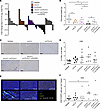 Figure 5
Dual IL-6/CTLA-4 blockade controls murine orthotopic pancreatic tumors in a CXCR3-dependent manner and modulates intratumoral T cells. (A) Mice bearing orthotopic KPC-luc tumors were treated with isotype control Abs, Abs to IL-6, CTLA-4, both Abs combined, or dual IL-6 and CTLA-4 blockade together with Abs to CXCR3. Mouse numbers were as follows: isotype, n = 8; α–IL-6, n = 8; α–CTLA-4, n = 8; α–IL‑6 + α–CTLA-4, n = 7; and α–IL‑6 + α–CTLA-4 + α-CXCR3, n = 7. Tumor growth was tracked by BLI and log2 fold change in total flux for each mouse was graphed as a bar. Using linear mixed models, all groups were determined to be significantly different to mice receiving dual IL-6 and CTLA-4 blockade (P < 0.05). P values for significant comparisons are as follows: isotype versus α–IL-6 + α–CTLA-4 (0.0003); α–IL-6 versus α–IL-6 + α–CTLA-4 (0.0104); α–CTLA-4 versus α–IL-6 + α–CTLA-4 (0.0039); and α–IL-6 + α–CTLA-4 versus α–IL-6 + α–CTLA-4 + α-CXCR3 (0.0029). (B) The total weight (grams) of each tumor-containing pancreas was collected and graphed as the mean for each group. *P < 0.05. P values for significant comparisons using ANOVA and LSD for pairwise comparisons are as follows: isotype versus α–IL-6 + α–CTLA-4 (0.0005); α–IL-6 versus α–IL-6 + α–CTLA-4 (0.0224); isotype versus IL-6 + α–CTLA-4 + α-CXCR3 (0.0247); and α–IL-6 + α–CTLA-4 versus α–IL-6 + α–CTLA-4 + α-CXCR3 (0.0405). FFPE tissue slices of tumors from mice in (A) were stained for CD8 by IHC. (C) Representative images of IHC staining (20×) for CD8 in tumors. Scale bars: 100 μM. (D) Infiltrating CD8 T cells were quantified using Qupath and graphed as % CD8 of all cells. Results are displayed as the mean for each group. (E) FFPE tissue slices from tumors were stained for CD4 and FOXP3 with DAPI counterstain. Representative images are displayed with CD4 staining (green), FOXP3 (red), and DAPI (blue). Scale bars: 100μM. (F) After scanning slides using a Perkin Elmer Vectra Polaris fluorescent slide scanner, the percentage of CD4+FOXP3– cells were quantified with Qupath and graphed as the mean for each treatment group. *P = 0.0297 between isotype and receiving dual IL‑6/CTLA-4 blockade using ANOVA and LSD for pairwise comparisons.
Dual blockade therapy and infiltration of T cells into PDAC tumors. Changes in the tumor microenvironment that may explain efficacy of this combination were surveyed by IHC. Although prior observations show IL-6 is derived from fibroblasts in PDAC (21, 27), α–smooth muscle actin (α-SMA) staining was not significantly different between groups (Supplemental Figure 6, A and B). A trend toward increased CD8+ T cells in tumors from mice receiving dual blockade was seen, but was not significant (Figure 5, C and D). Although no differences in CD4+FoxP3+ T cells emerged (Supplemental Figure 6C), a consistent increase in CD4+ T cells lacking FOXP3 expression was present in tumors from mice receiving combined IL‑6 and CTLA‑4 blockade compared with controls (P = 0.0297) or to mice receiving anti–IL-6 alone (P = 0.0439) (Figure 5, E and F). There was a trend toward reduced CD4+ T cells in tumors from mice treated with CXCR3-directed Abs and the combination of IL-6 and CTLA-4 blockade, although it did not reach statistical significance.
Dual blockade therapy expands systemic TBET+ and GATA3+CD4+ T cells in an orthotopic PDAC model. We next investigated the effects of treatment on systemic T cell phenotypes in the orthotopic model. Flow cytometry (Figure 6A) recapitulated observations of Th1 immunity, consistent with splenocyte data in the s.c. model (Figure 1, E and F). Robust expansion of CD3+CD4+TBET+ (Th1) T cells was observed in splenocytes from mice receiving combined IL-6 and CTLA-4 blockade (P = 0.0015) or anti–IL-6 alone (P = 0.0041) versus isotype-treated mice (Figure 6A). We also observed significantly higher splenic CD3+CD4+GATA3+ (Th2) T cells in mice treated with the combination compared with isotype controls (P = 0.0003; Figure 6B). Of note, CD3+CD4+GATA3+ T cells were more abundant in mice receiving the combination blockade versus those treated with anti–CTLA-4 alone (P =.0012; Figure 6B). Thus, a unique increase in both TBET+ and GATA3+CD4+ T cells was observed in mice treated with combined IL-6 and CTLA-4 blockade. We also observed no difference in frequency of CD3+CD4+RORγt+ cells or in Tregs, defined phenotypically as CD3+CD4+CD25hiFOXP3+, from mice receiving combined IL-6 and CTLA-4 blockade as compared with isotype control-treated mice (Figure 6, C and D). There were no differences in these systemic biomarkers between mice receiving only the combination or the combination together with CXCR3-targeted Abs (Figure 6, A–D).
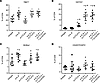 Figure 6
Combined blockade of IL-6 and CTLA-4 in mice bearing orthotopic pancreatic tumors results in splenic changes in CD4 Th cells. Splenocytes were isolated from the mice receiving treatment as stated in Figure 4. Cells were stained for CD3, CD4, and CD8 surface markers with Ghost 780 viability stain to mark dead cells. After fixation and permeabilization, cells were stained for the transcription factors TBET, GATA3, RORyt, and FOXP3. The percentage of CD4+ T cells that were (A) TBET+, (B) GATA3+, (C) RORγt+, or (D) CD25hiFOXP3+ were graphed as the mean ± SD with symbols indicating significance (P < 0.05) compared with *isotype control mice, Ϯα-CTLA-4–treated mice, or ᴓα-IL-6–treated mice. P values for significant comparisons using ANOVA and LSD for pairwise comparisons are listed in Supplemental Table 2.
We observed a higher percentage of CD4+ T cells positive for PD-1 in splenocytes from mice treated with anti–IL-6 alone or combined with CTLA-4 blockade compared with isotype control or single-agent anti–CTLA-4 (Supplemental Figure 7A). Contrasting data for CD4+ T cell subsets, few changes were observed in composition of splenic CD8+ T cells of mice treated with single-agent or combination therapy. However, mice receiving combined IL-6 and CTLA-4 blockade demonstrated significantly more CD8+PD-1+ T cells than mice receiving isotype control or anti–IL‑6 Abs (Supplemental Figure 7B). Immunologically, this strategy impacted CD4+ T cells, driving increases in both Th1 and Th2 immunity, with more limited systemic changes in CD8+ T cells.
Combined IL-6 and CTLA-4 blockade is dependent upon CD4+ and CD8+ T cells. As T cells were elevated in tumors from animals given our dual therapy, we next posited that the efficacy of this combination therapy was dependent on either CD4+ or CD8+ T cells. For these studies, we again used the more physiologically relevant model in which KPC-luc cancer cells were orthotopically implanted into the pancreas of immune-competent mice. CD4+ or CD8+ T cells were Ab depleted in mice bearing orthotopic KPC-luc tumors prior to treatment with combined IL-6 and CTLA-4 blockade (Figure 7A). We confirmed CD4 or CD8 depletion by flow cytometric analysis of cells from the spleens and in tumors at endpoint (Supplemental Figure 8, A–C). Longitudinal BLI data indicated CD4+ T cell–dependent efficacy of combined IL-6 and CTLA-4 blockade, as CD4+ T cell–depleted mice receiving therapeutic Abs had accelerated tumor growth progression compared with mice receiving only the combination therapy (Figure 7B). Tumor progression in some animals was striking and faster than in mice receiving isotype control Abs. CD8+ T cell depletion also impacted tumor growth, albeit not to the magnitude of CD4+ T cell depletion (Figure 7B and Supplemental Figure 8B). To complement trends from BLI data, total pancreas and tumor weights were measured post mortem (Figure 7C). One mouse receiving dual IL-6/CTLA-4 had no evidence of tumor, but the pancreas weight was recorded. These data confirmed efficacy in multiple murine PDAC models and highlighted the requirement for both CD4+ and CD8+ T cells.
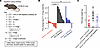 Figure 7
Both CD4+ and CD8+ T cells are required for antitumor responses to orthotopic pancreatic tumors in mice treated with combined IL-6 and CTLA-4 blockade. Female C57BL/6 mice, 6–8 weeks of age, were orthotopically injected with 2 × 10⁵ KPC-luc cancer cells and imaged 1 week later by BLI to confirm tumor establishment. Mouse numbers in each group were as follows: α–IL‑6+α–CTLA-4, n = 14; α–IL‑6+α–CTLA-4+CD4 depletion, n = 13; and α–IL‑6+α–CTLA-4+CD8 depletion, n = 11. (A) Study timeline for the administration of CD4- or CD8-depleting Abs relative to orthotopic injection and subsequent administration of IL-6– and CTLA-4–blocking Abs or isotype control Abs. (B) Tumor growth for each mouse was measured over time by BLI and the fold change in log2 of total flux for each mouse was graphed as a bar. BLI data for controls in this experiment are included in Supplemental Figure 8. Significance in BLI was determined using linear mixed models, **P = 0.0087, ****P < 0.0001. (C) At the study endpoint, mice were euthanized and the weight (grams) of each pancreas containing tumor was measured and graphed with symbols representing individual mice and the mean displayed for each treatment group, significance was determined using ANOVA and LSD for pairwise comparisons. Mice depleted of CD4 cells had significantly higher pancreas weight compared with mice receiving combination therapy without depleting antibodies.


