
Immunology
Abstract
Pancreatic ductal adenocarcinoma (PDAC) has a poor survival rate due to late detection. PDAC arises from precursor microscopic lesions, termed pancreatic intraepithelial neoplasia (PanIN), that develop at least a decade before overt disease––this provides an opportunity to intercept PanIN–to–PDAC progression. However, immune interception strategies require full understanding of PanIN and PDAC cellular architecture. Surgical specimens containing PanIN and PDAC lesions from a unique cohort of five treatment-naïve patients with PDAC were surveyed using spatial-omics (proteomic and transcriptomic). Findings were corroborated by spatial proteomics of PanIN and PDAC from tamoxifen-inducible KPC (tiKPC) mice. We uncovered the organization of lymphoid cells into tertiary lymphoid structures (TLSs) adjacent to PanIN lesions. These TLSs lacked CD21+CD23+ B cells compared to more mature TLSs near the PDAC border. PanINs harbored mostly CD4+ T cells with fewer Tregs and exhausted T cells than PDAC. Peri-tumoral space was enriched with naïve CD4+ and central memory T cells. These observations highlight the opportunity to modulate the immune microenvironment in PanINs before immune exclusion and immunosuppression emerge during progression into PDAC.
Authors
Melissa R. Lyman, Jacob T. Mitchell, Sidharth Raghavan, Luciane T. Kagohara, Amanda L. Huff, Saurav D. Haldar, Sarah M. Shin, Samantha Guinn, Benjamin Barrett, Gabriella Longway, Alexei Hernandez, Erin M. Coyne, Xuan Yuan, Lalitya Andaloori, Jiaying Lai, Yun Zhou Liu, Rachel Karchin, Anuj Gupta, Ashley L. Kiemen, André Forjaz, Denis Wirtz, Pei-Hsun Wu, Atul Deshpande, Jae W. Lee, Todd D. Armstrong, Nilofer S. Azad, Jacquelyn W. Zimmerman, Laura D. Wood, Robert A. Anders, Elizabeth D. Thompson, Elizabeth M. Jaffee, Elana J. Fertig, Won Jin Ho, Neeha Zaidi
Abstract
IL-33 is a key driver of type-2 inflammation and implicated in pathology of COPD and asthma. However, the mechanism for IL-33 secretion and regulation in the context of chronic airway disease is poorly understood. We previously reported an airway disease-associated isoform IL-33Δ34 that escapes nuclear sequestration and is tonically secreted from epithelial cells. Here, we describe how this IL-33Δ34 isoform interacts with HSP70 within cells and is targeted to secretory organelles through coordinated binding to phosphatidylserine (PS), and delivered to compartments for unconventional protein secretion (CUPS). Once secreted, extracellular HSP70 (eHSP70) in complex with IL-33Δ34 stabilizes cytokine by inhibiting oxidation and degradation, which results in enhanced IL-33Δ34-receptor binding and activity. We further find evidence that IL-33 along with mediators of the proteostasis network HSP70, HSP90 and the Chaperonin Containing TCP1 (CCT) complex are dysregulated in human chronic airway disease. This phenomenon is reflected in the differential extracellular vesicle (EV) proteome in bronchial wash from COPD and asthma samples, which could mark disease activity and potentiate IL-33 function. This study confirms proteostasis intermediates, chiefly HSP70, as a chaperone for non-canonical IL-33 secretion and activity that may be amenable for therapeutic targeting in the chronic airway diseases COPD and asthma.
Authors
Omar A. Osorio, Heather E. Raphael, Colin E. Kluender, Ghandi F. Hassan, Lucy S. Cohen, Deborah F. Steinberg, Ella Katz-Kiriakos, Morgan D. Payne, Ethan M. Luo, Jamie L. Hicks, Derek E. Byers, Jennifer Alexander-Brett
Abstract
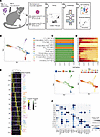
Tissue-resident memory T (TRM) cells play a central role in immune responses across all barrier tissues after infection. However, the mechanisms that drive TRM differentiation and priming for their recall effector function remains unclear. In this study, we leveraged newly generated and publicly available single-cell RNA-seq data generated across 10 developmental time points to define features of CD8+ TRM across both skin and small-intestine intraepithelial lymphocytes (siIEL). We employed linear modeling to capture gene programs that increase their expression levels in T cells transitioning from an effector to a memory state. In addition to capturing tissue-specific gene programs, we defined a temporal TRM signature across skin and siIEL that can distinguish TRM from circulating T cell populations. This TRM signature highlights biology that is missed in published signatures that compared bulk TRM to naive or nontissue resident memory populations. This temporal TRM signature included the AP-1 transcription factor family members Fos, Fosb, Fosl2, and Junb. ATAC-seq analysis detected AP-1–specific motifs at open chromatin sites in mature TRM. Cyclic immunofluorescence (CyCIF) tissue imaging detected nuclear colocalization of AP-1 members in resting CD8+ TRM greater than 100 days after infection. Taken together, these results reveal a critical role of AP-1 transcription factor members in TRM biology.
Authors
Neal P. Smith, Yu Yan, Youdong Pan, Jason B. Williams, Kasidet Manakongtreecheep, Shishir M. Pant, Jingxia Zhao, Tian Tian, Timothy Pan, Claire Stingley, Kevin Wu, Jiang Zhang, Alexander L. Kley, Peter K. Sorger, Alexandra-Chloé Villani, Thomas S. Kupper
Abstract
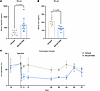
β-Thalassemia is a genetic disorder arising from mutations in the β-globin gene, leading to ineffective erythropoiesis and iron overload. Ineffective erythropoiesis, a hallmark of β-thalassemia, is an important driver of iron overload, which contributes to liver fibrosis, diabetes, and cardiac disease. Iron homeostasis is regulated by the hormone hepcidin; BMP6/hemojuvelin–mediated (BMP6/HJV-mediated) signaling induces hepatic hepcidin expression via SMAD1/5, with transmembrane serine protease 6 (TMPRSS6) being a negative regulator of HJV. Individuals with loss-of-function mutations in the TMPRSS6 gene show increased circulating hepcidin and iron-refractory iron-deficiency anemia, suggesting that blocking TMPRSS6 may be a viable strategy to elevate hepcidin levels in β-thalassemia. We generated a human mAb (REGN7999) that inhibits TMPRSS6. In an Hbbth3/+ mouse model of β-thalassemia, REGN7999 treatment led to significant reductions in liver iron, reduced ineffective erythropoiesis, and showed improvements in RBC health, running distance during forced exercise, and bone density. In a phase I, doubleblind, randomized, placebo-controlled study in healthy human volunteers (NCT05481333), REGN7999 increased serum hepcidin and reduced serum iron with an acceptable tolerability profile. Our results suggest that, by both reducing iron and improving RBC function, inhibition of TMPRSS6 by REGN7999 may offer a therapy for iron overload and impaired erythropoiesis in β-thalassemia.
Authors
Heinrich E. Lob, Nikhil Singh, Kusha Mohammadi, Larisa Ivanova, Beth Crowell, Hyon J. Kim, Leah Kravets, Nanditha M. Das, Yonaton Ray, Jee Hae Kim, Sylvie Rottey, Emily Labriola-Tompkins, Hazem E. Hassan, Lorna Farrelly, Harvey F. Chin, Marilena Preda, Leigh Spencer Noakes, Kei Saotome, Matthew Franklin, Marc W. Retter, Elif Karayusuf, John J. Flanagan, William Olson, Kalyan C. Nannuru, Vincent Idone, Michael E. Burczynski, Olivier A. Harari, Lorah Perlee, Griet Van Lancker, Andrew J. Murphy, Aris N. Economides, Sarah J. Hatsell
Abstract
Loss-of-function (LOF) variants in IL6ST, encoding GP130, can cause hyper-IgE syndrome (HIES). Monoallelic LOF variants in IL6ST lead to HIES when located in the intracellular domain downstream of box 1/2 and upstream of the STAT3 phosphorylation sites and the recycling motif, due to their dominant negative (DN) activity. In this region, two previously unreported IL6ST variants, p.K702Sfs7* and p.Y759Wfs26*, were identified in two families with autosomal dominant (AD) HIES. Both variants were LOF, exhibited DN effects, leading to the accumulation of mutant GP130 on the cell surface. The p.K702Sfs7* mutation was the most upstream N-terminal mutation linked to HIES caused by heterozygous IL6ST variants. Comprehensive screening of IL6ST mutants revealed that most premature terminations downstream of amino acid F641, at the end of the transmembrane domain, resulted in LOF and DN effects via GP130 accumulation on the cell surface. The absence of the recycling motif (positions 782-787) in surface-expressed LOF GP130 led to its accumulation, contributing to the DN effect. The importance of intracellular truncating IL6ST variants can possibly be predicted based on the location of the premature stop codon. GP130 accumulation on the cell surface is a characteristic and potentially diagnostic finding in HIES patients with heterozygous IL6ST variants.
Authors
Kosuke Ashihara, Takaki Asano, Kanako Takeuchi, Kosuke Noma, Miyuki Tsumura, Wenjie Wang, Wei-Te Lei, Hisao Higo, Toshio Kubo, Yoko Mizoguchi, Shuhei Karakawa, Aurélie Cobat, Clément Conil, Etsushi Toyofuku, Akimasa Sekine, Kohsuke Imai, Dusan Bogunovic, Jean-Laurent Casanova, Cheng-Lung Ku, Vivien Béziat, Satoshi Okada
Abstract
Although obesity is a major risk factor for cancer, it may also improve the response to cancer therapy. Here we investigated the impact of obesity on the efficacy of immune checkpoint inhibitors (ICI). In male mice, obesity promoted tumor growth but enhanced the response to ICI. This was associated with higher expression of immune-related genes within the tumor and enhanced infiltration of tumor-specific CD8+ T cells. Further, obesity in mice was associated with higher estrogen levels and enrichment of estrogen response genes in the tumor, and anti-PD-1 efficacy was reduced upon administration of the aromatase inhibitor letrozole, which blocks the production of estrogens. Mechanistically, adipocyte-derived estrogens increased antigen presentation by dendritic cells and tumor-specific CD8+ T-cell cytotoxicity. Lastly, overweight and obese male melanoma patients responded better to ICI, high estrogen levels being associated with improved response and survival. Our results suggest that estrogens may serve as a predictive factor of response to ICI in men with melanoma.
Authors
Eloïse Dupuychaffray, Hélène Poinot, Aurélie Vuilleumier, Maxime Borgeaud, Montserrat Alvarez, Betül Taskoparan, Olivier Preynat-Seauve, Clarissa D. Voegel, Eliana Marinari, Denis Migliorini, Valérie Dutoit, Carole Bourquin, Aurélien Pommier
Csk-mediated Src family kinase regulation dampens neutrophil infiltration during pulmonary infection
Abstract
Neutrophil recruitment is crucial for pathogen elimination. However, precise control of the inflammatory response prevents overshooting reactions. Neutrophil activation initiates signaling resulting in integrin beta 2 (Itgb2) activation and neutrophil arrest. Src family kinases are involved in multiple cellular processes and are negatively regulated by the C-terminal Src kinase (Csk). During this study, we investigated the mechanism by which Csk regulates integrin activation and neutrophil recruitment. Here, we demonstrated that Csk deficiency in murine neutrophils resulted in increased neutrophil adhesion to the endothelium along with decreased neutrophil transmigration into inflamed tissues compared to their littermate controls. In bacterial pneumonia, infected Csk-deficient mice showed higher bacterial burdens and decreased neutrophil recruitment, while other immune cell counts and cytokine levels were not significantly different compared to control. Analyses of Csk-deficient neutrophils revealed an increased Itgb2 affinity, leading to reduced migration and intravascular crawling. Mechanistically, elevated cAMP-levels increased protein kinase A activity, which subsequently enhanced Csk activation. Csk, in turn, suppressed Src family kinases activation through phosphorylation (Y529). Hence, Csk-mediated regulation of neutrophil infiltration contributes to maintain a balanced immune response during bacterial pneumonia.
Authors
Wida Amini, Lena Schemmelmann, Jan-Niklas Heming, Marina Oguama, Katharina Thomas, Helena Block, Pia Lindental, Bernadette Bardel, Andreas Margraf, Oliver Soehnlein, Anika Cappenberg, Alexander Zarbock
Abstract
BACKGROUND. Symptoms of early-onset sepsis (EOS) in preterm infants are nonspecific, overlapping with normal postnatal physiological adaptations and noninfectious pathologies. This clinical uncertainty and the lack of reliable EOS diagnostics results in liberal use of antibiotics in the first days to weeks of life, leading to increased risk of antibiotic-related morbidities in infants who do not have an invasive infection. METHODS. To identify potential biomarkers for EOS in newborn infants, we used unlabelled tandem mass spectrometry proteomics to identify differentially abundant proteins in the umbilical cord blood of infants with and without culture-confirmed EOS. Proteins were then confirmed using immunoassay, and logistic regression and random forest models were built including both biomarker concentration and clinical variables to predict EOS. RESULTS. These data identified five proteins that were significantly upregulated in infants with EOS, three of which (serum amyloid A, C-reactive protein, and lipopolysaccharide-binding protein) were confirmed using a quantitative immunoassay. The random forest classifier for EOS was applied to a cohort of infants with culture-negative presumed sepsis (PS). Most PS infants were classified as resembling control infants, having low EOS biomarker concentrations. CONCLUSION. These results suggest that cord blood biomarker screening may be useful for early stratification of EOS risk among neonates, improving targeted, evidence-based use of antibiotics early in life. FUNDING. National Institutes of Health, Gerber Foundation, Friends of Prentice, Thrasher Research Fund, Ann & Robert H. Lurie Children’s Hospital, Stanley Manne Children’s Research Institute of Lurie Children’s.
Authors
Leena B. Mithal, Mark E. Becker, Ted Ling-Hu, Young Ah Goo, Sebastian Otero, Aspen Kremer, Surya Pandey, Nicola Lancki, Yawei Li, Yuan Luo, William Grobman, Denise Scholtens, Karen K. Mestan, Patrick C. Seed, Judd F. Hultquist
Abstract
Multiple sclerosis is characterized by CNS infiltration of auto-reactive immune cells that drive both acute inflammatory demyelination and chronic progressive axonal and neuronal injury. Expanding evidence implicates CD8+ anti-neural T cells in the irreversible neurodegeneration that underlies progression in multiple sclerosis, yet therapies specifically targeting this cell population are limited. CD8+ T cells from patients with MS exhibit increased engagement of the pentose phosphate pathway. Pharmacologic inhibition of the pentose phosphate pathway reduced glycolysis, glucose uptake, NADPH production, ATP production, proliferation, and proinflammatory cytokine secretion in CD8+ T cells activated by ligation of CD3 and CD28. Pentose phosphate pathway inhibition also prevented CD8+ T cell-mediated antigen-specific neuronal injury in vitro and in both an adoptive transfer-based cuprizone model of demyelination and in mice with experimental autoimmune encephalomyelitis. Notably, transcriptional profiling of CNS-infiltrating CD8+ T cells in patients with MS indicated increased pentose phosphate pathway engagement, suggesting that this pathway is involved in CD8+ T cell-mediated injury of axons and neurons in the demyelinated CNS. Inhibiting the pentose phosphate pathway disrupts CD8+ T cell metabolic reprogramming and effector functions, suggesting that such inhibition may serve as a therapeutic strategy to prevent neurodegeneration in patients with progressive MS.
Authors
Ethan M. Grund, Benjamin D.S. Clarkson, Susanna Pucci, Maria S. Westphal, Carolina Muniz Partida, Sara A. Muhammad, Charles L. Howe
Abstract
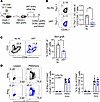
CD154 is a promising target for immunosuppression in transplantation, autoimmunity, and inflammatory diseases. We previously identified CD11b as a novel alternative receptor for CD154 during alloimmunity. However, the impact of specific CD154:CD11b blockade on immune responses to infection has not been well characterized. Here, we have shown that in contrast with its immunosuppressive effect on graft-specific CD8+ T cells, CD154:CD11b blockade unexpectedly improved both the quantity and quality of murine herpesvirus-68–specific CD8+ T cells as measured by an increase in tetramer-positive KLRG1loCD127hi memory precursor effector cells. The differential effect of CD154:CD11b blockade on graft- versus virus-specific CD8+ T cells was underpinned by differences in phosphorylated S6 downstream of mTOR complex 1; however, differential expression of key transcription factors Eomes and TCF-1 was dictated by the type of antigen stimulus. These data demonstrate that priming conditions play an important role in determining the outcome of immunotherapy and suggest that specific inhibition of CD154:CD11b interactions could be effective for suppressing alloimmune responses while maintaining protective immunity to minimize infectious complications following transplantation.
Authors
Katie L. Alexander, Kelsey B. Bennion, Danya Liu, Mandy L. Ford
No posts were found with this tag.


