
Clinical Research and Public HealthImmunologyInfectious disease
Open Access |  10.1172/jci.insight.193826
Cord blood proteomics identifies biomarkers of early-onset neonatal sepsis
Leena B. Mithal,1,2 Mark E. Becker,3,4 Ted Ling-Hu,3,4 Young Ah Goo,5 Sebastian Otero,2,6 Aspen Kremer,2 Surya Pandey,7 Nicola Lancki,8 Yawei Li,8 Yuan Luo,8 William Grobman,9 Denise Scholtens,8 Karen K. Mestan,10 Patrick C. Seed,1,2 and Judd F. Hultquist3,4
1Department of Pediatrics, Division of Infectious Diseases, Ann & Robert H. Lurie Children’s Hospital of Chicago, Feinberg School of Medicine, Northwestern University, Chicago, Illinois, USA.
2Stanley Manne Children’s Research Institute, Ann & Robert H. Lurie Children’s Hospital of Chicago, Chicago, Illinois, USA.
3Division of Infectious Diseases, Departments of Medicine and Microbiology-Immunology, and
4Center for Pathogen Genomics and Microbial Evolution, Havey Institute for Global Health, Feinberg School of Medicine, Northwestern University, Chicago, Illinois, USA.
5Mass Spectrometry Technology Access Center at McDonnell Genome Institute (MTAC@MGI), Washington University School of Medicine, St. Louis, Missouri, USA.
6Department of Pediatrics, Division of Infectious Diseases, University of Chicago, Chicago, Illinois, USA.
7Department of Medicine, Division of Hematology and Oncology, and
8Department of Preventive Medicine, Division of Biostatistics and Informatics, Feinberg School of Medicine, Northwestern University, Chicago, Illinois, USA.
9Department of Obstetrics and Gynecology, Brown University, Providence, Illinois, USA.
10Department of Pediatrics, Division of Neonatology, UCSD, La Jolla, California, USA.
Address correspondence to: Leena B. Mithal, 225 E. Chicago Ave, Box #20, Chicago, Illinois 60611, USA. Phone: 312.933.9173; Email: lmithal@luriechildrens.org.
Find articles by Mithal, L. in: PubMed | Google Scholar
1Department of Pediatrics, Division of Infectious Diseases, Ann & Robert H. Lurie Children’s Hospital of Chicago, Feinberg School of Medicine, Northwestern University, Chicago, Illinois, USA.
2Stanley Manne Children’s Research Institute, Ann & Robert H. Lurie Children’s Hospital of Chicago, Chicago, Illinois, USA.
3Division of Infectious Diseases, Departments of Medicine and Microbiology-Immunology, and
4Center for Pathogen Genomics and Microbial Evolution, Havey Institute for Global Health, Feinberg School of Medicine, Northwestern University, Chicago, Illinois, USA.
5Mass Spectrometry Technology Access Center at McDonnell Genome Institute (MTAC@MGI), Washington University School of Medicine, St. Louis, Missouri, USA.
6Department of Pediatrics, Division of Infectious Diseases, University of Chicago, Chicago, Illinois, USA.
7Department of Medicine, Division of Hematology and Oncology, and
8Department of Preventive Medicine, Division of Biostatistics and Informatics, Feinberg School of Medicine, Northwestern University, Chicago, Illinois, USA.
9Department of Obstetrics and Gynecology, Brown University, Providence, Illinois, USA.
10Department of Pediatrics, Division of Neonatology, UCSD, La Jolla, California, USA.
Address correspondence to: Leena B. Mithal, 225 E. Chicago Ave, Box #20, Chicago, Illinois 60611, USA. Phone: 312.933.9173; Email: lmithal@luriechildrens.org.
Find articles by Becker, M. in: PubMed | Google Scholar
1Department of Pediatrics, Division of Infectious Diseases, Ann & Robert H. Lurie Children’s Hospital of Chicago, Feinberg School of Medicine, Northwestern University, Chicago, Illinois, USA.
2Stanley Manne Children’s Research Institute, Ann & Robert H. Lurie Children’s Hospital of Chicago, Chicago, Illinois, USA.
3Division of Infectious Diseases, Departments of Medicine and Microbiology-Immunology, and
4Center for Pathogen Genomics and Microbial Evolution, Havey Institute for Global Health, Feinberg School of Medicine, Northwestern University, Chicago, Illinois, USA.
5Mass Spectrometry Technology Access Center at McDonnell Genome Institute (MTAC@MGI), Washington University School of Medicine, St. Louis, Missouri, USA.
6Department of Pediatrics, Division of Infectious Diseases, University of Chicago, Chicago, Illinois, USA.
7Department of Medicine, Division of Hematology and Oncology, and
8Department of Preventive Medicine, Division of Biostatistics and Informatics, Feinberg School of Medicine, Northwestern University, Chicago, Illinois, USA.
9Department of Obstetrics and Gynecology, Brown University, Providence, Illinois, USA.
10Department of Pediatrics, Division of Neonatology, UCSD, La Jolla, California, USA.
Address correspondence to: Leena B. Mithal, 225 E. Chicago Ave, Box #20, Chicago, Illinois 60611, USA. Phone: 312.933.9173; Email: lmithal@luriechildrens.org.
Find articles by Ling-Hu, T. in: PubMed | Google Scholar
1Department of Pediatrics, Division of Infectious Diseases, Ann & Robert H. Lurie Children’s Hospital of Chicago, Feinberg School of Medicine, Northwestern University, Chicago, Illinois, USA.
2Stanley Manne Children’s Research Institute, Ann & Robert H. Lurie Children’s Hospital of Chicago, Chicago, Illinois, USA.
3Division of Infectious Diseases, Departments of Medicine and Microbiology-Immunology, and
4Center for Pathogen Genomics and Microbial Evolution, Havey Institute for Global Health, Feinberg School of Medicine, Northwestern University, Chicago, Illinois, USA.
5Mass Spectrometry Technology Access Center at McDonnell Genome Institute (MTAC@MGI), Washington University School of Medicine, St. Louis, Missouri, USA.
6Department of Pediatrics, Division of Infectious Diseases, University of Chicago, Chicago, Illinois, USA.
7Department of Medicine, Division of Hematology and Oncology, and
8Department of Preventive Medicine, Division of Biostatistics and Informatics, Feinberg School of Medicine, Northwestern University, Chicago, Illinois, USA.
9Department of Obstetrics and Gynecology, Brown University, Providence, Illinois, USA.
10Department of Pediatrics, Division of Neonatology, UCSD, La Jolla, California, USA.
Address correspondence to: Leena B. Mithal, 225 E. Chicago Ave, Box #20, Chicago, Illinois 60611, USA. Phone: 312.933.9173; Email: lmithal@luriechildrens.org.
Find articles by Goo, Y. in: PubMed | Google Scholar
1Department of Pediatrics, Division of Infectious Diseases, Ann & Robert H. Lurie Children’s Hospital of Chicago, Feinberg School of Medicine, Northwestern University, Chicago, Illinois, USA.
2Stanley Manne Children’s Research Institute, Ann & Robert H. Lurie Children’s Hospital of Chicago, Chicago, Illinois, USA.
3Division of Infectious Diseases, Departments of Medicine and Microbiology-Immunology, and
4Center for Pathogen Genomics and Microbial Evolution, Havey Institute for Global Health, Feinberg School of Medicine, Northwestern University, Chicago, Illinois, USA.
5Mass Spectrometry Technology Access Center at McDonnell Genome Institute (MTAC@MGI), Washington University School of Medicine, St. Louis, Missouri, USA.
6Department of Pediatrics, Division of Infectious Diseases, University of Chicago, Chicago, Illinois, USA.
7Department of Medicine, Division of Hematology and Oncology, and
8Department of Preventive Medicine, Division of Biostatistics and Informatics, Feinberg School of Medicine, Northwestern University, Chicago, Illinois, USA.
9Department of Obstetrics and Gynecology, Brown University, Providence, Illinois, USA.
10Department of Pediatrics, Division of Neonatology, UCSD, La Jolla, California, USA.
Address correspondence to: Leena B. Mithal, 225 E. Chicago Ave, Box #20, Chicago, Illinois 60611, USA. Phone: 312.933.9173; Email: lmithal@luriechildrens.org.
Find articles by Otero, S. in: PubMed | Google Scholar
1Department of Pediatrics, Division of Infectious Diseases, Ann & Robert H. Lurie Children’s Hospital of Chicago, Feinberg School of Medicine, Northwestern University, Chicago, Illinois, USA.
2Stanley Manne Children’s Research Institute, Ann & Robert H. Lurie Children’s Hospital of Chicago, Chicago, Illinois, USA.
3Division of Infectious Diseases, Departments of Medicine and Microbiology-Immunology, and
4Center for Pathogen Genomics and Microbial Evolution, Havey Institute for Global Health, Feinberg School of Medicine, Northwestern University, Chicago, Illinois, USA.
5Mass Spectrometry Technology Access Center at McDonnell Genome Institute (MTAC@MGI), Washington University School of Medicine, St. Louis, Missouri, USA.
6Department of Pediatrics, Division of Infectious Diseases, University of Chicago, Chicago, Illinois, USA.
7Department of Medicine, Division of Hematology and Oncology, and
8Department of Preventive Medicine, Division of Biostatistics and Informatics, Feinberg School of Medicine, Northwestern University, Chicago, Illinois, USA.
9Department of Obstetrics and Gynecology, Brown University, Providence, Illinois, USA.
10Department of Pediatrics, Division of Neonatology, UCSD, La Jolla, California, USA.
Address correspondence to: Leena B. Mithal, 225 E. Chicago Ave, Box #20, Chicago, Illinois 60611, USA. Phone: 312.933.9173; Email: lmithal@luriechildrens.org.
Find articles by Kremer, A. in: PubMed | Google Scholar
1Department of Pediatrics, Division of Infectious Diseases, Ann & Robert H. Lurie Children’s Hospital of Chicago, Feinberg School of Medicine, Northwestern University, Chicago, Illinois, USA.
2Stanley Manne Children’s Research Institute, Ann & Robert H. Lurie Children’s Hospital of Chicago, Chicago, Illinois, USA.
3Division of Infectious Diseases, Departments of Medicine and Microbiology-Immunology, and
4Center for Pathogen Genomics and Microbial Evolution, Havey Institute for Global Health, Feinberg School of Medicine, Northwestern University, Chicago, Illinois, USA.
5Mass Spectrometry Technology Access Center at McDonnell Genome Institute (MTAC@MGI), Washington University School of Medicine, St. Louis, Missouri, USA.
6Department of Pediatrics, Division of Infectious Diseases, University of Chicago, Chicago, Illinois, USA.
7Department of Medicine, Division of Hematology and Oncology, and
8Department of Preventive Medicine, Division of Biostatistics and Informatics, Feinberg School of Medicine, Northwestern University, Chicago, Illinois, USA.
9Department of Obstetrics and Gynecology, Brown University, Providence, Illinois, USA.
10Department of Pediatrics, Division of Neonatology, UCSD, La Jolla, California, USA.
Address correspondence to: Leena B. Mithal, 225 E. Chicago Ave, Box #20, Chicago, Illinois 60611, USA. Phone: 312.933.9173; Email: lmithal@luriechildrens.org.
Find articles by Pandey, S. in: PubMed | Google Scholar
1Department of Pediatrics, Division of Infectious Diseases, Ann & Robert H. Lurie Children’s Hospital of Chicago, Feinberg School of Medicine, Northwestern University, Chicago, Illinois, USA.
2Stanley Manne Children’s Research Institute, Ann & Robert H. Lurie Children’s Hospital of Chicago, Chicago, Illinois, USA.
3Division of Infectious Diseases, Departments of Medicine and Microbiology-Immunology, and
4Center for Pathogen Genomics and Microbial Evolution, Havey Institute for Global Health, Feinberg School of Medicine, Northwestern University, Chicago, Illinois, USA.
5Mass Spectrometry Technology Access Center at McDonnell Genome Institute (MTAC@MGI), Washington University School of Medicine, St. Louis, Missouri, USA.
6Department of Pediatrics, Division of Infectious Diseases, University of Chicago, Chicago, Illinois, USA.
7Department of Medicine, Division of Hematology and Oncology, and
8Department of Preventive Medicine, Division of Biostatistics and Informatics, Feinberg School of Medicine, Northwestern University, Chicago, Illinois, USA.
9Department of Obstetrics and Gynecology, Brown University, Providence, Illinois, USA.
10Department of Pediatrics, Division of Neonatology, UCSD, La Jolla, California, USA.
Address correspondence to: Leena B. Mithal, 225 E. Chicago Ave, Box #20, Chicago, Illinois 60611, USA. Phone: 312.933.9173; Email: lmithal@luriechildrens.org.
Find articles by
Lancki, N.
in:
PubMed
|
Google Scholar
|

1Department of Pediatrics, Division of Infectious Diseases, Ann & Robert H. Lurie Children’s Hospital of Chicago, Feinberg School of Medicine, Northwestern University, Chicago, Illinois, USA.
2Stanley Manne Children’s Research Institute, Ann & Robert H. Lurie Children’s Hospital of Chicago, Chicago, Illinois, USA.
3Division of Infectious Diseases, Departments of Medicine and Microbiology-Immunology, and
4Center for Pathogen Genomics and Microbial Evolution, Havey Institute for Global Health, Feinberg School of Medicine, Northwestern University, Chicago, Illinois, USA.
5Mass Spectrometry Technology Access Center at McDonnell Genome Institute (MTAC@MGI), Washington University School of Medicine, St. Louis, Missouri, USA.
6Department of Pediatrics, Division of Infectious Diseases, University of Chicago, Chicago, Illinois, USA.
7Department of Medicine, Division of Hematology and Oncology, and
8Department of Preventive Medicine, Division of Biostatistics and Informatics, Feinberg School of Medicine, Northwestern University, Chicago, Illinois, USA.
9Department of Obstetrics and Gynecology, Brown University, Providence, Illinois, USA.
10Department of Pediatrics, Division of Neonatology, UCSD, La Jolla, California, USA.
Address correspondence to: Leena B. Mithal, 225 E. Chicago Ave, Box #20, Chicago, Illinois 60611, USA. Phone: 312.933.9173; Email: lmithal@luriechildrens.org.
Find articles by Li, Y. in: PubMed | Google Scholar
1Department of Pediatrics, Division of Infectious Diseases, Ann & Robert H. Lurie Children’s Hospital of Chicago, Feinberg School of Medicine, Northwestern University, Chicago, Illinois, USA.
2Stanley Manne Children’s Research Institute, Ann & Robert H. Lurie Children’s Hospital of Chicago, Chicago, Illinois, USA.
3Division of Infectious Diseases, Departments of Medicine and Microbiology-Immunology, and
4Center for Pathogen Genomics and Microbial Evolution, Havey Institute for Global Health, Feinberg School of Medicine, Northwestern University, Chicago, Illinois, USA.
5Mass Spectrometry Technology Access Center at McDonnell Genome Institute (MTAC@MGI), Washington University School of Medicine, St. Louis, Missouri, USA.
6Department of Pediatrics, Division of Infectious Diseases, University of Chicago, Chicago, Illinois, USA.
7Department of Medicine, Division of Hematology and Oncology, and
8Department of Preventive Medicine, Division of Biostatistics and Informatics, Feinberg School of Medicine, Northwestern University, Chicago, Illinois, USA.
9Department of Obstetrics and Gynecology, Brown University, Providence, Illinois, USA.
10Department of Pediatrics, Division of Neonatology, UCSD, La Jolla, California, USA.
Address correspondence to: Leena B. Mithal, 225 E. Chicago Ave, Box #20, Chicago, Illinois 60611, USA. Phone: 312.933.9173; Email: lmithal@luriechildrens.org.
Find articles by
Luo, Y.
in:
PubMed
|
Google Scholar
|
1Department of Pediatrics, Division of Infectious Diseases, Ann & Robert H. Lurie Children’s Hospital of Chicago, Feinberg School of Medicine, Northwestern University, Chicago, Illinois, USA.
2Stanley Manne Children’s Research Institute, Ann & Robert H. Lurie Children’s Hospital of Chicago, Chicago, Illinois, USA.
3Division of Infectious Diseases, Departments of Medicine and Microbiology-Immunology, and
4Center for Pathogen Genomics and Microbial Evolution, Havey Institute for Global Health, Feinberg School of Medicine, Northwestern University, Chicago, Illinois, USA.
5Mass Spectrometry Technology Access Center at McDonnell Genome Institute (MTAC@MGI), Washington University School of Medicine, St. Louis, Missouri, USA.
6Department of Pediatrics, Division of Infectious Diseases, University of Chicago, Chicago, Illinois, USA.
7Department of Medicine, Division of Hematology and Oncology, and
8Department of Preventive Medicine, Division of Biostatistics and Informatics, Feinberg School of Medicine, Northwestern University, Chicago, Illinois, USA.
9Department of Obstetrics and Gynecology, Brown University, Providence, Illinois, USA.
10Department of Pediatrics, Division of Neonatology, UCSD, La Jolla, California, USA.
Address correspondence to: Leena B. Mithal, 225 E. Chicago Ave, Box #20, Chicago, Illinois 60611, USA. Phone: 312.933.9173; Email: lmithal@luriechildrens.org.
Find articles by Grobman, W. in: PubMed | Google Scholar
1Department of Pediatrics, Division of Infectious Diseases, Ann & Robert H. Lurie Children’s Hospital of Chicago, Feinberg School of Medicine, Northwestern University, Chicago, Illinois, USA.
2Stanley Manne Children’s Research Institute, Ann & Robert H. Lurie Children’s Hospital of Chicago, Chicago, Illinois, USA.
3Division of Infectious Diseases, Departments of Medicine and Microbiology-Immunology, and
4Center for Pathogen Genomics and Microbial Evolution, Havey Institute for Global Health, Feinberg School of Medicine, Northwestern University, Chicago, Illinois, USA.
5Mass Spectrometry Technology Access Center at McDonnell Genome Institute (MTAC@MGI), Washington University School of Medicine, St. Louis, Missouri, USA.
6Department of Pediatrics, Division of Infectious Diseases, University of Chicago, Chicago, Illinois, USA.
7Department of Medicine, Division of Hematology and Oncology, and
8Department of Preventive Medicine, Division of Biostatistics and Informatics, Feinberg School of Medicine, Northwestern University, Chicago, Illinois, USA.
9Department of Obstetrics and Gynecology, Brown University, Providence, Illinois, USA.
10Department of Pediatrics, Division of Neonatology, UCSD, La Jolla, California, USA.
Address correspondence to: Leena B. Mithal, 225 E. Chicago Ave, Box #20, Chicago, Illinois 60611, USA. Phone: 312.933.9173; Email: lmithal@luriechildrens.org.
Find articles by
Scholtens, D.
in:
PubMed
|
Google Scholar
|
1Department of Pediatrics, Division of Infectious Diseases, Ann & Robert H. Lurie Children’s Hospital of Chicago, Feinberg School of Medicine, Northwestern University, Chicago, Illinois, USA.
2Stanley Manne Children’s Research Institute, Ann & Robert H. Lurie Children’s Hospital of Chicago, Chicago, Illinois, USA.
3Division of Infectious Diseases, Departments of Medicine and Microbiology-Immunology, and
4Center for Pathogen Genomics and Microbial Evolution, Havey Institute for Global Health, Feinberg School of Medicine, Northwestern University, Chicago, Illinois, USA.
5Mass Spectrometry Technology Access Center at McDonnell Genome Institute (MTAC@MGI), Washington University School of Medicine, St. Louis, Missouri, USA.
6Department of Pediatrics, Division of Infectious Diseases, University of Chicago, Chicago, Illinois, USA.
7Department of Medicine, Division of Hematology and Oncology, and
8Department of Preventive Medicine, Division of Biostatistics and Informatics, Feinberg School of Medicine, Northwestern University, Chicago, Illinois, USA.
9Department of Obstetrics and Gynecology, Brown University, Providence, Illinois, USA.
10Department of Pediatrics, Division of Neonatology, UCSD, La Jolla, California, USA.
Address correspondence to: Leena B. Mithal, 225 E. Chicago Ave, Box #20, Chicago, Illinois 60611, USA. Phone: 312.933.9173; Email: lmithal@luriechildrens.org.
Find articles by Mestan, K. in: PubMed | Google Scholar
1Department of Pediatrics, Division of Infectious Diseases, Ann & Robert H. Lurie Children’s Hospital of Chicago, Feinberg School of Medicine, Northwestern University, Chicago, Illinois, USA.
2Stanley Manne Children’s Research Institute, Ann & Robert H. Lurie Children’s Hospital of Chicago, Chicago, Illinois, USA.
3Division of Infectious Diseases, Departments of Medicine and Microbiology-Immunology, and
4Center for Pathogen Genomics and Microbial Evolution, Havey Institute for Global Health, Feinberg School of Medicine, Northwestern University, Chicago, Illinois, USA.
5Mass Spectrometry Technology Access Center at McDonnell Genome Institute (MTAC@MGI), Washington University School of Medicine, St. Louis, Missouri, USA.
6Department of Pediatrics, Division of Infectious Diseases, University of Chicago, Chicago, Illinois, USA.
7Department of Medicine, Division of Hematology and Oncology, and
8Department of Preventive Medicine, Division of Biostatistics and Informatics, Feinberg School of Medicine, Northwestern University, Chicago, Illinois, USA.
9Department of Obstetrics and Gynecology, Brown University, Providence, Illinois, USA.
10Department of Pediatrics, Division of Neonatology, UCSD, La Jolla, California, USA.
Address correspondence to: Leena B. Mithal, 225 E. Chicago Ave, Box #20, Chicago, Illinois 60611, USA. Phone: 312.933.9173; Email: lmithal@luriechildrens.org.
Find articles by
Seed, P.
in:
PubMed
|
Google Scholar
|
1Department of Pediatrics, Division of Infectious Diseases, Ann & Robert H. Lurie Children’s Hospital of Chicago, Feinberg School of Medicine, Northwestern University, Chicago, Illinois, USA.
2Stanley Manne Children’s Research Institute, Ann & Robert H. Lurie Children’s Hospital of Chicago, Chicago, Illinois, USA.
3Division of Infectious Diseases, Departments of Medicine and Microbiology-Immunology, and
4Center for Pathogen Genomics and Microbial Evolution, Havey Institute for Global Health, Feinberg School of Medicine, Northwestern University, Chicago, Illinois, USA.
5Mass Spectrometry Technology Access Center at McDonnell Genome Institute (MTAC@MGI), Washington University School of Medicine, St. Louis, Missouri, USA.
6Department of Pediatrics, Division of Infectious Diseases, University of Chicago, Chicago, Illinois, USA.
7Department of Medicine, Division of Hematology and Oncology, and
8Department of Preventive Medicine, Division of Biostatistics and Informatics, Feinberg School of Medicine, Northwestern University, Chicago, Illinois, USA.
9Department of Obstetrics and Gynecology, Brown University, Providence, Illinois, USA.
10Department of Pediatrics, Division of Neonatology, UCSD, La Jolla, California, USA.
Address correspondence to: Leena B. Mithal, 225 E. Chicago Ave, Box #20, Chicago, Illinois 60611, USA. Phone: 312.933.9173; Email: lmithal@luriechildrens.org.
Find articles by
Hultquist, J.
in:
PubMed
|
Google Scholar
|
Published June 10, 2025 - More info
JCI Insight. 2025;10(13):e193826. https://doi.org/10.1172/jci.insight.193826.
© 2025 Mithal et al. This work is licensed under the Creative Commons Attribution 4.0 International License. To view a copy of this license, visit http://creativecommons.org/licenses/by/4.0/.
Received: April 1, 2025; Accepted: May 29, 2025


-
Results
Identification of EOS biomarkers in cord blood. Table 1 displays the characteristics of the cohort across sepsis groups. Among the EOS cohort, known risk factors for EOS development were overrepresented. Infants with EOS had lower GAs as compared with infants in the control cohort (mean, 30.7 ± 3.3 weeks vs. 33.6 ± 4.5 weeks; 0% >37 weeks, 0% EOS vs. 27% controls) and were less frequently female (36% female vs. 49% female). Chorioamnionitis (43% vs. 0.7%), prolonged rupture of membranes (PROM) (64% vs. 11.3%), and vaginal delivery (71% vs. 51%) were likewise more common in patients with EOS compared with individuals acting as controls. The PS cohort resembled the EOS cohort with a greater frequency of prematurity, chorioamnionitis, and PROM than in the control group. Confirmed pathogens in blood culture included E. coli (n = 8), Streptococcus agalactiae (n = 2), Klebsiella oxytoca (n = 1), Proteus mirabilis (n = 1), Haemophilus influenzae (n = 1), and Listeria monocytogenes (n = 1).
To assess protein abundance, we performed liquid chromatography with tandem mass spectrometry (LC-MS/MS) on sera isolated from frozen, banked blood specimens from our control and EOS cohorts (Figure 1A). Spectra were analyzed using MaxQuant for label-free quantification (LFQ) of protein abundance (29). Peptides corresponding to 437 proteins were detected. After batch normalization, we visualized the protein abundance of the 255 most commonly detected proteins (present in >20% of specimens) across all 164 specimens using a hierarchically clustered heatmap. For heatmap visualization, missing values were imputed separately for EOS and control specimens either by iterative imputation for proteins in >70% or by sampling from the lowest decile of protein abundance for proteins in <70% of specimens. When visualized using hierarchical clustering, there were no clear changes in the plasma proteome that clustered by GA, sex, or specimen type (i.e., EOS or control) (Figure 1B). Clustering with naive imputation of zeros for all missing values revealed similar results (Supplemental Figure 1; supplemental material available online with this article; https://doi.org/10.1172/jci.insight.193826DS1).
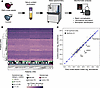 Figure 1
Proteomic identification of differentially abundant proteins in early-onset sepsis cord blood. (A) Diagram of workflow. (B) Hierarchically clustered heatmap of protein abundance in cord blood for EOS and control specimens. Specimens are clustered by gestational age category, sex, and sample type. Missing values were imputed. (C) Plot of mean abundance of proteins in EOS and control specimens. Black points were significant by Mann-Whitney U test with Benjamini-Hochberg FDR adjustment (P < 0.05).
These data suggest that any changes in the plasma proteome during EOS would be driven by a small number of proteins as opposed to global restructuring. To assess per protein changes in abundance, we plotted the mean abundance of each of the 255 most commonly detected proteins in our control specimens versus our EOS specimens (Figure 1C). Five proteins were significantly enriched in the plasma of infants with culture-confirmed EOS: CRP, lipopolysaccharide-binding protein (LBP), SAA1, leucine-rich α-2-glycoprotein 1 (LRG1), and serine proteinase inhibitor A3 (SERPINA3) (Figure 1C). These are all acute-phase reactant proteins that are upregulated in the plasma in response to inflammation. A sensitivity analysis was performed repeating differential abundance analysis between EOS specimens and GA-matched control specimens (excluding the full-term group, ≥37 weeks gestation). Results were consistent, with the same 5 proteins significantly elevated in the EOS specimens (Supplemental Figure 2A). Due to the small number of female infants with EOS (n = 4), statistical power was not adequate to detect differences of plausible magnitude for each sex.
As there were many fewer EOS specimens compared with control specimens, proteins found exclusively or predominantly in EOS cord blood could be excluded by our removal of proteins present in <20% of samples (n = 182 proteins). As these proteins might be superior predictors of EOS, we also assessed differential presence and absence of these less frequently detected proteins. Of the 182 proteins detected in fewer than 20% of specimens, only 3 were more often found in EOS specimens: SAA2, which was observed in 71% of EOS specimens but 2% of control specimens; haptoglobin/haptoglobin-related protein, which was observed in 43% of EOS specimens but 17% of control specimens; and lipocalin-2 (LCN2), which was observed in 36% of EOS specimens but 9% of control specimens. Notably, these proteins are also all acute-phase reactants, with SAA2 sequence and function largely redundant with SAA1. Given their rarity in the control specimens, we could not statistically compare their abundance across cohorts, so we focused on the 5 acute-phase reactants identified above.
EOS cord blood samples contain higher levels of acute-phase reactant proteins. Principal component analysis (PCA) of the protein abundance data for CRP, LBP, SAA1, LRG1, and SERPIN3A resulted in a clear separation of most of the EOS and control specimens, with axes accounting for 84% of the variance (Figure 2A). Hierarchical clustering by the abundance of these 5 proteins likewise shows a clear EOS cluster, though with a few control specimens interspersed (Figure 2B). Protein abundance for all 5 proteins was significantly different between the EOS and control specimens (Figure 2C). Results were consistent, showing significantly different protein abundance when analysis included or excluded full-term GA infants (Supplemental Figure 2B). The distributions for CRP overlapped more than the other proteins. These data suggest that the measurement of one or more of these putative biomarkers in cord blood might be sufficient to differentiate healthy infants from those with EOS.
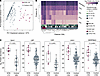 Figure 2
Details of differentially abundant proteins. (A) PCA and (B) clustered heatmap of EOS and control specimen values for the 5 differentially abundant proteins. For B, missing protein abundance values were imputed. (C) Distribution of protein abundance in EOS and control specimens for each protein. Box plots show median and interquartile range. Whiskers extend to the last point within 1.5× interquartile range of the box. Bee swarms show individual samples. Comparisons were significant by Mann-Whitney U test with Benjamini-Hochberg FDR adjustment.
Quantitative immunoassays confirm elevated CRP, SAA, and LBP in EOS cord blood specimens. Though useful for target discovery, shotgun proteomic data cannot be used to rule out the presence of a protein in a specimen, nor is it a clinically feasible approach. Therefore, we next sought to validate these findings using commercially available, quantitative immunoassay kits to detect CRP, SAA1/SAA2, and LBP (Figure 3A). Only preterm controls (n = 105) were included for better comparison to our infants with EOS (all <37 weeks). Once again, the concentrations of the 3 biomarkers were significantly elevated in the EOS compared with the control specimens, though for each biomarker 3 EOS specimens had lower concentrations more comparable to the control samples (Figure 3B and Supplemental Figure 3). PCA of these data demonstrated that though most of the EOS specimens formed a distinct cluster, 3 EOS specimens clustered with the control specimens (Figure 3C). These 3 infants had different GAs at birth (24 5/7, 33 5/7, and 34 3/7), and blood cultures yielded typical septic pathogens (E. coli, E. coli, and K. oxytoca, respectively) (Table 2). Notably, however, these 3 infants had the longest intervals between birth and a positive blood culture (drawn at 65, 55, and 62 hours of life, respectively). The two infants with E. coli had a negative blood culture in the first day of life, whereas the infant with K. oxytoca developed emesis and increased abdominal girth on day 3 of life with an abdominal radiograph concerning for pneumatosis, prompting a septic workup. The other 11 infants with EOS had a positive blood culture that was drawn within the first few hours of life.
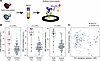 Figure 3
Quantitative multiplex immunoassay detection of potential EOS biomarkers. (A) Diagram of experimental procedure. (B) Distribution of protein concentration in mg/mL in EOS and control specimens for each protein. Box plots show median and interquartile range. Whiskers extend to the last point within 1.5× interquartile range of the box. Bee swarms show individual samples. Comparisons were significant by Mann-Whitney U test with Benjamini-Hochberg FDR adjustment. (C) PCA of EOS and control specimen protein abundance based on MSD data.
Predictive modeling of EOS. To assess the predictive value of these putative biomarkers versus currently referenced clinical variables, we made a series of small logistic regression models containing sex, GA, and either a single biomarker or single clinical variable utilizing immunoassay results (Table 3). Clinical variables analyzed included plasma protein concentration, multiple gestations, chorioamnionitis, preeclampsia, PROM, route of delivery, labor, and a delivery sum score factoring in both the delivery route and if the mother went into labor. To improve the predictive power for in utero–derived EOS, the 3 outlier infants were excluded from modeling. The logistic model containing a biomarker had the lowest Akaike information criteria (AIC) than those containing a clinical variable, with the best-performing single clinical variable being the presence of clinical chorioamnionitis. We next explored multivariate logistic regression models. Most clinical variables as operationalized have a small cardinality and are colinear with at least one other variable, posing a challenge for meaningful model selection and interpretation of variable importance; we thus selected single clinical variables from correlated variable sets and evaluated model performance of these pruned formulae (Supplemental Figure 4 and Table 3). Model performance for the best performing set of clinical variables with increasing representation of biomarkers (none, SAA only, or all 3) showed both improved classification performance and reduced AIC with the addition of SAA. However, the best performing models had recall of 0.82, indicating that a substantial fraction of authentic EOS cases would be missed were these models used for prediction.
To employ a modeling strategy more robust to the small sample size and variable selection challenges of our dataset, we produced random forest (RF) models with or without the biomarker concentrations. As with the logistic models, RF models were built initially with and subsequently without the 3 outlier infants identified in PCA analysis (Figure 3 and Table 2) to focus on diagnosis of EOS present at birth. Random forest models that included the 3 biomarker concentrations outperformed models with only clinical variables in precision, recall, receiver operating characteristics, and F1 score (Figure 4A). Importantly, addition of these biomarker data improved recall, consistent with the clinical importance of early identification of every EOS case, and had greater precision, consistent with the clinical goal of minimizing unnecessary antibiotic treatment in infants who will not go on to develop sepsis. However, recall remained below 100%, indicating that complete sepsis identification requires strategies beyond this set of clinical variables and cord blood biomarkers.
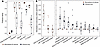 Figure 4
Modeling of EOS risk using biomarkers. (A) Model fit parameters for random forests models trained with (amber) or without (black) cord blood biomarker concentrations as a factor. Metrics are calculated with EOS as the positive class. Points represent performance for a single run of the model. Box plots show the median and interquartile range. Whiskers extend to the last point within the 1.5× interquartile range of the box. (B) Permutation variable importance for variables in the random forest model with cord blood biomarker concentrations included. Biomarker concentrations are shown on the left. Variables included in both models are shown on the right. Box plots show median and interquartile range. Whiskers extend to the last point within 1.5× interquartile range of the box. Points represent performance for a single run of the model.
To further characterize the value of cord blood biomarker levels, we measured variable importance by permutation in both RF models (Figure 4B). In this strategy, the values of individual variables are randomly shuffled as the model is applied to multiple data splits. Degradation of model performance is thus interpretable as the fractional contribution of each variable to model accuracy. For the RF model with both biomarkers and clinical variables, SAA concentration had the greatest contribution to model performance by far, highlighting the value of this biomarker, followed by LBP concentration. None of the clinical variables contributed to accuracy of the biomarker-inclusive RF model by this metric. For the RF model with only clinical variables, PROM, GA, serum protein concentration, and chorioamnionitis were the most important variables, consistent with known EOS risk factors. That the biomarker-added model had improved performance while relying almost solely on biomarker concentrations suggests that these biomarkers have predictive value beyond clinical variables alone. This RF model also performed better than the best multifeatured logistic regression models with fewer false negatives, which is important given the clinical importance of negative predictive value and risk of missing true EOS (Table 3, Recall). Together, these data suggest that cord blood biomarkers may be useful adjuncts to clinical risk factors in EOS management.
Assessment of biomarkers in infants with PS. Most infants receiving antibiotics early in life do not have positive blood cultures and so are treated as PS. Infants with PS presumably include a mixture of infants with and without infection. In proteomics analysis, they did not cluster distinctly from EOS and control group infants (Supplemental Figure 5). To assess the outcome of our model in predicting sepsis in this population, we performed the same immunoassays on cord blood specimens from infants with PS. Of the 53 infants with PS, our machine learning model predicted 41 to resemble the healthy infants in the control group, and 12 were predicted to resemble the infants with EOS. PCA of the immunoassay data confirmed a clear clustering of the 12 infants with PS predicted to have EOS with the infants who had true EOS, while the other 41 clustered cleanly with the control group (Figure 5A). The infants with PS predicted to have EOS had significantly higher levels of CRP, SAA1, and LBP than the infants predicted to be in the control group, with median values near or exceedingly those of the infants with true EOS (Figure 5B). That the majority of the infants with PS would potentially not have sepsis would be consistent with the risk averse paradigm of prolonged empiric antibiotic administration upon clinical suspicion of sepsis.
 Figure 5
Presumed sepsis cases categorized by random forest model. Biomarker concentrations in cord blood from presumed sepsis cases were measured by immunoassay; cases were then categorized as either predicted EOS (PS-pEOS) or predicted control (PS-pControl). (A) PCA plot of biomarker concentrations in cases colored by status and predicted status. (B) Concentration of biomarker proteins in predicted EOS and predicted control cases. Box plots show median and interquartile range. Whiskers extend to the last point within the 1.5× interquartile range of the box. Points represent individual samples. Wide red lines show the median value for ascertained EOS cases (excluding outliers); wide blue lines show the median value for ascertained controls. Comparisons were significant by Mann-Whitney U test with Benjamini-Hochberg FDR adjustment.


