
Gastroenterology
Abstract
Inflammatory bowel disease (IBD), encompassing ulcerative colitis (UC) and Crohn’s disease (CD), is marked by chronic intestinal inflammation and dysregulated immunity. Although UC and CD affect different areas of the gastrointestinal tract, both diseases share aberrant CD4+ memory T cell responses, with HLA-DRB1 as a major genetic risk factor. HLA-DRB1 encodes MHC class II molecules that influence the CD4+ T cell receptor (TCR) repertoire, yet how these genotypes shape TCR specificity in IBD remains unclear. Here, we genotyped HLA-DRB1 and profiled 3.13 million TCRb sequences from circulating memory CD4+ T cells in 33 IBD patients (20 UC, 13 CD) and 14 healthy controls. Using the GLIPH2 algorithm, we distilled 468,441 candidates based on CDR3 amino acid motifs into 440 high-confidence TCR specificity groups significantly enriched among individuals sharing HLA-DRB1 alleles. Notably, five specificity groups were IBD-enriched and shared between UC and CD, suggesting common antigen targets in both diseases. We also observed increased frequencies of clonally expanded cytotoxic GZMB+PRF1+ memory CD4+ T cells and KIRs+CD8+ T cells in a subset of risk-allele carriers with IBD. These findings elucidate distinct, HLA-linked TCR specificity groups in IBD and provide mechanistic insights that may advance antigen discovery and personalized medicine.
Authors
Joshua E. Chan, Azam Mohsin, Jens Krijgsman, Ciska Lindelauf, Qinghui Mu, Brianna Cavalla, Xuhuai Ji, Sarah E. Streett, Vincent van Unen, Mark M. Davis
Abstract
Small bowel transplantation (SBT) is the only curative treatment for intestinal failure due to short bowel syndrome (SBS); however, the 10-year graft survival rate after SBT remains below 50%. Therefore, alternative treatments are required. We developed a new therapeutic strategy for intestinal failure involving in vivo intestinal regeneration using a decellularized scaffold in a rat model. A 3-cm segment of decellularized small intestine was anastomosed to the jejunum for in vivo regeneration. After four weeks of regeneration, the entire native intestine was resected to induce SBS, and the regenerated intestine was transplanted into the same rat. Histological analysis revealed regeneration of mucosa, nerves, muscular layer, and crypts, consistent with autologous cell infiltration. An indocyanine green test confirmed blood flow from the adjacent mesentery into the regenerated intestine. The regenerated intestine exhibited absorption of nutrients in vivo, and ex vivo assessments confirmed peristalsis and absorptive capacity comparable to native intestine. Transplantation of the regenerated intestine significantly improved postoperative nutritional status in SBS rats. Our method, autogenic-regenerated intestinal transplantation, showed the therapeutic potential for intestinal failure. This is the first study to demonstrate a functionally integrated regenerated intestine, providing a foundation for future regenerative therapy.
Authors
Kentaro Iwaki, Takamichi Ishii, Hidenobu Kojima, Fumiaki Munekage, Hiroshi Horie, Kenta Makino, Takuma Karasuyama, Yusuke Hanabata, Elena Yukie Uebayashi, Satoshi Ogiso, Etsuro Hatano
Abstract
Antibody production by B cells has emerged as an important factor in regulating anti-tumor immunity with both suppressive and promotive roles in cancer. However, the specific impact of antibody deficiency during development of pancreatic ductal adenocarcinoma (PDAC) has not been explored. To address this question, we crossed the well-established KPC mouse model to mice lacking all circulating immunoglobulin (Ig) due to genetic ablation of both Ig secretion and Ig class switching (KPC-μSAID mice). KPC-μSAID mice exhibited a two-fold acceleration in tumor formation, a two-fold reduction in median survival, and increased liver metastases versus KPC-WT control mice. Immunofluorescence analysis of pancreatic tissues from antibody-sufficient KC- and KPC-WT mice showed that IgG was predominantly localized within extracellular matrix (ECM). Furthermore, in both KC- and KPC-μSAID mice, ECM density and podoplanin+ cancer-associated fibroblasts (CAFs) were significantly reduced. In the KPC-μSAID tumor microenvironment (TME), intratumoral myeloid-derived suppressor cells (MDSC) were also increased, while CD4+ and CD8+ T cells decreased, relative to tumor-bearing KPC-WT mice, with macrophage exhibiting a mixed polarization phenotype. These findings were recapitulated in antibody-subclass-deficient, KPC-AID mice, suggesting a potentially novel function of IgG in suppressing PDAC progression, by directly or indirectly regulating pancreatic fibrosis and the density of the ECM.
Authors
Jeremy B. Foote, Sujith Sarvesh, Sameer Al Diffalha, David K. Crossman, Changde Cheng, Myng-Hee Kim, Cherlene Hardy, Julienne L. Carstens, Kyoko Kojima, Bart J. Rose, Christopher A. Klug
Abstract
BACKGROUND. Asparaginase is essential for curing acute lymphoblastic leukemia (ALL), but its use is limited by asparaginase-associated pancreatitis (AAP), a severe and unpredictable toxicity lacking validated prospective biomarkers. We sought to define early systemic molecular features of susceptibility to AAP. METHODS. We performed longitudinal lipidomic and proteomic profiling in two independent pediatric ALL cohorts (n = 161; 79 AAP cases, 82 controls) using paired blood samples collected before asparaginase exposure and at the end of induction therapy (including a single dose of asparaginase), thereby capturing pre-injury biology rather than consequences of pancreatitis. We applied differential abundance and network-based analyses, and integrated lipid–cytokine associations using proteomics. RESULTS. Across cohorts, we identified a reproducible lysophosphatidylcholine (LPC)–centered signature characterized by attenuated induction therapy-associated LPC responses and disruption of LPC co-regulation at the network level. Proteomic profiling revealed enrichment of cytokine signaling pathways, and integrative analyses demonstrated altered lipid–cytokine coupling, including a flip in association direction for LPC species and interleukin-18 (IL-18) between cases and controls. Although IL-18/LPC ratios do not differ globally, elevated post-induction IL-18/LPC ratios identify AAP risk within a protocol-defined very high-risk ALL subgroup (AUC = 0.81). CONCLUSION. These findings support a systems-level model in which failure of coordinated lipid–immune responses under therapeutic stress confers vulnerability to AAP, providing a framework for validation and mitigation strategies. TRIAL REGISTRATION. NCT00400946; NCT01574274; NCT03020030 (parent trials). FUNDING. Servier Pharmaceuticals (IIT-95014-027-USA); SDRC (P30DK116074); Stanford SPARK; Fonds de Recherche du Québec – Santé; Fondation Charles-Bruneau; The Leukemia & Lymphoma Society of Canada.
Authors
Cheng-Yu Tsai, Na Bo, Thai Hoa Tran, Maisam Abu-El-Haija, Gayathri Swaminathan, Bomi Lee, Sudhir Ghandikota, Li Wen, Yves Théorêt, Steven D. Mittelman, Elena J. Ladas, Anil G. Jegga, Lewis B. Silverman, Ying Ding, Sohail Z. Husain
Abstract
Eosinophilic esophagitis (EoE) is a type 2 allergic disease characterized by esophageal inflammation and epithelial cell dysfunction. The acquired loss of the anti-serine protease of kazal type 7 (SPINK7) in the squamous epithelium of the esophagus has a causal role in EoE pathogenesis. Yet there is a limited understanding of the factors that regulate its expression and responsiveness to inflammatory stimuli. Herein, we have identified the transcription factor, ovo like transcriptional repressor 1 (OVOL1) as an esophageal selective gene product that regulates SPINK7 promoter activity. Overexpression of OVOL1 increased SPINK7 expression, whereas its depletion decreased SPINK7 expression, impaired epithelial barrier and increased production of the pro-atopy cytokine thymic stromal lymphopoietin (TSLP). Stimulation with IL-13 abrogated the nuclear translocation of OVOL1 and promoted enhanced degradation of OVOL1 protein. This effect of IL-13 was dependent on the esophageal specific cysteine protease calpain-14 at least in part. Analysis of human esophageal biopsies demonstrated that the expression of esophageal OVOL1 correlated with SPINK7 transcript expression and was lost as a function of EoE disease activity. In summary, our study identifies key regulatory mechanisms in EoE pathogenesis, demonstrating that OVOL1 promotes SPINK7 transcription, whereas IL-13 suppresses this pathway in EoE.
Authors
Nurit P. Azouz, Andrea M. Klingler, Sierra S. Beach, Kalen A. Rossey, Mark Rochman, Misu Paul, Julie M. Caldwell, Michael Brusilovsky, Alexander T. Dwyer, Xiaoting Chen, Daniel Miller, Carmy Forney, Leah C. Kottyan, Matthew T. Weirauch, Marc E. Rothenberg
Abstract
Inflammatory bowel disease (IBD) is frequently accompanied by intestinal fibrosis, with non-response (NR) to long-term anti-tumor necrosis factor α (anti-TNFα) therapy occurring in approximately 23-46% of patients. Integrated analysis of single-cell and bulk RNA sequencing datasets revealed an expansion of IL11⁺ fibroblasts in inflamed intestine and their significant enrichment in non-responders. We further identified IL11⁺ fibroblasts as a central communication hub that engaged in extensive crosstalk with monocytes and may contribute to inflammatory amplification and fibrotic remodeling. Additionally, we employed machine learning approaches including least absolute shrinkage and selection operator (LASSO), support vector machines (SVM), and random forest (RF) to derive an IL11⁺ fibroblast-related gene signature effectively predicting NR to anti-TNFα in validation and test cohorts. IHC further confirmed the overexpression of IL-11 in non-responders. The signature genes we found are not only associated with immune and inflammatory responses but also with fibrosis, indicating a robust association between fibrosis and anti-TNFα treatment failure. In summary, this study highlights the important role of IL11⁺ fibroblasts in orchestrating both inflammation and fibrosis and provides an applicable model for predicting NR to anti-TNFα in IBD, thereby laying the foundation for precision medicine and targeted therapeutic strategies.
Authors
Wangyue Li, Wei Huang, Jiaxin Wang, Yiwen Tu, Qidi Yang, Yao Zhou, Zile Zhang, Haiming Zhuang, Yubei Gu, Duowu Zou, Yao Zhang
Abstract
Primary sclerosing cholangitis (PSC) is a chronic, idiopathic cholestatic liver disease characterized by inflammation and fibrosis of the bile ducts, yet the cellular crosstalk driving periductal fibrosis remains poorly defined. This study applied a multi-omics approach integrating spatial transcriptomics, RNA-seq, and proteomics to characterize fibrotic periductal regions and their cell–cell communications. Macrophages (MP) subsets, including monocyte-drived-(Mo)MP and lipid-associated-macrophage (LAM)-like, co-localized with cholangiocytes, lymphocytes, and hepatic stellate cells (HSC1). Cell niche analysis identified periductal regions with elevated fibrotic signals, where cell–cell communication analysis revealed potential MP–HSC interactions involving 17 fibrotic driver genes in MP, including ITGB2, GRN, and CCL21, and 6 fibrotic effector genes in HSC. In validation analyses, bulk RNA-seq data showed higher driver and effector gene expression in PSC with established fibrosis compared to early-stage PSC or healthy control (HC). Plasma proteins encoded by MP driver genes were elevated in PSC and in patients with elevated (≥3.29 kPa) liver stiffness on MR elastography. Furthermore, immunofluorescence and SHG imaging showed enrichment of CD68+/CD18+(ITGB2) macrophages in fibrotic regions of PSC liver biopsies. These findings revealed enrichment of MoMP and LAM-like macrophages in fibrotic regions and suggest that they likely contribute to fibrotic activation of nearby HSCs in PSC.
Authors
Yunguan Wang, David Adeleke, Xiangfei Xie, Zi F. Yang, Xiangya Wang, Giulia Loi, Annika Yang vom Hofe, Manavi Singh, Astha Malik, Ramesh Kudira, Cyd Castro-Rojas, Liva Pfuhler, Mosab Alquraish, Pamela Sylvestre, Jonathan R. Dillman, Andrew T. Trout, Emily R. Miraldi, Alexander G. Miethke
Abstract
Malnutrition, gut inflammation, and antibiotic-induced dysbiosis (AID) are well-recognized risk factors for poor clinical outcomes among critically ill patients. We previously showed that commercially available plant-based enteral nutrition (PBEN) preserves a commensal microbiome compared with commonly used artificial enteral nutrition (AEN). In this study, PBEN was superior to AEN in promoting recovery from antibiotic-induced dysbiosis in mice and humans. PBEN effectively mitigated anemia and leukopenia, restored naïve lymphocyte populations, and reduced bone marrow myeloid expansion. Animals randomized to PBEN also exhibited improved responses to infectious challenges following antibiotic exposure. A pilot clinical study validated these findings, demonstrating increased gut commensals, reduced pathogens, and improved leukocyte balance in critically ill children receiving PBEN compared with AEN. Together, these results suggest that PBEN offers a practical dietary approach to mitigate antibiotic-associated complications and potentially improve clinical outcomes among hospitalized patients requiring supplemental nutrition.
Authors
Mona Chatrizeh, Jianmin Tian, Matthew Rogers, Firuz Feturi, Guojun Wu, Brian Firek, Roman Nikonov, Lauren Cass, Alexandra Sheppeck, Lavnish Ojha, Ali Carroll, Matthew Henkel, Justin Azar, Rajesh K. Aneja, Brian Campfield, Dennis Simon, Michael J. Morowitz
Vancomycin eliminates gut deoxycholic acid, restoring ER proteostasis in ILC2s and relieving colitis
Abstract
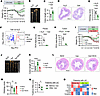
Ulcerative colitis (UC) remission is marked by gut microbiota restructuring, but how microbial metabolites influence immune-mediated tissue repair is unclear. Here, we demonstrate that oral vancomycin alleviates colitis symptoms in murine models, mirroring its clinical efficacy in inducing remission in patients with UC. Mechanistically, vancomycin’s therapeutic effect is achieved by reducing deoxycholic acid (DCA). We reveal that DCA impairs mucosal repair driven by group 2 innate lymphoid cells (ILC2s) by inducing ER stress through direct binding to thioredoxin-related transmembrane protein 2 (TMX2). This interaction disrupts TMX2’s role in protein folding, triggering unresolved unfolded protein response via hyperactivation of PERK/eIF2α signaling, which suppresses the production of pro-healing molecules by ILC2s. Pharmacological inhibition of PERK phosphorylation restores ILC2 function and accelerates colitis resolution. Our work uncovers a pathogenic microbiota/DCA/ILC2 axis that obstructs mucosal healing and positions vancomycin as a targeted strategy to eliminate DCA, thereby promoting UC remission.
Authors
Qiuheng Tian, Han Liu, Xiang Gu, Jing Shen, Xi Yuan, Mengqi Zheng, Yunjiao Zhai, Yatai Chen, Penghu Han, Yangchun Ma, Wei Xin, Hongyue Ma, Yu Li, Sihan Wang, Lei Guo, Detian Yuan, Yanbo Yu, Shiyang Li
Abstract
A large inter-individual variability in weight loss outcomes following bariatric surgery is reported. To ensure optimal patient management, it is crucial to accurately identify those most likely to benefit from the intervention. Since genetic variants largely contribute to surgery response, polygenic scores (PGS) derived from genome-wide association studies (GWAS) could constitute valuable tools for clinical decision making. We developed and evaluated PGS to predict the weight loss response in 540 patients with body mass index (BMI) ≥35kg/m2 who underwent biliopancreatic diversion with duodenal switch. Summary statistics derived from BMI-derived GWAS, together with summary statistics from previously published GWAS of BMI and adiposity features, were used to construct, evaluate, and benchmark weight-loss PGS. The full-adjusted BMI PGS model built in the entire cohort explained 39.6% of the mean-over-time excessive body weight loss (%EBWL), while the BMI-PGS built in the training dataset explained 38.9%. All benchmarked PGS based on BMI showed a significant relationship with mean-over-time %EBWL. These findings highlight the potential of BMI PGS in predicting weight loss after bariatric surgery and support their use as promising tools to improve the effectiveness of future anti-obesity treatments. Funding: Canadian Institutes of Health Research (PJT-168876).
Authors
Bastien Vallée Marcotte, Juan de Toro-Martín, André Tchernof, Louis Pérusse, Simon Marceau, Marie-Claude Vohl
No posts were found with this tag.


