
Submit a comment
Abstract
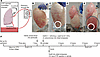
Bacterial pneumonia is the most common cause of acute respiratory distress syndrome (ARDS), characterized by disrupted pulmonary endothelial barrier function, hyperinflammation, and impaired alveolar epithelial fluid clearance. ARDS has a high mortality rate and no proven pharmacological treatments, stressing the need for new targeted therapies. The TIP peptide, mimicking the lectin-like domain of TNF, directly binds to the α subunit of the epithelial Na+ channel, expressed in both alveolar epithelial and capillary endothelial cells, and may increase lung endothelial barrier function and alveolar fluid clearance during bacterial infection. This study tested these potential therapeutic mechanisms of the TIP peptide in a clinically relevant preparation of the ex vivo–perfused human lung injured by Streptococcus pneumoniae. Therapeutic administration of the TIP peptide reduced pulmonary barrier permeability to protein and lung edema formation, increased alveolar edema fluid clearance, and produced an antiinflammatory effect in the airspaces with reductions in IL-6 and IL-8 levels. Additionally, the TIP peptide reduced the translocation of bacteria into the circulation. These findings establish 3 mechanisms of benefit with the TIP peptide to reduce injury in the human lung and support the clinical relevance as a potential therapeutic for pneumococcal bacterial pneumonia.
Authors
Mazharul Maishan, Hiroki Taenaka, Bruno Evrard, Shotaro Matsumoto, Angelika Ringor, Carolyn Leroux, Rudolf Lucas, Michael A. Matthay
Guidelines
The Editorial Board will only consider comments that are deemed relevant and of interest to readers. The Journal will not post data that have not been subjected to peer review; or a comment that is essentially a reiteration of another comment.
- Comments appear on the Journal’s website and are linked from the original article’s web page.
- Authors are notified by email if their comments are posted.
- The Journal reserves the right to edit comments for length and clarity.
- No appeals will be considered.
- Comments are not indexed in PubMed.
Specific requirements
- Maximum length, 400 words
- Entered as plain text or HTML
- Author’s name and email address, to be posted with the comment
- Declaration of all potential conflicts of interest (even if these are not ultimately posted); see the Journal’s conflict-of-interest policy
- Comments may not include figures


