
Research ArticleGeneticsOncology
Open Access |  10.1172/jci.insight.206449
The molecular similarity landscape of preclinical cancer models to patient tumors
Zixuan Xie,1 Jia Xue,1 Binchen Mao,1 Hengyuan Liu,1 Wubin Qian,1 Jingjing Wang,1 Xiaobo Chen,1 and Sheng Guo1,2
1Crown Bioscience Inc., Suzhou, Jiangsu, China.
2Biomedical Basic Research Center (BBRC) of Jiangsu, Suzhou, Jiangsu, China.
Address correspondence to: Sheng Guo, 218 Xinghu Rd, Suzhou, Jiangsu, China, 215000. Phone: 86.189.15580730; Email: guosheng@crownbio.com.
Find articles by Xie, Z. in: PubMed | Google Scholar
1Crown Bioscience Inc., Suzhou, Jiangsu, China.
2Biomedical Basic Research Center (BBRC) of Jiangsu, Suzhou, Jiangsu, China.
Address correspondence to: Sheng Guo, 218 Xinghu Rd, Suzhou, Jiangsu, China, 215000. Phone: 86.189.15580730; Email: guosheng@crownbio.com.
Find articles by Xue, J. in: PubMed | Google Scholar
1Crown Bioscience Inc., Suzhou, Jiangsu, China.
2Biomedical Basic Research Center (BBRC) of Jiangsu, Suzhou, Jiangsu, China.
Address correspondence to: Sheng Guo, 218 Xinghu Rd, Suzhou, Jiangsu, China, 215000. Phone: 86.189.15580730; Email: guosheng@crownbio.com.
Find articles by Mao, B. in: PubMed | Google Scholar
1Crown Bioscience Inc., Suzhou, Jiangsu, China.
2Biomedical Basic Research Center (BBRC) of Jiangsu, Suzhou, Jiangsu, China.
Address correspondence to: Sheng Guo, 218 Xinghu Rd, Suzhou, Jiangsu, China, 215000. Phone: 86.189.15580730; Email: guosheng@crownbio.com.
Find articles by Liu, H. in: PubMed | Google Scholar
1Crown Bioscience Inc., Suzhou, Jiangsu, China.
2Biomedical Basic Research Center (BBRC) of Jiangsu, Suzhou, Jiangsu, China.
Address correspondence to: Sheng Guo, 218 Xinghu Rd, Suzhou, Jiangsu, China, 215000. Phone: 86.189.15580730; Email: guosheng@crownbio.com.
Find articles by Qian, W. in: PubMed | Google Scholar
1Crown Bioscience Inc., Suzhou, Jiangsu, China.
2Biomedical Basic Research Center (BBRC) of Jiangsu, Suzhou, Jiangsu, China.
Address correspondence to: Sheng Guo, 218 Xinghu Rd, Suzhou, Jiangsu, China, 215000. Phone: 86.189.15580730; Email: guosheng@crownbio.com.
Find articles by Wang, J. in: PubMed | Google Scholar
1Crown Bioscience Inc., Suzhou, Jiangsu, China.
2Biomedical Basic Research Center (BBRC) of Jiangsu, Suzhou, Jiangsu, China.
Address correspondence to: Sheng Guo, 218 Xinghu Rd, Suzhou, Jiangsu, China, 215000. Phone: 86.189.15580730; Email: guosheng@crownbio.com.
Find articles by Chen, X. in: PubMed | Google Scholar
1Crown Bioscience Inc., Suzhou, Jiangsu, China.
2Biomedical Basic Research Center (BBRC) of Jiangsu, Suzhou, Jiangsu, China.
Address correspondence to: Sheng Guo, 218 Xinghu Rd, Suzhou, Jiangsu, China, 215000. Phone: 86.189.15580730; Email: guosheng@crownbio.com.
Find articles by Guo, S. in: PubMed | Google Scholar
Published June 30, 2026 - More info
JCI Insight. 2026;11(16):e206449. https://doi.org/10.1172/jci.insight.206449.
© 2026 Xie et al. This work is licensed under the Creative Commons Attribution 4.0 International License. To view a copy of this license, visit http://creativecommons.org/licenses/by/4.0/.

-
Results
Panmodel and Pancancer comparison of gene expression profiles. We compared RNA-seq profiles from 10,626 primary tumors from TCGA with 2,762 PDX samples, 473 PDXO samples, 174 PDO samples from Crown Bioscience’s collection, and 1,170 cell lines from CCLE or Crown Bioscience’s collection, across 17 overlapping tumor types (Figure 1A and Table 1). The expression files were normalized using the Trimmed Mean of M values (TMM) method (30). The batch effects related to different model types were corrected using ComBat (31); an evaluation of the uncorrected RNA-seq data revealed that samples clustered entirely by data source rather than by biological tissue type (Supplemental Figure 1A; supplemental material available online with this article; https://doi.org/10.1172/jci.insight.206449DS1). To test whether ComBat correction removed biologically meaningful variance, we computed pairwise inter-cancer-type distances between TCGA centroids before and after correction for all 17 cancer types. The distances were virtually identical before and after correction (Pearson r = 0.996; Supplemental Figure 1B), demonstrating that the relative biological separation between cancer types was well preserved. To confirm that the correction did selectively remove platform-associated technical variance, we computed silhouette scores quantifying how strongly each sample clustered with its own platform relative to other platforms. Before correction, the median silhouette score was 0.18, indicating the platform separation. After correction, this dropped to approximately 0, confirming that platform-driven clustering was effectively eliminated (Supplemental Figure 1C). Taken together, these results demonstrate that ComBat correction in our study selectively removed technical batch effects while preserving the biologically meaningful inter-cancer-type variation that underlies all downstream comparisons.
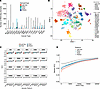 Figure 1
Pancancer analysis of different preclinical models and tumor samples. (A) Number of RNA-seq samples used, grouped by different model types and cancer types. (B) t-SNE plot for all RNA-seq samples across different TCGA cancer types. (C) Box plot of Spearman correlation coefficient between RNA-seq samples of TCGA and preclinical models for each model type, each panel represents the corresponding top n varied genes of TCGA samples. (D) Plot of median spearman correlation coefficient between TCGA and preclinical models against the number of top varied genes of TCGA samples.
To have an overview of the global transcriptional relationships among patient tumors and corresponding preclinical models, we performed the t-SNE analysis using the normalized and batch corrected gene expression profiles (Figure 1B). For most cancer types, samples clustered primarily according to their tumor type, indicating that, in general, the preclinical cancer models well represent the transcriptomic profiles of primary tumors. Major cancer types such as breast invasive carcinoma (BRCA), lung adenocarcinoma (LUAD), colon adenocarcinoma (COAD) and ovarian serous cystadenocarcinoma (OV) formed well-defined, compact clusters; in contrast, certain tumor types (e.g., cholangiocarcinoma (CHOL), lymphoid neoplasm diffuse large B-cell lymphoma (DLBC), cervical squamous cell carcinoma and endocervical adenocarcinoma (CESC) and esophageal carcinoma (ESCA) appeared relatively sparse or dispersed in the t-SNE space. Tumor type–specific t-SNE panels for all 17 cancer types are provided in Supplemental Figure 2, which also identifies outlier models within individual tumor types.
Though for each cancer type, the 4 preclinical models were generally positioned close to their corresponding TCGA tumors, the extent of similarity varied. To explore the order of transcriptomic similarity, we then calculated Spearman correlation coefficients (SCC) between gene expression profiles of primary tumor samples and each preclinical model, using different sets of the most variable genes. As shown in Figure 1C, the transcriptomic resemblance of models to primary tumors was dependent on the gene set size. At smaller gene subsets (e.g., top 100–1,000 genes), a clear hierarchy of similarity was evident, with PDX models exhibiting the highest correlation, followed by PDO and PDXO, while cell lines showed the lowest correlation. As the number of genes included in the analysis increased, the distinction between the top 3 models — PDX, PDO, and PDXO — began to shrink, showing a convergence in their global transcriptional profiles (Figure 1D). Tumor type–stratified Spearman correlation analyses for BRCA, COAD, OV, and pancreatic adenocarcinoma (PAAD) shows that the model similarity hierarchy is preserved across 4 distinct cancer types with different biology, reducing the likelihood that the findings are dominant by a single strong tissue signature (Supplemental Figure 3). Despite this convergence among the advanced models, the cell lines consistently maintained the lowest correlation across the tested model platforms.
High stability of preclinical models across sequential passages and in vitro to in vivo transitions. To evaluate the longitudinal stability of the preclinical models, we assessed the transcriptomic consistency across different passages for PDX, PDO, and PDXO models. The median Pearson correlation coefficients (PCC) for these models were 0.975, 0.982, and 0.974, respectively (Figure 2, A–C). By fitting a linear model to the data, we examined the relationship between transcriptomic similarity and the difference in passage number between compared samples. Our analysis revealed a significant negative correlation (slope, –0.0013; P = 0.000781), demonstrating that the transcriptomic profile of a model gradually diverges as the passage gap increases (Figure 2D). This trend was observed across multiple cancer types, suggesting that a small but measurable “transcriptomic drift” occurs during long-term model maintenance, which provides a quantitative explanation for the observed variance.
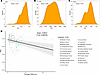 Figure 2
Longitudinal transcriptomic stability and passage-dependent drift. (A–C) Density plots illustrating the distribution of Pearson correlation coefficients (PCC) between different passages for PDX (A), PDO (B), and PDXO (C) models. The median PCC values remain high (> 0.97) across all model types. (D) Linear regression analysis showing the relationship between PCC and the difference in passage number between compared samples. Points are colored by cancer type. The shaded region represents the 95% CI of the fitted model.
To further evaluate the translational potential and plasticity of these models, we performed cross-platform transcriptomic comparisons between paired patient-derived systems. Specifically, we examined the correlation between PDO models and their corresponding PDOX (PDO-derived xenograft) counterparts, as well as PDX models and their paired PDXO derivatives. Our analysis revealed high transcriptomic conservation across these transitions. The median PCC between PDO and PDOX models was 0.962 (Figure 3A), while the median PCC between PDX and PDXO models was 0.952 (Figure 3B). Despite this high overall similarity, we observed significant variation in molecular similarity when stratified by tissue of origin. A Kruskal-Wallis test demonstrated that the degree of transcriptomic conservation differs significantly across cancer types for both PDO-PDOX (P = 0.000129; Figure 3C) and PDX-PDXO transitions (P = 0.000269; Figure 3D). For instance, colorectal cancer (CR) models exhibited particularly high stability during these transitions compared with other types.
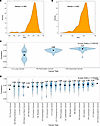 Figure 3
Transcriptomic conservation across patient-derived model transitions. (A and B) Density plots showing the distribution of Pearson correlation coefficients (PCC) for paired models during platform transitions: PDO versus paired PDOX (A) and PDX versus paired PDXO (B). (C and D) Violin plots representing the distribution of PCC scores stratified by cancer type for PDO vs. PDOX (C) and PDX vs. PDXO (D). Black dots indicate the median correlation for each group. Significant differences in model conservation across cancer types were observed (Kruskal-Wallis test results indicated for each).
High functional similarity of preclinical models at the pathway level. To determine if the transcriptomic similarity observed at the gene level translates to functional biological processes, we performed ssGSEA. We first visualized the global functional landscape using the entire MSigDB collection (32, 33) (34,808 gene sets). The t-SNE projection of these enrichment scores showed that preclinical models continue to cluster closely with their primary TCGA tumor counterparts, suggesting that the underlying biological states are well preserved across platforms (Figure 4A). We then narrowed our focus to the Hallmark gene set collection, which represents 50 well-defined biological states and processes. Similar to our previous gene-level analysis, we calculated the SCC between models and TCGA tumors across different numbers of top-ranked pathways. Across all levels of pathway complexity, from the top 10 to all 50 Hallmark sets (34), the models exhibited remarkably high and stable correlations (Figure 4B). At the functional level, the performance gap between models narrowed markedly; however, the established hierarchy remained largely intact, with PDX models consistently showing the highest functional resemblance to patient tumors (Figure 4C). We then examined representative pathways critical to tumor biology, including Inflammatory Response, Hypoxia, KRAS Signaling, and IL-6/JAK/STAT3 Signaling (Figure 4D). For these hallmarks, the distribution of enrichment scores in PDO, PDX, and PDXO models closely mirrored the distribution seen in TCGA samples. While cell lines also followed the general trend, they often exhibited wider variance or slight shifts in median scores compared with the patient-derived models.
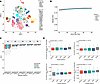 Figure 4
Functional transcriptomic landscape and pathway enrichment similarity. (A) t-SNE visualization of all samples based on ssGSEA enrichment scores for the entire MSigDB collection. Samples are colored by TCGA cancer type and shaped by model platform. (B) Median Spearman correlation coefficient (SCC) between preclinical models and TCGA tumors as a function of the number of top-ranked Hallmark pathways. (C) Box plots showing the distribution of SCC across different pathway subsets (top 10–50), stratified by model platform. (D) Comparison of ssGSEA enrichment scores for 4 representative Hallmark pathways: Inflammatory Response, Hypoxia, KRAS Signaling Down, and IL-6/JAK/STAT3 Signaling (Kruskal-Wallis test results indicated for each).
To identify systematic pathway-level gaps between preclinical models and primary tumors, we computed the difference in median ssGSEA enrichment scores for each of the 50 Hallmark pathways. Across all 4 model types, the most consistently underrepresented programs relative to TCGA included epithelial-mesenchymal transition (EMT), angiogenesis, and WNT/β-catenin signaling (Supplemental Figure 4), which are predominantly regulated by signals from the tumor microenvironment.
Proteomic similarity between preclinical models and primary tumors across different cancer types. We compared proteomic profiles from 1,030 primary tumors from CPTAC with 595 PDX samples, 29 PDXO samples, 12 PDO samples, 7 cell line-derived xenograft (CDX) samples, and 643 cell lines from Crown Bioscience collection, covering 37 tumor types (Figure 5A). The protein expression data obtained from Crown Bioscience were normalized using the retention time–dependent normalization method implemented in DIA-NN v1.9.2 (35), and the batch effects associated with different model types were corrected using ComBat (31).
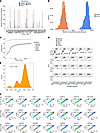 Figure 5
Pancancer proteomics analysis of different preclinical models. (A) Number of proteomics samples used, grouped by different model types and cancer types. (B) Density plot of number of quantifiable protein groups per sample from Sanger Institute and Crown Bioscience. (C) Plot of median spearman correlation coefficient between CPTAC and preclinical models against the number of top varied proteins. (D) Box plot of spearman correlation coefficient between proteomics samples of CPTAC and preclinical models for each model type, each panel represents the corresponding top n varied proteins of CPTAC samples. (E) Density plots showing the distribution of Pearson correlation coefficients (PCC) for paired in vitro and in vivo models during platform transitions. (F) Spearman correlations between proteomics of cell line and CDX (upper panel), between PDX and PDXO (middle panel), and between PDOX and PDO (lower panel).
We first validated the depth of the Crown Bioscience dataset by comparing it against the Sanger Institute’s cell line proteomic data. The Crown dataset exhibited significantly deeper coverage, with a median of 9,666 quantifiable protein groups per sample compared with 5,220 in the Sanger dataset (Wilcoxon rank-sum test, P < 0.0001; Figure 5B), confirming the high quality and analytical depth of our primary data source.
Following the framework of our transcriptomic analysis, we evaluated the proteomic similarity between preclinical models and primary tumors using varying sets of the most variable proteins. At lower protein set sizes, all models exhibited relatively low correlations to CPTAC tumors. However, as the analysis expanded to include more proteins, a distinct hierarchy emerged: PDX models displayed the highest similarity to primary tumors, followed closely by PDXO and PDO models, which performed nearly identically, while cell lines consistently showed the lowest correlations (Figure 5, C and D). Although the absolute correlation coefficients were lower than those at the transcriptomic level, the relative order of resemblance (PDX > PDXO = PDO > cell line) remained consistent across both omics layers.
Finally, we assessed the proteomic stability during in vitro to in vivo transitions by comparing matched pairs, including cell line–CDX, PDX-PDXO, and PDOX-PDO pairs. Strong proteomic conservation was observed across these transitions, with a median PCC of 0.962 (Figure 5E). Individual scatter plots for these transitions further illustrate the tight correlation of protein expression levels, regardless of the model platform (Figure 5F).
WES outperforms RNA-seq in mutation detection. Whole-exome sequencing (WES) and whole-transcriptome sequencing (WTS, RNA-seq) are powerful tools for detecting single-nucleotide variants (SNVs) at the DNA and RNA level, respectively. To systematically compare their mutational detection capabilities, we performed WES and RNA-seq on a large cohort of 3,179 preclinical human tumor models, comprising 692 cell lines, 176 PDOs, 1,748 PDXs, and 563 PDXOs. The median sequencing data size, which is a measure of sequencing depth, is 15.18 Gb (approximately 125 average sequencing depth) for WES, 12.74 Gb for RNA-seq. For each model, we identified high-quality SNVs from both datasets. We then calculated the fraction of RNA-seq–derived mutations detectable by WES and vice versa. The vast majority (94.7%–95.1%) of RNA-seq–based SNVs were also identified by WES. In contrast, the average RNA-seq detection rate for WES-based mutations was lower (33.2%–37.2%), indicating that over 60% of genomic variants are undetectable after transcription (Supplemental Figure 5). To control for confounding variables, we employed a beta regression model to assess the effect of RNA-seq data size and model category on the RNA-seq detection rate within 4 major cancer types: breast (BR), colorectal (CR), lung (LU), and pancreatic (PA) (Figure 6, A–D). Despite the difference in detection rates, the mutation frequencies inferred by WES and RNA-seq were highly consistent across these cancers, with high mean SCC (BR: 0.890, CR: 0.874, LU: 0.884, PA: 0.882) (Figure 6E).
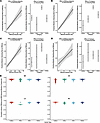 Figure 6
Mutation detection by WES and RNA-seq from in vitro and in vivo tumor models. (A–D) Predicted detection rate by Beta regression model with RNA-seq data size and model category in 4 cancer types: BR, CR, LU, and PA. (E) Spearman correlation coefficient on mutation frequencies estimated by RNA-seq and WES in 4 cancer types.
Panmodel and pancancer comparison of intratumor heterogeneity. Intratumor heterogeneity (ITH) is a crucial factor in tumor development and therapeutic response. Computational methods infer tumor subclones from bulk sequencing data such as whole genome sequencing and WES by analyzing variant allele frequencies (VAF) to deconstruct its mixed cell population. We used WES data for 4,690 tumor models (740 cell lines, 207 PDOs, 3,075 PDXs, and 668 PDXOs) and estimated tumor clonality by using mutation frequency information for each tumor sample. Analysis of subclone counts revealed significant differences across model types (Wilcox rank-sum test P < 0.05), with a consistent hierarchy of clonal complexity: cell lines > PDXOs > PDXs > PDOs (Figure 7A). This trend was largely conserved across the BR, CR, LU, and PA cancer types (Figure 7B). Since sequencing depth is known to influence VAF variance and subclone estimation — i.e., deeper sequencing results in smaller predicted tumor heterogeneity (36) — we verified the findings by controlling the WES data sizes. Specifically, we built a Poisson regression model adjusting for WES data size and model category. This analysis confirmed that subclone count estimates were positively correlated with sequencing depth; furthermore, after adjusting for data size, cell lines — particularly those with high passage numbers — exhibited the most complex ITH (Figure 7, C–F).
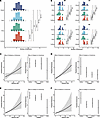 Figure 7
Tumor clonality prediction from WES data across tumor model systems. (A) Histograms of subclone counts inferred from cell line, PDO, PDX, and PDXO tumor samples. (B) Histograms of subclone counts inferred from 4 model types on 4 cancer types: BR, CR, LU, and PA. (C–F) Predicted number of subclones by Poisson regression model with WES data size (left panel) and model category (right panel) in 4 cancer types: BR (C), CR (D), LU (E), and PA (F).


