
Research ArticleGeneticsMuscle biology
Open Access |  10.1172/jci.insight.204742
Peptide-phosphorodiamidate morpholino oligomer therapy for dysferlinopathy induces pseudoexon skipping and restoration of functional protein
James E. Gooding,1 Gyeongsu Park,2 Atish Wagh,2 Jonathan K. Watts,2 Janice A. Dominov,1 and Robert H. Brown Jr1
1Department of Neurology and
2RNA Therapeutics Institute, University of Massachusetts Chan Medical School, Worcester, Massachusetts, USA.
Address correspondence to: Robert H. Brown Jr., N5-1005, 366 Plantation Street, Worcester, Massachusetts 01605, USA. Phone: 781.789.6458; Email: robert.brown@umassmed.edu.
Find articles by Gooding, J. in: PubMed | Google Scholar
1Department of Neurology and
2RNA Therapeutics Institute, University of Massachusetts Chan Medical School, Worcester, Massachusetts, USA.
Address correspondence to: Robert H. Brown Jr., N5-1005, 366 Plantation Street, Worcester, Massachusetts 01605, USA. Phone: 781.789.6458; Email: robert.brown@umassmed.edu.
Find articles by Park, G. in: PubMed | Google Scholar
1Department of Neurology and
2RNA Therapeutics Institute, University of Massachusetts Chan Medical School, Worcester, Massachusetts, USA.
Address correspondence to: Robert H. Brown Jr., N5-1005, 366 Plantation Street, Worcester, Massachusetts 01605, USA. Phone: 781.789.6458; Email: robert.brown@umassmed.edu.
Find articles by Wagh, A. in: PubMed | Google Scholar
1Department of Neurology and
2RNA Therapeutics Institute, University of Massachusetts Chan Medical School, Worcester, Massachusetts, USA.
Address correspondence to: Robert H. Brown Jr., N5-1005, 366 Plantation Street, Worcester, Massachusetts 01605, USA. Phone: 781.789.6458; Email: robert.brown@umassmed.edu.
Find articles by Watts, J. in: PubMed | Google Scholar
1Department of Neurology and
2RNA Therapeutics Institute, University of Massachusetts Chan Medical School, Worcester, Massachusetts, USA.
Address correspondence to: Robert H. Brown Jr., N5-1005, 366 Plantation Street, Worcester, Massachusetts 01605, USA. Phone: 781.789.6458; Email: robert.brown@umassmed.edu.
Find articles by Dominov, J. in: PubMed | Google Scholar
1Department of Neurology and
2RNA Therapeutics Institute, University of Massachusetts Chan Medical School, Worcester, Massachusetts, USA.
Address correspondence to: Robert H. Brown Jr., N5-1005, 366 Plantation Street, Worcester, Massachusetts 01605, USA. Phone: 781.789.6458; Email: robert.brown@umassmed.edu.
Find articles by Brown, R. in: PubMed | Google Scholar
Published July 14, 2026 - More info
JCI Insight. 2026;11(16):e204742. https://doi.org/10.1172/jci.insight.204742.
© 2026 Gooding et al. This work is licensed under the Creative Commons Attribution 4.0 International License. To view a copy of this license, visit http://creativecommons.org/licenses/by/4.0/.
Received: January 20, 2026; Accepted: July 9, 2026


-
Results
Generation of DYSF-PE44.1 mutant mice. Previously, we identified patients with Miyoshi myopathy who lacked detectable DYSF protein in both their muscle tissue and monocytes. These patients were found to bear compound heterozygous loss-of-function mutations in DYSF; 1 allele harbored a nonsense mutation in DYSF exon 32, and the other allele contained an intronic point mutation deep within DYSF intron 44i (45). This point mutation causes aberrant splicing and expression of a pseudoexon, leading to the insertion of 177 additional nucleotides between exons 44 and 45 that maintains the reading frame and inserts 59 additional amino acids, disrupting protein stability (Figure 1A). We generated mutant mice carrying a large segment of human DNA to model this splicing mutation and provide a tool to evaluate therapeutic interventions relevant to this allele. DYSF-PE44.1 mutant mice were produced using CRISPR/Cas9-directed mutagenesis that allowed homologous recombination of a large (6.8 kb) mouse-human-mouse DNA donor sequence into the mouse Dysf locus (Figure 1B and Supplemental Figure 1A; supplemental material available online with this article; https://doi.org/10.1172/jci.insight.204742DS1). This allowed the replacement of mouse Dysf exon 44 – intron 44i – exon 45 with the homologous human exon 44 – intron 44i – exon 45 sequence, including the intron 44i c.4886+1249(G>T) mutation responsible for PE44.1 retention in mature Dysf mRNA. We generated 2 founder mice, Dysf-PE44.1 line 1 and line 2, that carried the successful germline mutation event, as confirmed by Southern blot analysis and diagnostic short- and long-range PCR (Figure 2, Supplemental Figure 1B, Supplemental Figure 2, and Supplemental Figure 3A). All subsequent experiments were performed using Dysf-PE44.1 line 1.
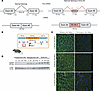 Figure 1
The deep intronic mutation creates a cryptic splice donor site within intron 44, resulting in a pseudoexon inclusion. (A) Schematic representation of normal splicing of exons 44 and 45 of WT DYSF mRNA and aberrant splicing caused by c.4886+1249(G>T) that generates an intronic cryptic splice site (ss) that results in the insertion of a pseudoexon into the mature DYSF mRNA. (B) Diagram of donor DNA used to generate the DYSF-PE44.1 mutant mouse with human pseudoexon mutation. Star indicates the location of the point mutation leading to PE44.1 inclusion. Arrowheads are primers used for routine genotyping. (C) Immunohistology of gluteus maximus muscle tissue detecting dysferlin (green) and DAPI (blue). Scale bar: 50 um. (D) Western blot from muscle tissue lysates detecting dysferlin and β-actin. TA, tibialis anterior; GA, gastrocnemius; Glut, gluteus maximus.
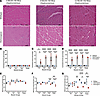 Figure 2
Histopathology of 4-, 8-, and 12-month-old mice. (A) Representative H&E staining of the gluteus maximus muscles in PE44.1 model of dysferlinopathy across age points. Scale bar: 50 um. (B–D) Quantification of fibers with centralized nuclei (arrows) in 4 muscle groups of PE44.1 homozygous, heterozygous, and WT mice at (B) 4 months, (C) 8 months, and (D) 12 months of age. (E–G) Quantification of minimum Feret diameter in 4 muscle groups of PE44.1 homozygous, heterozygous, and WT mice at (E) 4 months, (F) 8 months, and (G) 12 months of age. Statistical differences were determined using 1-way ANOVA and Tukey’s post hoc test: *P < 0.05, **P < 0.005, ***P < 0.0002, and ****P < 0.0001. TA, tibialis anterior; GA, gastrocnemius; Glut, gluteus maximus.
We confirmed that the mutant Dysf-PE44.1 mRNA was expressed in the muscles of mutant mice (Supplemental Figure 3B and Supplemental Figure 4). This result demonstrated that the mouse splicing machinery recognized the human sequence responsible for splicing human exon 44–intron 44i–exon 45 transcripts as well as the G>T point mutation leading to PE44.1 expression. Sanger sequencing of RT-PCR products derived from mutant mouse muscles, using primers spanning mouse exon 43 to exon 47, confirmed the accurate splicing of all splice junctions in this region, including the human sequences in exon 44–PE44.1–exon 45, as expected (Supplemental Figure 4). This model, therefore, recapitulates the aberrant human DYSF splicing event in the mouse context and provides a useful humanized tool to evaluate therapeutic strategies targeting the human mutation.
Molecular characterization of Dysf-PE44.1 mouse model. Dysf-PE44. 1 heterozygous and homozygous mice exhibited normal viability. Heterozygous breeding demonstrated normal biological sex and Mendelian genotypic ratios (Supplemental Figure 5A). Additionally, body weights and grip strength for heterozygous and homozygous mice did not differ significantly from WT mice for either males or females up to the 12 months of age observed (Supplemental Figure 5, B–E).
We evaluated the expression of dysferlin expression in muscle tissues of the PE44.1 mutant mice. Strong dysferlin expression was observed in WT mice, whereas no expression was detected in the homozygous mutants (Figure 1C). These findings were confirmed by Western blot analysis of protein expression across 4 muscle groups (psoas, gluteus, gastrocnemius, anterior tibialis) (Figure 1D). Occasionally, trace amounts of DYSF protein could be detected on immunoblots, likely arising from very low levels of transcripts that did not retain PE44.1 in the mature RNA. Further, bands were noted that are routinely seen when immunoblotting lysed muscle tissue with NCL Hamlet antibody.
In addition to the absence of dysferlin in homozygous mutant mice, a marked increase in mononucleated cells was observed at 12 months of age but not at 4 months of age. This increase was driven by an expanded population of immune cells (CD45+, CD11b+, and CD8+) (showing leukocytes, myeloid cells, and activated T cells, respectively), and fibro-adipogenic precursors (FAPs; PDGFα+) (Supplemental Figure 6).
We stained muscle sections from WT, heterozygous, and homozygous mutant mice using H&E to assess muscle morphology (Figure 2). Muscle tissue from WT littermates exhibited normal morphology, but a key distinction in homozygous mutant mice was the presence of centrally nucleated fibers, indicative of muscle degeneration and an ongoing regenerative process, as highlighted in Figure 2A (arrows). Quantification of centrally located nuclei revealed that heterozygous mutant muscles appeared similar to WT, and that homozygous mutant muscle tissue began showing significant regeneration (as indicated by central nucleation) between 4 and 8 months of age (Figure 2, B and C). By 8 months, 3 muscles were more evidently affected (psoas, gluteus, gastrocnemius, 50%–60% central nucleation) than the fourth (tibialis, 20%–30%). At 12 months, the psoas, gluteus, and gastrocnemius showed little further change, while there was an apparent increase in central nucleation in the tibialis muscle (Figure 2D). These findings suggest that the tibialis muscle is less affected in the disease process relative to the other muscles examined, consistent with earlier studies of dysferlin-deficient mice (47).
We also appraised differences in fiber size as a parameter in disease progression. At 4 months of age, there were no significant differences in muscle fiber size (as indicated by the minimum Feret diameter) between WT, heterozygous, and homozygous mutant mice, even in the most affected muscle groups (Figure 2E). However, by 8 months, significantly smaller muscle fibers were observed in the more affected mutant muscle groups, such as the psoas and gluteus, in homozygous mice, and the diameters of the gastrocnemius and tibialis were indistinguishable from controls (Figure 2F). By 12 months, the gastrocnemius in mutant mice showed a significant reduction in fiber size compared with WT mice (Figure 2G). Strikingly, despite the marked changes in the other muscles, the tibialis anterior revealed no change in diameter at 12 months. Overall, homozygous mutant mice carrying the dysferlin pseudoexon mutation exhibited signs of muscle degeneration, characterized primarily by central nucleation of muscle fibers and a decrease in muscle fiber size.
Functional analysis in DYSF-PE44.1 mouse model. Serum CK levels are commonly used as a biomarker of muscle fiber damage caused by mechanical stress (48–50). When muscle fibers undergo mechanical stress, microtears in the sarcolemma release intracellular contents into the blood (50). In our Dysf mutant mouse model, homozygous mice carrying the pseudoexon mutation showed significantly elevated serum CK levels at 4, 8, and 12 months of age, whereas WT and heterozygous mice did not (Figure 3A).
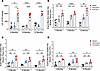 Figure 3
Functional assays of membrane damage due to dysferlinopathy in vivo. (A) Creatine kinase levels detected in the serum at 4, 8, and 12 months in WT, heterozygous, and homozygous littermates. (B–D) Evans blue dye uptake in WT, heterozygous, and homozygous littermates at 4, 8, and 12 months of age in the (B) psoas muscle, (C) gluteus muscle, and (D) gastrocnemius muscle. Statistical differences were determined using 1-way ANOVA and Tukey’s post hoc test: *P < 0.05, **P < 0.005, and ****P < 0.0001.
Loss of muscle membrane integrity is also evident in damaged or diseased muscles by their increase in Evans blue dye uptake after systemic dye delivery (51). When homozygous mice carrying the pseudoexon 44.1 Dysf mutation were administered Evans blue dye, elevated levels of the dye were detected in muscle tissues, including the psoas (Figure 3B), gluteus (Figure 3C), and gastrocnemius (Figure 3D). Heterozygous mice also showed some increase in Evans blue dye uptake, although the levels were lower than those observed in homozygous mice (Figure 3C).
ASOs induce pseudoexon skipping and restore normal DYSF mRNA and protein expression in myotubes. We next explored approaches to correcting the mis-splicing of the mutant dysferlin pre-mRNA. We used the online tools ESE Finder 3.0 and eSkip-Finder to identify splicing regulatory elements within the pseudoexon 44.1 sequence (52, 53). The analysis revealed serine/arginine-rich protein binding sites throughout the sequence, with notable enrichment at both the beginning and near the end of the pseudoexon, showing peaks in the predicted exon skipping efficacy (Supplemental Figure 7A). For the initial screen, we designed 46 20-mer 2′-O-methoxyethyl–modified ASOs targeting the pseudoexon to promote splice exclusion (Supplemental Figure 7B and Supplemental Table 4); our previous screen included only 3 such ASOs (45). To evaluate whether the 46 candidate ASOs could induce pseudoexon skipping in DYSF pre-mRNA, we used myogenic cells derived from skin-primary fibroblasts from patients heterozygous for the PE44.1 pseudoexon mutation (also heterozygous for an exon 32 nonsense mutation), as previously described (45). Several ASOs reduced levels of mis-spliced transcripts as indicated by agarose gel electrophoresis (Supplemental Figure 8A). In particular, ASOs 33–37 spanned sequences that, when targeted, led to reduced pseudoexon inclusion and increased WT RNA expression. RT-qPCR and Western blotting further validated the reduction in mis-spliced transcripts, restoration in normal transcript levels, and restoration in DYSF protein (Supplemental Figure 8, B and C).
PMOs induce pseudoexon skipping, restoring normal DYSF mRNA and protein expression in a dose-dependent manner in vitro. It is established that phosphorodiamidate morpholino oligomers (PMOs) potentially provide a nontoxic, long-duration reagent for splice modulation (29, 54). Using our initial ASO data, we designed for in vivo splice modulation a 25mer PMO (designated PMOPE44.1) that, like the best ASOs above, targeted the region at the 3′ end of the pseudoexon (Supplemental Figure 8D and Supplemental Table 4) (55, 56). When patient-derived myotubes heterozygous for the PE44.1 intronic mutation were transfected with PMOPE44.1 using Gene Tools’ EndoPorter delivery reagent, we observed dose-dependent reduction in levels of mis-spliced transcripts (Figure 4A). At 10 mM PMOPE44.1, mis-spliced transcripts were at 30% of the untreated myotubes. Reciprocally, we observed a dose-depended restoration of the WT dysferlin transcripts, with peak levels at 5 and 10 mM PMOPE44.1 (Figure 4B). At the highest doses, PMOPE44.1 restored total dysferlin RNA expression to about 50% of the level in control myotubes, consistent with fact that only the PE44.1 allele is affected by the PMO skipping and not the exon 32 nonsense allele mutation in these cells. These findings were reflected in dose-dependent improvement in DYSF protein expression; high doses significantly restored dysferlin expression as compared with the control (Figure 4, C and D).
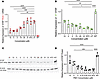 Figure 4
Dysferlin pseudoexon 44.1 removal via PMOs in patient-derived myotubes. (A–C) Patient-derived myotubes heterozygous for the pseudoexon 44.1 disease-causing mutation treated for 72 hours with therapeutic PMO at 10, 5, 3, 0.75, 0.25, 0.01 μM, and 1 μM of nontargeting control (NTC) PMO compared with untreated controls (UT) and untreated WT myotubes analyzed by RT-qPCR. (A) RT-qPCR utilizing primers amplifying pseudoexon containing dysferlin transcripts. (B) RT-qPCR utilizing primers amplifying WT dysferlin transcripts. (C) Western blot detecting dysferlin and β-actin, 2 samples per condition shown. (D) Quantification of dysferlin expression levels determined using the ratio to β-actin protein for normalization. Statistical differences were determined using 1-way ANOVA and Tukey’s post hoc test: **P < 0.005, ***P < 0.0002, and ****P < 0.0001.
Enhanced permeation of pseudoexon skipping PMO in vivo using DNA-RNA heteroduplexes or membrane-permeating peptides. Our therapeutic goal is to develop systemic delivery of our exon-skipping PMO with broad distribution to muscle. We used 2 well-documented methods to enhance systemic uptake of PMO: use of DNA-RNA heteroduplexes (HDOs) and conjugation to cell-permeative peptides. HDOs are DNA-RNA hybrids with cholesterol conjugated to a nucleic acid strand that is complementary to PMOPE44.1. The cholesterol conjugate supports cellular uptake and once inside cells, the RNA in the complementary strand is vulnerable to exonuclease degradation that results in the release of the PMO (57–59). The permeating peptide chosen for this study is an iteration from the Pip series, pip9b2, modified by the addition of 4 terminal amino acids (Pip9b2mod) (60, 61).
We compared the efficacy of PMOPE44.1 alone to that of PMOPE44.1 modified with either HDO or the cell-permeating peptide Pip9b2mod (Supplemental Figure 9). For each treatment, male and female homozygous PE44.1 mice 3 months of age received a single dose targeting the 3′ end of the pseudoexon and were evaluated 1 week after treatment (Supplemental Figure 8D). Mice treated with either the unmodified PMOPE44.1 or HDO-PMOPE44.1 were each administered 80 mg/kg or treated with Pip9b2mod-conjugated PMOPE44.1 (PPMOPE44.1) at a lower dose of 12.5 mg/kg. The dose was calculated from the molecular weight of the PMO alone, and the peptide was chosen as it was the most effective peptide developed for cell penetrance in the treatment of muscular dystrophies (61).
When homozygous mutant mice carrying the pseudoexon 44.1 mutation were treated with PMOPE44.1 alone, we observed a slight reduction in mis-spliced transcripts (Figure 5A) and a minimal restoration of correctly spliced transcripts (Figure 5D), resulting in no significant improvement in protein expression (Figure 5G). In contrast, treatment with the PMOPE44.1-HDO more robustly decreased mis-spliced transcripts (Figure 5B) while also rescuing correctly spliced transcripts (Figure 5E). Although protein expression was improved, it was not substantially higher compared with the PMO treatment alone (Figure 5H).
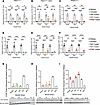 Figure 5
Homozygous PE44.1 model for dysferlinopathy treated with PMO and PMO variants. (A–C) mRNA expression of pseudoexon 44.1 containing transcripts evaluated using RT-qPCR from muscle tissue taken from mice treated for 1 week with (A) PMOPE44.1 (80 mg/kg), (B) PMOPE44.1-HDO (80 mg/kg), and (C) PPMOPE44.1 (12.5 mg/kg). (D–F) mRNA expression of WT dysferlin transcripts evaluated using RT-qPCR from muscle tissue taken from mice treated with (D) PMOPE44.1, (E) PMOPE44.1-HDO, and (F) PPMOPE44.1. (G–I) Western blot of muscle tissue taken from mice treated with (G) PMOPE44.1, (H) PMOPE44.1 HDO, and (I) PPMOPE44.1. (A–F) Legend: black, WT; blue, PBS-treated HOM mice; green, PMOPE44.1-treated HOM mice; orange, PMOPE44.1-HDO–treated HOM mice; red, PPMOPE44.1-treated HOM mice. (A and D) PMO-treated HOM mice, (B and E) HDO-treated HOM mice, (C and F) PPMO-treated HOM mice. Statistical differences were determined using 1-way ANOVA and Tukey’s post hoc test: *P < 0.05, **P < 0.005, ***P < 0.0002, and ****P < 0.0001.
The most significant improvement occurred with the PPMOPE44.1, which resulted in a strong reduction in mis-spliced transcripts (Figure 5C) while substantially restoring correctly spliced transcripts (Figure 5F). This restoration led to a robust increase in protein expression (Figure 5I). The elevated levels of DYSF protein were also seen in immunostaining of muscle tissue from mice treated with the PPMOPE44.1 (Supplemental Figure 10, A and D).
PPMOs restored DYSF protein function in vivo. Serum CK levels remained unchanged after treatment of homozygous PE44.1 mice with PMOPE44.1 or PMOPE44.1-HDO. However, treatment with PPMOPE44.1 restored CK activity to WT levels (Figure 6A). Similarly, the elevated levels of Evans blue dye in muscle tissue were unaffected by PMOPE44.1 treatment or PMOPE44.1-HDO, but PPMOPE44.1 significantly reduced Evans blue uptake (Figure 6, B–D).
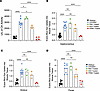 Figure 6
Determining functional membrane repair. (A) Creatine kinase levels detected in serum from mice treated with PMOPE44.1, PMOPE44.1-HDO, and PPMOPE44.1 (as in Figure 5). Evans blue dye absorption due to membrane permeability in the (B) gastrocnemius, (C) gluteus, and (D) psoas in mice treated with PMOPE44.1, PMOPE44.1-HDO, and PPMOPE44.1. (A–D) Legend: black, WT; blue, PBS-treated HOM mice; green, PMOPE44.1-treated HOM mice; orange, PMOPE44.1-HDO–treated HOM mice; red, PPMOPE44.1-treated HOM mice. Statistical differences were determined using 1-way ANOVA and Tukey’s post hoc test: *P < 0.05, **P < 0.005, ***P < 0.0002, and ****P < 0.0001.
One determinant of the effects of PPMOPE44.1 is the compound’s biological half-life in the blood. Using a plate-based oligonucleotide electrochemiluminescent immunoassay to quantitate PMO concentration in serum after i.v. delivery, the half-life of PMOPE44.1 was found to be 20 minutes (Figure 7A). By contrast, the PPMOPE44.1-HDO half-life was slightly increased to 1 hour (Figure 7B), and the PPMOPE44.1 half-life was 4 hours (Figure 7C). To explore the pharmacodynamic properties of PPMOPE44.1, we measured CK levels in serum longitudinally, before and after an initial PPMOPE44.1 treatment at 3 months of age, measuring CK levels weekly for 10 weeks, and then for 3 weeks after a second treatment at 5.5 months of age (Figure 7D). Baseline serum CK levels of 3-month-old homozygous PE44.1 mice were significantly elevated compared with WT animals before PPMOPE44.1 treatment. One week after the initial treatment, CK levels fell and were statistically indistinguishable from those of WT mice. The levels remained low for 3 more weeks but subsequently began to rise over the next 8–9 weeks, eventually stabilizing at elevated levels similar to baseline for 3 weeks. At that point, a second PPMOPE44.1 treatment was administered, and CK levels again fell to levels statistically similar to WT mice for another 3 weeks.
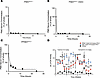 Figure 7
Bioavailability and functionality of PPMOPE44.1 over time. (A–C) Half-life of PMOPE44.1 in the bloodstream when delivered as (A) naked PMOPE44.1, (B) PMOPE44.1 HDO, or (C) PPMOPE44.1 determined via ELISA (same concentrations as Figure 5). (D) Creatine kinase levels detected in serum for 10 weeks after PPMOPE44.1 treatment and 3 weeks after a second PPMO treatment. One-way ANOVA and Tukey’s post hoc test: *P < 0.05, **P < 0.005, and ****P < 0.0001 comparing WT and PPMO-treated homozygous littermates.
Tissue analyses showed accumulation of PPMOPE44.1 over several weeks; this occurred slowly in muscle tissue but was rapid in the kidney (Supplemental Figure 11, A and D). As an initial screen for toxicity of PPMOPE44.1, we dosed WT mice with PPMOPE44.1 (0, 4.16, 12.5, and 37.5 mg/kg) and analyzed serum electrolytes and metabolic parameters after 48 hours. The key observation was disturbance of renal function at the higher dose, as denoted by elevations in levels of blood urea nitrogen, magnesium, and KIM-1. Unlike BUN and magnesium, at the 12.5 mg/kg dose, KIM-1 levels trended toward elevation but were not statistically significant (Supplemental Figure 12). Lastly, we saw some immune reactivity in muscle tissue after 1 week of PPMOPE44.1 treatment, as shown in elevated levels of cells positive for CD45 (leukocyte marker) and F4/80 (macrophage marker) after PPMOPE44.1 treatment (Supplemental Figure 10).


