
Research ArticleCardiologyMuscle biology
Open Access |  10.1172/jci.insight.203086
Mechanistic diversity within RLC-dependent myosin ATPase inhibitors differentiates EDG-7500, a diastolic-selective cardiac sarcomere modulator
Craig A. Emter,1 Marcus Henze,1 Mike DuVall,1 Sarah Lehman,1 Lindsey Lee,1 Ben Barthel,1 Natalie A. Hawryluk,1 Molly Madden,1 Yangsong Wu,1 Amy Perry,1,2 Martin Beyer,3,4 Eric Wei,3 Cassady Rupert,5 Steve Roof,6 Angela Peter,1 Emily DiNatale,1 Sara Cantrell,1 Jessica Tolley,1 Stephen Schlachter,1 Jolanda van der Velden,7 Michelle Michels,8 Christine Seidman,3 Weikang Ma,9 Leslie Leinwand,2 Stuart Campbell,10 Julien Ochala,11 David Bluemke,12 Darla Tharp,13 Jonathan Seidman,3 Carlos L. del Rio,1 Marc Semigran,1 Marc Evanchik,1 Kevin Koch,1 and Alan Russell1
1Edgewise Therapeutics, Boulder, Colorado, USA.
2Department of Molecular, Cellular, and Developmental Biology, University of Colorado, Boulder, Colorado, USA.
3Department of Genetics, Harvard Medical School, Boston, Massachusetts, USA.
4Department of Cardiovascular Surgery, University Heart & Vascular Center Hamburg-Eppendorf and German Center for Cardiovascular Research (DZHK), Partner Site Hamburg/Kiel/Lübeck, Hamburg, Germany.
5Propria LLC, Branford, Connecticut, USA.
6Qtest Labs, Columbus, Ohio, USA.
7Department of Physiology, Amsterdam UMC, Vrije Universiteit Amsterdam, Amsterdam, Netherlands.
8Erasmus Medical Center, Cardiovascular Institute, Thoraxcenter, Rotterdam, Netherlands.
9Department of Biology, Center for Synchrotron Radiation Research and Instrumentation and Pritzker Institute of Biomedical Science and Engineering, Illinois Institute of Technology, Chicago, Illinois, USA.
10Departments of Biomedical Engineering and Cellular and Molecular Physiology, Yale University, New Haven, Connecticut, USA.
11Biomedical Institute, University of Copenhagen, Copenhagen, Denmark.
12Department of Radiology, University of Wisconsin-Madison, Madison, Wisconsin, USA.
13Department of Biomedical Sciences and NextGen Precision Health, University of Missouri- Columbia, Columbia, Missouri, USA.
Address correspondence to: Alan Russell, Edgewise Therapeutics, 1715 38th Street, Boulder, Colorado 80301, USA. Phone: 720.262.7002; Email: arussell@edgewisetx.com.
Find articles by
Emter, C.
in:
PubMed
|
Google Scholar
|

1Edgewise Therapeutics, Boulder, Colorado, USA.
2Department of Molecular, Cellular, and Developmental Biology, University of Colorado, Boulder, Colorado, USA.
3Department of Genetics, Harvard Medical School, Boston, Massachusetts, USA.
4Department of Cardiovascular Surgery, University Heart & Vascular Center Hamburg-Eppendorf and German Center for Cardiovascular Research (DZHK), Partner Site Hamburg/Kiel/Lübeck, Hamburg, Germany.
5Propria LLC, Branford, Connecticut, USA.
6Qtest Labs, Columbus, Ohio, USA.
7Department of Physiology, Amsterdam UMC, Vrije Universiteit Amsterdam, Amsterdam, Netherlands.
8Erasmus Medical Center, Cardiovascular Institute, Thoraxcenter, Rotterdam, Netherlands.
9Department of Biology, Center for Synchrotron Radiation Research and Instrumentation and Pritzker Institute of Biomedical Science and Engineering, Illinois Institute of Technology, Chicago, Illinois, USA.
10Departments of Biomedical Engineering and Cellular and Molecular Physiology, Yale University, New Haven, Connecticut, USA.
11Biomedical Institute, University of Copenhagen, Copenhagen, Denmark.
12Department of Radiology, University of Wisconsin-Madison, Madison, Wisconsin, USA.
13Department of Biomedical Sciences and NextGen Precision Health, University of Missouri- Columbia, Columbia, Missouri, USA.
Address correspondence to: Alan Russell, Edgewise Therapeutics, 1715 38th Street, Boulder, Colorado 80301, USA. Phone: 720.262.7002; Email: arussell@edgewisetx.com.
Find articles by Henze, M. in: PubMed | Google Scholar
1Edgewise Therapeutics, Boulder, Colorado, USA.
2Department of Molecular, Cellular, and Developmental Biology, University of Colorado, Boulder, Colorado, USA.
3Department of Genetics, Harvard Medical School, Boston, Massachusetts, USA.
4Department of Cardiovascular Surgery, University Heart & Vascular Center Hamburg-Eppendorf and German Center for Cardiovascular Research (DZHK), Partner Site Hamburg/Kiel/Lübeck, Hamburg, Germany.
5Propria LLC, Branford, Connecticut, USA.
6Qtest Labs, Columbus, Ohio, USA.
7Department of Physiology, Amsterdam UMC, Vrije Universiteit Amsterdam, Amsterdam, Netherlands.
8Erasmus Medical Center, Cardiovascular Institute, Thoraxcenter, Rotterdam, Netherlands.
9Department of Biology, Center for Synchrotron Radiation Research and Instrumentation and Pritzker Institute of Biomedical Science and Engineering, Illinois Institute of Technology, Chicago, Illinois, USA.
10Departments of Biomedical Engineering and Cellular and Molecular Physiology, Yale University, New Haven, Connecticut, USA.
11Biomedical Institute, University of Copenhagen, Copenhagen, Denmark.
12Department of Radiology, University of Wisconsin-Madison, Madison, Wisconsin, USA.
13Department of Biomedical Sciences and NextGen Precision Health, University of Missouri- Columbia, Columbia, Missouri, USA.
Address correspondence to: Alan Russell, Edgewise Therapeutics, 1715 38th Street, Boulder, Colorado 80301, USA. Phone: 720.262.7002; Email: arussell@edgewisetx.com.
Find articles by DuVall, M. in: PubMed | Google Scholar
1Edgewise Therapeutics, Boulder, Colorado, USA.
2Department of Molecular, Cellular, and Developmental Biology, University of Colorado, Boulder, Colorado, USA.
3Department of Genetics, Harvard Medical School, Boston, Massachusetts, USA.
4Department of Cardiovascular Surgery, University Heart & Vascular Center Hamburg-Eppendorf and German Center for Cardiovascular Research (DZHK), Partner Site Hamburg/Kiel/Lübeck, Hamburg, Germany.
5Propria LLC, Branford, Connecticut, USA.
6Qtest Labs, Columbus, Ohio, USA.
7Department of Physiology, Amsterdam UMC, Vrije Universiteit Amsterdam, Amsterdam, Netherlands.
8Erasmus Medical Center, Cardiovascular Institute, Thoraxcenter, Rotterdam, Netherlands.
9Department of Biology, Center for Synchrotron Radiation Research and Instrumentation and Pritzker Institute of Biomedical Science and Engineering, Illinois Institute of Technology, Chicago, Illinois, USA.
10Departments of Biomedical Engineering and Cellular and Molecular Physiology, Yale University, New Haven, Connecticut, USA.
11Biomedical Institute, University of Copenhagen, Copenhagen, Denmark.
12Department of Radiology, University of Wisconsin-Madison, Madison, Wisconsin, USA.
13Department of Biomedical Sciences and NextGen Precision Health, University of Missouri- Columbia, Columbia, Missouri, USA.
Address correspondence to: Alan Russell, Edgewise Therapeutics, 1715 38th Street, Boulder, Colorado 80301, USA. Phone: 720.262.7002; Email: arussell@edgewisetx.com.
Find articles by Lehman, S. in: PubMed | Google Scholar
1Edgewise Therapeutics, Boulder, Colorado, USA.
2Department of Molecular, Cellular, and Developmental Biology, University of Colorado, Boulder, Colorado, USA.
3Department of Genetics, Harvard Medical School, Boston, Massachusetts, USA.
4Department of Cardiovascular Surgery, University Heart & Vascular Center Hamburg-Eppendorf and German Center for Cardiovascular Research (DZHK), Partner Site Hamburg/Kiel/Lübeck, Hamburg, Germany.
5Propria LLC, Branford, Connecticut, USA.
6Qtest Labs, Columbus, Ohio, USA.
7Department of Physiology, Amsterdam UMC, Vrije Universiteit Amsterdam, Amsterdam, Netherlands.
8Erasmus Medical Center, Cardiovascular Institute, Thoraxcenter, Rotterdam, Netherlands.
9Department of Biology, Center for Synchrotron Radiation Research and Instrumentation and Pritzker Institute of Biomedical Science and Engineering, Illinois Institute of Technology, Chicago, Illinois, USA.
10Departments of Biomedical Engineering and Cellular and Molecular Physiology, Yale University, New Haven, Connecticut, USA.
11Biomedical Institute, University of Copenhagen, Copenhagen, Denmark.
12Department of Radiology, University of Wisconsin-Madison, Madison, Wisconsin, USA.
13Department of Biomedical Sciences and NextGen Precision Health, University of Missouri- Columbia, Columbia, Missouri, USA.
Address correspondence to: Alan Russell, Edgewise Therapeutics, 1715 38th Street, Boulder, Colorado 80301, USA. Phone: 720.262.7002; Email: arussell@edgewisetx.com.
Find articles by Lee, L. in: PubMed | Google Scholar
1Edgewise Therapeutics, Boulder, Colorado, USA.
2Department of Molecular, Cellular, and Developmental Biology, University of Colorado, Boulder, Colorado, USA.
3Department of Genetics, Harvard Medical School, Boston, Massachusetts, USA.
4Department of Cardiovascular Surgery, University Heart & Vascular Center Hamburg-Eppendorf and German Center for Cardiovascular Research (DZHK), Partner Site Hamburg/Kiel/Lübeck, Hamburg, Germany.
5Propria LLC, Branford, Connecticut, USA.
6Qtest Labs, Columbus, Ohio, USA.
7Department of Physiology, Amsterdam UMC, Vrije Universiteit Amsterdam, Amsterdam, Netherlands.
8Erasmus Medical Center, Cardiovascular Institute, Thoraxcenter, Rotterdam, Netherlands.
9Department of Biology, Center for Synchrotron Radiation Research and Instrumentation and Pritzker Institute of Biomedical Science and Engineering, Illinois Institute of Technology, Chicago, Illinois, USA.
10Departments of Biomedical Engineering and Cellular and Molecular Physiology, Yale University, New Haven, Connecticut, USA.
11Biomedical Institute, University of Copenhagen, Copenhagen, Denmark.
12Department of Radiology, University of Wisconsin-Madison, Madison, Wisconsin, USA.
13Department of Biomedical Sciences and NextGen Precision Health, University of Missouri- Columbia, Columbia, Missouri, USA.
Address correspondence to: Alan Russell, Edgewise Therapeutics, 1715 38th Street, Boulder, Colorado 80301, USA. Phone: 720.262.7002; Email: arussell@edgewisetx.com.
Find articles by Barthel, B. in: PubMed | Google Scholar
1Edgewise Therapeutics, Boulder, Colorado, USA.
2Department of Molecular, Cellular, and Developmental Biology, University of Colorado, Boulder, Colorado, USA.
3Department of Genetics, Harvard Medical School, Boston, Massachusetts, USA.
4Department of Cardiovascular Surgery, University Heart & Vascular Center Hamburg-Eppendorf and German Center for Cardiovascular Research (DZHK), Partner Site Hamburg/Kiel/Lübeck, Hamburg, Germany.
5Propria LLC, Branford, Connecticut, USA.
6Qtest Labs, Columbus, Ohio, USA.
7Department of Physiology, Amsterdam UMC, Vrije Universiteit Amsterdam, Amsterdam, Netherlands.
8Erasmus Medical Center, Cardiovascular Institute, Thoraxcenter, Rotterdam, Netherlands.
9Department of Biology, Center for Synchrotron Radiation Research and Instrumentation and Pritzker Institute of Biomedical Science and Engineering, Illinois Institute of Technology, Chicago, Illinois, USA.
10Departments of Biomedical Engineering and Cellular and Molecular Physiology, Yale University, New Haven, Connecticut, USA.
11Biomedical Institute, University of Copenhagen, Copenhagen, Denmark.
12Department of Radiology, University of Wisconsin-Madison, Madison, Wisconsin, USA.
13Department of Biomedical Sciences and NextGen Precision Health, University of Missouri- Columbia, Columbia, Missouri, USA.
Address correspondence to: Alan Russell, Edgewise Therapeutics, 1715 38th Street, Boulder, Colorado 80301, USA. Phone: 720.262.7002; Email: arussell@edgewisetx.com.
Find articles by Hawryluk, N. in: PubMed | Google Scholar
1Edgewise Therapeutics, Boulder, Colorado, USA.
2Department of Molecular, Cellular, and Developmental Biology, University of Colorado, Boulder, Colorado, USA.
3Department of Genetics, Harvard Medical School, Boston, Massachusetts, USA.
4Department of Cardiovascular Surgery, University Heart & Vascular Center Hamburg-Eppendorf and German Center for Cardiovascular Research (DZHK), Partner Site Hamburg/Kiel/Lübeck, Hamburg, Germany.
5Propria LLC, Branford, Connecticut, USA.
6Qtest Labs, Columbus, Ohio, USA.
7Department of Physiology, Amsterdam UMC, Vrije Universiteit Amsterdam, Amsterdam, Netherlands.
8Erasmus Medical Center, Cardiovascular Institute, Thoraxcenter, Rotterdam, Netherlands.
9Department of Biology, Center for Synchrotron Radiation Research and Instrumentation and Pritzker Institute of Biomedical Science and Engineering, Illinois Institute of Technology, Chicago, Illinois, USA.
10Departments of Biomedical Engineering and Cellular and Molecular Physiology, Yale University, New Haven, Connecticut, USA.
11Biomedical Institute, University of Copenhagen, Copenhagen, Denmark.
12Department of Radiology, University of Wisconsin-Madison, Madison, Wisconsin, USA.
13Department of Biomedical Sciences and NextGen Precision Health, University of Missouri- Columbia, Columbia, Missouri, USA.
Address correspondence to: Alan Russell, Edgewise Therapeutics, 1715 38th Street, Boulder, Colorado 80301, USA. Phone: 720.262.7002; Email: arussell@edgewisetx.com.
Find articles by Madden, M. in: PubMed | Google Scholar
1Edgewise Therapeutics, Boulder, Colorado, USA.
2Department of Molecular, Cellular, and Developmental Biology, University of Colorado, Boulder, Colorado, USA.
3Department of Genetics, Harvard Medical School, Boston, Massachusetts, USA.
4Department of Cardiovascular Surgery, University Heart & Vascular Center Hamburg-Eppendorf and German Center for Cardiovascular Research (DZHK), Partner Site Hamburg/Kiel/Lübeck, Hamburg, Germany.
5Propria LLC, Branford, Connecticut, USA.
6Qtest Labs, Columbus, Ohio, USA.
7Department of Physiology, Amsterdam UMC, Vrije Universiteit Amsterdam, Amsterdam, Netherlands.
8Erasmus Medical Center, Cardiovascular Institute, Thoraxcenter, Rotterdam, Netherlands.
9Department of Biology, Center for Synchrotron Radiation Research and Instrumentation and Pritzker Institute of Biomedical Science and Engineering, Illinois Institute of Technology, Chicago, Illinois, USA.
10Departments of Biomedical Engineering and Cellular and Molecular Physiology, Yale University, New Haven, Connecticut, USA.
11Biomedical Institute, University of Copenhagen, Copenhagen, Denmark.
12Department of Radiology, University of Wisconsin-Madison, Madison, Wisconsin, USA.
13Department of Biomedical Sciences and NextGen Precision Health, University of Missouri- Columbia, Columbia, Missouri, USA.
Address correspondence to: Alan Russell, Edgewise Therapeutics, 1715 38th Street, Boulder, Colorado 80301, USA. Phone: 720.262.7002; Email: arussell@edgewisetx.com.
Find articles by Wu, Y. in: PubMed | Google Scholar
1Edgewise Therapeutics, Boulder, Colorado, USA.
2Department of Molecular, Cellular, and Developmental Biology, University of Colorado, Boulder, Colorado, USA.
3Department of Genetics, Harvard Medical School, Boston, Massachusetts, USA.
4Department of Cardiovascular Surgery, University Heart & Vascular Center Hamburg-Eppendorf and German Center for Cardiovascular Research (DZHK), Partner Site Hamburg/Kiel/Lübeck, Hamburg, Germany.
5Propria LLC, Branford, Connecticut, USA.
6Qtest Labs, Columbus, Ohio, USA.
7Department of Physiology, Amsterdam UMC, Vrije Universiteit Amsterdam, Amsterdam, Netherlands.
8Erasmus Medical Center, Cardiovascular Institute, Thoraxcenter, Rotterdam, Netherlands.
9Department of Biology, Center for Synchrotron Radiation Research and Instrumentation and Pritzker Institute of Biomedical Science and Engineering, Illinois Institute of Technology, Chicago, Illinois, USA.
10Departments of Biomedical Engineering and Cellular and Molecular Physiology, Yale University, New Haven, Connecticut, USA.
11Biomedical Institute, University of Copenhagen, Copenhagen, Denmark.
12Department of Radiology, University of Wisconsin-Madison, Madison, Wisconsin, USA.
13Department of Biomedical Sciences and NextGen Precision Health, University of Missouri- Columbia, Columbia, Missouri, USA.
Address correspondence to: Alan Russell, Edgewise Therapeutics, 1715 38th Street, Boulder, Colorado 80301, USA. Phone: 720.262.7002; Email: arussell@edgewisetx.com.
Find articles by Perry, A. in: PubMed | Google Scholar
1Edgewise Therapeutics, Boulder, Colorado, USA.
2Department of Molecular, Cellular, and Developmental Biology, University of Colorado, Boulder, Colorado, USA.
3Department of Genetics, Harvard Medical School, Boston, Massachusetts, USA.
4Department of Cardiovascular Surgery, University Heart & Vascular Center Hamburg-Eppendorf and German Center for Cardiovascular Research (DZHK), Partner Site Hamburg/Kiel/Lübeck, Hamburg, Germany.
5Propria LLC, Branford, Connecticut, USA.
6Qtest Labs, Columbus, Ohio, USA.
7Department of Physiology, Amsterdam UMC, Vrije Universiteit Amsterdam, Amsterdam, Netherlands.
8Erasmus Medical Center, Cardiovascular Institute, Thoraxcenter, Rotterdam, Netherlands.
9Department of Biology, Center for Synchrotron Radiation Research and Instrumentation and Pritzker Institute of Biomedical Science and Engineering, Illinois Institute of Technology, Chicago, Illinois, USA.
10Departments of Biomedical Engineering and Cellular and Molecular Physiology, Yale University, New Haven, Connecticut, USA.
11Biomedical Institute, University of Copenhagen, Copenhagen, Denmark.
12Department of Radiology, University of Wisconsin-Madison, Madison, Wisconsin, USA.
13Department of Biomedical Sciences and NextGen Precision Health, University of Missouri- Columbia, Columbia, Missouri, USA.
Address correspondence to: Alan Russell, Edgewise Therapeutics, 1715 38th Street, Boulder, Colorado 80301, USA. Phone: 720.262.7002; Email: arussell@edgewisetx.com.
Find articles by Beyer, M. in: PubMed | Google Scholar
1Edgewise Therapeutics, Boulder, Colorado, USA.
2Department of Molecular, Cellular, and Developmental Biology, University of Colorado, Boulder, Colorado, USA.
3Department of Genetics, Harvard Medical School, Boston, Massachusetts, USA.
4Department of Cardiovascular Surgery, University Heart & Vascular Center Hamburg-Eppendorf and German Center for Cardiovascular Research (DZHK), Partner Site Hamburg/Kiel/Lübeck, Hamburg, Germany.
5Propria LLC, Branford, Connecticut, USA.
6Qtest Labs, Columbus, Ohio, USA.
7Department of Physiology, Amsterdam UMC, Vrije Universiteit Amsterdam, Amsterdam, Netherlands.
8Erasmus Medical Center, Cardiovascular Institute, Thoraxcenter, Rotterdam, Netherlands.
9Department of Biology, Center for Synchrotron Radiation Research and Instrumentation and Pritzker Institute of Biomedical Science and Engineering, Illinois Institute of Technology, Chicago, Illinois, USA.
10Departments of Biomedical Engineering and Cellular and Molecular Physiology, Yale University, New Haven, Connecticut, USA.
11Biomedical Institute, University of Copenhagen, Copenhagen, Denmark.
12Department of Radiology, University of Wisconsin-Madison, Madison, Wisconsin, USA.
13Department of Biomedical Sciences and NextGen Precision Health, University of Missouri- Columbia, Columbia, Missouri, USA.
Address correspondence to: Alan Russell, Edgewise Therapeutics, 1715 38th Street, Boulder, Colorado 80301, USA. Phone: 720.262.7002; Email: arussell@edgewisetx.com.
Find articles by Wei, E. in: PubMed | Google Scholar
1Edgewise Therapeutics, Boulder, Colorado, USA.
2Department of Molecular, Cellular, and Developmental Biology, University of Colorado, Boulder, Colorado, USA.
3Department of Genetics, Harvard Medical School, Boston, Massachusetts, USA.
4Department of Cardiovascular Surgery, University Heart & Vascular Center Hamburg-Eppendorf and German Center for Cardiovascular Research (DZHK), Partner Site Hamburg/Kiel/Lübeck, Hamburg, Germany.
5Propria LLC, Branford, Connecticut, USA.
6Qtest Labs, Columbus, Ohio, USA.
7Department of Physiology, Amsterdam UMC, Vrije Universiteit Amsterdam, Amsterdam, Netherlands.
8Erasmus Medical Center, Cardiovascular Institute, Thoraxcenter, Rotterdam, Netherlands.
9Department of Biology, Center for Synchrotron Radiation Research and Instrumentation and Pritzker Institute of Biomedical Science and Engineering, Illinois Institute of Technology, Chicago, Illinois, USA.
10Departments of Biomedical Engineering and Cellular and Molecular Physiology, Yale University, New Haven, Connecticut, USA.
11Biomedical Institute, University of Copenhagen, Copenhagen, Denmark.
12Department of Radiology, University of Wisconsin-Madison, Madison, Wisconsin, USA.
13Department of Biomedical Sciences and NextGen Precision Health, University of Missouri- Columbia, Columbia, Missouri, USA.
Address correspondence to: Alan Russell, Edgewise Therapeutics, 1715 38th Street, Boulder, Colorado 80301, USA. Phone: 720.262.7002; Email: arussell@edgewisetx.com.
Find articles by Rupert, C. in: PubMed | Google Scholar
1Edgewise Therapeutics, Boulder, Colorado, USA.
2Department of Molecular, Cellular, and Developmental Biology, University of Colorado, Boulder, Colorado, USA.
3Department of Genetics, Harvard Medical School, Boston, Massachusetts, USA.
4Department of Cardiovascular Surgery, University Heart & Vascular Center Hamburg-Eppendorf and German Center for Cardiovascular Research (DZHK), Partner Site Hamburg/Kiel/Lübeck, Hamburg, Germany.
5Propria LLC, Branford, Connecticut, USA.
6Qtest Labs, Columbus, Ohio, USA.
7Department of Physiology, Amsterdam UMC, Vrije Universiteit Amsterdam, Amsterdam, Netherlands.
8Erasmus Medical Center, Cardiovascular Institute, Thoraxcenter, Rotterdam, Netherlands.
9Department of Biology, Center for Synchrotron Radiation Research and Instrumentation and Pritzker Institute of Biomedical Science and Engineering, Illinois Institute of Technology, Chicago, Illinois, USA.
10Departments of Biomedical Engineering and Cellular and Molecular Physiology, Yale University, New Haven, Connecticut, USA.
11Biomedical Institute, University of Copenhagen, Copenhagen, Denmark.
12Department of Radiology, University of Wisconsin-Madison, Madison, Wisconsin, USA.
13Department of Biomedical Sciences and NextGen Precision Health, University of Missouri- Columbia, Columbia, Missouri, USA.
Address correspondence to: Alan Russell, Edgewise Therapeutics, 1715 38th Street, Boulder, Colorado 80301, USA. Phone: 720.262.7002; Email: arussell@edgewisetx.com.
Find articles by Roof, S. in: PubMed | Google Scholar
1Edgewise Therapeutics, Boulder, Colorado, USA.
2Department of Molecular, Cellular, and Developmental Biology, University of Colorado, Boulder, Colorado, USA.
3Department of Genetics, Harvard Medical School, Boston, Massachusetts, USA.
4Department of Cardiovascular Surgery, University Heart & Vascular Center Hamburg-Eppendorf and German Center for Cardiovascular Research (DZHK), Partner Site Hamburg/Kiel/Lübeck, Hamburg, Germany.
5Propria LLC, Branford, Connecticut, USA.
6Qtest Labs, Columbus, Ohio, USA.
7Department of Physiology, Amsterdam UMC, Vrije Universiteit Amsterdam, Amsterdam, Netherlands.
8Erasmus Medical Center, Cardiovascular Institute, Thoraxcenter, Rotterdam, Netherlands.
9Department of Biology, Center for Synchrotron Radiation Research and Instrumentation and Pritzker Institute of Biomedical Science and Engineering, Illinois Institute of Technology, Chicago, Illinois, USA.
10Departments of Biomedical Engineering and Cellular and Molecular Physiology, Yale University, New Haven, Connecticut, USA.
11Biomedical Institute, University of Copenhagen, Copenhagen, Denmark.
12Department of Radiology, University of Wisconsin-Madison, Madison, Wisconsin, USA.
13Department of Biomedical Sciences and NextGen Precision Health, University of Missouri- Columbia, Columbia, Missouri, USA.
Address correspondence to: Alan Russell, Edgewise Therapeutics, 1715 38th Street, Boulder, Colorado 80301, USA. Phone: 720.262.7002; Email: arussell@edgewisetx.com.
Find articles by Peter, A. in: PubMed | Google Scholar
1Edgewise Therapeutics, Boulder, Colorado, USA.
2Department of Molecular, Cellular, and Developmental Biology, University of Colorado, Boulder, Colorado, USA.
3Department of Genetics, Harvard Medical School, Boston, Massachusetts, USA.
4Department of Cardiovascular Surgery, University Heart & Vascular Center Hamburg-Eppendorf and German Center for Cardiovascular Research (DZHK), Partner Site Hamburg/Kiel/Lübeck, Hamburg, Germany.
5Propria LLC, Branford, Connecticut, USA.
6Qtest Labs, Columbus, Ohio, USA.
7Department of Physiology, Amsterdam UMC, Vrije Universiteit Amsterdam, Amsterdam, Netherlands.
8Erasmus Medical Center, Cardiovascular Institute, Thoraxcenter, Rotterdam, Netherlands.
9Department of Biology, Center for Synchrotron Radiation Research and Instrumentation and Pritzker Institute of Biomedical Science and Engineering, Illinois Institute of Technology, Chicago, Illinois, USA.
10Departments of Biomedical Engineering and Cellular and Molecular Physiology, Yale University, New Haven, Connecticut, USA.
11Biomedical Institute, University of Copenhagen, Copenhagen, Denmark.
12Department of Radiology, University of Wisconsin-Madison, Madison, Wisconsin, USA.
13Department of Biomedical Sciences and NextGen Precision Health, University of Missouri- Columbia, Columbia, Missouri, USA.
Address correspondence to: Alan Russell, Edgewise Therapeutics, 1715 38th Street, Boulder, Colorado 80301, USA. Phone: 720.262.7002; Email: arussell@edgewisetx.com.
Find articles by DiNatale, E. in: PubMed | Google Scholar
1Edgewise Therapeutics, Boulder, Colorado, USA.
2Department of Molecular, Cellular, and Developmental Biology, University of Colorado, Boulder, Colorado, USA.
3Department of Genetics, Harvard Medical School, Boston, Massachusetts, USA.
4Department of Cardiovascular Surgery, University Heart & Vascular Center Hamburg-Eppendorf and German Center for Cardiovascular Research (DZHK), Partner Site Hamburg/Kiel/Lübeck, Hamburg, Germany.
5Propria LLC, Branford, Connecticut, USA.
6Qtest Labs, Columbus, Ohio, USA.
7Department of Physiology, Amsterdam UMC, Vrije Universiteit Amsterdam, Amsterdam, Netherlands.
8Erasmus Medical Center, Cardiovascular Institute, Thoraxcenter, Rotterdam, Netherlands.
9Department of Biology, Center for Synchrotron Radiation Research and Instrumentation and Pritzker Institute of Biomedical Science and Engineering, Illinois Institute of Technology, Chicago, Illinois, USA.
10Departments of Biomedical Engineering and Cellular and Molecular Physiology, Yale University, New Haven, Connecticut, USA.
11Biomedical Institute, University of Copenhagen, Copenhagen, Denmark.
12Department of Radiology, University of Wisconsin-Madison, Madison, Wisconsin, USA.
13Department of Biomedical Sciences and NextGen Precision Health, University of Missouri- Columbia, Columbia, Missouri, USA.
Address correspondence to: Alan Russell, Edgewise Therapeutics, 1715 38th Street, Boulder, Colorado 80301, USA. Phone: 720.262.7002; Email: arussell@edgewisetx.com.
Find articles by Cantrell, S. in: PubMed | Google Scholar
1Edgewise Therapeutics, Boulder, Colorado, USA.
2Department of Molecular, Cellular, and Developmental Biology, University of Colorado, Boulder, Colorado, USA.
3Department of Genetics, Harvard Medical School, Boston, Massachusetts, USA.
4Department of Cardiovascular Surgery, University Heart & Vascular Center Hamburg-Eppendorf and German Center for Cardiovascular Research (DZHK), Partner Site Hamburg/Kiel/Lübeck, Hamburg, Germany.
5Propria LLC, Branford, Connecticut, USA.
6Qtest Labs, Columbus, Ohio, USA.
7Department of Physiology, Amsterdam UMC, Vrije Universiteit Amsterdam, Amsterdam, Netherlands.
8Erasmus Medical Center, Cardiovascular Institute, Thoraxcenter, Rotterdam, Netherlands.
9Department of Biology, Center for Synchrotron Radiation Research and Instrumentation and Pritzker Institute of Biomedical Science and Engineering, Illinois Institute of Technology, Chicago, Illinois, USA.
10Departments of Biomedical Engineering and Cellular and Molecular Physiology, Yale University, New Haven, Connecticut, USA.
11Biomedical Institute, University of Copenhagen, Copenhagen, Denmark.
12Department of Radiology, University of Wisconsin-Madison, Madison, Wisconsin, USA.
13Department of Biomedical Sciences and NextGen Precision Health, University of Missouri- Columbia, Columbia, Missouri, USA.
Address correspondence to: Alan Russell, Edgewise Therapeutics, 1715 38th Street, Boulder, Colorado 80301, USA. Phone: 720.262.7002; Email: arussell@edgewisetx.com.
Find articles by Tolley, J. in: PubMed | Google Scholar
1Edgewise Therapeutics, Boulder, Colorado, USA.
2Department of Molecular, Cellular, and Developmental Biology, University of Colorado, Boulder, Colorado, USA.
3Department of Genetics, Harvard Medical School, Boston, Massachusetts, USA.
4Department of Cardiovascular Surgery, University Heart & Vascular Center Hamburg-Eppendorf and German Center for Cardiovascular Research (DZHK), Partner Site Hamburg/Kiel/Lübeck, Hamburg, Germany.
5Propria LLC, Branford, Connecticut, USA.
6Qtest Labs, Columbus, Ohio, USA.
7Department of Physiology, Amsterdam UMC, Vrije Universiteit Amsterdam, Amsterdam, Netherlands.
8Erasmus Medical Center, Cardiovascular Institute, Thoraxcenter, Rotterdam, Netherlands.
9Department of Biology, Center for Synchrotron Radiation Research and Instrumentation and Pritzker Institute of Biomedical Science and Engineering, Illinois Institute of Technology, Chicago, Illinois, USA.
10Departments of Biomedical Engineering and Cellular and Molecular Physiology, Yale University, New Haven, Connecticut, USA.
11Biomedical Institute, University of Copenhagen, Copenhagen, Denmark.
12Department of Radiology, University of Wisconsin-Madison, Madison, Wisconsin, USA.
13Department of Biomedical Sciences and NextGen Precision Health, University of Missouri- Columbia, Columbia, Missouri, USA.
Address correspondence to: Alan Russell, Edgewise Therapeutics, 1715 38th Street, Boulder, Colorado 80301, USA. Phone: 720.262.7002; Email: arussell@edgewisetx.com.
Find articles by Schlachter, S. in: PubMed | Google Scholar
1Edgewise Therapeutics, Boulder, Colorado, USA.
2Department of Molecular, Cellular, and Developmental Biology, University of Colorado, Boulder, Colorado, USA.
3Department of Genetics, Harvard Medical School, Boston, Massachusetts, USA.
4Department of Cardiovascular Surgery, University Heart & Vascular Center Hamburg-Eppendorf and German Center for Cardiovascular Research (DZHK), Partner Site Hamburg/Kiel/Lübeck, Hamburg, Germany.
5Propria LLC, Branford, Connecticut, USA.
6Qtest Labs, Columbus, Ohio, USA.
7Department of Physiology, Amsterdam UMC, Vrije Universiteit Amsterdam, Amsterdam, Netherlands.
8Erasmus Medical Center, Cardiovascular Institute, Thoraxcenter, Rotterdam, Netherlands.
9Department of Biology, Center for Synchrotron Radiation Research and Instrumentation and Pritzker Institute of Biomedical Science and Engineering, Illinois Institute of Technology, Chicago, Illinois, USA.
10Departments of Biomedical Engineering and Cellular and Molecular Physiology, Yale University, New Haven, Connecticut, USA.
11Biomedical Institute, University of Copenhagen, Copenhagen, Denmark.
12Department of Radiology, University of Wisconsin-Madison, Madison, Wisconsin, USA.
13Department of Biomedical Sciences and NextGen Precision Health, University of Missouri- Columbia, Columbia, Missouri, USA.
Address correspondence to: Alan Russell, Edgewise Therapeutics, 1715 38th Street, Boulder, Colorado 80301, USA. Phone: 720.262.7002; Email: arussell@edgewisetx.com.
Find articles by van der Velden, J. in: PubMed | Google Scholar
1Edgewise Therapeutics, Boulder, Colorado, USA.
2Department of Molecular, Cellular, and Developmental Biology, University of Colorado, Boulder, Colorado, USA.
3Department of Genetics, Harvard Medical School, Boston, Massachusetts, USA.
4Department of Cardiovascular Surgery, University Heart & Vascular Center Hamburg-Eppendorf and German Center for Cardiovascular Research (DZHK), Partner Site Hamburg/Kiel/Lübeck, Hamburg, Germany.
5Propria LLC, Branford, Connecticut, USA.
6Qtest Labs, Columbus, Ohio, USA.
7Department of Physiology, Amsterdam UMC, Vrije Universiteit Amsterdam, Amsterdam, Netherlands.
8Erasmus Medical Center, Cardiovascular Institute, Thoraxcenter, Rotterdam, Netherlands.
9Department of Biology, Center for Synchrotron Radiation Research and Instrumentation and Pritzker Institute of Biomedical Science and Engineering, Illinois Institute of Technology, Chicago, Illinois, USA.
10Departments of Biomedical Engineering and Cellular and Molecular Physiology, Yale University, New Haven, Connecticut, USA.
11Biomedical Institute, University of Copenhagen, Copenhagen, Denmark.
12Department of Radiology, University of Wisconsin-Madison, Madison, Wisconsin, USA.
13Department of Biomedical Sciences and NextGen Precision Health, University of Missouri- Columbia, Columbia, Missouri, USA.
Address correspondence to: Alan Russell, Edgewise Therapeutics, 1715 38th Street, Boulder, Colorado 80301, USA. Phone: 720.262.7002; Email: arussell@edgewisetx.com.
Find articles by Michels, M. in: PubMed | Google Scholar
1Edgewise Therapeutics, Boulder, Colorado, USA.
2Department of Molecular, Cellular, and Developmental Biology, University of Colorado, Boulder, Colorado, USA.
3Department of Genetics, Harvard Medical School, Boston, Massachusetts, USA.
4Department of Cardiovascular Surgery, University Heart & Vascular Center Hamburg-Eppendorf and German Center for Cardiovascular Research (DZHK), Partner Site Hamburg/Kiel/Lübeck, Hamburg, Germany.
5Propria LLC, Branford, Connecticut, USA.
6Qtest Labs, Columbus, Ohio, USA.
7Department of Physiology, Amsterdam UMC, Vrije Universiteit Amsterdam, Amsterdam, Netherlands.
8Erasmus Medical Center, Cardiovascular Institute, Thoraxcenter, Rotterdam, Netherlands.
9Department of Biology, Center for Synchrotron Radiation Research and Instrumentation and Pritzker Institute of Biomedical Science and Engineering, Illinois Institute of Technology, Chicago, Illinois, USA.
10Departments of Biomedical Engineering and Cellular and Molecular Physiology, Yale University, New Haven, Connecticut, USA.
11Biomedical Institute, University of Copenhagen, Copenhagen, Denmark.
12Department of Radiology, University of Wisconsin-Madison, Madison, Wisconsin, USA.
13Department of Biomedical Sciences and NextGen Precision Health, University of Missouri- Columbia, Columbia, Missouri, USA.
Address correspondence to: Alan Russell, Edgewise Therapeutics, 1715 38th Street, Boulder, Colorado 80301, USA. Phone: 720.262.7002; Email: arussell@edgewisetx.com.
Find articles by
Seidman, C.
in:
PubMed
|
Google Scholar
|
1Edgewise Therapeutics, Boulder, Colorado, USA.
2Department of Molecular, Cellular, and Developmental Biology, University of Colorado, Boulder, Colorado, USA.
3Department of Genetics, Harvard Medical School, Boston, Massachusetts, USA.
4Department of Cardiovascular Surgery, University Heart & Vascular Center Hamburg-Eppendorf and German Center for Cardiovascular Research (DZHK), Partner Site Hamburg/Kiel/Lübeck, Hamburg, Germany.
5Propria LLC, Branford, Connecticut, USA.
6Qtest Labs, Columbus, Ohio, USA.
7Department of Physiology, Amsterdam UMC, Vrije Universiteit Amsterdam, Amsterdam, Netherlands.
8Erasmus Medical Center, Cardiovascular Institute, Thoraxcenter, Rotterdam, Netherlands.
9Department of Biology, Center for Synchrotron Radiation Research and Instrumentation and Pritzker Institute of Biomedical Science and Engineering, Illinois Institute of Technology, Chicago, Illinois, USA.
10Departments of Biomedical Engineering and Cellular and Molecular Physiology, Yale University, New Haven, Connecticut, USA.
11Biomedical Institute, University of Copenhagen, Copenhagen, Denmark.
12Department of Radiology, University of Wisconsin-Madison, Madison, Wisconsin, USA.
13Department of Biomedical Sciences and NextGen Precision Health, University of Missouri- Columbia, Columbia, Missouri, USA.
Address correspondence to: Alan Russell, Edgewise Therapeutics, 1715 38th Street, Boulder, Colorado 80301, USA. Phone: 720.262.7002; Email: arussell@edgewisetx.com.
Find articles by
Ma, W.
in:
PubMed
|
Google Scholar
|
1Edgewise Therapeutics, Boulder, Colorado, USA.
2Department of Molecular, Cellular, and Developmental Biology, University of Colorado, Boulder, Colorado, USA.
3Department of Genetics, Harvard Medical School, Boston, Massachusetts, USA.
4Department of Cardiovascular Surgery, University Heart & Vascular Center Hamburg-Eppendorf and German Center for Cardiovascular Research (DZHK), Partner Site Hamburg/Kiel/Lübeck, Hamburg, Germany.
5Propria LLC, Branford, Connecticut, USA.
6Qtest Labs, Columbus, Ohio, USA.
7Department of Physiology, Amsterdam UMC, Vrije Universiteit Amsterdam, Amsterdam, Netherlands.
8Erasmus Medical Center, Cardiovascular Institute, Thoraxcenter, Rotterdam, Netherlands.
9Department of Biology, Center for Synchrotron Radiation Research and Instrumentation and Pritzker Institute of Biomedical Science and Engineering, Illinois Institute of Technology, Chicago, Illinois, USA.
10Departments of Biomedical Engineering and Cellular and Molecular Physiology, Yale University, New Haven, Connecticut, USA.
11Biomedical Institute, University of Copenhagen, Copenhagen, Denmark.
12Department of Radiology, University of Wisconsin-Madison, Madison, Wisconsin, USA.
13Department of Biomedical Sciences and NextGen Precision Health, University of Missouri- Columbia, Columbia, Missouri, USA.
Address correspondence to: Alan Russell, Edgewise Therapeutics, 1715 38th Street, Boulder, Colorado 80301, USA. Phone: 720.262.7002; Email: arussell@edgewisetx.com.
Find articles by Leinwand, L. in: PubMed | Google Scholar
1Edgewise Therapeutics, Boulder, Colorado, USA.
2Department of Molecular, Cellular, and Developmental Biology, University of Colorado, Boulder, Colorado, USA.
3Department of Genetics, Harvard Medical School, Boston, Massachusetts, USA.
4Department of Cardiovascular Surgery, University Heart & Vascular Center Hamburg-Eppendorf and German Center for Cardiovascular Research (DZHK), Partner Site Hamburg/Kiel/Lübeck, Hamburg, Germany.
5Propria LLC, Branford, Connecticut, USA.
6Qtest Labs, Columbus, Ohio, USA.
7Department of Physiology, Amsterdam UMC, Vrije Universiteit Amsterdam, Amsterdam, Netherlands.
8Erasmus Medical Center, Cardiovascular Institute, Thoraxcenter, Rotterdam, Netherlands.
9Department of Biology, Center for Synchrotron Radiation Research and Instrumentation and Pritzker Institute of Biomedical Science and Engineering, Illinois Institute of Technology, Chicago, Illinois, USA.
10Departments of Biomedical Engineering and Cellular and Molecular Physiology, Yale University, New Haven, Connecticut, USA.
11Biomedical Institute, University of Copenhagen, Copenhagen, Denmark.
12Department of Radiology, University of Wisconsin-Madison, Madison, Wisconsin, USA.
13Department of Biomedical Sciences and NextGen Precision Health, University of Missouri- Columbia, Columbia, Missouri, USA.
Address correspondence to: Alan Russell, Edgewise Therapeutics, 1715 38th Street, Boulder, Colorado 80301, USA. Phone: 720.262.7002; Email: arussell@edgewisetx.com.
Find articles by Campbell, S. in: PubMed | Google Scholar
1Edgewise Therapeutics, Boulder, Colorado, USA.
2Department of Molecular, Cellular, and Developmental Biology, University of Colorado, Boulder, Colorado, USA.
3Department of Genetics, Harvard Medical School, Boston, Massachusetts, USA.
4Department of Cardiovascular Surgery, University Heart & Vascular Center Hamburg-Eppendorf and German Center for Cardiovascular Research (DZHK), Partner Site Hamburg/Kiel/Lübeck, Hamburg, Germany.
5Propria LLC, Branford, Connecticut, USA.
6Qtest Labs, Columbus, Ohio, USA.
7Department of Physiology, Amsterdam UMC, Vrije Universiteit Amsterdam, Amsterdam, Netherlands.
8Erasmus Medical Center, Cardiovascular Institute, Thoraxcenter, Rotterdam, Netherlands.
9Department of Biology, Center for Synchrotron Radiation Research and Instrumentation and Pritzker Institute of Biomedical Science and Engineering, Illinois Institute of Technology, Chicago, Illinois, USA.
10Departments of Biomedical Engineering and Cellular and Molecular Physiology, Yale University, New Haven, Connecticut, USA.
11Biomedical Institute, University of Copenhagen, Copenhagen, Denmark.
12Department of Radiology, University of Wisconsin-Madison, Madison, Wisconsin, USA.
13Department of Biomedical Sciences and NextGen Precision Health, University of Missouri- Columbia, Columbia, Missouri, USA.
Address correspondence to: Alan Russell, Edgewise Therapeutics, 1715 38th Street, Boulder, Colorado 80301, USA. Phone: 720.262.7002; Email: arussell@edgewisetx.com.
Find articles by Ochala, J. in: PubMed | Google Scholar
1Edgewise Therapeutics, Boulder, Colorado, USA.
2Department of Molecular, Cellular, and Developmental Biology, University of Colorado, Boulder, Colorado, USA.
3Department of Genetics, Harvard Medical School, Boston, Massachusetts, USA.
4Department of Cardiovascular Surgery, University Heart & Vascular Center Hamburg-Eppendorf and German Center for Cardiovascular Research (DZHK), Partner Site Hamburg/Kiel/Lübeck, Hamburg, Germany.
5Propria LLC, Branford, Connecticut, USA.
6Qtest Labs, Columbus, Ohio, USA.
7Department of Physiology, Amsterdam UMC, Vrije Universiteit Amsterdam, Amsterdam, Netherlands.
8Erasmus Medical Center, Cardiovascular Institute, Thoraxcenter, Rotterdam, Netherlands.
9Department of Biology, Center for Synchrotron Radiation Research and Instrumentation and Pritzker Institute of Biomedical Science and Engineering, Illinois Institute of Technology, Chicago, Illinois, USA.
10Departments of Biomedical Engineering and Cellular and Molecular Physiology, Yale University, New Haven, Connecticut, USA.
11Biomedical Institute, University of Copenhagen, Copenhagen, Denmark.
12Department of Radiology, University of Wisconsin-Madison, Madison, Wisconsin, USA.
13Department of Biomedical Sciences and NextGen Precision Health, University of Missouri- Columbia, Columbia, Missouri, USA.
Address correspondence to: Alan Russell, Edgewise Therapeutics, 1715 38th Street, Boulder, Colorado 80301, USA. Phone: 720.262.7002; Email: arussell@edgewisetx.com.
Find articles by Bluemke, D. in: PubMed | Google Scholar
1Edgewise Therapeutics, Boulder, Colorado, USA.
2Department of Molecular, Cellular, and Developmental Biology, University of Colorado, Boulder, Colorado, USA.
3Department of Genetics, Harvard Medical School, Boston, Massachusetts, USA.
4Department of Cardiovascular Surgery, University Heart & Vascular Center Hamburg-Eppendorf and German Center for Cardiovascular Research (DZHK), Partner Site Hamburg/Kiel/Lübeck, Hamburg, Germany.
5Propria LLC, Branford, Connecticut, USA.
6Qtest Labs, Columbus, Ohio, USA.
7Department of Physiology, Amsterdam UMC, Vrije Universiteit Amsterdam, Amsterdam, Netherlands.
8Erasmus Medical Center, Cardiovascular Institute, Thoraxcenter, Rotterdam, Netherlands.
9Department of Biology, Center for Synchrotron Radiation Research and Instrumentation and Pritzker Institute of Biomedical Science and Engineering, Illinois Institute of Technology, Chicago, Illinois, USA.
10Departments of Biomedical Engineering and Cellular and Molecular Physiology, Yale University, New Haven, Connecticut, USA.
11Biomedical Institute, University of Copenhagen, Copenhagen, Denmark.
12Department of Radiology, University of Wisconsin-Madison, Madison, Wisconsin, USA.
13Department of Biomedical Sciences and NextGen Precision Health, University of Missouri- Columbia, Columbia, Missouri, USA.
Address correspondence to: Alan Russell, Edgewise Therapeutics, 1715 38th Street, Boulder, Colorado 80301, USA. Phone: 720.262.7002; Email: arussell@edgewisetx.com.
Find articles by Tharp, D. in: PubMed | Google Scholar
1Edgewise Therapeutics, Boulder, Colorado, USA.
2Department of Molecular, Cellular, and Developmental Biology, University of Colorado, Boulder, Colorado, USA.
3Department of Genetics, Harvard Medical School, Boston, Massachusetts, USA.
4Department of Cardiovascular Surgery, University Heart & Vascular Center Hamburg-Eppendorf and German Center for Cardiovascular Research (DZHK), Partner Site Hamburg/Kiel/Lübeck, Hamburg, Germany.
5Propria LLC, Branford, Connecticut, USA.
6Qtest Labs, Columbus, Ohio, USA.
7Department of Physiology, Amsterdam UMC, Vrije Universiteit Amsterdam, Amsterdam, Netherlands.
8Erasmus Medical Center, Cardiovascular Institute, Thoraxcenter, Rotterdam, Netherlands.
9Department of Biology, Center for Synchrotron Radiation Research and Instrumentation and Pritzker Institute of Biomedical Science and Engineering, Illinois Institute of Technology, Chicago, Illinois, USA.
10Departments of Biomedical Engineering and Cellular and Molecular Physiology, Yale University, New Haven, Connecticut, USA.
11Biomedical Institute, University of Copenhagen, Copenhagen, Denmark.
12Department of Radiology, University of Wisconsin-Madison, Madison, Wisconsin, USA.
13Department of Biomedical Sciences and NextGen Precision Health, University of Missouri- Columbia, Columbia, Missouri, USA.
Address correspondence to: Alan Russell, Edgewise Therapeutics, 1715 38th Street, Boulder, Colorado 80301, USA. Phone: 720.262.7002; Email: arussell@edgewisetx.com.
Find articles by Seidman, J. in: PubMed | Google Scholar
1Edgewise Therapeutics, Boulder, Colorado, USA.
2Department of Molecular, Cellular, and Developmental Biology, University of Colorado, Boulder, Colorado, USA.
3Department of Genetics, Harvard Medical School, Boston, Massachusetts, USA.
4Department of Cardiovascular Surgery, University Heart & Vascular Center Hamburg-Eppendorf and German Center for Cardiovascular Research (DZHK), Partner Site Hamburg/Kiel/Lübeck, Hamburg, Germany.
5Propria LLC, Branford, Connecticut, USA.
6Qtest Labs, Columbus, Ohio, USA.
7Department of Physiology, Amsterdam UMC, Vrije Universiteit Amsterdam, Amsterdam, Netherlands.
8Erasmus Medical Center, Cardiovascular Institute, Thoraxcenter, Rotterdam, Netherlands.
9Department of Biology, Center for Synchrotron Radiation Research and Instrumentation and Pritzker Institute of Biomedical Science and Engineering, Illinois Institute of Technology, Chicago, Illinois, USA.
10Departments of Biomedical Engineering and Cellular and Molecular Physiology, Yale University, New Haven, Connecticut, USA.
11Biomedical Institute, University of Copenhagen, Copenhagen, Denmark.
12Department of Radiology, University of Wisconsin-Madison, Madison, Wisconsin, USA.
13Department of Biomedical Sciences and NextGen Precision Health, University of Missouri- Columbia, Columbia, Missouri, USA.
Address correspondence to: Alan Russell, Edgewise Therapeutics, 1715 38th Street, Boulder, Colorado 80301, USA. Phone: 720.262.7002; Email: arussell@edgewisetx.com.
Find articles by del Rio, C. in: PubMed | Google Scholar
1Edgewise Therapeutics, Boulder, Colorado, USA.
2Department of Molecular, Cellular, and Developmental Biology, University of Colorado, Boulder, Colorado, USA.
3Department of Genetics, Harvard Medical School, Boston, Massachusetts, USA.
4Department of Cardiovascular Surgery, University Heart & Vascular Center Hamburg-Eppendorf and German Center for Cardiovascular Research (DZHK), Partner Site Hamburg/Kiel/Lübeck, Hamburg, Germany.
5Propria LLC, Branford, Connecticut, USA.
6Qtest Labs, Columbus, Ohio, USA.
7Department of Physiology, Amsterdam UMC, Vrije Universiteit Amsterdam, Amsterdam, Netherlands.
8Erasmus Medical Center, Cardiovascular Institute, Thoraxcenter, Rotterdam, Netherlands.
9Department of Biology, Center for Synchrotron Radiation Research and Instrumentation and Pritzker Institute of Biomedical Science and Engineering, Illinois Institute of Technology, Chicago, Illinois, USA.
10Departments of Biomedical Engineering and Cellular and Molecular Physiology, Yale University, New Haven, Connecticut, USA.
11Biomedical Institute, University of Copenhagen, Copenhagen, Denmark.
12Department of Radiology, University of Wisconsin-Madison, Madison, Wisconsin, USA.
13Department of Biomedical Sciences and NextGen Precision Health, University of Missouri- Columbia, Columbia, Missouri, USA.
Address correspondence to: Alan Russell, Edgewise Therapeutics, 1715 38th Street, Boulder, Colorado 80301, USA. Phone: 720.262.7002; Email: arussell@edgewisetx.com.
Find articles by Semigran, M. in: PubMed | Google Scholar
1Edgewise Therapeutics, Boulder, Colorado, USA.
2Department of Molecular, Cellular, and Developmental Biology, University of Colorado, Boulder, Colorado, USA.
3Department of Genetics, Harvard Medical School, Boston, Massachusetts, USA.
4Department of Cardiovascular Surgery, University Heart & Vascular Center Hamburg-Eppendorf and German Center for Cardiovascular Research (DZHK), Partner Site Hamburg/Kiel/Lübeck, Hamburg, Germany.
5Propria LLC, Branford, Connecticut, USA.
6Qtest Labs, Columbus, Ohio, USA.
7Department of Physiology, Amsterdam UMC, Vrije Universiteit Amsterdam, Amsterdam, Netherlands.
8Erasmus Medical Center, Cardiovascular Institute, Thoraxcenter, Rotterdam, Netherlands.
9Department of Biology, Center for Synchrotron Radiation Research and Instrumentation and Pritzker Institute of Biomedical Science and Engineering, Illinois Institute of Technology, Chicago, Illinois, USA.
10Departments of Biomedical Engineering and Cellular and Molecular Physiology, Yale University, New Haven, Connecticut, USA.
11Biomedical Institute, University of Copenhagen, Copenhagen, Denmark.
12Department of Radiology, University of Wisconsin-Madison, Madison, Wisconsin, USA.
13Department of Biomedical Sciences and NextGen Precision Health, University of Missouri- Columbia, Columbia, Missouri, USA.
Address correspondence to: Alan Russell, Edgewise Therapeutics, 1715 38th Street, Boulder, Colorado 80301, USA. Phone: 720.262.7002; Email: arussell@edgewisetx.com.
Find articles by Evanchik, M. in: PubMed | Google Scholar
1Edgewise Therapeutics, Boulder, Colorado, USA.
2Department of Molecular, Cellular, and Developmental Biology, University of Colorado, Boulder, Colorado, USA.
3Department of Genetics, Harvard Medical School, Boston, Massachusetts, USA.
4Department of Cardiovascular Surgery, University Heart & Vascular Center Hamburg-Eppendorf and German Center for Cardiovascular Research (DZHK), Partner Site Hamburg/Kiel/Lübeck, Hamburg, Germany.
5Propria LLC, Branford, Connecticut, USA.
6Qtest Labs, Columbus, Ohio, USA.
7Department of Physiology, Amsterdam UMC, Vrije Universiteit Amsterdam, Amsterdam, Netherlands.
8Erasmus Medical Center, Cardiovascular Institute, Thoraxcenter, Rotterdam, Netherlands.
9Department of Biology, Center for Synchrotron Radiation Research and Instrumentation and Pritzker Institute of Biomedical Science and Engineering, Illinois Institute of Technology, Chicago, Illinois, USA.
10Departments of Biomedical Engineering and Cellular and Molecular Physiology, Yale University, New Haven, Connecticut, USA.
11Biomedical Institute, University of Copenhagen, Copenhagen, Denmark.
12Department of Radiology, University of Wisconsin-Madison, Madison, Wisconsin, USA.
13Department of Biomedical Sciences and NextGen Precision Health, University of Missouri- Columbia, Columbia, Missouri, USA.
Address correspondence to: Alan Russell, Edgewise Therapeutics, 1715 38th Street, Boulder, Colorado 80301, USA. Phone: 720.262.7002; Email: arussell@edgewisetx.com.
Find articles by Koch, K. in: PubMed | Google Scholar
1Edgewise Therapeutics, Boulder, Colorado, USA.
2Department of Molecular, Cellular, and Developmental Biology, University of Colorado, Boulder, Colorado, USA.
3Department of Genetics, Harvard Medical School, Boston, Massachusetts, USA.
4Department of Cardiovascular Surgery, University Heart & Vascular Center Hamburg-Eppendorf and German Center for Cardiovascular Research (DZHK), Partner Site Hamburg/Kiel/Lübeck, Hamburg, Germany.
5Propria LLC, Branford, Connecticut, USA.
6Qtest Labs, Columbus, Ohio, USA.
7Department of Physiology, Amsterdam UMC, Vrije Universiteit Amsterdam, Amsterdam, Netherlands.
8Erasmus Medical Center, Cardiovascular Institute, Thoraxcenter, Rotterdam, Netherlands.
9Department of Biology, Center for Synchrotron Radiation Research and Instrumentation and Pritzker Institute of Biomedical Science and Engineering, Illinois Institute of Technology, Chicago, Illinois, USA.
10Departments of Biomedical Engineering and Cellular and Molecular Physiology, Yale University, New Haven, Connecticut, USA.
11Biomedical Institute, University of Copenhagen, Copenhagen, Denmark.
12Department of Radiology, University of Wisconsin-Madison, Madison, Wisconsin, USA.
13Department of Biomedical Sciences and NextGen Precision Health, University of Missouri- Columbia, Columbia, Missouri, USA.
Address correspondence to: Alan Russell, Edgewise Therapeutics, 1715 38th Street, Boulder, Colorado 80301, USA. Phone: 720.262.7002; Email: arussell@edgewisetx.com.
Find articles by Russell, A. in: PubMed | Google Scholar
Published September 22, 2026 - More info
JCI Insight. 2026;11(18):e203086. https://doi.org/10.1172/jci.insight.203086.
© 2026 Emter et al. This work is licensed under the Creative Commons Attribution 4.0 International License. To view a copy of this license, visit http://creativecommons.org/licenses/by/4.0/.
Received: December 2, 2025; Accepted: June 26, 2026


-
Results
Biochemical effects of EDG-7500 and EDG-7499 on myosin ATPase activity. Drug discovery and medicinal chemistry efforts identified what we believe to be 2 novel inhibitors with ventricular myofibril ATPase activity. EDG-7500 and EDG-7499 were identified based on their potency, partial inhibitory profile, and drug-like properties (Figure 1A). The inhibitory effects of each compound were tested in porcine ventricle myofibrils at diastolic (pCa 7.0) and systolic (pCa 5.75) calcium concentrations. Both compounds exhibited a dose-dependent partial inhibition of myofibrillar ATPase activity. Figure 1B shows a significant interaction (compound X pCa), indicating ATPase inhibition for each compound is dependent on calcium level. EDG-7500 showed a pronounced loss of inhibition in the presence of systolic compared with diastolic calcium levels, with a maximum ATPase inhibition of 42% and EC25 = 3.0 μM at diastolic calcium levels compared with 18% inhibition and EC25 > 100 μM at systolic calcium levels. Comparatively, EDG-7499 had a smaller calcium-dependent shift with 57% inhibition and EC25 = 0.18 μM at diastolic calcium compared with 45% inhibition and EC25 = 0.39 μM at systolic calcium levels. We considered the decreased effect of EDG-7500 on myosin ATPase inhibition at systolic compared with diastolic calcium levels a more favorable profile by which diastolic effect is achieved without having to compromise systolic enzymatic function. This in contrast to the CMI perspective whereby nearly complete inhibition of myosin ATPase activity at any calcium level maximizes efficacy, implying that the increased and calcium-independent potency of EDG-7499 would appear to be more efficacious. These data highlight significant differences in calcium sensitivity regarding each compound’s ability to inhibit ATPase activity, potentially affecting their ability to balance diastolic efficacy with systolic inhibition in a manner that contrasts current CMIs.
 Figure 1
Biochemical assessment of EDG-7500 and EDG-7499 demonstrates preferential inhibition of myofibril ATPase activity at diastolic calcium concentrations and mechanistic action through indirect modulation of enzymatic activity that requires the regulatory light chain (RLC). (A) Chemical structure of EDG-7500 and EDG-7499. (B) EDG-7500, but not EDG-7499, inhibits porcine left ventricle myofibril DMSO normalized ATPase activity preferentially at diastolic Ca2+ (pCa 7.0) compared with systolic Ca2+ (pCa 5.75) concentrations (n = 6 biological replicates). (C) EDG-7500 and EDG-7499 preferentially inhibit DMSO normalized ATPase activity of porcine ventricle full length (VFL) myosin but do not inhibit porcine left ventricle myosin subfragment-1 (VS1) (n = 6 biological replicates). (D) EDG-7500 and EDG-7499 inhibition of DMSO normalized ATPase activity in porcine VFL myosin requires the regulatory light chain (RLC) (n = 6 biological replicates). (E) EDG-7500 and EDG-7499 have no inhibitory effects on DMSO normalized ATPase activity in chicken gizzard smooth muscle myofibrils (n = 4 biological replicates). *P < 0.05, repeated-measures ANOVA. Experiments C–E were completed in the absence of Ca2+ as purified full-length myosin, proteolytically digested myosin subfragment 1, and unregulated actin do not require calcium activation.
To assess myosin enzymatic activity, compounds were tested in an actin-activated ATPase assay comparing double-headed ventricle full-length (VFL) myosin bound by the essential light chain (ELC) and the RLC to a proteolytically digested single-headed, myosin motor subfragment (VS1). A significant interaction (compound X myosin construct) was observed, showing that ATPase inhibition for each compound is dependent on the myosin construct. Partial inhibitory effects for both EDG-7500 and EDG-7499 were seen in only the myosin full-length system (Figure 1C), with EDG-7499 achieving a greater potency similar to that observed in myofibrils (Figure 1B). Given that these compounds were inactive against the myosin motor domain fragment, these data suggest inhibition is likely exerted on myosin’s ATPase activity indirectly.
Based on the partial inhibition profile and lack of compound effect on myosin motor domain ATPase activity, we hypothesized the RLC may be a necessary structural component for each compound’s mechanism of action. RLC exchange experiments were performed where the RLC was selectively removed from full-length myosin and subsequently replaced with recombinant human RLC protein (encoded by human ventricle MYL2; representative gel of the protein exchange is presented in Supplemental Figure 1; supplemental material available online with this article; https://doi.org/10.1172/jci.insight.203086DS1). A significant interaction effect (compound X RLC) demonstrated that inhibition of ATPase by each compound was dependent on the presence of the RLC (Figure 1D). Inhibition of ATPase activity was lost for both EDG-7500 and EDG-7499 when the RLC was absent from the full-length myosin condition. When recombinant RLC was replaced, inhibition and potency were restored to native full-length control values. EDG-7499 and EDG-7500 were inactive against chicken gizzard myofibrils treated with myosin light chain kinase (MLCK), indicating that these compounds do not inhibit smooth muscle ATPase activity (Figure 1E). In total, these data indicate that EDG-7500 and EDG-7499 are allosteric modulators of myosin ATPase activity dependent upon a molecular context, which requires the RLC residing within a fully intact myosin structure.
Myocardial fiber characteristics of EDG-7500 and EDG-7499. EDG-7500 and EDG-7499 were tested for force generation across a range of concentrations (0.01–100 μM) in loaded, permeabilized muscle fibers isolated from porcine left-ventricle (Figure 2A). EDG-7500 showed a limited maximal inhibition compared with EDG-7499 (P < 0.001; –64.0% ± 4.6% versus –83.6% ± 4.6%) with a significantly lower potency (measured as EC50). Based on these curves, concentrations were chosen that were estimated to inhibit force by ~10% (-7% for EDG-7499 at 0.1 μM and –12% for EDG-7500 at 1.0 μM) to test tension development over a range of calcium concentrations (Figure 2B) at comparable levels of peak developed tension. Compared with DMSO at sarcomere length 2.3 μm (SL 2.3), neither compound showed a significant reduction of maximal force at pCa 4.5. EDG-7500 displayed a rightward shift of the force-pCa curve (measured as pCa50) that was observed in parallel with a reduction in force at submaximal Ca2+ levels (pCa 6.25–5.75 versus no difference in tension at pCa 5.5–4.5) compared with DMSO and EDG-7499–treated fibers.
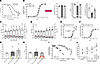 Figure 2
Functional comparisons between EDG-7500 and EDG-7499 highlight a phenotype preferentially promoting relaxation and preserving cardiac reserve without impacting systolic function in EDG-7500 treated tissue and animals. (A) EDG-7500 decreases force to a lesser extent in porcine LV skinned fibers (n = 5–26). (B) Calcium dependence of tension was significantly reduced in EDG-7500–treated fibers with inhibition observed at low levels but not maximally activated Ca2+ in porcine LV skinned fibers. (C) EDG-7500 activates relaxation kinetics at lower compound dose levels (1 μM; *P < 0.05 versus 0.01 μM kREL dose) prior to decreasing activation (10 μM; †P < 0.05 versus 0.01 μM kACT dose) in porcine LV myofibrils. (D) EDG-7499 decreased activation kinetics (1 μM; †P < 0.05 versus 0.01 μM kACT dose) prior to increasing relaxation (3 μM; *P < 0.05 versus 0.01 μM kREL dose) in porcine LV myofibrils. (E and F) Cardiac myosin length-dependent activation (LDA) indicated porcine LV myofibrils treated with EDG-7500 recovered 44% of an initial force inhibition of ~40% (E, n = 8). EDG-7499 did not alter LDA (F, n = 6). (G and H) EDG-7500 and EDG-7499 significantly increased I1,1/I1,0 at SL 2.1 (illustrative insets describe myosin head movement) in porcine LV myocardial strips. EDG-7500 preserved a significant increase in I1,1/I1,0 at SL 2.3 (G). Myosin head recruitment was decreased in response to stretch after EDG-7499 treatment (H). (I) The PK/PD relationship for FS% was significantly shifted to the right in EDG-7500–treated Sprague Dawley rats. (J) EDG-7500 preserves normal cardiac reserve in response to β-adrenergic agonism compared with Sprague Dawley rats treated with EDG-7499 (*P < 0.05 CON and EDG-7499 versus EDG-7500; #P < 0.05 CON versus EDG-7499 and EDG-7500; †P < 0.05 EDG-7500 versus EDG-7499). *P < 0.05, regression analysis for A, B, and I; repeated-measures ANOVA for C–H and J; 1-way ANOVA used for specific pCa assessments presented in B.
Rates of relaxation (kREL) and activation (kACT) were measured in porcine left-ventricular bundles of myofibrils across a range of concentrations. EDG-7500 increased the rate of relaxation at concentrations starting at 1 μM, which occurred prior to significant decreases in activation that started at 10 μM (Figure 2C). In contrast, Figure 2D shows EDG-7499 caused significant decreases in activation (1 μM) prior to changes relaxation rate (3 μM). These data demonstrate increases in the rate of relaxation for EDG-7500 precedes the slowing of contraction by a 10-fold concentration window in contrast to EDG-7499, in which the slowing of contraction precedes the speeding of relaxation by a 3-fold concentration.
EDG-7500 and EDG-7499 were tested for their respective sensitivity to length-dependent activation. Compound concentrations were chosen to reduce force to similar levels (–44.2% ± 4.4% at 10 μM for EDG-7500 and –39.1% ± 11.1% at 0.5 μM for EDG-7499) at SL 2.0. Lengthening the muscle to SL 2.3 resulted in a 44% increase in force for EDG-7500 (Figure 2E), while no significant increase in force was observed for EDG-7499 (Figure 2F).
Length-dependent activation was also tested in permeabilized porcine muscle fibers by small-angle x-ray diffraction to determine the recruitment of myosin head density in response to 10 μM EDG-7500 and EDG-7499. Both EDG-7500 and EDG-7499 significantly increased I1,1/I1,0 (an indicator of myosin head proximity to the thin filament) at SL 2.1 (Figure 2, G and H), indicating increased recruitment of myosin heads toward the thin filament independent of SL 1. When muscle fibers were lengthened to SL 2.3, EDG-7500 continued to show a significant increase in I1,1/I1,0 compared with DMSO at SL 2.1 (Figure 2G). In contrast, compared with SL 2.1 myosin head recruitment was significantly decreased when muscle fibers were lengthened to SL 2.3 in the presence of EDG-7499 (Figure 2H). Lattice spacing (d1,0) was not changed by either compound as lengthening significantly decreased lattice spacing in both conditions (Supplemental Figure 2, A and B). Myosin heads became less ordered along the myosin backbone in response to EDG-7500, but not EDG-7499, exposure as reflected by a decrease in the intensity of the M3 (IM3; Supplemental Figure 2, C and D), M6 (IM6; Supplemental Figure 2, E and F), and MLL1 (IMLL1; Supplemental Figure 2, G and H) meridional reflections.
Acute EDG-7500 preserves normal cardiac reserve and displays lesser ventricular functional inhibition compared with EDG-7499. Sprague Dawley rats were used to demonstrate translation of compound potency and force inhibition to in vivo cardiac function measured by echocardiography. WT rats were orally dosed with either EDG-7500 (at 3, 10, 30, and 60 mg/kg) or EDG-7499 (at 0.3, 1.0, and 3.0 mg/kg) with dose estimated by in vitro potency. Echocardiography was performed on ventricular dimensions at 1, 4, 7, and 24 hours after the dose to explore pharmacokinetic/pharmacodynamic (PK/PD) relationships. Decreases in FS% following EDG-7500 dosing across a wide exposure range were significantly limited compared with EDG-7499 reflected by a plateau effect at –29.45% (EDG-7500) versus –96.57% (EDG-7499; P < 0.001, nonlinear fit of FS% versus plasma concentration) and a significant shift in PK/PD relationship (measured as EC50; Figure 2I). These data align with ATPase and muscle fiber data, showing the decreased systolic calcium potency of EDG-7500 limits systolic inhibition compared with EDG-7499.
We also examined the ability to recruit cardiac reserve in response to β-adrenergic agonism under experimental conditions of compound-induced systolic inhibition measuring a decrease of ~30%–40% in FS% for both compounds (Figure 2J). A significant interaction was observed (group X dobutamine dose), indicating the increase in FS% in response to β-adrenergic agonism is compound dependent. Two hours after the dose, inhibition of FS% was significant for both EDG-7500 and EDG-7499 compared with vehicle control (CON) and was not different between dosed groups. In EDG-7500–treated animals, dobutamine recruited FS% back to the level of vehicle CON-treated rats at dobutamine doses ≥ 5 μg/kg/min with full recovery of FS% reserve at 10 μg/kg/min. In contrast, rats dosed with EDG-7499 were limited in their ability to recruit cardiac reserve, with FS% decreased compared with vehicle CON at all experimental data points.
Acute EDG-7500 improves relaxation without altering force in engineered heart tissue with a myosin heavy chain R403Q mutation. Utilizing engineered heart tissue (EHT) technology, EDG-7500 was tested on a genetic background specific to the R403Q mutation in the myosin heavy chain 7 (MYH7) gene, a well-characterized cause of HCM in humans. The R403Q mutation did not change peak force compared with isogenic CON at a pacing frequency of 1 Hz (Figure 3A). However, relaxation time (measured as time to 90% relaxation; RT90) was significantly increased in the R403Q EHTs compared with isogenic CON indicating the presence of diastolic dysfunction (Figure 3B). Together, these results demonstrate an HCM phenotype in R403Q EHTs relevant for testing EDG-7500 in an experimental context of disease. EDG-7500 did not change peak force (Figure 3C) but did significantly decrease relaxation time (Figure 3D) in R403Q EHTs, demonstrating its ability to improve relaxation without impacting peak force generation in engineered cells with a clinically relevant HCM mutation.
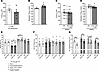 Figure 3
Acute EDG-7500 accelerates relaxation and decreases the Ca2+ sensitivity of force without impairing peak force or altering the SRX state in engineered heart tissue with a myosin heavy chain R403Q mutation and human HCM cardiac strips. (A and B) R403Q-EHT shows a phenotype relevant to HCM with no change in peak force (A) and an increase in relaxation time (B). (C and D) Acute exposure to EDG-7500 does not alter peak force but decreases relaxation time in R403Q-EHT, indicating improved lusitropy without altering force. (E and F) Mant-ATP chase experiments in human cardiac strips show EDG-7500 does not alter the percentage of myosin heads in the super-relaxed (SRX) state (E) or the ATP lifetime for molecules in the SRX state (F). A main effect of mutation (E; P < 0.0001, 2×2 ANOVA) showed SRX state decreased in patients with myosin mutations (MYBPC3/MYH7; †P < 0.05 versus all genotype groups) and increased in patients with thin filament mutations (TNNT2/TNNI3; *P < 0.05 versus donor and myosin mutation groups). (G) In human cardiac strips, the Ca2+ sensitivity of force showed a significant decrease after EDG-7500 exposure in almost all groups with a strong trend toward significance in patients with TNNI3/TNNT2 mutations (*P < 0.05, 2×2 ANOVA; main effect of EDG-7500).
Acute EDG-7500 decreases Ca2+ sensitivity of force but not SRX state in human cardiac strips. Loaded methylanthraniloyl-ATP (Mant-ATP) chase experiments on thin cardiac strips (approximately 50 μm wide, 1 mm long; sarcomere length set to 2.0 μm; 8–10 strips per patient/donor) from human HCM donors (Supplemental Table 1) were exposed to EDG-7500 to estimate of the percentage of myosin heads in their biochemical ATP-saving super-relaxed (SRX) state. EDG-7500 (10 μM) had no effect on SRX state (Figure 3E) or SRX ATP turnover time in either patients or donors (Figure 3F). A main effect of mutation was observed (Figure 3E; P < 0.05, 2x2 ANOVA) indicating a decrease in SRX state in patients with myosin mutations (MYBPC3/MYH7), while SRX state increased in patients with thin filament mutations (TNNT2/TNNI3), similar to previous reports (16–18). Contractile measurements on separate cardiac strips were used to determine the Ca2+ sensitivity of force (19), which showed a significant decrease (P < 0.05, 2x2 ANOVA; main effect of EDG-7500) in almost all groups with a strong trend toward significance in sarcomere mutation positive patients with TNNT2/TNNI3 mutations (Figure 3G). These data complement preclinical observations of decreased Ca2+ dependence of tension presented in Figure 2B.
Chronic EDG-7500 treatment improves cardiac function and remodeling in the R403Q pig. Table 1 and Figure 4 provide functional and structural evidence that EDG-7500 slowed the rate of LV contraction in a self-limiting manner, did not decrease EF%, and prevented LV diastolic impairment in the EDG-7500–treated R403Q (R403Q+7500) group using cMRI, invasive hemodynamic, pressure-volume, postmortem morphology, and molecular techniques. Physiological in vivo target engagement was also demonstrated in healthy instrumented dogs (Figure 4A), whereby the rate of systolic LV pressure development (+dP/dtmax) showed a self-limiting decrease that plateaus over a range of increasing plasma levels in response to acute I.V. delivery of EDG-7500. Similarly in swine, the decreased isovolumic contraction (IVCT) relative to total cardiac cycle time observed in placebo-treated R403Q (R403Q+P) compared with CON animals was prevented by chronic EDG-7500 treatment in the R403Q+7500 group (Figure 4B). The decrease in relative contraction time was associated with a shift in diastolic filling as a percent of the cardiac cycle in R403Q+P animals, who showed 57% of cycle time spent in diastole versus 43% in systole (577 ± 58 msec versus 403 ± 2 msec, respectively) compared with CON that spent 49% in diastole and 51% in systole (357 ± 30 msec versus 359 ± 9 msec, respectively). EDG-7500 prevented this shift, with the R403Q+7500 group showing 52% of cycle time spent in diastole versus 48% in systole (444 ± 41 msec versus 396 ± 12 msec, respectively), similar to CON animals. Absolute contraction time was the same between all groups (1-way ANOVA, P = 0.21; CON = 48 ± 2 msec, R403Q+P = 42 ± 3 msec, R403Q+7500 = 46 ± 3 msec). Together, these results demonstrate the acute and chronic functional effect of EDG-7500 on systole in large-animal experimental models of health and disease characterized by a slowing of LV time to pressure development and the prevention of increased diastolic filling time as a percent of the cardiac cycle.
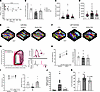 Figure 4
Acute and chronic EDG-7500 slows early LV time to pressure development and systolic ejection while preserving cardiac reserve and preventing molecular and electrical signatures consistent with advancing cardiovascular disease in large animal experimental models of health and disease. (A) Systolic LV pressure development (+dP/dtmax) is decreased initially and then plateaus in a self-limiting manner over a range of increasing plasma levels in response to acute i.v. delivery of EDG-7500 in healthy dogs. (B) HCM-mediated decreases in isovolumic contraction time (IVCT) are normalized by EDG-7500 in swine. (C–F) Increased left atrial (C) and ventricular (D) pig cardiomyocyte volumes in R403Q+P (n = 7; LA regions of interest [ROIs] = 47; LV ROIs = 59) compared with CON (n = 9; LA [ROIs] = 69; LV ROIs = 65) are prevented by EDG-7500 (n = 6; LA ROIs = 47; LV ROIs = 43). Representative 3D reconstructions of segmented cardiomyocytes from left atrial (E) and left ventricular (F) pig tissues are presented from one ROI per group. (G) Representative pressure-volume loops and hemodynamic traces at rest from individual R403Q+P and R403Q+7500 pigs. (H and I) Cardiac reserve is preserved through increases in both heart rate (H) and stroke volume (I) in R403Q+7500 pigs, with Δ responses to β-adrenergic stimulation presented alongside resting Baseline to dobutamine (DOBUT) changes. (J) Increased left atrial natriuretic peptide mRNA levels in R403Q+P pigs are prevented by EDG-7500. (K) Increased Tp-Te interval in R403Q+P pigs, an electrical marker of impaired LV repolarization, trended toward normalization in R403Q+7500 pigs (P = 0.056 versus R403Q+P). *P < 0.05, 1-way ANOVA versus CON and R403Q+7500.
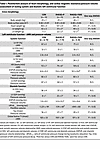 Table 1
Postmortem analysis of heart morphology, and cardiac magnetic resonance/pressure-volume assessment of resting systolic and diastolic left ventricular function
Body weight and body surface area were the same between groups; thus, absolute heart weight was used for group morphological analyses (Table 1) (20). Significant cardiac remodeling was present in R403Q+P compared with CON animals indicated by an increase in total heart, LV, and left atria weight. Chronic EDG-7500 therapy completely prevented or attenuated pathologic increases in total heart, LV, and LA weight in the R403Q+7500 group. Whole-heart morphology was complemented by similar findings at the cellular level, which showed increases in LA (Figure 4C) and LV (Figure 4D) cardiomyocyte volume in R403Q+P animals compared with CON were prevented by EDG-7500 (Figure 4, E and F). No differences in LV end systolic or diastolic volume were observed between groups, and assessment of peripheral hemodynamics indicated mean arterial pressure was the same for all animals (Table 1).
EDG-7500 did not impair resting LV systolic function and preserved cardiac reserve as assessed by cMRI and pressure-volume hemodynamics. LV EF%, cardiac output, and stroke volume were the same between all groups (Table 1). However, LV contractility (measured as the end systolic pressure-volume relationship [ESPVR]) was increased in R403Q+P compared with CON animals (representative P-V loops and waveform traces are shown in Figure 4G), a finding that was attenuated by EDG-7500 treatment in the R403Q+7500 group (Table 1). Figure 3, H and I, illustrate via pressure-volume hemodynamics that EDG-7500 therapy prevents the loss of cardiac reserve as assessed by dobutamine challenge. Heart rate reserve was unaffected (Figure 4H), although a main effect of decreased heart rate was observed in R403Q+P compared with CON animals (Table 1). However, chronic EDG-7500 therapy preserved normal stroke volume reserve highlighted by a significant interaction indicating that increases in stroke volume (in response to dobutamine) were dependent upon which group the animals were in. Specifically, stroke volume significantly increased in CON and R403Q+7500 animals compared with the R403Q+P group, which showed a complete loss of cardiac reserve in response to β-adrenergic agonism (Figure 4I). These combined data suggest that, although traditional indicators of systolic function like EF% appear normal, an increase in resting LV contractility and lack of cardiac reserve highlight an HCM phenotype in R403Q+P animals that is largely prevented by EDG-7500 therapy.
Chronic EDG-7500 therapy also prevented the diastolic dysfunction observed in the R403Q+P group. Pressure-volume hemodynamics show compliance was significantly impaired in R403Q+P animals compared with CON and evident as an: (a) increase in LV end diastolic pressure; (b) increase in the slope of the end diastolic pressure-volume relationship (EDPVR); (c) decrease in –dP/dtmin; and (d) increase in Tau (Table 1). These hemodynamic parameters were the same in the R403Q+7500 group compared with CON, demonstrating chronic EDG-7500 therapy completely prevented HCM-mediated diastolic impairment. An increase in cMRI in global native T1-time was also observed in R403Q+P animals compared with the CON and R403Q+7500 groups, indicating chronic EDG-7500 therapy prevented pathologic LV remodeling associated with HCM (Table 1). Evidence for the association of decreased LV compliance and pathologic cardiac remodeling are highlighted by positive correlations between LV end diastolic pressure and both cMRI global native T1-time (Supplemental Figure 3A) and postmortem atrial weight (Supplemental Figure 3B), whereby EDG-7500 shifts group means leftward along the regression line toward normal CON values in R403Q+7500 animals. In total, these data indicate that chronic EDG-7500 therapy prevents genetic and hemodynamic-driven functional changes consistent with HCM-mediated diastolic dysfunction that are associated with pathologic LV structural remodeling.
Increases in common biomarkers associated with the progression of cardiovascular disease and general cardiac health were also inhibited by chronic EDG-7500 therapy. Increased mRNA levels of LV brain natriuretic peptide (Supplemental Figure 4A) and LA atrial natriuretic peptide (Figure 4J) observed in R403Q+P compared with CON were attenuated in the R403Q+7500 group. The R403Q+P group also showed a shift in myosin heavy chain isoform distribution, characterized by an increase in LA β-myosin heavy chain protein level compared with CON animals (Supplemental Figure 4, B and C). This change, considered potentially pathologic in the atria, was prevented in the R403Q+7500 group. The ECG Tp-Te interval (the distance from the peak of the T wave to the end of the T wave), an electromechanical biomarker of diastolic dysfunction (21), increased in R403Q+P animals compared with CON (Figure 4K). This finding, a signal of impaired ventricular repolarization and increased propensity to arrhythmia and sudden cardiac death, was also prevented by chronic EDG-7500 treatment, evident as a trend toward normalization of the pathologically lengthened Tp-Te interval. Overall, these data suggest that chronic EDG-7500 therapy prevents molecular and electrical signatures consistent with advancing cardiovascular disease in the myocardium of animals with genetic HCM.


