
Research ArticleImmunologyVascular biology
Open Access |  10.1172/jci.insight.201033
Atypical memory B cell clonal expansion and inflammatory programs associate with platelet-activating antibody development in COVID-19
Nathan Witman,1,2 Mei Yu,2 Yuqi Zhang,3 Kexin Gai,3 Yuhong Chen,2 Lu Zhou,1,2 Christine Nguyen,1,2 Wen Zhu,1,2 Yongwei Zheng,2 Shawn Jobe,2 Mary Beth Graham,4 Weiguo Cui,1,2 Demin Wang,1,2 and Renren Wen1,2
1Department of Microbiology & Immunology, Medical College of Wisconsin, Milwaukee, Wisconsin, USA.
2Versiti Blood Research Institute, Milwaukee, Wisconsin, USA.
3Department of Pathology, Northwestern University, Chicago, Illinois, USA.
4Department of Medicine, Medical College of Wisconsin, Milwaukee, Wisconsin, USA.
Address correspondence to: Renren Wen, 8727 W. Watertown Plank Rd., Milwaukee, Wisconsin 53226, USA. Phone: 262.385.6315; Email: rwen@versiti.org
Authorship note: NW and MY contributed equally to this work.
Find articles by Witman, N. in: PubMed | Google Scholar
1Department of Microbiology & Immunology, Medical College of Wisconsin, Milwaukee, Wisconsin, USA.
2Versiti Blood Research Institute, Milwaukee, Wisconsin, USA.
3Department of Pathology, Northwestern University, Chicago, Illinois, USA.
4Department of Medicine, Medical College of Wisconsin, Milwaukee, Wisconsin, USA.
Address correspondence to: Renren Wen, 8727 W. Watertown Plank Rd., Milwaukee, Wisconsin 53226, USA. Phone: 262.385.6315; Email: rwen@versiti.org
Authorship note: NW and MY contributed equally to this work.
Find articles by Yu, M. in: PubMed | Google Scholar
1Department of Microbiology & Immunology, Medical College of Wisconsin, Milwaukee, Wisconsin, USA.
2Versiti Blood Research Institute, Milwaukee, Wisconsin, USA.
3Department of Pathology, Northwestern University, Chicago, Illinois, USA.
4Department of Medicine, Medical College of Wisconsin, Milwaukee, Wisconsin, USA.
Address correspondence to: Renren Wen, 8727 W. Watertown Plank Rd., Milwaukee, Wisconsin 53226, USA. Phone: 262.385.6315; Email: rwen@versiti.org
Authorship note: NW and MY contributed equally to this work.
Find articles by Zhang, Y. in: PubMed | Google Scholar
1Department of Microbiology & Immunology, Medical College of Wisconsin, Milwaukee, Wisconsin, USA.
2Versiti Blood Research Institute, Milwaukee, Wisconsin, USA.
3Department of Pathology, Northwestern University, Chicago, Illinois, USA.
4Department of Medicine, Medical College of Wisconsin, Milwaukee, Wisconsin, USA.
Address correspondence to: Renren Wen, 8727 W. Watertown Plank Rd., Milwaukee, Wisconsin 53226, USA. Phone: 262.385.6315; Email: rwen@versiti.org
Authorship note: NW and MY contributed equally to this work.
Find articles by Gai, K. in: PubMed | Google Scholar
1Department of Microbiology & Immunology, Medical College of Wisconsin, Milwaukee, Wisconsin, USA.
2Versiti Blood Research Institute, Milwaukee, Wisconsin, USA.
3Department of Pathology, Northwestern University, Chicago, Illinois, USA.
4Department of Medicine, Medical College of Wisconsin, Milwaukee, Wisconsin, USA.
Address correspondence to: Renren Wen, 8727 W. Watertown Plank Rd., Milwaukee, Wisconsin 53226, USA. Phone: 262.385.6315; Email: rwen@versiti.org
Authorship note: NW and MY contributed equally to this work.
Find articles by Chen, Y. in: PubMed | Google Scholar
1Department of Microbiology & Immunology, Medical College of Wisconsin, Milwaukee, Wisconsin, USA.
2Versiti Blood Research Institute, Milwaukee, Wisconsin, USA.
3Department of Pathology, Northwestern University, Chicago, Illinois, USA.
4Department of Medicine, Medical College of Wisconsin, Milwaukee, Wisconsin, USA.
Address correspondence to: Renren Wen, 8727 W. Watertown Plank Rd., Milwaukee, Wisconsin 53226, USA. Phone: 262.385.6315; Email: rwen@versiti.org
Authorship note: NW and MY contributed equally to this work.
Find articles by Zhou, L. in: PubMed | Google Scholar
1Department of Microbiology & Immunology, Medical College of Wisconsin, Milwaukee, Wisconsin, USA.
2Versiti Blood Research Institute, Milwaukee, Wisconsin, USA.
3Department of Pathology, Northwestern University, Chicago, Illinois, USA.
4Department of Medicine, Medical College of Wisconsin, Milwaukee, Wisconsin, USA.
Address correspondence to: Renren Wen, 8727 W. Watertown Plank Rd., Milwaukee, Wisconsin 53226, USA. Phone: 262.385.6315; Email: rwen@versiti.org
Authorship note: NW and MY contributed equally to this work.
Find articles by Nguyen, C. in: PubMed | Google Scholar
1Department of Microbiology & Immunology, Medical College of Wisconsin, Milwaukee, Wisconsin, USA.
2Versiti Blood Research Institute, Milwaukee, Wisconsin, USA.
3Department of Pathology, Northwestern University, Chicago, Illinois, USA.
4Department of Medicine, Medical College of Wisconsin, Milwaukee, Wisconsin, USA.
Address correspondence to: Renren Wen, 8727 W. Watertown Plank Rd., Milwaukee, Wisconsin 53226, USA. Phone: 262.385.6315; Email: rwen@versiti.org
Authorship note: NW and MY contributed equally to this work.
Find articles by Zhu, W. in: PubMed | Google Scholar
1Department of Microbiology & Immunology, Medical College of Wisconsin, Milwaukee, Wisconsin, USA.
2Versiti Blood Research Institute, Milwaukee, Wisconsin, USA.
3Department of Pathology, Northwestern University, Chicago, Illinois, USA.
4Department of Medicine, Medical College of Wisconsin, Milwaukee, Wisconsin, USA.
Address correspondence to: Renren Wen, 8727 W. Watertown Plank Rd., Milwaukee, Wisconsin 53226, USA. Phone: 262.385.6315; Email: rwen@versiti.org
Authorship note: NW and MY contributed equally to this work.
Find articles by Zheng, Y. in: PubMed | Google Scholar
1Department of Microbiology & Immunology, Medical College of Wisconsin, Milwaukee, Wisconsin, USA.
2Versiti Blood Research Institute, Milwaukee, Wisconsin, USA.
3Department of Pathology, Northwestern University, Chicago, Illinois, USA.
4Department of Medicine, Medical College of Wisconsin, Milwaukee, Wisconsin, USA.
Address correspondence to: Renren Wen, 8727 W. Watertown Plank Rd., Milwaukee, Wisconsin 53226, USA. Phone: 262.385.6315; Email: rwen@versiti.org
Authorship note: NW and MY contributed equally to this work.
Find articles by Jobe, S. in: PubMed | Google Scholar
1Department of Microbiology & Immunology, Medical College of Wisconsin, Milwaukee, Wisconsin, USA.
2Versiti Blood Research Institute, Milwaukee, Wisconsin, USA.
3Department of Pathology, Northwestern University, Chicago, Illinois, USA.
4Department of Medicine, Medical College of Wisconsin, Milwaukee, Wisconsin, USA.
Address correspondence to: Renren Wen, 8727 W. Watertown Plank Rd., Milwaukee, Wisconsin 53226, USA. Phone: 262.385.6315; Email: rwen@versiti.org
Authorship note: NW and MY contributed equally to this work.
Find articles by Graham, M. in: PubMed | Google Scholar
1Department of Microbiology & Immunology, Medical College of Wisconsin, Milwaukee, Wisconsin, USA.
2Versiti Blood Research Institute, Milwaukee, Wisconsin, USA.
3Department of Pathology, Northwestern University, Chicago, Illinois, USA.
4Department of Medicine, Medical College of Wisconsin, Milwaukee, Wisconsin, USA.
Address correspondence to: Renren Wen, 8727 W. Watertown Plank Rd., Milwaukee, Wisconsin 53226, USA. Phone: 262.385.6315; Email: rwen@versiti.org
Authorship note: NW and MY contributed equally to this work.
Find articles by
Cui, W.
in:
PubMed
|
Google Scholar
|

1Department of Microbiology & Immunology, Medical College of Wisconsin, Milwaukee, Wisconsin, USA.
2Versiti Blood Research Institute, Milwaukee, Wisconsin, USA.
3Department of Pathology, Northwestern University, Chicago, Illinois, USA.
4Department of Medicine, Medical College of Wisconsin, Milwaukee, Wisconsin, USA.
Address correspondence to: Renren Wen, 8727 W. Watertown Plank Rd., Milwaukee, Wisconsin 53226, USA. Phone: 262.385.6315; Email: rwen@versiti.org
Authorship note: NW and MY contributed equally to this work.
Find articles by Wang, D. in: PubMed | Google Scholar
1Department of Microbiology & Immunology, Medical College of Wisconsin, Milwaukee, Wisconsin, USA.
2Versiti Blood Research Institute, Milwaukee, Wisconsin, USA.
3Department of Pathology, Northwestern University, Chicago, Illinois, USA.
4Department of Medicine, Medical College of Wisconsin, Milwaukee, Wisconsin, USA.
Address correspondence to: Renren Wen, 8727 W. Watertown Plank Rd., Milwaukee, Wisconsin 53226, USA. Phone: 262.385.6315; Email: rwen@versiti.org
Authorship note: NW and MY contributed equally to this work.
Find articles by Wen, R. in: PubMed | Google Scholar
Published February 26, 2026 - More info
JCI Insight. 2026;11(8):e201033. https://doi.org/10.1172/jci.insight.201033.
© 2026 Witman et al. This work is licensed under the Creative Commons Attribution 4.0 International License. To view a copy of this license, visit http://creativecommons.org/licenses/by/4.0/.
Received: October 15, 2025; Accepted: February 19, 2026

-
Results
B cells from patients with platelet-activating antibodies are enriched for inflammatory signaling pathways. All patients from our cohort were admitted to the hospital upon confirmation of SARS-CoV-2 infection, and the presence of platelet-activating antibodies was determined using a modified PF4-dependent PEA (5). To best characterize what drives the development of platelet-activating antibodies, patients were selected based on having the highest and lowest PEA scores within our cohort of hospitalized patients (Supplemental Table 1; supplemental material available online with this article; https://doi.org/10.1172/jci.insight.201033DS1). Importantly, clinical and demographic characteristics were largely comparable between groups, with no differences in Sequential Organ Failure Assessment (SOFA) scores, a measure of disease severity, in PEA+ patients, despite significant differences in SpO2, PaO2, and C-reactive protein (Supplemental Table 1) (5). These data suggest platelet-activating antibody development is independent of disease severity but may be associated with inflammation.
To better define the pathways driving prothrombotic, platelet-activating antibody production, we first performed paired single-cell RNA-seq (scRNA-seq) and 5′ V(D)J-seq (scV[D]J-seq) of peripheral blood B cells. We profiled CD19+ B cells from the peripheral blood of 6 PEA+ and 5 PEA– patients using the 10x Genomics platform (Figure 1A and Supplemental Table 2). Preprocessing of scRNA-seq data and UMAP analysis yielded 13 Seurat clusters across all patients, and these clusters were subsequently consolidated into 6 final clusters by annotating them with established B cell population gene sets, including naive, activated naive, classic memory B cells (cMBC) and atypical memory B cells, plasmablast/plasma cell (PB/PC) precursors, and PB/PCs (Figure 1B and Supplemental Figure 1, A–E) (23–27). B cell subset annotations were validated by the expected expression of subset-specific transcripts and the corresponding immunoglobulin isotype (Figure 1C and Supplemental Figure 1, C and D). Although interpatient variability precluded significance at the individual-cluster level, multinomial logistic regression identified significant global differences in B cell distribution patterns, consistent with shifts observed by UMAP visualization (Figure 1, D and E, and Supplemental Figure 1F). Flow cytometry analysis yielded similar findings, with modest variation between the 2 COVID-19 patient cohorts that did not reach statistical significance (Figure 1, F and G, and Supplemental Figure 1G). Additionally, no changes were observed between healthy donors (HD) when compared with patients with COVID-19. Together, these findings indicate that the development of platelet-activating antibodies is not connected with broad alterations in B cell populations.
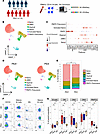 Figure 1
Comparable B cell clusters and subpopulations in PEA+ and PEA– patients. CD19+ B cells were sorted by FACS from PBMCs of 6 PEA+ patients and 5 PEA– patients, followed by scRNA-seq and scV(D)J-seq. (A) Schematic overview of patient selection and the scRNA-seq workflow. (B) UMAP visualization of CD19+ B cell clusters by gene expression. UMAP visualization of all CD19+ B cells (n = 29,505), colored by 6 identified clusters based on 5′ gene expression profiles and annotated according to B cell subset identities. (C) Dot plot showing the expression of key marker genes used to validate cluster annotations. (D) PEA status–specific UMAP of CD19+ B cells. UMAP plots from B split by PEA status, showing CD19+ B cells from PEA+ (n = 14,414) and PEA– (n = 15,019) patients. (E) Comparison of B cell clusters between PEA+ and PEA– patients represented as percentage of total CD19+ cells. Statistical analysis was performed using global multinomial logistic regression comparisons. (F) Representative flow cytometry gating strategy for B cell subsets between PEA+, PEA–, and healthy donor (HD) groups. Data represent a single experiment. (G) Flow cytometry analysis of B cell subsets between PEA+ (n = 6), PEA– (n = 5), and HD (n = 5). Percents are presented of their parent populations gated from F. Statistical comparisons were generated with Wilcoxon rank-sum test with Bonferroni correction; *P < 0.05.
To assess whether PEA positivity was associated with transcriptomic changes, we performed pathway-enrichment analysis of antigen-experienced B cell subsets using pseudobulk-corrected differential gene expression (DGE) values and KEGG gene pathway enrichment. This analysis revealed that, in PEA+ patients, atypical memory B cells and cMBCs showed enrichment of pathways related to B cell receptor, antigen-presentation, and cytokine- and innate immune–associated signaling (Figure 2A), along with KEGG pathways annotated as inflammatory- and autoimmune disease–associated pathways (Figure 2B). Moreover, PB/PC cells from PEA+ patients displayed enrichment of pathways related to protein synthesis, ER responses, cellular metabolism, and cytokine- and innate immune–associated signaling modules (Figure 2A), as well as disease-annotated KEGG pathways, including neurodegenerative and metabolic disorders (Figure 2B) (28–33). Individual DGE analysis identified a small number of significantly differentially expressed genes in PEA+ relative to PEA– patients, including upregulation of DIPK1B in naive B cells and SOCS3 in PB/PCs (Supplemental Figure 2) (34), as well as downregulation of MPEG1 in cMBCs (Supplemental Figure 2).The limited magnitude and resolution of single-gene differences suggest that the development of platelet-activating antibodies is more likely to reflect subtle transcriptomic changes, rather than global reprogramming, of the responding B cell subsets.
 Figure 2
Elevated inflammatory pathway expression in PEA+ patients. GSEA was performed using a ranked gene list derived from pseudobulk-corrected differential expression analysis with DESeq2. Genes were ranked by log2 fold change, and enrichment was assessed against KEGG gene sets from MSigDB. (A) Top 6 KEGG signaling pathways enriched in B cell subsets of PEA+ patients compared with PEA– patients. Plots display the top 6 signaling pathways enriched in atypical memory B cells, cMBCs, and PB/PCs from PEA+ patients, ranked by normalized enrichment score (NES). (B) Top 15 KEGG pathways enriched in B cell clusters of PEA+ patients relative to PEA– patients. Plots display the top 15 enriched pathways in atypical memory B cell, cMBC, and PB/PC clusters of PEA+ patients, ranked by NES. Color intensity reflects FDR-adjusted q values, with statistical significance denoted as: *q < 0.25, **q < 0.1, ***q < 0.05, and ****q < 0.01.
Expanded B cells in PEA+ patients exhibit upregulated IFN-γ signaling. Because transcriptomic differences are observed in antigen-experienced B cells, and B cells producing platelet-activating antibodies in COVID-19 are diverse and hard to capture with known antigens (5), we focused on clonally expanded B cells as a marker of activation, an approach that offers a broader and more representative view of the activated B cell repertoire. B cells were grouped into clonal families if they originated from the same patient and shared the same V(D)J gene usage, identical CDR3 lengths, and at least 85% CDR3 nucleotide sequence identity. To minimize sequencing bias and random clonal occurrences, we defined expanded clones as clonal families comprising 7 or more cells (35, 36). Expanded clones were projected onto the original UMAP and stratified by PEA status for visualization (Figure 3, A and B). They exhibited distinct distributions between PEA+ and PEA– patients: enrichment within activated naive, atypical memory B cells, and cMBC clusters in PEA+ individuals but mainly in PB/PC precursor and PB/PC clusters in PEA– patients (Figure 3, B and C). Expansion of CD11c+ activated naive and atypical memory B cells has been linked to EF differentiation (37–39). Consistently, KEGG GSEA of expanded B cells revealed enrichment of gene signatures annotated to multiple disease-associated pathways, including autoimmune disease pathways (Supplemental Figure 3A), similar to patterns observed in the total B cell compartment (Figure 2, A and B). Many of these pathways are associated with EF B cell responses (40–42).
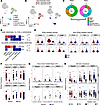 Figure 3
Evidence of IFN-γ upregulation and clonal atypical memory B cell expansion in PEA+ patients. (A) UMAP of 949 clonally expanded B cells, colored by cluster. Expanded clones were defined by shared heavy-chain CDR3 sequences with at least 7 cells per clone and were derived from 5 PEA+ and 3 PEA– patients. (B) UMAP split by PEA status, highlighting expanded clones from PEA+ (n = 350) and PEA– (n = 599) patients. (C) Distribution of expanded clones across B cell subsets. Donut charts show the relative percentage of expanded clones within each patient group, with slice size indicating abundance and color indicating cluster identity. Percentages denote each subset’s contribution to the total expanded pool. Statistical comparisons used a χ2 test. (D) IFN response signature scores for expanded clones across B cell subsets. Scores were calculated from GO:0034341 and HALLMARK_INTERFERON_GAMMA_RESPONSE gene sets, normalized as z scores, and displayed as a heatmap. Differences between PEA groups were assessed with the Wilcoxon rank-sum test. (E) Violin plots showing expression of IFN-γ–associated transcripts and selected control genes in expanded clones from PEA+ versus PEA– patients. Statistics were computed using the Wilcoxon rank-sum test. (F) VH and VL mutation frequencies (total replacement [R] and silent [S]) in atypical memory B cells, cMBCs, and PBs/PCs, colored by PEA status. Data are shown as mean ± SEM. (G) Normalized total mutation frequencies for representative clones collapsed within each clonal family, plotted as average R+S mutations per clone, and colored by PEA status. Data are shown as mean ± SEM. (H) Replacement versus silent mutation frequencies and ratio comparisons in CDR and FWR regions across subsets. Data are shown as mean ± SEM. Statistical significance shown for PEA+ versus PEA– comparisons; *P < 0.05, **P < 0.01, ***P < 0.001, ****P < 0.0001.
In multiple settings, EF B cell differentiation is regulated by IFN-γ signaling (37–39). To determine whether IFN-γ–associated transcriptional programs are enriched in expanded B cells in PEA+ patients, we assessed IFN-γ–responsive gene signatures. GSEA revealed significant enrichment of IFN-γ–response signatures across expanded B cell subsets, except for activated naive B cells, in PEA+ patients (Figure 3D) (43–46). Consistent with this enrichment, genes commonly included in IFN-γ–responsive transcriptional programs, including MHCII-associated molecules (CIITA and CD74) and other activation-associated genes (CD86, IRF8, and IFNGR1), were upregulated in expanded B cells from PEA+ patients (Figure 3E) (43–46). In contrast, we did not observe significant differences in the expression of several other immunomodulatory genes in PEA+ patients (Figure 3E). Although other inflammatory signaling pathways may also contribute, the overall expression pattern of these genes is consistent with a role for IFN-γ–associated signaling. Taken together, the combined pathway-level enrichment and gene-level expression patterns suggest a contribution of IFN-γ–associated signaling to B cell expansion in PEA+ patients.
Somatic hypermutation and class-switch recombination features of expanded clones in PEA+ patients are suggestive of an EF origin of platelet-activating antibodies. To better understand the development of these expanded B cells, we analyzed mutation frequencies within the variable regions of the heavy (VH) and light (VL) chains of antigen-experienced subsets. Expanded atypical memory B cells from PEA+ patients showed higher mutation frequencies, whereas cMBCs showed lower mutation frequencies relative to their counterparts in PEA– patients (Figure 3F). Importantly, when expanded cells were normalized by collapsing clonal families into a single representative clone, this pattern persisted, most notably within the VH regions of atypical memory B cells (Figure 3G), indicating that these differences were not driven by clonal overrepresentation. The increased mutational burden in atypical memory B cells may be linked with the enriched B cell receptor signaling pathways (Figure 2A) and increased expansion of this subset (Figure 3C), consistent with a more activated and proliferative cellular state.
Analysis of selection pressure using the Immcantation framework within cMBC and atypical memory B cell subsets that showed mutation differences revealed a trend toward reduced selection pressure, particularly within the VH CDR3s in PEA+ patients (Supplemental Figure 3B). Consistent with this finding, analysis of replacement-to-silent mutation (R/S) ratios in expanded cells showed reduced R/S ratios across B cell subsets from PEA+ patients with statistically significant differences observed in cMBC and PB/PC populations (Figure 3H). Following clonal normalization, this pattern persisted but did not reach significance, likely reflecting limited clonal numbers (Supplemental Figure 3C). These findings suggest reduced selection pressure of expanded B cells in PEA+ patients compared with PEA– patients.
Finally, analysis of isotype usage in expanded clones revealed a marked disparity; 79% of expanded clones in PEA+ patients were IgM+, compared with 19% in PEA– patients (Table 1). In contrast, over 80% of expanded B cells in PEA– patients have undergone class switching to IgA or IgG (Table 1), indicating substantially reduced class switching among expanded B cells in PEA+ patients. Collectively, the combination of increased proliferation, reduced class switching, and altered mutation burden in expanded atypical B cells from PEA+ patients is consistent with features previously associated with EF-biased B cell responses (22, 47).
Expanded atypical memory B cells in PEA+ patients exhibit sequence signatures typical of platelet-activating antibodies. In earlier studies, we identified structural motifs characteristic of platelet-activating antibodies, specifically R/K/H (RKH) or YYYYY (Y5) motifs within the HCDR3, in both COVID-19 and HIT (5, 48). We therefore explored whether B cells carrying these structural features preferentially expanded within atypical memory B cells in PEA+ patients. To ensure sufficient clones for comparison within clusters, we lowered the clonal family size threshold to 3 or more cells. We then projected expanded cells onto the parent UMAP, indicating whether the expanded cells had the RKH/Y5 motif (Figure 4A). Following clonal normalization, comparison of motif prevalence between PEA+ and PEA– patients showed significant enrichment of clonal families possessing RKH/Y5 motifs within atypical memory B cells, but not other B cell subsets, in PEA+ patients (Figure 4B and Table 2). These data demonstrate that expanded B cells harboring platelet-activating motif are selectively enriched within atypical memory B cells in PEA+ patients.
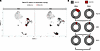 Figure 4
Expanded clones with sequence features characteristic of platelet-activating antibodies were specifically clustered within atypical memory B cells of PEA+ patients. (A) UMAP of expanded with ≥ 3 cells plotted on the original UMAP. Colors indicate the presence of RKH/Y5 motifs within each cell (dark gray, negative; red, positive) (n = 1,524). (B) Donut chart displaying the percentage of unique clone families with RKH/Y5 motifs within each cluster and split by PEA status (n = 238). Statistics were calculated using Fisher’s exact test; *P < 0.05.
T cells show enrichment of inflammatory pathways in PEA+ patients. To explore the cellular mechanisms driving atypical memory B cell expansion in PEA+ patients, we performed scRNA-seq of peripheral blood T cells from the same cohort of patients with COVID-19, including samples from 4 PEA+ and 5 PEA− patients (Supplemental Table 3). Initial UMAP analysis of T cell transcriptomes from all 9 patients revealed 13 distinct clusters, which were subsequently consolidated into 8 major clusters (Figure 5, A and B, and Supplemental Figure 4, A–D). Subsequent stratification of the UMAP showed modest T cell population differences between PEA+ and PEA– patients (Figure 5C), consistent with findings from the B cell analysis (Figure 1D). Importantly, PEA+ patients exhibited a trend toward higher frequencies of granzyme B+ Th1 cells (Th1-GzmB), although this did not reach significance, largely owing to variability driven by the COVID-79 sample (Figure 5D and Supplemental Figure 4E). Pseudobulk DGE analysis of T cells followed by pathway enrichment analysis identified 12 differentially expressed individual genes and revealed enrichment of KEGG-annotated inflammatory pathways in PEA+ patients, 7 of which were identical to those enriched in the total B cell GSEA (Figure 5E and Supplemental Figure 4F). Gene signature comparisons of pathway enrichment in atypical memory B cells and Th1-GzmB+ cells demonstrated overlapping upregulation of 6 autoimmune- and inflammation-associated pathways (Figure 5, F and G). These data suggest that both T and B cells in PEA+ patients may interact with and respond to similar inflammatory cues.
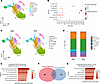 Figure 5
Paralleled upregulation of inflammatory programs in T cells from PEA+ patients. CD4+ T cells were FACS-sorted from PBMCs of 4 PEA+ and 5 PEA– patients, followed by scRNA-seq. (A) UMAP visualization of CD4+ T cells. UMAP of 67,303 CD4+ T cells, colored by 8 clusters based on 5′ gene expression and annotated by subset identity. (B) Dot plot showing the expression of key marker genes used to validate the cluster annotations. (C) UMAP plots split by PEA status. UMAP plots show PEA+ (n = 30,930) and PEA– (n = 36,373) cell distributions. (D) CD4+ T cell population distribution by PEA status, with PEA+ and PEA–. Significance was assessed by Wilcoxon rank-sum test. (E) GSEA on pseudobulk-adjusted DESeq2 gene rankings. Genes were ranked by log2 fold change, and enrichment was assessed using the MSigDB KEGG database. Comparative analysis of transcriptomes in CD4 T cells from PEA+ and PEA– patients was performed for the indicated pathways. Color gradient indicates FDR-adjusted q values. *q < 0.25, **q < 0.1, ***q < 0.05, ****q < 0.01. (F) Overlapping KEGG pathways in atypical memory B cells and Th1-GzmB T cells from PEA+ patients. Venn diagram shows shared pathway enrichment between the 2 subsets types in PEA+ patients. (G) GSEA on pseudobulk-adjusted DESeq2 gene rankings. Genes were ranked by log2 fold change, and enrichment was assessed using the MSigDB KEGG database. Comparative analysis of transcriptomes in CD4 T cells from PEA+ and PEA– patients was performed for the indicated pathways. Color gradient indicates FDR-adjusted q values. *q < 0.25, **q < 0.1, ***q < 0.05, ****q < 0.01.
T cells exhibit enrichment for IL-12 signaling pathways and IFN-γ gene expression in PEA+ patients. Because Th1 T cells can drive atypical memory B cell development and EF responses, we examined whether PEA+ patients show transcriptomic evidence of Th1 skewing by first assessing enrichment of IL-12 signaling pathways. All but 3 T cell subsets in PEA+ patients showed significant enrichment of IL-12 signaling (Figure 6A), suggesting an IL-12–rich milieu that may promote Th1-GzmB+ T cell differentiation in these patients, consistent with the established essential role of IL-12 in Th1 cell differentiation (22, 49). We next assessed whether IFN-γ transcripts were elevated in PEA+ T cells. At the population level, total T cells from PEA+ patients exhibited increased IFN-γ expression (Figure 6B). To identify the subsets contributing most prominently to this signal, we quantified IFN-γ transcript levels across T cell subsets and found that Th1-GzmB+ cells were the highest expressors (Supplemental Figure 5A). When comparing PEA+ versus PEA– patients within each subset, IFN-γ expression was significantly increased in naive T cells, with directional increases observed across additional subsets, consistent with the enrichment of IL-12 signaling pathways in total PEA+ T cells (Supplemental Figure 5B). Taken together, these data demonstrate that PEA+ patients show enrichment of IL-12 signaling across multiple T cell subsets and increased IFN-γ expression in total T cells, supporting the presence of a more pronounced Th1-skewed transcriptional profile in these patients.
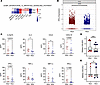 Figure 6
Increased IL-12 signaling pathway, IFN-γ, and Th1-associated cytokines in PEA+ patient T cells. (A) IL-12 signaling pathway enrichment scores using GOBP_INTERLEUKIN_12_MEDIATED_SIGNALING_PATHWAY (GO:0035722) normalized as z scores and displayed as a heatmap in T cell subsets. Significance was assessed by Wilcoxon rank-sum test. *P < 0.05; **P < 0.01; ***P < 0.001; ****P < 0.0001. (B) IFN-γ transcript levels compared between total T cells from PEA+ and PEA–. Significance was determined by Wilcoxon rank-sum test; ****P < 0.0001. (C) Plasma cytokine comparison between PEA+ and PEA– patients. Plasma cytokine levels were compared between PEA+ (n = 10) and PEA– (n = 10) patients. Statistical comparisons were conducted using Mann-Whitney U tests; *P < 0.05. (D) Cumulative analysis after standardization of the 8 inflammatory cytokines shown in C in the plasma of 10 PEA+ and 10 PEA– patients with COVID-19. Box plot showing the scaled and centered results of each cytokine fit with a linear model and adjusted with estimated marginal means. (E) Cumulative analysis after standardization of the 5 inflammatory cytokines not related to Th1 responses in the plasma of 10 PEA+ and 10 PEA– patients with COVID-19. Box plot showing the scaled and centered results of each cytokine fit with a linear model and adjusted with estimated marginal means. Statistical comparison was conducted using type III ANOVA F-test in the emmeans R package; ***P < 0.001.
To evaluate whether the plasma protein profile reflected a Th1 response, we quantified cytokines and chemokines that either induce or are produced by Th1 cells during inflammatory responses (IL-12, IL-2, CCL5, CXCL10, IFN-γ, IFN-α, MIP-1α, TNF-α) (50–54) using multiplex assays (Figure 6C). Although all the tested cytokines trended toward an increase in PEA+ patients, IL-2 and CCL5 were the only ones that reached significance, with IL-12 and CXCL10 nearing significance at P = 0.0519 and 0.0524, respectively (Figure 6C). Given the heterogeneity in patients and our small sample size, we generated a standardized composite score of these analytes, which showed a significant increase in plasma inflammatory response related to T cell activation in PEA+ patients (P < 0.001) (Figure 6D). By contrast, composite scores of inflammatory mediators unrelated to T cells (APRIL, BAFF, IL-6, IL-7, and CXCL13) did not differ between groups (Figure 6E). Together, these findings indicate upregulation of inflammatory and Th1-associated plasma mediators in PEA+ patients, supporting an enhanced inflammatory response that may contribute to Th1-skewed transcriptomic enrichment.


