
Clinical Research and Public HealthGeneticsHepatologyPublic Health
Open Access |  10.1172/jci.insight.198209
Genetic regulation of AIF1 shapes immune and liver injury profiles in chronic alcohol use
Priscila C. Antonello,1 Colin A. Hodgkinson,2 Dechun Feng,3 Cheryl Marietta,2 Baskar Mohana Krishnan,1 Maria A. Parra,4 Zhaoli Sun,4 Bin Gao,3 David Goldman,2 and Michelle W. Antoine1
1Section on Neural Circuits,
2Laboratory of Neurogenetics, and
3Laboratory of Liver Diseases, National Institute on Alcohol Abuse and Alcoholism, NIH, Bethesda, Maryland, USA.
4Transplant Biology Research Center, Johns Hopkins University School of Medicine, Baltimore, Maryland, USA.
Address correspondence to: Michelle W. Antoine, National Institute on Alcohol Abuse and Alcoholism, NIH, 5625 Fishers Lane, Rockville, Maryland 20852, USA. Phone: 301.435.1191; Email: michelle.antoine@nih.gov.
Authorship note: CAH and DF contributed equally to this work.
Find articles by Antonello, P. in: PubMed | Google Scholar
1Section on Neural Circuits,
2Laboratory of Neurogenetics, and
3Laboratory of Liver Diseases, National Institute on Alcohol Abuse and Alcoholism, NIH, Bethesda, Maryland, USA.
4Transplant Biology Research Center, Johns Hopkins University School of Medicine, Baltimore, Maryland, USA.
Address correspondence to: Michelle W. Antoine, National Institute on Alcohol Abuse and Alcoholism, NIH, 5625 Fishers Lane, Rockville, Maryland 20852, USA. Phone: 301.435.1191; Email: michelle.antoine@nih.gov.
Authorship note: CAH and DF contributed equally to this work.
Find articles by Hodgkinson, C. in: PubMed | Google Scholar
1Section on Neural Circuits,
2Laboratory of Neurogenetics, and
3Laboratory of Liver Diseases, National Institute on Alcohol Abuse and Alcoholism, NIH, Bethesda, Maryland, USA.
4Transplant Biology Research Center, Johns Hopkins University School of Medicine, Baltimore, Maryland, USA.
Address correspondence to: Michelle W. Antoine, National Institute on Alcohol Abuse and Alcoholism, NIH, 5625 Fishers Lane, Rockville, Maryland 20852, USA. Phone: 301.435.1191; Email: michelle.antoine@nih.gov.
Authorship note: CAH and DF contributed equally to this work.
Find articles by
Feng, D.
in:
PubMed
|
Google Scholar
|

1Section on Neural Circuits,
2Laboratory of Neurogenetics, and
3Laboratory of Liver Diseases, National Institute on Alcohol Abuse and Alcoholism, NIH, Bethesda, Maryland, USA.
4Transplant Biology Research Center, Johns Hopkins University School of Medicine, Baltimore, Maryland, USA.
Address correspondence to: Michelle W. Antoine, National Institute on Alcohol Abuse and Alcoholism, NIH, 5625 Fishers Lane, Rockville, Maryland 20852, USA. Phone: 301.435.1191; Email: michelle.antoine@nih.gov.
Authorship note: CAH and DF contributed equally to this work.
Find articles by Marietta, C. in: PubMed | Google Scholar
1Section on Neural Circuits,
2Laboratory of Neurogenetics, and
3Laboratory of Liver Diseases, National Institute on Alcohol Abuse and Alcoholism, NIH, Bethesda, Maryland, USA.
4Transplant Biology Research Center, Johns Hopkins University School of Medicine, Baltimore, Maryland, USA.
Address correspondence to: Michelle W. Antoine, National Institute on Alcohol Abuse and Alcoholism, NIH, 5625 Fishers Lane, Rockville, Maryland 20852, USA. Phone: 301.435.1191; Email: michelle.antoine@nih.gov.
Authorship note: CAH and DF contributed equally to this work.
Find articles by Mohana Krishnan, B. in: PubMed | Google Scholar
1Section on Neural Circuits,
2Laboratory of Neurogenetics, and
3Laboratory of Liver Diseases, National Institute on Alcohol Abuse and Alcoholism, NIH, Bethesda, Maryland, USA.
4Transplant Biology Research Center, Johns Hopkins University School of Medicine, Baltimore, Maryland, USA.
Address correspondence to: Michelle W. Antoine, National Institute on Alcohol Abuse and Alcoholism, NIH, 5625 Fishers Lane, Rockville, Maryland 20852, USA. Phone: 301.435.1191; Email: michelle.antoine@nih.gov.
Authorship note: CAH and DF contributed equally to this work.
Find articles by Parra, M. in: PubMed | Google Scholar
1Section on Neural Circuits,
2Laboratory of Neurogenetics, and
3Laboratory of Liver Diseases, National Institute on Alcohol Abuse and Alcoholism, NIH, Bethesda, Maryland, USA.
4Transplant Biology Research Center, Johns Hopkins University School of Medicine, Baltimore, Maryland, USA.
Address correspondence to: Michelle W. Antoine, National Institute on Alcohol Abuse and Alcoholism, NIH, 5625 Fishers Lane, Rockville, Maryland 20852, USA. Phone: 301.435.1191; Email: michelle.antoine@nih.gov.
Authorship note: CAH and DF contributed equally to this work.
Find articles by Sun, Z. in: PubMed | Google Scholar
1Section on Neural Circuits,
2Laboratory of Neurogenetics, and
3Laboratory of Liver Diseases, National Institute on Alcohol Abuse and Alcoholism, NIH, Bethesda, Maryland, USA.
4Transplant Biology Research Center, Johns Hopkins University School of Medicine, Baltimore, Maryland, USA.
Address correspondence to: Michelle W. Antoine, National Institute on Alcohol Abuse and Alcoholism, NIH, 5625 Fishers Lane, Rockville, Maryland 20852, USA. Phone: 301.435.1191; Email: michelle.antoine@nih.gov.
Authorship note: CAH and DF contributed equally to this work.
Find articles by Gao, B. in: PubMed | Google Scholar
1Section on Neural Circuits,
2Laboratory of Neurogenetics, and
3Laboratory of Liver Diseases, National Institute on Alcohol Abuse and Alcoholism, NIH, Bethesda, Maryland, USA.
4Transplant Biology Research Center, Johns Hopkins University School of Medicine, Baltimore, Maryland, USA.
Address correspondence to: Michelle W. Antoine, National Institute on Alcohol Abuse and Alcoholism, NIH, 5625 Fishers Lane, Rockville, Maryland 20852, USA. Phone: 301.435.1191; Email: michelle.antoine@nih.gov.
Authorship note: CAH and DF contributed equally to this work.
Find articles by
Goldman, D.
in:
PubMed
|
Google Scholar
|
1Section on Neural Circuits,
2Laboratory of Neurogenetics, and
3Laboratory of Liver Diseases, National Institute on Alcohol Abuse and Alcoholism, NIH, Bethesda, Maryland, USA.
4Transplant Biology Research Center, Johns Hopkins University School of Medicine, Baltimore, Maryland, USA.
Address correspondence to: Michelle W. Antoine, National Institute on Alcohol Abuse and Alcoholism, NIH, 5625 Fishers Lane, Rockville, Maryland 20852, USA. Phone: 301.435.1191; Email: michelle.antoine@nih.gov.
Authorship note: CAH and DF contributed equally to this work.
Find articles by Antoine, M. in: PubMed | Google Scholar
Published March 16, 2026 - More info
JCI Insight. 2026;11(8):e198209. https://doi.org/10.1172/jci.insight.198209.
© 2026 Antonello et al. This work is licensed under the Creative Commons Attribution 4.0 International License. To view a copy of this license, visit http://creativecommons.org/licenses/by/4.0/.
Received: July 22, 2025; Accepted: February 26, 2026


-
Results
The rs3132451 G/G genotype predicts higher AIF1 expression. The rs3132451 G/C polymorphism is located in the promoter region of AIF1 (Figure 1A). To determine whether this SNP predicts AIF1 gene expression, we quantified AIF1 RNA transcripts from lymphoblastoid cell lines derived from blood lymphoblasts of study participants. Of the 24 lymphoblastoid cell lines genotyped for rs3132451, only one was C/C, consistent with the low frequency of the C allele in the general population, where the average allele frequency is estimated at 2.3% (40). Consequently, AIF1 RNA expression was quantified only in C/G and G/G patient cell lines using quantitative reverse transcription PCR and with β-actin (ACTB) serving as the control. The cycle threshold (Ct) values for ACTB were similar across genotypes, but genotype differences were observed for AIF1 (Figure 1B). Specifically, Ct values for AIF1 were significantly higher in C/G samples compared with G/G samples (Figure 1B), indicating higher AIF1 expression in the G/G genotype. Fold-change analysis based on average ΔCt values, normalized to ACTB, showed that AIF1 expression in C/G cells was reduced to 36% of that in G/G cells (Figure 1B). AIF1 RNA expression was also quantified in liver tissue from 29 patients with advanced ALD (2 C/C, 10 C/G, and 17 G/G). The observed genotype frequencies (2/29 C/C [6.90%], 10/29 C/G [34.48%], and 17/29 G/G [58.62%]) fall within the expected range of population-level variation shown in Figure 1A (1.4%–3.57% C/C, 26.07%–28.57% C/G, and 67.68%–72.51% G/G) and are not statistically significant (Supplemental Table 1; supplemental material available online with this article; https://doi.org/10.1172/jci.insight.198209DS1). Fold-change analysis based on average ΔCt values (C/C = 20.39, C/G = 17.43, and G/G = 16.14) again revealed a significant genotype-dependent effect (P < 0.035, F = 4.061, degrees of freedom [numerator] = 2, and degrees of freedom [denominator] = 17.82, Brown-Forsythe ANOVA test). AIF1 expression in C/C homozygotes was only 5.2% of that observed in G/G homozygotes, while C/G heterozygotes expressed 46%, consistent with a gene dosage effect (P = 0.0007, Dunnett’s T3 multiple-comparison test).
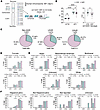 Figure 1
The rs3132451 G/G genotype is associated with markedly higher AIF1 expression. (A) Schematic of the AIF1 gene locus on human chromosome 6p21.33 with flanking genes. Inset shows the location of the rs3132451 SNP (alleles G or C) in the promoter region of the AIF1 gene. (B) Scatter dot plot showing cycle threshold (Ct) values obtained by quantitative reverse transcription PCR for AIF1 and ACTB RNA in cDNA from lymphoblastoid cell lines of individuals with rs3132451 C/G and G/G genotypes. Statistical analysis using a mixed-effects model with Fisher’s LSD post hoc test revealed a significant main effect of SNP genotype (P < 0.0001). Comparison of Ct values between ACTB and AIF1 showed a significant difference (P < 0.0001). ΔCt values are relative to ACTB. A 2-tailed t test comparing AIF1 expression between C/G and G/G genotypes yielded a significant difference (P = 0.027). Each point represents an individual sample; data are shown as the mean ± SEM. *P < 0.05, ****P < 0.0001. (C) The distribution of C/C, C/G, and G/G genotypes among individuals without a diagnosis of alcohol use disorder (non-AUD), with current AUD (CAUD; per DSM-IV/V criteria), and with a lifetime history of AUD but not meeting criteria within the past year (LAUD). Percentages were compared using Fisher’s exact test (α = 0.05). (D) Genotype prevalence by sex across non-AUD, CAUD, and LAUD groups. Statistical analysis was performed using a 2-tailed binomial test (α = 0.05). (E) Same as D, stratified by race. All P values > 0.05. (F) Same as D, stratified by ethnicity. Statistical analysis was performed using a 2-tailed binomial test (α = 0.05). P = 0.0478 for comparisons of C/G and G/G genotype frequencies between non-AUD and CAUD participants who self-identified as Hispanic/Latino.
Given that upregulation of AIF1 is predicted to promote inflammation (8, 10–13, 37, 38), we investigated whether G/G AUD patients who chronically consumed excessive amounts of alcohol were more likely to experience adverse health outcomes compared with C/C or C/G patients. We analyzed 868 individuals based on their rs3132451 genotypes (C/C, C/G, and G/G) and current alcohol consumption status (Figure 1C), categorizing them as either currently meeting DSM-IV and DSM-V criteria for AUD (CAUD) or not (non-AUD). Patients who had not met criteria for AUD within the past year, similar to being in recovery, were classified as long-term abstinent AUD (LAUD). Demographic characteristics of the AUD patient cohort are summarized in Table 1.
Population-level genotype frequencies predict that 75.1% of individuals have the G/G genotype and 22.6% are C/G heterozygotes (39), closely matching the genotype frequencies we observed. No statistically significant differences in allele frequencies were observed between AUD and LAUD patients compared with non-AUD controls (Figure 1C), consistent with prior large-scale GWAS studies showing that AIF1 is not associated with AUD or increased drinking behavior (40–42). We further assessed the genotype distribution across sex, race, and ethnicity (Figure 1, D–F). Genotype proportions were similar between males and females and among racial groups. However, among AUD patients who self-identified as Hispanic/Latino, we observed a reduced prevalence of C/G heterozygotes, consistent with gnomAD data showing ethnic variation in allele frequency (31).
Individuals with AUD exhibit higher monocyte and neutrophil counts, elevated serum iron levels, and increased serum levels of several liver enzymes. To investigate how alcohol consumption and genetic variation at the AIF1 SNP may contribute to ALD, we first examined the effect of each factor independently, beginning with alcohol consumption. We analyzed serum and urine samples from non-AUD and CAUD patients to assess biomarkers for liver function, immune system integrity, and iron metabolism. Of the 26 biomarkers analyzed, we found that 43% (3/7) related to liver function, 47% (7/15) related to immune system integrity, and 75% (3/4) related to iron metabolism were altered in the CAUD group. Compared with the non-AUD group, CAUD patients showed an increase in the percentages of total white blood cells (WBCs) (Figure 2A). This increase was largely attributed to elevations in specific subtypes of WBCs, namely immature granulocytes, monocytes, and neutrophils (Figure 2A). Immature granulocytes are early forms of the 3 main types of granulocytes: neutrophils, eosinophils, and basophils. However, eosinophil and basophil levels were unaffected (eosinophils: non-AUD, 0.14 ± 0.01; CAUD, 0.14 ± 0.007; P = 0.9640, t = 0.04, df = 338; basophils: non-AUD, 0.04 ± 0.0009; CAUD, 0.04 ± 0.001; P = 0.31, t = 1.01, df = 698). Elevations in WBCs, particularly neutrophils and monocytes, indicate ongoing activation of the immune system (43, 44).
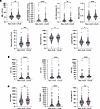 Figure 2
Individuals with AUD exhibit higher monocyte and neutrophil counts, elevated iron levels, and increased levels of several liver enzymes. (A) Elevated immune cell populations are observed in individuals with AUD. Imm, immature. (B) Iron levels and iron metabolism biomarkers elevated in individuals with AUD. (C) Liver function biomarkers altered by AUD. Each point represents an individual sample; data are shown as the mean ± SEM. Statistical comparisons were made between individuals without a diagnosis of AUD (non-AUD) and those with current AUD (CAUD; defined by DSM-IV/V criteria) using an unpaired 2-tailed Student’s t test (α = 0.05). *P < 0.05, **P < 0.01, ***P < 0.001, ****P < 0.0001.
Previous studies in adult mice have shown that chronic alcohol consumption can significantly decrease peripheral B cell counts and impair their function (45, 46). Consistent with this, we observed that the percentage of lymphocytes (B cells and T cells) was decreased in the CAUD group compared with the non-AUD group (Figure 2A). Overall, our findings suggest that chronic excessive alcohol use may suppress adaptive immune cells while promoting the expansion of myeloid-lineage phagocytes — monocytes and neutrophils — key components of the innate immune response to infection and injury.
Examination of biomarkers associated with liver function revealed elevated serum concentrations of 3 liver enzymes — GGT, ALT, and AST — in the CAUD group but not in the non-AUD group (Figure 2B). As previously reported, about 60%–64% of ALD cases exhibit elevated serum iron indices (e.g., transferrin saturation, ferritin) and increased hepatic iron concentration (24, 25). Consistent with these findings, we observed elevated serum concentrations of iron and ferritin, as well as increased iron saturation, in the CAUD group, collectively indicating higher systemic iron levels in patients with AUD (Figure 2C). Overall, our findings suggest that AUD is associated with increased monocyte and neutrophil counts and significant adverse effects on liver function.
G/G patients with CAUD exhibit elevated serological markers of hepatic stress and injury. To investigate how genetic variation at the AIF1 SNP may contribute to ALD, we analyzed the non-AUD and AUD groups by genotype only (G/G, C/G, C/C). None of the 13 biomarkers examining immune response (Figure 2A), liver injury (Figure 2B), and iron levels (Figure 2C) showed statistical significance across genotypes (Supplemental Figure 1). Given that AIF1 activation requires a stimulus — such as tissue injury, inflammatory cell activation, or cytokine release — it is not surprising that genotype alone had no effect. However, when assessing the combined influence of alcohol consumption and genetics, we observed genotype-specific effects among G/G individuals: specifically, G/G AUD cases showed significantly elevated AST and iron levels compared with G/G non-AUD individuals (Figure 3, A and B). For both biomarkers, the likelihood of exceeding the upper limit of normal — AST greater than 40 U/L and iron greater than 145 μg/dL — was significantly higher in G/G AUD patients than in other genotype groups (Figure 3, C and D). Since elevated AST can also reflect heart or muscle damage, we examined whether AST greater than 40 U/L co-occurred with elevations in ALT and GGT, markers more specific to liver injury. In G/G AUD patients, elevated AST levels were significantly positively correlated with ALT levels (Figure 3E), but not with GGT (AST-GGT correlation: r = 0.09, P = 0.769). This pattern was not observed in C/G AUD individuals (Figure 3E).
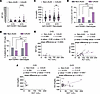 Figure 3
G/G patients with CAUD exhibit elevated serological markers of hepatic stress and injury. (A) Scatter dot plot showing aspartate aminotransferase (AST) levels in patients with C/G and G/G genotypes across non-AUD and CAUD groups. Each point represents an individual patient; data are shown as the mean ± SEM. The dashed line marks the upper limit of normal levels. Statistical analysis was performed using 2-way ANOVA with Fisher’s LSD post hoc test with ****P < 0.0001. (B) Percentage of patients with AST levels exceeding the upper limit of normal across C/G and G/G genotypes in non-AUD and CAUD groups. Statistical comparisons were made using a 2-tailed binomial test with **P < 0.01. (C) Same as A, but for serum iron levels in patients with C/G and G/G genotypes. *P < 0.05, ***P < 0.001, ****P < 0.0001. (D) Same as B, but for serum iron levels exceeding the upper limit of normal. *P < 0.05, ***P < 0.001. (E) Deming linear regression showing the relationship between elevated AST levels (above the upper limit of normal) and alanine aminotransferase (ALT) in patients with C/G and G/G genotypes across non-AUD and CAUD groups. Pearson’s r and P values are reported; the P value for the slope was determined by F test. Each point represents an individual patient. (F) Same as E, but for the relationship between elevated iron levels and γ-glutamyl transferase (GGT).
Given that excess iron can induce oxidative liver damage, we further investigated whether elevated iron levels co-occurred with GGT or AST elevations. Notably, iron levels above the normal range were strongly correlated with elevated GGT in the G/G AUD group, but not in the C/G AUD group (Figure 3F). No significant correlations were found between iron and AST in any group. Together, these findings suggest that G/G patients with AUD may exhibit more pronounced serological indicators of hepatic stress or injury, particularly reflected by stronger associations between elevated AST and ALT, as well as between iron and GGT.
The rs3132451 G/G SNP is associated with elevated neutrophil counts in both blood and liver in ALD. In healthy adults, neutrophil counts range from 1.5 × 10³ to 7 × 10³ cells/μL of blood (upper limit indicated by the dashed line in Figure 4A). A significantly higher percentage of G/G AUD patients had neutrophil counts exceeding 7 × 10³/μL, indicating neutrophilia (Figure 4B), a medical condition marked by abnormally high neutrophil levels. Elevated neutrophil counts in the blood, coupled with infiltration into the liver, are strongly linked to AAH, a particularly damaging form of ALD (47, 48). Thus, the G/G genotype may increase the likelihood of sustaining one of the key drivers of chronic inflammation.
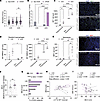 Figure 4
The rs3132451 G/G SNP is associated with elevated neutrophil counts in blood and liver and increased liver disease severity in ALD. (A) Scatter dot plot showing neutrophil levels in C/G and G/G patients within the non-AUD and CAUD groups. The dashed line indicates the upper limit of normal. Two-way ANOVA with Fisher’s LSD, **P = 0.0019. (B) Percentage of patients exceeding the upper limit of normal neutrophil levels by genotype and alcohol use. Binomial test, **P = 0.0087, ****P < 0.0001. (C) Left: Quantification of AIF1+ cells in liver tissue. Two-way ANOVA with Fisher’s LSD, *P < 0.05; ***P < 0.001; ****P < 0.0001. Right: Representative AIF1 immunostaining (green); DAPI (blue) nuclear counterstain. Scale bars: 100 μm. (D) Left: Quantification of liver AIF1+MARCO+ cells. Two-way ANOVA with Fisher’s LSD post hoc test, *P = 0.033. Right: Quantification of liver AIF1+MARCO– cells, **P = 0.011, ****P < 0.0001. (E) Left: Quantification of MPO+ neutrophils in liver. Two-way ANOVA with Fisher’s LSD, **P < 0.01. Right: Representative MPO immunostaining (red); DAPI (blue) nuclear counterstain. Scale bars: 100 μm. (F) MELD scores in AAH patients by rs3132451 genotype. Mann-Whitney U test **P = 0.0074 and 2-tailed t test **P = 0.01. (G) MELD score distribution by genotype and percentage of affected AAH patients. χ2 test, ****P < 0.0001. (H) Linear regression of MELD score versus ΔCt values for AIF1 transcripts in liver samples from AAH patients relative to 18S, where lower ΔCt values indicate higher AIF1 expression. Spearman’s r and P values, with the slope P value determined by F test. (I) Linear regression of MELD score versus serum white blood cell (WBC) count in AAH patients. Pearson’s r and P values are reported. In C and E, the image is 1 of 3 replicates from a single patient, representative of 3 patients analyzed. In A, C–F, H, and I, each point represents an individual, and data are shown as the mean ± SEM.
Since the cohort of 868 participants did not include individuals with advanced ALD, the elevated serological markers of hepatic stress and injury observed in G/G individuals may reflect early manifestations of ALD, such as fatty liver. To further investigate the impact of the AIF1 SNP on ALD, we analyzed a second cohort of 27 patients diagnosed with AAH. Liver biopsy tissue from each patient was genotyped at the rs3132451 locus, yielding 10 C/G and 17 G/G individuals. The duration of alcohol misuse did not differ significantly between C/G and G/G individuals (C/G, 22.24 ± 1.6 years; G/G, 20.2 ± 3.9 years; P = 0.582, 2-tailed t test). Similarly, there were no significant age differences between genotypes (C/G, 43.9 ± 2.8 years; G/G, 42.9 ± 2.1 years; P = 0.77).
Immunohistochemical staining for AIF1 (also known as IBA1) in the liver revealed a 3-fold increase in AIF1+ cells within the parenchymal region and a 1.6-fold increase in the non-parenchymal area (Figure 4C) in G/G individuals. While the non-parenchymal compartment includes endothelial cells, stellate cells, portal fibroblasts, and various immune cell populations that interact during inflammatory liver injury, these cell types are not known to normally express AIF1/IBA1 (7). Likewise, hepatocytes, the predominant cell type in the liver parenchyma, do not express AIF1. In the liver, AIF1/IBA1 expression is largely restricted to Kupffer cells (resident macrophages) and infiltrating monocyte-derived macrophages (7).
As we observed a significant increase in AIF1+ cells in the liver (Figure 4C), we considered whether this reflected a general expansion of the macrophage population, through either infiltration of monocyte-derived macrophages or proliferation of resident Kupffer cells. To quantify these populations, we performed co-immunostaining for MARCO and AIF1 (Figure 4D). MARCO+AIF1+ cells represent classic Kupffer cells (resident macrophages), whereas MARCO–AIF1+ cells correspond to monocyte-derived macrophages recruited to the liver in response to injury, inflammation, infection, or fibrosis. Although MARCO+AIF1+ cell counts showed a non-significant trend toward higher numbers in both the parenchyma and non-parenchyma of G/G patients with severe ALD, they did not differ significantly from those in C/G patients (Figure 4D). Thus, the increase in total AIF1+ cells in G/G patients is more likely driven by expansion of MARCO–AIF1+ populations, consistent with infiltrating monocyte-derived macrophages. In support of this, G/G patients had significantly more MARCO–AIF1+ cells than C/G patients in the non-parenchymal region (Figure 4D).
Infiltrating monocyte-derived macrophages are blood-borne monocytes that enter the liver and differentiate in situ (4–6). When activated, these inflammatory macrophages promote a proinflammatory hepatic environment by secreting cytokines and chemoattractants that recruit neutrophils to sites of injury (14–17). In macrophages, AIF1 expression enhances these functions (10–13). To assess neutrophil recruitment, we quantified liver neutrophil levels using immunostaining for myeloperoxidase (MPO), a neutrophil granule protein (49). We observed a significantly higher number of neutrophils in non-parenchymal liver tissue of G/G patients (Figure 4E). Notably, hepatic sinusoids, which are part of the non-parenchymal vascular compartment, are known sites of neutrophil recruitment and accumulation during liver inflammation (50). While both C/G and G/G patients exhibited increased numbers of MARCO–AIF1+ cells in the non-parenchymal tissue compared with the parenchymal region (Figure 4D), likely reflecting the presence of infiltrating macrophages, only G/G patients showed elevated neutrophil counts in the non-parenchymal tissue. This suggests that individuals with the G/G genotype may be preferentially predisposed to neutrophil infiltration in AAH.
We also analyzed the MELD scores in G/G and C/G patients with AAH. The MELD score is a composite measure based on bilirubin, blood clotting time, and creatinine levels, used to assess liver function and the severity of a patient’s liver disease (51). The higher the MELD score, the more severe the liver dysfunction and the higher the risk of death (51). G/G patients had significantly higher MELD scores, with a median of 40 (IQR, 33.5–41) compared with 30.5 (IQR, 27.8–35.7) in C/G patients (Mann-Whitney U test, 2-tailed; Figure 4F), indicating an extremely high 90-day mortality risk (71.3%) and an urgent need for liver transplantation. Sex-stratified analysis revealed that both male and female G/G patients exhibited higher MELD scores compared with their C/G counterparts (Supplemental Figure 2). MELD score distribution analysis further supported increased disease severity in G/G patients (Figure 4G; χ2 test, P < 0.0001), with no significant differences in age across MELD score categories between genotypes (Supplemental Figure 2).
We also observed a strong correlation between liver AIF1 transcript levels (ΔCt) and MELD score in G/G patients (Figure 4H), noting that lower ΔCt values correspond to higher AIF1 expression. No correlation was observed in C/G patients (Figure 4H). Finally, we observed a moderate correlation between WBC counts and MELD score in G/G patients (Figure 4I), whereas no correlation was found in C/G patients (Figure 4I). Together, these findings suggest that G/G individuals have elevated circulating neutrophil levels in early-stage ALD and exhibit markedly increased hepatic neutrophil infiltration and disease severity in later stages. These results support a link between the G/G genotype at rs3132451 and a more severe ALD disease state, potentially driven by chronically elevated neutrophil levels.
Males with CAUD exhibit greater increases in neutrophils, liver enzymes, and iron metabolism biomarkers. Although the rs3132451 G/G SNP was associated with elevated neutrophils, AST, and iron levels at earlier, milder stages of liver damage — each of which may contribute to disease progression — we further investigated whether additional factors, such as sex, could influence the severity of AUD. While genetic variants that impact immune cell populations are important, prior studies have also highlighted sex differences in susceptibility to alcohol-related harm. Although males historically consume more alcohol and experience higher rates of alcohol-related injury and death (52), the gap between males and females has narrowed in recent years, prompting updated investigations into sex-specific effects. Using this contemporary dataset, we examined the impact of sex on study biomarkers in both AUD and non-AUD patients.
Our analysis recapitulated known sex differences in immune profiles: females generally had higher baseline neutrophil counts (53, 54), while males had higher monocyte levels (55) (Figure 5A). Chronic heavy alcohol use altered immune cell populations in both sexes — particularly immature granulocytes and neutrophils — but these effects were more pronounced in males (Figure 5A). Specifically, WBC count, monocytes, and neutrophil percentages were significantly elevated in male AUD patients compared with their non-AUD counterparts, while these changes were less apparent in females (Figure 5A). As shown in Figure 2A, AUD patients exhibited reduced lymphocyte percentages, with this reduction more striking in males — potentially compromising their antibody production and ability to fight bacterial infections.
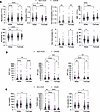 Figure 5
Males with CAUD exhibit greater increases in neutrophils, liver enzymes, and iron metabolism biomarkers. (A) Scatter dot plots showing immune cell populations altered by AUD analyzed across sexes. Imm, immature. (B) Same as in A but for liver function biomarkers. (C) Same as in A but for iron metabolism biomarkers. In A–C, each point represents an individual sample; data are shown as the mean ± SEM. Statistical comparisons for sex differences between the non-AUD and CAUD groups were assessed using a 2-way ANOVA, followed by Fisher’s LSD post hoc test for pairwise comparisons (α = 0.05). *P < 0.05, **P < 0.01, ***P < 0.001, ****P < 0.0001.
Chronic heavy alcohol use significantly elevated GGT, ALT, and AST levels in both sexes (Figure 5B), but ALT and AST were notably higher in males with AUD. These increases likely reflect both alcohol’s hepatotoxicity and baseline sex differences, as males generally show higher levels of these liver enzymes (Figure 5B). Similarly, in the iron metabolism panel, males in the non-AUD group exhibited higher serum iron, ferritin, and transferrin saturation than females (Figure 5C), consistent with prior reports (56, 57). However, AUD males showed further increases in ferritin relative to non-AUD males, suggesting greater iron-related hepatic stress in this group.
For each dataset, we used 2-way ANOVA to estimate the independent contributions of genotype and sex to variability in immune and liver markers. Although not all parameters were measured in both the mild and severe ALD cohorts, we found that at the early stage of ALD, sex — rather than genotype — accounted for a larger proportion of total variability (Supplemental Table 2). By contrast, at the later stage of ALD, the contribution of genotype increased, in many cases exceeding the influence of sex (Supplemental Table 2). Together, these findings suggest that both genotype and sex shape susceptibility to alcohol-induced liver injury. In mild ALD, chronic alcohol exposure appears to affect immune function, liver enzymes, and iron metabolism more strongly in males than in females, with potential implications for clinical outcomes and recovery.
The rs3132451 G/G genotype may hinder the normalization of neutrophil levels in males during alcohol abstinence. Complete abstinence from alcohol is the cornerstone of both short-term and long-term survival in patients with ALD. However, managing liver disease decompensation remains a major challenge in treating ALD. Understanding whether certain genetic factors promote an easier path to AUD recovery with abstinence could provide insights for improving outcomes. In this study, we included a group of patients with AUD that did not meet DSM-IV/V criteria for AUD diagnosis for at least 1 year prior to data collection (LAUD patients) to investigate whether ceasing heavy, prolonged alcohol consumption can reverse the effects on enhanced immune function and liver damage. We also examined whether the rs3132451 SNP genotype or sex influences the reversal process.
We analyzed the impact of alcohol use on 26 study biomarkers in patients with CAUD, no history of AUD (non-AUD), and LAUD. Normalization was observed in 4 immune-related biomarkers — absolute immature granulocyte count, immature granulocyte percentage, neutrophil percentage, and lymphocyte percentage — with alcohol abstinence (Figure 6A). However, overall WBC counts, particularly monocytes and neutrophils, remained elevated (Figure 6A). In contrast, biomarkers associated with liver injury and iron metabolism (both free and storage forms) that were elevated in CAUD patients normalized with alcohol abstinence (Figure 6, B and C). Altogether, these findings suggest that changes in immune cell populations may be among the most persistent effects of alcohol use, potentially requiring several years of abstinence to fully resolve.
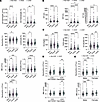 Figure 6
The rs3132451 G/G genotype may hinder the normalization of neutrophil levels in males during alcohol abstinence. (A) Immune cell populations — specifically granulocytes and lymphocytes — return to normal levels with alcohol abstinence; however, certain white blood cell (WBC) types, including monocytes and neutrophils, remain elevated. Elevated immune cell populations are observed in individuals with AUD. Statistical analysis was performed using unpaired 2-tailed Student’s t test (α = 0.05). Imm, immature. (B) Liver function biomarkers (AST, GGT, and ALT) normalize following alcohol abstinence. (C) Iron metabolism biomarkers return to normal levels with alcohol abstinence. (D) Scatter dot plots showing neutrophil and total WBC counts in individuals with C/G and G/G genotypes across the non-AUD and LAUD groups. (E) Scatter dot plots showing neutrophil and WBC counts in male and female individuals across the non-AUD and LAUD groups. In A–E, each point represents an individual sample; data are shown as the mean ± SEM. Statistical comparisons were made between individuals without a diagnosis of AUD (non-AUD), those with current AUD (CAUD; defined by DSM-IV/V criteria), and those with a lifetime history of AUD but not meeting criteria within the past year (LAUD), using unpaired 2-tailed Student’s t test (A–C) or 2-way ANOVA with Fisher’s LSD post hoc test (D and E) (α = 0.05). *P < 0.05, **P < 0.01, ***P < 0.001, ****P < 0.0001.
Examining the effects of the rs3132451 SNP genotype and sex, we found that elevated neutrophil and WBC levels remained exclusively in the G/G patients with AUD compared with non-AUD patients (Figure 6D). Furthermore, prolonged increases in these cell types occurred more readily in males than females (Figure 6E). Overall, these results demonstrate that abstinence can reverse several adverse effects of chronic heavy alcohol consumption on liver enzymes, iron levels, and some immune cells. However, the recovery of neutrophil levels to the normal range may be influenced by both the rs3132451 genotype and sex.
The rs3132451 G/G genotype effects are distinct to AUD and are not recapitulated in putative MASH subgroups. In several figures, we note small absolute differences, though statistically significant, in the analyzed outcome measures (e.g., biomarkers of systemic iron accumulation, immune cell distributions, liver injury parameters) among the various subgroups within the large NAUD/CAUD cohort. In many cases, the y axis scale required to display all data points is quite large, which can visually diminish the apparent magnitude of these effects. Another possible contributing factor to these small absolute differences is the presence of undiagnosed metabolic dysfunction–associated steatohepatitis (MASH; formerly referred to as NASH) within the large non-AUD category. Using this cohort, we therefore examined how specific the rs3132451 SNP–associated phenotypes are to AUD, as compared with other forms of liver stress or injury (metabolic, infectious, etc.).
To explore this, we identified individuals in the non-AUD cohort who might meet criteria for MASH using 2 approaches: (a) a putative mild MASH group defined by ALT > AST and ALT > 40, and (b) a putative severe MASH group defined by AST > ALT and AST > 40.
MASH arises from metabolic dysfunction in which excess lipid delivery and impaired β-oxidation promote hepatic fat accumulation, de novo lipogenesis, mitochondrial dysfunction, and lipotoxicity (58). Immune activation in MASH is primarily driven by lipotoxicity and sterile inflammation. In contrast, AAH is primarily a toxin-mediated inflammatory condition. Thus, although both conditions share liver histopathology (steatosis, inflammation, hepatocyte ballooning, fibrosis), they differ substantially in their underlying mechanisms (58).
Across both MASH-enriched subsets, G/G individuals showed no statistically significant differences in any of the 26 biomarkers assessed, all related to immune activation, hepatic injury, or iron homeostasis (Supplemental Figures 3 and 4). However, in the putative severe MASH subset, there was a non-significant trend toward higher GGT, ALT, and AST levels in G/G patients compared with C/G patients (Supplemental Figure 4D). This trend raises the possibility that G/G individuals with confirmed severe MASH might exhibit significantly elevated liver enzymes and a more pronounced phenotype. Nonetheless, the absence of increases in immune cell parameters, liver injury markers, and iron-related indices among putative MASH individuals likely reflects the distinct primary mechanisms of AAH versus MASH. Taken together, these findings suggest that the rs3132451 SNP–associated phenotypes are more specific to AUD than to other forms of liver stress or injury.


