
Research ArticleAgingEndocrinologyMetabolism
Open Access |  10.1172/jci.insight.198095
Progressive HNF1A-MODY pathophysiology revealed by a translational mouse model
Isaline Louvet,1 Ana Acosta-Montalvo,1 Chiara Saponaro,1 Maria Moreno-Lopez,1 Sana Douffi,1 Abdelkrim El Karchaoui,1 Gianni Pasquetti,1 Julien Thevenet,1 Nathalie Delalleau,1 Valery Gmyr,1 Paolo Giacobini,2,3 Stéphanie Espiard,1 Julie Kerr-Conte,1 François Pattou,1 Adrian Liston,4 and Caroline Bonner1
1University of Lille, CHU Lille, Inserm U1190, European Genomic Institute for Diabetes, Institut Pasteur de Lille, Lille, France.
2Laboratory of Development and Plasticity of the Neuroendocrine Brain, FHU 1000 Days for Health, School of Medicine, Lille, France.
3University of Lille, Inserm, CHU Lille, Lille Neuroscience & Cognition, UMR-S 1172, Lille, France.
4Department of Pathology, University of Cambridge, Cambridge, United Kingdom.
Address correspondence to: Caroline Bonner, University of Lille, CHU Lille, Inserm U1190, European Genomic Institute for Diabetes, Institut Pasteur de Lille, AUTHOR: Please provide the street address.) 59000 Lille, France. (Phone: 33.651.58.32.70; Email: caroline.bonner@univ-lille.fr.
Authorship note: IL and AAM contributed equally to this work and are co–first authors.
Find articles by Louvet, I. in: PubMed | Google Scholar
1University of Lille, CHU Lille, Inserm U1190, European Genomic Institute for Diabetes, Institut Pasteur de Lille, Lille, France.
2Laboratory of Development and Plasticity of the Neuroendocrine Brain, FHU 1000 Days for Health, School of Medicine, Lille, France.
3University of Lille, Inserm, CHU Lille, Lille Neuroscience & Cognition, UMR-S 1172, Lille, France.
4Department of Pathology, University of Cambridge, Cambridge, United Kingdom.
Address correspondence to: Caroline Bonner, University of Lille, CHU Lille, Inserm U1190, European Genomic Institute for Diabetes, Institut Pasteur de Lille, AUTHOR: Please provide the street address.) 59000 Lille, France. (Phone: 33.651.58.32.70; Email: caroline.bonner@univ-lille.fr.
Authorship note: IL and AAM contributed equally to this work and are co–first authors.
Find articles by Acosta-Montalvo, A. in: PubMed | Google Scholar
1University of Lille, CHU Lille, Inserm U1190, European Genomic Institute for Diabetes, Institut Pasteur de Lille, Lille, France.
2Laboratory of Development and Plasticity of the Neuroendocrine Brain, FHU 1000 Days for Health, School of Medicine, Lille, France.
3University of Lille, Inserm, CHU Lille, Lille Neuroscience & Cognition, UMR-S 1172, Lille, France.
4Department of Pathology, University of Cambridge, Cambridge, United Kingdom.
Address correspondence to: Caroline Bonner, University of Lille, CHU Lille, Inserm U1190, European Genomic Institute for Diabetes, Institut Pasteur de Lille, AUTHOR: Please provide the street address.) 59000 Lille, France. (Phone: 33.651.58.32.70; Email: caroline.bonner@univ-lille.fr.
Authorship note: IL and AAM contributed equally to this work and are co–first authors.
Find articles by
Saponaro, C.
in:
PubMed
|
Google Scholar
|

1University of Lille, CHU Lille, Inserm U1190, European Genomic Institute for Diabetes, Institut Pasteur de Lille, Lille, France.
2Laboratory of Development and Plasticity of the Neuroendocrine Brain, FHU 1000 Days for Health, School of Medicine, Lille, France.
3University of Lille, Inserm, CHU Lille, Lille Neuroscience & Cognition, UMR-S 1172, Lille, France.
4Department of Pathology, University of Cambridge, Cambridge, United Kingdom.
Address correspondence to: Caroline Bonner, University of Lille, CHU Lille, Inserm U1190, European Genomic Institute for Diabetes, Institut Pasteur de Lille, AUTHOR: Please provide the street address.) 59000 Lille, France. (Phone: 33.651.58.32.70; Email: caroline.bonner@univ-lille.fr.
Authorship note: IL and AAM contributed equally to this work and are co–first authors.
Find articles by Moreno-Lopez, M. in: PubMed | Google Scholar
1University of Lille, CHU Lille, Inserm U1190, European Genomic Institute for Diabetes, Institut Pasteur de Lille, Lille, France.
2Laboratory of Development and Plasticity of the Neuroendocrine Brain, FHU 1000 Days for Health, School of Medicine, Lille, France.
3University of Lille, Inserm, CHU Lille, Lille Neuroscience & Cognition, UMR-S 1172, Lille, France.
4Department of Pathology, University of Cambridge, Cambridge, United Kingdom.
Address correspondence to: Caroline Bonner, University of Lille, CHU Lille, Inserm U1190, European Genomic Institute for Diabetes, Institut Pasteur de Lille, AUTHOR: Please provide the street address.) 59000 Lille, France. (Phone: 33.651.58.32.70; Email: caroline.bonner@univ-lille.fr.
Authorship note: IL and AAM contributed equally to this work and are co–first authors.
Find articles by Douffi, S. in: PubMed | Google Scholar
1University of Lille, CHU Lille, Inserm U1190, European Genomic Institute for Diabetes, Institut Pasteur de Lille, Lille, France.
2Laboratory of Development and Plasticity of the Neuroendocrine Brain, FHU 1000 Days for Health, School of Medicine, Lille, France.
3University of Lille, Inserm, CHU Lille, Lille Neuroscience & Cognition, UMR-S 1172, Lille, France.
4Department of Pathology, University of Cambridge, Cambridge, United Kingdom.
Address correspondence to: Caroline Bonner, University of Lille, CHU Lille, Inserm U1190, European Genomic Institute for Diabetes, Institut Pasteur de Lille, AUTHOR: Please provide the street address.) 59000 Lille, France. (Phone: 33.651.58.32.70; Email: caroline.bonner@univ-lille.fr.
Authorship note: IL and AAM contributed equally to this work and are co–first authors.
Find articles by El Karchaoui, A. in: PubMed | Google Scholar
1University of Lille, CHU Lille, Inserm U1190, European Genomic Institute for Diabetes, Institut Pasteur de Lille, Lille, France.
2Laboratory of Development and Plasticity of the Neuroendocrine Brain, FHU 1000 Days for Health, School of Medicine, Lille, France.
3University of Lille, Inserm, CHU Lille, Lille Neuroscience & Cognition, UMR-S 1172, Lille, France.
4Department of Pathology, University of Cambridge, Cambridge, United Kingdom.
Address correspondence to: Caroline Bonner, University of Lille, CHU Lille, Inserm U1190, European Genomic Institute for Diabetes, Institut Pasteur de Lille, AUTHOR: Please provide the street address.) 59000 Lille, France. (Phone: 33.651.58.32.70; Email: caroline.bonner@univ-lille.fr.
Authorship note: IL and AAM contributed equally to this work and are co–first authors.
Find articles by Pasquetti, G. in: PubMed | Google Scholar
1University of Lille, CHU Lille, Inserm U1190, European Genomic Institute for Diabetes, Institut Pasteur de Lille, Lille, France.
2Laboratory of Development and Plasticity of the Neuroendocrine Brain, FHU 1000 Days for Health, School of Medicine, Lille, France.
3University of Lille, Inserm, CHU Lille, Lille Neuroscience & Cognition, UMR-S 1172, Lille, France.
4Department of Pathology, University of Cambridge, Cambridge, United Kingdom.
Address correspondence to: Caroline Bonner, University of Lille, CHU Lille, Inserm U1190, European Genomic Institute for Diabetes, Institut Pasteur de Lille, AUTHOR: Please provide the street address.) 59000 Lille, France. (Phone: 33.651.58.32.70; Email: caroline.bonner@univ-lille.fr.
Authorship note: IL and AAM contributed equally to this work and are co–first authors.
Find articles by Thevenet, J. in: PubMed | Google Scholar
1University of Lille, CHU Lille, Inserm U1190, European Genomic Institute for Diabetes, Institut Pasteur de Lille, Lille, France.
2Laboratory of Development and Plasticity of the Neuroendocrine Brain, FHU 1000 Days for Health, School of Medicine, Lille, France.
3University of Lille, Inserm, CHU Lille, Lille Neuroscience & Cognition, UMR-S 1172, Lille, France.
4Department of Pathology, University of Cambridge, Cambridge, United Kingdom.
Address correspondence to: Caroline Bonner, University of Lille, CHU Lille, Inserm U1190, European Genomic Institute for Diabetes, Institut Pasteur de Lille, AUTHOR: Please provide the street address.) 59000 Lille, France. (Phone: 33.651.58.32.70; Email: caroline.bonner@univ-lille.fr.
Authorship note: IL and AAM contributed equally to this work and are co–first authors.
Find articles by Delalleau, N. in: PubMed | Google Scholar
1University of Lille, CHU Lille, Inserm U1190, European Genomic Institute for Diabetes, Institut Pasteur de Lille, Lille, France.
2Laboratory of Development and Plasticity of the Neuroendocrine Brain, FHU 1000 Days for Health, School of Medicine, Lille, France.
3University of Lille, Inserm, CHU Lille, Lille Neuroscience & Cognition, UMR-S 1172, Lille, France.
4Department of Pathology, University of Cambridge, Cambridge, United Kingdom.
Address correspondence to: Caroline Bonner, University of Lille, CHU Lille, Inserm U1190, European Genomic Institute for Diabetes, Institut Pasteur de Lille, AUTHOR: Please provide the street address.) 59000 Lille, France. (Phone: 33.651.58.32.70; Email: caroline.bonner@univ-lille.fr.
Authorship note: IL and AAM contributed equally to this work and are co–first authors.
Find articles by Gmyr, V. in: PubMed | Google Scholar
1University of Lille, CHU Lille, Inserm U1190, European Genomic Institute for Diabetes, Institut Pasteur de Lille, Lille, France.
2Laboratory of Development and Plasticity of the Neuroendocrine Brain, FHU 1000 Days for Health, School of Medicine, Lille, France.
3University of Lille, Inserm, CHU Lille, Lille Neuroscience & Cognition, UMR-S 1172, Lille, France.
4Department of Pathology, University of Cambridge, Cambridge, United Kingdom.
Address correspondence to: Caroline Bonner, University of Lille, CHU Lille, Inserm U1190, European Genomic Institute for Diabetes, Institut Pasteur de Lille, AUTHOR: Please provide the street address.) 59000 Lille, France. (Phone: 33.651.58.32.70; Email: caroline.bonner@univ-lille.fr.
Authorship note: IL and AAM contributed equally to this work and are co–first authors.
Find articles by Giacobini, P. in: PubMed | Google Scholar
1University of Lille, CHU Lille, Inserm U1190, European Genomic Institute for Diabetes, Institut Pasteur de Lille, Lille, France.
2Laboratory of Development and Plasticity of the Neuroendocrine Brain, FHU 1000 Days for Health, School of Medicine, Lille, France.
3University of Lille, Inserm, CHU Lille, Lille Neuroscience & Cognition, UMR-S 1172, Lille, France.
4Department of Pathology, University of Cambridge, Cambridge, United Kingdom.
Address correspondence to: Caroline Bonner, University of Lille, CHU Lille, Inserm U1190, European Genomic Institute for Diabetes, Institut Pasteur de Lille, AUTHOR: Please provide the street address.) 59000 Lille, France. (Phone: 33.651.58.32.70; Email: caroline.bonner@univ-lille.fr.
Authorship note: IL and AAM contributed equally to this work and are co–first authors.
Find articles by Espiard, S. in: PubMed | Google Scholar
1University of Lille, CHU Lille, Inserm U1190, European Genomic Institute for Diabetes, Institut Pasteur de Lille, Lille, France.
2Laboratory of Development and Plasticity of the Neuroendocrine Brain, FHU 1000 Days for Health, School of Medicine, Lille, France.
3University of Lille, Inserm, CHU Lille, Lille Neuroscience & Cognition, UMR-S 1172, Lille, France.
4Department of Pathology, University of Cambridge, Cambridge, United Kingdom.
Address correspondence to: Caroline Bonner, University of Lille, CHU Lille, Inserm U1190, European Genomic Institute for Diabetes, Institut Pasteur de Lille, AUTHOR: Please provide the street address.) 59000 Lille, France. (Phone: 33.651.58.32.70; Email: caroline.bonner@univ-lille.fr.
Authorship note: IL and AAM contributed equally to this work and are co–first authors.
Find articles by Kerr-Conte, J. in: PubMed | Google Scholar
1University of Lille, CHU Lille, Inserm U1190, European Genomic Institute for Diabetes, Institut Pasteur de Lille, Lille, France.
2Laboratory of Development and Plasticity of the Neuroendocrine Brain, FHU 1000 Days for Health, School of Medicine, Lille, France.
3University of Lille, Inserm, CHU Lille, Lille Neuroscience & Cognition, UMR-S 1172, Lille, France.
4Department of Pathology, University of Cambridge, Cambridge, United Kingdom.
Address correspondence to: Caroline Bonner, University of Lille, CHU Lille, Inserm U1190, European Genomic Institute for Diabetes, Institut Pasteur de Lille, AUTHOR: Please provide the street address.) 59000 Lille, France. (Phone: 33.651.58.32.70; Email: caroline.bonner@univ-lille.fr.
Authorship note: IL and AAM contributed equally to this work and are co–first authors.
Find articles by Pattou, F. in: PubMed | Google Scholar
1University of Lille, CHU Lille, Inserm U1190, European Genomic Institute for Diabetes, Institut Pasteur de Lille, Lille, France.
2Laboratory of Development and Plasticity of the Neuroendocrine Brain, FHU 1000 Days for Health, School of Medicine, Lille, France.
3University of Lille, Inserm, CHU Lille, Lille Neuroscience & Cognition, UMR-S 1172, Lille, France.
4Department of Pathology, University of Cambridge, Cambridge, United Kingdom.
Address correspondence to: Caroline Bonner, University of Lille, CHU Lille, Inserm U1190, European Genomic Institute for Diabetes, Institut Pasteur de Lille, AUTHOR: Please provide the street address.) 59000 Lille, France. (Phone: 33.651.58.32.70; Email: caroline.bonner@univ-lille.fr.
Authorship note: IL and AAM contributed equally to this work and are co–first authors.
Find articles by Liston, A. in: PubMed | Google Scholar
1University of Lille, CHU Lille, Inserm U1190, European Genomic Institute for Diabetes, Institut Pasteur de Lille, Lille, France.
2Laboratory of Development and Plasticity of the Neuroendocrine Brain, FHU 1000 Days for Health, School of Medicine, Lille, France.
3University of Lille, Inserm, CHU Lille, Lille Neuroscience & Cognition, UMR-S 1172, Lille, France.
4Department of Pathology, University of Cambridge, Cambridge, United Kingdom.
Address correspondence to: Caroline Bonner, University of Lille, CHU Lille, Inserm U1190, European Genomic Institute for Diabetes, Institut Pasteur de Lille, AUTHOR: Please provide the street address.) 59000 Lille, France. (Phone: 33.651.58.32.70; Email: caroline.bonner@univ-lille.fr.
Authorship note: IL and AAM contributed equally to this work and are co–first authors.
Find articles by Bonner, C. in: PubMed | Google Scholar
Published May 8, 2026 - More info
JCI Insight. 2026;11(9):e198095. https://doi.org/10.1172/jci.insight.198095.
© 2026 Louvet et al. This work is licensed under the Creative Commons Attribution 4.0 International License. To view a copy of this license, visit http://creativecommons.org/licenses/by/4.0/.
Received: July 18, 2025; Accepted: March 16, 2026


-
Results
Current mouse models inadequately recapitulate the progressive pathophysiology of human HNF1A-MODY, limiting mechanistic understanding and therapeutic development. Complete knockout models (Hnf1a–/–) develop severe diabetes shortly after weaning, while conventional heterozygous Hnf1a+/– mice paradoxically maintain normal glycemia throughout life (16). To overcome these limitations and model the gradual metabolic deterioration characteristic of human HNF1A-MODY, we engineered a refined mouse model that precisely mimics human HNF1A haploinsufficiency.
Using Cre-lox recombination, we strategically deleted the genomic region encoding the transactivation domain within the native Hnf1a gene while preserving both the dimerization and DNA-binding domains (Figure 1A and Supplemental Figure 1A; supplemental material available online with this article; https://doi.org/10.1172/jci.insight.198095DS1). This approach closely recapitulates the functional consequences of pathogenic human mutations, which often result in truncated proteins lacking transcriptional activity (34). Following a systematic breeding strategy, we first crossed Hnf1aloxP/loxP mice with CMV-Cre transgenic mice to achieve global expression of the Hnf1aΔe4-10 allele. Crucially, the metabolic phenotype displayed a strict parent-of-origin effect, manifesting exclusively upon paternal transmission of the Hnf1aΔe4-10 allele (Supplemental Figure 1B). Accordingly, we utilized this paternal inheritance pattern for our breeding strategy, which simultaneously eliminated the Cre transgene and generated experimental cohorts alongside littermate controls for all subsequent analyses. To ensure genetic consistency and validate our model, we implemented a rigorous genotyping protocol with dual PCR assays. The first assay confirmed the presence of loxP sequences (Supplemental Figure 1C), while the second specifically detected the constitutive Δe4-10 allele resulting from successful recombination (Supplemental Figure 1D). We selected only mice with confirmed efficient Cre-mediated recombination for subsequent breeding. Recognizing the potential impact of genetic background on metabolic phenotypes, we carefully controlled for confounding factors throughout our breeding strategy. In particular, we standardized the status of the nicotinamide nucleotide transhydrogenase (Nnt) gene (Supplemental Figure 1B), which is known to influence glucose homeostasis in certain mouse strains and could potentially mask or exaggerate phenotypes if not properly controlled (35, 36).
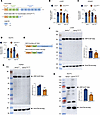 Figure 1
Generation and characterization of Hnf1a+/Δe4-10 mice. (A) Structure of the wild-type Hnf1a gene, and the mutant Δe4-10 allele after Cre recombination. (B–D) Hnf1a gene expression analyzed by real-time PCR using primers targeting exon 1 and exon 10 in Hnf1a+/Δe4-10 mice compared with Hnf1a+/+ sibling controls in liver (B), kidney (n = 3–4 mice per group) (C), and isolated islets (pooled from n = 5 mice per group) (D). Gene expression was normalized to Rpl27 mRNA. (E) Schematic representation of the wild-type HNF1A protein (67 kDa) and the predicted truncated HNF1A-Δe4-10 protein (38 kDa). (F–H) Western blot analysis of HNF1A protein from liver (F), kidney (G), and islets (H) showing reduced full-length HNF1A protein (67 kDa) in mutant compared with Hnf1a+/+ sibling controls. Protein lysates (35 μg liver/kidney and 20 μg islets) were loaded with β-actin as loading control. Data are expressed as means ± SEM. *P < 0.05, **P < 0.01 by unpaired t test.
Molecular characterization confirmed successful achievement of haploinsufficiency. qPCR analysis using primers specific to exon 1 revealed comparable Hnf1a expression levels between Hnf1a+/Δe4-10 and wild-type (Hnf1a+/+) mice in liver, kidney, and isolated islets (Figure 1, B–D), confirming normal transcription initiation from both alleles. In contrast, primers targeting exon 10 detected significant transcript reductions of 35% in liver (Figure 1B), 40% in kidney (Figure 1C), and 70% in isolated islets (Figure 1D) in Hnf1a+/Δe4-10 mice compared with Hnf1a+/+ siblings. This pattern confirms successful deletion of exons 4–10 in the mutant allele while maintaining normal expression of the wild-type allele, achieving true haploinsufficiency.
To assess the protein consequences of our genetic modification, we compared the predicted protein structure (Figure 1E) with actual protein expression (Figure 1, F–H). Western blot analysis demonstrated the functional impact, with significant reductions in full-length HNF1A protein (67 kDa) across all tissues: 38% in liver (Figure 1F), 52% in kidney (Figure 1G), and 48% in isolated islets (Figure 1H) of Hnf1a+/Δe4-10 mice compared with Hnf1a+/+ controls.
In pancreatic islets, we observed additional protein species migrating near the full-length band. Since rodents exclusively express the HNF1A-A isoform and lack the B and C isoforms found in humans (37), and these bands were present in both wild-type and mutant lysates, they likely represent endogenous posttranslational modifications rather than alternative isoforms or mutant products (Figure 1H). Crucially, despite detecting transcripts from the mutant allele, we observed no evidence of the predicted truncated HNF1A-Δe4-10 protein (38 kDa) in any tissue. This suggests that any truncated product is highly unstable and is likely cleared via nonsense-mediated decay or proteasomal degradation. These findings confirm that our model achieves true haploinsufficiency through reduced expression of functional full-length protein without generating a potentially interfering truncated variant, closely mirroring the molecular pathophysiology observed in human HNF1A-MODY patients with frameshift or nonsense mutations (38).
After confirming that our Hnf1a+/Δe4-10 model achieves true haploinsufficiency, we conducted comprehensive cross-sectional metabolic phenotyping to determine whether it recapitulates the progressive nature of HNF1A-MODY. Based on established developmental milestones in mice (39), we stratified our analyses into distinct age groups: (a) pre-puberty (3 weeks); (b) young (6–7 weeks); (c) adult (8–23 weeks); (d) middle-aged (24–40 weeks); and (e) aged (>40 weeks) (21). Initial studies revealed that male, but not female (Supplemental Figure 2 and Supplemental Figure 3), Hnf1a+/Δe4-10 mice developed age-dependent metabolic abnormalities, leading us to focus detailed characterization on males. Both genotypes showed comparable weight gain throughout development, with mutants exhibiting a slight but significant increase in late adulthood (Figure 2A). Notably, Hnf1a+/Δe4-10 mice displayed characteristic temporal progression of metabolic dysfunction, with fasting hyperglycemia emerging at young age (10 weeks) and persisting with age (>50 weeks) (Figure 2B).
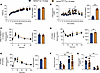 Figure 2
Metabolic characterization of young Hnf1a+/Δe4-10 male mice. (A and B) Body weight (A) and fasting glycemia (B) with AUC after 16-hour overnight fast from 6 to 52 weeks of age. (C) Pre-pubertal mice (3 weeks): OGTT (2 g/kg) with AUC. (D) Insulin tolerance test (ITT) at 7 weeks with AUC. (E–G) Young mice (6–8 weeks): OGTT (2 g/kg) with AUC (E), plasma insulin (fasting and 15 minutes after glucose) (F), and plasma glucagon (fasting and 30 minutes after glucose) (G). Data are expressed as means ± SEM (n = 5–8 mice per group). *P < 0.05, **P < 0.01, ***P < 0.001 by 2-way ANOVA with mixed-effects analysis for longitudinal data or unpaired t test for single comparisons.
To establish the temporal sequence of this metabolic dysfunction, we first assessed glucose homeostasis in pre-pubertal mice. At 3 weeks of age, oral glucose tolerance was comparable between mutant and control mice (Figure 2C), indicating that glucose handling is preserved early in life. However, metabolic defects emerged shortly thereafter; Hnf1a+/Δe4-10 mice exhibited significant insulin resistance as early as 7 weeks of age, characterized by impaired glucose disposal following insulin administration (Figure 2D). Consistent with this, oral glucose tolerance testing (OGTT) revealed a significant transient glucose elevation at 30 minutes (Figure 2E). Despite a similar overall AUC, this transient peak is physiologically significant as it reveals early-stage insulin resistance that precedes overt β cell failure. Collectively, these data identify insulin resistance as the earliest detectable metabolic abnormality in our model, occurring well before the development of fasting hyperglycemia.
Despite the underlying insulin resistance, young Hnf1a+/Δe4-10 mice maintained glucose tolerance, with plasma insulin and glucagon profiles indistinguishable from controls (Figure 2, F and G). This suggests that compensatory mechanisms initially preserve glucose homeostasis in early adulthood. However, this stability was transient; by middle age (30 weeks), mutants developed significant glucose intolerance (Figure 3A). Notably, this metabolic deterioration occurred despite maintained plasma insulin and glucagon levels at both fasting and post–glucose challenge time points (Figure 3, B and C), indicating a growing disconnect between glycemic control and circulating hormone levels.
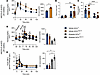 Figure 3
Metabolic characterization of middle-aged Hnf1a+/Δe4-10 male mice. Middle-aged mice (24–40 weeks): (A–C) OGTT with AUC (A), plasma insulin (B), and plasma glucagon (C). (D and E) Sulfonylurea responsiveness (36 weeks): Glycemia during OGTT with gliclazide (10 mg/kg) or vehicle pretreatment (D) and insulin levels (E). Data are expressed as means ± SEM (n = 5–8 mice per group). *P < 0.05, **P < 0.01, ****P < 0.0001 by 2-way ANOVA with mixed-effects analysis for longitudinal data or unpaired t test for single comparisons. For sulfonylurea studies: * and $ indicate comparison between genotypes within each treatment (vehicle and gliclazide, respectively); £ and # indicate comparison between treatments within each genotype (Hnf1a+/+ and Hnf1a+/Δe4-10, respectively).
To validate the translational relevance of our model, we assessed β cell responsiveness to sulfonylureas, the first-line therapy for HNF1A-MODY (40). As expected, vehicle-treated Hnf1a+/Δe4-10 mice displayed glucose intolerance compared with controls; however, gliclazide administration effectively mitigated this hyperglycemia in both genotypes (Figure 3D). Notably, Hnf1a+/Δe4-10 mice exhibited enhanced insulin release compared with controls under both vehicle and gliclazide conditions (Figure 3E). This likely reflects compensatory hyperinsulinemia driven by the underlying insulin resistance described earlier. Importantly, this robust responsiveness to sulfonylureas confirms that the downstream insulin secretory machinery remains functional despite impaired glucose sensing. This dissociation closely mirrors the clinical profile of HNF1A-MODY patients and further validates the therapeutic fidelity of our model.
With age (>40 weeks), the metabolic phenotype deteriorated further. Hnf1a+/Δe4-10 mice exhibited pronounced glucose intolerance (Figure 4A), while plasma insulin levels remained comparable to those in sibling controls (Figure 4B). Most notably, aged mutant mice displayed significantly elevated fasting glucagon levels (Figure 4C). This inappropriate hyperglucagonemia signals a distinct α cell dysfunction emerging late in disease progression, extending the pathophysiology beyond the traditional β cell–centric view of HNF1A-MODY.
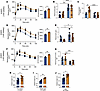 Figure 4
Metabolic characterization of aged Hnf1a+/Δe4-10 male mice. (A–G) Aged mice (>40 weeks): OGTT with AUC (A), plasma insulin (B), and plasma glucagon (C); intraperitoneal glucose tolerance test (IPGTT) with AUC (D) and plasma insulin (E); and OGTT with AUC (F) and plasma proinsulin-to-insulin ratio (G). (H–J) Intestine length at 3 weeks (H), 33 weeks (I), and 55 weeks (J). Data are expressed as means ± SEM (n = 5–8 mice per group). *P < 0.05, **P < 0.01, ***P < 0.001, ****P < 0.0001 by 2-way ANOVA with mixed-effects analysis for longitudinal data or unpaired t test for single comparisons.
To distinguish intrinsic β cell defects from gut-mediated effects, we performed intraperitoneal glucose tolerance tests in aged mice (>45 weeks) (Figure 4D). In contrast to the insulin response observed during oral challenge, intraperitoneal stimulation revealed a significant defect in acute insulin secretion at 15 minutes in Hnf1a+/Δe4-10 mice compared with controls (Figure 4E). This secretory difference was not associated with impaired proinsulin processing, as the plasma proinsulin-to-insulin ratio decreased similarly in both genotypes following glucose stimulation (Figure 4, F and G). Parallel morphological characterization identified a potential compensatory driver: mutant mice exhibited significantly increased small intestine length compared with wild-type controls (Figure 4, H–J). This elongation was a constitutive phenotype, observed consistently from pre-puberty (3 weeks) through advanced age (55 weeks).
Mechanistically, we identified a disruption in the HNF1A regulatory network. Mutant islets showed reduced Hnf4a expression at both the mRNA (Supplemental Figure 4A) and protein levels (Supplemental Figure 4B). This was accompanied by the downregulation of key metabolic targets, including Gck (Supplemental Figure 4C), Slc2a2 (Supplemental Figure 4D), and Slc5a2 mRNA (Supplemental Figure 4E), alongside reduced SGLT2 protein (Supplemental Figure 4F). These findings suggest a hierarchical regulatory failure, consistent with our previous work establishing HNF1A as a direct regulator of SLC5A2 expression in human islets (41).
Having established the progressive hormonal and glycemic abnormalities in Hnf1a+/Δe4-10 male mice, we next investigated whether Hnf1a haploinsufficiency affects glucose homeostasis through extra-pancreatic mechanisms. This approach was prompted by Hnf1a’s well-documented roles in regulating both liver and kidney function (16, 42–46). We conducted a comprehensive analysis of these organs across different age groups to determine their contribution to the metabolic phenotype.
Pyruvate tolerance tests in aged (42 weeks) Hnf1a+/Δe4-10 mice revealed significantly elevated glycemic excursions in comparison with Hnf1a+/+ sibling controls (Figure 5A), with a 4.5-fold increase in area under the curve. This enhanced conversion of pyruvate to glucose demonstrates dysregulated hepatic gluconeogenesis. To determine whether this functional impairment was accompanied by structural alterations, we examined liver morphology across age. We observed progressive hepatic steatosis and fibrosis, which were evident macroscopically (Figure 5B) and histologically (Figure 5C) in aged mutants, confirming that HNF1A deficiency drives both functional gluconeogenic dysregulation and structural hepatopathy.
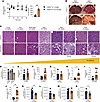 Figure 5
Hepatic and renal characteristics of Hnf1a+/Δe4-10 mice. (A) Pyruvate tolerance test (2 g/kg) showing glycemic curve and AUC above baseline in 42-week-old mice after 6-hour fasting. (B and C) Temporal evolution of hepatic pathology with age. (B) Macroscopic liver appearance in Hnf1a+/+ and Hnf1a+/Δe4-10 mice at 40 weeks and 70 weeks. (C) Histological analysis with Masson’s trichrome staining in Hnf1a+/Δe4-10 livers compared with Hnf1a+/+ livers from 6 weeks to 70 weeks of age. Representative images at ×40 original magnification; scale bars: 50 μm. (D) RT-qPCR analysis of renal Slc5a2 expression in young (6 weeks) and adult (18 weeks) mice. (E–J) Glycosuria measurements in pre-pubertal mice (3 weeks): fasting (E) and post-OGTT (F) glucose levels in urine; in adult mice (18 weeks): fasting (G) and post-OGTT (H) glucose levels in urine; and in middle-aged mice (30 weeks): fasting (I) and post-OGTT (J) glucose levels in urine. (K–N) RT-qPCR analysis of renal glucose transporters in aged mice (70 weeks): Slc5a2 (K), Slc5a1 (L), Slc2a1 (M), and Slc2a2 (N). Gene expression was normalized to Rplp0 mRNA using the 2–ΔCt method. Data are expressed as means ± SEM (n = mice 5–8 per group). *P < 0.05, **P < 0.01 by unpaired t test.
To elucidate the molecular drivers of this severe hepatic phenotype, we profiled key inflammatory and lipogenic pathways in aged livers (70 weeks). Consistent with the observed fibrosis, we detected a significant upregulation of proinflammatory markers, including Il1b, Ccl2, and Ptgs2 (Supplemental Figure 5, A–F). Mechanistically, the steatotic phenotype appears to be driven by selective dysregulation of the carbohydrate-responsive pathway. We observed significantly increased expression of Mixipl (ChREBP) at the mRNA level (Supplemental Figure 5G) but no change in the protein level (Supplemental Figure 5H), leading to the upregulation of its downstream target, fatty acid synthase (FASN) (Supplemental Figure 5, I and J). Notably, the insulin-sensitive regulator Srebf1 (SREBP1c) remained unchanged (Supplemental Figure 5, K and L). This suggests that the hepatic steatosis is driven specifically by ChREBP-mediated de novo lipogenesis, likely exacerbated by the prevailing hyperglycemia.
We next examined renal glucose handling, focusing on this tissue because HNF1A directly regulates sodium-glucose cotransporter-2 (SGLT2) in proximal tubule cells (16). qPCR analysis revealed a developmentally regulated loss of Slc5a2 (SGLT2) expression: levels were preserved in young mice (6 weeks) but significantly reduced in adults (18 weeks) (Figure 5D), coinciding with the onset of systemic metabolic dysfunction.
This molecular defect had functional consequences across age. In pre-pubertal mice (3 weeks), fasting glycosuria was normal (Figure 5E), but mutants displayed a trend toward increased glucose excretion following an oral glucose challenge (Figure 5F). This pattern persisted into adulthood (18 weeks), where mutant mice again exhibited normal fasting glycosuria (Figure 5G) but significant glycosuria after glucose loading (Figure 5H). By middle age (33 weeks), the phenotype remained consistent, with preserved fasting glycosuria (Figure 5I) and elevated post-challenge excretion (Figure 5J), indicating impaired renal glucose reabsorption specifically under conditions of glycemic stress.
The renal phenotype continued to progress with age. By 70 weeks, Hnf1a+/Δe4-10 mice showed a profound reduction in renal Slc5a2 expression (Figure 5K). To determine whether this effect was specific to Slc5a2 or represented a broader disruption of glucose transporters, we assessed additional targets. Expression of Slc5a1 (SGLT1) trended lower in mutant mice but did not reach statistical significance (Figure 5L), while Slc2a1 (GLUT1) was unchanged (Figure 5M). Notably, we observed significantly reduced Slc2a2 (GLUT2) expression (Figure 5N), a finding that contrasts with previous reports showing no change in renal GLUT2 in homozygous Hnf1a-knockout mice (16).
A notable feature of our model was a marked sexual dimorphism; metabolic abnormalities were primarily evident in male mice, whereas females remained relatively protected. Given recent evidence that testosterone and androgen receptor (AR) signaling in β cells are critical for normal glucose homeostasis in males (33), we investigated whether HNF1A deficiency disrupts this hormonal axis.
We first profiled circulating hormone levels. To control for diurnal and metabolic fluctuations, plasma testosterone was measured in the morning under fasted conditions (47). In pre-pubertal (3 weeks) and young mice (6 weeks), testosterone levels were comparable between genotypes (Figure 6, A and B). However, while control mice displayed the expected physiological rise in testosterone at puberty, mutant mice failed to mount this age-related increase, maintaining lower levels at 10 weeks (Figure 6C) and 24 weeks (Figure 6D), with this trend persisting in aged mice (55 weeks; Figure 6E). Downstream AR analysis, including AR protein expression in testis and islets (Supplemental Figure 6, A–C), islet Ar mRNA quantification (Supplemental Figure 6D), and hepatic Ar mRNA across the lifespan (Supplemental Figure 6, E–H), confirmed tissue-specific regulation.
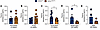 Figure 6
Testosterone levels in male Hnf1a+/Δe4-10 mice. (A–E) Plasma testosterone levels in pre-pubertal mice (A), young mice (B), adult mice (C), middle-aged mice (D), and aged mice (E) (n = 4–9 per group). Data are presented as means ± SEM. *P < 0.05; unpaired t tests were used for statistical comparisons.
Following the characterization of the systemic metabolic phenotype, marked by early insulin resistance and subsequent testosterone deficiency, we next investigated the intrinsic secretory capacity of Hnf1a+/Δe4-10 islets. Immunofluorescence staining confirmed that HNF1A is expressed across major endocrine cell types, including insulin-positive β cells, glucagon-positive α cells, and somatostatin-positive δ cells, in both mouse and human islets (Supplemental Figure 7, A and B). Structurally, while gross islet morphology remained largely intact, aged mutant mice exhibited a significant expansion of the glucagon-positive compartment (Supplemental Figure 7C) accompanied by mild intra-pancreatic lipid infiltration (Supplemental Figure 7D). This widespread expression profile suggests that HNF1A haploinsufficiency likely compromises multiple hormone-secreting populations. To test this, we evaluated secretory dynamics using islet perifusion for insulin and static incubation for glucagon.
Isolated islets from Hnf1a+/Δe4-10 mice displayed markedly dysregulated glucose-stimulated insulin secretion (GSIS) compared with those from Hnf1a+/+ sibling controls, characterized by elevated insulin secretion. Both first-phase and second-phase insulin secretion were significantly increased in mutant islets, indicating a hyperinsulinemic response relative to the normal response of controls (Figure 7A) (48, 49). We next examined α cell function by measuring glucagon secretion in response to glucose stimulation. Islets from Hnf1a+/Δe4-10 mice showed comparable glucagon secretion at 2 mmol/L glucose compared with islets from Hnf1a+/+ mice. However, unlike Hnf1a+/+ islets, glucagon secretion was not suppressed in Hnf1a+/Δe4-10 islets when glucose was increased to 16.7 mmol/L (Figure 7B). This dysregulated glucagon secretion pattern indicates that HNF1A deficiency disrupts the intrinsic glucose-sensing machinery of α cells, consistent with the elevated fasting glucagon levels observed in aged Hnf1a+/Δe4-10 mice.
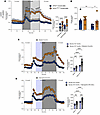 Figure 7
Insulin and glucagon secretion from isolated islets of Hnf1a+/+ and Hnf1a+/Δe4-10 mice. (A) Dynamic insulin secretion during perifusion with varying glucose concentrations (5.5 mmol/L → 16.7 mmol/L → 5.5 mmol/L) in islets isolated from Hnf1a+/+ mice (blue) and Hnf1a+/Δe4-10 mice (orange). Right: Quantification of first-phase and second-phase insulin secretion in response to high glucose. (B) Glucagon secretion during static incubation with varying glucose concentrations (2.0 mmol/L and 16.7 mmol/L) in islets from Hnf1a+/+ and Hnf1a+/Δe4-10 mice. (C) Dynamic insulin secretion in response to high glucose (16.7 mmol/L) with gliclazide (10 μmol/L) treatment in islets from aged mice (70 weeks). Right: Quantification of insulin secretion with glucose alone versus glucose plus gliclazide treatment. (D) Dynamic insulin secretion in response to high glucose (16.7 mmol/L) with triple agonist (150 nmol/L) treatment in islets from aged mice (70 weeks). Right: Quantification of insulin secretion with glucose alone versus glucose plus triple agonist treatment. Data are presented as means ± SEM. *P < 0.05, **P < 0.01, ***P < 0.001, ****P < 0.0001; statistical comparisons were performed using unpaired t tests.
To validate that our model retains the defining therapeutic responsiveness of human HNF1A-MODY, we tested acute responsiveness to pharmacological agents. Given the clinical efficacy of sulfonylureas in HNF1A-MODY patients, we tested Hnf1a+/Δe4-10 islet responses to gliclazide treatment. Mutant islets displayed enhanced sensitivity to sulfonylurea stimulation, with substantially greater incremental insulin responses in comparison with control islets (Figure 7C). This preserved and enhanced response to sulfonylureas suggests that insulin granule exocytosis machinery remains intact in Hnf1a+/Δe4-10 β cells despite aberrant glucose sensitivity, confirming the clinical relevance of our model and providing a mechanistic explanation for the effectiveness of these agents in HNF1A-MODY patients.
To further characterize Hnf1a+/Δe4-10 islet secretory capacity, we tested responses to incretin-based therapies. Treatment with a triple GLP1 receptor agonist, which simultaneously activates GLP1, GIP, and GCG receptors, enhanced insulin secretion in Hnf1a+/Δe4-10 islets to levels comparable to those in treated control islets (Figure 7D). This preserved responsiveness to incretin-based agents demonstrates that multiple therapeutic pathways remain functional in our model.
To translate our findings from the mouse model to human physiology and establish direct relevance to HNF1A-MODY, we investigated HNF1A function in isolated human pancreatic islets. First, we compared HNF1A gene expression across different metabolic conditions using human islets from separate donor groups. HNF1A mRNA was significantly higher in islets from donors with obesity compared with lean donors, while islets from T2D donors showed lower expression levels than islets from donors with obesity (Figure 8A). This expression pattern across different metabolic states suggests potential compensatory upregulation of HNF1A in obesity that appears absent in the diabetic state. Additionally, RNA-seq analysis revealed that HNF1A mRNA levels progressively decrease with time in culture (Figure 8B) (50), highlighting the importance of standardizing experimental conditions when studying this transcription factor.
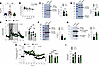 Figure 8
HNF1A knockdown in human islets recapitulates key features of Hnf1a+/Δe4-10 mouse model. (A) HNF1A mRNA expression in human islets isolated from lean donors (n = 10), donors with obesity (n = 16), and T2D (n = 10) donors. (B) HNF1A transcript level in human islets over time in culture. (C) Western blot analysis and quantification of HNF1A protein after siRNA knockdown showing 54% reduction. (D) Western blot analysis and quantification of insulin protein after HNF1A knockdown showing 51% reduction. (E) Dynamic insulin secretion during glucose stimulation (3 mmol/L → 15 mmol/L → 3 mmol/L) in control (siCTRL, black) and siHNF1A (green) islets. Right: Quantification of first-phase and second-phase insulin secretion. (F) Western blot analysis and quantification of SGLT2 protein expression after HNF1A knockdown showing 70% reduction. (G) Western blot analysis of proglucagon and glucagon protein in control and HNF1A-deficient islets, with quantification showing 104% increase in glucagon after HNF1A knockdown. (H) Dynamic glucagon secretion in response to varying glucose concentrations (1 mmol/L → 15 mmol/L) with quantification at 1 mmol/L and 15 mmol/L glucose. (I) Static glucagon secretion at 2 mmol/L and 10 mmol/L glucose. Protein levels normalized to β-actin or GAPDH. Data are presented as means ± SEM. *P < 0.05, **P < 0.01, ***P < 0.001, ****P < 0.0001. One-way ANOVA with Tukey’s post hoc test was used for HNF1A mRNA comparisons, while unpaired t tests were used for protein quantifications and hormone secretion comparisons.
To directly assess the functional consequences of HNF1A deficiency, we established a siRNA-mediated knockdown system in human islets. Transfection with HNF1A-targeted siRNA achieved a 54% reduction in HNF1A protein expression (Figure 8C), closely mirroring the haploinsufficiency observed in our mouse model. This knockdown led to a 51% reduction in insulin content (Figure 8D), consistent with HNF1A’s established role in regulating INS gene expression. Dynamic perifusion studies revealed impaired GSIS in HNF1A-deficient islets, with reduced responses to glucose stimulation (Figure 8E).
We next examined SGLT2 protein expression in human islets, as our group previously demonstrated that SGLT2 is specifically expressed in human α cells and that its inhibition, either by siRNAs targeting SGLT2 or by its selective pharmacological inhibitor, dapagliflozin, triggered glucagon secretion (41, 51, 52). This connection was particularly relevant given our observations of reduced renal Slc5a2 expression and glycosuria in the Hnf1a+/Δe4-10 mice. HNF1A knockdown led to a 70% reduction in SGLT2 protein levels in human islets (Figure 8F), with no changes in SGLT1, GLUT1, or GLUT2 (Supplemental Figure 8, A–C), confirming that HNF1A is a critical regulator of this glucose transporter.
The most notable effects of HNF1A knockdown, however, were observed in α cell function. While proglucagon protein content was not significantly altered, HNF1A-deficient human islets exhibited markedly dysregulated glucagon secretion (Figure 8, G–I). Similarly to our mouse model, HNF1A knockdown in human islets resulted in impaired glucagon suppression at high glucose concentrations and exaggerated glucagon secretion at low glucose levels. This finding highlights a previously underappreciated role for HNF1A in regulating α cell function and suggests that dysregulated glucagon secretion may be an important contributor to HNF1A-MODY pathophysiology.


