
Research ArticleCell biologyOncology
Open Access |  10.1172/jci.insight.197261
Patients with AML with WT TP53 but defective TP53-mediated apoptosis have a dismal survival
Josephine Dubois,1 Anthony Palmer,2 Darren King,1 Mohamed Rizk,1 Karan Bedi,3 Kerby A. Shedden,4 and Sami N. Malek1,4
1Department of Internal Medicine, Division of Hematology and Oncology,
2Department of Pediatrics,
3Department of Biostatistics, and
4Department of Statistics, University of Michigan, Ann Arbor, Michigan, USA.
Address correspondence to: Sami N. Malek, Department of Internal Medicine, Division of Hematology and Oncology, University of Michigan, 1500 E. Medical Center Drive, Ann Arbor, Michigan, 48109, USA. Phone: 734.763.2194; Email: smalek@med.umich.edu.
Authorship note: JD and AP contributed equally to this work.
Find articles by Dubois, J. in: PubMed | Google Scholar
1Department of Internal Medicine, Division of Hematology and Oncology,
2Department of Pediatrics,
3Department of Biostatistics, and
4Department of Statistics, University of Michigan, Ann Arbor, Michigan, USA.
Address correspondence to: Sami N. Malek, Department of Internal Medicine, Division of Hematology and Oncology, University of Michigan, 1500 E. Medical Center Drive, Ann Arbor, Michigan, 48109, USA. Phone: 734.763.2194; Email: smalek@med.umich.edu.
Authorship note: JD and AP contributed equally to this work.
Find articles by Palmer, A. in: PubMed | Google Scholar
1Department of Internal Medicine, Division of Hematology and Oncology,
2Department of Pediatrics,
3Department of Biostatistics, and
4Department of Statistics, University of Michigan, Ann Arbor, Michigan, USA.
Address correspondence to: Sami N. Malek, Department of Internal Medicine, Division of Hematology and Oncology, University of Michigan, 1500 E. Medical Center Drive, Ann Arbor, Michigan, 48109, USA. Phone: 734.763.2194; Email: smalek@med.umich.edu.
Authorship note: JD and AP contributed equally to this work.
Find articles by King, D. in: PubMed | Google Scholar
1Department of Internal Medicine, Division of Hematology and Oncology,
2Department of Pediatrics,
3Department of Biostatistics, and
4Department of Statistics, University of Michigan, Ann Arbor, Michigan, USA.
Address correspondence to: Sami N. Malek, Department of Internal Medicine, Division of Hematology and Oncology, University of Michigan, 1500 E. Medical Center Drive, Ann Arbor, Michigan, 48109, USA. Phone: 734.763.2194; Email: smalek@med.umich.edu.
Authorship note: JD and AP contributed equally to this work.
Find articles by Rizk, M. in: PubMed | Google Scholar
1Department of Internal Medicine, Division of Hematology and Oncology,
2Department of Pediatrics,
3Department of Biostatistics, and
4Department of Statistics, University of Michigan, Ann Arbor, Michigan, USA.
Address correspondence to: Sami N. Malek, Department of Internal Medicine, Division of Hematology and Oncology, University of Michigan, 1500 E. Medical Center Drive, Ann Arbor, Michigan, 48109, USA. Phone: 734.763.2194; Email: smalek@med.umich.edu.
Authorship note: JD and AP contributed equally to this work.
Find articles by
Bedi, K.
in:
PubMed
|
Google Scholar
|

1Department of Internal Medicine, Division of Hematology and Oncology,
2Department of Pediatrics,
3Department of Biostatistics, and
4Department of Statistics, University of Michigan, Ann Arbor, Michigan, USA.
Address correspondence to: Sami N. Malek, Department of Internal Medicine, Division of Hematology and Oncology, University of Michigan, 1500 E. Medical Center Drive, Ann Arbor, Michigan, 48109, USA. Phone: 734.763.2194; Email: smalek@med.umich.edu.
Authorship note: JD and AP contributed equally to this work.
Find articles by Shedden, K. in: PubMed | Google Scholar
1Department of Internal Medicine, Division of Hematology and Oncology,
2Department of Pediatrics,
3Department of Biostatistics, and
4Department of Statistics, University of Michigan, Ann Arbor, Michigan, USA.
Address correspondence to: Sami N. Malek, Department of Internal Medicine, Division of Hematology and Oncology, University of Michigan, 1500 E. Medical Center Drive, Ann Arbor, Michigan, 48109, USA. Phone: 734.763.2194; Email: smalek@med.umich.edu.
Authorship note: JD and AP contributed equally to this work.
Find articles by
Malek, S.
in:
PubMed
|
Google Scholar
|
Published January 27, 2026 - More info
JCI Insight. 2026;11(5):e197261. https://doi.org/10.1172/jci.insight.197261.
© 2026 Dubois et al. This work is licensed under the Creative Commons Attribution 4.0 International License. To view a copy of this license, visit http://creativecommons.org/licenses/by/4.0/.
Received: June 24, 2025; Accepted: January 22, 2026


-
Results
Patient characteristics. Detailed treatment, clinical, survival, and genomic characteristics of the 165 patients with AML with IC50 measurements following ex vivo MDM2 inhibitor treatment are summarized in Supplemental Table 1 (supplemental material available online with this article; https://doi.org/10.1172/jci.insight.197261DS1). Of the 165 AML cases analyzed, 145 (88%) were previously untreated and 20 (12%) were relapsed at study enrollment. In total, 73% (120 of 165), 17% (29 of 165), and 10% (16 of 165) were either de novo, secondary, or tAML, respectively.
Defective TP53-mediated apoptosis is common in adult AML. The E3 Ubiquitin Protein Ligase MDM2 is the major negative regulator of TP53 protein levels in cells (11–13). We employed the MDM2 inhibitor MI219, which competitively blocks the MDM2 and TP53 protein interaction as a tool to stabilize TP53 protein (20). Next, we measured the TP53-mediated apoptosis induction in purified AML blasts. We purified blasts from 56 AML specimens to > 90% purity and incubated cell aliquots for 40 hours with escalating concentrations of MI219 (20). The apoptotic cell fraction in treated samples was quantitated through FACS analysis based on annexin V–PI and normalized to measurements in paired untreated cells. We combined the data with previously published results for N = 109 primary AML for a combined total of N = 165 AML (20).
There were 25 of 165 (15%) AML cases carrying TP53 mutations, all of which displayed absolute resistance to MDM2 inhibitor treatment with IC50 values > 10 μM. Furthermore, there were 30 of 165 (18%) AML with WT TP53 that also demonstrated absolute resistance (IC50 values > 10 μM) to MDM2 inhibitor treatment. Given the crucial importance of intact TP53 protein to MDM2 inhibitor sensitivity, we proceeded with analysis of TP53 protein expression levels in primary human AML blasts. We performed immunoblotting for TP53 and ACTIN in lysates from 27 of the cases with WT TP53 and resistance to MDM2 inhibitor treatment and on 52 sensitive cases at baseline and after MDM2 inhibitor treatment. For some of the AML studied, we also treated with the proteosome inhibitor MG132 or external radiation and measured TP53 expression. Positive control lysates were generated from the AML cell line MOLM-13, treated with MI219 at 10 μM for 8 hours, and aliquots of these lysates were run on every immunoblot. We found that 11 of 27 (41%) of resistant cases showed absent to minimal TP53 protein induction, and representative examples are shown in Figure 1 and Supplemental Figure 1. In contrast, TP53 induction was robust in the remaining 16 of 27 (59%) of resistant cases. In comparison, all 52 (100%) AML cases with sensitivity to MDM2 inhibitors robustly upregulated TP53 protein under these conditions (P < 0.00001; Fisher’s exact test; Figure 1 and Supplemental Figure 1).
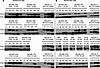 Figure 1
Results of TP53 immunoblotting in sensitive and resistant purified primary human AML blasts all WT for TP53 before and after MDM2 inhibitor treatment. AML blasts were purified through negative selection and either left untreated (UT) or treated for 8 hours with MI219 (MI; 10 μM), Nutlin 3a (NU; 10 μM), MG132 (MG; 25 μM), or 1-time external irradiation (XR; 5 Gy). After 8 hours, cells were lysed and protein fractionated by SDS-PAGE. Each gel was loaded with an aliquot of a MOLM-13 AML cell line lysate as an internal standard (treated with MI219 at 10 μM and loaded as 1.25, 2.5, and 5 μg of lysate). Protein was transferred to membrane and prepared for immunoblotting with an anti-p53 and anti-actin antibody. Films for both, TP53 and actin were developed together. IC50 values for MI219 are indicated. (A) Immunoblot results for sensitive AML with IC50 < 10 μM. (B) Immunoblot results for resistant AML with IC50 > 10 μM.
To gain further insights into the mechanisms of low/absent TP53 expression in resistant AML blasts, we reviewed TP53 mRNA levels as measured via expression arrays. This analysis disclosed rather uniform TP53 mRNA levels (TP53 exon expression array probe ID 8012257; processed expression array values are on a log2 scale: resistant 6.85 ± 0.56 mean ± SD; sensitive 7.16 ± 0.34 mean ± SD; P = 0.09) across all tested cases. There were no significant differences between resistant AML blasts with low/absent TP53 protein following MDM2 inhibitor treatment and blasts with robust TP53 protein induction. This data point to acquired posttranscriptional mechanisms for low TP53 protein levels.
We reviewed the frequency of selected AML driver gene mutations in the 30 resistant AML cases with WT TP53: ASXL1 13% (4 of 30), TET2 23% (7 of 30), CEBPA 0% (0 of 30), DNMT3A 37% (11 of 30), IDH1 3% (1 of 30), IDH2 7% (2 of 30), RUNX1 7% (2 of 30), FLT3 27% (8 of 30), KRAS 7% (2 of 30), NRAS 3% (1 of 30), and MLL-PTD 12% (3 of 25). The frequency of triple mutated AML (NPM1, DNMT3A, and FLT3-ITD) was low at 3% (1 of 30). The frequency of NPM1 mutations was 43% (13 of 30) in the resistant cases and 25% (27 of 110) in the sensitive cases (P = 0.078, Fisher’s exact test). These data imply that mutant NPM1 protein interfered with TP53-mediated apoptosis possibly via the known effect of NPM1 mutations on TP53 protein subcellular localization (21). However, there were many NPM1 mutant cases that were sensitive to MDM2 inhibitors, implying added layers of unknown mechanistic complexity.
Given that mutations in TP53 have been associated with elevated genomic complexity in many cancers, including AML, we reviewed SNP 6.0 array–based acquired genomic copy number (aCNA) changes in the 25 and 30 cases with TP53 MUT or WT status and resistance to MDM2 inhibitor treatment, respectively (3). We detected profound differences, in that the mean number of aCNA of AML with TP53 MUT was 16 (range 0 to 39) with a median of 14, while it was 3 (range 0 to 23) with a median of 0.5 in AML with TP53 WT status. Using a regression model for genomic lesion count with quantitative IC50 and dichotomous TP53 mutation status as predictors, and holding TP53 fixed at either WT or MUT, we found that — for every 1 μM increment in IC50 values — there were 7% more genomic lesions (P < 0.002). The model also indicated that when holding the IC50 fixed, patients with TP53 mutations had on average 5.5-fold more genomic lesions (P < 0.0001). In a separate regression analyses, we dichotomized the group by IC50 value (≥10 μM or <10 μM) and found that for a fixed TP53 WT status, a patient with an IC50 ≥10 μM had 11% more lesions than a patient with IC50 < 10 μM (P < 0.002). For a fixed IC50, a person with MUT TP53 had 5.6-fold more lesions than a person with TP53 WT status (P < 0.0001). These models had a logarithmic link and modeled the variance as proportional to the square of the mean, as suggested by Pearson-residual diagnostics.
Therefore, apoptosis resistance alone was insufficient to permit DNA damage and structural genomic aberrations to accumulate, a notable difference from TP53 MUT cases. These data in conjunction with survival data as shown below implicate apoptosis resistance as the primary contributor to dismal patients’ survival in patients with AML with impaired TP53-mediated apoptosis and WT TP53.
Characterization of gene expression at baseline and changes following MDM2 inhibitor treatment in sensitive and apoptosis-resistant AML blasts. To characterize the baseline expression and transcriptional response to MDM2 inhibitor treatment of purified AML blasts ex vivo, we selected 10 AML cases with high IC50 values (resistant cases) and 10 AML with low IC50 values (sensitive cases), all carrying WT TP53 for gene expression profiling (Supplemental Table 1). The resistant cases were selected based on specimen availability and aiming at balancing TP53 protein status (expressed versus not expressed). We had previously measured TP53 protein levels at baseline and after 8 hours of MI219 treatment in these cases (20). The TP53 protein was strongly induced in all 10 sensitive cases. In contrast, in the resistant cases, 4 did not express TP53, 2 expressed minimal amounts of TP53 and 4 demonstrated robust TP53 induction like the sensitive cases.
We performed Affymetrix GeneChip Human Gene 1.0 ST array–based profiling on RNA/cDNA isolated from purified AML blast at baseline (untreated), and after 2 hours and 6 hours of treatment with 10 μM MI219 (60 array measurements in total; Supplemental Table 2). We excluded probes from further analysis that showed low variance. Next, we performed multiple pairwise comparisons of gene expressions in selected groups.
We focused first on the differentially expressed genes between the sensitive and resistant cases at baseline prior to treatment with MDM2 inhibitors (Supplemental Table 3). We display the genes with > 2-fold changes at FDR < 0.1 between the groups in the heatmap in Figure 2A. The unsupervised clustering showed that all 10 sensitive cases clustered together with 1 resistant case, while the other 9 resistant cases formed a separate major cluster. Within the resistant case cluster, the ability to express TP53 protein or not after MDM2 inhibitor treatment did not result in distinct clustering. Using the DAVID algorithm (22, 23), we detected high enrichment scores for mitochondrial genes (ES 11.8, Benjamini-Hochberg [BH] < 1 × 10–12) and ribosomal genes (ES 8.4; BH < 1 × 10⁻⁹) in the sensitive cases. In contrast, resistant cases expressed multiple inflammatory gene signatures (ES 8.2; BH = 1 × 10–16) at higher levels. This finding implies contributions by inflammatory mediators and JAK/STAT signaling to TP53-mediated apoptosis resistance in AML (24).
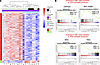 Figure 2
Substantial gene expression differences at baseline in primary human AML with WT TP53 that are sensitive or resistant to MDM2 inhibitor induced apoptosis. Ten sensitive and 10 resistant primary human AML all WT for TP53 were purified and incubated with 10 μM of the MDM2 inhibitor MI219 for 0 hours, 2 hours, and 6 hours. Gene expression was measured using GeneChip Human Gene 1.0 ST Arrays (Affymetrix). (A) Heatmap: The scaled heatmap displays the genes with > 2-fold changes at FDR < 0.1 between the groups. Results for the unsupervised clustering are indicated at the top. Phenotypes are indicated on the right. The expression of TP53 protein or lack thereof after MDM2 inhibitor treatment is indicated at the top. (B) Selected results from Gene Sets Enrichment Analyses (GSEA) (DE genes log2-Sensitive/log2-Resistant ranked by fold change values) using the hallmark gene sets.
We performed GSEA on the ranked gene list (DE genes log2-Sensitive/log2-Resistant ranked by fold change values) using the Hallmark gene sets (25, 26). In the sensitive cases, we detected highly significant enrichments for oxidative phosphoryation (OXPHOS), Myc targets, fatty-acid metabolism, and DNA repair (Figure 2B and Supplemental Figure 2), while in the resistant cases, we detected a profound enrichment for inflammatory pathways and mediators, including TNFA, IFNG, IFNA, multiple JAK/STAT signaling pathways, and K-RAS signaling. Furthermore, significantly enriched hallmark gene sets in the resistant cases included “apoptosis” and “p53 pathway” (Figure 2B and Supplemental Figure 2).
The strong enrichment for inflammatory pathways in the resistant cases was notable. The sterile inflammation of AML had previously been described predominantly in monoblastic/monocytic French American British (FAB) M4 and M5 AML and linked with poor outcome (27, 28). In the cases profiled here, 9 of 10 (90%) of the MDM2 inhibitor treatment resistant cases were FAB M4/5, while only 2 of 10 (20%) of the sensitive cases were FAB M4/5. Therefore, our data link defective TP53-mediated apoptosis to sterile inflammation in FAB M4 and M5 AML, thus providing a mechanism of poor survival of monoblastic/monocytic AML.
Defective expression of core TP53 regulated genes characterizes AML with resistance to TP53-mediated apoptosis. We identified gene expression changes in the sensitive AML cases at the 6-hour MDM2 inhibitor treatment time point (1.5-fold at an FDR < 0.2) (Supplemental Table 4) compared with baseline expression. The list of 18 genes comprised well-known core TP53 transcriptional target genes as compiled from 16 studies by Fischer (29) and displayed in the heatmap in Figure 3. The genes are listed here ordered by magnitude of induction: MDM2, ACTA2, PLK2, RPS27L, RRM2B, DDB2, ASCC3, EDA2R, TMEM30A, SESN1, FAS, XPC, GADD45A, TRIM22, POLH, PTP4A1, TNFRSF10B, and FBXO22. We contrasted the expression of these genes in the resistant cases, in which none showed an induction at the significance threshold of FDR < 0.2 (Figure 3 and Supplemental Table 5). The resistant cases demonstrated gene-dependent and highly variable induction levels and, overall, a much-attenuated induction response than the sensitive cases. One interpretation of these findings is that multiple distinct molecular defects are present in the resistant cases, which affect individual cases and their gene expression differently. Using the same genes, we performed unsupervised clustering and display expression in a heatmap (Supplemental Figure 3). We found that 9 of 10 sensitive cases at 6 hours after treatment clustered together with 2 of the resistant cases at 6 hours after treatment and that the remaining 8 resistant cases at 6 hours after treatment clustered and intermingled with the sensitive and resistant cases prior to MDM2 inhibitor treatment (0 hours, baseline).
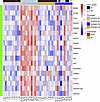 Figure 3
Gene expression changes after 6 hours of MDM2 inhibitor treatment in primary human AML with WT TP53 that are sensitive or resistant to MDM2 inhibitor induced apoptosis. Ten sensitive and 10 resistant primary human AML were purified and incubated with 10 μM of the MDM2 inhibitor MI219 for 0 hours, 2 hours, and 6 hours. Gene expression was measured using GeneChip Human Gene 1.0 ST Arrays (Affymetrix). In the scaled heatmap, we display the genes with > 1.5-fold changes at FDR < 0.2 at 6 hours in the sensitive cases compared with 0 hours (baseline) and the expression of these genes in the resistant cases at 0 hours and 6 hours, in which none showed significance at FDR < 0.2. Phenotypes are indicated on the right. The expression of TP53 protein or lack thereof before and after MDM2 inhibitor treatment is indicated at the top.
We proceeded with 2-way repeated-measures ANOVA to model the effects of drug sensitivity (drug phenotype: sensitive versus resistant) and induction time (0, 2, and 6 hours) within 1 statistical model. We found that almost all of the genes identified above had higher induction slopes in the sensitive cases, and for a subset associated with significant P values and FDR < 0.2 (Supplemental Table 6).
To further illustrate these findings, we plotted the gene expression for selected genes at the 0-hour, 2-hour, and 6-hour time points side by side for sensitive and resistant cases (Figure 4 and Supplemental Figure 4). We found that gene expression patterns in the resistant cases were not uniform but instead followed distinct patterns: (a) lack of or attenuated gene induction (e.g., DDB2, MDM2, ACTA2, RPS27L, TRIAP1, XPC, ASCC3, TNFRSF10B, RRM2B, EDA2R), (b) gene induction at the 2-hour time point followed by decline (as opposed to further increases as in the sensitive cases) at the 6-hour time point (e.g., GADD45A, FAS, IKIP, PCNP, FBXO22, PLK2, SESN1, PTP4A1, TMEM68), and (c) expression patterns similar to what was measured in sensitive cases (BAX, TMEM30A). We also compared the gene induction patterns within resistant cases that did or did not express TP53 protein as indicated by the red lines in Figure 4 and Supplemental Figure 4 but found no consistent differences.
 Figure 4
Gene expression induction slopes in 10 sensitive and 10 resistant AML cases of known TP53 inducible genes. Ten sensitive and 10 resistant primary human AML all WT for TP53 were purified and incubated with 10 μM of the MDM2 inhibitor MI219 for 0 hours, 2 hours, and 6 hours. Gene expression was measured using GeneChip Human Gene 1.0 ST Arrays (Affymetrix). Data for selected genes displayed in (Figure 3) are shown. Red lines: AML that lack TP53 protein expression at baseline and after MDM2 inhibitor treatment. The x axis indicates time in hours. The y axis indicates array hybridization values and probe ID. Dotted line represents the mean.
Next, we reviewed the expression data for the 2-hour MDM2 inhibitor treatments. Surprisingly, a substantial number of genes were > 2-fold induced at FDR < 0.1 (Supplemental Figure 5, A and B, and Supplemental Tables 7 and 8), and many overlapped between the resistant and sensitive AML groups (Supplemental Figure 5C). We compared these genes with a curated list of 116 high-confidence TP53 target genes as compiled in Fischer (29). We found only 1 gene (PLK2) shared between all 3 gene sets and only 2 genes (CCNG1, RPS27L) shared between the TP53 gene set and the resistant AML gene set (Supplemental Figure 5D). Therefore, almost all genes with expression changes following 2 hours of MDM2 inhibitor treatment are not high-confidence TP53 target genes and consequently were not further pursued.
Impaired induction of PUMA (BBC3) in AML with resistance to TP53-mediated apoptosis. The proapoptotic BH3 proteins PUMA (BBC3) and NOXA (PMAIP1) are TP53 inducible and implicated in TP53-mediated apoptosis (30). Neither of these genes showed substantial changes following MDM2 inhibitor treatment as measured via the gene arrays, which was unexpected. The single BBC3 probe (ID 8037872) on the exon array targets transcript variant 3, which encodes a BBC3 protein that does not interact with BCL2 thus indicating insufficient BBC3 transcript coverage. Therefore, we proceeded to measure the normalized expression of both genes via qPCR in RNA/cDNA samples from the samples used for array hybridization. PUMA (BBC3) was strongly induced at 6 hours in the MDM2 inhibitor treatment–sensitive cases, but the induction was much reduced or absent in the resistant cases (Figure 5). Furthermore, there were only minor differences in the PUMA/BBC3 induction in the resistant cases irrespective of TP53 protein expression, implying both absent TP53 protein and post-TP53 defects in impaired PUMA induction, respectively. NOXA (PMAIP1) overall was not significantly differentially induced between sensitive and resistant cases and therefore unlikely a major apoptosis regulating factor in this setting (Figure 5).
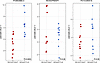 Figure 5
Gene expression of PUMA/BBC3, NOXA/PMAIP1, and p21/CDKN1A in primary human AML with WT TP53 that are sensitive or resistant to MDM2 inhibitor induced apoptosis. Ten sensitive and 10 resistant primary human AML were purified and incubated with 10 μM of the MDM2 inhibitor MI219 for 0 hours, 2 hours, and 6 hours. Gene expression was measured by qPCR in mRNA/cDNA in technical duplicates. Displayed are ΔΔCT–1 based on the 6 hours minus 0 hours ΔCt values. P values based on 2-tailed t test.
The cell cycle regulatory role of TP53 is mediated by P21/CDKN1A. Using qPCR, we detected induction of P21 in both the sensitive and resistant cases, albeit with modestly higher amplitude in some of the sensitive cases (Figure 5).
Varying expression levels of MDM2 and MDMX do not account for the resistance to MDM2 inhibitors in AML. We had previously measured normalized MDM2 and MDMX mRNA levels across 109 AML as published and detected no correlation with MI219 IC50 values (20). Similar findings were obtained when measuring MDMX and MDM2 protein levels in lysates from sensitive or resistant blasts. We reviewed the mRNA expression levels of MDM2 and MDMX in the 20 cases used for the array-based profiling reported here. For MDMX, the levels were identical (resistant 8.38 ± 0.49 mean ± SD; sensitive 8.43 ± 0.21 mean ± SD; P = 0.4); for MDM2, the levels were slightly higher in the resistant cases (resistant 8.57 ± 0.49 mean ± SD; sensitive 8.06 ± 0.39 mean ± SD; P = 0.01). Nonetheless, given that the measured resistance to MDM2 inhibition was absolute, the small differences in MDM2 expression would have been overcome by higher drug concentrations. Therefore, expression levels of MDM2 or MDMX are unlikely the cause for the measured apoptotic defects in the TP53 network in AML.
A defective apoptotic TP53 network in AML with WT TP53 associates with poor overall survival. Using the Kaplan-Meier method, we estimated the overall survival for the AML cohort grouped by various known biomarkers. We performed these analyses for the previously untreated group (N = 139; UT) and the combined group (N = 165; UT + T) in parallel, which gave very similar results. As expected, patients > 60 years of age or carrying high risk genomic karyotypes had very poor outcome. Similarly, patients with ≥ 3 aCNA changes (aCNA = elevated genomic complexity comprised of losses and gains) measured via SNP 6.0 arrays had poor survival (3). There were no long-term survivors (100% mortality) among the patients carrying RUNX1 mutations in line with previous observations (31) (Supplemental Figure 6, A–D).
Next, we reviewed the survival of patients with AML with lack of apoptotic response to MDM2 inhibitors (defective TP53 apoptotic network). There were no long-term survivors (100% mortality) among the patients carrying TP53 mutations in line with previous observations (3) (Figure 6A). Focusing next on all patients with AML with defective TP53 mediated apoptosis inclusive of all patients with TP53 MUT as measured by the annexin V–PI flow–based MDM2 inhibitor assays, there were only 3 survivors out of 54 patients (4-year observed survival 10%; Figure 6B). Next, we excluded the TP53 MUT cases and detected only 3 long-term survivors out of 29 patients (4-year observed survival 19%; Figure 6C). Of note, only 2 of these patients carried RUNX1 mutations. Finally, once we excluded patients with NPM1 mutations, the survival of the remaining TP53 WT patients with AML with apoptotic defects in the response to TP53 activation was 6% at 4 years (Figure 6D).
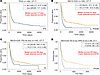 Figure 6
Survival of patients with AML stratified by biomarkers. A cohort of 165 patients with AML with IC50 measurements was dichotomized using the indicated biomarkers. (A and B)TP53 mutations and IC50 value greater 10 μM (resistance) to MDM2 inhibitor (MI219) treatment in AML with MUT or WT TP53. (C) IC50 value greater 10 μM (resistance) to MDM2 inhibitor (MI219) treatment in AML with TP53 WT only. (D) IC50 value greater 10 μM (resistance) to MDM2 inhibitor (MI219) treatment in AML with TP53 WT and NPM1 WT only. The median survival time in days and the surviving fraction of patients at 4 years is indicated. Survival time distributions were estimated using the Kaplan-Meier method, and comparisons between groups were made using log rank tests.
In summary, patients with AML with TP53 WT status but impaired TP53-induced apoptosis have poor long-term survival akin to AML carrying TP53 mutations, thus constituting an understudied high-risk group of patients with AML that is not currently prospectively identified.


