
Research ArticleImmunology
Open Access |  10.1172/jci.insight.196411
The RNA binding protein Arid5a is an activator of TNF signaling in rheumatoid arthritis
Yang Li,1 Ipsita Dey,1 Shachi P. Vyas,1 Alzbeta Synackova,2 Decheng Li,1,3 Erik Lubberts,4 Dana P. Ascherman,1 Peter Draber,2,5,6 and Sarah L. Gaffen1
1Division of Rheumatology & Clinical Immunology, Department of Medicine, University of Pittsburgh, Pittsburgh, Pennsylvania, USA.
2BIOCEV, First Faculty of Medicine, Charles University, Vestec, Czech Republic.
3School of Medicine, Tsinghua Medicine, Tsinghua University, Beijing, China.
4Erasmus MC University Medical Center, Department of Rheumatology, Rotterdam, Netherlands.
5Institute of Molecular Genetics of the Czech Academy of Sciences, Prague, Czech Republic.
6Deptartment of Immunobiology, University of Lausanne, Epalinges, Switzerland.
Address correspondence to: Sarah L. Gaffen, E1552 BST, 200 Lothrop Street, Pittsburgh, Pennsylvania, 15261, USA. Phone: 412.383.8903; Email: sarah.gaffen@pitt.edu.
Find articles by
Li, Y.
in:
PubMed
|
Google Scholar
|

1Division of Rheumatology & Clinical Immunology, Department of Medicine, University of Pittsburgh, Pittsburgh, Pennsylvania, USA.
2BIOCEV, First Faculty of Medicine, Charles University, Vestec, Czech Republic.
3School of Medicine, Tsinghua Medicine, Tsinghua University, Beijing, China.
4Erasmus MC University Medical Center, Department of Rheumatology, Rotterdam, Netherlands.
5Institute of Molecular Genetics of the Czech Academy of Sciences, Prague, Czech Republic.
6Deptartment of Immunobiology, University of Lausanne, Epalinges, Switzerland.
Address correspondence to: Sarah L. Gaffen, E1552 BST, 200 Lothrop Street, Pittsburgh, Pennsylvania, 15261, USA. Phone: 412.383.8903; Email: sarah.gaffen@pitt.edu.
Find articles by Dey, I. in: PubMed | Google Scholar
1Division of Rheumatology & Clinical Immunology, Department of Medicine, University of Pittsburgh, Pittsburgh, Pennsylvania, USA.
2BIOCEV, First Faculty of Medicine, Charles University, Vestec, Czech Republic.
3School of Medicine, Tsinghua Medicine, Tsinghua University, Beijing, China.
4Erasmus MC University Medical Center, Department of Rheumatology, Rotterdam, Netherlands.
5Institute of Molecular Genetics of the Czech Academy of Sciences, Prague, Czech Republic.
6Deptartment of Immunobiology, University of Lausanne, Epalinges, Switzerland.
Address correspondence to: Sarah L. Gaffen, E1552 BST, 200 Lothrop Street, Pittsburgh, Pennsylvania, 15261, USA. Phone: 412.383.8903; Email: sarah.gaffen@pitt.edu.
Find articles by Vyas, S. in: PubMed | Google Scholar
1Division of Rheumatology & Clinical Immunology, Department of Medicine, University of Pittsburgh, Pittsburgh, Pennsylvania, USA.
2BIOCEV, First Faculty of Medicine, Charles University, Vestec, Czech Republic.
3School of Medicine, Tsinghua Medicine, Tsinghua University, Beijing, China.
4Erasmus MC University Medical Center, Department of Rheumatology, Rotterdam, Netherlands.
5Institute of Molecular Genetics of the Czech Academy of Sciences, Prague, Czech Republic.
6Deptartment of Immunobiology, University of Lausanne, Epalinges, Switzerland.
Address correspondence to: Sarah L. Gaffen, E1552 BST, 200 Lothrop Street, Pittsburgh, Pennsylvania, 15261, USA. Phone: 412.383.8903; Email: sarah.gaffen@pitt.edu.
Find articles by Synackova, A. in: PubMed | Google Scholar
1Division of Rheumatology & Clinical Immunology, Department of Medicine, University of Pittsburgh, Pittsburgh, Pennsylvania, USA.
2BIOCEV, First Faculty of Medicine, Charles University, Vestec, Czech Republic.
3School of Medicine, Tsinghua Medicine, Tsinghua University, Beijing, China.
4Erasmus MC University Medical Center, Department of Rheumatology, Rotterdam, Netherlands.
5Institute of Molecular Genetics of the Czech Academy of Sciences, Prague, Czech Republic.
6Deptartment of Immunobiology, University of Lausanne, Epalinges, Switzerland.
Address correspondence to: Sarah L. Gaffen, E1552 BST, 200 Lothrop Street, Pittsburgh, Pennsylvania, 15261, USA. Phone: 412.383.8903; Email: sarah.gaffen@pitt.edu.
Find articles by Li, D. in: PubMed | Google Scholar
1Division of Rheumatology & Clinical Immunology, Department of Medicine, University of Pittsburgh, Pittsburgh, Pennsylvania, USA.
2BIOCEV, First Faculty of Medicine, Charles University, Vestec, Czech Republic.
3School of Medicine, Tsinghua Medicine, Tsinghua University, Beijing, China.
4Erasmus MC University Medical Center, Department of Rheumatology, Rotterdam, Netherlands.
5Institute of Molecular Genetics of the Czech Academy of Sciences, Prague, Czech Republic.
6Deptartment of Immunobiology, University of Lausanne, Epalinges, Switzerland.
Address correspondence to: Sarah L. Gaffen, E1552 BST, 200 Lothrop Street, Pittsburgh, Pennsylvania, 15261, USA. Phone: 412.383.8903; Email: sarah.gaffen@pitt.edu.
Find articles by Lubberts, E. in: PubMed | Google Scholar
1Division of Rheumatology & Clinical Immunology, Department of Medicine, University of Pittsburgh, Pittsburgh, Pennsylvania, USA.
2BIOCEV, First Faculty of Medicine, Charles University, Vestec, Czech Republic.
3School of Medicine, Tsinghua Medicine, Tsinghua University, Beijing, China.
4Erasmus MC University Medical Center, Department of Rheumatology, Rotterdam, Netherlands.
5Institute of Molecular Genetics of the Czech Academy of Sciences, Prague, Czech Republic.
6Deptartment of Immunobiology, University of Lausanne, Epalinges, Switzerland.
Address correspondence to: Sarah L. Gaffen, E1552 BST, 200 Lothrop Street, Pittsburgh, Pennsylvania, 15261, USA. Phone: 412.383.8903; Email: sarah.gaffen@pitt.edu.
Find articles by Ascherman, D. in: PubMed | Google Scholar
1Division of Rheumatology & Clinical Immunology, Department of Medicine, University of Pittsburgh, Pittsburgh, Pennsylvania, USA.
2BIOCEV, First Faculty of Medicine, Charles University, Vestec, Czech Republic.
3School of Medicine, Tsinghua Medicine, Tsinghua University, Beijing, China.
4Erasmus MC University Medical Center, Department of Rheumatology, Rotterdam, Netherlands.
5Institute of Molecular Genetics of the Czech Academy of Sciences, Prague, Czech Republic.
6Deptartment of Immunobiology, University of Lausanne, Epalinges, Switzerland.
Address correspondence to: Sarah L. Gaffen, E1552 BST, 200 Lothrop Street, Pittsburgh, Pennsylvania, 15261, USA. Phone: 412.383.8903; Email: sarah.gaffen@pitt.edu.
Find articles by Draber, P. in: PubMed | Google Scholar
1Division of Rheumatology & Clinical Immunology, Department of Medicine, University of Pittsburgh, Pittsburgh, Pennsylvania, USA.
2BIOCEV, First Faculty of Medicine, Charles University, Vestec, Czech Republic.
3School of Medicine, Tsinghua Medicine, Tsinghua University, Beijing, China.
4Erasmus MC University Medical Center, Department of Rheumatology, Rotterdam, Netherlands.
5Institute of Molecular Genetics of the Czech Academy of Sciences, Prague, Czech Republic.
6Deptartment of Immunobiology, University of Lausanne, Epalinges, Switzerland.
Address correspondence to: Sarah L. Gaffen, E1552 BST, 200 Lothrop Street, Pittsburgh, Pennsylvania, 15261, USA. Phone: 412.383.8903; Email: sarah.gaffen@pitt.edu.
Find articles by Gaffen, S. in: PubMed | Google Scholar
Published January 23, 2026 - More info
JCI Insight. 2026;11(2):e196411. https://doi.org/10.1172/jci.insight.196411.
© 2026 Li et al. This work is licensed under the Creative Commons Attribution 4.0 International License. To view a copy of this license, visit http://creativecommons.org/licenses/by/4.0/.
Received: June 5, 2025; Accepted: November 25, 2025


-
Results
ARID5A expression correlates with RA severity. To better understand posttranscriptional pathways in RA, we interrogated public databases for expression of RBPs known to participate in TNF or related cytokine signaling cascades (15–18). ARID5A mRNA was elevated in whole blood samples from patients with RA compared with healthy controls or from patients with systemic lupus erythematosus (SLE) (Figure 1A). Expression of other RBPs was also increased, including IGF2BP2 (IMP2), ZC3H12A (Regnase-1, MCPIP1), and ZFP36 (Tristetraprolin [TTP]) (Figure 1A). Interestingly, expression of ARID5A in T cells was reduced in patients on combination therapy with methotrexate (MTX) and a TNF biologic inhibitor (infliximab [IFX]), MTX alone, or anti–IL-6R (tocilizumab [TCZ]) treatment (Figure 1B). ARID5A levels were even higher in synovial fluid samples from patients with RA than in T cells (Figure 1B). By contrast, ZFP36 did not change with anti-TNF therapy, IGF2BP2 was not expressed in T cells as previously reported (19), and ZC3H12A levels did not change regardless of treatment (Supplemental Figure 1A; supplemental material available online with this article; https://doi.org/10.1172/jci.insight.196411DS1). These data therefore point to a potential link between TNF signaling and Arid5a in the context of RA.
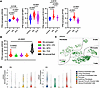 Figure 1
Expression of RNA binding proteins including ARID5A are elevated in RA blood and synovial tissue. Public datasets were examined for RBPs implicated in cytokine signaling. (A) Expression in RNA-Seq of whole blood; RA group is pooled data from RA-DMARD-IR and RA-TNF-IR cohorts. Analyzed by 1-way ANOVA with Tukey’s test (control n = 20; RA n = 493; SLE n = 292). (B) RNA-Seq of T cell data pooled from CD4+ and CD8+ groups treated with anti-TNF biologic (infliximab [IFX]) and methotrexate (MTX), MTX alone, or an anti–IL-6R biologic (tocilizumab [TCZ]). Levels in synovial fluid are shown for comparison. Analyzed by 1-way ANOVA with post-hoc Dunnett’s test (untreated n = 63; RA + MTX + IFX n = 63; RA + MTX n = 59; RA + TCZ n = 66; synovial fluid n = 11), comparing each group to untreated RA. TPM, transcripts per million reads. (C) ARID5A levels in RA versus OA in synovial tissue cell clusters. (D) ARID5A levels in RA versus OA in nonhematopoietic cells.
We examined ARID5A expression in a synovial tissue dataset that integrates single-cell transcriptomics and mass cytometry (20). In comparison with osteoarthritis (OA) control patients, ARID5A was elevated in RA synovial samples across cell types, including T cells, monocytes, and synovial fibroblasts (Figure 1C). ZC3H12A and ZFP36 exhibited a similar pattern to ARID5A, while IGF2BP2 was predominantly seen in fibroblasts (Supplemental Figure 1B). In a dataset that focused on nonhematopoietic cells in synovial tissue (21), ARID5A was more prominent in arterial endothelial cells and lymphatic endothelial cells in OA, whereas in RA, ARID5A was highly expressed in pericytes and vascular smooth muscle cells (Figure 1D). Both disease types expressed ARID5A in vascular smooth muscle cells. Collectively, these data indicate that ARID5A correlates with RA severity, with expression in both hematopoietic and nonhematopoietic compartments.
TNF upregulates Arid5a. Since the proinflammatory receptor TNFR1 is ubiquitously expressed, TNF has the potential to act upon multiple cell types within the synovial compartment. Given the prominent expression of ARID5A in synovial cell types observed in the databases above and the coordinating role of synovial and stromal fibroblasts in potentiating arthritis (22), we next examined TNF signaling in various fibroblast/stromal cell types. In a murine stromal fibroblast cell line (ST2), Arid5a mRNA and protein were upregulated in response to TNF (Figure 2, A and B, and Supplemental Figure 2B). While Arid5a mRNA was induced transiently, elevated protein levels of Arid5a persisted for up to 6 hours. As expected, genes encoding inflammatory cytokines and chemokines were induced by TNF in this setting (Il6, Ccl2) as was Zc3h12a (Figure 2A and Supplemental Figure 2A). In mouse primary synovial fibroblasts (SFs), Arid5a mRNA and protein were similarly upregulated in response to TNF (Figure 2, C and D, and Supplemental Figure 2B). Chemokines (Ccl2, Cxcl1) and Zc3h12a were also induced by TNF (Figure 2C and Supplemental Figure 2C). In fibroblast-like synovial cells (FLS) obtained from patients with RA, TNF consistently upregulated Arid5a protein expression, though ARID5A mRNA only trended upward in response to TNF (Figure 2, E and F, and Supplemental Figure 2D). In contrast, FLS cells from patients with OA did not show Arid5a induction at the mRNA or protein level, though chemokines were induced, indicating that TNF signaling was intact in these cells. In ST2 cells, TNF stimulation caused Arid5a accumulation in the cytoplasm (Figure 2G), which is in agreement with prior findings that LPS and IL-17 promote nuclear export of Arid5a (12, 23).
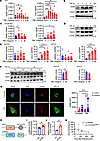 Figure 2
TNF induces Arid5a expression and nuclear export. (A) ST2 cells were treated with TNF and assessed by qPCR (n = 3–10). Analyzed by 1-way ANOVA with Dunnett’s test, comparing each time point to 0 hours. Data pooled from 3 experiments. (B) ST2 lysates were subjected to immunoblotting, representative of 3 experiments. (C) Mouse primary synovial fibroblasts were treated with TNF and mRNA assessed by qPCR (n = 8). Analyzed by 1-way ANOVA with Dunnett’s test, comparing to 0 hours. Data pooled from 4 mice. (D) Mouse primary synovial fibroblasts lysates was subjected to immunoblotting, representative of 4 experiments. (E) RA and OA FLS were treated with TNF and mRNA assessed by qPCR (n = 3 RA, n = 2 OA, with biological duplicates shown). Analyzed by 1-way ANOVA with Dunnett’s test, comparing to 0 hours. (F) RA and OA FLS were subjected to immunoblotting. Densitometry analysis. (G) Arid5a localization in ST2 cells treated with TNF for 3 hours. Scale bar:10 μm. Arid5a in nucleus vs. cytoplasm quantified by Arid5a volume per compartment from an individual cell (n = 25–27). Analyzed by 1-way ANOVA with Tukey’s test. (H and I) HEK293T cells were transfected with Arid5a-FLAG and pGL3-Luc fused to mouse Ccl2-3′ UTR. RIP was performed with anti-FLAG Abs or IgG and Luc assessed by qPCR (n = 6). Data pooled from 2 experiments. Analyzed by Student’s t test. (J) HK-2 cells were transfected with a Luc-Ccl2 3′UTR reporter and Arid5a-FLAG or empty vector (EV). Firefly luciferase activity was determined (n = 4). Data representative of 2 experiments. Analyzed by Student’s t test. (K) Half-life of CCL2 in HK2 or HK2ΔARID5A cells by 4sU labeling (n = 3). Analyzed by 1 phase decay best fit. NA, not applicable (half-life calculation is out of range). Data representative of 2 experiments. *P < 0.05, **P < 0.01, ***P < 0.001, ****P < 0.0001.
Arid5a and other RBPs typically control stability of target mRNAs by binding to stem-loop structures in 3′ UTRs (6, 14). Ccl2 was upregulated by TNF with similar kinetics as Arid5a, prompting us to ask whether Arid5a controls with the Ccl2 3′ UTR. To test this, FLAG-Arid5a was ectopically expressed in HEK293 cells with a Ccl2–3′ UTR sequence inserted downstream of luciferase (Figure 2H). Lysates were subjected to RNA immunoprecipitation (RIP) with anti-FLAG Abs or isotype controls. Indeed, the Luc–Ccl2–3′ UTR sequence was enriched after anti-FLAG (Arid5a) pulldown compared with IgG controls, consistent with direct binding of Arid5a to this 3′ UTR sequence (Figure 2I). Moreover, coexpression of Arid5a with Luc–Ccl2–3′ UTR enhanced expression of the luciferase reporter compared with an empty vector (Figure 2J). Note that a vector lacking the Ccl2 3′ UTR sequence was not transactivated in the presence of Arid5a, confirming that Arid5a exerts specific activities on the 3′ UTR rather than activating cryptic elements within the reporter (Supplemental Figure 2E). We next evaluated whether Arid5a mediates stabilization of human CCL2 mRNA, taking advantage of a human epithelial cell line engineered to lack Arid5a (12). Based on a 4-thiouridine (4sU) RNA decay assay (24), CCL2 half-life was reduced (Figure 2K), though another chemokine CXCL1 was not affected (Supplemental Figure 2F). Collectively, these results indicate that Arid5a enhances the stability of Ccl2 through binding the 3′ UTR, which is consistent with other unstable transcripts controlled by Arid5a such as Il6 (11, 25, 26). Thus, Arid5a represents a potentially new posttranscriptional signaling intermediate in the TNF signaling cascade.
The rheumatoid synovium contains multiple cytokines that can promote cooperative or synergistic responses (7, 22, 27). TNF and IL-17 are well described to mediate such cooperative and/or overlapping signals, resulting in comparable, albeit not identical, downstream gene profiles (11, 12, 28). Additionally, there is crosstalk between transcriptional regulation mediated by TNF and posttranscriptional regulation mediated by IL-17, especially with respect to chemokine gene regulation (9, 29–32). However, TNF and IL-17 did not synergistically upregulate Ccl2, Arid5a, or Zc3h12a, although they exhibited a strong synergistic effect on Il6 as previously described (33, 34) (Supplemental Figure 3A). Therefore, even though Arid5a is induced by both TNF and IL-17, this RBP is not regulated synergistically by these cytokines, nor are all its target genes controlled in a cooperative manner.
TRAF2 negatively regulates Arid5a through the NF-κB pathway. TRAF2 drives activation of both canonical and noncanonical NF-κB pathways, functioning upstream of the IKK complex or NIK (5, 35). To elucidate the role of TRAF2 in TNF-induced Arid5a expression, Traf2–/– ST2 cells (36) were stimulated cells with TNF over a time course of 6 hours. Surprisingly, TRAF2 appeared to negatively regulate Arid5a as well as Igf2bp2 (encoding IMP2) at both basal and TNF-induced states (Figure 3A). At the protein level, ST2 cells lacking TRAF2 exhibited marked upregulation of Arid5a and IMP2 (Figure 3B and Supplemental Figure 3B). However, this was not the case for all TNF-induced target genes, including for Zc3h12a, Il6, and Ccl2 (Figure 3A). A similar pattern of inhibitory activity was observed in the context of IL-17 signaling, as ST2 cells lacking TRAF2 showed enhanced induction of Arid5a and Igf2bp2 in response to IL-17 (Supplemental Figure 3C). As previously shown, TRAF2 was required for IL-17 induction of Il6 and Cxcl1 (11, 37) (Supplemental Figure 3C). TRAF2 deficiency caused increased Arid5a and IMP2 proteins but not other IL-17–associated TFs (C/EBPs, IκBζ) (Supplemental Figure 3D).
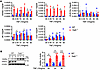 Figure 3
TRAF2 negatively regulates Arid5a. (A) WT or Traf2–/– ST2 cells were treated with TNF and indicated mRNAs assessed by qPCR (n = 3). Analyzed by Student’s t test, comparing WT or Traf2–/– ST2 cells for each time point. Data representative of 3 experiments. (B) WT or Traf2–/– ST2 cells were treated with TNF and lysates immunoblotted for Arid5a, TRAF2, or β-actin. Densitometry quantification at right, analyzed by Student’s t test, comparing WT or Traf2–/– ST2 cells for each time point (n = 6). Each symbol represents 1 sample. *P < 0.05, **P < 0.01, ***P < 0.001.
TRAF2 inhibits Arid5a through IKK but not NIK signaling. TRAF2 negatively regulates noncanonical NF-κB by inhibiting NIK, resulting in enrichment of NF-κB and ERK pathways (38). The ENCODE ChIP-Seq dataset indicates that RELB and NF-κB2 recognition elements are present in the ARID5A proximal promoter (Supplemental Figure 4A) (39). To determine whether TRAF2 negatively regulates Arid5a through the noncanonical NF-κB pathway, WT or Traf2–/– ST2 cells were treated with a NIK inhibitor. As expected, NF-κB2 p52 levels were higher in the nucleus of Traf2–/– compared with WT cells, regardless of TNF stimulation. Conversely, NF-κB2 p52 levels were decreased with NIK inhibition (Figure 4A). However, Arid5a levels were not affected by NIK inhibitor treatment, nor were Igf2bp2, Zc3h12a, Il6, and Ccl2 (Figure 4B). Moreover, the NIK inhibitor did not affect the elevated Arid5a seen in TRAF2-deficient cells, supporting the idea that the noncanonical NF-κB pathway does not contribute to Arid5a expression. There was also no effect of the NIK inhibitor on genes induced by IL-17, although a role for this kinase has been suggested in IL-17 signalling(40) (Supplemental Figure 4, B and C).
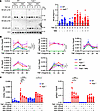 Figure 4
TRAF2 inhibits Arid5a through IKK-dependent NF-κB signaling. WT or Traf2–/– ST2 cells were pretreated with NIKi for 16 hours followed by TNF + NIKi for the indicated times. (A) Nuclear lysates were immunoblotted for NF-κB1, NF-κB2, or YY1, representative of 4 experiments. Densitometry is shown at right (n = 4). Each symbol represents 1 sample. (B) Indicated genes assessed by qPCR. Each symbol represents the mean ± SEM of 3 individual samples. (C) WT or Traf2–/– ST2 cells were pretreated with IKKi for 20 hours, treated with TNF + IKKi for 1 hour, and genes assessed by qPCR (n = 6). Analyzed by 1-way ANOVA with Šídák’s test comparing control to IKKi treatment. Data are representative of 3 experiments. *P < 0.05, **P < 0.01, ***P < 0.001, ****P < 0.0001.
To determine whether IKKs are required for the inhibitory properties of TRAF2 with respect to Arid5a induction, we exploited the differential inhibitory properties of pharmacological IKK blockers. IKK inhibitor VII exhibits selective inhibition of IKK through an ATP-competitive mechanism (IKK2 IC50 = 40 nM, IKK complex IC50 = 70 nM, IKK1 IC50 = 200 nM). Arid5a exhibited a dose-dependent decrease in Traf2–/– ST2 cells upon IKK inhibitor treatment, irrespective of TNF (Figure 4C). Igf2bp2, Zc3h12a, Il6, and Ccl2 exhibited similar trends (Figure 4C and Supplemental Figure 5). Collectively, these data suggest that TRAF2 negatively regulates Arid5a in an IKK-dependent manner and does not rely on a NIK-mediated NF-κB2 pathway.
Arid5a–/– mice are resistant to CIA. Given these connections of Arid5a to TNF and human RA, we hypothesized that Arid5a plays a causative role in autoimmune-induced inflammatory arthritis using Arid5a–/– mice (13) subjected to collagen-induced arthritis (CIA). Pathogenesis in this model is TNF dependent and is widely used to understand RA disease drivers (41, 42). WT or Arid5a–/– mice (C57BL/6, H-2b) were immunized with chicken collagen Type II (CII) in CFA on days 0 and 21 (43). Over the course of 60 days, joint inflammation and arthritis severity were scored in a single-blinded manner (Figure 5A and Supplemental Figure 6) (44). As a positive control, CIA was induced in the susceptible mouse strain DBA/1 (H-2q), which developed disease after the first CII immunization with an incidence approaching 100% (44–46) (Supplemental Figure 7, A and B). C57BL/6 WT mice developed arthritis symptoms more slowly, after the second CII immunization, with an incidence of ~75% (Figure 5B). The arthritis severity scores and incidence were lower in Arid5a–/– mice compared with WT controls, indicating marked delay of CIA as a result of Arid5a deficiency (Figure 5, B–E, and Supplemental Figure 7, C–E). These data confirm that Arid5a is not only expressed in RA but promotes inflammatory pathology of autoimmune arthritis.
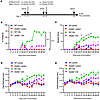 Figure 5
Arid5a is required for inflammatory pathogenesis in collagen-induced arthritis. (A) Timeline of CIA. (B) Incidence of CIA in C57BL/6 WT or Arid5a–/– mice, presented as percent of mice with symptoms (Supplemental Figure 6) (44). Analyzed by 1-way ANOVA with Tukey’s test for multiple comparisons. (C–E) Severity scores, paw and ankle thickness in WT and Arid5a–/– mice. Analyzed by 2-way ANOVA with Tukey’s test for multiple comparisons in each time point (WT control = 8, WT CIA = 15, Arid5a–/– control = 8, Arid5a–/– CIA = 18), pooled from 3 independent experiments. Asterisk denotes statistically significant difference between WT and Arid5a–/– mice. *P < 0.05, **P < 0.01, ***P < 0.001, ****P < 0.0001.
Arid5a is expressed ubiquitously, including in B cells, and generation of anti-CII antibodies is essential for arthritis in CIA (47). Overall changes in total B cell numbers, measured at day 53, were modest, with a mild impairment in Arid5a–/– mice and no statistically significant changes in plasma cell numbers (Figure 6A). There were also no differences between WT and Arid5a–/– mice in terms of antibody generation against the immunogen (chicken CII) and autoantibodies to mouse CII, measured prior to immunization (day –3) or at days 18 and 53 (Figure 6B and Supplemental Figure 8A). Th17 cells are key mediators in CIA, especially for joint destruction, and their numbers are largely independent of anti-CII antibody levels (47, 48). While inflammatory cell numbers were low at this chronic time point (day 53), infiltrating CD4+ T cells were present in the synovium (Figure 6C and Supplemental Figure 8B). RORγt+ cells were increased in WT CIA synovial tissue compared with Arid5a–/– mice (Figure 6C), consistent with a known role for Arid5a in Th17 cell generation (25), and Tbet+ cells trended downward in Arid5a–/– mice (Figure 6C).
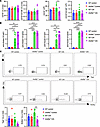 Figure 6
Arid5a is required to drive Th17 cells but not B cell/IgG responses in CIA. WT or Arid5a–/– mice were subjected to CIA and evaluated on day 53 (WT control = 3, WT CIA = 7, Arid5a–/– control = 4, Arid5a–/– CIA = 7). (A) Splenocytes were assessed for percentages and numbers of total and plasma B cells. (B) Serum levels of anti-chicken and anti-mouse collagen-II. (C) Representative plots of Tbet+ and RORγt+ cells in synovial tissue. Percentages of Tbet+ and RORγt+ in CD4+ cells in synovial tissue samples. Analyzed by 1-way ANOVA with Tukey’s test. Each symbol represents 1 mouse. *P < 0.05, **P < 0.01, ****P < 0.0001.
To determine whether Arid5a regulates TNF-induced chemokine expression, ST2 cells were engineered to lack Arid5a by CRISPR/Cas9. Arid5a-deficient ST2 cells showed impaired CXCL1 production after TNF stimulation (Supplemental Figure 8C). Conditioned supernatants from TNF-treated ST2 cells with or without Arid5a were used in a trans-well assay to evaluate chemoattraction of CD45+ cells. As shown, total CD45+ cells, CD11b+ myeloid cells, CD4+ T cells, and neutrophils showed reduced migration in response to conditioned supernatants derived from TNF-treated ST2 cells lacking Arid5a (Supplemental Figure 8, D and E). Proinflammatory monocytes also demonstrate a decreasing trend in Arid5a–/– ST2 cells (Supplemental Figure 8E). Thus, while Arid5a is dispensable for the B cell response leading to autoantibody generation, both Th17 cell differentiation and production of immune-recruiting chemokines is impaired in mice lacking Arid5a.


