
Research ArticleBone biologyNephrology
Open Access |  10.1172/jci.insight.196339
Dietary potassium restriction causes hypercalciuria, hypocalcemia, and bone loss in male mice
Sathish K. Murali,1 Mariavittoria D’Acierno,2 Xiang Zheng,2 Lena K. Rosenbaek,2 Louise N. Odgaard,2 P. Richard Grimm,3 Alice Ramesova,1 Robert Little,2,4 Judith Radloff,1 Paul A. Welling,3 Qi Wu,2 Reinhold G. Erben,5 and Robert A. Fenton2
1Department of Biomedical Sciences, University of Veterinary Medicine, Vienna, Austria.
2Department of Biomedicine, Aarhus University, Aarhus, Denmark.
3Department of Medicine, Division of Nephrology, Johns Hopkins University School of Medicine, Baltimore, Maryland, USA.
4Institute of Neuroscience and Cardiovascular Research, University of Edinburgh, Edinburgh, United Kingdom.
5Ludwig Boltzmann Institute of Osteology, Vienna, Austria.
Address correspondence to: Robert A. Fenton, Aarhus University, Department of Biomedicine, Hoeegh-Guldbergs Gade 10, Building 1115, DK-8000 Aarhus C, Denmark. Phone: 004587167671; Email: Robert.a.fenton@biomed.au.dk.
Authorship note: SKM and MD contributed equally to this work.
Find articles by Murali, S. in: PubMed | Google Scholar
1Department of Biomedical Sciences, University of Veterinary Medicine, Vienna, Austria.
2Department of Biomedicine, Aarhus University, Aarhus, Denmark.
3Department of Medicine, Division of Nephrology, Johns Hopkins University School of Medicine, Baltimore, Maryland, USA.
4Institute of Neuroscience and Cardiovascular Research, University of Edinburgh, Edinburgh, United Kingdom.
5Ludwig Boltzmann Institute of Osteology, Vienna, Austria.
Address correspondence to: Robert A. Fenton, Aarhus University, Department of Biomedicine, Hoeegh-Guldbergs Gade 10, Building 1115, DK-8000 Aarhus C, Denmark. Phone: 004587167671; Email: Robert.a.fenton@biomed.au.dk.
Authorship note: SKM and MD contributed equally to this work.
Find articles by D’Acierno, M. in: PubMed | Google Scholar
1Department of Biomedical Sciences, University of Veterinary Medicine, Vienna, Austria.
2Department of Biomedicine, Aarhus University, Aarhus, Denmark.
3Department of Medicine, Division of Nephrology, Johns Hopkins University School of Medicine, Baltimore, Maryland, USA.
4Institute of Neuroscience and Cardiovascular Research, University of Edinburgh, Edinburgh, United Kingdom.
5Ludwig Boltzmann Institute of Osteology, Vienna, Austria.
Address correspondence to: Robert A. Fenton, Aarhus University, Department of Biomedicine, Hoeegh-Guldbergs Gade 10, Building 1115, DK-8000 Aarhus C, Denmark. Phone: 004587167671; Email: Robert.a.fenton@biomed.au.dk.
Authorship note: SKM and MD contributed equally to this work.
Find articles by Zheng, X. in: PubMed | Google Scholar
1Department of Biomedical Sciences, University of Veterinary Medicine, Vienna, Austria.
2Department of Biomedicine, Aarhus University, Aarhus, Denmark.
3Department of Medicine, Division of Nephrology, Johns Hopkins University School of Medicine, Baltimore, Maryland, USA.
4Institute of Neuroscience and Cardiovascular Research, University of Edinburgh, Edinburgh, United Kingdom.
5Ludwig Boltzmann Institute of Osteology, Vienna, Austria.
Address correspondence to: Robert A. Fenton, Aarhus University, Department of Biomedicine, Hoeegh-Guldbergs Gade 10, Building 1115, DK-8000 Aarhus C, Denmark. Phone: 004587167671; Email: Robert.a.fenton@biomed.au.dk.
Authorship note: SKM and MD contributed equally to this work.
Find articles by Rosenbaek, L. in: PubMed | Google Scholar
1Department of Biomedical Sciences, University of Veterinary Medicine, Vienna, Austria.
2Department of Biomedicine, Aarhus University, Aarhus, Denmark.
3Department of Medicine, Division of Nephrology, Johns Hopkins University School of Medicine, Baltimore, Maryland, USA.
4Institute of Neuroscience and Cardiovascular Research, University of Edinburgh, Edinburgh, United Kingdom.
5Ludwig Boltzmann Institute of Osteology, Vienna, Austria.
Address correspondence to: Robert A. Fenton, Aarhus University, Department of Biomedicine, Hoeegh-Guldbergs Gade 10, Building 1115, DK-8000 Aarhus C, Denmark. Phone: 004587167671; Email: Robert.a.fenton@biomed.au.dk.
Authorship note: SKM and MD contributed equally to this work.
Find articles by Odgaard, L. in: PubMed | Google Scholar
1Department of Biomedical Sciences, University of Veterinary Medicine, Vienna, Austria.
2Department of Biomedicine, Aarhus University, Aarhus, Denmark.
3Department of Medicine, Division of Nephrology, Johns Hopkins University School of Medicine, Baltimore, Maryland, USA.
4Institute of Neuroscience and Cardiovascular Research, University of Edinburgh, Edinburgh, United Kingdom.
5Ludwig Boltzmann Institute of Osteology, Vienna, Austria.
Address correspondence to: Robert A. Fenton, Aarhus University, Department of Biomedicine, Hoeegh-Guldbergs Gade 10, Building 1115, DK-8000 Aarhus C, Denmark. Phone: 004587167671; Email: Robert.a.fenton@biomed.au.dk.
Authorship note: SKM and MD contributed equally to this work.
Find articles by Grimm, P. in: PubMed | Google Scholar
1Department of Biomedical Sciences, University of Veterinary Medicine, Vienna, Austria.
2Department of Biomedicine, Aarhus University, Aarhus, Denmark.
3Department of Medicine, Division of Nephrology, Johns Hopkins University School of Medicine, Baltimore, Maryland, USA.
4Institute of Neuroscience and Cardiovascular Research, University of Edinburgh, Edinburgh, United Kingdom.
5Ludwig Boltzmann Institute of Osteology, Vienna, Austria.
Address correspondence to: Robert A. Fenton, Aarhus University, Department of Biomedicine, Hoeegh-Guldbergs Gade 10, Building 1115, DK-8000 Aarhus C, Denmark. Phone: 004587167671; Email: Robert.a.fenton@biomed.au.dk.
Authorship note: SKM and MD contributed equally to this work.
Find articles by Ramesova, A. in: PubMed | Google Scholar
1Department of Biomedical Sciences, University of Veterinary Medicine, Vienna, Austria.
2Department of Biomedicine, Aarhus University, Aarhus, Denmark.
3Department of Medicine, Division of Nephrology, Johns Hopkins University School of Medicine, Baltimore, Maryland, USA.
4Institute of Neuroscience and Cardiovascular Research, University of Edinburgh, Edinburgh, United Kingdom.
5Ludwig Boltzmann Institute of Osteology, Vienna, Austria.
Address correspondence to: Robert A. Fenton, Aarhus University, Department of Biomedicine, Hoeegh-Guldbergs Gade 10, Building 1115, DK-8000 Aarhus C, Denmark. Phone: 004587167671; Email: Robert.a.fenton@biomed.au.dk.
Authorship note: SKM and MD contributed equally to this work.
Find articles by Little, R. in: PubMed | Google Scholar
1Department of Biomedical Sciences, University of Veterinary Medicine, Vienna, Austria.
2Department of Biomedicine, Aarhus University, Aarhus, Denmark.
3Department of Medicine, Division of Nephrology, Johns Hopkins University School of Medicine, Baltimore, Maryland, USA.
4Institute of Neuroscience and Cardiovascular Research, University of Edinburgh, Edinburgh, United Kingdom.
5Ludwig Boltzmann Institute of Osteology, Vienna, Austria.
Address correspondence to: Robert A. Fenton, Aarhus University, Department of Biomedicine, Hoeegh-Guldbergs Gade 10, Building 1115, DK-8000 Aarhus C, Denmark. Phone: 004587167671; Email: Robert.a.fenton@biomed.au.dk.
Authorship note: SKM and MD contributed equally to this work.
Find articles by Radloff, J. in: PubMed | Google Scholar
1Department of Biomedical Sciences, University of Veterinary Medicine, Vienna, Austria.
2Department of Biomedicine, Aarhus University, Aarhus, Denmark.
3Department of Medicine, Division of Nephrology, Johns Hopkins University School of Medicine, Baltimore, Maryland, USA.
4Institute of Neuroscience and Cardiovascular Research, University of Edinburgh, Edinburgh, United Kingdom.
5Ludwig Boltzmann Institute of Osteology, Vienna, Austria.
Address correspondence to: Robert A. Fenton, Aarhus University, Department of Biomedicine, Hoeegh-Guldbergs Gade 10, Building 1115, DK-8000 Aarhus C, Denmark. Phone: 004587167671; Email: Robert.a.fenton@biomed.au.dk.
Authorship note: SKM and MD contributed equally to this work.
Find articles by
Welling, P.
in:
PubMed
|
Google Scholar
|

1Department of Biomedical Sciences, University of Veterinary Medicine, Vienna, Austria.
2Department of Biomedicine, Aarhus University, Aarhus, Denmark.
3Department of Medicine, Division of Nephrology, Johns Hopkins University School of Medicine, Baltimore, Maryland, USA.
4Institute of Neuroscience and Cardiovascular Research, University of Edinburgh, Edinburgh, United Kingdom.
5Ludwig Boltzmann Institute of Osteology, Vienna, Austria.
Address correspondence to: Robert A. Fenton, Aarhus University, Department of Biomedicine, Hoeegh-Guldbergs Gade 10, Building 1115, DK-8000 Aarhus C, Denmark. Phone: 004587167671; Email: Robert.a.fenton@biomed.au.dk.
Authorship note: SKM and MD contributed equally to this work.
Find articles by
Wu, Q.
in:
PubMed
|
Google Scholar
|
1Department of Biomedical Sciences, University of Veterinary Medicine, Vienna, Austria.
2Department of Biomedicine, Aarhus University, Aarhus, Denmark.
3Department of Medicine, Division of Nephrology, Johns Hopkins University School of Medicine, Baltimore, Maryland, USA.
4Institute of Neuroscience and Cardiovascular Research, University of Edinburgh, Edinburgh, United Kingdom.
5Ludwig Boltzmann Institute of Osteology, Vienna, Austria.
Address correspondence to: Robert A. Fenton, Aarhus University, Department of Biomedicine, Hoeegh-Guldbergs Gade 10, Building 1115, DK-8000 Aarhus C, Denmark. Phone: 004587167671; Email: Robert.a.fenton@biomed.au.dk.
Authorship note: SKM and MD contributed equally to this work.
Find articles by Erben, R. in: PubMed | Google Scholar
1Department of Biomedical Sciences, University of Veterinary Medicine, Vienna, Austria.
2Department of Biomedicine, Aarhus University, Aarhus, Denmark.
3Department of Medicine, Division of Nephrology, Johns Hopkins University School of Medicine, Baltimore, Maryland, USA.
4Institute of Neuroscience and Cardiovascular Research, University of Edinburgh, Edinburgh, United Kingdom.
5Ludwig Boltzmann Institute of Osteology, Vienna, Austria.
Address correspondence to: Robert A. Fenton, Aarhus University, Department of Biomedicine, Hoeegh-Guldbergs Gade 10, Building 1115, DK-8000 Aarhus C, Denmark. Phone: 004587167671; Email: Robert.a.fenton@biomed.au.dk.
Authorship note: SKM and MD contributed equally to this work.
Find articles by
Fenton, R.
in:
PubMed
|
Google Scholar
|
Published January 22, 2026 - More info
JCI Insight. 2026;11(5):e196339. https://doi.org/10.1172/jci.insight.196339.
© 2026 Murali et al. This work is licensed under the Creative Commons Attribution 4.0 International License. To view a copy of this license, visit http://creativecommons.org/licenses/by/4.0/.
Received: June 2, 2025; Accepted: January 14, 2026


-
Results
A K+-deficient diet for 2 weeks alters numerous proteins associated with kidney Ca2+ and Pi handling. In study 1, mice were fed a control diet containing 1% K+ (referred to as 1K+) or a diet deficient in K+ (referred to as 0K+) for 2 weeks (Figure 1A). Average 24-hour food intake was not significantly different between the groups (Supplemental Figure 1; supplemental material available online with this article; https://doi.org/10.1172/jci.insight.196339DS1). Relative to 1K+-fed mice, 0K+-fed mice had significantly lower plasma K+ and plasma total Ca2+ concentrations, whereas plasma PTH levels were ~2-fold higher (Figure 1B). Plasma 1,25(OH)2D (calcitriol) concentrations were significantly higher in 0K+ fed mice (Figure 1B), in line with higher Cyp27b1 mRNA levels (Supplemental Table 1). Fractional excretion (FEx) of K+ and Cl– were significantly lower, whereas FEx of Ca2+ and Pi were higher (Figure 1C and Supplemental Figure 2). Urine aldosterone levels were greatly reduced in mice fed a 0K+ diet (Figure 1C). To investigate the broad effects of a 0K+ diet on the protein landscape of the kidney and to identify in an unbiased manner how dietary K+ may influence Ca2+ and Pi homeostasis, we analyzed kidney protein abundances using liquid chromatography–tandem mass spectrometry–based (LC-MS/MS–based) quantitative proteomics. All quantified proteins, their relative abundances, and their general classification are found in the Supplemental Dataset. Of the 6,078 proteins that were quantified, 333 were significantly reduced and 773 significantly increased in abundance after the 0K+ diet relative to the 1K+ diet–fed mice (Figure 1D). Several of the significantly changed proteins are directly or indirectly associated with Ca2+ and/or Pi homeostasis. These included reduced abundances of klotho, the Na+/H+ exchanger isoform 3 (NHE3, Slc9a3) sodium/calcium exchanger 1 (NCX1, Slc8a1), the sodium-potassium-chloride cotransporter NKCC2, the sodium-dependent Pi transport protein 2A (Napi2a, Slc34a1), the NHE3 and Napi2a scaffolding protein NHERF3 (Pdzk1), the Ca2+ binding proteins CalbindinD28K (Calb1) and parvalbumin (Pvalb), the plasma membrane calcium-transporting ATPase 4 (PMCA4, Atp2b4), and the paracellular claudin-8 (Cldn8). Increased abundances of claudin-3 (Cldn3), uromodulin (Umod), the Ca2+ transporter TMEM165 (Tmem165a), and osteopontin (Spp1) were detected (Figure 1D). Several of the observed changes at the protein level were also detectable at the mRNA level (Supplemental Table 1). Gene ontology (GO) and Ingenuity Pathway Analysis (IPA) further supported a general alteration in Ca2+ and Pi transport pathways, or Ca2+-mediated signaling pathways in the kidney during dietary K+ deficiency (Supplemental Dataset 1 and Figure 1E). An increase in Rho and Rac signaling pathways during K+ deficiency is in line with hypertrophy of PT cells and increased density and length of microvilli (40), which could also influence Na+ and, hence, Ca2+ transport. Furthermore, IPA highlighted that several of the proteins that were significantly altered in abundance after 0K+ feeding are linked to various nephrotoxicity pathways or are associated to kidney damage (Supplemental Figure 3), in line with what we have observed previously with extreme alterations in dietary K+ intake (41).
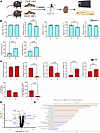 Figure 1
A K+-deficient diet for 2 weeks alters kidney Ca2+ and Pi handling proteins. (A) Study 1. Experimental overview where mice were fed a control diet containing 1% K+ (1K+) or a diet deficient in K+ (0K+) for 2 weeks. Created in BioRender. (B) Plasma concentrations of sodium (Na+), potassium (K+), chloride (Cl–), total calcium (Ca2+), phosphate (Pi), PTH, and VitD [1,25(OH)2D or calcitriol]. (C) Urinary fractional excretion of same ions, creatine clearance, and daily aldosterone excretion. Each data point arises from an individual mouse and the data are shown as mean ± SEM. Statistical analyses were performed using a Student’s unpaired t test and annotations represent the level of significance. (D) Kidney samples were examined using quantitative proteomics. The volcano plot shows the distribution of all quantifiable proteins. The x axis is the log2 ratio between 1K+ and 0K+ diets, while the y axis represents the significance level of the ratio. Significantly changed proteins were defined using a Benjamini-Hochberg FDR of 5%. Proteins (genes names shown) highlighted in blue are examples of proteins involved in Ca2+ handling, proteins in green are involved in Pi handling, and red means involvement in both. (E) Ingenuity pathway analysis on significantly changed proteins. Lower x axis is the ratio of proteins (genes) that are involved in this pathway versus the total input, while upper x axis is the significance level determined by Fisher’s exact test. Color of bars represent either promotion (positive z score) or inhibition (negative z score) of the pathway. Canonical pathways under the category “Intracellular and Second Messenger Signaling” were plotted with a cutoff of 0.5 on both minus log(P value by Fisher’s exact test) and absolute value of z score.
Long-term low-dietary K+ intake results in increased urinary Ca2+ excretion, hypocalcemia, and higher plasma PTH levels. In study 2, our aim was to assess the consequences of a prolonged reduction in dietary K+ intake on Ca2+ and Pi homeostasis. Therefore, rather than feeding mice a diet completely deficient in K+, mice were provided diets containing either 0.1% K+ (referred to as 0.1K+) or 1K+ for 4 or 8 weeks (Figure 2A). Average food intakes measured in home cages over the duration of the study were not significantly different between the groups (4 weeks 1K+ = 0.16 ± 0.01 versus 0.1K+ = 0.18 ± 0.03; 8 weeks 1K+ = 0.14 ± 0.02 versus 0.1K+ = 0.15 ± 0.01; g food/g BW/day, mean ± SD). Bodyweight changes between the groups or time points were not significantly different (Supplemental Figure 4). At both the 4-week and 8-week points, mice fed the 0.1K+ diet had significantly lower plasma K+ levels (Figure 2B) and urinary FEx K+ (Figure 2C and Supplemental Figure 2). Plasma total Ca2+ levels were significantly lower in mice fed the 0.1K+ diet (Figure 2B), whereas FEx Ca2+ and daily urinary Ca2+ excretion were significantly higher (Figure 2C and Supplemental Figure 2). Plasma Pi levels were significantly higher in mice fed a 0.1K+ diet after 8 weeks, consistent with a significantly lower urinary Pi excretion and FEx Pi at this time point (Figure 2, B and C, and Supplemental Figure 2). Plasma concentrations and daily urinary excretions of Na+ and Cl– were not significantly different between the groups at both 4 and 8 weeks (Figure 2, B and C). In line with the dietary K+ restriction, urinary aldosterone excretion was significantly lower in 0.1K+ fed mice compared with the 1K+ control group (Figure 2C). Long-term dietary K+ restriction led to a significant increase in plasma PTH levels, but unlike study 1 (0K+ diet), the levels of 1,25(OH)2D were not significantly different (Figure 2D), nor were Cyp27b1 mRNA levels (Supplemental Table 2) or plasma FGF23 concentrations (Figure 2D). In mice on the 0.1K+ diet, the mRNA expression of the CaSR was increased at both time points (Table 1), whereas expression of Fgfr1 (encoding the Fgf receptor 1) and the Pth1r (encoding the PTH receptor) were only increased at the 4-week stage (Supplemental Table 2).
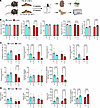 Figure 2
Prolonged low dietary K+ intake results in higher urinary Ca2+ excretion, hypocalcemia, and greater plasma PTH levels. (A) Study 2. Experimental overview of mice maintained on either a low 0.1% K+ diet (0.1K+) or a normal 1% K+ diet (1K+) across 2 independent studies, each lasting either 4 weeks (blue bars) or 8 weeks (red bars). Created in BioRender. (B) Analysis of plasma electrolytes. Calcium (Ca2+) is total plasma Ca2+. (C) Urinary fractional excretion of ions, creatine (cr) clearance, and daily aldosterone excretion. (D) Analysis of plasma hormones. VitD = 1,25(OH)2D (calcitriol). For all panels, each data point arises from an individual mouse and the data are shown as mean ± SEM (n = 8 in each group). Statistical analyses were performed using a Student’s unpaired t test, and annotations between bars represent the level of significance.
Prolonged dietary K+ restriction decreases femoral midshaft total BMD. Lower levels of plasma Ca2+ results in secondary hyperparathyroidism, subsequently followed by disturbances in bone turnover, decreased BMD, and reduced bone integrity (42, 43). The hypocalcemia together with elevated plasma PTH suggests that a similar impairment of bone integrity may occur during dietary K+ depletion. To examine this, BMD was assessed using peripheral quantitative computed tomography (pQCT) in femoral bones isolated from mice fed 0.1K+ or 1K+ diets for 4 or 8 weeks. At the metaphysis, periosteal and endosteal perimeter were comparable between mice on different K+ intakes (Figure 3A), indicating no significant changes in metaphysis bone geometry. However, trabecular BMD was significantly reduced in the 0.1K+-fed group at both time points, and total BMD was significantly lower after 8 weeks, indicating progressive loss of trabecular bone with prolonged K+ deficiency (Figure 3A). At the midshaft, total BMD was significantly lower in mice receiving a 0.1K+ diet compared with 1K+ controls (Figure 3, B and C). Despite this reduction in total BMD, cortical BMD and cortical thickness were similar between the groups, indicating that the cortical bone compartment was not markedly affected by K+ depletion. Interestingly, while periosteal and endosteal circumference were comparable between the groups after 4 weeks, both parameters were significantly increased in the 0.1K+-fed group after 8 weeks, suggesting cortical expansion at the femoral midshaft (Figure 3, B and C). To analyze microarchitecture in trabecular and cortical bone, we used μCT. After 4 weeks of the 2 dietary regimes, no significant changes at the femoral metaphysis in trabecular number, thickness, and spacing were detectable (Figure 3D). However, after 8 weeks, mice receiving the 0.1K+ diet had significantly lower trabecular number and trabecular BMD, with significantly greater trabecular spacing (Figure 3D). In the midshaft region, μCT analysis confirmed the findings from pQCT, with total BMD significantly reduced in the 0.1K+ diet group with no detectable changes in cortical BMD or cortical thickness (Figure 3E). Together, these results suggest that prolonged dietary K+ depletion selectively affects trabecular bone architecture and total BMD, while having minimal effects on cortical bone mass.
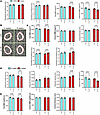 Figure 3
Dietary K+ restriction results in progressive loss of trabecular bone and reduced total BMD in the femoral midshaft and metaphysis. Bone was assessed from mice that were maintained on either a low 0.1% K+ diet (0.1K+) or a normal 1% K+ diet (1K+) across 2 independent studies, each lasting either 4 weeks (blue bars) or 8 weeks (red bars). (A) Peripheral quantitative computed tomography (pQCT) was used to measure in the proximal femoral metaphysis the periosteal and endosteal circumference, the total BMD, and the trabecular BMD. (B) Representative bone femoral shaft cross sectional images using pQCT. (C) Total BMD, cortical BMD, cortical thickness, periosteal, and endosteal circumference of the femoral shaft assessed using pQCT. (D) Trabecular number, thickness, spacing, and BMD of the proximal femoral metaphysis was measured using quantitative microcomputed tomography (μ-QCT). (E) Total BMD, cortical BMD, and cortical thickness of the femoral shaft measured using μ-QCT. For all panels, each data point arises from an individual mouse and the data are shown as mean ± SEM (n = 8 in each group). Statistical analyses were performed using a Student’s unpaired t test.
Low dietary K+ intake increases bone osteoclast activity. Hyperparathyroidism promotes bone resorption (44, 45). To further investigate the effects of low dietary K+ intake on bone remodeling and mineralization, we performed histomorphometric analyses of longitudinal femur sections using tartrate-resistant acid phosphatase (TRAP) staining for bone resorption, von Kossa/McNeal staining for bone mineralization, and double calcein labeling for bone formation. After 4 and 8 weeks, there was a significant increase in osteoclast surface and osteoclast number in femurs from mice receiving 0.1K+ diets relative to 1K+ control diets (Figure 4A) and urinary excretion of deoxypyridinoline (DPD), a marker for bone resorption, was significantly elevated in 0.1K+-fed mice (Figure 4B). However, no significant differences in osteoid volume, osteoid thickness, osteoblast surface, mineral apposition rate (MAR), or bone formation rate (BFR) were detectable between the diets (Figure 4, C and D). These findings suggest that during dietary K+ depletion, bone formation, and bone mineralization remained unchanged despite increased bone resorption.
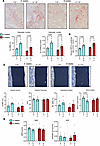 Figure 4
Increased osteoclast number and surface during lower dietary K+ intake. Nondecalcified sections of proximal femur were assessed from mice that were maintained on either a low 0.1% K+ diet (0.1K+) or a normal 1% K+ diet (1K+) for 4 weeks (blue bars) or 8 weeks (red bars). (A) Representative images of TRACP staining and corresponding quantification of osteoclast surface normalized to bone surface (Oc.S/BS %) and osteoclast number per mm of bone surface (N. Oc/B.pm/mm). Original magnification, ×100. (B) Urinary excretion of deoxypyridinoline (DPD), a marker for bone resorption. (C) Representative images of similar sections stained for von Kossa/McNeal and corresponding quantification of osteoid volume per bone volume (OV/BV), osteoid thickness, osteoblast surface per bone surface (Ob.S/BS) and bone surface per total bone volume (BS/TV). (D) Quantification from double calcein labeling analysis of undecalcified sections of proximal femur. Mineral apposition rate (MAR) per day or bone formation rate per bone surface per day (BFR/BS) is shown. For all panels, each data point arises from an individual mouse and the data are shown as mean ± SEM (n = 8 in each group). Statistical analyses were performed using a Student’s unpaired t test, and annotations between bars represent the level of significance.
Low dietary K+ intake alters various Ca2+ and Pi transport pathways in the kidney. In an attempt to uncover the molecular basis for the increased urinary Ca2+ excretion, hypocalcemia and bone resorption during dietary K+ deficiency, kidney mRNA and protein levels of major regulators of Ca2+ and Pi transport (1, 6) were profiled. Initially we focused on the PT, where the majority of kidney Ca2+ and virtually all Pi reabsorption occurs. After 4 weeks on the 0.1K+ diet, kidney mRNA expression of the genes encoding the Pi transporter Napi2c (Slc34A2) and 2 regulatory proteins, sodium-hydrogen exchanger regulatory factor-1 NHERF-1 (Slc9a3r1) and NHERF-3 (Pdzk1) (46, 47), were significantly lower compared with 1K+fed mice (Table 1), with NHERF-3 protein levels also reduced (Figure 5). These reductions in mRNA levels persisted at 8 weeks, but similar changes at the protein level were not observed (Figure 5). Napi-2a (Slc34a1) mRNA levels were also reduced after 8-weeks of dietary K+ restriction (Table 1), but again these did not translate to significant changes in Napi-2a protein levels. NHE3 (Slc9a3) mRNA was significantly reduced during prolonged dietary K+ restriction but with no major changes observed at the protein level. Furthermore, no changes were observed in the mRNA expression of Cldn2 and Cldn12, the major claudins in the PT mediating paracellular cation transport (Supplemental Table 3) (48). Around 25% of filtered Ca2+ is reabsorbed paracellularly in the TAL pathway driven by active Na+ reabsorption via NKCC2 (15–17, 49). During dietary K+ restriction, the abundance of phosphorylated T96-NKCC2 (linked to higher activity) was significantly higher, whereas total NKCC2 was lower after 4 weeks (Figure 5). No changes were observed in NKCC2 mRNA (Table 1). The mRNA expression of Cldn19 was increased after 4 weeks, but no other changes in TAL claudins were observed (Supplemental Table 3). In the DCT, 10% of the filtered Ca2+ is reabsorbed by a transcellular pathway (18). Luminal Ca2+ enters DCT cells through TRPV5, where it is buffered by calbindin-D28k (CB-D28k) (50), before efflux across the basolateral membrane via the PMCA4 and/or the Na+/Ca2+ exchanger (NCX1) (51, 52). After feeding mice a 0.1K+ diet, mRNA expression of Slc8a1 (encoding for NCX1) was significantly lower compared with 1K+ fed mice (Table 1). Calb1 (encoding for CB-D28K) and ATP2B4 (encoding for PMCA4) mRNAs were significantly lower after 8 weeks of dietary K+ restriction (Table 1), but no differences were detectable at the protein level at this time point (Figure 5). After 8 weeks, TRPV5 protein levels were significantly higher in 0.1K+-fed mice compared with the 1K+ control group (Figure 5). A substantial role, albeit indirectly, for the NaCl cotransporter NCC in the DCT for kidney Ca2+ handling is evident from the hypercalciuria observed in patients with genetic defects and hyperactivation of NCC (34), or the greater Ca2+ reabsorption observed following NCC inhibition with thiazide diuretics (53, 54). As predicted from previous studies (32), phosphorylated (active) NCC and total NCC protein levels were significantly higher in 0.1K+-fed mice compared with the 1K+ control group (Figure 5). In addition, dietary K+ restriction significantly decreased the abundances of the Na+-independent Cl–/HCO3– exchanger pendrin and the vacuolar H+-ATPase after 4 and 8 weeks, and both the full and cleaved (active) form of αENaC after 8 weeks (Supplemental Figure 5).
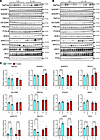 Figure 5
Low dietary K+ effects on various modulators of Ca2+, Pi, and Na+ transport in the kidney. Immunoblotting of kidney samples from mice that were maintained on either a low 0.1% K+ diet (0.1K+) or a normal 1% K+ diet (1K+) across 2 independent studies, each lasting either 4 weeks (blue bars) or 8 weeks (red bars). (A) Representative immunoblots of NaPi2a, NHERF1, NHERF3, TRPV5, Calbindin-28K (CB-D28K), PMCA4, Parvalbumin (PVALB), NHE3, phosphorylated T96 NKCC2 (pNKCC2), NKCC2, phosphorylated T58 NCC (pNCC), NCC, and proteasome 20s (P20s, loading control) from the 4-week study. (B) Representative immunoblots from the 8-week study. (C) Summarized relative densitometry data. For all panels, each data point arises from an individual mouse and the data are shown as mean ± SEM (n = 8 in each group). Statistical analyses were performed using a Student’s unpaired t test, and annotations between bars represent the level of significance.
Low dietary K+ intake alters abundance of the CaSR. The CaSR is expressed in the TAL, where — upon activation — it inhibits NKCC2 to promote Ca2+ excretion (5, 55). The CaSR is also expressed to a lower extent in the DCT, where it activates NCC to enhance NaCl reabsorption (potentially compensating for NKCC2 inhibition), but indirectly, it may influence Ca2+ handling by this segment (6, 56, 57). After dietary K+ restriction, CaSR mRNA expression at the whole-kidney level was increased (Table 1). To confirm this at the protein level, and to address which tubule segment or segments any changes occurred in, we performed immunofluorescence double-labeling of the CaSR and NCC on kidney sections from the 4-week study and semiquantified fluorescence intensity using a deep learning instance segmentation model. In kidneys from the 0.1K+ mice, staining intensity of the CaSR in both NCC+ and NCC– tubules was higher relative to 1K+ control mice (Figure 6), suggesting greater CaSR in the TAL and DCT during K+ restriction.
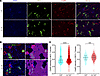 Figure 6
Low dietary K+ intake alters abundance of the calcium-sensing receptor (CaSR). (A) Representative immunofluorescence images of DAPI nuclear (blue), NCC (green), and CaSR (red) staining in kidney tissue from mice receiving a 1K+ or 0.1K+ diet for 4 weeks. (B) Higher-magnification images and example of deep learning instance segmentation model to identify kidney tubules. (C) Semiquantification of CaSR fluorescence intensity in NCC– and NCC+ tubules indicates that CaSR levels are higher in kidneys of mice after 0.1K+ relative to 1K+ control mice. Each dot represents mean signal intensity in an individual tubule, and bars represent median ± interquartile range. n = 4 mice/group. Statistical comparisons were performed using the Mann-Whitney U test. ***P < 0.001, ****P < 0.0001. Scale bar: 50 μm.
Low dietary K+ does not increase urinary Ca2+ excretion or PTH levels in CA-SPAK mice. Of the significantly changed regulators of Ca2+ transport uncovered in study 1 and 2, those expressed in the distal tubule were most consistent, including NCX1, CB-D28, uromodulin, and the CaSR. Furthermore, phosphorylated (active) NCC and total NCC protein levels were significantly higher in low K+ fed mice, which is likely to influence Ca2+ homeostasis (34, 53, 54). Thus, to assess the potential role of NCC in the low K+ induced hypercalciuria, in study 3 we fed mice with constitutively high NCC activity, so-called CA–SPS1-related proline/alanine-rich kinase (CA-SPAK) mice (58, 59), and control mice with a 0.1K+ or 1K+ diet for 4 weeks and analyzed Ca2+ handling parameters (Figure 7A). As seen previously (58), plasma K+ levels were significantly higher in CA-SPAK mice relative to controls, and although plasma K+ levels were reduced in both genotypes receiving the 0.1K+ diet, plasma K+ remained higher in the CA-SPAK mice (Figure 7B). In line with this, in CA-SPAK mice on a 1K+ intake, urinary FEx K+ and urinary K+ excretion were significantly lower relative to controls, although both genotypes reduced their FEx K+ and urinary K+ excretion to similar levels during 0.1K+ feeding (Figure 7C and Supplemental Figure 6). CA-SPAK mice had significantly lower plasma Ca2+ levels than control mice during 1K+ feeding, and unlike control mice, this was not significantly reduced during dietary K+ restriction (Figure 7B). Concordantly, FEx Ca2+ and daily urinary Ca2+ excretion were higher in CA-SPAK mice than controls during the 1K+ intake, and the low dietary K+ induced increases observed in control mice were absent (Figure 7C and Supplemental Figure 6). In control mice, plasma PTH levels and urinary DPD excretion were higher after the 0.1K+ diet. However, in CA-SPAK on a 1K+ diet, PTH levels and urinary DPD excretion were already as high as control mice on the 0.1K+ diet, and no significant changes occurred during dietary K+ restriction (Figure 7, B and C). Together, these data suggest that, on a normal 1K+ intake, constitutive activation of NCC in CA-SPAK mimics the kidney Ca2+ handling phenotype of control mice on a 0.1K+ diet, highlighting a role for NCC in maintaining Ca2+ homeostasis during dietary K+ restriction.
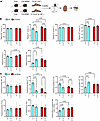 Figure 7
Low dietary K+ does not increase urinary Ca2+ excretion or PTH levels in CA-SPAK mice. (A) Overview of experimental approach in study 3 where control (blue bars) or CA-SPAK mice (model with hyperactivation of NCC, red bars) were maintained on either a low 0.1% K+ diet (0.1K+) or a normal 1% K+ diet (1K+) for 4 weeks. Created in BioRender. (B) Analysis of plasma electrolytes and PTH. (C) Urinary fractional excretion of ions, creatine clearance, and DPD excretion. For all panels, each data point arises from an individual mouse and the data are shown as mean ± SEM (n = 5 for controls and n = 7 for CA-SPAK). Statistical analyses were performed using a 2-way ANOVA followed by a Tukey multiple-comparison test. Annotations between bars represent the level of significance.
Low dietary K+ intake effects on various Ca2+ and Pi transport pathways in CA-SPAK mice. Immunoblotting was used to investigate if there are differences in kidney Ca2+ transport pathways in the kidneys of CA-SPAK relative to controls that could explain the differences in their Ca2+ handling. As expected, on the 1K+ control diet phosphorylated (active) NCC levels (pNCC) were significantly higher in CA-SPAK mice relative to controls (Figure 8). However, dietary K+ restriction increased pNCC levels in both genotypes to a similar extent. As observed in study 2, the abundances of NHERF3, PMCA4, and CB-D28 were reduced with low K+ intake after 4 weeks in control mice, but these changes were not apparent in the CA-SPAK mice, with their levels already being lower than control mice under normal 1K+ intake (Figure 8). Interestingly, a low K+ intake increased TRPV5 abundance in CA-SPAK mice, whereas this effect was not apparent in the control mice. In addition, dietary K+ restriction significantly decreased the abundance of αENaC in control mice but not CA-SPAK mice, but no significant differences in pendrin, the H+-ATPase, or Na-K-ATPase were observed between genotypes or conditions (Supplemental Figure 7).
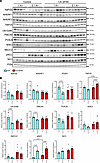 Figure 8
Low dietary K+ effects on various modulators of Ca2+, Pi and Na+ transport in the kidney of CA-SPAK mice or controls. Immunoblotting of kidney samples from control (blue bars) or CA-SPAK mice (red bars) that were maintained on either a low 0.1% K+ diet (0.1K+) or a normal 1% K+ diet (1K+) for 4 weeks. (A) Representative immunoblots of NaPi2a, NHERF1, NHERF3, TRPV5, Calbindin-28K (CB-D28K), PMCA4, Parvalbumin (PVALB), NHE3, NKCC2, phosphorylated T58 NCC (pNCC), NCC, and proteasome 20s (P20s, loading control). (B) Summarized relative densitometry data. For all panels, each data point arises from an individual mouse and the data are shown as mean ± SEM (n = 5 for controls and n = 7 for CA-SPAK). Statistical analyses were performed using a 2-way ANOVA followed by a Tukey multiple-comparison test. Annotations between bars represent the level of significance.


