
Research ArticleGastroenterologyImmunology
Open Access |  10.1172/jci.insight.195354
Shared CD4+ T cell receptor specificity groups in Crohn’s disease and ulcerative colitis
Joshua E. Chan,1,2 Azam Mohsin,1,2 Jens Krijgsman,3 Ciska Lindelauf,3 Qinghui Mu,4 Brianna Cavalla,5 Xuhuai Ji,6 Sarah E. Streett,5 Vincent van Unen,1,2,3 and Mark M. Davis1,2,7
1Institute of Immunity, Transplantation and Infection, and
2Department of Microbiology and Immunology, Stanford University School of Medicine, Stanford, California, USA.
3Department of Immunology, Leiden University Medical Center, Leiden, Zuid-Holland, Netherlands.
4Division of Hematology, Department of Medicine,
5Department of Gastroenterology & Hepatology, Stanford University School of Medicine, Stanford, California, USA.
6Human Immune Monitoring Center, and
7Howard Hughes Medical Institute, Stanford University School of Medicine, Stanford, California, USA.
Address correspondence to: Vincent van Unen, Department of Immunology, Leiden University Medical Center, Albinusdreef 2, 2333 ZA Leiden, Netherlands. Phone: 31.0.71.52.63.800; Email: v.van_unen@lumc.nl. Or to: Mark M. Davis, Biomedical Innovations Building, Stanford University School of Medicine, 240 Pasteur Drive, Room 1500, Palo Alto, CA 94304, USA. Phone: 650.725.4755; Email: mmdavis@stanford.edu.
Find articles by Chan, J. in: PubMed | Google Scholar
1Institute of Immunity, Transplantation and Infection, and
2Department of Microbiology and Immunology, Stanford University School of Medicine, Stanford, California, USA.
3Department of Immunology, Leiden University Medical Center, Leiden, Zuid-Holland, Netherlands.
4Division of Hematology, Department of Medicine,
5Department of Gastroenterology & Hepatology, Stanford University School of Medicine, Stanford, California, USA.
6Human Immune Monitoring Center, and
7Howard Hughes Medical Institute, Stanford University School of Medicine, Stanford, California, USA.
Address correspondence to: Vincent van Unen, Department of Immunology, Leiden University Medical Center, Albinusdreef 2, 2333 ZA Leiden, Netherlands. Phone: 31.0.71.52.63.800; Email: v.van_unen@lumc.nl. Or to: Mark M. Davis, Biomedical Innovations Building, Stanford University School of Medicine, 240 Pasteur Drive, Room 1500, Palo Alto, CA 94304, USA. Phone: 650.725.4755; Email: mmdavis@stanford.edu.
Find articles by Mohsin, A. in: PubMed | Google Scholar
1Institute of Immunity, Transplantation and Infection, and
2Department of Microbiology and Immunology, Stanford University School of Medicine, Stanford, California, USA.
3Department of Immunology, Leiden University Medical Center, Leiden, Zuid-Holland, Netherlands.
4Division of Hematology, Department of Medicine,
5Department of Gastroenterology & Hepatology, Stanford University School of Medicine, Stanford, California, USA.
6Human Immune Monitoring Center, and
7Howard Hughes Medical Institute, Stanford University School of Medicine, Stanford, California, USA.
Address correspondence to: Vincent van Unen, Department of Immunology, Leiden University Medical Center, Albinusdreef 2, 2333 ZA Leiden, Netherlands. Phone: 31.0.71.52.63.800; Email: v.van_unen@lumc.nl. Or to: Mark M. Davis, Biomedical Innovations Building, Stanford University School of Medicine, 240 Pasteur Drive, Room 1500, Palo Alto, CA 94304, USA. Phone: 650.725.4755; Email: mmdavis@stanford.edu.
Find articles by Krijgsman, J. in: PubMed | Google Scholar
1Institute of Immunity, Transplantation and Infection, and
2Department of Microbiology and Immunology, Stanford University School of Medicine, Stanford, California, USA.
3Department of Immunology, Leiden University Medical Center, Leiden, Zuid-Holland, Netherlands.
4Division of Hematology, Department of Medicine,
5Department of Gastroenterology & Hepatology, Stanford University School of Medicine, Stanford, California, USA.
6Human Immune Monitoring Center, and
7Howard Hughes Medical Institute, Stanford University School of Medicine, Stanford, California, USA.
Address correspondence to: Vincent van Unen, Department of Immunology, Leiden University Medical Center, Albinusdreef 2, 2333 ZA Leiden, Netherlands. Phone: 31.0.71.52.63.800; Email: v.van_unen@lumc.nl. Or to: Mark M. Davis, Biomedical Innovations Building, Stanford University School of Medicine, 240 Pasteur Drive, Room 1500, Palo Alto, CA 94304, USA. Phone: 650.725.4755; Email: mmdavis@stanford.edu.
Find articles by Lindelauf, C. in: PubMed | Google Scholar
1Institute of Immunity, Transplantation and Infection, and
2Department of Microbiology and Immunology, Stanford University School of Medicine, Stanford, California, USA.
3Department of Immunology, Leiden University Medical Center, Leiden, Zuid-Holland, Netherlands.
4Division of Hematology, Department of Medicine,
5Department of Gastroenterology & Hepatology, Stanford University School of Medicine, Stanford, California, USA.
6Human Immune Monitoring Center, and
7Howard Hughes Medical Institute, Stanford University School of Medicine, Stanford, California, USA.
Address correspondence to: Vincent van Unen, Department of Immunology, Leiden University Medical Center, Albinusdreef 2, 2333 ZA Leiden, Netherlands. Phone: 31.0.71.52.63.800; Email: v.van_unen@lumc.nl. Or to: Mark M. Davis, Biomedical Innovations Building, Stanford University School of Medicine, 240 Pasteur Drive, Room 1500, Palo Alto, CA 94304, USA. Phone: 650.725.4755; Email: mmdavis@stanford.edu.
Find articles by Mu, Q. in: PubMed | Google Scholar
1Institute of Immunity, Transplantation and Infection, and
2Department of Microbiology and Immunology, Stanford University School of Medicine, Stanford, California, USA.
3Department of Immunology, Leiden University Medical Center, Leiden, Zuid-Holland, Netherlands.
4Division of Hematology, Department of Medicine,
5Department of Gastroenterology & Hepatology, Stanford University School of Medicine, Stanford, California, USA.
6Human Immune Monitoring Center, and
7Howard Hughes Medical Institute, Stanford University School of Medicine, Stanford, California, USA.
Address correspondence to: Vincent van Unen, Department of Immunology, Leiden University Medical Center, Albinusdreef 2, 2333 ZA Leiden, Netherlands. Phone: 31.0.71.52.63.800; Email: v.van_unen@lumc.nl. Or to: Mark M. Davis, Biomedical Innovations Building, Stanford University School of Medicine, 240 Pasteur Drive, Room 1500, Palo Alto, CA 94304, USA. Phone: 650.725.4755; Email: mmdavis@stanford.edu.
Find articles by Cavalla, B. in: PubMed | Google Scholar
1Institute of Immunity, Transplantation and Infection, and
2Department of Microbiology and Immunology, Stanford University School of Medicine, Stanford, California, USA.
3Department of Immunology, Leiden University Medical Center, Leiden, Zuid-Holland, Netherlands.
4Division of Hematology, Department of Medicine,
5Department of Gastroenterology & Hepatology, Stanford University School of Medicine, Stanford, California, USA.
6Human Immune Monitoring Center, and
7Howard Hughes Medical Institute, Stanford University School of Medicine, Stanford, California, USA.
Address correspondence to: Vincent van Unen, Department of Immunology, Leiden University Medical Center, Albinusdreef 2, 2333 ZA Leiden, Netherlands. Phone: 31.0.71.52.63.800; Email: v.van_unen@lumc.nl. Or to: Mark M. Davis, Biomedical Innovations Building, Stanford University School of Medicine, 240 Pasteur Drive, Room 1500, Palo Alto, CA 94304, USA. Phone: 650.725.4755; Email: mmdavis@stanford.edu.
Find articles by Ji, X. in: PubMed | Google Scholar
1Institute of Immunity, Transplantation and Infection, and
2Department of Microbiology and Immunology, Stanford University School of Medicine, Stanford, California, USA.
3Department of Immunology, Leiden University Medical Center, Leiden, Zuid-Holland, Netherlands.
4Division of Hematology, Department of Medicine,
5Department of Gastroenterology & Hepatology, Stanford University School of Medicine, Stanford, California, USA.
6Human Immune Monitoring Center, and
7Howard Hughes Medical Institute, Stanford University School of Medicine, Stanford, California, USA.
Address correspondence to: Vincent van Unen, Department of Immunology, Leiden University Medical Center, Albinusdreef 2, 2333 ZA Leiden, Netherlands. Phone: 31.0.71.52.63.800; Email: v.van_unen@lumc.nl. Or to: Mark M. Davis, Biomedical Innovations Building, Stanford University School of Medicine, 240 Pasteur Drive, Room 1500, Palo Alto, CA 94304, USA. Phone: 650.725.4755; Email: mmdavis@stanford.edu.
Find articles by Streett, S. in: PubMed | Google Scholar
1Institute of Immunity, Transplantation and Infection, and
2Department of Microbiology and Immunology, Stanford University School of Medicine, Stanford, California, USA.
3Department of Immunology, Leiden University Medical Center, Leiden, Zuid-Holland, Netherlands.
4Division of Hematology, Department of Medicine,
5Department of Gastroenterology & Hepatology, Stanford University School of Medicine, Stanford, California, USA.
6Human Immune Monitoring Center, and
7Howard Hughes Medical Institute, Stanford University School of Medicine, Stanford, California, USA.
Address correspondence to: Vincent van Unen, Department of Immunology, Leiden University Medical Center, Albinusdreef 2, 2333 ZA Leiden, Netherlands. Phone: 31.0.71.52.63.800; Email: v.van_unen@lumc.nl. Or to: Mark M. Davis, Biomedical Innovations Building, Stanford University School of Medicine, 240 Pasteur Drive, Room 1500, Palo Alto, CA 94304, USA. Phone: 650.725.4755; Email: mmdavis@stanford.edu.
Find articles by
van Unen, V.
in:
PubMed
|
Google Scholar
|

1Institute of Immunity, Transplantation and Infection, and
2Department of Microbiology and Immunology, Stanford University School of Medicine, Stanford, California, USA.
3Department of Immunology, Leiden University Medical Center, Leiden, Zuid-Holland, Netherlands.
4Division of Hematology, Department of Medicine,
5Department of Gastroenterology & Hepatology, Stanford University School of Medicine, Stanford, California, USA.
6Human Immune Monitoring Center, and
7Howard Hughes Medical Institute, Stanford University School of Medicine, Stanford, California, USA.
Address correspondence to: Vincent van Unen, Department of Immunology, Leiden University Medical Center, Albinusdreef 2, 2333 ZA Leiden, Netherlands. Phone: 31.0.71.52.63.800; Email: v.van_unen@lumc.nl. Or to: Mark M. Davis, Biomedical Innovations Building, Stanford University School of Medicine, 240 Pasteur Drive, Room 1500, Palo Alto, CA 94304, USA. Phone: 650.725.4755; Email: mmdavis@stanford.edu.
Find articles by Davis, M. in: PubMed | Google Scholar
Published June 9, 2026 - More info
JCI Insight. 2026;11(15):e195354. https://doi.org/10.1172/jci.insight.195354.
© 2026 Chan et al. This work is licensed under the Creative Commons Attribution 4.0 International License. To view a copy of this license, visit http://creativecommons.org/licenses/by/4.0/.
Received: May 7, 2025; Accepted: June 5, 2026


-
Results
Investigating the influence of HLA-DRB1 alleles on IBD risk. The cohort analyzed here included 14 healthy controls and 33 IBD patients — 20 with UC and 13 with CD — detailed in Table 1. Recognizing the significant role of the HLA-DRB1 region as a genetic risk factor in IBD (10), which affects both susceptibility and the progression of the disease, we stratified patients by their HLA-DRB1 allele composition. This stratification incorporated significant IBD-associated HLA-DRB1 allotypes, identified by Goyette et al. (9), based on extensive HLA region SNP typing in a large IBD cohort.
In our analysis, the risk allele DRB1*11:01 was the most frequent among UC patients at 12.5% (Supplemental Table 1; supplemental material available online with this article; https://doi.org/10.1172/jci.insight.195354DS1). Interestingly, the risk allele DRB1*12:01 was found in 10% of UC patients and 11.5% of CD patients but was absent in the healthy control group. Conversely, the risk allele DRB1*15:01 was common among both healthy individuals and CD patients.
To further assess the distribution of specific HLA-DRB1 alleles, we categorized participants based on their composition of IBD risk alleles (9). Categories included “high risk” for individuals with 2 risk alleles, “low risk” for those with 1, “no risk” for individuals without risk alleles, and “protective” for those with at least 1 protective allele. Our findings revealed that only 7.1% of healthy controls carried high-risk alleles, whereas 50% of UC patients (χ2 test, P = 0.024) and 46% of CD patients (P = 0.061) harbored high-risk alleles (Figure 1A). Thus, these findings suggest a relatively higher prevalence of high-risk HLA-DRB1 alleles among IBD patients in our study cohort compared with healthy counterparts.
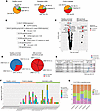 Figure 1
GLIPH2 to prioritize IBD-associated TCR specificity groups. (A) Pie charts illustrating the distribution of HLA-DRB1 alleles per risk group in the cohort (healthy controls, n = 14; UC, n = 20; and CD, n = 13). (B) GLIPH2 filtering workflow of our cohort’s TCRs, yielding 5 significantly IBD-enriched and 10 significantly healthy-enriched specificity groups. Memory repertoire enrichment score was determined with a Fisher’s test against reference naive CD4+ T cell repertoire datasets. (C) Four hundred forty specificity groups were obtained after standard GLIPH2 filtering; those significantly enriched in either healthy controls or IBD patients are shown in red. On the left side of the graph (log2 fold change < 0) are the specificity groups enriched in TCRs from healthy controls, and on the right (log2 fold change > 0) are specificity groups enriched in TCRs from IBD patients. (D) Dominant HLA-II allele in healthy-enriched and IBD-enriched TCR specificity groups. In parentheses are the numbers of patients who bear each HLA-II allele. (E) Enrichment of our study’s 5 IBD-enriched specificity groups, in an external, European dataset of 32 IBD patients and 24 healthy controls. (F) Distribution of memory CD4+ TCRs, stratified by disease state (remission vs. active) and subtype (CD vs. UC), that constitute each IBD-enriched specificity group. (G) Percentage of TCRs in active and remission CD and UC specificity groups.
Assessing the T cell repertoire in relation to disease characteristics. To compare the TCR repertoires among HLA-typed patients and healthy controls, we conducted deep sequencing of the TCRβ chains from CD45RA–CD3+CD4+ memory T cells, sorted by flow cytometry. This analysis resulted in a collective dataset of 3,130,211 TCRβ sequences, of which 1,936,565 sequences represented unique TCR clonotypes.
We then explored whether there was a link between the diversity of the TCR repertoire and various aspects of the disease, such as disease status (remission and active disease), subtype (CD, UC), or degree of HLA-DRB1 risk. Our analysis showed no significant change in the number of T cell clones, unique T cell clonotypes, and repertoire diversity in IBD (Supplemental Figure 1, A–C). We did note greater clonotype sharing (~2,000 unique clonotypes) among several CD patients compared with clonotype sharing among healthy controls (Supplemental Figure 1D). Overall, however, the diversity and expansion of the T cell repertoire were not directly correlated with the activity or type of IBD.
Exploring TCR specificity groups and their association with HLA-DRB1 risk alleles in IBD. Without a clear link between disease phenotype and individual TCR clonotypes, we shifted our analysis to clustering TCRs into specificity groups based on their CDR3 amino acid motifs and predicted binding to the same HLA-II–restricted antigens. Using GLIPH2 (16, 17), a CDR3 motif–finding algorithm, we analyzed 3,130,211 TCRβ sequences from the entire cohort and identified 468,441 candidate specificity groups. We then applied sequential significance filters: TCRβ V-segment usage bias (cluster-level enrichment of V-gene usage vs. background) retaining 143,100/468,441 (30.55%); CDR3 length bias (cluster not explained by length alone) retaining 143,096/143,100 (99.97%); memory enrichment (memory vs. naive T cell reference) retaining 2,130/143,096 (1.49%); and shared HLA-DRB1 association across donors retaining 440/2,130 (20.66%). The largest attrition occurred at the memory-enrichment step, thereby preferentially retaining clusters whose shared CDR3 features are overrepresented in memory T cells, consistent with antigen-driven selection. In total, the analysis yielded 440 high-confidence specificity groups (Figure 1B).
Of these groups, 15 showed a significant difference in abundance between healthy individuals and IBD patients, per Fisher’s exact test (Figure 1C and Supplemental Table 2). Ten groups were more common in healthy individuals, while 5 were predominant in IBD patients. All 5 IBD-enriched clusters were present in both CD and UC patients (Supplemental Table 2). When we analyzed these patient groups separately, 3 of the 5 IBD-enriched clusters reached statistical enrichment in UC (vs. healthy controls) and 2 reached enrichment in CD (Supplemental Figure 2A). However, UC-CD differences were not significant (2-sided Fisher’s per cluster, all P ≥ 0.14), indicating comparable enrichment magnitudes across IBD subtypes (Supplemental Table 2B). A CDR3β sequence-similarity t-distributed stochastic neighbor embedding (t-SNE) analysis further supported this shared disease-skewed TCR landscape, showing overlapping UC- and CD-enriched regions relative to healthy controls (Supplemental Figure 3).
We next assessed α chain heterogeneity within β-defined GLIPH clusters using the single-cell subset with paired α-β TCRs. TCRs were embedded by CDR3 similarity using (a) β chain only and (b) paired α-β information (Supplemental Figure 2B). As expected, β chain–defined GLIPH clusters formed tight groups; with α-β information, most clusters remained cohesive while a few partially dispersed, indicating some α chain heterogeneity. We then reclustered with TCRdist (α-β) (Supplemental Figure 2C): 8 of 9 β-defined GLIPH groups achieved purity = 1.0 (all members co-clustered in the dominant TCRdist cluster), and 1 group (E%QET) showed purity = 0.667. Overall agreement between β-defined GLIPH groups and α-β-TCRdist clusters was relatively high (adjusted Rand index = 0.835). Consistent with TCR–peptide-MHC structures, CDR3β nearly always contacts peptide-MHC, whereas CDR3α contacts can be absent (16). Moreover, TCRβ exhibits more than 10 times greater sequence diversity than TCRα (18), so β chain CDR3 motifs often dominate specificity, while the α chain can provide important refinements (19). Notably, 3 of 5 IBD-associated specificity groups (%IGSGANV, SESG%GQP, and S%LDGYE) contained expanded clones (≥3 identical TCRs; Table 2, Table 3, and Supplemental Table 3), consistent with antigen-driven expansion.
Next, we examined the dominant HLA-DRB1 allele, defined as the most frequently shared allele within each TCR specificity group. Notably, shared HLA alleles were considered at the final prioritization step (Figure 1B), and the “dominant” DRB1 was then assigned post hoc as the most frequent (and allele-wise most significant) within each retained group and is used descriptively below. The DRB1*12:01 risk allele was dominant in 2 IBD-enriched groups (Figure 1D), emphasizing a strong risk allele HLA association with these TCRs. HLA-DRB1 risk alleles dominated all 5 IBD-enriched TCR specificity groups and were absent in the 10 healthy-enriched groups, providing additional evidence for their enrichment in IBD. In contrast, 7 healthy-enriched TCR specificity groups were associated with non-risk alleles (Figure 1D). Supplemental Table 3 further describes each study participant, their HLA-DRB1 allelic composition, and their involvement in the GLIPH-identified clusters. Taken together, these results demonstrate that specific HLA risk alleles are uniquely enriched in IBD.
When we analyzed the sample origins of TCRs from the 5 IBD-associated groups, we found them solely in IBD patients (Figure 1F), spread across both CD and UC patients, regardless of whether the disease was active or in remission (Figure 1, F and G). Interestingly, some patients had TCRs in multiple IBD-prevalent groups, suggesting that these individuals might have broader TCR responses (Figure 1F).
We then wanted to understand whether the 5 IBD-enriched specificity groups we identified in our cohort were present in other IBD cohorts. Indeed, when we performed GLIPH2 analysis on an external, European cohort of 32 IBD patients and 24 healthy controls, we were able to reproduce all 5 IBD-enriched specificity groups (20). Intriguingly, 2 of these, the %IGSGANV motif (OR = 7.25; FDR-adjusted P = 0.002) and the RD%LYG motif (OR = 7.25; FDR-adjusted P = 0.002), were also significantly enriched in IBD compared with healthy controls (Figure 1E). While the 10 groups common in healthy individuals were also present, they were not enriched in healthy controls to the same degree as in our study. These findings provide further evidence that TCRs in IBD-prevalent groups may recognize a common antigen responsible for the disease, particularly among patients with HLA-DRB1 risk alleles.
Moreover, we next investigated whether these 5 IBD-enriched specificity groups were principally associated with HLA allelic expression, which may be biased toward the alleles more prevalent among IBD patients because of their genetic enrichment in IBD. To address this bias, we spiked in 32,760,689 TCRs from 224 healthy individuals with the IBD risk alleles HLA-DRB1*12:01 (n = 20 individuals), HLA-DRB1*11:01 (n = 69 individuals), and HLA-DRB1*07:01 (n = 151 individuals), sourced from 2 publicly available datasets (21, 22). Re-running GLIPH2 with these TCRs included, we found that 4 of 5 IBD-associated CDR3β motifs were detectable in HLA-DRB1–matched spike-in healthy repertoires. However, in healthy donors, these motif-bearing TCRs showed no statistically significant TRBV (V-gene) enrichment (Fisher’s exact test), unlike in IBD patients (Supplemental Figure 4). Notably, the IBD-associated motif %IGSGANV was also not detected in any healthy individual in these external datasets. Together with shared CDR3β motifs, the significant TRBV enrichment observed in IBD repertoires supports convergent selection and increases the likelihood of shared, HLA-restricted antigenic recognition among these TCRs.
Identification of cytotoxic CD4+ T cells in a subset of IBD patients. Upon identifying specific TCR groups linked with prevalent HLA-DRB1 risk alleles in certain IBD patients, we next characterized the T cell phenotypes associated with these factors. To achieve this, we used paired single-cell transcriptomics and TCRαβ sequencing analysis on memory CD4+ T cells (CD3+CD4+CD45RA–) from the PBMCs of 12 patients, sorted by flow cytometry. These patients were selected because of their HLA-DRB1 risk alleles, expanded T cell populations, and membership in TCR specificity groups associated with IBD (Figure 2).
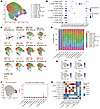 Figure 2
A subset of patients contains clonally expanded, granzyme- and perforin-expressing memory CD4+ T cells. (A) UMAP of memory CD4+ T cell populations identified in a subset of 12 patients. (B) Dot plot illustrating gene marker expression of each cell type. (C) UMAP of memory CD4+ cell types per patient. Individual HLA alleles are colored red if they were risk alleles for both UC and CD, orange if they were a risk allele for either UC or CD, black if they were a risk allele for neither UC nor CD, and green if they were protective for either UC or CD. High risk indicates global IBD, whereas low risk indicates subtype-specific IBD. (D) Cell types identified in each patient; each cell type is represented as a percentage of the total memory CD4+ T cells sequenced from that patient. (E) UMAP expression of the cytotoxic markers NKG7, GZMA, GZMB, and PRF1. (F) UMAP localization of top 10 expanded clonotypes, colored in red. Also shown is the number of clones per clonotype in each cell population. (G) Comparison of TCR repertoire overlap among memory CD4+ T cell subsets.
Cluster analysis revealed 10 distinct memory CD4+ T cell clusters. These included 7 CCR7– effector memory (EM) subsets, 2 CCR7+ central memory (CM) subsets, and one FOXP3+ regulatory T cell (Treg) subset (Figure 2A). Within the EM subsets, we identified a Th1 population marked by CXCR3 and TBX21 (T-bet) and a Th17 population characterized by CCR6 and RORC (RORγT). We noted additional heterogeneity, with varying expression of chemokine receptors (CXCR4, CXCR5), integrins (ITGA4, ITGAE), and activation markers (KLRB1, ICOS, NKG7, GZMA, GZMB, and PRF1) across the clusters (Figure 2B).
Compared with the other patients, we observed a marked difference in the distribution of memory CD4+ T cell clusters in patients 03 and 06, who both carried the DRB1*12:01 risk allele (Figure 2, C and D). Notably, patients 28 and 36, carrying the same risk allele, displayed a different T cell cluster profile. Four patients (03, 06, 23, and 44) had a notable fraction of memory CD4+ T cells in cluster 8, expressing high levels of cytotoxic molecules such as granzymes A and B (GZMA, GZMB) and perforin (PRF1), and thus clearly cytotoxic CD4+ T cells (Figure 2, D and E), detailed further in Supplemental Table 4. Within this group, patient 44 uniquely possessed the significant IBD high-risk HLA-DRB1*01:03 allotype (10) in both alleles as well as single-cell paired TCRαβ chains. These cytotoxic CD4+ T cells were also significantly clonally expanded, encompassing the majority of the dominant clonotypes in our study (Figure 2F).
We then quantified the extent to which clonotypes were shared across different cell types (Figure 2G). The cytotoxic GZMB+PRF1+ subset in cluster 8 primarily shared clonotypes with Th1 cells in cluster 2. Notably, both populations expressed TBX21 (T-bet), a Th1 lineage–defining transcription factor (Figure 2B). These findings may suggest a differentiation pathway from CXCR3+TBX21+ Th1 cells to a cytotoxic GZMB+PRF1+ phenotype involved in the pathogenesis of IBD.
Identification of KIR+CD8+ T cells in a small subset of IBD with HLA-DRB1 risk. Recently we found that a particular subset of CD8+ T cells with immunosuppressive functions, identified by their expression of killer cell immunoglobulin-like receptors (KIRs), is elevated in the blood of some patients suffering from classical autoimmune diseases, including celiac disease, multiple sclerosis, and systemic lupus erythematosus (23). However, this subset has not been previously studied in the context of IBD. We found that a small group, representing 12.1% (95% CI 3.4%–28.2%) of IBD patients (4 of 33) and divided equally between those with UC and CD, showed higher levels of these KIR+CD8+ T cells in their blood (Figure 3, A and B). This increase was not observed in healthy controls. Notably, this rise occurred in both active disease and remission in IBD. While not all patients with HLA-DRB1 risk alleles showed an increase in KIR+CD8+ T cells, the 4 patients who did have this increase also carried these risk alleles. Three of these 4 patients with elevated KIR+CD8+ T cells (03, 06, and 23) also had higher levels of clonally expanded, cytotoxic CD4+ T cells. In addition, we identified greater clonotype expansion among KIR+CD8+ T cells compared with their KIR–CD8+ T counterparts (Figure 3C). Taken together, these findings suggest a potential link between an increased presence of KIR+CD8+ T cells, clonal expansion of cytotoxic CD4+ T cells, and HLA-DRB1 risk alleles in a subset of patients with IBD.
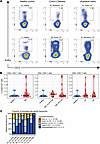 Figure 3
Increased proportion of clonally expanded, KIR+CD8+ T cells in a subset of IBD patients with HLA-DRB1 risk alleles. (A) Representative contour biaxial plots of KIR+CD8+ T cells in the peripheral blood of healthy controls, CD patients, and UC patients, analyzed by flow cytometry. (B) Proportion of KIR+CD8+ T cells as a fraction of total CD3+CD56– T cells, stratified by HLA risk and disease subtype. (C) Relative abundance of clonotypes in KIR–CD8+ versus KIR+CD8+ T cells of the same patient. Clonotype frequency is defined as the size of clonotypes as a fraction of the total sample repertoire.
Cross-disease analysis of KIR+CD8+ TCR motifs reveals shared patterns in autoimmune and inflammatory conditions. Given our findings in IBD patients, we examined whether the KIR+CD8+ TCR repertoire in these IBD patients was similar to those in other autoimmune and inflammatory conditions (23). We thus conducted an integrated GLIPH2 analysis on TCR sequences of KIR+CD8+ T cells from our IBD patient cohort together with a publicly available independent cohort comprising various autoimmune disease and COVID-19 patients (n = 49) and healthy controls (n = 17) (Supplemental Figure 5) (23). Three KIR+CD8+ TCR specificity groups met stringent filtering criteria, including V-segment bias, CDR3 length bias, memory repertoire bias, and shared HLA-I alleles (Supplemental Figure 5). These groups contained exclusively disease-associated TCRs, with 1 group enriched in IBD and 2 spanning multiple diseases.
Notably, the SL%YE specificity group was identified in both a remission UC and a celiac disease patient with identical HLA-A, HLA-B, and HLA-C alleles (Supplemental Table 5). In addition, the S%DSGGTDT specificity group included KIR+CD8+ TCRs from patients in remission as well as active UC, type 1 diabetes, and COVID-19 patients, with a shared CDR3β sequence, CASSFDSGGTDTQYF, from IBD, type 1 diabetes, and COVID-19 patients (Supplemental Table 5). These findings raise the possibility of shared antigenic responses across diseases.
Investigating candidate antigens that bind to IBD-associated TCRs. To investigate the antigen sources that may drive expansion of the IBD-enriched TCRs, we next analyzed 8 public IBD datasets (53,719 TCRs) (20, 24–30) and 3 curated antigen databases (VDJdb, McPAS-TCR, and TBAdb; 68,212 TCRs) (31–33) in which disease traits or antigen reactivities were experimentally defined. We used these resources to see whether our IBD-associated CD4+ T cell specificity groups might be related to known viral, commensal, and food-derived antigens. The characteristics of all IBD-associated TCR specificity groups with database-matched antigen specificities are described in Tables 2, 3, 4, and 5. It is important to note that shared TCRβ sequence matches alone do not establish shared antigen specificity, as the TCRα chain often makes a critical contribution to antigen recognition (19). Nevertheless, this analysis identifies leads (e.g., influenza A, Candida, and Saccharomyces) that may be important in identifying the causal antigens in IBD. Complementing these in silico links, we quantified circulating Candida albicans–reactive CD4+ T cells using a CD154 upregulation assay (13) in 5 independent donors (Supplemental Figure 6). Stimulation with heat-killed C. albicans induced CD154+CD4+ T cells, and this response was markedly reduced by HLA-DR blockade (and by a pan–DR/DP/DQ antibody), with minimal effect of HLA-DQ or -DP blockade, consistent with predominant HLA-DR restriction.
Taken together, our data indicate that a subset of IBD-enriched TCR β chain specificity groups may relate to known viral and yeast antigen specificities, revealing a degree of reactivity that might sustain dysregulated T cell responses in IBD. One plausible interpretation is that CD4+ T cells contribute by recognizing overlapping antigens across these sources. Nonetheless, the precise antigens and cellular reservoirs remain to be further defined, and causal testing in larger, HLA-matched cohorts is warranted to pinpoint drivers of inflammation.


