
Research ArticleDevelopmentPulmonology
Open Access |  10.1172/jci.insight.194683
BRD4 promotes endodermal cell fate during mammalian lung development
Hongbo Wen,1,2,3,4 Derek C. Liberti,1,2,3,4 Prashant Chandrasekaran,1,2,3,4 Shahana Parveen,1,2,3,4 Kwaku K. Quansah,1,2,3,4 Mijeong Kim,3,4,5 Ana N. Lange,3,4,5 Abigail T. Marquis,3,4,5 Sylvia N. Michki,1,2,3,4,6 Annabelle Jin,1,2,3,4 MinQi Lu,1,2,3,4 Ayomikun A. Fasan,1,2,3,4 Sriyaa Suresh,1,2,3,4 Shawyon P. Shirazi,7 Lisa R. Young,4,6 Jennifer M.S. Sucre,7 Maria C. Basil,3,4,5 Rajan Jain,3,8 and David B. Frank1,2,3,4
1Department of Pediatrics, Division of Cardiology, Perelman School of Medicine, University of Pennsylvania, and
2CHOP Cardiovascular Institute, Children’s Hospital of Philadelphia, Philadelphia, Pennsylvania, USA.
3Penn Cardiovascular Institute,
4Penn-CHOP Lung Biology Institute, and
5Department of Medicine, Perelman School of Medicine, University of Pennsylvania, Philadelphia, Pennsylvania, USA.
6Department of Pediatrics, Division of Pulmonary and Sleep Medicine, Perelman School of Medicine, University of Pennsylvania, Children’s Hospital of Philadelphia, Pennsylvania, USA.
7Department of Pediatrics and Cell & Developmental Biology, Vanderbilt University, Nashville, Tennessee, USA.
8Department of Medicine and Cell & Developmental Biology, Perelman School of Medicine, University of Pennsylvania, Philadelphia, Pennsylvania, USA.
Address correspondence to: David B. Frank, Children’s Hospital of Philadelphia, 3615 Civic Center Blvd., ARC 416 K, Philadelphia, Pennsylvania 19104, USA. Phone: 215.590.5248; Email: frankd@chop.edu.
Authorship note: HW and DCL contributed equally to this work.
Find articles by Wen, H. in: PubMed | Google Scholar
1Department of Pediatrics, Division of Cardiology, Perelman School of Medicine, University of Pennsylvania, and
2CHOP Cardiovascular Institute, Children’s Hospital of Philadelphia, Philadelphia, Pennsylvania, USA.
3Penn Cardiovascular Institute,
4Penn-CHOP Lung Biology Institute, and
5Department of Medicine, Perelman School of Medicine, University of Pennsylvania, Philadelphia, Pennsylvania, USA.
6Department of Pediatrics, Division of Pulmonary and Sleep Medicine, Perelman School of Medicine, University of Pennsylvania, Children’s Hospital of Philadelphia, Pennsylvania, USA.
7Department of Pediatrics and Cell & Developmental Biology, Vanderbilt University, Nashville, Tennessee, USA.
8Department of Medicine and Cell & Developmental Biology, Perelman School of Medicine, University of Pennsylvania, Philadelphia, Pennsylvania, USA.
Address correspondence to: David B. Frank, Children’s Hospital of Philadelphia, 3615 Civic Center Blvd., ARC 416 K, Philadelphia, Pennsylvania 19104, USA. Phone: 215.590.5248; Email: frankd@chop.edu.
Authorship note: HW and DCL contributed equally to this work.
Find articles by Liberti, D. in: PubMed | Google Scholar
1Department of Pediatrics, Division of Cardiology, Perelman School of Medicine, University of Pennsylvania, and
2CHOP Cardiovascular Institute, Children’s Hospital of Philadelphia, Philadelphia, Pennsylvania, USA.
3Penn Cardiovascular Institute,
4Penn-CHOP Lung Biology Institute, and
5Department of Medicine, Perelman School of Medicine, University of Pennsylvania, Philadelphia, Pennsylvania, USA.
6Department of Pediatrics, Division of Pulmonary and Sleep Medicine, Perelman School of Medicine, University of Pennsylvania, Children’s Hospital of Philadelphia, Pennsylvania, USA.
7Department of Pediatrics and Cell & Developmental Biology, Vanderbilt University, Nashville, Tennessee, USA.
8Department of Medicine and Cell & Developmental Biology, Perelman School of Medicine, University of Pennsylvania, Philadelphia, Pennsylvania, USA.
Address correspondence to: David B. Frank, Children’s Hospital of Philadelphia, 3615 Civic Center Blvd., ARC 416 K, Philadelphia, Pennsylvania 19104, USA. Phone: 215.590.5248; Email: frankd@chop.edu.
Authorship note: HW and DCL contributed equally to this work.
Find articles by Chandrasekaran, P. in: PubMed | Google Scholar
1Department of Pediatrics, Division of Cardiology, Perelman School of Medicine, University of Pennsylvania, and
2CHOP Cardiovascular Institute, Children’s Hospital of Philadelphia, Philadelphia, Pennsylvania, USA.
3Penn Cardiovascular Institute,
4Penn-CHOP Lung Biology Institute, and
5Department of Medicine, Perelman School of Medicine, University of Pennsylvania, Philadelphia, Pennsylvania, USA.
6Department of Pediatrics, Division of Pulmonary and Sleep Medicine, Perelman School of Medicine, University of Pennsylvania, Children’s Hospital of Philadelphia, Pennsylvania, USA.
7Department of Pediatrics and Cell & Developmental Biology, Vanderbilt University, Nashville, Tennessee, USA.
8Department of Medicine and Cell & Developmental Biology, Perelman School of Medicine, University of Pennsylvania, Philadelphia, Pennsylvania, USA.
Address correspondence to: David B. Frank, Children’s Hospital of Philadelphia, 3615 Civic Center Blvd., ARC 416 K, Philadelphia, Pennsylvania 19104, USA. Phone: 215.590.5248; Email: frankd@chop.edu.
Authorship note: HW and DCL contributed equally to this work.
Find articles by Parveen, S. in: PubMed | Google Scholar
1Department of Pediatrics, Division of Cardiology, Perelman School of Medicine, University of Pennsylvania, and
2CHOP Cardiovascular Institute, Children’s Hospital of Philadelphia, Philadelphia, Pennsylvania, USA.
3Penn Cardiovascular Institute,
4Penn-CHOP Lung Biology Institute, and
5Department of Medicine, Perelman School of Medicine, University of Pennsylvania, Philadelphia, Pennsylvania, USA.
6Department of Pediatrics, Division of Pulmonary and Sleep Medicine, Perelman School of Medicine, University of Pennsylvania, Children’s Hospital of Philadelphia, Pennsylvania, USA.
7Department of Pediatrics and Cell & Developmental Biology, Vanderbilt University, Nashville, Tennessee, USA.
8Department of Medicine and Cell & Developmental Biology, Perelman School of Medicine, University of Pennsylvania, Philadelphia, Pennsylvania, USA.
Address correspondence to: David B. Frank, Children’s Hospital of Philadelphia, 3615 Civic Center Blvd., ARC 416 K, Philadelphia, Pennsylvania 19104, USA. Phone: 215.590.5248; Email: frankd@chop.edu.
Authorship note: HW and DCL contributed equally to this work.
Find articles by Quansah, K. in: PubMed | Google Scholar
1Department of Pediatrics, Division of Cardiology, Perelman School of Medicine, University of Pennsylvania, and
2CHOP Cardiovascular Institute, Children’s Hospital of Philadelphia, Philadelphia, Pennsylvania, USA.
3Penn Cardiovascular Institute,
4Penn-CHOP Lung Biology Institute, and
5Department of Medicine, Perelman School of Medicine, University of Pennsylvania, Philadelphia, Pennsylvania, USA.
6Department of Pediatrics, Division of Pulmonary and Sleep Medicine, Perelman School of Medicine, University of Pennsylvania, Children’s Hospital of Philadelphia, Pennsylvania, USA.
7Department of Pediatrics and Cell & Developmental Biology, Vanderbilt University, Nashville, Tennessee, USA.
8Department of Medicine and Cell & Developmental Biology, Perelman School of Medicine, University of Pennsylvania, Philadelphia, Pennsylvania, USA.
Address correspondence to: David B. Frank, Children’s Hospital of Philadelphia, 3615 Civic Center Blvd., ARC 416 K, Philadelphia, Pennsylvania 19104, USA. Phone: 215.590.5248; Email: frankd@chop.edu.
Authorship note: HW and DCL contributed equally to this work.
Find articles by Kim, M. in: PubMed | Google Scholar
1Department of Pediatrics, Division of Cardiology, Perelman School of Medicine, University of Pennsylvania, and
2CHOP Cardiovascular Institute, Children’s Hospital of Philadelphia, Philadelphia, Pennsylvania, USA.
3Penn Cardiovascular Institute,
4Penn-CHOP Lung Biology Institute, and
5Department of Medicine, Perelman School of Medicine, University of Pennsylvania, Philadelphia, Pennsylvania, USA.
6Department of Pediatrics, Division of Pulmonary and Sleep Medicine, Perelman School of Medicine, University of Pennsylvania, Children’s Hospital of Philadelphia, Pennsylvania, USA.
7Department of Pediatrics and Cell & Developmental Biology, Vanderbilt University, Nashville, Tennessee, USA.
8Department of Medicine and Cell & Developmental Biology, Perelman School of Medicine, University of Pennsylvania, Philadelphia, Pennsylvania, USA.
Address correspondence to: David B. Frank, Children’s Hospital of Philadelphia, 3615 Civic Center Blvd., ARC 416 K, Philadelphia, Pennsylvania 19104, USA. Phone: 215.590.5248; Email: frankd@chop.edu.
Authorship note: HW and DCL contributed equally to this work.
Find articles by Lange, A. in: PubMed | Google Scholar
1Department of Pediatrics, Division of Cardiology, Perelman School of Medicine, University of Pennsylvania, and
2CHOP Cardiovascular Institute, Children’s Hospital of Philadelphia, Philadelphia, Pennsylvania, USA.
3Penn Cardiovascular Institute,
4Penn-CHOP Lung Biology Institute, and
5Department of Medicine, Perelman School of Medicine, University of Pennsylvania, Philadelphia, Pennsylvania, USA.
6Department of Pediatrics, Division of Pulmonary and Sleep Medicine, Perelman School of Medicine, University of Pennsylvania, Children’s Hospital of Philadelphia, Pennsylvania, USA.
7Department of Pediatrics and Cell & Developmental Biology, Vanderbilt University, Nashville, Tennessee, USA.
8Department of Medicine and Cell & Developmental Biology, Perelman School of Medicine, University of Pennsylvania, Philadelphia, Pennsylvania, USA.
Address correspondence to: David B. Frank, Children’s Hospital of Philadelphia, 3615 Civic Center Blvd., ARC 416 K, Philadelphia, Pennsylvania 19104, USA. Phone: 215.590.5248; Email: frankd@chop.edu.
Authorship note: HW and DCL contributed equally to this work.
Find articles by Marquis, A. in: PubMed | Google Scholar
1Department of Pediatrics, Division of Cardiology, Perelman School of Medicine, University of Pennsylvania, and
2CHOP Cardiovascular Institute, Children’s Hospital of Philadelphia, Philadelphia, Pennsylvania, USA.
3Penn Cardiovascular Institute,
4Penn-CHOP Lung Biology Institute, and
5Department of Medicine, Perelman School of Medicine, University of Pennsylvania, Philadelphia, Pennsylvania, USA.
6Department of Pediatrics, Division of Pulmonary and Sleep Medicine, Perelman School of Medicine, University of Pennsylvania, Children’s Hospital of Philadelphia, Pennsylvania, USA.
7Department of Pediatrics and Cell & Developmental Biology, Vanderbilt University, Nashville, Tennessee, USA.
8Department of Medicine and Cell & Developmental Biology, Perelman School of Medicine, University of Pennsylvania, Philadelphia, Pennsylvania, USA.
Address correspondence to: David B. Frank, Children’s Hospital of Philadelphia, 3615 Civic Center Blvd., ARC 416 K, Philadelphia, Pennsylvania 19104, USA. Phone: 215.590.5248; Email: frankd@chop.edu.
Authorship note: HW and DCL contributed equally to this work.
Find articles by Michki, S. in: PubMed | Google Scholar
1Department of Pediatrics, Division of Cardiology, Perelman School of Medicine, University of Pennsylvania, and
2CHOP Cardiovascular Institute, Children’s Hospital of Philadelphia, Philadelphia, Pennsylvania, USA.
3Penn Cardiovascular Institute,
4Penn-CHOP Lung Biology Institute, and
5Department of Medicine, Perelman School of Medicine, University of Pennsylvania, Philadelphia, Pennsylvania, USA.
6Department of Pediatrics, Division of Pulmonary and Sleep Medicine, Perelman School of Medicine, University of Pennsylvania, Children’s Hospital of Philadelphia, Pennsylvania, USA.
7Department of Pediatrics and Cell & Developmental Biology, Vanderbilt University, Nashville, Tennessee, USA.
8Department of Medicine and Cell & Developmental Biology, Perelman School of Medicine, University of Pennsylvania, Philadelphia, Pennsylvania, USA.
Address correspondence to: David B. Frank, Children’s Hospital of Philadelphia, 3615 Civic Center Blvd., ARC 416 K, Philadelphia, Pennsylvania 19104, USA. Phone: 215.590.5248; Email: frankd@chop.edu.
Authorship note: HW and DCL contributed equally to this work.
Find articles by Jin, A. in: PubMed | Google Scholar
1Department of Pediatrics, Division of Cardiology, Perelman School of Medicine, University of Pennsylvania, and
2CHOP Cardiovascular Institute, Children’s Hospital of Philadelphia, Philadelphia, Pennsylvania, USA.
3Penn Cardiovascular Institute,
4Penn-CHOP Lung Biology Institute, and
5Department of Medicine, Perelman School of Medicine, University of Pennsylvania, Philadelphia, Pennsylvania, USA.
6Department of Pediatrics, Division of Pulmonary and Sleep Medicine, Perelman School of Medicine, University of Pennsylvania, Children’s Hospital of Philadelphia, Pennsylvania, USA.
7Department of Pediatrics and Cell & Developmental Biology, Vanderbilt University, Nashville, Tennessee, USA.
8Department of Medicine and Cell & Developmental Biology, Perelman School of Medicine, University of Pennsylvania, Philadelphia, Pennsylvania, USA.
Address correspondence to: David B. Frank, Children’s Hospital of Philadelphia, 3615 Civic Center Blvd., ARC 416 K, Philadelphia, Pennsylvania 19104, USA. Phone: 215.590.5248; Email: frankd@chop.edu.
Authorship note: HW and DCL contributed equally to this work.
Find articles by Lu, M. in: PubMed | Google Scholar
1Department of Pediatrics, Division of Cardiology, Perelman School of Medicine, University of Pennsylvania, and
2CHOP Cardiovascular Institute, Children’s Hospital of Philadelphia, Philadelphia, Pennsylvania, USA.
3Penn Cardiovascular Institute,
4Penn-CHOP Lung Biology Institute, and
5Department of Medicine, Perelman School of Medicine, University of Pennsylvania, Philadelphia, Pennsylvania, USA.
6Department of Pediatrics, Division of Pulmonary and Sleep Medicine, Perelman School of Medicine, University of Pennsylvania, Children’s Hospital of Philadelphia, Pennsylvania, USA.
7Department of Pediatrics and Cell & Developmental Biology, Vanderbilt University, Nashville, Tennessee, USA.
8Department of Medicine and Cell & Developmental Biology, Perelman School of Medicine, University of Pennsylvania, Philadelphia, Pennsylvania, USA.
Address correspondence to: David B. Frank, Children’s Hospital of Philadelphia, 3615 Civic Center Blvd., ARC 416 K, Philadelphia, Pennsylvania 19104, USA. Phone: 215.590.5248; Email: frankd@chop.edu.
Authorship note: HW and DCL contributed equally to this work.
Find articles by Fasan, A. in: PubMed | Google Scholar
1Department of Pediatrics, Division of Cardiology, Perelman School of Medicine, University of Pennsylvania, and
2CHOP Cardiovascular Institute, Children’s Hospital of Philadelphia, Philadelphia, Pennsylvania, USA.
3Penn Cardiovascular Institute,
4Penn-CHOP Lung Biology Institute, and
5Department of Medicine, Perelman School of Medicine, University of Pennsylvania, Philadelphia, Pennsylvania, USA.
6Department of Pediatrics, Division of Pulmonary and Sleep Medicine, Perelman School of Medicine, University of Pennsylvania, Children’s Hospital of Philadelphia, Pennsylvania, USA.
7Department of Pediatrics and Cell & Developmental Biology, Vanderbilt University, Nashville, Tennessee, USA.
8Department of Medicine and Cell & Developmental Biology, Perelman School of Medicine, University of Pennsylvania, Philadelphia, Pennsylvania, USA.
Address correspondence to: David B. Frank, Children’s Hospital of Philadelphia, 3615 Civic Center Blvd., ARC 416 K, Philadelphia, Pennsylvania 19104, USA. Phone: 215.590.5248; Email: frankd@chop.edu.
Authorship note: HW and DCL contributed equally to this work.
Find articles by Suresh, S. in: PubMed | Google Scholar
1Department of Pediatrics, Division of Cardiology, Perelman School of Medicine, University of Pennsylvania, and
2CHOP Cardiovascular Institute, Children’s Hospital of Philadelphia, Philadelphia, Pennsylvania, USA.
3Penn Cardiovascular Institute,
4Penn-CHOP Lung Biology Institute, and
5Department of Medicine, Perelman School of Medicine, University of Pennsylvania, Philadelphia, Pennsylvania, USA.
6Department of Pediatrics, Division of Pulmonary and Sleep Medicine, Perelman School of Medicine, University of Pennsylvania, Children’s Hospital of Philadelphia, Pennsylvania, USA.
7Department of Pediatrics and Cell & Developmental Biology, Vanderbilt University, Nashville, Tennessee, USA.
8Department of Medicine and Cell & Developmental Biology, Perelman School of Medicine, University of Pennsylvania, Philadelphia, Pennsylvania, USA.
Address correspondence to: David B. Frank, Children’s Hospital of Philadelphia, 3615 Civic Center Blvd., ARC 416 K, Philadelphia, Pennsylvania 19104, USA. Phone: 215.590.5248; Email: frankd@chop.edu.
Authorship note: HW and DCL contributed equally to this work.
Find articles by Shirazi, S. in: PubMed | Google Scholar
1Department of Pediatrics, Division of Cardiology, Perelman School of Medicine, University of Pennsylvania, and
2CHOP Cardiovascular Institute, Children’s Hospital of Philadelphia, Philadelphia, Pennsylvania, USA.
3Penn Cardiovascular Institute,
4Penn-CHOP Lung Biology Institute, and
5Department of Medicine, Perelman School of Medicine, University of Pennsylvania, Philadelphia, Pennsylvania, USA.
6Department of Pediatrics, Division of Pulmonary and Sleep Medicine, Perelman School of Medicine, University of Pennsylvania, Children’s Hospital of Philadelphia, Pennsylvania, USA.
7Department of Pediatrics and Cell & Developmental Biology, Vanderbilt University, Nashville, Tennessee, USA.
8Department of Medicine and Cell & Developmental Biology, Perelman School of Medicine, University of Pennsylvania, Philadelphia, Pennsylvania, USA.
Address correspondence to: David B. Frank, Children’s Hospital of Philadelphia, 3615 Civic Center Blvd., ARC 416 K, Philadelphia, Pennsylvania 19104, USA. Phone: 215.590.5248; Email: frankd@chop.edu.
Authorship note: HW and DCL contributed equally to this work.
Find articles by
Young, L.
in:
PubMed
|
Google Scholar
|

1Department of Pediatrics, Division of Cardiology, Perelman School of Medicine, University of Pennsylvania, and
2CHOP Cardiovascular Institute, Children’s Hospital of Philadelphia, Philadelphia, Pennsylvania, USA.
3Penn Cardiovascular Institute,
4Penn-CHOP Lung Biology Institute, and
5Department of Medicine, Perelman School of Medicine, University of Pennsylvania, Philadelphia, Pennsylvania, USA.
6Department of Pediatrics, Division of Pulmonary and Sleep Medicine, Perelman School of Medicine, University of Pennsylvania, Children’s Hospital of Philadelphia, Pennsylvania, USA.
7Department of Pediatrics and Cell & Developmental Biology, Vanderbilt University, Nashville, Tennessee, USA.
8Department of Medicine and Cell & Developmental Biology, Perelman School of Medicine, University of Pennsylvania, Philadelphia, Pennsylvania, USA.
Address correspondence to: David B. Frank, Children’s Hospital of Philadelphia, 3615 Civic Center Blvd., ARC 416 K, Philadelphia, Pennsylvania 19104, USA. Phone: 215.590.5248; Email: frankd@chop.edu.
Authorship note: HW and DCL contributed equally to this work.
Find articles by
Sucre, J.
in:
PubMed
|
Google Scholar
|
1Department of Pediatrics, Division of Cardiology, Perelman School of Medicine, University of Pennsylvania, and
2CHOP Cardiovascular Institute, Children’s Hospital of Philadelphia, Philadelphia, Pennsylvania, USA.
3Penn Cardiovascular Institute,
4Penn-CHOP Lung Biology Institute, and
5Department of Medicine, Perelman School of Medicine, University of Pennsylvania, Philadelphia, Pennsylvania, USA.
6Department of Pediatrics, Division of Pulmonary and Sleep Medicine, Perelman School of Medicine, University of Pennsylvania, Children’s Hospital of Philadelphia, Pennsylvania, USA.
7Department of Pediatrics and Cell & Developmental Biology, Vanderbilt University, Nashville, Tennessee, USA.
8Department of Medicine and Cell & Developmental Biology, Perelman School of Medicine, University of Pennsylvania, Philadelphia, Pennsylvania, USA.
Address correspondence to: David B. Frank, Children’s Hospital of Philadelphia, 3615 Civic Center Blvd., ARC 416 K, Philadelphia, Pennsylvania 19104, USA. Phone: 215.590.5248; Email: frankd@chop.edu.
Authorship note: HW and DCL contributed equally to this work.
Find articles by Basil, M. in: PubMed | Google Scholar
1Department of Pediatrics, Division of Cardiology, Perelman School of Medicine, University of Pennsylvania, and
2CHOP Cardiovascular Institute, Children’s Hospital of Philadelphia, Philadelphia, Pennsylvania, USA.
3Penn Cardiovascular Institute,
4Penn-CHOP Lung Biology Institute, and
5Department of Medicine, Perelman School of Medicine, University of Pennsylvania, Philadelphia, Pennsylvania, USA.
6Department of Pediatrics, Division of Pulmonary and Sleep Medicine, Perelman School of Medicine, University of Pennsylvania, Children’s Hospital of Philadelphia, Pennsylvania, USA.
7Department of Pediatrics and Cell & Developmental Biology, Vanderbilt University, Nashville, Tennessee, USA.
8Department of Medicine and Cell & Developmental Biology, Perelman School of Medicine, University of Pennsylvania, Philadelphia, Pennsylvania, USA.
Address correspondence to: David B. Frank, Children’s Hospital of Philadelphia, 3615 Civic Center Blvd., ARC 416 K, Philadelphia, Pennsylvania 19104, USA. Phone: 215.590.5248; Email: frankd@chop.edu.
Authorship note: HW and DCL contributed equally to this work.
Find articles by Jain, R. in: PubMed | Google Scholar
1Department of Pediatrics, Division of Cardiology, Perelman School of Medicine, University of Pennsylvania, and
2CHOP Cardiovascular Institute, Children’s Hospital of Philadelphia, Philadelphia, Pennsylvania, USA.
3Penn Cardiovascular Institute,
4Penn-CHOP Lung Biology Institute, and
5Department of Medicine, Perelman School of Medicine, University of Pennsylvania, Philadelphia, Pennsylvania, USA.
6Department of Pediatrics, Division of Pulmonary and Sleep Medicine, Perelman School of Medicine, University of Pennsylvania, Children’s Hospital of Philadelphia, Pennsylvania, USA.
7Department of Pediatrics and Cell & Developmental Biology, Vanderbilt University, Nashville, Tennessee, USA.
8Department of Medicine and Cell & Developmental Biology, Perelman School of Medicine, University of Pennsylvania, Philadelphia, Pennsylvania, USA.
Address correspondence to: David B. Frank, Children’s Hospital of Philadelphia, 3615 Civic Center Blvd., ARC 416 K, Philadelphia, Pennsylvania 19104, USA. Phone: 215.590.5248; Email: frankd@chop.edu.
Authorship note: HW and DCL contributed equally to this work.
Find articles by Frank, D. in: PubMed | Google Scholar
Published February 3, 2026 - More info
JCI Insight. 2026;11(5):e194683. https://doi.org/10.1172/jci.insight.194683.
© 2026 Wen et al. This work is licensed under the Creative Commons Attribution 4.0 International License. To view a copy of this license, visit http://creativecommons.org/licenses/by/4.0/.
Received: April 23, 2025; Accepted: January 22, 2026


-
Results
Endodermal BRD4 is required for lung morphogenesis and perinatal survival. To determine the role of BRD4 in the developing lung, we generated ShhCre Brd4fl/fl mice, allowing conditional deletion of BRD4 in the anterior foregut endoderm during lung development from E9.5 onward (Figure 1A) (25, 33). BRD4 is nearly ubiquitously expressed in all lung cell types including those of the epithelial lineages (Supplemental Figure 1, A and B; supplemental material available online with this article; https://doi.org/10.1172/jci.insight.194683DS1). While we detected BRD4 protein throughout the developing embryo, we confirmed complete loss of BRD4 from the lung endoderm in ShhCre Brd4fl/fl mice at E12.5 (Figure 1B). BRD4-deficient lungs exhibited abnormal morphogenesis, including the formation of cystic distal airway structures across development (Figure 1, C and D). Additionally, morphological analysis of tissue sections at E18.5 revealed statistically significant expansion of all other distal airspaces in mutant lungs compared with controls (Figure 1, D–F). ShhCre Brd4fl/fl mice did not survive until weaning, and we found that ShhCre Brd4fl/fl mice became cyanotic and perished shortly after birth, consistent with respiratory failure (Supplemental Figure 1, C and D). After harvest and placement in formalin, mutant lungs floated with a large collection of large air bubbles in their cystic airway structures, suggesting that ShhCre Brd4fl/fl mice could inhale with an inability to appropriately exhale air out (Supplemental Figure 1E).
 Figure 1
Endodermal BRD4 is required for lung morphogenesis and perinatal survival. (A) Experimental schematic indicating the time points analyzed. (B) IHC for NKX2.1 and BRD4 at E12.5. Scale bar: 200 μm. (C) Bright-field images of whole control and mutant lungs at E18.5. White arrows mark cystic distal airway structures. Scale bar: 2 mm. (D) H&E staining at E15.5 and E18.5. Scale bars: 200 μm. (E and F) Quantification of morphological changes shown in D at E18.5. Data are represented as mean ± SEM. Two-tailed t test: **P ≤ 0.01, ***P ≤ 0.001, n = 5.
Loss of endodermal BRD4 disrupts epithelial-mesenchymal crosstalk. To assess how loss of BRD4 results in the formation of cystic distal airway structures, we investigated early branching morphogenesis in control and mutant (ShhCre Brd4fl/fl) lungs. As early as E12.5, we observed impaired branching in BRD4-deficient mice (Figure 2, A and B). To determine whether the observed defect was lung intrinsic, we harvested control and mutant lungs at E12.5 and cultured them ex vivo for 3 days (Figure 2C). Mutant lungs exhibited fewer and dilated airways with diminished SOX2 expression in distal airways in addition to the formation of cystic distal airway structures, consistent with our in vivo observations (Figure 2, C and D). We did not observe any significant differences in proliferation of proximal or distal epithelial cells or cell death in control or mutant mice (Supplemental Figure 2, A–C).
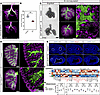 Figure 2
Loss of endodermal BRD4 disrupts epithelial-mesenchymal crosstalk. (A and B) Wholemount IHC for SOX2 and SOX9 to assess branching at E12.5. Scale bar: 200 μm. Quantification data are represented as mean ± SEM. Two-tailed t test: **P ≤ 0.01, n = 3. (C) Left: bright-field images of control and mutant lungs at E12.5. Scale bar: 500 μm. Middle: wholemount IHC for SOX2 and SOX9 after 3 days of culture ex vivo. Scale bar: 500 μm. Dashed white boxes indicate branching tips in control and mutant lungs. Right: magnified images of branching tips. Dashed white lines outline a distal airway. Scale bar: 100 μm. (D) Wholemount IHC for SOX2 and SOX9 at E15.5. Scale bar: 500 μm. Dashed white boxes mark magnified areas shown in the right panels. Scale bar: 100 μm. (E) RNA FISH for Shh, Bmp4, and Fgf10 in control and mutant E12.5 lungs. Scale bar: 50 μm. (F) Matrix plots of differentially expressed genes by RNA-seq of E12.5 epithelium including cell markers, BMP signaling targets, and FGF signaling targets. Genes in red for BMP and FGF targets are positively correlated with activation of each respective signaling pathway. (G) Gene expression analysis by qPCR for Fgf10 (left box) and SHH target genes in E12.5 mesenchyme. Quantification data are represented as mean ± SEM. One-way ANOVA: *P ≤ 0.05, n = 3–4.
To determine whether abnormal branching may be a result of altered epithelial-mesenchymal communication, we investigated the expression of critical branching factors Shh, Bmp4, and Fgf10 using multiplexed RNA FISH at E12.5 and E15.5 (Figure 2E and Supplemental Figure 2D). The SHH/BMP4/FGF10 signaling axis has been well characterized in the lung with feedback loops between SHH and FGF signaling (34–37). Shh is typically expressed throughout the developing lung endoderm (Figure 2E and Supplemental Figure 2D). However, in BRD4-deficient mice, Shh expression was mildly diminished at the distal tips of cystic distal airway structures (Figure 2E), which was more prominent at E15.5 (Supplemental Figure 2D). Moreover, while Bmp4 expression was restricted to the center of the distal tips of airway structures in control lungs, Bmp4 expression expanded throughout the distal tip in BRD4-deficient mice at both time points (Figure 2E and Supplemental Figure 2D). We confirmed these changes using qPCR on EPCAM+ cells isolated by FACS at E15.5 and observed a significant decrease in Shh and increase in Bmp4 (Supplemental Figure 2E). Additionally, Fgf10 expression was increased in BRD4 mutant lungs at E12.5 and E15.5. Similar findings were observed in a recent study in lung development, revealing that FGF signaling components including ETV5 mediate the FGF-SHH signaling loop (35). Thus, we performed FISH for Etv5 and Fgfr2 but observed no changes in epithelial expression between controls and mutants at E15.5 (Supplemental Figure 2F).
To further explore dysregulation of SHH/BMP4/FGF10 pathways involved in epithelial-mesenchymal crosstalk, we used FACS of epithelial and mesenchymal-enriched cells from 3 different litters of E12.5 Cre negative (WT), heterozygous, and homozygous BRD4 mutant mice. Subsequently, we performed RNA-seq on the epithelial cells and qPCR on isolated mesenchymal cells. Of 15,575 genes detected, only 6 genes were differentially expressed between Cre negative WT and ShhCre Brd4fl/+ embryonic lung epithelial cells including Shh, Id1, Rnu1b2, Comtd1, Rnps1, and Atf6b, indicating that Shh haploinsufficiency using ShhCre does not result in significant gene dysregulation in BRD4 mutants (Supplemental Tables 1–3). Assessment of gene regulation revealed that BRD4 mutants exhibited significant dysregulation of multiple genes important in lung and stem cell development (Supplemental Figure 3, A and B). Moreover, we confirmed a decrease in Sox2 and the recently described transitional zone of differentiation cells expressing both Icam1 and Fgfbp1 (Figure 2F) but no change in Sox9 (38). Further differential gene expression analysis confirmed decreased expression of multiple target genes of BMP signaling in the epithelium (Figure 2F). While we observed an increase in Fgf10 expression in the mesenchyme (Figure 2G), expression of a previously published panel of FGF10 target genes in the epithelium and mesenchyme was inconsistent, with only half of the statistically significant target gene positively correlated with increased Fgf10 (Figure 2F) (39). However, qPCR of SHH target genes in the mesenchyme did reveal trends and statistically significant decreased expression of multiple SHH signaling transcriptional targets including Gli1 and Ptch1 (Figure 2G). Together, our data show that loss of BRD4 leads to impaired epithelial-mesenchymal crosstalk, in part, through dysregulation of SHH and BMP signaling.
SHH activation partially rescues BRD4 mutant cystic distal airway structure phenotype. To further characterize the potential mechanism of SHH signaling in BRD4 mutants, we activated SHH signaling with Purmorphamine (PMA) in our ex vivo lung explants (40). Treatment of mutant explants with PMA over 72 hours partially rescued the phenotype (Supplemental Figure 3, C and D). Quantification of SOX2 expression revealed a statistically significant reemergence of SOX2 expression and a modest reduction of the distal airway structures in the mutant lung with PMA treatment (Supplemental Figure 3, E and F). However, morphometric analysis revealed a reduced tip number in both the control group and mutant group with PMA treatment (Supplemental Figure 3G).
Loss of endodermal BRD4 results in impaired epithelial cell differentiation in large distal cysts. To determine how early patterning defects in BRD4 mutants affect lung maturation, we examined the composition of the cystic distal airway structures that exist only in BRD4 mutant lungs. The apical surfaces of these structures were lined with cuboidal epithelial cells and were associated with deficits in appropriate differentiation of proximal airway and distal alveolar epithelial cells (Figure 3, A and B). Epithelial cells in the proximal portion of cystic distal airway structures weakly expressed markers for secretory and multiciliated cells, including SCGB1A1 and TUBB4 (Figure 3A), while cuboidal epithelial cells in the distal portion expressed alveolar epithelial type 1 (AT1) and AT2 markers, including HOPX and SFTPC (Figure 3B). However, HOPX expression expanded into the proximal region of the cystic distal airway structures, and some SFTPC+ cells also expressed HOPX (Figure 3B). Interestingly, no basal cells were noted within the large distal cysts (Figure 3C). In addition to compromised lineage restriction and maturation, these cystic distal airway structures were encased in ectopic smooth muscle, suggesting impaired epithelial-mesenchymal crosstalk (Figure 3D).
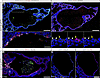 Figure 3
Loss of endodermal BRD4 results in impaired epithelial cell differentiation in large distal cysts. (A) IHC for NKX2.1, TUBB4, and SCGB1A1 in BRD4 mutant E18.5 lungs. Scale bar: 200 μm. Dashed white box marks magnified region shown in the lower image. Scale bar: 50 μm. (B) IHC for HOPX and SFTPC in BRD4 mutant E18.5 lungs. Scale bar: 200 μm. Dashed yellow box marks magnified region shown in the lower image. Dashed yellow circles mark AT1 cells, white arrows mark AT2 cells, and yellow arrows mark HOPX+SFTPC+ cells. (C) IHC for basal cell marker, TRP63, NKX2.1, and SOX2 in BRD4 mutant lung cystic distal airway structures at E18.5. Scale bar: 150 μm. (D) IHC for TAGLN and ACTA2 in BRD4 mutant lung cystic distal airway structures at E18.5. Scale bar: 500 μm.
Single-cell RNA-seq indicates global endodermal differentiation defects in BRD4 mutants. To explore how loss of BRD4 affects epithelial cell differentiation and transcription globally, we FACS-isolated heterozygous control and homozygous BRD4-deficient EPCAM+ cells at E17.5 and performed single-cell RNA-seq. ScRNA-seq) using the 10X Genomics Chromium droplet-based scRNA-seq platform. After quality control, we sequenced over 6,520 heterozygous control and 7,151 homozygous KO cells. Cell clustering and cell annotation confirmed the presence of major intrapulmonary epithelial cell populations in the lung, including AT1, AT2, secretory, and multiciliated airway cells (Figure 4A). Total cell number and cell proportion of epithelium differed between control and BRD4 mutant mice (Figure 4B and Supplemental Figure 4A). Cell cycle phase analysis of our scRNA-seq data revealed very mild differences in the number or proportion of each phase for each cell type, indicating little change in proliferation (Supplemental Figure 4B). UMAP embedding by genotype and cell type showed predominantly segregated cell clustering, indicating significant transcriptome changes with loss of BRD4 (Figure 4, C and D). These transcriptomic changes were represented by both upregulated and downregulated genes (Supplemental Figure 4, C–F) and significant canonical cell marker gene dysregulation (Figure 4, E and F). In BRD4 mutant AT2s, there was a loss of AT2 cell markers concomitant with a gain in AT1 cell markers (Figure 4E). In addition, profiling marker gene expression in control and mutant samples revealed an attenuation of mature marker gene expression in secretory cells (Figure 4F).
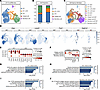 Figure 4
scRNA-seq indicates global endodermal differentiation defects in BRD4 mutants. (A) UMAP embedding of BRD4 heterozygous and homozygous KO lung epithelial cells colored by cell type. (B) Cell compositional changes in BRD4 heterozygous and homozygous knockout lungs based on cell proportion. (C) UMAP embedding of epithelial cells colored by genotype and cell type. (D) UMAPs embedding of epithelial cells colored by cell marker genes. UMAPs for Foxj1 and Scgb1a1 are a magnification of the proximal airway cell clusters. (E) Dot plots of expression of AT1 and AT2 cell marker genes. Dot size indicates the proportion of cells within a cluster expressing a gene, and color intensity indicates the relative expression level. (F) Dot plots of expression of ciliated and secretory cell marker genes. (G–J) Gene ontology (GO) analysis for top 5 ranked categories using downregulated (down) gene enrichment sets in BRD4 homozygous embryonic lungs. GO analysis for AT1 cells (G), AT2 cells (H), ciliated cells (I), and secretory cells (J).
To determine additional mediators of our cell state changes, we performed overrepresentation analyses (ORA) on the transcriptomes of control and BRD4 mutant AT1s, AT2s, ciliated cells, and secretory cells. ORA of AT1s, AT2s, ciliated cells, and secretory cells identified downregulation of genes associated with lung epithelial development and important pathways such as WNT and TGF-β signaling (Figure 4, G–J). We also assessed multiple signaling pathways and stress responses using Hallmark scoring on gene set enrichment analysis in both proximal and distal airway lineages and observed significant dysregulation of cell morphogenesis, inflammatory responses, and multiple signaling pathways (Supplemental Figure 4G).
BRD4 is required for proximal and distal airway epithelial cell differentiation and maturation. To confirm our bioinformatic findings of impaired alveolar epithelial cell differentiation, we performed histological analysis on E18.5 control and BRD4 mutant lungs. Consistent with loss of AT2 cell capture in our scRNA-seq data set, we observed a decrease in the percentage of AT2 cells (Figure 5, A and B). Moreover, we observed an increase in cells expressing both SFTPC and HOPX, suggesting impaired AT2 cell fate specification. These SFTPC+HOPX+ cells in the alveolar compartment did not express the more mature AT2 cell marker LAMP3, but rare exceptions of LAMP3+HOPX+ cells were present in cystic distal airway structures (Supplemental Figure 5A). Additionally, we observed no proliferation or cell death changes in AT1s, AT2s, or AT1/AT2s (Supplemental Figure 5, B and C), consistent with previously published data revealing a very low level of alveolar epithelial proliferation at E18.5 (18, 41). BRD4-deficient AT1 cells also failed to fully mature. While they expressed PDPN and AGER in the alveolar compartment and within the cystic distal airway structures, BRD4-deficient AT1 cells exhibited minimal expression of AQP5, a marker observed later in AT1 differentiation (Figure 5C and Supplemental Figure 5D) (41). Despite a lack of maturation of AT1 cells that communicate with the capillary bed, capillary endothelial development appeared mostly unaffected in BRD4 mutant lungs (Supplemental Figure 5, E–H).
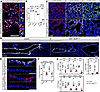 Figure 5
BRD4 is required for proximal and distal airway epithelial cell differentiation and maturation. (A) IHC for NKX2.1, HOPX, and SFTPC in control and mutant E18.5 lungs. Dashed yellow circles mark AT1 cells, white arrows mark AT2 cells, and yellow arrows mark HOPX+SFTPC+ cells. Scale bar: 50 μm. (B) Quantification of AT1, AT2, and HOPX+SFTPC+ cells at E18.5 in control versus mutant lungs as shown in A. Quantification data are represented as mean ± SEM. Two-tailed t tests: **P ≤ 0.01, ***P ≤ 0.001, n = 3. (C) IHC for PDPN, AGER, and AQP5 in control and mutant E18.5 lungs. Scale bar: 50 μm. (D) IHC for SOX2, TUBB4, and SCGB1A1 in control and mutant E18.5 lungs. Scale bar: 100 μm. Dashed white line outlines a cystic distal airway structure. (E) IHC for SOX2, TUBB4, and SCGB1A1 in magnified airway regions of control and BRD4 mutant E18.5 lungs. For BRD4 mutants, images reflect airways terminating into cystic distal airway structures. Scale bar: 25 μm. (F) Quantification of the percentages of secretory (left) and ciliated (right) cells in the airway regions. Quantification data are represented as mean ± SEM. Two-tailed t tests: **P ≤ 0.01, n ≥ 4. (G) qPCR analysis of AT1 marker genes (top left), AT2 marker genes (bottom left), and airway marker genes (right) in control (blue) and mutant (red) E18.5 lung epithelium. Quantification data are represented as mean ± SEM. Two-tailed t test: *P ≤ 0.05, **P ≤ 0.01, ***P ≤ 0.001, n = 4.
Although BRD4 mutant airways often transitioned abruptly into cystic distal airway structures, some structures appeared to terminate into relatively normal distal saccules, allowing for continued formation of the future alveolar compartment (Figure 5D). While secretory cells expressed SCGB1A1 throughout the proximal airways in controls, there was a marked decrease in SCGB1A1 protein in the BRD4 mutant airways (Figure 5E). Similarly, multiciliated cells appeared to lose TUBB4 marker gene expression in BRD4 mutant airways (Figure 5E). We performed quantification of the number of secretory and multiciliated cells in the proximal airway compartments and found approximately a 50% reduction in both cell lineages (Figure 5F). To corroborate these deficits in lung endodermal cell fate, we performed qPCR analysis of control and mutant lung epithelial cells (Figure 5G). Similar to protein expression studies, we noted similar downregulation of lung epithelial cell fate marker genes.
Basal cells of the lung are multipotent stem cells that can give rise to cells of the proximal airways including secretory and ciliated cells (42–45). While in humans, basal cells extend from the trachea down into the lung respiratory bronchioles, they are restricted to the trachea and extrapulmonary proximal airways in mice (46). Given BRD4’s prominent role in proximal airway development, we asked whether loss of BRD4 led to defects in basal cell specification. We performed IHC on tissue sections with SOX2 and the mature basal cell marker, KRT5, and the immature and mature basal cell marker, TRP63. We analyzed 3 areas of the proximal airway including the trachea and extrapulmonary proximal airways (Figure 6A), the extra- and intrapulmonary proximal airway as it enters the lung (Figure 6, B and C). Surprisingly, we observed a significant increase in TRP63+KRT5+ basal cells in BRD4 mutant extrapulmonary proximal airways (Figure 6A), but they lost expression of KRT5 as they initiated entry into the hilum of the lung (Figure 6B) and became intrapulmonary proximal airways (Figure 6C), suggesting an immature basal cell phenotype. Additionally, we noted a rare cluster of TRP63+ only basal cells in the alveolar region in only a couple of the embryos from multiple litters (Supplemental Figure 6A). We quantified TRP63+ cells in all 3 areas of the proximal airway that revealed a significant increase in TRP63+ basal cells in the extrapulmonary and intrapulmonary proximal airways (Figure 6D).
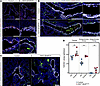 Figure 6
BRD4 promotes lung basal cell differentiation in extra- and intrapulmonary proximal airways. (A) IHC for TRP63, KRT5, and SOX2 in control and BRD4 mutant E18.5 trachea (top and middle panels) and extrapulmonary proximal airway (top and bottom panels). Boxed areas on top panels represent magnified areas presented in the middle and bottom panels. Scale bar: 200 μm (top panels), 50 μm (middle and bottom panels). (B) IHC for TRP63, KRT5, and SOX2 in control and BRD4 mutant E18.5 extra- and intrapulmonary proximal airways leading into the lungs. Boxes represent magnified areas in the right panels. Scale bar: 200 μm (left panels), 25 μm (right panels). (C) IHC for TRP63, KRT5, and SOX2 in control and BRD4 mutant E18.5 intrapulmonary proximal airways. Scale bar: 100 μm. (D) Quantification of the percentages of SOX2+ airway epithelium that are basal cells in trachea, extrapulmonary, and intrapulmonary proximal airways. Quantification data are represented as mean ± SEM. Two tailed t tests: **P ≤ 0.01, n ≥ 4.
BRD4 regulates temporal acquisition of lung endodermal cell fate. Defects in branching morphogenesis can impair alveolar epithelial cell differentiation (47). Moreover, disruption of early proximal-distal patterning may compound later differentiation defects as early progenitor cells are lost. Thus, to determine whether cell specification defects in BRD4 mutants were affected by deficits in branching morphogenesis, we implemented a temporal deletion strategy in the lung endoderm. Using a pan-lung epithelial promoter–driven, inducible Cre recombinase mouse line (Nkx2.1CreERT2), we deleted BRD4 at E10.5 and E15.5, time points before and at the end of branching morphogenesis, respectively (Figure 7A). IHC for BRD4 protein confirmed a loss of expression in the epithelium in Nkx2.1CreERT2 Brd4fl/fl mutants (Supplemental Figure 7A). Assessment of morphological changes revealed that deletion of BRD4 at only E10.5 resulted in distal cystic structures and enlarged normal distal airspaces seen previously in ShhCre Brd4fl/fl mutant embryos (Figure 7, B and C, and Supplemental Figure 7B). We employed IHC for both airway and alveolar epithelial markers to determine the effects of loss of BRD4 on cell specification at E10.5 and E15.5 (Figure 7, D–G, and Supplemental Figure 7, D–F). While alveolar epithelial specification was mildly altered after E10.5 deletion, we observed no changes in the numbers of AT1 or AT2 cells in mutants that were exposed to tamoxifen at E15.5 (Supplemental Figure 7, D–F). Additionally, only AT1 maturation defects were present after deletion of BRD4 at E10.5 (Supplemental Figure 8, A and B). Examination of defects in airway endoderm cell fate demonstrated significant decreases in the numbers of both SCGB1A1+ secretory and TUBB4+ multiciliated cells when deleted at E10.5 (Figure 7, D and E), but there was a decrease in only secretory cells after loss of BRD4 at E15.5 (Figure 7, F and G). These data indicate that loss of BRD4 in ShhCre Brd4fl/fl mutants predominantly affects very early progenitor specification into both alveolar and airway lineages.
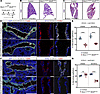 Figure 7
BRD4 regulates temporal acquisition of lung endodermal cell fate. (A) Experimental schematic indicating the time points of tamoxifen injection and harvest. (B) H&E staining of control and mutant lung at E18.5 with E10.5 tamoxifen induction. Scale bar: 200 μm. (C) H&E staining of control and mutant lung at E18.5 with E15.5 tamoxifen induction. Scale bar: 200 μm. (D) Left: IHC for SOX2, TUBB4, and SCGB1A1 in control and mutant E18.5 lungs with E10.5 tamoxifen induction. Scale bar: 100 μm. Dashed white boxes mark magnified regions shown in the middle and right panels. Middle: IHC for SOX2 and TUBB4 in magnified airway regions. Scale bar: 20 μm. Right: IHC for SOX2 and SCGB1A1 in magnified airway regions. Scale bar: 20 μm. (E) Quantification of the percentages of ciliated (left) and secretory (right) cells in the airway regions of control (blue) and mutant (red) lungs at E18.5 with E10.5 tamoxifen induction. Quantification data are represented as mean ± SEM. Two tailed t tests: ****P ≤ 0.0001, n ≥ 4. (F) Left: IHC for SOX2, TUBB4, and SCGB1A1 in control and mutant E18.5 lungs with E15.5 tamoxifen induction. Scale bar: 100 μm. Dashed white box marks magnified region shown in the middle and right panels. Middle: IHC for SOX2 and TUBB4 in magnified airway regions. Scale bar: 20 μm. Right: IHC for SOX2 and SCGB1A1 in magnified airway regions. Scale bar: 20 μm. (G) Quantification of the percentages of ciliated (left) and secretory (right) cells in the airway regions of control (blue) and mutant (red) lungs at E18.5 with E15.5 tamoxifen induction. Quantification data are represented as mean ± SEM. Two tailed t tests: ****P ≤ 0.0001, n ≥ 4.
BRD4 bromodomains inhibition disrupts hESC-derived lung endodermal airway cell fate. Given our findings demonstrating a prominent effect on secretory and ciliated cell specification, we asked whether there is a conserved role for BRD4 in mammalian airway endodermal specification. Additionally, emerging evidence indicates evolutionarily conserved mechanisms in lung development in mice and humans (48–53). Moreover, BET inhibitors are currently in trial for cancer and being considered in fibrosis, including lung fibrosis (31, 54), but their effects on normal or developing lung tissue are unknown. To determine the effects of BRD4 inhibition on human cells, we turned to an established hESC lung endodermal organoid differentiation model (48, 50). We used a hESC triple reporter line (RUES2-SCGB3A2mCherrySFTPCeBFPAGEReGFP) that fluorescently labels differentiated distal airway secretory cells, AT2 cells, and AT1 cells, respectively. To inhibit BRD4’s bromodomains reader function, we used the BET bromodomain inhibitor, JQ1, that competitively binds the BRD4 bromodomains with much higher affinity than the other BET family members such as BRD2 and BRD3 (55, 56). Following differentiation of hESCs into NKX2.1+ endoderm (57), cells were placed into Matrigel drops to form organoids and treated with airway endodermal differentiation media for a total of an additional 25 days (Figure 8A) (48, 50). Treatment with JQ1 at day 0 of differentiation resulted in complete inhibition of growth, a known role of BRD4 JQ1 (Supplemental Figure 9A). Therefore, JQ1 was added on day 10 of the 25-day airway differentiation protocol, several days after the first fluorescent reporter was detected (Supplemental Figure 9B). After imaging the organoids (Figure 8, B and C), quantification of organoid colony forming efficiency (CFE) and percent of organoids expressing fluorescently labeled cells demonstrated a significant decrease in SCGB3A2mCherry-positive organoids with JQ1 treatment compared with controls (Figure 8, D and E). Of note, we did not observe any SFTPCeBFP-positive or AGEReGFP-positive organoids, suggesting BRD4 has no role in the repression of alternative cell fates. JQ1 treatment was not associated with fewer colonies (Figure 8E), but there was a significant decrease in organoid size or diameter with treatment with JQ1 (Figure 8F), corroborating its role in proliferation. To confirm deficits in airway organoid differentiation, we performed qPCR for markers of proximal airway cells. We noted a marked decrease in expression of SCGB3A2, SCGB1A1, FOXJ1, and TP63, indicating differentiation defects in distal secretory and basal cells (Figure 8G). We corroborated these findings using IHC and observed similar expression defects in SCGB3A2, FOXJ1, TP63, and KRT5 (Figure 8H and Supplemental Figure 9C).
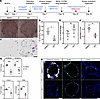 Figure 8
BRD4 bromodomains inhibition disrupts hESC-derived lung endodermal cell fate. (A) Experimental schematic indicating each step of deriving hESCs into airway organoids with components of the media. Red arrow indicates the day when JQ1 treatment begins. (B) Overlapped bright-field and fluorescent images of hESC-derived airway organoids with SCGB3A2mCherry reporter on the day of harvest between DMSO (left) and JQ1 (right) treatment. Scale bar: 1 mm. (C) H&E of tissue sections of organoids treated with DMSO and JQ1. (D–F) Quantification of percentage of mCherry positive organoids (D), colony forming efficiency (E), and organoid diameter (F) between DMSO and JQ1 treatment. Each dot represents an individual differentiation experiment. Quantification data are represented as mean ± SEM. Two tailed t tests: *P ≤ 0.05, **P ≤ 0.01, n ≥ 3. (G) qPCR analysis of secretory cell marker genes, SCGB3A2 and SCGB1A1 (top), ciliated cell marker gene, FOXJ1 (bottom left) and basal cell marker gene, TP63 (bottom right) between DMSO (blue) and JQ1 (red) treatment. Each dot represents an individual differentiation experiment. Quantification data are represented as mean ± SEM. Two-tailed t test: *P ≤ 0.05, **P ≤ 0.01, ***P ≤ 0.001, n = 4. (H) IHC for (left) SCGB3A2, (middle) FOXJ1, and (right) TP63 in DMSO- and JQ1-treated hESC-derived airway organoids. Scale bars: 20 μm.
We first determined whether our differentiation defects were a result of a loss of lung cell identity and performed IHC for NKX2.1 and PDX1, a gene expressed in the developing posterior stomach, anterior duodenum, pancreatic buds, and the proximal extrahepatic biliary system (58). Quantification of the number of lung-specific and primitive gut organoids revealed that organoids were homogenous in expressing an organ-specific marker, and over 70% of all organoids expressed only NKX2.1 (Figure 9, A and B). While nearly 10% of organoids expressed PDX1, there were no differences between DMSO and JQ1 treatment (Figure 9B).
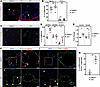 Figure 9
BRD4 bromodomain inhibition sequesters hESC-derived lung endodermal organoids in a SOX2 progenitor state. (A) IHC for NKX2.1 and PDX1 in DMSO- and JQ1-treated organoids. Scale bars: 100 μm). (B) Quantification of the percentages of NKX2.1+ or PDX1+ organoids between DMSO and JQ1 treatment. Quantification data are represented as mean ± SEM. Two-tailed t tests. n ≥ 6. (C) IHC for SOX2 and SOX9 in DMSO- and JQ1-treated organoids. Scale bar: 100 μm. (D) Quantification of the percentages of organoids containing cells that are SOX2+, SOX9+, and SOX2+SOX9+. Quantification data are represented as mean ± SEM. Two-tailed t test: *P ≤ 0.05, **P ≤ 0.01. n = 4. (E) qPCR analysis of organoids expressing SOX2 or SOX9. Quantification data are represented as mean ± SEM. Two-tailed t test: *P ≤ 0.05. n = 3. (F) IHC for SOX2, KRT5, and SCGB3A2 (left 4 panels) and SOX2, TP63, and TUBB4 (right 4 panels) in DMSO- and JQ1-treated organoids. Boxed areas represent magnified areas shown on the panels to the right of each image. Scale bar: 200 μm, 50 μm (magnified boxes). (G) Quantification of the percentages of undifferentiated organoids. Quantification data represented as mean ± SEM. Two-tailed t test: **P ≤ 0.01. n = 3.
Given that most organoids were NKX2.1+, we determined whether these cells remained in an undifferentiated proximal airway state expressing SOX2 (Figure 9, C–E). Interestingly, control organoids contained nearly 50% of the organoids containing only SOX2+ cells or SOX9+ cells with very few containing both SOX2+ and SOX9+ cells (SOX2+SOX9+ organoids) (Figure 9, C and D). Oppositely, treatment with JQ1 significantly increased the number of SOX2+ cell containing organoids in addition to SOX2+SOX9+ organoids with no change in SOX9+ organoids. We confirmed these increases using qPCR for both SOX2 and SOX9, demonstrating a significant increase in SOX2 expression with no change in SOX9 upon JQ1 treatment (Figure 9E). Additionally, we associated this increase in SOX2+ organoids with differentiated airway cell markers using IHC on sequential sections to stain the same organoid for multiple markers in the presence of SOX2 expression. While DMSO-treated organoids simultaneously expressed SOX2 and differentiated cell markers such as SCGB3A2, TUBB4, and TP63 or KRT5 (Figure 9, F and G), JQ1 treatment resulted in nearly zero organoids, with SOX2+ coexpressed with a differentiated airway cell marker, indicating that BRD4 is critical for differentiation and cell identity of airway epithelial cells.
To rule out cell differentiation defects related to increased cell death or a loss of proliferation, we performed IHC for cleaved caspase 3 and observed very little to no cell death in the organoids (Supplemental Figure 9D). We also assessed differences in proliferation via MKI67 expression. Surprisingly, we saw an increase in MKI67+SOX2+ cells within organoids with JQ1 treatment (Supplemental Figure 9, E and F). Given that MKI67 is expressed in a gradient across G1, S, and G2M and that JQ1 treatment arrests cells in G1, we also examined proliferation with staining for proliferating cell nuclear antigen (PCNA) and minichromosome maintenance complex component 5 (MCM5) that mark cells predominantly in S phase and phospho-histone H3 (PHH3), a marker for mitosis (Supplemental Figure 9, G–L) (59, 60). Consistent with MKI67 expression, we observed an increase in both PCNA and MCM5 expression in SOX2+ cells in organoids with JQ1 treatment (Supplemental Figure 9, G–J). With IHC for PHH3, we noted very few cells positive for PHH3 (Supplemental Figure 9K). We quantified the number of organoids that had a PHH3+ cell and noted no differences between DMSO and JQ1 treatments (Supplemental Figure 9L).


