
Research ArticleDermatologyImmunology
Open Access |  10.1172/jci.insight.193038
Th17 cells with regulatory phenotype are the main IL-17F and IL-26 producers in palmoplantar pustulosis
Tran H. Do,1 Rachael Bogle,1 Haihan Zhang,1 Xianying Xing,1 Mehrnaz Gharaee-Kermani,1 Madalina Raducu,2 Jennifer Fox,1 Rundong Jiang,1 Olesya Plazyo,1 Paul W. Harms,3 Mio Nakamura,1 Enze Xing,1 Michel Gilliet,4 Allison C. Billi,1 J. Michelle Kahlenberg,1,5,6 Robert L. Modlin,7 Ozge Uluckan,2 Lam C. Tsoi,1 and Johann E. Gudjonsson1,5,6
1Department of Dermatology, University of Michigan Medical School, Ann Arbor, Michigan, USA.
2Almirall SA, R&D Center, Sant Feliu de Llobregat, Barcelona, Spain.
3Department of Pathology, University of Michigan Medical School, Ann Arbor, Michigan, USA.
4Department of Dermatology and Venereology, University Hospital of Lausanne, Lausanne, Switzerland.
5Department of Internal Medicine, Division of Rheumatology, University of Michigan, Ann Arbor, Michigan, USA.
6A. Alfred Taubman Medical Research Institute, Ann Arbor, Michigan, USA.
7Division of Dermatology, UCLA, Los Angeles, California, USA.
Address correspondence to: Johann E. Gudjonsson, Department of Dermatology 1910 Taubman Center, 1500 E. Medical Center Dr., Ann Arbor, Michigan, 48109, USA. Email: johanng@med.umich.edu.
Find articles by Do, T. in: PubMed | Google Scholar
1Department of Dermatology, University of Michigan Medical School, Ann Arbor, Michigan, USA.
2Almirall SA, R&D Center, Sant Feliu de Llobregat, Barcelona, Spain.
3Department of Pathology, University of Michigan Medical School, Ann Arbor, Michigan, USA.
4Department of Dermatology and Venereology, University Hospital of Lausanne, Lausanne, Switzerland.
5Department of Internal Medicine, Division of Rheumatology, University of Michigan, Ann Arbor, Michigan, USA.
6A. Alfred Taubman Medical Research Institute, Ann Arbor, Michigan, USA.
7Division of Dermatology, UCLA, Los Angeles, California, USA.
Address correspondence to: Johann E. Gudjonsson, Department of Dermatology 1910 Taubman Center, 1500 E. Medical Center Dr., Ann Arbor, Michigan, 48109, USA. Email: johanng@med.umich.edu.
Find articles by
Bogle, R.
in:
PubMed
|
Google Scholar
|

1Department of Dermatology, University of Michigan Medical School, Ann Arbor, Michigan, USA.
2Almirall SA, R&D Center, Sant Feliu de Llobregat, Barcelona, Spain.
3Department of Pathology, University of Michigan Medical School, Ann Arbor, Michigan, USA.
4Department of Dermatology and Venereology, University Hospital of Lausanne, Lausanne, Switzerland.
5Department of Internal Medicine, Division of Rheumatology, University of Michigan, Ann Arbor, Michigan, USA.
6A. Alfred Taubman Medical Research Institute, Ann Arbor, Michigan, USA.
7Division of Dermatology, UCLA, Los Angeles, California, USA.
Address correspondence to: Johann E. Gudjonsson, Department of Dermatology 1910 Taubman Center, 1500 E. Medical Center Dr., Ann Arbor, Michigan, 48109, USA. Email: johanng@med.umich.edu.
Find articles by Zhang, H. in: PubMed | Google Scholar
1Department of Dermatology, University of Michigan Medical School, Ann Arbor, Michigan, USA.
2Almirall SA, R&D Center, Sant Feliu de Llobregat, Barcelona, Spain.
3Department of Pathology, University of Michigan Medical School, Ann Arbor, Michigan, USA.
4Department of Dermatology and Venereology, University Hospital of Lausanne, Lausanne, Switzerland.
5Department of Internal Medicine, Division of Rheumatology, University of Michigan, Ann Arbor, Michigan, USA.
6A. Alfred Taubman Medical Research Institute, Ann Arbor, Michigan, USA.
7Division of Dermatology, UCLA, Los Angeles, California, USA.
Address correspondence to: Johann E. Gudjonsson, Department of Dermatology 1910 Taubman Center, 1500 E. Medical Center Dr., Ann Arbor, Michigan, 48109, USA. Email: johanng@med.umich.edu.
Find articles by
Xing, X.
in:
PubMed
|
Google Scholar
|
1Department of Dermatology, University of Michigan Medical School, Ann Arbor, Michigan, USA.
2Almirall SA, R&D Center, Sant Feliu de Llobregat, Barcelona, Spain.
3Department of Pathology, University of Michigan Medical School, Ann Arbor, Michigan, USA.
4Department of Dermatology and Venereology, University Hospital of Lausanne, Lausanne, Switzerland.
5Department of Internal Medicine, Division of Rheumatology, University of Michigan, Ann Arbor, Michigan, USA.
6A. Alfred Taubman Medical Research Institute, Ann Arbor, Michigan, USA.
7Division of Dermatology, UCLA, Los Angeles, California, USA.
Address correspondence to: Johann E. Gudjonsson, Department of Dermatology 1910 Taubman Center, 1500 E. Medical Center Dr., Ann Arbor, Michigan, 48109, USA. Email: johanng@med.umich.edu.
Find articles by
Gharaee-Kermani, M.
in:
PubMed
|
Google Scholar
|
1Department of Dermatology, University of Michigan Medical School, Ann Arbor, Michigan, USA.
2Almirall SA, R&D Center, Sant Feliu de Llobregat, Barcelona, Spain.
3Department of Pathology, University of Michigan Medical School, Ann Arbor, Michigan, USA.
4Department of Dermatology and Venereology, University Hospital of Lausanne, Lausanne, Switzerland.
5Department of Internal Medicine, Division of Rheumatology, University of Michigan, Ann Arbor, Michigan, USA.
6A. Alfred Taubman Medical Research Institute, Ann Arbor, Michigan, USA.
7Division of Dermatology, UCLA, Los Angeles, California, USA.
Address correspondence to: Johann E. Gudjonsson, Department of Dermatology 1910 Taubman Center, 1500 E. Medical Center Dr., Ann Arbor, Michigan, 48109, USA. Email: johanng@med.umich.edu.
Find articles by Raducu, M. in: PubMed | Google Scholar
1Department of Dermatology, University of Michigan Medical School, Ann Arbor, Michigan, USA.
2Almirall SA, R&D Center, Sant Feliu de Llobregat, Barcelona, Spain.
3Department of Pathology, University of Michigan Medical School, Ann Arbor, Michigan, USA.
4Department of Dermatology and Venereology, University Hospital of Lausanne, Lausanne, Switzerland.
5Department of Internal Medicine, Division of Rheumatology, University of Michigan, Ann Arbor, Michigan, USA.
6A. Alfred Taubman Medical Research Institute, Ann Arbor, Michigan, USA.
7Division of Dermatology, UCLA, Los Angeles, California, USA.
Address correspondence to: Johann E. Gudjonsson, Department of Dermatology 1910 Taubman Center, 1500 E. Medical Center Dr., Ann Arbor, Michigan, 48109, USA. Email: johanng@med.umich.edu.
Find articles by Fox, J. in: PubMed | Google Scholar
1Department of Dermatology, University of Michigan Medical School, Ann Arbor, Michigan, USA.
2Almirall SA, R&D Center, Sant Feliu de Llobregat, Barcelona, Spain.
3Department of Pathology, University of Michigan Medical School, Ann Arbor, Michigan, USA.
4Department of Dermatology and Venereology, University Hospital of Lausanne, Lausanne, Switzerland.
5Department of Internal Medicine, Division of Rheumatology, University of Michigan, Ann Arbor, Michigan, USA.
6A. Alfred Taubman Medical Research Institute, Ann Arbor, Michigan, USA.
7Division of Dermatology, UCLA, Los Angeles, California, USA.
Address correspondence to: Johann E. Gudjonsson, Department of Dermatology 1910 Taubman Center, 1500 E. Medical Center Dr., Ann Arbor, Michigan, 48109, USA. Email: johanng@med.umich.edu.
Find articles by Jiang, R. in: PubMed | Google Scholar
1Department of Dermatology, University of Michigan Medical School, Ann Arbor, Michigan, USA.
2Almirall SA, R&D Center, Sant Feliu de Llobregat, Barcelona, Spain.
3Department of Pathology, University of Michigan Medical School, Ann Arbor, Michigan, USA.
4Department of Dermatology and Venereology, University Hospital of Lausanne, Lausanne, Switzerland.
5Department of Internal Medicine, Division of Rheumatology, University of Michigan, Ann Arbor, Michigan, USA.
6A. Alfred Taubman Medical Research Institute, Ann Arbor, Michigan, USA.
7Division of Dermatology, UCLA, Los Angeles, California, USA.
Address correspondence to: Johann E. Gudjonsson, Department of Dermatology 1910 Taubman Center, 1500 E. Medical Center Dr., Ann Arbor, Michigan, 48109, USA. Email: johanng@med.umich.edu.
Find articles by
Plazyo, O.
in:
PubMed
|
Google Scholar
|
1Department of Dermatology, University of Michigan Medical School, Ann Arbor, Michigan, USA.
2Almirall SA, R&D Center, Sant Feliu de Llobregat, Barcelona, Spain.
3Department of Pathology, University of Michigan Medical School, Ann Arbor, Michigan, USA.
4Department of Dermatology and Venereology, University Hospital of Lausanne, Lausanne, Switzerland.
5Department of Internal Medicine, Division of Rheumatology, University of Michigan, Ann Arbor, Michigan, USA.
6A. Alfred Taubman Medical Research Institute, Ann Arbor, Michigan, USA.
7Division of Dermatology, UCLA, Los Angeles, California, USA.
Address correspondence to: Johann E. Gudjonsson, Department of Dermatology 1910 Taubman Center, 1500 E. Medical Center Dr., Ann Arbor, Michigan, 48109, USA. Email: johanng@med.umich.edu.
Find articles by
Harms, P.
in:
PubMed
|
Google Scholar
|
1Department of Dermatology, University of Michigan Medical School, Ann Arbor, Michigan, USA.
2Almirall SA, R&D Center, Sant Feliu de Llobregat, Barcelona, Spain.
3Department of Pathology, University of Michigan Medical School, Ann Arbor, Michigan, USA.
4Department of Dermatology and Venereology, University Hospital of Lausanne, Lausanne, Switzerland.
5Department of Internal Medicine, Division of Rheumatology, University of Michigan, Ann Arbor, Michigan, USA.
6A. Alfred Taubman Medical Research Institute, Ann Arbor, Michigan, USA.
7Division of Dermatology, UCLA, Los Angeles, California, USA.
Address correspondence to: Johann E. Gudjonsson, Department of Dermatology 1910 Taubman Center, 1500 E. Medical Center Dr., Ann Arbor, Michigan, 48109, USA. Email: johanng@med.umich.edu.
Find articles by
Nakamura, M.
in:
PubMed
|
Google Scholar
|
1Department of Dermatology, University of Michigan Medical School, Ann Arbor, Michigan, USA.
2Almirall SA, R&D Center, Sant Feliu de Llobregat, Barcelona, Spain.
3Department of Pathology, University of Michigan Medical School, Ann Arbor, Michigan, USA.
4Department of Dermatology and Venereology, University Hospital of Lausanne, Lausanne, Switzerland.
5Department of Internal Medicine, Division of Rheumatology, University of Michigan, Ann Arbor, Michigan, USA.
6A. Alfred Taubman Medical Research Institute, Ann Arbor, Michigan, USA.
7Division of Dermatology, UCLA, Los Angeles, California, USA.
Address correspondence to: Johann E. Gudjonsson, Department of Dermatology 1910 Taubman Center, 1500 E. Medical Center Dr., Ann Arbor, Michigan, 48109, USA. Email: johanng@med.umich.edu.
Find articles by
Xing, E.
in:
PubMed
|
Google Scholar
|
1Department of Dermatology, University of Michigan Medical School, Ann Arbor, Michigan, USA.
2Almirall SA, R&D Center, Sant Feliu de Llobregat, Barcelona, Spain.
3Department of Pathology, University of Michigan Medical School, Ann Arbor, Michigan, USA.
4Department of Dermatology and Venereology, University Hospital of Lausanne, Lausanne, Switzerland.
5Department of Internal Medicine, Division of Rheumatology, University of Michigan, Ann Arbor, Michigan, USA.
6A. Alfred Taubman Medical Research Institute, Ann Arbor, Michigan, USA.
7Division of Dermatology, UCLA, Los Angeles, California, USA.
Address correspondence to: Johann E. Gudjonsson, Department of Dermatology 1910 Taubman Center, 1500 E. Medical Center Dr., Ann Arbor, Michigan, 48109, USA. Email: johanng@med.umich.edu.
Find articles by
Gilliet, M.
in:
PubMed
|
Google Scholar
|
1Department of Dermatology, University of Michigan Medical School, Ann Arbor, Michigan, USA.
2Almirall SA, R&D Center, Sant Feliu de Llobregat, Barcelona, Spain.
3Department of Pathology, University of Michigan Medical School, Ann Arbor, Michigan, USA.
4Department of Dermatology and Venereology, University Hospital of Lausanne, Lausanne, Switzerland.
5Department of Internal Medicine, Division of Rheumatology, University of Michigan, Ann Arbor, Michigan, USA.
6A. Alfred Taubman Medical Research Institute, Ann Arbor, Michigan, USA.
7Division of Dermatology, UCLA, Los Angeles, California, USA.
Address correspondence to: Johann E. Gudjonsson, Department of Dermatology 1910 Taubman Center, 1500 E. Medical Center Dr., Ann Arbor, Michigan, 48109, USA. Email: johanng@med.umich.edu.
Find articles by
Billi, A.
in:
PubMed
|
Google Scholar
|
1Department of Dermatology, University of Michigan Medical School, Ann Arbor, Michigan, USA.
2Almirall SA, R&D Center, Sant Feliu de Llobregat, Barcelona, Spain.
3Department of Pathology, University of Michigan Medical School, Ann Arbor, Michigan, USA.
4Department of Dermatology and Venereology, University Hospital of Lausanne, Lausanne, Switzerland.
5Department of Internal Medicine, Division of Rheumatology, University of Michigan, Ann Arbor, Michigan, USA.
6A. Alfred Taubman Medical Research Institute, Ann Arbor, Michigan, USA.
7Division of Dermatology, UCLA, Los Angeles, California, USA.
Address correspondence to: Johann E. Gudjonsson, Department of Dermatology 1910 Taubman Center, 1500 E. Medical Center Dr., Ann Arbor, Michigan, 48109, USA. Email: johanng@med.umich.edu.
Find articles by
Kahlenberg, J.
in:
PubMed
|
Google Scholar
|
1Department of Dermatology, University of Michigan Medical School, Ann Arbor, Michigan, USA.
2Almirall SA, R&D Center, Sant Feliu de Llobregat, Barcelona, Spain.
3Department of Pathology, University of Michigan Medical School, Ann Arbor, Michigan, USA.
4Department of Dermatology and Venereology, University Hospital of Lausanne, Lausanne, Switzerland.
5Department of Internal Medicine, Division of Rheumatology, University of Michigan, Ann Arbor, Michigan, USA.
6A. Alfred Taubman Medical Research Institute, Ann Arbor, Michigan, USA.
7Division of Dermatology, UCLA, Los Angeles, California, USA.
Address correspondence to: Johann E. Gudjonsson, Department of Dermatology 1910 Taubman Center, 1500 E. Medical Center Dr., Ann Arbor, Michigan, 48109, USA. Email: johanng@med.umich.edu.
Find articles by Modlin, R. in: PubMed | Google Scholar
1Department of Dermatology, University of Michigan Medical School, Ann Arbor, Michigan, USA.
2Almirall SA, R&D Center, Sant Feliu de Llobregat, Barcelona, Spain.
3Department of Pathology, University of Michigan Medical School, Ann Arbor, Michigan, USA.
4Department of Dermatology and Venereology, University Hospital of Lausanne, Lausanne, Switzerland.
5Department of Internal Medicine, Division of Rheumatology, University of Michigan, Ann Arbor, Michigan, USA.
6A. Alfred Taubman Medical Research Institute, Ann Arbor, Michigan, USA.
7Division of Dermatology, UCLA, Los Angeles, California, USA.
Address correspondence to: Johann E. Gudjonsson, Department of Dermatology 1910 Taubman Center, 1500 E. Medical Center Dr., Ann Arbor, Michigan, 48109, USA. Email: johanng@med.umich.edu.
Find articles by Uluckan, O. in: PubMed | Google Scholar
1Department of Dermatology, University of Michigan Medical School, Ann Arbor, Michigan, USA.
2Almirall SA, R&D Center, Sant Feliu de Llobregat, Barcelona, Spain.
3Department of Pathology, University of Michigan Medical School, Ann Arbor, Michigan, USA.
4Department of Dermatology and Venereology, University Hospital of Lausanne, Lausanne, Switzerland.
5Department of Internal Medicine, Division of Rheumatology, University of Michigan, Ann Arbor, Michigan, USA.
6A. Alfred Taubman Medical Research Institute, Ann Arbor, Michigan, USA.
7Division of Dermatology, UCLA, Los Angeles, California, USA.
Address correspondence to: Johann E. Gudjonsson, Department of Dermatology 1910 Taubman Center, 1500 E. Medical Center Dr., Ann Arbor, Michigan, 48109, USA. Email: johanng@med.umich.edu.
Find articles by
Tsoi, L.
in:
PubMed
|
Google Scholar
|
1Department of Dermatology, University of Michigan Medical School, Ann Arbor, Michigan, USA.
2Almirall SA, R&D Center, Sant Feliu de Llobregat, Barcelona, Spain.
3Department of Pathology, University of Michigan Medical School, Ann Arbor, Michigan, USA.
4Department of Dermatology and Venereology, University Hospital of Lausanne, Lausanne, Switzerland.
5Department of Internal Medicine, Division of Rheumatology, University of Michigan, Ann Arbor, Michigan, USA.
6A. Alfred Taubman Medical Research Institute, Ann Arbor, Michigan, USA.
7Division of Dermatology, UCLA, Los Angeles, California, USA.
Address correspondence to: Johann E. Gudjonsson, Department of Dermatology 1910 Taubman Center, 1500 E. Medical Center Dr., Ann Arbor, Michigan, 48109, USA. Email: johanng@med.umich.edu.
Find articles by Gudjonsson, J. in: PubMed | Google Scholar
Published September 23, 2025 - More info
JCI Insight. 2025;10(18):e193038. https://doi.org/10.1172/jci.insight.193038.
© 2025 Do et al. This work is licensed under the Creative Commons Attribution 4.0 International License. To view a copy of this license, visit http://creativecommons.org/licenses/by/4.0/.
Received: March 4, 2025; Accepted: August 11, 2025


-
Results
To understand the cellular heterogeneity of PPP, we performed scRNA-Seq on lesional and nonlesional skin biopsies from 3 patients with PPP and acral skin from 5 healthy controls (Table 1). After quality control, we identified 32,364 cells with an average of 2,419 genes and 10,056 transcripts detected per cell. Using unbiased clustering methods from Seurat R package, we identified 25 clusters corresponding to 9 major cell types (Figure 1, A and B). All 9 major cell types were present in all 3 PPP samples (Supplemental Figure 1A; supplemental material available online with this article; https://doi.org/10.1172/jci.insight.193038DS1). Major cell types were annotated using known canonical markers (Figure 1C). Lesional skin from PPP had the largest proportion of endothelial cells and lymphocytes compared with nonlesional and healthy controls (Figure 1B). Meanwhile, nonlesional skin had the largest proportion of melanocytes, and healthy controls had the largest proportion of the keratinocytes (KC) (Figure 1B and Supplemental Figure 1B). Ingenuity Pathway Analysis (IPA) of top canonical pathways of PPP lesional-specific genes revealed immune-related pathways such as IL-10 signaling, antigen presentation, and Th1 and Th2 activation, while the nonlesional-specific and healthy skin-specific genes revealed nonspecific cellular processes such as NRF2-mediated oxidative stress response, superoxide radicals degradation, EIF2 signaling, mTOR signaling, and mitochondrial dysfunction (Figure 1D). We also performed cell-cell interaction analysis using CellChat and found that lesional samples exhibited robust interactions of lymphocyte and myeloid cells (Supplemental Figure 1C). In contrast, the cell-cell interactions in nonlesional and healthy samples were highest between lymphocytes and stromal cells like smooth muscle and melanocytes (Supplemental Figure 1C).
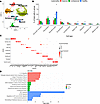 Figure 1
Cellular composition of palmoplantar pustulosis skin and healthy skin. (A) Uniform manifold approximation and projection (UMAP) of 32,364 cells from lesional and nonlesional skin biopsies of 3 patients with PPP and 5 healthy controls colored by cell types. Ingenuity pathway enrichment significance was determined using a right-tailed Fisher’s exact test, and results are displayed as –log(p-value). (B) Bar plot depicting the proportional distribution of cell types across disease conditions (lesional, nonlesional, and healthy), with individual donor proportions represented as dots. (C) Dot plots illustrating selected marker genes expression for cell types. (D) Enriched IPA across lesional (red), nonlesional (green), and healthy (blue) with significance indicated by the dotted line (–log[P value]).
After stringent quality control filtering and clustering analysis, we identified 7 subclusters of keratinocytes (Figure 2A). Using canonical markers, we annotated 5 subclusters of keratinocytes with S100A7, S100A8, and KRT6A as inflammatory; KIT, KRT8, and CD200 as follicular; LOR, FLG, and SLURP1 as supraspinous; KRT5 and KRT14 as basal; and KRT1 and KRT10 as spinous keratinocytes (Figure 2B and Supplemental Figure 2A). Keratinocyte subcluster 6, annotated as inflammatory keratinocytes, was exclusive to the PPP skin (Figure 2C and Supplemental Figure 2, B and C). To understand how each keratinocyte subcluster is regulated, we calculated module scores using genes induced in cultured keratinocytes stimulated by various inflammatory cytokines as previously described (17, 18). Keratinocyte subcluster 6, annotated as inflammatory KC, exhibited the highest IL-17A, TNF, and IL-17–TNF module scores, while keratinocyte subcluster 3, annotated as supraspinous, had the highest IL-36G and IFN-γ module scores (Supplemental Figure 2D), likely a similar population to our previous findings of IL-36G+ supraspinous keratinocytes in psoriasis (18).
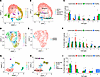 Figure 2
Cellular composition in PPP and healthy skin by subclusters. (A) UMAP of 7 subclusters of keratinocytes colored by subclusters. (B) UMAP of keratinocytes colored by cell types. (C) Bar plot depicting the proportional distribution of keratinocyte subclusters normalized by disease conditions (lesional, nonlesional, and healthy), with individual donor proportions represented as dots. (D) UMAP of 9 subclusters of fibroblasts colored by subclusters. (E) UMAP of fibroblasts colored by cell types. (F) Bar plot depicting the proportional distribution of fibroblast subclusters normalized by disease conditions (lesional, nonlesional, and healthy), with individual donor proportions represented as dots. (G) UMAP of 5 subclusters of myeloid colored by subclusters. (H) UMAP of myeloid colored by cell types. (I) Bar plot depicting the proportional distribution of myeloid subclusters normalized by disease conditions (lesional, nonlesional, and healthy), with individual donor proportions represented as dots.
We analyzed 9 subclusters within fibroblasts (FBs) identifying 2 major FB subclusters, SFRP2 and SFRP4 FB (Figure 2, D and E). We found FB subclusters 4 and 5, which are almost exclusive to PPP skin, had high expression of SFRP2 (Figure 2F and Supplemental Figure 3A). FBs engaged in inflammatory responses in lesional skin as determined by cell-cell interaction strength (Supplemental Figure 1C), suggesting an active role in PPP pathogenesis.
We then examined the immune cell landscape in the dataset. In total, 1,496 immune cells were further analyzed and identified as 894 lymphocytes and 602 myeloid cells based on canonical markers (Figure 1C). For the myeloid compartment, we annotated 5 myeloid types with CD163, LILRB5, and STAB1 as M2-like macrophage; CD1A and CD207 as Langerhans (LC); CD1C, CLEC9A, and CST3 for cDC1; CD1C and CLEC10A as cDC2B; and TREM2, APOE, APOC1, and GPNMB as TREM2 macrophage (Figure 2, G and H, and Supplemental Figure 3B). Interestingly, the cDC2B subcluster was almost exclusive to PPP skin, while the TREM2 macrophage subcluster was exclusive to healthy skin (Figure 2I). Among lymphocyte populations, B cells were enriched among lesional samples, although only in 1 out of 3 patients (Figure 3, A–C, and Supplemental Figure 4A)
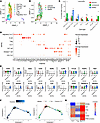 Figure 3
Regulatory Th17 cells identified as a key modulator in the PPP lesional skin. (A) UMAP of lymphocytes colored by cell types. (B) UMAP of lymphocytes colored by lesional (red), nonlesional (green), and healthy (blue). (C) Bar plot depicting the proportional distribution of lymphocyte subclusters normalized by disease conditions (lesional, nonlesional, and healthy), with individual donor proportions represented as dots. (D) Dot plot of canonical marker genes for each annotated lymphocyte subclusters. (E) Violin plots showing selected genes across Th17, Treg, and regulatory Th17 subclusters. (F) Pseudotime trajectory showing the distribution of Th17, Treg, and regulatory Th17 subclusters. (G) Heatmap showing the z score of IPA upstream regulator for the Th17, Treg, and regulatory Th17 subclusters.
Using canonical marker genes, we identified and annotated 6 distinct T cell clusters. First, CD4+ central memory T cells (Tcm) were defined by expression of CD40LG, CD4, and RPL32. A separate cluster of T cells was annotated as “stressed T cell” since it exhibited high levels of stress-inducible genes NR4A1 (19), CDKN1A (20), JUNB (21), and DNAJB1 (22). NK T cells (NKT) coexpressed NK cell markers such as NKG7 alongside T cell markers CD8A and KLRD1 (19–22). Two clusters represented classical Th subsets: classic Th17 cells, which expressed CD4, RORC, and IL17A but low levels of IL17F; and Treg, marked by FOXP3 and CTLA4. Intriguingly, we also discovered a hybrid regTh17 cluster expressing both immunosuppressive markers (FOXP3, CTLA4, and TIGIT) and Th17 cytokines (IL17A and IL17F) (Figure 3, D and E). This regTh17 population was distinguished by high IL1R1 expression, linking IL-1β signaling to Th17 differentiation and RORγt stabilization (23) as well as robust ENTPD1 (CD39) expression, which degrades extracellular ATP to AMP to limit tissue inflammation (24–26). The markedly higher IL-26 production by our regTh17 cells, compared with classic Th17 or Treg population, likely functions as a driver for IL-17A and IL-17F expression while dampening IL10 and IFNG expression (Supplemental Figure 4B).
The presence of regTh17 observed in all 3 patients with PPP, most prominently in 1 donor, underscores their presence in lesional skin (Supplemental Figure 4, A and C). These 3 populations were exclusive to the PPP samples, with lesional cells making up 60% of the subcluster (Figure 3C).Gene set enrichment analysis revealed that both Th17 and regTh17 cells are strongly associated with proinflammatory and cytokine signaling pathways (e.g., regulation of IL-2 and IL-12 production). However, only regTh17 cells demonstrated enrichment in immunomodulatory programs, such as negative regulation of programmed cell death, and of macromolecule biosynthesis (Supplemental Figure 4D). Pseudotime mapping of Treg, Th17, and regTh17 populations showed extensive intermixing along a continuum rather than discrete end states, suggesting a transitional state rather than a terminal lineage (Figure 3F). Th17 cells bifurcate into a cytokine-driven arm (high CD28, IL17A, CD40LG, IL22, TGFBR2) and a migratory arm (high ACTB, CTSC, CORO1A) (Supplemental Figure 4E), whereas upstream-regulator analysis revealed TNF, IFNG, IL2, TGFB1, and NFKB as key drivers of the regTh17 cluster (Figure 3G). Downstream targets OX40 (TNFRSF4) and GITR (TNFRSF18) are highly expressed in regTh17 cells — both in single-cell data (Figure 3E and Supplemental Figure 4F) and by IHC in PPP lesions (Supplemental Figure 4G). In the lesional PPP skin, we confirmed the high expression levels of IL-26 and IL-17A and their coexpression with FOXP3 (Supplemental Figure 5A). We also verified increased expression of FOXP3 in the PPP lesional sample by IHC (Supplemental Figure 5B). These findings suggest that regTh17 cells are characterized by a potent inflammatory signature, driven by upstream regulator such as TNF, IFN-γ, and IL-2, while concurrently exhibiting high expression of IL26, IL17A, and IL17F along with upregulation of regulatory pathways that restrain cell death and biosynthesis. This positions regTh17 cells as a hybrid subset that may both amplify local inflammation and possibly limit excessive tissue damage in PPP.
Cell-cell communication analysis of outgoing signals on the annotated cell types showed the IL-17 signaling pathway exclusively in lesional PPP skin (Figure 4A and Supplemental Figure 6A). Within this network, regTh17 cells emerged as the predominant senders of IL-17 signals, while supraspinous keratinocytes served as the main receivers (Figure 4, B and C). Notably, keratinocyte subcluster 3, which was annotated as supraspinous KC, displayed the highest IL-36G module score, as we had previously identified (Supplemental Figure 2D) (18). To map regTh17 cells in the skin, we applied the NanoString CosMx 1000-plex panel to lesional PPP samples and used a matched scRNA-Seq reference to compute average signature profiles for each annotated cell type (Supplemental Figure 6B), with corresponding H&E-stained tissue morphology shown in Supplemental Figure 6C. Cell types were localized based on their marker genes (Supplemental Figure 6, B and D). Neighborhood enrichment analysis revealed a spatial association between regTh17 cells and keratinocytes, prompting us to interrogate keratinocyte-derived IL-36G expression within these niches (Supplemental Figure 6E). Individual gene expression patterns for CD3E, CD4, CTLA4, FOXP3, IL17A, IL17F, and IL26 were plotted to verify the presence regTh17 cells (Supplemental Figure 6, F–M). We confirmed that regTh17 cells, defined by coexpression of IL17F, FOXP3, and IL26, are present lesional skin (Figure 5A). We also validated strong IL-36G expression in supraspinous keratinocytes and demonstrated their close spatial proximity to IL-17F+FOXP3+IL-26+ cells (Figure 5B), mirroring our previous findings on IL-36–dependent amplification of IL-17A and TNF inflammatory responses in IL-36G+ keratinocytes (18). The spatial proximity of Treg (CD4, FOXP3, IL2RA), Th17 (CD4, IL17A, RORC), regTh17 (IL17F, IL26, FOXP3), and NKT (CD8A, NKG7, KLRD1) cells to IL-36G+ keratinocytes were analyzed, revealing that regTh17 cells had the highest proportion located within 20 μm of IL-36G+ cells (Supplemental Figure 6N). Finally, we observed coexpression of TNFRSF18 (GITR) and TNFRSF4 (OX40) at sites where regTh17 and IL-36+ keratinocytes interact (Figure 5, C and D). These costimulatory interactions may further amplify the inflammatory cascade, implicating OX40L/OX40 and GITR/GITRL signaling in the pathogenesis of PPP.
 Figure 4
Cell-cell communication analysis revealed IL-17 signaling exclusively in lesional PPP skin. (A) Heatmap for outgoing signals associated with each cell type for PPP lesional samples. The top-colored bar plot shows the total signaling strength of a cell group by summarizing all signaling pathways. The right gray bar plot shows the total signaling strength of a signaling pathway by summarizing all cell groups. (B) Heatmap of the inferred IL-17 signaling pathway in each cell type for PPP lesional samples. (C) Violin plots of genes showing expression levels contributing to the IL-17 signaling pathway in each cell type in PPP lesional samples.
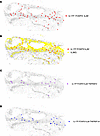 Figure 5
CosMX spatial analysis confirmed regulatory Th17 cells as a key driver of inflammation in PPP skin. (A) Spatial transcriptome image of lesional sample showing cells that coexpressed IL17F, FOXP3, and IL26 (red). (B) Spatial transcriptome image of lesional sample showing cells that coexpressed IL17F, FOXP3, and IL26 (red) and IL-36G+ cells (yellow). (C and D) Spatial transcriptome image of lesional sample showing cells that coexpressed IL17F, FOXP3, IL26, and TNFRSF4 (purple) and IL17F, FOXP3, IL26, and TNFRSF18 (blue).


