
Research ArticleImmunologyOncology
Open Access |  10.1172/jci.insight.192774
Targeting the pentose phosphate pathway mitigates graft-versus-host disease by rewiring alloreactive T cell metabolism
Saeed Daneshmandi,1,2 Eun Ko,3 Qi Yan,1 Jee Eun Choi,2 Prashant K. Singh,4 Richard M. Higashi,5 Andrew N. Lane,5 Teresa W.M. Fan,5 Jingxin Qiu,6 Sophia Hani,3 Keli L. Hippen,3 Jianmin Wang,7 Philip L. McCarthy,8 Bruce R. Blazar,3 and Hemn Mohammadpour1
1Department of Cell Stress Biology, and
2Department of Immunology, Roswell Park Comprehensive Cancer Center, Buffalo, New York, USA.
3Division of Blood & Marrow Transplant & Cellular Therapy, Department of Pediatrics, University of Minnesota, Minneapolis, Minnesota, USA.
4Department of Cancer Genetics & Genomics, Roswell Park Comprehensive Cancer Center, Buffalo, New York, USA.
5Department of Toxicology and Cancer Biology, Markey Cancer Center, Center for Environmental and Systems Biochemistry (CESB), Lexington, Kentucky, USA.
6Department of Pathology,
7Department of Biostatistics & Bioinformatics, and
8Department of Medicine, Roswell Park Comprehensive Cancer Center, Buffalo, New York, USA.
Address correspondence to: Hemn Mohammadpour, CGP-L3-315, Department of Cell Stress Biology, Roswell Park Comprehensive Cancer Center, Elm and Carlton Streets, Buffalo, New York, USA. Email: Hemn.mohammadpour@roswellpark.org.
Authorship note: SD and EK contributed equally to this work. PLM, BRB, and HM are joint supervisors of this work.
Find articles by Daneshmandi, S. in: PubMed | Google Scholar
1Department of Cell Stress Biology, and
2Department of Immunology, Roswell Park Comprehensive Cancer Center, Buffalo, New York, USA.
3Division of Blood & Marrow Transplant & Cellular Therapy, Department of Pediatrics, University of Minnesota, Minneapolis, Minnesota, USA.
4Department of Cancer Genetics & Genomics, Roswell Park Comprehensive Cancer Center, Buffalo, New York, USA.
5Department of Toxicology and Cancer Biology, Markey Cancer Center, Center for Environmental and Systems Biochemistry (CESB), Lexington, Kentucky, USA.
6Department of Pathology,
7Department of Biostatistics & Bioinformatics, and
8Department of Medicine, Roswell Park Comprehensive Cancer Center, Buffalo, New York, USA.
Address correspondence to: Hemn Mohammadpour, CGP-L3-315, Department of Cell Stress Biology, Roswell Park Comprehensive Cancer Center, Elm and Carlton Streets, Buffalo, New York, USA. Email: Hemn.mohammadpour@roswellpark.org.
Authorship note: SD and EK contributed equally to this work. PLM, BRB, and HM are joint supervisors of this work.
Find articles by Ko, E. in: PubMed | Google Scholar
1Department of Cell Stress Biology, and
2Department of Immunology, Roswell Park Comprehensive Cancer Center, Buffalo, New York, USA.
3Division of Blood & Marrow Transplant & Cellular Therapy, Department of Pediatrics, University of Minnesota, Minneapolis, Minnesota, USA.
4Department of Cancer Genetics & Genomics, Roswell Park Comprehensive Cancer Center, Buffalo, New York, USA.
5Department of Toxicology and Cancer Biology, Markey Cancer Center, Center for Environmental and Systems Biochemistry (CESB), Lexington, Kentucky, USA.
6Department of Pathology,
7Department of Biostatistics & Bioinformatics, and
8Department of Medicine, Roswell Park Comprehensive Cancer Center, Buffalo, New York, USA.
Address correspondence to: Hemn Mohammadpour, CGP-L3-315, Department of Cell Stress Biology, Roswell Park Comprehensive Cancer Center, Elm and Carlton Streets, Buffalo, New York, USA. Email: Hemn.mohammadpour@roswellpark.org.
Authorship note: SD and EK contributed equally to this work. PLM, BRB, and HM are joint supervisors of this work.
Find articles by Yan, Q. in: PubMed | Google Scholar
1Department of Cell Stress Biology, and
2Department of Immunology, Roswell Park Comprehensive Cancer Center, Buffalo, New York, USA.
3Division of Blood & Marrow Transplant & Cellular Therapy, Department of Pediatrics, University of Minnesota, Minneapolis, Minnesota, USA.
4Department of Cancer Genetics & Genomics, Roswell Park Comprehensive Cancer Center, Buffalo, New York, USA.
5Department of Toxicology and Cancer Biology, Markey Cancer Center, Center for Environmental and Systems Biochemistry (CESB), Lexington, Kentucky, USA.
6Department of Pathology,
7Department of Biostatistics & Bioinformatics, and
8Department of Medicine, Roswell Park Comprehensive Cancer Center, Buffalo, New York, USA.
Address correspondence to: Hemn Mohammadpour, CGP-L3-315, Department of Cell Stress Biology, Roswell Park Comprehensive Cancer Center, Elm and Carlton Streets, Buffalo, New York, USA. Email: Hemn.mohammadpour@roswellpark.org.
Authorship note: SD and EK contributed equally to this work. PLM, BRB, and HM are joint supervisors of this work.
Find articles by Choi, J. in: PubMed | Google Scholar
1Department of Cell Stress Biology, and
2Department of Immunology, Roswell Park Comprehensive Cancer Center, Buffalo, New York, USA.
3Division of Blood & Marrow Transplant & Cellular Therapy, Department of Pediatrics, University of Minnesota, Minneapolis, Minnesota, USA.
4Department of Cancer Genetics & Genomics, Roswell Park Comprehensive Cancer Center, Buffalo, New York, USA.
5Department of Toxicology and Cancer Biology, Markey Cancer Center, Center for Environmental and Systems Biochemistry (CESB), Lexington, Kentucky, USA.
6Department of Pathology,
7Department of Biostatistics & Bioinformatics, and
8Department of Medicine, Roswell Park Comprehensive Cancer Center, Buffalo, New York, USA.
Address correspondence to: Hemn Mohammadpour, CGP-L3-315, Department of Cell Stress Biology, Roswell Park Comprehensive Cancer Center, Elm and Carlton Streets, Buffalo, New York, USA. Email: Hemn.mohammadpour@roswellpark.org.
Authorship note: SD and EK contributed equally to this work. PLM, BRB, and HM are joint supervisors of this work.
Find articles by Singh, P. in: PubMed | Google Scholar
1Department of Cell Stress Biology, and
2Department of Immunology, Roswell Park Comprehensive Cancer Center, Buffalo, New York, USA.
3Division of Blood & Marrow Transplant & Cellular Therapy, Department of Pediatrics, University of Minnesota, Minneapolis, Minnesota, USA.
4Department of Cancer Genetics & Genomics, Roswell Park Comprehensive Cancer Center, Buffalo, New York, USA.
5Department of Toxicology and Cancer Biology, Markey Cancer Center, Center for Environmental and Systems Biochemistry (CESB), Lexington, Kentucky, USA.
6Department of Pathology,
7Department of Biostatistics & Bioinformatics, and
8Department of Medicine, Roswell Park Comprehensive Cancer Center, Buffalo, New York, USA.
Address correspondence to: Hemn Mohammadpour, CGP-L3-315, Department of Cell Stress Biology, Roswell Park Comprehensive Cancer Center, Elm and Carlton Streets, Buffalo, New York, USA. Email: Hemn.mohammadpour@roswellpark.org.
Authorship note: SD and EK contributed equally to this work. PLM, BRB, and HM are joint supervisors of this work.
Find articles by Higashi, R. in: PubMed | Google Scholar
1Department of Cell Stress Biology, and
2Department of Immunology, Roswell Park Comprehensive Cancer Center, Buffalo, New York, USA.
3Division of Blood & Marrow Transplant & Cellular Therapy, Department of Pediatrics, University of Minnesota, Minneapolis, Minnesota, USA.
4Department of Cancer Genetics & Genomics, Roswell Park Comprehensive Cancer Center, Buffalo, New York, USA.
5Department of Toxicology and Cancer Biology, Markey Cancer Center, Center for Environmental and Systems Biochemistry (CESB), Lexington, Kentucky, USA.
6Department of Pathology,
7Department of Biostatistics & Bioinformatics, and
8Department of Medicine, Roswell Park Comprehensive Cancer Center, Buffalo, New York, USA.
Address correspondence to: Hemn Mohammadpour, CGP-L3-315, Department of Cell Stress Biology, Roswell Park Comprehensive Cancer Center, Elm and Carlton Streets, Buffalo, New York, USA. Email: Hemn.mohammadpour@roswellpark.org.
Authorship note: SD and EK contributed equally to this work. PLM, BRB, and HM are joint supervisors of this work.
Find articles by Lane, A. in: PubMed | Google Scholar
1Department of Cell Stress Biology, and
2Department of Immunology, Roswell Park Comprehensive Cancer Center, Buffalo, New York, USA.
3Division of Blood & Marrow Transplant & Cellular Therapy, Department of Pediatrics, University of Minnesota, Minneapolis, Minnesota, USA.
4Department of Cancer Genetics & Genomics, Roswell Park Comprehensive Cancer Center, Buffalo, New York, USA.
5Department of Toxicology and Cancer Biology, Markey Cancer Center, Center for Environmental and Systems Biochemistry (CESB), Lexington, Kentucky, USA.
6Department of Pathology,
7Department of Biostatistics & Bioinformatics, and
8Department of Medicine, Roswell Park Comprehensive Cancer Center, Buffalo, New York, USA.
Address correspondence to: Hemn Mohammadpour, CGP-L3-315, Department of Cell Stress Biology, Roswell Park Comprehensive Cancer Center, Elm and Carlton Streets, Buffalo, New York, USA. Email: Hemn.mohammadpour@roswellpark.org.
Authorship note: SD and EK contributed equally to this work. PLM, BRB, and HM are joint supervisors of this work.
Find articles by Fan, T. in: PubMed | Google Scholar
1Department of Cell Stress Biology, and
2Department of Immunology, Roswell Park Comprehensive Cancer Center, Buffalo, New York, USA.
3Division of Blood & Marrow Transplant & Cellular Therapy, Department of Pediatrics, University of Minnesota, Minneapolis, Minnesota, USA.
4Department of Cancer Genetics & Genomics, Roswell Park Comprehensive Cancer Center, Buffalo, New York, USA.
5Department of Toxicology and Cancer Biology, Markey Cancer Center, Center for Environmental and Systems Biochemistry (CESB), Lexington, Kentucky, USA.
6Department of Pathology,
7Department of Biostatistics & Bioinformatics, and
8Department of Medicine, Roswell Park Comprehensive Cancer Center, Buffalo, New York, USA.
Address correspondence to: Hemn Mohammadpour, CGP-L3-315, Department of Cell Stress Biology, Roswell Park Comprehensive Cancer Center, Elm and Carlton Streets, Buffalo, New York, USA. Email: Hemn.mohammadpour@roswellpark.org.
Authorship note: SD and EK contributed equally to this work. PLM, BRB, and HM are joint supervisors of this work.
Find articles by Qiu, J. in: PubMed | Google Scholar
1Department of Cell Stress Biology, and
2Department of Immunology, Roswell Park Comprehensive Cancer Center, Buffalo, New York, USA.
3Division of Blood & Marrow Transplant & Cellular Therapy, Department of Pediatrics, University of Minnesota, Minneapolis, Minnesota, USA.
4Department of Cancer Genetics & Genomics, Roswell Park Comprehensive Cancer Center, Buffalo, New York, USA.
5Department of Toxicology and Cancer Biology, Markey Cancer Center, Center for Environmental and Systems Biochemistry (CESB), Lexington, Kentucky, USA.
6Department of Pathology,
7Department of Biostatistics & Bioinformatics, and
8Department of Medicine, Roswell Park Comprehensive Cancer Center, Buffalo, New York, USA.
Address correspondence to: Hemn Mohammadpour, CGP-L3-315, Department of Cell Stress Biology, Roswell Park Comprehensive Cancer Center, Elm and Carlton Streets, Buffalo, New York, USA. Email: Hemn.mohammadpour@roswellpark.org.
Authorship note: SD and EK contributed equally to this work. PLM, BRB, and HM are joint supervisors of this work.
Find articles by Hani, S. in: PubMed | Google Scholar
1Department of Cell Stress Biology, and
2Department of Immunology, Roswell Park Comprehensive Cancer Center, Buffalo, New York, USA.
3Division of Blood & Marrow Transplant & Cellular Therapy, Department of Pediatrics, University of Minnesota, Minneapolis, Minnesota, USA.
4Department of Cancer Genetics & Genomics, Roswell Park Comprehensive Cancer Center, Buffalo, New York, USA.
5Department of Toxicology and Cancer Biology, Markey Cancer Center, Center for Environmental and Systems Biochemistry (CESB), Lexington, Kentucky, USA.
6Department of Pathology,
7Department of Biostatistics & Bioinformatics, and
8Department of Medicine, Roswell Park Comprehensive Cancer Center, Buffalo, New York, USA.
Address correspondence to: Hemn Mohammadpour, CGP-L3-315, Department of Cell Stress Biology, Roswell Park Comprehensive Cancer Center, Elm and Carlton Streets, Buffalo, New York, USA. Email: Hemn.mohammadpour@roswellpark.org.
Authorship note: SD and EK contributed equally to this work. PLM, BRB, and HM are joint supervisors of this work.
Find articles by
Hippen, K.
in:
PubMed
|
Google Scholar
|

1Department of Cell Stress Biology, and
2Department of Immunology, Roswell Park Comprehensive Cancer Center, Buffalo, New York, USA.
3Division of Blood & Marrow Transplant & Cellular Therapy, Department of Pediatrics, University of Minnesota, Minneapolis, Minnesota, USA.
4Department of Cancer Genetics & Genomics, Roswell Park Comprehensive Cancer Center, Buffalo, New York, USA.
5Department of Toxicology and Cancer Biology, Markey Cancer Center, Center for Environmental and Systems Biochemistry (CESB), Lexington, Kentucky, USA.
6Department of Pathology,
7Department of Biostatistics & Bioinformatics, and
8Department of Medicine, Roswell Park Comprehensive Cancer Center, Buffalo, New York, USA.
Address correspondence to: Hemn Mohammadpour, CGP-L3-315, Department of Cell Stress Biology, Roswell Park Comprehensive Cancer Center, Elm and Carlton Streets, Buffalo, New York, USA. Email: Hemn.mohammadpour@roswellpark.org.
Authorship note: SD and EK contributed equally to this work. PLM, BRB, and HM are joint supervisors of this work.
Find articles by
Wang, J.
in:
PubMed
|
Google Scholar
|
1Department of Cell Stress Biology, and
2Department of Immunology, Roswell Park Comprehensive Cancer Center, Buffalo, New York, USA.
3Division of Blood & Marrow Transplant & Cellular Therapy, Department of Pediatrics, University of Minnesota, Minneapolis, Minnesota, USA.
4Department of Cancer Genetics & Genomics, Roswell Park Comprehensive Cancer Center, Buffalo, New York, USA.
5Department of Toxicology and Cancer Biology, Markey Cancer Center, Center for Environmental and Systems Biochemistry (CESB), Lexington, Kentucky, USA.
6Department of Pathology,
7Department of Biostatistics & Bioinformatics, and
8Department of Medicine, Roswell Park Comprehensive Cancer Center, Buffalo, New York, USA.
Address correspondence to: Hemn Mohammadpour, CGP-L3-315, Department of Cell Stress Biology, Roswell Park Comprehensive Cancer Center, Elm and Carlton Streets, Buffalo, New York, USA. Email: Hemn.mohammadpour@roswellpark.org.
Authorship note: SD and EK contributed equally to this work. PLM, BRB, and HM are joint supervisors of this work.
Find articles by
McCarthy, P.
in:
PubMed
|
Google Scholar
|
1Department of Cell Stress Biology, and
2Department of Immunology, Roswell Park Comprehensive Cancer Center, Buffalo, New York, USA.
3Division of Blood & Marrow Transplant & Cellular Therapy, Department of Pediatrics, University of Minnesota, Minneapolis, Minnesota, USA.
4Department of Cancer Genetics & Genomics, Roswell Park Comprehensive Cancer Center, Buffalo, New York, USA.
5Department of Toxicology and Cancer Biology, Markey Cancer Center, Center for Environmental and Systems Biochemistry (CESB), Lexington, Kentucky, USA.
6Department of Pathology,
7Department of Biostatistics & Bioinformatics, and
8Department of Medicine, Roswell Park Comprehensive Cancer Center, Buffalo, New York, USA.
Address correspondence to: Hemn Mohammadpour, CGP-L3-315, Department of Cell Stress Biology, Roswell Park Comprehensive Cancer Center, Elm and Carlton Streets, Buffalo, New York, USA. Email: Hemn.mohammadpour@roswellpark.org.
Authorship note: SD and EK contributed equally to this work. PLM, BRB, and HM are joint supervisors of this work.
Find articles by
Blazar, B.
in:
PubMed
|
Google Scholar
|
1Department of Cell Stress Biology, and
2Department of Immunology, Roswell Park Comprehensive Cancer Center, Buffalo, New York, USA.
3Division of Blood & Marrow Transplant & Cellular Therapy, Department of Pediatrics, University of Minnesota, Minneapolis, Minnesota, USA.
4Department of Cancer Genetics & Genomics, Roswell Park Comprehensive Cancer Center, Buffalo, New York, USA.
5Department of Toxicology and Cancer Biology, Markey Cancer Center, Center for Environmental and Systems Biochemistry (CESB), Lexington, Kentucky, USA.
6Department of Pathology,
7Department of Biostatistics & Bioinformatics, and
8Department of Medicine, Roswell Park Comprehensive Cancer Center, Buffalo, New York, USA.
Address correspondence to: Hemn Mohammadpour, CGP-L3-315, Department of Cell Stress Biology, Roswell Park Comprehensive Cancer Center, Elm and Carlton Streets, Buffalo, New York, USA. Email: Hemn.mohammadpour@roswellpark.org.
Authorship note: SD and EK contributed equally to this work. PLM, BRB, and HM are joint supervisors of this work.
Find articles by Mohammadpour, H. in: PubMed | Google Scholar
Published December 8, 2025 - More info
JCI Insight. 2025;10(23):e192774. https://doi.org/10.1172/jci.insight.192774.
© 2025 Daneshmandi et al. This work is licensed under the Creative Commons Attribution 4.0 International License. To view a copy of this license, visit http://creativecommons.org/licenses/by/4.0/.
Received: February 24, 2025; Accepted: October 15, 2025


-
Results
6PGD gene expression is increased during aGvHD and regulates aGvHD. T cell metabolic reprogramming is entwined with their functional properties (5, 16). Previous studies reported a critical role for PPP after allo-HCT (5). To confirm these findings and to understand T cell metabolic changes after allo-HCT, and how they impact T cell function and allo-HCT outcomes, we employed unbiased single-cell RNA-seq (scRNA-seq) to characterize metabolic changes at days +7 and +14 after allo-HCT. We utilized the fully allogeneic model, C57BL/6→BALB/c, as described above. Donor splenic T cells (CD45+H2Kb+H2Kd–TCRβ+) were sorted on days +7 and +14 for scRNA-seq analysis to identify T cell clusters. Using Seurat analysis, a t-distributed stochastic neighbor embedding (t-SNE) plot revealed 9 T cell clusters (Figure 1A). Proportion analysis showed that naive and stem cell memory T cells were the most abundant, followed by effector/cytotoxic T cells, while central and effector memory T cells represented the smallest fractions (Supplemental Figure 1, A and B; supplemental material available online with this article; https://doi.org/10.1172/jci.insight.192774DS1) (17–22). The pathway enrichment analysis comparing day +14 to day +7 demonstrated upregulation of metabolic pathways, including glucose metabolism and glycolysis, and downregulation of oxidative phosphorylation (OXPHOS) among top 10 pathway changes as aGvHD progresses (Supplemental Figure 1C). Comparative analysis indicated elevated PPP gene signatures in stem cell memory T cells and proliferating clusters on day +14 when compared with day +7 (Figure 1B). An analysis of oxidative PPP during aGvHD initiation using G6pdx, G6pd2, Pgd, and Pgls gene sets revealed increased expression of oxidative PPP genes on day +7 when compared with day 0 for allogeneic, but not syngeneic, T cells (Figure 1C), particularly Pgd (which encodes 6PGD). This was confirmed by real-time PCR (Figure 1D). Western blot analysis further validated the enhanced 6PGD expression in alloreactive T cells (Supplemental Figure 2, A and B).
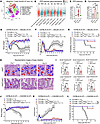 Figure 1
Blockade of oxidative PPP at the 6PGD metabolic checkpoint ameliorates the severity of and the mortality due to aGvHD. (A and B) BALB/c (H-2d) mice were lethally irradiated (8.5 Gy) on day –1 and transplanted with 3.5 × 10⁶ T cell–depleted bone marrow (TCD-BM) cells and 0.7 × 10⁶ purified splenic WT T cells from C57BL/6 (H-2b) mice on day 0. Splenic donor T cells (CD45+H2Kb+H2Kd–TCRβ+) were sorted and examined by scRNA-seq (A). The expression of oxidative PPP gene signatures was detected within the T cell clusters (B). T cells were isolated and pooled for analysis from 5 spleens. (C and D) Allo-HCT model was generated as in A and B using 0.2 × 10⁶ purified splenic WT naive T cells. The expression levels of oxidative PPP pathway genes (C) and the Pgd gene (6PGD) (D) were examined in sorted alloreactive T cells (Allo: CD45+H2Kb+H2Kd–TCRβ+) and from BALB/c mice transplanted with syngeneic mice T cells (Syn: CD45+H2Kb–H2Kd+TCRβ+) on day +7. T cells were pooled from 5 spleens (1-way ANOVA). (E–G) BALB/c (H-2d) mice were lethally irradiated (8.5 Gy) on day –1 and transplanted with 3.5 × 10⁶ TCD-BM cells with or without 0.2 × 10⁶ splenic naive T cells from WT (Pgdfl/fl) or 6PGD-deficient (Pgdfl/flCd4Cre) C57BL/6 (H-2b) mice on day 0. Body weight loss (E) and clinical GvHD scores (F) are presented as mean ± SEM. n = 5 mice per group (2-way ANOVA). Survival data (G) are presented as percentage survival (log-rank Mantel-Cox test). (H and I) Allo-HCT model was generated as in E–G. GvHD progression was examined in the GI tract on days +7, +14, and +21. Representative images of H&E staining demonstrate infiltration of intraepithelial lymphocytes (blue arrows) and apoptosis (red arrows) (H). Original magnification, ×200. Semiquantitative GvHD scoring of small (top) and large (bottom) intestines are shown. n = 5 mice per group (Student’s t test). (J–L) C3H/SW (H-2b) mice were lethally irradiated (11.5 Gy) on day –1 and transplanted with 3.5 × 10⁶ TCD-BM cells with or without 0.5 × 10⁶ splenic naive T cells from Pgdfl/fl or Pgdfl/flCd4Cre C57BL/6 (H-2b) mice on day 0 as minor-mismatched model. Body weight loss (J) and clinical GvHD score (K) data are presented as mean ± SEM. Data are representative of 2 independent experiments (2-way ANOVA). Survival data are presented as percentage survival (log-rank Mantel-Cox test) (L). Data are shown as mean ± SEM. *P < 0.05; **P < 0.01; ***P < 0.001; ****P < 0.0001.
To explore the role of PPP, specifically 6PGD as a metabolic checkpoint regulating T cell function during aGvHD, we developed Cd4Cre × Pgdfl/fl mice, as described in the Methods. In these mice, 6PGD is inactivated in both CD4+ and CD8+ T cells since Cre is expressed at the CD4+CD8+ thymic development stage (15, 23).
We sought to determine the intrinsic impact of 6PGD deficiency on the resting splenic T cell phenotypes. Compared with WT controls, 6PGD-KO mice exhibited a lower frequency of CD4+ and CD8+ T cell subsets (Supplemental Figure 3A). Differentiation marker analysis revealed an increased frequency of effector T cells (CD62L–CD44+) among CD4+ (Supplemental Figure 3B) and CD8+ (Supplemental Figure 3C) populations. Resting-state 6PGD-KO T cells demonstrated a heightened expression of inflammatory cytokines, including IFN-γ (Supplemental Figure 3, D and E), TNF-α (Supplemental Figure 3, F and G), and GM-CSF (Supplemental Figure 3, H and I) when compared with WT T cells.
We therefore utilized purified naive T cells as donor T cells for the allo-HCT experiments to test the role of the PPP at the 6PGD checkpoint on aGvHD severity and mortality. We flow sorted naive T cells and found comparable CD4+ and CD8+ populations between the Pgdfl/flCd4Cre and Pgdfl/fl T cells with high purity (Supplemental Figure 4). To evaluate T cell 6PGD deficiency during aGvHD, WT BALB/c mice were irradiated (8.5 Gy with 137Cs) and transplanted i.v. with 3.5 × 10⁶ total cells of T cell–depleted bone marrow (TCD-BM) from C57BL/6 mice with or without 0.2 × 10⁶ naive T cells isolated from Pgdfl/fl or Pgdfl/flCd4Cre C56BL/6 mice. Compared with recipients of WT T cells, transplanted recipients of 6PGD-KO donor T cells showed reduced aGvHD severity, evidenced by decreased body weight loss (Figure 1E), lower clinical GvHD scores (Figure 1F), and improved survival (Figure 1G). As expected, recipients of TCD-BM alone did not develop aGvHD (Figure 1, E–G).
Histopathological examination of recipient target organs (small and large intestines) confirmed the clinical and survival data. Using a semiquantitative scoring system (24, 25), evaluator-blinded analysis of H&E-stained sections on days +7, +14, and +21 demonstrated lower aGvHD scores in recipients of Pgdfl/flCd4Cre T cells when compared with WT T cells, with reduced intraepithelial lymphocyte infiltration (blue arrows) and apoptosis (red arrows; nuclear and cytoplasm condensation) (Figure 1H). GI histopathology at lower and higher magnification on day +21 and liver histopathology on day +7 and day +14 are shown in Supplemental Figure 5. Semiquantitative scoring confirmed these observations (Figure 1I). Additionally, our previous reports showed the key role of 6PGD on regulation of endogenous (autologous) CD8+ T cell function (15). To examine the role of the PPP in CD8+ T cell–induced aGvHD, WT BALB/c mice were irradiated (8.5 Gy with 137Cs) and transplanted i.v. with 3.5 × 10⁶ TCD-BM cells (from C57BL/6 mice) with or without 1 × 10⁶ naive CD8+ T cells isolated from Pgdfl/fl or Pgdfl/flCd4Cre C56BL/6 mice. The results indicate that, like total T cells, 6PGD-KO donor CD8+ T cells showed reduced aGvHD severity, evidenced by decreased body weight loss (Supplemental Figure 6A), lower clinical GvHD scores (Supplemental Figure 6B), and improved survival (Supplemental Figure 6C).
To confirm the effects of 6PGD blockade in donor T cells in an MHC-matched, minor antigen–mismatched model, irradiated C3H/SW recipients were given 0.5 × 10⁶ splenic naive T cells from either Pgdfl/flCd4Cre or Pgdfl/fl C57BL/6 donors, along with 3.5 × 10⁶ TCD-BM cells (from C57BL/6 mice). C3H/SW recipients of 6PGD-KO T cells when compared with WT T cells displayed reduced body weight loss (Figure 1J), lower clinical GvHD scores (Figure 1K), and improved survival (Figure 1L) compared with controls.
Blockade of the 6PGD metabolic checkpoint prevents early expansion of allogeneic T cells while preserving a subset with an effector phenotype. We sought to understand possible mechanisms as to how 6PGD deficiency in donor naive T cells significantly reduces the severity and mortality of aGvHD. Using the MHC-mismatched (fully allogeneic) aGvHD model (C57BL/6 to BALB/c), we evaluated the impact of 6PGD deficiency on T cell subset dynamics, proliferation, and effector function. Flow cytometric analysis of splenic and hepatic donor T cells in recipients on days +7, +14, and +21 after allo-HCT revealed reduction in the frequencies of various CD4+ and CD8+ T cell subsets, including naive (Figure 2, A and F), stem cell memory (Figure 2, B and G), central memory (Figure 2, C and H), and effector memory (Figure 2, D and I). However, the frequency of effector CD4+ T cells increased, while no significant changes were observed in the effector CD8+ T cell population (Figure 2, E and J). The absolute CD4+ and CD8+ T cell numbers were significantly lower in 6PGD-deficient groups (Figure 2, K and L). Similar trends were observed when evaluating T cell subtype frequencies as percentages of total T cells within individual groups (Supplemental Figure 7). T cell subsets were identified according to the established markers in previous publications (26–29).
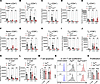 Figure 2
Blockade of the 6PGD metabolic checkpoint prevents alloreactive T cell expansion while maintaining a portion of T cells with effector phenotype. (A–J) BALB/c (H-2d) mice were lethally irradiated (8.5 Gy) on day –1 and transplanted with 3.5 × 10⁶ TCD-BM cells with or without 0.2 × 10⁶ splenic naive T cells from Pgdfl/fl or Pgdfl/flCd4Cre C57BL/6 (H-2b) mice on day 0. The frequency of CD4+ T cells subsets as naive (A), stem cell memory (B), central memory (C), effector memory (D), and effector (E) was detected per spleen of the mice. The frequency of CD8+ T cells subsets as naive (F), stem cell memory (G), central memory (H), effector memory (I), and effector (J) was determined per spleen of the mice. n = 4–5 mice per group. Two-way ANOVA was used to analyze statistical significance among groups. The absolute number of CD4+ (K) and CD8+ (L) T cells was calculated per spleen on days +7, +14, and +21. n = 4–5 mice per group (2-way ANOVA). (M) T cells were isolated from Pgdfl/fl or Pgdfl/flCd4Cre spleens and activated in vitro with plate-bound anti-CD3 plus anti-CD28 mAbs. Apoptosis was determined by Annexin V staining. n = 4 data points per group. Data representative of 2 independent experiments (Student’s t test). (N and O) T cells were isolated from Pgdfl/fl or Pgdfl/flCd4Cre spleens, labeled with CFSE, and activated in vitro with plate-bound anti-CD3 plus anti-CD28 mAbs. The proliferation of CD4+ (top) and CD8+ (bottom) T cells was examined after 72 hours. Unstimulated T cells served as negative controls. n = 3 data points per group. Data representative of 3 independent experiments (Student’s t test) and are shown as mean ± SEM. *P < 0.05; **P < 0.01; ***P < 0.001; ****P < 0.0001.
We sought to determine whether the reduced T cell numbers were due to increased apoptosis or impaired proliferation. T cells were isolated from resting Pgdfl/fl and Pgdfl/flCd4Cre C57BL/6 mouse spleens and stimulated in vitro with anti-CD3 and anti-CD28 mAbs for 72 hours. Comparable viability in both groups was determined by Annexin V staining (Figure 2M). However, 6PGD-deficient T cells exhibited significantly lower proliferation (Figure 2, N and O). C57BL/6 donor T cell proliferation was assessed in vivo using a CFSE dilution assay with a 1:1 mixture of CD45.1+ WT and CD45.2+ Pgdfl/flCd4Cre naive T cells (0.2 × 10⁶ total cells), transferred into lethally irradiated BALB/c mice. On day +3, CFSE dilution analysis confirmed that 6PGD-KO (CD45.2+) T cells proliferated significantly less compared with WT T cells (Figure 3, A–C). Evaluation of donor T cell expansion in spleen, mesenteric lymph nodes, and liver on day +7 showed significantly lower frequencies of CD45.2+ 6PGD-deficient T cells compared with CD45.1+ WT T cells (Figure 3, D and E). Time of cell injection is referred to as day 0 in these experiments.
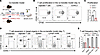 Figure 3
6PGD blockade prevents early expansion of alloreactive T cells in aGvHD models. (A–C) Naive T cells were isolated from CD45.1+ WT and CD45.2+ Pgdfl/flCd4Cre mice, mixed 1:1, and labeled with CFSE. TCD-BM cells (3.5 × 10⁶) and 0.4 × 10⁶ mixed CSFE-labeled T cells infused into lethally irradiated (8.5 Gy) BALB/c mice (A). Proliferation was determined on day +3 by CFSE dilution in splenic CD45.1+ and CD45.2+ T cells (B and C). n = 4–5 mice per group. Data represent one independent experiment (Student’s t test). (D and E) Isolated naive T cells from CD45.1+ WT and CD45.2+ Pgdfl/flCd4Cre mice were mixed 1:1. TCD-BM cells (3.5 × 10⁶) and 0.4 × 10⁶ mixed T cells were infused into lethally irradiated (8.5 Gy) BALB/c mice. The frequencies of CD45.1+ and CD45.2+ T cells in spleen, mesenteric lymph node, and liver were examined on day +7 after transplantation (D). The comparative frequencies of CD45.1+ and CD45.2+ T cells are given as the percentage of total T cells (E). Day 0 is the time of cell injection. n = 4–5 mice per group. Data represent 1 experiment (Student’s t test). Data are shown as mean ± SEM. **P < 0.01; ****P < 0.0001.
Pharmacological blockade of 6PGD with 6AN reduces GvHD severity in murine aGvHD and xenogeneic aGvHD models. To assess whether pharmacological inhibition of 6PGD could mitigate aGvHD lethality, we tested 6-aminonicotinamide (6AN), a small-molecule inhibitor of 6PGD, in both murine and xenogeneic GvHD models. In the C57BL/6→BALB/c aGvHD model, 6AN treatment (0.5 mg/kg, administered daily via i.p. injection starting on day 0 of allo-HCT for the experiment duration) significantly improved long-term survival, with 35% survival of the treated group on day +46 after allo-HCT compared with 0% survival in controls, with reduced clinical GvHD scores and improved weight loss after day +41 (Figure 4, A–C). In vitro studies indicated that 6AN impairs T cell proliferation, which is associated with disrupted cell-cycle progression. 6AN-treated T cells showed a 12%–18% reduction in the proportion of cells in the G2/M phase (Figure 4D) and a corresponding lower fraction of proliferating Ki67+ cells (Figure 4E). Importantly, 6AN treatment did not increase the preapoptotic Annexin V+ fixable viability dye–negative (FVD–) population (Figure 4F), indicating that the reduction in T cell proliferation is independent of increased cell death during the 72 hours of incubation. Instead, 6AN specifically inhibited proliferation (Figure 4G). These findings favor the hypothesis that 6PGD deficiency mitigates T cell proliferation, protecting against severe aGvHD.
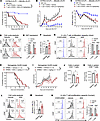 Figure 4
6-Aminonicotinamide (6AN), a small-molecule inhibitor of 6PGD, reduces GvHD severity in a fully allogeneic murine model and a xenogeneic GvHD model. (A–C) BALB/c (H-2d) mice were lethally irradiated (6 Gy) on day –1 and transplanted i.v. with 1 × 10⁷ BM cells with or without 1 × 10⁶ splenic T cells from WT C57BL/6 (H-2b) mice on day 0. Mice were injected i.p. with 0.5 mg/kg 6AN or vehicle (1% DMSO) daily. Mouse survival (A), GvHD clinical score (B), and body weight loss (C) are reported. n = 18–20 mice per group combined from 3 independent repeats (2-way ANOVA). (D) Splenic and lymph node T cells from WT C57BL/6 mice were activated in vitro with plate-bound anti-CD3 and anti-CD28 (10 μg/mL each) plus rmIL-2 (100 ng/mL) for 72 hours and examined by Vybrant DyeCycle (catalog V35003, Thermo Fisher Scientific) for cell cycle determination. (E and F) T cells were treated as in D and examined for Ki67 proliferation marker (E) and apoptosis rate (F). n = 3–6 data points per group. Data representative of 3 independent repeats (Student’s t test). (G) T cells were treated as in D after CFSE labeling and proliferation of CD4+ (top) and CD8+ (bottom) T cells was examined after 72 hours. n = 3 data points per group. Data representative of 3 independent repeats (Student’s t test). (H and I) NSG mice were sublethally irradiated (2.5 Gy) on day –1 and transplanted with 2 × 10⁶ human PBMCs on day 0. Mice were injected i.p. with 1 mg/kg 6AN or vehicle every 2 days. Mouse survival (H) and GvHD clinical scores (I) are reported. n = 12 mice per group from 2 independent repeats (2-way ANOVA). (J and K) Mice were transplanted as in H and I and numbers of splenic CD4+ (J) and CD8+ (K) T cells were examined on day +14 after allo-HCT (Student’s t test). (L and M) Human T cells from healthy donors were activated with anti-CD3 and anti-CD28 (10 μg/mL each) plus rhIL-2 (100 ng/mL) and treated with 6AN or vehicle for 72 hours. Cell cycle status was determined by Vybrant DyeCycle (L) and apoptosis rate by Annexin V staining (M). n = 3 data points per group. Data representative of 2 independent repeats (Student’s t test). (N) Human T cells were isolated and treated as in L after CFSE labeling. The proliferation of CD4+ (top) and CD8+ (bottom) T cells was examined after 72 hours. n = 3 data points per group. Data representative of 2 independent repeats (Student’s t test). Data are shown as mean ± SEM. *P < 0.05; **P < 0.01; ***P < 0.001; ****P < 0.0001.
To evaluate the translational potential of 6AN, we employed a xenogeneic GvHD model using NSG mice. Recipients were sublethally irradiated (2.5 Gy, 137Cs source, day –1) and transplanted i.v. with 2 × 10⁶ human PBMCs on day 0. Mice were treated 6AN or vehicle (1% DMSO) every 2 days (1 mg/kg), given every 2 days via i.p. injection beginning on day 0 of allo-HCT for the experiment duration. 6AN-treated recipients had significantly improved survival (Figure 4H; median survival of 23.5 days in the control group vs. 29.5 days in treated group, P = 0.008) and reduced clinical GvHD scores (Figure 4I). Analysis of donor human CD4+ and CD8+ T cells in treated mice revealed a significant reduction in cell numbers compared with vehicle-treated controls (Figure 4, J and K). Most T cell subsets were significantly reduced except for CD8+ effector memory T and CD4+ and CD8+ effector T cells (Supplemental Figure 8).
In vitro treatment of human T cells with 6AN led to a reduction in cell cycle progression (Figure 4L), without affecting cell viability (Figure 4M). 6AN-treated human T cells had a significant impairment in proliferation (Figure 4N), consistent with the murine in vitro results shown in Figure 4, D–F. The reduced capacity for donor T cell proliferation correlated with decreased alloreactivity and lower GvHD severity. In aggregate, the 6AN results highlight the potential of 6PGD inhibition as a therapeutic strategy for managing GvHD.
6PGD deficiency in T cells induces metabolic reprogramming toward reduced glycolysis and enhanced mitochondrial respiration. Isotope tracing precisely tracks cellular metabolic cascades (30). To determine the specificity of 6PGD blockade and understand the fate of glucose during 6PGD inhibition, we employed stable isotope–resolved metabolomics (SIRM) using D7-D-glucose labeling. Splenic naive T cells were activated with anti-CD3/anti-CD28 monoclonal antibodies and recombinant mouse IL-2 (rmIL-2), with or without 6AN treatment (Figure 5A). In 6AN-treated T cells, there was accumulation of 6-phosphogluconate (6PG), the substrate of 6PGD, confirming enzymatic blockade (Figure 5A). However, levels of R5P, a critical PPP product required for nucleotide biosynthesis, were not affected when compared to vehicle (DMSO) (Figure 5A). Instead, the non-oxidative arm of the PPP was upregulated, leading to increased intermediate levels of erythrose-4-phosphate (E4P), fructose-6-phosphate (F6P), and glyceraldehyde-3-phosphate (G3P) (Supplemental Figure 9). These results confirm that 6PGD blockade occurs following 6AN treatment and that the non-oxidative PPP is upregulated as a compensatory mechanism, providing R5P production for nucleotide biosynthesis.
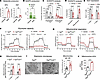 Figure 5
6PGD blockade in T cells induces a metabolic reprogramming evident by reduced glycolysis and higher mitochondrial respiration. (A) Splenic naive T cells from WT C57BL/6 mice were activated in vitro with plate-bound anti-CD3 and anti-CD28 mabs (10 μg/mL each) plus rmIL-2 (100 ng/mL) for 4 days with 6AN (10 μM) or vehicle (DMSO) control, and then exposed to 10 mM D7-D-glucose. The 6-phosphogluconate (6PG) and ribose-5-phosphate (R5P) quantities generated from glucose were determined at 8 hours. n = 3 data points per group (Student’s t test). (B) Levels of NADPH and NADP+ in in vitro–activated T cells after 6AN or vehicle treatment for 72 hours are shown. n = 3 data points per group (Student’s t test). (C and D) The metabolic profiles of 6AN- and vehicle-treated T cells were analyzed by SCENITH single-cell translation profiling (C). 6AN-treated T cells showed lower glycolysis and higher mitochondrial function when compared with vehicle (D). n = 4–5 data points per group. Data representative of 2 independent repeats (2-way ANOVA). (E) In vitro–activated T cells in presence of 6AN or vehicle were examined for expression of the plasma membrane glucose transporter Glut1. n = 4–5 data points per group. Data representative of 2 independent repeats (Student’s t test). (F and G) Splenic naive T cells from Pgdfl/fl or Pgdfl/flCd4Cre mice were activated with plate-bound anti-CD3 and anti-CD28 (10 μg/mL each) plus rmIL-2 (100 ng/mL) for 4 days. For the pharmacologic experiment, naive T cells were isolated from WT mice and stimulated as above in the presence of 6AN (10 μM) or vehicle control. The harvested cells were examined for extracellular acidification rate (ECAR) (F) or oxygen consumption rate (OCR) (G) using the Seahorse assay. n = 4 data points per group. Data representative of 2 independent repeats. (H) T cells were prepared and activated as in F and G. The mitochondrial mass was determined by MitoTracker Deep Red staining. n = 4 data points per group. Data representative of 3 independent repeats (Student’s t test). (I and J) T cells were prepared as in F and G and examined by transmission electron microscopy. The mitochondria in the cells are highlighted by black arrows and mitochondrial number was counted in 20 random fields for each group (I). Scale bar: 1.5 μm. Mitochondrial activity was examined by evaluation of mitochondrial potential (ΔΨm) by tetramethylrhodamine ester (TMRE) (J). n = 4 data points per group. Data representative of 3 independent repeats (Student’s t test) and are shown as mean ± SEM. *P < 0.05; **P < 0.01; ***P < 0.001; ****P < 0.0001.
One of the effects of the PPP is NADPH production (12). To further confirm the impact of 6PGD blockade, we measured NADPH levels in T cells. As expected, NADPH production was significantly reduced in 6AN-treated cells, the functional consequence of 6PGD inhibition (Figure 5B).
To explore how 6PGD blockade alters the metabolic capacity of T cells, we performed SCENITH single-cell translation profiling (31), a flow cytometry–based method to assess energy metabolism. This revealed reduced overall metabolic capacity in 6AN-treated T cells, consistent with shifting to a resting phenotype (Figure 5C). SCENITH analysis showed that the glucose analog 2-deoxy-D-glucose (2DG) significantly decreased glycolysis, while oligomycin, which blocks OXPHOS by inhibiting membrane-bound mitochondrial ATP synthetase, had a significant but modest impact on WT T cells, consistent with a strong reliance of WT T cells on glycolysis. Conversely, in 6AN-treated T cells, the inhibition of OXPHOS using oligomycin had the most significant impact on T cell metabolism, indicating that these T cells rely on OXPHOS for their energy metabolism (Figure 5C). Metabolic profiling further demonstrated a shift from glycolysis to mitochondrial respiration, with decreased glucose dependency and enhanced mitochondrial activity (Figure 5D). This metabolic reprogramming was accompanied by a reduced surface expression of the glucose transporter Glut1, which facilitates glucose transport across the plasma membrane (Figure 5E). Seahorse flux analysis confirmed these findings, showing lower glycolytic activity and increased mitochondrial respiration in T cells without 6PGD in Pgdfl/flCd4Cre mice or WT mice given 6AN for 6PGD pharmacologic blockade (Figure 5, F and G).
As noted above, mitochondrial function is enhanced in 6PGD-KO (Pgdfl/flCd4Cre) T cells. These cells exhibited increased mitochondrial mass and mitochondrial numbers per cell, with elevated mitochondrial membrane potential (Figure 5, H–J). 6PGD blockade reprograms T cell metabolism to prioritize the non-oxidative PPP for nucleotide precursor production (Supplemental Figure 9), while shifting energy generation from glycolysis to mitochondrial respiration (Figure 5).
Previous reports showed the importance of glycolysis in donor T cell survival (32). Our studies confirm that 6PGD blockade does not induce T cell death in the allo-HCT model in vivo (Supplemental Figure 10, A and B) or in T cells activated in vitro as early as 24 hours after stimulation (Supplemental Figure 10, C–E). These results suggest that 6PGD blockade reprograms T cell metabolism to switch from glycolysis to mitochondrial respiration, providing energy for T cell survival and function. The metabolic shift decreases T cell proliferation through diminished glycolysis and reprograms T cells toward a resting state, contributing to the reduced severity and mortality of aGvHD. Thus, 6PGD is central to the integration of metabolic pathways to regulate T cell function and may serve as a therapeutic target.
6PGD blockade preserves GvT responses while ameliorating aGvHD. The reduction in T cell proliferation in 6PGD-KO T cells led us to investigate their capacity to sustain the GvT effect to control malignancy. To evaluate the effect of 6PGD blockade, BALB/c recipients underwent lethal irradiation (8.5 Gy, 137Cs, day –1). On day 0, lethally irradiated mice were injected with 0.1 × 10⁶ luciferase-expressing A20 (A20-Luc+) BALB/c tumor cells 4 hours before transplantation with 3.5 × 10⁶ TCD-BM cells from C57BL/6 WT mice and 0.2 × 10⁶ splenic naive T cells from Pgdfl/fl or Pgdfl/flCd4Cre donors. Controls receiving only tumor cells and TCD-BM exhibited significant tumor growth by bioluminescence imaging (BLI) (Figure 6, A and B). Tumor growth was controlled in recipients of T cells from both Pgdfl/fl and Pgdfl/flCd4Cre donors, indicating that 6PGD-KO T cells retained GvT activity (Figure 6, A and B). Pgdfl/flCd4Cre T cell recipients also exhibited reduced aGvHD severity compared with those receiving Pgdfl/fl T cells, as demonstrated by improved body weight (Figure 6C), lower clinical GvHD scores (Figure 6D), and enhanced survival (Figure 6E). These results indicated that 6PGD blockade in donor T cells achieves the dual benefit of mitigating aGvHD by inhibiting the T cells, which causes GvHD while preserving the GvT efficacy even with a reduction in cytotoxic T cells.
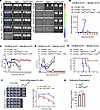 Figure 6
6PGD blockade preserved GvT responses while ameliorating aGvHD. (A and B) BALB/c (H-2d) mice were lethally irradiated (8.5 Gy) on day –1 and transplanted i.v. with 3.5 × 10⁶ TCD-BM cells with or without 0.2 × 10⁶ splenic naive T cells from Pgdfl/fl or Pgdfl/flCd4Cre C57BL/6 (H-2b) mice plus 0.1 × 10⁶ A20-Luc+ tumor cells on day 0. Tumor growth was monitored by bioluminescence imaging (BLI) (A). Tumor growth was quantified by detection of bioluminescent signals (B). n = 5 mice per group. Data representative of 2 independent repeats (2-way ANOVA). (C–E) In the mice treated as in A and B, body weight loss (C) and clinical GvHD score (D) were measured and are presented as mean ± SEM. Two-way ANOVA was used to analyze statistical significance among groups. (E) Survival of mice was monitored and is presented as percentage survival. n = 5 mice per group. Data representative of 2 independent repeats (log-rank Mantel-Cox test). (F) For tumor killing by activated T cells, splenic naive T cells were isolated from Pgdfl/fl or Pgdfl/flCd4Cre mice and activated with plate-bound anti-CD3 and anti-CD28 (10 μg/mL each) plus rmIL-2 (100 ng/mL) for 4 days. Harvested T cells were cocultured with A20-Luc+ tumor cells and tumor killing was measured after 18 hours using BLI. Tumor cell survival was quantified by detection of bioluminescent signals. n = 3 time points per group. Data representative of 3 independent repeats (2-way ANOVA). (G) T cells were activated as in F. T cell granzyme B expression was detected by flow cytometry. n = 3 time points per group. Data representative of 3 independent repeats (Student’s t test) and are shown as mean ± SEM. *P < 0.05; **P < 0.01; ***P < 0.001; ****P < 0.0001.
To confirm the antitumor capacity of 6PGD-deficient T cells, splenic naive T cells were isolated from Pgdfl/fl or Pgdfl/flCd4Cre mice, activated in vitro with anti-CD3/anti-CD28 mAbs, and cocultured with A20-Luc+ tumor cells. Tumor killing was assessed at 18 hours using BLI based on our previous publication (24, 33). Pgdfl/flCd4Cre T cells exhibited enhanced tumor-killing capacity compared with Pgdfl/fl T cells (Figures 6F). Increased cytotoxicity of 6PGD-deficient T cells against A20-Luc+ tumor cell was associated with higher granzyme B expression (Figure 6G), a known factor for T cell-mediate A20-Luc+ tumor cell lysis (34). Previous studies reported that generation of lactic acid by tumor cells disrupts the metabolic fitness of T cells, including reduced glycolysis, resulting in defective T cell antitumor responses (32). Our results suggest that 6PGD blockade reprograms T cell metabolism to switch from glycolysis to mitochondrial respiration. This metabolic switch prevents adverse effects (toxicity) while inducing a tumor-killing phenotype in T cells.
To further confirm these findings and to explore the potential clinical translation of 6PGD inhibition on GvT effects, we treated mice in the GvT model with 6AN. BALB/c mice received lethal irradiation (8.5 Gy, 137Cs) on day –1 and on day 0 were injected with A20-Luc+ tumor cells (0.1 × 10⁶ cells) 4 hours before transplantation with 3.5 × 10⁶ TCD-BM cells from C57BL/6 WT mice and 0.2 × 10⁶ splenic naive T cells from WT donors. The mice were treated with vehicle or 6AN (0.5 mg/kg, administered daily via i.p. injection), starting on day 0 until the endpoint. Examination of tumor growth showed that control mice receiving only tumor cells and TCD-BM treated with either vehicle or 6AN exhibited significant tumor growth (Figure 7A). Tumor growth was controlled in recipients of T cells from both vehicle and 6AN treatment, indicating that the T cells retained GvT activity (Figure 7A). In mice with donor T cells plus tumor cells, 6AN-treated recipients further exhibited reduced aGvHD severity compared with those receiving vehicle, as shown by higher body weight (Figure 7B), lower clinical GvHD scores (Figure 7C), and enhanced survival (Figure 7D). These results show the effect of 6PGD inhibition on donor T cells to mitigate aGvHD while maintaining the GvT effect. Next, we examined the direct effect of 6AN on tumor cells. We have previously shown that 6PGD blockade enhances the antitumor function of endogenous (autologous) T cells (15). Other investigators have shown that 6PGD function supports tumor cell growth (35, 36). We used a syngeneic GvT murine model with and without 6AN, showing that 6AN treatment reduces tumor growth, resulting in increased survival, without changes in body weight or GvHD clinical score (Supplemental Figure 11, A–C). We showed that in vitro exposure of A20 tumor cells to increased concentration of 6AN (5, 10, and 20 μM) resulted in a higher apoptotic rate (Supplemental Figure 11D) and lower expression of the Ki67 proliferation marker (Supplemental Figure 11E). These results confirm the direct additive effect of 6AN on tumor control along with the enhanced antitumor function of donor T cells, while ameliorating the aGvHD severity, highlighting the potential clinical translatability of 6AN treatment after allo-HCT.
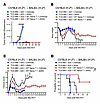 Figure 7
Pharmacological inhibition of 6PGD suppresses aGvHD while maintaining GvT responses. (A–D) BALB/c (H-2d) mice were lethally irradiated (8.5 Gy) on day –1 and transplanted i.v. with 3.5 × 10⁶ TCD-BM cells with or without 0.2 × 10⁶ splenic naive T cells from WT C57BL/6 (H-2b) mice plus 0.1 × 10⁶ A20-Luc+ tumor cells on day 0. Mice were injected i.p. with 0.5 mg/kg 6-aminonicotinamide (6AN) or vehicle (1% DMSO) daily. Tumor growth was quantified by detection of bioluminescent signals (A). Treated mice body weight loss (B) and clinical GvHD score (C) were measured and are presented as mean ± SEM (2-way ANOVA). (D) Survival of mice was monitored and is presented as percentage survival. n = 5 mice per group (log-rank Mantel-Cox test). Data are shown as mean ± SEM. *P < 0.05; **P < 0.01; ***P < 0.001.
The ability to preferentially modulate T cell responses through metabolic reprogramming at the 6PGD checkpoint provides a promising therapeutic strategy for achieving improved outcomes in allo-HCT.


