
Research ArticleCardiologyVascular biology
Open Access |  10.1172/jci.insight.190534
Single-cell spatial transcriptomics unravels the cellular landscape of abdominal aortic aneurysm
Guizhen Zhao,1,2 Chun-Seok Cho,3 Hongyu Liu,1 Yongha Hwang,3 Yichen Si,4 Myungjin Kim,3 Yongjie Deng,1 Yang Zhao,1 Chao Xue,1 Yanhong Guo,1 Lin Chang,1 Dogukan Mizrak,5 Bo Yang,5 Hyun Min Kang,4 Jifeng Zhang,1 Jun Hee Lee,3 and Y. Eugene Chen1,3,5
1Department of Internal Medicine, University of Michigan Medical School, Ann Arbor, Michigan, USA.
2Department of Pharmacological and Pharmaceutical Sciences, University of Houston College of Pharmacy, Houston, Texas, USA.
3Department of Molecular & Integrative Physiology, University of Michigan Medical School, Ann Arbor, Michigan, USA.
4Department of Biostatistics, University of Michigan School of Public Health, Ann Arbor, Michigan, USA.
5Department of Cardiac Surgery, University of Michigan Medical School, Ann Arbor, Michigan, USA.
Address correspondence to: Y. Eugene Chen, Department of Internal Medicine, University of Michigan Medical Center, NCRC Bldg26, Room 361S, 2800 Plymouth Rd, Ann Arbor, Michigan 48109, USA. Email: echenum@umich.edu. Or to: Jifeng Zhang, Department of Internal Medicine, University of Michigan Medical Center, NCRC Bldg26, Room 357S, 2800 Plymouth Rd, Ann Arbor, Michigan 48109, USA. Email: jifengz@umich.edu. Or to: Jun Hee Lee, Department of Molecular & Integrative Physiology, University of Michigan Medical School, 3019 BSRB, 109 Zina Pitcher Place, Ann Arbor, Michigan 48109, USA. Email: leeju@umich.edu. Or to: Guizhen Zhao, Department of Pharmacological and Pharmaceutical Sciences, University of Houston College of Pharmacy. Health 2, Room 5021. 4349 Martin Luther King Blvd., Houston, Texas 77204, USA. Email: gzhao3@central.uh.edu.
Authorship note: GZ and CSC contributed equally to this work.
Find articles by Zhao, G. in: PubMed | Google Scholar
1Department of Internal Medicine, University of Michigan Medical School, Ann Arbor, Michigan, USA.
2Department of Pharmacological and Pharmaceutical Sciences, University of Houston College of Pharmacy, Houston, Texas, USA.
3Department of Molecular & Integrative Physiology, University of Michigan Medical School, Ann Arbor, Michigan, USA.
4Department of Biostatistics, University of Michigan School of Public Health, Ann Arbor, Michigan, USA.
5Department of Cardiac Surgery, University of Michigan Medical School, Ann Arbor, Michigan, USA.
Address correspondence to: Y. Eugene Chen, Department of Internal Medicine, University of Michigan Medical Center, NCRC Bldg26, Room 361S, 2800 Plymouth Rd, Ann Arbor, Michigan 48109, USA. Email: echenum@umich.edu. Or to: Jifeng Zhang, Department of Internal Medicine, University of Michigan Medical Center, NCRC Bldg26, Room 357S, 2800 Plymouth Rd, Ann Arbor, Michigan 48109, USA. Email: jifengz@umich.edu. Or to: Jun Hee Lee, Department of Molecular & Integrative Physiology, University of Michigan Medical School, 3019 BSRB, 109 Zina Pitcher Place, Ann Arbor, Michigan 48109, USA. Email: leeju@umich.edu. Or to: Guizhen Zhao, Department of Pharmacological and Pharmaceutical Sciences, University of Houston College of Pharmacy. Health 2, Room 5021. 4349 Martin Luther King Blvd., Houston, Texas 77204, USA. Email: gzhao3@central.uh.edu.
Authorship note: GZ and CSC contributed equally to this work.
Find articles by Cho, C. in: PubMed | Google Scholar
1Department of Internal Medicine, University of Michigan Medical School, Ann Arbor, Michigan, USA.
2Department of Pharmacological and Pharmaceutical Sciences, University of Houston College of Pharmacy, Houston, Texas, USA.
3Department of Molecular & Integrative Physiology, University of Michigan Medical School, Ann Arbor, Michigan, USA.
4Department of Biostatistics, University of Michigan School of Public Health, Ann Arbor, Michigan, USA.
5Department of Cardiac Surgery, University of Michigan Medical School, Ann Arbor, Michigan, USA.
Address correspondence to: Y. Eugene Chen, Department of Internal Medicine, University of Michigan Medical Center, NCRC Bldg26, Room 361S, 2800 Plymouth Rd, Ann Arbor, Michigan 48109, USA. Email: echenum@umich.edu. Or to: Jifeng Zhang, Department of Internal Medicine, University of Michigan Medical Center, NCRC Bldg26, Room 357S, 2800 Plymouth Rd, Ann Arbor, Michigan 48109, USA. Email: jifengz@umich.edu. Or to: Jun Hee Lee, Department of Molecular & Integrative Physiology, University of Michigan Medical School, 3019 BSRB, 109 Zina Pitcher Place, Ann Arbor, Michigan 48109, USA. Email: leeju@umich.edu. Or to: Guizhen Zhao, Department of Pharmacological and Pharmaceutical Sciences, University of Houston College of Pharmacy. Health 2, Room 5021. 4349 Martin Luther King Blvd., Houston, Texas 77204, USA. Email: gzhao3@central.uh.edu.
Authorship note: GZ and CSC contributed equally to this work.
Find articles by Liu, H. in: PubMed | Google Scholar
1Department of Internal Medicine, University of Michigan Medical School, Ann Arbor, Michigan, USA.
2Department of Pharmacological and Pharmaceutical Sciences, University of Houston College of Pharmacy, Houston, Texas, USA.
3Department of Molecular & Integrative Physiology, University of Michigan Medical School, Ann Arbor, Michigan, USA.
4Department of Biostatistics, University of Michigan School of Public Health, Ann Arbor, Michigan, USA.
5Department of Cardiac Surgery, University of Michigan Medical School, Ann Arbor, Michigan, USA.
Address correspondence to: Y. Eugene Chen, Department of Internal Medicine, University of Michigan Medical Center, NCRC Bldg26, Room 361S, 2800 Plymouth Rd, Ann Arbor, Michigan 48109, USA. Email: echenum@umich.edu. Or to: Jifeng Zhang, Department of Internal Medicine, University of Michigan Medical Center, NCRC Bldg26, Room 357S, 2800 Plymouth Rd, Ann Arbor, Michigan 48109, USA. Email: jifengz@umich.edu. Or to: Jun Hee Lee, Department of Molecular & Integrative Physiology, University of Michigan Medical School, 3019 BSRB, 109 Zina Pitcher Place, Ann Arbor, Michigan 48109, USA. Email: leeju@umich.edu. Or to: Guizhen Zhao, Department of Pharmacological and Pharmaceutical Sciences, University of Houston College of Pharmacy. Health 2, Room 5021. 4349 Martin Luther King Blvd., Houston, Texas 77204, USA. Email: gzhao3@central.uh.edu.
Authorship note: GZ and CSC contributed equally to this work.
Find articles by Hwang, Y. in: PubMed | Google Scholar
1Department of Internal Medicine, University of Michigan Medical School, Ann Arbor, Michigan, USA.
2Department of Pharmacological and Pharmaceutical Sciences, University of Houston College of Pharmacy, Houston, Texas, USA.
3Department of Molecular & Integrative Physiology, University of Michigan Medical School, Ann Arbor, Michigan, USA.
4Department of Biostatistics, University of Michigan School of Public Health, Ann Arbor, Michigan, USA.
5Department of Cardiac Surgery, University of Michigan Medical School, Ann Arbor, Michigan, USA.
Address correspondence to: Y. Eugene Chen, Department of Internal Medicine, University of Michigan Medical Center, NCRC Bldg26, Room 361S, 2800 Plymouth Rd, Ann Arbor, Michigan 48109, USA. Email: echenum@umich.edu. Or to: Jifeng Zhang, Department of Internal Medicine, University of Michigan Medical Center, NCRC Bldg26, Room 357S, 2800 Plymouth Rd, Ann Arbor, Michigan 48109, USA. Email: jifengz@umich.edu. Or to: Jun Hee Lee, Department of Molecular & Integrative Physiology, University of Michigan Medical School, 3019 BSRB, 109 Zina Pitcher Place, Ann Arbor, Michigan 48109, USA. Email: leeju@umich.edu. Or to: Guizhen Zhao, Department of Pharmacological and Pharmaceutical Sciences, University of Houston College of Pharmacy. Health 2, Room 5021. 4349 Martin Luther King Blvd., Houston, Texas 77204, USA. Email: gzhao3@central.uh.edu.
Authorship note: GZ and CSC contributed equally to this work.
Find articles by Si, Y. in: PubMed | Google Scholar
1Department of Internal Medicine, University of Michigan Medical School, Ann Arbor, Michigan, USA.
2Department of Pharmacological and Pharmaceutical Sciences, University of Houston College of Pharmacy, Houston, Texas, USA.
3Department of Molecular & Integrative Physiology, University of Michigan Medical School, Ann Arbor, Michigan, USA.
4Department of Biostatistics, University of Michigan School of Public Health, Ann Arbor, Michigan, USA.
5Department of Cardiac Surgery, University of Michigan Medical School, Ann Arbor, Michigan, USA.
Address correspondence to: Y. Eugene Chen, Department of Internal Medicine, University of Michigan Medical Center, NCRC Bldg26, Room 361S, 2800 Plymouth Rd, Ann Arbor, Michigan 48109, USA. Email: echenum@umich.edu. Or to: Jifeng Zhang, Department of Internal Medicine, University of Michigan Medical Center, NCRC Bldg26, Room 357S, 2800 Plymouth Rd, Ann Arbor, Michigan 48109, USA. Email: jifengz@umich.edu. Or to: Jun Hee Lee, Department of Molecular & Integrative Physiology, University of Michigan Medical School, 3019 BSRB, 109 Zina Pitcher Place, Ann Arbor, Michigan 48109, USA. Email: leeju@umich.edu. Or to: Guizhen Zhao, Department of Pharmacological and Pharmaceutical Sciences, University of Houston College of Pharmacy. Health 2, Room 5021. 4349 Martin Luther King Blvd., Houston, Texas 77204, USA. Email: gzhao3@central.uh.edu.
Authorship note: GZ and CSC contributed equally to this work.
Find articles by Kim, M. in: PubMed | Google Scholar
1Department of Internal Medicine, University of Michigan Medical School, Ann Arbor, Michigan, USA.
2Department of Pharmacological and Pharmaceutical Sciences, University of Houston College of Pharmacy, Houston, Texas, USA.
3Department of Molecular & Integrative Physiology, University of Michigan Medical School, Ann Arbor, Michigan, USA.
4Department of Biostatistics, University of Michigan School of Public Health, Ann Arbor, Michigan, USA.
5Department of Cardiac Surgery, University of Michigan Medical School, Ann Arbor, Michigan, USA.
Address correspondence to: Y. Eugene Chen, Department of Internal Medicine, University of Michigan Medical Center, NCRC Bldg26, Room 361S, 2800 Plymouth Rd, Ann Arbor, Michigan 48109, USA. Email: echenum@umich.edu. Or to: Jifeng Zhang, Department of Internal Medicine, University of Michigan Medical Center, NCRC Bldg26, Room 357S, 2800 Plymouth Rd, Ann Arbor, Michigan 48109, USA. Email: jifengz@umich.edu. Or to: Jun Hee Lee, Department of Molecular & Integrative Physiology, University of Michigan Medical School, 3019 BSRB, 109 Zina Pitcher Place, Ann Arbor, Michigan 48109, USA. Email: leeju@umich.edu. Or to: Guizhen Zhao, Department of Pharmacological and Pharmaceutical Sciences, University of Houston College of Pharmacy. Health 2, Room 5021. 4349 Martin Luther King Blvd., Houston, Texas 77204, USA. Email: gzhao3@central.uh.edu.
Authorship note: GZ and CSC contributed equally to this work.
Find articles by Deng, Y. in: PubMed | Google Scholar
1Department of Internal Medicine, University of Michigan Medical School, Ann Arbor, Michigan, USA.
2Department of Pharmacological and Pharmaceutical Sciences, University of Houston College of Pharmacy, Houston, Texas, USA.
3Department of Molecular & Integrative Physiology, University of Michigan Medical School, Ann Arbor, Michigan, USA.
4Department of Biostatistics, University of Michigan School of Public Health, Ann Arbor, Michigan, USA.
5Department of Cardiac Surgery, University of Michigan Medical School, Ann Arbor, Michigan, USA.
Address correspondence to: Y. Eugene Chen, Department of Internal Medicine, University of Michigan Medical Center, NCRC Bldg26, Room 361S, 2800 Plymouth Rd, Ann Arbor, Michigan 48109, USA. Email: echenum@umich.edu. Or to: Jifeng Zhang, Department of Internal Medicine, University of Michigan Medical Center, NCRC Bldg26, Room 357S, 2800 Plymouth Rd, Ann Arbor, Michigan 48109, USA. Email: jifengz@umich.edu. Or to: Jun Hee Lee, Department of Molecular & Integrative Physiology, University of Michigan Medical School, 3019 BSRB, 109 Zina Pitcher Place, Ann Arbor, Michigan 48109, USA. Email: leeju@umich.edu. Or to: Guizhen Zhao, Department of Pharmacological and Pharmaceutical Sciences, University of Houston College of Pharmacy. Health 2, Room 5021. 4349 Martin Luther King Blvd., Houston, Texas 77204, USA. Email: gzhao3@central.uh.edu.
Authorship note: GZ and CSC contributed equally to this work.
Find articles by
Zhao, Y.
in:
PubMed
|
Google Scholar
|

1Department of Internal Medicine, University of Michigan Medical School, Ann Arbor, Michigan, USA.
2Department of Pharmacological and Pharmaceutical Sciences, University of Houston College of Pharmacy, Houston, Texas, USA.
3Department of Molecular & Integrative Physiology, University of Michigan Medical School, Ann Arbor, Michigan, USA.
4Department of Biostatistics, University of Michigan School of Public Health, Ann Arbor, Michigan, USA.
5Department of Cardiac Surgery, University of Michigan Medical School, Ann Arbor, Michigan, USA.
Address correspondence to: Y. Eugene Chen, Department of Internal Medicine, University of Michigan Medical Center, NCRC Bldg26, Room 361S, 2800 Plymouth Rd, Ann Arbor, Michigan 48109, USA. Email: echenum@umich.edu. Or to: Jifeng Zhang, Department of Internal Medicine, University of Michigan Medical Center, NCRC Bldg26, Room 357S, 2800 Plymouth Rd, Ann Arbor, Michigan 48109, USA. Email: jifengz@umich.edu. Or to: Jun Hee Lee, Department of Molecular & Integrative Physiology, University of Michigan Medical School, 3019 BSRB, 109 Zina Pitcher Place, Ann Arbor, Michigan 48109, USA. Email: leeju@umich.edu. Or to: Guizhen Zhao, Department of Pharmacological and Pharmaceutical Sciences, University of Houston College of Pharmacy. Health 2, Room 5021. 4349 Martin Luther King Blvd., Houston, Texas 77204, USA. Email: gzhao3@central.uh.edu.
Authorship note: GZ and CSC contributed equally to this work.
Find articles by
Xue, C.
in:
PubMed
|
Google Scholar
|
1Department of Internal Medicine, University of Michigan Medical School, Ann Arbor, Michigan, USA.
2Department of Pharmacological and Pharmaceutical Sciences, University of Houston College of Pharmacy, Houston, Texas, USA.
3Department of Molecular & Integrative Physiology, University of Michigan Medical School, Ann Arbor, Michigan, USA.
4Department of Biostatistics, University of Michigan School of Public Health, Ann Arbor, Michigan, USA.
5Department of Cardiac Surgery, University of Michigan Medical School, Ann Arbor, Michigan, USA.
Address correspondence to: Y. Eugene Chen, Department of Internal Medicine, University of Michigan Medical Center, NCRC Bldg26, Room 361S, 2800 Plymouth Rd, Ann Arbor, Michigan 48109, USA. Email: echenum@umich.edu. Or to: Jifeng Zhang, Department of Internal Medicine, University of Michigan Medical Center, NCRC Bldg26, Room 357S, 2800 Plymouth Rd, Ann Arbor, Michigan 48109, USA. Email: jifengz@umich.edu. Or to: Jun Hee Lee, Department of Molecular & Integrative Physiology, University of Michigan Medical School, 3019 BSRB, 109 Zina Pitcher Place, Ann Arbor, Michigan 48109, USA. Email: leeju@umich.edu. Or to: Guizhen Zhao, Department of Pharmacological and Pharmaceutical Sciences, University of Houston College of Pharmacy. Health 2, Room 5021. 4349 Martin Luther King Blvd., Houston, Texas 77204, USA. Email: gzhao3@central.uh.edu.
Authorship note: GZ and CSC contributed equally to this work.
Find articles by
Guo, Y.
in:
PubMed
|
Google Scholar
|
1Department of Internal Medicine, University of Michigan Medical School, Ann Arbor, Michigan, USA.
2Department of Pharmacological and Pharmaceutical Sciences, University of Houston College of Pharmacy, Houston, Texas, USA.
3Department of Molecular & Integrative Physiology, University of Michigan Medical School, Ann Arbor, Michigan, USA.
4Department of Biostatistics, University of Michigan School of Public Health, Ann Arbor, Michigan, USA.
5Department of Cardiac Surgery, University of Michigan Medical School, Ann Arbor, Michigan, USA.
Address correspondence to: Y. Eugene Chen, Department of Internal Medicine, University of Michigan Medical Center, NCRC Bldg26, Room 361S, 2800 Plymouth Rd, Ann Arbor, Michigan 48109, USA. Email: echenum@umich.edu. Or to: Jifeng Zhang, Department of Internal Medicine, University of Michigan Medical Center, NCRC Bldg26, Room 357S, 2800 Plymouth Rd, Ann Arbor, Michigan 48109, USA. Email: jifengz@umich.edu. Or to: Jun Hee Lee, Department of Molecular & Integrative Physiology, University of Michigan Medical School, 3019 BSRB, 109 Zina Pitcher Place, Ann Arbor, Michigan 48109, USA. Email: leeju@umich.edu. Or to: Guizhen Zhao, Department of Pharmacological and Pharmaceutical Sciences, University of Houston College of Pharmacy. Health 2, Room 5021. 4349 Martin Luther King Blvd., Houston, Texas 77204, USA. Email: gzhao3@central.uh.edu.
Authorship note: GZ and CSC contributed equally to this work.
Find articles by Chang, L. in: PubMed | Google Scholar
1Department of Internal Medicine, University of Michigan Medical School, Ann Arbor, Michigan, USA.
2Department of Pharmacological and Pharmaceutical Sciences, University of Houston College of Pharmacy, Houston, Texas, USA.
3Department of Molecular & Integrative Physiology, University of Michigan Medical School, Ann Arbor, Michigan, USA.
4Department of Biostatistics, University of Michigan School of Public Health, Ann Arbor, Michigan, USA.
5Department of Cardiac Surgery, University of Michigan Medical School, Ann Arbor, Michigan, USA.
Address correspondence to: Y. Eugene Chen, Department of Internal Medicine, University of Michigan Medical Center, NCRC Bldg26, Room 361S, 2800 Plymouth Rd, Ann Arbor, Michigan 48109, USA. Email: echenum@umich.edu. Or to: Jifeng Zhang, Department of Internal Medicine, University of Michigan Medical Center, NCRC Bldg26, Room 357S, 2800 Plymouth Rd, Ann Arbor, Michigan 48109, USA. Email: jifengz@umich.edu. Or to: Jun Hee Lee, Department of Molecular & Integrative Physiology, University of Michigan Medical School, 3019 BSRB, 109 Zina Pitcher Place, Ann Arbor, Michigan 48109, USA. Email: leeju@umich.edu. Or to: Guizhen Zhao, Department of Pharmacological and Pharmaceutical Sciences, University of Houston College of Pharmacy. Health 2, Room 5021. 4349 Martin Luther King Blvd., Houston, Texas 77204, USA. Email: gzhao3@central.uh.edu.
Authorship note: GZ and CSC contributed equally to this work.
Find articles by Mizrak, D. in: PubMed | Google Scholar
1Department of Internal Medicine, University of Michigan Medical School, Ann Arbor, Michigan, USA.
2Department of Pharmacological and Pharmaceutical Sciences, University of Houston College of Pharmacy, Houston, Texas, USA.
3Department of Molecular & Integrative Physiology, University of Michigan Medical School, Ann Arbor, Michigan, USA.
4Department of Biostatistics, University of Michigan School of Public Health, Ann Arbor, Michigan, USA.
5Department of Cardiac Surgery, University of Michigan Medical School, Ann Arbor, Michigan, USA.
Address correspondence to: Y. Eugene Chen, Department of Internal Medicine, University of Michigan Medical Center, NCRC Bldg26, Room 361S, 2800 Plymouth Rd, Ann Arbor, Michigan 48109, USA. Email: echenum@umich.edu. Or to: Jifeng Zhang, Department of Internal Medicine, University of Michigan Medical Center, NCRC Bldg26, Room 357S, 2800 Plymouth Rd, Ann Arbor, Michigan 48109, USA. Email: jifengz@umich.edu. Or to: Jun Hee Lee, Department of Molecular & Integrative Physiology, University of Michigan Medical School, 3019 BSRB, 109 Zina Pitcher Place, Ann Arbor, Michigan 48109, USA. Email: leeju@umich.edu. Or to: Guizhen Zhao, Department of Pharmacological and Pharmaceutical Sciences, University of Houston College of Pharmacy. Health 2, Room 5021. 4349 Martin Luther King Blvd., Houston, Texas 77204, USA. Email: gzhao3@central.uh.edu.
Authorship note: GZ and CSC contributed equally to this work.
Find articles by
Yang, B.
in:
PubMed
|
Google Scholar
|
1Department of Internal Medicine, University of Michigan Medical School, Ann Arbor, Michigan, USA.
2Department of Pharmacological and Pharmaceutical Sciences, University of Houston College of Pharmacy, Houston, Texas, USA.
3Department of Molecular & Integrative Physiology, University of Michigan Medical School, Ann Arbor, Michigan, USA.
4Department of Biostatistics, University of Michigan School of Public Health, Ann Arbor, Michigan, USA.
5Department of Cardiac Surgery, University of Michigan Medical School, Ann Arbor, Michigan, USA.
Address correspondence to: Y. Eugene Chen, Department of Internal Medicine, University of Michigan Medical Center, NCRC Bldg26, Room 361S, 2800 Plymouth Rd, Ann Arbor, Michigan 48109, USA. Email: echenum@umich.edu. Or to: Jifeng Zhang, Department of Internal Medicine, University of Michigan Medical Center, NCRC Bldg26, Room 357S, 2800 Plymouth Rd, Ann Arbor, Michigan 48109, USA. Email: jifengz@umich.edu. Or to: Jun Hee Lee, Department of Molecular & Integrative Physiology, University of Michigan Medical School, 3019 BSRB, 109 Zina Pitcher Place, Ann Arbor, Michigan 48109, USA. Email: leeju@umich.edu. Or to: Guizhen Zhao, Department of Pharmacological and Pharmaceutical Sciences, University of Houston College of Pharmacy. Health 2, Room 5021. 4349 Martin Luther King Blvd., Houston, Texas 77204, USA. Email: gzhao3@central.uh.edu.
Authorship note: GZ and CSC contributed equally to this work.
Find articles by Kang, H. in: PubMed | Google Scholar
1Department of Internal Medicine, University of Michigan Medical School, Ann Arbor, Michigan, USA.
2Department of Pharmacological and Pharmaceutical Sciences, University of Houston College of Pharmacy, Houston, Texas, USA.
3Department of Molecular & Integrative Physiology, University of Michigan Medical School, Ann Arbor, Michigan, USA.
4Department of Biostatistics, University of Michigan School of Public Health, Ann Arbor, Michigan, USA.
5Department of Cardiac Surgery, University of Michigan Medical School, Ann Arbor, Michigan, USA.
Address correspondence to: Y. Eugene Chen, Department of Internal Medicine, University of Michigan Medical Center, NCRC Bldg26, Room 361S, 2800 Plymouth Rd, Ann Arbor, Michigan 48109, USA. Email: echenum@umich.edu. Or to: Jifeng Zhang, Department of Internal Medicine, University of Michigan Medical Center, NCRC Bldg26, Room 357S, 2800 Plymouth Rd, Ann Arbor, Michigan 48109, USA. Email: jifengz@umich.edu. Or to: Jun Hee Lee, Department of Molecular & Integrative Physiology, University of Michigan Medical School, 3019 BSRB, 109 Zina Pitcher Place, Ann Arbor, Michigan 48109, USA. Email: leeju@umich.edu. Or to: Guizhen Zhao, Department of Pharmacological and Pharmaceutical Sciences, University of Houston College of Pharmacy. Health 2, Room 5021. 4349 Martin Luther King Blvd., Houston, Texas 77204, USA. Email: gzhao3@central.uh.edu.
Authorship note: GZ and CSC contributed equally to this work.
Find articles by
Zhang, J.
in:
PubMed
|
Google Scholar
|
1Department of Internal Medicine, University of Michigan Medical School, Ann Arbor, Michigan, USA.
2Department of Pharmacological and Pharmaceutical Sciences, University of Houston College of Pharmacy, Houston, Texas, USA.
3Department of Molecular & Integrative Physiology, University of Michigan Medical School, Ann Arbor, Michigan, USA.
4Department of Biostatistics, University of Michigan School of Public Health, Ann Arbor, Michigan, USA.
5Department of Cardiac Surgery, University of Michigan Medical School, Ann Arbor, Michigan, USA.
Address correspondence to: Y. Eugene Chen, Department of Internal Medicine, University of Michigan Medical Center, NCRC Bldg26, Room 361S, 2800 Plymouth Rd, Ann Arbor, Michigan 48109, USA. Email: echenum@umich.edu. Or to: Jifeng Zhang, Department of Internal Medicine, University of Michigan Medical Center, NCRC Bldg26, Room 357S, 2800 Plymouth Rd, Ann Arbor, Michigan 48109, USA. Email: jifengz@umich.edu. Or to: Jun Hee Lee, Department of Molecular & Integrative Physiology, University of Michigan Medical School, 3019 BSRB, 109 Zina Pitcher Place, Ann Arbor, Michigan 48109, USA. Email: leeju@umich.edu. Or to: Guizhen Zhao, Department of Pharmacological and Pharmaceutical Sciences, University of Houston College of Pharmacy. Health 2, Room 5021. 4349 Martin Luther King Blvd., Houston, Texas 77204, USA. Email: gzhao3@central.uh.edu.
Authorship note: GZ and CSC contributed equally to this work.
Find articles by Lee, J. in: PubMed | Google Scholar
1Department of Internal Medicine, University of Michigan Medical School, Ann Arbor, Michigan, USA.
2Department of Pharmacological and Pharmaceutical Sciences, University of Houston College of Pharmacy, Houston, Texas, USA.
3Department of Molecular & Integrative Physiology, University of Michigan Medical School, Ann Arbor, Michigan, USA.
4Department of Biostatistics, University of Michigan School of Public Health, Ann Arbor, Michigan, USA.
5Department of Cardiac Surgery, University of Michigan Medical School, Ann Arbor, Michigan, USA.
Address correspondence to: Y. Eugene Chen, Department of Internal Medicine, University of Michigan Medical Center, NCRC Bldg26, Room 361S, 2800 Plymouth Rd, Ann Arbor, Michigan 48109, USA. Email: echenum@umich.edu. Or to: Jifeng Zhang, Department of Internal Medicine, University of Michigan Medical Center, NCRC Bldg26, Room 357S, 2800 Plymouth Rd, Ann Arbor, Michigan 48109, USA. Email: jifengz@umich.edu. Or to: Jun Hee Lee, Department of Molecular & Integrative Physiology, University of Michigan Medical School, 3019 BSRB, 109 Zina Pitcher Place, Ann Arbor, Michigan 48109, USA. Email: leeju@umich.edu. Or to: Guizhen Zhao, Department of Pharmacological and Pharmaceutical Sciences, University of Houston College of Pharmacy. Health 2, Room 5021. 4349 Martin Luther King Blvd., Houston, Texas 77204, USA. Email: gzhao3@central.uh.edu.
Authorship note: GZ and CSC contributed equally to this work.
Find articles by
Chen, Y.
in:
PubMed
|
Google Scholar
|
Published August 22, 2025 - More info
JCI Insight. 2025;10(16):e190534. https://doi.org/10.1172/jci.insight.190534.
© 2025 Zhao et al. This work is licensed under the Creative Commons Attribution 4.0 International License. To view a copy of this license, visit http://creativecommons.org/licenses/by/4.0/.
Received: December 23, 2024; Accepted: June 12, 2025


-
Results
Seq-Scope analysis of normal and aneurysmal abdominal aortas. Lack of spatial information in the scRNA-seq studies severely limits our understanding of AAA pathology. To explore the pathogenic microenvironment of AAA, we applied Seq-Scope to characterize the spatial transcriptomic landscape of normal and aneurysmal aortas. Sixteen-week-old Apoe–/– male mice fed a normal diet were subcutaneously implanted minipumps to deliver AngII (1,000 ng/mL, 5 mice) or saline (5 mice) for 4 weeks (Figure 1A) (15). No significant difference was found in body weight, total cholesterol, and triglycerides between the 2 groups at 4 weeks after minipump implantation (Supplemental Figure 1, A and B; supplemental material available online with this article; https://doi.org/10.1172/jci.insight.190534DS1). The extraluminal diameters were significantly increased in AngII group, in which 3 mice developed AAA (60% incidence) (Supplemental Figure 1, C and D).
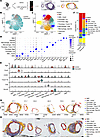 Figure 1
Single-cell spatial transcriptomic profiling of normal and aneurysmal abdominal aortas by Seq-Scope. Sixteen-week-old male Apoe–/– mice were infused with AngII (1,000 ng/kg/min) or saline via minipumps for 4 weeks. n = 5/group. (A) Schematic diagram depicting the mouse abdominal aortic aneurysm (AAA) and the spatial-transcriptomic analysis. (B) Uniform manifold approximation and projection (UMAP) of spatial transcriptomics spots from normal control and aneurysm group. The transcriptomics spots were from 10 sections of 3 normal control and 10 sections of 3 AAA group. (C) UMAP of cell-type clusters based on the gene compositions in each spatial transcriptomics spot. SMC, smooth muscle cells; Csrp2, SMC_Csrp2, SMCs highly expressing cysteine and glycine-rich protein 2; Fibroblast_Col, fibroblasts highly expressing collagen; Fibroblast_Mgp, fibroblasts highly expressing matrix Gla protein; Firboblast_Tmem119, fibroblast highly expressing transmembrane protein 119; Macrophage_Ctsb, macrophages highly expressing cathepsin B; Macrophage_Gpnmb, macrophages highly expressing glycoprotein Nmb; RBC, red blood cell. (D) Dot plot of marker genes for each cell population. (E) StackedVlnPlot showing the expression of marker genes across Control and Aneurysm groups. (F) Cell population percentages in each group. (G and H) Representative spatial plots of cell-type clusters (G) were overlaid with H&E imaging (H).
The fresh frozen suprarenal abdominal aortas from 3 mice with AAA and 3 saline-infused control mice were pair-embedded in optimal cutting temperature compound (OCT) and cut into 10-μm sections (Supplemental Figure 1, E, G, and I). A total of 20 aortic sections (10 normal aortic sections and 10 aneurysmal sections) were attached onto the HDMI-array slide for histological staining, library preparation, and sequencing (Supplemental Table 1). The spatial digital gene expression results were partitioned according to non-overlapping hexagons with 12 μm sides, and after applying 75 gene feature cutoffs, we obtained 104,762 hexagons. The hexagons with substantial gene expression information all corresponded to the areas under aortic sections (Supplemental Figure 1, F, H, and J). The hexagonal areas revealed 130.2 ± 55.6 unique transcripts and 115.6 ± 43.8 gene features. After data normalization as described in the Methods, we clustered the spatial data containing both groups (control and aneurysm, 10 sections/group) in an unsupervised manner using a graph-based approach, which identified 12 clusters (Supplemental Figure 2, A and B). To put the spots into context and assess their spatial organization, spots were projected onto the bright-field images of the same section stained with H&E (Supplemental Figure 1, E–G, and Supplemental Figure 2C). To further characterize the identified 12 clusters, we performed differential gene expression analysis among them. Cluster 0, which is located at the center of the uniform manifold approximation and projection (UMAP) did not show any substantial gene enrichment and did not show specific spatial localization (Supplemental Figure 2C), suggesting that this cluster represents a mixture of several cell types. Only a few genes, which were not suggestive of any known biological functions or cellular pathways, were detected for clusters 10 and 11. Identities of all clusters other than clusters 0, 10, and 11 were clear in biological pathways, so we focused our analyses on these annotatable clusters, including 2 SMC clusters: SMC (highly expressing contractile marker genes Acta2 [actin α2, smooth muscle] and Tagln [transgelin]) (7) and SMC_Csrp2 (enrichment of Csrp2 [cysteine and glycine rich protein 2]) (16); 3 fibroblast clusters: Fibroblast_Col (collagen-producing fibroblasts), Fibroblast_Mgp (Mgp-high [matrix Gla protein–high] fibroblasts) (17), and Fibroblast_Tmem119 (fibroblasts highly expressing Tmem19 [transmembrane protein 119]); 2 macrophage clusters: Macrophage_Ctsb (Ctsb-high [cathepsin B–high] macrophages) (18) and Macrophage_Gpnmb (Gpnmb-high macrophages) (19); 1 adipocyte cluster; and 1 red blood cell (RBC) cluster (Figure 1, B–F, and Supplemental Table 2). All of these clusters were found in all samples of AAA and normal controls (Figure 1B and Supplemental Figure 2D), and AAA and normal control samples overlapped with each other fairly well (Figure 1B), indicating that the batch-dependent effects of animal and experimental variations are minimal. These are consistent with the previous reports about vascular cell heterogeneity in AAA (5, 7, 20).
The identified cell populations showed specific cell fraction and spatial distribution in the normal and aneurysmal aortas (Figure 1, F–H, and Supplemental Figure 2D). Vascular SMCs (VSMCs) are the main cellular component in the normal aorta (5–7), accounting for more than 50%, and mainly located in the medial layer (Figure 1, F–H, and Supplemental Figure 2D). We also observed a decrease in VSMCs and an increase in macrophages, particularly the Macrophage_Gpnmb subpopulation, in AAA (Figure 1F and Supplemental Figure 2D), consistent with previous reports in both human and murine AAA (4, 5, 7).
Notably, compared with the normal control group, AAA exhibited an increased percentage of fibroblasts (Figure 1F and Supplemental Figure 2D), a unique pathological feature of AngII-induced AAA (20, 21). In the AAA tissues, all fibroblast clusters were localized in the adventitia but still showed different spatial distribution (Figure 1, G and H). Fibroblast_Col and Fibroblast_Tmem119 highly expressed Col3a1 (encoding α1 chain of type III collagen) and Col1a2 (encoding α2 chain of type I collagen), and were mainly positioned the adventitia far away from the medial layer, while Fibroblast_Mgp were present closely to the medial layer of small AAA and concentrated around the aortic area with dissection, identified from H&E histology images, spatial prediction, and factor inference of cartographic transcriptome at ultra-high resolution (FICTURE) (22) analysis (Figure 1, D, E, G, and H, Supplemental Figure 3A, Supplemental Figure 4, and Supplemental Table 2). Importantly, Fibroblast_Col and Fibroblast_Mgp highly expressed Fbln1 (encoding fibulin) and Fn1 (encoding fibronectin), respectively (Figure 1D and Supplemental Table 2), two ECM genes involved in matrix organization and tissue repair (23, 24). Moreover, these 2 fibroblast subpopulations were closely localized with Macrophage_Ctsb and Macrophage_Gpnmb, respectively, in the aneurysmal wall (Figure 1H, Supplemental Figure 3, B–E, and Supplemental Figure 4). These findings suggest that Fibroblast_Col and Fibroblast_Mgp may play important roles in AngII-induced AAA progression through ECM remodeling and immune system regulation.
GPNMB-high macrophages are closely localized with medial VSMCs. One of the key findings in this study is the identification of a macrophage subpopulation that highly expresses Gpnmb. Spatial prediction analysis further confirmed the spatial locations of SMC, SMC_Csrp2, Macrophage_Gpnmb, and Fibroblast_Col (Figure 2A). Of note, the majority of GPNMB-high macrophages were present in the medial layer in the AAA tissues and closely localized with SMCs, especially in the aortic tissue with dissection. Macrophage_Gpnmb were also increased in the adventitia, where external elastic layers were destructed (Figure 2, B and C). Additionally, the expression of Gpnmb in macrophages was markedly increased in AAA compared with that in normal group (Figure 1E).
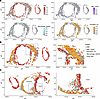 Figure 2
Spatial mapping of macrophages, GPNMB-high macrophages, and SMCs in normal aorta and AAA. (A) Spatial plot showing the spatial prediction score of SMC, SMC_Csrp2, Macrophage_Gpnmb, and Fibroblast_Col in the aortic tissues. (B and C) Spatial plot visualizing locations of SMC, SMC_Csrp2, Macrophage_Gpnmb, and Fibroblast_Col in the tissue sections. The boxed areas (blue boxes) are magnified on the right.
To independently confirm these observations through orthogonal technology, we performed immunofluorescent staining for GPNMB, a macrophage marker (Mac2), and an SMC marker (α-actin) in the supernal abdominal aortas of AAA and control group from an independent experiment (Figure 3A). GPNMB was mainly expressed in macrophages and significantly increased in the aneurysmal aorta (Figure 3A). Importantly, GPNMB+macrophages were frequently observed in close proximity to α-actin+ SMCs in the aortic wall (Figure 3, A and B). These results support observations from the Seq-Scope data (Figure 2B). However, a discrepancy between spatial transcriptomic and immunofluorescence data was observed regarding the location of GPNMB-high macrophages in the intima (Figure 2, B and C, and Figure 3, A and B). This may be attributed to potential loss or damage during tissue preparation in Seq-Scope analysis. Nevertheless, these findings are complementary and highlight the challenges in capturing the full spatial complexity of AAA lesions with different techniques. Furthermore, quantitative analysis revealed that GPNMB expression was significantly increased in AAA tissues and positively correlated with Mac2+ macrophages in the AAA group (r = 0.6740, P = 0.0326). Consistent with previous reports, SMC marker α-actin was significantly reduced in the AAA tissues and negatively correlated with GPNMB expression in the AAA group, despite no statistical significance (r = –0.4856, P = 0.1547). Together, these findings suggest that GPNMB-high macrophages may contribute to SMC dysfunction during AAA development.
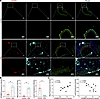 Figure 3
Immunofluorescent staining confirms the interaction of SMC and GPNMB-high macrophages in the aneurysmal aorta. (A) Immunofluorescent staining of GPNMB (red), Mac2 (cyan), and α-actin (green) to respectively show SMCs, macrophages, and GPNMB+ cells in the aortic wall of control and AAA. Nuclei stained with DPAI are blue. Scale bars: 100 μm (whole sections) and 50 μm (higher magnification areas). (B) Quantification of the GPNMB, Mac, and α-actin fluorescence intensity. (C) Correlation analysis between GPNMB and Mac2 or α-actin in AAA groups. Data are presented as mean ± SEM. *P < 0.05 by 2-tailed Student’s t test.
Macrophage-derived GPNMB induces SMC phenotypic switching. To investigate the potential relationship between GPNMB-high macrophages and SMCs, we reanalyzed the published scRNA-seq dataset of AngII-induced AAA (6) (Supplemental Figure 5). Similarly, 2 SMC subpopulations (SMC_1, SMC_2) and 2 macrophage subpopulations (Macro_1, Macro_2) were clustered in the scRNA-seq dataset (Supplemental Figure 5A). Specifically, Gpnmb was highly expressed in the Macro_1 subpopulation, with higher expression of macrophage marker Cd68 (Supplemental Figure 5C). Gpnmb expression was significantly increased in AAA compared with that in the normal control group (Figure 4A). Consistently, reanalysis of human AAA scRNA-seq datasets (4, 25) revealed a similar macrophage subpopulation exhibiting elevated GPNMB expression in AAA lesions (Supplemental Figure 6). Notably, GO and KEGG enrichment analyses of the gene sets of the macrophage subpopulations revealed the functional similarities between Macrophage_Gpnmb and Macro_1 in both mouse and human scRNA-seq data, in particular pathways related to neutrophil degranulation, lysosome, leukocyte activation/regulation of cell activation, regulation of cytokine/TNF production, and inflammatory response (Supplemental Figure 7). These findings suggest a potential role of Gpnmb-high macrophages in modulating inflammation and tissue remodeling in AAA. These scRNA-seq analyses independently confirm the findings from Seq-Scope in that AAA-induced macrophage population is highly heterogeneous and that Gpnmb-high macrophages are substantial in AAA-induced macrophage populations.
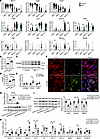 Figure 4
Macrophage-secreted GPNMB promotes SMC phenotypic switching. (A) Violin plot of Myh11, Tagln, Csrp2, Cd68, Lyz2, Gpnmb, Cd44, Egfr, Kdr, Mmp2, and Mmp9 expression in SMC and macrophage subpopulations. The results were reanalyzed from scRNA-seq data (GSE193265 and GSE191226). The single cells were from healthy suprarenal abdominal aorta (Control) and abdominal aortic aneurysm (AAA) isolated from male ApoE–/– mice. (B–D) BMDMs isolated from C57BL/6J mice were stimulated with or without 10 ng/mL TNF-α for 24 hours. (B and C) Gpnmb mRNA and protein levels were determined. (D) The GPNMB protein abundance in the culture media was determined by ELISA (n = 6). (E and F) Human aortic smooth muscle cells (HASMCs), at 80% confluence, were serum starved for 24 hours and then treated with 40 ng/mL recombinant GPNMB (aa 22–486, sGPNMB) protein in fresh Opti-MEM for 48 hours. (E) qPCR was performed to determine the mRNA levels of GPNMB, GPNMB receptors CD44 and KDR, and protease ADAM10 (n = 6). (F) Immunofluorescent staining of SM22α and CD44. Nuclei stained with DPAI are blue. Scale bars: 20 μm. (G–I) HASMCs were transfected with nontargeting control siRNA (siControl) or siCD44. After 24 hours, the cells were serum starved for 24 hours and then treated with sGPNMB for 48 hours. qPCR was performed to determine the mRNA levels of CD44 (G, upper panel, n = 6), SMC contractile markers MYH11, ACTA2, and TAGLN and inflammatory cytokines CCL2 and IL6 as well as proteases MMP2, MMP9, and ADAM10 (H, n = 6). The protein abundance of CD44 (G, lower panel, n = 3) smooth muscle α-actin, calponin, and SM22α (I, n = 6) was determined by Western blot. Data are presented as mean ± SEM. Wilcoxon’s test was used for comparing means in A, 2-tailed Student’s t test for B, D, and E, and 1-way ANOVA followed by Tukey’s post hoc test for G–I. *P < 0.05.
Both spatial plot and immunofluorescence imaging showed that the colocalization between SMCs and Macrophage_Gpnmb was mainly observed in aortic sites with severe destruction of elastic layers (Figure 2B and Figure 3). GPNMB can be cleaved by metalloproteinases to produce the soluble GPNMB (sGPNMB), which can bind multiple receptors, including CD44 (26), epidermal growth factor receptor (EGFR) (27), kinase insert domain receptor (KDR), and integrin (28), to activate downstream signaling pathways. To clarify how macrophage-produced GPNMB affects VSMC function in AAA, we first analyzed the expression of Cd44, Egfr, Kdr, Mmp2, and Mmp9 in SMC and macrophage populations from an scRNA-seq dataset (6). Specifically, the SMC_1 subpopulation, which had a high level of Csrp2, showed a significant increase in the expression of Cd44 and Mmp2 in the AAA group (Figure 4A). Similarly, elevated expression of CD44 and MMP2 was identified in an SMC subpopulation within the AAA lesion in the human scRNA-seq data (Supplemental Figure 6C). Next, we examined the expression of GPNMB in mouse bone marrow–derived macrophages (BMDMs). As shown in Figure 4, B and C, GPNMB was upregulated at both mRNA and protein levels in response to TNF-α. Furthermore, sGPNMB was significantly increased in the culture media, as measured by ELISA (Figure 4D).
sGPNMB has been reported to facilitate ECM production in vascular fibroblasts by binding to integrin αVβ1 (28). To further explore whether sGPNMB affects VSMC phenotype or functional changes in AAA, sGPNMB (aa 22–486, 40 ng/mL) was used to treat human aortic SMCs (HASMCs). We found that sGPNMB significantly increased the expression of CD44, rather than KDR, in HASMCs (Figure 4E), consistent with the scRNA-seq data in Figure 4A. VSMCs are the predominant cell type within the aortic wall and its dysfunction, including apoptosis, phenotypic switching, and enhanced elastolysis, contributes to AAA development and progression (1–3, 29, 30). Importantly, immunofluorescent staining showed that sGPNMB increased CD44 and reduced the α-actin–containing stress fibers in HASMCs (Figure 4F), indicating a loss of VSMC contractile phenotype. Accordingly, the expression of VSMC contractile markers MYH11, ACTA2 (encoding α-actin), and TAGLN (encoding SM22α) was significantly decreased, whereas the proinflammatory cytokines CCL2, IL6, CXCL3, and CXCL5 were markedly increased in sGPNMB-treated HASMCs (Figure 4, H and I). Consistent with this, in SMC-specific differential expression assays using the Seq-Scope dataset, we were able to determine that many contractile markers, such as Acta2, Myl6 and Myl9, were strongly and significantly downregulated in the SMC clusters of AAA (Supplemental Table 3). These data suggest that sGPNMB suppresses VSMC contractile functionality and rather upregulates its proinflammatory characteristics. Besides, sGPNMB significantly enhanced the expression of metalloproteinases in HASMC, including matrix metalloproteinase 9 (MMP9) and a disintegrin and metalloproteinase 10 (ADAM10) (Figure 4H), which facilitate ECM degradation (30, 31).
CD44, EGFR, and integrins are common receptors that bind to GPNMB, and then trigger cellular responses, such as expression and secretion of MMPs, cytokines, and ECM production (28, 32–34). To further explore the role of CD44 in sGPNMB-induced SMC phenotypic switching, knockdown of CD44 was applied in HASMCs (Figure 4, G–I, and Supplemental Figure 8). We found that knockdown of CD44 can restore sGPNMB-induced reduction of VSMC contractile makers at both mRNA and protein levels (Figure 4, H and I). In addition, knockdown of CD44 also reduced sGPNMB-induced CCL2 and CXCL3 expression in HASMCs (Figure 4H). However, the increased expression of cytokines IL6, CXCL5, MMP9, and ADAM10 in sGPNMB-treated HASMCs could not be blocked by CD44 knockdown. Taken together, these findings suggest that sGPNMB secreted from macrophages causes VSMC phenotype switching and elastolysis, all of which contribute to the dilation and rupture of the aortic wall.


