
Research ArticleDermatologyMetabolism
Open Access |  10.1172/jci.insight.189177
Epidermal NAD+ deficiency induces IL-36–mediated skin inflammation and acanthosis
Taiki Seki,1,2 Jun-Dal Kim,3,4 Yasuhito Yahara,1,5 Hitoshi Uchida,1,6 Keisuke Yaku,1 Mariam Karim,1 Teruhiko Makino,2 Tadamichi Shimizu,2 and Takashi Nakagawa1,7
1Department of Molecular and Medical Pharmacology, Faculty of Medicine,
2Department of Dermatology, Faculty of Medicine, and
3Division of Complex Biosystem Research, Department of Research and Development, Institute of Natural Medicine, University of Toyama, Toyama, Japan.
4AMED-CREST, Japan Agency for Medical Research and Development, Chiyoda-ku, Tokyo, Japan.
5Department of Orthopedic Surgery, Faculty of Medicine, University of Toyama, Toyama, Japan.
6Department of Oral Chrono-Physiology, Nagasaki University Graduate School of Biomedical Sciences, Nagasaki, Japan.
7Research Center for Pre-Disease Science, University of Toyama, Toyama, Japan.
Address correspondence to: Takashi Nakagawa, Department of Molecular and Medical Pharmacology, Faculty of Medicine, University of Toyama, 2630 Sugitani, Toyama, Toyama 930-0194, Japan. Phone: 81.76.434.7260; Email: nakagawa@med.u-toyama.ac.jp.
Find articles by Seki, T. in: PubMed | Google Scholar
1Department of Molecular and Medical Pharmacology, Faculty of Medicine,
2Department of Dermatology, Faculty of Medicine, and
3Division of Complex Biosystem Research, Department of Research and Development, Institute of Natural Medicine, University of Toyama, Toyama, Japan.
4AMED-CREST, Japan Agency for Medical Research and Development, Chiyoda-ku, Tokyo, Japan.
5Department of Orthopedic Surgery, Faculty of Medicine, University of Toyama, Toyama, Japan.
6Department of Oral Chrono-Physiology, Nagasaki University Graduate School of Biomedical Sciences, Nagasaki, Japan.
7Research Center for Pre-Disease Science, University of Toyama, Toyama, Japan.
Address correspondence to: Takashi Nakagawa, Department of Molecular and Medical Pharmacology, Faculty of Medicine, University of Toyama, 2630 Sugitani, Toyama, Toyama 930-0194, Japan. Phone: 81.76.434.7260; Email: nakagawa@med.u-toyama.ac.jp.
Find articles by Kim, J. in: PubMed | Google Scholar
1Department of Molecular and Medical Pharmacology, Faculty of Medicine,
2Department of Dermatology, Faculty of Medicine, and
3Division of Complex Biosystem Research, Department of Research and Development, Institute of Natural Medicine, University of Toyama, Toyama, Japan.
4AMED-CREST, Japan Agency for Medical Research and Development, Chiyoda-ku, Tokyo, Japan.
5Department of Orthopedic Surgery, Faculty of Medicine, University of Toyama, Toyama, Japan.
6Department of Oral Chrono-Physiology, Nagasaki University Graduate School of Biomedical Sciences, Nagasaki, Japan.
7Research Center for Pre-Disease Science, University of Toyama, Toyama, Japan.
Address correspondence to: Takashi Nakagawa, Department of Molecular and Medical Pharmacology, Faculty of Medicine, University of Toyama, 2630 Sugitani, Toyama, Toyama 930-0194, Japan. Phone: 81.76.434.7260; Email: nakagawa@med.u-toyama.ac.jp.
Find articles by Yahara, Y. in: PubMed | Google Scholar
1Department of Molecular and Medical Pharmacology, Faculty of Medicine,
2Department of Dermatology, Faculty of Medicine, and
3Division of Complex Biosystem Research, Department of Research and Development, Institute of Natural Medicine, University of Toyama, Toyama, Japan.
4AMED-CREST, Japan Agency for Medical Research and Development, Chiyoda-ku, Tokyo, Japan.
5Department of Orthopedic Surgery, Faculty of Medicine, University of Toyama, Toyama, Japan.
6Department of Oral Chrono-Physiology, Nagasaki University Graduate School of Biomedical Sciences, Nagasaki, Japan.
7Research Center for Pre-Disease Science, University of Toyama, Toyama, Japan.
Address correspondence to: Takashi Nakagawa, Department of Molecular and Medical Pharmacology, Faculty of Medicine, University of Toyama, 2630 Sugitani, Toyama, Toyama 930-0194, Japan. Phone: 81.76.434.7260; Email: nakagawa@med.u-toyama.ac.jp.
Find articles by Uchida, H. in: PubMed | Google Scholar
1Department of Molecular and Medical Pharmacology, Faculty of Medicine,
2Department of Dermatology, Faculty of Medicine, and
3Division of Complex Biosystem Research, Department of Research and Development, Institute of Natural Medicine, University of Toyama, Toyama, Japan.
4AMED-CREST, Japan Agency for Medical Research and Development, Chiyoda-ku, Tokyo, Japan.
5Department of Orthopedic Surgery, Faculty of Medicine, University of Toyama, Toyama, Japan.
6Department of Oral Chrono-Physiology, Nagasaki University Graduate School of Biomedical Sciences, Nagasaki, Japan.
7Research Center for Pre-Disease Science, University of Toyama, Toyama, Japan.
Address correspondence to: Takashi Nakagawa, Department of Molecular and Medical Pharmacology, Faculty of Medicine, University of Toyama, 2630 Sugitani, Toyama, Toyama 930-0194, Japan. Phone: 81.76.434.7260; Email: nakagawa@med.u-toyama.ac.jp.
Find articles by Yaku, K. in: PubMed | Google Scholar
1Department of Molecular and Medical Pharmacology, Faculty of Medicine,
2Department of Dermatology, Faculty of Medicine, and
3Division of Complex Biosystem Research, Department of Research and Development, Institute of Natural Medicine, University of Toyama, Toyama, Japan.
4AMED-CREST, Japan Agency for Medical Research and Development, Chiyoda-ku, Tokyo, Japan.
5Department of Orthopedic Surgery, Faculty of Medicine, University of Toyama, Toyama, Japan.
6Department of Oral Chrono-Physiology, Nagasaki University Graduate School of Biomedical Sciences, Nagasaki, Japan.
7Research Center for Pre-Disease Science, University of Toyama, Toyama, Japan.
Address correspondence to: Takashi Nakagawa, Department of Molecular and Medical Pharmacology, Faculty of Medicine, University of Toyama, 2630 Sugitani, Toyama, Toyama 930-0194, Japan. Phone: 81.76.434.7260; Email: nakagawa@med.u-toyama.ac.jp.
Find articles by Karim, M. in: PubMed | Google Scholar
1Department of Molecular and Medical Pharmacology, Faculty of Medicine,
2Department of Dermatology, Faculty of Medicine, and
3Division of Complex Biosystem Research, Department of Research and Development, Institute of Natural Medicine, University of Toyama, Toyama, Japan.
4AMED-CREST, Japan Agency for Medical Research and Development, Chiyoda-ku, Tokyo, Japan.
5Department of Orthopedic Surgery, Faculty of Medicine, University of Toyama, Toyama, Japan.
6Department of Oral Chrono-Physiology, Nagasaki University Graduate School of Biomedical Sciences, Nagasaki, Japan.
7Research Center for Pre-Disease Science, University of Toyama, Toyama, Japan.
Address correspondence to: Takashi Nakagawa, Department of Molecular and Medical Pharmacology, Faculty of Medicine, University of Toyama, 2630 Sugitani, Toyama, Toyama 930-0194, Japan. Phone: 81.76.434.7260; Email: nakagawa@med.u-toyama.ac.jp.
Find articles by Makino, T. in: PubMed | Google Scholar
1Department of Molecular and Medical Pharmacology, Faculty of Medicine,
2Department of Dermatology, Faculty of Medicine, and
3Division of Complex Biosystem Research, Department of Research and Development, Institute of Natural Medicine, University of Toyama, Toyama, Japan.
4AMED-CREST, Japan Agency for Medical Research and Development, Chiyoda-ku, Tokyo, Japan.
5Department of Orthopedic Surgery, Faculty of Medicine, University of Toyama, Toyama, Japan.
6Department of Oral Chrono-Physiology, Nagasaki University Graduate School of Biomedical Sciences, Nagasaki, Japan.
7Research Center for Pre-Disease Science, University of Toyama, Toyama, Japan.
Address correspondence to: Takashi Nakagawa, Department of Molecular and Medical Pharmacology, Faculty of Medicine, University of Toyama, 2630 Sugitani, Toyama, Toyama 930-0194, Japan. Phone: 81.76.434.7260; Email: nakagawa@med.u-toyama.ac.jp.
Find articles by
Shimizu, T.
in:
PubMed
|
Google Scholar
|

1Department of Molecular and Medical Pharmacology, Faculty of Medicine,
2Department of Dermatology, Faculty of Medicine, and
3Division of Complex Biosystem Research, Department of Research and Development, Institute of Natural Medicine, University of Toyama, Toyama, Japan.
4AMED-CREST, Japan Agency for Medical Research and Development, Chiyoda-ku, Tokyo, Japan.
5Department of Orthopedic Surgery, Faculty of Medicine, University of Toyama, Toyama, Japan.
6Department of Oral Chrono-Physiology, Nagasaki University Graduate School of Biomedical Sciences, Nagasaki, Japan.
7Research Center for Pre-Disease Science, University of Toyama, Toyama, Japan.
Address correspondence to: Takashi Nakagawa, Department of Molecular and Medical Pharmacology, Faculty of Medicine, University of Toyama, 2630 Sugitani, Toyama, Toyama 930-0194, Japan. Phone: 81.76.434.7260; Email: nakagawa@med.u-toyama.ac.jp.
Find articles by
Nakagawa, T.
in:
PubMed
|
Google Scholar
|
Published February 10, 2026 - More info
JCI Insight. 2026;11(6):e189177. https://doi.org/10.1172/jci.insight.189177.
© 2026 Seki et al. This work is licensed under the Creative Commons Attribution 4.0 International License. To view a copy of this license, visit http://creativecommons.org/licenses/by/4.0/.
Received: November 13, 2024; Accepted: January 28, 2026


-
Results
Epidermal NAD+ depletion induces spontaneous skin inflammation. To investigate the role of NAD+ metabolism in epidermal homeostasis, we created tamoxifen-induced, epidermis-specific Nampt-cKO mice by crossing Nampt flox mice with Krt5-CreERT2 mice. Tamoxifen administration effectively reduced Nampt mRNA levels in the epidermis of Nampt-cKO mice from Day 12, with a marked reduction by Day 19 compared with that of control mice (Figure 1, A and B). Consistently, protein levels of Nampt in epidermis were significantly reduced in Nampt-cKO mice at Day 19 (Figure 1, C and D). This decrease in Nampt led to significantly reduced NAD+ and NMN levels in the skin by Day 12, with further depletion by Day 19 (Figure 1E). In contrast, NAM levels were slightly increased in Nampt-cKO mice at Day 12 (Figure 1E). Starting around Day 19 after tamoxifen treatment, Nampt-cKO mice developed erythema, skin thickening, and crust formation (Figure 1F). Histological analysis on Day 19 showed epidermal hyperplasia, necrosis, and notable infiltration of inflammatory cells in the dermis (Figure 1G). This epidermal thickening was associated with increased proliferation in the epidermis, as shown by a rise in Ki67+ cells (Figure 1H). By Day 26, the inflammation began to resolve, although the epidermal thickening persisted (Figure 1, F and G). Therefore, we examined NAD+ levels at Day 26 and found that NAD+ levels were recovered in Nampt-cKO mice (Figure 1E). We also revealed that Nampt expression and NMN levels were still low in Nampt-cKO mice at Day 26 (Figure 1, B–E), suggesting that other synthetic routes, such as de novo and Preiss-Handler pathways, increased NAD+ levels in a compensatory manner.
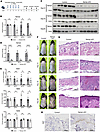 Figure 1
Spontaneous skin inflammation due to NAD+ depletion in Nampt-cKO mice. (A) Experimental time line showing tamoxifen administration and sample collection for control and Nampt-cKO mice. (B) Nampt mRNA levels in the epidermis of control and Nampt-cKO mice on Days 0, 12, 19, and 26, as determined by qPCR. Data are shown as mean ± SEM. Student’s t test. n = 6. (C) Western blot analysis of Nampt in epidermal lysates from control and Nampt-cKO mice at Days 12, 19, and 26 with pan-actin as a loading control. (D) Semiquantitative densitometric analysis of Nampt Western blots normalized to pan-actin using ImageJ. Data are shown as mean ± SEM. Student’s t test., n = 6. (E) NAD+, NMN, and NAM levels in control and Nampt-cKO epidermis on Days 0, 12, 19, and 26, as measured by LC/MS. Data are shown as mean ± SEM. Student’s t test. n = 6. (F) Representative clinical photographs of control and Nampt-cKO skin at Days 0, 12, 19, and 26. (G) Representative H&E-stained sections of control and Nampt-cKO skin at Days 0, 12, 19, and 26. Scale bars: 100 μm. (H) Ki67 immunohistochemistry in control and Nampt-cKO epidermis on Day 19. Scale bars: 100 μm. *P < 0.05, ****P < 0.0001.
IL-36–mediated inflammation without T cell polarization in Nampt-cKO mice. To examine the inflammatory response resulting from Nampt deficiency, we conducted an RNA-seq analysis of skin tissues from Nampt-cKO mice on Day 19 (Figure 2A). The results showed no apparent change of genes related to Th1, Th2, or Th17 differentiation, while genes related to IL-36 signaling pathway were significantly altered (Figure 2B). qPCR analysis further confirmed that cytokine levels of TNF-α, IFN-γ, IL-4, and IL-17A were not significantly different between Nampt-cKO and control mice (Figure 2, C–F). However, a notable increase in IL-36 family cytokines (IL-36α) was observed in Nampt-cKO mice (Figure 2G). Correspondingly, there was a downregulation of IL-36RN, which acts as an IL-36 receptor antagonist (Figure 2H). IL-36, a proinflammatory cytokine of the IL-1 family, is expressed in epithelial cells, including keratinocytes, and abnormal activation of IL-36 signaling pathway is associated with various inflammatory skin diseases (18). Generalized pustular psoriasis (GPP) is specifically linked to IL-36RN mutations, which activate IL-36 signaling (19). Several transcription factors, including NF-κB, AP-1, and T-bet, have been implicated in the induction of IL-36A, and these pathways are activated downstream of various proinflammatory cytokines, such as IL-1β, TNF-α, IFN-γ, IL-18, and IL-17A (20). To identify the upstream signals driving IL-36A expression in Nampt-cKO mice, we examined the expression of cytokines known to induce IL-36A and found a marked upregulation of IL-1β (Figure 2I). We also observed a pronounced increase in IκBζ (NFKBIZ) (Figure 2J), a transcriptional coactivator that amplifies NF-κB signaling (21). Importantly, IκBζ functions not only upstream to promote IL-36A induction but also downstream of IL-36A (22), where it is required for the expression of the chemokines CXCL1 and CXCL2, both of which were markedly elevated in Nampt-cKO skin (Figure 2K). Patients with GPP show a marked infiltration of innate immune cells, such as neutrophils and macrophages, rather than adaptive immune cells (19). Furthermore, CXCL1 and CXCL2 are potent chemokines that strongly recruit neutrophils. Therefore, we investigated the infiltrated immune cells in Nampt-cKO mice. Immunostaining with Ly-6G (neutrophils) and F4/80 (macrophages) antibodies confirmed significant neutrophil and macrophage infiltration in the skin of Nampt-cKO mice (Figure 2, L and M). However, CD3 (T cell) staining showed no significant difference between Nampt-cKO and control mice (Figure 2, L and M). We also found that gene expression of CD38 was upregulated in the epidermis of Nampt-cKO mice (Figure 2N). CD38 has been shown as a marker of M1 macrophage, a type of proinflammatory macrophage (23). As CD38 hydrolyzes NAD+ to NAM, it may also be responsible for reducing NAD+ levels during inflammation. These findings indicate that skin inflammation in Nampt-cKO mice is driven by IL-36 signaling activation, leading to an innate immune response.
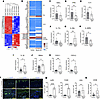 Figure 2
IL-36–driven inflammation without T cell polarization in Nampt-cKO mice. (A) RNA-seq heatmap for gene expression in control and Nampt-cKO skin on Day 19. n = 4. (B) Heatmap of individual inflammatory cytokine expression levels from RNA-seq data. (C–K) Gene expression levels of TNF-α (C), IFN-γ (D), IL-4 (E), IL-17α (F), IL-36α (G), IL-36RN (H), IL-1β(I), Nfkbiz (J), and CXCL1 and CXCL2 (K) in control and Nampt-cKO skin on Day 19, as determined by qPCR. Data are shown as mean ± SEM. Student’s t test. n = 6. (L) Representative immunofluorescence images for Ly-6G (neutrophils), F4/80 (macrophages), and CD3 (T cells) in control and Nampt-cKO skin on Day 19. Nuclei were counterstained with DAPI. Scale bars: 100 μm. (M) Quantification of Ly-6G+, F4/80+, and CD3+ cells using ImageJ. Data are shown as mean ± SEM. Student’s t test. n = 6. (N) Gene expression level of CD38 in control and Nampt-cKO skin on Day 19, as determined by qPCR. Data are shown as mean ± SEM. 2-tailed Student’s t test. n = 6. *P < 0.05, **P < 0.01, ****P < 0.0001.
Accumulation of DNA damage due to reduced PARP activity in Nampt-cKO mice. We explored how NAD+ deficiency led to IL-36 expression in the epidermis. Considering the role of NAD+ in DNA repair (24), we assessed PARP activity and DNA damage markers in Nampt-cKO mice. Western blot analysis revealed a significant reduction in PARP1 and its product, poly-ADP ribose (PAR), in the skin of Nampt-cKO mice (Figure 3, A–C), indicating impaired PARP function due to NAD+ depletion. Moreover, the DNA damage marker γH2AX was notably elevated in Nampt-cKO mice, as shown by Western blot (Figures 3, A and D). These findings indicate that NAD+ deficiency causes DNA repair defects and genomic stress accumulation in keratinocytes. A previous study showed that genomic stress leads to the proteolysis of collagen, type XVII, α 1 (COL17A1), impairing epidermal stem cell function (25, 26). Therefore, we examined COL17A1 expression in Nampt-cKO mice. Western blot analysis revealed reduced COL17A1 levels in these mice (Figure 3, A and E). Additionally, IL-36A expression was increased in the epidermis of Nampt-cKO mice (Figure 3, A and F). Previous research has shown that thymic stromal lymphopoietin (TSLP), another epithelial cell–derived cytokine, is induced by COL17A1 dysfunction (27). Immunostaining analysis confirmed that COL17A1 expression was decreased in Nampt-cKO mice (Figure 3, G and H). In contrast, the levels of TSLP and IL-36A were significantly elevated in these mice (Figure 3, G, I, and J). These results suggest that NAD+ depletion triggers IL-36A and TSLP expression through epithelial dysfunction and COL17A1 proteolysis.
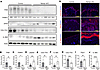 Figure 3
DNA Damage accumulation from reduced PARP activity in Nampt-cKO mice. (A) Western blot analysis for PAR, PARP1, γH2AX, COL17A1, and IL-36A in control and Nampt-cKO skin on Day 19, with pan-actin as a loading control. (B–F) Semiquantitative densitometric analysis of Western blots for PAR (B), PARP1 (C), γH2AX (D), COL17A1 (E), and IL-36A (F), normalized to pan-actin using ImageJ. Data are shown as mean ± SEM. Student’s t test. n = 6. (G) Representative immunofluorescence images of TSLP, COL17A1, and IL-36A in control and Nampt-cKO skin on Day 19. Scale bars: 100 μm. (H–J) Quantification of COL17A1 (H), TSLP (I), and IL-36A (J) in immunofluorescence images using ImageJ. Data are shown as mean ± SEM. 2-tailed Student’s t test. n= 6. *P < 0.05, **P < 0.01, ***P < 0.001, ****P < 0.0001.
Photoactivation enhances epidermal inflammation in Nampt-cKO mice. Dermatitis in patients with pellagra is marked by photosensitive inflammation, indicating that UV exposure accelerates NAD+ depletion and DNA damage accumulation. To investigate this, we performed a UVB irradiation experiment on the Nampt-cKO mice. On Day 6 after tamoxifen treatment, the mice’s dorsal skin was exposed to a single dose of UVB (100 mJ/cm2) (Figure 4A). Nampt-cKO mice showed no visible skin inflammation on Day 12 without UVB exposure (sham group). However, UVB exposure worsened skin inflammation in these mice on Day 12 (Figure 4, B and C). We also measured NAD+ levels in the UVB-irradiated skin. UVB exposure significantly increased NAD+ levels in the control mice but not in the Nampt-cKO mice on Day 12 (Figure 4D). However, UVB exposure did not change the Nampt gene expression in either control or Nampt-cKO mice on Day 12 (Figure 4E). This is likely because elevated DNA damage induces a compensatory increase in NAD+ biosynthesis through pathways other than the salvage pathway. Western blot analysis showed that impaired PAR synthesis, increased γH2AX levels, and elevated IL-36A expression were more pronounced in the Nampt-cKO mice compared with the sham group (Figures 4, F and G). Analysis with qPCR (Figure 4H) and IHC (Figure 4, I and J) also confirmed that IL-36A was more significantly upregulated in the UVB-irradiated Nampt-cKO mice. These findings suggest that UVB irradiation worsens the phenotype in Nampt-cKO mice, with IL-36A overexpression contributing to the effect, further linking DNA damage to IL-36A expression.
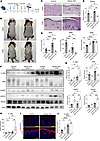 Figure 4
UVB-enhanced epidermal inflammation in Nampt-cKO mice. (A) Experimental time line showing tamoxifen administration, UVB irradiation, and sample collection for control and Nampt-cKO mice. (B) Representative clinical photographs of control and Nampt-cKO mice after UVB irradiation or sham treatment on Day 12. (C) Representative H&E-stained sections of control and Nampt-cKO skin after UVB irradiation or sham treatment on Day 12. Scale bars: 100 μm. (D) Levels of NAD+, NMN, and NAM in the epidermis of control and Nampt-cKO mice after UVB irradiation or sham treatment on Day 12, as measured by LC/MS. Data are shown as mean ± SEM. Two-way ANOVA with Tukey’s post hoc test. n = 6. (E) Nampt mRNA levels in the epidermis of control and Nampt-cKO mice after UVB irradiation or sham treatment on Day 12, as determined by qPCR. Data are shown as mean ± SEM. Two-way ANOVA with Tukey’s post hoc test. n = 6. (F) Western blot analysis for IL-36A, PAR, PARP1, γH2AX, and NAMPT in the epidermis of control and Nampt-cKO mice after UVB irradiation or sham treatment on Day 12. Pan-actin was used as a loading control. (G) Semiquantitative densitometric analysis of Western blots normalized to pan-actin using ImageJ. Data are shown as mean ± SEM. Two-way ANOVA with Tukey’s post hoc test. n = 3. (H) IL-36α mRNA levels in the epidermis of control and Nampt-cKO mice after UVB irradiation or sham treatment on Day 12, as determined by qPCR. Data are shown as mean ± SEM. Two-way ANOVA with Tukey’s post hoc test. n = 6. (I) Representative immunofluorescence images of IL-36A in control and Nampt-cKO skin after UVB irradiation or sham treatment on Day 12. Scale bars: 100 μm. (J) Quantification of IL-36A in immunofluorescence images using ImageJ. Data are shown as mean ± SEM. Two-way ANOVA with Tukey’s post hoc test. n = 6. *P < 0.05, **P < 0.01, ***P < 0.001, ****P < 0.0001.
Percutaneous administration of NMN ameliorates skin inflammation in Nampt-cKO mice. Finally, we examined whether NAD+ replenishment could prevent skin inflammation in Nampt-cKO mice. We percutaneously administered NMN to Nampt-cKO mice from Day 12 to Day 18 after tamoxifen treatment (Figure 5A). Percutaneous administration of NMN significantly restored NAD+ levels in Nampt-cKO mice without altering Nampt gene expression (Figure 5, B and C). Saline-treated Nampt-cKO mice developed apparent skin inflammation by Day 18, whereas NMN-treated Nampt-cKO mice exhibited improved skin condition as early as Day 12 (Figure 5D). Histological analysis revealed markedly reduced epidermal hyperplasia in NMN-treated compared with saline-treated Nampt-cKO mice (Figure 5E). The expression of IL-36A and CXCL1 was significantly downregulated in NMN-treated Nampt-cKO mice (Figure 5F). Furthermore, the expression of inflammatory cytokines, including IL-1β and IL-6, was also significantly suppressed (Figure 5G). Suppression of IL-36A at the protein level in NMN-treated Nampt-cKO mice was confirmed by immunofluorescence microscopy (Figure 5, H and I) and Western blot analysis (Figure 5, J and K). Collectively, these findings demonstrate that NAD+ deficiency is a direct cause of IL-36 activation and subsequent skin inflammation. Moreover, percutaneous administration of NMN may represent a potential therapeutic option for photosensitive dermatitis, including pellagra.
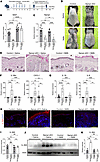 Figure 5
Topical NMN treatment ameliorates skin inflammation in Nampt-cKO mice. (A) Experimental time line showing tamoxifen administration, topical NMN treatment, and sample collection for control and Nampt-cKO mice. (B) NAD+ levels in the epidermis of control and Nampt-cKO mice with NMN or saline treatment on Day 19, as measured by LC/MS. Data are shown as mean ± SEM. Two-way ANOVA with Tukey’s post hoc test. n = 6. (C) Nampt mRNA levels in epidermis of control and Nampt-cKO mice with NMN or saline treatment on Day 19, as determined by qPCR. Data are shown as mean ± SEM. Two-way ANOVA with Tukey’s post hoc test. n = 6. (D) Representative clinical photographs of control and Nampt-cKO mice with NMN or saline treatment on Day 19. (E) Representative H&E-stained sections of control and Nampt-cKO mice with NMN or saline treatment on Day 19. Scale bars: 100 μm. (F and G) Gene expression levels of inflammation-related cytokines in epidermis of control and Nampt-cKO mice with NMN or saline treatment on Day 19, as determined by qPCR. Data are shown as mean ± SEM. Two-way ANOVA with Tukey’s post hoc test. n = 6. (H) Representative IHC images for IL-36A in the epidermis of control and Nampt-cKO mice with NMN or saline treatment on Day 19. Hematoxylin was used for counterstain. Scale bars: 100 μm. (I) Quantification of IL-36A in immunofluorescence images using ImageJ. Data are shown as mean ± SEM. Two-way ANOVA with Tukey’s post hoc test. n = 6. (J) Western blot analysis for IL-36A in the epidermis of control and Nampt-cKO mice with NMN or saline treatment on Day 19. Pan-actin was used as a loading control. (K) Semiquantitative densitometric analysis of IL-36A Western blots normalized to pan-actin using ImageJ. Data are shown as mean ± SEM. Two-way ANOVA with Tukey’s post hoc test. n = 3. *P < 0.05, **P < 0.01, ***P < 0.001, ****P < 0.0001.


