
Research ArticleMetabolismNephrology
Open Access |  10.1172/jci.insight.189130
NSD1-916aa encoded by CircNSD1 contributes to AKI-to-CKD transition through inducing ferroptosis in tubular epithelial cells
Li Gao,1,2,3 Junsheng Zhang,4,5 Chaoyi Chen,2 Sai Zhu,1,2 Xianglong Wei,2 Guiqin Tang,2 Sheng Wang,3 Yukai Wang,2 Xinran Liu,2 Ling Jiang,2 and Yonggui Wu2,3
1Inflammation and Immune-Mediated Diseases Laboratory of Anhui Province, Anhui Institute of Innovative Drugs, School of Pharmacy, and
2Department of Nephropathy, The First Affiliated Hospital of Anhui Medical University, Hefei, China.
3Center for Scientific Research of Anhui Medical University, Hefei, China.
4Clinical Pathology Center, The First Affiliated Hospital of Anhui Medical University, Hefei, China.
5Anhui Public Health Clinical Center, Hefei, China.
Address correspondence to: Yonggui Wu or Ling Jiang, Department of Nephropathy, The First Affiliated Hospital of Anhui Medical University, No. 218, JiXi Road, Hefei, Anhui, 230022, China. Phone: 86.0551.6292.2111; Email: wuyonggui@medmail.com.cn (YW); Email: jiangling0022@163.com (LJ).
Find articles by Gao, L. in: PubMed | Google Scholar
1Inflammation and Immune-Mediated Diseases Laboratory of Anhui Province, Anhui Institute of Innovative Drugs, School of Pharmacy, and
2Department of Nephropathy, The First Affiliated Hospital of Anhui Medical University, Hefei, China.
3Center for Scientific Research of Anhui Medical University, Hefei, China.
4Clinical Pathology Center, The First Affiliated Hospital of Anhui Medical University, Hefei, China.
5Anhui Public Health Clinical Center, Hefei, China.
Address correspondence to: Yonggui Wu or Ling Jiang, Department of Nephropathy, The First Affiliated Hospital of Anhui Medical University, No. 218, JiXi Road, Hefei, Anhui, 230022, China. Phone: 86.0551.6292.2111; Email: wuyonggui@medmail.com.cn (YW); Email: jiangling0022@163.com (LJ).
Find articles by Zhang, J. in: PubMed | Google Scholar
1Inflammation and Immune-Mediated Diseases Laboratory of Anhui Province, Anhui Institute of Innovative Drugs, School of Pharmacy, and
2Department of Nephropathy, The First Affiliated Hospital of Anhui Medical University, Hefei, China.
3Center for Scientific Research of Anhui Medical University, Hefei, China.
4Clinical Pathology Center, The First Affiliated Hospital of Anhui Medical University, Hefei, China.
5Anhui Public Health Clinical Center, Hefei, China.
Address correspondence to: Yonggui Wu or Ling Jiang, Department of Nephropathy, The First Affiliated Hospital of Anhui Medical University, No. 218, JiXi Road, Hefei, Anhui, 230022, China. Phone: 86.0551.6292.2111; Email: wuyonggui@medmail.com.cn (YW); Email: jiangling0022@163.com (LJ).
Find articles by Chen, C. in: PubMed | Google Scholar
1Inflammation and Immune-Mediated Diseases Laboratory of Anhui Province, Anhui Institute of Innovative Drugs, School of Pharmacy, and
2Department of Nephropathy, The First Affiliated Hospital of Anhui Medical University, Hefei, China.
3Center for Scientific Research of Anhui Medical University, Hefei, China.
4Clinical Pathology Center, The First Affiliated Hospital of Anhui Medical University, Hefei, China.
5Anhui Public Health Clinical Center, Hefei, China.
Address correspondence to: Yonggui Wu or Ling Jiang, Department of Nephropathy, The First Affiliated Hospital of Anhui Medical University, No. 218, JiXi Road, Hefei, Anhui, 230022, China. Phone: 86.0551.6292.2111; Email: wuyonggui@medmail.com.cn (YW); Email: jiangling0022@163.com (LJ).
Find articles by Zhu, S. in: PubMed | Google Scholar
1Inflammation and Immune-Mediated Diseases Laboratory of Anhui Province, Anhui Institute of Innovative Drugs, School of Pharmacy, and
2Department of Nephropathy, The First Affiliated Hospital of Anhui Medical University, Hefei, China.
3Center for Scientific Research of Anhui Medical University, Hefei, China.
4Clinical Pathology Center, The First Affiliated Hospital of Anhui Medical University, Hefei, China.
5Anhui Public Health Clinical Center, Hefei, China.
Address correspondence to: Yonggui Wu or Ling Jiang, Department of Nephropathy, The First Affiliated Hospital of Anhui Medical University, No. 218, JiXi Road, Hefei, Anhui, 230022, China. Phone: 86.0551.6292.2111; Email: wuyonggui@medmail.com.cn (YW); Email: jiangling0022@163.com (LJ).
Find articles by Wei, X. in: PubMed | Google Scholar
1Inflammation and Immune-Mediated Diseases Laboratory of Anhui Province, Anhui Institute of Innovative Drugs, School of Pharmacy, and
2Department of Nephropathy, The First Affiliated Hospital of Anhui Medical University, Hefei, China.
3Center for Scientific Research of Anhui Medical University, Hefei, China.
4Clinical Pathology Center, The First Affiliated Hospital of Anhui Medical University, Hefei, China.
5Anhui Public Health Clinical Center, Hefei, China.
Address correspondence to: Yonggui Wu or Ling Jiang, Department of Nephropathy, The First Affiliated Hospital of Anhui Medical University, No. 218, JiXi Road, Hefei, Anhui, 230022, China. Phone: 86.0551.6292.2111; Email: wuyonggui@medmail.com.cn (YW); Email: jiangling0022@163.com (LJ).
Find articles by Tang, G. in: PubMed | Google Scholar
1Inflammation and Immune-Mediated Diseases Laboratory of Anhui Province, Anhui Institute of Innovative Drugs, School of Pharmacy, and
2Department of Nephropathy, The First Affiliated Hospital of Anhui Medical University, Hefei, China.
3Center for Scientific Research of Anhui Medical University, Hefei, China.
4Clinical Pathology Center, The First Affiliated Hospital of Anhui Medical University, Hefei, China.
5Anhui Public Health Clinical Center, Hefei, China.
Address correspondence to: Yonggui Wu or Ling Jiang, Department of Nephropathy, The First Affiliated Hospital of Anhui Medical University, No. 218, JiXi Road, Hefei, Anhui, 230022, China. Phone: 86.0551.6292.2111; Email: wuyonggui@medmail.com.cn (YW); Email: jiangling0022@163.com (LJ).
Find articles by Wang, S. in: PubMed | Google Scholar
1Inflammation and Immune-Mediated Diseases Laboratory of Anhui Province, Anhui Institute of Innovative Drugs, School of Pharmacy, and
2Department of Nephropathy, The First Affiliated Hospital of Anhui Medical University, Hefei, China.
3Center for Scientific Research of Anhui Medical University, Hefei, China.
4Clinical Pathology Center, The First Affiliated Hospital of Anhui Medical University, Hefei, China.
5Anhui Public Health Clinical Center, Hefei, China.
Address correspondence to: Yonggui Wu or Ling Jiang, Department of Nephropathy, The First Affiliated Hospital of Anhui Medical University, No. 218, JiXi Road, Hefei, Anhui, 230022, China. Phone: 86.0551.6292.2111; Email: wuyonggui@medmail.com.cn (YW); Email: jiangling0022@163.com (LJ).
Find articles by Wang, Y. in: PubMed | Google Scholar
1Inflammation and Immune-Mediated Diseases Laboratory of Anhui Province, Anhui Institute of Innovative Drugs, School of Pharmacy, and
2Department of Nephropathy, The First Affiliated Hospital of Anhui Medical University, Hefei, China.
3Center for Scientific Research of Anhui Medical University, Hefei, China.
4Clinical Pathology Center, The First Affiliated Hospital of Anhui Medical University, Hefei, China.
5Anhui Public Health Clinical Center, Hefei, China.
Address correspondence to: Yonggui Wu or Ling Jiang, Department of Nephropathy, The First Affiliated Hospital of Anhui Medical University, No. 218, JiXi Road, Hefei, Anhui, 230022, China. Phone: 86.0551.6292.2111; Email: wuyonggui@medmail.com.cn (YW); Email: jiangling0022@163.com (LJ).
Find articles by Liu, X. in: PubMed | Google Scholar
1Inflammation and Immune-Mediated Diseases Laboratory of Anhui Province, Anhui Institute of Innovative Drugs, School of Pharmacy, and
2Department of Nephropathy, The First Affiliated Hospital of Anhui Medical University, Hefei, China.
3Center for Scientific Research of Anhui Medical University, Hefei, China.
4Clinical Pathology Center, The First Affiliated Hospital of Anhui Medical University, Hefei, China.
5Anhui Public Health Clinical Center, Hefei, China.
Address correspondence to: Yonggui Wu or Ling Jiang, Department of Nephropathy, The First Affiliated Hospital of Anhui Medical University, No. 218, JiXi Road, Hefei, Anhui, 230022, China. Phone: 86.0551.6292.2111; Email: wuyonggui@medmail.com.cn (YW); Email: jiangling0022@163.com (LJ).
Find articles by Jiang, L. in: PubMed | Google Scholar
1Inflammation and Immune-Mediated Diseases Laboratory of Anhui Province, Anhui Institute of Innovative Drugs, School of Pharmacy, and
2Department of Nephropathy, The First Affiliated Hospital of Anhui Medical University, Hefei, China.
3Center for Scientific Research of Anhui Medical University, Hefei, China.
4Clinical Pathology Center, The First Affiliated Hospital of Anhui Medical University, Hefei, China.
5Anhui Public Health Clinical Center, Hefei, China.
Address correspondence to: Yonggui Wu or Ling Jiang, Department of Nephropathy, The First Affiliated Hospital of Anhui Medical University, No. 218, JiXi Road, Hefei, Anhui, 230022, China. Phone: 86.0551.6292.2111; Email: wuyonggui@medmail.com.cn (YW); Email: jiangling0022@163.com (LJ).
Find articles by Wu, Y. in: PubMed | Google Scholar
Published July 15, 2025 - More info
JCI Insight. 2025;10(16):e189130. https://doi.org/10.1172/jci.insight.189130.
© 2025 Gao et al. This work is licensed under the Creative Commons Attribution 4.0 International License. To view a copy of this license, visit http://creativecommons.org/licenses/by/4.0/.
Received: November 11, 2024; Accepted: July 7, 2025


-
Results
Injured epithelia drive inflammation and fibrosis contribution to AKI-to-CKD transition. To establish the mouse model of AKI-to-CKD transition, we analyzed a single-cell RNA-Seq dataset of mouse kidney published in PNAS in 2020 (GSE139107) (https://www.ncbi.nlm.nih.gov/geo/query/acc.cgi?acc=GSE139107). As shown in Figure 1A, cell clusters named NewPT1 and NewPT2 in PNAS (7), positive for the injury marker Havcr1, exhibited sustained high expression of inflammation-related genes (Ccl2, Cxcl1, Cxcl2, and Cxcl10) and fibrosis-related genes (Tgfb1, Tgfb2 and Tgfbr2) from 2 days to 6 weeks after I/R. Figure 1B illustrates the AKI-to-CKD transition mouse model at various time points following I/R: 0 days, 2 days, 7 days, 14 days, and 6 weeks. As anticipated, serum creatinine, estimated glomerular filtration rate (GFR), H&E, and periodic acid–Schiff (PAS) staining revealed extensive tubular epithelial injury and rapid renal function decline at 2 days after I/R. Partial functional recovery was observed from 7 days to 6 weeks (Figure 1, C–E, and Supplemental Figure 1A; supplemental material available online with this article; https://doi.org/10.1172/jci.insight.189130DS1). Meanwhile, macrophage infiltration (F4/80), fibrotic deposition (Masson’s trichrome), and α–smooth muscle actin-marked (ASMA-marked) fibrotic areas were milder on day 7 but intensified by day 14 and persisted through week 6 (Figure 1, F–H, and Supplemental Figure 1B). These findings indicate that injured epithelial cells drive renal inflammation and fibrosis, which contributed to AKI-to-CKD transition. The subsequent inflammation and fibrosis mediated by injured epithelial cells can be observed substantially, suggesting that day 14 of ischemia is the optimal time point for AKI-to-CKD model.
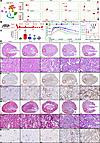 Figure 1
Fourteen-day I/R as a model for AKI-to-CKD transition in mice. (A) Reanalyzing a single-cell RNA-Seq dataset of mouse kidney (GSE139107) in KIT websites. (B) An illustration of AKI-to-CKD transition mouse model. (C) Serum creatinine levels. (D) GFR. (E) H&E staining. (F) IHC staining for F4/80. (G) Masson’s trichrome staining. (H) IHC staining for ASMA. n = 6–7. Scale bar: 100 μm (red), 50 μm (black). Data are shown as mean ± SEM, ***P < 0.001 compared with the control by 1-way ANOVA with Tukey’s post hoc test. ###P < 0.001 compared with the I/R-2D group by 1-way ANOVA with Tukey’s post hoc test.
CircNsd1 expression is suppressed in mouse model of AKI-to-CKD transition, in H/R-induced epithelial cells and patients after AKI. To elucidate the role of circRNAs in the AKI-to-CKD transition, the renal cortex tissues from mice 14 days after I/R were subjected to high-throughput circRNA-Seq. Heatmap demonstrated the top 7 differentially expressed known circRNAs (Figure 2A). Subsequent validation via real-time PCR from 2 days to 6 weeks after I/R excluded circRNAs with insignificant expression changes or low homology during transition. CircNsd1 emerged as the most dynamically altered circRNA with the highest basal expression (Figure 2B). FISH assay revealed that CircNsd1 predominantly localized in the cytoplasm of tubular epithelial cells, with its expression decreasing in mice following I/R injury or cisplatin injury (Figure 2C and Supplemental Figure 1, C and D).
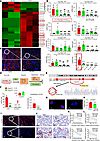 Figure 2
CircNSD1 expression is suppressed in vivo, in vitro, and in patients. (A) Results of high-throughput circRNA-Seq in kidney tissues from control and I/R-14D mice. (B) Relative expression of circRNA detected by real time-PCR from 2 days to 6 weeks after I/R injury. Data are shown as mean ± SEM, *P < 0.05, **P < 0.01, ***P < 0.001 compared with the control or CircNsd1 group by 1-way ANOVA with Tukey’s post hoc test. #P < 0.05, ##P < 0.01, ###P < 0.001 compared with the I/R-2D group by 1-way ANOVA with Tukey’s post hoc test. (C) FISH assay for CircNSD1. Scale bar: 100 μm (red), 50 μm (white). (D) An illustration of H/R-induced HK-2 cells model. (E) Examination of CircNSD1 in circBase (http://circbase.org/) via Sanger sequencing. (F) Real-time PCR analysis of CircNSD1 and parental gene NSD1, digested by RNase R. Data are shown as mean ± SEM, ***P < 0.001 compared with RNase R- RF1 group by 1-way ANOVA with Tukey’s post hoc test. (G) FISH assay for CircNSD1 in HK-2 cells and H/R-induced HK-2 cells. Scale bar: 20 μm (white). (H) CircNSD1 was detected in serum of control group and patients after AKI. Data are shown as mean ± SEM, ***P < 0.001 compared with Control group by Student’s t test. (I) FISH for CircNSD1 in renal biopsies from controls and patients after AKI. Scale bar: 100 μm (white); 50 μm (black). (J) IHC for CD68+ reveals the inflammatory response, and ASMA reveals fibrosis in renal biopsies from controls and patients with AKI-to-CKD. Scale bar: 100 μm (black). (K) Correlation analysis between CircNSD1 in renal biopsies and the inflammatory response (CD68+) or fibrosis (ASMA) in patients after AKI. (L) Correlation analysis between CircNSD1 in serum and the inflammatory response (CD68+) or fibrosis (ASMA) in renal biopsies from patients after AKI.
Cellular models utilizing HK-2 cells were established to further validate the expression of circRNAs that exhibited marked changes (Supplemental Figure 1E and Figure 2D). Notably, CircNSD1 was confirmed as the circRNA with the most marked expression change and the highest level of basal expression level in vitro (Supplemental Figure 1F). CircNSD1, derived from the NSD1 gene, is located on chromosome 5 (positions 176618884–176639196) and comprises exons 3–5. As depicted in Figure 2E, Sanger sequencing confirmed the presence of a head-to-tail splice junction characteristic of circRNAs, which matched the reference sequence for CircNSD1 listed in circBase (http://circbase.org/). Considering that head-to-tail splicing products may be derived from genomic rearrangements or trans-splicing, the stability of CircNSD1 was assessed by its resistance to digestion by RNase R (Figure 2F), a highly processive 3′–5′ exonuclease. The results indicated that the expression level of CircNSD1 remained largely unaffected by RNase R treatment, whereas the expression of parental gene NSD1 was substantially reduced. FISH corroborated CircNSD1’s cytoplasmic localization in HK-2 cells (Figure 2G). Furthermore, compared with normal controls, the expression of CircNSD1 was decreased in serum and renal biopsies from patients after AKI (Figure 2, H and I). CircNSD1 expression levels in renal tissues of patients after AKI were substantially reduced and showed a negative correlation with both renal inflammatory and fibrotic markers. Meanwhile, serum circNSD1 levels were negatively correlated with inflammatory markers but showed no association with fibrosis — an observation that warrants further investigation with a large sample size (Figure 2, J–L).
Overexpression of CircNSD1 resists AKI-to-CKD transition in vivo and in vitro. To investigate the role of CircNSD1 in AKI-to-CKD transition, HK-2 cells were transfected with a lentiviral vector encoding CircNSD1. FISH assay revealed that CircNSD1 was overexpressed in the cytoplasm of tubular epithelial cells (Figure 3A). Real-time PCR further confirmed CircNSD1 overexpression in HK-2 (Figure 3B). Overexpression of circNSD1 markedly reduced ASMA protein staining in HK-2 cells subjected to H/R injury (Figure 3C). Real-time PCR further confirmed decreased expression of inflammation-related genes (TNFA, CCL2, IL6) and fibrosis-related genes (TGFB1, COL1, ASMA) in circNSD1-overexpressed HK-2 cells, compared with control HK-2 cells after H/R injury (Figure 3D)
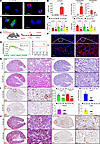 Figure 3
CircNSD1 overexpression inhibits AKI-to-CKD transition. (A) FISH assay in CircNSD1 overexpression cells. Scale bar: 20 μm (white). (B) Real-time PCR analysis of CircNSD1 expression in CircNSD1 overexpression cells. (C) Immunofluorescence for ASMA in CircNSD1 overexpression cells. (D) Real-time PCR analysis of proinflammatory cytokines (TNFA, CCL2, and IL6) and fibrogenic genes (TGFB1, COL1, and ASMA) in H/R-48h induced control and CircNSD1 overexpression cells. (E) Schematic illustrating the approach of overexpressing CircNsd1 in mice. (F) FISH assay of CircNsd1 expression in kidney tissues from control and CircNsd1-overexpressing I/R mice. Scale bar: 100 μm (red), 50 μm (white). (G) GFR in control and CircNsd1-overexpressing I/R mice. (H) Representative H&E staining and PAS staining pictures in kidney tissues from control and CircNsd1-overexpressing I/R mice. (I) IHC staining of F4/80+ macrophages in kidney tissues from control and CircNsd1-overexpressing I/R mice. (J) Representative Masson and IHC staining of ASMA pictures in kidney tissues from control and CircNsd1-overexpressing I/R mice. Scale bar: 500 μm (red), 50 μm (black). Data are shown as mean ± SEM, #P < 0.05, ##P < 0.01, ###P < 0.001 compared with the EV-H/R-48h group or EV-I/R-14D group by Student’s t-test.
The role of CircNsd1 was further validated in a murine model, and systemic CircNsd1 overexpression was achieved in mice via tail vein injection of HBAAV2/9-mmu_circ_0000465 (CircNsd1-OE; Figure 3E). Exogenous overexpression of CircNsd1 in renal tissue was confirmed by real-time PCR and FISH (Figure 3F and Supplemental Figure 1G). PAS staining revealed no renal structural changes in sham-EV and sham-OE groups, confirming administration of HBAAV2/9-circNsd1 via tail vein injection had no effect on normal renal structure (Supplemental Figure 1H). At 14 days after I/R injury, CircNsd1 overexpression group (OE-I/R-14D) markedly improved GFR compared with EV controls (EV-I/R-14D) (Figure 3G). H&E and PAS staining further corroborated reduced renal injury in the OE-I/R-14D group (Figure 3H). IHC showed diminished F4/80+ macrophage infiltration in renal epithelia of OE-I/R-14D mice (Figure 3I). Masson’s trichrome staining and ASMA IHC confirmed that CircNsd1 overexpression substantially protected against I/R-induced AKI-to-CKD transition (Figure 3J). Collectively, these findings support that CircNsd1 overexpression protected against I/R-induced renal dysfunction, inflammation, and fibrosis, thereby impeding the transition from AKI-to-CKD.
Overexpression of CircNSD1 reduced ferroptosis in H/R-induced HK-2 cells and AKI-to-CKD mice. To decipher the underlying molecular mechanisms, untargeted LC-MS/MS lipidomics analysis of H/R-treated control and CircNSD1 overexpression cells was performed. Orthogonal partial least squares discriminant analysis (OPLS-DA) identified 193 differentially abundant metabolites (variable importance in projection [VIP] ≥ 1, P < 0.05). Kyoto Encyclopedia of Genes and Genomes (KEGG) analysis revealed marked enrichment of ferroptosis-associated pathways, including ferroptosis and glutathione metabolism. Key ferroptosis-related metabolites included Glutathione, L-Glutamate, PC [18:1(11Z)/16:0], (±)5,6-DiHETrE, γ-Glu-Cys, and PC [22:0/18:4 (6Z,9Z,12Z,15Z)] (Figure 4A). Furthermore, CircNSD1 overexpression in H/R-treated cells substantially restored levels of ferroptosis markers (Fe²+, malondialdehyde [MDA], lipid peroxidation [LPO], and glutathione [GSH]) compared with controls (Figure 4B). Electron microscopy, DCF assay, and DHE assay corroborated that overexpression of CircNSD1 reduced ferroptosis under H/R condition (Figure 4C).
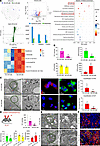 Figure 4
CircNSD1 inhibits ferroptosis in AKI-to-CKD in vivo and in vitro. (A) Results LC-MS/MS lipidomics analysis of H/R-treated control and CircNSD1 overexpression cells. (B) Levels of ferroptosis-related metabolites, including Fe2+, MDA, LPO, and GSH in vitro. (C) Electron microscopy, DCF assay and DHE assay in H/R-treated CircNSD1 overexpression cells and controls. Scale bar: 2 μm (left); 500 nm (right); 20 μm (DHE and DCF staining). (D) An illustration of CircNsd1 overexpression in mice model and metabolic (Fe2+, MDA, LPO and GSH) analysis in I/R-induced control and CircNsd1 overexpression mice. (E) Representative electron micrographs of in kidney tissues from control and CircNsd1-overexpressing I/R mice. Scale bar: 2 μm (left); 500 nm (right). (F) Representative staining GPX4 in kidney tissues from control and CircNsd1-overexpressing I/R mice. Scale bar: 50 μm. Data are shown as mean ± SEM, #P < 0.05, ##P < 0.01, ###P < 0.001, compared with EV-H/R-48h group or EV-I/R-14D by Student’s t test.
To validate these findings in vivo, we assessed ferroptosis-associated metabolites and proteins in I/R-induced control and CircNsd1 overexpressing mice. Metabolic (Fe2+, MDA, LPO, and GSH) analysis, electron microscopy, and GPX4 IF assay showed that CircNsd1 overexpression mitigated ferroptosis in AKI-to-CKD mice (Figure 4, D–F). These results support that overexpression of CircNSD1 alleviated ferroptosis in H/R-induced HK-2 cells and AKI-to-CKD mice.
Overexpression of CircNSD1 decreased Erastin-induced ferroptosis, inflammation, and fibrosis in HK-2 cells. To investigate whether the role of CircNSD1 in inflammation and fibrosis via ferroptosis pathway, control and CircNSD1-overexpressing cells were treated with the ferroptosis inducer Erastin. Real-time PCR indicated that treatment of HK-2 cells with 5 μM Erastin for 48 hours led to increased expression of inflammation-related genes (TNFA, CCL2, and IL6) and fibrosis-related genes (TGFB1, COL1, and ASMA) (Figure 5, A and B). Subsequent assays, including electron microscopy; metabolic analysis of Fe2+, MDA, LPO, and GSH level; and DHE/DCF fluorescence assay, collectively suggested that overexpression of CircNSD1 marked reduced Erastin-induced ferroptosis (Figure 5, C–E). Concurrently, real-time PCR showed a decrease in the expression of inflammation-related genes (TNFA, CCL2, and IL6) and fibrosis-related genes (TGFB1, COL1, and ASMA) in CircNSD1-overexpressing cells following Erastin treatment (Figure 5, F and G). Furthermore, IF staining of ASMA further confirmed a diminished fibrotic response in the overexpression group compared with the control group (Figure 5H). Collectively, these findings support that overexpression of CircNSD1 alleviated inflammation and fibrosis induced by ferroptosis in vitro.
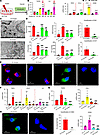 Figure 5
Overexpression of CircNSD1 decreases ferroptosis, inflammation, and fibrosis in Erastin-induced HK-2 cells. (A) An illustration of Erastin-induced HK-2 cells model. (B) Real-time PCR analysis of inflammation-related genes (TNFA, CCL2, and IL6) and fibrosis-related genes (TGFB1, COL1, and ASMA) in HK-2 cells after 48 hours of Erastin induction. (C) Representative electron micrographs of control and CircNSD1-overexpressing cells induced by Erastin. Scale bar: 500nm. (D)Levels of ferroptosis-related metabolites,including Fe2+, MDA, LPO and GSH in cells. (E) DCF assay and DHE assay in Erastin-induced CircNSD1 overexpressing cells and controls. Scale bar: 20μm. (F) Real-time PCR analysis of proinflammatory cytokines (TNFA, CCL2 and IL6) in control and CircNSD1 overexpressing cells after 48 hours of Erastin induction. (G) Real-time PCR analysis of fibrosis-related genes (TGFB1,COL1 and ASMA) in Erastin-treated control and CircNSD1 overexpressing cells. (H) Representative immunofluorescence staining of ASMA pictures in control and CircNSD1 overexpressing cells treated with Erastin. Scale bar: 20 μm. Data are shown as mean ± SEM, *P < 0.05, **P < 0.01, ***P < 0.001 compared with the control by 1-way ANOVA with Tukey’s posthoc test. #P < 0.05, ##P < 0.01, ###P < 0.001 compared with the EV-Erastain group by 1-way ANOVA with Tukey’s post hoc test.
Overexpression of CircNSD1 downregulated ACSL4 and SLC39A14 by H3K36 methylation. Ferroptosis, a nonapoptotic form of cell death, plays a critical role in the AKI-to-CKD transition (12). During this transition, key ferroptosis-related proteins such as GPX4 and ACSL4 exhibit dynamic changes. Immunofluorescence, real-time PCR, and spatial transcriptomics datasets (GSE139107) reveal decreased GPX4 expression in early AKI stages, with partial restoration during CKD progression, alongside persistently elevated ACSL4 levels in renal epithelial cells (Supplemental Figure 1, I and J). To examine the direct mechanisms by which CircNsd1 regulates ferroptosis, reanalysis of single-cell datasets (GSE139107) was performed to identify differentially expressed genes (log2FC > 0.26 and P < 0.05) at 2 and 14 days after AKI compared with the control group (Figure 6A). Intersection with FerrDb (a ferroptosis database; http://www.zhounan.org/ferrdb/current/) ferroptosis-related genes yielded 26 candidates. KEGG pathway analysis of the resulting 26 genes revealed that Acsl4, Lpcat3, Slc39a14, and Sat1 are involved in the ferroptosis pathway (Figure 6B). Therefore, we focused on investigating the regulation of Acsl4, Lpcat3, Slc39a14, and Sat1 by CircNsd1.
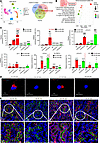 Figure 6
Overexpression of CircNSD1 downregulated ACSL4 and SLC39A14 by H3K36 methylation. (A) Reanalyzing a single-cell RNA-Seq dataset of mouse kidney (GSE139107). Venn diagram showing the intersection analysis of genes changed in I/R-2D and I/R-14D with genes associated with ferroptosis. (B) KEGG pathway analysis of overlapping genes. (C) ChIP assay detecting the H3K36me modification of ACSL4, LPCAT3, SLC39A14, and SAT1 regulated by CircNSD1 in control and CircNSD1 overexpressed cells treated with H/R-48h. (D) Representative immunofluorescence staining of ACSL4 and SLC39A14 in control and CircNSD1 overexpressed cells treated with H/R-48h. Scale bar: 20 μm. (E) Immunofluorescence staining of ACSL4 and LTL in kidney tissues from control and CircNsd1-overexpressing I/R mice. Immunofluorescence staining of SLC39A14 and LTL in kidney tissues from control and CircNsd1-overexpressing I/R mice. Scale bar: 50 μm. Data are shown as mean ± SEM, *P < 0.05, **P < 0.01, ***P < 0.001 compared with the IgG-EV-H/R-48h group by 1-way ANOVA with Tukey’s post hoc test. ###P < 0.001 compared with H3K36me1-EV-H/R-48h group or H3K36me2-EV-H/R-48h group by 1-way ANOVA with Tukey’s post hoc test. &&&P < 0.001 compared with H3K36me3-EV-H/R-48h group by 1-way ANOVA with Tukey’s post hoc test.
The parent gene of CircNSD1, NSD1, encodes a protein involved in histone H3 lysine 36 dimethylation (H3K36me) (13, 14). The ChIP assay further revealed a reduced enrichment of H3K36me3, in contrast to H3K36me1 and H3k36me2, within the promoter regions of ACSL4 and SLC39A14 in CircNSD1-overexpressing cells subjected to H/R-induced injured cells. These findings suggest that overexpression of CircNSD1 may attenuate ACSL4 and SLC39A14 DNA H3K36 methylation by H3K36me3 (Figure 6C). IF confirmed CircNSD1 overexpression substantially reduced ACSL4 and SLC39A14 expression in H/R-injured cells and AKI-to-CKD mice (Figure 6, D and E). Together, these findings demonstrate that CircNSD1 overexpression alleviates ferroptosis by downregulating ACSL4 and SLC39A14 in vitro and in vivo.
CircNSD1 encoded a 916aa peptide termed NSD1-916aa. To further explore whether CircNSD1 functioned by encoding a peptide — consistent with emerging evidence of protein-coding potential in certain circRNAs (9) — we performed immunoprecipitation of FLAG-tagged CircNSD1 and luciferase-reporter assays in HK-2 and 293T cells. As predicted by circRNA Db (http://reprod.njmu.edu.cn/circrnadb/), a comprehensive repository for human circRNAs with protein-coding annotations (15), CircNSD1 initiates translation at the ATG start codon and terminates at the TAA stop codon (Figure 7A). This circRNA contains an ORF spanning 2,869 nucleotides, encoding a protein of 916 amino acids protein (916aa). Thus, we named the predicted protein NSD1-916aa, and its sequence is shown in Figure 7B. To further characterize NSD1-916aa, we performed immunofluorescence and MS following the immunoprecipitation and overexpression of FLAG-tagged circNSD1. Immunofluorescence staining of Flag confirmed NSD1-916aa expression in the cytoplasm and nucleus of HK-2 cells (Figure 7C). The MS results of HK-2 cells successfully identified 4 unique sequences of NSD1-916aa, including “QKPLISNSHTDHLMGCTKSAEPGTETSQVNLSDLK,” “EQRLMTAQNLVSYRSPGR,” “KGHIQFEAHKDER,” and “LRDAFSAQMVKNTVNR.” FLAG-tagged CircNSD1 was also transfected into 293T cells, with MS confirming the peptide sequence “QKPLISNSHTDHLMGCTKSAEPGTETSQVNLSDLK.” These results demonstrate that CircNSD1 is translated into the NSD1-916aa protein (Figure 7D and Supplemental Figure 2A).
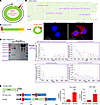 Figure 7
CircNSD1 encodes a 916aa peptide. (A) The 2869 nt circNSD1 is potentially translated into a 916aa protein (NSD1-916aa). (B) The sequences indicate the unique amino acids formed by the spanning junction ORF. (C) An illustration of overexpression of FLAG-tagged circNSD1. Immunofluorescence for NSD1-916aa in HK-2 cells. (D) Western blot analysis showing NSD1-916aa in HK-2 cells and the MS results of HK-2 cells revealing 4 unique sequences of NSD1-916aa. (E) Luciferase reporter assay indicating IRES activity of the CircNSD1 UTR exists in HK-2 and 293T cells. Scale bar: 20 μm (white). Data are shown as mean ± SEM, **P < 0.01, ***P < 0.001 compared with the EV group by Student’s t test.
Meanwhile, to validate the internal ribosome entry site (IRES) activity of CircNSD1, a luciferase reporter assay was performed in HK-2 and 293T cells. The promoter drives transcription of firefly luciferase (Fluc) and Renilla luciferase coding regions, with the spacer in bicistronic constructs replaced by either an empty vector or the CircNSD1 untranslated region (UTR) containing the IRES. Results show that intact IRES sequences could trigger Fluc activity, indicating that IRES activity of the CircNSD1 UTR exists (Figure 7E). Collectively, these results confirm that CircNSD1 encoded a 916aa peptide.
-
Discussion
AKI is a clinical syndrome associated with high morbidity and mortality and often progresses to CKD, particularly in cases of medical negligence. Due to the unclear pathogenesis of AKI, targeted treatments remain limited, with hemodialysis being the primary intervention. In the present study, we identified a circRNA, named CircNSD1, which we propose as a potential diagnostic biomarker for AKI-to-CKD transition. CircNSD1 was identified though high-throughput circRNA-Seq of renal cortex tissues, and its downregulation was observed in tissues of AKI-to-CKD mouse model, patients after AKI, and H/R-induced HK-2 cells. Our findings indicate that overexpression of CircNSD1 reduced ferroptosis in vivo and in vitro, thereby slowing the progression of AKI-to-CKD transition. We provide evidence that overexpression of CircNSD1 downregulates ACSL4 and SLC39A14 though the methylation of H3K36, a key mechanism by which CircNSD1 mitigates ferroptosis induced by AKI or H/R. Furthermore, we found that CircNSD1 might encoded a NSD1-916aa peptide, which could have functional implications in its effects. Collectively, these results demonstrate that CircNSD1 is a promising diagnostic and therapeutic target for the early detection of AKI-to-CKD transition (Figure 8).
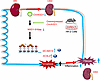 Figure 8
Graphical abstract. During the transition from AKI to CKD, CircNSD1 expression decreases and is negatively correlated with inflammation and fibrosis. In vivo and in vitro, overexpression of CircNSD1 mitigates ferroptosis in renal tubular epithelial cells and slows the progression of AKI to CKD. Mechanically, CircNSD1 can encode a NSD1-916aa peptide, which downregulates ACSL4 and SLC39A14 through H3K36 methylation and regulates ferroptosis, inflammation, and fibrosis in AKI to CKD.
In this research, we investigated the role of epithelial-specific CircNSD1 in the AKI-to-CKD transition. circRNAs are highly stable, widely expressed across various cell types, and conserved across species and tissues (16–18). Studies have demonstrated their critical involvement in the pathogenesis, progression, diagnosis, and prognosis of AKI (19, 20). Notably, circRNAs exhibit dynamic, spatiotemporally regulated expression patterns in kidney-related diseases. For instance, Xu et al. reported that circ-AKT3 exacerbates renal I/R injury by sponging miR-144-5p and activating the Wnt/bcatenin pathway and oxidative stress (21). Cheng et al. systematically analyzed the competing endogenous RNA mechanism involving circRNAs and long ncRNAs in a rat model of contrast-induced AKI (CI-AKI), offering insights into the pathogenesis of CI-AKI (22). Although alterations in circRNA expression have been observed in AKI, direct mechanistic links of circRNAs in the AKI-to-CKD transition remain unexplored. This study is the first to our knowledge to reveal that CircNSD1 regulated epithelial injury, with its expression levels being inversely associated with inflammation and fibrosis in AKI-to-CKD patients. These findings suggest that CircNSD1 may serve as a potential diagnostic biomarker for AKI-to-CKD transition.
Growing evidence implicates ferroptosis as a key driver of AKI (23–25). Ferroptosis has been confirmed in mouse models of AKI induced by nephrotoxic drugs and rhabdomyolysis (26–28). Moreover, ferroptotic stress has been identified as a key contributor to the pathogenesis of AKI and its subsequent transition to CKD. Research from Duke University School of Medicine (Durham, North Carolina, USA) has elucidated the molecular mechanisms underlying this transition. Following AKI-induced injury, proximal tubular cells adopt a proinflammatory state that promotes fibrosis. This inflammatory phenotype is transient in cases of mild injury, allowing for a return to the basal state without fibrosis development. However, in instances of severe injury, the inflammatory state becomes chronic, leading to ongoing inflammation and fibrosis. The downregulation of genes involved in glutathione metabolism makes PT cells more susceptible to ferroptotic stress, intensifying the inflammatory response. Genetic induction of high ferroptotic stress after injury exacerbates inflammation and fibrosis, pivotal drivers of AKI-to-CKD transition (6). Our experiments corroborated these findings, demonstrating dynamic changes in ferroptosis markers (e.g., GPX4 and ACSL4) during AKI-to-CKD progression (Supplemental Figure 1, I and J). Collectively, these data underscore ferroptosis as a pathogenic mechanism in this transition. Additionally, untargeted LC-MS/MS analysis of H/R-treated control cells and those overexpressing CircNSD1 revealed a notable enrichment of differential metabolites in the ferroptosis and glutathione metabolism pathways. Furthermore, ChIP assay demonstrated reduced enrichment of H3K36me3 and H3K36me1 at the promoter regions of ACSL4 and SLC39A14 in CircNSD1-overexpressing cells subjected to H/R-induced injury. These results indicate that the overexpression of CircNSD1 may mitigate ferroptosis through the modulation of ACSL4 and SLC39A14 DNA H3K36 methylation patterns during the AKI-to-CKD transition.
Although circRNAs have traditionally been classified as ncRNAs, recent studies indicate that they still have translational functions, and a few circRNAs can be translated into functional proteins under the regulation of methylation modification and participate in a variety of cellular processes (29–31). Notably, protein-coding circRNAs have garnered attention for their involvement in pathogenesis, including muscle atrophy, gastric cancer, AKI, and so on (10, 32–34). For instance, Circ-ZNF609 encoded ZNF609-250aa to induce cell apoptosis and AKI by impairing the autophagy flux via AKT/mTOR-dependent mechanism (9). Despite growing insights into the roles of protein-coding circRNAs in various diseases, their involvement in renal disease progression remain poorly characterized, particularly in the context of the AKI-to-CKD transition. In this study, we identified a protein-coding circRNA, CircNSD1, which initiates translation at the start codon ATG and terminates at the stop codon TAA, encompassing an ORF of 2869 nucleotides. This ORF encodes a protein of 916aa in length, referred to as NSD1-916aa. Our findings suggest that NSD1-916aa, the translational product of CircNSD1, may play a pivotal role in mitigating ferroptosis in the pathogenesis of AKI and CKD.
NSD1, a H3K36 methyltransferase, regulates gene expression through its catalytic activity on histone H3 lysine 36 (H3K36). NSD1 catalyzes the mono- and dimethylation of H3K36, serving as substrates for trimethylation by SETD2. Through interaction with promoter regions and RNA polymerase II (RNAPII), NSD1 modulates transcriptional activity and promotes gene expression by facilitating RNAPII-mediated elongation (35). In this study, overexpression of CircNSD1 reduced H3K36 methylation at ACSL4 and SLC39A14 loci during AKI-to-CKD progression. Overexpression of CircNSD1 exerts effects opposing those of their corresponding linear parent genes (NSD1), potentially due to NSD1-916aa’s interaction with Cullin-associated nedd8-dissociated protein (CAND1) in HK-2 and 293T cells (Supplemental Figure 2, A and B). This interaction between may attenuate the ubiquitination process catalyzed by Cullin 1, a core component of the SCF (SKP1, CUL1/CDC53, F box proteins) E3 ubiquitin ligase complex (36). Stabilization of NSD1-916aa may be essential for CircNSD1’s ability to suppress H3K36 methylation at ACSL4 and SLC39A14 promoters. This epigenetic modulation is critical for mitigating ferroptosis in the context of AKI and subsequently slow the progression to CKD.
In conclusion, our study identifies CircNSD1 as a potential diagnostic biomarker for the AKI-to-CKD transition. CircNSD1 overexpression attenuate ferroptosis in both in vivo and in vitro models, thereby slowing the progression of AKI to CKD. Additionally, the overexpression of CircNSD1 was found to downregulate ACSL4 and SLC39A14 through H3K36 methylation, a critical epigenetic modification that represents a key mechanism in the role of CircNSD1 in ferroptosis induced by AKI or H/R injury. Furthermore, our findings reveal that CircNSD1 encodes a NSD1-916aa peptide, which likely contributes to its functional role in AKI pathophysiology. Collectively, these findings advance our understanding of CircNSD1’s molecular mechanisms in AKI and highlight its therapeutic potential for halting CKD progression.


