
Research ArticleImmunologyOncology
Open Access |  10.1172/jci.insight.189024
Enhancing DC cancer vaccine by allogeneic MHC class II expression and Treg depletion
Noriko Seishima,1 William Becker,1 Purevdorj B. Olkhanud,1 Hoyoung M. Maeng,1 Miguel A. Lopez-Lago,2 William V. Williams,2 and Jay A. Berzofsky1
1Vaccine Branch, Center for Cancer Research, National Cancer Institute, NIH, Bethesda, Maryland, USA.
2BriaCell Therapeutics Corp., Philadelphia, Pennsylvania, USA.
Address correspondence to: Noriko Seishima, Center for Cancer Research, National Cancer Institute, Building 41, Room. D702 (MSC#5062), Bethesda, Maryland, 20892, USA. Phone: 240.760.7739; Email: noriko.seishima@nih.gov (primary); norikoseishima@gmail.com (alternate). Or to: Jay A. Berzofsky, Building 41, Room D702D (MSC#5062), NIH, Bethesda, Maryland, 20892, USA. Phone: 240.760.6148; Email: berzofsj@mail.nih.gov.
Find articles by Seishima, N. in: PubMed | Google Scholar
1Vaccine Branch, Center for Cancer Research, National Cancer Institute, NIH, Bethesda, Maryland, USA.
2BriaCell Therapeutics Corp., Philadelphia, Pennsylvania, USA.
Address correspondence to: Noriko Seishima, Center for Cancer Research, National Cancer Institute, Building 41, Room. D702 (MSC#5062), Bethesda, Maryland, 20892, USA. Phone: 240.760.7739; Email: noriko.seishima@nih.gov (primary); norikoseishima@gmail.com (alternate). Or to: Jay A. Berzofsky, Building 41, Room D702D (MSC#5062), NIH, Bethesda, Maryland, 20892, USA. Phone: 240.760.6148; Email: berzofsj@mail.nih.gov.
Find articles by Becker, W. in: PubMed | Google Scholar
1Vaccine Branch, Center for Cancer Research, National Cancer Institute, NIH, Bethesda, Maryland, USA.
2BriaCell Therapeutics Corp., Philadelphia, Pennsylvania, USA.
Address correspondence to: Noriko Seishima, Center for Cancer Research, National Cancer Institute, Building 41, Room. D702 (MSC#5062), Bethesda, Maryland, 20892, USA. Phone: 240.760.7739; Email: noriko.seishima@nih.gov (primary); norikoseishima@gmail.com (alternate). Or to: Jay A. Berzofsky, Building 41, Room D702D (MSC#5062), NIH, Bethesda, Maryland, 20892, USA. Phone: 240.760.6148; Email: berzofsj@mail.nih.gov.
Find articles by Olkhanud, P. in: PubMed | Google Scholar
1Vaccine Branch, Center for Cancer Research, National Cancer Institute, NIH, Bethesda, Maryland, USA.
2BriaCell Therapeutics Corp., Philadelphia, Pennsylvania, USA.
Address correspondence to: Noriko Seishima, Center for Cancer Research, National Cancer Institute, Building 41, Room. D702 (MSC#5062), Bethesda, Maryland, 20892, USA. Phone: 240.760.7739; Email: noriko.seishima@nih.gov (primary); norikoseishima@gmail.com (alternate). Or to: Jay A. Berzofsky, Building 41, Room D702D (MSC#5062), NIH, Bethesda, Maryland, 20892, USA. Phone: 240.760.6148; Email: berzofsj@mail.nih.gov.
Find articles by Maeng, H. in: PubMed | Google Scholar
1Vaccine Branch, Center for Cancer Research, National Cancer Institute, NIH, Bethesda, Maryland, USA.
2BriaCell Therapeutics Corp., Philadelphia, Pennsylvania, USA.
Address correspondence to: Noriko Seishima, Center for Cancer Research, National Cancer Institute, Building 41, Room. D702 (MSC#5062), Bethesda, Maryland, 20892, USA. Phone: 240.760.7739; Email: noriko.seishima@nih.gov (primary); norikoseishima@gmail.com (alternate). Or to: Jay A. Berzofsky, Building 41, Room D702D (MSC#5062), NIH, Bethesda, Maryland, 20892, USA. Phone: 240.760.6148; Email: berzofsj@mail.nih.gov.
Find articles by Lopez-Lago, M. in: PubMed | Google Scholar
1Vaccine Branch, Center for Cancer Research, National Cancer Institute, NIH, Bethesda, Maryland, USA.
2BriaCell Therapeutics Corp., Philadelphia, Pennsylvania, USA.
Address correspondence to: Noriko Seishima, Center for Cancer Research, National Cancer Institute, Building 41, Room. D702 (MSC#5062), Bethesda, Maryland, 20892, USA. Phone: 240.760.7739; Email: noriko.seishima@nih.gov (primary); norikoseishima@gmail.com (alternate). Or to: Jay A. Berzofsky, Building 41, Room D702D (MSC#5062), NIH, Bethesda, Maryland, 20892, USA. Phone: 240.760.6148; Email: berzofsj@mail.nih.gov.
Find articles by Williams, W. in: PubMed | Google Scholar
1Vaccine Branch, Center for Cancer Research, National Cancer Institute, NIH, Bethesda, Maryland, USA.
2BriaCell Therapeutics Corp., Philadelphia, Pennsylvania, USA.
Address correspondence to: Noriko Seishima, Center for Cancer Research, National Cancer Institute, Building 41, Room. D702 (MSC#5062), Bethesda, Maryland, 20892, USA. Phone: 240.760.7739; Email: noriko.seishima@nih.gov (primary); norikoseishima@gmail.com (alternate). Or to: Jay A. Berzofsky, Building 41, Room D702D (MSC#5062), NIH, Bethesda, Maryland, 20892, USA. Phone: 240.760.6148; Email: berzofsj@mail.nih.gov.
Find articles by
Berzofsky, J.
in:
PubMed
|
Google Scholar
|

Published August 22, 2025 - More info
JCI Insight. 2025;10(16):e189024. https://doi.org/10.1172/jci.insight.189024.
© 2025 Seishima et al. This work is licensed under the Creative Commons Attribution 4.0 International License. To view a copy of this license, visit http://creativecommons.org/licenses/by/4.0/.
Received: November 11, 2024; Accepted: July 7, 2025


-
Results
Syngeneic, MHC class I semiallogeneic and MHC class II semiallogeneic BMDCs express MHC class I/II and costimulatory molecules similarly, but MHC class II semiallogeneic BMDCs can help WT CD4+ T cells proliferate. We evaluated therapeutic use of H2Db-restricted peptide–pulsed MHC class I or MHC class II semiallogeneic BM-derived DC (BMDC) vaccines compared to syngeneic BMDCs against tumors in murine models (Figure 1A). Syngeneic BMDCs were generated from C57BL/6J (WT) and semiallogeneic BMDCs were generated from 2 mouse strains, B6.C-H2-Kbm1/ByJ (bm1), which carries mutations in H2Kb MHC class I (H2Kbm1), or B6(C)-H2-Ab1bm12/KhEgJ (bm12) that carries mutations in IAb MHC (IAbm12) (Table 1) (32). Before testing these BMDC vaccines in vivo, we compared characteristics of each BMDC in vitro. The WT, bm1, and bm12 BMDCs were generated by culturing BM cells from each strain with 20 ng/mL GM-CSF for 10 days. The WT, bm1, and bm12 BMDCs resembled monocyte-derived DCs with a surface CD11c+MHC II+CD11b+B220−CD8a− phenotype and they matured similarly, showing greater than 95% of the population as CD45+CD11c+ cells and CD11c+MHC class II (I-A/I-E)+ (Supplemental Figure 1, A and B; supplemental material available online with this article; https://doi.org/10.1172/jci.insight.189024DS1). Furthermore, all 3 BMDCs expressed similar levels of MHC class I and II and costimulatory molecules after generation with GM-CSF from the BM cells. The BMDCs were also matured with 100 ng/mL LPS (labeled mBMDCs) or stimulated with WT splenocytes for 18 hours, with similar effects on each strain of BMDC on their expression of MHC and costimulatory molecules. Furthermore, WT splenocytes increased the expression of MHC class II and CD86 to a greater extent than LPS maturation alone (Supplemental Figure 1C). In a mixed lymphocyte reaction (MLR) of WT splenocytes cocultured with WT, bm1, or bm12 BMDCs, WT CD8+ T cells proliferated more when stimulated by the bm1 and bm12 BMDCs compared with WT BMDCs. WT CD4+ T cells proliferated more when stimulated by the bm12 BMDCs, resulting in an increase in total CD3+ T cells (Supplemental Figure 1, D and E). These results suggest that the MHC class II semiallogeneic bm12 BMDC vaccine had the potential to provide allogeneic CD4+ T cell help to promote tumor suppression in vivo.
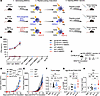 Figure 1
Syngeneic and semiallogeneic BMDCs present H2Db-restricted peptide to CD8+ T cells similarly, but the gp10025–33 peptide–pulsed MHC class II semiallogeneic BMDC vaccine is superior for delaying of B16-F10 tumor growth and improves antigen-specific CD8+ T cell and proinflammatory Th1 responses. (A) Schematic overview of H2Db-restricted peptide pulsed syngeneic WT, MHC class I semiallogeneic bm1, or MHC class II semiallogeneic bm12 BMDC vaccine experiments in mouse models. (B) In vitro IFN-γ production of isolated CD8+ T cells from naive Pmel-1 mice stimulated with titrated LPS-matured BMDCs (mBMDCs) pulsed with or without gp10025–33 peptide by ELISA. Isolated splenic Pmel-1 CD8+ T cells (1 × 10⁵) were cocultured with different ratios of the WT, bm1, or bm12 mBMDCs with or without 20 μg/mL gp10025–33 peptide pulsing in 200 μL/well in 96-well round-bottom plates for 24 hours. mBMDCs, Pmel-1 CD8+ T cells, or hgp100 alone were controls. (C–E) WT mice were injected s.c. with 1 × 10⁵ B16-F10 tumor cells, and mice were injected intradermally (i.d.) with either of the gp10025–33-pulsed WT, bm1, or bm12 mBMDC vaccines 3 times starting 4 days after tumor inoculation at 5-day intervals. (C) Experimental scheme and (D) average and (E) individual tumor growth. The mice noted in D and E were sacrificed 14 days after B16-F10 tumor inoculation, and tumors were subjected to flow cytometric analysis of infiltrating CD8+ and hgp100/H2Db tetramer+ cells and CD4+ T cell subsets. Individual mouse values of (F) tumor weight, (G) hgp100/H2Db tetramer+CD69+CD8+ T cells, and (H) Th1 cell in tumors. Data are presented as mean ± SEM and represent 3 independent experiments, n = 3 (B), 4–5 (D and E) and 6–9 (F–H) per group. Statistical analysis was performed using 2-way (D) or 1-way (E, F, and H) ANOVA test with post hoc Tukey’s multiple-comparison correction. *P < 0.05; **P < 0.01; ***P < 0.001; ****P < 0.0001.
WT, bm1, and bm12 mature BMDCs present H2Db-restricted gp10025–33 peptide to CD8+ T cells similarly, but the bm12 BMDC vaccine is superior in delaying B16-F10 tumor growth and improves antigen-specific CD8+ T cell responses and proinflammatory Th1 responses. To confirm whether the syngeneic WT, MHC class I semiallogeneic (bm1) and MHC class II semiallogeneic (bm12) BMDCs pulsed with H2Db-restricted peptide could present that antigen to CD8+ T cells in the same manner, we stimulated isolated T cell receptor–transgenic (TCR-transgenic) Pmel-1 CD8+ T cells with mBMDCs pulsed with human gp10025–33 (hgp10025–33) peptide (Figure 1B). Pmel-1 transgenic mice, which are on the C57BL/6J background, express a Vα1Vβ13 TCR specific for the H2Db-restricted epitope corresponding to gp10025–33 (33). This enables its recognition by Pmel-1 CD8+ T cells. B16-F10 is a melanoma cell line on the C57BL/6J background that expresses the mouse gp100 antigen (34). Although the hgp10025–33 and murine (mgp10025–33) epitopes are homologous, the 3 NH2-terminal amino acid differences increase the human peptide’s ability to stabilize “empty” H2Db and trigger more T cell IFN-γ production (35). Others have reported that immunization with xenogeneic hgp10025–33 in the mouse B16-F10 melanoma model is superior to immunization with syngeneic mgp10025–33 (36, 37). Thus, we used hgp10025–33 peptide to pulse mBMDC vaccines in this study. Titrated WT, bm1, and bm12 hgp10025–33-pulsed mBMDCs stimulated Pmel-1 CD8+ T cells, producing similar amounts of IFN-γ (Figure 1B). Purity of isolated Pmel-1 CD3+CD8+ T cells among CD45+ cells was greater than 90% in this assay (Supplemental Figure 2A). To determine the therapeutic effect of these 3 peptide-pulsed mBMDC vaccines, hgp10025–33-pulsed WT, bm1, or bm12 mBMDC vaccines were injected intradermally (i.d.) in B16-F10 tumor–bearing WT mice (Figure 1C). Both the hgp10025–33-pulsed WT and bm1 mBMDC vaccines showed significant efficacy compared with the PBS group but there was no significant difference between those 2 vaccines. However, the hgp10025–33-pulsed bm12 mBMDC vaccine showed significantly greater efficacy than the other 2 hgp10025–33 mBMDC vaccines in delaying B16-F10 tumor growth (Figure 1, D and E). Vaccination with hgp10025–33-pulsed bm12 mBMDCs resulted in decreased tumor weight and increased infiltrating hgp100/H2Db tetramer–specific CD69+CD8+ T cells 14 days after B16-F10 inoculation (Figure 1, F and G; tumor growth curves until the harvesting are shown in Supplemental Figure 3, A and B). In addition, CD4+ T cell subset analysis in tumor-infiltrating cells showed Th1 cells increased significantly more in the mice that received the hgp10025–33-pulsed bm12 mBMDCs than mice that received either the hgp10025–33-pulsed WT or bm1 mBMDC vaccines (Figure 1H), but levels of Th2 and Tfh cells and Tregs were unchanged (Supplemental Figure 3C). The hgp10025–33-pulsed bm12 mBMDC vaccine increased Th1 cells induced by the allogeneic MHC class II molecules, and that can improve the peptide-specific CD8+ T cell response compared with the other mBMDCs.
The E743–77-pulsed bm12 mBMDC vaccine is superior to WT and bm1 mBMDC vaccines in delaying TC-1 tumor growth and improves antigen-specific CD8+ T cell responses and proinflammatory Th1 and Th17 responses. To examine whether the superior efficacy of the peptide-pulsed bm12 BMDC vaccine was consistent across multiple tumor models, we next tested the therapeutic use of the peptide-pulsed WT, bm1, and bm12 mBMDC vaccines in the TC-1 tumor mouse model. TC-1 is a cancer cell line derived from primary lung epithelial cells of C57BL/6J mice and expresses HPV 16 oncogene proteins E6 and E7 (38, 39). Melief et al. have shown that the long E743–77 peptide primes E7-specific CD4+ T helper cells as well as E749–57-specific CD8+ T cells and results in better antitumor activity than the shorter E749–57 peptide (40, 41). Therefore, we pulsed these mBMDCs with the long E743–77 peptide. The E743–77-pulsed WT, bm1, and bm12 mBMDC vaccines were injected i.d. into TC-1 tumor–bearing WT mice starting 8 days after TC-1 inoculation when tumors reached at least 5 mm in diameter and at least 40 mm3 in volume (Figure 2A). TC-1 tumor growth after these BMDC vaccinations showed results comparable to those in the B16-F10 model, such that the E743–77-pulsed WT and bm1 mBMDC vaccines were able to reduce tumor growth compared with the PBS control group, but there was no significant difference between those 2 vaccines. However, the E743–77-pulsed bm12 mBMDC vaccine showed efficacy significantly superior to the other 2 mBMDC vaccines (Figure 2, B and C). Vaccination with E743–77-pulsed bm12 mBMDCs resulted in decreased tumor weight and increased infiltrating E7/H2Db tetramer+CD44+CD8+ T cells 22 days after TC-1 inoculation (Figure 2, D, F, and G; gating strategy, and Supplemental Figure 4). Tumor-infiltrating E7/H2Db tetramer+CD44+CD8+ T cells were plotted against tumor weight 22 days after TC-1 inoculation (Figure 2G), revealing a significant negative correlation (R2 = 0.565, P = 0.0194) between them only for the E743–77-pulsed bm12 mBMDC vaccination group. In addition, CD4+ T cell subset analysis in tumor-infiltrating cells showed Th1 and Th17 cells increased significantly more in the mice that received the E743–77-pulsed bm12 mBMDCs than mice that received either the E743–77-pulsed WT or bm1 mBMDC vaccines, but levels of Th2 and Tfh cells and Tregs were unchanged (Figure 2H; gating strategy, and Supplemental Figure 4). The E743–77-pulsed bm12 mBMDC vaccine generates CD4+ T cell subset changes induced by the allogeneic MHC class II molecules, and that can improve the peptide-specific CD8+ T cell response compared with the other mBMDCs.
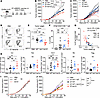 Figure 2
The E743–77 peptide–pulsed MHC class II semiallogeneic mature BMDC vaccine is superior in delaying TC-1 tumor growth, improves the E7-specific CD8+ T cell, and increases proinflammatory Th1 and Th17 T cells. (A–C) WT mice were injected s.c. with 1 × 10⁵ TC-1 tumor cells and injected intradermally (i.d.) with either of the E743–77 peptide–pulsed syngeneic WT, MHC class I semiallogeneic bm1, or MHC class II semiallogeneic bm12 LPS-matured BMDC (mBMDC) vaccines 4 times starting 8 days after tumor inoculation at 5-day intervals. (A) Experimental scheme. (B) Average and (C) individual tumor growth of each tumor-bearing mouse. (D–H) The mice noted in B and C were sacrificed 22 days after TC-1 tumor inoculation, and tumors were subjected to flow cytometric analysis of infiltrating CD8+ and E7/H2Db tetramer+ cells and CD4+ T cell subsets in tumors. (D) Representative flow cytometry contour plots for E7/H2Db tetramer+CD8+ T cells. Numbers in the plots indicate the percentage of gated cells. (E) Individual mouse values of tumor weight and (F) E7/H2Db tetramer+CD44+CD8+ T cells, and (G) correlation between tumor-infiltrating E7/H2Db tetramer+CD44+CD8+ T cells (y axis) and tumor weight (x axis) of indicated groups. (H) Individual mouse values of CD4+ T cell subsets. (I and J) WT mice were injected s.c. on the same schedule as A with 1 × 10⁵ TC-1 tumor cells and (I) WT or bm12 mBMDCs without peptide pulsing or (J) E743–77 peptide–pulsed WT mBMDCs mixed with either WT or bm12 mBMDCs. Data are presented as mean ± SEM and represent 3 independent experiments, n = 4–5 (B, C, I, and J) and 8–10 (E–H) per group. Statistical analysis was performed using 2-way (B, I, and J) or 1-way ANOVA (E, F, and H) test with post hoc Tukey’s multiple-comparison correction, or linear regression analysis (G). *P < 0.05; **P < 0.01; ***P < 0.001; ****P < 0.0001.
These results raise the question whether such allogeneic help induced by E743–77-pulsed bm12 mBMDCs might be effective at reducing tumor growth even without tumor-antigen pulsing. To that end, the WT or bm12 mBMDCs without E743–77 peptide were injected in TC-1 tumor–bearing mice on the same schedule for the E743–77-pulsed mBMDC vaccine (Figure 2A), but neither the unpulsed WT nor bm12 mBMDCs were effective for delaying tumor growth (Figure 2I). Then we tested whether the allo-MHC II could be on a different DC from the one presenting the peptide, by injecting either the unpulsed WT or bm12 mBMDCs mixed with the E743–77-pulsed WT mBMDCs in TC-1 tumor–bearing mice. The mixed vaccine of the unpulsed bm12 mBMDCs and the E743–77-pulsed WT mBMDCs showed similar efficacy for delaying tumor growth as the E743–77-pulsed WT mBMDC vaccine, whereas the E743–77-pulsed bm12 mBMDCs were more efficacious (Figure 2J). These results suggest that the peptide must be loaded directly on the semiallogeneic BMDCs to stimulate cytotoxic CD8+ T cells, and then the alloantigen-specific CD4+ T cell response can synergistically work to enhance CD8+ T cell suppression of tumor growth. In other words, the same DC that stimulates the allo-CD4+ T cell response should be the one also presenting peptide to CD8+ T cells, presumably because its antigen-presenting activity is increased by the allostimulation. From that perspective, the semiallogeneic mBMDC strategy should be superior to conventional WT DC cancer vaccines.
E743–77-pulsed bm12 mBMDCs generate allogeneic CD4+ T cell responses through allogeneic MHC class II to support E7 peptide–dependent CD8+ T cell responses in TC-1 tumor–bearing mice. To explore the mechanism of the MHC class II semiallogeneic mBMDCs in vitro, we measured IFN-γ–expressing CD8+ or CD4+ T cells from TC-1 tumor–bearing mice in cocultures of isolated splenic CD8+ T cells or CD4+ T cells stimulated for 24 hours with either WT or bm12 mBMDCs with or without E743–77 pulsing (Figure 3, A and B). Purity of isolated CD8+ T or CD4+ T cells among CD45+ cells was greater than 90% (Supplemental Figure 2B). Both WT and bm12 E743–77-pulsed mBMDCs stimulated CD8+ T cells to express IFN-γ, but neither the WT nor bm12 mBMDCs without E743–77 pulsing stimulated IFN-γ expression (Figure 3A). On the other hand, the bm12 mBMDCs stimulated significantly more CD4+ T cells than the WT mBMDCs to express IFN-γ regardless of E743–77 pulsing (Figure 3B). Next, we stimulated purified splenic CD8+ T cells or CD4+ T cells, or a mixture of the two, with either WT or bm12 mBMDCs with or without E743–77 pulsing and measured total IFN-γ production in the supernatant after 72 hours (Figure 3C). The CD8+ T cell response was E7 dependent, because there was no IFN-γ detected when CD8+ T cells alone were stimulated with the unpulsed WT or bm12 mBMDCs (Figure 3C). On the other hand, the CD4+ T cell response was E7 independent, and the bm12 mBMDCs stimulated CD4+ T cells significantly better than the WT mBMDCs regardless of E743–77 pulsing (Figure 3C). Mixtures of CD8+ and CD4+ T cells stimulated with the E743–77-pulsed bm12 mBMDCs produced significantly more IFN-γ than in the other 3 coculture assays (Figure 3C). Moreover, the E743–77-pulsed bm12 mBMDCs stimulated almost twice as much IFN-γ production as the E743–77-pulsed WT mBMDCs. These results suggest that CD4+ T cells stimulated by the bm12 mBMDCs can strengthen the CD8+ T cell response directly by peptide loaded on the H2Db molecules on the bm12 mBMDCs. Next, we asked whether this allogeneic CD4+ T cell help was due to the mutant MHC class II, so we stimulated mixtures of CD8+ and CD4+ T cells, or CD8+ or CD4+ T cells alone, with the E743–77-pulsed WT or bm12 mBMDCs that had MHC class II blocked beforehand (Figure 3E). We confirmed that the anti–MHC class II antibody blocked MHC class II molecules on both BMDCs by flow cytometry (Figure 3D). Neither WT nor bm12 mBMDCs in the presence of MHC class II blockade stimulated CD4+ T cells, and that resulted in much lower IFN-γ production in the coculture of mixed CD8+ and CD4+ T cells (Figure 3E). These results suggest allogeneic CD4+ T cell help generated by the bm12 mBMDCs is mutant MHC class II dependent.
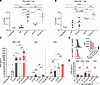 Figure 3
The E743–77 peptide–pulsed MHC class II semiallogeneic mature BMDCs activate allogeneic CD4+ T cells through allogeneic MHC class II to support E7-dependent CD8+ T cell responses in TC-1 tumor–bearing mice. (A and B) Flow cytometric analysis of intracellular staining of IFN-γ in splenic CD8+ or CD4+ T cells stimulated with either syngeneic WT or MHC class II semiallogeneic bm12 mature BMDCs (mBMDCs) with or without E7 peptide pulsing. (A) CD8+ T cells and (B) CD4+ T cells were cocultured with indicated mBMDCs in 200 μL/well of 96-well round-bottom plates for 18 hours and then 6 hours with brefeldin A. (C) IFN-γ production of splenic CD8+ T cells and/or CD4+ T cells from TC-1 tumor–bearing mice stimulated with either WT or bm12 mBMDCs with or without peptide pulsing by ELISA. CD8+ T cells alone, CD4+ T cells alone, or a mixture of CD8+ T cells and CD4+ T cells were cocultured with indicated mBMDCs in 200 μL/well in 96-well round-bottom plates for 72 hours. (D) The WT or bm12 BMDCs blocked with anti–MHC class II antibody for 1 hour were subjected to flow cytometric analysis. The histograms indicate the change in I-A/I-E expression on each BMDC and the bar graphs indicate the median fluorescence intensity (MFI) of I-A/I-E with or without MHC II blocking and fluorescence minus one (FMO) control for the anti–MHC class II antibody. (E) Contrast values of IFN-γ production in the supernatants with those of C with MHC II blocked. In A–C, and E, 2 × 10⁵ isolated CD8+ T cells or 2 × 10⁵ isolated CD4+ T cells were cultured alone or mixed with 1 × 10⁵ indicated mBMDCs. Data are presented as the mean ± SEM and represent 3 independent experiments, n = 4–5 per group. Statistical analysis was performed using 1-way ANOVA test with post hoc Tukey’s multiple-comparison correction. *P < 0.05; **P < 0.01; ***P < 0.001; ****P < 0.0001.
The E743–77-pulsed bm12 mBMDCs expand Th1, Th2, Tfh, and Th17 cells but reduce the proportion of Tregs. To reveal which CD4+ T cell subsets contribute to the allogeneic CD4+ T cell help that supports CD8+ T cell activation, we stimulated a mixture of splenic CD8+ and CD4+ T cells from TC-1 tumor–bearing mice with the E743–77-pulsed mBMDCs of either the WT or bm12 strains. The final cell number of CD8+ T cells and the final cell number of Ki67-expressing cells as a marker of proliferating CD8+ T cells was significantly greater than the unstimulated control after 48 hours of coculturing in vitro only when they were stimulated with the E743–77-pulsed bm12 mBMDCs (Figure 4A). Although there was no significant change in either the final cell number of CD4+ T cells or Ki67-expressing CD4+ T cells when they were stimulated with the E743–77-pulsed WT or bm12 BMDCs (Figure 4B), the CD4+ T cell subsets changed remarkably after stimulation with the E743–77-pulsed bm12 mBMDCs (Figure 4, C and D); Th1, Th2, Th17, and Tfh cells increased, but Tregs decreased significantly more after stimulation with the E743–77-pulsed bm12 mBMDCs than with the E743–77-pulsed WT mBMDCs (Figure 4C). The Tfh cells increased significantly with both types of stimulation. Ki67-expressing proliferating Th1, Th2, Th17, and Tfh cells were also significantly higher after stimulation with E743–77-pulsed bm12 mBMDCs than those with WT mBMDCs, but Ki67-expressing proliferating Tregs were not significantly different among these groups (Figure 4D). We observed similar results from coculture of a mixture of CD8+ T cells and CD4+ T cells and either WT or bm12 mBMDCs without E743–77 pulsing (Supplemental Figure 5), suggesting that the bm12 mutation was the dominant CD4 antigen, rather than E7, in contrast with the CD8+ T cells.
 Figure 4
E743–77 peptide–pulsed MHC class II semiallogeneic mature BMDCs expand Th1, Th2, Tfh, and Th17 cells but reduce the proportion of Tregs. (A–D) In vitro CD8+ or CD4+ T cell subset changes after coculture of mixtures of splenic CD8+ T cells and CD4+ T cells from TC-1 tumor–bearing mice stimulated with either the E743–77 -pulsed syngeneic WT or MHC class II semiallogeneic bm12 mBMDCs. TC-1 tumor–bearing mice were sacrificed 8–12 days after 1 × 10⁵ TC-1 inoculation and mixtures of 2 × 10⁵ isolated CD8+ T cells and 2 × 10⁵ isolated CD4+ T cells were cocultured with 1 × 10⁵ cells of indicated mBMDCs in 200 μL/well in 96-well round-bottom plates for 48 hours and subjected to flow cytometric analysis. Data are presented as the mean ± SEM and represent 2 independent experiments, n = 4–5 per group. Statistical analysis was performed using 1-way ANOVA test with post hoc Tukey’s multiple-comparison correction. *P < 0.05; **P < 0.01; ***P < 0.001; ****P < 0.0001. mBMDC, LPS-matured BMDC; SEM, standard error of mean; ANOVA, analysis of variance.
The E743–77-pulsed bm12 mBMDC vaccine is dependent on both CD8+ and CD4+ T cells, but CD4+ T cell depletion at the later stage of TC-1 tumor growth enhances the efficacy. To determine whether the E743–77-pulsed bm12 mBMDC vaccine response is dependent on CD8+ T cells through CD4+ T cell help in vivo, we selectively depleted CD8+ T cells starting 2 days before the first dose of the BMDC vaccine until the end of the study, or depleted CD4+ T cells on the same schedule as the depletion for CD8+ T cells as “Early CD4 depletion (EaCD4)” in mice receiving either the E743–77-pulsed WT or bm12 mBMDC vaccines. Mice receiving the E743–77-pulsed bm12 mBMDC vaccines were additionally depleted of CD4+ T cells starting 2 days after the second dose of the BMDC vaccination to the end of the study as “Late CD4 depletion (LaCD4)” (Figure 5A). CD4+ or CD8+ T cell depletion was confirmed using blood samples from those mice 7, 15, and 29 days after TC-1 inoculation (Supplemental Figure 6). Isotype antibody (IgG) controls did not influence the efficacy of mBMDC vaccines, but CD8+ T cell depletion abrogated the efficacy of both vaccines, indicating that the peptide-pulsed mBMDC vaccines were CD8+ T cell dependent (Figure 5, B and C). Neither CD8+ nor CD4+ T cell depletion affected the tumor growth in the PBS controls without vaccine (Figure 5, C, D, and G). On the other hand, early CD4+ T cell depletion combined with the E743–77-pulsed WT mBMDC vaccine abrogated its efficacy compared with isotype control, suggesting the E743–77-pulsed WT mBMDC vaccine is CD4+ T cell dependent (Figure 5, E and H). However, we observed interesting results from combined CD4+ T cell depletion and the E743–77-pulsed bm12 mBMDC vaccination. Early CD4+ T cell depletion abrogated the efficacy of the E743–77-pulsed bm12 mBDMC vaccination initially until 17 days after TC-1 inoculation, and there was a significant difference between the vaccine with and without CD4+ T cell depletion at that early phase (P < 0.001). After that time point, the early CD4+ T cell depletion group recovered the efficacy of the E743–77-pulsed bm12 mBMDC vaccine until the end of vaccination, whereas late CD4+ T cell depletion enhanced the efficacy of the E743–77-pulsed bm12 mBMDC vaccine even after the end of the fifth dose of the vaccination. There was a marked significant difference between the bm12 DC vaccine alone and the PBS group (P < 0.0001) and the bm12 DC vaccine combined with late CD4+ T cell depletion and the PBS group (P < 0.0001) over the entirety of the tumor growth before the mice in the PBS group succumbed (on day 25 after TC-1 inoculation). Moreover, there was a significant difference between the bm12 DC vaccine alone and the vaccine with late CD4+ T cell depletion on day 40 after TC-1 inoculation (P < 0.01; Figure 5, F and I). Circulating E7-specific CD8+ T cells in blood 29 days after TC-1 inoculation were significantly higher in the mice that received late CD4+ T cell depletion combined with the E743–77-pulsed bm12 mBMDC vaccine (Figure 5J), and that combination also prolonged the survival rate (Figure 5K). These results suggests that the MHC class II semiallogeneic bm12 mBMDC vaccination is CD4+ T cell dependent only at the early stages of the tumor growth, but depletion of CD4+ T cells during the later stages of tumor growth and treatment enhances mBMDC-mediated tumor suppression through improving E7-specific CD8+ T cell responses. We hypothesized that Tregs were the causative CD4+ T cell subset inhibiting the vaccine-induced response at later time points.
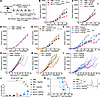 Figure 5
E743–77-pulsed MHC class II semiallogeneic mature BMDC vaccination is dependent on both CD8+ and CD4+ T cells, but CD4+ T cell depletion at a later stage of TC-1 tumor growth enhances the efficacy. (A–I) WT mice were injected s.c. with 1 × 10⁵ TC-1 tumor cells, and mice were injected intradermally (i.d.) with either of the E743–77-pulsed syngeneic WT or MHC class II semiallogeneic bm12 LPS-matured BMDC (mBMDC) vaccines 5 times starting 8 days after tumor inoculation at 5-day intervals. CD8+ or CD4+ T cells were depleted by i.p. injection of anti-CD4 antibody (clone GK1.5), anti-CD8 antibody (clone 53-6.7), or isotype control antibody (IgG) that started 2 days before the first dose of the BMDC vaccination for early depletion or that started 2 days after the second dose of BMDC vaccination for late depletion, and continued every 2–3 days until end of the study. (A) Experimental scheme, (B–F) average tumor growth of indicated groups, and (G–I) individual tumor growth of each tumor-bearing mouse. (J) Mouse blood was drawn 29 days after TC-1 inoculation in the same mice used in B–F and subjected to flow cytometric analysis of circulating CD8+ and E7/H2Db tetramer+ cells in blood. (K) Survival rate of indicated groups. The median value of each group: PBS, 27 days; WT, 36 days; bm12, 40 days; bm12 + EaCD4, 38 days; bm12 + LaCD4, 48 days. Data are presented as the mean ± SEM and represent 3 independent experiments, n = 4–5 per group. Statistical analysis was performed using 2-way ANOVA over the entirety of the study (B–F), 1-way ANOVA test with post hoc Tukey’s multiple-comparison correction (J), or Kaplan-Meier curves and analyzed by log-rank (K). *P < 0.05; **P < 0.01; ***P < 0.001; ****P < 0.0001.
Late Treg depletion enhances the efficacy of the E743–77-pulsed bm12 mBMDC vaccine, maintaining intratumoral E743–77-specific CD8+ T cell antitumor activity and increasing circulating E7-specific CD8+ T cells in blood. To determine whether depleting Foxp3+ Tregs starting at the later stage of the tumor growth enhanced the antitumor activity of the MHC class II semiallogeneic bm12 mBMDC vaccine, we used B6.129(Cg)-Foxp3tm3(Hbegf/GFP)Ayr/J (Foxp3-GFPDTR) mice, which undergo selective depletion of Foxp3+ cells upon administration of diphtheria toxin (DT) (42). We began depletion of Tregs 2 days before the first dose of the E743–77-pulsed bm12 mBMDC vaccine and continued until the end of the study as “early Treg depletion” (early DT injection, labeled EDT) or started depletion of Tregs toward the end of the study as “late Treg depletion” (late DT injection, labeled LDT) by intraperitoneal injection of DT every 2–3 days starting on day 15 (43). Then we injected the E743–77-pulsed bm12 mBMDC vaccine in TC-1–bearing Foxp3-GFPDTR mice every 5 days starting on day 8 after TC-1 inoculation (Figure 6A). Foxp3+ Treg depletion was confirmed using blood samples from those mice 9 days after TC-1 inoculation (Supplemental Figure 7). In contrast with early CD4+ T cell depletion combined with the E743–77-pulsed bm12 mBMDC vaccine, early Treg depletion did not hamper bm12 mBMDC efficacy at the earlier stages of tumor growth, and tumor growth was delayed until 17 days after TC-1 inoculation, but gradually the tumors grew at a similar rate as those in the mice that received vaccination alone (Figure 6, B and C). However, late Treg depletion enhanced the E743–77-pulsed bm12 mBMDC vaccine efficacy and the tumors started shrinking around 20 days after TC-1 inoculation, not just slowing down (Figure 6, B and C). Tumors in the mice that received the combination of late Treg depletion and the E743–77-pulsed bm12 mBMDC vaccine kept shrinking around 30 days after TC-1 inoculation when the experiment was terminated (Figure 6C). We confirmed that the late Treg depletion alone did not suppress the TC-1 tumor growth, showing similar tumor growth with the PBS control group (Supplemental Figure 8). The tumor growth curves of the combinations with early and late Treg depletion crossed at 23 days after TC-1 inoculation, so we analyzed the percentage of intratumoral E743–77-specific CD8+ T cells and Foxp3+ Tregs, as well as those in spleen and blood, 23 days after TC-1 inoculation when there was no difference in tumor size to affect the results (Figure 6, D–G; gating strategy, and Supplemental Figure 9). Tumor-infiltrating E7/H2Db tetramer+CD8+ T cells were significantly higher in the groups that received the E743–77-pulsed bm12 mBMDC vaccine alone and in combination with late Treg depletion, but only the combination of vaccine with late Treg depletion significantly increased circulating E7/H2Db tetramer+CD8+ T cells in the blood (Figure 6, D and E), showing comparable results with those of the combination of the E743–77-pulsed bm12 mBMDC vaccine and late CD4+ T cell depletion in blood 29 days after TC-1 inoculation (Figure 5J and Figure 6E). Late Treg depletion maintained high circulating E7/H2Db tetramer+CD8+ T cells in blood up to 29 days after TC-1 inoculation (Supplemental Figure 10A). We analyzed Foxp3+ Tregs on day 23 after TC-1 inoculation, showing the E743–77-pulsed bm12 mBMDC vaccine alone slightly reduced the percentage of Foxp3+ Tregs in tumors and spleens compared with those in PBS group (Figure 6, F and G). The mice with early Treg depletion had significantly higher tumoral Foxp3+ Tregs on day 23 compared with those with late Treg depletion even though they had continuous administration of DT, and the tumor sizes were the same (Figure 6, F and G). The percentage of Tregs in the blood was plotted at different time points, and it gradually increased in all groups except for the mice that received late DT injection (Supplemental Figure 10B). This result suggested that the mice were becoming immune to DT and were possibly making antibodies against DT that muted its effect and allowing Tregs to recover. To test this hypothesis, we measured anti-DT IgG by ELISA in both groups of DT-treated mice. The early-DT mice produced anti-DT IgG by 8 days after starting DT injection (14 days after TC-1 inoculation) and they maintained that level for 17 days after starting DT injection (23 days after TC-1 inoculation) (Supplemental Figure 10C). Similarly, the late-DT mice, which did not start receiving DT until day 15 after tumor inoculation, did not develop anti-DT IgG antibodies until 8 days later, on day 23, although the exact time when anti-DT IgG began to appear is uncertain. These results support the hypothesis that greater reduction in intratumoral Tregs and enhanced antitumor efficacy in the late-DT group was due to the later appearance of anti-DT antibodies. The bm12 BMDC vaccination combined with late Treg depletion also prolonged the survival rate compared with vaccine alone (Supplemental Figure 10D).
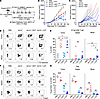 Figure 6
Late Treg depletion enhances the efficacy of the E743–77-pulsed MHC class II semiallogeneic mature BMDC vaccination by maintaining intratumoral E7-specific CD8+ T cell antitumor activity and increasing circulating E7-specific CD8+ T cells in the blood. (A) Foxp3-GFPDTR mice were injected s.c. with 1 × 10⁵ TC-1 tumor cells, and mice were injected intradermally (i.d.) with E743–77-pulsed MHC class II semiallogeneic bm12 LPS-matured BMDC (mBMDC) vaccines (designated bm12 in the graphs) 5 times starting 8 days after tumor inoculation at 5-day intervals. Tregs were depleted by i.p. injection of diphtheria toxin (DT) that started 2 days before the TC-1 inoculation for early depletion (EDT) or 2 days after the second dose of the BMDC vaccinations for late depletion (LDT) and continued every 2–3 days until end of the study. (A) Experimental scheme, (B) average tumor growth of indicated groups, and (C) individual tumor growth of each tumor-bearing mouse. (D–G) Mice were sacrificed 23 days after TC-1 inoculation and subjected to flow cytometric analysis of CD8+ and E7/H2Db tetramer+ cells and Foxp3+ and CD4+ T cells in tumors, spleen, and blood. (D and F) Representative flow cytometry contour plots for indicated cells. (E and G) Individual mouse values of CD8+ and E7/H2Db tetramer+ cells (E) and Foxp3+ Tregs (G). Numbers in the plots indicate the percentage of gated cells. Data are presented as the mean ± SEM and represent 2 independent experiments, n = 5–6 per group (B–G). Statistical analysis was performed using 2-way ANOVA over the entirety of the study (B) and 1-way ANOVA with post hoc Tukey’s multiple-comparison correction (E and G). *P < 0.05; **P < 0.01; ****P < 0.0001.


