
Research ArticleImmunology
Open Access |  10.1172/jci.insight.186259
Fgl2 regulates FcγRIIB+CD8+ T cell responses during infection
Anna B. Morris,1 Max W. Adelman,2 Kelsey B. Bennion,1 Catherine D. Martinez,1 Kem-Maria McCook,1 Michael H. Woodworth,2 Charles R. Langelier,3 Nadine Rouphael,2 Christopher D. Scharer,4 Cheryl L. Maier,5 Colleen S. Kraft,2 and Mandy L. Ford1
1Department of Surgery and Emory Transplant Center and
2Department of Medicine, Division of Infectious Diseases, Emory University, Atlanta, Georgia, USA.
3Department of Medicine, Division of Infectious Diseases, University of California, San Francisco, California, USA.
4Department of Microbiology and Immunology and
5Department of Pathology and Laboratory Medicine, Emory University, Atlanta, Georgia, USA.
Address correspondence to: Mandy L. Ford, 101 Woodruff Circle, Suite 5101 Woodruff Memorial Building, Emory University, Atlanta, Georgia 30322, USA. Email: mandy.ford@emory.edu.
Authorship note: ABM and MWA contributed equally to this work.
Find articles by Morris, A. in: PubMed | Google Scholar
1Department of Surgery and Emory Transplant Center and
2Department of Medicine, Division of Infectious Diseases, Emory University, Atlanta, Georgia, USA.
3Department of Medicine, Division of Infectious Diseases, University of California, San Francisco, California, USA.
4Department of Microbiology and Immunology and
5Department of Pathology and Laboratory Medicine, Emory University, Atlanta, Georgia, USA.
Address correspondence to: Mandy L. Ford, 101 Woodruff Circle, Suite 5101 Woodruff Memorial Building, Emory University, Atlanta, Georgia 30322, USA. Email: mandy.ford@emory.edu.
Authorship note: ABM and MWA contributed equally to this work.
Find articles by Adelman, M. in: PubMed | Google Scholar
1Department of Surgery and Emory Transplant Center and
2Department of Medicine, Division of Infectious Diseases, Emory University, Atlanta, Georgia, USA.
3Department of Medicine, Division of Infectious Diseases, University of California, San Francisco, California, USA.
4Department of Microbiology and Immunology and
5Department of Pathology and Laboratory Medicine, Emory University, Atlanta, Georgia, USA.
Address correspondence to: Mandy L. Ford, 101 Woodruff Circle, Suite 5101 Woodruff Memorial Building, Emory University, Atlanta, Georgia 30322, USA. Email: mandy.ford@emory.edu.
Authorship note: ABM and MWA contributed equally to this work.
Find articles by Bennion, K. in: PubMed | Google Scholar
1Department of Surgery and Emory Transplant Center and
2Department of Medicine, Division of Infectious Diseases, Emory University, Atlanta, Georgia, USA.
3Department of Medicine, Division of Infectious Diseases, University of California, San Francisco, California, USA.
4Department of Microbiology and Immunology and
5Department of Pathology and Laboratory Medicine, Emory University, Atlanta, Georgia, USA.
Address correspondence to: Mandy L. Ford, 101 Woodruff Circle, Suite 5101 Woodruff Memorial Building, Emory University, Atlanta, Georgia 30322, USA. Email: mandy.ford@emory.edu.
Authorship note: ABM and MWA contributed equally to this work.
Find articles by Martinez, C. in: PubMed | Google Scholar
1Department of Surgery and Emory Transplant Center and
2Department of Medicine, Division of Infectious Diseases, Emory University, Atlanta, Georgia, USA.
3Department of Medicine, Division of Infectious Diseases, University of California, San Francisco, California, USA.
4Department of Microbiology and Immunology and
5Department of Pathology and Laboratory Medicine, Emory University, Atlanta, Georgia, USA.
Address correspondence to: Mandy L. Ford, 101 Woodruff Circle, Suite 5101 Woodruff Memorial Building, Emory University, Atlanta, Georgia 30322, USA. Email: mandy.ford@emory.edu.
Authorship note: ABM and MWA contributed equally to this work.
Find articles by McCook, K. in: PubMed | Google Scholar
1Department of Surgery and Emory Transplant Center and
2Department of Medicine, Division of Infectious Diseases, Emory University, Atlanta, Georgia, USA.
3Department of Medicine, Division of Infectious Diseases, University of California, San Francisco, California, USA.
4Department of Microbiology and Immunology and
5Department of Pathology and Laboratory Medicine, Emory University, Atlanta, Georgia, USA.
Address correspondence to: Mandy L. Ford, 101 Woodruff Circle, Suite 5101 Woodruff Memorial Building, Emory University, Atlanta, Georgia 30322, USA. Email: mandy.ford@emory.edu.
Authorship note: ABM and MWA contributed equally to this work.
Find articles by Woodworth, M. in: PubMed | Google Scholar
1Department of Surgery and Emory Transplant Center and
2Department of Medicine, Division of Infectious Diseases, Emory University, Atlanta, Georgia, USA.
3Department of Medicine, Division of Infectious Diseases, University of California, San Francisco, California, USA.
4Department of Microbiology and Immunology and
5Department of Pathology and Laboratory Medicine, Emory University, Atlanta, Georgia, USA.
Address correspondence to: Mandy L. Ford, 101 Woodruff Circle, Suite 5101 Woodruff Memorial Building, Emory University, Atlanta, Georgia 30322, USA. Email: mandy.ford@emory.edu.
Authorship note: ABM and MWA contributed equally to this work.
Find articles by Langelier, C. in: PubMed | Google Scholar
1Department of Surgery and Emory Transplant Center and
2Department of Medicine, Division of Infectious Diseases, Emory University, Atlanta, Georgia, USA.
3Department of Medicine, Division of Infectious Diseases, University of California, San Francisco, California, USA.
4Department of Microbiology and Immunology and
5Department of Pathology and Laboratory Medicine, Emory University, Atlanta, Georgia, USA.
Address correspondence to: Mandy L. Ford, 101 Woodruff Circle, Suite 5101 Woodruff Memorial Building, Emory University, Atlanta, Georgia 30322, USA. Email: mandy.ford@emory.edu.
Authorship note: ABM and MWA contributed equally to this work.
Find articles by Rouphael, N. in: PubMed | Google Scholar
1Department of Surgery and Emory Transplant Center and
2Department of Medicine, Division of Infectious Diseases, Emory University, Atlanta, Georgia, USA.
3Department of Medicine, Division of Infectious Diseases, University of California, San Francisco, California, USA.
4Department of Microbiology and Immunology and
5Department of Pathology and Laboratory Medicine, Emory University, Atlanta, Georgia, USA.
Address correspondence to: Mandy L. Ford, 101 Woodruff Circle, Suite 5101 Woodruff Memorial Building, Emory University, Atlanta, Georgia 30322, USA. Email: mandy.ford@emory.edu.
Authorship note: ABM and MWA contributed equally to this work.
Find articles by Scharer, C. in: PubMed | Google Scholar
1Department of Surgery and Emory Transplant Center and
2Department of Medicine, Division of Infectious Diseases, Emory University, Atlanta, Georgia, USA.
3Department of Medicine, Division of Infectious Diseases, University of California, San Francisco, California, USA.
4Department of Microbiology and Immunology and
5Department of Pathology and Laboratory Medicine, Emory University, Atlanta, Georgia, USA.
Address correspondence to: Mandy L. Ford, 101 Woodruff Circle, Suite 5101 Woodruff Memorial Building, Emory University, Atlanta, Georgia 30322, USA. Email: mandy.ford@emory.edu.
Authorship note: ABM and MWA contributed equally to this work.
Find articles by
Maier, C.
in:
PubMed
|
Google Scholar
|

1Department of Surgery and Emory Transplant Center and
2Department of Medicine, Division of Infectious Diseases, Emory University, Atlanta, Georgia, USA.
3Department of Medicine, Division of Infectious Diseases, University of California, San Francisco, California, USA.
4Department of Microbiology and Immunology and
5Department of Pathology and Laboratory Medicine, Emory University, Atlanta, Georgia, USA.
Address correspondence to: Mandy L. Ford, 101 Woodruff Circle, Suite 5101 Woodruff Memorial Building, Emory University, Atlanta, Georgia 30322, USA. Email: mandy.ford@emory.edu.
Authorship note: ABM and MWA contributed equally to this work.
Find articles by Kraft, C. in: PubMed | Google Scholar
1Department of Surgery and Emory Transplant Center and
2Department of Medicine, Division of Infectious Diseases, Emory University, Atlanta, Georgia, USA.
3Department of Medicine, Division of Infectious Diseases, University of California, San Francisco, California, USA.
4Department of Microbiology and Immunology and
5Department of Pathology and Laboratory Medicine, Emory University, Atlanta, Georgia, USA.
Address correspondence to: Mandy L. Ford, 101 Woodruff Circle, Suite 5101 Woodruff Memorial Building, Emory University, Atlanta, Georgia 30322, USA. Email: mandy.ford@emory.edu.
Authorship note: ABM and MWA contributed equally to this work.
Find articles by
Ford, M.
in:
PubMed
|
Google Scholar
|
Published April 8, 2025 - More info
JCI Insight. 2025;10(7):e186259. https://doi.org/10.1172/jci.insight.186259.
© 2025 Morris et al. This work is licensed under the Creative Commons Attribution 4.0 International License. To view a copy of this license, visit http://creativecommons.org/licenses/by/4.0/.
Received: August 22, 2024; Accepted: February 12, 2025

-
Results
Increase in FcγRIIB-expressing CD8+ T cells in patients with COVID-19 relative to healthy controls. Because our previous studies in transplantation and tumor models demonstrated that signaling through FcγRIIB results in apoptosis in CD8+ T cells in a cell-autonomous manner, here we sought to determine the expression of FcγRIIB on CD8+ T cells isolated from patients hospitalized with SARS-CoV-2 infection. Patients testing positive for SARS-CoV-2 admitted as inpatients at Emory University Hospital May–July 2020 (n = 31; Table 1) and normal healthy controls (n = 15) were enrolled in an IRB-approved protocol and consented for blood draw. There were no significant differences in age, sex, race, or ethnicity between the healthy controls and patients positive for SARS-CoV-2. Blood samples were obtained 2-16 (mean 8.9) days after symptom onset and CD8+ T cells were analyzed by flow cytometry (Figure 1A). Results indicated a reduced frequency of CD45RA– CCR7– effector memory T (Tem) cells in patients with COVID-19 relative to healthy controls (Figure 1B), a finding that is consistent with other published reports (15–17). To identify additional characteristics of CD8+ T cell populations that were significantly different between healthy versus COVID-19, unsupervised analysis using spanning-tree progression analysis for density-normalized events (SPADE) was conducted. Bulk CD8+ T cells within both healthy controls (HC) and patients with COVID-19 were clustered into distinct nodes based on similarity in phenotypic markers, and the abundance of cells within each node was compared in HC versus COVID-19. Nodes containing cells that did not differ in abundance between HC versus COVID-19 are shown in blue (Figure 1C). Two clusters of cells were identified that were differentially abundant in HC versus patients with COVID-19 (Figure 1C, red nodes in shaded polygons). The intensity of staining of each phenotypic marker on cells within these differentially abundant nodes is mapped in Figure 1D and revealed a subset of CD8+ T cells expressing the inhibitory receptor FcγRIIB (top left panel).
 Figure 1
FcγRIIB is upregulated on CD8+ T cells isolated from patients with COVID. Patients testing positive for SARS CoV-2 admitted as inpatients at Emory University Hospital from May to July 2020 (n = 31; Table 1) and normal healthy controls (n = 15) were consented for blood draw and CD8+ T cells were analyzed by flow cytometry. (A) Bulk CD8+ T cell frequencies were analyzed by Mann-Whitney U nonparametric test. (B) Frequencies of naive (CCR7+CD45RA+), TCM (CCR7+CD45RA–), TEM (CCR7–CD45RA–), and TEMRA (CCR7–CD45RA+) cells among CD8+ T cells are shown (analyzed by 2-way ANOVA). (C and D) Flow cytometry data were subjected to spanning-tree progression analysis for density-normalized events (SPADE) analysis. Shaded areas represent clusters of cells that were differentially represented in healthy individuals versus patients with COVID. Phenotypic characteristics of cells in those clusters are shown in D. Intensity of expression (MFI) is indicated by colorimetric scale. (E–G) Flow cytometry data were analyzed via FlowJo. (E) Representative flow cytometry staining of FcγRIIB+ cells among CD8+ T cells. (F) Summary data of FcγRIIB+ cells among CD8+ cells (Mann-Whitney U nonparametric test). (G) Summary data of FcγRIIB+ cells among CD8+ Tem (Mann-Whitney U nonparametric test). Data are depicted as mean ± SEM. *P < 0.05, **P < 0.01, ***P < 0.001.
These findings were verified via traditional flow cytometry analysis using FlowJo, which illuminated a significant increase in FcγRIIB+ cells among total CD8+ T cells (Figure 1, E and F) as well as a significant increase in FcγRIIB+ cells among CD8+CD45RA–CCR7– Tem in samples isolated from patients with COVID-19 as compared with healthy controls (P < 0.001; Figure 1G). This increase was observed across age groups (26–40, 41–60, and 61–89 years old) (Supplemental Figure 1A; supplemental material available online with this article; https://doi.org/10.1172/jci.insight.186259DS1) and in both patients with COVID-19 who stayed in the ICU and those who did not (Supplemental Figure 1B). There was no difference in the frequency of FcγRIIB+ cells among CD8+CD45RA–CCR7– Tem between male versus female patients with COVID-19 (Supplemental Figure 1C). Of note, the anti-FcγRIIB clone FLI8.26 used in these experiments, like many anti-FcR antibodies, has the potential cross-react and detect FcγRIIA and/or FcγIIC on myeloid cells (18). However, using quantitative PCR (qPCR) analysis of sorted FLI8.26+ CD8+ T cells, we have previously shown that the FLI8.26 staining on CD8+ T cells is indicative of FcγRIIB expression (19). Taken together, these results demonstrate that the inhibitory receptor FcγRIIB is upregulated on CD8+ T cells in patients experiencing SARS-CoV-2 viral infection.
Virus-specific CD8+ T cells acquire expression of FcγRIIB in mouse models of acute and chronic viral infection. Given the above results demonstrating that FcγRIIB is expressed and, therefore, could modulate the survival and/or function of CD8+ T cells during viral infection, we employed a mouse model of lymphocytic choriomeningitis virus (LCMV) infection to interrogate the effects of FcγRIIB signaling on CD8+ T cells during viral infection. Naive B6 mice were adoptively transferred with Thy1.1+ P14 TCR transgenic T cells (specific for the LCMV viral glycoprotein epitope gp33-41/Db) and were infected using either an acute (Armstrong [Arm]) or chronic (Clone 13 [cl-13]) model of LCMV (Figure 2, A and B). Results indicate that the frequency of Thy1.1+ P14 T cells that expressed FcγRIIB increased significantly among CD8+ T cells in the blood of both Arm- and cl-13–infected animals. However, we observed a significantly greater frequency of antigen-specific Thy1.1+ CD8+ P14 cells expressing FcγRIIB on days 7, 14, and 21 following Arm compared with cl-13 infection (Figure 2, C and D). To confirm that FcγRIIB expression on virus-specific CD8+ T cells was the result of gene expression and not trogocytosis, transcript levels of Fcgr2b RNA isolated from P14 cells from Arm-infected versus cl-13–infected mice on day 30 from an existing dataset (20) (GSE9650) were compared. Results show that the relative expression of Fcgr2b mRNA was elevated in both acute and chronic model–elicited memory CD8+ P14 cells as compared with naive P14 T cells; however, the chronic model–elicited CD8+ T cells exhibited significantly lower levels of Fcgr2b gene expression than the acute virus–elicited memory CD8+ T cells (Figure 2E). Furthermore, chromatin accessibility of the Fcgr2b locus in acute versus chronic model–elicited memory CD8+ P14 T cells was interrogated from an existing ATAC-Seq dataset (21). Interestingly, 7 regions of the Fcgr2b promotor were highly accessible in memory CD8+ T cells elicited via the acute model of LCMV but were relatively less accessible in CD8+ T cells elicited via the chronic model of LCMV (Figure 2F). These data show that virus-specific CD8+ T cells upregulate transcription and remodel the local chromatin of the Fcg2rb gene during an antiviral immune response; however, there is a range in the frequency of FcγRIIB-expressing cells within antigen-specific CD8+ T cell populations.
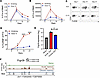 Figure 2
FcγRIIB is upregulated on viral antigen-specific effector and memory CD8+ T cells in mice. Naive B6 mice were adoptively transferred with 2 × 10³ Thy1.1+ P14 TCR tg T cells and were infected with either LCMV Arm (2 × 10⁵ pfu i.p.) or cl-13, 2 × 10⁶ pfu i.v.). Blood was collected at the indicated time points for flow cytometric analysis. (A) Frequencies of Thy1.1+ P14 among total PBMC in Arm- or cl-13–infected animals. (B) Absolute numbers of Thy1.1+ P14 within PBMC in Arm- or cl-13–infected animals. (C and D) Representative flow cytometry staining (C) and summary data (D) of FcγRIIB+ cells among Thy1.1+ CD8+ T cells. Data shown are n = 3–5/group and are representative of 2 independent experiments. Data at each time point were compared by Mann-Whitney U nonparametric test. (E) mRNA transcript levels of Fcgr2b RNA isolated from P14 cells from Arm-infected versus cl-13–infected mice on day 30 from an existing dataset (20) (GSE30341) were compared by 2-way ANOVA with Dunnett’s post hoc test. Naive P14 were included as a control. (F) Chromatin accessibility of the Fcgr2b locus in acute versus chronic virus–elicited memory CD8+ P14 T cells was interrogated from an existing ATAC-Seq dataset (21). Naive CD8+ P14 T cells were used as a control. Data were analyzed by Mann-Whitney U nonparametric test and are depicted as mean ± SEM. *P < 0.05, **P < 0.01, ****P < 0.0001.
One potential explanation for the observation of high frequencies of FcγRIIB+CD8+ T cells in the Arm infection model and low frequencies of FcγRIIB+ cells in the cl-13 infection model could be that the presence of the functional ligand for FcγRIIB in the cl-13–infected mice is driving apoptosis of FcγRIIB+ CD8+ T cells under these conditions, resulting in reduced frequencies of FcγRIIB+ CD8+ T cells. To address this possibility, plasma from Arm or cl-13–infected mice were analyzed for the concentration of 3 potential ligands of FcγRIIB: IgG (22), serum amyloid protein (SAP) (23), and Fgl2 (5, 12). Results indicate that plasma levels of IgG were significantly elevated on day 14 in mice infected with Arm (Figure 3A), and SAP was significantly elevated only on day 14 in mice infected with cl-13 (Figure 3B). In contrast, Fgl2 levels were consistently significantly elevated on days 7, 14, and 21 in mice infected with cl-13 as compared with those infected with Arm (Figure 3C). These data demonstrate an association of higher serum concentration of Fgl2 with lower frequencies of FcγRIIB+ CD8+ T cells during the course of viral infection.
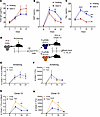 Figure 3
Transfer of FcγRIIB+ but not FcγRIIB– CD8+ T cells into an Fgl2-rich environment results in loss of transferred T cells. (A–C) Naive B6 animals were infected either LCMV Arm or cl-13, and serum was analyzed on days 3, 7, 14, and 21 after infection for the concentration of total IgG (A), serum amyloid protein (SAP) (B), or Fgl2 (C). (D–H) Naive B6 animals received an adoptive transfer of 1 × 10⁴ congenically labeled CD45.1+ P14 T cells and were infected with LCMV Arm. On day 27, splenic CD45.1+CD8+ P14 T cells were sorted into FcγRIIB+ (Fcpos) and FcγRIIB– (Fcneg) populations which were each transferred into naive hosts that were then infected with either Arm or cl-13 (D). (E and F) The frequency (E) and absolute number (F) of FcγRIIB+ (Fcpos) versus FcγRIIB– (Fcneg) CD45.1+ CD8+ among PBMC in Arm-infected mice. (G and H) The frequency (G) and absolute number (H) of FcγRIIB+ (Fcpos) versus FcγRIIB– (Fcneg) CD45.1+ CD8+ among PBMC in cl-13–infected mice. Data shown are n = 3–5 mice/group and are representative of 2 independent experiments. Data at each time point were compared by Mann-Whitney U nonparametric test and are depicted as mean ± SEM. *P < 0.05, **P < 0.01, ***P < 0.001, ****P < 0.0001.
FcγRIIB+CD8+ T cells fail to expand in a Fgl2 replete environment. To further distinguish between the possibility that the environment of cl-13 results in the preferential loss of FcγRIIB+CD8+ T cells versus the possibility that it simply does not induce the differentiation of FcγRIIB+CD8+ T cells, we performed an adoptive transfer experiment in which sorted FcγRIIB+ (Fcpos) and FcγRIIB– (Fcneg) memory CD8+ P14 T cells obtained from d27 Arm-infected mice were transferred into naive hosts that were then infected with either Arm or cl-13 (Figure 3D). Results indicate that Fcpos and Fcneg CD8+ T cells exhibited similar kinetics and magnitude of expansion when adoptively transferred into Arm-infected animals (Figure 3, E and F), which have low serum concentrations of Fgl2 (Figure 3C). In contrast, Fcpos and Fcneg CD8+ T cells exhibited different fates within the Fgl2-rich cl-13 environment, in that the Fcpos CD8+ T cells exhibited a competitive disadvantage in survival as indicated by a significantly lower frequency and cell number on days 7 and 14 following infection (Figure 3, G and H). These data provide evidence that FcγRIIB expression on CD8+ T cells limits their expansion and accumulation under conditions in which Fgl2 serum concentrations are high.
Plasma concentration of Fgl2 is associated with CD8+ T cell lymphopenia in patients with COVID-19. Given the above data demonstrating that FcγRIIB+CD8+ T cell numbers are diminished in an Fgl2-rich environment, we interrogated the expression of plasma Fgl2 in patients testing positive for SARS-CoV-2, and investigated the potential association of Fgl2 plasma levels with CD8+ T cell lymphopenia. Results demonstrate that plasma Fgl2 concentration was significantly upregulated in patients with COVID-19 as compared with healthy controls (P = 0.0045; Figure 4A). Fgl2 levels in individual patients were then plotted against frequencies and numbers of indicated immune cell subsets obtained via flow cytometry studies as described in Figure 1. Importantly, a highly significant, inverse relationship between the plasma concentration of Fgl2 and both the frequency (P = 0.0048) and absolute number (P = 0.0044) of total CD8+ T cells was observed in patients with COVID-19 (Figure 4B) that was not observed in healthy controls (P = 0.9; Figure 4B). A significant, inverse relationship was also observed between the plasma concentration of Fgl2 and the number of CD8+ CD45RA+ CCR7– Tem (P = 0.0179; Figure 4C) Moreover, a significant, inverse relationship was observed between the plasma concentration of Fgl2 and the number of both total FcγRIIB+CD8+ T cells (P = 0.0017) and FcγRIIB+CD8+CD45RA+CCR7– Tem (P = 0.0038; Figure 4D). In contrast, no correlation between the frequency of FcγRIIB+CD8+ T cells and either the frequency or number of total CD8+ T cells was observed (Figure 4E), demonstrating that FcγRIIB expression alone was not associated with CD8+ T cell lymphopenia.
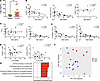 Figure 4
Fgl2 is increased in the serum of patients with COVID and is associated with decreased circulating CD8+ T cells. (A) Plasma obtained from n = 31 COVID+ patients (at 2–16, mean 8.9d following symptom onset) or n = 15 healthy patients was assayed for Fgl2 concentration (ng/mL) via ELISA. (B) PBMC was obtained from n = 31 patients testing positive for SARS CoV-2 admitted as inpatients at Emory University Hospital May-July 2020 (n = 31, Table 1) that were enrolled in an IRB-approved protocol and consented for blood draw. Blood samples were obtained 2-16 (mean 8.9) days after symptom onset. WBC were not available for n = 7 patients, thus all absolute count data represents n = 24 patients with COVID. Data were analyzed by Mann-Whitney U nonparametric test and are depicted as mean ± SEM. (B) Plasma concentration of Fgl2 (ng/mL) is plotted against the frequency of CD8+ cells among PBMC (left panel), the absolute number of CD8+ T cells within PBMC (right panel), or the frequency of CD8+ cells among PBMC in healthy controls (right panel). (C) Plasma concentration of Fgl2 (ng/mL) is plotted against the frequency of CD45RA+ CCR7– Tem among CD8+ cells (left panel), and the absolute number of CD8+ CD45RA+ CCR7– Tem within PBMC (right panel). (D) Plasma concentration of Fgl2 (ng/mL) is plotted against the absolute number of total FcγRIIB+CD8+ T cells within PBMC (left panel) and the number of FcγRIIB+CD8+CD45RA+CCR7– Tem within PBMC (right panel). (E) Frequency of FcγRIIB+ among CD8+ T cells is plotted against the frequency of CD8+ cells among PBMC (left panel), and the absolute number of CD8+ T cells within PBMC (right panel). Data were compared by linear regression analysis. (F and G) PBMC obtained from n = 21 patients positive for SARS-CoV-2 was subjected to bulk RNA-Seq (n = 10 patients did not have material available for RNA-Seq). (F) PCA of differentially expressed genes (DEG) between patients with high plasma Fgl2 concentrations versus those with low plasma Fgl2 concentrations. (G) GSEA of DEGs (FDR < 0.1). The normalized enrichment scores of significant pathways (FDR < 0.1) in patients exhibiting high versus low plasma Fgl2 concentrations are plotted.
Given the above association between increasing plasma Fgl2 concentration and CD8+ T cell lymphopenia, we next assessed transcriptomic profiles of PBMC isolated from patients who exhibited higher versus lower plasma concentrations of Fgl2. Because the median plasma Fgl2 concentration in SARS-CoV-2 patients was 9.153 ng/mL, we used this median value as the cutoff and designated patients with plasma concentrations of Fgl2 ≥ 9.153 ng/mL as Fgl2hi and patients with plasma concentrations of Fgl2 < 9.153 ng/mL as Fgl2lo. Using this methodology, we identified 213 differentially expressed genes (DEG) between the Fgl2hi versus Fgl2lo groups at a FDR < 0.1. Principal component analysis revealed the variation in gene expression profiles between the Fgl2hi versus Fgl2lo patient cohorts (Figure 4F). Gene set enrichment analysis (GSEA) revealed significant enrichment (FDR < 0.1) in pathways associated with erythrocyte metabolism, megakaryocyte development and platelet production in patients exhibiting high levels of plasma Fgl2 (Figure 4G).
Fgl2 derived from a CD8+ T cell source results in FcγRIIB-mediated regulation of CD8+ T cells. In light of the above results demonstrating that Fgl2 induces a loss of FcγRIIB+CD8+ T cells during viral infection, we next queried the cellular source of Fgl2. RNA-Seq data of sorted P14 CD8+ T cells isolated on either day 8 or day 30 from mice infected with either the acute (Arm) or chronic (cl-13) model of LCMV (24) demonstrate that Fgl2 could be produced by virus-specific CD8+ T cells themselves, with an increase in Fgl2 transcripts in CD8+ T cells elicited via the chronic versus acute viral infection model (Figure 5A). This was true for CD8+ T cells isolated on both day 8 and day 30 after infection (Figure 5A). To assess Fgl2 protein expression in the setting of both acute and chronic viral infection models, we stained splenocytes from day 27 after infection with anti-Fgl2 and anti-FcγRIIB. CD44hiFcγRIIB+CD8+ T cells elicited from both infections exhibited greater frequencies of Fgl2+ cells compared with CD44hiFcγRIIB–CD8+ T cells (Figure 5, B and C). Notably, 40% of CD44hiFcγRIIB+CD8+ T cells isolated from cl-13–infected mice expressed Fgl2, compared with only 1.5% of the CD44hiFcγRIIB+CD8+ T cells in Arm-infected mice (Figure 5, B and C). Taken together, these data suggest that Fgl2 cytokine can be produced by CD8+ T cells themselves. As an independent validation of this finding and to determine whether CD8+ T cells produce Fgl2 during COVID-19 in humans, we mined existing single-cell RNA-Seq data from Liao et al. comparing healthy people and patients with COVID-19 (25) and found that Fgl2 transcript was upregulated in CD8+ T cells isolated from COVID-19 versus healthy controls (Figure 5, D and E). Finally, to verify that Fgl2 can be not just produced but also secreted by CD8+ T cells, we performed an in vitro assay in which CD8+ T cells were FACS purified (>90%) from healthy human PBMC and stimulated for 5 days with anti-CD3/ anti-CD28. Supernatants were collected, and Fgl2 concentration was assessed via ELISA. Results indicate that Fgl2 was detected in the supernatant of stimulated CD8+ T cells at both day 3 (Figure 5F) and day 5 (Figure 5F) after stimulation and was significantly upregulated compared with unstimulated CD8+ T cell cultures. In summary, these data demonstrate that CD8+ T cells can themselves both produce and secrete the immunosuppressive cytokine Fgl2 during viral infection in both mouse and humans.
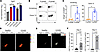 Figure 5
CD8+ T cells produce Fgl2 during viral infection in both mice and humans. (A) Fgl2 transcripts in CD45.1+CD8+ P14 T cells sorted by FACS that were isolated on either day 8 or day 30 from mice infected with either Arm (acute) or cl-13 (chronic) were assessed by bulk RNA-Sequencing and compared by 2-way ANOVA (24). (B and C) Fgl2 protein expression in CD45.1+CD8+ P14 T cells isolated from the spleens of either Arm-infected or cl-13–infected mice on day 27 after infection was assessed via intracellular cytokine staining following ex vivo restimulation with PMA/ionomycin. Representative flow cytometry plots are shown in B. Summary data from n = 3 mice/group are shown in C. Data depicted are mean ± SEM, using Mann Whitney U nonparametric test. Data are representative of 2 independent experiments. (D and E) Data mining experiment to identify expression of Fgl2 within CD8+ T cells from a single cell RNA-Seq data comparing healthy people and patients with COVID-19 (25). (D) The CD8+ T cell clusters in healthy versus patients with COVID are shown in red. (E) Expression of Fgl2 transcript within the CD8+ T cells in healthy versus patients with COVID is shown in white. (F) CD8+ T cells were FACS purified from healthy human PBMC and stimulated for 5 days with anti-CD3/anti-CD28. Supernatants were collected and Fgl2 concentration was assessed via ELISA. Data are depicted as mean ± SEM (n = 6–10), using Mann Whitney U test. *P < 0.05, **P < 0.01.


