
Abstract
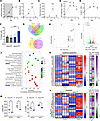
Induction of heme oxygenase-1 (HO-1/Hmox1) is broadly considered cytoprotective, but the role of colonic epithelial HO-1 in colitis-associated tumorigenesis is poorly defined. HO-1 catabolizes heme, releasing ferrous iron, a key driver of oxidative stress and lipid peroxidation. We observed that colonic epithelial HO-1 was induced during colitis and tumorigenesis. We also found that HO-1 was upregulated in ferroptosis-inducing conditions in murine and human colonic epithelial organoids and correlated with lipid peroxidation and ferroptosis markers in colonic tumors. In colonic epithelial organoids exposed to heme, deletion of Hmox1 amplified a compensatory oxidative stress and detoxification transcriptional program, likely reflecting unresolved oxidative and nonoxidative toxicity from heme. In vivo, epithelial HO-1–deficient mice developed significantly fewer and smaller tumors compared with littermate controls in a colitis-associated tumorigenesis model, despite similar inflammatory injury. Tumors from KO mice exhibited reduced iron levels, decreased lipid peroxidation, lower oxidative DNA damage, and decreased proliferation. Single-cell RNA sequencing of tumor epithelial cells revealed a shift from a proliferative to a stress-adaptive program with loss of HO-1. These findings identify epithelial HO-1 as a context-dependent regulator of tumorigenesis: it is protective against acute heme toxicity but promotes iron-dependent oxidative damage and proliferation in the setting of chronic inflammation.
Authors
Rosemary C. Callahan, Jillian C. Curry, Geetha Bhagavatula, Alyse W. Staley, Rachel E.M. Schaefer, Faiz Minhajuddin, Liheng Zhou, Rane M. Neuhart, Shaikh M. Atif, David J. Orlicky, Ian M. Cartwright, Mark E. Gerich, Calen A. Steiner, Arianne L. Theiss, Caroline H.T. Hall, Sean P. Colgan, Joseph C. Onyiah
This file is in Adobe Acrobat (PDF) format. If you have not installed and configured the Adobe Acrobat Reader on your system.
Having trouble reading a PDF?
PDFs are designed to be printed out and read, but if you prefer to read them online, you may find it easier if you increase the view size to 125%.
Having trouble saving a PDF?
Many versions of the free Acrobat Reader do not allow Save. You must instead save the PDF from the JCI Online page you downloaded it from. PC users: Right-click on the Download link and choose the option that says something like "Save Link As...". Mac users should hold the mouse button down on the link to get these same options.
Having trouble printing a PDF?
- Try printing one page at a time or to a newer printer.
- Try saving the file to disk before printing rather than opening it "on the fly." This requires that you configure your browser to "Save" rather than "Launch Application" for the file type "application/pdf", and can usually be done in the "Helper Applications" options.
- Make sure you are using the latest version of Adobe's Acrobat Reader.


