
Research ArticleDermatology
Open Access |  10.1172/jci.insight.173914
The receptor BLT1 is essential on neutrophils in a mouse model of mucous membrane pemphigoid
Tabea Bremer,1 Sripriya Murthy,1 Sabrina Patzelt,2 Paul Schilf,1 Mareike Neumann,1 Sina Gonther,1 Jasper Pruessmann,1 Wiebke Pruessmann,1 Enno Schmidt,1,2 Thomas Rülicke,3 and Christian D. Sadik1
1Department of Dermatology, Allergy, and Venereology and
2Lübeck Institute of Experimental Dermatology (LIED), University of Lübeck, Lübeck, Germany.
3Department of Biomedical Sciences and Ludwig Boltzmann Institute for Hematology and Oncology, University of Veterinary Medicine Vienna, Vienna, Austria.
Address correspondence to: Christian Sadik, University of Lübeck, Ratzeburger Allee 160, 23562 Lübeck, Germany. Phone: 49.451.3101.9101; Email: Christian.Sadik@uksh.de.
Authorship note: TB and SM contributed equally to this work as co–first authors.
Find articles by Bremer, T. in: PubMed | Google Scholar
1Department of Dermatology, Allergy, and Venereology and
2Lübeck Institute of Experimental Dermatology (LIED), University of Lübeck, Lübeck, Germany.
3Department of Biomedical Sciences and Ludwig Boltzmann Institute for Hematology and Oncology, University of Veterinary Medicine Vienna, Vienna, Austria.
Address correspondence to: Christian Sadik, University of Lübeck, Ratzeburger Allee 160, 23562 Lübeck, Germany. Phone: 49.451.3101.9101; Email: Christian.Sadik@uksh.de.
Authorship note: TB and SM contributed equally to this work as co–first authors.
Find articles by Murthy, S. in: PubMed | Google Scholar
1Department of Dermatology, Allergy, and Venereology and
2Lübeck Institute of Experimental Dermatology (LIED), University of Lübeck, Lübeck, Germany.
3Department of Biomedical Sciences and Ludwig Boltzmann Institute for Hematology and Oncology, University of Veterinary Medicine Vienna, Vienna, Austria.
Address correspondence to: Christian Sadik, University of Lübeck, Ratzeburger Allee 160, 23562 Lübeck, Germany. Phone: 49.451.3101.9101; Email: Christian.Sadik@uksh.de.
Authorship note: TB and SM contributed equally to this work as co–first authors.
Find articles by
Patzelt, S.
in:
PubMed
|
Google Scholar
|

1Department of Dermatology, Allergy, and Venereology and
2Lübeck Institute of Experimental Dermatology (LIED), University of Lübeck, Lübeck, Germany.
3Department of Biomedical Sciences and Ludwig Boltzmann Institute for Hematology and Oncology, University of Veterinary Medicine Vienna, Vienna, Austria.
Address correspondence to: Christian Sadik, University of Lübeck, Ratzeburger Allee 160, 23562 Lübeck, Germany. Phone: 49.451.3101.9101; Email: Christian.Sadik@uksh.de.
Authorship note: TB and SM contributed equally to this work as co–first authors.
Find articles by Schilf, P. in: PubMed | Google Scholar
1Department of Dermatology, Allergy, and Venereology and
2Lübeck Institute of Experimental Dermatology (LIED), University of Lübeck, Lübeck, Germany.
3Department of Biomedical Sciences and Ludwig Boltzmann Institute for Hematology and Oncology, University of Veterinary Medicine Vienna, Vienna, Austria.
Address correspondence to: Christian Sadik, University of Lübeck, Ratzeburger Allee 160, 23562 Lübeck, Germany. Phone: 49.451.3101.9101; Email: Christian.Sadik@uksh.de.
Authorship note: TB and SM contributed equally to this work as co–first authors.
Find articles by Neumann, M. in: PubMed | Google Scholar
1Department of Dermatology, Allergy, and Venereology and
2Lübeck Institute of Experimental Dermatology (LIED), University of Lübeck, Lübeck, Germany.
3Department of Biomedical Sciences and Ludwig Boltzmann Institute for Hematology and Oncology, University of Veterinary Medicine Vienna, Vienna, Austria.
Address correspondence to: Christian Sadik, University of Lübeck, Ratzeburger Allee 160, 23562 Lübeck, Germany. Phone: 49.451.3101.9101; Email: Christian.Sadik@uksh.de.
Authorship note: TB and SM contributed equally to this work as co–first authors.
Find articles by Gonther, S. in: PubMed | Google Scholar
1Department of Dermatology, Allergy, and Venereology and
2Lübeck Institute of Experimental Dermatology (LIED), University of Lübeck, Lübeck, Germany.
3Department of Biomedical Sciences and Ludwig Boltzmann Institute for Hematology and Oncology, University of Veterinary Medicine Vienna, Vienna, Austria.
Address correspondence to: Christian Sadik, University of Lübeck, Ratzeburger Allee 160, 23562 Lübeck, Germany. Phone: 49.451.3101.9101; Email: Christian.Sadik@uksh.de.
Authorship note: TB and SM contributed equally to this work as co–first authors.
Find articles by Pruessmann, J. in: PubMed | Google Scholar
1Department of Dermatology, Allergy, and Venereology and
2Lübeck Institute of Experimental Dermatology (LIED), University of Lübeck, Lübeck, Germany.
3Department of Biomedical Sciences and Ludwig Boltzmann Institute for Hematology and Oncology, University of Veterinary Medicine Vienna, Vienna, Austria.
Address correspondence to: Christian Sadik, University of Lübeck, Ratzeburger Allee 160, 23562 Lübeck, Germany. Phone: 49.451.3101.9101; Email: Christian.Sadik@uksh.de.
Authorship note: TB and SM contributed equally to this work as co–first authors.
Find articles by Pruessmann, W. in: PubMed | Google Scholar
1Department of Dermatology, Allergy, and Venereology and
2Lübeck Institute of Experimental Dermatology (LIED), University of Lübeck, Lübeck, Germany.
3Department of Biomedical Sciences and Ludwig Boltzmann Institute for Hematology and Oncology, University of Veterinary Medicine Vienna, Vienna, Austria.
Address correspondence to: Christian Sadik, University of Lübeck, Ratzeburger Allee 160, 23562 Lübeck, Germany. Phone: 49.451.3101.9101; Email: Christian.Sadik@uksh.de.
Authorship note: TB and SM contributed equally to this work as co–first authors.
Find articles by Schmidt, E. in: PubMed | Google Scholar
1Department of Dermatology, Allergy, and Venereology and
2Lübeck Institute of Experimental Dermatology (LIED), University of Lübeck, Lübeck, Germany.
3Department of Biomedical Sciences and Ludwig Boltzmann Institute for Hematology and Oncology, University of Veterinary Medicine Vienna, Vienna, Austria.
Address correspondence to: Christian Sadik, University of Lübeck, Ratzeburger Allee 160, 23562 Lübeck, Germany. Phone: 49.451.3101.9101; Email: Christian.Sadik@uksh.de.
Authorship note: TB and SM contributed equally to this work as co–first authors.
Find articles by
Rülicke, T.
in:
PubMed
|
Google Scholar
|
1Department of Dermatology, Allergy, and Venereology and
2Lübeck Institute of Experimental Dermatology (LIED), University of Lübeck, Lübeck, Germany.
3Department of Biomedical Sciences and Ludwig Boltzmann Institute for Hematology and Oncology, University of Veterinary Medicine Vienna, Vienna, Austria.
Address correspondence to: Christian Sadik, University of Lübeck, Ratzeburger Allee 160, 23562 Lübeck, Germany. Phone: 49.451.3101.9101; Email: Christian.Sadik@uksh.de.
Authorship note: TB and SM contributed equally to this work as co–first authors.
Find articles by
Sadik, C.
in:
PubMed
|
Google Scholar
|
Published September 23, 2025 - More info
JCI Insight. 2025;10(18):e173914. https://doi.org/10.1172/jci.insight.173914.
© 2025 Bremer et al. This work is licensed under the Creative Commons Attribution 4.0 International License. To view a copy of this license, visit http://creativecommons.org/licenses/by/4.0/.
Received: July 13, 2023; Accepted: August 1, 2025

-
Results
Genetic deficiency in 5-lipoxygenase or BLT1 protects from both cutaneous and mucosal lesions in MMP. To elucidate the significance of leukotrienes in general and specifically of LTB4 for the effector phase of anti-LAMA332 MMP, wild-type mice and mice deficient in the genes encoding either 5-lipoxygenase (Alox5) or BLT (Ltb4r1) were treated with anti-LAMA332 IgG, as described in detail in the Methods section. In wild-type mice, this treatment induced the eruption of skin lesions by day 7 (Figure 1A). The percentage of the total body surface affected by skin lesions continuously increased throughout the entire observation period of 16 days. On day 16, approximately 6% of the total body surface of wild-type mice was affected (Figure 1, A and B). In sharp contrast, both Alox5–/– and Ltb4r1–/– mice did not develop any skin lesions throughout the experiment (Figure 1, A and B). This complete protection was not due to a comprised deposition of anti-LAMA332 IgG and C3 at the dermal-epidermal junction in Ltb4r1–/– and Alox5–/– mice (Figure 1B). H&E and immunofluorescence stainings for the neutrophil cell surface marker Ly-6G revealed that neutrophils were only recruited into the dermis in wild-type mice but not in Ltb4r1–/– and Alox5–/– mice (Figure 1B).
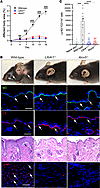 Figure 1
Genetic deficiency in 5-lipoxygenase or BLT1 confers resistance to the eruption of inflammatory skin lesions in MMP. (A) Percentage of the total body surface area affected by inflammatory skin lesions in wild-type, Ltb4r1–/–, and Alox5–/– mice from day 0 to day 16. (B) Representative pictures of wild-type, Ltb4r1–/–, and Alox5–/– mice on day 16. The individual panels show (a) clinical presentation, arrows indicate inflammatory skin lesions; (b) direct immunofluorescence staining for IgG, arrows indicate the linear deposition of IgG at the dermal-epidermal junction; (c) immunofluorescence staining for C3, arrows indicate the deposition of C3 at the dermal-epidermal junction; (d) H&E stainings for inflammatory skin lesions in wild-type mice and of corresponding skin sites in Ltb4r1–/– and Alox5–/– mice, arrow indicates dermal-epidermal clefts; (e) immunofluorescence stainings for Ly-6G in the dermis of inflamed skin, arrows indicate examples for Ly-6G+ cells. (C) Number of neutrophils (Ly-6G+CD11b+ cells) recovered from a 6 mm punch biopsy of inflamed skin in wild-type mice or of corresponding body sites of healthy wild-type mice (Naive skin) and Ltb4r1–/– and Alox5–/– mice assessed by flow cytometry. All results are presented as mean ± SEM. Each dot in C represents a mouse. Results in A were compared by 2-way ANOVA and Holm-Šídák post hoc test (n = 9 male and 9 female mice/group). **P < 0.01; ***P < 0.001; ****P < 0.0001 for the comparison between wild-type and Alox5–/– mice; ###P < 0.001; ####P < 0.0001 for the comparison between wild-type and Ltb4r1–/– mice. Results in C were compared by 1-way ANOVA and Holm-Šídák post hoc test (n = 4–14 mice/group). ***P < 0.001; ****P < 0.0001 for the comparisons indicated.
We also quantified the number of neutrophils in 6 mm punch biopsies from the skin of wild-type mice left untreated, lesional skin from wild-type mice, and corresponding skin sites from Alox5–/– and Ltb4r1–/– mice subjected to anti-LAMA332 IgG and harvested on day 16 by flow cytometry. The gating strategy is shown in Supplemental Figure 1; supplemental material available online with this article; https://doi.org/10.1172/jci.insight.173914DS1 This analysis verified that neutrophils abundantly infiltrate lesional skin of wild-type mice whereas they are hardly found in naive skin of wild-type mice (Figure 1C). The number of neutrophils in the skin of Ltb4r1–/– and Alox5–/– mice equaled the number in the skin of untreated wild-type mice, indicating that there is no recruitment of neutrophils at all into the skin in Ltb4r1–/– and Alox5–/– mice.
To assess the involvement of mucosal surfaces, we determined the number of areas affected by inflammatory lesions in the oropharynx by endoscopy at the end of the experiment on day 16 (Figure 2A). Mucosal lesions had erupted in the oral cavity and the pharynx of all wild-type mice but only in 67% and 39% of Alox5–/– and Ltb4r1–/– mice, respectively (Figure 2A). The extent of lesions in those Alox5–/– and Ltb4r1–/– mice developing mucosal lesions was reduced in comparison with wild-type mice (Figure 2, B and C). More specifically, while wild-type mice reached a mean mucosal lesion score of 1.75, mucosal lesions in both Alox5–/– and Ltb4r1–/– mice only reached a score of 1.0; i.e., in most wild-type mice 2 quadrants and in Alox5–/– and Ltb4r1–/– mice only 1 quadrant of the oral cavity and pharynx bore lesions. Stainings for Ly-6G of skin biopsies taken from lesions in the buccal mucosa on day 16 confirmed the presence of neutrophils (Ly-6G+ cells) in the lamina propria of wild-type mice but not of Alox5–/– and Ltb4r1–/– mice (Figure 2D).
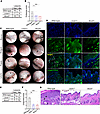 Figure 2
Oropharyngeal and conjunctival mucosal lesions are reduced in Alox5–/– and Ltb4r1–/– mice. The oropharyngeal space was examined for mucosal lesions by endoscopy on day 16. (A) Contingency table of the number of wild-type, Ltb4r1–/–, and Alox5–/– mice with and without lesions (8–9 male and 8–9 female mice/group). (B) Comparison of the severity of mucosal lesions in the oropharynx evaluated with the endoscopy score. In this analysis, only those mice exhibiting at least 1 lesion were included (n = 7–16 mice/group). (C) Representative endoscopy pictures of the mucosa of the cheek, tongue, palate, and larynx in wild-type, Ltb4r1–/–, and Alox5–/– mice. Arrows indicate inflammatory lesions. (D) Immunofluorescence staining for Ly-6G of lesions of the buccal mucosa taken on day 16. Arrows indicate Ly-6G+ cells on the Ly-6G/DAPI merged images. Scale bars equal 100 μm. Conjunctivitis was assessed by histopathology of specimens taken on day 16. (E) Contingency table of the number of wild-type, Ltb4r1–/–, and Alox5–/– mice with and without conjunctival lesions (8–9 male and 9 female mice/group). (F) Severity of conjunctivitis assessed by the conjunctival score. The comparison only includes those mice with conjunctivitis (n = 5–18). (G) Representative H&E staining of the conjunctiva on day 16. Arrows indicate dermal-epidermal clefts; scale bars equal 50 μm. The results in B and F are presented as mean ± SEM with each dot representing a mouse. The results in A and E were analyzed by χ2 test and in B and F by Kruskal-Wallis test with Dunn’s correction for multiple comparisons. The groups in A and F significantly differed in the frequency of mice developing lesions with P < 0.001. In B and F, *P < 0.05; **P < 0.01; ***P < 0.001 for the comparisons indicated.
Furthermore, all wild-type mice but only 41% and 28% of Alox5–/– and Ltb4r1–/– mice, respectively, developed conjunctivitis (Figure 2, E and G), which, in those Alox5–/– and Ltb4r1–/– mice developing it, was also milder than in wild-type mice (Figure 2F).
The BLT1 antagonist CP-105,696 ameliorates MMP. To further corroborate the potential of BLT1 as a pharmacological target in MMP, we assessed the effect of pharmacological inhibition of BLT1 in the MMP mouse model. For this purpose, MMP was induced in wild-type mice, which were treated with 1, 5, or 10 mg/kg body weight of the BLT1 inhibitor CP-105,696 or its vehicle daily by gavage. The administration of the drug was started with the first application of anti-LAMA332 IgG on day 0. CP-105,696 reduced the severity of skin inflammation in a dose-dependent manner (Figure 3, A and B). Even 1 mg/kg CP-105,696 exhibited a therapeutic effect, which further increased at the doses of 5 and 10 mg/kg CP-105,696 (Figure 3, A and B). The 10 mg/kg CP-105,696 dose ablated most of the skin inflammation. Similarly, in the oropharynx, CP-105,696 ameliorated mucosal inflammation dose-dependently starting at the dose of 1 mg/kg (Figure 3, C and D). The 10 mg/kg CP-105,696 dose decreased the number of quadrants affected by inflammatory lesions by 31%. We also examined the effect specifically of 10 mg/kg CP-105,696 on conjunctivitis, and this dose decreased the proportion of mice developing conjunctivitis (Figure 3, E and F).
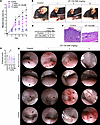 Figure 3
The BLT1 antagonist CP-105,696 ameliorates mucocutaneous inflammation in MMP dose-dependently. Wild-type mice were subjected to the MMP model and received 1, 5, or 10 mg/kg body weight CP-105,696 or its vehicle daily p.o. starting on day 0. (A) Progression of skin inflammation assessed by the percentage of the total body surface affected by skin lesions (n = 7–8 male and 8 female mice/group). (B) Representative pictures of all groups on day 13. Arrows indicate inflammatory lesions. (C) Comparison of the severity of mucosal lesions in the oropharynx evaluated by the endoscopy score (n = 7–8 male and 8 female mice/group). (D) Representative endoscopy pictures of mucosal surfaces on day 16. Arrows indicate inflammatory lesions. (E) Contingency table of the number of vehicle- and 10 mg/kg CP-105,696–treated mice with and without conjunctival lesions (7 male and 7 female mice/group). The frequency of mice with inflammatory lesions statistically significantly differed between the 2 groups with P < 0.01 determined by χ2 test. (F) Representative H&E staining of the conjunctiva of vehicle- and CP-105,696–treated mice on day 16. Scale bars equal 50 μm. All results are presented as mean ± SEM. In C, each dot represents a mouse. The results were examined for statistical significance in A by 2-way ANOVA and Holm-Šídák post hoc test and in C by Kruskal-Wallis test with Dunn’s correction for multiple comparisons. In A, at the days indicated, *P < 0.05; **P < 0.01; ****P < 0.0001 for the comparison of the indicated groups with the vehicle group; #P < 0.05; ##P < 0.01; ###P < 0.001 for the comparison of the indicated group with the 10 mg/kg CP-105,696 treatment group. In C, *P < 0.05; **P < 0.01 for the comparisons indicated.
We next addressed whether 10 mg/kg CP-105,696 may still be effective in ameliorating disease if its administration is started after the establishment of the first inflammatory lesions. To this end, MMP was induced in wild-type mice, and daily treatment with 10 mg/kg CP-105,696 was started on day 0, 3, or 7. At all times initiated, treatment with CP-105,696 swiftly exerted an effect on skin inflammation, diluting its progression (Figure 4, A and B). When initiated on day 3 or 7, CP-105,696 still ameliorated oropharyngeal lesions by the end of the experiment on day 16 (Figure 4, C and D).
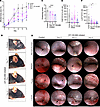 Figure 4
The BLT1 antagonist CP-105,696 disrupts the progression of mucocutaneous inflammation in the ongoing effector phase of MMP. Wild-type mice were subjected to the MMP model and were treated p.o. daily with 10 mg/kg body weight CP-105,696 or its vehicle starting on day 0, 3, or 7. (A) Progression of skin inflammation assessed by the percentage of the total body surface affected by skin lesions from day 0 through day 16 (n = 6 male and 6 female mice/group). Colored arrows indicate the days CP-105,696 treatment was initiated. (B) Representative pictures of vehicle and CP-105,696–treated mice on day 16. Arrows indicate inflammatory lesions. (C) Comparison of the extent of mucosal lesions in the oropharynx evaluated by the endoscopy score (n = 6 male and 6 female mice/group). (D) Representative endoscopy pictures of the presentation of the mucosa of the cheek, tongue, palate, and larynx in vehicle- and CP-105,696–treated mice. Arrows indicate inflammatory lesions. Number of (E) macrophages and (F) neutrophils, defined as F4/80+CD11b+Ly-6G– and Ly-6G+CD11b+ cells, respectively, recovered from a 6 mm punch biopsy of lesional skin taken on day 16. Results are presented as mean ± SEM. All results are presented as mean ± SEM. In C, E, and F, each dot represents a mouse. The results were examined for statistical significance in A by 2-way ANOVA and Holm-Šídák post hoc test, in C by Kruskal-Wallis test with Dunn’s correction for multiple comparisons, and in E and F by 1-way ANOVA and Holm-Šídák post hoc test. In A, at the days indicated, *P < 0.05; **P < 0.01 for the comparison of the indicated groups to the control group. In C, E, and F, *P < 0.05; ***P < 0.001; ****P < 0.0001 for the comparisons indicated.
We also determined the number of neutrophils and macrophages in skin lesions on day 16 by flow cytometric analysis of single-cell suspensions. Treatment with CP-105,696 did not alter the number of macrophages (Figure 4E), but it decreased the number of neutrophils in the lesions independent of the time treatment was initiated (Figure 4F), hence, suggesting a continuous requirement of BLT1 signaling in the recruitment of neutrophils into the skin.
LTB4/BLT1 drive the eruption of inflammatory lesions by direct action upon neutrophils. To understand the role of LTB4/BLT1 in MMP in more detail, we set out to identify its main target cell population in our model. BLT1 can be expressed on diverse immune and nonimmune cell populations (24), including neutrophils, which express the receptor constitutively on the surface of the entire cell population (19). With neutrophils dominating the cellular infiltrate in MMP, we hypothesized that BLT1 may be mainly required on neutrophils. We therefore generated neutrophil-specific Ltb4r1–/– (Ltb4r1ΔPMN) mice by the lox-cre technology using MRP8-Cre-ires/GFP mice. The effectivity of the deletion of Ltb4r1 in neutrophils of Ltb4r1ΔPMN mice was assessed at the mRNA level by reverse transcription quantitative PCR. To this end, the expression levels of Ltb4r1 mRNA in all bone marrow leukocytes and in bone marrow neutrophils of Ltb4r1ΔPMN mice and their wild-type littermates were determined. As expected, Ltb4r1 mRNA was enriched strongly in the neutrophil population of wild-type mice in comparison with the expression in all leukocyte populations (Figure 5A). The levels of Ltb4r1 mRNA were reduced pronouncedly in neutrophils of Ltb4r1ΔPMN mice with the reduction reaching 95% on average (Figure 5A). We also performed chemotaxis assays to generate additional proof for the functional lack of BLT1 on Ltb4r1ΔPMN neutrophils. In line with the reduction of Ltb4r1 mRNA, chemotaxis toward LTB4 and induction of chemokinesis by LTB4 were almost nullified in Ltb4r1ΔPMN neutrophils (Figure 5B), thus, confirming the gene deletion.
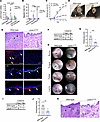 Figure 5
Neutrophil-specific Ltb4r1–/– (Ltb4r1ΔPMN) mice are protected from mucocutaneous lesions in the MMP model. (A) Ltb4r1/Hprt1 mRNA levels in bone marrow leukocytes, neutrophils, and neutrophil-depleted leukocytes. (B) Chemotaxis of neutrophils toward LTB4. (C) The total body surface (%) affected by lesions (n = 7 male and 7 female mice/group). (D) Representative clinical presentation and (E) histopathology and immunopathology of the skin on day 16 with (a) H&E staining of lesional skin, arrows indicate dermal epidermal clefts; (b) immunofluorescence stainings for Ly-6G in the dermis of inflamed skin, arrows indicate Ly-6G+ cells; (c) direct immunofluorescence staining for IgG, arrows indicate the IgG depositions at the dermal-epidermal junction; and (d) immunofluorescence staining for C3, arrows indicate C3 depositions at the dermal-epidermal junction. (F) Contingency table of wild-type and Ltb4r1ΔPMN mice with and without oropharyngeal lesions. (G) Severity of mucosal lesions in those mice developing lesions (n = 6–11 mice/group). (H) Representative endoscopic pictures of mucosal surfaces. Arrows indicate inflammatory lesions. (I) Contingency table of wild-type and Ltb4r1ΔPMN mice with and without conjunctival lesions (n = 7 male and 6–7 female mice/group). (J) Severity of conjunctivitis in those mice with mucosal inflammation (n = 6–14). (K) Representative H&E stainings of the conjunctiva. Arrows indicate dermal-epidermal clefts, and scale bars equal 50 μm. Data merged from 2 independent experiments are presented as mean ± SEM. Each dot in A, B, G, and J represents a mouse. Results in A–C were compared by 2-way ANOVA and Holm-Šídák post hoc test and in G and J by Mann-Whitney test. *P < 0.05; **P < 0.01; ***P < 0.01; ****P < 0.0001 for the comparisons indicated. The results in G and I were analyzed by χ2 test. In both, the groups significantly differed with P < 0.01.
We compared the course of MMP in Ltb4r1ΔPMN mice with their wild-type littermates. The development of both cutaneous and mucosal lesions was diminished in Ltb4r1ΔPMN mice to the same level as in Ltb4r1–/– and Alox5–/– mice (Figure 5). More precisely, the eruption of skin lesions was almost completely abolished in Ltb4r1ΔPMN mice (Figure 5, C and D). In line with this clinical phenotype, there was neither recruitment of immune cells into the dermis nor formation of dermal-epidermal clefts, though IgG and C3 were deposited at the dermal-epidermal junction (Figure 5C). Like in the global Ltb4r1–/– mice, only approximately 50% of Ltb4r1ΔPMN mice developed oropharyngeal or conjunctival lesions (Figure 5, D and G). Furthermore, in those Ltb4r1ΔPMN mice still developing mucosal lesions, the severity of both oropharyngeal and conjunctival lesions was also reduced (Figure 5, E, F, H, and I).


