
Inflammation
Abstract
Pancreatic ductal adenocarcinoma (PDAC) has a poor survival rate due to late detection. PDAC arises from precursor microscopic lesions, termed pancreatic intraepithelial neoplasia (PanIN), that develop at least a decade before overt disease––this provides an opportunity to intercept PanIN–to–PDAC progression. However, immune interception strategies require full understanding of PanIN and PDAC cellular architecture. Surgical specimens containing PanIN and PDAC lesions from a unique cohort of five treatment-naïve patients with PDAC were surveyed using spatial-omics (proteomic and transcriptomic). Findings were corroborated by spatial proteomics of PanIN and PDAC from tamoxifen-inducible KPC (tiKPC) mice. We uncovered the organization of lymphoid cells into tertiary lymphoid structures (TLSs) adjacent to PanIN lesions. These TLSs lacked CD21+CD23+ B cells compared to more mature TLSs near the PDAC border. PanINs harbored mostly CD4+ T cells with fewer Tregs and exhausted T cells than PDAC. Peri-tumoral space was enriched with naïve CD4+ and central memory T cells. These observations highlight the opportunity to modulate the immune microenvironment in PanINs before immune exclusion and immunosuppression emerge during progression into PDAC.
Authors
Melissa R. Lyman, Jacob T. Mitchell, Sidharth Raghavan, Luciane T. Kagohara, Amanda L. Huff, Saurav D. Haldar, Sarah M. Shin, Samantha Guinn, Benjamin Barrett, Gabriella Longway, Alexei Hernandez, Erin M. Coyne, Xuan Yuan, Lalitya Andaloori, Jiaying Lai, Yun Zhou Liu, Rachel Karchin, Anuj Gupta, Ashley L. Kiemen, André Forjaz, Denis Wirtz, Pei-Hsun Wu, Atul Deshpande, Jae W. Lee, Todd D. Armstrong, Nilofer S. Azad, Jacquelyn W. Zimmerman, Laura D. Wood, Robert A. Anders, Elizabeth D. Thompson, Elizabeth M. Jaffee, Elana J. Fertig, Won Jin Ho, Neeha Zaidi
Abstract
The pathobiology of pulmonary hypertension (PH) is complex and multiple cell types contribute to disease pathogenesis. We sought to characterize the molecular crosstalk between endothelial and mesenchymal cells that promote PH in the tumor necrosis factor alpha transgenic (TNF-Tg) model of PH. Pulmonary endothelial and mesenchymal cells were isolated from WT and TNF-Tg mice underwent single-cell RNA sequencing. Data were analyzed using clustering, differential gene expression and pathway analysis, ligand-receptor interaction, transcription factor binding, and RNA velocity assessments. Significantly altered ligand-receptor interactions were confirmed with immunofluorescent staining. TNF-Tg mice had increases in smooth muscle cells and Col14+ fibroblasts, and reductions in general capillary (gCAP) endothelial cells, Col13+ fibroblasts, pericytes, and myofibroblasts. Pathway analysis demonstrated NF-kB, JAK/STAT, and interferon mediated inflammation, endothelial apoptosis, loss of vasodilatory pathways, increased TGF-beta signaling, and smooth muscle cell proliferation. Ligand-receptor analysis demonstrated a loss of BMPR2 signaling in TNF lungs and establishment of a maladaptive BMP signaling cascade which functional studies revealed stems from endothelial NFkB activation and subsequent endothelial SMAD2/3 signaling. This system highlights a complex set of changes in cellular composition, cell communication, and cell fate driven by TNF signaling which lead to aberrant BMP signaling which is critical for development of PH.
Authors
ML Garcia-Hernandez, Javier Rangel-Moreno, Qingfu Xu, Ye Jin Jeong, Soumyaroop Bhattacharya, Ravi Misra, Stacey Duemmel, Ke Yuan, Benjamin D. Korman
Abstract
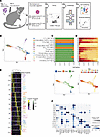
Tissue-resident memory T (TRM) cells play a central role in immune responses across all barrier tissues after infection. However, the mechanisms that drive TRM differentiation and priming for their recall effector function remains unclear. In this study, we leveraged newly generated and publicly available single-cell RNA-seq data generated across 10 developmental time points to define features of CD8+ TRM across both skin and small-intestine intraepithelial lymphocytes (siIEL). We employed linear modeling to capture gene programs that increase their expression levels in T cells transitioning from an effector to a memory state. In addition to capturing tissue-specific gene programs, we defined a temporal TRM signature across skin and siIEL that can distinguish TRM from circulating T cell populations. This TRM signature highlights biology that is missed in published signatures that compared bulk TRM to naive or nontissue resident memory populations. This temporal TRM signature included the AP-1 transcription factor family members Fos, Fosb, Fosl2, and Junb. ATAC-seq analysis detected AP-1–specific motifs at open chromatin sites in mature TRM. Cyclic immunofluorescence (CyCIF) tissue imaging detected nuclear colocalization of AP-1 members in resting CD8+ TRM greater than 100 days after infection. Taken together, these results reveal a critical role of AP-1 transcription factor members in TRM biology.
Authors
Neal P. Smith, Yu Yan, Youdong Pan, Jason B. Williams, Kasidet Manakongtreecheep, Shishir M. Pant, Jingxia Zhao, Tian Tian, Timothy Pan, Claire Stingley, Kevin Wu, Jiang Zhang, Alexander L. Kley, Peter K. Sorger, Alexandra-Chloé Villani, Thomas S. Kupper

Abstract
BACKGROUND Obesity, a growing health concern, often leads to metabolic disturbances, systemic inflammation, and vascular dysfunction. Emerging evidence suggests that adipose tissue-derived extracellular vesicles (adiposomes) may propagate obesity-related complications. However, their lipid composition and effect on cardiometabolic state remain unclear.METHODS This study examined the lipid composition of adiposomes in 122 participants (75 in obesity group, 47 in lean group) and its connection to cardiometabolic risk. Adiposomes were isolated via ultracentrifugation and characterized using nanoparticle tracking and comprehensive lipidomic analysis by mass spectrometry. Cardiometabolic assessments included anthropometry, body composition, glucose-insulin homeostasis, lipid profiles, inflammatory markers, and vascular function.RESULTS Compared with lean controls, individuals with obesity exhibited elevated adiposome release and shifts in lipid composition, including higher ceramides, free fatty acids, and acylcarnitines, along with reduced levels of phospholipids and sphingomyelins. These alterations strongly correlated with increased BMI, insulin resistance, systemic inflammation, and impaired vascular function. Pathway enrichment analyses highlight dysregulation in glycerophospholipid and sphingolipid metabolism, bile secretion, proinflammatory pathways, and vascular contractility. Machine-learning models utilizing adiposome lipid data accurately classified obesity and predicted cardiometabolic conditions, such as diabetes, hypertension, dyslipidemia, and liver steatosis, achieving accuracy above 85%.CONCLUSION Obesity profoundly remodels the adiposome lipid landscape, linking lipid changes to inflammation, metabolic dysfunction, and vascular impairment. These findings underscore adiposome lipids as biomarkers for obesity and related cardiometabolic disorders, supporting personalized interventions and offering therapeutic value in risk stratification and treatment.FUNDING This project was supported by NIH grants R01HL161386, R00HL140049, P30DK020595 (PI: AMM), R01DK104927, and P30DK020595 as well as by a VA Merit Award (1I01BX003382, PI: BTL).
Authors
Abeer M. Mahmoud, Imaduddin Mirza, Elsayed Metwally, Mohammed H. Morsy, Giorgia Scichilone, Monica C. Asada, Amro Mostafa, Francesco M. Bianco, Mohamed M. Ali, Mario A. Masrur, Chandra Hassan, Brian T. Layden
Abstract
Hypoxia-inducible factors (HIFs) promote lung protection and pathogen eradication during acute lung injury. We therefore tested the theory that pharmacologic stabilization of HIFs dampens lung injury during SARS-CoV-2 pneumonia. Initial studies in murine SARS-CoV-2 models showed improved outcomes after treatment with the FDA-approved HIF-stabilizer vadadustat. Subsequent studies in genetic models implicated alveolar-expressed Hif1a in mediating lung protection. Therefore, we performed a randomized, double-blinded, multicenter phase 2 trial in patients admitted for SARS-CoV-2 infection and concomitant hypoxia (SpO2 ≤ 94%). Patients (n=448) were randomized to oral vadadustat (900 mg/day) or placebo for up to 14 days. Safety events were similar between the two groups. Vadadustat treatment induced surrogate HIF-target genes. The primary outcome of severe lung injury requiring high oxygen support on day 14 occurred in 43 patients in the vadadustat group and 53 patients in the placebo group (estimated probability, 13.3% vs. 16.9%). Among patients with baseline FiO2 ≥ 80% (n=106), the estimated probability of the primary outcome was 12.1% (vadadustat) vs. 79.1% (placebo), indicating an even greater benefit in patients with more severe baseline hypoxia. HIF1A is a likely therapeutic target during SARS-CoV-2-associated lung injury. Robust clinical trials of HIF stabilizers during pathogen-associated lung injury are warranted.
Authors
Bentley Bobrow, Samuel D. Luber, Paul Potnuru, Katherine Figarella, Jieun Kim, Yanyu Wang, In Hyuk Bang, David Robinson, Paulina B. Sergot, Steven K. Burke, Tingting Mills, Constanza de Dios, Robert Suchting, George W. Williams, Adit A. Ginde, Yafen Liang, Hongfang Liu, Charles Green, Marie-Francoise Doursout, Alparslan Turan, Daniel I. Sessler, Xiaoyi Yuan, Holger K. Eltzschig
Csk-mediated Src family kinase regulation dampens neutrophil infiltration during pulmonary infection
Abstract
Neutrophil recruitment is crucial for pathogen elimination. However, precise control of the inflammatory response prevents overshooting reactions. Neutrophil activation initiates signaling resulting in integrin beta 2 (Itgb2) activation and neutrophil arrest. Src family kinases are involved in multiple cellular processes and are negatively regulated by the C-terminal Src kinase (Csk). During this study, we investigated the mechanism by which Csk regulates integrin activation and neutrophil recruitment. Here, we demonstrated that Csk deficiency in murine neutrophils resulted in increased neutrophil adhesion to the endothelium along with decreased neutrophil transmigration into inflamed tissues compared to their littermate controls. In bacterial pneumonia, infected Csk-deficient mice showed higher bacterial burdens and decreased neutrophil recruitment, while other immune cell counts and cytokine levels were not significantly different compared to control. Analyses of Csk-deficient neutrophils revealed an increased Itgb2 affinity, leading to reduced migration and intravascular crawling. Mechanistically, elevated cAMP-levels increased protein kinase A activity, which subsequently enhanced Csk activation. Csk, in turn, suppressed Src family kinases activation through phosphorylation (Y529). Hence, Csk-mediated regulation of neutrophil infiltration contributes to maintain a balanced immune response during bacterial pneumonia.
Authors
Wida Amini, Lena Schemmelmann, Jan-Niklas Heming, Marina Oguama, Katharina Thomas, Helena Block, Pia Lindental, Bernadette Bardel, Andreas Margraf, Oliver Soehnlein, Anika Cappenberg, Alexander Zarbock
Abstract
JAK inhibitors (JAKi) are widely used anti-inflammatory drugs. Recent data suggest JAKi have superior effects on pain reduction in rheumatoid arthritis (RA). However, the underlying mechanisms for this observation are not fully understood. We investigated whether JAKi can act directly on human sensory neurons. We analysed RNA sequencing datasets of sensory neurons and found they expressed JAK1 and STAT3. Addition of cell-free RA synovial fluid to human induced pluripotent stem cell (iPSC)-derived sensory neurons led to phosphorylation of STAT3 (pSTAT3), which was completely blocked by the JAKi tofacitinib. Compared to paired serum, RA synovial fluid was enriched for the STAT3 signalling cytokines IL-6, IL-11, LIF, IFN-alpha and IFN-beta, with their requisite receptors present in peripheral nerves post-mortem. Accordingly, these recombinant cytokines induced pSTAT3 in iPSC-derived sensory neurons. Furthermore, IL-6+sIL-6R and LIF upregulated expression of pain-relevant genes with STAT3-binding sites, an effect which was blocked by tofacitinib. LIF also induced neuronal sensitisation, highlighting this molecule as a putative pain mediator. Finally, over time, tofacitinib reduced the firing rate of sensory neurons stimulated with RA synovial fluid. Together, these data indicate that JAKi can act directly on human sensory neurons, providing a potential mechanistic explanation for their suggested superior analgesic properties.
Authors
Yuening Li, Elizabeth H. Gray, Rosie Ross, Irene Zebochin, Amy Lock, Laura Fedele, Louisa Janice Kamajaya, Rebecca J. Marrow, Sarah Ryan, Pascal Röderer, Oliver Brüstle, Susan John, Franziska Denk, Leonie S. Taams

Abstract
Patients with viral myocarditis (VMC) exhibit evident autonomic nervous system imbalance, and adverse cardiac remodeling is involved in impaired cholinergic function. The α7 nicotinic acetylcholine receptor (α7nAChR), which is a neurotransmitter receptor, exerts immunoregulatory effects. Recent advances have illuminated the evolution and functions of peripheral and cardiac B cells in heart disease. However, the role of α7nAChR expressed by B cells in the progression of VMC has not been established. We revealed the neuroimmune communication landscape in the heart and found that the phenotypes of cardiac and splenic B cells and their α7nAChR expression changed dynamically during the progression of VMC to dilated cardiomyopathy. α7nAChR on B cells serves as a negative regulator by inhibiting their proinflammatory functions and signaling pathways. B cell–specific α7nAChR deficiency exacerbated myocardial inflammation, fibrosis, and cardiac dysfunction. However, these effects were abrogated in non-B cells from mice with IL-17A knockdown. Enhanced degradation of acetylcholine leads to an imbalance in cholinergic signaling, resulting in impaired neurotransmission. The acetylcholinesterase inhibitor pyridostigmine bromide could improve cardiac remodeling and prevent the progression of VMC to the chronic phase, which was partly dependent on the α7nAChR on B cells. Our findings provide notable insights into cardiac-neural-immune communication during myocardial injury.
Authors
Jing Lu, Keren Chen, Zhihong Cen, Yanlan Huang, Yong Li, LiLi Chen, Weifeng Wu
Abstract
Fibroblasts are central to pathogenesis of systemic sclerosis (SSc). However, studies of conventional explant fibroblast cultures incompletely reflect disease biology and treatment response. We isolated a second non-migratory “resident” population of fibroblasts from skin biopsies after outgrowth of explant “migratory” cells. These non-motile resident fibroblasts were compared with migratory cells from the same biopsy, using functional studies, bulk and scRNAseq, and localised in situ by multichannel immunofluorescence. Migratory and resident fibroblast populations in SSc showed distinct pro-fibrotic characteristics and gene expression for pathogenic pathways differing by stage and autoantibody subgroup. TGFβ signalling was highly active in migratory fibroblasts in early stage dcSSc. Conversely, resident fibroblasts had less upregulated TGFβ signalling, especially in late dcSSc. Increased chemokine expression was a hallmark of resident fibroblasts at all stages. In vitro studies confirmed differential response to TGFβ1 and CCL2 between migratory and resident cells. We suggest that migratory fibroblasts are especially important in early skin disease whereas non-migratory fibroblasts may have a regulatory role and contribute more to fibrosis in later stage disease. Thus, we have identified a pathogenic fibroblast population in SSc, not isolated by conventional explant culture, that could play an important role in fibrosis and be targeted therapeutically.
Authors
Kristina E.N. Clark, Shiwen Xu, Moustafa Attar, Voon H. Ong, Christopher D. Buckley, Christopher P. Denton
Abstract
Authors
Junping Yin, Melanie Eichler, Clivia Lisowski, Jian Li, Sibylle von Vietinghoff, Natalio Garbi, Qi Mei, Anne-Kathrin Gellner, Christian Kurts
No posts were found with this tag.


