
Infectious disease
Abstract
Infections with non-tuberculous mycobacterium (NTM) are on the rise. Here, we investigated an uncommon NTM infection, by M. haemophilum (Mh, n = 3), from a shared geographic location in the USA. All patients had underlying immunosuppressive conditions or treatments. We identified that all these individuals had a non-synonymous mutation in GATA2 gene, which was absent in Healthy controls (HCs, n = 4) from the same geographic area (Missouri, USA). Whole blood from these individuals had attenuated cytokine responses to Mh stimulation for IL1β, IL-6, IL-8, MIP-1α and β, but not to Phytohemagglutinin (PHA) or another NTM, M. abscessus. Impaired whole blood transcriptional responses in individuals with GATA2 mutation, included heightened Ras-homolog (Rho) guanosine triphosphate hydrolases (GTPase) and lowered Transforming growth factor (TGF)-β responses among others. Our results highlight that comparatively, M. abscessus and Mh elicit differential immune responses in humans, and we identify a 23-gene signature that distinguishes host response to Mh and M. abscessus and show that in vitro GATA2 siRNA knockdown indeed attenuates cytokine responses to Mh. Thus, we provide new evidence that links GATA2 mutation and immune dysfunction in individuals with compromised immunity to Mh infection in humans and outline host factors associated with the immune response of this clinically relevant NTM.
Authors
Ananya Gupta, Shail B. Mehta, Abhimanyu A, Bruce A. Rosa, John Martin, Mushtaq Ahmed, Shyamala Thirunavukkarasu, Farheen Fatma, Gaya Amarsinghe, Makedonka Mitreva, Thomas C. Bailey, David B. Clifford, Shabaana A. Khader
Abstract
Multidrug-resistant (MDR) bacterial pneumonias pose a critical threat to global public health. The opportunistic Gram-negative pathogen Pseudomonas aeruginosa is a leading cause of nosocomial-associated pneumonia, and an effective vaccine could protect vulnerable populations, including the elderly, immunocompromised, and those with chronic respiratory diseases. Highly heterogeneous outer membrane vesicles (OMVs), shed from Gram-negative bacteria, are studded with immunogenic lipids, proteins, and virulence factors. To overcome limitations in OMV stability and consistency, we described a believed to be novel vaccine platform that combines immunogenic OMVs with precision nanotechnology—creating a bacterial cellular nanoparticle vaccine candidate (CNP), termed Pa-STING-CNP, which incorporates an adjuvanted core that activates the STING (stimulator of interferon genes) pathway. In this design, OMVs are coated onto the surface of self-adjuvanted STING nanocores. Pa-STING CNP vaccination induced substantial antigen presenting cell recruitment and activation in draining lymph nodes, robust anti-Pseudomonas antibody responses, and provided protection against lethal challenge with the hypervirulent clinical P. aeruginosa isolate PA14. Antibody responses mediated this protection and provided passive immunity against the heterologous P. aeruginosa strain PA01. These findings provided evidence that nanotechnology can be used to create a highly efficacious vaccine platform against high priority MDR pathogens such as P. aeruginosa.
Authors
Elisabet Bjånes, Nishta Krishnan, Truman Koh, Anh T.P. Ngo, Jason Cole, Joshua Olson, Ingrid Cornax, Chih-Ho Chen, Natalie Chavarria, Samira Dahesh, Shawn M. Hannah, Alexandra Stream, Jiaqi Amber Zhang, Hervé Besançon, Daniel Sun, Siri Yendluri, Sydney Morrill, Jiarong Zhou, Animesh Mohapatra, Ronnie H. Fang, Victor Nizet
Abstract
X-linked Lymphoproliferative Syndromes (XLP), arising from mutations in SH2D1A or XIAP genes, are characterized by fulminant Epstein-Barr Virus (EBV) infection. Lymphomas occur frequently in XLP-1 and in other congenital conditions with heightened EBV susceptibility, but not in XLP-2. Why XLP-2 patients are apparently protected from EBV-driven lymphomagenesis remains a key open question. To gain insights, newly EBV-infected versus receptor-stimulated primary B-cells from XLP-2 patients or with XIAP CRISPR editing were compared to healthy controls. XIAP perturbation impeded outgrowth of newly EBV-infected B-cells, but not that of CD40 ligand and interleukin-21 stimulated B-cells. XLP-2 deficient B-cells showed significantly lower EBV transformation efficiency than healthy controls. Interestingly, EBV-immortalized lymphoblastoid cell proliferation was not impaired by XIAP knockout, implicating an XIAP role in early EBV B-cell transformation. Mechanistically, nascent EBV infection activated p53-mediated apoptosis signaling, which was counteracted by XIAP in control cells. With XIAP deficiency, EBV markedly elevated apoptosis rates over the first two weeks of infection. Interferon-gamma, whose levels are increased with severe XLP2 EBV infection, markedly increased newly EBV-infected B-cell apoptosis. These findings underscored XIAP's crucial role in support of the earliest stages of EBV-mediated B-cell immortalization and provide insights into the curious absence of EBV+ lymphoma in XLP-2 patients.
Authors
Yizhe Sun, Janet Chou, Kevin D. Dong, Steven P. Gygi, Benjamin E. Gewurz
Abstract
Yellow Fever virus (YFV) infection is fatal in 5–10% of the 200,000 yearly cases. There is currently no available antiviral treatment. We showed previously that administration of 50 mg/kg of a YFV-specific neutralizing monoclonal antibody (nmAb) at 2 days post-infection (dpi), prior to the onset of severe disease, protected YFV-infected rhesus macaques from death. To further explore the clinical applicability of our nmAb MBL-YFV-01, we treated rhesus macaques with a lower dose (10 mg/kg) of this nmAb prophylactically or therapeutically at 3.5 dpi. We show that a single prophylactic or therapeutic intravenous dose of our nmAb protects rhesus macaques from death following challenge. A comprehensive analysis of 167 inflammatory cytokine and chemokines revealed that protection was associated with significantly reduced expression of 125 of these markers, including type I interferons, IL6, and CCL2. This study further expands the potential clinical use of our YFV-specific nmAb, which could be used during an outbreak for immediate prophylactic immunity or for patients with measurable serum viremia.
Authors
Lauren N. Rust, Michael J. Ricciardi, Savannah S. Lutz, Sofiya Yusova, Johan J. Louw, Aaron Yrizarry-Medina, Sreya Biswas, Miranda Fischer, Aaron Barber-Axthelm, Gavin Zilverberg, Lauren Bailey, Tonya Swanson, Rachael Tonelli, G.W. McElfresh, Brandon C. Rosen, Thomas B. Voigt, Christakis Panayiotou, Jack T. Mauter, Noor Ghosh, Jenna Meanor, Giovana Godoy, Michael Axthelm, Jeremy Smedley, Mark K. Slifka, Esper G. Kallas, Gabriela Webb, Robert Zweig, Caralyn S. Labriola, Benjamin N. Bimber, Jonah B. Sacha, David I. Watkins, Benjamin J. Burwitz
Abstract
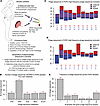
Bacteriophages, viruses that parasitize bacteria, are abundant in the human microbiome and may influence human health, in part, through their interactions with bacterial hosts. Whether endogenous bacteriophages or their products are vertically transmitted from mother to fetus during human pregnancy is not known. Here, we searched for bacteriophage sequences from five bacteriophage databases (474,031 total sequences) in cell-free DNA (cfDNA) of paired maternal and umbilical cord blood samples from two independent cohorts. First, we sequenced cfDNA from 10 pairs of maternal and cord blood samples, including four pairs affected by preeclampsia. We validated our findings in a previously published dataset of 62 paired maternal and cord blood samples, including 43 pairs from preterm or chorioamnionitis-affected deliveries. We identified 94 and 596 bacteriophage sequences in maternal and cord blood cfDNA samples from the first and second cohort, respectively. We identified 58 phage sequences across maternal-infant dyads and 581 phage sequences that were unique to a single sample. We did not identify any phage sequences consistently associated with preeclampsia, preterm, or chorioamnionitis-affected samples. This study demonstrated the presence of bacteriophage DNA in human cord blood at birth, providing evidence that the human fetus is exposed to bacteriophage DNA in utero.
Authors
Jennifer A. Sequoia, Naomi L. Haddock, Paw Mar Gay, Layla J. Barkal, Purnima Narasimhan, Nadine Martinez, Virginia D. Winn, Paul L. Bollyky
Abstract
Prion diseases are fatal, infectious and incurable neurodegenerative conditions affecting humans and animals, caused by the misfolding of the cellular prion protein (PrPC) into its pathogenic isoform, PrPSc. In humans, sporadic Creutzfeldt-Jakob disease (sCJD) is the most prevalent form. Recently, we demonstrated that treatment with the FDA-approved anti-HIV drug Efavirenz (EFV) significantly reduced PrPSc and extended survival of scrapie prion-infected mice. Among other effects, EFV activates the brain cholesterol metabolizing enzyme, CYP46A1, which converts cholesterol into 24S-hydroxycholesterol (24S-HC). However, drugs effective against scrapie prions often fail in human prion diseases, and a relation of the anti-prion effects of EFV to CYP46A1 activation is not established. Thus, we evaluated EFV treatment in mice overexpressing human PrPC infected with human sCJD prions. Oral, low-dose EFV treatment starting at 30- or 130-days post-infection significantly slowed disease progression and extended their survival. At early clinical stage, we observed reduced PrPSc accumulation, decreased cholesterol and lipid droplet content, and elevated CYP46A1 and 24S-HC levels in EFV-treated mice. Overexpression of CYP46A1 in prion-infected neuronal cells reduced PrPSc levels and increased 24S-HC, indicating that anti-prion effects of EFV correlate with CYP46A1 activation. These findings highlight EFV as a safe and efficacious therapeutic candidate for human prion diseases.
Authors
Tahir Ali, Jessica Cashion, Samia Hannaoui, Hanaa Ahmed-Hassan, Hermann M. Schatzl, Sabine Gilch
Abstract
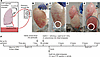
BACKGROUND. Symptoms of early-onset sepsis (EOS) in preterm infants are nonspecific, overlapping with normal postnatal physiological adaptations and noninfectious pathologies. This clinical uncertainty and the lack of reliable EOS diagnostics results in liberal use of antibiotics in the first days to weeks of life, leading to increased risk of antibiotic-related morbidities in infants who do not have an invasive infection. METHODS. To identify potential biomarkers for EOS in newborn infants, we used unlabelled tandem mass spectrometry proteomics to identify differentially abundant proteins in the umbilical cord blood of infants with and without culture-confirmed EOS. Proteins were then confirmed using immunoassay, and logistic regression and random forest models were built including both biomarker concentration and clinical variables to predict EOS. RESULTS. These data identified five proteins that were significantly upregulated in infants with EOS, three of which (serum amyloid A, C-reactive protein, and lipopolysaccharide-binding protein) were confirmed using a quantitative immunoassay. The random forest classifier for EOS was applied to a cohort of infants with culture-negative presumed sepsis (PS). Most PS infants were classified as resembling control infants, having low EOS biomarker concentrations. CONCLUSION. These results suggest that cord blood biomarker screening may be useful for early stratification of EOS risk among neonates, improving targeted, evidence-based use of antibiotics early in life. FUNDING. National Institutes of Health, Gerber Foundation, Friends of Prentice, Thrasher Research Fund, Ann & Robert H. Lurie Children’s Hospital, Stanley Manne Children’s Research Institute of Lurie Children’s.
Authors
Leena B. Mithal, Mark E. Becker, Ted Ling-Hu, Young Ah Goo, Sebastian Otero, Aspen Kremer, Surya Pandey, Nicola Lancki, Yawei Li, Yuan Luo, William Grobman, Denise Scholtens, Karen K. Mestan, Patrick C. Seed, Judd F. Hultquist
Abstract
Bacterial pneumonia is the most common cause of acute respiratory distress syndrome (ARDS), characterized by disrupted pulmonary endothelial barrier function, hyperinflammation, and impaired alveolar epithelial fluid clearance. ARDS has a high mortality rate and no proven pharmacological treatments, stressing the need for new targeted therapies. The TIP peptide, mimicking the lectin-like domain of TNF, directly binds to the α subunit of the epithelial Na+ channel, expressed in both alveolar epithelial and capillary endothelial cells, and may increase lung endothelial barrier function and alveolar fluid clearance during bacterial infection. This study tested these potential therapeutic mechanisms of the TIP peptide in a clinically relevant preparation of the ex vivo–perfused human lung injured by Streptococcus pneumoniae. Therapeutic administration of the TIP peptide reduced pulmonary barrier permeability to protein and lung edema formation, increased alveolar edema fluid clearance, and produced an antiinflammatory effect in the airspaces with reductions in IL-6 and IL-8 levels. Additionally, the TIP peptide reduced the translocation of bacteria into the circulation. These findings establish 3 mechanisms of benefit with the TIP peptide to reduce injury in the human lung and support the clinical relevance as a potential therapeutic for pneumococcal bacterial pneumonia.
Authors
Mazharul Maishan, Hiroki Taenaka, Bruno Evrard, Shotaro Matsumoto, Angelika Ringor, Carolyn Leroux, Rudolf Lucas, Michael A. Matthay
Abstract
Background. NK cell function is impaired in people with HIV (PWH), hindering their potential to reduce the lymphoid tissue (LT) reservoir. The IL-15 superagonist N-803 has been shown to enhance NK and T cell function, and thus may reduce viral reservoirs. Methods. To determine the impact of N-803 on LTs, we conducted a clinical trial where 10 PWH on effective antiretroviral therapy (ART) were given three 6 mcg/kg doses of N-803 subcutaneously. We obtained PBMCs and lymph node (LN) and gut biopsies at baseline and after the last N-803 dose. Results. We found a non-statistically significant ~0.50 median log reduction in the frequency of viral(v)RNA+ and vDNA+ cells/g in the 6 participants with baseline and post-treatment LNs. In the ileum, we observed reductions of vRNA+ cells in 8/10 participants and vDNA+ cells in all participants. We also found significant inverse correlations between NK cell proliferation and the frequency of vRNA+ cells, and between NKG2A expression on NK cells and the frequency of vRNA+ cells. Conclusions. Our findings suggest N-803 may reduce the HIV reservoir in LTs of PWH on ART, an effect likely mediated by enhanced NK cell function. Controlled studies assessing the impact of NK cell therapy on HIV LTs are needed.
Authors
Joshua Rhein, Jeffrey G. Chipman, Gregory J. Beilman, Ross Cromarty, Kevin Escandón, Jodi Anderson, Garritt Wieking, Jarrett Reichel, Rodolfo Batres, Alexander Khoruts, Christopher M. Basting, Peter Hinderlie, Zachary B. Davis, Anne Eaton, Byron P. Vaughn, Elnaz Eilkhani, Jeffrey T. Safrit, Patrick Soon-Shiong, Jason V. Baker, Nichole R. Klatt, Steven G. Deeks, Jeffrey S. Miller, Timothy W. Schacker
Abstract
H7N9 avian influenza virus is a zoonotic influenza virus of public health concern, with a 39% mortality rate in humans. H7N9-specific prevention or treatments for humans have not been approved. We previously isolated a human monoclonal antibody (mAb) designated H7-235 that broadly reacts to diverse H7 viruses and neutralizes H7N9 viruses in vitro. Here, we report the crystal structure of H7 HA1 bound to the fragment antigen-binding region (Fab) of recombinant H7-235 (rH7-235). The crystal structure revealed that rH7-235 recognizes residues near but outside of the receptor binding site (RBS). Nevertheless, the rH7-235 IgG potently inhibits hemagglutination mediated by H7N9 viruses due to avidity effect and Fc steric hindrance. This mAb prophylactically protects mice against weight loss and death caused by challenge with lethal H7N9 viruses in vivo. rH7-235 mAb neutralizing activity alone is sufficient for protection when used at high dosed in a prophylactic setting. This study provides insights into mechanisms of viral neutralization by protective broadly reactive anti-H7 antibodies informing the rational design of therapeutics and vaccines against H7N9 influenza virus.
Authors
Iuliia M. Gilchuk, Jinhui Dong, Ryan P. Irving, Cameron D. Buchman, Erica Armstrong, Hannah L. Turner, Sheng Li, Andrew B. Ward, Robert H. Carnahan, James E. Crowe Jr.
No posts were found with this tag.


