
Genetics
Abstract
The cellular etiology of seizures in CLN2 disease, a childhood-onset neurodegenerative lysosomal storage disorder caused by a deficiency of tripeptidyl peptidase 1 (TPP1), remains elusive. Given that Cln2R207X/R207X mice display fatal spontaneous seizures and an early loss of several cortical GABAergic interneuron populations, we hypothesized that these two events might be causally related. To study the cell-autonomous effects of interneuron-specific TPP1 deficiency, we first generated a transgenic mouse expressing loxP-flanked lysosomal membrane-tethered TPP1 (TPP1LAMP1) on the Cln2R207X/R207X genetic background, and then crossed TPP1LAMP1 mice with Vgat-Cre mice. These Vgat-Cre; TPP1LAMP1 mice accumulated storage in cortical and striatal interneurons. Vgat-Cre; TPP1LAMP1 mice also died more readily after pentylenetetrazole-induced seizures, indicating that interneuron-specific TPP1 deficiency renders these mice more susceptible to seizure-induced mortality. We also selectively activated interneurons using Designer Receptor Exclusively Activated by Designer Drugs (DREADDs) in Vgat-Cre; Cln2R207X/R207X mice. Electroencephalogram monitoring revealed that DREADD-mediated activation of interneurons markedly accelerated the onset of spontaneous seizures and seizure-associated death in Vgat-Cre; Cln2R207X/R207X mice, suggesting that modulating interneuron activity can exacerbate epileptiform abnormalities. Taken together, these results provide new mechanistic insights into the underlying etiology of seizures and premature death that characterize CLN2 disease.
Authors
Keigo Takahashi, Nicholas R. Rensing, Elizabeth M. Eultgen, Letitia L. Williams, Sophie H. Wang, Hemanth R. Nelvagal, Steven Q. Le, Marie S. Roberts, Balraj Doray, Edward B. Han, Patricia I. Dickson, Michael Wong, Mark S. Sands, Jonathan D. Cooper
Abstract
There are two subtypes of myotonic dystrophy, DM1 and DM2, each caused by repeat expansion mutations. The leading pathogenic mechanism is RNA mediated toxicity whereby (C)CUG expansions sequester the muscleblind-like (MBNL) family of RNA binding proteins. However, key differences exist in muscle involvement patterns and histopathology between DM1 and DM2. The cause of these disparities both in how the muscles are affected within each disease and between the two diseases is unknown, and it is unclear if current DM mouse models recapitulate these differences or develop differential muscle susceptibility. Here, we examined the expression of disease-relevant genes across healthy human muscles from a transcriptomic atlas and collected a series of muscles from Mbnl knockout mice to evaluate characteristic histologic and molecular features of DM pathology. Our results indicate that MBNL loss discordantly affects muscles, likely through a splicing independent mechanism, and results in a fiber atrophy profile more like DM1 than DM2. These findings point to a predominant role for MBNL loss in muscle pattern involvement in DM1, provide further evidence for additional DM2 pathomechanisms, and have important implications for muscle choice when performing analyses in new mouse models and evaluating therapeutic modalities and biomarkers.
Authors
Mackenzie L. Davenport, Amaya Fong, Gloria Montoya-Vazquez, Maria Fernanda Alves de Moura, Jodi L. Bubenik, Maurice S. Swanson

Abstract
Hypertrophic cardiomyopathy (HCM) is a hereditary heart condition characterized by either preserved or reduced ejection fraction without any underlying secondary causes. The primary cause of HCM is sarcomeric gene mutations, which account for only 40%–50% of the total cases. Here, we identified a pathogenic missense variant in tubulin tyrosine ligase (TTL p.G219S) in a patient with HCM. We used clinical, genetics, computational, and protein biochemistry approaches, as well as patient-specific and CRISPR gene-edited induced pluripotent stem cell–derived cardiomyocytes (iPSC-CMs), to demonstrate that the TTL pathogenic variant results in a reduced enzymatic activity and the accumulation of detyrosinated tubulin leading to the disruption of redox signaling, ultimately leading to HCM. Our findings highlight — for the first time to our knowledge — the crucial roles of the TTL variant in cardiac remodeling resulting in disease.
Authors
Pratul Kumar Jain, Susobhan Mahanty, Harshil Chittora, Veronique Henriot, Carsten Janke, Minhajuddin Sirajuddin, Perundurai S. Dhandapany
Abstract
Glycogen storage disease type Ia (GSD Ia) is caused by a deficiency of glucose-6-phosphatase (G6Pase) in the liver leading to lethal hypoglycemia. Gene therapy with adeno-associated virus (AAV) vectors encoding G6Pase fails to stably treat GSD Ia early in life. We evaluated genome editing in 12 day-old infant mice with GSD Ia using two AAV vectors, one containing Cas9 from Streptococcus pyogenes and a second Donor vector that expresses a guide RNA and a G6PC transgene. Gene therapy with the Donor vector only was compared with genome editing using both Donor and CRISPR vectors. Treatment with genome editing (total vector dose 0.2 to 2E+13 vector genomes/kg) and bezafibrate (to stimulate autophagy) was efficacious as assessed by hypoglycemia prevention and the frequency of transgene integration, which correlated with improved survival. This therapy achieved 5.9% chromosomal transgene integration through homology directed repair, which surpassed a threshold to prevent long-term hepatic complications. No integration was detected in absence of the CRISPR vector. Importantly for safety, CRISPR vector genomes were depleted, and no intact, integrated CRISPR genomes were detected by long-read sequencing. Thus, genome editing warrants further development as a potentially stable treatment for human infants with GSD Ia.
Authors
Benjamin Arnson, Ekaterina Ilich, Troy von Beck, Songtao Li, Elizabeth D. Brooks, Dorothy Gheorghiu, Gordon He, Matthew Weinrub, Sze Ying Chan, Hye-Ri Kang, David Courtney, Jeffrey Everitt, Bryan R. Cullen, Dwight D. Koeberl
Abstract
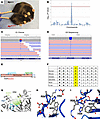
Glycans are one of the 4 major macromolecules essential for life and are the most abundant family of organic molecules. However, in contrast with DNA and RNA, glycan structures have no template; this results in limited tools to study this challenging macromolecule with a diversity of glycan structures. A central bottleneck in studying glycosylation in vivo is that inhibitors and complete KOs are lethal. In a forward genetic screen, we identified a viable, hypomorphic mutation at a conserved site in mannose phosphate isomerase (Mpi) that causes a multisystemic phenotype affecting RBCs, liver, stomach, intestines, skin, size, fat, and fluid balance in mice. The phenotype could be rescued with mannose. Analyses of glycopeptides in mice with this mutation showed a 500% increase in unoccupied N-glycan sites. This is equivalent to a “glycan knockdown,” which would be useful for examining the role of glycans in biology and disease. Therefore, we report an in vivo tool to study global N-glycosylation deficiency with tissue-specific targeting and a rescue mechanism with mannose.
Authors
Elisa B. Lin, Steve Meregini, Zhao Zhang, Avishek Roy, Tandav Argula, James M. Mitchell, William J. Israelsen, Sara Ludwig, Jamie Russell, Jiexia Quan, Sara Hildebrand, Evan Nair-Gill, Bruce Beutler, Jeffrey A. SoRelle
Abstract
Uracil DNA glycosylase (UNG) excises uracil and 5-fluorouracil bases from DNA and is implicated in fluorodeoxyuridine (FdU) resistance. Here we explore the effects of inhibiting UNG activity, or depleting the UNG protein, in two mouse syngeneic models for colorectal cancer. Overexpressing the uracil DNA glycosylase inhibitor protein in mismatch repair (MMR)-deficient MC38 cells injected into C57/B6 mice delayed tumor growth and prolonged survival when combined with FdU. Combining UNG inhibition with FdU numerically increased CD4+ T lymphocytes and B cells compared to FdU or UNG inhibition alone, suggesting an immune component to the effects. In contrast, shRNA depletion of UNG in the absence of FdU treatment resulted in 70% of mice clearing their tumors, and a 3-fold increase in overall survival compared to FdU. Analysis of MC38 tumor-infiltrating immune cells showed UNG depletion increased monocyte and dendritic cell populations, with CD8+ T cells also numerically increased. shRNA depletion of UNG in MMR-proficient CT-26 cells injected into Balb/C mice produced minimal benefit; the addition of anti-PD-1 antibody synergized with UNG-depletion to increase survival. Cytotoxic T cell depletion abolished the benefits of UNG depletion in both models. These findings suggest UNG inhibition and/or depletion could enhance antitumor immune response in humans.
Authors
Eric S. Christenson, Brandon E. Smith, Thanh J. Nguyen, Alens Valentin, Soren Charmsaz, Nicole E Gross, Sarah M. Shin, Alexei Hernandez, Won Jin Ho, Srinivasan Yegnasubramanian, James T. Stivers

Abstract
Duchenne muscular dystrophy (DMD) is a progressive muscle wasting disorder involving cycles of muscle degeneration and regeneration, leading to accumulation of intramuscular fibrosis and fat. Ablation of Osteopontin/Spp1 in a murine model of DMD (mdx) improves the dystrophic phenotype, but the source of Spp1 and its impact on target cells in dystrophic muscles remain unknown. In dystrophic muscles, macrophages are the predominate infiltrating leukocyte and express high levels of Spp1. We used macrophage-specific ablation combined with single-cell transcriptional profiling to uncover the impact of macrophage-derived Spp1 on cell-cell interactions in mdx muscles. Ablation of macrophage-specific Spp1 (cKO) correlated with reduction of 2 PDGFRa+ stromal cell populations, expressing Lifr+ and Procr+. Sorting and transcriptional profiling of these populations confirmed that they are enriched in adipogenesis genes and are highly related to fibroadipogenic precursors (FAPS). These adipogenic stromal cells (ASC) displayed more adipogenic potential in vitro compared with FAPS, likely due to a more differentiated state. Reduction of ASCs correlated with reduced intramuscular diaphragmatic fat and improved diaphragm function. These data suggest a role for myeloid-derived Spp1 in the differentiation of stromal cells towards an adipogenic fate, leading to accumulation of intramuscular fat in dystrophic muscles.
Authors
Philip K. Farahat, Chino Kumagai-Cresse, Raquel L. Aragón, Feiyang Ma, Justin K. Amakor, Alejandro Espinoza, Irina Kramerova, Robert J. Jimenez, Bradley M. Smith, Jesus Perez, Rachelle H. Crosbie, Apoorva H. Nagendra, Jackie McCourt-Towner, Gerald Coulis, Oluwatayo F. Ikotun, April D. Pyle, Matteo Pellegrini, Elizabeth M. McNally, S. Armando Villalta, Melissa J. Spencer
Abstract
Hereditary cardiomyopathies are the prototypic forms of heart failure and major causes of sudden cardiac death. The genome in cardiomyopathies is exposed to internal stressors, which damage the DNA and activate the DNA damage response (DDR) pathways. We set to determine whether the DDR pathways were activated and pathogenic in an established mouse model of desmoplakin (DSP)-cardiomyopathy generated upon deletion of the Dsp gene in cardiac myocytes (Myh6-McmTam:DspF/F). The mice exhibited premature death, cardiac dysfunction, myocardial cell death, fibrosis, and increased expression levels of the pro-inflammatory cytokines, consistent with the phenotype of human DSP-cardiomyopathy. Cytosolic nuclear self-DNA (nDNA) and mitochondrial DNA (mtDNA) were increased in cardiac myocyte cytosol in the Myh6-McmTam:DspF/F mice. Likewise, the DDR pathway proteins, including the cyclic GMP-AMP synthase (CGAS), stimulator of interferon response 1 (STING1) were upregulated as were the transcript levels of interferon response factor 3 (IRF3) and the nuclear factor κB (NFκB) target genes. Deletion of the Mb21d1 gene encoding CGAS in the Myh6-McmTam:DspF/F mice prolonged survival, improved cardiac function, attenuated fibrosis, and reduced cell death. Thus, cytosolic nDNA and mtDNA are increased and the DDR pathways are activated and pathogenic in a mouse model of DSP-cardiomyopathy, whereas genetic blockade of CGAS is salubrious.
Authors
Weiyue Wang, Benjamin Cathcart, Quoc D. Nguyen, Loi Q. Lao, Amelia Bryans, Sara E. Coleman, Leila Rouhi, Priyatansh Gurha, Ali J. Marian
Abstract
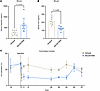
β-Thalassemia is a genetic disorder arising from mutations in the β-globin gene, leading to ineffective erythropoiesis and iron overload. Ineffective erythropoiesis, a hallmark of β-thalassemia, is an important driver of iron overload, which contributes to liver fibrosis, diabetes, and cardiac disease. Iron homeostasis is regulated by the hormone hepcidin; BMP6/hemojuvelin–mediated (BMP6/HJV-mediated) signaling induces hepatic hepcidin expression via SMAD1/5, with transmembrane serine protease 6 (TMPRSS6) being a negative regulator of HJV. Individuals with loss-of-function mutations in the TMPRSS6 gene show increased circulating hepcidin and iron-refractory iron-deficiency anemia, suggesting that blocking TMPRSS6 may be a viable strategy to elevate hepcidin levels in β-thalassemia. We generated a human mAb (REGN7999) that inhibits TMPRSS6. In an Hbbth3/+ mouse model of β-thalassemia, REGN7999 treatment led to significant reductions in liver iron, reduced ineffective erythropoiesis, and showed improvements in RBC health, running distance during forced exercise, and bone density. In a phase I, doubleblind, randomized, placebo-controlled study in healthy human volunteers (NCT05481333), REGN7999 increased serum hepcidin and reduced serum iron with an acceptable tolerability profile. Our results suggest that, by both reducing iron and improving RBC function, inhibition of TMPRSS6 by REGN7999 may offer a therapy for iron overload and impaired erythropoiesis in β-thalassemia.
Authors
Heinrich E. Lob, Nikhil Singh, Kusha Mohammadi, Larisa Ivanova, Beth Crowell, Hyon J. Kim, Leah Kravets, Nanditha M. Das, Yonaton Ray, Jee Hae Kim, Sylvie Rottey, Emily Labriola-Tompkins, Hazem E. Hassan, Lorna Farrelly, Harvey F. Chin, Marilena Preda, Leigh Spencer Noakes, Kei Saotome, Matthew Franklin, Marc W. Retter, Elif Karayusuf, John J. Flanagan, William Olson, Kalyan C. Nannuru, Vincent Idone, Michael E. Burczynski, Olivier A. Harari, Lorah Perlee, Griet Van Lancker, Andrew J. Murphy, Aris N. Economides, Sarah J. Hatsell
Abstract
The gain-of-function MUC5B promoter variant is the dominant risk factor for the development of idiopathic pulmonary fibrosis (IPF). However, its impact on protein expression in both non-fibrotic control and IPF lung specimens have not been well characterized. Utilizing laser capture microdissection coupled to mass spectrometry (LCM-MS), we investigated the proteomic profiles of airway and alveolar epithelium in non-fibrotic controls (n = 12) and IPF specimens (n = 12), stratified by the MUC5B promoter variant. Through qualitative and quantitative analyses, as well as pathway analysis and immunohistological validation, we have identified a distinct MUC5B-associated protein profile. Notably, the non-fibrotic control alveoli exhibited substantial MUC5B-associated protein changes, with an increase of IL-3 signaling. Additionally, we found that epithelial cells overlying IPF fibroblastic foci cluster closely to alveolar epithelia and express proteins associated with cellular stress pathways. In conclusion, our findings suggest that the MUC5B promoter variant leads to protein changes in alveolar and airway epithelium that appears to be associated with initiation and progression of lung fibrosis.
Authors
Jeremy A. Herrera, Mark Maslanka, Rachel Z. Blumhagen, Rachel Blomberg, Nyan Ye Lwin, Janna Brancato, Carlyne D. Cool, Jonathan P. Huber, Jonathan S. Kurche, Chelsea M. Magin, Kirk C. Hansen, Ivana V. Yang, David A. Schwartz
No posts were found with this tag.


