
Genetics

Abstract
Germline and somatic changes in DICER1 and DGCR8 microprocessors confer risk of developing benign and malignant thyroid lesions, yet the molecular events driving malignant transformation remain unclear. We trace the molecular trajectories from benignity to malignancy in DICER1- and DGCR8-mutated thyroid lesions using multiomic profiling on over 30 DICER1-/DGCR8-mutated samples. Our findings reveal a progressive, specific, and linear accumulation of genetic changes, which when combined with enhanced downregulation of miRNAs distinguished DICER1-/DGCR8-malignant lesions from their benign counterparts. Compensatory hypomethylation of miRNA-encoding genes characterized DICER1-/DGCR8-benign lesions, but as the tumors progressed to malignancy, methylation was partly reimposed, reversing the attempts to activate miRNA-encoded genes and further compromising miRNA production. Transcriptomic analyses revealed mutation-specific effects on the microenvironment, whereby DICER1 mutations activated canonical thyroid cancer progression pathways, whereas altered DGCR8 associated with immune-related changes. This work unveils specific molecular events underlying malignant progression of miRNA-biogenesis-related thyroid tumors and identifies potential biomarkers and disease etiology mechanisms.
Authors
Anne-Sophie Chong, Carla Roca, Paula Morales-Sánchez, Eduard Dorca, Verónica Barea, Ignacio Ruz-Caracuel, Pablo Valderrabano, Carlota Rovira, Cristina Jou, Dorothée Bouron-Dal Soglio, Rebecca D. Chernock, Giovana T. Torrezan, Marc Pusztaszeri, José M. Cameselle-Teijeiro, Xavier Matias-Guiu, Clara V. Alvarez, Héctor Salvador, Jonathan D. Wasserman, Luis Javier Leandro-García, William D. Foulkes, Eduardo Andrés-León, Paula Casano-Sancho, Barbara Rivera
Abstract
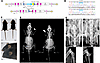
Angelman syndrome (AS) is a neurodevelopmental disorder caused by loss of the maternal UBE3A allele, the sole source of UBE3A in mature neurons due to epigenetic silencing of the paternal allele. Although emerging therapies are being developed to restore UBE3A expression by activating the dormant paternal UBE3A allele, existing mouse models for such preclinical studies have limited throughput and utility, creating bottlenecks for both in vitro therapeutic screening and in vivo characterization. To address this, we developed the Ube3a-INSG dual-reporter knock-in mouse, in which an IRES-Nanoluciferase-T2A-Sun1-sfGFP (INSG) cassette was inserted downstream of the endogenous Ube3a stop codon. The INSG model preserves UBE3A protein levels and function while enabling two complementary allele-specific readouts: Sun1-sfGFP and Nanoluciferase. We show that Sun1-sfGFP, a nuclear envelope-localized reporter, enables single-cell fluorescence analysis, whole-brain light-sheet imaging, and nuclear quantification by flow cytometry. Further, Nanoluciferase supports high-throughput luminescence assays for sensitive pharmacological profiling in cultured neurons and non-invasive in vivo bioluminescence imaging for pharmacodynamic assessment. By combining scalable screening, cellular analysis, and real-time in vivo monitoring in a single model, the Ube3a-INSG dual-reporter mouse provides a powerful platform to accelerate therapeutic development centered on UBE3A.
Authors
Hanna Vihma, Lucas M. James, Hannah C. Nourie, Audrey L. Smith, Siyuan Liang, Carlee A. Friar, Tasmai Vulli, Lei Xing, Dale O. Cowley, Alain C. Burette, Benjamin D. Philpot
Abstract
The TRPV4 skeletal dysplasias are characterized by short stature, short limbs with prominent large joints, and progressive scoliosis. They result from dominant missense mutations that activate the TRPV4 calcium permeable ion channel. As a platform to understand the mechanism of disease and to test the hypothesis that channel inhibition could treat these disorders, we developed a knock-in mouse that conditionally expresses the p.R594H Trpv4 mutation. Embryonic, chondrocyte-specific induction of the mutation using Col2a1-Cre resulted in a skeletal dysplasia affecting the long bones, spine, and craniofacial skeletal elements, consistent with the human skeletal dysplasia phenotypes produced by TRPV4 mutations. Cartilage growth plate histological abnormalities included disorganized proliferating chondrocyte columns and reduced hypertrophic chondrocyte development, reflecting abnormal endochondral ossification. In vivo treatment with the TRPV4-specific inhibitor GSK2798745 markedly improved the radiographic skeletal phenotype and rescued the growth plate histological abnormalities. ScRNA-Seq of chondrocyte transcripts from affected mice identified calcium-mediated effects on multiple signaling pathways as potential mechanisms underlying the defects in linear and cartilage appositional growth observed in both mutant mice and patients. These results provide preclinical evidence demonstrating TRPV4 inhibition as a rational, mechanism-based therapeutic strategy to ameliorate disease progression and severity in the TRPV4 skeletal dysplasias.
Authors
Lisette Nevarez, Taylor K. Ismaili, Jennifer Zieba, Jorge Martin, Davis Wachtell, Derick Diaz, Jocelyn A. Ramirez, Valeria Aceves, Joshua Ito, Ryan S. Gray, David Goldstein, Sunil Sahdeo, Deborah Krakow, Daniel H. Cohn
Abstract
Growing evidence indicates that PKLR, the gene for pyruvate kinase (PK), is a genetic modifier of the sickle cell phenotype. Co-inheritance of specific PKLR variants is associated with increased pain-related hospitalization and can trigger sickle cell disease (SCD) phenotypes in asymptomatic carriers. PK deficiency disrupts RBC glycolysis, leading to ATP deficits and accumulation of 2,3-diphosphoglycerate, which exacerbates sickling in SCD. Using CRISPR-Cas9, we generated null mutations in Pklr [Pklr(13ntdel/13ntdel) or Pklr(246ntdel/246ntdel)] specific for the RBC isoform (PKR) in Townes mice that were homozygous (SS) or heterozygous (AS) for the human sickle globin gene, or homozygous for human hemoglobin A (AA, controls), to investigate the effect of PKR deficiency on the sickle phenotype in mice. PKR-deficient AA and AS mice developed severe anemia, reticulocytosis, and substantial spleen and liver iron deposits. Unlike what is observed in humans, PKR-deficiency in AS and SS mice surprisingly decreased sickling, but it was also associated with increased extramedullary hematopoiesis and mitochondrial retention in mature RBCs. These results demonstrate the differential effect of Pklr mutations on the phenotype of both AS and SS mouse models, offering new insights into the complex role of PKR deficiency in SCD pathology.
Authors
Xunde Wang, Meghann Smith, Sayuri Kamimura, Quan Li, Niharika Shah, Martha Quezado, Luis E.F. Almeida, Sebastian Vogel, Mickias B. Tegegn, Kevin Y. Sun, Rafael Villasmil, Chengyu Liu, William A. Eaton, Swee Lay Thein, Zenaide M.N. Quezado
Abstract
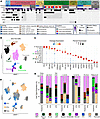
Although well-differentiated thyroid carcinoma (WDTC) is characterized by a robust treatment response, aggressive subtypes, such as anaplastic thyroid carcinoma (ATC), remain highly lethal. To understand thyroid cancer evolution in both children and adults, we analyzed single-cell transcriptomes of 423,733 cells from 81 samples and spatially resolved key tumor and microenvironment populations across 28 tumors with spatial transcriptomics, including rare and unique composite WDTC/ATC tumors and pediatric diffuse sclerosing thyroid carcinomas. Additionally, we identified gene signatures of stromal cell populations in 5 large thyroid cancer bulk RNA-sequencing cohorts. Through this multi-institutional effort, we defined a population of POSTN+ myofibroblast cancer-associated fibroblasts (myCAFs) that are intimately associated with invasive tumor cells and correlate with poor prognosis, lymph node metastasis, and disease progression in thyroid carcinoma. We also revealed a population of inflammatory CAFs that are distant to tumor cells and are found in the inflammatory stromal microenvironment of autoimmune thyroiditis. Together, our study provides spatial profiling of thyroid cancer evolution in samples with mixed WDTC/ATC histopathology and identifies a prognostic myCAF subtype with potential clinical utility in predicting aggressive disease in both children and adults.
Authors
Matthew A. Loberg, George J. Xu, Sheau-Chiann Chen, Hua-Chang Chen, Claudia C. Wahoski, Kailey P. Caroland, Megan L. Tigue, Heather A. Hartmann, Jean-Nicolas Gallant, Courtney J. Phifer, Andres A. Ocampo, Dayle K. Wang, Reilly G. Fankhauser, Kirti A. Karunakaran, Chia-Chin Wu, Maxime Tarabichi, Sophia M. Shaddy, James L. Netterville, Sarah L. Rohde, Carmen C. Solórzano, Lindsay A. Bischoff, Naira Baregamian, Barbara A. Murphy, Jennifer H. Choe, Jennifer R. Wang, Eric C. Huang, Quanhu Sheng, Luciane T. Kagohara, Elizabeth M. Jaffee, Ryan H. Belcher, Ken S. Lau, Fei Ye, Ethan Lee, Vivian L. Weiss
Abstract
Congenital long QT syndrome (LQTS) promotes risk for life-threatening cardiac arrhythmia and sudden death in children and young adults. Pathogenic variants in the voltage-gated potassium channel KCNQ1 are the most frequently discovered genetic cause. Most LQTS-associated KCNQ1 variants cause loss-of-function secondary to impaired trafficking of the channel to the plasma membrane. There are currently no therapeutic approaches that address this underlying molecular defect. Using a high-throughput screening paradigm, we identified VU0494372, a small molecule that increases total and cell surface levels and trafficking efficiency of WT KCNQ1 as well as three LQTS-associated variants. Additionally, 16-hour treatment of cells with VU0494372 increased IKs (KCNQ1-KCNE1 current) for WT KCNQ1 and the LQTS-associated variant V207M in cells co-expressing KCNE1. VU0494372 had no impact on KCNQ1 transcription, degradation, or thermal stability, and increased the rate of KCNQ1 reaching the cell surface. We identified a potential direct interaction site with KCNQ1 at or near the binding site of the KCNQ1 potentiator ML277. Together, these findings demonstrate that small molecules can increase the expression levels and cell surface trafficking efficiency of KCNQ1 and introduce a potential new pharmacological approach for treating LQTS.
Authors
Katherine R. Clowes Moster, Carlos G. Vanoye, Ana C. Chang-Gonzalez, Ian M. Romaine, Katherine M. Stefanski, Mason C. Wilkinson, Joshua A. Bauer, Thomas P. Hasaka, Emily L. Days, Reshma R. Desai, Kathryn R. Butcher, Gary A. Sulikowski, Alex G. Waterson, Jens Meiler, Kaitlyn V. Ledwitch, Alfred L. George, Jr., Charles R. Sanders
Abstract
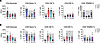
Background: Sleep is increasingly recognized as essential to human health, yet the adverse health consequences of acute sleep deprivation are unknown. We hypothesized that acute sleep deprivation is associated with health outcomes and modulated by sleep-associated genotypes. Methods: LOESS smoothing was performed on sleep estimates from Fitbit users (N = 14,681) between June 1, 2016 and July 1, 2022. Dates when population minutes slept were less than the 90% confidence interval of the LOESS regression were named acute sleep deprivation events (ASDEs). Phenome-wide disease incidence among the AoU population (N = 287,012) in the 10 days post-ASDE was compared to a preceding reference period by McNemar test. Circadian rhythm and sleep duration-associated SNPs were screened to identify genotypes associated with shorter ASDE sleep duration. Influences of sleep and circadian genotype on post-ASDE influenza risk were modeled using binomial family generalized estimating equations. Results: We identified 32 ASDEs spanning major national events. A phenome-wide screen found increased risk of influenza (OR = 1.54 [1.40, 1.70], P-value = 1.00 x 10⁻¹⁸) following ASDEs. 56 SNPs were associated with decreased sleep duration on ASDEs. Higher quantiles of ASDE-related SNP genotype burden were associated with less ASDE sleep duration and a greater risk of influenza-associated healthcare visits. Conclusion: Major national events are associated with acute sleep deprivation and greater influenza risk which is amplified by sleep genotypes. These findings should inform public health vigilance surrounding major national events.
Authors
Neil J. Kelly, Rahul Chaudhary, Wadih El Khoury, Nishita Kalepalli, Jesse Wang, Priya Patel, Irene Chan, Haris Rahman, Aisha Saiyed, Anisha N. Shah, Colleen A. McClung, Satoshi Okawa, Mehdi Nouraie, Stephen Y. Chan
Abstract
The transcription factor IKAROS, encoded by IKZF1, is crucial for lymphocyte development and differentiation. Germline heterozygous IKZF1 mutations cause B cell immunodeficiency, but also affect T cells. Patients with IKZF1 haploinsufficiency (HI) or dimerization-defective (DD) variants show reduced naive and increased memory T cells, while dominant-negative (DN) mutations result in the opposite phenotype. Gain-of-function patients display variable patterns. To investigate IKAROS’s role in shaping the human naive/memory T cell phenotype, we performed IKAROS immunomodulation and knockdown experiments and analyzed early T cell development in an artificial thymic organoid (ATO) system using CD34+ cells from patients with representative IKZF1 variants. IKAROS inhibition by lenalidomide or silencing by small hairpin RNA directly altered expression of HNRNPLL, the master regulator of CD45 isoform splicing that defines CD45RA+/naive and CD45RO+/memory phenotypes. In the ATO system, IKAROS-DN precursor cells were blocked at the CD4–CD8–/double-negative stage and retained a CD45RA+ phenotype, whereas IKAROS-HI cells inefficiently reached the CD4+CD8+/double-positive stage and partially transitioned from CD45RA to CD45RO. Analysis of public gene expression data showed high HNRNPLL expression in double-positive thymic cells, beyond the stages affected by IKZF1 DN and HI mutations. Collectively, these findings indicate that IKAROS regulates early and late T cell development by mechanisms, including HNRNPLL modulation.
Authors
Jennifer Stoddard, Hye Sun Kuehn, Ravichandra Tagirasa, Marita Bosticardo, Francesca Pala, Julie E. Niemela, Agustin A. Gil Silva, Kayla Amini, Eduardo Anaya, Mario Framil Seoane, Carolina Bouso, Dimana Dimitrova, Jennifer A. Kanakry, Laia Alsina, Matias Oleastro, Steven M. Holland, Thomas A. Fleisher, Richard L. Wasserman, Luigi D. Notarangelo, Sergio D. Rosenzweig
Abstract
Pathogenic variants in kinesin KIF11 underlie microcephaly-lymphedema-chorioretinopathy (MLC) syndrome. Although well known for regulating spindle dynamics ensuring successful cell division, the association of KIF11 (encoding EG5) with development of the lymphatic system, and how KIF11 pathogenic variants lead to lymphatic dysfunction and lymphedema remain unknown. Using patient-derived lymphoblastoid cells, we demonstrated that MLC patients carrying pathogenic stop-gain variants in KIF11 have reduced mRNA and protein levels. Lymphoscintigraphy showed reduced tracer absorption, and intestinal lymphangiectasia was detected in one patient, pointing to impairment of lymphatic function caused by KIF11 haploinsufficiency. We revealed that KIF11 is expressed in early human and mouse development with the lymphatic markers VEGFR3, Podoplanin and PROX1. In zebrafish, scRNA-seq identified kif11 specifically expressed in endothelial precursors. In human lymphatic endothelial cells (LECs), EG5 inhibition with Ispinesib, reduced VEGFC-driven AKT phosphorylation, migration and spheroid sprouting. KIF11 knockdown reduced PROX1 and VEGFR3 expression, providing for the first time a link between KIF11 and drivers of lymphangiogenesis and lymphatic identity.
Authors
Kazim Ogmen, Sara E. Dobbins, Rose Yinghan Behncke, Ines Martinez-Corral, Ryan C.S. Brown, Michelle Meier, Sascha Ulferts, Nils Rouven Hansmeier, Ege Sackey, Ahlam Alqahtani, Christina Karapouliou, Dionysios Grigoriadis, Juan C. Del Rey Jimenez, Michael Oberlin, Denise Williams, Arzu Ekici, Kadri Karaer, Steve Jeffery, Peter Mortimer, Kristiana Gordon, Kazuhide S. Okuda, Benjamin M. Hogan, Taija Mäkinen, René Hägerling, Sahar Mansour, Silvia Martin-Almedina, Pia Ostergaard
Abstract
Kidney organoids are an emerging tool for disease modeling, especially genetic diseases. Among these diseases, X-linked Alport syndrome (XLAS) is a hematuric nephropathy affecting the glomerular basement membrane (GBM) secondary to pathogenic variations in the COL4A5 gene encoding the α5 subunit of type IV collagen [α5(IV)]. In patients carrying pathogenic variations affecting splicing, the use of antisense oligonucleotides (ASOs) offers immense therapeutic hope. In this study, we develop a framework combining the use of patient-derived cells and kidney organoids to provide evidence of the therapeutic efficacy of ASOs in XLAS patients. Using multiomics analysis, we describe the development of GBM in wild-type and mutated human kidney organoids. We show that GBM maturation is a dynamic process, which requires long organoid culture. Then, using semi-automated quantification of α5(IV) at basement membranes in organoids carrying the splicing variants identified in patients, we demonstrate the efficacy of ASO treatment for α5(IV) restoration. These data contribute to our understanding of the development of GBM in kidney organoids and pave the way for a therapeutic screening platform for patients.
Authors
Hassan Saei, Bruno Estebe, Nicolas Goudin, Mahsa Esmailpour, Julie Haure, Olivier Gribouval, Christelle Arrondel, Vincent Moriniere, Pinyuan Tian, Rachel Lennon, Corinne Antignac, Geraldine Mollet, Guillaume Dorval
No posts were found with this tag.


