

Csk-mediated Src family kinase regulation dampens neutrophil infiltration during pulmonary infection
Abstract
Neutrophil recruitment is crucial for pathogen elimination. However, precise control of the inflammatory response prevents overshooting reactions. Neutrophil activation initiates signaling, resulting in integrin β2 (Itgb2) activation and neutrophil arrest. Src family kinases are involved in multiple cellular processes and are negatively regulated by the C-terminal Src kinase (Csk). During this study, we investigated the mechanism by which Csk regulates integrin activation and neutrophil recruitment. Here, we demonstrated that Csk deficiency in murine neutrophils resulted in increased neutrophil adhesion to the endothelium along with decreased neutrophil transmigration into inflamed tissues compared with their littermate controls. In bacterial pneumonia, infected Csk-deficient mice showed higher bacterial burdens and decreased neutrophil recruitment, while other immune cell counts and cytokine levels were not significantly different compared to control. Analyses of Csk-deficient neutrophils revealed an increased Itgb2 affinity, leading to reduced migration and intravascular crawling. Mechanistically, elevated cAMP levels increased protein kinase A activity, which subsequently enhanced Csk activation. Csk, in turn, suppressed Src family kinase activation through phosphorylation (Y529). Hence, Csk-mediated regulation of neutrophil infiltration contributes to maintain a balanced immune response during bacterial pneumonia.
Authors
Wida Amini, Lena Schemmelmann, Jan-Niklas Heming, Marina Oguama, Katharina Thomas, Helena Block, Pia Lindental, Bernadette Bardel, Andreas Margraf, Oliver Soehnlein, Anika Cappenberg, Alexander Zarbock

Abstract
The prognosis for colorectal cancer (CRC) patients with liver metastasis remains poor, and the molecular mechanisms driving CRC liver metastasis are not fully understood. Tumor-derived hypoxia-induced extracellular vesicles have emerged as key players in inducing angiogenesis by transferring noncoding RNAs. However, the specific role of CRC-derived hypoxic extracellular vesicles (H-EVs) in regulating premetastatic microenvironment (PMN) formation by inducing angiogenesis remains unclear. Our study demonstrates that H-EVs induce angiogenesis and liver metastasis. Through microRNA microarray analysis, we identified a reduction in miR-6084 levels within H-EVs. We found that miR-6084 inhibited angiogenesis by being transferred to endothelial cells via EVs. In endothelial cells, miR-6084 directly targeted angiopoietin like 4 (ANGPTL4) mRNA, thereby suppressing angiogenesis through the ANGPTL4-mediated JAK2/STAT3 pathway. Furthermore, we uncovered that specificity protein 1 (SP1) acted as a transcription factor regulating miR-6084 transcription, while hypoxia-inducible factor 1A (HIF1A) decreased miR-6084 expression by promoting SP1 protein dephosphorylation and facilitating ubiquitin-proteasome degradation in SW620 cells. In clinical samples, we observed low expression of miR-6084 in plasma-derived EVs from CRC patients with liver metastasis. In summary, our findings suggest that CRC-derived H-EVs promote angiogenesis and liver metastasis through the HIF1A/SP1/miR-6084/ANGPTL4 axis. Additionally, miR-6084 holds promise as a diagnostic and prognostic biomarker for CRC liver metastasis.
Authors
Yang Zhang, Xuyang Yang, Su Zhang, Qing Huang, Sicheng Liu, Lei Qiu, Mingtian Wei, Xiangbing Deng, Wenjian Meng, Hai-Ning Chen, Yaguang Zhang, Junhong Han, Ziqiang Wang
Abstract
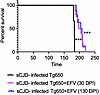
Prion diseases are fatal, infectious, and incurable neurodegenerative conditions affecting humans and animals, caused by the misfolding of the cellular prion protein (PrPC) into its pathogenic isoform, PrPSc. In humans, sporadic Creutzfeldt-Jakob disease (sCJD) is the most prevalent prion disease. Recently, we demonstrated that treatment with the FDA-approved anti-HIV drug efavirenz (EFV) significantly reduced PrPSc and extended survival of scrapie prion–infected mice. Among other effects, EFV activates the brain-specific cholesterol-metabolizing enzyme, CYP46A1, which converts cholesterol into 24S-hydroxycholesterol (24S-HC). However, drugs effective against scrapie prions often fail in human prion diseases, and a relation of the antiprion effects of EFV to CYP46A1 activation is not established. Thus, we evaluated EFV treatment in mice overexpressing human PrPC infected with human sCJD prions. Oral, low-dose EFV treatment starting at 30 or 130 days postinfection significantly slowed disease progression and extended their survival. At early clinical stage, we observed reduced PrPSc accumulation, decreased cholesterol and lipid droplet content, and elevated CYP46A1 and 24S-HC levels in EFV-treated mice. Overexpression of CYP46A1 in prion-infected neuronal cells reduced PrPSc levels and increased 24S-HC, indicating that antiprion effects of EFV correlate with CYP46A1 activation. These findings highlight EFV as a safe and efficacious therapeutic candidate for human prion diseases.
Authors
Tahir Ali, Jessica Cashion, Samia Hannaoui, Hanaa Ahmed-Hassan, Hermann Schatzl, Sabine Gilch

Abstract
Androgen receptor–positive prostate cancer (PC), castration-resistant prostate cancer (CRPC), and neuroendocrine prostate cancer (NEPC) invariably become resistant to treatment with targeted and cytotoxic agents. Multiple pathways have been identified as being responsible for these pleiotropic mechanisms of resistance. The mucin 1 (MUC1) gene is aberrantly expressed in CRPC/NEPC in association with poor clinical outcomes; however, it is not known if the oncogenic MUC1-C/M1C protein drives treatment resistance. We demonstrated that MUC1-C is necessary for resistance of (i) PC cells to enzalutamide (ENZ) and (ii) CRPC and NEPC cells to docetaxel (DTX). Our results showed that MUC1-C–mediated resistance is conferred by upregulation of aerobic glycolysis and suppression of reactive oxygen species necessary for self-renewal. Dependence of these resistant phenotypes on MUC1-C for the cancer stem cell (CSC) state identified a potential target for treatment. In this regard, we further demonstrated that targeting MUC1-C with an M1C antibody-drug conjugate (ADC) is highly effective in suppressing (i) self-renewal of drug-resistant CRPC/NEPC CSCs and (ii) growth of treatment-emergent NEPC tumor xenografts derived from drug-resistant cells and a patient with refractory disease. These findings uncovered a common MUC1-C–dependent pathway in treatment-resistant CRPC/NEPC progression and identified MUC1-C as a target for their therapy with an M1C ADC.
Authors
Keisuke Shigeta, Tatsuaki Daimon, Hiroshi Hongo, Sheng-Yu Ku, Hiroki Ozawa, Naoki Haratake, Atsushi Fushimi, Ayako Nakashoji, Atrayee Bhattacharya, Shinkichi Takamori, Michihisa Kono, Masahiro Rokugo, Yuto Baba, Takeo Kosaka, Mototsugu Oya, Justine Jacobi, Mark D. Long, Himisha Beltran, Donald Kufe
Abstract
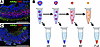
Autologous photoreceptor cell replacement is one of the most promising strategies currently being developed for the treatment of patients with inherited retinal degenerative blindness. Induced pluripotent stem cell–derived (iPSC-derived) retinal organoids, which faithfully recapitulate the structure of the neural retina, are an ideal source of transplantable photoreceptors required for these therapies. However, retinal organoids contain other retinal cell types, including bipolar, horizontal, and amacrine cells, which are unneeded and may reduce the potency of the final therapeutic product. Therefore, approaches for isolating fate-committed photoreceptor cells from dissociated retinal organoids are desirable. In this work, we present partial dissociation, a technique that leverages the high level of organization found in retinal organoids to enable selective enrichment of photoreceptor cells without the use of specialized equipment or reagents such as antibody labels. We demonstrate up to 90% photoreceptor cell purity by simply selecting cell fractions liberated from retinal organoids during enzymatic digestion in the absence of mechanical dissociation. Since the presented approach relies on the use of standard plasticware and commercially available current good manufacturing practice–compliant reagents, we believe that it is ideal for use in the preparation of clinical photoreceptor cell replacement therapies.
Authors
Nicholas E. Stone, Laura R. Bohrer, Nathaniel K. Mullin, Alexander Berthold, Allison T. Wright, Ian C. Han, Edwin M. Stone, Robert F. Mullins, Budd A. Tucker
Abstract
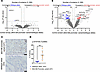
The gain-of-function MUC5B promoter variant is the dominant risk factor for the development of idiopathic pulmonary fibrosis (IPF). However, its impact on protein expression in both nonfibrotic control and IPF lung specimens has not been well characterized. Utilizing laser capture microdissection coupled to mass spectrometry, we investigated the proteomic profiles of airway and alveolar epithelium in nonfibrotic controls (n = 12) and IPF specimens (n = 12), stratified by the MUC5B promoter variant. Through qualitative and quantitative analyses, as well as pathway analysis and immunohistological validation, we have identified a distinct MUC5B-associated protein profile. Notably, the nonfibrotic control alveoli exhibited substantial MUC5B-associated protein changes, with an increase in IL-3 signaling. Additionally, we found that epithelial cells overlying IPF fibroblastic foci clustered closely to alveolar epithelia and expressed proteins associated with cellular stress pathways. In conclusion, our findings suggest that the MUC5B promoter variant leads to protein changes in alveolar and airway epithelium that appear to be associated with initiation and progression of lung fibrosis.
Authors
Jeremy A. Herrera, Mark Maslanka, Rachel Z. Blumhagen, Rachel Blomberg, Nyan Ye Lwin, Janna Brancato, Carlyne D. Cool, Jonathan P. Huber, Jonathan S. Kurche, Chelsea M. Magin, Kirk C. Hansen, Ivana V. Yang, David A. Schwartz

Abstract
The pathobiology of pulmonary hypertension (PH) is complex and multiple cell types contribute to disease pathogenesis. We sought to characterize the molecular crosstalk between endothelial and mesenchymal cells that promote PH in the tumor necrosis factor α–transgenic (TNF-Tg) model of PH. Pulmonary endothelial and mesenchymal cells were isolated from WT and TNF-Tg mice and underwent single-cell RNA sequencing. Data were analyzed using clustering, differential gene expression and pathway analysis, ligand-receptor interaction, transcription factor binding, and RNA velocity assessments. Significantly altered ligand-receptor interactions were confirmed with immunofluorescent staining. TNF-Tg mice had increases in smooth muscle cells and Col14+ fibroblasts, and reductions in general capillary (gCAP) endothelial cells, Col13+ fibroblasts, pericytes, and myofibroblasts. Pathway analysis demonstrated NF-κB–, JAK/STAT-, and interferon-mediated inflammation, endothelial apoptosis, loss of vasodilatory pathways, increased TGF-β signaling, and smooth muscle cell proliferation. Ligand-receptor analysis demonstrated a loss of BMPR2 signaling in TNF-Tg lungs and establishment of a maladaptive BMP signaling cascade, which functional studies revealed stemmed from endothelial NF-κB activation and subsequent endothelial SMAD2/3 signaling. This system highlights a complex set of changes in cellular composition, cell communication, and cell fate driven by TNF signaling that lead to aberrant BMP signaling that is critical for development of PH.
Authors
Maria de la Luz Garcia-Hernandez, Javier Rangel-Moreno, Qingfu Xu, YeJin Jeong, Soumyaroop Bhattacharya, Ravi Misra, Stacey Duemmel, Ke Yuan, Benjamin D. Korman

Abstract
Multiple sclerosis is characterized by CNS infiltration of autoreactive immune cells that drive both acute inflammatory demyelination and chronic progressive axonal and neuronal injury. Expanding evidence implicates CD8+ antineural T cells in the neurodegeneration that underlies irreversible clinical progression in multiple sclerosis, yet therapies specifically targeting this cell population are limited. CD8+ T cells from patients with MS exhibit increased engagement of the pentose phosphate pathway. Pharmacologic inhibition of the pentose phosphate pathway reduced glycolysis, glucose uptake, NADPH production, ATP production, proliferation, and proinflammatory cytokine secretion in CD8+ T cells activated by ligation of CD3 and CD28. Pentose phosphate pathway inhibition also prevented CD8+ T cell–mediated antigen-specific neuronal injury in vitro and in both an adoptive transfer–based cuprizone model of demyelination and in mice with experimental autoimmune encephalomyelitis. Notably, transcriptional profiling of CNS-infiltrating CD8+ T cells in patients with MS indicated increased pentose phosphate pathway engagement, suggesting that this pathway is involved in CD8+ T cell–mediated injury of axons and neurons in the demyelinated CNS. Inhibiting the pentose phosphate pathway disrupts CD8+ T cell metabolic reprogramming and effector functions, suggesting that such inhibition may serve as a therapeutic strategy to prevent neurodegeneration in patients with progressive MS.
Authors
Ethan M. Grund, Benjamin D.S. Clarkson, Susanna Pucci, Maria S. Westphal, Carolina Muniz Partida, Sara A. Muhammad, Charles L. Howe

Abstract
Loss-of-function (LOF) variants in IL6ST, encoding GP130, can cause hyper-IgE syndrome (HIES). Monoallelic LOF variants in IL6ST lead to HIES when located in the intracellular domain downstream of box 1/2 and upstream of the STAT3 phosphorylation sites and the recycling motif, due to their dominant negative (DN) activity. In this region, 2 previously unreported IL6ST variants, p.K702Sfs7* and p.Y759Wfs26*, were identified in 2 families with autosomal dominant (AD) HIES. Both variants were LOF and exhibited DN effects, leading to the accumulation of mutant GP130 on the cell surface. The p.K702Sfs7* mutation was the most upstream N-terminal mutation linked to HIES caused by heterozygous IL6ST variants. Comprehensive screening of IL6ST mutants revealed that most premature terminations downstream of amino acid F641, at the end of the transmembrane domain, resulted in LOF and DN effects via GP130 accumulation on the cell surface. The absence of the recycling motif (positions 782–787) in surface-expressed LOF GP130 led to its accumulation, contributing to the DN effect. The importance of intracellular truncating IL6ST variants can possibly be predicted based on the location of the premature stop codon. GP130 accumulation on the cell surface is a characteristic and potentially diagnostic finding in patients with HIES with heterozygous IL6ST variants.
Authors
Kosuke Ashihara, Takaki Asano, Kanako Takeuchi, Kosuke Noma, Miyuki Tsumura, Wenjie Wang, Wei-Te Lei, Hisao Higo, Toshio Kubo, Yoko Mizoguchi, Shuhei Karakawa, Aurélie Cobat, Clément Conil, Etsushi Toyofuku, Akimasa Sekine, Kohsuke Imai, Dusan Bogunovic, Jean-Laurent Casanova, Cheng-Lung Ku, Vivien Béziat, Satoshi Okada

Abstract
Podocytes are kidney glomerular cells that depend on rigorously regulated cytoskeleton components and integrins to form and maintain the so-called foot processes, apparatuses that attach podocytes to the glomerular basement membrane and connect them to neighboring podocytes. In diabetic kidney disease (DKD) these foot processes are effaced as a result of cytoskeleton dysregulation, a phenomenon that gradually reduces glomerular filtration. Cytoskeleton-associated protein 4 (CKAP4) is a known linker between the endoplasmic reticulum, integrins, and microtubular cytoskeleton. Since CKAP4 gene expression is downregulated in glomeruli from patients with DKD but not in other chronic kidney diseases, we hypothesized a role for CKAP4 in the mechanisms leading to foot process effacement (FPE) in DKD. CKAP4 mRNA reduction in podocytes in DKD was demonstrated in human kidney biopsies. Knockdown of CKAP4 in vivo in zebrafish resulted in edema, proteinuria, and foot process effacement, all typical features of DKD. Knockdown of CKAP4 in vitro led to disruption of the actin cytoskeleton and of the microtubular orientation. Moreover, it caused a downregulation of several integrins. These findings indicate that CKAP4 is crucial for foot process dynamics of podocytes. Its reduction, unique to DKD, is mechanistically connected to the pathophysiological processes leading to podocyte FPE.
Authors
Roberto Boi, Emelie Lassén, Alva Johansson, Peidi Liu, Aditi Chaudhari, Ramesh Tati, Janina Müller-Deile, Mario Schiffer, Kerstin Ebefors, Jenny Nyström
No posts were found with this tag.


