
Development
Abstract
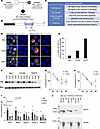
PDX1 mutations are associated with multiple forms of diabetes, including syndromic, neonatal, mature onset diabetes of the young (MODY), and type 2 diabetes. Two PDX1 missense mutations (Thr151Met and Asn196Thr) were identified in a pediatric female patient that cause permanent neonatal diabetes, pancreas hypoplasia, and a malformed gallbladder. We found that the mouse Pdx1 Asn197Thr variant (homologous to human PDX1 Asn196Thr), but not Pdx1 Thr152Met (homologous to human PDX1 Thr151Met), altered its nuclear localization and disrupted the PDX1-ONECUT1 interaction. Neither variant substantially affected PDX1 protein stability, but both reduced PDX1 binding to the Pdx1 gene promoter. Importantly, the Pdx1 Asn197Thr variant caused pancreas agenesis and reduced enteroendocrine cells in the duodenum in genetically engineered mice, due at least in part to reduced Pdx1 promoter binding and disrupted PDX1-ONECUT1 interaction.
Authors
Xiaodun Yang, Angela Zanfardino, Riccardo Schiaffini, Jeff Ishibashi, Bareket Daniel, Matthew W. Haemmerle, Novella Rapini, Alessia Piscopo, Emanuele Miraglia del Giudice, Maria Cristina Digilio, Raffaele Iorio, Mafalda Mucciolo, Stefano Cianfarani, Dario Iafusco, Fabrizio Barbetti, Doris A. Stoffers

Abstract
Nonsyndromic cleft lip with palate (nsCLP) is a common birth defect disease. Current diagnostic methods comprise fetal ultrasound images, which are mainly limited by fetal position and technician skills. We aimed to identify reliable maternal serum lipid biomarkers to diagnose nsCLP. Eight-feature selection methods were used to assess the dysregulated lipids from untargeted lipidomics in a discovery cohort. The robust rank aggregation algorithm was applied on these selected lipids. The data were subsequently processed using 7 classification models to retrieve a panel of 35 candidate lipid biomarkers. Potential lipid biomarkers were evaluated using targeted lipidomics in a validation cohort. Seven classification models and multivariate analyses were constructed to identify the lipid biomarkers for nsCLP. The diagnostic model achieved high performance with 3 lipids in determining nsCLP. A panel of 3 lipid biomarkers showed great potential for nsCLP diagnosis. FA (20:4) and LPC (18:0) were also significantly downregulated in early serum samples from the nsCLP group in the additional validation cohort. We demonstrate the applicability and robustness of a machine-learning algorithm to analyze lipidomic data for efficient and reliable biomarker screening.
Authors
Shanshan Jia, Weidong Xie, Chunqing Yang, Yizhang Dong, Wenting Luo, Hui Gu, Xiaowei Wei, Wei Ma, Dan Liu, Songying Cao, Yuzuo Bai, Wei Li, Zhengwei Yuan
Abstract
In vitro fertilization (IVF) is a non-coital method of conception used to treat human infertility. Although IVF is viewed as largely safe, it is associated with adverse outcomes in the fetus, placenta, and adult offspring. Because studies focusing on the effect of IVF on the male reproductive system are limited, we used a mouse model to assess the morphological and molecular effects of IVF on male offspring. We evaluated three developmental stages: 18.5-day fetuses and 12- and 39-week-old adults. Regardless of age, we observed changes in testicular-to-body weight ratios, serum testosterone levels, testicular morphology, gene expression, and DNA methylation. Also, sperm showed changes in morphology and DNA methylation. To assess multigenerational phenotypes, we mated IVF and naturally conceived males with wild-type females. Offspring from IVF males exhibited decreased fetal-to-placental weight ratios and changes in placenta gene expression and morphology regardless of sex. At 12-weeks-of-age, offspring showed higher body weights and differences in glucose, triglycerides, insulin, total cholesterol, HDL and LDL/VLDL levels. Both sexes showed changes in gene expression in liver, testes and ovaries, and decreased global DNA methylation. Collectively, our findings demonstrate that male IVF offspring exhibit abnormal testicular and sperm morphology and molecular alterations with a multigenerational impact.
Authors
Eric A. Rhon-Calderon, Cassidy N. Hemphill, Alexandra J. Savage, Laren Riesche, Richard M. Schultz, Marisa S. Bartolomei

Abstract
BACKGROUND Prenatal alcohol exposure (PAE) around conception in preclinical models results in placental insufficiency, likely contributing to offspring abnormalities. Altered placental DNA methylation (DNAm) and gene expression suggest epigenetic mechanisms, perhaps involving impacts on methyl donor levels. PAE around conception in women is common but placental effects are rarely examined. This cohort study investigated associations between PAE around conception and intake/plasma measures of the methyl donors folate and choline, feto-placental blood flow, and placental growth measures, gene expression, and DNAm.METHODS Pregnant participants delivered at Mater Mothers’ Hospital, Brisbane, Queensland, Australia (n = 411). Dietary intake of choline and folate were calculated and plasma concentrations measured using mass spectrometry (MS) and clinical immunoanalyzer, respectively. Cerebroplacental ratio (CPR) was calculated using Doppler measurements. Placentas were weighed/measured at delivery and samples used to quantify methyl donors (MS), global DNAm (ELISA), and gene expression (quantitative PCR). Data were compared between control/abstinent and PAE groups, by fetal sex.RESULTS A CPR <5th-centile, indicating fetal brain sparing because of placental insufficiency, was found in 2% of controls and 18% of the PAE group, mostly male fetuses (63%). Compared with controls, male PAE placentas had reduced mean thickness and placental growth factor mRNA and DNAm, whereas female PAE placentas had increased S-adenosylmethionine and a trend toward increased DNAm.CONCLUSION PAE around conception is associated with reduced CPR and altered placental growth measures, particularly in males, with potential implications for future health.FUNDING National Health and Medical Research Council (APP1191217) and Mary McConnel Career Boost Program for Women in Paediatric Research (WIS132020).
Authors
Sarah E. Steane, Christopher Edwards, Erika Cavanagh, Chelsea Vanderpeet, Jade M. Kubler, Lisa K. Akison, James S.M. Cuffe, Linda A. Gallo, Karen M. Moritz, Vicki L. Clifton
Abstract
Somatic activating mutations in KRAS can cause complex lymphatic anomalies (CLAs). However, the specific processes that drive KRAS-mediated CLAs have yet to be fully elucidated. Here, we used single-cell RNA sequencing to construct an atlas of normal and KrasG12D-malformed lymphatic vessels. We identified six subtypes of lymphatic endothelial cells (LECs) in the lungs of adult wild-type mice (Ptx3, capillary, collecting, valve, mixed, and proliferating). To determine when the LEC subtypes were specified during development, we integrated our data with data from four stages of development. We found that proliferating and Ptx3 LECs were prevalent during early lymphatic development and that collecting and valve LECs emerged later in development. Additionally, we discovered that the proportion of Ptx3 LECs decreased as the lymphatic network matured but remained high in KrasG12D mice. We also observed that the proportion of collecting and valve LECs was lower in KrasG12D mice than in wild-type mice. Last, we found that immature lymphatic vessels in young mice were more sensitive to the pathologic effects of KrasG12D than mature lymphatic vessels in older mice. Together, our results expand the current model for the development of the lymphatic system and suggest that KRAS mutations impair the maturation of lymphatic vessels.
Authors
Lorenzo M. Fernandes, Danielle Griswold-Wheeler, Jeffrey D. Tresemer, Angelica Vallejo, Neda Vishlaghi, Benjamin Levi, Abigail Shapiro, Joshua P. Scallan, Michael T. Dellinger
Abstract
Determining how alveoli are formed and maintained is critical to understanding lung organogenesis and regeneration after injury. To study the cellular dynamics of this critical stage of lung development, we have used scanned oblique-plane illumination microscopy of living lung slices to observe alveologenesis in real time at high resolution over several days. Contrary to the prevailing notion that alveologenesis occurs by airspace subdivision via ingrowing septa, we find that alveoli form by ballooning epithelial outgrowth supported by contracting mesenchymal ring structures. Systematic analysis has produced a computational model of finely timed cellular structural changes that drive normal alveologenesis. With this model, we can now quantify how perturbing known regulatory intercellular signaling pathways and cell migration processes effects alveologenesis. In the future, this new paradigm and platform can be leveraged for mechanistic studies and screening for therapies to promote lung regeneration.
Authors
Nicholas M. Negretti, Yeongseo Son, Philip Crooke, Erin J. Plosa, John T. Benjamin, Christopher S. Jetter, Claire Bunn, Nicholas Mignemi, John Marini, Alice N. Hackett, Meaghan Ransom, Shriya Garg, David Nichols, Susan H. Guttentag, Heather H. Pua, Timothy S. Blackwell, William Zacharias, David B. Frank, John A. Kozub, Anita Mahadevan-Jansen, Evan Krystofiak, Jonathan A. Kropski, Christopher V.E. Wright, Bryan Millis, Jennifer M.S. Sucre
Abstract
Regeneration of orofacial bone defects caused by inflammatory-related diseases or trauma remains an unmet challenge. Parathyroid hormone 1 receptor (PTH1R) signaling is a key mediator of bone remodeling whereas the regulatory mechanisms of PTH1R signaling in oral bone under homeostatic or inflammatory conditions have not been demonstrated by direct genetic evidence. Here we observed that deletion of PTH1R in Gli1+-progenitors led to increased osteogenesis and osteoclastogenesis. Single-cell and bulk RNA-seq analysis revealed that PTH1R suppresses the osteogenic potential of Gli1+-progenitors during inflammation. Moreover, we identified upregulated IGF1 expression upon PTH1R deletion. Dual deletion of IGF1 and PTH1R ameliorated the bone remodeling phenotypes in PTH1R-defienct mice. Furthermore, in vivo evidence revealed an inverse relationship between PTH1R and Hedgehog signaling, which was responsible for the upregulated IGF1 production. Our work underscored the negative feedback between PTH1R and IGF1 in craniofacial bone turnover, and revealed mechanisms modulating orofacial bone remodeling.
Authors
Yi Fan, Ping Lyu, Jiahe Wang, Yali Wei, Zucen Li, Shiwen Zhang, Takehito Ouchi, Junjun Jing, Quan Yuan, Clifford J. Rosen, Chenchen Zhou
Abstract
Transcription factor AP-2 gamma (TFAP2C) has been identified as a key regulator of the trophoblast cell lineage and hemochorial placentation. The rat possesses deep placentation characterized by extensive intrauterine trophoblast cell invasion, which resembles human placentation. Tfap2c is expressed in multiple trophoblast cell lineages, including invasive trophoblast cells situated within the uterine-placental interface of the rat placentation site. Global genome-editing was used to explore the biology of Tfap2c in rat placenta development. Homozygous global disruption of Tfap2c resulted in prenatal lethality. Heterozygous global disruption of Tfap2c was associated with diminished invasive trophoblast cell infiltration into the uterus. The role of TFAP2C in the invasive trophoblast cell lineage was explored using Cre-lox conditional mutagenesis. Invasive trophoblast cell-specific disruption of Tfap2c resulted in inhibition of intrauterine trophoblast cell invasion and intrauterine and postnatal growth restriction. The invasive trophoblast cell lineage was not impaired following conditional monoallelic disruption of Tfap2c. In summary, TFAP2C contributes to the progression of distinct stages of placental development. TFAP2C is a driver of early events in trophoblast cell development and reappears later in gestation as an essential regulator of the invasive trophoblast cell lineage. A subset of TFAP2C actions on trophoblast cells are dependent on gene dosage.
Authors
Esteban M. Dominguez, Ayelen Moreno-Irusta, Regan L. Scott, Khursheed Iqbal, Michael J. Soares
Abstract
Bone homeostasis primarily stems from the balance between osteoblasts and osteoclasts, wherein an augmented number or heightened activity of osteoclasts is a prevalent etiological factor in the development of bone loss. Nuclear Dbf2-related kinase (NDR2), also known as STK38L, is a member of the Hippo family with serine/threonine kinase activity. We unveiled an upregulation of NDR2 expression during osteoclast differentiation. Manipulation of NDR2 levels through knockdown or overexpression facilitated or hindered osteoclast differentiation respectively, indicating a negative feedback role for NDR2 in the osteoclastogenesis. Myeloid NDR2-dificient mice (Lysm+NDR2f/f) showed lower bone mass and further exacerbated ovariectomy-induced or aging-related bone loss. Mechanically, NDR2 enhanced autophagy and mitophagy through mediating ULK1 instability. In addition, ULK1 inhibitor (ULK1-IN2) ameliorated NDR2 cKO-induced bone loss. Finally, we clarified a significant inverse association between NDR2 expression and the occurrence of osteoporosis in patients. In a word, NDR2-ULK1-mitophagy axis was a potential innovative therapeutic target for the prevention and management of bone loss.
Authors
Xiangxi Kong, Zhi Shan, Yihao Zhao, Siyue Tao, Jingyun Chen, Zhongyin Ji, Jiayan Jin, Junhui Liu, Wenlong Lin, Xiaojian Wang, Jian Wang, Fengdong Zhao, Bao Huang, Jian Chen
Abstract
Congenital heart disease (CHD) affects ~1% of live births. Although genetic and environmental etiologic contributors have been identified, the majority of CHD lacks a definitive cause, suggesting the role of gene-environment interactions (GxE) in disease pathogenesis. Maternal diabetes mellitus (matDM) is among the most prevalent environmental risk factors for CHD. However, there is a substantial knowledge gap in understanding how matDM acts upon susceptible genetic backgrounds to increase disease expressivity. Previously, we reported a GxE between Notch1 haploinsufficiency and matDM leading to increased CHD penetrance. Here, we demonstrate a cell lineage specific effect of Notch1 haploinsufficiency in matDM-exposed embryos, implicating endothelial/endocardial derived tissues in the developing heart. We report impaired atrioventricular cushion morphogenesis in matDM exposed Notch1+/- animals and show a synergistic effect of NOTCH1 haploinsufficiency and oxidative stress in dysregulation of gene regulatory networks critical for endocardial cushion morphogenesis in vitro. Mitigation of matDM-associated oxidative stress via SOD1 overexpression did not rescue CHD in Notch1 haploinsufficient mice compared to wildtype littermates. Our results show the combinatorial interaction of matDM-associated oxidative stress and a genetic predisposition, Notch1 haploinsufficiency, on cardiac development, supporting a GxE model for CHD etiology and suggesting that antioxidant strategies maybe ineffective in genetically-susceptible individuals.
Authors
Talita Z. Choudhury, Sarah C. Greskovich, Holly B. Girard, Anupama S. Rao, Yogesh Budhathoki, Emily M. Cameron, Sara Conroy, Deqiang Li, Ming-Tao Zhao, Vidu Garg
No posts were found with this tag.


