
Autoimmunity
Abstract
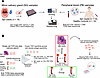
CD4+ T cells predominate lymphocytic foci found in the salivary glands (SGs) of Sjögren’s disease (SjD) cases. Yet little is known about T cell receptor (TCR) repertoire features that distinguish cases from healthy controls (HCs), the relationship between SG and peripheral blood (PB) repertoires of cases, and antigens recognized by pathogenic T cell clones. We performed deep sequencing of bulk-sorted CD4+CD45RA– PB T cells from SjD cases and matched HCs, and single-cell TCR sequencing of the same T cell population from labial SG biopsies of these cases. We found that clonally expanded SG CD4+ T cells expressed complementarity-determining region 3 (CDR3) sequences that were also detected in multiple copies in the blood of the same individuals with SjD. SjD cases displayed a “private” and restricted PB TCR repertoire with reduced clonotype diversity. We identified SjD-associated TCR motifs with the same putative antigen specificity shared between SGs and PB of cases. Their abundances in PB correlated with reduced salivary flow, linking these T cells with pathogenic disease features. Finally, we discovered 2 Ro60 epitopes eliciting an HLA-restricted immune response from expanded SG T cell clones. The comprehensive characterization of SjD TCR repertoires enables the discovery of target antigens and therapeutic strategies.
Authors
Ananth Aditya Jupudi, Michelle L. Joachims, Christina Lawrence, Charmaine Lopez-Davis, Bhuwan Khatri, Astrid Rasmussen, Kiely Grundahl, R. Hal Scofield, Judith A. James, Joel M. Guthridge, Christopher J. Lessard, Linda F. Thompson, A. Darise Farris

Abstract
Autoimmunity arises when self-reactive B and T cells target the body’s own tissues, with B cells contributing through antigen presentation as well as production of autoantibodies and proinflammatory cytokines. Genome wide association studies (GWAS) and recent identification of loss-of-function gene variants in individuals with young-onset autoimmunity have highlighted a role for protein tyrosine phosphatase nonreceptor type 2 (PTPN2) in development of autoimmunity. While prior studies have focused on the mechanism of Ptpn2 in T cells and other cell types, its function in B cells has not been explored. To test the B cell–intrinsic roles of Ptpn2, we generated a B cell–specific deletion of Ptpn2 in mice (Mb1-Cre;Ptpn2fl/fl). We found that loss of Ptpn2 in B cells promoted organ inflammation, increased the frequency of age/autoimmune-associated B cells (ABCs) and plasmablasts in the periphery, and increased circulating autoantibodies. Moreover, we found that Ptpn2 acted as a negative regulator of the JAK/STAT and TLR7 pathways in B cells. In line with this, treatment of B cells from Mb1-Cre;Ptpn2fl/fl mice with IFN-γ and TLR7 agonist lead to enhanced differentiation into ABCs. These findings highlight the critical roles of Ptpn2 in B cell function and its potential as a key regulator in preventing B cell associated autoimmunity.
Authors
Bridget N. Alexander, Soojin Kim, Kristen L. Wells, Maya J. Hunter, Kevin P. Toole, Scott M. Wemlinger, Daniel P. Regan, Andrew Getahun, Mia J. Smith
Abstract
Developing biomarkers to quantitatively monitor disease-specific T cell activity is crucial for assessing type 1 diabetes (T1D) progression and evaluating immunotherapies. This study presents an approach using V-gene targeted sequencing to quantify T cell receptor (TCR) clonotypes as biomarkers for pathogenic T cells in T1D. We identified "public" TCR clonotypes shared among multiple non-obese diabetic (NOD) mice and human organ donors, with a subset expressed exclusively by islet antigen-reactive T cells in those with T1D. Employing V-gene targeted sequencing of only TCRs containing TRAV16/16D allowed quantitative detection of the public islet antigen-reactive TCR clonotypes in peripheral blood of NOD mice. Frequencies of these public TCR clonotypes distinguished prediabetic NOD mice from those protected from diabetes. In human islets, public TCR clonotypes identical to preproinsulin-specific clones were exclusively found in T1D donors. This quantifiable TCR sequencing approach uncovered public, disease-specific clonotypes in T1D, providing biomarker candidates to monitor pathogenic T cell frequencies in blood for assessing disease activity and therapeutic response.
Authors
Laurie G. Landry, Kristen L. Wells, Amanda M. Anderson, Kristen R. Miller, Kenneth L. Jones, Aaron W. Michels, Maki Nakayama
Abstract
Uncovering the early interactions and spatial distribution of dermal fibroblasts and immune cells in treatment-naïve diffuse cutaneous systemic sclerosis (dcSSc) patients is critical to understanding the earliest events of skin fibrosis. We generated an integrated multiomic dataset of early, treatment-naïve dcSSc skin. Skin biopsies were analyzed by single-nuclei multiome sequencing (snRNA-seq and snATAC-seq) and two different spatial transcriptomic methods to comprehensively determine the molecular changes in these individuals. We identified an immunomodulatory niche within the papillary, hypodermis, and vascular regions that are enriched for activated myeloid cells and fibroblasts characterized by expression of genes such as CXCL12, APOE, and C7. Pathway analyses showed significant enrichment of PI3K-AKT-mTOR signaling pathway expression in these cellular niches, driven by profibrotic growth factor signaling networks. Macrophage subclustering showed SSc-specific macrophage activation of the IL6-JAK-STAT signaling and the enrichment of oxidative phosphorylation pathways. Ligand-receptor analysis revealed that SSc macrophages secrete PDGF and TGF-β to activate the SSc-dominant fibroblast subclusters. Spatial transcriptomic analyses showed monocyte-derived MRC1+ macrophages express PDGF near PDGFRhighTHY1high fibroblasts. Multi-omic data integration and spatial transcriptomic neighborhood analysis revealed the co-localization of fibroblasts, macrophages, and T cells around the vasculature. These data suggest that interactions between activated immune cells and immunomodulatory fibroblasts around vascular niches are an early event in scleroderma pathogenesis.
Authors
Helen C. Jarnagin, Rezvan Parvizi, Zhiyun Gong, Rosemary Gedert, Xianying Xing, Lam (Alex) C. Tsoi, Rachael Bogle, Madeline J. Morrisson, Laurent Perreard, Patricia A. Pioli, Fred Kolling IV, Johann E. Gudjonsson, Dinesh Khanna, Michael L. Whitfield
Abstract
Autoimmune diabetes encompasses rapidly progressive type 1 diabetes mellitus (T1D) and indolent latent autoimmune diabetes in adults (LADA), representing distinct inflammatory set points along a shared autoimmune spectrum. Yet the immunological mechanisms that determine these divergent inflammatory states remain unresolved. We performed single-cell RNA sequencing with paired T and B cell receptor profiling on over 400,000 peripheral blood mononuclear cells (PBMCs) from patients with LADA, newly diagnosed T1D, and healthy controls. PBMC composition was comparable across cohorts, indicating that qualitative rather than quantitative immune differences underlie disease heterogeneity. In T1D, pan-lineage activation of NF-κB, EGFR, MAPK, and hypoxia pathways, coupled with a TNF-centered communication hub, enhanced MHC signaling, and disrupted adhesion, promoted systemic inflammation. LADA, by contrast, exhibited global suppression of NF-κB/EGFR activity, retention of moderate JAK/STAT tone, reinforced natural killer cell inhibitory checkpoints via HLA-C–KIR2DL3/3DL1 interaction, and stabilized CD8⁺ T cell synapses through HLA-C–CD8 binding, collectively restraining effector activation. Single-cell V(D)J analysis revealed multiclonal, patient-unique adaptive repertoires, emphasizing the primacy of signaling context over receptor convergence. These findings define autoimmune diabetes as an inflammatory–inhibitory set-point continuum, positioning the NF-κB/EGFR–JAK/STAT gradient and HLA-C–KIR axis as potential therapeutic targets to preserve residual β-cell function.
Authors
Ivan I. Golodnikov, Elizaveta S. Podshivalova, Vadim I. Chechekhin, Anatoliy V. Zubritskiy, Alina A. Matrosova, Nikita A. Sergeev, Margarita D. Samsonova, Yaroslav V. Dvoryanchikov, Tatiana V. Nikonova, Ekaterina V. Bondarenko, Marina Yu. Loguinova, Yulia A. Medvedeva, Dmitry N. Laptev, Rita I. Khusainova, Ildar R. Minniakhmetov, Marina V. Shestakova, Natalia G. Mokrysheva, Ivan I. Dedov
Abstract
The two main subgroups of autoimmune myasthenia gravis, a neuromuscular junction disorder associated with muscle weakness, are the early and late-onset forms, defined by onset before or after 50 years of age. Both carry acetylcholine-receptor autoantibodies, but differ in sex ratios, genetics and occurrence of disease-specific thymus inflammation. By applying multimodal techniques, including deep spectral cytometric phenotyping and single cell sequencing to peripheral blood and thymic lymphocyte samples we explored the possibility to discriminate the two forms by cellular immune phenotyping. Analyzing two independent cohorts we identified distinct immunological differences driven by three main lymphocyte populations. Lower frequencies of mucosa-associated invariant T cells and naïve CD8 T cells were observed in late-onset myasthenia, suggesting enhanced immune senescence. Further, a highly differentiated, canonical natural killer cell population was reduced in early-onset myasthenia, which was negatively correlated with the degree of thymic inflammation. Using only the frequency of these three populations, correct myasthenia subgroup assignment could be predicted with an accuracy of 90%. The NK cell population negatively associated to early-onset disease had a similar association to thymic hyperlasia, whereas the two T-cell populations point to enhanced immune senescence in late-onset myasthenia gravis. These distinct immunocellular endophenotypes for early- and late onset disease suggest differences in the immunopathogenic processes. Together with demographic factors and other disease subgroup-specific features, the frequency of the identified cell subpopulations may improve clinical classification, in turn of relevance for channeling to interventions.
Authors
Jakob Theorell, Nicolas Ruffin, Andrew Fower, Chiara Sorini, Philip Ambrose, Valentina Damato, Lahiru Handunnetthi, Isabel Leite, Sarosh R. Irani, Susanna Brauner, Adam E. Handel, Fredrik Piehl
Abstract
Immune checkpoint inhibitors (ICIs) such as anti-PD-1 and anti-CTLA-4 antibodies are used to induce an immune response against many types of tumors. However, ICIs often also induce autoimmune responses, referred to as immune-related adverse events (irAEs), which occur unpredictably and at varying levels of severity in ICI-treated patients. The immunologic factors that predispose patients to the development of severe irAE are largely unclear. Here, we utilized high dimensional mass cytometry immunophenotyping of longitudinal blood samples from patients with metastatic melanoma treated with combination anti-PD-1/CTLA4 ICI therapy in the context of a clinical trial to characterize alterations in immune profiles induced by combination ICI therapy and to identify immune features associated with development of severe irAEs. Deep T cell profiling highlighted that ICI therapy induces prominent expansions of activated, CD38hi CD4+ and CD8+ T cells, which are frequently bound by the therapeutic anti-PD-1 antibody, as well as substantial changes in regulatory T cell phenotypes. However, neither the baseline frequency nor the extent of expansion of these cell populations was associated with development of severe irAEs. Rather, single cell-association testing revealed naïve CD4+ T cell abundance pre-treatment as significantly associated with the development of severe irAEs. Biaxial gating of naïve CD4+ T cells confirmed a significant positive association of naïve CD4+ T cell proportion and development of a severe irAE and with the number of irAEs developed in this cohort. Results from this broad profiling study indicate the abundance of naïve CD4+ T cells as a predictive feature for the development of severe irAEs following combination anti-PD-1/CTLA4 ICI therapy.
Authors
Kathryne E. Marks, Alice Horisberger, Mehreen Elahee, Ifeoluwakiisi A. Adejoorin, Nilasha Ghosh, Michael A. Postow, Laura Donlin, Anne R. Bass, Deepak A. Rao
Abstract
BACKGROUND. Individuals with autoimmune diseases (AD) on immunosuppressants often have suboptimal responses to COVID-19 vaccine. We evaluated the efficacy and safety of additional COVID-19 vaccines in those treated with mycophenolate mofetil/mycophenolic acid (MMF/MPA), methotrexate (MTX), and B cell-depleting therapy (BCDT), including the impact of withholding MMF/MPA and MTX. METHODS. In this open-label, multicenter, randomized trial, 22 participants taking MMF/MPA, 26 taking MTX, and 93 treated with BCDT who had suboptimal antibody responses to initial COVID-19 vaccines (2 doses of BNT162b2 or mRNA-1273 or 1 dose of AD26.COV2.S) received an additional homologous vaccine. Participants taking MMF/MPA and MTX were randomized (1:1) to continue or withhold treatment around vaccination. The primary outcome was the change in anti-Wuhan-Hu-1 receptor-binding domain (RBD) concentrations at 4 weeks post-additional vaccination. Secondary outcomes included adverse events, COVID-19 , and AD activity through 48 weeks. RESULTS. Additional vaccination increased anti-RBD concentrations in participants taking MMF/MPA and MTX , irrespective of immunosuppressant withholding. BCDT-treated participants also demonstrated increased anti-RBD concentrations, albeit lower than MMF/MPA- and MTX-treated cohorts. COVID-19 occurred in 33% of participants; infections were predominantly mild and included only three non-fatal hospitalizations. Additional vaccination was well-tolerated, with low frequencies of severe disease flares and adverse events. CONCLUSION. Additional COVID-19 vaccination is effective and safe in individuals with ADs treated with immunosuppressants, regardless of whether MMF/MPA or MTX is withheld. TRIAL REGISTRATION. ClinicalTrials.gov (NCT05000216; registered August 6, 2021: https://clinicaltrials.gov/ct2/show/NCT05000216)
Authors
Meggan Mackay, Catriona A. Wagner, Ashley Pinckney, Jeffrey A. Cohen, Zachary S. Wallace, Arezou Khosroshahi, Jeffrey A. Sparks, Sandra Lord, Amit Saxena, Roberto Caricchio, Alfred H.J. Kim, Diane L. Kamen, Fotios Koumpouras, Anca D. Askanase, Kenneth Smith, Joel M. Guthridge, Gabriel Pardo, Yang Mao-Draayer, Susan Macwana, Sean McCarthy, Matthew A. Sherman, Sanaz Daneshfar Hamrah, Maria Veri, Sarah Walker, Kate York, Sara K. Tedeschi, Jennifer Wang, Gabrielle E. Dziubla, Mike Castro, Robin Carroll, Sandeep R. Narpala, Bob C. Lin, Leonid Serebryannyy, Adrian B. McDermott, William T. Barry, Ellen Goldmuntz, James McNamara, Aimee S. Payne, Amit Bar-Or, Dinesh Khanna, Judith A. James
Abstract
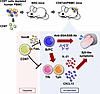
Peripheral helper T (Tph) and follicular helper T (Tfh) cells are key regulators of B cell differentiation and antibody production, making them promising targets for autoimmune disease treatment. However, their differentiation mechanisms differ significantly between humans and mice, limiting drug validation in mouse models. Here, we present a simple and effective method for in vivo proliferation of human Tph/Tfh and B cells. We discovered that after depleting CD8+ T cells of human peripheral blood mononuclear cell–transferred immunodeficient mice (CD8TΔhPBMC mice), human Tph/Tfh cells and B cells proliferated markedly in the spleen compared with those in human PBMC–transferred immunodeficient mice (hPBMC mice). Transcriptome analysis confirmed proliferating cells’ close resemblance to human Tph/Tfh cells. Furthermore, multicolor flow cytometry revealed CXCL13+ Tph cells infiltrating Sjögren’s syndrome–associated (SjS-associated) organs, such as salivary glands. Single-cell RNA sequencing identified IL-21+CXCL13+IFN-γ+ICOS+TIGIT+GPR56+ Tph cells in the salivary glands. These findings are consistent with reduced saliva volume and elevated SjS markers, such as anti-SSA antibody, in these mice, which were both ameliorated by immunosuppressants. In vitro, CD8+ T cells from hPBMC mice induced B cell apoptosis and inhibited Tph/Tfh differentiation. This model advances understanding of human Tph/Tfh cell biology and offers a valuable platform for studying SjS and therapeutic targets.
Authors
Mariam Piruzyan, Sota Fujimori, Ryota Sato, Yuki Imura, Sachiko Mochiduki, Kana Takemoto, Akiko Nishidate, Yuzo Koda
Abstract
Juvenile idiopathic arthritis (JIA) is the most prevalent chronic inflammatory arthritis of childhood, yet the spatial organization in the synovium remains poorly understood. Here, we perform subcellular-resolution spatial transcriptomic profiling of synovial tissue from patients with active JIA. We identify diverse immune and stromal cell populations and reconstruct spatially defined cellular niches. Applying a newly developed spatial colocalization analysis pipeline, we uncover microanatomical structures, including endothelial–fibroblast interactions mediated by NOTCH signalling, and a CXCL9-CXCR3 signaling axis between inflammatory macrophages and CD8+ T cells, alongside the characterization of other resident macrophage subsets. We also detect and characterize tertiary lymphoid structures marked by CXCL13-CXCR5 and CCL19-mediated signaling from Tph cells and immunoregulatory dendritic cells, analogous to those observed in other autoimmune diseases. Finally, comparative analysis with rheumatoid arthritis reveals JIA-enriched cell states, including NOTCH3+ and CXCL12+ sublining fibroblasts, suggesting potentially differential inflammatory programs in pediatric versus adult arthritis. These findings provide a spatially resolved molecular framework of JIA synovitis and introduce a generalizable computational pipeline for spatial colocalization analysis in tissue inflammation.
Authors
Jun Inamo, Roselyn Fierkens, Michael R. Clay, Anna Helena Jonsson, Clara Lin, Kari Hayes, Nathan D. Rogers, Heather Leach, Kentaro Yomogida
No posts were found with this tag.


