
Submit a comment
Abstract
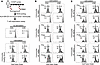
Cytotoxic chemotherapy primarily targets rapidly proliferating cancer cells but also depletes normal myeloid cells. The resulting cell loss triggers reactive myelopoiesis, a compensatory process in which hematopoietic stem and progenitor cells in the bone marrow (BM) regenerate myeloid lineages. We previously showed that the alkylating agent cyclophosphamide (CTX) induces myelopoiesis, leading to the expansion of immunosuppressive monocytes in mice. However, the molecular features and clinical relevance of these cells remain poorly understood. Here, we report the emergence of immunosuppressive monocytes in the peripheral blood of lymphoma patients receiving CTX-containing chemotherapy. To gain mechanistic insight into CTX-induced myelopoiesis, we performed single-cell RNA sequencing (scRNA-seq) and assay for transposase-accessible chromatin using sequencing (ATAC-seq) on BM monocytes from CTX-treated mice. These analyses revealed a heterogeneous monocyte population and demonstrated that CTX skews myelopoiesis toward the generation of neutrophil-like monocytes (NeuMo). Moreover, CTX-induced NeuMo cells, enriched within the CXCR4+CX3CR1– monocyte subset, exhibited potent T cell–suppressive activity. Using the NeuMo gene signature, reanalysis of public scRNA-seq datasets identified a transcriptionally similar monocyte subset in chemotherapy-treated cancer patients. Collectively, our findings suggest that the expansion of NeuMo cells following chemotherapy represents a conserved immunoregulatory feedback mechanism with potential impact on tumor response to chemoimmunotherapy.
Authors
Huidong Shi, Zhi-Chun Ding, Ogacheko D. Okoko, Xin Wang, George Zhou, Yan Ye, Md Yeashin Gazi, Caitlin Brandle, Lirong Pei, Rafal Pacholczyk, Catherine C. Hedrick, Locke J. Bryan, Gang Zhou
Guidelines
The Editorial Board will only consider comments that are deemed relevant and of interest to readers. The Journal will not post data that have not been subjected to peer review; or a comment that is essentially a reiteration of another comment.
- Comments appear on the Journal’s website and are linked from the original article’s web page.
- Authors are notified by email if their comments are posted.
- The Journal reserves the right to edit comments for length and clarity.
- No appeals will be considered.
- Comments are not indexed in PubMed.
Specific requirements
- Maximum length, 400 words
- Entered as plain text or HTML
- Author’s name and email address, to be posted with the comment
- Declaration of all potential conflicts of interest (even if these are not ultimately posted); see the Journal’s conflict-of-interest policy
- Comments may not include figures


