
Submit a comment
Abstract
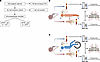
Pathologic implications of dysregulated pulmonary vascular metabolism to pulmonary arterial hypertension (PAH) are increasingly recognized, but their clinical applications have been limited. We hypothesized that metabolite quantification across the pulmonary vascular bed in connective tissue disease–associated (CTD-associated) PAH would identify transpulmonary gradients of pathobiologically relevant metabolites, in an exercise stage–specific manner. Sixty-three CTD patients with established or suspected PAH underwent exercise right heart catheterization. Using mass spectrometry–based metabolomics, metabolites were quantified in plasma samples simultaneously collected from the pulmonary and radial arteries at baseline and during resistance-free wheeling, peak exercise, and recovery. We identified uptake and excretion of metabolites across the pulmonary vascular bed, unique and distinct from single vascular site analysis. We demonstrated the physiological relevance of metabolites previously shown to promote disease in animal models and end-stage human lung tissues, including acylcarnitines, glycolytic intermediates, and tryptophan catabolites. Notably, pulmonary vascular metabolite handling was exercise stage specific. Transpulmonary metabolite gradients correlated with hemodynamic endpoints largely during free-wheeling. Glycolytic intermediates demonstrated physiologic significance at peak exercise, including net uptake of lactate in those with more advanced disease. Contribution of pulmonary vascular metabolism to CTD-PAH pathogenesis and therapeutic candidacy of metabolism modulation must be considered in the context of physiologic stress.
Authors
Michael H. Lee, Thaís C. F. Menezes, Julie A. Reisz, Francesca I. Cendali, Eloara V. M. Ferreira, Jaquelina S. Ota-Arakaki, Priscila A. Sperandio, Rahul Kumar, Claudia Mickael, Martin M. Ieong, Juliana Lucena Santos, Ana Carolina B. Duarte, Dara C. Fonseca Balladares, Kevin Nolan, Rubin M. Tuder, Paul M. Hassoun, Angelo D’Alessandro, Rudolf K. F. Oliveira, Brian B. Graham
Guidelines
The Editorial Board will only consider comments that are deemed relevant and of interest to readers. The Journal will not post data that have not been subjected to peer review; or a comment that is essentially a reiteration of another comment.
- Comments appear on the Journal’s website and are linked from the original article’s web page.
- Authors are notified by email if their comments are posted.
- The Journal reserves the right to edit comments for length and clarity.
- No appeals will be considered.
- Comments are not indexed in PubMed.
Specific requirements
- Maximum length, 400 words
- Entered as plain text or HTML
- Author’s name and email address, to be posted with the comment
- Declaration of all potential conflicts of interest (even if these are not ultimately posted); see the Journal’s conflict-of-interest policy
- Comments may not include figures


