
Research ArticleClinical ResearchImmunologyInfectious disease
Open Access |  10.1172/jci.insight.204610
A whole-blood cryopreservation method streamlines clinical sample collection for multimodal single-cell immune profiling in sepsis
Alyssa K. DuBois,1 Pierre O. Ankomah,1,2 Alexis C. Campbell,3 Renee Hua,3 Olivia K. Nelson,3 Christopher A. Zeuthen,3 M. Kartik Das,4 Shira Mann,4 Abigail Mauermann,3 Blair A. Parry,3 Nathan I. Shapiro,4 Michael R. Filbin,1,3 and Roby P. Bhattacharyya1,2
1Infectious Disease and Microbiome Program, Broad Institute, Cambridge, Massachusetts, USA.
2Division of Infectious Diseases, Department of Medicine, and
3Department of Emergency Medicine, Massachusetts General Hospital, Boston, Massachusetts, USA.
4Department of Emergency Medicine, Beth Israel Deaconess Medical Center, Boston, Massachusetts, USA.
Address correspondence to: Roby P. Bhattacharyya, 415 Main St., Rm 2073, Cambridge, Massachusetts, 02142, USA. Email: rbhatt@broadinstitute.org. Or to: Michael R. Filbin, 125 Nashua St., Rm 9226, Boston, Masscahusetts, 02114, USA. Email: mfilbin@mgh.harvard.edu.
Authorship note: AKD and POA contributed equally to this work. MRF and RPB contributed equally to this work.
Find articles by DuBois, A. in: PubMed | Google Scholar
1Infectious Disease and Microbiome Program, Broad Institute, Cambridge, Massachusetts, USA.
2Division of Infectious Diseases, Department of Medicine, and
3Department of Emergency Medicine, Massachusetts General Hospital, Boston, Massachusetts, USA.
4Department of Emergency Medicine, Beth Israel Deaconess Medical Center, Boston, Massachusetts, USA.
Address correspondence to: Roby P. Bhattacharyya, 415 Main St., Rm 2073, Cambridge, Massachusetts, 02142, USA. Email: rbhatt@broadinstitute.org. Or to: Michael R. Filbin, 125 Nashua St., Rm 9226, Boston, Masscahusetts, 02114, USA. Email: mfilbin@mgh.harvard.edu.
Authorship note: AKD and POA contributed equally to this work. MRF and RPB contributed equally to this work.
Find articles by Ankomah, P. in: PubMed | Google Scholar
1Infectious Disease and Microbiome Program, Broad Institute, Cambridge, Massachusetts, USA.
2Division of Infectious Diseases, Department of Medicine, and
3Department of Emergency Medicine, Massachusetts General Hospital, Boston, Massachusetts, USA.
4Department of Emergency Medicine, Beth Israel Deaconess Medical Center, Boston, Massachusetts, USA.
Address correspondence to: Roby P. Bhattacharyya, 415 Main St., Rm 2073, Cambridge, Massachusetts, 02142, USA. Email: rbhatt@broadinstitute.org. Or to: Michael R. Filbin, 125 Nashua St., Rm 9226, Boston, Masscahusetts, 02114, USA. Email: mfilbin@mgh.harvard.edu.
Authorship note: AKD and POA contributed equally to this work. MRF and RPB contributed equally to this work.
Find articles by Campbell, A. in: PubMed | Google Scholar
1Infectious Disease and Microbiome Program, Broad Institute, Cambridge, Massachusetts, USA.
2Division of Infectious Diseases, Department of Medicine, and
3Department of Emergency Medicine, Massachusetts General Hospital, Boston, Massachusetts, USA.
4Department of Emergency Medicine, Beth Israel Deaconess Medical Center, Boston, Massachusetts, USA.
Address correspondence to: Roby P. Bhattacharyya, 415 Main St., Rm 2073, Cambridge, Massachusetts, 02142, USA. Email: rbhatt@broadinstitute.org. Or to: Michael R. Filbin, 125 Nashua St., Rm 9226, Boston, Masscahusetts, 02114, USA. Email: mfilbin@mgh.harvard.edu.
Authorship note: AKD and POA contributed equally to this work. MRF and RPB contributed equally to this work.
Find articles by Hua, R. in: PubMed | Google Scholar
1Infectious Disease and Microbiome Program, Broad Institute, Cambridge, Massachusetts, USA.
2Division of Infectious Diseases, Department of Medicine, and
3Department of Emergency Medicine, Massachusetts General Hospital, Boston, Massachusetts, USA.
4Department of Emergency Medicine, Beth Israel Deaconess Medical Center, Boston, Massachusetts, USA.
Address correspondence to: Roby P. Bhattacharyya, 415 Main St., Rm 2073, Cambridge, Massachusetts, 02142, USA. Email: rbhatt@broadinstitute.org. Or to: Michael R. Filbin, 125 Nashua St., Rm 9226, Boston, Masscahusetts, 02114, USA. Email: mfilbin@mgh.harvard.edu.
Authorship note: AKD and POA contributed equally to this work. MRF and RPB contributed equally to this work.
Find articles by Nelson, O. in: PubMed | Google Scholar
1Infectious Disease and Microbiome Program, Broad Institute, Cambridge, Massachusetts, USA.
2Division of Infectious Diseases, Department of Medicine, and
3Department of Emergency Medicine, Massachusetts General Hospital, Boston, Massachusetts, USA.
4Department of Emergency Medicine, Beth Israel Deaconess Medical Center, Boston, Massachusetts, USA.
Address correspondence to: Roby P. Bhattacharyya, 415 Main St., Rm 2073, Cambridge, Massachusetts, 02142, USA. Email: rbhatt@broadinstitute.org. Or to: Michael R. Filbin, 125 Nashua St., Rm 9226, Boston, Masscahusetts, 02114, USA. Email: mfilbin@mgh.harvard.edu.
Authorship note: AKD and POA contributed equally to this work. MRF and RPB contributed equally to this work.
Find articles by Zeuthen, C. in: PubMed | Google Scholar
1Infectious Disease and Microbiome Program, Broad Institute, Cambridge, Massachusetts, USA.
2Division of Infectious Diseases, Department of Medicine, and
3Department of Emergency Medicine, Massachusetts General Hospital, Boston, Massachusetts, USA.
4Department of Emergency Medicine, Beth Israel Deaconess Medical Center, Boston, Massachusetts, USA.
Address correspondence to: Roby P. Bhattacharyya, 415 Main St., Rm 2073, Cambridge, Massachusetts, 02142, USA. Email: rbhatt@broadinstitute.org. Or to: Michael R. Filbin, 125 Nashua St., Rm 9226, Boston, Masscahusetts, 02114, USA. Email: mfilbin@mgh.harvard.edu.
Authorship note: AKD and POA contributed equally to this work. MRF and RPB contributed equally to this work.
Find articles by Das, M. in: PubMed | Google Scholar
1Infectious Disease and Microbiome Program, Broad Institute, Cambridge, Massachusetts, USA.
2Division of Infectious Diseases, Department of Medicine, and
3Department of Emergency Medicine, Massachusetts General Hospital, Boston, Massachusetts, USA.
4Department of Emergency Medicine, Beth Israel Deaconess Medical Center, Boston, Massachusetts, USA.
Address correspondence to: Roby P. Bhattacharyya, 415 Main St., Rm 2073, Cambridge, Massachusetts, 02142, USA. Email: rbhatt@broadinstitute.org. Or to: Michael R. Filbin, 125 Nashua St., Rm 9226, Boston, Masscahusetts, 02114, USA. Email: mfilbin@mgh.harvard.edu.
Authorship note: AKD and POA contributed equally to this work. MRF and RPB contributed equally to this work.
Find articles by Mann, S. in: PubMed | Google Scholar
1Infectious Disease and Microbiome Program, Broad Institute, Cambridge, Massachusetts, USA.
2Division of Infectious Diseases, Department of Medicine, and
3Department of Emergency Medicine, Massachusetts General Hospital, Boston, Massachusetts, USA.
4Department of Emergency Medicine, Beth Israel Deaconess Medical Center, Boston, Massachusetts, USA.
Address correspondence to: Roby P. Bhattacharyya, 415 Main St., Rm 2073, Cambridge, Massachusetts, 02142, USA. Email: rbhatt@broadinstitute.org. Or to: Michael R. Filbin, 125 Nashua St., Rm 9226, Boston, Masscahusetts, 02114, USA. Email: mfilbin@mgh.harvard.edu.
Authorship note: AKD and POA contributed equally to this work. MRF and RPB contributed equally to this work.
Find articles by Mauermann, A. in: PubMed | Google Scholar
1Infectious Disease and Microbiome Program, Broad Institute, Cambridge, Massachusetts, USA.
2Division of Infectious Diseases, Department of Medicine, and
3Department of Emergency Medicine, Massachusetts General Hospital, Boston, Massachusetts, USA.
4Department of Emergency Medicine, Beth Israel Deaconess Medical Center, Boston, Massachusetts, USA.
Address correspondence to: Roby P. Bhattacharyya, 415 Main St., Rm 2073, Cambridge, Massachusetts, 02142, USA. Email: rbhatt@broadinstitute.org. Or to: Michael R. Filbin, 125 Nashua St., Rm 9226, Boston, Masscahusetts, 02114, USA. Email: mfilbin@mgh.harvard.edu.
Authorship note: AKD and POA contributed equally to this work. MRF and RPB contributed equally to this work.
Find articles by
Parry, B.
in:
PubMed
|
Google Scholar
|

1Infectious Disease and Microbiome Program, Broad Institute, Cambridge, Massachusetts, USA.
2Division of Infectious Diseases, Department of Medicine, and
3Department of Emergency Medicine, Massachusetts General Hospital, Boston, Massachusetts, USA.
4Department of Emergency Medicine, Beth Israel Deaconess Medical Center, Boston, Massachusetts, USA.
Address correspondence to: Roby P. Bhattacharyya, 415 Main St., Rm 2073, Cambridge, Massachusetts, 02142, USA. Email: rbhatt@broadinstitute.org. Or to: Michael R. Filbin, 125 Nashua St., Rm 9226, Boston, Masscahusetts, 02114, USA. Email: mfilbin@mgh.harvard.edu.
Authorship note: AKD and POA contributed equally to this work. MRF and RPB contributed equally to this work.
Find articles by
Shapiro, N.
in:
PubMed
|
Google Scholar
|
1Infectious Disease and Microbiome Program, Broad Institute, Cambridge, Massachusetts, USA.
2Division of Infectious Diseases, Department of Medicine, and
3Department of Emergency Medicine, Massachusetts General Hospital, Boston, Massachusetts, USA.
4Department of Emergency Medicine, Beth Israel Deaconess Medical Center, Boston, Massachusetts, USA.
Address correspondence to: Roby P. Bhattacharyya, 415 Main St., Rm 2073, Cambridge, Massachusetts, 02142, USA. Email: rbhatt@broadinstitute.org. Or to: Michael R. Filbin, 125 Nashua St., Rm 9226, Boston, Masscahusetts, 02114, USA. Email: mfilbin@mgh.harvard.edu.
Authorship note: AKD and POA contributed equally to this work. MRF and RPB contributed equally to this work.
Find articles by
Filbin, M.
in:
PubMed
|
Google Scholar
|
1Infectious Disease and Microbiome Program, Broad Institute, Cambridge, Massachusetts, USA.
2Division of Infectious Diseases, Department of Medicine, and
3Department of Emergency Medicine, Massachusetts General Hospital, Boston, Massachusetts, USA.
4Department of Emergency Medicine, Beth Israel Deaconess Medical Center, Boston, Massachusetts, USA.
Address correspondence to: Roby P. Bhattacharyya, 415 Main St., Rm 2073, Cambridge, Massachusetts, 02142, USA. Email: rbhatt@broadinstitute.org. Or to: Michael R. Filbin, 125 Nashua St., Rm 9226, Boston, Masscahusetts, 02114, USA. Email: mfilbin@mgh.harvard.edu.
Authorship note: AKD and POA contributed equally to this work. MRF and RPB contributed equally to this work.
Find articles by Bhattacharyya, R. in: PubMed | Google Scholar
Published July 14, 2026 - More info
JCI Insight. 2026;11(16):e204610. https://doi.org/10.1172/jci.insight.204610.
© 2026 DuBois et al. This work is licensed under the Creative Commons Attribution 4.0 International License. To view a copy of this license, visit http://creativecommons.org/licenses/by/4.0/.

-
Results
Patients greater than 18 years of age who presented to the Emergency Departments of 2 large, academic hospitals in Boston, Massachusetts — Massachusetts General Hospital (MGH) and Beth Israel Deaconess Medical Center (BIDMC) — with clinical concern for sepsis or septic shock with associated organ dysfunction were enrolled in the study. Up to 10 mL of blood was obtained from patients and processing was initiated on site using 2 methods: (a) standard Ficoll gradient separation from whole blood by following standard procedures for isolating and freezing PBMCs (17), followed by storage at –80°C; and (b) Cryo-PRO, by immediately adding dimethyl sulfoxide (DMSO) to a final concentration of 10% (v/v) in 1 mL aliquots of fresh whole blood and freezing at –80°C. To measure potential effects of variation in processing by enrollment site, for a subset of patients, up to 20 mL of blood (separated in two 10-mL tubes) was obtained; 1 tube was immediately couriered to the other clinical site while 1 tube remained at the enrolling site. Processing at both sites using both Ficoll and Cryo-PRO began at the same time upon sample receipt at the receiving site. Blood from 1 healthy donor was obtained from Research Blood Components and processed using both methods as a reference standard. All samples were sent to the Eli and Edythe L. Broad Institute of MIT and Harvard (Broad Institute) for long-term storage at –140°C, subsequent processing, and multimodal single-cell immune profiling.
We adjudicated 23 participants based on the presence of sepsis or bacterial infection for sample processing and sequencing. Septic shock requiring vasopressors for over 24 hours was present in 15 participants (65%), sepsis without shock in 6 participants (26%), and bacterial infection not meeting Sepsis-3 criteria (18) in 2 participants (9%). Bacteremia was present in 7 (30%) of the 23 participants. The median patient age was 66 years (IQR 62.5–76.5), with 35% female. The healthy donor was a 63-year-old male.
Of the 23 included participants, 8 were processed in parallel at both sites and 15 were processed only at the site of enrollment. Patient-paired frozen Ficoll and Cryo-PRO samples were processed for single-cell analysis at the Broad Institute. Processing included a magnetic red blood cell depletion step (Cryo-PRO samples only), fluorescence-activated cell sorting to recover live PBMCs (DAPI–CD45+CD235a–CD15– cells), and a standard workflow for droplet-based single-cell RNA capture with surface proteome and TCR repertoire measurements (10X Genomics Chromium Next GEM 5′ v2 Kit with cellular indexing of transcriptional epitope sequencing [CITE-seq]) (see Methods) (19). Sample hashing was used to enable pooling of 8 samples per processing batch, and to facilitate postsequencing demultiplexing and multiplet detection. An overview of the sample collection, storage, and processing strategies is summarized in Figure 1.
 Figure 1
Overview of Ficoll and Cryo-PRO sample processing workflows. Cryo-PRO is designed to expedite sample processing at the site of collection by incorporating a whole-blood cryopreservation step (and subsequent red cell depletion step) to replace standard Ficoll processing. Blue bars denote processing done at the site of enrollment; purple bars denote processing done at a centralized laboratory and include steps up to single-cell droplet formation.
Samples processed using Cryo-PRO yield high-quality scRNA-seq and surface proteome data with minimal on-site processing time. The mean time required for complete on-site processing (from processing start time to storage at –80°C) for Ficoll samples was 2 hours and 23 minutes (SD 40 minutes), while Cryo-PRO samples required an average of 13 minutes (SD 7 minutes) (Figure 2A). The proportion of viable PBMCs recovered by either method was estimated using live/dead staining during flow cytometry sorting (Methods). The mean proportion of live (DAPI–) PBMCs (CD235a–CD15–CD45+ cells) was 96.7% (SD 3.0%) for Ficoll samples and 94.1% (SD 8.4%) for Cryo-PRO samples (Figure 2B).
 Figure 2
Processing time and quality metrics by cryopreservation method. (A) “Hands-on” time spent by operators at clinical sites to process patient samples from initiation of processing after blood draw to placing the sample in a freezer for storage. (B) Percentage of CD45+CD235a–CD15– cells staining DAPI negative on flow cytometry as an indicator of cell membrane integrity and cell viability. Box-and-whisker plots show the median (center line) and interquartile range (IQR; box); whiskers extend to the most extreme values within 1.5 times the IQR. Points represent individual samples. (C) Violin plots of RNA-seq quality metrics by method (left to right): unique genes per cell, unique molecular identifiers (UMIs) of RNA transcripts per cell, and percentage of transcripts represented by mitochondrial (Mito) genes per cell. (D) Violin plots of CITE-seq quality metrics by method: unique surface protein features (left panel) and UMIs (right panel) per cell (detected via CITE-seq). Violin plots show the distribution of each metric detected per cell; embedded box-and-whisker plots indicate the median and IQR (whiskers = 1.5 × IQR). PRO denotes Cryo-PRO. Statistical significance in A and B was assessed using a paired, 2-sided t test. ***P < 0.001. NS, not significant. According to convention in single-cell data analysis, statistical testing in C and D was not performed due to the effect of P-value inflation (51).
The Cell Ranger pipeline (10X Genomics) was used to process the raw sequencing data, and the Seurat V5 package in R (20) was used for subsequent analysis of single-cell sequencing data (see Methods). Multiplets (cells associated with more than 1 patient hashtag) were removed from analysis. We recovered an average of 2,690 (SD 950) and 2,472 (SD 918) singlet cells per sample for the Ficoll and Cryo-PRO methods, respectively (Supplemental Figure 1; supplemental material available online with this article; https://doi.org/10.1172/jci.insight.204610DS1). Because Ficoll input volumes varied and were not recorded precisely, these values are descriptive and should not be interpreted as a direct comparison of recovery efficiency between methods. Sequencing quality was assessed using the following standard metrics: (a) number of genes sequenced per cell, (b) number of unique molecular identifiers (UMIs) per cell, and (c) percentage of mitochondrial genes sequenced per cell. Higher numbers of genes per cell and UMIs per cell indicate greater per-cell transcript recovery, while a greater percentage of mitochondrial genes suggests cell damage (21). Quality metrics showed similar distributions between methods (Figure 2C). The majority of cells (97.6% from Ficoll processing and 94.4% from Cryo-PRO) passed commonly used quality thresholds (>250 genes per cell, >1,000 UMIs, and <10% mitochondrial genes) (22). Detection of antibody-derived tags (ADTs) used for CITE-seq surface proteome measurement was similar between the 2 methods (Figure 2D). Quality metrics were similar between methods at an individual-patient level (Supplemental Figure 2).
Cryo-PRO enables identification of transcriptional substates, gene expression patterns, and surface protein markers. We next assessed whether Cryo-PRO supports scRNA-seq and surface proteome datasets of sufficient quality to reproduce biologically relevant results compared to Ficoll. scRNA-seq analysis was performed separately for cells obtained from each processing method (86,083 cells for Ficoll and 79,089 cells for Cryo-PRO) to ensure independent identification of cell identity and gene expression patterns (see Methods). Clusters enriched for dead and dying cells, identified by the predominance of mitochondrial genes and poor sequencing depth, were removed from further analysis as an additional quality control measure (23). These amounted to 3,602 cells from Ficoll (4.2% of total) and 5,712 cells from Cryo-PRO (7.2% of total) (P = 0.003, paired 2-sided t test). We identified transcriptionally similar cells that expressed canonical marker genes for the major mononuclear immune cell types (i.e., T cells, B cells, natural killer cells, monocytes, and dendritic cells). Subclustering within each cell type identified higher-resolution clusters of cells with additional transcriptional similarity (i.e., cell substates, e.g., CD4+ memory T cells, naive B cells, etc.), which were classified by comparison with reference datasets (20). All the major mononuclear immune cell types, comprising a total of 17 cell substates, were identified from cells isolated using either Ficoll or Cryo-PRO, each clustered independently but projected onto a shared set of 2-dimensional uniform manifold approximation and projection (UMAP) axes for visualization (Figure 3A; see Methods).
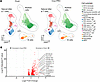 Figure 3
Comparison of cell substate identification and gene expression by method. (A) Two-dimensional uniform manifold approximation and projection (UMAP) of cells by processing method: Ficoll (left) and Cryo-PRO (right). Dotted outlines represent types of PBMCs. Cell substates were identified by clustering cells of each method independently; substate identities were then projected onto a shared set of UMAP axes (see Methods). HSPC, hematopoietic stem and progenitor cell. (B) Volcano plot showing genes differentially upregulated (positive log2[fold change]) or downregulated (negative log2[fold change]) in Ficoll compared with Cryo-PRO using pseudobulk gene expression data from all cells (see Methods). Genes with adjusted P values of less than 0.05 are shown in red; those with P < 0.05 and abs(log2[fold change]) > 1 are labeled.
Top marker genes distinguishing each cluster were identified using the FindMarkers function in Seurat (20); rank was determined by fold change in gene expression within cells of each cluster compared to the cells outside of the cluster (24) (Supplemental Table 1). The average expression of key identifying genes (Figure 4, color scale) and cell surface proteins (Figure 5, color scale) was similar between Ficoll and Cryo-PRO methods for each cell type and substate, as was the proportion of cells for which these features could be detected (Figures 4 and 5, dot size). Our analysis identified the MS1 cell substrate, which was previously discovered to be enriched in patients with sepsis (10, 25). Expression patterns for key MS1 marker genes were similar between Ficoll and Cryo-PRO samples (Supplemental Figure 3A).
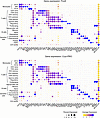 Figure 4
Dot plots of key marker genes and percent mitochondrial reads (percent.mt) for cell substates identified in scRNA-seq analysis by method (top, Ficoll; bottom, Cryo-PRO). Color represents scaled relative expression (blue = higher expression), and size represents the proportion of cells in each substate where the feature was detected.
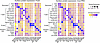 Figure 5
Dot plots of key surface marker proteins (detected using CITE-seq) for each cell substate. Color represents scaled relative expression (blue = higher expression), and size represents the proportion of cells in each substate where the feature was detected.
In an orthogonal approach, we used FindMarkers and the DESeq2 package in R to compare gene expression between all cells processed by the 2 methods to identify differentially expressed genes (Supplemental Table 2). Among statistically significant (Padj < 0.05) genes, we did not observe substantial (greater than 4) fold-change differences in expression between the 2 methods. Most genes with more than a 2-fold expression change were non-coding genes; exceptions included CXCL8, FOSB, and JUN, which were slightly upregulated in Ficoll samples (Figure 3B). Similar differentially expressed genes were identified when comparisons were performed within each major cell type (Supplemental Figure 3B), rather than across all cells. Crucially, no genes used to identify cell types were differentially expressed by more than a 2-fold change. Pathway analysis could not be performed due to the sparse number of robustly differentially expressed genes. However, immediate early genes are a class of genes commonly transiently upregulated in many types of cells as a primary response to a variety of stimuli; the presence of the immediate early genes JUN and FOSB may suggest an early response to ex vivo stimulation in Ficoll-processed cells (26, 27).
Ficoll and Cryo-PRO yield similar immune cell type and substate abundances. Defining the composition of circulating immune cells and their substates on a per-patient level is an informative application of scRNA-seq. In sepsis, heterogeneity in the distribution of immune cell types and states between patients is thought to contribute to differences in illness trajectory, outcomes, and response to therapies (28). To evaluate agreement between methods for characterizing immune cell profiles in sepsis, we computed proportions for each cell type and substate for each sample processed using both Ficoll and Cryo-PRO methods. We defined proportion of cell type as the number of cells of a particular type (e.g., B cells) divided by the number of all PBMCs combined. For cell substates, proportion was defined as the number of cells assigned to a substate divided by the total number of cells of that cell type (e.g., number of CD16+ monocytes divided by the total number of monocytes). We then compared cell type proportions between paired Ficoll and Cryo-PRO samples from each of the participants using correlations. Substate proportions were calculated for monocytes, T cells, B cells, and dendritic cells; natural killer cells did not demonstrate unique substates, and substate proportions were therefore not computed.
Proportions of cell types were significantly correlated between methods (Figure 6A), with Pearson correlations (R) ranging between 0.87 and 0.95 (P < 0.001 for all comparisons). For most substates, correlations were also positive and statistically significant (R values from 0.45 to 0.95; P < 0.05), except for γδ T cells (R = 0.28, not significant [NS]) (Figure 6, B–D, and Supplemental Figure 4). γδ T cells were present at very low counts across methods, likely increasing the effects of outliers on correlations. Within monocytes, correlations across methods were higher for CD16+ monocytes (R = 0.93, P < 0.001) than for CD14+ MS1 (R = 0.80, P < 0.001) and classical CD14+ (R = 0.79, P < 0.001). Comparison of cell substate proportions between Ficoll and Cryo-PRO at an individual-participant level showed a high degree of similarity across each of the 24 participants analyzed (Supplemental Figure 5 and Supplemental Table 3), with especially close alignment for the 15 patients whose samples were processed immediately at clinical sites (Supplemental Figure 5A).
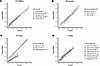 Figure 6
Correlation of cell type and substate proportions between Ficoll and Cryo-PRO methods. (A) Scatter plot of cell type proportion from Ficoll and Cryo-PRO. Each point represents the proportion of one cell type from one patient sample, as measured by each method. Each cell type is represented by a different color. Proportion is the number of cells of one cell type divided by the total number of PBMCs from that patient sample. Patient-paired Ficoll:Cryo-PRO samples are plotted to assess correlation by method for each patient. (B–D) Scatter plots of cell substate proportion from Ficoll and Cryo-PRO. Each point represents the proportion of one cell substate from one patient sample, as measured by each method. Each cell substate is represented by a different color. Proportion is the number of cells of one cell substate divided by the total number of cells from its cell type from that patient sample. Patient-paired Ficoll:Cryo-PRO samples are plotted to assess correlation in method for each patient. Trendlines indicate a linear regression fit with shaded 95% confidence intervals. Pearson’s correlations (R) are shown for all trendlines. *P < 0.05, ***P < 0.001.
To evaluate the robustness of Cryo-PRO to processing location, we assessed the technical reproducibility of scRNA-seq results for the 8 patients whose samples were processed simultaneously at MGH and BIDMC, acknowledging inherent processing delays due to sample transport between sites (see Methods). Proportions of major cell types (monocytes, B cells, and T cells) were highly correlated between sites for Ficoll (R values from 0.83 to 0.96, P < 0.001; Figure 7A) and for Cryo-PRO (R values from 0.86 to 0.99, P < 0.001; Figure 7B). Dendritic cells (Ficoll R = 0.05, Cryo-PRO R = 0.44; both NS) and natural killer cells (Ficoll R = 0.34, Cryo-PRO R = 0.72; both NS) were poorly correlated between sites, possibly due to small overall cell counts and variable yield between processing runs that exaggerate differences in cell proportions. Correlations were significant for nearly all substates of monocytes, T cells, and B cells, and dendritic cells for each method between sites (Supplemental Figure 6), although for some substates including MS1, cross-site correlations were slightly lower for Cryo-PRO than Ficoll.
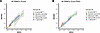 Figure 7
Between-site reproducibility of cell type proportion for samples processed at both locations. Patient-paired Ficoll:Ficoll samples (A) and Cryo-PRO:Cryo-PRO samples (B) from the 2 different enrollment sites are plotted to assess between-site technical reproducibility. Each point represents the proportion of one cell type from one patient sample, processed at each site. Each cell type is represented by a different color. Proportion is the number of cells of 1 cell type divided by the total number of PBMCs from that patient sample. Trendlines indicate a linear regression fit with shaded 95% confidence intervals. Pearson’s correlations (R) are shown for all trendlines. *P < 0.05, ** P < 0.01, ***P < 0.001.
scTCR-seq yields comparable repertoire capture from Ficoll and Cryo-PRO samples. T cell lymphopenia and altered TCR diversity are recognized features of sepsis and its recovery. Previous studies have demonstrated reduced TCR repertoire breadth early in the course of septic shock (29, 30), with persistent contraction of the repertoire associated with increased mortality, higher rates of nosocomial infection (29), and reactivation of latent viral infections such as cytomegalovirus (30). These observations underscore the clinical importance of tracking TCR repertoire dynamics in sepsis. Capturing these data alongside paired single-cell gene expression data provides valuable insight into immune dysfunction within cellular substates, as well as gene expression programs associated with changes in clonotype diversity.
To determine whether paired single-cell transcriptomic and TCR profiling are preserved with Cryo-PRO, we applied the 10X Genomics 5′ v2 Immune Profiling workflow (Methods) to matched patient samples processed using either Ficoll or Cryo-PRO. This strategy allows for joint recovery of full-length V(D)J sequences and gene expression data from the same cells. We compared TCR recovery and clonotype representation across both methods.
Among Ficoll-processed samples, we recovered TCR sequences from 21,876 cells, representing 98.6% of T cells with transcriptomic data. For Cryo-PRO samples, we recovered TCR sequences from 18,447 cells (96.5% of T cells with transcriptomic data). Expanded and unique clonotypes were represented similarly on UMAP projections of Ficoll and Cryo-PRO T cells (Figure 8). As expected, effector and cytotoxic cells (CD4+ cytotoxic T cells and CD8+ memory T cells), which expand during acute immune responses to infection (31, 32), displayed the highest levels of clonal expansion by both methods, whereas naive CD4+ and CD8+ T cell substates displayed greater sequence diversity and fewer expanded clonotypes (Figure 8).
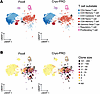 Figure 8
T cell substates and corresponding TCR repertoire clonality by method. UMAP of T cells profiled, split by method (left, Ficoll; right, Cryo-PRO). Cells are colored by (A) their cell substate, or by (B) the number of identical TCR sequences to represent clone size (darker = greater clonal expansion).
Per-patient clonotypes were generally similar between methods in the proportion of expanded clones (Supplemental Figure 7). Discrepancies in clonal proportions were generally attributable to low T cell recovery from at least one of the samples (Supplemental Figure 7). For patients with samples processed at both clinical sites, we observed similar trends, with clonal proportions closely resembling each other between processing center and method for each patient profiled (Supplemental Figure 7).
We next compared exact nucleotide sequences of the captured TCR clonotype transcripts between methods. Our expectation was that while many clonotypes could be present at very low frequencies in a given sample, expanded clonotypes would be detected at higher frequencies in both Ficoll and Cryo-PRO samples from the same patient. For each patient, we calculated the abundance of each matching unique TCR sequence as a proportion of the total TCR sequences and compared these proportions between methods and processing centers. Patient-matched Ficoll and Cryo-PRO TCR sequence proportions were positively correlated (Pearson’s R = 0.47, P < 0.001). Significant overlap was also observed between processing centers for the 8 patients processed at MGH and BIDMC, with higher cross-site reproducibility for Cryo-PRO (R = 0.79, P < 0.001) than for Ficoll (R = 0.38, P < 0.001) (Supplemental Figure 8). On a per-patient basis, method and processing center comparisons showed similar patterns, with differences likely reflecting variable T cell recovery (Supplemental Figures 9 and 10).
Ficoll and Cryo-PRO methods preserve cellular functions required for phagocytosis. Finally, we sought to measure functional activity in our cryopreserved cells. A key monocyte function is phagocytosis, which requires cells to detect the presence of a pathogen, encapsulate it inside a phagosome, and initiate microbial killing and degradation via fusion with lysosomes and subsequent exposure to hydrolytic enzymes and acidic conditions (33). Detection of phagocytosis therefore indicates coordination of cellular signaling pathways, cytoskeletal rearrangement, and functional organelles. We measured phagocytic activity in PBMCs from samples processed using Ficoll and Cryo-PRO as a means of assessing cell viability, function, and responsiveness to environmental stimuli.
Ficoll and Cryo-PRO samples (1 of each from 9 sepsis patients and 1 healthy participant) were collected, preserved, and frozen. Both sample types then underwent all of the processing steps before flow cytometry sorting, including the red blood cell depletion step for Cryo-PRO samples only (Methods). Cell suspensions were incubated with E. coli pHrodo bioparticles, which fluoresce in acidic phagolysosomes (34). After incubation, cells were fluorescently stained for viability, CD45, CD15, and CD14, and analyzed with flow cytometry.
We measured phagocytic activity as the mean fluorescence intensity (MFI) of the pHrodo bioparticles, which emit light at green (FITC) wavelengths. We first confirmed that live PBMCs (DAPI–CD45+CD15– cells) had greater pHrodo MFI upon addition of the bioparticles (Supplemental Table 4), consistent with engulfment into phagolysosomes. We next stratified the live PBMCs by CD14 expression. Assessment of control wells lacking bioparticles confirmed that fluorescent spillover from the CD14 stain did not impact the pHrodo MFI measurement (Supplemental Table 4). CD14+ monocytes are the most abundant phagocytes within PBMCs (35), and within our samples, were expected to show higher pHrodo MFI compared with the CD14– fraction, which consists primarily of lymphocytes with low phagocytic activity, but also includes CD16+ monocytes and dendritic cells (36). Accordingly, across all individuals, CD14+ PBMCs exhibited higher phagocytic signal than CD14– PBMCs using either processing method (median pHrodo MFI fold change of ~3.98 for Ficoll and ~4.72 for Cryo-PRO), despite substantial inter-individual variability (Figure 9A). The pHrodo MFI of CD14+ cells was generally higher in Ficoll than in the corresponding Cryo-PRO sample (median of 30,240 RFU across samples compared with 4,946 RFU across samples) (Figure 9B). Although the reason for this approximately 6-fold change in MFI magnitude by method is uncertain, we hypothesize that it may reflect competition for bioparticles during the incubation before flow cytometry. Due to greater carryover of additional phagocytes (e.g., granulocytes) in Cryo-PRO suspensions, such competition would reduce the effective particle-to–CD14+ cell ratio even though CD15+ granulocytes are subsequently excluded from analysis by gating. Accordingly, direct between-method comparisons of CD14+ pHrodo MFI are confounded due to differences in cellular composition during incubation, whereas the within-method contrast (CD14+ vs. CD14–) demonstrates that CD14+ PBMCs retain detectable phagocytic activity after processing by either method, with comparable increases in bead uptake over the corresponding CD14– cells.
 Figure 9
Cryo-PRO preserves phagocytic function in PBMCs. (A) Fold-change differences of pHrodo mean fluorescence intensity (MFI) between CD14+ and CD14– PBMCs for Ficoll (blue) and Cryo-PRO (yellow) samples. (B) Absolute pHrodo MFI of PBMCs, stratified by CD14+ expression (horizontal axis) and method (blue = Ficoll, yellow = Cryo-PRO). Box-and-whisker plots indicate the median and IQR (whiskers = 1.5 × IQR). Points represent individual samples. **P < 0.01 by paired, 2-sided t test. NS, not significant.


