
Research ArticleCardiologyGenetics
Open Access |  10.1172/jci.insight.204278
Progressive cardiac phenotypes and reduced reversibility from long-term CUGexp RNA expression in a DM1 mouse model
Rong-Chi Hu,1 Mohammadreza Tabary,2 Xander H.T. Wehrens,2,3 and Thomas A. Cooper1,3,4
1Department of Pathology & Immunology,
2Department of Medicine (Cardiology Section),
3Department of Integrative Physiology, and
4Department of Molecular & Cellular Biology, Baylor College of Medicine, Houston, Texas, USA.
Address correspondence to: Thomas A. Cooper, Baylor College of Medicine, Room 268B Mail Stop BCM315, One Baylor Plaza, Houston, Texas 77030, USA. Phone: 713.798.3141; Email: tcooper@bcm.edu.
Find articles by Hu, R. in: PubMed | Google Scholar
1Department of Pathology & Immunology,
2Department of Medicine (Cardiology Section),
3Department of Integrative Physiology, and
4Department of Molecular & Cellular Biology, Baylor College of Medicine, Houston, Texas, USA.
Address correspondence to: Thomas A. Cooper, Baylor College of Medicine, Room 268B Mail Stop BCM315, One Baylor Plaza, Houston, Texas 77030, USA. Phone: 713.798.3141; Email: tcooper@bcm.edu.
Find articles by Tabary, M. in: PubMed | Google Scholar
1Department of Pathology & Immunology,
2Department of Medicine (Cardiology Section),
3Department of Integrative Physiology, and
4Department of Molecular & Cellular Biology, Baylor College of Medicine, Houston, Texas, USA.
Address correspondence to: Thomas A. Cooper, Baylor College of Medicine, Room 268B Mail Stop BCM315, One Baylor Plaza, Houston, Texas 77030, USA. Phone: 713.798.3141; Email: tcooper@bcm.edu.
Find articles by
Wehrens, X.
in:
PubMed
|
Google Scholar
|

1Department of Pathology & Immunology,
2Department of Medicine (Cardiology Section),
3Department of Integrative Physiology, and
4Department of Molecular & Cellular Biology, Baylor College of Medicine, Houston, Texas, USA.
Address correspondence to: Thomas A. Cooper, Baylor College of Medicine, Room 268B Mail Stop BCM315, One Baylor Plaza, Houston, Texas 77030, USA. Phone: 713.798.3141; Email: tcooper@bcm.edu.
Find articles by
Cooper, T.
in:
PubMed
|
Google Scholar
|
Published March 19, 2026 - More info
JCI Insight. 2026;11(9):e204278. https://doi.org/10.1172/jci.insight.204278.
© 2026 Hu et al. This work is licensed under the Creative Commons Attribution 4.0 International License. To view a copy of this license, visit http://creativecommons.org/licenses/by/4.0/.
Received: January 6, 2026; Accepted: March 10, 2026

-
Results
To determine the impact of long-term CUGexp RNA expression in the presence of stable repeat length, we induced the CUGexp RNA in CUG960 mice (CUG960 +dox) on postnatal day 1 (PN1) by feeding 2 g dox/kg chow to nursing dams and kept animals on dox for 2, 8, and 14 months. To control for changes due to normal aging and potential effects caused by rtTA expression and long-term dox administration, hemizygous MHCrtTA mice were given the dox chow (MHCrtTA +dox) following the same timeline as the CUG960 +dox cohort. We performed echo in short-axis view and surface electrocardiography (ECG) on the same animals at 2, 8, and 14 months of age for both CUG960 +dox and MHCrtTA +dox cohorts. Heart tissues were collected for each time point to analyze progression of histological, cellular, and molecular changes in DM1-associated cardiac defects (Figure 1A).
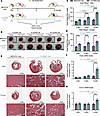 Figure 1
Long-term expression of CUGexp RNA resulted in progressive heart enlargement and cardiac fibrosis. (A) Illustration of the experimental timeline and cohorts. (B) Representative images of hearts from male and female CUG960 +dox and MHCrtTA +dox mice at 2-, 8-, and 14-month time points. Scale bars: 5 mm. The heart weight/tibia length ratio of (C) male and (D) female MHCrtTA +dox and CUG960 +dox mice at 2, 8, and 14 months of age (n ≥ 10 per time point and sex). (E) Representative images of trichrome staining from 4-chamber heart sections of CUG960 +dox and MHCrtTA +dox mice at 14 months of age. Three animals were examined per sex per group. Section thickness: 4 μm. Scale bars: 5 mm (whole-heart images) and 100 μm (zoomed-in images). (F) Postn and (G) Col1a1 mRNA levels in left ventricular tissues of CUG960 +dox and MHCrtTA +dox mice at 2, 8, and 14 months of age. Males (blue symbols) and females (purple symbols) are indicated. n = 6 per time point (3 males and 3 females). Data represent the mean ± SEM and were analyzed using 2-way ANOVA followed by Tukey’s multiple-comparison test. *P < 0.05; **P < 0.01; ***P < 0.001; ****P < 0.0001.
Long-term CUGexp RNA expression causes cardiac hypertrophy and fibrosis. As we have shown previously (32, 33), both male and female CUG960 +dox mice develop enlarged hearts and significantly increased heart weight/tibia length (HW/TL) ratios compared with MHCrtTA +dox controls after 2 months of CUGexp RNA expression (Figure 1, B–D, and Supplemental Figure 1, A and B; supplemental material available online with this article; https://doi.org/10.1172/jci.insight.204278DS1). Moreover, the HW/TL ratio of CUG960 +dox mice significantly increased from 2 to 8 months and increased further from 8 to 14 months (Figure 1, C and D), with male mice showing a larger increase than females (Supplemental Figure 1, C and D). We also observed significant increases in HW/TL ratios between 2-month and 8- or 14-month time points in male MHCrtTA +dox control mice due to aging, as expected (34). However, the increase in CUG960 +dox mice was much larger compared with the MHCrtTA +dox control cohort (Supplemental Figure 1, C and D), indicating that the increased HW/TL ratio in CUG960 +dox mice was mainly due to long-term CUGexp RNA expression rather than aging.
Myocardial fibrosis with fat infiltration as well as myocyte hypertrophy and degeneration have been identified in DM1 (23, 35, 36). Trichrome staining was performed on 4-chamber cross sections of hearts from all time points to evaluate the cardiac histopathological features of animals with long-term CUGexp RNA repeat expression in CUG960 +dox compared to MHCrtTA +dox controls. Histological analysis identified cardiac fibrosis and cardiomyocyte hypertrophy in left ventricles of CUG960 +dox mice with CUGexp RNA expression for 14 months (Figure 1E), but not in 14-month MHCrtTA +dox controls or animals expressing CUGexp RNA for 2 months or 8 months (Supplemental Figure 2). Notably, fibrosis was consistently found in males, while less consistent and prominent in females (Figure 1E). Moreover, mRNA levels of Postn and Col1a1, two fibrosis markers (37, 38), were increased in left ventricular tissues of 14-month-old male and female CUG960 +dox mice compared with MHCrtTA +dox mice, but not in 2- or 8-month-old CUG960 +dox mice (Figure 1, F and G).
Together, the data demonstrate progressive disease with long-term expression of stable CUGexp RNA in CUG960 +dox mice, including increased heart size, cardiac fibrosis, and cardiomyocyte hypertrophy compared with control aging cohorts differing only by the absence of CUGexp RNA.
Long-term CUGexp RNA expression causes an initial hypertrophic response followed by cardiac dilation and decreased cardiac function. M-mode echo showed that cardiac structural and functional parameters in CUG960 +dox mice were significantly altered compared with the MHCrtTA +dox control mice, especially at 8 and 14 months of age (Figure 2 and Supplemental Figure 3). LV wall thickness of male CUG960 +dox mice was significantly increased compared with MHCrtTA +dox controls starting at 2 months of age (Figure 2, A and B, and Supplemental Figure 3, A and B), while LV internal diameter (LVID), volume, and LV mass from male CUG960 +dox mice were significantly increased starting at 8 months (Figure 2, C–E, and Supplemental Figure 3, C and D). Ejection fraction (EF) and fractional shortening (FS) showed no significant decreases between male CUG960 +dox and MHCrtTA +dox until the 8-month time point, temporally correlating with chamber dilation (Figure 2F and Supplemental Figure 3E). Additionally, within the CUG960 +dox cohort, LV mass and LV wall thickness of the male animals significantly increased at the 8-month compared with the 2-month time point but remained constant (LV posterior wall and LV mass) or decreased (LV anterior wall) from 8 months to 14 months (Figure 2, A, B, and E, and Supplemental Figure 3, A and B), while LVID, LV volume, EF, and FS significantly and progressively worsened (Figure 2, C, D, and F, and Supplemental Figure 3, C–E).
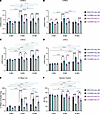 Figure 2
CUG960 +dox mice developed dilated cardiac phenotypes and impaired contractile function with long-term CUGexp RNA expression. M-mode echocardiography was performed on the same CUG960 +dox and MHCrtTA +dox mice at 2, 8, and 14 months of age to evaluate (A) left ventricle anterior wall thickness in diastole (LVAW;d), (B) left ventricle anterior wall thickness in systole (LVAW;s), (C) left ventricle internal diameter in diastole (LVID;d), (D) left ventricle internal diameter in systole (LVID;s), (E) left ventricle mass, and (F) ejection fraction (EF). Males (blue symbols) and females (purple symbols) are indicated. MHCrtTA +dox: 10 males and 9 females. CUG960 +dox: 10 males and 11 females. Data represent the mean ± SEM and were analyzed using 2-way ANOVA followed by Tukey’s multiple-comparison test. *P < 0.05; **P < 0.01; ***P < 0.001; ****P < 0.0001.
The female CUG960 +dox mice showed similar but less severe patterns in all parameters compared to males (Figure 2 and Supplemental Figure 3; significant differences between males and females are marked using purple bars). We also observed expected cardiac aging phenotypes in the MHCrtTA +dox control cohort, including increased heart size and decreased contractility (Figure 2 and Supplemental Figure 3), as described in the literature (34, 39, 40); however, the changes were notably smaller compared with those associated with long-term CUGexp RNA expression in the CUG960 +dox cohort.
Overall, these findings indicate that long-term expression of CUGexp RNA caused progressively enlarged and hypertrophic hearts in the early stage followed by features consistent with cardiac dilation that was associated with impaired contractile function. We also identified sex differences in which male CUG960 +dox mice had more severe disease progression than females.
Long-term CUGexp RNA expression results in progressive cardiac conduction defects and reduced lifespan. Consistent with our previous studies (32, 33), CUG960 +dox mice showed prolongation of QRS and QTc intervals compared with the MHCrtTA +dox controls at all 3 time points (Figure 3, A and B). Prolonged PR intervals are characteristic of DM1 conduction delays (18, 19). However, this characteristic has not been reproduced with relatively short-term CUGexp RNA expression in mouse heart models (32, 33, 41). PR intervals of CUG960 +dox mice were significantly shorter than the MHCrtTA +dox control animals at 2 months, as observed previously (32), and became significantly prolonged at 14 months (Figure 3C). Importantly, QRS, QTc, and PR intervals progressively increased in CUG960 +dox mice, but not the MHCrtTA +dox control mice (Figure 3, A–C). Moreover, the increased QRS and QTc intervals with 14-month CUGexp RNA expression were significantly longer in males than females (Figure 3, A and B).
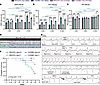 Figure 3
Long-term CUGexp RNA expression resulted in progressive prolongation of cardiac conduction intervals and increased prevalence of abnormal cardiac rhythms. Prospective measurements of (A) QRS, (B) QTc, and (C) PR intervals were determined by surface ECG recordings in CUG960 +dox and MHCrtTA +dox control mice at 2, 8, 14 months of age. Data represent the mean ± SEM and were analyzed using 2-way ANOVA followed by Tukey’s multiple-comparison test. *P < 0.05; **P < 0.01; ***P < 0.001; ****P < 0.0001. (D) Numbers of animals per sex showing intraventricular conduction delay (IVCD) on surface ECG tracings. (E) Representative ECG tracings showing arrhythmias frequently observed in the CUG960 +dox mice. Split QRS complex indicating bundle branch block and IVCD was observed in all mice shown in panels 1–5. Abnormalities include premature ventricular contraction (PVC; panels 1 and 2), sustained ventricular tachycardia (VT; panel 3), third-degree atrioventricular block (complete heart block; panel 4), and non-sustained ventricular tachycardia (NSVT; panel 5). Images were taken from lead I (left arm to right arm) after high-pass filter (cutoff frequency: 5 Hz) were applied. (F) Kaplan-Meier survival analysis showed a reduced lifespan in CUG960 +dox mice, especially in male mice with CUGexp RNA expression. The log-rank (Mantel-Cox) test showed that survival curves were significantly different, with a P value of 0.0299. MHCrtTA+dox cohort: n = 20 (11 males and 9 females). CUG960 +dox cohort: n = 21 (10 males and 11 females). Males (blue symbols) and females (purple symbols) are indicated.
In addition, the majority of CUG960 +dox mice displayed intraventricular conduction delay (IVCD), characterized by prolonged conduction intervals and/or BBB, indicating asynchronous ventricular depolarization (details in Methods; Figure 3D and Supplemental Data File 1). The prevalence of IVCDs also significantly increased throughout long-term CUGexp RNA expression in CUG960 +dox mice (Figure 3D; 11/21, 20/21 and 11/12 in CUG960 +dox mice vs. 3/20, 0/20, and 3/18 in MHCrtTA +dox controls at 2, 8, and 14 months, respectively). In addition to IVCD, several types of cardiac arrhythmias in CUG960 +dox mice were first detected at 8 months of age and with increased prevalence at 14 months, especially in males (Supplemental Figure 4 and Supplemental Data File 1). The observed arrhythmias included premature ventricular contraction (PVC), premature atrial contraction (PAC), sustained ventricular tachycardia (VT), AV block, and non-sustained ventricular tachycardia (NSVT) (Figure 3E and Supplemental Figure 4). In Figure 3E, split QRS complexes indicating IVCD are illustrated in all panels. Panels 1 and 2 show different types of PVCs that were often observed in 8- and 14-month-old CUG960 +dox mice (including bigeminy, defined as every normal heartbeat followed by a premature ventricular beat). Panel 3 demonstrates tachycardia with a wide QRS and no P wave, consistent with sustained VT. Panel 4 shows abnormal interval patterns consistent with third-degree AV block (complete heart block), including varying PR intervals yet regular PP intervals, and different QRS morphologies that could be attributed to QRS arising from junctional escape beat or ventricular escape beat. Panel 5 presents NSVT (Figure 3E).
CUG960 +dox mice with long-term CUGexp expression showed an increased prevalence of cardiac electrophysiological disorders (IVCD and/or arrhythmias; details in Methods) over time. Examples of electrophysiological disorder progression in CUG960 +dox compared with control MHCrtTA +dox mice are shown in Supplemental Figure 4 and ECG evaluations for all mice at the 3 time points are provided in Supplemental Data File 1. While MHCrtTA +dox mice showed normal ECG patterns at all 3 time points, male CUG960 +dox mouse Y668 showed IVCD with a wide S wave and a split QRS complex in leads I and II starting at 2 months of age, which progressed to other leads and developed worsening QRS prolongation and bigeminy PVC leading to sustained VT by 14 months (Supplemental Figure 4, A–C, and Supplemental Data File 1). Male Y669 presented with normal sinus rhythm at 2 months of age, had IVCD with a split QRS and frequent PACs at 8 months, and developed worsening QRS prolongation with NSVT by 14 months (Supplemental Figure 4D and Supplemental Data File 1). Female Y739 showed normal sinus rhythm, and female Y742 showed IVCD with split QRS at 2 months; both female mice presented with split QRS complexes at 8 months of age and developed frequent PVCs and NSVT by 14 months (Supplemental Figure 4, E and F, and Supplemental Data File 1).
In addition, 14-month-old male CUG960 +dox mice showed low EF, suggesting potential heart failure (Figure 2H). The observation of electrophysiological disorders and low EF with long-term CUGexp RNA expression correlated with reduced lifespan, particularly in males (Figure 3F). Taken together, progressive conduction delays and increased frequency and severity of cardiac electrophysiological disorders were identified in CUG960 +dox mice throughout long-term CUGexp RNA expression. Moreover, the observed abnormal cardiac rhythm and low contractility resulted in reduced lifespan, particularly in males, similar to the sex differences in cardiac involvement reported in DM1 (14, 17, 20).
Misregulated splicing did not worsen with long-term CUGexp RNA expression. DM1 is characterized by misregulated splicing due to the effect of CUGexp RNA on the activities of RBPs, primarily MBNL sequestration and loss of function (5, 42). The CUG960 model reproduces misregulated splicing observed in DM1 heart tissues (32, 33). To determine whether the disrupted splicing patterns show increased severity that correlate with progressive cardiac defects caused by long-term CUGexp RNA expression, 6 MBNL-dependent splicing events that are misregulated in DM1 heart tissues and the CUG960 DM1 heart mouse model were assayed for changes over the time course (32, 33, 43, 44). Due to the progressive conduction, contractility, and structural defects identified, we assayed splicing events encoding proteins that participate in ion transport (Scn5a, Ryr2, and Cacna1s) and sarcomere structure (Tnnt2, Ldb3, and Myom1). Robust misregulated splicing consistent with DM1 was observed for all 6 genes in LV tissues of CUG960 +dox mice at all 3 time points; however, we did not observe worsening of the misregulation at longer time points (Figure 4, A and B). In fact, the extent of the mis-splicing patterns for Ryr2 exon 4 and 5 (E4+5), Tnnt2 E4+5, and Ldb3 E11 was significantly less in left ventricular samples with 14 months of CUGexp RNA expression compared with earlier time points, while Scn5a E6A, Cacna1s E29, and Myom1 E18 splicing misregulation did not change with long periods of CUGexp RNA expression (Figure 4B). While not correlated with physiological phenotype progression, the lack of increased misregulated splicing is consistent with a stable CTG repeat that produces a CUGexp RNA with a constant level of MBNL sequestration and loss of function, indicating that disease progression does not require increased MBNL loss of function (see Discussion).
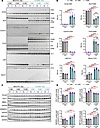 Figure 4
Splicing abnormality and most of misregulated RNA-binding proteins tested did not show progression with long-term CUGexp RNA expression. (A) Representative RT-PCR results showing alternative splicing events in left ventricles of CUG960 +dox and control MHCrtTA +dox mice at 2, 8, and 14 months of CUGexp RNA expression. (B) Quantitation of percentage spliced in (PSI) of Scn5a exon 6A (E6A), Ryr2 E4&5, Cacna1s E29, Tnnt2 E4&5, Ldb3 E11, and Myom1 E18 in ventricular tissues of CUG960 +dox and MHCrtTA +dox mice at different time points. (C) Representative Western blot images of CELF1, MBNL1, HNRNPA1, RBFOX2, GAPDH, and VINCULIN from left ventricular protein extracts. (D) Quantitation of each protein normalized to VINCULIN or GAPDH. n = 4 animals per cohort. Males (2, blue symbols) and females (2, purple symbols) are indicated. Data represent the mean ± SEM and were analyzed using 2-way ANOVA followed by Tukey’s multiple-comparison test. *P < 0.05; **P < 0.01; ***P < 0.001; ****P < 0.0001.
To determine whether reduced splicing misregulation could be caused by reduced expression of the CTG repeat transgene, we measured CUGexp RNA levels by quantitative reverse transcription PCR (RT-qPCR) analysis in CUG960 +dox LV tissues from each time point, as well as the level of rtTA protein by Western blotting. We found significant decreases in both CUGexp RNA and rtTA protein expression in the 14-month- compared with the 2-month-expression cohort (Supplemental Figure 5, A and B), suggesting that the decreased CUGexp RNA expression could be leading to a slight reversal of sensitive splicing events (see Discussion).
Expression of RBPs associated with DM1 pathogenesis is altered by CUGexp RNA expression. Several RBPs in addition to MBNL have been proposed to contribute to or modify DM1 disease severity in skeletal muscle and heart (45–47). To test the effects of long-term CUGexp RNA expression on levels of several RBPs, we isolated proteins from LV tissues of CUG960 +dox and MHCrtTA +dox cohorts that had been on dox for 2, 8, and 14 months. Similar to what has been reported in DM1 (42, 45, 46, 48, 49), protein levels of MBNL1 were significantly decreased, while those of CELF1, HNRNPA1, and RBFOX2 were significantly increased in CUG960 +dox mice compared with the MHCrtTA +dox cohort (Figure 4, C and D). However, altered protein levels of MBNL1, CELF1, and HNRNPA1 did not significantly change during prolonged CUGexp RNA expression. Interestingly, RBFOX2 protein showed a significant increase between 8 and 14 months (Figure 4, A and B).
Overall, the molecular data showed drastic splicing misregulation and altered RBP expression consistent with DM1; however, in contrast with the progression of physiological phenotypes, splicing misregulation and misregulation of the majority of RBPs were not increased by the long-term CUGexp RNA expression.
Cardiac structural and conductive defects showed reduced reversibility with long-term CUGexp RNA expression. We showed previously that turning off CUGexp RNA expression after 2 months rescues cardiac defects in the CUG960 heart model to nearly control levels, including heart weight, conduction defects, cardiac morphology, function abnormalities, and misregulated splicing (32, 33). To determine the degree of physiological and molecular rescue after long-term CUGexp RNA expression, we used 3 cohorts: CUGexp RNA expression induced on PN1 for 2 (short-term), 6 (medium-term), and 12 (long-term) months, followed by dox removal (CUG960 ±dox) to turn off CUGexp RNA expression for 2 months (Figure 5A). Two control cohorts were included: CUG960 +dox mice to compare disease phenotypes at corresponding end point ages and MHCrtTA +dox mice without CUGexp RNA expression as a baseline for each end point (Figure 5A). ECG and echo were conducted before animals were taken off dox and 2 months later to determine the level of rescue. Hearts were harvested at each end point for histological and molecular analysis (Figure 5A).
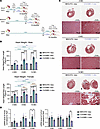 Figure 5
Heart weights and fibrosis marker expression, but not ventricular fibrosis, were rescued after stopping long-term CUGexp RNA expression for 2 months. (A) Illustration of the experimental timeline and cohorts. (B) Heart weight/tibia length measurements of male and female CUG960 +dox (teal bars) and CUG960 ±dox (purple bars) mice at 4, 8, and 14 months of age. n ≥ 4 per time point and sex. (C) Representative images of trichrome staining from 4-chamber heart sections of male MHCrtTA +dox control and CUG960 ±dox mice at 4, 8, and 14 months of age. Two animals were examined per sex per group. Section thickness: 4 μm. Scale bars: 5 mm (whole-heart images) and 100 μm (zoomed-in images). (D) Postn and Col1a1 mRNA levels in left ventricular tissues of MHCrtTA +dox, CUG960 +dox, and CUG960 ±dox mice at 4, 8, and 14 months of age. Males (blue symbols) and females (purple symbols) are indicated. n = 4 per time point (2 males and 2 females). Data represent the mean ± SEM and were analyzed using 2-way ANOVA followed by Tukey’s multiple-comparison test. *P < 0.05; **P < 0.01; ***P < 0.001; ****P < 0.0001.
In the short-term cohort, the HW/TL ratio of CUG960 ±dox was significantly rescued to the level of the MHCrtTA +dox control; however, with longer periods of CUGexp RNA expression, CUG960 ±dox female mice in particular retained a higher HW/TL ratio compared with age-matched controls (Figure 5B). As described above, fibrotic tissue was observed after 14 months of CUGexp RNA expression, particularly in males, but not in the 2- and 8-month cohorts (Figure 1E and Supplemental Figure 6). Male CUG960 ±dox mice taken off dox after 12 months of CUGexp RNA expression showed fibrotic tissue in LVs (Figure 5C). In contrast, the expression of fibrosis marker mRNAs in LV tissues of this cohort showed complete rescue (Figure 5D). This observation suggests that while molecular signaling promoting fibrosis was normalized by loss of CUGexp RNA expression, fibrotic tissues could not be cleared within the 2-month timeframe.
M-mode short-axis echo analysis showed that the majority of parameters for cardiac morphology and contractility were rescued after dox removal in short-term and medium-term cohorts, while reversibility was variable in the long-term cohort (Figure 6, A–C, and Supplemental Figure 7). To quantify and compare reversibility between the 3 cohorts, the value of CUG960 ±dox cohort at each time point was subtracted from that of the corresponding MHCrtTA +dox control cohort (Figure 6, D–F, and Supplemental Figure 7). Similar to the sex difference observed for the progression of cardiac defects, male, but not female, CUG960 ±dox mice demonstrated reduced reversibility after dox removal with increased time of CUGexp RNA expression. For example, male CUG960 ±dox mice in the long-term group displayed reduced reversal of cardiac structural parameters, including the LV wall thickness during both systolic and diastolic phases and increased LV mass (Figure 6D and Supplemental Figure 7, I–L). With regard to the variability of rescue, similar effect sizes were observed in the reversibility of the 3 groups for LVID, LV volume, EF, and FS (Figure 6, E and F, and Supplemental Figure 7, M–P).
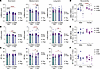 Figure 6
Reversibility of structural parameters are reduced following long-term compared with short-term CUGexp RNA expression. M-mode echocardiography was performed on CUG960 +dox (teal bars) and CUG960 ±dox (purple bars) mice with short-, medium-, and long-term expression of CUGexp RNA. Dark teal and dark purple bars show results from parallel cohorts on dox for short-, medium- or long-term that either remained on dox for 2 additional months (light teal) or were taken off dox for 2 months (light purple). Dark and light teal bars are from the same animals as are dark and light purple bars. (A) Left ventricle anterior wall thickness in diastole (LVAW; d), (B) LV internal diameter in diastole (LVID; s), and (C) ejection fraction (EF) were evaluated. M+dox indicates average values in MHCrtTA +dox controls (not expressing CUGexp RNA) at the age indicated. (D–F) Reversibility of each parameter was calculated by subtracting values of that parameter from CUG960 ±dox with averaged MHCrtTA +dox control value of the corresponding parameter and time point. n ≥ 4 per group, time point, and sex. Data represent the mean ± SEM and were analyzed using 2-way ANOVA followed by Tukey’s multiple-comparison test. *P < 0.05; **P < 0.01; ***P < 0.001; ****P < 0.0001.
ECG analysis was also conducted to determine the reversibility of cardiac conduction phenotypes induced by CUGexp RNA expression in the short-, medium-, and long-term cohorts (Figure 5A). We found that the prolonged QRS and QTc intervals of CUG960 ±dox mice were significantly improved for all 3 cohorts, comparing individual CUG960 ±dox mice just before and 2 months after dox removal (Figure 7, A and B). Moreover, the levels of improvement between the same CUG960 ±dox mice before and after dox withdrawal were comparable in short-, medium-, and long-term cohorts. However, in comparison with MHCrtTA +dox controls at corresponding time points to determine reversibility back to baseline controlled for age, male CUG960 ±dox mice with long-term CUGexp RNA expression showed significantly less reversibility of QRS and QTc prolongation than mice in short- and medium-term groups due to disease progression (Figure 7, D and E). In contrast, there was no significant difference observed between female CUG960 ±dox mice at different time points (Figure 7, D and E). Analysis of PR interval changes in the long-term CUG960 ±dox cohort compared with CUG960 +dox mice of the same time point showed significant rescue toward the intervals observed in MHCrtTA +dox control mice. While PR intervals were increased in medium-term and long-term cohorts, we were not able to use the comparison of CUG960 ±dox and MHCrtTA +dox mice to calculate reversibility (Figure 7F) because PR intervals of CUG960 +dox mice were shorter compared with MHCrtTA +dox control at 2 months of age (32) (Figure 3C and Figure 7C).
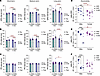 Figure 7
Reduced reversibility of prolonged conduction intervals was observed following long-term CUGexp RNA expression compared with short-term cohorts. (A) QRS intervals, (B) QTc intervals, and (C) PR intervals were determined by surface ECG recordings in CUG960 +dox (teal bars) and CUG960 ±dox (purple bars) mice at short-, medium-, and long-term CUGexp RNA expression. Dark teal and dark purple bars are from parallel cohorts on dox for short-, medium- or long-term that either remained on dox for 2 additional months (light teal) or were taken off dox for 2 months (light purple). Dark and light teal bars are from the same animals as are dark and light purple bars. The dotted lines indicate average of MHCrtTA +dox controls at the age indicated. (D–F) Reversibility of each parameter was calculated by subtracting the value of CUG960 ±dox from averaged MHCrtTA +dox control value of the corresponding parameter and time point. n ≥ 4 per group, time point, and sex. Data represent the mean ± SEM and were analyzed using 2-way ANOVA followed by Tukey’s multiple-comparison test. *P < 0.05; **P < 0.01; ***P < 0.001; ****P < 0.0001.
Moreover, the reversibility of cardiac electrophysiological disorders decreased in CUG960 ±dox mice with long-term CUGexp expression, especially in male animals, compared with the short-term cohort (Supplemental Figure 8 and Supplemental Data File 2). In the short-term cohort, 8 of 14 (3 male and 5 female) CUG960 ±dox mice showed cardiac electrophysiological disorders at 2 months of age before turning off the CUGexp RNA expression. After stopping CUGexp RNA expression for 2 months, 6 of these 8 animals showed a normal ECG pattern. Importantly, reversibility was reduced with the increased periods of CUGexp RNA expression; in the medium-term cohort, 5 (3 males and 2 female) out of the 9 (5 males and 4 females) CUG960 ±dox mice that displayed cardiac electrophysiological disorders before turning off the CUGexp RNA expression showed normal sinus rhythm 2 months after stopping CUGexp RNA expression. Reversibility decreased further in long-term cohorts, in which only 4 (1 male and 3 females) out of the 11 (6 males and 5 females) CUG960 ±dox mice that showed cardiac electrophysiological disorders were rescued after stopping the CUGexp RNA expression (Supplemental Figure 8 and Supplemental Data File 2).
Overall, the structural and electrophysiological cardiac abnormalities were rescued after cessation of CUGexp RNA expression at all time points, but the degrees of reversibility varied, with less reversibility observed with longer periods of CUGexp RNA expression, specifically in conduction delays, increased LV wall thickness and LV mass, as well as fibrotic tissue formation.
Misregulated splicing but not all misregulated RBPs were rescued to control levels in CUG960 ±dox mice with long-term CUGexp RNA expression. To determine the extent of rescue for misregulated alternative splicing and altered RBP expression induced by CUGexp RNA at different time points, we looked at the 6 splicing events and 4 RBPs assayed during the time course. RT-PCR analysis of splicing demonstrated that all misregulated splicing events were completely rescued to MHCrtTA +dox levels in all 3 cohorts (Figure 8), in contrast with the incomplete reversibility of cardiac structural and conductive abnormalities. Interestingly, the RBPs that were misregulated in the CUG960 +dox mice demonstrated different levels of reversibility after turning off CUGexp RNA expression. CELF1 upregulation was significantly reversed in CUG960 ±dox of short-, medium-, and long-term cohorts, while the reversibility in the long-term cohort was significantly less than the short-term cohorts (Supplemental Figure 9, A and B). Decreased MBNL protein levels were rescued after turning off CUGexp RNA expression in all 3 cohorts compared with corresponding CUG960 +dox controls (Supplemental Figure 9, A and C). HNRNPA1 and RBFOX2 were both significantly upregulated in CUG960 +dox mice of medium- and long-term cohorts, but these misregulated expression levels displayed different reversibility. While the level of HNRNPA1 significantly decreased after removal of dox in the long-term cohort compared with CUG960 +dox mice, there was no change observed for RBFOX2 protein expression between CUG960 +dox and ±dox mice in both medium- and long-term cohorts, indicating that removal of transgene expression did not rescue RBFOX2 misregulation within the 2-month timeframe (Supplemental Figure 9, A, D, and E).
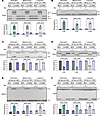 Figure 8
Misregulated splicing events in CUG960 +dox mice returned to control levels in short-, medium-, and long-term cohorts after turning off CUGexp RNA expression. Representative RT-PCR results and quantitation of percentage spliced in (PSI) for (A) Tnnt2 exons 4 and 5 (E4, 5); (B) Scn5a E6A; (C) Cacna1s E29; (D) Ryr2 E4, 5; (E) Myom1 E18; and (F) Ldb3 E11 in ventricles of control MHCrtTA +dox (gray bars), CUG960 +dox (teal bars), and ±dox (purple bars) mice at 4, 8, and 14 months of age. n = 4 animals per cohort. Males (2, blue symbols) and females (2, purple symbols) are indicated. Data represent the mean ± SEM and were analyzed using 2-way ANOVA followed by Tukey’s multiple-comparison test. ****P < 0.0001.


