
Clinical Research and Public HealthAIDS/HIVInfectious diseasePublic Health
Open Access |  10.1172/jci.insight.203645
Human antibody repertoire among kidney donors with and without HIV
Xianming Zhu,1,2 William R. Morgenlander,2 Diane M. Brown,3 Yolanda Eby,2 Megan Morsheimer,4 Jonah Odim,4 Serena M. Bagnasco,2 Meenakshi M. Rana,5 Sander S. Florman,6 Rachel J. Friedman-Moraco,7 Peter G. Stock,8 Alexander J. Gilbert,9 Shikha Mehta,10 Valentina Stosor,11 Sapna A. Mehta,12 Marcus R. Pereira,13 Catherine B. Small,14 Michele I. Morris,15 Jonathan Hand,16 Saima Aslam,17 Ghady Haidar,18 Maricar Malinis,19 Carlos A.Q. Santos,20 Joanna Schaenman,21 David Wojciechowski,22 Karthik Ranganna,23 Emily Blumberg,24 Nahel Elias,25 Josa A. Castillo-Lugo,26 Emmanouil Giorgakis,27 Senu Apewokin,28 M. Kate Grabowski,1,2 Dorry L. Segev,29,30 Andrew D. Redd,3,31 Christine M. Durand,3 H. Benjamin Larman,2 Aaron A.R. Tobian2 on behalf of the HOPE in Action investigators32
1Department of Epidemiology, Bloomberg School of Public Health,
2Department of Pathology, School of Medicine, and
3Department of Medicine, School of Medicine, The Johns Hopkins University, Baltimore, Maryland, USA.
4Division of Allergy, Immunology and Transplantation, National Institute of Allergy and Infectious Diseases, NIH, Bethesda, Maryland, USA.
5Department of Medicine, Icahn School of Medicine at Mount Sinai, New York, New York, USA.
6Recanati-Miller Transplantation Institute, The Mount Sinai Hospital, New York, New York, USA.
7Department of Medicine, Emory University, Atlanta, Georgia, USA.
8Department of Surgery, University of California, San Francisco, San Francisco, California, USA.
9Department of Medicine, Georgetown University, Washington, DC, USA.
10Department of Medicine, University of Alabama at Birmingham, Birmingham, Alabama, USA.
11Divisions of Infectious Diseases and Organ Transplantation, Northwestern University Feinberg School of Medicine, Chicago, Illinois, USA.
12New York University Langone Transplant Institute, New York, New York, USA.
13Department of Medicine, Columbia University Irving Medical Center, New York, New York, USA.
14Department of Medicine, Weill Cornell Medicine, New York, New York, USA.
15Division of Infectious Diseases, University of Miami Miller School of Medicine, Miami, Florida, USA.
16Department of Medicine, Ochsner Health, New Orleans, Louisiana, USA.
17Division of Infectious Diseases and Global Public Health, University of California, San Diego, La Jolla, California, USA.
18Department of Medicine, University of Pittsburgh, Pittsburgh, Pennsylvania, USA.
19Section of Infectious Diseases, Yale School of Medicine, New Haven, Connecticut, USA.
20Division of Infectious Diseases, Rush University Medical Center, Chicago, Illinois, USA.
21Department of Medicine, David Geffen School of Medicine, University of California, Los Angeles, Los Angeles, California, USA.
22Department of Medicine, University of Texas Southwestern Medical Center, Dallas, Texas, USA.
23Department of Medicine, Drexel University College of Medicine, Philadelphia, Pennsylvania, USA.
24Department of Medicine, Perelman School of Medicine, University of Pennsylvania, Philadelphia, Pennsylvania, USA.
25Department of Surgery, Massachusetts General Hospital, Boston, Massachusetts, USA.
26Department of Medicine, Methodist Health System Clinical Research Institute, Dallas, Texas, USA.
27Department of Surgery, University of Arkansas for Medical Sciences, Little Rock, Arkansas, USA.
28Department of Medicine, University of Cincinnati College of Medicine, Cincinnati, Ohio, USA.
29Department of Surgery and
30Department of Population Health, New York University Grossman School of Medicine, New York, New York, USA.
31Division of Intramural Research, National Institute of Allergy and Infectious Diseases, NIH, Baltimore, Maryland, USA.
32The HOPE in Action Investigators are detailed in Supplemental Acknowledgments.
Address correspondence to: Aaron A.R. Tobian, Department of Pathology, School of Medicine, Johns Hopkins University, Carnegie 437, 600 N. Wolfe St., Baltimore, Maryland 21287, USA. Phone: 443.287.0527; Email: atobian1@jhmi.edu.
Authorship note: HBL and AART contributed equally to this work.
Find articles by
Zhu, X.
in:
PubMed
|
Google Scholar
|

1Department of Epidemiology, Bloomberg School of Public Health,
2Department of Pathology, School of Medicine, and
3Department of Medicine, School of Medicine, The Johns Hopkins University, Baltimore, Maryland, USA.
4Division of Allergy, Immunology and Transplantation, National Institute of Allergy and Infectious Diseases, NIH, Bethesda, Maryland, USA.
5Department of Medicine, Icahn School of Medicine at Mount Sinai, New York, New York, USA.
6Recanati-Miller Transplantation Institute, The Mount Sinai Hospital, New York, New York, USA.
7Department of Medicine, Emory University, Atlanta, Georgia, USA.
8Department of Surgery, University of California, San Francisco, San Francisco, California, USA.
9Department of Medicine, Georgetown University, Washington, DC, USA.
10Department of Medicine, University of Alabama at Birmingham, Birmingham, Alabama, USA.
11Divisions of Infectious Diseases and Organ Transplantation, Northwestern University Feinberg School of Medicine, Chicago, Illinois, USA.
12New York University Langone Transplant Institute, New York, New York, USA.
13Department of Medicine, Columbia University Irving Medical Center, New York, New York, USA.
14Department of Medicine, Weill Cornell Medicine, New York, New York, USA.
15Division of Infectious Diseases, University of Miami Miller School of Medicine, Miami, Florida, USA.
16Department of Medicine, Ochsner Health, New Orleans, Louisiana, USA.
17Division of Infectious Diseases and Global Public Health, University of California, San Diego, La Jolla, California, USA.
18Department of Medicine, University of Pittsburgh, Pittsburgh, Pennsylvania, USA.
19Section of Infectious Diseases, Yale School of Medicine, New Haven, Connecticut, USA.
20Division of Infectious Diseases, Rush University Medical Center, Chicago, Illinois, USA.
21Department of Medicine, David Geffen School of Medicine, University of California, Los Angeles, Los Angeles, California, USA.
22Department of Medicine, University of Texas Southwestern Medical Center, Dallas, Texas, USA.
23Department of Medicine, Drexel University College of Medicine, Philadelphia, Pennsylvania, USA.
24Department of Medicine, Perelman School of Medicine, University of Pennsylvania, Philadelphia, Pennsylvania, USA.
25Department of Surgery, Massachusetts General Hospital, Boston, Massachusetts, USA.
26Department of Medicine, Methodist Health System Clinical Research Institute, Dallas, Texas, USA.
27Department of Surgery, University of Arkansas for Medical Sciences, Little Rock, Arkansas, USA.
28Department of Medicine, University of Cincinnati College of Medicine, Cincinnati, Ohio, USA.
29Department of Surgery and
30Department of Population Health, New York University Grossman School of Medicine, New York, New York, USA.
31Division of Intramural Research, National Institute of Allergy and Infectious Diseases, NIH, Baltimore, Maryland, USA.
32The HOPE in Action Investigators are detailed in Supplemental Acknowledgments.
Address correspondence to: Aaron A.R. Tobian, Department of Pathology, School of Medicine, Johns Hopkins University, Carnegie 437, 600 N. Wolfe St., Baltimore, Maryland 21287, USA. Phone: 443.287.0527; Email: atobian1@jhmi.edu.
Authorship note: HBL and AART contributed equally to this work.
Find articles by
Morgenlander, W.
in:
PubMed
|
Google Scholar
|
1Department of Epidemiology, Bloomberg School of Public Health,
2Department of Pathology, School of Medicine, and
3Department of Medicine, School of Medicine, The Johns Hopkins University, Baltimore, Maryland, USA.
4Division of Allergy, Immunology and Transplantation, National Institute of Allergy and Infectious Diseases, NIH, Bethesda, Maryland, USA.
5Department of Medicine, Icahn School of Medicine at Mount Sinai, New York, New York, USA.
6Recanati-Miller Transplantation Institute, The Mount Sinai Hospital, New York, New York, USA.
7Department of Medicine, Emory University, Atlanta, Georgia, USA.
8Department of Surgery, University of California, San Francisco, San Francisco, California, USA.
9Department of Medicine, Georgetown University, Washington, DC, USA.
10Department of Medicine, University of Alabama at Birmingham, Birmingham, Alabama, USA.
11Divisions of Infectious Diseases and Organ Transplantation, Northwestern University Feinberg School of Medicine, Chicago, Illinois, USA.
12New York University Langone Transplant Institute, New York, New York, USA.
13Department of Medicine, Columbia University Irving Medical Center, New York, New York, USA.
14Department of Medicine, Weill Cornell Medicine, New York, New York, USA.
15Division of Infectious Diseases, University of Miami Miller School of Medicine, Miami, Florida, USA.
16Department of Medicine, Ochsner Health, New Orleans, Louisiana, USA.
17Division of Infectious Diseases and Global Public Health, University of California, San Diego, La Jolla, California, USA.
18Department of Medicine, University of Pittsburgh, Pittsburgh, Pennsylvania, USA.
19Section of Infectious Diseases, Yale School of Medicine, New Haven, Connecticut, USA.
20Division of Infectious Diseases, Rush University Medical Center, Chicago, Illinois, USA.
21Department of Medicine, David Geffen School of Medicine, University of California, Los Angeles, Los Angeles, California, USA.
22Department of Medicine, University of Texas Southwestern Medical Center, Dallas, Texas, USA.
23Department of Medicine, Drexel University College of Medicine, Philadelphia, Pennsylvania, USA.
24Department of Medicine, Perelman School of Medicine, University of Pennsylvania, Philadelphia, Pennsylvania, USA.
25Department of Surgery, Massachusetts General Hospital, Boston, Massachusetts, USA.
26Department of Medicine, Methodist Health System Clinical Research Institute, Dallas, Texas, USA.
27Department of Surgery, University of Arkansas for Medical Sciences, Little Rock, Arkansas, USA.
28Department of Medicine, University of Cincinnati College of Medicine, Cincinnati, Ohio, USA.
29Department of Surgery and
30Department of Population Health, New York University Grossman School of Medicine, New York, New York, USA.
31Division of Intramural Research, National Institute of Allergy and Infectious Diseases, NIH, Baltimore, Maryland, USA.
32The HOPE in Action Investigators are detailed in Supplemental Acknowledgments.
Address correspondence to: Aaron A.R. Tobian, Department of Pathology, School of Medicine, Johns Hopkins University, Carnegie 437, 600 N. Wolfe St., Baltimore, Maryland 21287, USA. Phone: 443.287.0527; Email: atobian1@jhmi.edu.
Authorship note: HBL and AART contributed equally to this work.
Find articles by Brown, D. in: PubMed | Google Scholar
1Department of Epidemiology, Bloomberg School of Public Health,
2Department of Pathology, School of Medicine, and
3Department of Medicine, School of Medicine, The Johns Hopkins University, Baltimore, Maryland, USA.
4Division of Allergy, Immunology and Transplantation, National Institute of Allergy and Infectious Diseases, NIH, Bethesda, Maryland, USA.
5Department of Medicine, Icahn School of Medicine at Mount Sinai, New York, New York, USA.
6Recanati-Miller Transplantation Institute, The Mount Sinai Hospital, New York, New York, USA.
7Department of Medicine, Emory University, Atlanta, Georgia, USA.
8Department of Surgery, University of California, San Francisco, San Francisco, California, USA.
9Department of Medicine, Georgetown University, Washington, DC, USA.
10Department of Medicine, University of Alabama at Birmingham, Birmingham, Alabama, USA.
11Divisions of Infectious Diseases and Organ Transplantation, Northwestern University Feinberg School of Medicine, Chicago, Illinois, USA.
12New York University Langone Transplant Institute, New York, New York, USA.
13Department of Medicine, Columbia University Irving Medical Center, New York, New York, USA.
14Department of Medicine, Weill Cornell Medicine, New York, New York, USA.
15Division of Infectious Diseases, University of Miami Miller School of Medicine, Miami, Florida, USA.
16Department of Medicine, Ochsner Health, New Orleans, Louisiana, USA.
17Division of Infectious Diseases and Global Public Health, University of California, San Diego, La Jolla, California, USA.
18Department of Medicine, University of Pittsburgh, Pittsburgh, Pennsylvania, USA.
19Section of Infectious Diseases, Yale School of Medicine, New Haven, Connecticut, USA.
20Division of Infectious Diseases, Rush University Medical Center, Chicago, Illinois, USA.
21Department of Medicine, David Geffen School of Medicine, University of California, Los Angeles, Los Angeles, California, USA.
22Department of Medicine, University of Texas Southwestern Medical Center, Dallas, Texas, USA.
23Department of Medicine, Drexel University College of Medicine, Philadelphia, Pennsylvania, USA.
24Department of Medicine, Perelman School of Medicine, University of Pennsylvania, Philadelphia, Pennsylvania, USA.
25Department of Surgery, Massachusetts General Hospital, Boston, Massachusetts, USA.
26Department of Medicine, Methodist Health System Clinical Research Institute, Dallas, Texas, USA.
27Department of Surgery, University of Arkansas for Medical Sciences, Little Rock, Arkansas, USA.
28Department of Medicine, University of Cincinnati College of Medicine, Cincinnati, Ohio, USA.
29Department of Surgery and
30Department of Population Health, New York University Grossman School of Medicine, New York, New York, USA.
31Division of Intramural Research, National Institute of Allergy and Infectious Diseases, NIH, Baltimore, Maryland, USA.
32The HOPE in Action Investigators are detailed in Supplemental Acknowledgments.
Address correspondence to: Aaron A.R. Tobian, Department of Pathology, School of Medicine, Johns Hopkins University, Carnegie 437, 600 N. Wolfe St., Baltimore, Maryland 21287, USA. Phone: 443.287.0527; Email: atobian1@jhmi.edu.
Authorship note: HBL and AART contributed equally to this work.
Find articles by Eby, Y. in: PubMed | Google Scholar
1Department of Epidemiology, Bloomberg School of Public Health,
2Department of Pathology, School of Medicine, and
3Department of Medicine, School of Medicine, The Johns Hopkins University, Baltimore, Maryland, USA.
4Division of Allergy, Immunology and Transplantation, National Institute of Allergy and Infectious Diseases, NIH, Bethesda, Maryland, USA.
5Department of Medicine, Icahn School of Medicine at Mount Sinai, New York, New York, USA.
6Recanati-Miller Transplantation Institute, The Mount Sinai Hospital, New York, New York, USA.
7Department of Medicine, Emory University, Atlanta, Georgia, USA.
8Department of Surgery, University of California, San Francisco, San Francisco, California, USA.
9Department of Medicine, Georgetown University, Washington, DC, USA.
10Department of Medicine, University of Alabama at Birmingham, Birmingham, Alabama, USA.
11Divisions of Infectious Diseases and Organ Transplantation, Northwestern University Feinberg School of Medicine, Chicago, Illinois, USA.
12New York University Langone Transplant Institute, New York, New York, USA.
13Department of Medicine, Columbia University Irving Medical Center, New York, New York, USA.
14Department of Medicine, Weill Cornell Medicine, New York, New York, USA.
15Division of Infectious Diseases, University of Miami Miller School of Medicine, Miami, Florida, USA.
16Department of Medicine, Ochsner Health, New Orleans, Louisiana, USA.
17Division of Infectious Diseases and Global Public Health, University of California, San Diego, La Jolla, California, USA.
18Department of Medicine, University of Pittsburgh, Pittsburgh, Pennsylvania, USA.
19Section of Infectious Diseases, Yale School of Medicine, New Haven, Connecticut, USA.
20Division of Infectious Diseases, Rush University Medical Center, Chicago, Illinois, USA.
21Department of Medicine, David Geffen School of Medicine, University of California, Los Angeles, Los Angeles, California, USA.
22Department of Medicine, University of Texas Southwestern Medical Center, Dallas, Texas, USA.
23Department of Medicine, Drexel University College of Medicine, Philadelphia, Pennsylvania, USA.
24Department of Medicine, Perelman School of Medicine, University of Pennsylvania, Philadelphia, Pennsylvania, USA.
25Department of Surgery, Massachusetts General Hospital, Boston, Massachusetts, USA.
26Department of Medicine, Methodist Health System Clinical Research Institute, Dallas, Texas, USA.
27Department of Surgery, University of Arkansas for Medical Sciences, Little Rock, Arkansas, USA.
28Department of Medicine, University of Cincinnati College of Medicine, Cincinnati, Ohio, USA.
29Department of Surgery and
30Department of Population Health, New York University Grossman School of Medicine, New York, New York, USA.
31Division of Intramural Research, National Institute of Allergy and Infectious Diseases, NIH, Baltimore, Maryland, USA.
32The HOPE in Action Investigators are detailed in Supplemental Acknowledgments.
Address correspondence to: Aaron A.R. Tobian, Department of Pathology, School of Medicine, Johns Hopkins University, Carnegie 437, 600 N. Wolfe St., Baltimore, Maryland 21287, USA. Phone: 443.287.0527; Email: atobian1@jhmi.edu.
Authorship note: HBL and AART contributed equally to this work.
Find articles by Morsheimer, M. in: PubMed | Google Scholar
1Department of Epidemiology, Bloomberg School of Public Health,
2Department of Pathology, School of Medicine, and
3Department of Medicine, School of Medicine, The Johns Hopkins University, Baltimore, Maryland, USA.
4Division of Allergy, Immunology and Transplantation, National Institute of Allergy and Infectious Diseases, NIH, Bethesda, Maryland, USA.
5Department of Medicine, Icahn School of Medicine at Mount Sinai, New York, New York, USA.
6Recanati-Miller Transplantation Institute, The Mount Sinai Hospital, New York, New York, USA.
7Department of Medicine, Emory University, Atlanta, Georgia, USA.
8Department of Surgery, University of California, San Francisco, San Francisco, California, USA.
9Department of Medicine, Georgetown University, Washington, DC, USA.
10Department of Medicine, University of Alabama at Birmingham, Birmingham, Alabama, USA.
11Divisions of Infectious Diseases and Organ Transplantation, Northwestern University Feinberg School of Medicine, Chicago, Illinois, USA.
12New York University Langone Transplant Institute, New York, New York, USA.
13Department of Medicine, Columbia University Irving Medical Center, New York, New York, USA.
14Department of Medicine, Weill Cornell Medicine, New York, New York, USA.
15Division of Infectious Diseases, University of Miami Miller School of Medicine, Miami, Florida, USA.
16Department of Medicine, Ochsner Health, New Orleans, Louisiana, USA.
17Division of Infectious Diseases and Global Public Health, University of California, San Diego, La Jolla, California, USA.
18Department of Medicine, University of Pittsburgh, Pittsburgh, Pennsylvania, USA.
19Section of Infectious Diseases, Yale School of Medicine, New Haven, Connecticut, USA.
20Division of Infectious Diseases, Rush University Medical Center, Chicago, Illinois, USA.
21Department of Medicine, David Geffen School of Medicine, University of California, Los Angeles, Los Angeles, California, USA.
22Department of Medicine, University of Texas Southwestern Medical Center, Dallas, Texas, USA.
23Department of Medicine, Drexel University College of Medicine, Philadelphia, Pennsylvania, USA.
24Department of Medicine, Perelman School of Medicine, University of Pennsylvania, Philadelphia, Pennsylvania, USA.
25Department of Surgery, Massachusetts General Hospital, Boston, Massachusetts, USA.
26Department of Medicine, Methodist Health System Clinical Research Institute, Dallas, Texas, USA.
27Department of Surgery, University of Arkansas for Medical Sciences, Little Rock, Arkansas, USA.
28Department of Medicine, University of Cincinnati College of Medicine, Cincinnati, Ohio, USA.
29Department of Surgery and
30Department of Population Health, New York University Grossman School of Medicine, New York, New York, USA.
31Division of Intramural Research, National Institute of Allergy and Infectious Diseases, NIH, Baltimore, Maryland, USA.
32The HOPE in Action Investigators are detailed in Supplemental Acknowledgments.
Address correspondence to: Aaron A.R. Tobian, Department of Pathology, School of Medicine, Johns Hopkins University, Carnegie 437, 600 N. Wolfe St., Baltimore, Maryland 21287, USA. Phone: 443.287.0527; Email: atobian1@jhmi.edu.
Authorship note: HBL and AART contributed equally to this work.
Find articles by Odim, J. in: PubMed | Google Scholar
1Department of Epidemiology, Bloomberg School of Public Health,
2Department of Pathology, School of Medicine, and
3Department of Medicine, School of Medicine, The Johns Hopkins University, Baltimore, Maryland, USA.
4Division of Allergy, Immunology and Transplantation, National Institute of Allergy and Infectious Diseases, NIH, Bethesda, Maryland, USA.
5Department of Medicine, Icahn School of Medicine at Mount Sinai, New York, New York, USA.
6Recanati-Miller Transplantation Institute, The Mount Sinai Hospital, New York, New York, USA.
7Department of Medicine, Emory University, Atlanta, Georgia, USA.
8Department of Surgery, University of California, San Francisco, San Francisco, California, USA.
9Department of Medicine, Georgetown University, Washington, DC, USA.
10Department of Medicine, University of Alabama at Birmingham, Birmingham, Alabama, USA.
11Divisions of Infectious Diseases and Organ Transplantation, Northwestern University Feinberg School of Medicine, Chicago, Illinois, USA.
12New York University Langone Transplant Institute, New York, New York, USA.
13Department of Medicine, Columbia University Irving Medical Center, New York, New York, USA.
14Department of Medicine, Weill Cornell Medicine, New York, New York, USA.
15Division of Infectious Diseases, University of Miami Miller School of Medicine, Miami, Florida, USA.
16Department of Medicine, Ochsner Health, New Orleans, Louisiana, USA.
17Division of Infectious Diseases and Global Public Health, University of California, San Diego, La Jolla, California, USA.
18Department of Medicine, University of Pittsburgh, Pittsburgh, Pennsylvania, USA.
19Section of Infectious Diseases, Yale School of Medicine, New Haven, Connecticut, USA.
20Division of Infectious Diseases, Rush University Medical Center, Chicago, Illinois, USA.
21Department of Medicine, David Geffen School of Medicine, University of California, Los Angeles, Los Angeles, California, USA.
22Department of Medicine, University of Texas Southwestern Medical Center, Dallas, Texas, USA.
23Department of Medicine, Drexel University College of Medicine, Philadelphia, Pennsylvania, USA.
24Department of Medicine, Perelman School of Medicine, University of Pennsylvania, Philadelphia, Pennsylvania, USA.
25Department of Surgery, Massachusetts General Hospital, Boston, Massachusetts, USA.
26Department of Medicine, Methodist Health System Clinical Research Institute, Dallas, Texas, USA.
27Department of Surgery, University of Arkansas for Medical Sciences, Little Rock, Arkansas, USA.
28Department of Medicine, University of Cincinnati College of Medicine, Cincinnati, Ohio, USA.
29Department of Surgery and
30Department of Population Health, New York University Grossman School of Medicine, New York, New York, USA.
31Division of Intramural Research, National Institute of Allergy and Infectious Diseases, NIH, Baltimore, Maryland, USA.
32The HOPE in Action Investigators are detailed in Supplemental Acknowledgments.
Address correspondence to: Aaron A.R. Tobian, Department of Pathology, School of Medicine, Johns Hopkins University, Carnegie 437, 600 N. Wolfe St., Baltimore, Maryland 21287, USA. Phone: 443.287.0527; Email: atobian1@jhmi.edu.
Authorship note: HBL and AART contributed equally to this work.
Find articles by Bagnasco, S. in: PubMed | Google Scholar
1Department of Epidemiology, Bloomberg School of Public Health,
2Department of Pathology, School of Medicine, and
3Department of Medicine, School of Medicine, The Johns Hopkins University, Baltimore, Maryland, USA.
4Division of Allergy, Immunology and Transplantation, National Institute of Allergy and Infectious Diseases, NIH, Bethesda, Maryland, USA.
5Department of Medicine, Icahn School of Medicine at Mount Sinai, New York, New York, USA.
6Recanati-Miller Transplantation Institute, The Mount Sinai Hospital, New York, New York, USA.
7Department of Medicine, Emory University, Atlanta, Georgia, USA.
8Department of Surgery, University of California, San Francisco, San Francisco, California, USA.
9Department of Medicine, Georgetown University, Washington, DC, USA.
10Department of Medicine, University of Alabama at Birmingham, Birmingham, Alabama, USA.
11Divisions of Infectious Diseases and Organ Transplantation, Northwestern University Feinberg School of Medicine, Chicago, Illinois, USA.
12New York University Langone Transplant Institute, New York, New York, USA.
13Department of Medicine, Columbia University Irving Medical Center, New York, New York, USA.
14Department of Medicine, Weill Cornell Medicine, New York, New York, USA.
15Division of Infectious Diseases, University of Miami Miller School of Medicine, Miami, Florida, USA.
16Department of Medicine, Ochsner Health, New Orleans, Louisiana, USA.
17Division of Infectious Diseases and Global Public Health, University of California, San Diego, La Jolla, California, USA.
18Department of Medicine, University of Pittsburgh, Pittsburgh, Pennsylvania, USA.
19Section of Infectious Diseases, Yale School of Medicine, New Haven, Connecticut, USA.
20Division of Infectious Diseases, Rush University Medical Center, Chicago, Illinois, USA.
21Department of Medicine, David Geffen School of Medicine, University of California, Los Angeles, Los Angeles, California, USA.
22Department of Medicine, University of Texas Southwestern Medical Center, Dallas, Texas, USA.
23Department of Medicine, Drexel University College of Medicine, Philadelphia, Pennsylvania, USA.
24Department of Medicine, Perelman School of Medicine, University of Pennsylvania, Philadelphia, Pennsylvania, USA.
25Department of Surgery, Massachusetts General Hospital, Boston, Massachusetts, USA.
26Department of Medicine, Methodist Health System Clinical Research Institute, Dallas, Texas, USA.
27Department of Surgery, University of Arkansas for Medical Sciences, Little Rock, Arkansas, USA.
28Department of Medicine, University of Cincinnati College of Medicine, Cincinnati, Ohio, USA.
29Department of Surgery and
30Department of Population Health, New York University Grossman School of Medicine, New York, New York, USA.
31Division of Intramural Research, National Institute of Allergy and Infectious Diseases, NIH, Baltimore, Maryland, USA.
32The HOPE in Action Investigators are detailed in Supplemental Acknowledgments.
Address correspondence to: Aaron A.R. Tobian, Department of Pathology, School of Medicine, Johns Hopkins University, Carnegie 437, 600 N. Wolfe St., Baltimore, Maryland 21287, USA. Phone: 443.287.0527; Email: atobian1@jhmi.edu.
Authorship note: HBL and AART contributed equally to this work.
Find articles by
Rana, M.
in:
PubMed
|
Google Scholar
|
1Department of Epidemiology, Bloomberg School of Public Health,
2Department of Pathology, School of Medicine, and
3Department of Medicine, School of Medicine, The Johns Hopkins University, Baltimore, Maryland, USA.
4Division of Allergy, Immunology and Transplantation, National Institute of Allergy and Infectious Diseases, NIH, Bethesda, Maryland, USA.
5Department of Medicine, Icahn School of Medicine at Mount Sinai, New York, New York, USA.
6Recanati-Miller Transplantation Institute, The Mount Sinai Hospital, New York, New York, USA.
7Department of Medicine, Emory University, Atlanta, Georgia, USA.
8Department of Surgery, University of California, San Francisco, San Francisco, California, USA.
9Department of Medicine, Georgetown University, Washington, DC, USA.
10Department of Medicine, University of Alabama at Birmingham, Birmingham, Alabama, USA.
11Divisions of Infectious Diseases and Organ Transplantation, Northwestern University Feinberg School of Medicine, Chicago, Illinois, USA.
12New York University Langone Transplant Institute, New York, New York, USA.
13Department of Medicine, Columbia University Irving Medical Center, New York, New York, USA.
14Department of Medicine, Weill Cornell Medicine, New York, New York, USA.
15Division of Infectious Diseases, University of Miami Miller School of Medicine, Miami, Florida, USA.
16Department of Medicine, Ochsner Health, New Orleans, Louisiana, USA.
17Division of Infectious Diseases and Global Public Health, University of California, San Diego, La Jolla, California, USA.
18Department of Medicine, University of Pittsburgh, Pittsburgh, Pennsylvania, USA.
19Section of Infectious Diseases, Yale School of Medicine, New Haven, Connecticut, USA.
20Division of Infectious Diseases, Rush University Medical Center, Chicago, Illinois, USA.
21Department of Medicine, David Geffen School of Medicine, University of California, Los Angeles, Los Angeles, California, USA.
22Department of Medicine, University of Texas Southwestern Medical Center, Dallas, Texas, USA.
23Department of Medicine, Drexel University College of Medicine, Philadelphia, Pennsylvania, USA.
24Department of Medicine, Perelman School of Medicine, University of Pennsylvania, Philadelphia, Pennsylvania, USA.
25Department of Surgery, Massachusetts General Hospital, Boston, Massachusetts, USA.
26Department of Medicine, Methodist Health System Clinical Research Institute, Dallas, Texas, USA.
27Department of Surgery, University of Arkansas for Medical Sciences, Little Rock, Arkansas, USA.
28Department of Medicine, University of Cincinnati College of Medicine, Cincinnati, Ohio, USA.
29Department of Surgery and
30Department of Population Health, New York University Grossman School of Medicine, New York, New York, USA.
31Division of Intramural Research, National Institute of Allergy and Infectious Diseases, NIH, Baltimore, Maryland, USA.
32The HOPE in Action Investigators are detailed in Supplemental Acknowledgments.
Address correspondence to: Aaron A.R. Tobian, Department of Pathology, School of Medicine, Johns Hopkins University, Carnegie 437, 600 N. Wolfe St., Baltimore, Maryland 21287, USA. Phone: 443.287.0527; Email: atobian1@jhmi.edu.
Authorship note: HBL and AART contributed equally to this work.
Find articles by Florman, S. in: PubMed | Google Scholar
1Department of Epidemiology, Bloomberg School of Public Health,
2Department of Pathology, School of Medicine, and
3Department of Medicine, School of Medicine, The Johns Hopkins University, Baltimore, Maryland, USA.
4Division of Allergy, Immunology and Transplantation, National Institute of Allergy and Infectious Diseases, NIH, Bethesda, Maryland, USA.
5Department of Medicine, Icahn School of Medicine at Mount Sinai, New York, New York, USA.
6Recanati-Miller Transplantation Institute, The Mount Sinai Hospital, New York, New York, USA.
7Department of Medicine, Emory University, Atlanta, Georgia, USA.
8Department of Surgery, University of California, San Francisco, San Francisco, California, USA.
9Department of Medicine, Georgetown University, Washington, DC, USA.
10Department of Medicine, University of Alabama at Birmingham, Birmingham, Alabama, USA.
11Divisions of Infectious Diseases and Organ Transplantation, Northwestern University Feinberg School of Medicine, Chicago, Illinois, USA.
12New York University Langone Transplant Institute, New York, New York, USA.
13Department of Medicine, Columbia University Irving Medical Center, New York, New York, USA.
14Department of Medicine, Weill Cornell Medicine, New York, New York, USA.
15Division of Infectious Diseases, University of Miami Miller School of Medicine, Miami, Florida, USA.
16Department of Medicine, Ochsner Health, New Orleans, Louisiana, USA.
17Division of Infectious Diseases and Global Public Health, University of California, San Diego, La Jolla, California, USA.
18Department of Medicine, University of Pittsburgh, Pittsburgh, Pennsylvania, USA.
19Section of Infectious Diseases, Yale School of Medicine, New Haven, Connecticut, USA.
20Division of Infectious Diseases, Rush University Medical Center, Chicago, Illinois, USA.
21Department of Medicine, David Geffen School of Medicine, University of California, Los Angeles, Los Angeles, California, USA.
22Department of Medicine, University of Texas Southwestern Medical Center, Dallas, Texas, USA.
23Department of Medicine, Drexel University College of Medicine, Philadelphia, Pennsylvania, USA.
24Department of Medicine, Perelman School of Medicine, University of Pennsylvania, Philadelphia, Pennsylvania, USA.
25Department of Surgery, Massachusetts General Hospital, Boston, Massachusetts, USA.
26Department of Medicine, Methodist Health System Clinical Research Institute, Dallas, Texas, USA.
27Department of Surgery, University of Arkansas for Medical Sciences, Little Rock, Arkansas, USA.
28Department of Medicine, University of Cincinnati College of Medicine, Cincinnati, Ohio, USA.
29Department of Surgery and
30Department of Population Health, New York University Grossman School of Medicine, New York, New York, USA.
31Division of Intramural Research, National Institute of Allergy and Infectious Diseases, NIH, Baltimore, Maryland, USA.
32The HOPE in Action Investigators are detailed in Supplemental Acknowledgments.
Address correspondence to: Aaron A.R. Tobian, Department of Pathology, School of Medicine, Johns Hopkins University, Carnegie 437, 600 N. Wolfe St., Baltimore, Maryland 21287, USA. Phone: 443.287.0527; Email: atobian1@jhmi.edu.
Authorship note: HBL and AART contributed equally to this work.
Find articles by Friedman-Moraco, R. in: PubMed | Google Scholar
1Department of Epidemiology, Bloomberg School of Public Health,
2Department of Pathology, School of Medicine, and
3Department of Medicine, School of Medicine, The Johns Hopkins University, Baltimore, Maryland, USA.
4Division of Allergy, Immunology and Transplantation, National Institute of Allergy and Infectious Diseases, NIH, Bethesda, Maryland, USA.
5Department of Medicine, Icahn School of Medicine at Mount Sinai, New York, New York, USA.
6Recanati-Miller Transplantation Institute, The Mount Sinai Hospital, New York, New York, USA.
7Department of Medicine, Emory University, Atlanta, Georgia, USA.
8Department of Surgery, University of California, San Francisco, San Francisco, California, USA.
9Department of Medicine, Georgetown University, Washington, DC, USA.
10Department of Medicine, University of Alabama at Birmingham, Birmingham, Alabama, USA.
11Divisions of Infectious Diseases and Organ Transplantation, Northwestern University Feinberg School of Medicine, Chicago, Illinois, USA.
12New York University Langone Transplant Institute, New York, New York, USA.
13Department of Medicine, Columbia University Irving Medical Center, New York, New York, USA.
14Department of Medicine, Weill Cornell Medicine, New York, New York, USA.
15Division of Infectious Diseases, University of Miami Miller School of Medicine, Miami, Florida, USA.
16Department of Medicine, Ochsner Health, New Orleans, Louisiana, USA.
17Division of Infectious Diseases and Global Public Health, University of California, San Diego, La Jolla, California, USA.
18Department of Medicine, University of Pittsburgh, Pittsburgh, Pennsylvania, USA.
19Section of Infectious Diseases, Yale School of Medicine, New Haven, Connecticut, USA.
20Division of Infectious Diseases, Rush University Medical Center, Chicago, Illinois, USA.
21Department of Medicine, David Geffen School of Medicine, University of California, Los Angeles, Los Angeles, California, USA.
22Department of Medicine, University of Texas Southwestern Medical Center, Dallas, Texas, USA.
23Department of Medicine, Drexel University College of Medicine, Philadelphia, Pennsylvania, USA.
24Department of Medicine, Perelman School of Medicine, University of Pennsylvania, Philadelphia, Pennsylvania, USA.
25Department of Surgery, Massachusetts General Hospital, Boston, Massachusetts, USA.
26Department of Medicine, Methodist Health System Clinical Research Institute, Dallas, Texas, USA.
27Department of Surgery, University of Arkansas for Medical Sciences, Little Rock, Arkansas, USA.
28Department of Medicine, University of Cincinnati College of Medicine, Cincinnati, Ohio, USA.
29Department of Surgery and
30Department of Population Health, New York University Grossman School of Medicine, New York, New York, USA.
31Division of Intramural Research, National Institute of Allergy and Infectious Diseases, NIH, Baltimore, Maryland, USA.
32The HOPE in Action Investigators are detailed in Supplemental Acknowledgments.
Address correspondence to: Aaron A.R. Tobian, Department of Pathology, School of Medicine, Johns Hopkins University, Carnegie 437, 600 N. Wolfe St., Baltimore, Maryland 21287, USA. Phone: 443.287.0527; Email: atobian1@jhmi.edu.
Authorship note: HBL and AART contributed equally to this work.
Find articles by
Stock, P.
in:
PubMed
|
Google Scholar
|
1Department of Epidemiology, Bloomberg School of Public Health,
2Department of Pathology, School of Medicine, and
3Department of Medicine, School of Medicine, The Johns Hopkins University, Baltimore, Maryland, USA.
4Division of Allergy, Immunology and Transplantation, National Institute of Allergy and Infectious Diseases, NIH, Bethesda, Maryland, USA.
5Department of Medicine, Icahn School of Medicine at Mount Sinai, New York, New York, USA.
6Recanati-Miller Transplantation Institute, The Mount Sinai Hospital, New York, New York, USA.
7Department of Medicine, Emory University, Atlanta, Georgia, USA.
8Department of Surgery, University of California, San Francisco, San Francisco, California, USA.
9Department of Medicine, Georgetown University, Washington, DC, USA.
10Department of Medicine, University of Alabama at Birmingham, Birmingham, Alabama, USA.
11Divisions of Infectious Diseases and Organ Transplantation, Northwestern University Feinberg School of Medicine, Chicago, Illinois, USA.
12New York University Langone Transplant Institute, New York, New York, USA.
13Department of Medicine, Columbia University Irving Medical Center, New York, New York, USA.
14Department of Medicine, Weill Cornell Medicine, New York, New York, USA.
15Division of Infectious Diseases, University of Miami Miller School of Medicine, Miami, Florida, USA.
16Department of Medicine, Ochsner Health, New Orleans, Louisiana, USA.
17Division of Infectious Diseases and Global Public Health, University of California, San Diego, La Jolla, California, USA.
18Department of Medicine, University of Pittsburgh, Pittsburgh, Pennsylvania, USA.
19Section of Infectious Diseases, Yale School of Medicine, New Haven, Connecticut, USA.
20Division of Infectious Diseases, Rush University Medical Center, Chicago, Illinois, USA.
21Department of Medicine, David Geffen School of Medicine, University of California, Los Angeles, Los Angeles, California, USA.
22Department of Medicine, University of Texas Southwestern Medical Center, Dallas, Texas, USA.
23Department of Medicine, Drexel University College of Medicine, Philadelphia, Pennsylvania, USA.
24Department of Medicine, Perelman School of Medicine, University of Pennsylvania, Philadelphia, Pennsylvania, USA.
25Department of Surgery, Massachusetts General Hospital, Boston, Massachusetts, USA.
26Department of Medicine, Methodist Health System Clinical Research Institute, Dallas, Texas, USA.
27Department of Surgery, University of Arkansas for Medical Sciences, Little Rock, Arkansas, USA.
28Department of Medicine, University of Cincinnati College of Medicine, Cincinnati, Ohio, USA.
29Department of Surgery and
30Department of Population Health, New York University Grossman School of Medicine, New York, New York, USA.
31Division of Intramural Research, National Institute of Allergy and Infectious Diseases, NIH, Baltimore, Maryland, USA.
32The HOPE in Action Investigators are detailed in Supplemental Acknowledgments.
Address correspondence to: Aaron A.R. Tobian, Department of Pathology, School of Medicine, Johns Hopkins University, Carnegie 437, 600 N. Wolfe St., Baltimore, Maryland 21287, USA. Phone: 443.287.0527; Email: atobian1@jhmi.edu.
Authorship note: HBL and AART contributed equally to this work.
Find articles by
Gilbert, A.
in:
PubMed
|
Google Scholar
|
1Department of Epidemiology, Bloomberg School of Public Health,
2Department of Pathology, School of Medicine, and
3Department of Medicine, School of Medicine, The Johns Hopkins University, Baltimore, Maryland, USA.
4Division of Allergy, Immunology and Transplantation, National Institute of Allergy and Infectious Diseases, NIH, Bethesda, Maryland, USA.
5Department of Medicine, Icahn School of Medicine at Mount Sinai, New York, New York, USA.
6Recanati-Miller Transplantation Institute, The Mount Sinai Hospital, New York, New York, USA.
7Department of Medicine, Emory University, Atlanta, Georgia, USA.
8Department of Surgery, University of California, San Francisco, San Francisco, California, USA.
9Department of Medicine, Georgetown University, Washington, DC, USA.
10Department of Medicine, University of Alabama at Birmingham, Birmingham, Alabama, USA.
11Divisions of Infectious Diseases and Organ Transplantation, Northwestern University Feinberg School of Medicine, Chicago, Illinois, USA.
12New York University Langone Transplant Institute, New York, New York, USA.
13Department of Medicine, Columbia University Irving Medical Center, New York, New York, USA.
14Department of Medicine, Weill Cornell Medicine, New York, New York, USA.
15Division of Infectious Diseases, University of Miami Miller School of Medicine, Miami, Florida, USA.
16Department of Medicine, Ochsner Health, New Orleans, Louisiana, USA.
17Division of Infectious Diseases and Global Public Health, University of California, San Diego, La Jolla, California, USA.
18Department of Medicine, University of Pittsburgh, Pittsburgh, Pennsylvania, USA.
19Section of Infectious Diseases, Yale School of Medicine, New Haven, Connecticut, USA.
20Division of Infectious Diseases, Rush University Medical Center, Chicago, Illinois, USA.
21Department of Medicine, David Geffen School of Medicine, University of California, Los Angeles, Los Angeles, California, USA.
22Department of Medicine, University of Texas Southwestern Medical Center, Dallas, Texas, USA.
23Department of Medicine, Drexel University College of Medicine, Philadelphia, Pennsylvania, USA.
24Department of Medicine, Perelman School of Medicine, University of Pennsylvania, Philadelphia, Pennsylvania, USA.
25Department of Surgery, Massachusetts General Hospital, Boston, Massachusetts, USA.
26Department of Medicine, Methodist Health System Clinical Research Institute, Dallas, Texas, USA.
27Department of Surgery, University of Arkansas for Medical Sciences, Little Rock, Arkansas, USA.
28Department of Medicine, University of Cincinnati College of Medicine, Cincinnati, Ohio, USA.
29Department of Surgery and
30Department of Population Health, New York University Grossman School of Medicine, New York, New York, USA.
31Division of Intramural Research, National Institute of Allergy and Infectious Diseases, NIH, Baltimore, Maryland, USA.
32The HOPE in Action Investigators are detailed in Supplemental Acknowledgments.
Address correspondence to: Aaron A.R. Tobian, Department of Pathology, School of Medicine, Johns Hopkins University, Carnegie 437, 600 N. Wolfe St., Baltimore, Maryland 21287, USA. Phone: 443.287.0527; Email: atobian1@jhmi.edu.
Authorship note: HBL and AART contributed equally to this work.
Find articles by Mehta, S. in: PubMed | Google Scholar
1Department of Epidemiology, Bloomberg School of Public Health,
2Department of Pathology, School of Medicine, and
3Department of Medicine, School of Medicine, The Johns Hopkins University, Baltimore, Maryland, USA.
4Division of Allergy, Immunology and Transplantation, National Institute of Allergy and Infectious Diseases, NIH, Bethesda, Maryland, USA.
5Department of Medicine, Icahn School of Medicine at Mount Sinai, New York, New York, USA.
6Recanati-Miller Transplantation Institute, The Mount Sinai Hospital, New York, New York, USA.
7Department of Medicine, Emory University, Atlanta, Georgia, USA.
8Department of Surgery, University of California, San Francisco, San Francisco, California, USA.
9Department of Medicine, Georgetown University, Washington, DC, USA.
10Department of Medicine, University of Alabama at Birmingham, Birmingham, Alabama, USA.
11Divisions of Infectious Diseases and Organ Transplantation, Northwestern University Feinberg School of Medicine, Chicago, Illinois, USA.
12New York University Langone Transplant Institute, New York, New York, USA.
13Department of Medicine, Columbia University Irving Medical Center, New York, New York, USA.
14Department of Medicine, Weill Cornell Medicine, New York, New York, USA.
15Division of Infectious Diseases, University of Miami Miller School of Medicine, Miami, Florida, USA.
16Department of Medicine, Ochsner Health, New Orleans, Louisiana, USA.
17Division of Infectious Diseases and Global Public Health, University of California, San Diego, La Jolla, California, USA.
18Department of Medicine, University of Pittsburgh, Pittsburgh, Pennsylvania, USA.
19Section of Infectious Diseases, Yale School of Medicine, New Haven, Connecticut, USA.
20Division of Infectious Diseases, Rush University Medical Center, Chicago, Illinois, USA.
21Department of Medicine, David Geffen School of Medicine, University of California, Los Angeles, Los Angeles, California, USA.
22Department of Medicine, University of Texas Southwestern Medical Center, Dallas, Texas, USA.
23Department of Medicine, Drexel University College of Medicine, Philadelphia, Pennsylvania, USA.
24Department of Medicine, Perelman School of Medicine, University of Pennsylvania, Philadelphia, Pennsylvania, USA.
25Department of Surgery, Massachusetts General Hospital, Boston, Massachusetts, USA.
26Department of Medicine, Methodist Health System Clinical Research Institute, Dallas, Texas, USA.
27Department of Surgery, University of Arkansas for Medical Sciences, Little Rock, Arkansas, USA.
28Department of Medicine, University of Cincinnati College of Medicine, Cincinnati, Ohio, USA.
29Department of Surgery and
30Department of Population Health, New York University Grossman School of Medicine, New York, New York, USA.
31Division of Intramural Research, National Institute of Allergy and Infectious Diseases, NIH, Baltimore, Maryland, USA.
32The HOPE in Action Investigators are detailed in Supplemental Acknowledgments.
Address correspondence to: Aaron A.R. Tobian, Department of Pathology, School of Medicine, Johns Hopkins University, Carnegie 437, 600 N. Wolfe St., Baltimore, Maryland 21287, USA. Phone: 443.287.0527; Email: atobian1@jhmi.edu.
Authorship note: HBL and AART contributed equally to this work.
Find articles by
Stosor, V.
in:
PubMed
|
Google Scholar
|
1Department of Epidemiology, Bloomberg School of Public Health,
2Department of Pathology, School of Medicine, and
3Department of Medicine, School of Medicine, The Johns Hopkins University, Baltimore, Maryland, USA.
4Division of Allergy, Immunology and Transplantation, National Institute of Allergy and Infectious Diseases, NIH, Bethesda, Maryland, USA.
5Department of Medicine, Icahn School of Medicine at Mount Sinai, New York, New York, USA.
6Recanati-Miller Transplantation Institute, The Mount Sinai Hospital, New York, New York, USA.
7Department of Medicine, Emory University, Atlanta, Georgia, USA.
8Department of Surgery, University of California, San Francisco, San Francisco, California, USA.
9Department of Medicine, Georgetown University, Washington, DC, USA.
10Department of Medicine, University of Alabama at Birmingham, Birmingham, Alabama, USA.
11Divisions of Infectious Diseases and Organ Transplantation, Northwestern University Feinberg School of Medicine, Chicago, Illinois, USA.
12New York University Langone Transplant Institute, New York, New York, USA.
13Department of Medicine, Columbia University Irving Medical Center, New York, New York, USA.
14Department of Medicine, Weill Cornell Medicine, New York, New York, USA.
15Division of Infectious Diseases, University of Miami Miller School of Medicine, Miami, Florida, USA.
16Department of Medicine, Ochsner Health, New Orleans, Louisiana, USA.
17Division of Infectious Diseases and Global Public Health, University of California, San Diego, La Jolla, California, USA.
18Department of Medicine, University of Pittsburgh, Pittsburgh, Pennsylvania, USA.
19Section of Infectious Diseases, Yale School of Medicine, New Haven, Connecticut, USA.
20Division of Infectious Diseases, Rush University Medical Center, Chicago, Illinois, USA.
21Department of Medicine, David Geffen School of Medicine, University of California, Los Angeles, Los Angeles, California, USA.
22Department of Medicine, University of Texas Southwestern Medical Center, Dallas, Texas, USA.
23Department of Medicine, Drexel University College of Medicine, Philadelphia, Pennsylvania, USA.
24Department of Medicine, Perelman School of Medicine, University of Pennsylvania, Philadelphia, Pennsylvania, USA.
25Department of Surgery, Massachusetts General Hospital, Boston, Massachusetts, USA.
26Department of Medicine, Methodist Health System Clinical Research Institute, Dallas, Texas, USA.
27Department of Surgery, University of Arkansas for Medical Sciences, Little Rock, Arkansas, USA.
28Department of Medicine, University of Cincinnati College of Medicine, Cincinnati, Ohio, USA.
29Department of Surgery and
30Department of Population Health, New York University Grossman School of Medicine, New York, New York, USA.
31Division of Intramural Research, National Institute of Allergy and Infectious Diseases, NIH, Baltimore, Maryland, USA.
32The HOPE in Action Investigators are detailed in Supplemental Acknowledgments.
Address correspondence to: Aaron A.R. Tobian, Department of Pathology, School of Medicine, Johns Hopkins University, Carnegie 437, 600 N. Wolfe St., Baltimore, Maryland 21287, USA. Phone: 443.287.0527; Email: atobian1@jhmi.edu.
Authorship note: HBL and AART contributed equally to this work.
Find articles by Mehta, S. in: PubMed | Google Scholar
1Department of Epidemiology, Bloomberg School of Public Health,
2Department of Pathology, School of Medicine, and
3Department of Medicine, School of Medicine, The Johns Hopkins University, Baltimore, Maryland, USA.
4Division of Allergy, Immunology and Transplantation, National Institute of Allergy and Infectious Diseases, NIH, Bethesda, Maryland, USA.
5Department of Medicine, Icahn School of Medicine at Mount Sinai, New York, New York, USA.
6Recanati-Miller Transplantation Institute, The Mount Sinai Hospital, New York, New York, USA.
7Department of Medicine, Emory University, Atlanta, Georgia, USA.
8Department of Surgery, University of California, San Francisco, San Francisco, California, USA.
9Department of Medicine, Georgetown University, Washington, DC, USA.
10Department of Medicine, University of Alabama at Birmingham, Birmingham, Alabama, USA.
11Divisions of Infectious Diseases and Organ Transplantation, Northwestern University Feinberg School of Medicine, Chicago, Illinois, USA.
12New York University Langone Transplant Institute, New York, New York, USA.
13Department of Medicine, Columbia University Irving Medical Center, New York, New York, USA.
14Department of Medicine, Weill Cornell Medicine, New York, New York, USA.
15Division of Infectious Diseases, University of Miami Miller School of Medicine, Miami, Florida, USA.
16Department of Medicine, Ochsner Health, New Orleans, Louisiana, USA.
17Division of Infectious Diseases and Global Public Health, University of California, San Diego, La Jolla, California, USA.
18Department of Medicine, University of Pittsburgh, Pittsburgh, Pennsylvania, USA.
19Section of Infectious Diseases, Yale School of Medicine, New Haven, Connecticut, USA.
20Division of Infectious Diseases, Rush University Medical Center, Chicago, Illinois, USA.
21Department of Medicine, David Geffen School of Medicine, University of California, Los Angeles, Los Angeles, California, USA.
22Department of Medicine, University of Texas Southwestern Medical Center, Dallas, Texas, USA.
23Department of Medicine, Drexel University College of Medicine, Philadelphia, Pennsylvania, USA.
24Department of Medicine, Perelman School of Medicine, University of Pennsylvania, Philadelphia, Pennsylvania, USA.
25Department of Surgery, Massachusetts General Hospital, Boston, Massachusetts, USA.
26Department of Medicine, Methodist Health System Clinical Research Institute, Dallas, Texas, USA.
27Department of Surgery, University of Arkansas for Medical Sciences, Little Rock, Arkansas, USA.
28Department of Medicine, University of Cincinnati College of Medicine, Cincinnati, Ohio, USA.
29Department of Surgery and
30Department of Population Health, New York University Grossman School of Medicine, New York, New York, USA.
31Division of Intramural Research, National Institute of Allergy and Infectious Diseases, NIH, Baltimore, Maryland, USA.
32The HOPE in Action Investigators are detailed in Supplemental Acknowledgments.
Address correspondence to: Aaron A.R. Tobian, Department of Pathology, School of Medicine, Johns Hopkins University, Carnegie 437, 600 N. Wolfe St., Baltimore, Maryland 21287, USA. Phone: 443.287.0527; Email: atobian1@jhmi.edu.
Authorship note: HBL and AART contributed equally to this work.
Find articles by
Pereira, M.
in:
PubMed
|
Google Scholar
|
1Department of Epidemiology, Bloomberg School of Public Health,
2Department of Pathology, School of Medicine, and
3Department of Medicine, School of Medicine, The Johns Hopkins University, Baltimore, Maryland, USA.
4Division of Allergy, Immunology and Transplantation, National Institute of Allergy and Infectious Diseases, NIH, Bethesda, Maryland, USA.
5Department of Medicine, Icahn School of Medicine at Mount Sinai, New York, New York, USA.
6Recanati-Miller Transplantation Institute, The Mount Sinai Hospital, New York, New York, USA.
7Department of Medicine, Emory University, Atlanta, Georgia, USA.
8Department of Surgery, University of California, San Francisco, San Francisco, California, USA.
9Department of Medicine, Georgetown University, Washington, DC, USA.
10Department of Medicine, University of Alabama at Birmingham, Birmingham, Alabama, USA.
11Divisions of Infectious Diseases and Organ Transplantation, Northwestern University Feinberg School of Medicine, Chicago, Illinois, USA.
12New York University Langone Transplant Institute, New York, New York, USA.
13Department of Medicine, Columbia University Irving Medical Center, New York, New York, USA.
14Department of Medicine, Weill Cornell Medicine, New York, New York, USA.
15Division of Infectious Diseases, University of Miami Miller School of Medicine, Miami, Florida, USA.
16Department of Medicine, Ochsner Health, New Orleans, Louisiana, USA.
17Division of Infectious Diseases and Global Public Health, University of California, San Diego, La Jolla, California, USA.
18Department of Medicine, University of Pittsburgh, Pittsburgh, Pennsylvania, USA.
19Section of Infectious Diseases, Yale School of Medicine, New Haven, Connecticut, USA.
20Division of Infectious Diseases, Rush University Medical Center, Chicago, Illinois, USA.
21Department of Medicine, David Geffen School of Medicine, University of California, Los Angeles, Los Angeles, California, USA.
22Department of Medicine, University of Texas Southwestern Medical Center, Dallas, Texas, USA.
23Department of Medicine, Drexel University College of Medicine, Philadelphia, Pennsylvania, USA.
24Department of Medicine, Perelman School of Medicine, University of Pennsylvania, Philadelphia, Pennsylvania, USA.
25Department of Surgery, Massachusetts General Hospital, Boston, Massachusetts, USA.
26Department of Medicine, Methodist Health System Clinical Research Institute, Dallas, Texas, USA.
27Department of Surgery, University of Arkansas for Medical Sciences, Little Rock, Arkansas, USA.
28Department of Medicine, University of Cincinnati College of Medicine, Cincinnati, Ohio, USA.
29Department of Surgery and
30Department of Population Health, New York University Grossman School of Medicine, New York, New York, USA.
31Division of Intramural Research, National Institute of Allergy and Infectious Diseases, NIH, Baltimore, Maryland, USA.
32The HOPE in Action Investigators are detailed in Supplemental Acknowledgments.
Address correspondence to: Aaron A.R. Tobian, Department of Pathology, School of Medicine, Johns Hopkins University, Carnegie 437, 600 N. Wolfe St., Baltimore, Maryland 21287, USA. Phone: 443.287.0527; Email: atobian1@jhmi.edu.
Authorship note: HBL and AART contributed equally to this work.
Find articles by Small, C. in: PubMed | Google Scholar
1Department of Epidemiology, Bloomberg School of Public Health,
2Department of Pathology, School of Medicine, and
3Department of Medicine, School of Medicine, The Johns Hopkins University, Baltimore, Maryland, USA.
4Division of Allergy, Immunology and Transplantation, National Institute of Allergy and Infectious Diseases, NIH, Bethesda, Maryland, USA.
5Department of Medicine, Icahn School of Medicine at Mount Sinai, New York, New York, USA.
6Recanati-Miller Transplantation Institute, The Mount Sinai Hospital, New York, New York, USA.
7Department of Medicine, Emory University, Atlanta, Georgia, USA.
8Department of Surgery, University of California, San Francisco, San Francisco, California, USA.
9Department of Medicine, Georgetown University, Washington, DC, USA.
10Department of Medicine, University of Alabama at Birmingham, Birmingham, Alabama, USA.
11Divisions of Infectious Diseases and Organ Transplantation, Northwestern University Feinberg School of Medicine, Chicago, Illinois, USA.
12New York University Langone Transplant Institute, New York, New York, USA.
13Department of Medicine, Columbia University Irving Medical Center, New York, New York, USA.
14Department of Medicine, Weill Cornell Medicine, New York, New York, USA.
15Division of Infectious Diseases, University of Miami Miller School of Medicine, Miami, Florida, USA.
16Department of Medicine, Ochsner Health, New Orleans, Louisiana, USA.
17Division of Infectious Diseases and Global Public Health, University of California, San Diego, La Jolla, California, USA.
18Department of Medicine, University of Pittsburgh, Pittsburgh, Pennsylvania, USA.
19Section of Infectious Diseases, Yale School of Medicine, New Haven, Connecticut, USA.
20Division of Infectious Diseases, Rush University Medical Center, Chicago, Illinois, USA.
21Department of Medicine, David Geffen School of Medicine, University of California, Los Angeles, Los Angeles, California, USA.
22Department of Medicine, University of Texas Southwestern Medical Center, Dallas, Texas, USA.
23Department of Medicine, Drexel University College of Medicine, Philadelphia, Pennsylvania, USA.
24Department of Medicine, Perelman School of Medicine, University of Pennsylvania, Philadelphia, Pennsylvania, USA.
25Department of Surgery, Massachusetts General Hospital, Boston, Massachusetts, USA.
26Department of Medicine, Methodist Health System Clinical Research Institute, Dallas, Texas, USA.
27Department of Surgery, University of Arkansas for Medical Sciences, Little Rock, Arkansas, USA.
28Department of Medicine, University of Cincinnati College of Medicine, Cincinnati, Ohio, USA.
29Department of Surgery and
30Department of Population Health, New York University Grossman School of Medicine, New York, New York, USA.
31Division of Intramural Research, National Institute of Allergy and Infectious Diseases, NIH, Baltimore, Maryland, USA.
32The HOPE in Action Investigators are detailed in Supplemental Acknowledgments.
Address correspondence to: Aaron A.R. Tobian, Department of Pathology, School of Medicine, Johns Hopkins University, Carnegie 437, 600 N. Wolfe St., Baltimore, Maryland 21287, USA. Phone: 443.287.0527; Email: atobian1@jhmi.edu.
Authorship note: HBL and AART contributed equally to this work.
Find articles by
Morris, M.
in:
PubMed
|
Google Scholar
|
1Department of Epidemiology, Bloomberg School of Public Health,
2Department of Pathology, School of Medicine, and
3Department of Medicine, School of Medicine, The Johns Hopkins University, Baltimore, Maryland, USA.
4Division of Allergy, Immunology and Transplantation, National Institute of Allergy and Infectious Diseases, NIH, Bethesda, Maryland, USA.
5Department of Medicine, Icahn School of Medicine at Mount Sinai, New York, New York, USA.
6Recanati-Miller Transplantation Institute, The Mount Sinai Hospital, New York, New York, USA.
7Department of Medicine, Emory University, Atlanta, Georgia, USA.
8Department of Surgery, University of California, San Francisco, San Francisco, California, USA.
9Department of Medicine, Georgetown University, Washington, DC, USA.
10Department of Medicine, University of Alabama at Birmingham, Birmingham, Alabama, USA.
11Divisions of Infectious Diseases and Organ Transplantation, Northwestern University Feinberg School of Medicine, Chicago, Illinois, USA.
12New York University Langone Transplant Institute, New York, New York, USA.
13Department of Medicine, Columbia University Irving Medical Center, New York, New York, USA.
14Department of Medicine, Weill Cornell Medicine, New York, New York, USA.
15Division of Infectious Diseases, University of Miami Miller School of Medicine, Miami, Florida, USA.
16Department of Medicine, Ochsner Health, New Orleans, Louisiana, USA.
17Division of Infectious Diseases and Global Public Health, University of California, San Diego, La Jolla, California, USA.
18Department of Medicine, University of Pittsburgh, Pittsburgh, Pennsylvania, USA.
19Section of Infectious Diseases, Yale School of Medicine, New Haven, Connecticut, USA.
20Division of Infectious Diseases, Rush University Medical Center, Chicago, Illinois, USA.
21Department of Medicine, David Geffen School of Medicine, University of California, Los Angeles, Los Angeles, California, USA.
22Department of Medicine, University of Texas Southwestern Medical Center, Dallas, Texas, USA.
23Department of Medicine, Drexel University College of Medicine, Philadelphia, Pennsylvania, USA.
24Department of Medicine, Perelman School of Medicine, University of Pennsylvania, Philadelphia, Pennsylvania, USA.
25Department of Surgery, Massachusetts General Hospital, Boston, Massachusetts, USA.
26Department of Medicine, Methodist Health System Clinical Research Institute, Dallas, Texas, USA.
27Department of Surgery, University of Arkansas for Medical Sciences, Little Rock, Arkansas, USA.
28Department of Medicine, University of Cincinnati College of Medicine, Cincinnati, Ohio, USA.
29Department of Surgery and
30Department of Population Health, New York University Grossman School of Medicine, New York, New York, USA.
31Division of Intramural Research, National Institute of Allergy and Infectious Diseases, NIH, Baltimore, Maryland, USA.
32The HOPE in Action Investigators are detailed in Supplemental Acknowledgments.
Address correspondence to: Aaron A.R. Tobian, Department of Pathology, School of Medicine, Johns Hopkins University, Carnegie 437, 600 N. Wolfe St., Baltimore, Maryland 21287, USA. Phone: 443.287.0527; Email: atobian1@jhmi.edu.
Authorship note: HBL and AART contributed equally to this work.
Find articles by Hand, J. in: PubMed | Google Scholar
1Department of Epidemiology, Bloomberg School of Public Health,
2Department of Pathology, School of Medicine, and
3Department of Medicine, School of Medicine, The Johns Hopkins University, Baltimore, Maryland, USA.
4Division of Allergy, Immunology and Transplantation, National Institute of Allergy and Infectious Diseases, NIH, Bethesda, Maryland, USA.
5Department of Medicine, Icahn School of Medicine at Mount Sinai, New York, New York, USA.
6Recanati-Miller Transplantation Institute, The Mount Sinai Hospital, New York, New York, USA.
7Department of Medicine, Emory University, Atlanta, Georgia, USA.
8Department of Surgery, University of California, San Francisco, San Francisco, California, USA.
9Department of Medicine, Georgetown University, Washington, DC, USA.
10Department of Medicine, University of Alabama at Birmingham, Birmingham, Alabama, USA.
11Divisions of Infectious Diseases and Organ Transplantation, Northwestern University Feinberg School of Medicine, Chicago, Illinois, USA.
12New York University Langone Transplant Institute, New York, New York, USA.
13Department of Medicine, Columbia University Irving Medical Center, New York, New York, USA.
14Department of Medicine, Weill Cornell Medicine, New York, New York, USA.
15Division of Infectious Diseases, University of Miami Miller School of Medicine, Miami, Florida, USA.
16Department of Medicine, Ochsner Health, New Orleans, Louisiana, USA.
17Division of Infectious Diseases and Global Public Health, University of California, San Diego, La Jolla, California, USA.
18Department of Medicine, University of Pittsburgh, Pittsburgh, Pennsylvania, USA.
19Section of Infectious Diseases, Yale School of Medicine, New Haven, Connecticut, USA.
20Division of Infectious Diseases, Rush University Medical Center, Chicago, Illinois, USA.
21Department of Medicine, David Geffen School of Medicine, University of California, Los Angeles, Los Angeles, California, USA.
22Department of Medicine, University of Texas Southwestern Medical Center, Dallas, Texas, USA.
23Department of Medicine, Drexel University College of Medicine, Philadelphia, Pennsylvania, USA.
24Department of Medicine, Perelman School of Medicine, University of Pennsylvania, Philadelphia, Pennsylvania, USA.
25Department of Surgery, Massachusetts General Hospital, Boston, Massachusetts, USA.
26Department of Medicine, Methodist Health System Clinical Research Institute, Dallas, Texas, USA.
27Department of Surgery, University of Arkansas for Medical Sciences, Little Rock, Arkansas, USA.
28Department of Medicine, University of Cincinnati College of Medicine, Cincinnati, Ohio, USA.
29Department of Surgery and
30Department of Population Health, New York University Grossman School of Medicine, New York, New York, USA.
31Division of Intramural Research, National Institute of Allergy and Infectious Diseases, NIH, Baltimore, Maryland, USA.
32The HOPE in Action Investigators are detailed in Supplemental Acknowledgments.
Address correspondence to: Aaron A.R. Tobian, Department of Pathology, School of Medicine, Johns Hopkins University, Carnegie 437, 600 N. Wolfe St., Baltimore, Maryland 21287, USA. Phone: 443.287.0527; Email: atobian1@jhmi.edu.
Authorship note: HBL and AART contributed equally to this work.
Find articles by Aslam, S. in: PubMed | Google Scholar
1Department of Epidemiology, Bloomberg School of Public Health,
2Department of Pathology, School of Medicine, and
3Department of Medicine, School of Medicine, The Johns Hopkins University, Baltimore, Maryland, USA.
4Division of Allergy, Immunology and Transplantation, National Institute of Allergy and Infectious Diseases, NIH, Bethesda, Maryland, USA.
5Department of Medicine, Icahn School of Medicine at Mount Sinai, New York, New York, USA.
6Recanati-Miller Transplantation Institute, The Mount Sinai Hospital, New York, New York, USA.
7Department of Medicine, Emory University, Atlanta, Georgia, USA.
8Department of Surgery, University of California, San Francisco, San Francisco, California, USA.
9Department of Medicine, Georgetown University, Washington, DC, USA.
10Department of Medicine, University of Alabama at Birmingham, Birmingham, Alabama, USA.
11Divisions of Infectious Diseases and Organ Transplantation, Northwestern University Feinberg School of Medicine, Chicago, Illinois, USA.
12New York University Langone Transplant Institute, New York, New York, USA.
13Department of Medicine, Columbia University Irving Medical Center, New York, New York, USA.
14Department of Medicine, Weill Cornell Medicine, New York, New York, USA.
15Division of Infectious Diseases, University of Miami Miller School of Medicine, Miami, Florida, USA.
16Department of Medicine, Ochsner Health, New Orleans, Louisiana, USA.
17Division of Infectious Diseases and Global Public Health, University of California, San Diego, La Jolla, California, USA.
18Department of Medicine, University of Pittsburgh, Pittsburgh, Pennsylvania, USA.
19Section of Infectious Diseases, Yale School of Medicine, New Haven, Connecticut, USA.
20Division of Infectious Diseases, Rush University Medical Center, Chicago, Illinois, USA.
21Department of Medicine, David Geffen School of Medicine, University of California, Los Angeles, Los Angeles, California, USA.
22Department of Medicine, University of Texas Southwestern Medical Center, Dallas, Texas, USA.
23Department of Medicine, Drexel University College of Medicine, Philadelphia, Pennsylvania, USA.
24Department of Medicine, Perelman School of Medicine, University of Pennsylvania, Philadelphia, Pennsylvania, USA.
25Department of Surgery, Massachusetts General Hospital, Boston, Massachusetts, USA.
26Department of Medicine, Methodist Health System Clinical Research Institute, Dallas, Texas, USA.
27Department of Surgery, University of Arkansas for Medical Sciences, Little Rock, Arkansas, USA.
28Department of Medicine, University of Cincinnati College of Medicine, Cincinnati, Ohio, USA.
29Department of Surgery and
30Department of Population Health, New York University Grossman School of Medicine, New York, New York, USA.
31Division of Intramural Research, National Institute of Allergy and Infectious Diseases, NIH, Baltimore, Maryland, USA.
32The HOPE in Action Investigators are detailed in Supplemental Acknowledgments.
Address correspondence to: Aaron A.R. Tobian, Department of Pathology, School of Medicine, Johns Hopkins University, Carnegie 437, 600 N. Wolfe St., Baltimore, Maryland 21287, USA. Phone: 443.287.0527; Email: atobian1@jhmi.edu.
Authorship note: HBL and AART contributed equally to this work.
Find articles by Haidar, G. in: PubMed | Google Scholar
1Department of Epidemiology, Bloomberg School of Public Health,
2Department of Pathology, School of Medicine, and
3Department of Medicine, School of Medicine, The Johns Hopkins University, Baltimore, Maryland, USA.
4Division of Allergy, Immunology and Transplantation, National Institute of Allergy and Infectious Diseases, NIH, Bethesda, Maryland, USA.
5Department of Medicine, Icahn School of Medicine at Mount Sinai, New York, New York, USA.
6Recanati-Miller Transplantation Institute, The Mount Sinai Hospital, New York, New York, USA.
7Department of Medicine, Emory University, Atlanta, Georgia, USA.
8Department of Surgery, University of California, San Francisco, San Francisco, California, USA.
9Department of Medicine, Georgetown University, Washington, DC, USA.
10Department of Medicine, University of Alabama at Birmingham, Birmingham, Alabama, USA.
11Divisions of Infectious Diseases and Organ Transplantation, Northwestern University Feinberg School of Medicine, Chicago, Illinois, USA.
12New York University Langone Transplant Institute, New York, New York, USA.
13Department of Medicine, Columbia University Irving Medical Center, New York, New York, USA.
14Department of Medicine, Weill Cornell Medicine, New York, New York, USA.
15Division of Infectious Diseases, University of Miami Miller School of Medicine, Miami, Florida, USA.
16Department of Medicine, Ochsner Health, New Orleans, Louisiana, USA.
17Division of Infectious Diseases and Global Public Health, University of California, San Diego, La Jolla, California, USA.
18Department of Medicine, University of Pittsburgh, Pittsburgh, Pennsylvania, USA.
19Section of Infectious Diseases, Yale School of Medicine, New Haven, Connecticut, USA.
20Division of Infectious Diseases, Rush University Medical Center, Chicago, Illinois, USA.
21Department of Medicine, David Geffen School of Medicine, University of California, Los Angeles, Los Angeles, California, USA.
22Department of Medicine, University of Texas Southwestern Medical Center, Dallas, Texas, USA.
23Department of Medicine, Drexel University College of Medicine, Philadelphia, Pennsylvania, USA.
24Department of Medicine, Perelman School of Medicine, University of Pennsylvania, Philadelphia, Pennsylvania, USA.
25Department of Surgery, Massachusetts General Hospital, Boston, Massachusetts, USA.
26Department of Medicine, Methodist Health System Clinical Research Institute, Dallas, Texas, USA.
27Department of Surgery, University of Arkansas for Medical Sciences, Little Rock, Arkansas, USA.
28Department of Medicine, University of Cincinnati College of Medicine, Cincinnati, Ohio, USA.
29Department of Surgery and
30Department of Population Health, New York University Grossman School of Medicine, New York, New York, USA.
31Division of Intramural Research, National Institute of Allergy and Infectious Diseases, NIH, Baltimore, Maryland, USA.
32The HOPE in Action Investigators are detailed in Supplemental Acknowledgments.
Address correspondence to: Aaron A.R. Tobian, Department of Pathology, School of Medicine, Johns Hopkins University, Carnegie 437, 600 N. Wolfe St., Baltimore, Maryland 21287, USA. Phone: 443.287.0527; Email: atobian1@jhmi.edu.
Authorship note: HBL and AART contributed equally to this work.
Find articles by Malinis, M. in: PubMed | Google Scholar
1Department of Epidemiology, Bloomberg School of Public Health,
2Department of Pathology, School of Medicine, and
3Department of Medicine, School of Medicine, The Johns Hopkins University, Baltimore, Maryland, USA.
4Division of Allergy, Immunology and Transplantation, National Institute of Allergy and Infectious Diseases, NIH, Bethesda, Maryland, USA.
5Department of Medicine, Icahn School of Medicine at Mount Sinai, New York, New York, USA.
6Recanati-Miller Transplantation Institute, The Mount Sinai Hospital, New York, New York, USA.
7Department of Medicine, Emory University, Atlanta, Georgia, USA.
8Department of Surgery, University of California, San Francisco, San Francisco, California, USA.
9Department of Medicine, Georgetown University, Washington, DC, USA.
10Department of Medicine, University of Alabama at Birmingham, Birmingham, Alabama, USA.
11Divisions of Infectious Diseases and Organ Transplantation, Northwestern University Feinberg School of Medicine, Chicago, Illinois, USA.
12New York University Langone Transplant Institute, New York, New York, USA.
13Department of Medicine, Columbia University Irving Medical Center, New York, New York, USA.
14Department of Medicine, Weill Cornell Medicine, New York, New York, USA.
15Division of Infectious Diseases, University of Miami Miller School of Medicine, Miami, Florida, USA.
16Department of Medicine, Ochsner Health, New Orleans, Louisiana, USA.
17Division of Infectious Diseases and Global Public Health, University of California, San Diego, La Jolla, California, USA.
18Department of Medicine, University of Pittsburgh, Pittsburgh, Pennsylvania, USA.
19Section of Infectious Diseases, Yale School of Medicine, New Haven, Connecticut, USA.
20Division of Infectious Diseases, Rush University Medical Center, Chicago, Illinois, USA.
21Department of Medicine, David Geffen School of Medicine, University of California, Los Angeles, Los Angeles, California, USA.
22Department of Medicine, University of Texas Southwestern Medical Center, Dallas, Texas, USA.
23Department of Medicine, Drexel University College of Medicine, Philadelphia, Pennsylvania, USA.
24Department of Medicine, Perelman School of Medicine, University of Pennsylvania, Philadelphia, Pennsylvania, USA.
25Department of Surgery, Massachusetts General Hospital, Boston, Massachusetts, USA.
26Department of Medicine, Methodist Health System Clinical Research Institute, Dallas, Texas, USA.
27Department of Surgery, University of Arkansas for Medical Sciences, Little Rock, Arkansas, USA.
28Department of Medicine, University of Cincinnati College of Medicine, Cincinnati, Ohio, USA.
29Department of Surgery and
30Department of Population Health, New York University Grossman School of Medicine, New York, New York, USA.
31Division of Intramural Research, National Institute of Allergy and Infectious Diseases, NIH, Baltimore, Maryland, USA.
32The HOPE in Action Investigators are detailed in Supplemental Acknowledgments.
Address correspondence to: Aaron A.R. Tobian, Department of Pathology, School of Medicine, Johns Hopkins University, Carnegie 437, 600 N. Wolfe St., Baltimore, Maryland 21287, USA. Phone: 443.287.0527; Email: atobian1@jhmi.edu.
Authorship note: HBL and AART contributed equally to this work.
Find articles by
Santos, C.
in:
PubMed
|
Google Scholar
|
1Department of Epidemiology, Bloomberg School of Public Health,
2Department of Pathology, School of Medicine, and
3Department of Medicine, School of Medicine, The Johns Hopkins University, Baltimore, Maryland, USA.
4Division of Allergy, Immunology and Transplantation, National Institute of Allergy and Infectious Diseases, NIH, Bethesda, Maryland, USA.
5Department of Medicine, Icahn School of Medicine at Mount Sinai, New York, New York, USA.
6Recanati-Miller Transplantation Institute, The Mount Sinai Hospital, New York, New York, USA.
7Department of Medicine, Emory University, Atlanta, Georgia, USA.
8Department of Surgery, University of California, San Francisco, San Francisco, California, USA.
9Department of Medicine, Georgetown University, Washington, DC, USA.
10Department of Medicine, University of Alabama at Birmingham, Birmingham, Alabama, USA.
11Divisions of Infectious Diseases and Organ Transplantation, Northwestern University Feinberg School of Medicine, Chicago, Illinois, USA.
12New York University Langone Transplant Institute, New York, New York, USA.
13Department of Medicine, Columbia University Irving Medical Center, New York, New York, USA.
14Department of Medicine, Weill Cornell Medicine, New York, New York, USA.
15Division of Infectious Diseases, University of Miami Miller School of Medicine, Miami, Florida, USA.
16Department of Medicine, Ochsner Health, New Orleans, Louisiana, USA.
17Division of Infectious Diseases and Global Public Health, University of California, San Diego, La Jolla, California, USA.
18Department of Medicine, University of Pittsburgh, Pittsburgh, Pennsylvania, USA.
19Section of Infectious Diseases, Yale School of Medicine, New Haven, Connecticut, USA.
20Division of Infectious Diseases, Rush University Medical Center, Chicago, Illinois, USA.
21Department of Medicine, David Geffen School of Medicine, University of California, Los Angeles, Los Angeles, California, USA.
22Department of Medicine, University of Texas Southwestern Medical Center, Dallas, Texas, USA.
23Department of Medicine, Drexel University College of Medicine, Philadelphia, Pennsylvania, USA.
24Department of Medicine, Perelman School of Medicine, University of Pennsylvania, Philadelphia, Pennsylvania, USA.
25Department of Surgery, Massachusetts General Hospital, Boston, Massachusetts, USA.
26Department of Medicine, Methodist Health System Clinical Research Institute, Dallas, Texas, USA.
27Department of Surgery, University of Arkansas for Medical Sciences, Little Rock, Arkansas, USA.
28Department of Medicine, University of Cincinnati College of Medicine, Cincinnati, Ohio, USA.
29Department of Surgery and
30Department of Population Health, New York University Grossman School of Medicine, New York, New York, USA.
31Division of Intramural Research, National Institute of Allergy and Infectious Diseases, NIH, Baltimore, Maryland, USA.
32The HOPE in Action Investigators are detailed in Supplemental Acknowledgments.
Address correspondence to: Aaron A.R. Tobian, Department of Pathology, School of Medicine, Johns Hopkins University, Carnegie 437, 600 N. Wolfe St., Baltimore, Maryland 21287, USA. Phone: 443.287.0527; Email: atobian1@jhmi.edu.
Authorship note: HBL and AART contributed equally to this work.
Find articles by
Schaenman, J.
in:
PubMed
|
Google Scholar
|
1Department of Epidemiology, Bloomberg School of Public Health,
2Department of Pathology, School of Medicine, and
3Department of Medicine, School of Medicine, The Johns Hopkins University, Baltimore, Maryland, USA.
4Division of Allergy, Immunology and Transplantation, National Institute of Allergy and Infectious Diseases, NIH, Bethesda, Maryland, USA.
5Department of Medicine, Icahn School of Medicine at Mount Sinai, New York, New York, USA.
6Recanati-Miller Transplantation Institute, The Mount Sinai Hospital, New York, New York, USA.
7Department of Medicine, Emory University, Atlanta, Georgia, USA.
8Department of Surgery, University of California, San Francisco, San Francisco, California, USA.
9Department of Medicine, Georgetown University, Washington, DC, USA.
10Department of Medicine, University of Alabama at Birmingham, Birmingham, Alabama, USA.
11Divisions of Infectious Diseases and Organ Transplantation, Northwestern University Feinberg School of Medicine, Chicago, Illinois, USA.
12New York University Langone Transplant Institute, New York, New York, USA.
13Department of Medicine, Columbia University Irving Medical Center, New York, New York, USA.
14Department of Medicine, Weill Cornell Medicine, New York, New York, USA.
15Division of Infectious Diseases, University of Miami Miller School of Medicine, Miami, Florida, USA.
16Department of Medicine, Ochsner Health, New Orleans, Louisiana, USA.
17Division of Infectious Diseases and Global Public Health, University of California, San Diego, La Jolla, California, USA.
18Department of Medicine, University of Pittsburgh, Pittsburgh, Pennsylvania, USA.
19Section of Infectious Diseases, Yale School of Medicine, New Haven, Connecticut, USA.
20Division of Infectious Diseases, Rush University Medical Center, Chicago, Illinois, USA.
21Department of Medicine, David Geffen School of Medicine, University of California, Los Angeles, Los Angeles, California, USA.
22Department of Medicine, University of Texas Southwestern Medical Center, Dallas, Texas, USA.
23Department of Medicine, Drexel University College of Medicine, Philadelphia, Pennsylvania, USA.
24Department of Medicine, Perelman School of Medicine, University of Pennsylvania, Philadelphia, Pennsylvania, USA.
25Department of Surgery, Massachusetts General Hospital, Boston, Massachusetts, USA.
26Department of Medicine, Methodist Health System Clinical Research Institute, Dallas, Texas, USA.
27Department of Surgery, University of Arkansas for Medical Sciences, Little Rock, Arkansas, USA.
28Department of Medicine, University of Cincinnati College of Medicine, Cincinnati, Ohio, USA.
29Department of Surgery and
30Department of Population Health, New York University Grossman School of Medicine, New York, New York, USA.
31Division of Intramural Research, National Institute of Allergy and Infectious Diseases, NIH, Baltimore, Maryland, USA.
32The HOPE in Action Investigators are detailed in Supplemental Acknowledgments.
Address correspondence to: Aaron A.R. Tobian, Department of Pathology, School of Medicine, Johns Hopkins University, Carnegie 437, 600 N. Wolfe St., Baltimore, Maryland 21287, USA. Phone: 443.287.0527; Email: atobian1@jhmi.edu.
Authorship note: HBL and AART contributed equally to this work.
Find articles by Wojciechowski, D. in: PubMed | Google Scholar
1Department of Epidemiology, Bloomberg School of Public Health,
2Department of Pathology, School of Medicine, and
3Department of Medicine, School of Medicine, The Johns Hopkins University, Baltimore, Maryland, USA.
4Division of Allergy, Immunology and Transplantation, National Institute of Allergy and Infectious Diseases, NIH, Bethesda, Maryland, USA.
5Department of Medicine, Icahn School of Medicine at Mount Sinai, New York, New York, USA.
6Recanati-Miller Transplantation Institute, The Mount Sinai Hospital, New York, New York, USA.
7Department of Medicine, Emory University, Atlanta, Georgia, USA.
8Department of Surgery, University of California, San Francisco, San Francisco, California, USA.
9Department of Medicine, Georgetown University, Washington, DC, USA.
10Department of Medicine, University of Alabama at Birmingham, Birmingham, Alabama, USA.
11Divisions of Infectious Diseases and Organ Transplantation, Northwestern University Feinberg School of Medicine, Chicago, Illinois, USA.
12New York University Langone Transplant Institute, New York, New York, USA.
13Department of Medicine, Columbia University Irving Medical Center, New York, New York, USA.
14Department of Medicine, Weill Cornell Medicine, New York, New York, USA.
15Division of Infectious Diseases, University of Miami Miller School of Medicine, Miami, Florida, USA.
16Department of Medicine, Ochsner Health, New Orleans, Louisiana, USA.
17Division of Infectious Diseases and Global Public Health, University of California, San Diego, La Jolla, California, USA.
18Department of Medicine, University of Pittsburgh, Pittsburgh, Pennsylvania, USA.
19Section of Infectious Diseases, Yale School of Medicine, New Haven, Connecticut, USA.
20Division of Infectious Diseases, Rush University Medical Center, Chicago, Illinois, USA.
21Department of Medicine, David Geffen School of Medicine, University of California, Los Angeles, Los Angeles, California, USA.
22Department of Medicine, University of Texas Southwestern Medical Center, Dallas, Texas, USA.
23Department of Medicine, Drexel University College of Medicine, Philadelphia, Pennsylvania, USA.
24Department of Medicine, Perelman School of Medicine, University of Pennsylvania, Philadelphia, Pennsylvania, USA.
25Department of Surgery, Massachusetts General Hospital, Boston, Massachusetts, USA.
26Department of Medicine, Methodist Health System Clinical Research Institute, Dallas, Texas, USA.
27Department of Surgery, University of Arkansas for Medical Sciences, Little Rock, Arkansas, USA.
28Department of Medicine, University of Cincinnati College of Medicine, Cincinnati, Ohio, USA.
29Department of Surgery and
30Department of Population Health, New York University Grossman School of Medicine, New York, New York, USA.
31Division of Intramural Research, National Institute of Allergy and Infectious Diseases, NIH, Baltimore, Maryland, USA.
32The HOPE in Action Investigators are detailed in Supplemental Acknowledgments.
Address correspondence to: Aaron A.R. Tobian, Department of Pathology, School of Medicine, Johns Hopkins University, Carnegie 437, 600 N. Wolfe St., Baltimore, Maryland 21287, USA. Phone: 443.287.0527; Email: atobian1@jhmi.edu.
Authorship note: HBL and AART contributed equally to this work.
Find articles by Ranganna, K. in: PubMed | Google Scholar
1Department of Epidemiology, Bloomberg School of Public Health,
2Department of Pathology, School of Medicine, and
3Department of Medicine, School of Medicine, The Johns Hopkins University, Baltimore, Maryland, USA.
4Division of Allergy, Immunology and Transplantation, National Institute of Allergy and Infectious Diseases, NIH, Bethesda, Maryland, USA.
5Department of Medicine, Icahn School of Medicine at Mount Sinai, New York, New York, USA.
6Recanati-Miller Transplantation Institute, The Mount Sinai Hospital, New York, New York, USA.
7Department of Medicine, Emory University, Atlanta, Georgia, USA.
8Department of Surgery, University of California, San Francisco, San Francisco, California, USA.
9Department of Medicine, Georgetown University, Washington, DC, USA.
10Department of Medicine, University of Alabama at Birmingham, Birmingham, Alabama, USA.
11Divisions of Infectious Diseases and Organ Transplantation, Northwestern University Feinberg School of Medicine, Chicago, Illinois, USA.
12New York University Langone Transplant Institute, New York, New York, USA.
13Department of Medicine, Columbia University Irving Medical Center, New York, New York, USA.
14Department of Medicine, Weill Cornell Medicine, New York, New York, USA.
15Division of Infectious Diseases, University of Miami Miller School of Medicine, Miami, Florida, USA.
16Department of Medicine, Ochsner Health, New Orleans, Louisiana, USA.
17Division of Infectious Diseases and Global Public Health, University of California, San Diego, La Jolla, California, USA.
18Department of Medicine, University of Pittsburgh, Pittsburgh, Pennsylvania, USA.
19Section of Infectious Diseases, Yale School of Medicine, New Haven, Connecticut, USA.
20Division of Infectious Diseases, Rush University Medical Center, Chicago, Illinois, USA.
21Department of Medicine, David Geffen School of Medicine, University of California, Los Angeles, Los Angeles, California, USA.
22Department of Medicine, University of Texas Southwestern Medical Center, Dallas, Texas, USA.
23Department of Medicine, Drexel University College of Medicine, Philadelphia, Pennsylvania, USA.
24Department of Medicine, Perelman School of Medicine, University of Pennsylvania, Philadelphia, Pennsylvania, USA.
25Department of Surgery, Massachusetts General Hospital, Boston, Massachusetts, USA.
26Department of Medicine, Methodist Health System Clinical Research Institute, Dallas, Texas, USA.
27Department of Surgery, University of Arkansas for Medical Sciences, Little Rock, Arkansas, USA.
28Department of Medicine, University of Cincinnati College of Medicine, Cincinnati, Ohio, USA.
29Department of Surgery and
30Department of Population Health, New York University Grossman School of Medicine, New York, New York, USA.
31Division of Intramural Research, National Institute of Allergy and Infectious Diseases, NIH, Baltimore, Maryland, USA.
32The HOPE in Action Investigators are detailed in Supplemental Acknowledgments.
Address correspondence to: Aaron A.R. Tobian, Department of Pathology, School of Medicine, Johns Hopkins University, Carnegie 437, 600 N. Wolfe St., Baltimore, Maryland 21287, USA. Phone: 443.287.0527; Email: atobian1@jhmi.edu.
Authorship note: HBL and AART contributed equally to this work.
Find articles by Blumberg, E. in: PubMed | Google Scholar
1Department of Epidemiology, Bloomberg School of Public Health,
2Department of Pathology, School of Medicine, and
3Department of Medicine, School of Medicine, The Johns Hopkins University, Baltimore, Maryland, USA.
4Division of Allergy, Immunology and Transplantation, National Institute of Allergy and Infectious Diseases, NIH, Bethesda, Maryland, USA.
5Department of Medicine, Icahn School of Medicine at Mount Sinai, New York, New York, USA.
6Recanati-Miller Transplantation Institute, The Mount Sinai Hospital, New York, New York, USA.
7Department of Medicine, Emory University, Atlanta, Georgia, USA.
8Department of Surgery, University of California, San Francisco, San Francisco, California, USA.
9Department of Medicine, Georgetown University, Washington, DC, USA.
10Department of Medicine, University of Alabama at Birmingham, Birmingham, Alabama, USA.
11Divisions of Infectious Diseases and Organ Transplantation, Northwestern University Feinberg School of Medicine, Chicago, Illinois, USA.
12New York University Langone Transplant Institute, New York, New York, USA.
13Department of Medicine, Columbia University Irving Medical Center, New York, New York, USA.
14Department of Medicine, Weill Cornell Medicine, New York, New York, USA.
15Division of Infectious Diseases, University of Miami Miller School of Medicine, Miami, Florida, USA.
16Department of Medicine, Ochsner Health, New Orleans, Louisiana, USA.
17Division of Infectious Diseases and Global Public Health, University of California, San Diego, La Jolla, California, USA.
18Department of Medicine, University of Pittsburgh, Pittsburgh, Pennsylvania, USA.
19Section of Infectious Diseases, Yale School of Medicine, New Haven, Connecticut, USA.
20Division of Infectious Diseases, Rush University Medical Center, Chicago, Illinois, USA.
21Department of Medicine, David Geffen School of Medicine, University of California, Los Angeles, Los Angeles, California, USA.
22Department of Medicine, University of Texas Southwestern Medical Center, Dallas, Texas, USA.
23Department of Medicine, Drexel University College of Medicine, Philadelphia, Pennsylvania, USA.
24Department of Medicine, Perelman School of Medicine, University of Pennsylvania, Philadelphia, Pennsylvania, USA.
25Department of Surgery, Massachusetts General Hospital, Boston, Massachusetts, USA.
26Department of Medicine, Methodist Health System Clinical Research Institute, Dallas, Texas, USA.
27Department of Surgery, University of Arkansas for Medical Sciences, Little Rock, Arkansas, USA.
28Department of Medicine, University of Cincinnati College of Medicine, Cincinnati, Ohio, USA.
29Department of Surgery and
30Department of Population Health, New York University Grossman School of Medicine, New York, New York, USA.
31Division of Intramural Research, National Institute of Allergy and Infectious Diseases, NIH, Baltimore, Maryland, USA.
32The HOPE in Action Investigators are detailed in Supplemental Acknowledgments.
Address correspondence to: Aaron A.R. Tobian, Department of Pathology, School of Medicine, Johns Hopkins University, Carnegie 437, 600 N. Wolfe St., Baltimore, Maryland 21287, USA. Phone: 443.287.0527; Email: atobian1@jhmi.edu.
Authorship note: HBL and AART contributed equally to this work.
Find articles by
Elias, N.
in:
PubMed
|
Google Scholar
|
1Department of Epidemiology, Bloomberg School of Public Health,
2Department of Pathology, School of Medicine, and
3Department of Medicine, School of Medicine, The Johns Hopkins University, Baltimore, Maryland, USA.
4Division of Allergy, Immunology and Transplantation, National Institute of Allergy and Infectious Diseases, NIH, Bethesda, Maryland, USA.
5Department of Medicine, Icahn School of Medicine at Mount Sinai, New York, New York, USA.
6Recanati-Miller Transplantation Institute, The Mount Sinai Hospital, New York, New York, USA.
7Department of Medicine, Emory University, Atlanta, Georgia, USA.
8Department of Surgery, University of California, San Francisco, San Francisco, California, USA.
9Department of Medicine, Georgetown University, Washington, DC, USA.
10Department of Medicine, University of Alabama at Birmingham, Birmingham, Alabama, USA.
11Divisions of Infectious Diseases and Organ Transplantation, Northwestern University Feinberg School of Medicine, Chicago, Illinois, USA.
12New York University Langone Transplant Institute, New York, New York, USA.
13Department of Medicine, Columbia University Irving Medical Center, New York, New York, USA.
14Department of Medicine, Weill Cornell Medicine, New York, New York, USA.
15Division of Infectious Diseases, University of Miami Miller School of Medicine, Miami, Florida, USA.
16Department of Medicine, Ochsner Health, New Orleans, Louisiana, USA.
17Division of Infectious Diseases and Global Public Health, University of California, San Diego, La Jolla, California, USA.
18Department of Medicine, University of Pittsburgh, Pittsburgh, Pennsylvania, USA.
19Section of Infectious Diseases, Yale School of Medicine, New Haven, Connecticut, USA.
20Division of Infectious Diseases, Rush University Medical Center, Chicago, Illinois, USA.
21Department of Medicine, David Geffen School of Medicine, University of California, Los Angeles, Los Angeles, California, USA.
22Department of Medicine, University of Texas Southwestern Medical Center, Dallas, Texas, USA.
23Department of Medicine, Drexel University College of Medicine, Philadelphia, Pennsylvania, USA.
24Department of Medicine, Perelman School of Medicine, University of Pennsylvania, Philadelphia, Pennsylvania, USA.
25Department of Surgery, Massachusetts General Hospital, Boston, Massachusetts, USA.
26Department of Medicine, Methodist Health System Clinical Research Institute, Dallas, Texas, USA.
27Department of Surgery, University of Arkansas for Medical Sciences, Little Rock, Arkansas, USA.
28Department of Medicine, University of Cincinnati College of Medicine, Cincinnati, Ohio, USA.
29Department of Surgery and
30Department of Population Health, New York University Grossman School of Medicine, New York, New York, USA.
31Division of Intramural Research, National Institute of Allergy and Infectious Diseases, NIH, Baltimore, Maryland, USA.
32The HOPE in Action Investigators are detailed in Supplemental Acknowledgments.
Address correspondence to: Aaron A.R. Tobian, Department of Pathology, School of Medicine, Johns Hopkins University, Carnegie 437, 600 N. Wolfe St., Baltimore, Maryland 21287, USA. Phone: 443.287.0527; Email: atobian1@jhmi.edu.
Authorship note: HBL and AART contributed equally to this work.
Find articles by Castillo-Lugo, J. in: PubMed | Google Scholar
1Department of Epidemiology, Bloomberg School of Public Health,
2Department of Pathology, School of Medicine, and
3Department of Medicine, School of Medicine, The Johns Hopkins University, Baltimore, Maryland, USA.
4Division of Allergy, Immunology and Transplantation, National Institute of Allergy and Infectious Diseases, NIH, Bethesda, Maryland, USA.
5Department of Medicine, Icahn School of Medicine at Mount Sinai, New York, New York, USA.
6Recanati-Miller Transplantation Institute, The Mount Sinai Hospital, New York, New York, USA.
7Department of Medicine, Emory University, Atlanta, Georgia, USA.
8Department of Surgery, University of California, San Francisco, San Francisco, California, USA.
9Department of Medicine, Georgetown University, Washington, DC, USA.
10Department of Medicine, University of Alabama at Birmingham, Birmingham, Alabama, USA.
11Divisions of Infectious Diseases and Organ Transplantation, Northwestern University Feinberg School of Medicine, Chicago, Illinois, USA.
12New York University Langone Transplant Institute, New York, New York, USA.
13Department of Medicine, Columbia University Irving Medical Center, New York, New York, USA.
14Department of Medicine, Weill Cornell Medicine, New York, New York, USA.
15Division of Infectious Diseases, University of Miami Miller School of Medicine, Miami, Florida, USA.
16Department of Medicine, Ochsner Health, New Orleans, Louisiana, USA.
17Division of Infectious Diseases and Global Public Health, University of California, San Diego, La Jolla, California, USA.
18Department of Medicine, University of Pittsburgh, Pittsburgh, Pennsylvania, USA.
19Section of Infectious Diseases, Yale School of Medicine, New Haven, Connecticut, USA.
20Division of Infectious Diseases, Rush University Medical Center, Chicago, Illinois, USA.
21Department of Medicine, David Geffen School of Medicine, University of California, Los Angeles, Los Angeles, California, USA.
22Department of Medicine, University of Texas Southwestern Medical Center, Dallas, Texas, USA.
23Department of Medicine, Drexel University College of Medicine, Philadelphia, Pennsylvania, USA.
24Department of Medicine, Perelman School of Medicine, University of Pennsylvania, Philadelphia, Pennsylvania, USA.
25Department of Surgery, Massachusetts General Hospital, Boston, Massachusetts, USA.
26Department of Medicine, Methodist Health System Clinical Research Institute, Dallas, Texas, USA.
27Department of Surgery, University of Arkansas for Medical Sciences, Little Rock, Arkansas, USA.
28Department of Medicine, University of Cincinnati College of Medicine, Cincinnati, Ohio, USA.
29Department of Surgery and
30Department of Population Health, New York University Grossman School of Medicine, New York, New York, USA.
31Division of Intramural Research, National Institute of Allergy and Infectious Diseases, NIH, Baltimore, Maryland, USA.
32The HOPE in Action Investigators are detailed in Supplemental Acknowledgments.
Address correspondence to: Aaron A.R. Tobian, Department of Pathology, School of Medicine, Johns Hopkins University, Carnegie 437, 600 N. Wolfe St., Baltimore, Maryland 21287, USA. Phone: 443.287.0527; Email: atobian1@jhmi.edu.
Authorship note: HBL and AART contributed equally to this work.
Find articles by Giorgakis, E. in: PubMed | Google Scholar
1Department of Epidemiology, Bloomberg School of Public Health,
2Department of Pathology, School of Medicine, and
3Department of Medicine, School of Medicine, The Johns Hopkins University, Baltimore, Maryland, USA.
4Division of Allergy, Immunology and Transplantation, National Institute of Allergy and Infectious Diseases, NIH, Bethesda, Maryland, USA.
5Department of Medicine, Icahn School of Medicine at Mount Sinai, New York, New York, USA.
6Recanati-Miller Transplantation Institute, The Mount Sinai Hospital, New York, New York, USA.
7Department of Medicine, Emory University, Atlanta, Georgia, USA.
8Department of Surgery, University of California, San Francisco, San Francisco, California, USA.
9Department of Medicine, Georgetown University, Washington, DC, USA.
10Department of Medicine, University of Alabama at Birmingham, Birmingham, Alabama, USA.
11Divisions of Infectious Diseases and Organ Transplantation, Northwestern University Feinberg School of Medicine, Chicago, Illinois, USA.
12New York University Langone Transplant Institute, New York, New York, USA.
13Department of Medicine, Columbia University Irving Medical Center, New York, New York, USA.
14Department of Medicine, Weill Cornell Medicine, New York, New York, USA.
15Division of Infectious Diseases, University of Miami Miller School of Medicine, Miami, Florida, USA.
16Department of Medicine, Ochsner Health, New Orleans, Louisiana, USA.
17Division of Infectious Diseases and Global Public Health, University of California, San Diego, La Jolla, California, USA.
18Department of Medicine, University of Pittsburgh, Pittsburgh, Pennsylvania, USA.
19Section of Infectious Diseases, Yale School of Medicine, New Haven, Connecticut, USA.
20Division of Infectious Diseases, Rush University Medical Center, Chicago, Illinois, USA.
21Department of Medicine, David Geffen School of Medicine, University of California, Los Angeles, Los Angeles, California, USA.
22Department of Medicine, University of Texas Southwestern Medical Center, Dallas, Texas, USA.
23Department of Medicine, Drexel University College of Medicine, Philadelphia, Pennsylvania, USA.
24Department of Medicine, Perelman School of Medicine, University of Pennsylvania, Philadelphia, Pennsylvania, USA.
25Department of Surgery, Massachusetts General Hospital, Boston, Massachusetts, USA.
26Department of Medicine, Methodist Health System Clinical Research Institute, Dallas, Texas, USA.
27Department of Surgery, University of Arkansas for Medical Sciences, Little Rock, Arkansas, USA.
28Department of Medicine, University of Cincinnati College of Medicine, Cincinnati, Ohio, USA.
29Department of Surgery and
30Department of Population Health, New York University Grossman School of Medicine, New York, New York, USA.
31Division of Intramural Research, National Institute of Allergy and Infectious Diseases, NIH, Baltimore, Maryland, USA.
32The HOPE in Action Investigators are detailed in Supplemental Acknowledgments.
Address correspondence to: Aaron A.R. Tobian, Department of Pathology, School of Medicine, Johns Hopkins University, Carnegie 437, 600 N. Wolfe St., Baltimore, Maryland 21287, USA. Phone: 443.287.0527; Email: atobian1@jhmi.edu.
Authorship note: HBL and AART contributed equally to this work.
Find articles by Apewokin, S. in: PubMed | Google Scholar
1Department of Epidemiology, Bloomberg School of Public Health,
2Department of Pathology, School of Medicine, and
3Department of Medicine, School of Medicine, The Johns Hopkins University, Baltimore, Maryland, USA.
4Division of Allergy, Immunology and Transplantation, National Institute of Allergy and Infectious Diseases, NIH, Bethesda, Maryland, USA.
5Department of Medicine, Icahn School of Medicine at Mount Sinai, New York, New York, USA.
6Recanati-Miller Transplantation Institute, The Mount Sinai Hospital, New York, New York, USA.
7Department of Medicine, Emory University, Atlanta, Georgia, USA.
8Department of Surgery, University of California, San Francisco, San Francisco, California, USA.
9Department of Medicine, Georgetown University, Washington, DC, USA.
10Department of Medicine, University of Alabama at Birmingham, Birmingham, Alabama, USA.
11Divisions of Infectious Diseases and Organ Transplantation, Northwestern University Feinberg School of Medicine, Chicago, Illinois, USA.
12New York University Langone Transplant Institute, New York, New York, USA.
13Department of Medicine, Columbia University Irving Medical Center, New York, New York, USA.
14Department of Medicine, Weill Cornell Medicine, New York, New York, USA.
15Division of Infectious Diseases, University of Miami Miller School of Medicine, Miami, Florida, USA.
16Department of Medicine, Ochsner Health, New Orleans, Louisiana, USA.
17Division of Infectious Diseases and Global Public Health, University of California, San Diego, La Jolla, California, USA.
18Department of Medicine, University of Pittsburgh, Pittsburgh, Pennsylvania, USA.
19Section of Infectious Diseases, Yale School of Medicine, New Haven, Connecticut, USA.
20Division of Infectious Diseases, Rush University Medical Center, Chicago, Illinois, USA.
21Department of Medicine, David Geffen School of Medicine, University of California, Los Angeles, Los Angeles, California, USA.
22Department of Medicine, University of Texas Southwestern Medical Center, Dallas, Texas, USA.
23Department of Medicine, Drexel University College of Medicine, Philadelphia, Pennsylvania, USA.
24Department of Medicine, Perelman School of Medicine, University of Pennsylvania, Philadelphia, Pennsylvania, USA.
25Department of Surgery, Massachusetts General Hospital, Boston, Massachusetts, USA.
26Department of Medicine, Methodist Health System Clinical Research Institute, Dallas, Texas, USA.
27Department of Surgery, University of Arkansas for Medical Sciences, Little Rock, Arkansas, USA.
28Department of Medicine, University of Cincinnati College of Medicine, Cincinnati, Ohio, USA.
29Department of Surgery and
30Department of Population Health, New York University Grossman School of Medicine, New York, New York, USA.
31Division of Intramural Research, National Institute of Allergy and Infectious Diseases, NIH, Baltimore, Maryland, USA.
32The HOPE in Action Investigators are detailed in Supplemental Acknowledgments.
Address correspondence to: Aaron A.R. Tobian, Department of Pathology, School of Medicine, Johns Hopkins University, Carnegie 437, 600 N. Wolfe St., Baltimore, Maryland 21287, USA. Phone: 443.287.0527; Email: atobian1@jhmi.edu.
Authorship note: HBL and AART contributed equally to this work.
Find articles by Grabowski, M. in: PubMed | Google Scholar
1Department of Epidemiology, Bloomberg School of Public Health,
2Department of Pathology, School of Medicine, and
3Department of Medicine, School of Medicine, The Johns Hopkins University, Baltimore, Maryland, USA.
4Division of Allergy, Immunology and Transplantation, National Institute of Allergy and Infectious Diseases, NIH, Bethesda, Maryland, USA.
5Department of Medicine, Icahn School of Medicine at Mount Sinai, New York, New York, USA.
6Recanati-Miller Transplantation Institute, The Mount Sinai Hospital, New York, New York, USA.
7Department of Medicine, Emory University, Atlanta, Georgia, USA.
8Department of Surgery, University of California, San Francisco, San Francisco, California, USA.
9Department of Medicine, Georgetown University, Washington, DC, USA.
10Department of Medicine, University of Alabama at Birmingham, Birmingham, Alabama, USA.
11Divisions of Infectious Diseases and Organ Transplantation, Northwestern University Feinberg School of Medicine, Chicago, Illinois, USA.
12New York University Langone Transplant Institute, New York, New York, USA.
13Department of Medicine, Columbia University Irving Medical Center, New York, New York, USA.
14Department of Medicine, Weill Cornell Medicine, New York, New York, USA.
15Division of Infectious Diseases, University of Miami Miller School of Medicine, Miami, Florida, USA.
16Department of Medicine, Ochsner Health, New Orleans, Louisiana, USA.
17Division of Infectious Diseases and Global Public Health, University of California, San Diego, La Jolla, California, USA.
18Department of Medicine, University of Pittsburgh, Pittsburgh, Pennsylvania, USA.
19Section of Infectious Diseases, Yale School of Medicine, New Haven, Connecticut, USA.
20Division of Infectious Diseases, Rush University Medical Center, Chicago, Illinois, USA.
21Department of Medicine, David Geffen School of Medicine, University of California, Los Angeles, Los Angeles, California, USA.
22Department of Medicine, University of Texas Southwestern Medical Center, Dallas, Texas, USA.
23Department of Medicine, Drexel University College of Medicine, Philadelphia, Pennsylvania, USA.
24Department of Medicine, Perelman School of Medicine, University of Pennsylvania, Philadelphia, Pennsylvania, USA.
25Department of Surgery, Massachusetts General Hospital, Boston, Massachusetts, USA.
26Department of Medicine, Methodist Health System Clinical Research Institute, Dallas, Texas, USA.
27Department of Surgery, University of Arkansas for Medical Sciences, Little Rock, Arkansas, USA.
28Department of Medicine, University of Cincinnati College of Medicine, Cincinnati, Ohio, USA.
29Department of Surgery and
30Department of Population Health, New York University Grossman School of Medicine, New York, New York, USA.
31Division of Intramural Research, National Institute of Allergy and Infectious Diseases, NIH, Baltimore, Maryland, USA.
32The HOPE in Action Investigators are detailed in Supplemental Acknowledgments.
Address correspondence to: Aaron A.R. Tobian, Department of Pathology, School of Medicine, Johns Hopkins University, Carnegie 437, 600 N. Wolfe St., Baltimore, Maryland 21287, USA. Phone: 443.287.0527; Email: atobian1@jhmi.edu.
Authorship note: HBL and AART contributed equally to this work.
Find articles by
Segev, D.
in:
PubMed
|
Google Scholar
|
1Department of Epidemiology, Bloomberg School of Public Health,
2Department of Pathology, School of Medicine, and
3Department of Medicine, School of Medicine, The Johns Hopkins University, Baltimore, Maryland, USA.
4Division of Allergy, Immunology and Transplantation, National Institute of Allergy and Infectious Diseases, NIH, Bethesda, Maryland, USA.
5Department of Medicine, Icahn School of Medicine at Mount Sinai, New York, New York, USA.
6Recanati-Miller Transplantation Institute, The Mount Sinai Hospital, New York, New York, USA.
7Department of Medicine, Emory University, Atlanta, Georgia, USA.
8Department of Surgery, University of California, San Francisco, San Francisco, California, USA.
9Department of Medicine, Georgetown University, Washington, DC, USA.
10Department of Medicine, University of Alabama at Birmingham, Birmingham, Alabama, USA.
11Divisions of Infectious Diseases and Organ Transplantation, Northwestern University Feinberg School of Medicine, Chicago, Illinois, USA.
12New York University Langone Transplant Institute, New York, New York, USA.
13Department of Medicine, Columbia University Irving Medical Center, New York, New York, USA.
14Department of Medicine, Weill Cornell Medicine, New York, New York, USA.
15Division of Infectious Diseases, University of Miami Miller School of Medicine, Miami, Florida, USA.
16Department of Medicine, Ochsner Health, New Orleans, Louisiana, USA.
17Division of Infectious Diseases and Global Public Health, University of California, San Diego, La Jolla, California, USA.
18Department of Medicine, University of Pittsburgh, Pittsburgh, Pennsylvania, USA.
19Section of Infectious Diseases, Yale School of Medicine, New Haven, Connecticut, USA.
20Division of Infectious Diseases, Rush University Medical Center, Chicago, Illinois, USA.
21Department of Medicine, David Geffen School of Medicine, University of California, Los Angeles, Los Angeles, California, USA.
22Department of Medicine, University of Texas Southwestern Medical Center, Dallas, Texas, USA.
23Department of Medicine, Drexel University College of Medicine, Philadelphia, Pennsylvania, USA.
24Department of Medicine, Perelman School of Medicine, University of Pennsylvania, Philadelphia, Pennsylvania, USA.
25Department of Surgery, Massachusetts General Hospital, Boston, Massachusetts, USA.
26Department of Medicine, Methodist Health System Clinical Research Institute, Dallas, Texas, USA.
27Department of Surgery, University of Arkansas for Medical Sciences, Little Rock, Arkansas, USA.
28Department of Medicine, University of Cincinnati College of Medicine, Cincinnati, Ohio, USA.
29Department of Surgery and
30Department of Population Health, New York University Grossman School of Medicine, New York, New York, USA.
31Division of Intramural Research, National Institute of Allergy and Infectious Diseases, NIH, Baltimore, Maryland, USA.
32The HOPE in Action Investigators are detailed in Supplemental Acknowledgments.
Address correspondence to: Aaron A.R. Tobian, Department of Pathology, School of Medicine, Johns Hopkins University, Carnegie 437, 600 N. Wolfe St., Baltimore, Maryland 21287, USA. Phone: 443.287.0527; Email: atobian1@jhmi.edu.
Authorship note: HBL and AART contributed equally to this work.
Find articles by Redd, A. in: PubMed | Google Scholar
1Department of Epidemiology, Bloomberg School of Public Health,
2Department of Pathology, School of Medicine, and
3Department of Medicine, School of Medicine, The Johns Hopkins University, Baltimore, Maryland, USA.
4Division of Allergy, Immunology and Transplantation, National Institute of Allergy and Infectious Diseases, NIH, Bethesda, Maryland, USA.
5Department of Medicine, Icahn School of Medicine at Mount Sinai, New York, New York, USA.
6Recanati-Miller Transplantation Institute, The Mount Sinai Hospital, New York, New York, USA.
7Department of Medicine, Emory University, Atlanta, Georgia, USA.
8Department of Surgery, University of California, San Francisco, San Francisco, California, USA.
9Department of Medicine, Georgetown University, Washington, DC, USA.
10Department of Medicine, University of Alabama at Birmingham, Birmingham, Alabama, USA.
11Divisions of Infectious Diseases and Organ Transplantation, Northwestern University Feinberg School of Medicine, Chicago, Illinois, USA.
12New York University Langone Transplant Institute, New York, New York, USA.
13Department of Medicine, Columbia University Irving Medical Center, New York, New York, USA.
14Department of Medicine, Weill Cornell Medicine, New York, New York, USA.
15Division of Infectious Diseases, University of Miami Miller School of Medicine, Miami, Florida, USA.
16Department of Medicine, Ochsner Health, New Orleans, Louisiana, USA.
17Division of Infectious Diseases and Global Public Health, University of California, San Diego, La Jolla, California, USA.
18Department of Medicine, University of Pittsburgh, Pittsburgh, Pennsylvania, USA.
19Section of Infectious Diseases, Yale School of Medicine, New Haven, Connecticut, USA.
20Division of Infectious Diseases, Rush University Medical Center, Chicago, Illinois, USA.
21Department of Medicine, David Geffen School of Medicine, University of California, Los Angeles, Los Angeles, California, USA.
22Department of Medicine, University of Texas Southwestern Medical Center, Dallas, Texas, USA.
23Department of Medicine, Drexel University College of Medicine, Philadelphia, Pennsylvania, USA.
24Department of Medicine, Perelman School of Medicine, University of Pennsylvania, Philadelphia, Pennsylvania, USA.
25Department of Surgery, Massachusetts General Hospital, Boston, Massachusetts, USA.
26Department of Medicine, Methodist Health System Clinical Research Institute, Dallas, Texas, USA.
27Department of Surgery, University of Arkansas for Medical Sciences, Little Rock, Arkansas, USA.
28Department of Medicine, University of Cincinnati College of Medicine, Cincinnati, Ohio, USA.
29Department of Surgery and
30Department of Population Health, New York University Grossman School of Medicine, New York, New York, USA.
31Division of Intramural Research, National Institute of Allergy and Infectious Diseases, NIH, Baltimore, Maryland, USA.
32The HOPE in Action Investigators are detailed in Supplemental Acknowledgments.
Address correspondence to: Aaron A.R. Tobian, Department of Pathology, School of Medicine, Johns Hopkins University, Carnegie 437, 600 N. Wolfe St., Baltimore, Maryland 21287, USA. Phone: 443.287.0527; Email: atobian1@jhmi.edu.
Authorship note: HBL and AART contributed equally to this work.
Find articles by
Durand, C.
in:
PubMed
|
Google Scholar
|
1Department of Epidemiology, Bloomberg School of Public Health,
2Department of Pathology, School of Medicine, and
3Department of Medicine, School of Medicine, The Johns Hopkins University, Baltimore, Maryland, USA.
4Division of Allergy, Immunology and Transplantation, National Institute of Allergy and Infectious Diseases, NIH, Bethesda, Maryland, USA.
5Department of Medicine, Icahn School of Medicine at Mount Sinai, New York, New York, USA.
6Recanati-Miller Transplantation Institute, The Mount Sinai Hospital, New York, New York, USA.
7Department of Medicine, Emory University, Atlanta, Georgia, USA.
8Department of Surgery, University of California, San Francisco, San Francisco, California, USA.
9Department of Medicine, Georgetown University, Washington, DC, USA.
10Department of Medicine, University of Alabama at Birmingham, Birmingham, Alabama, USA.
11Divisions of Infectious Diseases and Organ Transplantation, Northwestern University Feinberg School of Medicine, Chicago, Illinois, USA.
12New York University Langone Transplant Institute, New York, New York, USA.
13Department of Medicine, Columbia University Irving Medical Center, New York, New York, USA.
14Department of Medicine, Weill Cornell Medicine, New York, New York, USA.
15Division of Infectious Diseases, University of Miami Miller School of Medicine, Miami, Florida, USA.
16Department of Medicine, Ochsner Health, New Orleans, Louisiana, USA.
17Division of Infectious Diseases and Global Public Health, University of California, San Diego, La Jolla, California, USA.
18Department of Medicine, University of Pittsburgh, Pittsburgh, Pennsylvania, USA.
19Section of Infectious Diseases, Yale School of Medicine, New Haven, Connecticut, USA.
20Division of Infectious Diseases, Rush University Medical Center, Chicago, Illinois, USA.
21Department of Medicine, David Geffen School of Medicine, University of California, Los Angeles, Los Angeles, California, USA.
22Department of Medicine, University of Texas Southwestern Medical Center, Dallas, Texas, USA.
23Department of Medicine, Drexel University College of Medicine, Philadelphia, Pennsylvania, USA.
24Department of Medicine, Perelman School of Medicine, University of Pennsylvania, Philadelphia, Pennsylvania, USA.
25Department of Surgery, Massachusetts General Hospital, Boston, Massachusetts, USA.
26Department of Medicine, Methodist Health System Clinical Research Institute, Dallas, Texas, USA.
27Department of Surgery, University of Arkansas for Medical Sciences, Little Rock, Arkansas, USA.
28Department of Medicine, University of Cincinnati College of Medicine, Cincinnati, Ohio, USA.
29Department of Surgery and
30Department of Population Health, New York University Grossman School of Medicine, New York, New York, USA.
31Division of Intramural Research, National Institute of Allergy and Infectious Diseases, NIH, Baltimore, Maryland, USA.
32The HOPE in Action Investigators are detailed in Supplemental Acknowledgments.
Address correspondence to: Aaron A.R. Tobian, Department of Pathology, School of Medicine, Johns Hopkins University, Carnegie 437, 600 N. Wolfe St., Baltimore, Maryland 21287, USA. Phone: 443.287.0527; Email: atobian1@jhmi.edu.
Authorship note: HBL and AART contributed equally to this work.
Find articles by Larman, H. in: PubMed | Google Scholar
1Department of Epidemiology, Bloomberg School of Public Health,
2Department of Pathology, School of Medicine, and
3Department of Medicine, School of Medicine, The Johns Hopkins University, Baltimore, Maryland, USA.
4Division of Allergy, Immunology and Transplantation, National Institute of Allergy and Infectious Diseases, NIH, Bethesda, Maryland, USA.
5Department of Medicine, Icahn School of Medicine at Mount Sinai, New York, New York, USA.
6Recanati-Miller Transplantation Institute, The Mount Sinai Hospital, New York, New York, USA.
7Department of Medicine, Emory University, Atlanta, Georgia, USA.
8Department of Surgery, University of California, San Francisco, San Francisco, California, USA.
9Department of Medicine, Georgetown University, Washington, DC, USA.
10Department of Medicine, University of Alabama at Birmingham, Birmingham, Alabama, USA.
11Divisions of Infectious Diseases and Organ Transplantation, Northwestern University Feinberg School of Medicine, Chicago, Illinois, USA.
12New York University Langone Transplant Institute, New York, New York, USA.
13Department of Medicine, Columbia University Irving Medical Center, New York, New York, USA.
14Department of Medicine, Weill Cornell Medicine, New York, New York, USA.
15Division of Infectious Diseases, University of Miami Miller School of Medicine, Miami, Florida, USA.
16Department of Medicine, Ochsner Health, New Orleans, Louisiana, USA.
17Division of Infectious Diseases and Global Public Health, University of California, San Diego, La Jolla, California, USA.
18Department of Medicine, University of Pittsburgh, Pittsburgh, Pennsylvania, USA.
19Section of Infectious Diseases, Yale School of Medicine, New Haven, Connecticut, USA.
20Division of Infectious Diseases, Rush University Medical Center, Chicago, Illinois, USA.
21Department of Medicine, David Geffen School of Medicine, University of California, Los Angeles, Los Angeles, California, USA.
22Department of Medicine, University of Texas Southwestern Medical Center, Dallas, Texas, USA.
23Department of Medicine, Drexel University College of Medicine, Philadelphia, Pennsylvania, USA.
24Department of Medicine, Perelman School of Medicine, University of Pennsylvania, Philadelphia, Pennsylvania, USA.
25Department of Surgery, Massachusetts General Hospital, Boston, Massachusetts, USA.
26Department of Medicine, Methodist Health System Clinical Research Institute, Dallas, Texas, USA.
27Department of Surgery, University of Arkansas for Medical Sciences, Little Rock, Arkansas, USA.
28Department of Medicine, University of Cincinnati College of Medicine, Cincinnati, Ohio, USA.
29Department of Surgery and
30Department of Population Health, New York University Grossman School of Medicine, New York, New York, USA.
31Division of Intramural Research, National Institute of Allergy and Infectious Diseases, NIH, Baltimore, Maryland, USA.
32The HOPE in Action Investigators are detailed in Supplemental Acknowledgments.
Address correspondence to: Aaron A.R. Tobian, Department of Pathology, School of Medicine, Johns Hopkins University, Carnegie 437, 600 N. Wolfe St., Baltimore, Maryland 21287, USA. Phone: 443.287.0527; Email: atobian1@jhmi.edu.
Authorship note: HBL and AART contributed equally to this work.
Find articles by Tobian, A. in: PubMed | Google Scholar
1Department of Epidemiology, Bloomberg School of Public Health,
2Department of Pathology, School of Medicine, and
3Department of Medicine, School of Medicine, The Johns Hopkins University, Baltimore, Maryland, USA.
4Division of Allergy, Immunology and Transplantation, National Institute of Allergy and Infectious Diseases, NIH, Bethesda, Maryland, USA.
5Department of Medicine, Icahn School of Medicine at Mount Sinai, New York, New York, USA.
6Recanati-Miller Transplantation Institute, The Mount Sinai Hospital, New York, New York, USA.
7Department of Medicine, Emory University, Atlanta, Georgia, USA.
8Department of Surgery, University of California, San Francisco, San Francisco, California, USA.
9Department of Medicine, Georgetown University, Washington, DC, USA.
10Department of Medicine, University of Alabama at Birmingham, Birmingham, Alabama, USA.
11Divisions of Infectious Diseases and Organ Transplantation, Northwestern University Feinberg School of Medicine, Chicago, Illinois, USA.
12New York University Langone Transplant Institute, New York, New York, USA.
13Department of Medicine, Columbia University Irving Medical Center, New York, New York, USA.
14Department of Medicine, Weill Cornell Medicine, New York, New York, USA.
15Division of Infectious Diseases, University of Miami Miller School of Medicine, Miami, Florida, USA.
16Department of Medicine, Ochsner Health, New Orleans, Louisiana, USA.
17Division of Infectious Diseases and Global Public Health, University of California, San Diego, La Jolla, California, USA.
18Department of Medicine, University of Pittsburgh, Pittsburgh, Pennsylvania, USA.
19Section of Infectious Diseases, Yale School of Medicine, New Haven, Connecticut, USA.
20Division of Infectious Diseases, Rush University Medical Center, Chicago, Illinois, USA.
21Department of Medicine, David Geffen School of Medicine, University of California, Los Angeles, Los Angeles, California, USA.
22Department of Medicine, University of Texas Southwestern Medical Center, Dallas, Texas, USA.
23Department of Medicine, Drexel University College of Medicine, Philadelphia, Pennsylvania, USA.
24Department of Medicine, Perelman School of Medicine, University of Pennsylvania, Philadelphia, Pennsylvania, USA.
25Department of Surgery, Massachusetts General Hospital, Boston, Massachusetts, USA.
26Department of Medicine, Methodist Health System Clinical Research Institute, Dallas, Texas, USA.
27Department of Surgery, University of Arkansas for Medical Sciences, Little Rock, Arkansas, USA.
28Department of Medicine, University of Cincinnati College of Medicine, Cincinnati, Ohio, USA.
29Department of Surgery and
30Department of Population Health, New York University Grossman School of Medicine, New York, New York, USA.
31Division of Intramural Research, National Institute of Allergy and Infectious Diseases, NIH, Baltimore, Maryland, USA.
32The HOPE in Action Investigators are detailed in Supplemental Acknowledgments.
Address correspondence to: Aaron A.R. Tobian, Department of Pathology, School of Medicine, Johns Hopkins University, Carnegie 437, 600 N. Wolfe St., Baltimore, Maryland 21287, USA. Phone: 443.287.0527; Email: atobian1@jhmi.edu.
Authorship note: HBL and AART contributed equally to this work.
Published March 12, 2026 - More info
JCI Insight. 2026;11(8):e203645. https://doi.org/10.1172/jci.insight.203645.
© 2026 Zhu et al. This work is licensed under the Creative Commons Attribution 4.0 International License. To view a copy of this license, visit http://creativecommons.org/licenses/by/4.0/.
Received: December 17, 2025; Accepted: March 4, 2026

-
Results
Characteristics of the deceased kidney donors. The parent HOPE in Action study included 146 deceased kidney donors (64 with HIV and 82 without HIV) (Supplemental Table 1; supplemental material available online with this article; https://doi.org/10.1172/jci.insight.203645DS1). In this analysis, we included 101 donors, of which 60 were HIV positive and 41 were HIV negative. Compared with the 45 donors in the HOPE in Action multicenter national study who did not have an available blood sample for antibody profiling, the 101 donors included in this report showed similar characteristics. Exceptions to this were that the profiled donors had a higher proportion of HIV-positive and cytomegalovirus-seroreactive individuals and a lower proportion of individuals with hypertension. Donors included also had a lower median kidney donor profile index (KDPI) — a score from 0 to 100 that predicts donor kidney function, with lower scores indicating longer estimated survival of the kidney — than donors who were excluded.
In the analytical sample of 101 donors, the median KDPI was 38 (IQR, 28, 53) for donors with HIV and 44 (IQR, 33, 63) for donors without HIV (Table 1). Compared with donors without HIV, donors with HIV were more likely to be African American (40% vs. 15%), have lower median BMI (25 vs. 28), and be antihepatitis B core antibody (HBcAb) positive (20% vs. 2%) and anticytomegalovirus positive (95% vs. 68%). Among donors with HIV, 53% were on ART at the time of donation, and 43% had HIV viral suppression (viral load, <200 copies/mL).
Characteristics of antibody reactomes. At the time of kidney donation, PhIP-seq was used to detect donor antibodies binding to 19,137 peptides of allergenic proteins (AllerScan), 259,345 peptides spanning the human proteome (HuScan), 92,171 peptides covering microbial protein toxins (ToxScan), and 106,332 peptides spanning viral proteomes (VirScan). For reactivity to each of 29,216 human proteins, the maximum reactivity to any peptide derived from that protein (ProMax) was used to represent the reactivity to that protein. For reactivity to each of 347 viruses (see the Supporting Data Values files), Viral Aggregate Reactivity Score (VARScore) was used to integrate the intensity and breadth of antibody reactivity to all peptides that span that virus’s proteome.
To ensure benchmark effectiveness of VARScore as a representative of seroreactivity to a virus, we compared the PhIP-seq VARScore for HIV subtype B and cytomegalovirus with the positivity of gold standard testing performed in clinical laboratories. Using the recommended default cutoff of 1 for VARScore, the measure of HIV using PhIP-seq showed 100% sensitivity and 100% specificity, and cytomegalovirus showed 99% sensitivity and 81% specificity (Supplemental Figure 1).
Donor antibody repertoire by donor HIV status. The median total number of hits (i.e., positivity) to human peptides among donors with HIV (499 [IQR, 357, 579]) trended higher than that of donors without HIV (395 [IQR, 256, 538]) (P = 0.058), while the total number of hits to peptides in toxins and allergy libraries were similar between donors with and without HIV (Figure 1). The overall total reactivity of virus was also similar between donors with HIV and those without HIV, with the exception that donors with HIV had significantly higher reactivity to cytomegalovirus (median [IQR] VARScore, 7.16 [5.33, 9.97] vs. 4.57 [0.46, 6.82]) and Epstein-Barr virus (median [IQR] VARScore, 12.34 [7.82, 15.26] vs. 8.71 [5.32, 11.35]) in addition to having significantly lower reactivity to human herpesvirus 7 than donors without HIV (false discover rate, q < 0.05) (Figure 2 and Supplemental Table 2). Measured by PhIP-seq, the positivity was 97% (58/60) vs. 71% (29/41) for cytomegalovirus, 100% (60/60) vs. 100% (41/41) for Epstein-Barr virus, and 2% (1/60) vs. 7% (3/41) for human herpes 7 when comparing donors with HIV with donors without HIV. Donors with HIV trended to have higher reactivity for 52 autoantibodies and lower reactivity for 34 autoantibodies than donors without HIV, but none of them were significant after multiple comparison correction (Figure 3 and Supplemental Table 3).
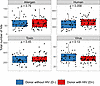 Figure 1
Total number of positive antibody targets among kidney transplant donors with and without HIV. Note: Hit fold change of peptides of allergens and toxins, ProMax of bacterial toxins, or VARScore of viruses >1 was considered positive. Each dot represents the total number of hits of antibody targets for a donor, stratified by their HIV status. HIV viral antibody targets were excluded from the comparison between donors with and without HIV. P values were estimated using Wilcoxon’s rank-sum tests.
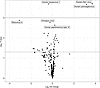 Figure 2
Reactivity of donor viral targets by donor HIV status. Note: Each dot represents the association between donor HIV status and the antibody reactivity to a viral species (measured using continuous VARScore). Moderated t tests were used to compute P values. Points above the top dashed line represents significant P values after correction for multiple comparisons with 5% false discovery rate (q < 0.05). Points above the bottom dashed line presents raw P < 0.05. Points below the bottom dashed line represents raw P ≥ 0.05. Log2 fold change >0 suggests donors with HIV had higher reactivity than donors without HIV, while log2 fold change <0 suggests donors with HIV had lower reactivity than donors without HIV.
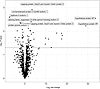 Figure 3
Reactivity of donor human autoantibody targets by donor HIV status. Note: Each dot represents the association between donor HIV status and the antibody reactivity to a peptide of human autoantibody (measured using continuous ProMax). Moderated t tests were used to compute P values. The dashed line represents P = 0.05 (no data points have q < 0.05). Log2 fold change >0 suggests donors with HIV had higher reactivity than donors without HIV, while log2 fold change <0 suggests donors with HIV had lower reactivity than donors without HIV.
Rejection and donor antibody repertoire. The 101 donors included in this study donated kidneys to 148 recipients. Thirty-five recipients, who received kidneys from 30 donors, experienced allograft rejection after transplant. Both kidneys from 5 donors experienced rejection by a corresponding 10 recipients. Among the 35 rejection episodes, 20 experienced T cell–mediated rejection, 4 had both T cell–mediated and antibody-mediated rejection, and 1 experienced only antibody-mediated rejection. Rejection mechanisms for 10 episodes were uncertain. The median total number of hits was similar for all libraries between donors whose recipients experienced rejection and donors whose recipients did not (Figure 4).
 Figure 4
Total number of positive antibody targets among kidney transplant donors by corresponding recipient’s rejection status. Note: Each dot represents the total number of hits of antibody targets for a donor, stratified by the rejection status of their corresponding recipients. Hit fold change of peptides of allergens and toxins, ProMax of bacterial toxins, or VARScore of viruses >1 was considered positive. HIV viral antibody targets were NOT excluded from the comparison. P values were estimated using Wilcoxon’s rank-sum tests.
However, higher reactivity to donor adenovirus A12 (continuous) was significantly associated with recipient allograft rejection (q < 0.05), and donor reactivity to other adenovirus types (e.g., A18, 55, and C2) also trended toward positive associations with rejection (P < 0.05) (Figure 5A and Supplemental Table 4). Kidneys from 45% (14/31) of donors with presence of antibodies against adenovirus A12 (VARScore >1, binary) experienced rejection, comparing to only 14% (10/70) of donors without such positivity (χ2, P < 0.001) (Figure 5B). Similar trends were observed among adenovirus subtypes A18, 55, and C2. In a multivariable logistic regression adjusting for sex and KDPI, the presence of donors’ antibodies against adenovirus A12 (binary) was associated with 4.97 (95% CI, 1.89, 13.61) times increased odds of rejection.
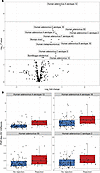 Figure 5
Reactivity to donor viral antibody targets and allograft rejection. (A) Note: Each dot represents the association between donor antibody reactivity to a viral species (measured using continuous VARScore) and allograft rejection. Moderated t tests were used to compute P values. Points above the top dashed line represent significant P values after correction for multiple comparisons with 5% false discovery rate (q < 0.05). Points above the bottom dashed line present raw P < 0.05. Points below the bottom dashed line represents raw P ≥ 0.05. Log2 fold change >0 represents viral antibody reactivity that was positively associated with rejection, while log2 fold change <0 represents viral antibody reactivity that was negatively associated with rejection. (B) Note: Each dot represents a donor. Adenovirus species with the 4 smallest P values in A were selected for the comparison in B. VARScore above the horizontal dashed line (>1) represents positivity of antibody to adenovirus.
Figure 5Reactivity to donor viral antibody targets and allograft rejection. (A) Note: Each dot represents the association between donor antibody reactivity to a viral species (measured using continuous VARScore) and allograft rejection. Moderated t tests were used to compute P values. Points above the top dashed line represent significant P values after correction for multiple comparisons with 5% false discovery rate (q < 0.05). Points above the bottom dashed line present raw P < 0.05. Points below the bottom dashed line represents raw P ≥ 0.05. Log2 fold change >0 represents viral antibody reactivity that was positively associated with rejection, while log2 fold change <0 represents viral antibody reactivity that was negatively associated with rejection. (B) Note: Each dot represents a donor. Adenovirus species with the 4 smallest P values in A were selected for the comparison in B. VARScore above the horizontal dashed line (>1) represents positivity of antibody to adenovirus.
Twenty-six autoantibodies were positively associated with recipient rejection and two were negatively associated; however, none remained statistically significant after adjustment for multiple comparisons (Figure 6 and Supplemental Table 5). No clear association with rejection was observed among bacterial toxins and allergens.
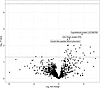 Figure 6
Reactivity of donor human autoantibody targets and rejections among recipients. Note: Each dot represents the association between donor antibody reactivity to a peptide of human autoantibody (measured using continuous ProMax) and allograft rejection. Moderated t tests were used to compute P values. Points above the top dashed line represent significant P values after correction for multiple comparisons with 5% false discovery rate (q < 0.05). Points above the bottom dashed line presents raw P < 0.05. Points below the bottom dashed line represents raw P ≥ 0.05. Log2 fold change >0 represents autoantibody reactivity that was positively associated with rejection, while log2 fold change <0 represents autoantibody reactivity that was negatively associated with rejection.
Figure 6Reactivity of donor human autoantibody targets and rejections among recipients. Note: Each dot represents the association between donor antibody reactivity to a peptide of human autoantibody (measured using continuous ProMax) and allograft rejection. Moderated t tests were used to compute P values. Points above the top dashed line represent significant P values after correction for multiple comparisons with 5% false discovery rate (q < 0.05). Points above the bottom dashed line presents raw P < 0.05. Points below the bottom dashed line represents raw P ≥ 0.05. Log2 fold change >0 represents autoantibody reactivity that was positively associated with rejection, while log2 fold change <0 represents autoantibody reactivity that was negatively associated with rejection.


