
Research ArticleCardiologyVascular biology
Open Access |  10.1172/jci.insight.202638
Vascular smooth muscle RbFox2 regulates the cytoskeleton and arterial stiffness by a RhoBTB1/Cullin-3 mechanism
Gaurav Kumar,1 Nisita Chaihongsa,1 Daniel T. Brozoski,1 Daria Golosova,1 Ibrahim Vazirabad,1 Ko-Ting Lu,1 Kelsey K. Wackman,1 Ravi K. Singh,2 and Curt D. Sigmund1
1Department of Physiology, Cardiovascular Center, Medical College of Wisconsin, Milwaukee, Wisconsin, USA.
2Department of Pharmacological and Pharmaceutical Sciences, College of Pharmacy, University of Houston, Houston, Texas, USA.
Address correspondence to: Curt D. Sigmund, Department of Physiology, Medical College of Wisconsin, 8701 Watertown Plank Road, Milwaukee, Wisconsin 53226, USA. Phone: 414.955.8277; Email: csigmund@mcw.edu.
Find articles by
Kumar, G.
in:
PubMed
|
Google Scholar
|

1Department of Physiology, Cardiovascular Center, Medical College of Wisconsin, Milwaukee, Wisconsin, USA.
2Department of Pharmacological and Pharmaceutical Sciences, College of Pharmacy, University of Houston, Houston, Texas, USA.
Address correspondence to: Curt D. Sigmund, Department of Physiology, Medical College of Wisconsin, 8701 Watertown Plank Road, Milwaukee, Wisconsin 53226, USA. Phone: 414.955.8277; Email: csigmund@mcw.edu.
Find articles by Chaihongsa, N. in: PubMed | Google Scholar
1Department of Physiology, Cardiovascular Center, Medical College of Wisconsin, Milwaukee, Wisconsin, USA.
2Department of Pharmacological and Pharmaceutical Sciences, College of Pharmacy, University of Houston, Houston, Texas, USA.
Address correspondence to: Curt D. Sigmund, Department of Physiology, Medical College of Wisconsin, 8701 Watertown Plank Road, Milwaukee, Wisconsin 53226, USA. Phone: 414.955.8277; Email: csigmund@mcw.edu.
Find articles by Brozoski, D. in: PubMed | Google Scholar
1Department of Physiology, Cardiovascular Center, Medical College of Wisconsin, Milwaukee, Wisconsin, USA.
2Department of Pharmacological and Pharmaceutical Sciences, College of Pharmacy, University of Houston, Houston, Texas, USA.
Address correspondence to: Curt D. Sigmund, Department of Physiology, Medical College of Wisconsin, 8701 Watertown Plank Road, Milwaukee, Wisconsin 53226, USA. Phone: 414.955.8277; Email: csigmund@mcw.edu.
Find articles by Golosova, D. in: PubMed | Google Scholar
1Department of Physiology, Cardiovascular Center, Medical College of Wisconsin, Milwaukee, Wisconsin, USA.
2Department of Pharmacological and Pharmaceutical Sciences, College of Pharmacy, University of Houston, Houston, Texas, USA.
Address correspondence to: Curt D. Sigmund, Department of Physiology, Medical College of Wisconsin, 8701 Watertown Plank Road, Milwaukee, Wisconsin 53226, USA. Phone: 414.955.8277; Email: csigmund@mcw.edu.
Find articles by Vazirabad, I. in: PubMed | Google Scholar
1Department of Physiology, Cardiovascular Center, Medical College of Wisconsin, Milwaukee, Wisconsin, USA.
2Department of Pharmacological and Pharmaceutical Sciences, College of Pharmacy, University of Houston, Houston, Texas, USA.
Address correspondence to: Curt D. Sigmund, Department of Physiology, Medical College of Wisconsin, 8701 Watertown Plank Road, Milwaukee, Wisconsin 53226, USA. Phone: 414.955.8277; Email: csigmund@mcw.edu.
Find articles by Lu, K. in: PubMed | Google Scholar
1Department of Physiology, Cardiovascular Center, Medical College of Wisconsin, Milwaukee, Wisconsin, USA.
2Department of Pharmacological and Pharmaceutical Sciences, College of Pharmacy, University of Houston, Houston, Texas, USA.
Address correspondence to: Curt D. Sigmund, Department of Physiology, Medical College of Wisconsin, 8701 Watertown Plank Road, Milwaukee, Wisconsin 53226, USA. Phone: 414.955.8277; Email: csigmund@mcw.edu.
Find articles by Wackman, K. in: PubMed | Google Scholar
1Department of Physiology, Cardiovascular Center, Medical College of Wisconsin, Milwaukee, Wisconsin, USA.
2Department of Pharmacological and Pharmaceutical Sciences, College of Pharmacy, University of Houston, Houston, Texas, USA.
Address correspondence to: Curt D. Sigmund, Department of Physiology, Medical College of Wisconsin, 8701 Watertown Plank Road, Milwaukee, Wisconsin 53226, USA. Phone: 414.955.8277; Email: csigmund@mcw.edu.
Find articles by Singh, R. in: PubMed | Google Scholar
1Department of Physiology, Cardiovascular Center, Medical College of Wisconsin, Milwaukee, Wisconsin, USA.
2Department of Pharmacological and Pharmaceutical Sciences, College of Pharmacy, University of Houston, Houston, Texas, USA.
Address correspondence to: Curt D. Sigmund, Department of Physiology, Medical College of Wisconsin, 8701 Watertown Plank Road, Milwaukee, Wisconsin 53226, USA. Phone: 414.955.8277; Email: csigmund@mcw.edu.
Find articles by
Sigmund, C.
in:
PubMed
|
Google Scholar
|
Published April 2, 2026 - More info
JCI Insight. 2026;11(11):e202638. https://doi.org/10.1172/jci.insight.202638.
© 2026 Kumar et al. This work is licensed under the Creative Commons Attribution 4.0 International License. To view a copy of this license, visit http://creativecommons.org/licenses/by/4.0/.
Received: November 18, 2025; Accepted: March 31, 2026


-
Results
APEX2 proximity labeling identifies the RhoBTB1-interacting proteome. We employed APEX2 and an MS-assisted proximity labeling approach to identify RhoBTB1 binding proteins in the A7R5 SMC line. We used a fusion construct comprising the C-terminal B1B2C domains of RhoBTB1 fused to APEX2 (Supplemental Figure 1). The B1B2C domains of RhoBTB1 are the minimal region necessary and sufficient to bind to PDE5 and foster its ubiquitination (13). APEX2 proximity labeling depends on the distance traveled by phenoxyl free radicals and biotinylates proteins within a 20 nm radius (18). To control for excess labeling of the A7R5 SMC proteome by B1B2C-APEX2, we used a concurrent control screen composed of a B1B2-APEX2 fusion protein that lacks the C-terminus of RhoBTB1. The premise is based on our previous study demonstrating that RhoBTB1 domains lacking the C-terminus could not bind to RhoBTB1-CUL3 substrates (13). Comparing the proteins identified through APEX2 proximity labeling of the SMC proteome using B1B2C-APEX2 versus B1B2-APEX2 should allow us to enrich the biotinylated proteome interacting with the C-terminal half of RhoBTB1.
We validated the expression of B1B2-APEX2 and B1B2C-APEX2 in A7R5 SMCs by immunoblotting (Supplemental Figure 2). Transfected A7R5 cells were treated with biotin phenol followed by a flash exposure of H2O2 to induce biotinylation (13). Immunoblotting with streptavidin-HRP conjugate demonstrated robust biotinylation of multiple proteins only in the presence of all reaction components, confirming the functionality of the assay (Supplemental Figure 3). Our previous data showing a preservation of B1B2C-APEX2 binding to PDE5 suggested that the APEX2 tag does not disturb the interaction of RhoBTB1 with its binding partners and that APEX2-tagged constructs are suitable for enriching the biotinylated proteome of SMCs (13).
The biotinylated proteome was enriched by streptavidin-conjugated Dynabeads and subsequently identified using MS. Across 12 total samples (3 technical replicates each of 2 biological samples for B1B2 and B1B2C, respectively), we identified a total of 1,645 total proteins. We selected 315 statistically significant differentially interacting proteins by hierarchical clustering (Benjamini-Hochberg P < 0.05; Figure 1A and Supplemental Dataset 1). Setting the relative fold enrichment of proteins comparing B1B2C with B1B2 to 1.5-fold or greater resulted in a list of protein candidates for further analysis (Supplemental Table 1). A volcano plot displays the proteins with higher interaction toward B1B2C (red), proteins validated for their differential interaction with B1B2C and B1B2 (green), and proteins below statistical significance across the proteomic screen (blue; Figure 1B). The candidate proteins were further analyzed for their molecular function and pathway enrichment using ShinyGO (19). Interestingly, many of the proteins in our dataset were related to the actin-based cytoskeleton and smooth muscle contraction, while some were also found to be associated with calcium and calmodulin signaling and RNA binding (Supplemental Figure 4). These findings are consistent with our previous results that revealed that RhoBTB1 regulates arterial stiffness through the actin cytoskeleton (14).
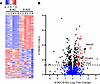 Figure 1
Profiling of the A7R5 proteome. (A) Heatmap and hierarchical clustering of RhoBTB1-interacting A7R5 SMC differential proteome identified by mass spectrometry. N = 6 (3 technical of 2 biological replicates) per group (B1B2C vs. B1B2). (B) Volcano plot of proteomic data. The magnitude of change (log2 fold change) is plotted on the x axis against the statistical significance (–log10) on the y axis. Proteins highlighted in red represent higher interaction toward B1B2C. Proteins highlighted in green were validated for differential interaction B1B2C > B1B2. Proteins highlighted in blue represent those below statistical significance.
Validation of RhoBTB1 protein targets. Proximity labeling can result in nonspecific labeling and affinity capture of nearby proteins that do not directly bind to the bait protein. Thus, we validated the interactions of RhoBTB1 with several top-ranked candidate proteins — stomatin like 2 (StomL2), filamin A (Flna), tropomyosin 2 (Tpm2), caldesmon 1 (Cald1), plastin 3 (Pls3), and Ras homolog family member Q (RhoQ) — via coimmunoprecipitation (co-IP). A7R5 cells were transfected with either B1B2 or B1B2C domains of RhoBTB1 (this time lacking the APEX2 fusion) for 24 hours, followed by co-IP to assess physical interactions. Notably, Cald1, StomL2, and Pls3 exhibited stronger interaction with B1B2C than with B1B2 (Figure 2, and B). Conversely, despite having higher interaction score in the biotinylation screen, Flna, Tpm2, and RhoQ did not interact with B1B2C in co-IP assays (Supplemental Figure 5, A and B).
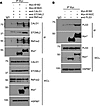 Figure 2
Differential interaction of RhoBTB1 target proteins with RhoBTB1 domains. Co-IP assay was performed with Myc-tagged RhoBTB1 domains (B1B2C and B1B2) transfected in A7R5 SMCs using anti-Myc beads or isotype-matched IgG as control. Cells in the control lane were transfected with pcDNA3.1 empty vector. Cells were treated with MLN4924 for 16 hours and MG132 for the last 4 hours. Transfection time was 24 hours. Immunocomplexes were Western blotted with indicated antisera. Molecular weight markers are transferred from original blots. IP, immunoprecipitates; WCL, whole-cell lysates. Data are representative of 2 independent replicates. Hsp90 was used as an internal control. *,^These blots are identical to those in Supplemental Figure 5, A and B, as those blots were from the same contemporaneous experiment.
We next sought to determine whether the identified proteins interact with full-length RhoBTB1. To this end, A7R5 SMCs were transfected with Myc epitope–tagged full-length RhoBTB1, and the whole-cell lysates were subjected to co-IP. Consistent with the domain-specific co-IP results, Cald1, StomL2, and Pls3 were confirmed to interact with full-length RhoBTB1 (Figure 3, A and B). As before, RhoQ was not detected in the immune complex with full-length RhoBTB1 (Supplemental Figure 5C). These results validate that a subset of the candidate proteins detected through the proteomic screen specifically interact with full-length RhoBTB1. This also supports the idea that RhoBTB1 may selectively scaffold or regulate distinct protein complexes in SMCs.
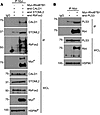 Figure 3
Differential interaction of RhoBTB1 target proteins with full-length RhoBTB1. Co-IP assay was performed in Myc epitope–tagged full-length RhoBTB1–transfected A7R5 SMCs using anti-Myc beads or isotype-matched IgG as control. Cells in the control lane were transfected with pcDNA3.1 empty vector. Cells were treated with MLN4924 for 16 hours and MG132 for the last 4 hours. Transfection time was 24 hours. Immunocomplexes were Western blotted with indicated antisera. Hsp90 was used as loading control. Molecular weight markers were transferred from original blots. Data are representative of 2 independent replicates. #These blots are identical to those in Supplemental Figure 5C, as those blots were from the same contemporaneous experiment.
In addition to the proteins selected above, we also chose to examine whether RNA-binding Fox-1 homolog 2 (RbFox2) also associated with the B1B2C domain and full-length RhoBTB1 (15). This choice was made for two reasons. First, the proteomic data demonstrated association of RbFox2 with B1B2C in 3 of 6 replicates, but no RbFox2 association with B1B2 in any replicates (Supplemental Dataset 1). Second, we had access to a readily available conditional knockout model for RbFox2flox/flox (RbFox2fl/fl) that offered us an opportunity to rapidly explore its regulation by the RhoBTB1-CUL3 axis and its potential role in vivo. To validate RhoBTB1 interaction with RbFox2, we performed co-IP with B1B2C and full-length RhoBTB1, which showed a stronger interaction between RbFox2 and B1B2C compared with B1B2 (Figure 2A) and with full-length RhoBTB1 (Figure 3A). Thus, we conclude that Cald1, Pls3, StomL2, and RbFox2 interacted differentially with B1B2 and B1B2C domains of RhoBTB1 and bound to full-length RhoBTB1.
RhoBTB1 serves as a substrate adaptor for CUL3, a scaffold protein that plays a key role in the ubiquitin-proteasome pathway (6). The co-IP data led us to hypothesize that the cellular expression of RbFox2 might be regulated through the RhoBTB1/CUL3 axis. We investigated whether the expression of RbFox2 is regulated via the ubiquitin-proteasome pathway through RhoBTB1- and CUL3-dependent mechanisms. First, pharmacological inhibition of the proteasome with MG132 or inhibition of Cullin neddylation with MLN4924 increased RbFox2 protein in A7R5 cells (Figure 4A). Neddylation of Cullin proteins is required for their activity (20). Second, the expression of RbFox2 was elevated in CRISPR/Cas9–edited CUL3-deficient HEK293 cells (referred to as HEK293CUL3KO hereafter) compared with the parental HEK293 wild-type cells (HEK293WT) (Figure 4B) (21). Third, RbFox2 expression was increased in A7R5 cells transfected with a siRNA targeting RhoBTB1 (Figure 4C). Like in the HEK293CUL3KO cells, expression of RbFox2 was increased in aorta from mice with SMC-specific CUL3 knockout (termed S-CUL3KO) (Figure 5A) (22). Additionally, treatment of A7R5 SMCs with angiotensin II (ANG), which we previously showed markedly downregulated RhoBTB1 (14), also led to a dose-dependent elevation in RbFox2 expression (Figure 5B). Similarly, ANG treatment of C57BL/6 mice that caused a marked increase in systolic BP (SBP) (Figure 5C) was accompanied by a corresponding decrease in expression of RhoBTB1 and increase in expression of RbFox2 in the aorta in comparison with the saline-treated control group (Figure 5D).
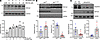 Figure 4
Validation of RbFox2 as a target of the RhoBTB1/CUL3 proteasomal pathway. (A) Immunoblot demonstrating the regulation of RbFox2 by CUL3-dependent ubiquitin-proteasome pathway in A7R5 cells treated with MLN4924 alone or in combination with MG132 for 24 hours. GAPDH was a protein loading control. The experiment was performed in duplicate with independent samples and is quantified below. (B) Relative levels of RbFox2 and CUL3 in HEK293WT and HEK293CUL3KO cells. Hsp90 was used an internal control. Data are quantified below. Data represent mean ± SEM; *P < 0.05 by 2-tailed t test; N = 6 each. (C) Relative levels of RbFox2 and RhoBTB1 in A7R5 cells transfected with scrambled control (SC CON) and siRNA targeting RhoBTB1 (siRhoBTB1) for 72 hours. UT, untransfected cells. Hsp90 was used as an internal control for protein loading. Data are quantified below and represent mean ± SEM; *P < 0.05 by 2-tailed t test; N = 4 for control scrambled siRNA; N = 6 for RhoBTB1 siRNA. Immunoblots were probed with indicated antisera. Molecular weight markers were transferred from the original blots.
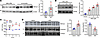 Figure 5
Expression of RbFox2 in various models of hypertension. (A) Representative Western blot measuring the expression of RbFox2 in aorta from SMC-CRE and S-CUL3KO mice. Relative levels of RbFox2 in SMC-CRE and S-CUL3KO mouse aorta are quantified. Data represent mean ± SEM; *P < 0.05 by 2-tailed t test; N = 4 for SMC-CRE; N = 5 for S-CUL3KO. These Western blot data are from samples from a previously published study (44). RbFox2 is a re-probe of a CUL3 Western blot from that study, whereas the β-actin blot is the same. (B) Immunoblot measuring the expression of RbFox2 in response to dose-dependent treatment of A7R5 cells with ANG (indicated in μM). Data are quantified and represent mean ± SEM; *P < 0.05 by 1-way ANOVA with Dunnett’s multiple comparisons test; representative of N = 3 for all samples. (C) Summary data (mean ± SEM) for SBP (mmHg) at baseline and after ANG-induced hypertension (1,000 ng/min/kg, Alzet minipump) in C57BL/6 mice for indicated times measured in weeks. *P < 0.05 by 2-way repeated-measures ANOVA with Tukey’s multiple comparison test vs. 0 weeks (baseline); N = 6 for both ANG and saline. One mouse died after the second week of ANG. (D) Immunoblot showing RbFox2 expression in aorta from some of the saline- and ANG-treated C57BL/6 mice from C. Data are quantified and represent mean ± SEM; *P < 0.05 by 2-tailed t test; N = 4 for saline; N = 5 for ANG. One sample in the RhoBTB1 ANG group was found to be an outlier by Grubb’s test. Molecular weight markers were transferred from the original blots.
BTB domain–containing proteins can bind to their substrate and mediate polyubiquitination, thereby targeting them for degradation via the cullin ring ligases (CRL) complex–dependent proteasomal pathway (23, 24). Therefore, we investigated whether RbFox2 degradation occurs through ubiquitination. Myc-tagged RbFox2 was cotransfected with ubiquitin either with an empty vector or with His-tagged RhoBTB1 in HEK293WT cells (Figure 6A). This revealed ubiquitination of RbFox2 in the presence of RhoBTB1 in HEK293WT cells. Supporting the involvement of CUL family proteins, MLN4924 treatment abolished the ubiquitination of RbFox2 in HEK293WT cells. To further elucidate the specific role of CUL3 in RhoBTB1-mediated ubiquitination of RbFox2, we ectopically coexpressed RbFox2 and ubiquitin, either with RhoBTB1 or with an empty vector in HEK293CUL3KO cells. CUL3 deficiency reduced the RhoBTB1-dependent polyubiquitination of RbFox2 (Figure 6B). However, the polyubiquitination was not completely abolished in HEK293CUL3KO cells, suggesting the potential role of other ubiquitinating proteins. Given this, we concluded that RhoBTB1 mediates the polyubiquitination of RbFox2 followed by its CUL3-dependent proteasomal degradation. Taken together, these results suggest that RbFox2 expression is regulated by RhoBTB1 and CUL3.
 Figure 6
RhoBTB1-dependent polyubiquitination of RbFox2. Representative immunoblot showing polyubiquitination observed in wild-type HEK293 cells (HEK293WT, A) and CRISPR/Cas9–edited CUL3-knockout HEK293 cells (HEK293CUL3KO, B) transfected with the indicated His-tagged RhoBTB1, Myc-tagged RbFox2, and ubiquitin constructs. MG132 and MLN4924 treatment was started immediately after transfection of the cells. Whole-cell lysates were collected, and IP was performed under denaturing conditions that prevent RhoBTB1 from getting pulled down. Immune complexes were probed with the indicated antisera. The top blots are the IP, and the bottom 3 blots are from whole-cell lysates. Molecular weight markers were transferred from the original blots. GAPDH was used as an internal control. These data are representative of 2 independent experiments.
RbFox2 modulates the cytoskeleton. Our pathway enrichment analysis data suggested that the identified proteins were involved in altering the components of cellular cytoskeleton. We therefore performed co-IP to assess whether there was a direct interaction between RbFox2 and α-smooth muscle actin (αSMA). A7R5 cells were transfected with Myc epitope–tagged RbFox2, and immunocomplexes were probed for αSMA. However, we did not detect any direct interaction between RbFox2 and αSMA (data not shown). Consequently, we hypothesized that RbFox2 modulates the SMC cytoskeleton through actin-associated proteins. This hypothesis was of particular interest because we identified α-actinin-1 (Actn1) in the A7R5 proteome that bound to RhoBTB1, and because Actn1 is a key protein that regulates the organization of the actin cytoskeleton. Therefore, we examined the physical interaction between Actn1 and RbFox2. Immunoblotting demonstrated that RbFox2 directly interacted with Actn1 (Figure 7A). Interestingly, in an experiment replicated twice, the interaction between RbFox2 and Actn1 appeared to require RhoBTB1, since the level of pull-down of Actn1 was decreased in response to a siRNA targeting RhoBTB1 (Figure 7B).
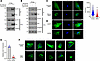 Figure 7
Interaction of RbFox2 with Actn1 and its role in cytoskeletal modulation. (A) Co-IP assay in A7R5 SMCs. Myc-tagged RbFox2 was transfected for 24 hours, followed by immunoprecipitation using anti-Myc antibodies and Western blotting with the indicated antibodies. The experiment was performed once but replicated in B. (B) Co-IP in A7R5 SMCs after RhoBTB1 knockdown. A7R5 cells were transfected with scrambled or RhoBTB1-targeting siRNA for 48 hours, then cotransfected with Myc-RbFox2 for the next 24 hours (total siRNA exposure: 72 hours). Co-IP was performed with anti-Myc beads and analyzed by Western blot using indicated antisera. IP, immunoprecipitation; WCL, whole-cell lysates. Molecular weight markers were translated from the original blots. Data represent 2 independent replicates. (C) Phalloidin staining (green) in A7R5 cells following RbFox2 siRNA transfection (72 hours) compared with scrambled control. Images represent at least 7 different fields from duplicate independent experiments performed by 2 different researchers. DAPI as counterstain in confocal images shows nuclei. Violin plot quantifies the cell area differences. (D) Phalloidin staining in primary SMCs from RbFox2fl/fl mice infected with either AdGFP (control) or AdCRE (RbFox2 deletion). DAPI as counterstain in confocal images shows nuclei. Multiple fields and cells were examined from a single experiment. (E) Expression of Actn1 in A7R5 cells in response to Actn1 siRNA. *P < 0.001 by unpaired 2-tailed t test; N = 3. (F) Phalloidin staining (green) in A7R5 cells following Actn1 siRNA transfection (72 hours) compared with scrambled control. Images represent fields from duplicate independent experiments. Scale bars: 10 μm (C, D, and F).
Given the interaction between RbFox2 and Actn1, we next sought to determine whether RbFox2 expression affects actin polymerization in SMCs. First, we transfected A7R5 SMCs with a siRNA targeting RbFox2 and performed phalloidin staining. Fluorescence imaging revealed a greater extent of disorganized actin filaments and decreased cellular area in RbFox2-depleted SMCs in comparison with A7R5 cells with scrambled control siRNA (Figure 7C; additional examples in Supplemental Figure 6). Next, SMCs were isolated from mice carrying a conditional allele of RbFox2fl/fl. Deletion of RbFox2 was induced by infection with an adenovirus expressing Cre recombinase (AdCre) with AdGFP serving as a control. AdCre-infected primary SMCs from RbFox2fl/fl mice exhibited a greater extent of actin filament disorganization (Figure 7D; additional examples in Supplemental Figure 7). We next tested the significance of Actn1 as a RhoBTB1 target by examining phalloidin staining in A7R5 cells in response to siRNA targeting Actn1, which resulted in an 87% decrease in Actn1 expression (Figure 7E). Inhibition of Actn1 expression resulted in disorganized actin filaments (Figure 7F; additional examples in Supplemental Figure 8).
RbFox2 regulates arterial stiffness. To assess the impact of SMC-specific deletion of RbFox2, we used double-transgenic mice carrying a conditional RbFox2fl/fl allele bred with an SMC-specific tamoxifen-inducible (Tx-inducible) Cre recombinase (termed S-RbFox2KO). SMC-CRE mice expressing Tx-inducible Cre recombinase were controls, and all mice were treated with Tx. Robust RbFox2 expression was observed in the medial layer of the aorta from control SMC-CRE mice (Figure 8A). In contrast, S-RbFox2KO mice exhibited markedly reduced RbFox2 expression in the medial layer. Expression of CD31, a marker of endothelial cells, was preserved in both groups. Reverse transcriptase PCR (RT-PCR) analysis revealed that RbFox2 mRNA levels were decreased by about 80% (P < 0.05) in aorta from S-RbFox2KO mice, confirming efficient transcriptional silencing of RbFox2 transgene (Figure 8B). In contrast, expression of CUL3 and RhoBTB1 mRNAs remained unaltered between the groups.
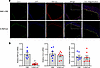 Figure 8
Vascular RbFox2 Expression. (A) Immunofluorescence images detecting RbFox2 (red) in SMC-CRE and S-RbFox2KO mice after ANG and Tx treatment. CD31 (green) indicates endothelial staining, while DAPI (blue) shows nuclei. The outlined areas in the merged panels are magnified in the far right column. Scale bars: 50 μm. (B) Summary graphs demonstrate the relative transcriptional level of RbFox2, CUL3, and RhoBTB1 in aorta from ANG- and Tx-treated SMC-CRE and S-RbFox2KO mice as detected by real-time RT-PCR. Gapdh mRNA was used as internal control. Data represent mean ± SEM; calculated by the 2–ΔΔCt method. *P < 0.05 by 2-tailed t test; N = 7 for SMC-CRE (CRE); N = 8 for S-RbFox2KO (S-RbFox2).
We next assessed whether RbFox2, like RhoBTB1, might also regulate arterial stiffness in vivo (14). We designed a reversal protocol where mice expressing SMC-CRE and S-RbFox2KO were treated with 490 ng/kg/min ANG via osmotic minipumps for 6 weeks (Figure 9A). SBP and pulse wave velocity (PWV) were measured weekly during baseline and throughout ANG administration. SBP was measured by tail-cuff plethysmography to ensure there was no interference with the measurement of arterial stiffness. After HTN was established, Tx was administered to induce deletion of RbFox2 in vascular SMCs. Both groups had equivalent SBP (109.48 ± 3.06 vs. 110.27 ± 3.01 mmHg, S-RbFox2KO vs. SMC-CRE) and PWV (2.66 ± 0.08 vs. 2.63 ± 0.07 mm/ms, S-RbFox2KO vs. SMC-CRE) at baseline (Figure 9B). Also, 3 weeks of ANG infusion elevated the SBP (135.44 ± 6.26 vs. 142.29 ± 3.22 mmHg, S-RbFox2KO vs. SMC-CRE) and PWV (3.84 ± 0.08 vs. 3.93 ± 0.06 mm/ms, S-RbFox2KO vs. SMC-CRE) in both groups. Despite the upward trend in SBP in both groups of mice, Tx-treated S-RbFox2KO mice exhibited a modest but statistically insignificant decline in SBP as compared with SMC-CRE mice (148.15 ± 2.14 vs. 156.09 ± 4.25 mmHg, S-RbFox2KO vs. SMC-CRE). In contrast, whereas PWV continued to increase in SMC-CRE mice (4.52 ± 0.17 mm/ms) 3 weeks after Tx (6 weeks after ANG), PWV remained stable in S-RbFox2KO mice (4.0 ± 0.19 mm/ms) after Tx. Examination of individual PWV data also supported the robustness of the declining arterial stiffness in response to RbFox2 deletion in SMCs (Figure 9B).
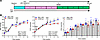 Figure 9
SBP and arterial stiffness in S-RbFox2KO mice. (A) Schematic of the experiment showing the time course for measurements. Baseline SBP and PWV were recorded in SMC-CRE and S-RbFox2KO mice for 1 week before ANG administration by osmotic minipump (week 1) and Tx injections. All animals received ANG for 3 weeks (weeks 2–4) followed by Tx injections for 5 consecutive days. SBP was recorded daily by tail-cuff plethysmography until the end of the protocol. PWV was measured before pump implantation, and once every subsequent week after pump implantation and Tx injections. Tissues were harvested at the end of the protocol. (B) Summary data for SBP and PWV in SMC-CRE (n = 8) and S-RbFox2KO mice (n = 8) at indicated time points. Arrows show the start of ANG and Tx. The dot plot shows individual PWV readings from the middle panel at each time point. BXG, BP X Genotype; PVG, PWV X Genotype. All data are represented as mean ± SEM. *P < 0.05 vs. SMC-CRE by 2-way ANOVA with Tukey’s multiple comparisons.
We next measured the extent of collagen deposition using Masson’s trichrome staining of aortic sections. Although there was a trend toward decreased collagen in aorta from S-RbFox2KO, this difference was not statistically significant (Figure 10A; additional examples in Supplemental Figure 9). Altogether, this suggests that RbFox2 may contribute to arterial stiffness, at least in part, through mechanisms beyond collagen-dependent vascular remodeling.
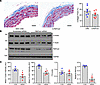 Figure 10
Role of RbFox2 in cytoskeletal modulation. (A) Representative histopathological images of aorta cross sections from indicated animals showing the deposition of collagen 3 weeks after ANG treatment followed by Tx treatment. Scale bars: 50 μm. Bar graph compares the collagen levels in aorta from indicated animals. N = 7 for SMC-CRE; N = 7 for S-RbFox2KO. Not significant by 2-tailed t test. (B) Western blot analysis of G-actin and F-actin in A7R5 cells transfected with RbFox2-targeting siRNA compared with cells transfected with scrambled control siRNA. Immunoblots were probed with indicated antisera. Molecular weight markers are translated from original blots. Represents a single experiment from 4 independent samples each. (C) Data summarizing the levels of F-actin and G-actin, F/G-actin ratio, and relative expression of RbFox2 in A7R5 cells before and after siRNA-mediated RbFox2 knockdown. These data are representative of 4 separate siRNA transfections. All data are represented as mean ± SEM. *P < 0.05 by 2-tailed t test; N = 4 for both groups.
We next hypothesized that RbFox2 might regulate the polymerization of actin filaments. To investigate this, we returned to the A7R5 cell model and performed ultracentrifugation-based enrichment of polymerized actin (F-actin) and its globular isoform (G-actin) from whole-cell lysates of A7R5 cells transfected with siRNA targeting RbFox2. Depletion of RbFox2 led to a reduction in the total actin content as evident by the decreased levels of both F- and G-actin isoforms (Figure 10, B and C). Because of this, the ratio of F- to G-actin was unchanged in comparison with siRbFox2 versus siRNA control. We conclude that RbFox2 regulates cytoskeletal integrity in SMCs likely through the modulation of the actin cytoskeleton.
RbFox2 is a target of RhoBTB1 and CUL3 in human aortic SMCs. We next examined the significance of these findings in primary human aortic SMCs (HASMCs). First, RbFox2 expression increased in response to both MLN4924 and MG132, suggesting that it is a CUL3 target in HASMCs (Figure 11A). Second, expression of RbFox2 increased in response to siRNA targeting RhoBTB1, suggesting that it is a RhoBTB1 target (Figure 11B). Third, RbFox2 expression increased in response to ANG treatment of HASMCs (Figure 11C). Finally, siRNA targeting Actn1 in HASMCs resulted in a marked downregulation of Actn1 mRNA (Figure 11D), and a disruption of the actin cytoskeleton (Figure 11E; additional examples in Supplemental Figure 10). Thus, the findings identified using the A7R5 cell line have been validated in human vascular SMCs.
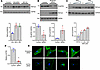 Figure 11
Role of RbFox2 and Actn1 in primary human aortic SMCs. (A) Immunoblot demonstrating the regulation of RbFox2 by CUL3-dependent ubiquitin-proteasome pathway in human aortic SMCs (HASMCs) treated with MLN4924 (1 µM) or MG132 (10 µM) for 24 hours. Hsp90 was used as a loading control. The experiment was performed with 3 independent samples and is quantified below. Data represent mean ± SEM; *P < 0.05 by 2-tailed t test; N = 3 each. (B) Relative levels of RbFox2 and RhoBTB1 in HASMCs transfected with scrambled control and siRNA targeting RhoBTB1 for 72 hours. Hsp90 was used as an internal control for protein loading. Data are quantified below and represent mean ± SEM; *P < 0.05 by 2-tailed t test; N = 3. (C) Immunoblot measuring the expression of RbFox2 in response to ramped increases in ANG treatment (1.0, 2.5, 3.5 μM) of HASMCs. Data are quantified and represent mean of N = 2 samples. Immunoblots were probed with indicated antisera. Molecular weight markers are translated from original blots. (D) Real-time RT-PCR of ACTN1 expression in response to scrambled siRNA (Control) and siRNA targeting ACTN1 in HASMCs. Data represent mean ± SEM; *P < 0.05 by 2-tailed t test; N = 3 each. (E) Phalloidin staining (green) in HASMCs following ACTN1 siRNA transfection (72 hours) compared with scrambled control. Images represent fields from duplicate independent experiments. Scale bar: 10 μm.
RbFox2 regulates mRNA splicing. RbFox2 is recognized as a factor affecting mRNA splicing (15, 25). To assess whether loss of RbFox2 caused aberrations in mRNA splicing, we performed isoform sequencing–based (Iso-Seq–based) RNA sequencing (RNA-seq) of A7R5 cells with and without a siRNA targeting RbFox2. Iso-Seq enables sequencing of full-length transcript isoforms from 5′-UTR to 3′ poly(A) tail. We validated the effectiveness of the siRNA targeting RbFox2 in the previous experiment (Figure 10C). RNA-seq analysis confirmed downregulation of RbFox2 by about 70% by the siRNA (Supplemental Dataset 2). Gene-level analysis revealed that inhibition of RbFox2 caused the marked differential expression of over 650 mRNAs, suggesting a key role for RbFox2 in transcriptional regulation (Figure 12A). Mapping individual mRNA isoforms to the rat genome revealed the presence of unique isoforms of mRNA encoding nearly 300 genes, one of which was Actn1 (Figure 12B). We focused on Actn1 because it was identified as a RhoBTB1 binding protein in the targeted proteomic screen and was found to bind to RbFox2 in a RhoBTB1-dependent manner (Figure 7B). The presence or absence of RbFox2 resulted in several differential Actn1 isoforms, particularly at the 3′ end of the mRNA, including isoforms that excluded exons and mis-spliced introns leading to intron inclusion of the mRNA (Supplemental Figure 11). We tested whether isoforms that exhibited intron inclusion at the 3′ end of the gene (Supplemental Figure 11, red arrows) were more abundant in RbFox2-intact cells (Supplemental Figure 12). A comparison of the RT-PCR signal of PCR products targeting the fully spliced and intron inclusion isoforms revealed that they were both more abundant in RbFox2-intact cells versus RbFox2-deficient cells. All RT-PCR products were confirmed by DNA sequencing. These data suggest that RbFox2 affects the abundance and splicing of key mRNAs that regulate the cytoskeleton.
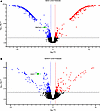 Figure 12
Role of RbFox2 in mRNA splicing. (A) Volcano plot representing gene-level abundance of mRNAs from A7R5 cells in the presence or absence of RbFox2 siRNA. (B) Volcano plot representing isoform-level abundance of mRNAs from A7R5 cells in the presence or absence of RbFox2 siRNA. There were 2 control siRNAs and 2 siRNAs targeting RbFox2.


